

Prevalence and Characteristics of Autism Spectrum Disorder Among Children Aged 8 Years — Autism and Developmental Disabilities Monitoring Network, 11 Sites, United States, 2020
Open accessThe DOI matches its Crossref record; 30 of the 30 references it cites were found in a registry or an index.
Abstract
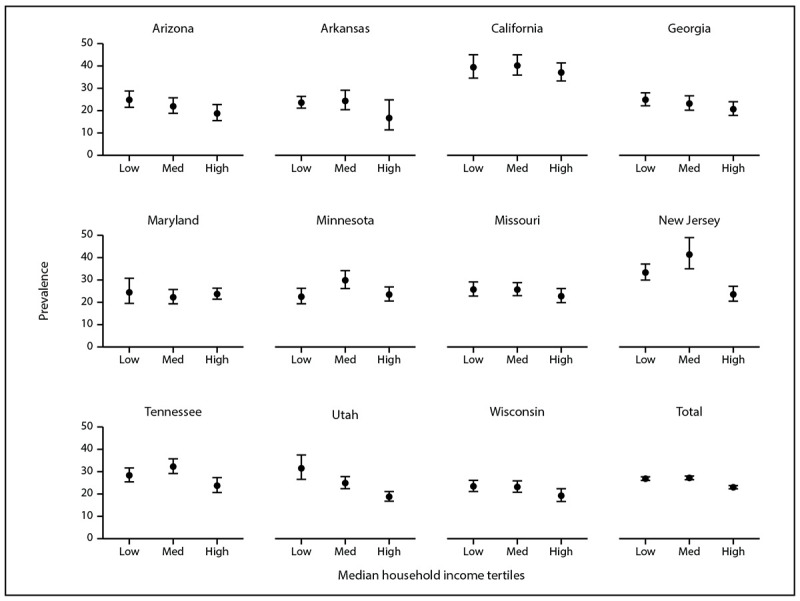
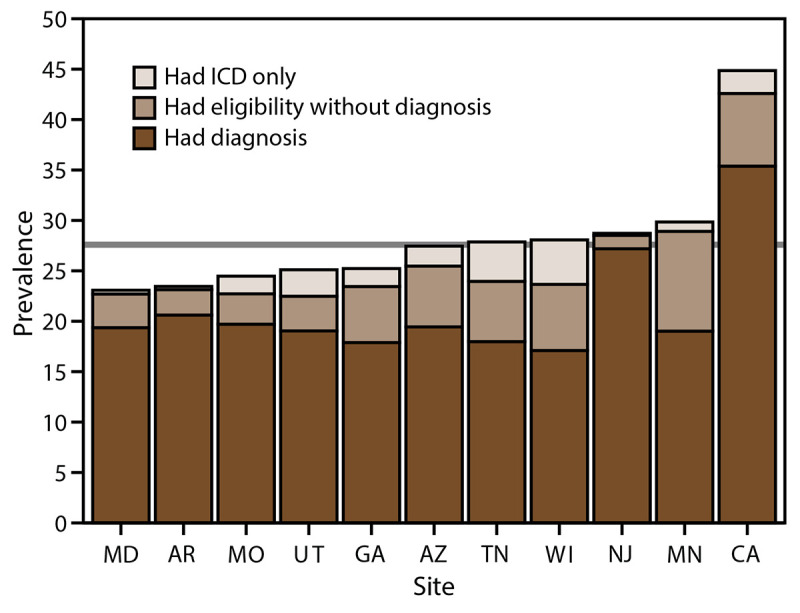
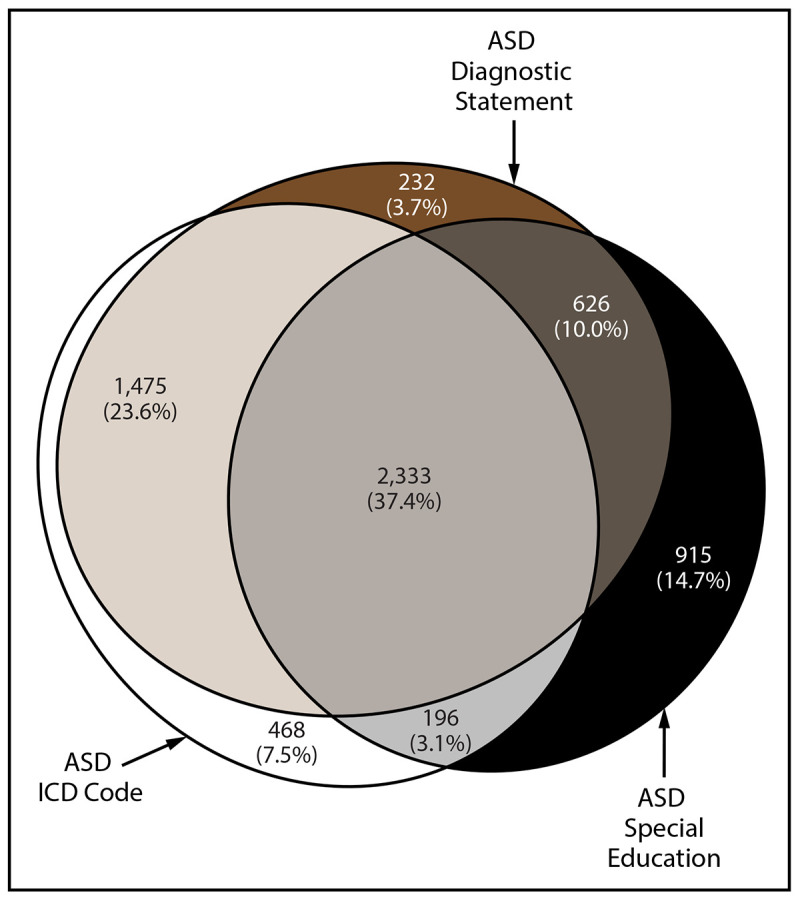
Problem/Condition: Autism spectrum disorder (ASD). Period Covered: 2020. Description of System: The Autism and Developmental Disabilities Monitoring (ADDM) Network is an active surveillance program that provides estimates of the prevalence of ASD among children aged 8 years. In 2020, there were 11 ADDM Network sites across the United States (Arizona, Arkansas, California, Georgia, Maryland, Minnesota, Missouri, New Jersey, Tennessee, Utah, and Wisconsin). To ascertain ASD among children aged 8 years, ADDM Network staff review and abstract developmental evaluations and records from community medical and educational service providers. A child met the case definition if their record documented 1) an ASD diagnostic statement in an evaluation, 2) a classification of ASD in special education, or 3) an ASD International Classification of Diseases (ICD) code. Results: For 2020, across all 11 ADDM sites, ASD prevalence per 1,000 children aged 8 years ranged from 23.1 in Maryland to 44.9 in California. The overall ASD prevalence was 27.6 per 1,000 (one in 36) children aged 8 years and was 3.8 times as prevalent among boys as among girls (43.0 versus 11.4). Overall, ASD prevalence was lower among non-Hispanic White children (24.3) and children of two or more races (22.9) than among non-Hispanic Black or African American (Black), Hispanic, and non-Hispanic Asian or Pacific Islander (A/PI) children (29.3, 31.6, and 33.4 respectively). ASD prevalence among non-Hispanic American Indian or Alaska Native (AI/AN) children (26.5) was similar to that of other racial and ethnic groups. ASD prevalence was associated with lower household income at three sites, with no association at the other sites.Across sites, the ASD prevalence per 1,000 children aged 8 years based exclusively on documented ASD diagnostic statements was 20.6 (range = 17.1 in Wisconsin to 35.4 in California). Of the 6,245 children who met the ASD case definition, 74.7% had a documented diagnostic statement of ASD, 65.2% had a documented ASD special education classification, 71.6% had a documented ASD ICD code, and 37.4% had all three types of ASD indicators. The median age of earliest known ASD diagnosis was 49 months and ranged from 36 months in California to 59 months in Minnesota.Among the 4,165 (66.7%) children with ASD with information on cognitive ability, 37.9% were classified as having an intellectual disability. Intellectual disability was present among 50.8% of Black, 41.5% of A/PI, 37.8% of two or more races, 34.9% of Hispanic, 34.8% of AI/AN, and 31.8% of White children with ASD. Overall, children with intellectual disability had earlier median ages of ASD diagnosis (43 months) than those without intellectual disability (53 months). Interpretation: For 2020, one in 36 children aged 8 years (approximately 4% of boys and 1% of girls) was estimated to have ASD. These estimates are higher than previous ADDM Network estimates during 2000-2018. For the first time among children aged 8 years, the prevalence of ASD was lower among White children than among other racial and ethnic groups, reversing the direction of racial and ethnic differences in ASD prevalence observed in the past. Black children with ASD were still more likely than White children with ASD to have a co-occurring intellectual disability. Public Health Action: The continued increase among children identified with ASD, particularly among non-White children and girls, highlights the need for enhanced infrastructure to provide equitable diagnostic, treatment, and support services for all children with ASD. Similar to previous reporting periods, findings varied considerably across network sites, indicating the need for additional research to understand the nature of such differences and potentially apply successful identification strategies across states.
Overview
The claims and statistics of this paper haven’t been checked yet.
Free: it reads the open-access text and checks the first 5 claims that cite a source we can check. Create a free account to check every claim.
Integrity signals
Registry
Cites
Statistics
Figures
Verification
Claims the paper makes
The claims and statistics of this paper haven’t been checked yet.
Free: it reads the open-access text and checks the first 5 claims that cite a source we can check. Create a free account to check every claim.
Claims other papers make about this one
Each is checked against this paper’s own text: does it say what the citing paper says it does?
The source backs part of the claim, not all of it — or backs it for a different population, condition or comparison.
In the citing paper
“Previous research reported that autism diagnosis occurs at a boy-to-girl ratio of 3.8:1, with the mother typically serving as the primary caregiver (Herrero et al., 2024;Maenner et al., 2023).”
From Mindfulness and parenting stress among parents of autistic children: The mediation of resilience and psychological flexibility (2025) · cites this paper as Maenner et al., 2023
Experimental — accuracy not yet measuredThe source backs part of the claim, not all of it — or backs it for a different population, condition or comparison.
In the citing paper
“Understanding differential outcomes based on race, ethnicity, gender, sex, age, and socioeconomic factors173,174 is highly limited.”
From Executive function deficits in attention-deficit/hyperactivity disorder and autism spectrum disorder (2024) · cites this paper as [174]
Experimental — accuracy not yet measuredThe source backs part of the claim, not all of it — or backs it for a different population, condition or comparison.
In the citing paper
“California has had the highest prevalence among children aged 4 years and 8 years since joining the ADDM Network in 2018 (6,10,11,13)”
From Prevalence and Early Identification of Autism Spectrum Disorder Among Children Aged 4 and 8 Years — Autism and Developmental Disabilities Monitoring Network, 16 Sites, United States, 2022 (2025) · cites this paper as [6]
Experimental — accuracy not yet measuredThe source backs part of the claim, not all of it — or backs it for a different population, condition or comparison.
In the citing paper
“The male-to-female ratio among children aged 4 years was similar across sites, but the ratio was lower than among children aged 8 years (11).”
From Early Identification of Autism Spectrum Disorder Among Children Aged 4 Years — Autism and Developmental Disabilities Monitoring Network, 11 Sites, United States, 2020 (2023) · cites this paper as [11]
Experimental — accuracy not yet measuredThe source backs part of the claim, not all of it — or backs it for a different population, condition or comparison.
In the citing paper
“All sites had access to health and education records in 2020 (11).”
From Early Identification of Autism Spectrum Disorder Among Children Aged 4 Years — Autism and Developmental Disabilities Monitoring Network, 11 Sites, United States, 2020 (2023) · cites this paper as [11]
Experimental — accuracy not yet measured
15 more claims about this paper
Create a free account to see every claim other papers make about this one.
Self-check
Percentages, sums and reported differences re-computed from the paper’s own numbers.
The self-check needs the paper’s full text.
Citations
Cites
1 retracted
Christensen, D. L., Baio, J., Braun, K. V. N., Bilder, D., Charles, J., Constantino, J. N., Daniels, J., Durkin, M. S., Fitzgerald, R. T., Kurzius-Spencer, M., et al. (2016) · MMWR. Surveillance Summaries · doi:10.15585/mmwr.ss6503a1 · Cited by 1,964
Self-citationRetractedDiagnostic and Statistical Manual of Mental Disorders
American Psychiatric Association (2013) · doi:10.1176/appi.books.9780890425596 · Cited by 116,369
Baio, J., Wiggins, L., Christensen, D. L., Maenner, M. J., Daniels, J., Warren, Z., Kurzius-Spencer, M., Zahorodny, W., Robinson, C., Rosenberg, et al. (2018) · MMWR. Surveillance Summaries · doi:10.15585/mmwr.ss6706a1 · Cited by 6,078
Self-citationMaenner, M. J., Shaw, K. A., Baio, J., EdS1, Washington, A., Patrick, M., DiRienzo, M., Christensen, D. L., Wiggins, L. D., Pettygrove, S., et al. (2020) · MMWR. Surveillance Summaries · doi:10.15585/mmwr.ss6904a1 · Cited by 3,780 · cited 2×
“2 3 US Department of Health and Human Services/Centers for Disease Control and Prevention necessitate record review if those codes closely aligned with program-recommended ICD codes (11).”
BackgroundSelf-citationMaenner, M. J., Shaw, K. A., Bakian, A. V., Bilder, D. A., Durkin, M. S., Esler, A., Furnier, S. M., Hallas, L., Hall-Lande, J., Hudson, A., et al. (2021) · MMWR. Surveillance Summaries · doi:10.15585/mmwr.ss7011a1 · Cited by 1,818 · cited 5×
“These gaps narrowed over time until ASD prevalence among Black and Hispanic matched prevalence among White children for the first time in 2016 and 2018, respectively (11,12).”
BackgroundMethodInfluentialSelf-citationPrevalence of Autism in a US Metropolitan Area
Yeargin-Allsopp, M., Rice, C., Karapurkar, T., Doernberg, N., Boyle, C., & Murphy, C. (2003) · JAMA · doi:10.1001/jama.289.1.49 · Cited by 1,248 · cited 2×
“CDC began monitoring the prevalence of ASD in metropolitan Atlanta, Georgia, in 1996 as part of its Metropolitan Atlanta Developmental Disabilities Surveillance Program (2).”
Background(2009) · PubMed · Cited by 804
Research works printed but not linked: 2
- Autism and Developmental Disabilities Monitoring Network Surveillance Year 2006 Principal Investigators. Prevalence of autism spectrum disorders—Autism and Developmental Disabilities Monitoring Network, United States, 2006. MMWR Surveill Summ 2009; 58(No. SS–10). 20023608
- Shaw KA, Maenner MJ, Bakian AV, Early identification of autism spectrum disorder among children aged 4 years—Autism and Developmental Disabilities Monitoring Network, 11 sites, United States, 2018. MMWR Surveill Summ 2021; 70(No. SS–10): 1– 14. 10.15585/mmwr.ss7010a1 34855727 PMC8639027 · DOI · Paper page
Cited by
Items 201–300 of 1,000
Behavioral and Psychiatric Disorders in Syndromic Autism
Genovese, A., & Butler, M. G. (2024) · Brain Sciences · doi:10.3390/brainsci14040343 · Cited by 24
“The genetic mutations or defects in single genes associated with syndromic autism result in a significant elevation of risk for developing ASD compared to the population risk, which is currently estimated at approximately 2.8%, with boys affected about four times more than girls [6].”
BackgroundInfluentialRoles of Epigenetics and Glial Cells in Drug-Induced Autism Spectrum Disorder
Csoka, A. B., Kouhen, N. E., Bennani, S., Getachew, B., Aschner, M., & Tizabi, Y. (2024) · Biomolecules · doi:10.3390/biom14040437 · Cited by 19
“…of criteria such as persistent deficits in each of three areas of social interaction and communication: social–emotional reciprocity, processing of relationships, and nonverbal communicative behaviors, plus at least two of four types of restricted repetitive patterns of behaviors and interests [1].”
BackgroundQin, Q., Shan, Z., Xing, L., Jiang, Y., Li, M., Fan, L., Zeng, X., Ma, X., Zheng, D., Wang, H., et al. (2024) · Journal of Translational Medicine · doi:10.1186/s12967-024-05257-w · Cited by 21
“2023 data from the United States Centers for Disease Control and Prevention showed that 2.76% of 8-year-old children had been diagnosed with ASD [2].”
InfluentialKanlayaprasit, S., Saeliw, T., Thongkorn, S., Panjabud, P., Kasitipradit, K., Lertpeerapan, P., Songsritaya, K., Yuwattana, W., Jantheang, T., Jindatip, D., et al. (2024) · Biology of Sex Differences · doi:10.1186/s13293-024-00614-2 · Cited by 19
Occupational Therapy Practice Guidelines for Autistic People Across the Lifespan
Patten, K. K., Murthi, K., Onwumere, D. D., Skaletski, E. C., Little, L. M., & Tomchek, S. D. (2024) · American Journal of Occupational Therapy · doi:10.5014/ajot.2024.078301 · Cited by 31
Pagán, A. F., Vanderburg, J. L., Loveland, K. A., Acierno, R. E., & Meyer, T. D. (2024) · Journal of Developmental and Physical Disabilities · doi:10.1007/s10882-024-09974-4 · Cited by 17
“Moreover, even less research focuses on autistic young adults from minority populations, such as the Latino community (Maenner, 2023).”
Lyall, K., Westlake, M., Musci, R. J., Gachigi, K. K., Barrett, E. S., Bastain, T. M., Bush, N. R., Buß, C., Camargo, C. A., Croen, L., et al. (2024) · American Journal of Clinical Nutrition · doi:10.1016/j.ajcnut.2024.06.013 · Cited by 18
Self-citationPagán, A. F., Loveland, K. A., & Acierno, R. E. (2024) · Advances in Neurodevelopmental Disorders · doi:10.1007/s41252-024-00414-0 · Cited by 17
“%) in diagnosed ASD in Latinos between 2018 and 2020 (Maenner et al., 2023).”
Omotehinwa, T. O., Lawrence, M. O., Oyewola, D. O., & Dada, E. G. (2024) · Journal of Computational Mathematics and Data Science · doi:10.1016/j.jcmds.2024.100105 · Cited by 21
NLRP3 inflammasome-mitochondrion loop in autism spectrum disorder
Vallese, A., Cordone, V., Ferrara, F., Guiotto, A., Gemmo, L., Cervellati, F., Hayek, J., Pecorelli, A., & Valacchi, G. (2024) · Free Radical Biology and Medicine · doi:10.1016/j.freeradbiomed.2024.10.297 · Cited by 20
Nutritional Approaches in Autism Spectrum Disorder: A Scoping Review
Özler, E., & Şanlıer, N. (2025) · Current Nutrition Reports · doi:10.1007/s13668-025-00655-y · Cited by 18
Taddei, M., Bulgheroni, S., Toffalini, E., Pantaleoni, C., & Lanfranchi, S. (2023) · Autism Research · doi:10.1002/aur.2953 · Cited by 18
Autistic traits associated with dichotomic thinking mediated by intolerance of uncertainty
Suzuki, N., & Hirai, M. (2023) · Scientific Reports · doi:10.1038/s41598-023-41164-8 · Cited by 22
Does Lead Have a Connection to Autism? A Systematic Review and Meta-Analysis
Stojsavljević, A., Lakićević, N., & Pavlović, S. Z. (2023) · Toxics · doi:10.3390/toxics11090753 · Cited by 19
Autism Spectrum Disorder in 2023: A Challenge Still Open
Posar, A., & Visconti, P. (2023) · Turkish Archives of Pediatrics · doi:10.5152/turkarchpediatr.2023.23194 · Cited by 43
Stojsavljević, A., Lakićević, N., & Pavlović, S. Z. (2023) · Biomedicines · doi:10.3390/biomedicines11123344 · Cited by 21
McKenna, K., Prasad, S., Cooper, J. N., King, A. M., Shahzeidi, S., Mittal, J., Zalta, M., Mittal, R., & Eshraghi, A. A. (2024) · Audiology Research · doi:10.3390/audiolres14010005 · Cited by 23
Netto, B. B., da Silva, E. P., da Costa, M. D. A., de Rezende, V. L., Bolan, S. J., Ceretta, L. B., Aschner, M., Dominguini, D., & Gonçalves, C. L. (2024) · Journal of Neurochemistry · doi:10.1111/jnc.16076 · Cited by 16
White matter development and language abilities during infancy in autism spectrum disorder
McFayden, T. C., Rutsohn, J., Cetin, G., Forsen, E., Swanson, M. R., Meera, S. S., Wolff, J. J., Elison, J. T., Shen, M. D., Botteron, K. N., et al. (2024) · Molecular Psychiatry · doi:10.1038/s41380-024-02470-3 · Cited by 18
Wei, Q., Xiao, Y., Yang, T., Chen, J., Chen, L., Wang, K., Zhang, J., Li, L., Jia, F., Wu, L., et al. (2024) · Psychiatry Research · doi:10.1016/j.psychres.2024.115789 · Cited by 20
Sex differences in trajectories of cortical development in autistic children from 2–13 years of age
Andrews, D. S., Diers, K., Lee, J. K., Harvey, D. J., Heath, B. E., Cordero, D., Rogers, S. J., Reuter, M., Solomon, M., Amaral, D. G., et al. (2024) · Molecular Psychiatry · doi:10.1038/s41380-024-02592-8 · Cited by 19
The Importance of Large-Scale Genomic Studies to Unravel Genetic Risk Factors for Autism
Nóbrega, I. D. S., Silva, A. L. T. E., Yokota-Moreno, B. Y., & Sertie, A. L. (2024) · International Journal of Molecular Sciences · doi:10.3390/ijms25115816 · Cited by 19
Differently different?: A commentary on the emerging social cognitive neuroscience of female autism
Rippon, G. (2024) · Biology of Sex Differences · doi:10.1186/s13293-024-00621-3 · Cited by 25
“There has been an exponential increase in reported prevalence rates over the years [4]; the most recent statistics in the US quote rates of 1 in 36 children as being diagnosed as having autism [5] and a recent survey reported a 787% increase between 1998 and 2018 [6].”
Autism in Taiwan and Thailand: Influences of Culture
Westby, C. E., Kai-mei, C., Cheng, L., Jithavech, P., & Maroonroge, S. (2024) · Neuropsychiatric Disease and Treatment · doi:10.2147/ndt.s462864 · Cited by 19
Jahani, A., Jahani, I., Khadem, A. A., Braden, B. B., Delrobaei, M., & MacIntosh, B. J. (2024) · Scientific Reports · doi:10.1038/s41598-024-71174-z · Cited by 21
Prevalence and treatment of autism spectrum disorder in the United States, 2016–2022
Li, C., & He, W. (2024) · Autism Research · doi:10.1002/aur.3228 · Cited by 17
“Although a recent study did not find significant increase in the prevalence of ASD among children aged 3 – 17 years from 2018 to 2021 based on data from National Health Interview Survey (NHIS) (Li et al., 2023), the prevalence of ASD was reported to have increased from 2.3% in 2018 to 2.8% in 2020 among children aged…”
InfluentialA 3D approach to understanding heterogeneity in early developing autisms
Mandelli, V., Severino, I., Eyler, L. T., Pierce, K., Courchesne, E., & Lombardo, M. V. (2024) · Molecular Autism · doi:10.1186/s13229-024-00613-5 · Cited by 22
“As a likely result of these changes over time, we have seen phenomena such as increasing heterogeneity [3], prevalence [4], decreasing effect sizes [5], and a change in views about autism, particularly from the neurodi-versity perspective.”
BackgroundSelf-citationLynam, A., Sweeney, M. R., Keenan, L., & McNally, S. (2024) · Autism & Developmental Language Impairments · doi:10.1177/23969415241258705 · Cited by 21
Papetti, A. V., Jin, M., Ma, Z., Stillitano, A. C., & Jiang, P. (2025) · Neuron · doi:10.1016/j.neuron.2025.03.036 · Cited by 20
O’Sharkey, K., Mitra, S., Chow, T., Paik, S.-A., Thompson, L. K., Su, J. G., Cockburn, M., & Ritz, B. R. (2025) · Environment International · doi:10.1016/j.envint.2025.109562 · Cited by 18
Metwally, A. M., El-Din, E. M. S., Sami, S. M., Raouf, E. R. A., Sallam, S. F., Elsaeid, A., El‐Saied, M. M., Ashaat, E. A., Fathy, A. M., El-Hariri, H. M., et al. (2025) · Molecular Autism · doi:10.1186/s13229-025-00665-1 · Cited by 17
“In 2020, ASD prevalence in the United States was estimated at 1 in 36 children [15].”
The prevalence and developmental course of auditory processing differences in autistic children
Lau, B. K., Emmons, K. A., Lee, A. K. C., MUNSON, J. A., Dager, S. R., & Estes, A. M. (2023) · Autism Research · doi:10.1002/aur.2961 · Cited by 21
Dietary Factors Impact Developmental Trajectories in Young Autistic Children
Acosta, A., Khokhlovich, E., Reis, H. I. D. S., & Vyshedskiy, A. (2023) · Journal of Autism and Developmental Disorders · doi:10.1007/s10803-023-06074-8 · Cited by 18
Schwingel, G. B., Fontes‐Dutra, M., Ramos, B., Riesgo, R. D. S., Bambini-Júnior, V., & Gottfried, C. (2023) · IBRO Neuroscience Reports · doi:10.1016/j.ibneur.2023.09.008 · Cited by 18
Alhowikan, A. M., Elamin, N. E., Aldayel, S. S., AlSiddiqi, S. A., Alrowais, F. S., Hassan, W. M., El-Ansary, A. K., Alghamdi, F. A., & AL-Ayadhi, L. Y. (2023) · Brain Sciences · doi:10.3390/brainsci13111575 · Cited by 14
Loss of ASD-related molecule Cntnap2 affects colonic motility in mice
Robinson, B. G., Oster, B. A., Robertson, K., & Kaltschmidt, J. A. (2023) · Frontiers in Neuroscience · doi:10.3389/fnins.2023.1287057 · Cited by 19
Risk factors and clinical profile of autism spectrum disorder in southern Brazil
Lin, J. H. X., da Costa, M. D. A., de Rezende, V. L., Nascimento, R. R., Ambrósio, P. G., Madeira, K., Pearson, D. A., & Gonçalves, C. L. (2023) · Journal of Psychiatric Research · doi:10.1016/j.jpsychires.2023.11.033 · Cited by 20
Exploring the learning experiences of neurodivergent college students in STEM courses
Wang, K. D., McCool, J. T., & Wieman, C. (2024) · Journal of Research in Special Educational Needs · doi:10.1111/1471-3802.12650 · Cited by 28
Pan, C., Sung, M., Tsai, C., Chen, F., Chen, Y., & Chen, C. (2024) · Autism Research · doi:10.1002/aur.3136 · Cited by 22
“Recently updated estimates suggest that the occurrence of autism spectrum disorder (ASD) has increased noticeably from one in 68 to one in 36 children, making ASD one of the most frequently observed developmental disorders (Center for Disease Control and Prevention, 2023; Maenner et al., 2023).”
BackgroundAging Well and Autism: A Narrative Review and Recommendations for Future Research
Klein, C. B., & Klinger, L. G. (2024) · Healthcare · doi:10.3390/healthcare12121207 · Cited by 23
“Currently, 1 in 36 American children have a diagnosis of autism, marking an increase over the past twenty years, rising from estimates of 1 in 150 8-year-olds carrying an autism diagnosis in 2000 [2,3].”
BackgroundSotelo-Orozco, J., Calafat, A. M., Botelho, J. C., Schmidt, R. J., Hertz‐Picciotto, I., & Bennett, D. H. (2024) · International Journal of Hygiene and Environmental Health · doi:10.1016/j.ijheh.2024.114425 · Cited by 20
Autism spectrum disorder and various mechanisms behind it
Rajabi, P., Noori, A. S., & Sargolzaei, J. (2024) · Pharmacology Biochemistry and Behavior · doi:10.1016/j.pbb.2024.173887 · Cited by 19
Kuodza, G. E., Kawai, R., & LaSalle, J. M. (2024) · Environmental Epigenetics · doi:10.1093/eep/dvae023 · Cited by 16
Uncertainty Inspired Early Autism Spectrum Disorder Screening via Contrastive Image-Viewing Paradigm
Zhang, Y., Huang, Y., Qi, J., Zhang, S., Tian, M., Tian, Y., Meng, F., Guan, L., & Chang, T.-H. (2024) · IEEE Transactions on Neural Systems and Rehabilitation Engineering · doi:10.1109/tnsre.2024.3518693 · Cited by 19
“According to the latest report by the Autism and Developmental Disabilities Monitoring (ADDM) Networks across the United States, the overall ASD prevalence has increased from 23 per 1,000 in 2018 [25] all the way up to 27.6 per 1,000 in 2020 [24].”
InfluentialYuwattana, W., Saeliw, T., van Erp, M. L., Poolcharoen, C., Kanlayaprasit, S., Trairatvorakul, P., Chonchaiya, W., Hu, V. W., & Sarachana, T. (2025) · Scientific Reports · doi:10.1038/s41598-025-95291-5 · Cited by 20
Natraj, S., Kojovic, N., Maillart, T., & Schaer, M. (2024) · PLoS ONE · doi:10.1371/journal.pone.0308388 · Cited by 22
Diagnosing autism spectrum disorder based on eye tracking technology using deep learning models
Al-Adhaileh, M. H., Alsubari, S. N., Al-Nefaie, A. H. A., Ahmad, S., & Al-Hamadi, A. K. (2025) · Frontiers in Medicine · doi:10.3389/fmed.2025.1690177 · Cited by 17
Freire, J. M. D. S., & Nogueira, G. S. (2023) · Revista Foco · doi:10.54751/revistafoco.v16n3-009 · Cited by 51
Hu, C., He, T., Zou, B., Li, H., Zhao, J., Hu, C., Cui, J. J., Huang, Z., Shu, S., & Hao, Y. (2023) · Frontiers in Psychiatry · doi:10.3389/fpsyt.2023.1219104 · Cited by 16
Barriers to Receiving Applied Behavior Analysis Services in Children With Autism Spectrum Disorder
Littman, E. R., Gavin, L. A., Broda, A., Hodges, A. C., & Spector, L. (2023) · Cureus · doi:10.7759/cureus.48585 · Cited by 23
Girolamo, T. M., Shen, L., Monroe‐Gulick, A., Rice, M. L., & Eigsti, I. (2023) · Autism · doi:10.1177/13623613231216155 · Cited by 23
Cannabinoid treatment for the symptoms of autism spectrum disorder
Aran, A. A., & Cayam-Rand, D. (2024) · Expert Opinion on Emerging Drugs · doi:10.1080/14728214.2024.2306290 · Cited by 21
Pires, J. F., Grattão, C. C., & Gomes, R. M. R. (2024) · Dementia & Neuropsychologia · doi:10.1590/1980-5764-dn-2023-0034 · Cited by 26
Bioenergetic signatures of neurodevelopmental regression
Frye, R. E., McCarty, P. J., Werner, B. A., Rose, S., & Scheck, A. C. (2024) · Frontiers in Physiology · doi:10.3389/fphys.2024.1306038 · Cited by 16
A Systematic Literature Review of Racial Disproportionality in Autism in the U.S.
Kim, H., Karakaya, M. F., Skinner, M., & Baker, D. (2024) · Journal of Autism and Developmental Disorders · doi:10.1007/s10803-024-06247-z · Cited by 22
Serum interleukin-17 A and homocysteine levels in children with autism
Li, H., Dang, Y., & Yan, Y. (2024) · BMC Neuroscience · doi:10.1186/s12868-024-00860-5 · Cited by 21
Reading comprehension improvement in autism
Beckerson, M. E., Paisley, C. A., Murdaugh, D. L., Holm, H., Lemelman, A. R., Spencer, A., O’Kelley, S. E., & Kana, R. K. (2024) · Frontiers in Psychiatry · doi:10.3389/fpsyt.2024.1292018 · Cited by 20
Exploring the neurological features of individuals with germline PTEN variants: A multicenter study
Dhawan, A., Baitamouni, S., Liu, D., Busch, R. M., Klaas, P., Frazier, T. W., Srivastava, S., Parikh, S., Hsich, G. E., Friedman, N., et al. (2024) · Annals of Clinical and Translational Neurology · doi:10.1002/acn3.52046 · Cited by 15
Maffei, M. F., Chenausky, K. V., Haenssler, A. E., Abbiati, C. I., Tager-Flusberg, H. B., & Green, J. R. (2024) · American Journal of Speech-Language Pathology · doi:10.1044/2024_ajslp-23-00237 · Cited by 20
Duvall, S. W., Greene, R. K., Phelps, R. A., Rutter, T. M., Markwardt, S., Painter, J. G., Cordova, M., Calamé, B., Doyle, O. J., Nigg, J. T., et al. (2024) · Journal of Autism and Developmental Disorders · doi:10.1007/s10803-024-06329-y · Cited by 19
“This distinction is particularly important given many widely cited prevalence studies of ASD rely on caregiver report (Blumberg et al., 2013) and school records (Maenner et al., 2021, 2023) of ASD diagnoses, suggesting that current rates may, in fact, overestimate the prevalence of ASD.”
InfluentialYang, Y., Chen, D., Cai, K., Zhu, L., Shi, Y., Dong, X., Sun, Z., Qiao, Z., Yahui, Y., Weike, Z., et al. (2024) · BMC Sports Science Medicine and Rehabilitation · doi:10.1186/s13102-024-00885-7 · Cited by 21
Microglial Dysfunction in Autism Spectrum Disorder
Meng, J., Zhang, L., & Zhang, Y. (2024) · The Neuroscientist · doi:10.1177/10738584241252576 · Cited by 16
Caring for autism in Ghana: exploring the psychological impact and coping strategies of caregivers
Acheampong, J. O. (2024) · Cogent Education · doi:10.1080/2331186x.2024.2374686 · Cited by 24
“A report from the Centers for Disease Control and Prevention shows that the global estimate of autistic children has risen over the years to 1 in 36 children (Maenner et al., 2023).”
Lagod, P. P., Abdelli, L. S., & Naser, S. A. (2024) · International Journal of Molecular Sciences · doi:10.3390/ijms25158093 · Cited by 20
“ASD’s prevalence quadrupled in the last 20 years, and according to the newest statistics, 1:36 children are affected [8].”
BackgroundThe early life exposome and autism risk: a role for the maternal microbiome?
Gesù, C. M. D., & Buffington, S. A. (2024) · Gut Microbes · doi:10.1080/19490976.2024.2385117 · Cited by 21
Autism, youth suicide, and psychedelics: A review of the 21st century evidence
Chen, M., Su, T., Hsu, J.-W., & Tsai, S. (2024) · Journal of the Chinese Medical Association · doi:10.1097/jcma.0000000000001150 · Cited by 16
Convergence on CaMK4: A Key Modulator of Autism-Associated Signaling Pathways in Neurons
Kaiser, J., Risteska, A., Muller, A. G., Sun, H., Lei, B., Nay, K., Means, A. R., Cousin, M. A., Drewry, D. H., Oakhill, J. S., et al. (2024) · Biological Psychiatry · doi:10.1016/j.biopsych.2024.10.012 · Cited by 19
“It is de fi ned by a group of core symptoms characterized by de fi cits in social communication and interaction, restricted interests, and repetitive behaviors (1,2).”
Lim, T. S. H., Wong, C. Y., Lin, C., Phua, Q. Q., Tok, A. E. S., Cheng, A. S. M., Chan, Y. H., & Aw, M. (2024) · Early Human Development · doi:10.1016/j.earlhumdev.2024.106137 · Cited by 18
Falih, B. S., Sabir, M. K., & Aydın, A. (2024) · Applied Sciences · doi:10.3390/app142411702 · Cited by 23
“The incidence of ASD in the United States has increased from 1 in 68 children in 2014 to 1 in 36 children, with boys being diagnosed more often than girls at a ratio of 3.9:1 [1,2].”
InfluentialEmployment-related assistive technologies for autistic individuals: A scoping review
Zhou, K., Richard, C., & Kim, J. (2025) · Journal of Vocational Rehabilitation · doi:10.1177/10522263241312742 · Cited by 15
Altın, Y., Boşnak, Ö., & Turhan, C. (2025) · Journal of Autism and Developmental Disorders · doi:10.1007/s10803-025-06741-y · Cited by 26
“A report published by the U.S. Centers for Disease Control and Prevention (CDC) indicates that one in 36 children is affected by ASD (Maenner et al., 2023).”
InfluentialZhou, X., Xia, X., Li, L., Ye, Y., Chen, Q., Ke, M., Cui, Q., He, Y., Chen, Y.-T., Lin, S., et al. (2025) · Biological Trace Element Research · doi:10.1007/s12011-025-04588-z · Cited by 18
Liu, Z., Zhong, S., Ho, R., Qian, X., Tang, Y. D., Tian, H. R., Zhang, C., Li, N., Zhao, Y. M., Zhang, Y., et al. (2025) · JAMA Network Open · doi:10.1001/jamanetworkopen.2025.5776 · Cited by 19
Hu, C., Li, H., Cui, J. J., Li, Y., Zhang, F., Li, H., Luo, X., & Hao, Y. (2025) · Translational Psychiatry · doi:10.1038/s41398-025-03452-x · Cited by 14
“According to the 2020 report, 1 in 36 8-year-olds in the United States has been diagnosed with autism [1].”
Autism services in low-resource areas
Masri, A. T., Nasir, A. K., Irshaid, A., Irshaid, F. Y., Alomari, F., Khatib, F. A., Al-Qudah, A. A., Nafi, O., Almomani, M. A., & Bashtawi, M. A. (2023) · Neurosciences · doi:10.17712/nsj.2023.2.20220098 · Cited by 20
Blaine, R. E., Blaine, K. P., Cheng, K., Banuelos, C., & Leal, A. (2023) · Frontiers in Pediatrics · doi:10.3389/fped.2023.1198177 · Cited by 19
Frye, R. E., McCarty, P. J., Werner, B. A., Scheck, A. C., Collins, H., Adelman, S. J., Rossignol, D. A., & Quadros, E. V. (2024) · Journal of Personalized Medicine · doi:10.3390/jpm14010062 · Cited by 18
Understanding the role of AMPA receptors in autism: insights from circuit and synapse dysfunction
Jiménez-Gómez, A., Nguyen, M. X., & Gill, J. S. (2024) · Frontiers in Psychiatry · doi:10.3389/fpsyt.2024.1304300 · Cited by 15
Smith, J. V., Menezes, M., Brunt, S., Pappagianopoulos, J. E., Sadikova, E., & Mazurek, M. O. (2024) · Autism · doi:10.1177/13623613241236112 · Cited by 16
Suicidal Thoughts and Behaviors Among Children and Adolescents With Autism Spectrum Disorder
Schindel, B. J., Chen, B. B., Wilcox, H. C., Marvin, A. R., Law, K., & Lipkin, P. H. (2024) · Archives of Pediatrics and Adolescent Medicine · doi:10.1001/jamapediatrics.2024.0207 · Cited by 14
Eltokhi, A., Lundstrom, B. N., Li, J., Zweifel, L. S., Catterall, W. A., & El-Din, T. M. G. (2024) · Proceedings of the National Academy of Sciences · doi:10.1073/pnas.2317769121 · Cited by 14
Molinaro, G., Bowles, J. E., Croom, K., Gonzalez, D., Mirjafary, S., Birnbaum, S. G., Razak, K. A., Gibson, J. R., & Huber, K. M. (2024) · Cell Reports · doi:10.1016/j.celrep.2024.114056 · Cited by 14
“1 However, increasing evidence indicates that ASD is expressed differently in males and females on a behavioral level and affects brain function and connectivity differently.”
BackgroundIn vivo translocator protein in females with autism spectrum disorder: a pilot study
Tseng, C.-E. J., Canales, C., Marcus, R. E. G., Parmar, A. J., Hightower, B. G., Mullett, J. E., Makary, M. M., Tassone, A. U., Saro, H. K., Hickey, P. C., et al. (2024) · Neuropsychopharmacology · doi:10.1038/s41386-024-01859-6 · Cited by 17
“A striking observation regarding ASD is the signi fi cantly higher prevalence in males, with males diagnosed approximately four times more frequently than females [2].”
BackgroundCannabidiol is a behavioral modulator in BTBR mouse model of idiopathic autism
Shrader, S. H., Mellen, N. M., Cai, J., Barnes, G. N., & Song, Z.-H. (2024) · Frontiers in Neuroscience · doi:10.3389/fnins.2024.1359810 · Cited by 19
Attention Analysis in Robotic-Assistive Therapy for Children With Autism
Silva, B., Santos, L., Barata, C., Geminiani, A., Fassina, G., Gonzalez, A. R., Ferreira, S., Barahona-Corrêa, B., Olivieri, I., Pedrocchi, A., et al. (2024) · IEEE Transactions on Neural Systems and Rehabilitation Engineering · doi:10.1109/tnsre.2024.3411299 · Cited by 17
“A UTISM Spectrum Disorder (ASD) is a neurodevelopmental condition with an increasing prevalence in recent years, affecting 1 in every 36 8-year-old children, in the US [1].”
BackgroundLi, S., Zhang, N., Wang, L., Zhang, H.-L., & Wang, X. (2024) · World Journal of Psychiatry · doi:10.5498/wjp.v14.i7.1095 · Cited by 13
A clinical-translational review of sleep problems in neurodevelopmental disabilities
Peters, S. U., Shelton, A. R., Malow, B. A., & Neul, J. L. (2024) · Journal of Neurodevelopmental Disorders · doi:10.1186/s11689-024-09559-4 · Cited by 17
“Autism spectrum disorder (ASD) now affects approximately 1 in 36 children and is around 3.8 times as prevalent among boys as among girls [91].”
BackgroundInfluentialGayle, R. I., Valentino, A. L., & Fuhrman, A. M. (2024) · Behavior Analysis in Practice · doi:10.1007/s40617-024-00968-4 · Cited by 20
Moreno, R. J., Rose, D. R., Tancredi, D. J., Schmidt, R. J., Ozonoff, S. J., & Ashwood, P. (2024) · Brain Behavior and Immunity · doi:10.1016/j.bbi.2024.08.036 · Cited by 14
“Currently, 1 in 36 children are diagnosed with autism spectrum disorder (ASD), a NDD characterized by deficits in social ability and communication, as well as restrictive and repetitive behaviors (Maenner, 2023).”
BackgroundMental health in mothers of children with autism spectrum disorder: a cross-sectional study
Santiago, C. F. G., Lelis, D. D. F., Ferreira, G. F. S., Pinto, A. L., Caldeira, I. P., Ribeiro, N. G., Forechi, L., Baldo, T. D. O. F., & Baldo, M. P. (2024) · Women & Health · doi:10.1080/03630242.2024.2392137 · Cited by 19
“According to the Centers for Disease Control and Prevention, approximately 1 in 36 children in the United States is diagnosed with ASD, an increase from 2018 estimate of 1 in 44 (Maenner et al. 2023).”
Yang, D., Svoboda, A. M., George, T. G., Mansfield, P. K., Wheelock, M. D., Schroeder, M. L., Rafferty, S. M., Sherafati, A., Tripathy, K., Burns‐Yocum, T. M., et al. (2024) · Molecular Autism · doi:10.1186/s13229-024-00614-4 · Cited by 15
“Although early signs of ASD may begin to appear by age six months, reliable individually predictive diagnostic indicators during the �rst year of life have yet to be established, and the median age at diagnosis is 49 months in the US (2, 7).”
BackgroundVivanti, G., Algur, Y., Ryan, V., McClure, L. A., FEIN, D. A., Stahmer, A. C., Wieckowski, A. T., & Robins, D. L. (2024) · Journal of the American Academy of Child & Adolescent Psychiatry · doi:10.1016/j.jaac.2024.08.502 · Cited by 20
Wang, C.-Y., & Wang, H. (2024) · All Life · doi:10.1080/26895293.2024.2415057 · Cited by 16
Dysregulation of the mTOR-FMRP pathway and synaptic plasticity in an environmental model of ASD
Hilal, M. L., Rosina, E., Pedini, G., Restivo, L., & Bagni, C. (2025) · Molecular Psychiatry · doi:10.1038/s41380-024-02805-0 · Cited by 13
“Worldwide, approximately 1/100 children are diagnosed with ASD [2].”
Brookman-Frazee, L. I., Lau, A. S., Roesch, S. C., Jobin, A., Chlebowski, C., Mello, M., Caplan, B., Naar, S., Aarons, G. A., & Stahmer, A. C. (2025) · Journal of the American Academy of Child & Adolescent Psychiatry · doi:10.1016/j.jaac.2025.01.003 · Cited by 17
2-Ethylhexanol induces autism-like neurobehavior and neurodevelopmental disorders in zebrafish
Eghan, K., Lee, S., Yoo, D., & Kim, W. (2025) · Journal of Hazardous Materials · doi:10.1016/j.jhazmat.2025.137469 · Cited by 14
The differential diagnosis of autism spectrum disorder in adults
Carroll, H. M., Thom, R. P., & McDougle, C. J. (2025) · Expert Review of Neurotherapeutics · doi:10.1080/14737175.2025.2490533 · Cited by 24
“With the constantly increasing prevalence of ASD and growing number of adults beginning to seek a formal diagnosis of ASD, a robust differential diagnosis is necessary to avoid misdiagnosis [8,43,135,136].”
Rašková, B., Hapčová, M., Celušáková, H., Franková, D., Kopčíková, M., Demkaninová, D., Januška, J., & Babinská, K. (2025) · Research on Child and Adolescent Psychopathology · doi:10.1007/s10802-025-01341-x · Cited by 18
“(Maenner, 2023).”
Novel Inflammatory Biomarkers for Autism Spectrum Disorder Detected by Plasma Olink Proteomics
Lv, T., Wang, M., Kui, L., Wu, J., & Xiao, Y. (2025) · Children · doi:10.3390/children12020210 · Cited by 18
“The majority of children with ASD were male (78.33%), with a male-to-female ratio of 3.6:1, consistent with a previous epidemiological report [27].”
InfluentialExploring the clinical features of minimally verbal autistic children
Guerrera, S., Fucà, E., Petrolo, E., Stefano, A. D., Casula, L., Logrieco, M. G., Valeri, G., & Vicari, S. (2025) · Frontiers in Psychiatry · doi:10.3389/fpsyt.2025.1549092 · Cited by 14
Metadata
- Authors
- Maenner, M. J., Warren, Z., Williams, A. R., Amoakohene, E., Bakian, A. V., Bilder, D. A., Durkin, M. S., Fitzgerald, R. T., Furnier, S. M., Hughes, M. M., Ladd-Acosta, C. M., McArthur, D., Pas, E. T., Salinas, A., Vehorn, A., Williams, S., Esler, A., Grzybowski, A., Hall-Lande, J., Nguyen, R. H. N., Pierce, K., Zahorodny, W., Hudson, A., Hallas, L., Mancilla, K. C., Patrick, M., Shenouda, J., Sidwell, K., DiRienzo, M., Gutierrez, J., Spivey, M. H., Lopez, M., Pettygrove, S., Schwenk, Y. D., Washington, A., & Shaw, K. A.
- Affiliations
- Centers for Disease Control and Prevention (US)
- Vanderbilt University Medical Center (US)
- University of Minnesota (US)
- University of Utah (US)
- University of Wisconsin–Madison (US)
- Washington University in St. Louis (US)
- Johns Hopkins University (US)
- University of California San Diego (US)
- Rutgers New Jersey Medical School (US)
- University of Arkansas for Medical Sciences (US)
- National Center on Birth Defects and Developmental Disabilities (US)
- University of Arizona (US)
- Corresponding author
- Maenner, Matthew J.
- ORCID
- Maenner, Matthew J.
- Warren, Zachary
- Williams, Ashley Robinson
- Bakian, Amanda V.
- Bilder, Deborah A.
- Durkin, Maureen S.
- Fitzgerald, Robert T.
- Furnier, Sarah M.
- Hughes, Michelle M.
- Ladd-Acosta, Christine M.
- McArthur, Dedria
- Pas, Elise T.
- Esler, Amy
- Nguyen, Ruby H.N.
- Pierce, Karen
- Zahorodny, Walter
- Patrick, Mary
- Shenouda, Josephine
- DiRienzo, Monica
- Lopez, Maya
- Pettygrove, Sydney
- Washington, Anita
- Venue
- MMWR. Surveillance Summaries
- Published
- 2023-03-24
- Volume
- 72
- Issue
- 2
- Pages
- 1-14
- ISSN
- 1545-8636 (ISSN-L)
- 1546-0738
- PMC
- PMC10042614
- OpenAlex
- W4360600181
- Cited by
- 2,706
- References
- 30
- Citations by year
- 2026: 568 · 2025: 900 · 2024: 896 · 2023: 306
- FWCI
- 400.11
- Type
- journal article
- Language
- en
- Open access
- diamond
- doi.org
- Licence
- public-domain
- Locations
- MMWR Surveillance Summaries (publishedVersion, public-domain)
- PubMed Central (publishedVersion, public-domain)
- PubMed (publishedVersion)
- UA Campus Repository (The University of Arizona) (submittedVersion, public-domain)
- Funders
- Eunice Kennedy Shriver National Institute of Child Health and Human Development (P50HD103537)
- Topics
- Life Sciences › Neuroscience › Cognitive Neuroscience › Autism Spectrum Disorder Research
- Health Sciences › Medicine › Psychiatry and Mental health › Child Nutrition and Feeding Issues
- Social Sciences › Psychology › Clinical Psychology › Family and Disability Support Research
- Keywords
- autism spectrum disorder, autism prevalence, sex differences, racial and ethnic disparities, household income, special education classification, developmental disabilities, ICD-10-CM codes
- MeSH terms
- Autism Spectrum Disorder, Autistic Disorder, Child, Developmental Disabilities, Child, Preschool, Female, Humans, Male, Maryland, Intellectual Disability, Population Surveillance, United States, Prevalence
About these checks
Registry, retraction, Cites and statistics results are computed, not judged, with one exception: a printed reference that no index lists is read once by a model before it counts as a citation error. Claims are extracted by a model and kept only when their quote appears verbatim in the text; each cited source is then checked, with a model’s help, for whether it says what the claim relies on. Those verdicts can be wrong — read the claim’s quote and the cited source before relying on one.
Statistics and arithmetic are recomputed, not judged.
Confidence bands are shown only for fields calibrated on our annotated test set. None is calibrated yet, so no band is shown.
What counts as a claim ›How we measure confidence ›How we check this ›
Are you an author, or do you see a problem with this page? Request a review
Data sources
Bibliographic data: Semantic Scholar, OpenAlex, Crossref.
Contains information from the Semantic Scholar Academic Graph Datasets, made available under the ODC Attribution License (ODC-BY 1.0).
Semantic Scholar’s data is described in: Kinney, R., et al. (2023). The Semantic Scholar Open Data Platform. arXiv:2301.10140.
