

Prevalence and Characteristics of Autism Spectrum Disorder Among Children Aged 8 Years — Autism and Developmental Disabilities Monitoring Network, 11 Sites, United States, 2020
Open accessThe DOI matches its Crossref record; 30 of the 30 references it cites were found in a registry or an index.
Abstract
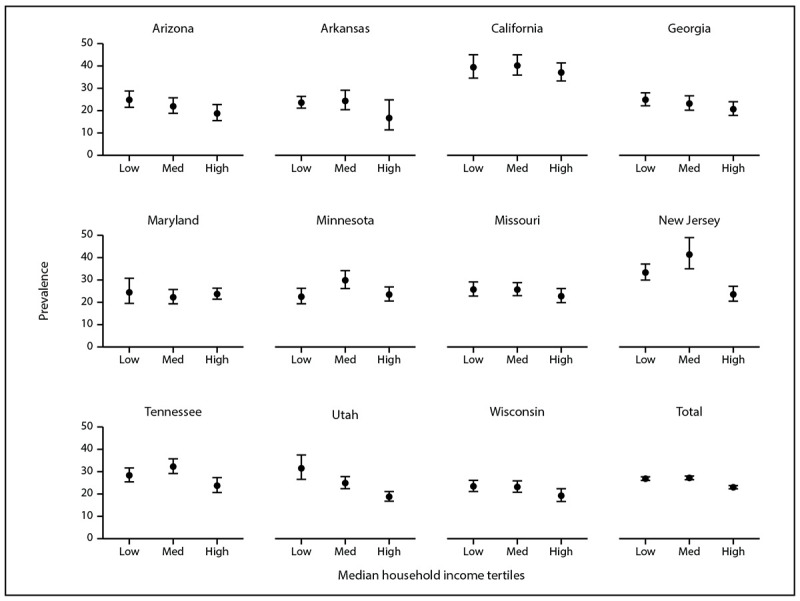
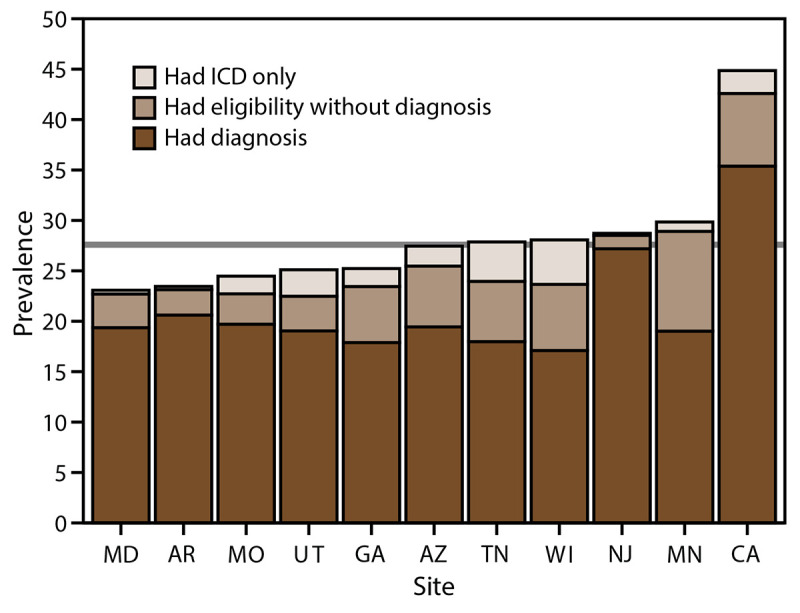
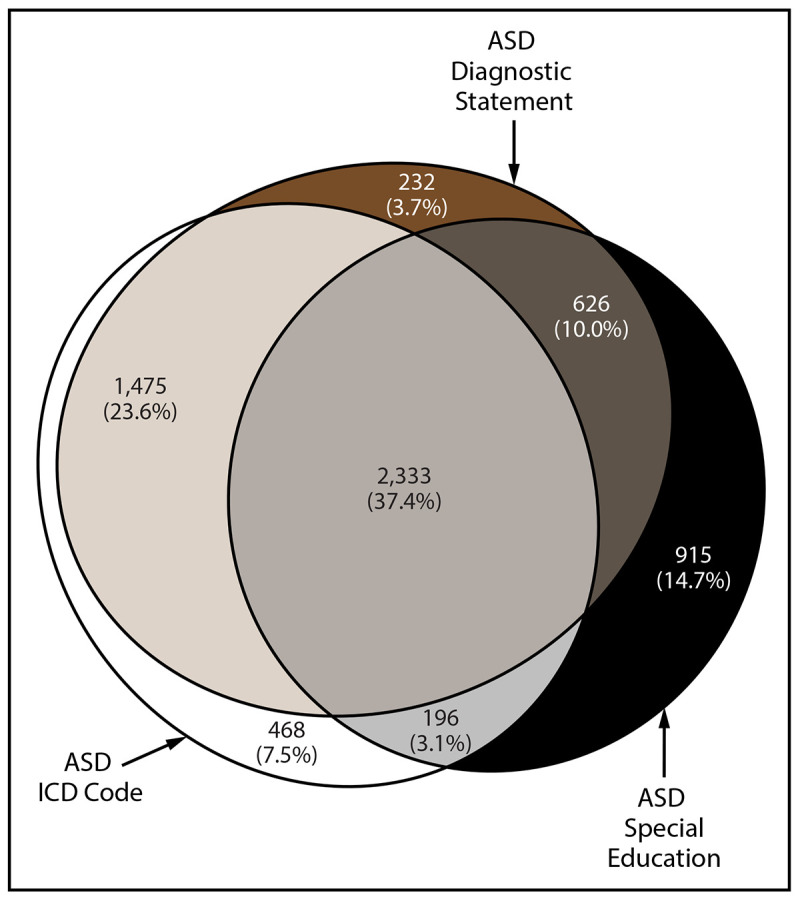
Problem/Condition: Autism spectrum disorder (ASD). Period Covered: 2020. Description of System: The Autism and Developmental Disabilities Monitoring (ADDM) Network is an active surveillance program that provides estimates of the prevalence of ASD among children aged 8 years. In 2020, there were 11 ADDM Network sites across the United States (Arizona, Arkansas, California, Georgia, Maryland, Minnesota, Missouri, New Jersey, Tennessee, Utah, and Wisconsin). To ascertain ASD among children aged 8 years, ADDM Network staff review and abstract developmental evaluations and records from community medical and educational service providers. A child met the case definition if their record documented 1) an ASD diagnostic statement in an evaluation, 2) a classification of ASD in special education, or 3) an ASD International Classification of Diseases (ICD) code. Results: For 2020, across all 11 ADDM sites, ASD prevalence per 1,000 children aged 8 years ranged from 23.1 in Maryland to 44.9 in California. The overall ASD prevalence was 27.6 per 1,000 (one in 36) children aged 8 years and was 3.8 times as prevalent among boys as among girls (43.0 versus 11.4). Overall, ASD prevalence was lower among non-Hispanic White children (24.3) and children of two or more races (22.9) than among non-Hispanic Black or African American (Black), Hispanic, and non-Hispanic Asian or Pacific Islander (A/PI) children (29.3, 31.6, and 33.4 respectively). ASD prevalence among non-Hispanic American Indian or Alaska Native (AI/AN) children (26.5) was similar to that of other racial and ethnic groups. ASD prevalence was associated with lower household income at three sites, with no association at the other sites.Across sites, the ASD prevalence per 1,000 children aged 8 years based exclusively on documented ASD diagnostic statements was 20.6 (range = 17.1 in Wisconsin to 35.4 in California). Of the 6,245 children who met the ASD case definition, 74.7% had a documented diagnostic statement of ASD, 65.2% had a documented ASD special education classification, 71.6% had a documented ASD ICD code, and 37.4% had all three types of ASD indicators. The median age of earliest known ASD diagnosis was 49 months and ranged from 36 months in California to 59 months in Minnesota.Among the 4,165 (66.7%) children with ASD with information on cognitive ability, 37.9% were classified as having an intellectual disability. Intellectual disability was present among 50.8% of Black, 41.5% of A/PI, 37.8% of two or more races, 34.9% of Hispanic, 34.8% of AI/AN, and 31.8% of White children with ASD. Overall, children with intellectual disability had earlier median ages of ASD diagnosis (43 months) than those without intellectual disability (53 months). Interpretation: For 2020, one in 36 children aged 8 years (approximately 4% of boys and 1% of girls) was estimated to have ASD. These estimates are higher than previous ADDM Network estimates during 2000-2018. For the first time among children aged 8 years, the prevalence of ASD was lower among White children than among other racial and ethnic groups, reversing the direction of racial and ethnic differences in ASD prevalence observed in the past. Black children with ASD were still more likely than White children with ASD to have a co-occurring intellectual disability. Public Health Action: The continued increase among children identified with ASD, particularly among non-White children and girls, highlights the need for enhanced infrastructure to provide equitable diagnostic, treatment, and support services for all children with ASD. Similar to previous reporting periods, findings varied considerably across network sites, indicating the need for additional research to understand the nature of such differences and potentially apply successful identification strategies across states.
Overview
The claims and statistics of this paper haven’t been checked yet.
Free: it reads the open-access text and checks the first 5 claims that cite a source we can check. Create a free account to check every claim.
Integrity signals
Registry
Cites
Statistics
Figures
Verification
Claims the paper makes
The claims and statistics of this paper haven’t been checked yet.
Free: it reads the open-access text and checks the first 5 claims that cite a source we can check. Create a free account to check every claim.
Claims other papers make about this one
Each is checked against this paper’s own text: does it say what the citing paper says it does?
The source backs part of the claim, not all of it — or backs it for a different population, condition or comparison.
In the citing paper
“Previous research reported that autism diagnosis occurs at a boy-to-girl ratio of 3.8:1, with the mother typically serving as the primary caregiver (Herrero et al., 2024;Maenner et al., 2023).”
From Mindfulness and parenting stress among parents of autistic children: The mediation of resilience and psychological flexibility (2025) · cites this paper as Maenner et al., 2023
Experimental — accuracy not yet measuredThe source backs part of the claim, not all of it — or backs it for a different population, condition or comparison.
In the citing paper
“Understanding differential outcomes based on race, ethnicity, gender, sex, age, and socioeconomic factors173,174 is highly limited.”
From Executive function deficits in attention-deficit/hyperactivity disorder and autism spectrum disorder (2024) · cites this paper as [174]
Experimental — accuracy not yet measuredThe source backs part of the claim, not all of it — or backs it for a different population, condition or comparison.
In the citing paper
“California has had the highest prevalence among children aged 4 years and 8 years since joining the ADDM Network in 2018 (6,10,11,13)”
From Prevalence and Early Identification of Autism Spectrum Disorder Among Children Aged 4 and 8 Years — Autism and Developmental Disabilities Monitoring Network, 16 Sites, United States, 2022 (2025) · cites this paper as [6]
Experimental — accuracy not yet measuredThe source backs part of the claim, not all of it — or backs it for a different population, condition or comparison.
In the citing paper
“The male-to-female ratio among children aged 4 years was similar across sites, but the ratio was lower than among children aged 8 years (11).”
From Early Identification of Autism Spectrum Disorder Among Children Aged 4 Years — Autism and Developmental Disabilities Monitoring Network, 11 Sites, United States, 2020 (2023) · cites this paper as [11]
Experimental — accuracy not yet measuredThe source backs part of the claim, not all of it — or backs it for a different population, condition or comparison.
In the citing paper
“All sites had access to health and education records in 2020 (11).”
From Early Identification of Autism Spectrum Disorder Among Children Aged 4 Years — Autism and Developmental Disabilities Monitoring Network, 11 Sites, United States, 2020 (2023) · cites this paper as [11]
Experimental — accuracy not yet measured
15 more claims about this paper
Create a free account to see every claim other papers make about this one.
Self-check
Percentages, sums and reported differences re-computed from the paper’s own numbers.
The self-check needs the paper’s full text.
Citations
Cites
1 retracted
Christensen, D. L., Baio, J., Braun, K. V. N., Bilder, D., Charles, J., Constantino, J. N., Daniels, J., Durkin, M. S., Fitzgerald, R. T., Kurzius-Spencer, M., et al. (2016) · MMWR. Surveillance Summaries · doi:10.15585/mmwr.ss6503a1 · Cited by 1,964
Self-citationRetractedDiagnostic and Statistical Manual of Mental Disorders
American Psychiatric Association (2013) · doi:10.1176/appi.books.9780890425596 · Cited by 116,369
Baio, J., Wiggins, L., Christensen, D. L., Maenner, M. J., Daniels, J., Warren, Z., Kurzius-Spencer, M., Zahorodny, W., Robinson, C., Rosenberg, et al. (2018) · MMWR. Surveillance Summaries · doi:10.15585/mmwr.ss6706a1 · Cited by 6,078
Self-citationMaenner, M. J., Shaw, K. A., Baio, J., EdS1, Washington, A., Patrick, M., DiRienzo, M., Christensen, D. L., Wiggins, L. D., Pettygrove, S., et al. (2020) · MMWR. Surveillance Summaries · doi:10.15585/mmwr.ss6904a1 · Cited by 3,780 · cited 2×
“2 3 US Department of Health and Human Services/Centers for Disease Control and Prevention necessitate record review if those codes closely aligned with program-recommended ICD codes (11).”
BackgroundSelf-citationMaenner, M. J., Shaw, K. A., Bakian, A. V., Bilder, D. A., Durkin, M. S., Esler, A., Furnier, S. M., Hallas, L., Hall-Lande, J., Hudson, A., et al. (2021) · MMWR. Surveillance Summaries · doi:10.15585/mmwr.ss7011a1 · Cited by 1,818 · cited 5×
“These gaps narrowed over time until ASD prevalence among Black and Hispanic matched prevalence among White children for the first time in 2016 and 2018, respectively (11,12).”
BackgroundMethodInfluentialSelf-citationPrevalence of Autism in a US Metropolitan Area
Yeargin-Allsopp, M., Rice, C., Karapurkar, T., Doernberg, N., Boyle, C., & Murphy, C. (2003) · JAMA · doi:10.1001/jama.289.1.49 · Cited by 1,248 · cited 2×
“CDC began monitoring the prevalence of ASD in metropolitan Atlanta, Georgia, in 1996 as part of its Metropolitan Atlanta Developmental Disabilities Surveillance Program (2).”
Background(2009) · PubMed · Cited by 804
Research works printed but not linked: 2
- Autism and Developmental Disabilities Monitoring Network Surveillance Year 2006 Principal Investigators. Prevalence of autism spectrum disorders—Autism and Developmental Disabilities Monitoring Network, United States, 2006. MMWR Surveill Summ 2009; 58(No. SS–10). 20023608
- Shaw KA, Maenner MJ, Bakian AV, Early identification of autism spectrum disorder among children aged 4 years—Autism and Developmental Disabilities Monitoring Network, 11 sites, United States, 2018. MMWR Surveill Summ 2021; 70(No. SS–10): 1– 14. 10.15585/mmwr.ss7010a1 34855727 PMC8639027 · DOI · Paper page
Cited by
Items 301–400 of 1,000
Chen, D., Yang, X., Jiao, D., Chen, X., Xiao, W., Zheng, J., Li, Y. X., Bao, C., Li, Y., Xu, B., et al. (2025) · Translational Psychiatry · doi:10.1038/s41398-025-03637-4 · Cited by 14
“In the United States, approximately 1 in 36 children has been diagnosed with ASD, according to the latest report [1].”
Murta, V., Seiffe, A., & Depino, A. M. (2023) · Sexes · doi:10.3390/sexes4030024 · Cited by 13
Malow, B. A., Mazurek, M. O., Stobbe, G. A., Agrawal, M. M., Loftin, R. L., Caudel, D., Hess, A., Westphal, A., Smith, J. R., Shouse, J., et al. (2023) · Autism Research · doi:10.1002/aur.2996 · Cited by 14
Harker, S. A., Al-Hassan, L., Huentelman, M. J., Braden, B. B., & Lewis, C. R. (2023) · International Journal of Molecular Sciences · doi:10.3390/ijms242115988 · Cited by 12
Clinical gait analysis in older children with autism spectrum disorder
Wu, X., Dickin, D. C., Bassette, L., Ashton, C., & Wang, H. (2023) · Sports Medicine and Health Science · doi:10.1016/j.smhs.2023.10.007 · Cited by 14
Animal-assisted therapies for autism
Beavers, A., Fleming, A., & Shahidullah, J. D. (2023) · Current problems in pediatric and adolescent health care · doi:10.1016/j.cppeds.2023.101478 · Cited by 18
Lamash, L., Sagie, D., Selanikyo, E., Meyer, S., & Gal, E. (2024) · Research in Autism · doi:10.1016/j.rasd.2023.102311 · Cited by 20
Policies for Individuals With Autism: Gaps, Research, and Recommendations
Doda, V., Kennedy, C., & Kaur, M. (2024) · Cureus · doi:10.7759/cureus.51875 · Cited by 23
Loffi, R. G., Cruz, T. K. F., Paiva, G. M., Souto, D. O., Barreto, S. R., SANTANA, P. C. M., Nascimento, A. A. A. C., Costa, F. R. M., Cota, E. B., & Haase, V. G. (2024) · Children · doi:10.3390/children11020191 · Cited by 24
Health Conditions, Education Services, and Transition Planning for Adolescents With Autism
Hughes, M. M., Pas, E. T., Durkin, M. S., DaWalt, L. S., Bilder, D. A., Bakian, A. V., Amoakohene, E., Shaw, K. A., Patrick, M., Salinas, A., et al. (2024) · PEDIATRICS · doi:10.1542/peds.2023-063672 · Cited by 19
Self-citationBiallelic variants identified in 36 Pakistani families and trios with autism spectrum disorder
Khan, H., Harripaul, R., Mikhailov, A., Herzi, S., Bowers, S., Ayub, M., Shabbir, M. I., & Vincent, J. B. (2024) · Scientific Reports · doi:10.1038/s41598-024-57942-x · Cited by 17
Corbett, B. A., Muscatello, R. A., Cyperski, M. A., Sadikova, E., Edmiston, E. K., McGonigle, T., Calvosa, R., & Vandekar, S. (2024) · Autism Research · doi:10.1002/aur.3141 · Cited by 16
“There is a higher male-to-female ratio of approximately 4:1 (Maenner et al., 2023); although, the ratio may be closer to 2:1 or 3:1 with a distinct female phenotype, including less stereotyped and repetitive behaviors and potentially fewer social problems with peers, such as in school settings…”
Autistic Women’s Experiences of the Perinatal Period: A Systematic Mixed Methods Review
Westgate, V., Sewell, O., Caramaschi, D., & O’Mahen, H. (2024) · Review Journal of Autism and Developmental Disorders · doi:10.1007/s40489-024-00461-2 · Cited by 19
“The most recent results suggest that 1 in 36 children in the US are autistic (Maenner et al., 2023; Shaw et al., 2021).”
Sotelo-Orozco, J., & Hertz‐Picciotto, I. (2024) · Journal of Autism and Developmental Disorders · doi:10.1007/s10803-024-06387-2 · Cited by 19
“Also, given certain developmental delays, including ASD, predominantly affect more boys than girls (Maenner et al., 2023), the present study also aimed to investigate if there were sex differences in the associations between GI issues and psychometric scores including maladaptive behavior on the…”
Petropoulos, A., Anesiadou, S., Michou, M., Lymperatou, A., Roma, E. S., Chrousos, G. P., & Pervanidou, P. (2024) · Nutrients · doi:10.3390/nu16101538 · Cited by 16
Sex differences in self‐harm and suicide in young autistic adults
Hull, L., Stark, I., Lundberg, M., Ahlqvist, V. H., Nordström, S. I., Ohlis, A., Hadlaczky, G., Rai, D., & Magnusson, C. (2024) · Acta Psychiatrica Scandinavica · doi:10.1111/acps.13736 · Cited by 15
Whole-genome sequencing identifies novel genes for autism in Chinese trios
Chang, S., Liu, J. J., Zhao, Y., Pang, T., Zheng, X., Song, Z., Zhang, A., Gao, X., Luo, L., Guo, Y., et al. (2024) · Science China Life Sciences · doi:10.1007/s11427-023-2564-8 · Cited by 14
“Currently, the prevalence of autism spectrum disorder (ASD, in this article we also use “ autism ” in short) has been increasing continually, from 1/150 to 1/36 (Maenner et al., 2023).”
Hsiao, Y. (2024) · Current Psychology · doi:10.1007/s12144-024-06687-x · Cited by 15
“One in 36 children has been identified with ASD in the United States (Maenner et al., 2023 ).”
Shi, H., & Hirai, M. (2024) · Scientific Reports · doi:10.1038/s41598-024-73628-w · Cited by 17
Creative arts therapy for autistic children: A systematic review
López‐Escribano, C., & Orío‐Aparicio, C. (2024) · The Arts in Psychotherapy · doi:10.1016/j.aip.2024.102224 · Cited by 22
FMT intervention decreases urine 5-HIAA levels: a randomized double-blind controlled study
Wang, L., Yu, L., Liu, Z., Che, C., Wang, Y., Zhao, Y., Zhu, M., Yang, G., & Cao, A. (2024) · Frontiers in Medicine · doi:10.3389/fmed.2024.1411089 · Cited by 14
Talbot, C. F., Oztan, O., Simmons, S. M. V., Trainor, C., Ceniceros, L. C., Nguyen, D. K. K., Rosso, L. A. D., Garner, J. P., Capitanio, J. P., & Parker, K. J. (2024) · Proceedings of the National Academy of Sciences · doi:10.1073/pnas.2418635121 · Cited by 12
Shao, L., Cai, G., Fu, J., Zhang, W., Ye, Y.-F., Ling, Z., & Ye, S. (2024) · Journal of Translational Medicine · doi:10.1186/s12967-024-05973-3 · Cited by 15
Kasitipradit, K., Thongkorn, S., Kanlayaprasit, S., Saeliw, T., Lertpeerapan, P., Panjabud, P., Jindatip, D., Hu, V. W., Kikkawa, T., Osumi, N., et al. (2025) · Scientific Reports · doi:10.1038/s41598-025-86392-2 · Cited by 15
Rahman, M. A., Hossain, M. M., Singh, S. P., & Sharmin, N. (2025) · Neural Computing and Applications · doi:10.1007/s00521-025-11064-1 · Cited by 12
RetractedAl-Nefaie, A. H. A., Aldhyani, T. H. H., Ahmad, S., & Alzahrani, E. M. (2025) · Frontiers in Medicine · doi:10.3389/fmed.2025.1569464 · Cited by 15
Public Health Dimensions of Autism Spectrum Disorder in India: An Overview
Tiwari, R., Purkayastha, K., & Gulati, S. (2021) · Journal of Comprehensive Health · doi:10.53553/jch.v09i02.002 · Cited by 12
The influence of loss to follow‐up in autism screening research: Taking stock and moving forward
Sheldrick, R. C., Hooker, J. L., Carter, A. S., Feinberg, E., Croen, L., Kuhn, J., Slate, E. H., & Wetherby, A. M. (2023) · Journal of Child Psychology and Psychiatry · doi:10.1111/jcpp.13867 · Cited by 15
Insomnia in Children Affected by Autism Spectrum Disorder: The Role of Melatonin in Treatment
Bruni, O., Biggio, G., Malorgio, E., & Nobili, L. (2024) · Sleep Medicine · doi:10.1016/j.sleep.2024.05.046 · Cited by 11
Lu, H., Nguyen, N. T. K., Panwar, R., Lin, C., Cross, T.-W., & Lin, S. (2025) · Autism Research · doi:10.1002/aur.70091 · Cited by 14
Winden, K. D., Bebin, E. M., Jeste, S., Krueger, D. A., Paul, E., & Sahin, M. (2026) · Nature Reviews Disease Primers · doi:10.1038/s41572-026-00688-9 · Cited by 17
Shiloh, G., Gal, E., David, A., Kohn, E., Hazan, A., & Stolar, O. E. (2023) · Children · doi:10.3390/children10040742 · Cited by 16
Roux, A. M., Miller, K. H. K., TAO, S., Rast, J. E., Ventimiglia, J. C., Shattuck, P. T., & Shea, L. (2023) · Milbank Quarterly · doi:10.1111/1468-0009.12666 · Cited by 23
Haoues, M., & Mokni, R. (2023) · PeerJ Computer Science · doi:10.7717/peerj-cs.1442 · Cited by 12
Wormwood, K. L., Charette, L., Ryan, J., Darie, C., & Woods, A. (2023) · The Protein Journal · doi:10.1007/s10930-023-10146-0 · Cited by 10
Ahlers, K. P., Hugh, M. L., Tagavi, D. M., Eayrs, C., Hernandez, A. M., Ho, T., & Locke, J. J. (2023) · Frontiers in Psychiatry · doi:10.3389/fpsyt.2023.1241892 · Cited by 25
Systematic Review of Video Activity Schedules to Teach Autistic People
Kirkpatrick, M., O’Guinn, K. N., Vega, R. C., Akers, J. S., Davis, T. N., & Avery, S. K. (2023) · Journal of Behavioral Education · doi:10.1007/s10864-023-09535-3 · Cited by 12
Kaur, M., Gochyyev, P., & Tiwari, D. (2023) · Research in Autism · doi:10.1016/j.rasd.2023.102298 · Cited by 20
Dollion, N., Poirier, M., Auffret, F., François, N., Plusquellec, P., Grandgeorge, M., Handi’Chiens, & Mira, F. (2024) · PLoS ONE · doi:10.1371/journal.pone.0295702 · Cited by 18
Sesay, M. M., McCracken, C., Stewart, C. C., Simon, G. E., Penfold, R. B., Ahmedani, B. K., Rossom, R. C., Lu, C. Y., Beck, A. L., Coleman, K. J., et al. (2024) · Autism · doi:10.1177/13623613231220687 · Cited by 13
Neurobiology of cognitive abilities in early childhood autism
Denisova, K. (2024) · JCPP Advances · doi:10.1002/jcv2.12214 · Cited by 15
Trauma and psychosocial adversity in youth with autism spectrum disorder and intellectual disability
Palmer, S. J., & Dvir, Y. (2024) · Frontiers in Psychiatry · doi:10.3389/fpsyt.2024.1322056 · Cited by 12
Cook, M. L., Tomaszewski, B. R., Lamarche, E., Bowman, K. L., Klein, C. B., Stahl, S., & Klinger, L. G. (2024) · Autism · doi:10.1177/13623613241227983 · Cited by 18
Vara, S. D., Guerrera, S., Menghini, D., Scibelli, F., Lupi, E., Valeri, G., & Vicari, S. (2024) · Frontiers in Psychology · doi:10.3389/fpsyg.2024.1323787 · Cited by 18
Gluten-Free, Casein-Free Diet for Children with Autism Spectrum Disorder: A Case-Controlled Study
Saad, K., Shabaan, I., Hassan, A.-E.-M. M., Ezzat, M., Abouzed, M. A., Hamed, Y., Ibrahim, M. F. M., & Gad, E. F. (2024) · Journal of Pharmacy And Bioallied Sciences · doi:10.4103/jpbs.jpbs_1074_23 · Cited by 16
Carter, S., Lin, J. C., Chow, T., Martinez, M. P., Qiu, C. X., Feldman, R. K., McConnell, R., & Xiang, A. H. (2024) · JMIR Public Health and Surveillance · doi:10.2196/47396 · Cited by 16
Ferreiro-Pérez, M., Porras, V. A., Martín‐Casas, P., & Ortiz-Gutiérrez, R. M. (2024) · Children · doi:10.3390/children11030303 · Cited by 17
Benevides, T. W., Jaremski, J. E., Williams, E. G., Song, W., Pham, H. H., & Shea, L. (2024) · Journal of Adolescent Health · doi:10.1016/j.jadohealth.2024.01.036 · Cited by 13
Nie, W., Zhou, B., Wang, Z., Chen, B., Wang, X., Hu, C., Li, H., Xu, Q., Xu, X., & Liu, H. (2024) · IEEE Journal of Biomedical and Health Informatics · doi:10.1109/jbhi.2024.3388836 · Cited by 12
“The autism group report released by CDC in 2023 shows that the incidence rate of autism increases rapidly year by year, and the incidence rate of ASD in children is as high as 1/36 [25].”
BackgroundHoover, D. W., Fleming, T. C., & Khan, M. (2024) · Journal of Applied Research in Intellectual Disabilities · doi:10.1111/jar.13243 · Cited by 13
Androgen levels in autism spectrum disorders: a systematic review and meta-analysis
Wang, Z., Zhang, B., Mu, C., Qiao, D., Huan, C., Zhao, Y., Cui, H., Zhang, R., & Li, S. (2024) · Frontiers in Endocrinology · doi:10.3389/fendo.2024.1371148 · Cited by 22
Peng, X., Xue, Y., Dong, H., Ma, C., Jia, F., & Du, L. (2024) · BMC Pediatrics · doi:10.1186/s12887-024-04814-y · Cited by 17
“The prevalence of autism is 1 in 36, with a progressive trend over time [2].”
BackgroundPatti, M. A., Croen, L., Dickerson, A. S., Joseph, R. M., Ames, J., Ladd‐Acosta, C., Ozonoff, S. J., Schmidt, R. J., Volk, H. E., Hipwell, A. E., et al. (2024) · Autism Research · doi:10.1002/aur.3147 · Cited by 11
“However, future work should consider these study questions in more demographically diverse samples, especially given the known socioeconomic, racial, and ethnic biases that exist in access to autism diagnosis and related services (Maenner et al., 2023).”
BackgroundSelf-citationHantman, R. M., Zgodic, A., Flory, K., McLain, A. C., Bradshaw, J. L., & Eberth, J. M. (2024) · The Journal of Pediatrics · doi:10.1016/j.jpeds.2024.114188 · Cited by 14
Wang, X., Li, C., Zhou, L., Liu, L., Qiu, X., Huang, D., Liu, S., Zeng, X., & Wang, L. (2024) · Ecotoxicology and Environmental Safety · doi:10.1016/j.ecoenv.2024.116739 · Cited by 12
Syriopoulou–Delli, C. K., Sarri, K., Papaefstathiou, E., Filiou, A.-E., & Gkiolnta, E. (2024) · Trends in Higher Education · doi:10.3390/higheredu3030040 · Cited by 15
Liu, L., Li, S., Tian, L., Yao, X., Ling, Y., Chen, J., Wang, G., & Yang, Y. (2024) · Behavioral Sciences · doi:10.3390/bs14100871 · Cited by 20
“%) eight year olds is confirmed to have ASD [2].”
BackgroundPurba, C. A. P., Febriyana, N., & Setiawati, Y. (2024) · Journal of korean Academy of Child and Adolescent Psychiatry · doi:10.5765/jkacap.240026 · Cited by 18
“ing Network [11]; however, real-world healthcare data from a national research network indicate an average delay of 2 years from the first screening to diagnosis [12].”
BackgroundMüller, A., Bába, É. B., Židek, P., Lengyel, A., Lakó, J. H., Laoues-Czimbalmos, N., Molnár, A., & Boda, E. J. (2024) · Children · doi:10.3390/children11101238 · Cited by 15
“(interviewer 14).”
Zhao, Y., Lu, F., Ding, R., Zhu, D., Zhang, R., Sun, S., He, P., & Zheng, X. (2024) · Autism · doi:10.1177/13623613241290388 · Cited by 15
Does Bisphenol A (BPA) Exposure Cause Human Diseases?
Stein, T. P. (2024) · Biomedicines · doi:10.3390/biomedicines12122678 · Cited by 18
“In that time period, the Autism and Developmental Disabilities Monitoring Network estimated that the prevalence of ASD in children aged 8 years increased from 1 in 150 in 2000 to 1 in 36 by 2020 [15].”
Tang, J. W.-Y., Hau, C. C.-F., Tong, W. M., Watt, R. M., Yiu, C. K. Y., & Shum, K. K. (2024) · Journal of Dentistry · doi:10.1016/j.jdent.2024.105486 · Cited by 15
Ferguson, E. F., Russell, K. M., Licona, S., Cai, R. Y., Frazier, T. W., Vivanti, G., Gengoux, G. W., Hardan, A. Y., & Uljarević, M. (2024) · Autism Research · doi:10.1002/aur.3289 · Cited by 11
“…(SIB) are a frequent and, often-times, dangerous class of behaviors that are present in upwards of 40% – 50% of individuals with autism spectrum disorder (ASD) across the cognitive ability range (Duerden et al., 2012; Laverty et al., 2020; Maenner et al., 2023; Steenfeldt-Kristensen et al., 2020).”
Zhang, L., Zhang, C., Yuan, X., & Ji, Y. (2025) · European Child & Adolescent Psychiatry · doi:10.1007/s00787-025-02696-8 · Cited by 13
A cross-sectional study of public knowledge and stigma towards autism spectrum disorder in Lebanon
Younes, S., Mourad, N., Haddad, C., Saadeh, D., Sacre, H., Malhab, S. B., Mayta, S., Hamzeh, N., Salloum, Y., Rahal, M. K., et al. (2025) · Scientific Reports · doi:10.1038/s41598-025-96858-y · Cited by 15
Antolí, A., Rodriguez-Lozano, F. J., Cañas, J. J., Vacas, J., Cuadrado, F., Sánchez-Raya, A., Dueñas, C. P., & Gámez, J. C. V. (2025) · Frontiers in Neuroscience · doi:10.3389/fnins.2025.1558621 · Cited by 16
Konowałek, Ł., Kotowska-Bąbol, M., Łukasik, J., Remiszewski, P., & Wolańczyk, T. (2025) · Frontiers in Psychiatry · doi:10.3389/fpsyt.2025.1554368 · Cited by 15
Precision diagnostic and therapeutic interventions in rare genetic neurodevelopmental disorders
Assadourian, A. A., & Martínez-Agosto, J. A. (2025) · Pediatric Research · doi:10.1038/s41390-025-04611-y · Cited by 16
Zhang, J., Eaton, M., Chen, X., Zhao, Y., Kant, S., Deming, B. A., Harish, K., Nguyen, H. P., Shu, Y. L., Lai, S., et al. (2025) · bioRxiv (Cold Spring Harbor Laboratory) · doi:10.1101/2025.03.04.641498 · Cited by 10
Oral care interventions for autistic individuals: A systematic review
Floríndez, L. I., Como, D. H., Law, E. C., Tran, C. F., Johnson, R., Polido, J. C., Cermak, S. A., & Duker, L. I. S. (2024) · Autism · doi:10.1177/13623613241260171 · Cited by 26
“Most participants across the studies were male, which follows expected trends in autism diagnosis (Maenner et al., 2023).”
Oxytocin and autism: Insights from clinical trials and animal models
Xing, C., & Yu, X. (2025) · Current Opinion in Neurobiology · doi:10.1016/j.conb.2025.103015 · Cited by 11
Bhamidimarri, P. M., Alhosani, K., Cai, H., Al-Ali, H., Abukhaled, Y. M., Tawamie, H., Abdelaziz, S., Fawaz, M., Kashir, J., Sajjad, Y., et al. (2026) · Neurobiology of Disease · doi:10.1016/j.nbd.2025.107227 · Cited by 10
Gut microbiota analysis in children with autism spectrum disorder and their family members
Chen, Q. H., Xu, J., Yang, J., Qin, X., Fan, J., Ke, H., Yang, Z., Zheng, W., Li, X., Huang, L., et al. (2025) · Scientific Reports · doi:10.1038/s41598-025-27822-z · Cited by 16
A Scoping Review of Tools to Assess Diet in Children and Adolescents with Autism Spectrum Disorder
Gabucio, L. M. C., Ojeda-Belokon, C., Torres‐Collado, L., & de la Hera, M. G. (2023) · Nutrients · doi:10.3390/nu15173748 · Cited by 15
Schieltz, K. M., BROWN, R. M. A., Nanclares-Nogués, V., Odum, M., Barrett, A., Mazurek, M. O., & Sohl, K. (2023) · Research in Autism · doi:10.1016/j.rasd.2023.102276 · Cited by 11
Hough, D., Mao, A. R., Aman, M. G., Lozano, R., Smith‐Hicks, C. L., Martínez‐Cerdeño, V., Derby, M., Rome, Z., Malan, N., & Findling, R. L. (2023) · Annals of General Psychiatry · doi:10.1186/s12991-023-00477-8 · Cited by 11
Corbett, B. A., Key, A. P. F., Klemencic, M. E., Muscatello, R. A., Jones, D., Pilkington, J., Burroughs, C., & Vandekar, S. (2023) · Journal of Autism and Developmental Disorders · doi:10.1007/s10803-023-06214-0 · Cited by 13
Alterations in Plasma Cytokine Levels in Korean Children with Autism Spectrum Disorder
Shim, S., Ha, S., Choi, J. H., Kwon, H., & Cheon, K.-A. A. (2024) · Yonsei Medical Journal · doi:10.3349/ymj.2023.0362 · Cited by 13
Mortality risk among Autistic children and young people: A nationwide birth cohort study
Vu, H. T. V., Bowden, N., Gibb, S., Audas, R. P., Dacombe, J., McLay, L., Sporle, A. A., Stace, H., Taylor, B. J., Thabrew, H., et al. (2024) · Autism · doi:10.1177/13623613231224015 · Cited by 14
Wang, A., Little, I. D., Carter, D. M., Pham, S., Piper, M., Ramírez-Renta, G. M., Telaak, S. H., & Gunter, C. (2024) · PLoS ONE · doi:10.1371/journal.pone.0296942 · Cited by 12
Gestational thyroid hormones and autism‐related traits in the EARLI and HOME studies
Zhong, C., Rando, J., Patti, M. A., Braun, J. M., Chen, A., Xu, Y. Y., Lanphear, B. P., Yolton, K. A., Croen, L., Fallin, M. D., et al. (2024) · Autism Research · doi:10.1002/aur.3115 · Cited by 10
Meta-analysis of Psychotherapy for Autistic Youth
Rosenau, K. A., Kim, J., Cho, A. C., SELTZER, M. H., Ugueto, A. M., Weisz, J. R., & Wood, J. J. (2024) · Child Psychiatry & Human Development · doi:10.1007/s10578-024-01686-2 · Cited by 14
Dumaru, P., Hackler, B., Flood, A., & Al-Ameen, M. N. (2024) · CHI Conference on Human Factors in Computing Systems · doi:10.1145/3613904.3642696 · Cited by 15
Dalton, G. D., Siecinski, S. K., Nikolova, V. D., Cofer, G. P., Hornburg, K. J., Qi, Y. P., Johnson, G. A., Jiang, Y., Moy, S. S., & Gregory, S. G. (2024) · Behavioral and Brain Functions · doi:10.1186/s12993-024-00240-3 · Cited by 10
“The incidence of ASD in the United States is estimated at 1 in 36 children with a 4:1 male-to-female ratio [3].”
BackgroundComplementary and Alternative Medicine for Autism – A Systematic Review
Doherty, M., Foley, K., & Schloss, J. M. (2024) · Journal of Autism and Developmental Disorders · doi:10.1007/s10803-024-06449-5 · Cited by 17
“Data from the Centre for Disease Control (CDC) in the US detail autism prevalence rates of 1 in every 36 children, while reported prevalence rates in adults differ, with only 2.2% of adults formally diagnosed as autistic (Maenner et al., 2023).”
InfluentialShen, J., Liu, L., Yang, Y., Zhou, M., Xu, S., Zhang, W., & Zhang, C. (2024) · Cureus · doi:10.7759/cureus.65393 · Cited by 16
“According to the Centers for Disease Control and Prevention, the prevalence of ASD increased from 1.85% in 2020 to 2.77% in 2023 [4,5].”
MethodInfluentialCirnigliaro, L., Clericò, L., Russo, L. C., Prato, A., Caruso, M. M., Rizzo, R., & Barone, R. M. E. (2024) · Frontiers in Psychiatry · doi:10.3389/fpsyt.2024.1431693 · Cited by 11
Gao, L., Cao, Y., Zhang, Y., Liu, J., Zhang, T., Zhou, R., & Guo, X. (2024) · Brain Imaging and Behavior · doi:10.1007/s11682-024-00907-5 · Cited by 10
“The overall prevalence of ASD of all 11 Autism and Developmental Disabilities Monitoring sites in the United States in 2020 was 27.6 per 1000 (one in 36) with boys having an overall prevalence 3.8 times than that of girls (43.0 versus 11.4) (Maenner et al., 2023).”
InfluentialXu, X., Li, Y., Ding, N., Zang, Y., Sun, S., Shen, G., & Song, X. (2024) · Psychiatry Research Neuroimaging · doi:10.1016/j.pscychresns.2024.111901 · Cited by 12
Kim, J. H., Lee, J., Shim, S., & Cheon, K.-A. A. (2024) · EClinicalMedicine · doi:10.1016/j.eclinm.2024.102863 · Cited by 16
“We conducted the study in compliance with the Preferred Reporting Items for Systematic reviews and Meta-Analyses (PRISMA) 2020 guidelines (Appendix pp 3 – 6).”
Song, Y., Zhang, X., Wang, B., Luo, X., Zhang, K., Zhang, X., Wu, Q., & Sun, M. (2024) · Ecotoxicology and Environmental Safety · doi:10.1016/j.ecoenv.2024.117405 · Cited by 11
Pappagianopoulos, J. E., Brunt, S., Smith, J. V., Menezes, M., Howard, M., Sadikova, E., Burroughs, C., & Mazurek, M. O. (2024) · Counselling and Psychotherapy Research · doi:10.1002/capr.12861 · Cited by 16
Liu, A., Ren, Q., Yi, Z., Mu, M., Wu, M., Li, X., Cao, K., Li, J., Liu, R., Jia, Z., et al. (2024) · Advanced Science · doi:10.1002/advs.202410728 · Cited by 14
Menezes, M., Pappagianopoulos, J. E., Smith, J. V., Howard, M., Brunt, S., Witte, L., Anderson, S., Boyd, B. A., & Mazurek, M. O. (2025) · Autism · doi:10.1177/13623613241312445 · Cited by 13
“As only ~3% of the population has a formal diagnosis of autism (Maenner, 2023), autistic people are a minority group and may be at risk for experiencing discrimination due to a lack of public understanding about, and negative perceptions of, autistic traits (Turnock et al., 2022).”
Autism Spectrum Disorder Phenotypes Based on Sleep Dimensions and Core Autism Symptoms
Lenker, K. P., Li, Y., Fernández‐Mendoza, J., Mayes, S. D., & Calhoun, S. L. (2025) · Journal of Autism and Developmental Disorders · doi:10.1007/s10803-025-06822-y · Cited by 13
Zhao, Y., Lan, T., Zhong, G., Hagen, J., Pan, H., Chung, W. K., & Shen, Y. (2025) · Nature Communications · doi:10.1038/s41467-025-59937-2 · Cited by 16
The Evolving Landscape of Functional Models of Autism Spectrum Disorder
Ranjan, J., & Bhattacharya, A. (2025) · Cells · doi:10.3390/cells14120908 · Cited by 11
“Autism spectrum disorder (ASD), characterized by restricted, repetitive behavior and interests as well as impairment in social communication and adaptive difficulties, is an NDD affecting around 1–3% of individuals globally [2,5,6].”
ASD and ADHD symptoms in 18-year-olds – A population-based study of twins born 1993 to 2001
Arvidsson, O., Brikell, I., Larsson, H., Lichtenstein, P., Kuja‐Halkola, R., Johnson, M., Gillberg, C., & Lundström, S. (2025) · Psychiatry Research · doi:10.1016/j.psychres.2025.116613 · Cited by 11
Cengiz, M., & Kılıç, D. (2025) · Current Psychology · doi:10.1007/s12144-025-08101-6 · Cited by 16
“According to 2020 data, approximately 2.3% of 8-year-old children in the USA are autistic (Johnson et al., 2023; Maenner et al., 2023).”
InfluentialCampanale, A., Siniscalco, D., & Marzo, V. D. (2025) · Journal of Biomedical Science · doi:10.1186/s12929-025-01145-7 · Cited by 16
“Autism Spectrum Disorder (ASD), a neurodevelopmental condition affecting 1 in 36 individuals [1], presents challenges including atypical social communication and interaction, stereotyped language, atypical interests, repetitive and stereotyped behavior [2], and heightened risk for psychiatric and…”
Metadata
- Authors
- Maenner, M. J., Warren, Z., Williams, A. R., Amoakohene, E., Bakian, A. V., Bilder, D. A., Durkin, M. S., Fitzgerald, R. T., Furnier, S. M., Hughes, M. M., Ladd-Acosta, C. M., McArthur, D., Pas, E. T., Salinas, A., Vehorn, A., Williams, S., Esler, A., Grzybowski, A., Hall-Lande, J., Nguyen, R. H. N., Pierce, K., Zahorodny, W., Hudson, A., Hallas, L., Mancilla, K. C., Patrick, M., Shenouda, J., Sidwell, K., DiRienzo, M., Gutierrez, J., Spivey, M. H., Lopez, M., Pettygrove, S., Schwenk, Y. D., Washington, A., & Shaw, K. A.
- Affiliations
- Centers for Disease Control and Prevention (US)
- Vanderbilt University Medical Center (US)
- University of Minnesota (US)
- University of Utah (US)
- University of Wisconsin–Madison (US)
- Washington University in St. Louis (US)
- Johns Hopkins University (US)
- University of California San Diego (US)
- Rutgers New Jersey Medical School (US)
- University of Arkansas for Medical Sciences (US)
- National Center on Birth Defects and Developmental Disabilities (US)
- University of Arizona (US)
- Corresponding author
- Maenner, Matthew J.
- ORCID
- Maenner, Matthew J.
- Warren, Zachary
- Williams, Ashley Robinson
- Bakian, Amanda V.
- Bilder, Deborah A.
- Durkin, Maureen S.
- Fitzgerald, Robert T.
- Furnier, Sarah M.
- Hughes, Michelle M.
- Ladd-Acosta, Christine M.
- McArthur, Dedria
- Pas, Elise T.
- Esler, Amy
- Nguyen, Ruby H.N.
- Pierce, Karen
- Zahorodny, Walter
- Patrick, Mary
- Shenouda, Josephine
- DiRienzo, Monica
- Lopez, Maya
- Pettygrove, Sydney
- Washington, Anita
- Venue
- MMWR. Surveillance Summaries
- Published
- 2023-03-24
- Volume
- 72
- Issue
- 2
- Pages
- 1-14
- ISSN
- 1545-8636 (ISSN-L)
- 1546-0738
- PMC
- PMC10042614
- OpenAlex
- W4360600181
- Cited by
- 2,706
- References
- 30
- Citations by year
- 2026: 568 · 2025: 900 · 2024: 896 · 2023: 306
- FWCI
- 400.11
- Type
- journal article
- Language
- en
- Open access
- diamond
- doi.org
- Licence
- public-domain
- Locations
- MMWR Surveillance Summaries (publishedVersion, public-domain)
- PubMed Central (publishedVersion, public-domain)
- PubMed (publishedVersion)
- UA Campus Repository (The University of Arizona) (submittedVersion, public-domain)
- Funders
- Eunice Kennedy Shriver National Institute of Child Health and Human Development (P50HD103537)
- Topics
- Life Sciences › Neuroscience › Cognitive Neuroscience › Autism Spectrum Disorder Research
- Health Sciences › Medicine › Psychiatry and Mental health › Child Nutrition and Feeding Issues
- Social Sciences › Psychology › Clinical Psychology › Family and Disability Support Research
- Keywords
- autism spectrum disorder, autism prevalence, sex differences, racial and ethnic disparities, household income, special education classification, developmental disabilities, ICD-10-CM codes
- MeSH terms
- Autism Spectrum Disorder, Autistic Disorder, Child, Developmental Disabilities, Child, Preschool, Female, Humans, Male, Maryland, Intellectual Disability, Population Surveillance, United States, Prevalence
About these checks
Registry, retraction, Cites and statistics results are computed, not judged, with one exception: a printed reference that no index lists is read once by a model before it counts as a citation error. Claims are extracted by a model and kept only when their quote appears verbatim in the text; each cited source is then checked, with a model’s help, for whether it says what the claim relies on. Those verdicts can be wrong — read the claim’s quote and the cited source before relying on one.
Statistics and arithmetic are recomputed, not judged.
Confidence bands are shown only for fields calibrated on our annotated test set. None is calibrated yet, so no band is shown.
What counts as a claim ›How we measure confidence ›How we check this ›
Are you an author, or do you see a problem with this page? Request a review
Data sources
Bibliographic data: Semantic Scholar, OpenAlex, Crossref.
Contains information from the Semantic Scholar Academic Graph Datasets, made available under the ODC Attribution License (ODC-BY 1.0).
Semantic Scholar’s data is described in: Kinney, R., et al. (2023). The Semantic Scholar Open Data Platform. arXiv:2301.10140.
