

Prevalence and Characteristics of Autism Spectrum Disorder Among Children Aged 8 Years — Autism and Developmental Disabilities Monitoring Network, 11 Sites, United States, 2020
Open accessThe DOI matches its Crossref record; 30 of the 30 references it cites were found in a registry or an index.
Abstract
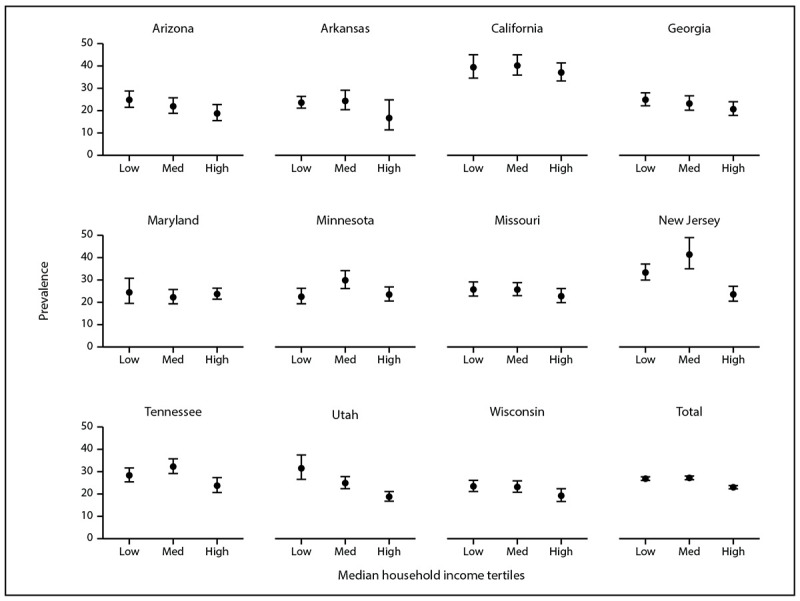
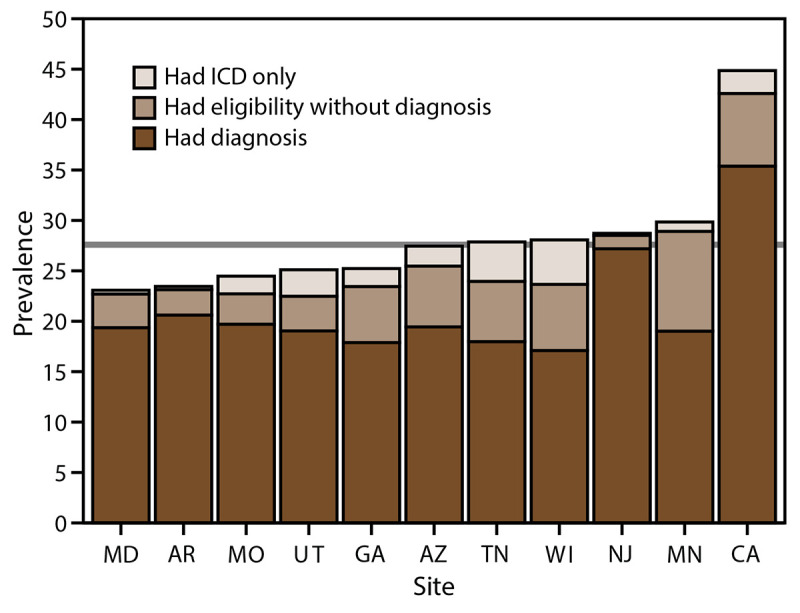
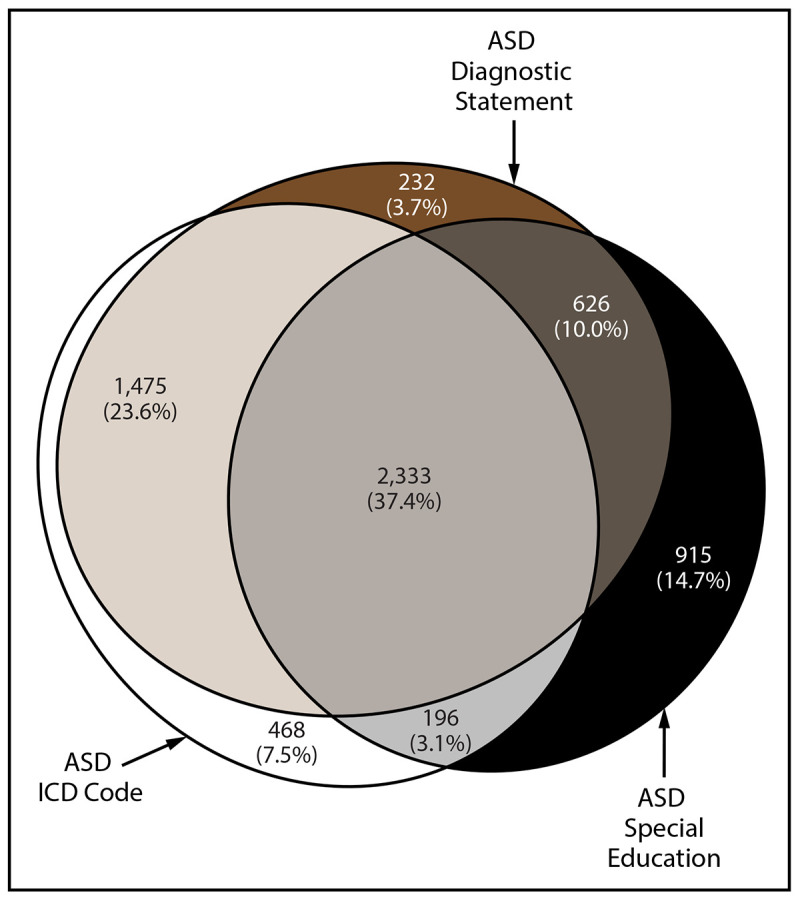
Problem/Condition: Autism spectrum disorder (ASD). Period Covered: 2020. Description of System: The Autism and Developmental Disabilities Monitoring (ADDM) Network is an active surveillance program that provides estimates of the prevalence of ASD among children aged 8 years. In 2020, there were 11 ADDM Network sites across the United States (Arizona, Arkansas, California, Georgia, Maryland, Minnesota, Missouri, New Jersey, Tennessee, Utah, and Wisconsin). To ascertain ASD among children aged 8 years, ADDM Network staff review and abstract developmental evaluations and records from community medical and educational service providers. A child met the case definition if their record documented 1) an ASD diagnostic statement in an evaluation, 2) a classification of ASD in special education, or 3) an ASD International Classification of Diseases (ICD) code. Results: For 2020, across all 11 ADDM sites, ASD prevalence per 1,000 children aged 8 years ranged from 23.1 in Maryland to 44.9 in California. The overall ASD prevalence was 27.6 per 1,000 (one in 36) children aged 8 years and was 3.8 times as prevalent among boys as among girls (43.0 versus 11.4). Overall, ASD prevalence was lower among non-Hispanic White children (24.3) and children of two or more races (22.9) than among non-Hispanic Black or African American (Black), Hispanic, and non-Hispanic Asian or Pacific Islander (A/PI) children (29.3, 31.6, and 33.4 respectively). ASD prevalence among non-Hispanic American Indian or Alaska Native (AI/AN) children (26.5) was similar to that of other racial and ethnic groups. ASD prevalence was associated with lower household income at three sites, with no association at the other sites.Across sites, the ASD prevalence per 1,000 children aged 8 years based exclusively on documented ASD diagnostic statements was 20.6 (range = 17.1 in Wisconsin to 35.4 in California). Of the 6,245 children who met the ASD case definition, 74.7% had a documented diagnostic statement of ASD, 65.2% had a documented ASD special education classification, 71.6% had a documented ASD ICD code, and 37.4% had all three types of ASD indicators. The median age of earliest known ASD diagnosis was 49 months and ranged from 36 months in California to 59 months in Minnesota.Among the 4,165 (66.7%) children with ASD with information on cognitive ability, 37.9% were classified as having an intellectual disability. Intellectual disability was present among 50.8% of Black, 41.5% of A/PI, 37.8% of two or more races, 34.9% of Hispanic, 34.8% of AI/AN, and 31.8% of White children with ASD. Overall, children with intellectual disability had earlier median ages of ASD diagnosis (43 months) than those without intellectual disability (53 months). Interpretation: For 2020, one in 36 children aged 8 years (approximately 4% of boys and 1% of girls) was estimated to have ASD. These estimates are higher than previous ADDM Network estimates during 2000-2018. For the first time among children aged 8 years, the prevalence of ASD was lower among White children than among other racial and ethnic groups, reversing the direction of racial and ethnic differences in ASD prevalence observed in the past. Black children with ASD were still more likely than White children with ASD to have a co-occurring intellectual disability. Public Health Action: The continued increase among children identified with ASD, particularly among non-White children and girls, highlights the need for enhanced infrastructure to provide equitable diagnostic, treatment, and support services for all children with ASD. Similar to previous reporting periods, findings varied considerably across network sites, indicating the need for additional research to understand the nature of such differences and potentially apply successful identification strategies across states.
Overview
The claims and statistics of this paper haven’t been checked yet.
Free: it reads the open-access text and checks the first 5 claims that cite a source we can check. Create a free account to check every claim.
Integrity signals
Registry
Cites
Statistics
Figures
Verification
Claims the paper makes
The claims and statistics of this paper haven’t been checked yet.
Free: it reads the open-access text and checks the first 5 claims that cite a source we can check. Create a free account to check every claim.
Claims other papers make about this one
Each is checked against this paper’s own text: does it say what the citing paper says it does?
The source backs part of the claim, not all of it — or backs it for a different population, condition or comparison.
In the citing paper
“Previous research reported that autism diagnosis occurs at a boy-to-girl ratio of 3.8:1, with the mother typically serving as the primary caregiver (Herrero et al., 2024;Maenner et al., 2023).”
From Mindfulness and parenting stress among parents of autistic children: The mediation of resilience and psychological flexibility (2025) · cites this paper as Maenner et al., 2023
Experimental — accuracy not yet measuredThe source backs part of the claim, not all of it — or backs it for a different population, condition or comparison.
In the citing paper
“Understanding differential outcomes based on race, ethnicity, gender, sex, age, and socioeconomic factors173,174 is highly limited.”
From Executive function deficits in attention-deficit/hyperactivity disorder and autism spectrum disorder (2024) · cites this paper as [174]
Experimental — accuracy not yet measuredThe source backs part of the claim, not all of it — or backs it for a different population, condition or comparison.
In the citing paper
“California has had the highest prevalence among children aged 4 years and 8 years since joining the ADDM Network in 2018 (6,10,11,13)”
From Prevalence and Early Identification of Autism Spectrum Disorder Among Children Aged 4 and 8 Years — Autism and Developmental Disabilities Monitoring Network, 16 Sites, United States, 2022 (2025) · cites this paper as [6]
Experimental — accuracy not yet measuredThe source backs part of the claim, not all of it — or backs it for a different population, condition or comparison.
In the citing paper
“The male-to-female ratio among children aged 4 years was similar across sites, but the ratio was lower than among children aged 8 years (11).”
From Early Identification of Autism Spectrum Disorder Among Children Aged 4 Years — Autism and Developmental Disabilities Monitoring Network, 11 Sites, United States, 2020 (2023) · cites this paper as [11]
Experimental — accuracy not yet measuredThe source backs part of the claim, not all of it — or backs it for a different population, condition or comparison.
In the citing paper
“All sites had access to health and education records in 2020 (11).”
From Early Identification of Autism Spectrum Disorder Among Children Aged 4 Years — Autism and Developmental Disabilities Monitoring Network, 11 Sites, United States, 2020 (2023) · cites this paper as [11]
Experimental — accuracy not yet measured
15 more claims about this paper
Create a free account to see every claim other papers make about this one.
Self-check
Percentages, sums and reported differences re-computed from the paper’s own numbers.
The self-check needs the paper’s full text.
Citations
Cites
1 retracted
Christensen, D. L., Baio, J., Braun, K. V. N., Bilder, D., Charles, J., Constantino, J. N., Daniels, J., Durkin, M. S., Fitzgerald, R. T., Kurzius-Spencer, M., et al. (2016) · MMWR. Surveillance Summaries · doi:10.15585/mmwr.ss6503a1 · Cited by 1,964
Self-citationRetractedDiagnostic and Statistical Manual of Mental Disorders
American Psychiatric Association (2013) · doi:10.1176/appi.books.9780890425596 · Cited by 116,369
Baio, J., Wiggins, L., Christensen, D. L., Maenner, M. J., Daniels, J., Warren, Z., Kurzius-Spencer, M., Zahorodny, W., Robinson, C., Rosenberg, et al. (2018) · MMWR. Surveillance Summaries · doi:10.15585/mmwr.ss6706a1 · Cited by 6,078
Self-citationMaenner, M. J., Shaw, K. A., Baio, J., EdS1, Washington, A., Patrick, M., DiRienzo, M., Christensen, D. L., Wiggins, L. D., Pettygrove, S., et al. (2020) · MMWR. Surveillance Summaries · doi:10.15585/mmwr.ss6904a1 · Cited by 3,780 · cited 2×
“2 3 US Department of Health and Human Services/Centers for Disease Control and Prevention necessitate record review if those codes closely aligned with program-recommended ICD codes (11).”
BackgroundSelf-citationMaenner, M. J., Shaw, K. A., Bakian, A. V., Bilder, D. A., Durkin, M. S., Esler, A., Furnier, S. M., Hallas, L., Hall-Lande, J., Hudson, A., et al. (2021) · MMWR. Surveillance Summaries · doi:10.15585/mmwr.ss7011a1 · Cited by 1,818 · cited 5×
“These gaps narrowed over time until ASD prevalence among Black and Hispanic matched prevalence among White children for the first time in 2016 and 2018, respectively (11,12).”
BackgroundMethodInfluentialSelf-citationPrevalence of Autism in a US Metropolitan Area
Yeargin-Allsopp, M., Rice, C., Karapurkar, T., Doernberg, N., Boyle, C., & Murphy, C. (2003) · JAMA · doi:10.1001/jama.289.1.49 · Cited by 1,248 · cited 2×
“CDC began monitoring the prevalence of ASD in metropolitan Atlanta, Georgia, in 1996 as part of its Metropolitan Atlanta Developmental Disabilities Surveillance Program (2).”
Background(2009) · PubMed · Cited by 804
Research works printed but not linked: 2
- Autism and Developmental Disabilities Monitoring Network Surveillance Year 2006 Principal Investigators. Prevalence of autism spectrum disorders—Autism and Developmental Disabilities Monitoring Network, United States, 2006. MMWR Surveill Summ 2009; 58(No. SS–10). 20023608
- Shaw KA, Maenner MJ, Bakian AV, Early identification of autism spectrum disorder among children aged 4 years—Autism and Developmental Disabilities Monitoring Network, 11 sites, United States, 2018. MMWR Surveill Summ 2021; 70(No. SS–10): 1– 14. 10.15585/mmwr.ss7010a1 34855727 PMC8639027 · DOI · Paper page
Cited by
Items 101–200 of 1,000
Bei, R., Liu, Y., Wang, Y., Huang, Y., Li, M., Zhao, Y., & Tong, X. (2024) · CHI Conference on Human Factors in Computing Systems · doi:10.1145/3613904.3642829 · Cited by 33
Autism Spectrum, Hikikomori Syndrome and Internet Gaming Disorder: Is There a Link?
Dell’Osso, L., Amatori, G., Muti, D., Giovannoni, F., Parri, F., Violi, M., Cremone, I. M., & Carpita, B. (2023) · Brain Sciences · doi:10.3390/brainsci13071116 · Cited by 35
Dai, Y., Chen, M., Deng, T., Huang, B., Ji, Y., Feng, Y., Liu, S., & Zhang, L. (2023) · Autism Research · doi:10.1002/aur.3061 · Cited by 35
Physical and Pharmacologic Restraint in Hospitalized Children With Autism Spectrum Disorder
Calabrese, M. E. A., Sideridis, G. D., & Weitzman, C. C. (2023) · PEDIATRICS · doi:10.1542/peds.2023-062172 · Cited by 29
Time to Change How We Measure Quality of Life and Well-Being in Autism: A Systematic Review
Simpson, K., Paynter, J. M., Westerveld, M. F., van der Meer, L. A. J., Patrick, L., Hogg, G., Heussler, H., Heyworth, M., Gable, A., Chandran, H. S., et al. (2024) · Review Journal of Autism and Developmental Disorders · doi:10.1007/s40489-024-00440-7 · Cited by 34
“…95% of autistic children reported to have at least one co-occurring condition (Soke et al., 2018), 30% of autistic children estimated to have a co-occurring intellectual disability (Maenner et al., 2023), and an estimated 30% of children designated as non-speaking (Tager-Flusberg & Kasari, 2013).”
Review of Elevated Para-Cresol in Autism and Possible Impact on Symptoms
Flynn, C. K., Adams, J. B., Krajmalnik‐Brown, R., Khoruts, A., Sadowsky, M. J., Nirmalkar, K., Takyi, E., & Whiteley, P. (2025) · International Journal of Molecular Sciences · doi:10.3390/ijms26041513 · Cited by 29
“The prevalence of ASD is estimated at approximately 1 in 36 children aged eight years and presents with a 4:1 male to female gender bias [2].”
Machine Learning Differentiation of Autism Spectrum Sub-Classifications
Thapa, R., Garikipati, A., Ciobanu, M., Singh, N. P., Browning, E., Decurzio, J., Barnes, G., Dinenno, F., Mao, Q., & Das, R. (2023) · Journal of Autism and Developmental Disorders · doi:10.1007/s10803-023-06121-4 · Cited by 31
Age-atypical brain functional networks in autism spectrum disorder: a normative modeling approach
Jiang, A., Ma, X., Li, S., Wang, L., Yang, B., Wang, S., Li, M., & Dong, G. (2024) · Psychological Medicine · doi:10.1017/s0033291724000138 · Cited by 28
“According to the Centers for Disease Control and Prevention (CDC), one in 36 children in the United States is estimated to be affected by ASD (Maenner et al., 2023).”
Metabolic network analysis of pre-ASD newborns and 5-year-old children with autism spectrum disorder
Lingampelly, S. S., Naviaux, J. C., Heuer, L. S., Monk, J. M., Li, K., Wang, L., Haapanen, L. A. D., Kelland, C., de Water, J. V., & Naviaux, R. K. (2024) · Communications Biology · doi:10.1038/s42003-024-06102-y · Cited by 36
Yeung, M. K.-C., Bai, J., & Mak, K. (2024) · Autism Research · doi:10.1002/aur.3196 · Cited by 33
“This disorder is estimated to affect 1 in 36 children, with boys nearly four times as likely to be diagnosed as girls (Maenner et al., 2023).”
The role of nutrition and gut microbiome in childhood brain development and behavior
Jiang, Y., & Li, Y. (2025) · Frontiers in Nutrition · doi:10.3389/fnut.2025.1590172 · Cited by 71
Goldblum, J., McFayden, T. C., Bristol, S. K., Putnam, O. C., Wylie, A. C., & Harrop, C. (2023) · Journal of Autism and Developmental Disorders · doi:10.1007/s10803-023-06104-5 · Cited by 31
Developmental Trajectories of Autism
Fountain, C., Winter, A. S., Cheslack‐Postava, K., & Bearman, P. (2023) · PEDIATRICS · doi:10.1542/peds.2022-058674 · Cited by 31
Boulton, K., Hodge, M. A., Levu, K., Ong, N., Silove, N., & Guastella, A. J. (2023) · Autism Research · doi:10.1002/aur.3064 · Cited by 39
Maïsterrena, A., de Chaumont, F., Longueville, J.-E., Balado, É., Ey, E., & Jaber, M. (2024) · Progress in Neuro-Psychopharmacology and Biological Psychiatry · doi:10.1016/j.pnpbp.2024.110948 · Cited by 30
Saeliw, T., Kanlayaprasit, S., Thongkorn, S., Songsritaya, K., Sanannam, B., Sae‐Lee, C., Jindatip, D., Hu, V. W., & Sarachana, T. (2023) · International Journal of Molecular Sciences · doi:10.3390/ijms24087518 · Cited by 23
Differential Diagnosis of Autism and Other Neurodevelopmental Disorders
Olson, L., Bishop, S. L., & Thurm, A. E. (2024) · Pediatric Clinics of North America · doi:10.1016/j.pcl.2023.12.004 · Cited by 37
Esposito, D., Cruciani, G., Zaccaro, L., Carlo, E. D., Spitoni, G. F., Manti, F., Carducci, C., Fiori, E., Leuzzi, V., & Pascucci, T. (2024) · Brain Sciences · doi:10.3390/brainsci14050481 · Cited by 28
“Approximately 1/36 8-year-old children in the US are estimated to be diagnosed with ASD [3], while the prevalence globally is about 1 per 100 children [4].”
BackgroundFeng, S., Gong, Y., Xia, L., Lang, Y., Shen, Y., Li, H., Feng, W., Chen, F., & Chen, Y. (2024) · Advanced Materials · doi:10.1002/adma.202405655 · Cited by 27
Hou, Y., Song, Z., Deng, J., & Song, X. (2024) · Frontiers in Public Health · doi:10.3389/fpubh.2024.1399642 · Cited by 34
The Future of Disentangling the Heterogeneity of Autism With Neuroimaging Studies
Duan, X., Shan, X., Uddin, L. Q., & Chen, H. (2024) · Biological Psychiatry · doi:10.1016/j.biopsych.2024.08.008 · Cited by 31
Xu, F., Gage, N. A., Zeng, S., Zhang, M., Iun, A., O’Riordan, M., & Kim, E. (2024) · Journal of Autism and Developmental Disorders · doi:10.1007/s10803-024-06563-4 · Cited by 38
“Maenner et al. (2023) reported ASD is 3.8 times more prevalent among boys than girls.”
InfluentialXiao, J., Ming, Y., Li, L., Huang, X., Zhou, Y., Ou, J., Kou, J., Feng, R., Ma, R., Zheng, Q., et al. (2025) · Biological Psychiatry · doi:10.1016/j.biopsych.2025.01.002 · Cited by 29
Masoomi, M., Saeidi, M., Cedeno, R., Shahrivar, Z., Tehrani‐Doost, M., Ramirez, Z., Gandi, D. A., & Gunturu, S. (2025) · Frontiers in Child and Adolescent Psychiatry · doi:10.3389/frcha.2024.1520854 · Cited by 35
Grant, A., Griffiths, C., Williams, K., & Brown, A. (2023) · Maternal and Child Nutrition · doi:10.1111/mcn.13581 · Cited by 32
Development of Deep Ensembles to Screen for Autism and Symptom Severity Using Retinal Photographs
Kim, J. H., Hong, J., Choi, H., Kang, H. G., Yoon, S., Hwang, J. Y., Park, Y. R., & Cheon, K.-A. A. (2023) · JAMA Network Open · doi:10.1001/jamanetworkopen.2023.47692 · Cited by 31
An evolutionary perspective on complex neuropsychiatric disease
McClellan, J., Zoghbi, A. W., Buxbaum, J. D., Cappi, C., Crowley, J. J., Flint, J., Grice, D. E., Gülsüner, S., Iyegbe, C. O., Jain, S., et al. (2023) · Neuron · doi:10.1016/j.neuron.2023.10.037 · Cited by 25
Martin, H., Choi, J. E., Rodrigues, A. R., & Eshel, N. (2024) · JAACAP Open · doi:10.1016/j.jaacop.2024.01.010 · Cited by 33
Hedlund, Å., & Jordal, M. (2024) · International Journal of Nursing Studies · doi:10.1016/j.ijnurstu.2024.104857 · Cited by 33
Manufactured Chemicals and Children’s Health — The Need for New Law
The Consortium for Children’s Environmental Health, Wirth, D. A., Cropper, M., Axelrad, D. A., Bald, C., Bhatnagar, A., Birnbaum, L. S., Burke, T. A., Chiles, T. C., Geiser, K., et al. (2025) · New England Journal of Medicine · doi:10.1056/nejmms2409092 · Cited by 26
Gupta, N., Srinivasan, S., & Gupta, M. (2025) · CNS Spectrums · doi:10.1017/s1092852925000021 · Cited by 29
Qin, Q., Fan, L., Zeng, X., Zheng, D., Wang, H., Li, M., Jiang, Y., Wang, H., Liu, H., Liang, S., et al. (2025) · Journal of Nanobiotechnology · doi:10.1186/s12951-025-03250-z · Cited by 26
“Autism spectrum disorder (ASD) is currently one of the fastest-growing neurodevelopmental disorders characterized by high heritability and clinical heterogeneity, which leads to a huge socioeconomic burden [1].”
Sulforaphane and Brain Health: From Pathways of Action to Effects on Specific Disorders
Fahey, J. W., Liu, H., Batt, H., Panjwani, A. A., & Tsuji, P. A. (2025) · Nutrients · doi:10.3390/nu17081353 · Cited by 31
“It has most recently been estimated to affect 1 out of 36 children aged 8 years old [188].”
Fang, Z., Zhou, Y., Chen, K. G., Wang, J., Liu, X., & Jia, P. (2025) · Frontiers in Neuroscience · doi:10.3389/fnins.2025.1587818 · Cited by 29
Koh, S. H. (2024) · Frontiers in Psychology · doi:10.3389/fpsyg.2024.1399902 · Cited by 21
Sala, G., Hooley, J., Hooley, M., & Stokes, M. A. (2023) · Journal of Autism and Developmental Disorders · doi:10.1007/s10803-023-06109-0 · Cited by 26
A cross-sectional analysis of TikTok autism spectrum disorder content quality
Brown, E., Kuzmiak, F., Singh, A., Monga, V., Bell, T. D., Nolan, J., Schlenker, M. K., Moore, J., & Kashyap, R. (2024) · Emerging Trends in Drugs Addictions and Health · doi:10.1016/j.etdah.2024.100150 · Cited by 22
Fatemi, S. H., Eschenlauer, A. C., Aman, J. W., Folsom, T. D., & Chekouo, T. (2024) · Cerebral Cortex · doi:10.1093/cercor/bhae044 · Cited by 26
Wilson, R. B., Vangala, S., Reetzke, R., Piergies, A. M. H., Ozonoff, S. J., & Miller, M. (2024) · Autism Research · doi:10.1002/aur.3150 · Cited by 26
“Furthermore, although clinical symptoms of autism emerge as early as the first year of life, the average age of ASD diagnosis in the United States has remained at 4 years of age for decades (Maenner et al. 2023).”
Latrèche, K., Godel, M., Franchini, M., Journal, F., Kojovic, N., & Schaer, M. (2024) · Autism · doi:10.1177/13623613241253015 · Cited by 34
“In the United States, it is estimated that 1 in every 36 children receives a diagnosis of ASD (Maenner et al., 2023).”
Xia, C., Chen, H., Han, J., Zhang, D., & Li, K. (2024) · IEEE Transactions on Affective Computing · doi:10.1109/taffc.2024.3412032 · Cited by 25
“The data released by the Centers for Disease Control and Prevention in the United States show that the incidence rate of ASD is significantly rising each year [3].”
Retuerto, M., Al-Shakhshir, H., Herrada, J., McCormick, T. S., & Ghannoum, M. A. (2024) · Nutrients · doi:10.3390/nu16173004 · Cited by 28
“In 2020, the reported prevalence was 1 in 36 children aged 8 years [4].”
BackgroundWhy do we need sex‐balanced studies of autism?
Nordahl, C. W. (2023) · Autism Research · doi:10.1002/aur.2971 · Cited by 29
Wang, Y., Yu, S., & Li, M. (2023) · Frontiers in Cellular Neuroscience · doi:10.3389/fncel.2023.1226580 · Cited by 22
Children with Autism Spectrum Disorder and Abnormalities of Clinical EEG: A Qualitative Review
Bosetti, C., Ferrini, L., Ferrari, A. R., Bartolini, E., & Calderoni, S. (2024) · Journal of Clinical Medicine · doi:10.3390/jcm13010279 · Cited by 27
Child Health Needs and the Developmental–Behavioral Pediatrics Workforce Supply: 2020–2040
Baum, R., Berman, B. D., Fussell, J. J., Patel, R. V., Roizen, N., Voigt, R. G., & Leslie, L. K. (2024) · PEDIATRICS · doi:10.1542/peds.2023-063678h · Cited by 30
Trajectory of depressive symptoms over adolescence in autistic and neurotypical youth
Corbett, B. A., Muscatello, R. A., McGonigle, T., Vandekar, S., Burroughs, C., & Sparks, S. (2024) · Molecular Autism · doi:10.1186/s13229-024-00600-w · Cited by 30
“Historically, a male bias has been reported with an average 4:1 male-to-female ratio [9].”
BackgroundResultInfluentialIdentification of ASD Children based on Video Data
Li, J., Zhong, Y., & Ouyang, G. (2018) · Proceedings - International Conference on Pattern Recognition/Proceedings/International Conference on Pattern Recognition · doi:10.1109/icpr.2018.8545113 · Cited by 25
Intellectual disability and autism prevalence in Western Australia: impact of the NDIS
Bourke, J., Sanders, R., Jones, J., Ranjan, M., Wong, K., & Leonard, H. (2024) · Frontiers in Psychiatry · doi:10.3389/fpsyt.2024.1359505 · Cited by 28
Bo, L., van der Miesen, A. I. R., Klomp, S. E., Williams, Z. J., Szatmári, P., & Lai, M. (2024) · EClinicalMedicine · doi:10.1016/j.eclinm.2024.102849 · Cited by 29
“11 Despite the increased co-occurrence and growing body of research, there is scant clinical care guidance available for autistic TGD individuals, primarily because the limited amount of long-term outcome studies of TGD people do not distinguish between fi ndings for autistic and non-autistic…”
BackgroundHalliday, A. R., Vucic, S. N., Georges, B., LaRoche, M., Mendoza Pardo, M. A., Swiggard, L. O., McDonald, K., Olofsson, M., Menon, S. N., Francis, S. M., et al. (2024) · Frontiers in Psychiatry · doi:10.3389/fpsyt.2024.1474003 · Cited by 20
Shanmugam, S., & Menaka, R. (2025) · IEEE Access · doi:10.1109/access.2025.3542390 · Cited by 22
Hawkins, B., Montgomery, M., Bokota, G., Santoyo, M., Giron, E., & Eltokhi, A. (2025) · Gut Microbes · doi:10.1080/19490976.2025.2574934 · Cited by 24
Negative first impression judgements of autistic children by non-autistic adults
Boucher, T. Q., Lukacs, J. N., Scheerer, N. E., & Iarocci, G. (2023) · Frontiers in Psychiatry · doi:10.3389/fpsyt.2023.1241584 · Cited by 27
Early Prediction of Autistic Spectrum Disorder Using Developmental Surveillance Data
Amit, G., Bilu, Y., Sudry, T., Tsadok, M. A., Zimmerman, D. R., Baruch, R., Kasir, N., Akiva, P., & Sadaka, Y. (2024) · JAMA Network Open · doi:10.1001/jamanetworkopen.2023.51052 · Cited by 25
Virtual Reality Utilized for Safety Skills Training for Autistic Individuals: A Review
Liu, L., Yao, X., Chen, J., Zhang, K., Liu, L., Wang, G., & Ling, Y. (2024) · Behavioral Sciences · doi:10.3390/bs14020082 · Cited by 26
Nedungadi, P., Shah, S. M., Stokes, M. A., Nair, V. K., Moorkoth, A., & Raman, R. (2024) · Frontiers in Psychiatry · doi:10.3389/fpsyt.2023.1294254 · Cited by 31
Ben‐Sasson, A., Guedalia, J., Nativ, L., Ilan, K., Shaham, M., & Gabis, L. V. (2024) · Children · doi:10.3390/children11040429 · Cited by 28
“Autism spectrum disorders (ASD) manifest through social communication deficits and atypical behaviors, as listed in The Diagnostic and Statistical Manual of Mental Disorders, Fifth Edition (DSM-5) [1] and it may affect 1:36 individuals [2].”
BackgroundTime is of the essence: Age at autism diagnosis, sex assigned at birth, and psychopathology
Smith, J. V., McQuaid, G. A., Wallace, G. L., Neuhaus, E., Lopez, A., Ratto, A. B., Jack, A., Khuu, A., Webb, S. J., Verbalis, A. D., et al. (2024) · Autism · doi:10.1177/13623613241249878 · Cited by 30
Deng, S., Tan, S., Guo, C., Liu, Y., & Li, X. (2024) · Frontiers in Neuroscience · doi:10.3389/fnins.2024.1391191 · Cited by 21
Wang, X.-N., Zhang, T., Han, B.-C., Luo, W., Liu, W.-H., Yang, Z., Disi, A., Sun, Y., & Yang, J.-C. (2024) · Current Medical Science · doi:10.1007/s11596-024-2938-3 · Cited by 22
Vignon, A., Dudon, G., Oliva, G., Thirard, S., Alenda, U. G., Brugoux, A., Cazevieille, C., Imbert, J., Bellières, C., Lehmann, S., et al. (2025) · Journal of Hazardous Materials · doi:10.1016/j.jhazmat.2025.138640 · Cited by 26
Atypical antipsychotics for autism spectrum disorder: a network meta-analysis
Meza, N., Franco, J. V. A., Sguassero, Y., Núñez, V., Liquitay, C. M. E., Rees, R., Williams, K. J., Rojas, V., Rojas, F., Pringsheim, T. M., et al. (2025) · Cochrane Database of Systematic Reviews · doi:10.1002/14651858.cd014965.pub2 · Cited by 41
Ahmed, M., Hussain, S., Pirzado, F. A., Gárate-Escamilla, A. K., Amaya, I., Ochoa‐Ruiz, G., & Ortíz-Bayliss, J. C. (2025) · Applied Sciences · doi:10.3390/app15148056 · Cited by 35
Ortí, J. E. D. L. R., Moneti, C., Serrano-Ballesteros, P., Castellano, G., Bayona-Babiloni, R., Carriquí-Suárez, A. B., Motos-Muñoz, M., Proaño, B., & Benlloch, M. (2023) · Nutrients · doi:10.3390/nu15143265 · Cited by 20
Morrel, J., Singapuri, K., Landa, R. J., & Reetzke, R. (2023) · Frontiers in Human Neuroscience · doi:10.3389/fnhum.2023.1211676 · Cited by 27
Fowler, S. P., Gimeno, D., Swartz, M. D., Granados, P. S., Heilbrun, L. P., & Palmer, R. F. (2023) · Nutrients · doi:10.3390/nu15173772 · Cited by 21
Toward a strengths-based model for designing virtual reality learning experiences for autistic users
Schmidt, M., Newbutt, N. A., Lee, M., Lu, J., Francois, M.-S., Antonenko, P., & Glaser, N. J. (2023) · Autism · doi:10.1177/13623613231208579 · Cited by 24
Fannin, D. K., Williams, E. G., Fuller, M. C., Pearson, J. N., Boyd, B. A., Drame, E. R., Taylor, J., Dickerson, A. S., Spinks‐Franklin, A., & Coles‐White, D. (2024) · Autism Research · doi:10.1002/aur.3168 · Cited by 24
“%) youth has narrowed (Maenner et al., 2023).”
BackgroundInfluentialDou, J., Schmidt, R. J., Volk, H. E., Nitta, M. M., Feinberg, J. I., Newschaffer, C. J., Croen, L., Hertz‐Picciotto, I., Fallin, M. D., & Bakulski, K. M. (2024) · Environmental Health · doi:10.1186/s12940-024-01101-2 · Cited by 27
Zhao, W., Le, J., Liu, Q., Zhu, S., Lan, C., Zhang, Q., Zhang, Y., Li, Q., Kou, J., Yang, W., et al. (2024) · Translational Psychiatry · doi:10.1038/s41398-024-03025-4 · Cited by 23
“…characterized by two core symptoms including dif fi culties in social communication and interaction and restricted and repetitive behaviors (Diagnostic and Statistical Manual of Mental Disorders, DSM-V), with an estimated prevalence of around 2.76% [1] in the U.S. and around 1% in China [2].”
BackgroundInfluentialPerinatal and Postpartum Health Among People With Intellectual and Developmental Disabilities
Shea, L., Sadowsky, M., Tao, S., Rast, J. E., Schendel, D., Chesnokova, A., & Headen, I. E. (2024) · JAMA Network Open · doi:10.1001/jamanetworkopen.2024.28067 · Cited by 22
Berry, A. S. F., Finucane, B. M., Myers, S. M., Walsh, L. K., Seibert, J. M., Martin, C. L., Ledbetter, D. H., & Oetjens, M. T. (2024) · Nature Communications · doi:10.1038/s41467-024-53211-7 · Cited by 25
Ferguson, E. F., Spackman, E. K., Cai, R. Y., Hardan, A. Y., & Uljarević, M. (2024) · Autism Research · doi:10.1002/aur.3269 · Cited by 23
“…present in upwards of 40% – 50% of autistic individuals across the entire cognitive ability range and often persist in varying forms and intensity across the lifespan (Duerden et al., 2012; Laverty et al., 2020; Maenner et al., 2023; Steenfeldt-Kristensen et al., 2020; Totsika & Hastings, 2009).”
Sasso, I., & Sansour, T. (2024) · Review Journal of Autism and Developmental Disorders · doi:10.1007/s40489-024-00474-x · Cited by 31
Soares, R. D. C. S., Cândido, F. G., Filgueiras, M. D. S., Rosa, C. D. O. B., de Novaes, J. F., & Araújo, R. M. A. (2024) · Frontiers in Public Health · doi:10.3389/fpubh.2024.1392478 · Cited by 39
Haroon, R., & Dogar, F. R. (2024) · International ACM SIGACCESS Conference on Computers and Accessibility (ASSETS) · doi:10.1145/3663548.3675633 · Cited by 28
Autistic and transgender/gender diverse people’s experiences of health and healthcare
Green, K., Weir, E. M., Wright, L., Allison, C. L., & Baron‐Cohen, S. (2025) · Molecular Autism · doi:10.1186/s13229-024-00634-0 · Cited by 28
“Recent estimates suggest around 1 in 36 children are autistic, although recognition and diagnosis of autism is increasing over time and estimates vary across studies [2–4].”
Prevalence of Motor Milestone Delays in Autistic Children
Pokoski, O. M., Furnier, S. M., Gangnon, R. E., Howerton, E. M., Kirby, A. V., Protho, T., Schweizer, M. L., Travers, B. G., & Durkin, M. S. (2025) · Archives of Pediatrics and Adolescent Medicine · doi:10.1001/jamapediatrics.2025.0216 · Cited by 20
Self-citationKids Across the Spectrums: Growing Up Autistic in the Digital Age
Alper, M. (2023) · The MIT Press eBooks · doi:10.7551/mitpress/14152.001.0001 · Cited by 26
Comorbidities Affecting Children with Autism Spectrum Disorder: A Retrospective Chart Review
Burns, J., Phung, R. R., McNeill, S., Hanlon‐Dearman, A., & Ricci, M. F. (2023) · Children · doi:10.3390/children10081414 · Cited by 30
Goodrich, A. J., Kleeman, M. J., Tancredi, D. J., Ludeña, Y., Bennett, D. H., Hertz‐Picciotto, I., & Schmidt, R. J. (2023) · Environmental Research · doi:10.1016/j.envres.2023.117624 · Cited by 19
Nakamura, T., Yoshihara, T., Tanegashima, C., Kadota, M., Kobayashi, Y. O., Honda, K., Ishiwata, M., Ueda, J., Hara, T., Nakanishi, M., et al. (2024) · Molecular Psychiatry · doi:10.1038/s41380-024-02479-8 · Cited by 21
“Autism spectrum disorder (ASD) is a group of neurodevelopmental conditions characterized by impaired sociality and repetitive behaviors [1 – 5], which is common and ~2.8% of children are diagnosed with this disorder in the United States [6].”
BackgroundInfluentialEstablishment of animal models and behavioral studies for autism spectrum disorders
Jiao, D., Xu, Y., Tian, F., Zhou, Y., Chen, D., & Wang, Y. (2024) · Journal of International Medical Research · doi:10.1177/03000605241245293 · Cited by 23
O’Sharkey, K., Mitra, S., Paik, S.-A., Chow, T., Cockburn, M., & Ritz, B. R. (2024) · Journal of Autism and Developmental Disorders · doi:10.1007/s10803-024-06371-w · Cited by 25
“…marginally higher cumulative incidences than Black and Hispanic children; however,by 2004, Black children surpassed White and API children, and by 2012, Hispanic children followed as also reported by others (Aylward et al., 2021 ; Maenner, 2023 ; Nevison & Parker, 2020 ; Pedersen et al., 2012 ).”
Mid‐childhood autism sibling recurrence in infants with a family history of autism
Bazelmans, T., Arthur, R., Pasco, G., Shephard, E., Milosavljevic, B., Ali, J. B., Pickles, A. R., Johnson, M. H., Jones, E. J. H., Charman, T., et al. (2024) · Autism Research · doi:10.1002/aur.3182 · Cited by 20
“Recurrence was higher in males than females, in line with previous family history and population studies (Maenner et al., 2023; Ozonoff et al., 2011; Roman-Urrestarazu et al., 2021).”
Wan, L., Li, Y., Zhu, G., Yang, D., Li, F., Wang, W., Chen, J., Yang, G., & Li, R. (2024) · NeuroImage · doi:10.1016/j.neuroimage.2024.120895 · Cited by 23
Parish‐Morris, J., Sarıyanidi, E., Zampella, C., Bartley, G. K., Ferguson, E. F., Pallathra, A. A., Bateman, L., Plate, S. N., Cola, M., Pandey, J., et al. (2018) · Workshop on Computational Linguistics and Clinical Psychology (CLPsych) · doi:10.18653/v1/w18-0616 · Cited by 19
ReCANVo: A database of real-world communicative and affective nonverbal vocalizations
Johnson, K. T., Narain, J., Quatieri, T. F., Maes, P., & Picard, R. W. (2023) · Scientific Data · doi:10.1038/s41597-023-02405-7 · Cited by 30
Nyquist, C. B., Torgersen, L., David, L. W., Diseth, T. H., Magnus, P. M., Biele, G., & Wæhre, A. (2024) · European Child & Adolescent Psychiatry · doi:10.1007/s00787-024-02508-5 · Cited by 23
RetractedToward a better understanding of T cell dysregulation in autism: An integrative review
Moreno, R. J., Amara, R. A., & Ashwood, P. (2024) · Brain Behavior and Immunity · doi:10.1016/j.bbi.2024.10.009 · Cited by 19
“This is a more than 5-fold increase from estimates of twenty years ago when the prevalence was 1 in 150 (Maenner, 2023).”
The genetic landscape of autism spectrum disorder in an ancestrally diverse cohort
Gogate, A., Kaur, K. J., Khalil, R., Bashtawi, M. A., Morris, M. A., Goodspeed, K., Evans, P., & Chahrour, M. H. (2024) · npj Genomic Medicine · doi:10.1038/s41525-024-00444-6 · Cited by 26
Hassan, I., Nahid, N., Islam, M., Hossain, S., Schuller, B. W., & Ahad, M. A. R. (2025) · IEEE Transactions on Neural Systems and Rehabilitation Engineering · doi:10.1109/tnsre.2025.3546519 · Cited by 23
“Furthermore, epidemiological studies suggest a concerning increase in ASD prevalence worldwide over the past fifty years, with occurrences rising from 6.7 to 23.0 per 1,000 children between 2000 and 2018 alone [3], [4].”
InfluentialDaniel, K., Jiang, Q., & Wood, M. S. (2025) · Nutrients · doi:10.3390/nu17060990 · Cited by 23
“[11].”
Sznajder, Ł. J., Khan, M., Ciesiołka, A., Tadross, M., Nutter, C. A., Taylor, K., Pearson, C. E., Lewis, M. H., Hines, R. M., Swanson, M. S., et al. (2025) · Nature Neuroscience · doi:10.1038/s41593-025-01943-0 · Cited by 24
Alhrbi, A., Vlachopoulos, D., Healey, E., Massoud, A. T., Morris, C., & Iniesta, R. R. (2025) · Journal of Human Nutrition and Dietetics · doi:10.1111/jhn.70099 · Cited by 28
Balancing the Teeter Totter: A Dialectical View of Managing Neurodiverse Employees
Whelpley, C. E., & Woznyj, H. M. (2023) · Human Performance · doi:10.1080/08959285.2023.2219061 · Cited by 21
Sun, Z., Yuan, Y., Dong, X., Liu, Z., Cai, K., Cheng, W. D., Wu, J., Qiao, Z., & Chen, A. (2023) · International Journal of Clinical and Health Psychology · doi:10.1016/j.ijchp.2023.100409 · Cited by 28
Sex differences in the age of childhood autism diagnosis and the impact of co‐occurring conditions
Gu, Z., Dawson, G., & Engelhard, M. (2023) · Autism Research · doi:10.1002/aur.3043 · Cited by 25
Foster Care Involvement Among Youth With Intellectual and Developmental Disabilities
Shea, L., Villodas, M. L., Ventimiglia, J. C., Wilson, A. B., & Cooper, D. (2024) · Archives of Pediatrics and Adolescent Medicine · doi:10.1001/jamapediatrics.2023.6580 · Cited by 21
Metadata
- Authors
- Maenner, M. J., Warren, Z., Williams, A. R., Amoakohene, E., Bakian, A. V., Bilder, D. A., Durkin, M. S., Fitzgerald, R. T., Furnier, S. M., Hughes, M. M., Ladd-Acosta, C. M., McArthur, D., Pas, E. T., Salinas, A., Vehorn, A., Williams, S., Esler, A., Grzybowski, A., Hall-Lande, J., Nguyen, R. H. N., Pierce, K., Zahorodny, W., Hudson, A., Hallas, L., Mancilla, K. C., Patrick, M., Shenouda, J., Sidwell, K., DiRienzo, M., Gutierrez, J., Spivey, M. H., Lopez, M., Pettygrove, S., Schwenk, Y. D., Washington, A., & Shaw, K. A.
- Affiliations
- Centers for Disease Control and Prevention (US)
- Vanderbilt University Medical Center (US)
- University of Minnesota (US)
- University of Utah (US)
- University of Wisconsin–Madison (US)
- Washington University in St. Louis (US)
- Johns Hopkins University (US)
- University of California San Diego (US)
- Rutgers New Jersey Medical School (US)
- University of Arkansas for Medical Sciences (US)
- National Center on Birth Defects and Developmental Disabilities (US)
- University of Arizona (US)
- Corresponding author
- Maenner, Matthew J.
- ORCID
- Maenner, Matthew J.
- Warren, Zachary
- Williams, Ashley Robinson
- Bakian, Amanda V.
- Bilder, Deborah A.
- Durkin, Maureen S.
- Fitzgerald, Robert T.
- Furnier, Sarah M.
- Hughes, Michelle M.
- Ladd-Acosta, Christine M.
- McArthur, Dedria
- Pas, Elise T.
- Esler, Amy
- Nguyen, Ruby H.N.
- Pierce, Karen
- Zahorodny, Walter
- Patrick, Mary
- Shenouda, Josephine
- DiRienzo, Monica
- Lopez, Maya
- Pettygrove, Sydney
- Washington, Anita
- Venue
- MMWR. Surveillance Summaries
- Published
- 2023-03-24
- Volume
- 72
- Issue
- 2
- Pages
- 1-14
- ISSN
- 1545-8636 (ISSN-L)
- 1546-0738
- PMC
- PMC10042614
- OpenAlex
- W4360600181
- Cited by
- 2,706
- References
- 30
- Citations by year
- 2026: 568 · 2025: 900 · 2024: 896 · 2023: 306
- FWCI
- 400.11
- Type
- journal article
- Language
- en
- Open access
- diamond
- doi.org
- Licence
- public-domain
- Locations
- MMWR Surveillance Summaries (publishedVersion, public-domain)
- PubMed Central (publishedVersion, public-domain)
- PubMed (publishedVersion)
- UA Campus Repository (The University of Arizona) (submittedVersion, public-domain)
- Funders
- Eunice Kennedy Shriver National Institute of Child Health and Human Development (P50HD103537)
- Topics
- Life Sciences › Neuroscience › Cognitive Neuroscience › Autism Spectrum Disorder Research
- Health Sciences › Medicine › Psychiatry and Mental health › Child Nutrition and Feeding Issues
- Social Sciences › Psychology › Clinical Psychology › Family and Disability Support Research
- Keywords
- autism spectrum disorder, autism prevalence, sex differences, racial and ethnic disparities, household income, special education classification, developmental disabilities, ICD-10-CM codes
- MeSH terms
- Autism Spectrum Disorder, Autistic Disorder, Child, Developmental Disabilities, Child, Preschool, Female, Humans, Male, Maryland, Intellectual Disability, Population Surveillance, United States, Prevalence
About these checks
Registry, retraction, Cites and statistics results are computed, not judged, with one exception: a printed reference that no index lists is read once by a model before it counts as a citation error. Claims are extracted by a model and kept only when their quote appears verbatim in the text; each cited source is then checked, with a model’s help, for whether it says what the claim relies on. Those verdicts can be wrong — read the claim’s quote and the cited source before relying on one.
Statistics and arithmetic are recomputed, not judged.
Confidence bands are shown only for fields calibrated on our annotated test set. None is calibrated yet, so no band is shown.
What counts as a claim ›How we measure confidence ›How we check this ›
Are you an author, or do you see a problem with this page? Request a review
Data sources
Bibliographic data: Semantic Scholar, OpenAlex, Crossref.
Contains information from the Semantic Scholar Academic Graph Datasets, made available under the ODC Attribution License (ODC-BY 1.0).
Semantic Scholar’s data is described in: Kinney, R., et al. (2023). The Semantic Scholar Open Data Platform. arXiv:2301.10140.
