

Prevalence and Characteristics of Autism Spectrum Disorder Among Children Aged 8 Years — Autism and Developmental Disabilities Monitoring Network, 11 Sites, United States, 2020
Open accessThe DOI matches its Crossref record; 30 of the 30 references it cites were found in a registry or an index.
Abstract
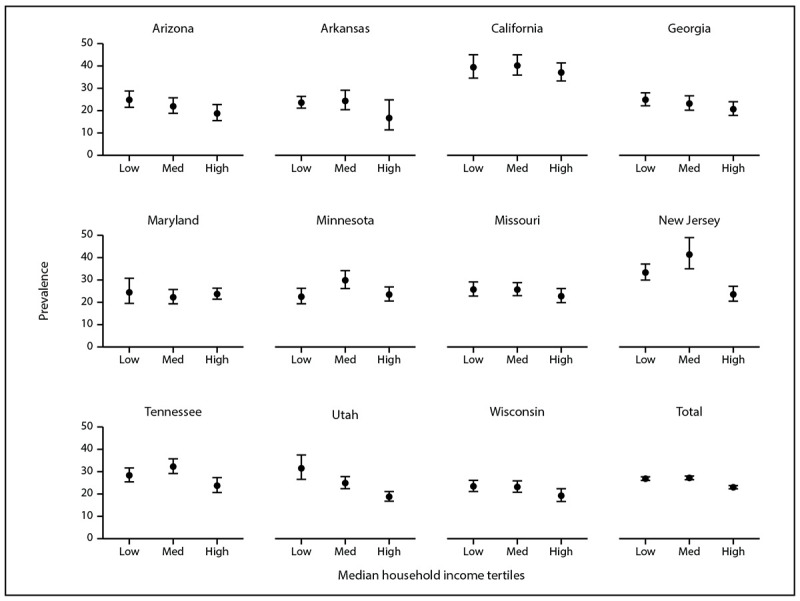
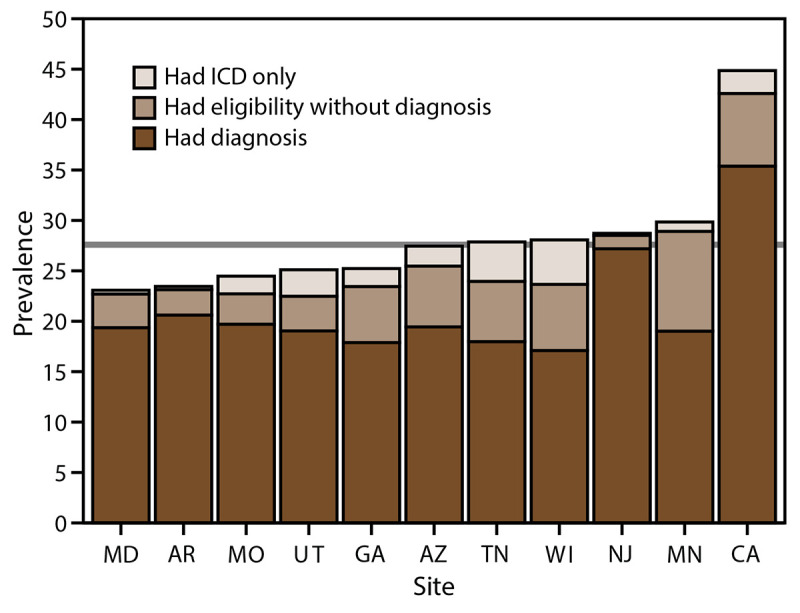
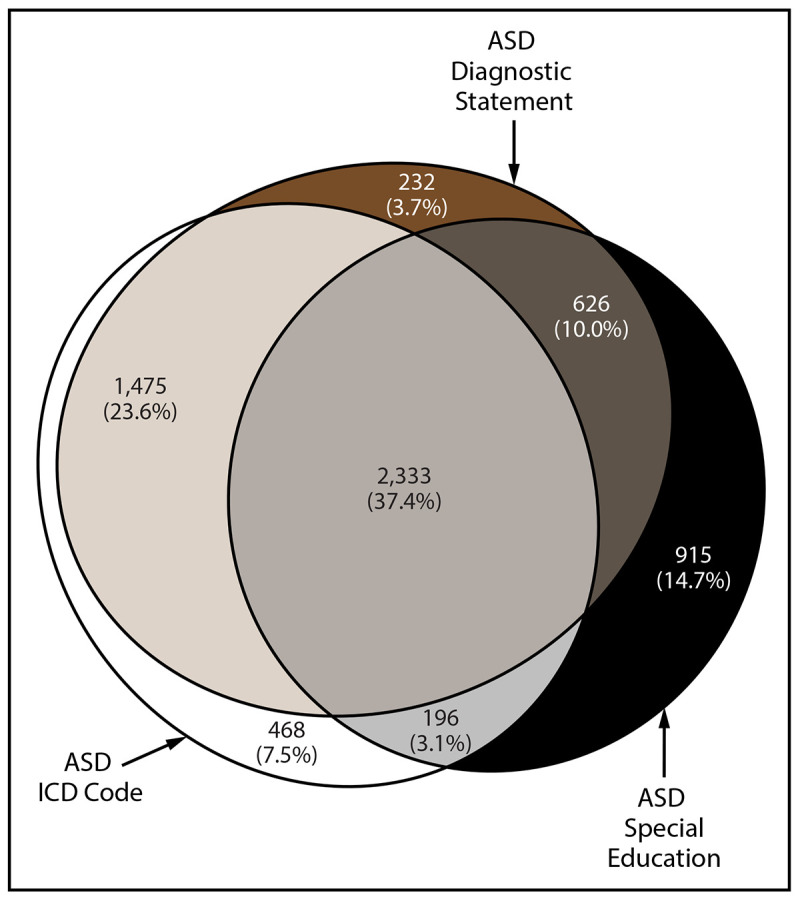
Problem/Condition: Autism spectrum disorder (ASD). Period Covered: 2020. Description of System: The Autism and Developmental Disabilities Monitoring (ADDM) Network is an active surveillance program that provides estimates of the prevalence of ASD among children aged 8 years. In 2020, there were 11 ADDM Network sites across the United States (Arizona, Arkansas, California, Georgia, Maryland, Minnesota, Missouri, New Jersey, Tennessee, Utah, and Wisconsin). To ascertain ASD among children aged 8 years, ADDM Network staff review and abstract developmental evaluations and records from community medical and educational service providers. A child met the case definition if their record documented 1) an ASD diagnostic statement in an evaluation, 2) a classification of ASD in special education, or 3) an ASD International Classification of Diseases (ICD) code. Results: For 2020, across all 11 ADDM sites, ASD prevalence per 1,000 children aged 8 years ranged from 23.1 in Maryland to 44.9 in California. The overall ASD prevalence was 27.6 per 1,000 (one in 36) children aged 8 years and was 3.8 times as prevalent among boys as among girls (43.0 versus 11.4). Overall, ASD prevalence was lower among non-Hispanic White children (24.3) and children of two or more races (22.9) than among non-Hispanic Black or African American (Black), Hispanic, and non-Hispanic Asian or Pacific Islander (A/PI) children (29.3, 31.6, and 33.4 respectively). ASD prevalence among non-Hispanic American Indian or Alaska Native (AI/AN) children (26.5) was similar to that of other racial and ethnic groups. ASD prevalence was associated with lower household income at three sites, with no association at the other sites.Across sites, the ASD prevalence per 1,000 children aged 8 years based exclusively on documented ASD diagnostic statements was 20.6 (range = 17.1 in Wisconsin to 35.4 in California). Of the 6,245 children who met the ASD case definition, 74.7% had a documented diagnostic statement of ASD, 65.2% had a documented ASD special education classification, 71.6% had a documented ASD ICD code, and 37.4% had all three types of ASD indicators. The median age of earliest known ASD diagnosis was 49 months and ranged from 36 months in California to 59 months in Minnesota.Among the 4,165 (66.7%) children with ASD with information on cognitive ability, 37.9% were classified as having an intellectual disability. Intellectual disability was present among 50.8% of Black, 41.5% of A/PI, 37.8% of two or more races, 34.9% of Hispanic, 34.8% of AI/AN, and 31.8% of White children with ASD. Overall, children with intellectual disability had earlier median ages of ASD diagnosis (43 months) than those without intellectual disability (53 months). Interpretation: For 2020, one in 36 children aged 8 years (approximately 4% of boys and 1% of girls) was estimated to have ASD. These estimates are higher than previous ADDM Network estimates during 2000-2018. For the first time among children aged 8 years, the prevalence of ASD was lower among White children than among other racial and ethnic groups, reversing the direction of racial and ethnic differences in ASD prevalence observed in the past. Black children with ASD were still more likely than White children with ASD to have a co-occurring intellectual disability. Public Health Action: The continued increase among children identified with ASD, particularly among non-White children and girls, highlights the need for enhanced infrastructure to provide equitable diagnostic, treatment, and support services for all children with ASD. Similar to previous reporting periods, findings varied considerably across network sites, indicating the need for additional research to understand the nature of such differences and potentially apply successful identification strategies across states.
Overview
The claims and statistics of this paper haven’t been checked yet.
Free: it reads the open-access text and checks the first 5 claims that cite a source we can check. Create a free account to check every claim.
Integrity signals
Registry
Cites
Statistics
Figures
Verification
Claims the paper makes
The claims and statistics of this paper haven’t been checked yet.
Free: it reads the open-access text and checks the first 5 claims that cite a source we can check. Create a free account to check every claim.
Claims other papers make about this one
Each is checked against this paper’s own text: does it say what the citing paper says it does?
The source backs part of the claim, not all of it — or backs it for a different population, condition or comparison.
In the citing paper
“Previous research reported that autism diagnosis occurs at a boy-to-girl ratio of 3.8:1, with the mother typically serving as the primary caregiver (Herrero et al., 2024;Maenner et al., 2023).”
From Mindfulness and parenting stress among parents of autistic children: The mediation of resilience and psychological flexibility (2025) · cites this paper as Maenner et al., 2023
Experimental — accuracy not yet measuredThe source backs part of the claim, not all of it — or backs it for a different population, condition or comparison.
In the citing paper
“Understanding differential outcomes based on race, ethnicity, gender, sex, age, and socioeconomic factors173,174 is highly limited.”
From Executive function deficits in attention-deficit/hyperactivity disorder and autism spectrum disorder (2024) · cites this paper as [174]
Experimental — accuracy not yet measuredThe source backs part of the claim, not all of it — or backs it for a different population, condition or comparison.
In the citing paper
“California has had the highest prevalence among children aged 4 years and 8 years since joining the ADDM Network in 2018 (6,10,11,13)”
From Prevalence and Early Identification of Autism Spectrum Disorder Among Children Aged 4 and 8 Years — Autism and Developmental Disabilities Monitoring Network, 16 Sites, United States, 2022 (2025) · cites this paper as [6]
Experimental — accuracy not yet measuredThe source backs part of the claim, not all of it — or backs it for a different population, condition or comparison.
In the citing paper
“The male-to-female ratio among children aged 4 years was similar across sites, but the ratio was lower than among children aged 8 years (11).”
From Early Identification of Autism Spectrum Disorder Among Children Aged 4 Years — Autism and Developmental Disabilities Monitoring Network, 11 Sites, United States, 2020 (2023) · cites this paper as [11]
Experimental — accuracy not yet measuredThe source backs part of the claim, not all of it — or backs it for a different population, condition or comparison.
In the citing paper
“All sites had access to health and education records in 2020 (11).”
From Early Identification of Autism Spectrum Disorder Among Children Aged 4 Years — Autism and Developmental Disabilities Monitoring Network, 11 Sites, United States, 2020 (2023) · cites this paper as [11]
Experimental — accuracy not yet measured
15 more claims about this paper
Create a free account to see every claim other papers make about this one.
Self-check
Percentages, sums and reported differences re-computed from the paper’s own numbers.
The self-check needs the paper’s full text.
Citations
Cites
1 retracted
Christensen, D. L., Baio, J., Braun, K. V. N., Bilder, D., Charles, J., Constantino, J. N., Daniels, J., Durkin, M. S., Fitzgerald, R. T., Kurzius-Spencer, M., et al. (2016) · MMWR. Surveillance Summaries · doi:10.15585/mmwr.ss6503a1 · Cited by 1,964
Self-citationRetractedDiagnostic and Statistical Manual of Mental Disorders
American Psychiatric Association (2013) · doi:10.1176/appi.books.9780890425596 · Cited by 116,369
Baio, J., Wiggins, L., Christensen, D. L., Maenner, M. J., Daniels, J., Warren, Z., Kurzius-Spencer, M., Zahorodny, W., Robinson, C., Rosenberg, et al. (2018) · MMWR. Surveillance Summaries · doi:10.15585/mmwr.ss6706a1 · Cited by 6,078
Self-citationMaenner, M. J., Shaw, K. A., Baio, J., EdS1, Washington, A., Patrick, M., DiRienzo, M., Christensen, D. L., Wiggins, L. D., Pettygrove, S., et al. (2020) · MMWR. Surveillance Summaries · doi:10.15585/mmwr.ss6904a1 · Cited by 3,780 · cited 2×
“2 3 US Department of Health and Human Services/Centers for Disease Control and Prevention necessitate record review if those codes closely aligned with program-recommended ICD codes (11).”
BackgroundSelf-citationMaenner, M. J., Shaw, K. A., Bakian, A. V., Bilder, D. A., Durkin, M. S., Esler, A., Furnier, S. M., Hallas, L., Hall-Lande, J., Hudson, A., et al. (2021) · MMWR. Surveillance Summaries · doi:10.15585/mmwr.ss7011a1 · Cited by 1,818 · cited 5×
“These gaps narrowed over time until ASD prevalence among Black and Hispanic matched prevalence among White children for the first time in 2016 and 2018, respectively (11,12).”
BackgroundMethodInfluentialSelf-citationPrevalence of Autism in a US Metropolitan Area
Yeargin-Allsopp, M., Rice, C., Karapurkar, T., Doernberg, N., Boyle, C., & Murphy, C. (2003) · JAMA · doi:10.1001/jama.289.1.49 · Cited by 1,248 · cited 2×
“CDC began monitoring the prevalence of ASD in metropolitan Atlanta, Georgia, in 1996 as part of its Metropolitan Atlanta Developmental Disabilities Surveillance Program (2).”
Background(2009) · PubMed · Cited by 804
Research works printed but not linked: 2
- Autism and Developmental Disabilities Monitoring Network Surveillance Year 2006 Principal Investigators. Prevalence of autism spectrum disorders—Autism and Developmental Disabilities Monitoring Network, United States, 2006. MMWR Surveill Summ 2009; 58(No. SS–10). 20023608
- Shaw KA, Maenner MJ, Bakian AV, Early identification of autism spectrum disorder among children aged 4 years—Autism and Developmental Disabilities Monitoring Network, 11 sites, United States, 2018. MMWR Surveill Summ 2021; 70(No. SS–10): 1– 14. 10.15585/mmwr.ss7010a1 34855727 PMC8639027 · DOI · Paper page
Cited by
Items 801–900 of 1,000
Arabi, S. M., & Kakhki, A. S. (2025) · Acta Psychologica · doi:10.1016/j.actpsy.2025.104842 · Cited by 13
Xie, K. C., Blanchard, A. M., Chihuri, S. T., Russell, M., Ing, C. H., DiGuiseppi, C. G., & Li, G. (2025) · Journal of Autism and Developmental Disorders · doi:10.1007/s10803-025-06769-0 · Cited by 4
The potential of evaluating shape drawing using machine learning for predicting high autistic traits
Ohmoto, Y., Terada, K., Shimizu, H., Imamura, A., Iwanaga, R., & Kumazaki, H. (2025) · PLoS ONE · doi:10.1371/journal.pone.0320770 · Cited by 6
“Although children with high autistic traits can be detected as early as 14 months [12] and with high certitude before two years of age [13], the latest prevalence reports reveal that more than 70% of affected children are not diagnosed before the age of 51 months [14].”
The role of HIF-1α silencing in late pregnancy hypoxia-induced autism-like behavior in rat offspring
Tang, J., Yang, Y., Qü, P., Chen, J., Li, T., & Dai, Y. (2025) · Brain Research · doi:10.1016/j.brainres.2025.149633 · Cited by 4
Park, H., Jung, S. B., Byun, Y. H., Ahn, D., Park, C. W., Byun, S., & Huang, Y. (2025) · CHI Conference on Human Factors in Computing Systems · doi:10.1145/3706598.3713965 · Cited by 7
Wells, N. M., Tralins, J., Li, D., Mateer, T. J., Eldermire, E., Ohm, H. L. R., Lantz, J. F., & Kibbee, M. R. (2025) · Journal of Environmental Psychology · doi:10.1016/j.jenvp.2025.102619 · Cited by 5
Autism Spectrum Disorder and Epilepsy: Point of Convergence or Divergence
Valaparambil, K. A., & Sundaram, S. (2025) · International Journal of Epilepsy · doi:10.1055/s-0045-1809042 · Cited by 4
“14 A systematic review involving 283,549 ASD patients found an epilepsy prevalence of 12.1%, with rates ranging from as low as 1.8% to as high as 60%.”
InfluentialAn Acoustic Analysis of Speech Motor Performance in Autistic Children
Maffei, M. F., Chenausky, K. V., Tager-Flusberg, H. B., & Green, J. R. (2025) · Journal of Speech Language and Hearing Research · doi:10.1044/2025_jslhr-24-00561 · Cited by 6
Advances in magnetic resonance imaging of the developing brain and its applications in pediatrics
Chen, R., Li, M., Zhao, Z., Xu, H., Ning, C.-L., Lu, J., Zhu, Q.-F., Huang, Y., Zhao, R., Zhang, L.-X., et al. (2025) · World Journal of Pediatrics · doi:10.1007/s12519-025-00905-7 · Cited by 5
Audio Technology for Autistic Persons with Auditory Sensory Differences—A Scoping Review
Herrebrøden, M. K., Dechsling, A., Marentakis, G. N., & Nordahl‐Hansen, A. (2025) · Review Journal of Autism and Developmental Disorders · doi:10.1007/s40489-025-00511-3 · Cited by 6
Holford, T. W., Letourneau, K. N., Von-Walter, C., Moncaleano, D., Loomis, C. L., & Bolton, M. M. (2025) · Frontiers in Cellular Neuroscience · doi:10.3389/fncel.2025.1597131 · Cited by 5
Prato, A., Randazzo, M., Messina, M., Puglisi, G., Aleo, L. R., Ciantia, F., Cirnigliaro, L., Rizzo, R., & Barone, R. M. E. (2025) · Children · doi:10.3390/children12070848 · Cited by 4
“%) among 8-year-old children in the U.S. [2], and it is higher in males than in females (3.7% in boys and 0.9% in girls aged 8 years) [3].”
InfluentialZhang, X., Fu, C., Wang, M., Feng, D., Wang, H., Li, H., Liu, X., Zeng, L., Li, L., & Yao, P. (2025) · Journal of Psychiatry and Neuroscience · doi:10.1503/jpn.250087 · Cited by 5
Kreiser, N., & Segal, O. (2025) · Autism & Developmental Language Impairments · doi:10.1177/23969415251355462 · Cited by 5
“…rise in the prevalence of autism spectrum disorder (ASD), indicating that more children are being diagnosed and acknowledged as having this condition (Maenner et al., 2023; Centers for Disease Control and Prevention, n.d. https://www.cdc. gov/autism/data-research/index.html; Shaw et al., 2023).”
Li, B., Qiao, Y., & Li, Y. (2025) · Frontiers in Microbiology · doi:10.3389/fmicb.2025.1579128 · Cited by 4
Victoria‐Montesinos, D., García‐Muñoz, A. M., Mercader‐Ros, M. T., Lucas-Abellán, C., González-Monjarás, M., & Barcina-Pérez, P. (2025) · Clinical Nutrition ESPEN · doi:10.1016/j.clnesp.2025.08.010 · Cited by 4
Multimodal Framework for Automatic Behavior Analysis of Children with Autism During ADOS-2
Melício, B. C. D. S., Karaköse, K., Fodor, Á., Xiang, L., Varga, V., Soorya, L. V., Dillon, E. F., Kun, P., Sárkány, A., Chétouani, M., et al. (2025) · Cognitive Computation · doi:10.1007/s12559-025-10481-7 · Cited by 8
“Autism spectrum disorder (ASD) is a prevalent neurodevelopmental condition, affecting approximately 1 in 36 children in the USA, with a global impact on about 1% of the world’s population [1].”
Wu, R., Teng, X., Guo, Y., Cai, Y., Lv, Y., Gao, H., Zhang, W., Shen, H., & Fan, J. (2025) · Frontiers in Pediatrics · doi:10.3389/fped.2025.1648471 · Cited by 4
Charman, T., Bazelmans, T., Pasco, G., Ali, J. B., Johnson, M. H., Jones, E. J. H., & The BASIS/STAARS Team (2025) · Journal of Child Psychology and Psychiatry · doi:10.1111/jcpp.70048 · Cited by 5
Psilocybin Use in the Autism Spectrum Disorder: A Scoping Review
Moreno‐Chaparro, J., Castañeda-Millán, G., & Eslava-Schmalbach, J. H. (2025) · Clinical Neuropharmacology · doi:10.1097/wnf.0000000000000653 · Cited by 4
Lee, T., Yu, J., Ahn, H., Yeom, J., Hyun, Y., Kim, J., Hong, J., Yoo, J., Kim, K., & Kim, H.-W. (2025) · Progress in Neuro-Psychopharmacology and Biological Psychiatry · doi:10.1016/j.pnpbp.2025.111499 · Cited by 4
Fogelström, A., Skoglund, C. B., Hagel, E., Wester, T., Granström, A. L., & Burgos, C. M. (2025) · Pediatric Surgery International · doi:10.1007/s00383-025-06201-9 · Cited by 5
An image-based analytics framework for early autism detection using eye movements
Soloh, R., Orm, L. A., & Dabdoub, D. (2025) · Healthcare Analytics · doi:10.1016/j.health.2025.100439 · Cited by 5
Trends Over Time in the Prevalence of Autism by Adaptive and Intellectual Functioning Levels
Furnier, S. M., Gangnon, R. E., & Durkin, M. S. (2025) · Autism Research · doi:10.1002/aur.70167 · Cited by 4
“Similarly, in the research literature, autism severity is often described in terms of the co-occurrence of ID (Maenner et al. 2023; Fombonne 2003; Zeidan et al. 2022) or labels like “high-” or “low-functioning,” (Griesi-Oliveira et al. 2021; Del Valle Rubido et al. 2020; Kimura et al. 2019;…”
Self-citationBreaking with the Criteria; Selective Mutism and its Forbidden Connection with Autism
Helgesen, I., & Nordahl‐Hansen, A. (2026) · Research on Child and Adolescent Psychopathology · doi:10.1007/s10802-025-01414-x · Cited by 4
“Autism is diagnosed more often in boys than girls (≈ 3–4:1), though newer evidence suggests under-identifi - cation in girls may narrow this gap (Loomes et al., 2017 ; Maenner et al., 2023 ; Rødgaard et al., 2021b).”
Etiology of autism spectrum disorders: recent advances and emerging directions
Münir, K. (2026) · Current Opinion in Psychiatry · doi:10.1097/yco.0000000000001063 · Cited by 10
Quiñones‐Medina, E., Galleguillos, F., Parra, V., Arriagada, G., & Bustos, F. J. (2026) · Autism Research · doi:10.1002/aur.70186 · Cited by 5
“…(CDC) in the USA showed that the prevalence of ASD among children aged 8 years rose from 1 in 59 in 2014 (Baio et al. 2018) to 1 in 44 by 2018 (Maenner et al. 2021), to 1 in 36 by 2020 (Maenner et al. 2023), and further increased to 1 in 31 by 2022 in the most recent report (Shaw et al. 2025).”
Zhong, H., Zhang, S., Mou, Z., Fan, X., Zhang, X., Wang, L., Xu, X., Xue, X., Yang, F., Shu, J., et al. (2026) · Frontiers in Microbiology · doi:10.3389/fmicb.2026.1766850 · Cited by 9
Russell, L., Tinker, S. C., Shaw, K. A., Maenner, M. J., DiRienzo, M., Kirby, A. V., Howerton, E. M., Vanegas, S. B., & Lopez, M. L. C. (2026) · Journal of Autism and Developmental Disorders · doi:10.1007/s10803-026-07292-6 · Cited by 9
“This trend may reflect that children identified later tend to be less severely affected, often less likely to have co-occurring intellectual disabilities (Maenner et al., 2021, 2023).”
Self-citationGeographic Variation in Preventable Hospitalizations among US Children with Autism
Zhang, W., & Johnson, K. R. (2023) · Children · doi:10.3390/children10071228 · Cited by 4
Narzisi, A., Halladay, A. K., Masi, G., Novarino, G., & Lord, C. (2023) · Frontiers in Psychiatry · doi:10.3389/fpsyt.2023.1287879 · Cited by 8
Pazol, K., Tian, L. H., DiGuiseppi, C. G., Durkin, M. S., Fallin, M. D., Moody, E. J., Nadler, C. B., Powell, P. S., Reyes, N., Robinson, B., et al. (2023) · Journal of Developmental & Behavioral Pediatrics · doi:10.1097/dbp.0000000000001227 · Cited by 5
Self-citationBalser, S., DiPierro, G., Chaikin, C. D., Obeid, R., Berg, K. A., & Ishler, K. J. (2023) · Research in Autism · doi:10.1016/j.rasd.2023.102283 · Cited by 7
Preliminary Efficacy of a Transition Training Program for Adolescents with Autism
Schoen, S. A., & VALDEZ, A. D. (2023) · Research in Autism · doi:10.1016/j.rasd.2023.102281 · Cited by 5
Alves, B. G. T., Capelli, J. D. C. S., Monteiro, L. S., Sperandio, N., de Oliveira, C. C., Viviani, A. G. G., Jevaux, G. D., & Paes, C. D. A. (2024) · Segurança Alimentar e Nutricional · doi:10.20396/san.v30i00.8673758 · Cited by 8
Designing Interactive Technology to Support Children with Autism
Wu, Q. Z. (2024) · CHI Conference Extended Abstracts on Human Factors in Computing Systems (CHI EA) · doi:10.1145/3613905.3638192 · Cited by 6
de Matos, M. B., Liberalesso, P. B. N., Bara, T. D. S., Gomes, P. C. M. A., Zeigelboim, B. S., Marques, J. M., & Cordeiro, M. L. (2024) · Jornal de Pediatria · doi:10.1016/j.jped.2024.04.006 · Cited by 7
“These fi ndings are consistent with the results of similar studies from France and Iceland [2 (cid:1) 5] and show a substantially higher ASD prevalence compared with the latest prevalence rate in the general population reported by the CDC. 8 To the best of our knowledge, the current study is the fi rst to report the pre…”
BackgroundInfluentialE-Health Family Interventions for Parents of Children With Autism Aged 0–6 Years: A Scoping Review
Shang, C., Xie, W., Zeng, J., Osman, N., Sun, C., Zou, M., Wang, J., & Wu, L. (2024) · Psychiatry Investigation · doi:10.30773/pi.2023.0399 · Cited by 7
Liu, J., & Shen, B. (2024) · International Journal of Developmental Disabilities · doi:10.1080/20473869.2024.2394737 · Cited by 6
Kajitani, G. S., Xavier, G., Villena-Rueda, B. E., Karia, B. T. R., & Santoro, M. L. (2024) · Current topics in membranes · doi:10.1016/bs.ctm.2024.06.002 · Cited by 4
Bryers, A., Hawkes, C. A., Parkin, E. T., & Dawson, N. (2024) · Biochemical Society Transactions · doi:10.1042/bst20231004 · Cited by 6
Kniola, A., Ludwig, N. N., Singh, V., Bradley, C. C., Carpenter, L. A., Dillon, E. F., Kanne, S. M., Kim, S. H., Parish‐Morris, J., Snyder, L. G., et al. (2024) · Journal of Autism and Developmental Disorders · doi:10.1007/s10803-024-06579-w · Cited by 7
“Prevalence rates of ASD also differ by sex as three to four males are diagnosed for every one female (Dillon et al., 2021; Loomes et al., 2017; Maenner et al., 2023; Osório et al., 2021; Petrou et al., 2018 ).”
Autism Training for Law Enforcement Officers: Perceptions From the Field
Kenney, C. K., Sreckovic, M. A., Wallace, M., & Debbaudt, D. (2024) · Journal of Autism and Developmental Disorders · doi:10.1007/s10803-024-06587-w · Cited by 4
“In 2023, the Center for Disease Control reported approximately 1 in 36 children in the United States are diagnosed with ASD (Maenner et al., 2023).”
InfluentialTait, K., Liang, P., & Silveira, S. (2024) · Education Sciences · doi:10.3390/educsci14111153 · Cited by 9
“Maenner et al. [5] noted that the prevalence of ASD among 8-year-old children in the United States had increased significantly from 1 in 68 in 2010 to 1 in 36 in 2020.”
Knedlíková, L., Dědková, L., Kolář, S., Česká, K., Vyhnalová, M., Stroupková, L., Pejčochová, J., Theiner, P., Lacko, D., Horák, O., et al. (2024) · PLoS ONE · doi:10.1371/journal.pone.0313426 · Cited by 6
Developing Therapeutically Attuned Relationships with Autistic Children and Their Caregivers
Bernhard, F. B., Howell, D., & Bray, L. M. P. (2024) · Occupational Therapy In Health Care · doi:10.1080/07380577.2024.2437554 · Cited by 7
“Autism is a common developmental disability (Maenner et al., 2023) characterized in the Diagnostic and Statistical Manual of Mental Disorders 5-Text Revision (DSM-5-TR) by challenges with social communication, social interaction, and the presence of restricted, repetitive behaviors, which includes…”
Could a National Screening Program Reduce the Age of Diagnosis of Autism Spectrum Disorder?
Al‐Mamari, W., Idris, A. B., Aamri, H. A., Al-Khatri, H., Sinani, A. A., Kharusi, R. A., Mirghani, M., Al-Jabri, M., Jalees, S., Hadhrami, S. A., et al. (2025) · Journal of Autism and Developmental Disorders · doi:10.1007/s10803-025-06770-7 · Cited by 7
“…show the overall median age of ASD diagnosis was 49 months in the most recent Centre of Disease Control (CDC) survey, with children with intellectual disability having an earlier median age of ASD diagnosis (43 months) than those without intellectual disability (53 months) (Maenner et al., 2023).”
Intervention Techniques Targeting Echolalia: A Scoping Review
Dinello, A., & Gladfelter, A. (2025) · American Journal of Speech-Language Pathology · doi:10.1044/2025_ajslp-24-00211 · Cited by 5
Arabic Language Autism Diagnostic Interview (ALADIN): A Validation Study
Nasir, A. K., Masri, A. T., Shaheen, S., Sayles, H. R., & Nasir, L. (2025) · Journal of Autism and Developmental Disorders · doi:10.1007/s10803-025-06797-w · Cited by 6
“Autism affects 1 to 2% of the world’s children and is characterized by deficits in communication and social interaction (Elsabbagh et al., 2012; Maenner et al., 2023; Zeidan et al., 2022).”
Loh, D. R., Hill, E. D., Liu, N., Dawson, G., & Engelhard, M. (2025) · JMIR AI · doi:10.2196/62985 · Cited by 8
“For example, autism prevalence increased from 2.24% in 2014 to 2.79% in 2019 [29], with higher rates among males and Black individuals [30].”
InfluentialBjørklund, G., Oleshchuk, O., Ivankiv, Y. I., Венгер, О. П., Liuta, O. O., Мочернюк, Х. І., Lukanyuk, M. I., & Shanaida, M. (2025) · Molecular Neurobiology · doi:10.1007/s12035-025-04809-5 · Cited by 7
Online resources and educational materials relating to autism spectrum disorder
Slavych, B. K., Oliver, C., McIntyre, N. S., & Zraick, R. I. (2025) · Health Education Journal · doi:10.1177/00178969251328913 · Cited by 7
“Most recently, 1 in 36 eight-year-olds in the USA was reported to have an ASD diagnosis (Maenner et al., 2023).”
Liang, Z., Chen, Q., & Liang, S. (2025) · International Journal of Developmental Disabilities · doi:10.1080/20473869.2025.2486431 · Cited by 4
Alfaro-Urrutia, J. E., & Pérez-Godoy, P. (2025) · Autism · doi:10.1177/13623613251333834 · Cited by 6
“The rise in ASC diagnoses (Maenner et al., 2023; Yáñez et al., 2021) has prompted the development of inclusive educational policies.”
Corbett, B. A., McGonigle, T., Muscatello, R. A., Vandekar, S., & Calvosa, R. (2025) · Molecular Autism · doi:10.1186/s13229-025-00658-0 · Cited by 6
“Epidemiological studies of autism have generally reported a diagnostic bias of a 4:1 male-to-female ratio [5]; yet, some research suggests the ratio may be closer to 3:1 ratio [6] due to a more subtle female phenotype which presents with reduced social challenges and repetitive behaviors (e.g…”
Mechanisms of Altered Imitation in Autism Spectrum Disorders
McWeeny, S., Kolday, A., Wodka, E. L., Mostofsky, S. H., Caffo, B. S., & Ewen, J. B. (2025) · Autism Research · doi:10.1002/aur.70046 · Cited by 6
“Approximately 38% of autistic people under current diagnostic approaches have co-occurring ID (Maenner et al. 2023), and prior studies have found differential associations between motor execution and imitation by IQ (Vanvuchelen et al. 2007).”
Prevalence of Anxiety and Depression in Autistic and Non-autistic College Students: A Brief Report
Aragon-Guevara, D., Mattson, J. G., & Kim, H. (2025) · Journal of Autism and Developmental Disorders · doi:10.1007/s10803-025-06876-y · Cited by 7
Wong, S. H., Xu, X., Xu, X., Zhou, R., Ng, S. K., Ng, S. K., Fan, X., & Subramaniam, M. (2025) · Nutrients · doi:10.3390/nu17111748 · Cited by 8
“In the United States, it has been estimated recently that the overall ASD prevalence is 2.76% (one in 36 children), which is higher than previous estimates made from 2000 to 2018 [3].”
InfluentialBarn med autism, tidig intervention, och kvalitet i inkluderande förskolemiljö
Bejnö, H. (2025) · doi:10.16993/bct.h · Cited by 6
Assessment of mealtime behaviors in Chinese children with autism spectrum disorder
Zhang, L., Zhang, Y., Peng, Z., Chen, Y., Zhang, L., Liang, L., Wang, Y., & Zhou, H. (2025) · Frontiers in Pediatrics · doi:10.3389/fped.2025.1597023 · Cited by 17
Kuo, N.-C., Yao, Y., Ma, C., Chu, L., Chen, J., Wan, C., Wang, D., Lu, D., Li, X., & Wang, Y. (2025) · Frontiers in Psychiatry · doi:10.3389/fpsyt.2025.1575695 · Cited by 5
McFarland, E. A., Knightly, K. A., Haar, E. V., McKelvy, M. H., Palmer, T. D., Volpe, S. V., Corke, S., & Bussel, J. B. (2025) · American Journal of Obstetrics and Gynecology · doi:10.1016/j.ajog.2025.06.052 · Cited by 4
Katakis, P., Frankson, P., Estrin, G. L., Wolstencroft, J., Mirzaei, V., Sayani, S., Skuse, D., & Heys, M. (2025) · PLOS Digital Health · doi:10.1371/journal.pdig.0000931 · Cited by 7
“Globally, approximately 0.7% to 1% of the general population meets the diagnostic criteria for ASD [2–4].”
InfluentialXie, H., Luo, D., & Kang, B. (2025) · Frontiers in Pediatrics · doi:10.3389/fped.2025.1590663 · Cited by 4
“The increasing prevalence of ASD, which had reached 1 in 36 children aged 8, had driven a surge in demand for accessible and effective healthcare services (28).”
Cummins, R., Hawkes, C., Longworth, J., Scher, S., & Kozlowska, K. (2025) · Frontiers in Psychiatry · doi:10.3389/fpsyt.2025.1560873 · Cited by 7
Allan, N. P., Torres, A., Corley, M. J., Yamamoto, B. Y., Balaan, C., Yamauchi, Y., Peres, R., Qin, Y., Khadka, V. S., Deng, Y., et al. (2025) · Cells · doi:10.3390/cells14151201 · Cited by 5
“ASD affects approximately one in thirty-six children in the United States, with a male-to-female ratio near 3:1 [2,3].”
InfluentialSiegel, M. S., Goldfeder, N., Romani, P. W., & Lamy, M. (2025) · Psychiatric Services · doi:10.1176/appi.ps.20240623 · Cited by 4
Chen, H., Li, M., Yao, P., Nie, Z., Xu, L., Zhang, Y., Xu, X., Shen, C., Huang, J., Liu, Y., et al. (2025) · BMC Psychiatry · doi:10.1186/s12888-025-07389-9 · Cited by 5
“The prevalence of ASD has been increasing, affecting approximately 1 in 36 children aged 8 years, with boys being 3.8 times more likely to be diagnosed than girls [3].”
InfluentialPage, S. D., Souders, M. C., Aryal, S., Pinto‐Martin, J. A., & Deatrick, J. A. (2023) · Journal of Pediatric Health Care · doi:10.1016/j.pedhc.2023.08.009 · Cited by 7
Goscicki, B. L. (2023) · International review of research in developmental disabilities · doi:10.1016/bs.irrdd.2023.09.004 · Cited by 6
Zolzaya, S., Narumoto, A., & Katsuyama, Y. (2023) · Development Growth & Differentiation · doi:10.1111/dgd.12898 · Cited by 5
Adaptation of the Parents Taking Action program for Diné (Navajo) parents of children with autism
Lindly, O. J., Bear, C. R., Henderson, D. E., Lopez, K., Nozadi, S. S., Vining, C. B., Bia, S., Hill, E. M., & Leaf, A. (2023) · Frontiers in Education · doi:10.3389/feduc.2023.1197197 · Cited by 5
Edmunds, S. R., Jones, A., Braverman, Y., Fogler, J., Rowland, K., & Faja, S. (2023) · Research on Child and Adolescent Psychopathology · doi:10.1007/s10802-023-01150-0 · Cited by 4
Khougar, A., Ahmadi, P. B., Ranjbar, H., Ahadi, M., & Ahadi, P. (2023) · International Journal for Equity in Health · doi:10.1186/s12939-023-02078-z · Cited by 8
Difficulties with pronouns in autism: Experimental results from Thai children with autism
Chanchaochai, N., & Schwarz, F. (2023) · Language Acquisition · doi:10.1080/10489223.2023.2262457 · Cited by 4
Doğan, H. E., Işık, Ü., Büyükbayram, H. İ., & Arıcan, H. M. (2024) · International Journal of Developmental Disabilities · doi:10.1080/20473869.2023.2298563 · Cited by 8
Chen, B., Olson, L., Ríos, A., Salmina, M., Linke, A. C., & Fishman, I. (2024) · Cerebral Cortex · doi:10.1093/cercor/bhae005 · Cited by 4
Health Care for Autistic Children
Ames, J., Davignon, M. N., Hayes, E. A., & Croen, L. (2024) · Pediatric Clinics of North America · doi:10.1016/j.pcl.2024.01.002 · Cited by 5
Vowel distinctiveness as a concurrent predictor of expressive language function in autistic children
Simeone, P. J., Green, J. R., Tager-Flusberg, H. B., & Chenausky, K. V. (2024) · Autism Research · doi:10.1002/aur.3102 · Cited by 7
All-Cause Mortality and Specific Causes of Death in Autism: A Nationwide Analysis
Wu, C., Tsai, H., Chien, Y., & Gau, S. S. (2025) · Autism in Adulthood · doi:10.1089/aut.2023.0103 · Cited by 5
Buck, A., Hurewitz, S. R., & Franklin, M. S. (2024) · Autism · doi:10.1177/13623613241235522 · Cited by 4
Davis, J. M., Harrington, M. B., Howie, F. R., Mohammed, K. S., & Gunderson, J. A. (2024) · The Journal of Pediatrics · doi:10.1016/j.jpeds.2024.114009 · Cited by 6
Early diagnosis of children with autism using artificial intelligence during dental care
Veseli, E., & Pustina-Krasniqi, T. (2024) · European Archives of Paediatric Dentistry · doi:10.1007/s40368-024-00889-4 · Cited by 4
Angley, S. M., Mitteer, D. R., Greer, B. D., Elwasli, O. M., & Fisher, W. W. (2024) · Augmentative and Alternative Communication · doi:10.1080/07434618.2024.2333380 · Cited by 4
“Autism spectrum disorder (ASD) is a neurodevelopmental disorder diagnosed in 1 of 36 children in the United States (Maenner et al., 2023).”
Feasibility of Remote Coaching With Early Interventionists: NDBI Strategies in Part C
Tomeny, K. R., Tomeny, T. S., & McWilliam, R. A. (2024) · Topics in Early Childhood Special Education · doi:10.1177/02711214241245267 · Cited by 4
“Children did not need a formal ASD diagnosis for participation in this study, as the median age of diagnosis continues to hover near or above 36 months, the age at which a child is no longer eligible for Part C early intervention (Maenner et al., 2023).”
Bernier, A. S., McCrimmon, A. W., Nsair, S., & Hans, H. (2024) · Refuge Canada s Journal on Refuge · doi:10.25071/1920-7336.41109 · Cited by 6
Specific Phobia, Fear, and the Autism Spectrum in Children and Adolescents: Adapting OST for ASD
Davis, T. E., & Brennan, J. (2024) · Clinical Child and Family Psychology Review · doi:10.1007/s10567-024-00475-6 · Cited by 7
“…is reported across all racial, ethnic, and socio-economic groups in the USA, with reported prevalence lower among non-Hispanic White children and children of two or more races compared to non-Hispanic Black, Hispanic, and non-Hispanic Asian or Pacific Islander children (Maenner et al., 2023).”
InfluentialYang, L., Ye, J., Zhu, H., Tang, Y., & Li, X. (2024) · Frontiers in Psychiatry · doi:10.3389/fpsyt.2024.1390430 · Cited by 7
Wieckowski, A. T., Liz, G. P., de Marchena, A. B., FEIN, D. A., Barton, M. L., Vivanti, G., & Robins, D. L. (2024) · Autism · doi:10.1177/13623613241252312 · Cited by 6
“In the most recent report, 14.7% of autism cases had a school record only, highlighting the importance of detection in this setting (Maenner et al., 2023).”
InfluentialAutism Spectrum Disorder and Grandmother’s Race, Ethnicity, and Nativity
Chow, T., Meng, Q., O’Sharkey, K., Liew, Z., & Ritz, B. R. (2024) · JAACAP Open · doi:10.1016/j.jaacop.2024.04.008 · Cited by 5
D’Adamo, C. R., Nelson, J. L., Miller, S. N., Hong, M. R., Lambert, E., & Ruhm, H. T. (2024) · Journal of Personalized Medicine · doi:10.3390/jpm14060641 · Cited by 6
The Use of Technology and Telehealth to Improve Behavioral Sleep Assessment and Intervention
Koudys, J., McConnell, C., Savard, A., Spottiswood, K., Treszl, A., O’Neill, P., Harrison, K., Ratko, M. G., & Randhawa, A.-P. (2024) · Behavior Analysis in Practice · doi:10.1007/s40617-024-00942-0 · Cited by 4
“Given the sustained increase in the number of children diagnosed with ASD each year (e.g., 1 in 36, Maenner et al., 2023; 1 in 50, Statistics Canada, 2019), and the reality that many of these children will experience substantial sleep disturbance (e.g., Chen et al., 2021; Fadini et al., 2015; Köse…”
Minjarez, M., Gengoux, G. W., Paszek, K. J., Liang, J. A., Ardel, C. M., Hardan, A. Y., & Frazier, T. W. (2024) · Journal of Autism and Developmental Disorders · doi:10.1007/s10803-024-06447-7 · Cited by 5
Keehn, R. M., Penner, M., Shannon, J., Sohl, K., Weitzman, C. C., & Zuckerman, K. E. (2024) · Journal of Developmental & Behavioral Pediatrics · doi:10.1097/dbp.0000000000001297 · Cited by 5
Uglik‐Marucha, N., Mason, D., Belcher, H., Happe, F. G. E., & Vitoratou, S. (2024) · Systematic Reviews · doi:10.1186/s13643-024-02604-2 · Cited by 4
“Research indicates a higher prevalence of autism in males across age groups [8, 9], with recent estimates revealing a gender disparity in diagnoses without intellectual disability, around 4:1 in clinical samples [10, 11] and 3:1 in population-based samples [12].”
BackgroundBaldwin, E., Kinsella, S., & Byrne, P. J. (2024) · Behavioral Sciences · doi:10.3390/bs14080640 · Cited by 7
Supplier-origin gut microbiomes affect host body weight and select autism-related behaviors
McAdams, Z. L., Gustafson, K. L., Russell, A. L., Self, R., Petry, A. L., Lever, T. E., & Ericsson, A. C. (2024) · Gut Microbes · doi:10.1080/19490976.2024.2385524 · Cited by 4
The effect of volatility in linguistic input on prediction behavior in autistic toddlers
Prescott, K. E., Mathée‐Scott, J., Bolt, D. M., Saffran, J. R., & Weismer, S. E. (2024) · Autism Research · doi:10.1002/aur.3212 · Cited by 4
“Autism is a highly heterogeneous condition characterizing 1 in 36 children by age 8 (Maenner et al., 2023).”
BackgroundHyperGALE: ASD Classification via Hypergraph Gated Attention with Learnable HyperEdges
Arora, M., Jain, C. S., Baru, L. B., Dadi, K., & Bapi, R. S. (2024) · International Joint Conference on Neural Networks (IJCNN) · doi:10.1109/ijcnn60899.2024.10651487 · Cited by 7
“Affecting a significant portion of the population, with a prevalence of approximately 1 in 36 children [1], ASD’s diagnosis is complicated by its heterogeneous nature and the limitations of existing diagnostic criteria.”
BackgroundAutism spectrum disorder: difficulties in diagnosis and microRNA biomarkers
Martinez, B., & Peplow, P. V. (2024) · Neural Regeneration Research · doi:10.4103/nrr.nrr-d-24-00712 · Cited by 5
Metadata
- Authors
- Maenner, M. J., Warren, Z., Williams, A. R., Amoakohene, E., Bakian, A. V., Bilder, D. A., Durkin, M. S., Fitzgerald, R. T., Furnier, S. M., Hughes, M. M., Ladd-Acosta, C. M., McArthur, D., Pas, E. T., Salinas, A., Vehorn, A., Williams, S., Esler, A., Grzybowski, A., Hall-Lande, J., Nguyen, R. H. N., Pierce, K., Zahorodny, W., Hudson, A., Hallas, L., Mancilla, K. C., Patrick, M., Shenouda, J., Sidwell, K., DiRienzo, M., Gutierrez, J., Spivey, M. H., Lopez, M., Pettygrove, S., Schwenk, Y. D., Washington, A., & Shaw, K. A.
- Affiliations
- Centers for Disease Control and Prevention (US)
- Vanderbilt University Medical Center (US)
- University of Minnesota (US)
- University of Utah (US)
- University of Wisconsin–Madison (US)
- Washington University in St. Louis (US)
- Johns Hopkins University (US)
- University of California San Diego (US)
- Rutgers New Jersey Medical School (US)
- University of Arkansas for Medical Sciences (US)
- National Center on Birth Defects and Developmental Disabilities (US)
- University of Arizona (US)
- Corresponding author
- Maenner, Matthew J.
- ORCID
- Maenner, Matthew J.
- Warren, Zachary
- Williams, Ashley Robinson
- Bakian, Amanda V.
- Bilder, Deborah A.
- Durkin, Maureen S.
- Fitzgerald, Robert T.
- Furnier, Sarah M.
- Hughes, Michelle M.
- Ladd-Acosta, Christine M.
- McArthur, Dedria
- Pas, Elise T.
- Esler, Amy
- Nguyen, Ruby H.N.
- Pierce, Karen
- Zahorodny, Walter
- Patrick, Mary
- Shenouda, Josephine
- DiRienzo, Monica
- Lopez, Maya
- Pettygrove, Sydney
- Washington, Anita
- Venue
- MMWR. Surveillance Summaries
- Published
- 2023-03-24
- Volume
- 72
- Issue
- 2
- Pages
- 1-14
- ISSN
- 1545-8636 (ISSN-L)
- 1546-0738
- PMC
- PMC10042614
- OpenAlex
- W4360600181
- Cited by
- 2,706
- References
- 30
- Citations by year
- 2026: 568 · 2025: 900 · 2024: 896 · 2023: 306
- FWCI
- 400.11
- Type
- journal article
- Language
- en
- Open access
- diamond
- doi.org
- Licence
- public-domain
- Locations
- MMWR Surveillance Summaries (publishedVersion, public-domain)
- PubMed Central (publishedVersion, public-domain)
- PubMed (publishedVersion)
- UA Campus Repository (The University of Arizona) (submittedVersion, public-domain)
- Funders
- Eunice Kennedy Shriver National Institute of Child Health and Human Development (P50HD103537)
- Topics
- Life Sciences › Neuroscience › Cognitive Neuroscience › Autism Spectrum Disorder Research
- Health Sciences › Medicine › Psychiatry and Mental health › Child Nutrition and Feeding Issues
- Social Sciences › Psychology › Clinical Psychology › Family and Disability Support Research
- Keywords
- autism spectrum disorder, autism prevalence, sex differences, racial and ethnic disparities, household income, special education classification, developmental disabilities, ICD-10-CM codes
- MeSH terms
- Autism Spectrum Disorder, Autistic Disorder, Child, Developmental Disabilities, Child, Preschool, Female, Humans, Male, Maryland, Intellectual Disability, Population Surveillance, United States, Prevalence
About these checks
Registry, retraction, Cites and statistics results are computed, not judged, with one exception: a printed reference that no index lists is read once by a model before it counts as a citation error. Claims are extracted by a model and kept only when their quote appears verbatim in the text; each cited source is then checked, with a model’s help, for whether it says what the claim relies on. Those verdicts can be wrong — read the claim’s quote and the cited source before relying on one.
Statistics and arithmetic are recomputed, not judged.
Confidence bands are shown only for fields calibrated on our annotated test set. None is calibrated yet, so no band is shown.
What counts as a claim ›How we measure confidence ›How we check this ›
Are you an author, or do you see a problem with this page? Request a review
Data sources
Bibliographic data: Semantic Scholar, OpenAlex, Crossref.
Contains information from the Semantic Scholar Academic Graph Datasets, made available under the ODC Attribution License (ODC-BY 1.0).
Semantic Scholar’s data is described in: Kinney, R., et al. (2023). The Semantic Scholar Open Data Platform. arXiv:2301.10140.
