

Prevalence and Characteristics of Autism Spectrum Disorder Among Children Aged 8 Years — Autism and Developmental Disabilities Monitoring Network, 11 Sites, United States, 2020
Open accessThe DOI matches its Crossref record; 30 of the 30 references it cites were found in a registry or an index.
Abstract
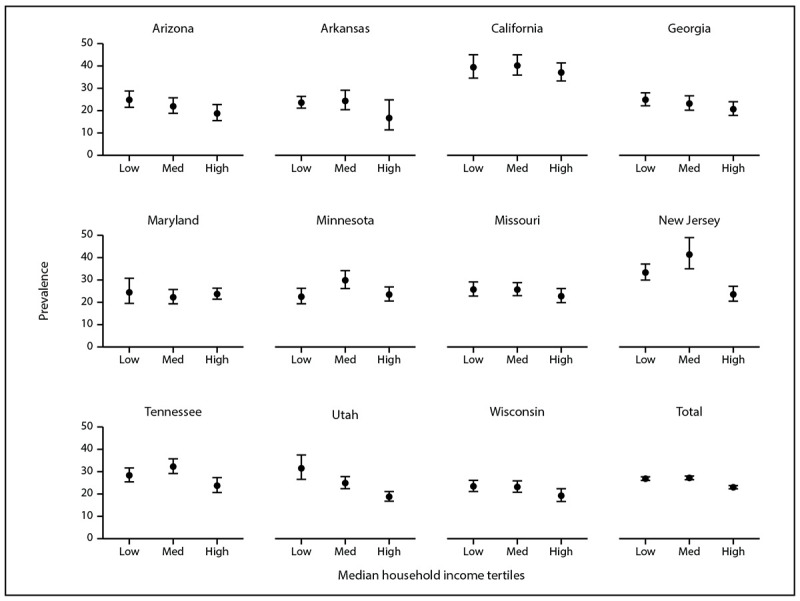
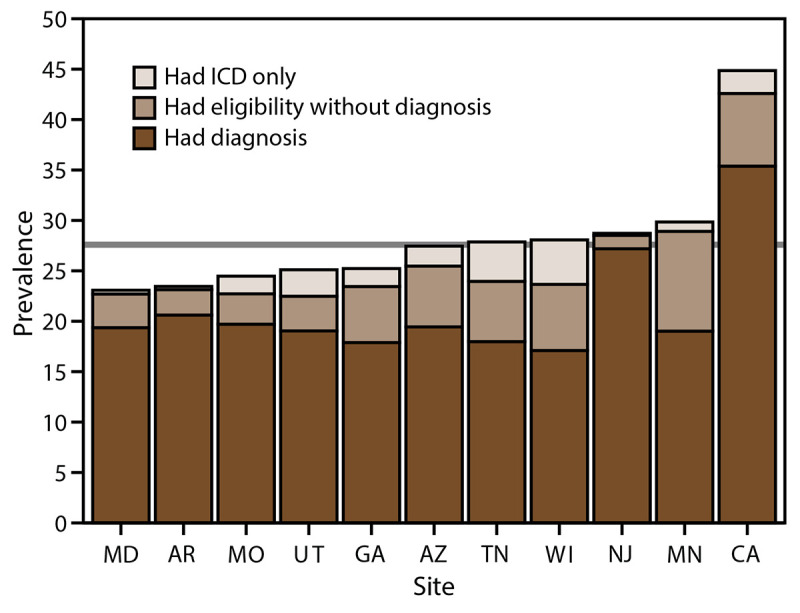
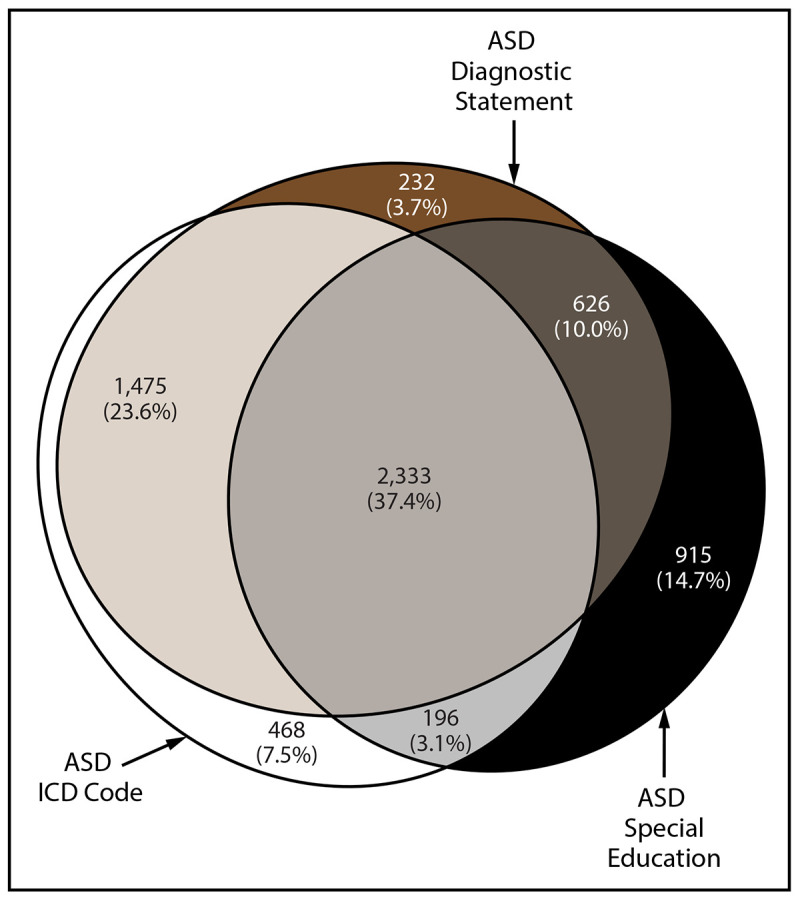
Problem/Condition: Autism spectrum disorder (ASD). Period Covered: 2020. Description of System: The Autism and Developmental Disabilities Monitoring (ADDM) Network is an active surveillance program that provides estimates of the prevalence of ASD among children aged 8 years. In 2020, there were 11 ADDM Network sites across the United States (Arizona, Arkansas, California, Georgia, Maryland, Minnesota, Missouri, New Jersey, Tennessee, Utah, and Wisconsin). To ascertain ASD among children aged 8 years, ADDM Network staff review and abstract developmental evaluations and records from community medical and educational service providers. A child met the case definition if their record documented 1) an ASD diagnostic statement in an evaluation, 2) a classification of ASD in special education, or 3) an ASD International Classification of Diseases (ICD) code. Results: For 2020, across all 11 ADDM sites, ASD prevalence per 1,000 children aged 8 years ranged from 23.1 in Maryland to 44.9 in California. The overall ASD prevalence was 27.6 per 1,000 (one in 36) children aged 8 years and was 3.8 times as prevalent among boys as among girls (43.0 versus 11.4). Overall, ASD prevalence was lower among non-Hispanic White children (24.3) and children of two or more races (22.9) than among non-Hispanic Black or African American (Black), Hispanic, and non-Hispanic Asian or Pacific Islander (A/PI) children (29.3, 31.6, and 33.4 respectively). ASD prevalence among non-Hispanic American Indian or Alaska Native (AI/AN) children (26.5) was similar to that of other racial and ethnic groups. ASD prevalence was associated with lower household income at three sites, with no association at the other sites.Across sites, the ASD prevalence per 1,000 children aged 8 years based exclusively on documented ASD diagnostic statements was 20.6 (range = 17.1 in Wisconsin to 35.4 in California). Of the 6,245 children who met the ASD case definition, 74.7% had a documented diagnostic statement of ASD, 65.2% had a documented ASD special education classification, 71.6% had a documented ASD ICD code, and 37.4% had all three types of ASD indicators. The median age of earliest known ASD diagnosis was 49 months and ranged from 36 months in California to 59 months in Minnesota.Among the 4,165 (66.7%) children with ASD with information on cognitive ability, 37.9% were classified as having an intellectual disability. Intellectual disability was present among 50.8% of Black, 41.5% of A/PI, 37.8% of two or more races, 34.9% of Hispanic, 34.8% of AI/AN, and 31.8% of White children with ASD. Overall, children with intellectual disability had earlier median ages of ASD diagnosis (43 months) than those without intellectual disability (53 months). Interpretation: For 2020, one in 36 children aged 8 years (approximately 4% of boys and 1% of girls) was estimated to have ASD. These estimates are higher than previous ADDM Network estimates during 2000-2018. For the first time among children aged 8 years, the prevalence of ASD was lower among White children than among other racial and ethnic groups, reversing the direction of racial and ethnic differences in ASD prevalence observed in the past. Black children with ASD were still more likely than White children with ASD to have a co-occurring intellectual disability. Public Health Action: The continued increase among children identified with ASD, particularly among non-White children and girls, highlights the need for enhanced infrastructure to provide equitable diagnostic, treatment, and support services for all children with ASD. Similar to previous reporting periods, findings varied considerably across network sites, indicating the need for additional research to understand the nature of such differences and potentially apply successful identification strategies across states.
Overview
The claims and statistics of this paper haven’t been checked yet.
Free: it reads the open-access text and checks the first 5 claims that cite a source we can check. Create a free account to check every claim.
Integrity signals
Registry
Cites
Statistics
Figures
Verification
Claims the paper makes
The claims and statistics of this paper haven’t been checked yet.
Free: it reads the open-access text and checks the first 5 claims that cite a source we can check. Create a free account to check every claim.
Claims other papers make about this one
Each is checked against this paper’s own text: does it say what the citing paper says it does?
The source backs part of the claim, not all of it — or backs it for a different population, condition or comparison.
In the citing paper
“Previous research reported that autism diagnosis occurs at a boy-to-girl ratio of 3.8:1, with the mother typically serving as the primary caregiver (Herrero et al., 2024;Maenner et al., 2023).”
From Mindfulness and parenting stress among parents of autistic children: The mediation of resilience and psychological flexibility (2025) · cites this paper as Maenner et al., 2023
Experimental — accuracy not yet measuredThe source backs part of the claim, not all of it — or backs it for a different population, condition or comparison.
In the citing paper
“Understanding differential outcomes based on race, ethnicity, gender, sex, age, and socioeconomic factors173,174 is highly limited.”
From Executive function deficits in attention-deficit/hyperactivity disorder and autism spectrum disorder (2024) · cites this paper as [174]
Experimental — accuracy not yet measuredThe source backs part of the claim, not all of it — or backs it for a different population, condition or comparison.
In the citing paper
“California has had the highest prevalence among children aged 4 years and 8 years since joining the ADDM Network in 2018 (6,10,11,13)”
From Prevalence and Early Identification of Autism Spectrum Disorder Among Children Aged 4 and 8 Years — Autism and Developmental Disabilities Monitoring Network, 16 Sites, United States, 2022 (2025) · cites this paper as [6]
Experimental — accuracy not yet measuredThe source backs part of the claim, not all of it — or backs it for a different population, condition or comparison.
In the citing paper
“The male-to-female ratio among children aged 4 years was similar across sites, but the ratio was lower than among children aged 8 years (11).”
From Early Identification of Autism Spectrum Disorder Among Children Aged 4 Years — Autism and Developmental Disabilities Monitoring Network, 11 Sites, United States, 2020 (2023) · cites this paper as [11]
Experimental — accuracy not yet measuredThe source backs part of the claim, not all of it — or backs it for a different population, condition or comparison.
In the citing paper
“All sites had access to health and education records in 2020 (11).”
From Early Identification of Autism Spectrum Disorder Among Children Aged 4 Years — Autism and Developmental Disabilities Monitoring Network, 11 Sites, United States, 2020 (2023) · cites this paper as [11]
Experimental — accuracy not yet measured
15 more claims about this paper
Create a free account to see every claim other papers make about this one.
Self-check
Percentages, sums and reported differences re-computed from the paper’s own numbers.
The self-check needs the paper’s full text.
Citations
Cites
1 retracted
Christensen, D. L., Baio, J., Braun, K. V. N., Bilder, D., Charles, J., Constantino, J. N., Daniels, J., Durkin, M. S., Fitzgerald, R. T., Kurzius-Spencer, M., et al. (2016) · MMWR. Surveillance Summaries · doi:10.15585/mmwr.ss6503a1 · Cited by 1,964
Self-citationRetractedDiagnostic and Statistical Manual of Mental Disorders
American Psychiatric Association (2013) · doi:10.1176/appi.books.9780890425596 · Cited by 116,369
Baio, J., Wiggins, L., Christensen, D. L., Maenner, M. J., Daniels, J., Warren, Z., Kurzius-Spencer, M., Zahorodny, W., Robinson, C., Rosenberg, et al. (2018) · MMWR. Surveillance Summaries · doi:10.15585/mmwr.ss6706a1 · Cited by 6,078
Self-citationMaenner, M. J., Shaw, K. A., Baio, J., EdS1, Washington, A., Patrick, M., DiRienzo, M., Christensen, D. L., Wiggins, L. D., Pettygrove, S., et al. (2020) · MMWR. Surveillance Summaries · doi:10.15585/mmwr.ss6904a1 · Cited by 3,780 · cited 2×
“2 3 US Department of Health and Human Services/Centers for Disease Control and Prevention necessitate record review if those codes closely aligned with program-recommended ICD codes (11).”
BackgroundSelf-citationMaenner, M. J., Shaw, K. A., Bakian, A. V., Bilder, D. A., Durkin, M. S., Esler, A., Furnier, S. M., Hallas, L., Hall-Lande, J., Hudson, A., et al. (2021) · MMWR. Surveillance Summaries · doi:10.15585/mmwr.ss7011a1 · Cited by 1,818 · cited 5×
“These gaps narrowed over time until ASD prevalence among Black and Hispanic matched prevalence among White children for the first time in 2016 and 2018, respectively (11,12).”
BackgroundMethodInfluentialSelf-citationPrevalence of Autism in a US Metropolitan Area
Yeargin-Allsopp, M., Rice, C., Karapurkar, T., Doernberg, N., Boyle, C., & Murphy, C. (2003) · JAMA · doi:10.1001/jama.289.1.49 · Cited by 1,248 · cited 2×
“CDC began monitoring the prevalence of ASD in metropolitan Atlanta, Georgia, in 1996 as part of its Metropolitan Atlanta Developmental Disabilities Surveillance Program (2).”
Background(2009) · PubMed · Cited by 804
Research works printed but not linked: 2
- Autism and Developmental Disabilities Monitoring Network Surveillance Year 2006 Principal Investigators. Prevalence of autism spectrum disorders—Autism and Developmental Disabilities Monitoring Network, United States, 2006. MMWR Surveill Summ 2009; 58(No. SS–10). 20023608
- Shaw KA, Maenner MJ, Bakian AV, Early identification of autism spectrum disorder among children aged 4 years—Autism and Developmental Disabilities Monitoring Network, 11 sites, United States, 2018. MMWR Surveill Summ 2021; 70(No. SS–10): 1– 14. 10.15585/mmwr.ss7010a1 34855727 PMC8639027 · DOI · Paper page
Cited by
Items 601–700 of 1,000
Return of genetic research results in 21,532 individuals with autism
Wright, J. R., Astrovskaya, I., Barns, S. D., Goler, A., Zhou, X., Shu, C., Snyder, L. G., Han, B., Aarrestad, A., Abbeduto, L., et al. (2024) · Genetics in Medicine · doi:10.1016/j.gim.2024.101202 · Cited by 12
Complete Spectrum of Physical Comorbidities with Autism Spectrum Disorder in a Nationwide Cohort
Steinhausen, H., Villumsen, M. D., Støving, R. K., & Bilenberg, N. (2024) · Journal of Autism and Developmental Disorders · doi:10.1007/s10803-024-06476-2 · Cited by 10
“According to recent reviews, international prevalence rates for autism spectrum disorder (ASD) indicate that some 2 per cent of children and young people are affected (Fombonne et al., 2021; Maenner et al., 2023).”
Kameya, M., Hirosawa, T., Soma, D., Yoshimura, Y., An, K., Iwasaki, S., Tanaka, S., Yaoi, K., Sano, M., Miyagishi, Y., et al. (2024) · Frontiers in Psychiatry · doi:10.3389/fpsyt.2024.1419815 · Cited by 8
Usability of an augmented reality bedtime routine application for autistic children
Ahmadian, P., Cardy, R. E., Luca, G. D., & Kushki, A. (2024) · Assistive Technology · doi:10.1080/10400435.2024.2338277 · Cited by 9
Yu, X., Kleeman, M. J., Lin, J. C., Chow, T., Martinez, M. P., Chen, Z., Chen, J., Eckel, S. P., Schwartz, J. D., Lurmann, F., et al. (2024) · The Science of The Total Environment · doi:10.1016/j.scitotenv.2024.176609 · Cited by 6
Pereira, T., Ramalho, A. M., Sá‐Couto, P., & Lousada, M. (2024) · Autism · doi:10.1177/13623613241287017 · Cited by 10
“According to recent data collected in 2020 through the Centres for Disease Control and Prevention, it was estimated that 1 in 36 children were diagnosed with ASD at age 8 (Maenner et al., 2023) which represents an increase of approximately 20% since 2018.”
Pickard, K. E., Islam, N., Green, N., Chatson, E., Kuhn, J., & Yosick, R. N. (2024) · Behavior Analysis in Practice · doi:10.1007/s40617-024-01011-2 · Cited by 7
“This work has argued that ABA practices could be an ideal setting to increase access to NDBIs for young autistic children given that about half of children are now receiving autism diagnoses and qualifying for ABA prior to age three years (Maenner et al., 2023; Monz et al., 2019).”
Augmentation of Endogenous 2-Arachidonoylglycerol Mitigates Autistic Behaviors of BTBR Mice
Zou, M., Zhang, Y., Du, C., Yang, B., Guo, P., Liang, H., Zhang, Y., Tian, W., Yang, L., Liu, D., et al. (2024) · Molecular Neurobiology · doi:10.1007/s12035-024-04606-6 · Cited by 6
Vasa, R. A., Kalari, V. K., Kitchen, C., Kharrazi, H. H. K., Campo, J. V., & Wilcox, H. C. (2024) · The Joint Commission Journal on Quality and Patient Safety · doi:10.1016/j.jcjq.2024.11.002 · Cited by 6
Hong, V., Miller, F. K., Kentopp, S. D., Reynard, H. L., Biermann, B., Beşer, C., Shamshair, S., Fay, B., Shobassy, A., Stanley, M., et al. (2024) · Journal of Autism and Developmental Disorders · doi:10.1007/s10803-024-06658-y · Cited by 9
Němček, D., & Haegele, J. A. (2025) · International Journal of Developmental Disabilities · doi:10.1080/20473869.2024.2448684 · Cited by 6
Taking Off the Mask: Investigating Autism Diagnosis and Camouflaging in Adult Women
Garcia, S. G., Simões-Pires, C. D. S., Brum, J. A., & Cabral, J. C. C. (2025) · Autism in Adulthood · doi:10.1089/aut.2024.0150 · Cited by 21
“11 It is not only this proportion of diagnosis that is under scrutiny, but gender-related prevalence is also undergoing recent revisions.”
Bragg, M. G., Rando, J., Carroll, K. N., Eick, S. M., Karagas, M. R., Lin, P. D., Schmidt, R. J., Lyall, K., Smith, P. B., Newby, L. K., et al. (2025) · Journal of Nutrition · doi:10.1016/j.tjnut.2025.02.025 · Cited by 11
“In the United States, the prevalence of autism has increased over time, with the most recent estimate suggesting 1 in 36 children have an autism diagnosis by age 8 [3].”
Reasonable adjustments for autistic clinicians: A qualitative study
Smith, H., Shaw, S. C. K., Doherty, M., & Ives, J. (2025) · PLoS ONE · doi:10.1371/journal.pone.0319082 · Cited by 14
“However, evidence from the United States suggest a higher prevalence of around 1 in 36 people being Autistic [5].”
Mou, Q.-H., Zhang, Q., Chen, L., Dai, Y., Wei, H., Jia, F., Hao, Y., Li, L., Zhang, J., Wu, L., et al. (2025) · Child and Adolescent Psychiatry and Mental Health · doi:10.1186/s13034-025-00892-7 · Cited by 9
“Autism spectrum disorder (ASD) is a complex and heterogeneous neurodevelopmental disorder, with a prevalence of approximately 2.7% (1/36) in children aged 8 years in the United States, and a global prevalence of 1–2% [20, 21, 35].”
InfluentialA Systematic review of AAC interventions using speech generating devices for autistic preschoolers
Therrien, M. C. S., Whalon, K., Nunes, D. R. D. P., Marti, P., & Sellers, A. J. (2025) · Augmentative and Alternative Communication · doi:10.1080/07434618.2025.2479768 · Cited by 24
“it is estimated that 1 in 36 children has autism (Maenner et al., 2023).”
Gao, X., Xu, G., Fu, N., Wang, L., Ben, Q., Shen, M., & Bu, X. (2025) · Neuroscience & Biobehavioral Reviews · doi:10.1016/j.neubiorev.2025.106144 · Cited by 7
A study on dance/movement therapy to improve core symptoms in children with autism spectrum disorder
Gulandanmu, M., & Zisu, W. A. N. G. (2025) · The Arts in Psychotherapy · doi:10.1016/j.aip.2025.102300 · Cited by 13
Su, W.-C., Tsuzuki, D., Srinivasan, S. M., & Bhat, A. N. (2025) · Brain Sciences · doi:10.3390/brainsci15070683 · Cited by 6
Human Blood-Derived lncRNAs in Autism Spectrum Disorder
Serpe, C., Sanctis, P. D., Marini, M., Canaider, S., Abruzzo, P. M., & Zucchini, C. (2025) · Biomolecules · doi:10.3390/biom15070937 · Cited by 8
“According to the CDC’s Autism and the Developmental Disabilities Monitoring (ADDM) Network, 1 in 36 children aged 8 years in the United States is currently diagnosed with ASD, with a male-to-female ratio of approximately 4:1 [7].”
Shi, S., Song, S., Wang, H., Li, P., & Zhang, X. (2025) · BMC Pediatrics · doi:10.1186/s12887-025-05921-0 · Cited by 13
Curado, P. R., Mezzatesta, M., Elias, N., Aparici, M., & Mairena, M. Á. (2025) · Journal of Intellectual Disability Research · doi:10.1111/jir.70022 · Cited by 8
“Autism prevalence is rising, affecting 1 in 36 US children (Maenner et al. 2023), with more cases identified early (Shaw et al. 2025).”
Veseli, E., Mehrabanian, M., & Ammar, N. (2025) · BDJ · doi:10.1038/s41415-025-8666-7 · Cited by 8
“23 While ASD is primarily characterised as a neurodevelopmental disorder, research suggests that it may have systemic implications.”
Davoody, S., Mansouri, M., & Houri, H. (2025) · The Journal of Nutritional Biochemistry · doi:10.1016/j.jnutbio.2025.110143 · Cited by 6
Wang, P., & Sun, J. (2025) · Frontiers in Psychiatry · doi:10.3389/fpsyt.2025.1587432 · Cited by 18
Liu, H., Liu, G., Zhang, Y., Suo, W., Hao, Y., Wang, Y., & Ding, H. (2025) · Neuropsychiatric Disease and Treatment · doi:10.2147/ndt.s547997 · Cited by 7
Kim, G. S., Chandio, B. Q., Benavidez, S. M., Feng, Y., Thompson, P. M., & Lawrence, K. E. (2025) · Cerebral Cortex · doi:10.1093/cercor/bhaf291 · Cited by 9
“Autism is a heterogeneous neurodevelopmental condition that affects 1 in 36 children in the United States and an estimated 1 in 100 children worldwide (Zeidan et al. 2022; Maenner 2023).”
Endogenous retrovirus-derived RNA-DNA hybrids induce microglial synaptic pruning in autism models
Chen, S., Zhang, B., Qin, T., Zhu, M., Chen, Q., Lu, X., Pan, H., Yang, Q., Guo, S., Gong, R., et al. (2026) · Neuron · doi:10.1016/j.neuron.2026.01.011 · Cited by 8
Factors Associated With Underutilization of Genetic Testing in Autism Spectrum Disorders
Abreu, N. J., Chiujdea, M., Liu, S., Zhang, B., & Spence, S. J. (2023) · Pediatric Neurology · doi:10.1016/j.pediatrneurol.2023.10.002 · Cited by 6
Siller, M., Landa, R. J., Vivanti, G., Ingersoll, B. R., Jobin, A., Murphy, M., Pellecchia, M., Boyd, B. A., D’Agostino, S. R., Zierhut, C., et al. (2023) · Topics in Early Childhood Special Education · doi:10.1177/02711214231213285 · Cited by 7
Approaching Autism Diagnosis and Care Through the Lens of Gender Diversity
Goss, M., Huynh, C. K., Taing, M., & Brumback, A. C. (2023) · Child Neurology Open · doi:10.1177/2329048x231219201 · Cited by 6
The Influence of Policy on Early Diagnosis and Other Autism Services: a Narrative Review
Lindly, O. J., Abate, D. J., Park, H. J., Kuhn, J., Fuchu, P., Feinberg, E., & Broder‐Fingert, S. (2024) · Review Journal of Autism and Developmental Disorders · doi:10.1007/s40489-023-00423-0 · Cited by 8
Alhamami, H. N., Albogami, A. M., Algahtani, M., Alqinyah, M., Alanazi, W. A., Alasmari, F. F., Alhazzani, K., Alanazi, A. Z., Alassmrry, Y. A., & Alhamed, A. S. (2024) · Saudi Pharmaceutical Journal · doi:10.1016/j.jsps.2024.101964 · Cited by 6
Villarreal, V., Katusic, M. Z., Myers, S. M., Weaver, A. L., Nocton, J. J., & Voigt, R. G. (2024) · Journal of Developmental & Behavioral Pediatrics · doi:10.1097/dbp.0000000000001232 · Cited by 9
SPARKing New Insight Into Autism Across the Lifespan
Sudnawa, K. K., & Chung, W. K. (2024) · American Journal on Intellectual and Developmental Disabilities · doi:10.1352/1944-7558-129.2.91 · Cited by 8
Assessing Chemical Intolerance in Parents Predicts the Risk of Autism and ADHD in Their Children
Palmer, R. F., Kattari, D., Rincón, R., & Miller, C. S. (2024) · Journal of Xenobiotics · doi:10.3390/jox14010022 · Cited by 9
Londoño, F. V., Falcomata, T. S., Lim, N., Ramirez-Cristoforo, A., Paez, Y., & Garza, A. (2024) · Behavior Analysis in Practice · doi:10.1007/s40617-024-00930-4 · Cited by 8
“Autism spectrum disorder (ASD) is a neurodevelopmental disorder that occurs in individuals of all racial, ethnic, and socioeconomic groups (SES; Maenner et al., 2023; Wingate et al., 2014).”
Woolsey, C., Bisht, P., Rothman, J. M., & Leroy, G. (2024) · PubMed Central · doi:10.48550/arxiv.2405.06695 · Cited by 15
“Autism is a mental health disorder that can be detected early on in an individual’s life and impacts much of the population, with an estimated 1.56% of all children receiving this diagnosis by the age of four 5 and nearly 2.78% of all children by the age of eight 6 .”
BackgroundInfluentialBungert, L., Li, C. E., Cardinaux, A. L., O’Brien, A. M., Cannon, J. J., Shkolnik, V., Gabrieli, J. D. E., Strang, J. F., & Sinha, P. (2024) · Autism in Adulthood · doi:10.1089/aut.2023.0121 · Cited by 8
“21 In addition, van der Miesen, de Vries, and colleagues found that 14.5% of children and adolescents ( n = 542) referred for gender dysphoria in the Netherlands had clinically signi fi cant characteristics of autism.”
InfluentialYıldırım, M., Dirik, G., & Yorulmaz, E. (2024) · International Journal of Developmental Disabilities · doi:10.1080/20473869.2024.2366064 · Cited by 7
Yang, X., Li, H., Yang, C., & Ge, J. (2024) · International Journal of Developmental Neuroscience · doi:10.1002/jdn.10354 · Cited by 6
“The prevalence of ASD in the United States is 1 in 36 children (Hyman et al., 2020; Maenner et al., 2023); however, the etiology of ASD is still indistinct.”
Health Equity and Rising Autism Prevalence: Future Research Priorities
Straiton, D., Pomales‐Ramos, A., & Broder‐Fingert, S. (2024) · PEDIATRICS · doi:10.1542/peds.2023-064262 · Cited by 8
Rea, C. J., Lesch, K., Hernández, B., Hayes, M., Sprecher, E., Epee-Bounya, A., Wilson, K., & Shah, S. N. (2024) · Journal of Autism and Developmental Disorders · doi:10.1007/s10803-024-06556-3 · Cited by 8
Building capacity for inclusive informal STEM learning opportunities for autistic learners
Matthews, N. L., Honda, H., Mitchell, M. M., Johns, A., Kiefer, S. L., Mann, M., Schimmel, K., Boglio, A., Hallur, S., Koke, J., et al. (2024) · International Journal of STEM Education · doi:10.1186/s40594-024-00514-2 · Cited by 11
Sex differences in sleep deficits in mice with an autism-linked Shank3 mutation
Medina, E., Rempe, M. J., Muheim, C., Schoch, H., Singletary, K. G., Ford, K., & Peixoto, L. (2024) · Biology of Sex Differences · doi:10.1186/s13293-024-00664-6 · Cited by 6
“Females are severely understudied in ASD research, likely because ASD has a diagnosis rate of four males to one female [22].”
BackgroundRelationship between global warming and autism spectrum disorder from 1990 to 2019
Zhou, Q., Chen, J., Ma, J., Jiao, W., Liang, Z., Du, R., Pan, Y., Liu, L., Qian, Q., Sun, S., et al. (2024) · BJPsych Open · doi:10.1192/bjo.2024.790 · Cited by 7
Lopez, K. (2024) · Healthcare · doi:10.3390/healthcare12232381 · Cited by 8
Kılıçaslan, F., Öz, Ö., & Mutlu, M. B. (2024) · International Journal of Developmental Neuroscience · doi:10.1002/jdn.10397 · Cited by 8
Unveiling autism spectrum disorder in South East Asia through a public health Lens
Kumar, A., & Bhattacharya, S. (2024) · Frontiers in Child and Adolescent Psychiatry · doi:10.3389/frcha.2024.1489269 · Cited by 13
lousky, Y., Selanikyo, E., Tubul‐Lavy, G., & Ben‐Itzchak, E. (2024) · Frontiers in Psychology · doi:10.3389/fpsyg.2024.1392672 · Cited by 11
Shea, L., Roux, A. M., Wilson, A. B., Ventimiglia, J. C., Carlton, C., Lee, W.-L., Cooper, D., & Frisbie, S. (2024) · PLoS ONE · doi:10.1371/journal.pone.0315008 · Cited by 7
Excitatory/Inhibitory imbalance as a mechanism linking autism and sleep problems
Bridi, M., & Peixoto, L. (2025) · Current Opinion in Neurobiology · doi:10.1016/j.conb.2024.102968 · Cited by 8
Data-Driven Characterization of Individuals With Delayed Autism Diagnosis
Aizenberg, D., Shalev, I., Uzefovsky, F., & Eran, A. (2025) · Archives of Pediatrics and Adolescent Medicine · doi:10.1001/jamapediatrics.2024.6075 · Cited by 5
An ALE meta-analysis of the neural evidence of facial emotion processing in autism
Behrouzi, A., Valles‐Capetillo, E., & Kana, R. K. (2025) · The World Journal of Biological Psychiatry · doi:10.1080/15622975.2024.2446823 · Cited by 7
“This number seems to be increasing, especially among children according to recent estimates from the Centres for Disease Control’s (CDC) Autism and Developmental Disabilities Monitoring (ADDM) Network (Maenner et al. 2023).”
Watanabe, T., Nishida, K., & Kumazaki, H. (2025) · Asian Journal of Psychiatry · doi:10.1016/j.ajp.2025.104423 · Cited by 9
Wenzell, M. L., Ievers‐Landis, C. E., Kim, S., DeSimio, S., Neudecker, M., Aaron, S., Wierenga, K. L., Miao, M., & Williamson, A. A. (2025) · Journal of Autism and Developmental Disorders · doi:10.1007/s10803-025-06807-x · Cited by 6
“Autism spectrum disorder (ASD) affects as many as 1 in 36 school-age children in the United States (American Psychiatric Association, 2013; Maenner et al., 2023).”
Development of a miRNA-based deep learning model for autism spectrum disorder diagnosis
Dogra, S., Kouznetsova, V. L., Kesari, S., & Tsigelny, I. F. (2025) · Advanced technology in neuroscience . · doi:10.4103/atn.atn-d-24-00033 · Cited by 16
Exploring the Potential Role of ADAM 17 and ADAM 22 in the Etiology of Autism Spectrum Disorders
Al-Mazidi, S. H., El-Ansary, A. K., Abualnaja, A. A., AlZarroug, A., Alharbi, T., & AL-Ayadhi, L. Y. (2023) · Brain Sciences · doi:10.3390/brainsci13060972 · Cited by 6
The developmental trajectory of diurnal cortisol in autistic and neurotypical youth
Corbett, B. A., McGonigle, T., Muscatello, R. A., Liu, J., & Vandekar, S. (2023) · Development and Psychopathology · doi:10.1017/s0954579423000810 · Cited by 10
Barsotti, J., Mangani, G., Nencioli, R., Narzisi, A., Pfanner, L., Chilosi, A. M., Cipriani, P., Mancini, A., Cosenza, A., Tancredi, R., et al. (2023) · Journal of Clinical Medicine · doi:10.3390/jcm12154923 · Cited by 7
Raman, N., Ringold, S. M., Jayashankar, A., Butera, C. D., Kilroy, E., Harrison, L., Cermak, S. A., & Aziz‐Zadeh, L. (2023) · Brain Sciences · doi:10.3390/brainsci13081161 · Cited by 12
Klitzman, R., Bezborodko, E., Chung, W. K., & Appelbaum, P. S. (2023) · Journal of Community Genetics · doi:10.1007/s12687-023-00679-3 · Cited by 6
Zhu, J.-S., Jiao, Y., Chen, R., Wang, X., & Han, Y. (2023) · Psychiatry Research Neuroimaging · doi:10.1016/j.pscychresns.2023.111749 · Cited by 9
Pearson, D. A., Hendren, R. L., Heil, M. F., McIntyre, W. R., & Raines, S. R. (2023) · JAMA Network Open · doi:10.1001/jamanetworkopen.2023.44136 · Cited by 6
Burrows, C. A., Lasch, C., Gross, J., Girault, J. B., Rutsohn, J., Wolff, J. J., Swanson, M. R., Lee, C.-M., Dager, S. R., Cornea, E. A., et al. (2023) · Developmental Cognitive Neuroscience · doi:10.1016/j.dcn.2023.101333 · Cited by 8
So, W., Wong, E., Ng, W., Fuego, J., Lay, S., So, M., Lee, Y., Chan, W., Chua, L., Lam, H., et al. (2024) · Autism Research · doi:10.1002/aur.3087 · Cited by 6
Naturally occurring low sociality in female rhesus monkeys: A tractable model for autism or not?
Oztan, O., Rosso, L. A. D., Simmons, S. M. V., Nguyen, D. K. K., Talbot, C. F., Capitanio, J. P., Garner, J. P., & Parker, K. J. (2024) · Molecular Autism · doi:10.1186/s13229-024-00588-3 · Cited by 6
Crowley, S., Simmons, G. L., Heinly, J. M., Delgado, D., Shepherd, W. S., Brookman-Frazee, L. I., Storch, E. A., & Maddox, B. B. (2024) · Research in Autism · doi:10.1016/j.rasd.2024.102450 · Cited by 9
LARP1 haploinsufficiency is associated with an autosomal dominant neurodevelopmental disorder
Chettle, J., Louie, R. J., Larner, O., Best, R. G., Chen, K., Morris, J., Dedeić, Z., Childers, A., Rogers, R. C., DuPont, B. R., et al. (2024) · Human Genetics and Genomics Advances · doi:10.1016/j.xhgg.2024.100345 · Cited by 8
Edwards, C., Love, A. M. A., Cai, R. Y., Tutton, T., & Gibbs, V. (2024) · Current Issues in Tourism · doi:10.1080/13683500.2024.2422049 · Cited by 8
“Estimates suggest that 1 in 31 (Barbaro et al., 2022) to 1 in 36 children (Maenner et al., 2023) are Autistic.”
Nishizaki, S. S., Haghani, N. K., La, G. N., Mariano, N. A. F., Uribe‐Salazar, J. M., Kaya, G., Regester, M., Andrews, D. S., Nordahl, C. W., Amaral, D. G., et al. (2025) · Autism Research · doi:10.1002/aur.3314 · Cited by 6
Developmental surveillance and screening
Whitaker, T. M., & Lipkin, P. H. (2024) · Elsevier eBooks · doi:10.1016/b978-0-12-824060-1.00042-0 · Cited by 7
Chen, H., Zhou, C., Li, W., & Bian, Y. (2023) · Current Computer - Aided Drug Design · doi:10.2174/0115734099266308231108112058 · Cited by 6
A systematic review of maternal exposures and the risk of autism spectrum disorders in their infants
Jansen, S., Baugh, K., Adams, J. B., Flynn, C. K., & Haas, D. M. (2024) · North American Proceedings in Gynecology & Obstetrics · doi:10.54053/001c.94706 · Cited by 7
Kristofik, A., & Demps, K. (2024) · Neuropsychiatric Disease and Treatment · doi:10.2147/ndt.s466098 · Cited by 6
Grief among parents of children with autism spectrum disorders: a systematic review
Bhaskaran, D., Scaria, L. M., & George, B. (2024) · International Journal of Developmental Disabilities · doi:10.1080/20473869.2024.2387401 · Cited by 8
“In the latest estimate by The Center for Disease Control and Prevention (CDC), 1 in 36 children in the United States is diagnosed with autism (Maenner et al. 2023).”
Montoya, C. N., Ishler, K. J., Obeid, R., Payner, J., & Berg, K. A. (2024) · Autism · doi:10.1177/13623613241272050 · Cited by 6
“In 2020, 1 in 36 children aged 8 in the United States was diagnosed with autism (Maenner et al., 2023) and approximately 72,800 autistic youth enter adulthood each year (Shattuck et al., 2018).”
Slater, C. N., Schroeder, K., Fultz, A. K., Kuschner, E. S., O’Malley, L., Johnson, K., Benvenuti, T. A., Chittams, J. L., Quinn, R. J., Thomas, J. G., et al. (2024) · Journal of Human Nutrition and Dietetics · doi:10.1111/jhn.13365 · Cited by 5
Azu, M. A., Han, G. T., Wolf, J. M., Naples, A. J., Chawarska, K., Dawson, G., Bernier, R., Jeste, S., Dziura, J. D., Webb, S. J., et al. (2024) · Autism · doi:10.1177/13623613241279999 · Cited by 6
“To further complicate matters, ethnic and racial differences in diagnosis rates may be influenced by specific clinical presentations, such as co-occurring autism and intellectual disability (ID; Maenner et al., 2020, 2023) and the additive impact of SES (Durkin et al., 2017).”
Influentialde Angelis, L. O., Orsati, F. T., & Teixeira, M. C. T. V. (2024) · Brain Sciences · doi:10.3390/brainsci14111114 · Cited by 5
El-Raziq, M. A., Saiegh‐Haddad, E., & Meir, N. (2024) · Journal of Communication Disorders · doi:10.1016/j.jcomdis.2024.106476 · Cited by 6
Effects of Cannabidiol Isolated or in Association With Risperidone in an Animal Model of Autism
da Costa, M. D. A., Fernandes, G. Z., Maiochi, E., Ebs, M. F. P., Darós, F. D. S., Bolan, S. J., Costa, R. R. N., de Rezende, V. L., da Silva, G. C., de Bitencourt, R. M., et al. (2024) · Developmental Neurobiology · doi:10.1002/dneu.22955 · Cited by 12
“In 2000, the prevalence was 1 in every 150 children, but by 2023, it had been estimated to 1 in 36 live births (Maenner et al. 2023).”
InfluentialMcLay, L., Schlüter, P. J., Williams, J., Anns, F., Monk, R., Dacombe, J., Hogg, G., Tupou, J., Ruhe, T., Scott, T., et al. (2024) · Autism · doi:10.1177/13623613241298352 · Cited by 11
“In recent years, there has been a global increase in the diagnosis of autism (Maenner et al., 2023; Zeidan et al., 2022).”
Loo, K. K., Yang, S.-J., & Cheng, J. C. (2024) · The Journal of Pediatrics · doi:10.1016/j.jpeds.2024.114434 · Cited by 7
Ketogenic diet as a therapeutic approach in autism spectrum disorder: a narrative review
Öztürk, E., Çin, N. N. A., Cansu, A., & Akyol, A. (2024) · Metabolic Brain Disease · doi:10.1007/s11011-024-01506-5 · Cited by 7
“In 2020, it was reported that one in every 36 children has ASD, and the incidence of the disease is rapidly increasing (Maenner et al. 2023).”
Vocal and Facial Behavior During Affect Production in Autism Spectrum Disorder
Kothare, H., Ramanarayanan, V., Neumann, M., Liscombe, J., Richter, V., Lampinen, L. A., Bai, A., Preciado, C., Brogan, K., & Demopoulos, C. (2024) · Journal of Speech Language and Hearing Research · doi:10.1044/2024_jslhr-23-00080 · Cited by 6
Early Screening of Autism in Toddlers via Express-Needs-With-Pointing Protocol
Wang, Z., Qin, H., Liu, J., Zhou, B., Wang, X., Li, H., Xu, Q., Xu, X., & Liu, H. (2025) · IEEE Journal of Biomedical and Health Informatics · doi:10.1109/jbhi.2025.3526953 · Cited by 8
Zhang, H., Hu, C., Wang, Z., Zhou, B., Wang, X., Nie, W., Ye, Q., Lin, R., Xu, X., & Liu, H. (2025) · IEEE Journal of Biomedical and Health Informatics · doi:10.1109/jbhi.2025.3531421 · Cited by 5
Santos, M. D. L., Hernández, V., Guerra, M. A., Lozano-Ramírez, J. F., Enriquez, J., Cueto, A. P. M., & de la Cruz, B. (2025) · Behavior Analysis in Practice · doi:10.1007/s40617-024-01031-y · Cited by 5
The effect of modulation Piezo2 by IGF-1 on tactile hypersensitivity in BTBR model mice
Zhai, J., Hao, H., Xu, Z., Tomoda, A., Zhang, X., Wang, X., Liu, Y., Cao, X., Li, D., Zhang, Y., et al. (2025) · Life Sciences · doi:10.1016/j.lfs.2025.123449 · Cited by 6
Doğan, M. K., Prachason, T., Lin, B. D., Pries, L.-K., Arias-Magnasco, A., Bortoletto, R., Menne‐Lothmann, C., Decoster, J., van Winkel, R., Collip, D., et al. (2025) · Schizophrenia Bulletin Open · doi:10.1093/schizbullopen/sgaf005 · Cited by 6
Autism screening for children based on appearance features across multiple paradigms
Lu, X., Yue, S., Li, C., Yang, X., Wang, Y., & Liu, Z. (2025) · Displays · doi:10.1016/j.displa.2025.103049 · Cited by 7
Exploring the perspectives of Australian neurodivergent university students
Gibbs, K., Simpson, K., Paynter, J. M., Easte, C., & Fowler, J. A. (2025) · The Australian Educational Researcher · doi:10.1007/s13384-025-00828-2 · Cited by 13
Mohamed, F. R. R., Irfan, M., Raja, A., Sattar, M. A., Matairi, A. A., Firdous, R. M., Sharma, A., Alghanem, J., Kalou, A., Abdalgader, Y. H. H., et al. (2025) · Research in Autism · doi:10.1016/j.reia.2025.202579 · Cited by 5
Help-Seeking Experiences of Asian American Parents of Children with Autism: A Qualitative Study
Khalil, A., Kim, A. J. H., Christie, N., & Zhou, X. (2025) · Journal of Child and Family Studies · doi:10.1007/s10826-025-03061-8 · Cited by 12
“More speci fi cally, autism prevalence among Asian, Black, and Hispanic children aged 8, increased by at least 30% from 2018 to 2020, highlighting improved identi fi cation across racial and ethnic groups (Maenner et al., 2023).”
Putnam, O. C., Eddy, G., Crowley, S., Swisher, M., & Harrop, C. (2025) · Neurodiversity · doi:10.1177/27546330251324007 · Cited by 9
Gürsoy, M. D., Erbaş, A. N., Esen, H. T. Ç., Köse, A., & Özcebe, E. (2025) · Journal of Speech Language and Hearing Research · doi:10.1044/2025_jslhr-24-00672 · Cited by 6
Billington, J., Knott, F. J., & Craythorne, S. (2025) · International Journal of Qualitative Methods · doi:10.1177/16094069251346839 · Cited by 21
Reuben, K. E., Arias, J. J., Self‐Brown, S., & Thomas, E. V. (2025) · Journal of Autism and Developmental Disorders · doi:10.1007/s10803-025-06905-w · Cited by 7
“Data from the Centers for Disease Control and Prevention in 2020 (Maenner et al., 2023 ) found that with an autism prevalence of 2.8% of children, of the 66.7% of autistic children with records on cognitive ability, 37.9% were known to have ID. Rates of ID were even higher among children from minor…”
InfluentialBender, A., Voytek, B., & Schaworonkow, N. (2025) · Journal of Cognitive Neuroscience · doi:10.1162/jocn_a_02323 · Cited by 22
Metadata
- Authors
- Maenner, M. J., Warren, Z., Williams, A. R., Amoakohene, E., Bakian, A. V., Bilder, D. A., Durkin, M. S., Fitzgerald, R. T., Furnier, S. M., Hughes, M. M., Ladd-Acosta, C. M., McArthur, D., Pas, E. T., Salinas, A., Vehorn, A., Williams, S., Esler, A., Grzybowski, A., Hall-Lande, J., Nguyen, R. H. N., Pierce, K., Zahorodny, W., Hudson, A., Hallas, L., Mancilla, K. C., Patrick, M., Shenouda, J., Sidwell, K., DiRienzo, M., Gutierrez, J., Spivey, M. H., Lopez, M., Pettygrove, S., Schwenk, Y. D., Washington, A., & Shaw, K. A.
- Affiliations
- Centers for Disease Control and Prevention (US)
- Vanderbilt University Medical Center (US)
- University of Minnesota (US)
- University of Utah (US)
- University of Wisconsin–Madison (US)
- Washington University in St. Louis (US)
- Johns Hopkins University (US)
- University of California San Diego (US)
- Rutgers New Jersey Medical School (US)
- University of Arkansas for Medical Sciences (US)
- National Center on Birth Defects and Developmental Disabilities (US)
- University of Arizona (US)
- Corresponding author
- Maenner, Matthew J.
- ORCID
- Maenner, Matthew J.
- Warren, Zachary
- Williams, Ashley Robinson
- Bakian, Amanda V.
- Bilder, Deborah A.
- Durkin, Maureen S.
- Fitzgerald, Robert T.
- Furnier, Sarah M.
- Hughes, Michelle M.
- Ladd-Acosta, Christine M.
- McArthur, Dedria
- Pas, Elise T.
- Esler, Amy
- Nguyen, Ruby H.N.
- Pierce, Karen
- Zahorodny, Walter
- Patrick, Mary
- Shenouda, Josephine
- DiRienzo, Monica
- Lopez, Maya
- Pettygrove, Sydney
- Washington, Anita
- Venue
- MMWR. Surveillance Summaries
- Published
- 2023-03-24
- Volume
- 72
- Issue
- 2
- Pages
- 1-14
- ISSN
- 1545-8636 (ISSN-L)
- 1546-0738
- PMC
- PMC10042614
- OpenAlex
- W4360600181
- Cited by
- 2,706
- References
- 30
- Citations by year
- 2026: 568 · 2025: 900 · 2024: 896 · 2023: 306
- FWCI
- 400.11
- Type
- journal article
- Language
- en
- Open access
- diamond
- doi.org
- Licence
- public-domain
- Locations
- MMWR Surveillance Summaries (publishedVersion, public-domain)
- PubMed Central (publishedVersion, public-domain)
- PubMed (publishedVersion)
- UA Campus Repository (The University of Arizona) (submittedVersion, public-domain)
- Funders
- Eunice Kennedy Shriver National Institute of Child Health and Human Development (P50HD103537)
- Topics
- Life Sciences › Neuroscience › Cognitive Neuroscience › Autism Spectrum Disorder Research
- Health Sciences › Medicine › Psychiatry and Mental health › Child Nutrition and Feeding Issues
- Social Sciences › Psychology › Clinical Psychology › Family and Disability Support Research
- Keywords
- autism spectrum disorder, autism prevalence, sex differences, racial and ethnic disparities, household income, special education classification, developmental disabilities, ICD-10-CM codes
- MeSH terms
- Autism Spectrum Disorder, Autistic Disorder, Child, Developmental Disabilities, Child, Preschool, Female, Humans, Male, Maryland, Intellectual Disability, Population Surveillance, United States, Prevalence
About these checks
Registry, retraction, Cites and statistics results are computed, not judged, with one exception: a printed reference that no index lists is read once by a model before it counts as a citation error. Claims are extracted by a model and kept only when their quote appears verbatim in the text; each cited source is then checked, with a model’s help, for whether it says what the claim relies on. Those verdicts can be wrong — read the claim’s quote and the cited source before relying on one.
Statistics and arithmetic are recomputed, not judged.
Confidence bands are shown only for fields calibrated on our annotated test set. None is calibrated yet, so no band is shown.
What counts as a claim ›How we measure confidence ›How we check this ›
Are you an author, or do you see a problem with this page? Request a review
Data sources
Bibliographic data: Semantic Scholar, OpenAlex, Crossref.
Contains information from the Semantic Scholar Academic Graph Datasets, made available under the ODC Attribution License (ODC-BY 1.0).
Semantic Scholar’s data is described in: Kinney, R., et al. (2023). The Semantic Scholar Open Data Platform. arXiv:2301.10140.
