

Prevalence and Characteristics of Autism Spectrum Disorder Among Children Aged 8 Years — Autism and Developmental Disabilities Monitoring Network, 11 Sites, United States, 2020
Open accessThe DOI matches its Crossref record; 30 of the 30 references it cites were found in a registry or an index.
Abstract
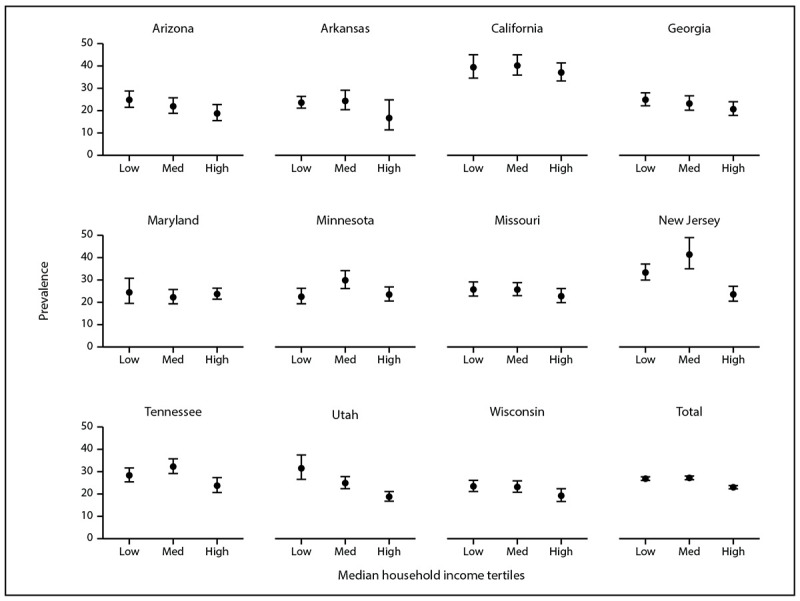
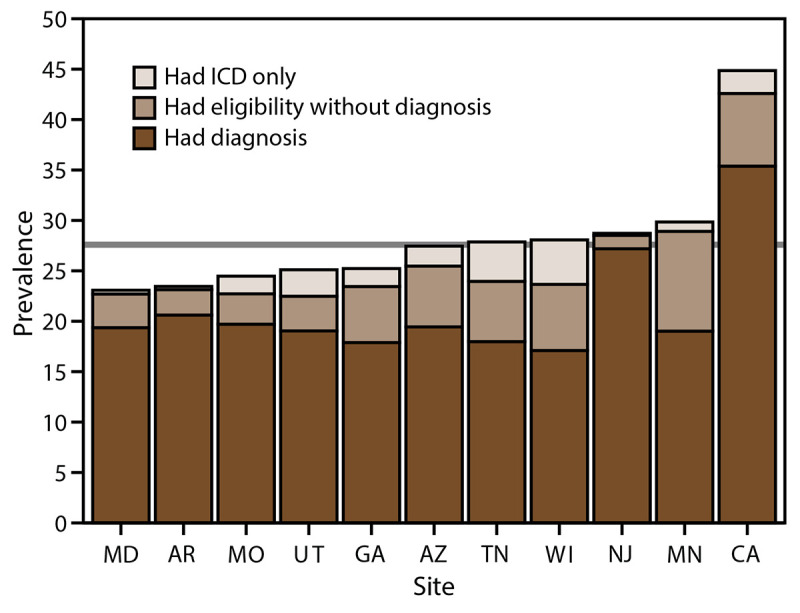
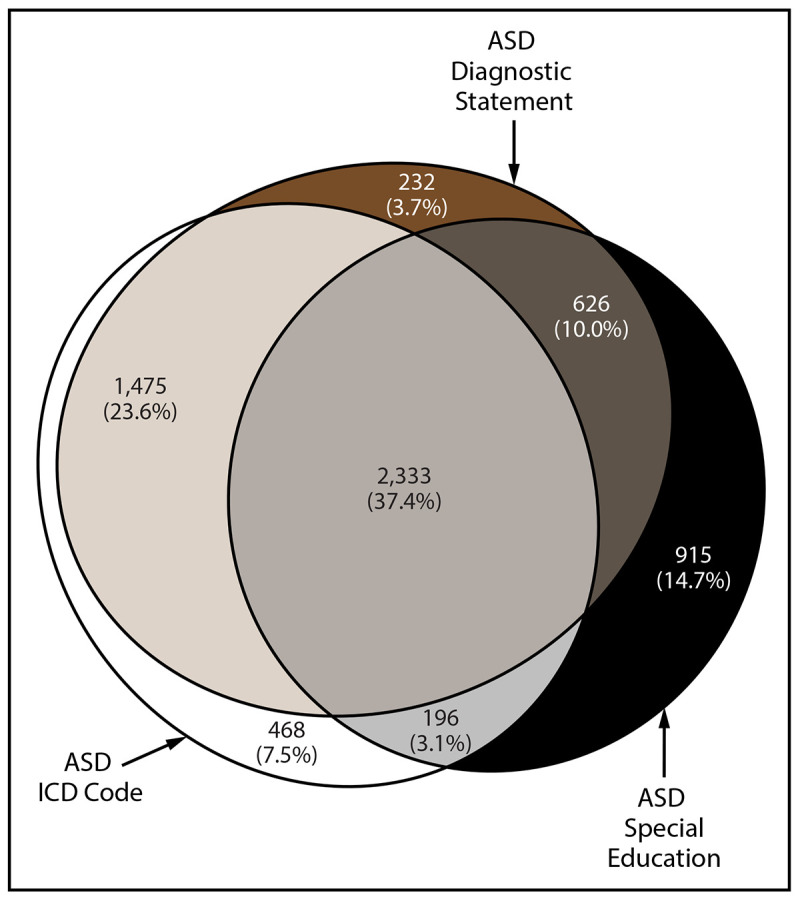
Problem/Condition: Autism spectrum disorder (ASD). Period Covered: 2020. Description of System: The Autism and Developmental Disabilities Monitoring (ADDM) Network is an active surveillance program that provides estimates of the prevalence of ASD among children aged 8 years. In 2020, there were 11 ADDM Network sites across the United States (Arizona, Arkansas, California, Georgia, Maryland, Minnesota, Missouri, New Jersey, Tennessee, Utah, and Wisconsin). To ascertain ASD among children aged 8 years, ADDM Network staff review and abstract developmental evaluations and records from community medical and educational service providers. A child met the case definition if their record documented 1) an ASD diagnostic statement in an evaluation, 2) a classification of ASD in special education, or 3) an ASD International Classification of Diseases (ICD) code. Results: For 2020, across all 11 ADDM sites, ASD prevalence per 1,000 children aged 8 years ranged from 23.1 in Maryland to 44.9 in California. The overall ASD prevalence was 27.6 per 1,000 (one in 36) children aged 8 years and was 3.8 times as prevalent among boys as among girls (43.0 versus 11.4). Overall, ASD prevalence was lower among non-Hispanic White children (24.3) and children of two or more races (22.9) than among non-Hispanic Black or African American (Black), Hispanic, and non-Hispanic Asian or Pacific Islander (A/PI) children (29.3, 31.6, and 33.4 respectively). ASD prevalence among non-Hispanic American Indian or Alaska Native (AI/AN) children (26.5) was similar to that of other racial and ethnic groups. ASD prevalence was associated with lower household income at three sites, with no association at the other sites.Across sites, the ASD prevalence per 1,000 children aged 8 years based exclusively on documented ASD diagnostic statements was 20.6 (range = 17.1 in Wisconsin to 35.4 in California). Of the 6,245 children who met the ASD case definition, 74.7% had a documented diagnostic statement of ASD, 65.2% had a documented ASD special education classification, 71.6% had a documented ASD ICD code, and 37.4% had all three types of ASD indicators. The median age of earliest known ASD diagnosis was 49 months and ranged from 36 months in California to 59 months in Minnesota.Among the 4,165 (66.7%) children with ASD with information on cognitive ability, 37.9% were classified as having an intellectual disability. Intellectual disability was present among 50.8% of Black, 41.5% of A/PI, 37.8% of two or more races, 34.9% of Hispanic, 34.8% of AI/AN, and 31.8% of White children with ASD. Overall, children with intellectual disability had earlier median ages of ASD diagnosis (43 months) than those without intellectual disability (53 months). Interpretation: For 2020, one in 36 children aged 8 years (approximately 4% of boys and 1% of girls) was estimated to have ASD. These estimates are higher than previous ADDM Network estimates during 2000-2018. For the first time among children aged 8 years, the prevalence of ASD was lower among White children than among other racial and ethnic groups, reversing the direction of racial and ethnic differences in ASD prevalence observed in the past. Black children with ASD were still more likely than White children with ASD to have a co-occurring intellectual disability. Public Health Action: The continued increase among children identified with ASD, particularly among non-White children and girls, highlights the need for enhanced infrastructure to provide equitable diagnostic, treatment, and support services for all children with ASD. Similar to previous reporting periods, findings varied considerably across network sites, indicating the need for additional research to understand the nature of such differences and potentially apply successful identification strategies across states.
Overview
The claims and statistics of this paper haven’t been checked yet.
Free: it reads the open-access text and checks the first 5 claims that cite a source we can check. Create a free account to check every claim.
Integrity signals
Registry
Cites
Statistics
Figures
Verification
Claims the paper makes
The claims and statistics of this paper haven’t been checked yet.
Free: it reads the open-access text and checks the first 5 claims that cite a source we can check. Create a free account to check every claim.
Claims other papers make about this one
Each is checked against this paper’s own text: does it say what the citing paper says it does?
The source backs part of the claim, not all of it — or backs it for a different population, condition or comparison.
In the citing paper
“Previous research reported that autism diagnosis occurs at a boy-to-girl ratio of 3.8:1, with the mother typically serving as the primary caregiver (Herrero et al., 2024;Maenner et al., 2023).”
From Mindfulness and parenting stress among parents of autistic children: The mediation of resilience and psychological flexibility (2025) · cites this paper as Maenner et al., 2023
Experimental — accuracy not yet measuredThe source backs part of the claim, not all of it — or backs it for a different population, condition or comparison.
In the citing paper
“Understanding differential outcomes based on race, ethnicity, gender, sex, age, and socioeconomic factors173,174 is highly limited.”
From Executive function deficits in attention-deficit/hyperactivity disorder and autism spectrum disorder (2024) · cites this paper as [174]
Experimental — accuracy not yet measuredThe source backs part of the claim, not all of it — or backs it for a different population, condition or comparison.
In the citing paper
“California has had the highest prevalence among children aged 4 years and 8 years since joining the ADDM Network in 2018 (6,10,11,13)”
From Prevalence and Early Identification of Autism Spectrum Disorder Among Children Aged 4 and 8 Years — Autism and Developmental Disabilities Monitoring Network, 16 Sites, United States, 2022 (2025) · cites this paper as [6]
Experimental — accuracy not yet measuredThe source backs part of the claim, not all of it — or backs it for a different population, condition or comparison.
In the citing paper
“The male-to-female ratio among children aged 4 years was similar across sites, but the ratio was lower than among children aged 8 years (11).”
From Early Identification of Autism Spectrum Disorder Among Children Aged 4 Years — Autism and Developmental Disabilities Monitoring Network, 11 Sites, United States, 2020 (2023) · cites this paper as [11]
Experimental — accuracy not yet measuredThe source backs part of the claim, not all of it — or backs it for a different population, condition or comparison.
In the citing paper
“All sites had access to health and education records in 2020 (11).”
From Early Identification of Autism Spectrum Disorder Among Children Aged 4 Years — Autism and Developmental Disabilities Monitoring Network, 11 Sites, United States, 2020 (2023) · cites this paper as [11]
Experimental — accuracy not yet measured
15 more claims about this paper
Create a free account to see every claim other papers make about this one.
Self-check
Percentages, sums and reported differences re-computed from the paper’s own numbers.
The self-check needs the paper’s full text.
Citations
Cites
1 retracted
Christensen, D. L., Baio, J., Braun, K. V. N., Bilder, D., Charles, J., Constantino, J. N., Daniels, J., Durkin, M. S., Fitzgerald, R. T., Kurzius-Spencer, M., et al. (2016) · MMWR. Surveillance Summaries · doi:10.15585/mmwr.ss6503a1 · Cited by 1,964
Self-citationRetractedDiagnostic and Statistical Manual of Mental Disorders
American Psychiatric Association (2013) · doi:10.1176/appi.books.9780890425596 · Cited by 116,369
Baio, J., Wiggins, L., Christensen, D. L., Maenner, M. J., Daniels, J., Warren, Z., Kurzius-Spencer, M., Zahorodny, W., Robinson, C., Rosenberg, et al. (2018) · MMWR. Surveillance Summaries · doi:10.15585/mmwr.ss6706a1 · Cited by 6,078
Self-citationMaenner, M. J., Shaw, K. A., Baio, J., EdS1, Washington, A., Patrick, M., DiRienzo, M., Christensen, D. L., Wiggins, L. D., Pettygrove, S., et al. (2020) · MMWR. Surveillance Summaries · doi:10.15585/mmwr.ss6904a1 · Cited by 3,780 · cited 2×
“2 3 US Department of Health and Human Services/Centers for Disease Control and Prevention necessitate record review if those codes closely aligned with program-recommended ICD codes (11).”
BackgroundSelf-citationMaenner, M. J., Shaw, K. A., Bakian, A. V., Bilder, D. A., Durkin, M. S., Esler, A., Furnier, S. M., Hallas, L., Hall-Lande, J., Hudson, A., et al. (2021) · MMWR. Surveillance Summaries · doi:10.15585/mmwr.ss7011a1 · Cited by 1,818 · cited 5×
“These gaps narrowed over time until ASD prevalence among Black and Hispanic matched prevalence among White children for the first time in 2016 and 2018, respectively (11,12).”
BackgroundMethodInfluentialSelf-citationPrevalence of Autism in a US Metropolitan Area
Yeargin-Allsopp, M., Rice, C., Karapurkar, T., Doernberg, N., Boyle, C., & Murphy, C. (2003) · JAMA · doi:10.1001/jama.289.1.49 · Cited by 1,248 · cited 2×
“CDC began monitoring the prevalence of ASD in metropolitan Atlanta, Georgia, in 1996 as part of its Metropolitan Atlanta Developmental Disabilities Surveillance Program (2).”
Background(2009) · PubMed · Cited by 804
Research works printed but not linked: 2
- Autism and Developmental Disabilities Monitoring Network Surveillance Year 2006 Principal Investigators. Prevalence of autism spectrum disorders—Autism and Developmental Disabilities Monitoring Network, United States, 2006. MMWR Surveill Summ 2009; 58(No. SS–10). 20023608
- Shaw KA, Maenner MJ, Bakian AV, Early identification of autism spectrum disorder among children aged 4 years—Autism and Developmental Disabilities Monitoring Network, 11 sites, United States, 2018. MMWR Surveill Summ 2021; 70(No. SS–10): 1– 14. 10.15585/mmwr.ss7010a1 34855727 PMC8639027 · DOI · Paper page
Cited by
Items 701–800 of 1,000
Neuroregulatory effect of royal jelly
Zhu, F., Yang, R., He, B., Xu, Y., & Wang, H. (2025) · The Journal of Nutritional Biochemistry · doi:10.1016/j.jnutbio.2025.110028 · Cited by 5
Pais, M., Sereno, J., Tomé, V. A., Fonseca, C., Seco, C., Ribeiro, I., Martins, J., Fortuna, A. C., Abrunhosa, A., Pinto, L., et al. (2025) · Translational Psychiatry · doi:10.1038/s41398-025-03464-7 · Cited by 9
“Autism spectrum disorder (ASD) is a neurodevelopmental condition characterized by social communication dif fi culties, restricted and repetitive behaviour and sensory anomalies [1] that affects 1 in 36 children [2].”
Javadfar, Z., Soltani, S., Khamoushi, F., Sharifi, M., Moradi, S., Rezaeian, S., Foroughi, A., Cheshmeh, S., Taghaddosi, M., & Bahrehmand, F. (2025) · BMC Pediatrics · doi:10.1186/s12887-025-05985-y · Cited by 9
Socially Assistive Robotic Instruction for Children With Autism Spectrum Disorder
Jürgensen, M., & Kubina, R. M. (2025) · Journal of Special Education Technology · doi:10.1177/01626434251372933 · Cited by 5
“As of 2020, 1 in 36 children is diagnosed with autism (Maenner et al., 2023), and 26.7% of these cases are classi fi ed as severe or profound (Hughes et al., 2023).”
InfluentialMutual Understanding: The Role of Neurotype-Matching and Perceptions in Communication Effectiveness
Jameson, M., & Bean, A. (2025) · American Journal of Speech-Language Pathology · doi:10.1044/2025_ajslp-25-00043 · Cited by 6
Zheng, P., Zhao, H., Zhang, X., Wu, Q., Zheng, Z., & Liu, S. (2025) · Frontiers in Nutrition · doi:10.3389/fnut.2025.1643147 · Cited by 8
Sohl, K., Linstead, E. J., Heinz, K., Eiroa-Lledo, E., Curran, A. B., Mahurin, M. A., Nanclares-Nogués, V., Salomon, C., Seal, M., & Taraman, S. (2025) · JMIR Formative Research · doi:10.2196/80733 · Cited by 8
“Rates of children diagnosed with autism continue to rise dramatically, with one in 31 eight-year-olds now receiving a diagnosis in the United States [1].”
Joshi, G., Gönenç, A., DiSalvo, M., Faraone, S. V., Ceranoglu, T. A., Yule, A. M., Uchida, M., McDougle, C. J., & Wozniak, J. R. (2025) · JAMA Network Open · doi:10.1001/jamanetworkopen.2025.34927 · Cited by 10
Neuroimmune Mechanisms of Neurodevelopmental Disorders
Anderson, S., Jin, R. M., & Molofsky, A. V. (2025) · Biological Psychiatry · doi:10.1016/j.biopsych.2025.10.023 · Cited by 6
Almulla, A. A., & Khasawneh, M. A. S. (2025) · Psychiatric Quarterly · doi:10.1007/s11126-025-10243-6 · Cited by 11
Early autism detection: a review of emerging technologies, biomarkers, and explainable AI approaches
Agrawal, R., & Agrawal, R. (2025) · Molecular Brain · doi:10.1186/s13041-025-01269-9 · Cited by 11
“The prevalence of neurodevelopmental difficulties is gradually increasing worldwide as a result of today's more sedentary lifestyles and changing work environments [30, 31].”
Phillips, W. T., Sheesley, A. P., & Schwartz, J. G. (2026) · Frontiers in Neuroscience · doi:10.3389/fnins.2025.1737007 · Cited by 5
SARS-CoV-2 infection during pregnancy and neurodevelopmental outcomes in early childhood
Croen, L., Qian, Y., Grosvenor, L. P., Alexeeff, S., Yolken, R. H., Ames, J., Ashwood, P., Kim, D. H. J., & de Water, J. V. (2026) · Translational Psychiatry · doi:10.1038/s41398-026-03818-9 · Cited by 10
“…with various screening tools [8, 9] or diagnoses in young infants [6, 7], no studies have evaluated associations with neurodevelopmental disorder (NDD) diagnoses in children older than 18 months of age which is well before the median age of diagnosis of autism spectrum disorder (ASD) in U.S [10].”
Autism mutations rewire protein interaction networks to drive neurodevelopmental pathology
Wang, B., Vartak, R. S., Hennick, K. M., Zaltsman, Y., Naing, Z. Z. C., Polacco, B. J., Bashir, A., Eckhardt, M., Bouhaddou, M., Xu, J., et al. (2026) · Science · doi:10.1126/science.ady4523 · Cited by 8
Zhao, S., Li, M., Chen, W., Zhang, Z., Kramer, J., Takacs, D. S., Magaña, S., & Chen, L. (2023) · Review Journal of Autism and Developmental Disorders · doi:10.1007/s40489-023-00406-1 · Cited by 5
Pham, L. N. H., Lee, A. K. C., Estes, A. M., Dager, S. R., Hemingway, S. J. A., Thorne, J. C., & Lau, B. K. (2023) · International Journal of Language & Communication Disorders · doi:10.1111/1460-6984.12964 · Cited by 6
Li, H., Dodd-Butera, T., Beaman, M. L., & Burtea, R. (2023) · International Journal of Environmental Research and Public Health · doi:10.3390/ijerph21010012 · Cited by 7
Lu, B., Li, X., Gao, X., Chen, J., Liu, Y., Lu, J., Kat, S., Ma, Z., Zhao, L., Yin, T., et al. (2024) · Medicine Plus · doi:10.1016/j.medp.2024.100007 · Cited by 5
Enteric Dysbiosis in Children With Autism Spectrum Disorder and Associated Response to Stress
Cavanaugh, G., Bai, J., Tartar, J. L., Lin, J., Nunn, T., Sangwan, N., Patel, D., Stanis, S., Patel, R. K., Rrukiqi, D., et al. (2024) · Cureus · doi:10.7759/cureus.53305 · Cited by 6
Muscatello, R. A., McGonigle, T., Vandekar, S., & Corbett, B. A. (2024) · Research in Autism · doi:10.1016/j.rasd.2024.102354 · Cited by 7
Gu, T., Jin, C., Lin, L., Wang, X., Li, X., Jing, J., & Cao, M. (2024) · Frontiers in Psychiatry · doi:10.3389/fpsyt.2024.1363406 · Cited by 7
Anbar, J. S., Metoyer, M., Smith, C. J., & Matthews, N. L. (2024) · Journal of Autism and Developmental Disorders · doi:10.1007/s10803-024-06323-4 · Cited by 6
“Autism spectrum disorder (ASD) is a neurodevelopmental condition that is estimated to affect 1 in every 36 Ameri - can children by 8 years of age (Maenner et al., 2023 ).”
Alimohamadi, A., Ghasemzadeh, M., Fooladi, F., Abdolmohamadi, K., Killikelly, C., & Janghorbanian, Z. (2024) · Journal of Pediatric Nursing · doi:10.1016/j.pedn.2024.03.036 · Cited by 14
Aguayo, P., Lin, A. G., Stevens, P. T., Carbone, P. S., Bilder, D. A., & Rapaport, M. H. (2024) · FOCUS The Journal of Lifelong Learning in Psychiatry · doi:10.1176/appi.focus.20230036 · Cited by 6
Self-citationDiagnostic Evaluation of Autism Spectrum Disorder in Pediatric Primary Care
Nasir, A. K., Strong‐Bak, W., & Bernard, M. (2024) · Journal of Primary Care & Community Health · doi:10.1177/21501319241247997 · Cited by 11
Babayiğit, T. M., Akay, G. G., Uytun, M. Ç., Doğan, Ö., Serdar, M. A., Efendi, G. Y., Erman, A. G., Yürümez, E., & Öztop, D. B. (2024) · Children · doi:10.3390/children11050551 · Cited by 6
Adverse Childhood Experiences and Health Outcomes Among Transition-Age Autistic Youth
Song, W., McLean, K. J., Gifford, J., Kissner, H., & Sipe, R. (2024) · Journal of Autism and Developmental Disorders · doi:10.1007/s10803-024-06401-7 · Cited by 8
“It is worth noting that this percentage was lower than the population estimates, which suggested that more than one-third of autistic individuals have intellectual disability (Maenner et al., 2023).”
Rautenbach, G., Conolly, N. B., Hoosain, M., Zunza, M., & Plastow, N. A. (2024) · Journal of Occupational Therapy Schools & Early Intervention · doi:10.1080/19411243.2024.2360414 · Cited by 14
“About one in 36 children has been identified with ASD in the United States, according to estimates from Centers for Disease, Control and Prevention (CDC’s) Autism and Developmental Disabilities Monitoring (ADDM) Network (Maenner et al., 2023).”
Xu, S., Wang, J., Mao, K., Jiao, D., Zhu, L., Zhao, H., Sun, Y., Feng, J., Lai, Y., Peng, R., et al. (2024) · Cell & Bioscience · doi:10.1186/s13578-024-01268-8 · Cited by 5
“%) of ASD among 8-year-olds, with ASD being 3.8 times more common in boys than girls [11].”
BackgroundInfluentialJones, J. P., Williamson, L. L., Konsoula, Z., Anderson, R., Reissner, K. J., & Parker, W. (2024) · Life · doi:10.3390/life14080918 · Cited by 14
“Based on current prevalence rates in the US, the ratio of Down syndrome to ASD is expected to be about 1 to 19 (1 in 691 or 0.14% with Down syndrome [37] and 1 in 36 or 2.8% with ASD [38]) rather than 33 to 1.”
BackgroundMethodInfluentialCui, K., Li, L., Li, K., Xiao, W., & Wang, Q. (2024) · NeuroToxicology · doi:10.1016/j.neuro.2024.07.012 · Cited by 5
Omelańczuk, I., & Pisula, E. (2024) · Journal of Autism and Developmental Disorders · doi:10.1007/s10803-024-06517-w · Cited by 9
“This is consistent with epidemiological reports that autism spectrum disorder is diagnosed several times more frequently in boys than in girls (Maenner et al., 2023).”
Experiences of Turkish mothers of children with autism: a phenomenological study
Aktaş, E., Top, F. Ü., & Uzun, S. (2024) · Current Psychology · doi:10.1007/s12144-024-06635-9 · Cited by 6
“Autism is a neurodevelopmental condition with a prevalence of 1 in 36 (Maenner et al., 2023), showing a rapid increase globally, seemingly unaffected by geography, race, or socioeconomic factors (Christensen et al., 2016; Gentles et al., 2019; WHO, 2023).”
Harbin, S. G., Hugh, M. L., Tagavi, D. M., Bravo, A., Joshi, M., Kiche, S. W., Michael, O. G., & Locke, J. J. (2024) · Journal of Autism and Developmental Disorders · doi:10.1007/s10803-024-06531-y · Cited by 6
Casseus, M., Shoval, H. A., Erasmus, A. J., & Cheng, J. (2024) · Research in Autism · doi:10.1016/j.rasd.2024.102490 · Cited by 6
Parental Perceptions of Community and Professional Attitudes Toward Autism
Thayer, N. M., Marsack‐Topolewski, C. N., & Wilson, K. P. (2024) · Journal of Autism and Developmental Disorders · doi:10.1007/s10803-024-06554-5 · Cited by 7
Daily oscillation of the excitation/inhibition ratio is disrupted in two mouse models of autism
Bridi, M., Luo, N., Kim, G., Menarchek, B. J., Lee, R. A., Rodríguez, B. A., Severín, D., Moreno, C., Contreras, A., Wesselborg, C., et al. (2024) · iScience · doi:10.1016/j.isci.2024.111494 · Cited by 9
Effects of Valproic Acid Embryonic Exposure on Zebrafish: A Systematic Review and Meta-Analysis
Flores-Prieto, B., Manzo, J., Hernández‐Aguilar, M. E., Coria‐Ávila, G. A., Herrera‐Covarrubias, D., Aranda-Abreu, G. E., Rojas-Durán, F., Pérez-Estudillo, C. A., Suárez-Medellín, J. M., & Toledo‐Cárdenas, M. R. (2024) · NeuroSci · doi:10.3390/neurosci5040046 · Cited by 6
Rizk, S., & Barger, B. D. (2025) · Maternal and Child Health Journal · doi:10.1007/s10995-024-04028-9 · Cited by 6
“This was in comparison to White, non-Hispanic, Asian, and mixed race children with ASD among the 11 surveillance states (Maenner et al., 2023).”
Social first impressions and perceived gender in autistic and non-autistic youth
Baer, M., Cola, M., Knox, A., Lyons, M., Schillinger, S., Lee, A., Worth, B. F., Parish‐Morris, J., & Grossman, R. B. (2025) · Scientific Reports · doi:10.1038/s41598-025-89083-0 · Cited by 8
Smith, J. V., Howard, M., Menezes, M., Burroughs, C., Pappagianopoulos, J. E., Sastri, V., Brunt, S., Miller, C. R., Parenchuk, A., Kuhn, J., et al. (2025) · Autism Research · doi:10.1002/aur.70014 · Cited by 8
Savaldi-Harussi, G., Amster, I., Stolar, O., & Ben-Itzchak, E. (2025) · Research in Developmental Disabilities · doi:10.1016/j.ridd.2025.104964 · Cited by 5
A head start: The relationship of placental factors to craniofacial and brain development
Carver, A. J., Dunnwald, M., & Stevens, H. E. (2025) · Developmental Dynamics · doi:10.1002/dvdy.70018 · Cited by 6
“134,135 In rats, decreased placental Igf1 due to a low-protein maternal diet led to decreased Igf1R and Ntrk2 in the offspring brain on gestational day 20.”
Terada, S., Nakayama, S. F., Fujiwara, T., & The Japan Environment and Children's Study Group (2025) · Autism Research · doi:10.1002/aur.70022 · Cited by 5
“Third, since data on ASD diagnosis were collected at 4 years of age— and given that the median age of ASD diagnosis in the United States is reported to be 49 months (Maenner et al. 2023)—some children who were undiagnosed at this time may receive a diagnosis in later years.”
Ding, L., Zhang, M., Strodl, E. S., Yin, X., Wen, G., Sun, D., Xian, D., Zhao, Y., Zheng, Y., Liu, F., et al. (2025) · Frontiers in Nutrition · doi:10.3389/fnut.2025.1614820 · Cited by 7
The impact of state policy on early autism diagnosis: A qualitative investigation
Lindly, O. J., Abate, D. J., Fuchu, P., Kuhn, J., Bharath, P., Asantewaa, S. M., Feinberg, E., & Broder‐Fingert, S. (2025) · Autism · doi:10.1177/13623613251336813 · Cited by 6
“…in the age of first evaluation and autism diagnosis has been shown by the Autism and Developmental Disabilities Monitoring Network: the average age of earliest known autism diagnosis in 2020 was 49 months with a range of 36 months in California to 59 months in Minnesota (Maenner et al., 2023).”
InfluentialBarmak, E., Taçalan, P. S., ÇILDIR, B., & Sarımehmetoğlu, E. A. (2025) · Hacettepe Üniversitesi Sağlık Bilimleri Fakültesi Dergisi · doi:10.21020/husbfd.1359870 · Cited by 5
Autism in schizophrenia and its original link to self-disorder: returning a borrowed concept
Henriksen, M. G., Nielsen, K. M., Mottron, L., & Nordgaard, J. (2025) · The Lancet Psychiatry · doi:10.1016/s2215-0366(25)00132-4 · Cited by 10
Liu, S., Liu, X., Duan, Y., Huang, L., Ye, T., Gu, N., Tan, T., Zhang, Z., & Sun, J. (2025) · Journal of Nanobiotechnology · doi:10.1186/s12951-025-03557-x · Cited by 10
“Autism spectrum disorder (ASD) is a neurodevelopmental disorder characterized by impaired social interactions, difficulties with verbal communication, repetitive stereotyped behaviors, and narrow interests [1, 2].”
Stachura, K., Emich‐Widera, E., Kazek, B., & Stania, M. (2025) · Journal of Clinical Medicine · doi:10.3390/jcm14144946 · Cited by 8
“Children with autism spectrum disorder are challenged with an array of different developmental and neuropsychiatric disorders that impact their daily functioning [3].”
Establishing a social behavior paradigm for female mice
Xiao, H., Huang, C., Wu, Y. H., Wang, J. J., & Wang, H. (2025) · Frontiers in Neuroscience · doi:10.3389/fnins.2025.1630491 · Cited by 4
Khalil, A., Yatcilla, J., Christie, N., & Zhou, X. (2025) · Journal of Racial and Ethnic Health Disparities · doi:10.1007/s40615-025-02555-x · Cited by 9
“Autism spectrum disorder (ASD) affects about 1 in 36 children aged 3–17 in the USA [45], with an estimated lifetime cost of $2.4 billion for education and healthcare services [11].”
InfluentialMasa’Deh, R., Sawalha, M., Maabreh, R. S. A., Aslanoğlu, A., Safieh, H. A., Elshatarat, R. A., Saleh, Z. T., Almagharbeh, W. T., Alnawafleh, K. A., & Al‐Sayaghi, K. M. (2025) · Scientific Reports · doi:10.1038/s41598-025-07027-0 · Cited by 11
Ressa, H. J., Newman, B. T., Jacokes, Z., McPartland, J. C., Kleinhans, N. M., Druzgal, T. J., Pelphrey, K. A., & Horn, J. D. V. (2025) · Imaging Neuroscience · doi:10.1162/imag.a.144 · Cited by 6
“Autism spectrum disorder (ASD) is a neurodevelopmental disorder with a prevalence of approximately 1 in 36 children ( Maenner et al., 2023).”
Carver, A. J., Fairbairn, F. M., Taylor, R. J., Boggarapu, S., Kamau, N. R., Gajmer, A., & Stevens, H. E. (2025) · Experimental Neurology · doi:10.1016/j.expneurol.2025.115453 · Cited by 11
Akman, Ö. A., & Esnafoğlu, E. (2023) · International Journal of Developmental Disabilities · doi:10.1080/20473869.2023.2213923 · Cited by 7
Young, K., Harris, B., Hall‐Lande, J., & Esler, A. (2023) · Journal of Autism and Developmental Disorders · doi:10.1007/s10803-023-06059-7 · Cited by 8
Self-citationChristensen, D., Pazol, K., Overwyk, K. J., England, L. J., Alexander, A. A., Croen, L., Dowling, N. F., Schieve, L. A., Tian, L. H., Tinker, S. C., et al. (2023) · Paediatric and Perinatal Epidemiology · doi:10.1111/ppe.12998 · Cited by 6
Risk factors and clinical characteristics of autism spectrum disorder with regression in China
Han, L., Guan, L., Zhang, Z., Li, W., Li, J., Bao, C., Ye, M., Tang, M., & Ke, X. (2023) · Autism Research · doi:10.1002/aur.3008 · Cited by 5
Giorgio, G. D., Corridore, D., Corvino, I. C., Zumbo, G., Pranno, N., Vozza, I., Polimeni, A., & Bossù, M. (2023) · Applied Sciences · doi:10.3390/app13169189 · Cited by 6
Shouldering the burden: Intensive mothering and autism
Dembosky, J. W., Heckert, D. A., Boser, S., & Migyanka, J. M. (2023) · Family Relations · doi:10.1111/fare.12943 · Cited by 11
Sound perception of children aged 2–6 years with autism spectrum disorder
Guo, J., Kang, J., & Ma, H. (2023) · Applied Acoustics · doi:10.1016/j.apacoust.2023.109623 · Cited by 6
Ballal, S. A., Greenwell, S., Liu, E., Buie, T. M., Silvester, J. A., Leier, M., Filippelli, M., Bousvaros, A., & Hron, B. M. (2023) · The Journal of Pediatrics · doi:10.1016/j.jpeds.2023.113737 · Cited by 5
Goodson, R., Wagner, J. A., Sandritter, T. L., Staggs, V. S., Soden, S. E., & Nadler, C. B. (2023) · Journal of Developmental & Behavioral Pediatrics · doi:10.1097/dbp.0000000000001215 · Cited by 7
Qin, Y., Zhang, X., Liu, Y., Ma, Z., Tao, S., Li, Y., Peng, R., Wang, F., Wang, J., Feng, J., et al. (2023) · Translational Psychiatry · doi:10.1038/s41398-023-02626-9 · Cited by 5
Azevedo, G., Gunsch, M. L., Lacerda, M. G., Peixoto, H. D. O., Borges, L. C. L. D. F., & Nunes, E. P. D. S. (2023) · ACM International Conference on Interactive Media Experiences · doi:10.1145/3604321.3604345 · Cited by 5
Mount, R. A., Athif, M., O’Connor, M. G., Saligrama, A., Tseng, H.-A., Sridhar, S., Zhou, C., Bortz, E., Antonio, E. S., Kramer, M., et al. (2023) · Frontiers in Neuroscience · doi:10.3389/fnins.2023.1277501 · Cited by 5
Parent Mediated Interventions for Children with Autism across India: A Qualitative Study
Rao, V. S., Srikanth, N., Santosh, S., Sathya Lakshmi, P. S., Athira, N. D., Sowmya, H. R., Mysore, A. V., & Raman, V. (2024) · Journal of Indian Association for Child and Adolescent Mental Health · doi:10.1177/09731342241226505 · Cited by 8
Duale, H. A., & Gele, A. A. (2024) · Child and Adolescent Psychiatry and Mental Health · doi:10.1186/s13034-024-00713-3 · Cited by 8
Longitudinal Follow-Up Study of Social Intervention Outcomes for Children on the Autism Spectrum
Lopata, C. J., Thomeer, M. L., Rodgers, J. D., Donnelly, J. P., & Lodi‐Smith, J. (2024) · Journal of Autism and Developmental Disorders · doi:10.1007/s10803-023-06221-1 · Cited by 10
Parental Perspectives on Early Life Screening and Genetic Testing for ASD: A Systematic Review
Dounavi, K., & Koldas, M. (2024) · Journal of Autism and Developmental Disorders · doi:10.1007/s10803-023-06231-z · Cited by 7
Bjørklund, G., Meguid, N. A., Hemimi, M., Sahakyan, E., Fereshetyan, K., & Yenkoyan, K. B. (2024) · Molecular Neurobiology · doi:10.1007/s12035-024-04099-3 · Cited by 9
Terol, A. K., Xia, Y. R., Jara, R. L. R., & Meadan, H. (2024) · Autism · doi:10.1177/13623613241236527 · Cited by 8
A new era of ICTs for combating symptoms of neurodevelopmental disorders
Pergantis, P. (2024) · World Journal of Biology Pharmacy and Health Sciences · doi:10.30574/wjbphs.2024.18.1.0145 · Cited by 6
“Data reported by the CDC indicate that ASD will be diagnosed in approximately 1 in 36 children, with boys being four times more likely to be affected (Maenner et al., 2023) with reported results involving a related study in Greece of children aged 10 to 11 years being 1.15% (Thomaids et al, 2020).”
MethodInfluentialda Silva, R. V., Carvalhal, M. M. D. L., & Gomes, D. L. (2024) · International Journal of Environmental Research and Public Health · doi:10.3390/ijerph21050545 · Cited by 12
“In Brazil, there are no official prevalence figures for ASD; however, according to the Centers for Disease Control and Prevention [2], in 2020, the general prevalence in the United States is 1 in every 36 8-year-old children.”
BackgroundThe relationship between hair cortisol concentration and autism diagnosis
Lin, P., John, J. R., Masi, A., Ong, L. K., Mathew, N. E., Moni, M. A., Eapen, V., & Walker, A. K. (2024) · Journal of Psychiatric Research · doi:10.1016/j.jpsychires.2024.05.052 · Cited by 5
Foster, A. A., Zabel, M. D., & Schober, M. (2024) · Psychiatric Clinics of North America · doi:10.1016/j.psc.2024.06.001 · Cited by 6
Database-assisted screening of autism spectrum disorder related gene set
Kereszturi, É. (2024) · Molecular Brain · doi:10.1186/s13041-024-01127-0 · Cited by 5
“According to systematic public health data, the prevalence of ASD in the United States has increased from 1.47% to 2.76% in the last ten years [2, 3], but similar changes are also observed in Europe [4] and Asia [5].”
BackgroundInfluentialLevin, L. K., & Machado-Gonzalez, Y. (2024) · Elsevier eBooks · doi:10.1016/b978-0-443-27366-7.00001-8 · Cited by 6
Yuxi, R., Shuqi, J., Cong, L., Li, S., & Yueyu, L. (2024) · Frontiers in Pediatrics · doi:10.3389/fped.2024.1454710 · Cited by 8
Yifu, L., Ma, Y., Libing, H., Chunling, X., & Tao, D. (2024) · Education and Information Technologies · doi:10.1007/s10639-024-13096-x · Cited by 8
“Females diagnosed with ASD often exhibit more severe symptoms, and a greater percentage of females experience mental retardation than males (Maenner et al., 2023 ).”
Burkett, K., Brown, C. L., Pickler, R. H., Stanton‐Chapman, T. L., Sharps, P. W., Jacquez, F., Smith, T. C., Holland, A., Heeman, A., & Froehlich, T. E. (2024) · Journal of Developmental & Behavioral Pediatrics · doi:10.1097/dbp.0000000000001327 · Cited by 8
Volk, H. E., Fortes, D., Musci, R. J., Kim, A. J. H., Bastain, T. M., Camargo, C. A., Croen, L., Dabelea, D., Duarte, C. S., Dunlop, A. L., et al. (2025) · Journal of Autism and Developmental Disorders · doi:10.1007/s10803-024-06670-2 · Cited by 7
“While this age range should be well past the age of diagnosis – with the US median being estimated at 49 months (Maenner, 2023) –we cannot ignore that later-life diagnoses do occur but hypothesize it more likely that adolescent autistic females may be at increased risk for such internalizing…”
Can memantine treat autism? Answers from preclinical and clinical studies
Aboul‐Fotouh, S., Zohny, S. M., Elnahas, E. M., Habib, M. Z., & Hassan, G. A. M. (2025) · Neuroscience & Biobehavioral Reviews · doi:10.1016/j.neubiorev.2025.106019 · Cited by 7
Through a child’s eyes: eye tracking to study children’s consumer behavior
Huddleston, P., McAlister, A. R., & Aladé, F. (2025) · Journal of Consumer Marketing · doi:10.1108/jcm-11-2023-6396 · Cited by 6
Depression, Gaming Disorder, and Internet Addiction in Adolescents with Autism Spectrum Disorder
Tateno, M., Tateno, Y., Shirasaka, T., Nanba, K., Shiraishi, E., Shimomura, R., & Kato, T. A. (2025) · Behavioral Sciences · doi:10.3390/bs15040423 · Cited by 9
“A report by the Autism and Developmental Disabilities Monitoring (ADDM) Network, in the U.S., also reported a prevalence of ASD of 2.8% (Maenner et al., 2023).”
InfluentialLiu, L., Zhou, X., Ma, Z., Liu, R., Zhang, Y., Wang, Y., Liu, Y., Xia, X., & Wang, J. (2025) · Toxics · doi:10.3390/toxics13060465 · Cited by 5
Frazier, T. W., Huba, K., Frazier, A. R., Womack, R. A., Youngstrom, E. A., Chetcuti, L., Hardan, A. Y., & Uljarević, M. (2025) · Research in Autism · doi:10.1016/j.reia.2025.202646 · Cited by 5
ASSISTÊNCIA DE ENFERMAGEM A CRIANÇA COM TRANSTORNO DE ESPECTRO AUTISTA:
Conterno, J. R., Marchiorato, A. A. L., de Paulo, D. A. B., & Coutinho, D. (2022) · Varia Scientia - Ciências da Saúde · doi:10.48075/vscs.v8i2.28867 · Cited by 5
Márquez-García, A. V., Ng, B. K., Iarocci, G., Moreno, S., Vakorin, V. A., & Doesburg, S. M. (2023) · Brain Sciences · doi:10.3390/brainsci13101448 · Cited by 6
Chase, J. B., Li, J., Lin, W. C., Tai, L.-H., Castro, F., Collins, A. G. E., & Wilbrecht, L. (2025) · bioRxiv (Cold Spring Harbor Laboratory) · doi:10.1101/2025.01.15.633099 · Cited by 5
Excess Neonatal Testosterone Causes Male-Specific Social and Fear Memory Deficits in Wild-Type Mice
Quiñones-Labernik, P., Blocklinger, K. L., Bruce, M. R., Hagan, E., Preuschl, D., Tesar, C., & Ferri, S. L. (2025) · eneuro · doi:10.1523/eneuro.0020-25.2025 · Cited by 8
Sharma, A., Pantalone, D. W., Kohn, B. H., Pereida, E. T., Nadwodny, N., & Faja, S. (2024) · Journal of Developmental & Behavioral Pediatrics · doi:10.1097/dbp.0000000000001293 · Cited by 4
Keehn, R. M., Paxton, A., Delaney, M. A., & Ciccarelli, M. R. (2024) · Journal of Developmental & Behavioral Pediatrics · doi:10.1097/dbp.0000000000001313 · Cited by 5
Ohmoto, Y., Terada, K., Shimizu, H., Kawahara, H., Iwanaga, R., & Kumazaki, H. (2024) · Frontiers in Psychiatry · doi:10.3389/fpsyt.2024.1464285 · Cited by 4
Autism and Communication Skills: Perspectives of Special Education Teachers in Saudi Arabia
Alqunaysi, R., & Meadan, H. (2024) · Journal of Autism and Developmental Disorders · doi:10.1007/s10803-024-06611-z · Cited by 4
“In the United States, for example, the latest estimate is that one out of 36 children who are 8 years old is diagnosed with autism (Maenner et al., 2023).”
Wang, J., Chen, S., Zhao, M., Zheng, L., Huang, X., Hong, X., Kang, J., Ou, P., & Huang, L. (2024) · eNeuro · doi:10.1523/eneuro.0387-24.2024 · Cited by 3
Budișteanu, M., Papuc, S. M., Erbescu, A., Glangher, A., Andrei, L. E., Rad, F., Hinescu, M. E., & Arghir, A. (2024) · Reviews in the Neurosciences · doi:10.1515/revneuro-2024-0106 · Cited by 6
Ariffin, R. A., Ismail, J., Rahman, F. N. A., Ismail, W. S. W., Ahmad, N., Ghafar, A. A., Yang, W. W., Masra, F., & Nor, N. K. (2024) · Frontiers in Pediatrics · doi:10.3389/fped.2024.1384292 · Cited by 8
Zhang, Y., Zhang, X., & Huang, L. (2025) · Frontiers in Psychiatry · doi:10.3389/fpsyt.2024.1477076 · Cited by 8
Metadata
- Authors
- Maenner, M. J., Warren, Z., Williams, A. R., Amoakohene, E., Bakian, A. V., Bilder, D. A., Durkin, M. S., Fitzgerald, R. T., Furnier, S. M., Hughes, M. M., Ladd-Acosta, C. M., McArthur, D., Pas, E. T., Salinas, A., Vehorn, A., Williams, S., Esler, A., Grzybowski, A., Hall-Lande, J., Nguyen, R. H. N., Pierce, K., Zahorodny, W., Hudson, A., Hallas, L., Mancilla, K. C., Patrick, M., Shenouda, J., Sidwell, K., DiRienzo, M., Gutierrez, J., Spivey, M. H., Lopez, M., Pettygrove, S., Schwenk, Y. D., Washington, A., & Shaw, K. A.
- Affiliations
- Centers for Disease Control and Prevention (US)
- Vanderbilt University Medical Center (US)
- University of Minnesota (US)
- University of Utah (US)
- University of Wisconsin–Madison (US)
- Washington University in St. Louis (US)
- Johns Hopkins University (US)
- University of California San Diego (US)
- Rutgers New Jersey Medical School (US)
- University of Arkansas for Medical Sciences (US)
- National Center on Birth Defects and Developmental Disabilities (US)
- University of Arizona (US)
- Corresponding author
- Maenner, Matthew J.
- ORCID
- Maenner, Matthew J.
- Warren, Zachary
- Williams, Ashley Robinson
- Bakian, Amanda V.
- Bilder, Deborah A.
- Durkin, Maureen S.
- Fitzgerald, Robert T.
- Furnier, Sarah M.
- Hughes, Michelle M.
- Ladd-Acosta, Christine M.
- McArthur, Dedria
- Pas, Elise T.
- Esler, Amy
- Nguyen, Ruby H.N.
- Pierce, Karen
- Zahorodny, Walter
- Patrick, Mary
- Shenouda, Josephine
- DiRienzo, Monica
- Lopez, Maya
- Pettygrove, Sydney
- Washington, Anita
- Venue
- MMWR. Surveillance Summaries
- Published
- 2023-03-24
- Volume
- 72
- Issue
- 2
- Pages
- 1-14
- ISSN
- 1545-8636 (ISSN-L)
- 1546-0738
- PMC
- PMC10042614
- OpenAlex
- W4360600181
- Cited by
- 2,706
- References
- 30
- Citations by year
- 2026: 568 · 2025: 900 · 2024: 896 · 2023: 306
- FWCI
- 400.11
- Type
- journal article
- Language
- en
- Open access
- diamond
- doi.org
- Licence
- public-domain
- Locations
- MMWR Surveillance Summaries (publishedVersion, public-domain)
- PubMed Central (publishedVersion, public-domain)
- PubMed (publishedVersion)
- UA Campus Repository (The University of Arizona) (submittedVersion, public-domain)
- Funders
- Eunice Kennedy Shriver National Institute of Child Health and Human Development (P50HD103537)
- Topics
- Life Sciences › Neuroscience › Cognitive Neuroscience › Autism Spectrum Disorder Research
- Health Sciences › Medicine › Psychiatry and Mental health › Child Nutrition and Feeding Issues
- Social Sciences › Psychology › Clinical Psychology › Family and Disability Support Research
- Keywords
- autism spectrum disorder, autism prevalence, sex differences, racial and ethnic disparities, household income, special education classification, developmental disabilities, ICD-10-CM codes
- MeSH terms
- Autism Spectrum Disorder, Autistic Disorder, Child, Developmental Disabilities, Child, Preschool, Female, Humans, Male, Maryland, Intellectual Disability, Population Surveillance, United States, Prevalence
About these checks
Registry, retraction, Cites and statistics results are computed, not judged, with one exception: a printed reference that no index lists is read once by a model before it counts as a citation error. Claims are extracted by a model and kept only when their quote appears verbatim in the text; each cited source is then checked, with a model’s help, for whether it says what the claim relies on. Those verdicts can be wrong — read the claim’s quote and the cited source before relying on one.
Statistics and arithmetic are recomputed, not judged.
Confidence bands are shown only for fields calibrated on our annotated test set. None is calibrated yet, so no band is shown.
What counts as a claim ›How we measure confidence ›How we check this ›
Are you an author, or do you see a problem with this page? Request a review
Data sources
Bibliographic data: Semantic Scholar, OpenAlex, Crossref.
Contains information from the Semantic Scholar Academic Graph Datasets, made available under the ODC Attribution License (ODC-BY 1.0).
Semantic Scholar’s data is described in: Kinney, R., et al. (2023). The Semantic Scholar Open Data Platform. arXiv:2301.10140.
