

Cocos nucifera (L.) (Arecaceae): A phytochemical and pharmacological review
Open accessThe DOI matches its Crossref record; 65 of the 68 references it cites were found in a registry or an index; 18 of the 115 sources its claims cite were checked for support.
Abstract
Cocos nucifera (L.) (Arecaceae) is commonly called the "coconut tree" and is the most naturally widespread fruit plant on Earth. Throughout history, humans have used medicinal plants therapeutically, and minerals, plants, and animals have traditionally been the main sources of drugs. The constituents of C. nucifera have some biological effects, such as antihelminthic, anti-inflammatory, antinociceptive, antioxidant, antifungal, antimicrobial, and antitumor activities. Our objective in the present study was to review the phytochemical profile, pharmacological activities, and toxicology of C. nucifera to guide future preclinical and clinical studies using this plant. This systematic review consisted of searches performed using scientific databases such as Scopus, Science Direct, PubMed, SciVerse, and Scientific Electronic Library Online. Some uses of the plant were partially confirmed by previous studies demonstrating analgesic, antiarthritic, antibacterial, antipyretic, antihelminthic, antidiarrheal, and hypoglycemic activities. In addition, other properties such as antihypertensive, anti-inflammatory, antimicrobial, antioxidant, cardioprotective, antiseizure, cytotoxicity, hepatoprotective, vasodilation, nephroprotective, and anti-osteoporosis effects were also reported. Because each part of C. nucifera has different constituents, the pharmacological effects of the plant vary according to the part of the plant evaluated.
Overview
CoChat Summary
TL;DR
This review summarizes the phytochemistry, traditional uses, pharmacological activities, and toxicology of *Cocos nucifera* (coconut), concluding that different plant parts have varied effects and generally low oral toxicity. It calls for further studies to isolate active compounds, clarify mechanisms, and develop formulations for clinical trials.
Key findings
- The review reports analgesic, anti-inflammatory, antibacterial, antifungal, antiviral, antioxidant, antineoplastic, antiparasitic, anti-*Leishmania*, CNS depressant/anticonvulsant, renal protective, antimalarial, antitrichomonal, cardioprotective, hepatoprotective, antidiabetic, anti-osteoporosis, and antihypertensive activities across different parts of *C. nucifera*.
- Crude husk-fiber extract (50, 100, or 150 mg/kg orally) inhibited acetic acid-induced writhing by 24%, 34%, and 52.4%, respectively; naloxone inhibited the antinociceptive effect of the crude extract and fractions F1 and F2.
- Butanol extract from green coconut bark at 500 and 1000 mg/kg had mean antihelminthic efficacy of 62.72% and 98.36% against mouse intestinal nematodes; liquid coconut husk (LCCV) at 2.5 mg/mL and butanolic extract at 10 mg/mL showed 100% ovicidal activity against *Haemonchus contortus*, with larvicidal effects of 81.30% and 99.80% at 65 and 80 mg/mL.
- Mature coconut water (1000 mg/kg) reduced blood glucose in alloxan-induced diabetic rats to 129.23±1.95 mg/dL versus untreated control 275.32±4.25 mg/dL; ethanolic endocarp extract reduced mean systolic blood pressure in DOCA salt-induced hypertensive rats from 185.3±4.7 to 145.6±6.1 mm Hg.
Methods
- The paper describes a systematic review of English-language articles searched in Scopus, Science Direct, PubMed, SciVerse, and Scientific Electronic Library Online (SciELO), with no time limits, using combinations of search terms including “Cocos nucifera,” “C. nucifera and phytochemical profile,” “C. nucifera and pharmacological properties,” and “C. nucifera and toxicology.”
- The review covers traditional uses, phytochemical compounds isolated from different plant parts, biological activity studies, and toxicological studies.
Limitations
- The paper states that studies have focused on effects of different plant parts without demonstrating underlying mechanisms, and that formulations based on plant parts must be developed before clinical trials.
- The paper states that geographical and seasonal variations can influence chemical composition, so standardized procedures for sample collection and compound quantification are needed for reproducibility.
- Evident from the text: many activities are supported only by preclinical animal or in vitro studies, and some activities (antineoplastic, hepatoprotective, anti-osteoporosis) are based on only one report; toxicity findings include route-dependent lethality, with no survival after intraperitoneal doses of 500 and 700 mg/kg of liquid mesocarp/butanol extract despite low oral toxicity.
Model-written summary. Check it against the paper before relying on it.
Integrity signals
Registry
Cites
Statistics
Figures
Verification
Claims the paper makes
16 Valid · 2 Not valid · 83 Not checked · 17 Own results and interpretations
Every source the paper cites for this claim was checked and supports it.
In the paper
“However, F2 did not inhibit the edema induced by any pro-inflammatory agent.”
§ Cocos nucifera (L.) (Arecaceae): A phytochemical and pharmacological review > Methods > Anti-inflammatory activity
What the sources say
- Supportedcites [44] Rinaldi S Silva DO Bello F Alviano CS Alviano DS Matheus ME Characterization of the antinociceptive and anti-inflammatory activities from Cocos nucifera L. (Palmae) J Ethnopharmacol 2009 122 541 546 10.1016/j.jep.2009.01.024 19429325 source
The Results (§3.5, Rat paw edema) state that F2 did not inhibit edema induced by the tested phlogistic agents: carrageenan, histamine, and serotonin. This matches the claim within the scope of the agents tested. (LLM, conf=0.92)
plain- Asserted: passes — The authors put it forward as true.
- Checkable: passes — It can be checked against evidence.
- Load-bearing: unclear — It is unclear whether the paper’s conclusions depend on it.
- Based: passes — The paper gives a reason why it holds.
- Supported
Every source the paper cites for this claim was checked and supports it.
In the paper
“All three extracts induced peripheral and central antinociceptive activity.”
§ Cocos nucifera (L.) (Arecaceae): A phytochemical and pharmacological review > Methods > Analgesic activity
What the sources say
- Supportedcites [44] Rinaldi S Silva DO Bello F Alviano CS Alviano DS Matheus ME Characterization of the antinociceptive and anti-inflammatory activities from Cocos nucifera L. (Palmae) J Ethnopharmacol 2009 122 541 546 10.1016/j.jep.2009.01.024 19429325 source
Section 2.2 identifies the three preparations as husk-fiber crude extract (CE) and aqueous fractions F1 and F2. Sections 3.2 and 3.3 report peripheral antinociceptive effects in the formalin test and central, spinal effects in the tail-flick test for all three in mice. Effects depended on dose; the claim does not say they occurred at every dose or in every central-pain test. (LLM, conf=0.91)
plainstates a cause- Asserted: passes — The authors put it forward as true.
- Checkable: passes — It can be checked against evidence.
- Load-bearing: passes — The paper’s conclusions depend on it.
- Based: passes — The paper gives a reason why it holds.
- Supported
The cited sources support only part of this claim — read each source’s verdict below.
In the paper
“The DPPH analysis demonstrated that ethanolic (cold and hot percolation), dry-distilled, and aqueous extracts of endocarp had significant antioxidant activity (4.1828, 3.31, 20.83, 1.0179 μg/mL, respectively) comparable with that of standard ascorbic acid (48).”
§ Cocos nucifera (L.) (Arecaceae): A phytochemical and pharmacological review > Methods > Antioxidant activity
What the sources say
- Partly supportedcites [48] Singla RK Jaiswal N Bhat GV Jagani H Antioxidant and antimicrobial activities of Cocos nucifera Linn. (Arecaceae) endocarp extracts Indo Global J Pharm Sci 2011 1 354 361 sourceExperimental — accuracy not yet measured
Our copy (Discussion/References section, p. 354-361 block) states exactly the DPPH result with the same four values: 'All extracts RNM-01, RNM-02, RNA-01 and RNDS were found to be significant antioxidant activity 4.1828, 3.31, 20.83, 1.0179 μgmL-1 respectively comparable to standard ascorbic acid (Table 7).' The preparation sections confirm RNM-01 = cold maceration with ethanol, RNM-02 = soxhlet (hot) ethanol, RNA/RNA-01 = aqueous (distilled water) and RNDS = dry distillation. The mismatch is the ordering: the source assigns 20.83 μg/mL to the aqueous extract (RNA-01) and 1.0179 μg/mL to the dry-distilled extract (RNDS), whereas the citing sentence lists 'dry-distilled, and aqueous ... 20.83, 1.0179 respectively', swapping those two attributions. The first two ethanolic values and the 'comparable with ascorbic acid' framing are supported; the last two number-to-extract pairings are not. (LLM, conf=0.85)
boosted- Asserted: passes — The authors put it forward as true.
- Checkable: passes — It can be checked against evidence.
- Load-bearing: unclear — It is unclear whether the paper’s conclusions depend on it.
- Based: passes — The paper gives a reason why it holds.
- Partly supported
The cited sources support only part of this claim — read each source’s verdict below.
In the paper
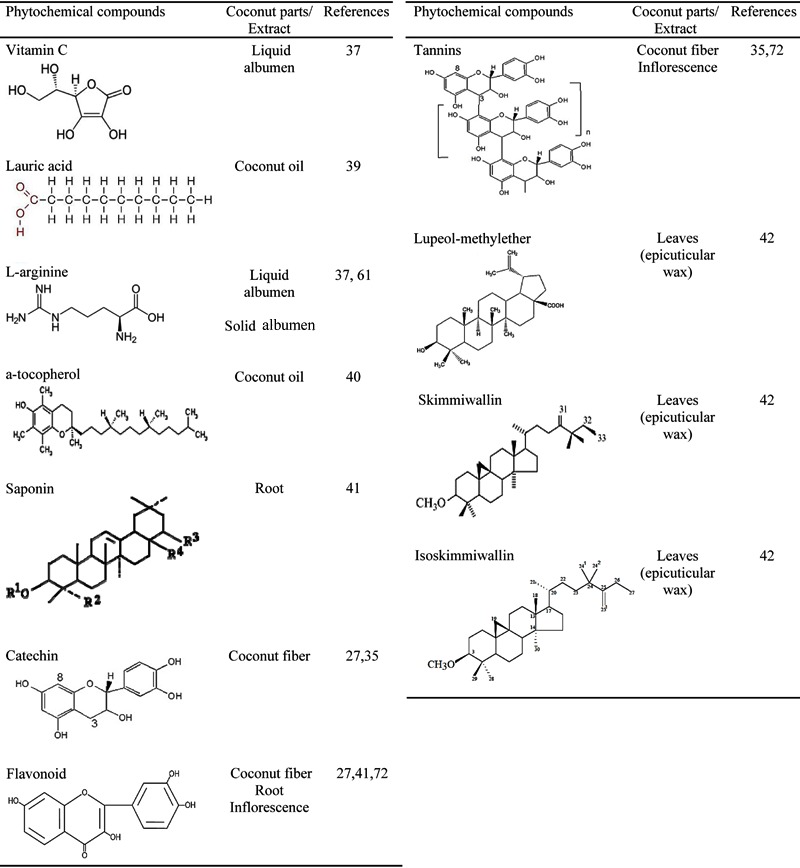
“The lyophilized extract and fractions, as well as ethyl acetate extracts, from the C. nucifera fiber are rich in polyphenols, compounds such as catechins, epicatechins, tannins, and flavonoids (7,33–35).”
§ Cocos nucifera (L.) (Arecaceae): A phytochemical and pharmacological review > Methods > Phytochemistry
What the sources say
- Not checked yetcites [7] Esquenazi MD Wigg MM Miranda, Rodrigues HM Tostes JBF Rozental S Antimicrobial and antiviral activities of polyphenolics from Cocos nucifera Linn. (Palmae) husk fiber extract Res Microbiol 2002 153 647 652 10.1016/S0923-2508(02)01377-3 12558183 source
- Not checked yetcites [33] Mendonca-Filho RR Rodrigues IA Alviano DS Santos AL Soares RM Alviano CS Leishmanicidal activity of polyphenolic-rich extract from husk fiber of Cocos nucifera Linn. (Palmae) Res Microbiol 2004 155 136 143 10.1016/j.resmic.2003.12.001 15059625 source
- Not checked yetcites [34] Rodrigues S Pinto GAS Ultrasound extraction of phenolic compounds from coconut (Cocos nucifera) shell powder J Food Eng 2007 80 869 872 17400017 source
- Partly supportedcites [35] Freitas JCC Nunes-Pinheiro DCS Pessoa AWP Silva LCR Girão VCC Lopes-Neto BE Effect of ethyl acetate extract from husk fiber water of Cocos nucifera in Leishmania braziliensis infected hamsters Rev Bras Farmacogn 2011 21 1006 1011 10.1590/S0102-695X2011005000138 sourceExperimental — accuracy not yet measured
The Results section of our copy states directly that 'The phytochemical study of EAE revealed the presence of condensed tannins, flavanonols, flavanons and flavonols. HPLC analysis indicated high concentrations of polyphenolic compounds such as catechins and epicatechins', and the Discussion repeats that EAE 'presents high concentrations of catechins and epicatechins' — so the polyphenol/catechin/epicatechin/tannin/flavonoid characterisation is supported for the ethyl acetate extract of C. nucifera husk fiber. However, the claim also extends this richness to 'the lyophilized extract and fractions': in our copy the lyophilized aqueous husk-fiber extract is only the starting material that was partitioned with ethyl acetate (Extraction and fraction isolation), and the phytochemical screening (Methods, 'Phytochemical study of EAE') was performed on EAE alone, not on the lyophilized extract or on the other fractions. That broader part of the sentence is not supported by this source. (LLM, conf=0.70)
plain- Asserted: passes — The authors put it forward as true.
- Checkable: passes — It can be checked against evidence.
- Load-bearing: unclear — It is unclear whether the paper’s conclusions depend on it.
- Based: passes — The paper gives a reason why it holds.
Every source the paper cites for this claim was checked and supports it.
In the paper
“In cell culture, green dwarf water protected against oxidative damage induced by hydrogen peroxide.”
§ Cocos nucifera (L.) (Arecaceae): A phytochemical and pharmacological review > Methods > Antioxidant activity
What the sources say
- Supportedcites [57] Santos JL Bispo VS Filho AB Pinto IF Dantas LS Vasconcelos DF Evaluation of chemical constituents and antioxidant activity of coconut water (Cocus nucifera L.) and caffeic acid in cell culture An Acad Bras Cienc 2013 85 1235 1247 10.1590/0001-37652013105312 24141413 source
The Evaluation of Antioxidant Activity of Coconut Water section describes pretreating cultured cells with green dwarf coconut water before hydrogen peroxide exposure. The Results and Discussion section reports significantly lower intracellular ROS after coconut-water pretreatment than in the hydrogen-peroxide group. Page numbers are not provided in our copy. (LLM, conf=0.93)
plainstates a cause- Asserted: passes — The authors put it forward as true.
- Checkable: passes — It can be checked against evidence.
- Load-bearing: unclear — It is unclear whether the paper’s conclusions depend on it.
- Based: passes — The paper gives a reason why it holds.
- Supported
59 more claims · 10 with their cited sources checked
Create a free account to see all 118 claims and to verify the 97 references still open.
- It may state two separate claims as one. 51
- Probably not a substantial claim. 7
- The quote only partly states this claim. 2
Claims other papers make about this one
Each is checked against this paper’s own text: does it say what the citing paper says it does?
The source backs part of the claim, not all of it — or backs it for a different population, condition or comparison.
In the citing paper
“Rsearchers identified a diverse array of bioactive constituents in coconuts, including carotenoids, polyphenols (primarily tannins, flavonoids and phenolic compounds), and sterols, each present in varying quantities [72].”
From Nutritional composition and bioactive properties of tropical coconut palm fruit with functional food applications (2025) · cites this paper as [72]
Experimental — accuracy not yet measuredThe source backs part of the claim, not all of it — or backs it for a different population, condition or comparison.
In the citing paper
“Similarly, Lima et al. [72] found that tender CW administration protected against isoproterenol-induced myocardial infarction and reduced mitochondrial lipid peroxidation in a rat model.”
From Nutritional composition and bioactive properties of tropical coconut palm fruit with functional food applications (2025) · cites this paper as [72]
Experimental — accuracy not yet measuredThe cited source says what the claim attributes to it.
In the citing paper
“Coconuts are an excellent source of natural antioxidants, containing diverse bioactive constituents such as polyphenols, alkaloids, tannins, and sterols [72].”
From Nutritional composition and bioactive properties of tropical coconut palm fruit with functional food applications (2025) · cites this paper as [72]
The cited source says what the claim attributes to it.
In the citing paper
“These and other compounds have been reported to show antimicrobial effects against bacterial pathogens and other microorganisms (Fan et al., 2017;Lima et al., 2015;Effiong et al., 2010).”
From The use of High-Pressure Processing (HPP) to improve the safety and quality of raw coconut (Cocos nucifera L) water (2020) · cites this paper as Lima et al., 2015
Self-check
Percentages, sums and reported differences re-computed from the paper’s own numbers.
Each contradiction between two passages listed here was confirmed by an independent check.
Rated minor: it would not touch a result — a value no result rests on, a p-value that stays on the same side of the significance level, or a conflict that is clerical, resolved elsewhere in the paper, or outside its own findings.
In the paper
§ Cocos nucifera (L.) (Arecaceae): A phytochemical and pharmacological review > Toxicity
“Five female and five male mice received a single dose orally (5000 mg/kg) of this extract.”
§ Cocos nucifera (L.) (Arecaceae): A phytochemical and pharmacological review > Toxicity
“All male and female rats were observed for signs of toxicity and mortality on the day of dosing; at 1, 3, and 4 h after administration; and then twice daily for 14 days.”
Citations
Cites
Extraction and analysis of phenolics in food
Naczk, M., & Shahidi, F. (2004) · Journal of Chromatography A · doi:10.1016/j.chroma.2004.08.059 · Cited by 1,838
Tropical Crops: Monocotyledons
Smith, A. C., & Purseglove, J. W. (1973) · Taxon · doi:10.2307/1218645 · Cited by 847
The Chemical Composition and Biological Properties of Coconut (Cocos nucifera L.) Water
Yong, J. W. H., Ge, L., Ng, Y. F., & Tan, S. N. (2009) · Molecules · doi:10.3390/molecules14125144 · Cited by 753 · cited 1×
“003 mg/mL), with trace quantities of vitamins B1, B6, and C, pyridoxine, thiamine, folic acid, amino acids, L-arginine, plant hormones (auxin, 1,3-diphenylurea, cytokinin), enzymes (acid phosphatase, catalase, dehydrogenase, diastase, peroxidase, RNA polymerases), and growth-promoting factors (36-38).”
The effects of tannin-rich plants on parasitic nematodes in ruminants
Hoste, H., Jackson, F., Athanasiadou, S., Thamsborg, S. M., & Hoskin, S. O. (2006) · Trends in Parasitology · doi:10.1016/j.pt.2006.04.004 · Cited by 706
Micronutrients: oxidant/antioxidant status
Evans, P., & Halliwell, B. (2001) · British Journal of Nutrition · doi:10.1049/bjn2000296 · Cited by 564
Chemical properties of virgin coconut oil
Marina, A. M., Che Man, Y. B., Nazimah, S. A. H., & Amin, I. (2009) · Journal of the American Oil Chemists' Society · doi:10.1007/s11746-009-1351-1 · Cited by 397
Medical ethnobotany of the Siddis of Uttara Kannada district, Karnataka, India
Bhandary, M. J., Chandrashekar, K. R., & Kaveriappa, K. M. (1995) · Journal of Ethnopharmacology · doi:10.1016/0378-8741(95)01274-h · Cited by 320 · cited 1×
“In India, infusions made with the coconut inflorescence are used for the oral treatment of menstrual cycle disorders (15).”
BackgroundEsquenazi, D., Wigg, M. D., Miranda, M. M. F. S., Rodrigues, H. M., Tostes, J. B. F., Rozental, S., da Silva, A. J. R., & Alviano, C. S. (2002) · Research in Microbiology · doi:10.1016/s0923-2508(02)01377-3 · Cited by 291 · cited 6×
“nucifera fiber are rich in polyphenols, compounds such as catechins, epicatechins, tannins, and flavonoids (7,33-35).”
BackgroundInfluentialBöger, R. H., Bode-Böger, S. M., Mügge, A., Kienke, S., Brandes, R., Dwenger, A., & Frölich, J. C. (1995) · Atherosclerosis · doi:10.1016/0021-9150(95)05582-h · Cited by 252
Cáceres, A., Girón, L. M., Alvarado, S. R., & Torres, M. F. (1987) · Journal of Ethnopharmacology · doi:10.1016/0378-8741(87)90050-x · Cited by 208
Research works printed but not linked: 6
- Morrison EY St A Local remedies. Yeh or nay West Indian Med J 1994 43 (Suppl 2) 9
- Amico A Medicinal plants of Southern Zambesia Fitoterapia 1977 48 101 139
- Magda RR Coco soft drink: health beverage from coconut water Food Market Technol 1992 6 22 23
- Solangih A Iqbal ZA Chemical composition of meat (kernel) and nut water of major coconut (Cocos nucifera L.) cultivars at coastal area of Pakistan. Pak Am J Bot 2011 43 357 363
- Verma V Bhardwaj A Rathi S Raja RB Potential antimicrobial agent from Cocos nucifera mesocarp extract Int Res J Biol Sci 2012 1 48 54
- Borate PP Disale SD Ghalme RS Studies on isolation, analysis and antimicrobial properties of coconut shell oil Int J Adv Sci Technol Res 2013 2 146 157
Cited by
Flavonoids: biological activities and therapeutic potential
Jucá, M. M., Cysne Filho, F. M. S., de Almeida, J. C., Mesquita, D. D. S., Barriga, J. R. D. M., Dias, K. C. F., Barbosa, T. M., Vasconcelos, L. C., Leal, L. K. A. M., Ribeiro, J. E., et al. (2020) · Natural Product Research · doi:10.1080/14786419.2018.1493588 · Cited by 463
Self-citationSebastian, A., Nangia, A., & Prasad, M. N. V. (2018) · Journal of Cleaner Production · doi:10.1016/j.jclepro.2017.10.343 · Cited by 211
Sinsinwar, S., Sarkar, M. K., Suriya, K. R., Nithyanand, P., & Vadivel, V. (2018) · Microbial Pathogenesis · doi:10.1016/j.micpath.2018.08.025 · Cited by 120
Rabizadeh, F., Mirian, M. S., Doosti, R., Kiani‐Anbouhi, R., & Eftekhari, E. (2022) · Evidence-based Complementary and Alternative Medicine · doi:10.1155/2022/8022599 · Cited by 165
Asghar, M. T., Yusof, Y. A., Mokhtar, M. N., Ya’acob, M. E., Ghazali, H. M., Chang, L. S., & Manaf, Y. N. A. (2019) · Food Science & Nutrition · doi:10.1002/fsn3.1191 · Cited by 98
Overcoming Limitations of LoRa Physical Layer in Image Transmission
Jebril, A. H., Sali, A. B., Ismail, A., & Rasid, M. F. A. (2018) · Sensors · doi:10.3390/s18103257 · Cited by 95
Yang, J., Li, N., Wang, C., Chang, T., & Jiang, H. (2021) · Ultrasonics Sonochemistry · doi:10.1016/j.ultsonch.2021.105739 · Cited by 102
Coconut Palm: Food, Feed, and Nutraceutical Properties
Mat, K., Abdul Kari, Z., Rusli, N. D., Che Harun, H., Wei, L. S., Rahman, M. M., Mohd Khalid, H. N., Mohd Ali Hanafiah, M. H., Mohamad Sukri, S. A., Raja Khalif, R. I. A., et al. (2022) · Animals · doi:10.3390/ani12162107 · Cited by 92
“The main promising bio-compounds in coconut palm that role in antimicrobial activities are tocopherol, alcohol palmitoleyl, cycloartenol, and β-sitosterol [91].”
BackgroundAnsari, P., Khan, J. T., Choudhary, S., Reberio, A. D., Kumar, S., Seidel, V., Abdel-Wahab, Y. H. A., & Flatt, P. R. (2024) · doi:10.20944/preprints202408.1739.v1 · Cited by 89
Attah, A. F., Fagbemi, A. A., Olubiyi, O. O., Dada-Adegbola, H. O., Oluwadotun, A., Elujoba, A. A., & Babalola, C. P. (2021) · Frontiers in Pharmacology · doi:10.3389/fphar.2021.596855 · Cited by 108
Malik, R., Dahiya, S., & lata, S. (2017) · International Journal of Biological Macromolecules · doi:10.1016/j.ijbiomac.2017.01.100 · Cited by 80
Geck, M. S., Cristians, S., Berger-González, M., Casu, L., Heinrich, M., & Leonti, M. (2020) · Frontiers in Pharmacology · doi:10.3389/fphar.2020.01160 · Cited by 74
“Possibly effective and safe with reservations A15, D33, R13 toxicity in mice and rats /kg coconut water orally. signs of sub-chronic or reviewed (Lima et al., 2015).”
BackgroundAjao, A. A., Sibiya, N. P., & Moteetee, A. N. (2018) · South African Journal of Botany · doi:10.1016/j.sajb.2018.08.011 · Cited by 85
Teli, M. D., & Pandit, P. (2017) · ACS Sustainable Chemistry & Engineering · doi:10.1021/acssuschemeng.7b02078 · Cited by 73
Raghubeer, E. V., Phan, B. N., Onuoha, E., Diggins, S., Aguilar, V., Swanson, S., & Lee, A. (2020) · International Journal of Food Microbiology · doi:10.1016/j.ijfoodmicro.2020.108697 · Cited by 70
Ansari, P., Khan, J. T., Chowdhury, S., Reberio, A. D., Kumar, S., Seidel, V., Abdel‐Wahab, Y. H. A., & Flatt, P. R. (2024) · Nutrients · doi:10.3390/nu16213709 · Cited by 137
Herbs as a Source for the Treatment of Polycystic Ovarian Syndrome: A Systematic Review
Lakshmi, J. T., Babu, A. N., Kiran, S. S. M., Nori, L. P., Hassan, N. A. G. M., Ashames, A., Bhandare, R. R., & SHAIK, A. B. (2023) · BioTech · doi:10.3390/biotech12010004 · Cited by 116
Das, G., Shin, H., Kumar, A., Vishnuprasad, C. N., & Patra, J. K. (2020) · Saudi Journal of Biological Sciences · doi:10.1016/j.sjbs.2020.11.022 · Cited by 71
Rehman, A., Rooman, M., Mussarat, S., Norin, S., Ali, S., Adnan, M., & Khan, S. N. (2021) · Frontiers in Pharmacology · doi:10.3389/fphar.2021.644027 · Cited by 64
Phytochemical composition and antioxidant activity of coconut cotyledon
Nyayiru Kannaian, U. P., Edwin, J. B., Rajagopal, V., Nannu Shankar, S., & Srinivasan, B. (2020) · Heliyon · doi:10.1016/j.heliyon.2020.e03411 · Cited by 53
“Althoughmany studies are available on the application of different plant parts (Lima et al., 2015), the same related to cotyledons of the tree has not been reported so far.”
BackgroundCoconuts and Health: Different Chain Lengths of Saturated Fats Require Different Consideration
Hewlings, S. J. (2020) · Journal of Cardiovascular Development and Disease · doi:10.3390/jcdd7040059 · Cited by 76
Roopan, S. M. (2016) · Applied Biochemistry and Biotechnology · doi:10.1007/s12010-016-2067-y · Cited by 56
Coconut-sourced MCT oil: its potential health benefits beyond traditional coconut oil
Ďúranová, H., Kuželová, L., Fialková, V., Šimora, V., Kováčiková, E., Joanidis, P., Borotová, P., Straka, D., Hoskin, R. T., Moncada, M. L., et al. (2024) · Phytochemistry Reviews · doi:10.1007/s11101-024-09969-1 · Cited by 69
The Importance of Natural Products in Cosmetics
Desam, N. R., & Al‐Rajab, A. J. (2020) · Advanced structured materials · doi:10.1007/978-3-030-54027-2_19 · Cited by 60
Muthuvinothini, A., & Stella, S. (2018) · Process Biochemistry · doi:10.1016/j.procbio.2018.12.001 · Cited by 48
Morphological characterization and physio-chemical properties of nanoparticle - review
Afolalu, S. A., Soetan, S. B., Ongbali, S. O., et al. (2019) · IOP Conference Series Materials Science and Engineering · doi:10.1088/1757-899x/640/1/012065 · Cited by 41
Rawa, M. S. A., Hassan, Z., Murugaiyah, V., Nogawa, T., & Wahab, H. A. (2019) · Journal of Ethnopharmacology · doi:10.1016/j.jep.2019.112160 · Cited by 43
Alam, S., Dhar, A., Hasan, M., Richi, F. T., Emon, N. U., Aziz, M. A., Mamun, A. A., Chowdhury, M. N. R., Hossain, M. J., Kim, J. K., et al. (2022) · Molecules · doi:10.3390/molecules27248709 · Cited by 51
Elsbaey, M., Ibrahim, M. A. A., Bar, F. M. A., & Elgazar, A. A. (2021) · South African Journal of Botany · doi:10.1016/j.sajb.2021.05.018 · Cited by 38
Tree diversity in a human modified riparian forest landscape in semi-arid Kenya
Schmitt, C. B., Kisangau, D. P., & Matheka, K. W. (2018) · Forest Ecology and Management · doi:10.1016/j.foreco.2018.11.030 · Cited by 35
Buamard, N., & Benjakul, S. (2018) · LWT · doi:10.1016/j.lwt.2018.01.074 · Cited by 35
Tarig, A. A., Wahid, H., Rosnina, Y., Yimer, N., Goh, Y. M., Baiee, F. H., Khumran, A. M., Salman, H., & Ebrahimi, M. M. (2017) · Animal Reproduction Science · doi:10.1016/j.anireprosci.2017.03.024 · Cited by 31
Diabetes Mellitus Management: An Extensive Review of 37 Medicinal Plants
Zanzabil, K. Z., Hossain, M. S., & Hasan, M. K. (2023) · Diabetology · doi:10.3390/diabetology4020019 · Cited by 30
Vegetable milk as probiotic and prebiotic foods
Kehinde, B. A., Panghal, A., Garg, M., Sharma, P., & Chhikara, N. (2020) · Advances in food and nutrition research · doi:10.1016/bs.afnr.2020.06.003 · Cited by 43
Effectiveness of oil-based nanoemulsions with molecular docking of its antimicrobial potential
Qanash, H., Alotaibi, K., Aldarhami, A., et al. (2023) · BioResources · doi:10.15376/biores.18.1.1554-1576 · Cited by 27
Characterization of phenolic compounds and anti-acetylcholinase activity of coconut shells
Li, N., Jiang, H., Yang, J., Wang, C., Wu, L., Hao, Y., & Liu, Y. (2021) · Food Bioscience · doi:10.1016/j.fbio.2021.101204 · Cited by 32
Lima, E. B. C., de Sousa, C. N. S., Vasconcelos, G. S., Meneses, L. N., Pereira, Y. F. E. S., Ximenes, N. C., Júnior, M. A. S., Matos, N. C. B., Brito, R., Miron, D., et al. (2016) · Journal of Natural Medicines · doi:10.1007/s11418-016-0970-8 · Cited by 31
Self-citationCoconut Water: An Unexpected Source of Urinary Citrate
Patel, R. M., Jiang, P., Asplin, J., Granja, I., Capretz, T., Osann, K., Okhunov, Z., Landman, J., & Clayman, R. V. (2018) · BioMed Research International · doi:10.1155/2018/3061742 · Cited by 27
“[5] Known to Hawaiian’s as Noelani, meaning “dew from the heavens,” it is rich in electrolytes, vitamins, minerals, cytokines, and proteins and has long been touted for itsmedicinal qualities, including natural hydration, high fiber content, laxative and diuretic effect, antiaging impact, antimicrobial properties, and…”
BackgroundAntioxidant Activity of Aqueous and Ethanolic Extracts of Coconut (Cocos nucifera) Fruit By-Products
Leliana, L., Setyaningsih, W., Palma, M., Supriyadi, S., & Santoso, U. (2022) · Agronomy · doi:10.3390/agronomy12051102 · Cited by 34
Susandarini, R., Khasanah, U., & Rosalia, N. (2021) · Biodiversitas Journal of Biological Diversity · doi:10.13057/biodiv/d220613 · Cited by 25
Mosaddeghi, P., Eslami, M., Farahmandnejad, M., Akhavein, M., Ranjbarfarrokhi, R., Khorraminejad‐Shirazi, M., Shahabinezhad, F., Taghipour, M. J., Dorvash, M., Sakhteman, A., et al. (2021) · Scientific Reports · doi:10.1038/s41598-020-79472-y · Cited by 29
Potes, M. D. L., Nakadi, F. V., Frois, C. F. G., Vale, M. G. R., & da Silva, M. M. (2019) · Microchemical Journal · doi:10.1016/j.microc.2019.03.053 · Cited by 25
Towards the Understanding of Important Coconut Endosperm Phenotypes: Is there an Epigenetic Control?
Angeles, J. G. C., Lado, J. P., Pascual, E. D., Cueto, C. A., Laurena, A. C., & Laude, R. P. (2018) · Agronomy · doi:10.3390/agronomy8100225 · Cited by 30
Biological activities and physiochemical properties of low-fat and high-fat coconut-based kefir
Abadl, M. M. T., Mohsin, A. Z., Sulaiman, R., Abas, F., Muhialdin, B. J., & Hussin, A. S. M. (2022) · International Journal of Gastronomy and Food Science · doi:10.1016/j.ijgfs.2022.100624 · Cited by 33
Oliveira, M. B. S., Valentim, I. B., Santos, T. R., Xavier, J. A., Ferro, J. N. S., Barreto, E., Santana, A. E. G., de Melo, L. V., Bottoli, C. B. G., & Goulart, M. O. F. (2021) · Industrial Crops and Products · doi:10.1016/j.indcrop.2021.113246 · Cited by 31
Kumar, S. S., Manna, K., & Das, A. (2018) · Food & Function · doi:10.1039/c8fo01207e · Cited by 24
Danial, A. W., & Dardir, F. M. (2023) · Microbial Cell Factories · doi:10.1186/s12934-023-02166-3 · Cited by 29
An ethnopharmacological study of aromatic Uyghur medicinal plants in Xinjiang, China
Zhao, L., Tian, S., Wen, E., & Upur, H. (2017) · Pharmaceutical Biology · doi:10.1080/13880209.2016.1270971 · Cited by 30
Rukmini, J., Manasa, S., Rohini, C., Sireesha, L., Ritu, S., & Umashankar, G. (2017) · Journal of International Society of Preventive and Community Dentistry · doi:10.4103/jispcd.jispcd_275_16 · Cited by 24
“nucifera has diverse ingredients, the pharmacological properties of the plant fluctuate rendering to the amount of the plant evaluated.[15] Chowdhury et al.”
BackgroundEthnobotanical Research at the Kutukú Scientific Station, Morona-Santiago, Ecuador
Ballesteros, J., Bracco, F., Cerna, M., et al. (2016) · BioMed Research International · doi:10.1155/2016/9105746 · Cited by 22
Karnena, M. K., & Saritha, V. (2022) · Applied Water Science · doi:10.1007/s13201-022-01670-y · Cited by 31
Kaur, G., Sankrityayan, H., Dixit, D., & Jadhav, P. (2017) · Journal of Ayurveda and Integrative Medicine · doi:10.1016/j.jaim.2017.02.006 · Cited by 23
Coconut Products Improve Signs of Diet-Induced Metabolic Syndrome in Rats
Panchal, S. K., Carnahan, S., & Brown, L. (2017) · Plant Foods for Human Nutrition · doi:10.1007/s11130-017-0643-0 · Cited by 22
Coulibaly, W. H., Camara, F., Tohoyessou, M. G., Konan, P. A. K., Coulibaly, K., Yapo, E. G. A. S., & Wiafe, M. A. (2023) · Scientific African · doi:10.1016/j.sciaf.2023.e01616 · Cited by 20
Imran, A. I., Siregar, J. P., Cionita, T., et al. (2024) · Mechanical Engineering for Society and Industry · doi:10.31603/mesi.12556 · Cited by 19
Leila, K. W. M. E., Kaboré, B., Adjaratou, C.-C., Traoré, T. K., Emmanuel, A., Mariam, N.-T., Moussa, C., Félix, B. K., Ouédraogo, S., Martin, K., et al. (2021) · African Journal of Biochemistry Research · doi:10.5897/ajbr2020.1107 · Cited by 18
Characterization of Morphological and Fruit Quality Traits of Coconut (Cocos nucifera L.) Germplasm
Zhang, R., Cao, H., Sun, C., & Martin, J. J. J. (2021) · HortScience · doi:10.21273/hortsci15887-21 · Cited by 24
Antioxidant and alpha‐amylase inhibitory potentials of Cocos nucifera husk
Muritala, H. F., Akolade, J. O., Akande, S. A., Abdulazeez, A. T., Aladodo, R. A., & Bello, A. B. (2018) · Food Science & Nutrition · doi:10.1002/fsn3.741 · Cited by 18
Vani, B., Sekhar, S. C., Sahu, N., & Sridhar, S. (2020) · Journal of Food Process Engineering · doi:10.1111/jfpe.13636 · Cited by 19
Souza, G. K., Schuquel, I. T. A., de Moura, V. M., Belloto, A. C., Chiavelli, L. U. R., Ruiz, A. L. T. G., Shiozawa, L., de Carvalho, J. E., Garcia, F. P., Kaplum, V., et al. (2017) · Industrial Crops and Products · doi:10.1016/j.indcrop.2017.08.066 · Cited by 17
Phenolic antioxidants in coconut oil: Factors affecting the quantity and quality. A review
Jayathilaka, N., & Seneviratne, K. N. (2022) · Grasas y Aceites · doi:10.3989/gya.0674211 · Cited by 17
“The interest in the phenolic substances in coconut oil is also due to their antioxidant activity and related health benefits (Seneviratne et al., 2011; Lima et al., 2015; Narayanankutty et al., 2018; Rohman et al., 2021; Senanayake et al., 2021).”
BackgroundChithra, M. A., Ijinu, T. P., Kharkwal, H., Sharma, R. K., Pushpangadan, P., & George, V. (2019) · Inflammopharmacology · doi:10.1007/s10787-019-00620-6 · Cited by 19
Plants in Respiratory Disorders II- Antitussives, A Review
Adesina, S. K., Johnny, I. I., & Olayiwola, G. (2017) · Journal of Pharmaceutical Research International · doi:10.9734/bjpr/2017/32974 · Cited by 20
Naik, B., Kumar, V., & Gupta, A. K. (2023) · Journal of Agriculture and Food Research · doi:10.1016/j.jafr.2023.100572 · Cited by 15
Ahmad, A., Ahmad, W., Shameem, M., et al. (2025) · Research on Chemical Intermediates · doi:10.1007/s11164-025-05716-z · Cited by 14
Raj CT, D., Palaninathan, V., & James, R. A. (2023) · Biocatalysis and Agricultural Biotechnology · doi:10.1016/j.bcab.2022.102555 · Cited by 14
Mohammed, M., & Fouad, M. A. (2022) · Journal of advanced Biomedical and Pharmaceutical Sciences · doi:10.21608/jabps.2022.126338.1149 · Cited by 24
Bioactive properties of ZnO nanoparticles synthesized using Cocos nucifera leaves
Gharpure, S., Yadwade, R., Chakraborty, B., Makar, R., Chavhan, P., Kamble, S., Pawar, P., & Ankamwar, B. G. (2022) · 3 Biotech · doi:10.1007/s13205-022-03110-9 · Cited by 16
Mans, D. R. A., & Grant, A. (2017) · Clinical and Medical Investigations · doi:10.15761/cmi.1000143 · Cited by 17
ANTIDIABETIC MEDICINAL PLANTS: A REVIEW
Mukhopadhyay, N., Sampath, V., Pai, S., et al. (2019) · International Research Journal of Pharmacy · doi:10.7897/2230-8407.100237 · Cited by 13
Karunakar, K. K., Edwin, E. R., Gopalakrishnan, M., Cheriyan, B. V., Velmurugan, R., Karthikha, V. S., & Justin, J. P. (2024) · International Urology and Nephrology · doi:10.1007/s11255-024-04212-4 · Cited by 15
Elekwa, I., Ude, V. C., Emmanuel, O., Amachaghi, V. O., & Ugbogu, E. A. (2021) · Biomarkers · doi:10.1080/1354750x.2021.1946848 · Cited by 16
Leow, S.-S., Fairus, S., & Sambanthamurthi, R. (2021) · Critical Reviews in Food Science and Nutrition · doi:10.1080/10408398.2021.1939648 · Cited by 16
Parmar, P., Singh, A. K., & Borad, S. G. (2020) · Springer eBooks · doi:10.1007/978-981-15-4194-0_7 · Cited by 23
The role of liquid smoke coconut shell in the proliferation phase of an oral traumatic ulcer
Ayuningtyas, N. F., Surboyo, M. D. C., Ernawati, D. S., et al. (2020) · Journal of Pharmacy & Pharmacognosy Research · doi:10.56499/jppres20.889_8.6.549 · Cited by 12
Effect of Tender Coconut Water to Prevent Anemia on Wistar Rats Induced by Lead (Plumbum)
Zulaikhah, S. T., Wahyuwibowo, J., Aziz Rakha, D., Dede Rizky, P., & Ahmad Fauzi, N. (2019) · Pharmacognosy Journal · doi:10.5530/pj.2019.11.204 · Cited by 15
Shi, S., Wang, W., Wang, F., Yang, P., Yang, H., He, X., & Liao, X. (2025) · Foods · doi:10.3390/foods14091503 · Cited by 28
“Key bioactive constituents include catechin and several phenolic acids, such as syringic acid, salicylic acid, m -coumaric acid, p -coumaric acid, and p -hydroxybenzoic acid, which serve as significant sources of antioxidants in the prevention of diseases [43].”
Ethnobotanical study of the coconut palm in the Coastal Zone of Benin
Daa-Kpodé, U. A., Gustave, D., Aidé, E. S., Salako, K. V., Baba-Moussa, F. A.-K., & Adéoti, K. (2021) · International Journal of Biodiversity and Conservation · doi:10.5897/ijbc2021.1503 · Cited by 11
Sadogh, A., Gorji, N., & Moeini, R. (2021) · Journal of Complementary and Integrative Medicine · doi:10.1515/jcim-2020-0254 · Cited by 16
Antiplasmodial activity of Cocos nucifera leaves in Plasmodium berghei-infected mice
Tayler, N., Jesús, R. D., Spadafora, R., Coronado, L., & Spadafora, C. (2020) · Journal of Parasitic Diseases · doi:10.1007/s12639-020-01207-7 · Cited by 14
Hariyadi, D. M., Isnaeni, I., Sisunandar, S., et al. (2020) · Journal of Advanced Pharmaceutical Technology amp Research · doi:10.4103/japtr.japtr_51_20 · Cited by 11
Kohli, D., Hugar, S., Bhat, K., Shah, P., Mundada, M., & Badakar, C. (2018) · Journal of Indian Society of Pedodontics and Preventive Dentistry · doi:10.4103/jisppd.jisppd_1176_17 · Cited by 11
Roy, S., Roy, S. C., Zehravi, M., Sweilam, S. H., Das, R. C., Palanisamy, M., Dantinapalli, V. L. S., Elumalai, S., Gupta, J. K., Alshehri, M. A., et al. (2025) · Animal Models and Experimental Medicine · doi:10.1002/ame2.12522 · Cited by 13
Health Benefits of Coconut Water
Rethinam, P., & Krishnakumar, V. (2022) · Springer eBooks · doi:10.1007/978-3-031-10713-9_9 · Cited by 14
Yuniarsih, N., & Sari, A. M. (2021) · Majalah Farmasetika · doi:10.24198/mfarmasetika.v6i0.36706 · Cited by 10
Li, X., Zhou, G., Feng, X.-Y., et al. (2021) · Horticulturae · doi:10.3390/horticulturae7120539 · Cited by 10
Pratama, A., Herawati, O., NABILA, A. N., BELINDA, T. A., & Wijayanti, A. D. (2021) · Biodiversitas Journal of Biological Diversity · doi:10.13057/biodiv/d221014 · Cited by 19
Lima, E. B. C., de Sousa, C. N. S., Meneses, L. N., Pereira, Y. F. E. S., Matos, N. C. B., de Freitas, R. B., Lima, N. B. C., Patrocínio, M. C. A., Leal, L. K. A. M., Viana, G. S. D. B., et al. (2016) · Journal of Natural Medicines · doi:10.1007/s11418-016-1053-6 · Cited by 10
Self-citationSweets as traditional medicine in winter season: An ethnobotanical study in Udaipur city, India
Jain, V. (2020) · Ethnobotany Research and Applications · doi:10.32859/era.20.31.1-17 · Cited by 9
Jose, S. P., Krishnakumar, I. M., Ratheesh, M., Asha, S., Sukumaran, S., & Rajmohan, V. (2017) · European Journal of Integrative Medicine · doi:10.1016/j.eujim.2017.01.004 · Cited by 10
Wu, J., Xu, X.-T., Xing, C., Hao, X., Fang, X., Xie, Z., Zhao, S., Gao, J., Xu, L., & Wang, S. (2025) · Food Chemistry · doi:10.1016/j.foodchem.2025.143256 · Cited by 12
Identification of coconut palm trees using single shot detector deep learning model
Vigneshwaran, S., & Tamburi, V. N. (2023) · Spatial Information Research · doi:10.1007/s41324-023-00542-0 · Cited by 8
Kuete, V. (2022) · Advances in botanical research · doi:10.1016/bs.abr.2022.08.022 · Cited by 10
ETHNOBOTANICAL STUDY OF DIGESTIVE SYSTEMS DISORDERS IN BADUY ETHNIC, INDONESIA
Khastini, R. O., Wahyuni, I., & Saraswati, I. (2021) · BIOTROPIA · doi:10.11598/btb.0.0.0.1055 · Cited by 12
Fuego, B. N., Romano, K. G., Pinlac, C. D., et al. (2021) · Journal of Biosciences and Medicines · doi:10.4236/jbm.2021.91007 · Cited by 8
Utilização do óleo de coco na produção de cosméticos: uma revisão bibliográfica
Neto, A. S. D. S., Silva, L. M. S., & Neto, B. M. (2020) · Research Society and Development · doi:10.33448/rsd-v9i11.10397 · Cited by 15
Datt, N. (2020) · Plant Pathology & Quarantine · doi:10.5943/ppq/10/1/17 · Cited by 6
Dhanyakrishnan, R., Sunitha, M. C., Kumar, B. P., Sukumaran, S., & Nevin, K. G. (2018) · Mediterranean Journal of Nutrition and Metabolism · doi:10.3233/mnm-17174 · Cited by 8
Abiraami Valli, S., & Gowrie, S. U. (2017) · International Journal of Pharmacy and Pharmaceutical Sciences · doi:10.22159/ijpps.2017v9i3.16014 · Cited by 10
Enye, L. A., Edem, E. E., Onyeogaziri, L. I., Yusuf, A., Ikpade, B. O., Ikuelogbon, D. A., Kunlere, O. E., & Adedokun, M. A. (2023) · Toxicology Reports · doi:10.1016/j.toxrep.2023.12.003 · Cited by 8
Metadata
- Authors
- Lima, E. B. C., Sousa, C. N. S., Meneses, L. N., Ximenes, N. C., Santos Júnior, M. A., Vasconcelos, G. S., Lima, N. B. C., Patrocínio, M. C. A., Macedo, D., & Vasconcelos, S. M. M.
- Affiliations
- Universidade Federal do Ceará (BR)
- Universidade Federal do Ceará, Brasil
- Unichristus (BR)
- Venue
- Brazilian Journal of Medical and Biological Research
- Publisher
- FapUNIFESP (SciELO)
- Published
- 2015-11
- Volume
- 48
- Issue
- 11
- Pages
- 953-964
- ISSN
- 0100-879X (ISSN-L)
- 1414-431X
- PMC
- PMC4671521
- OpenAlex
- W1797711379
- Cited by
- 295
- References
- 68
- Citations by year
- 2026: 23 · 2025: 23 · 2024: 37 · 2023: 50 · 2022: 41 · 2021: 43 · 2020: 25 · 2019: 13 · 2018: 17 · 2017: 17 · 2016: 6
- FWCI
- 0.52
- Type
- journal article
- Language
- en
- Open access
- gold
- doi.org
- Licence
- cc-by
- creativecommons.org/licenses/by/4.0/ (vor)
- creativecommons.org/licenses/by/4.0/ (am)
- creativecommons.org/licenses/by/4.0/ (tdm)
- Locations
- Brazilian Journal of Medical and Biological Research (publishedVersion, cc-by)
- Europe PMC (PubMed Central) (publishedVersion, cc-by)
- PubMed Central (publishedVersion, cc-by)
- PubMed (publishedVersion)
- LA Referencia (Red Federada de Repositorios Institucionales de Publicaciones Científicas) (publishedVersion, other-oa)
- Americanae (AECID Library) (submittedVersion, other-oa)
- DOAJ (DOAJ: Directory of Open Access Journals) (submittedVersion, cc-by-sa)
- Funders
- Coordenação de Aperfeiçoamento de Pessoal de Nível Superior
- Conselho Nacional de Desenvolvimento Científico e Tecnológico
- Fundação Cearense de Apoio ao Desenvolvimento Científico e Tecnológico
- Topics
- Life Sciences › Agricultural and Biological Sciences › Food Science › Coconut Research and Applications
- Life Sciences › Agricultural and Biological Sciences › Plant Science › Medicinal Plant Research
- Life Sciences › Agricultural and Biological Sciences › Plant Science › Phytochemistry Medicinal Plant Applications
- Keywords
- Cocos nucifera, coconut, phytochemical composition, pharmacological activity, toxicology, anthelmintic activity, anti-inflammatory activity, antioxidant activity, antimicrobial activity, antifungal activity, anticancer activity, analgesic activity, hepatoprotection, renal protection, cardioprotective activity, anti-arthritic activity, antidiarrheal activity, hypoglycemic activity, antiseizure activity, cytotoxicity, plant parts
- MeSH terms
- Analgesics, Animals, Anti-Infective Agents, Anti-Inflammatory Agents, Anticonvulsants, Antihypertensive Agents, Bone and Bones, Cocos, Humans, Hypoglycemic Agents, Phytotherapy, Plant Extracts, Protective Agents
About these checks
Registry, retraction, Cites and statistics results are computed, not judged, with one exception: a printed reference that no index lists is read once by a model before it counts as a citation error. Claims are extracted by a model and kept only when their quote appears verbatim in the text; each cited source is then checked, with a model’s help, for whether it says what the claim relies on. Those verdicts can be wrong — read the claim’s quote and the cited source before relying on one.
The claim verdicts this report counts are experimental: their accuracy is not yet measured.
A language model drew the claims from the paper on 2026-10-04, under version 3 of the claim definition (model deepseek-v4.1-flash, prompt extract-v3).
A second model labelled each claim on 2026-10-04 (model jev-1.13-20260917, definition revision gold-guideline-v0.2).
Cited sources are checked with a language model’s help (gpt-6-sol and qwen3.8-omni-flash).
Statistics and arithmetic are recomputed, not judged.
Confidence bands are shown only for fields calibrated on our annotated test set. None is calibrated yet, so no band is shown.
What counts as a claim ›How we measure confidence ›How we check this ›
Are you an author, or do you see a problem with this page? Request a review
Data sources
Bibliographic data: Semantic Scholar, OpenAlex, Crossref.
Contains information from the Semantic Scholar Academic Graph Datasets, made available under the ODC Attribution License (ODC-BY 1.0).
Semantic Scholar’s data is described in: Kinney, R., et al. (2023). The Semantic Scholar Open Data Platform. arXiv:2301.10140.
