

Cocos nucifera (L.) (Arecaceae): A phytochemical and pharmacological review
Open accessThe DOI matches its Crossref record; 65 of the 68 references it cites were found in a registry or an index; 18 of the 115 sources its claims cite were checked for support.
Abstract
Cocos nucifera (L.) (Arecaceae) is commonly called the "coconut tree" and is the most naturally widespread fruit plant on Earth. Throughout history, humans have used medicinal plants therapeutically, and minerals, plants, and animals have traditionally been the main sources of drugs. The constituents of C. nucifera have some biological effects, such as antihelminthic, anti-inflammatory, antinociceptive, antioxidant, antifungal, antimicrobial, and antitumor activities. Our objective in the present study was to review the phytochemical profile, pharmacological activities, and toxicology of C. nucifera to guide future preclinical and clinical studies using this plant. This systematic review consisted of searches performed using scientific databases such as Scopus, Science Direct, PubMed, SciVerse, and Scientific Electronic Library Online. Some uses of the plant were partially confirmed by previous studies demonstrating analgesic, antiarthritic, antibacterial, antipyretic, antihelminthic, antidiarrheal, and hypoglycemic activities. In addition, other properties such as antihypertensive, anti-inflammatory, antimicrobial, antioxidant, cardioprotective, antiseizure, cytotoxicity, hepatoprotective, vasodilation, nephroprotective, and anti-osteoporosis effects were also reported. Because each part of C. nucifera has different constituents, the pharmacological effects of the plant vary according to the part of the plant evaluated.
Overview
CoChat Summary
TL;DR
This review summarizes the phytochemistry, traditional uses, pharmacological activities, and toxicology of *Cocos nucifera* (coconut), concluding that different plant parts have varied effects and generally low oral toxicity. It calls for further studies to isolate active compounds, clarify mechanisms, and develop formulations for clinical trials.
Key findings
- The review reports analgesic, anti-inflammatory, antibacterial, antifungal, antiviral, antioxidant, antineoplastic, antiparasitic, anti-*Leishmania*, CNS depressant/anticonvulsant, renal protective, antimalarial, antitrichomonal, cardioprotective, hepatoprotective, antidiabetic, anti-osteoporosis, and antihypertensive activities across different parts of *C. nucifera*.
- Crude husk-fiber extract (50, 100, or 150 mg/kg orally) inhibited acetic acid-induced writhing by 24%, 34%, and 52.4%, respectively; naloxone inhibited the antinociceptive effect of the crude extract and fractions F1 and F2.
- Butanol extract from green coconut bark at 500 and 1000 mg/kg had mean antihelminthic efficacy of 62.72% and 98.36% against mouse intestinal nematodes; liquid coconut husk (LCCV) at 2.5 mg/mL and butanolic extract at 10 mg/mL showed 100% ovicidal activity against *Haemonchus contortus*, with larvicidal effects of 81.30% and 99.80% at 65 and 80 mg/mL.
- Mature coconut water (1000 mg/kg) reduced blood glucose in alloxan-induced diabetic rats to 129.23±1.95 mg/dL versus untreated control 275.32±4.25 mg/dL; ethanolic endocarp extract reduced mean systolic blood pressure in DOCA salt-induced hypertensive rats from 185.3±4.7 to 145.6±6.1 mm Hg.
Methods
- The paper describes a systematic review of English-language articles searched in Scopus, Science Direct, PubMed, SciVerse, and Scientific Electronic Library Online (SciELO), with no time limits, using combinations of search terms including “Cocos nucifera,” “C. nucifera and phytochemical profile,” “C. nucifera and pharmacological properties,” and “C. nucifera and toxicology.”
- The review covers traditional uses, phytochemical compounds isolated from different plant parts, biological activity studies, and toxicological studies.
Limitations
- The paper states that studies have focused on effects of different plant parts without demonstrating underlying mechanisms, and that formulations based on plant parts must be developed before clinical trials.
- The paper states that geographical and seasonal variations can influence chemical composition, so standardized procedures for sample collection and compound quantification are needed for reproducibility.
- Evident from the text: many activities are supported only by preclinical animal or in vitro studies, and some activities (antineoplastic, hepatoprotective, anti-osteoporosis) are based on only one report; toxicity findings include route-dependent lethality, with no survival after intraperitoneal doses of 500 and 700 mg/kg of liquid mesocarp/butanol extract despite low oral toxicity.
Model-written summary. Check it against the paper before relying on it.
Integrity signals
Registry
Cites
Statistics
Figures
Verification
Claims the paper makes
16 Valid · 2 Not valid · 83 Not checked · 17 Own results and interpretations
Every source the paper cites for this claim was checked and supports it.
In the paper
“However, F2 did not inhibit the edema induced by any pro-inflammatory agent.”
§ Cocos nucifera (L.) (Arecaceae): A phytochemical and pharmacological review > Methods > Anti-inflammatory activity
What the sources say
- Supportedcites [44] Rinaldi S Silva DO Bello F Alviano CS Alviano DS Matheus ME Characterization of the antinociceptive and anti-inflammatory activities from Cocos nucifera L. (Palmae) J Ethnopharmacol 2009 122 541 546 10.1016/j.jep.2009.01.024 19429325 source
The Results (§3.5, Rat paw edema) state that F2 did not inhibit edema induced by the tested phlogistic agents: carrageenan, histamine, and serotonin. This matches the claim within the scope of the agents tested. (LLM, conf=0.92)
plain- Asserted: passes — The authors put it forward as true.
- Checkable: passes — It can be checked against evidence.
- Load-bearing: unclear — It is unclear whether the paper’s conclusions depend on it.
- Based: passes — The paper gives a reason why it holds.
- Supported
Every source the paper cites for this claim was checked and supports it.
In the paper
“All three extracts induced peripheral and central antinociceptive activity.”
§ Cocos nucifera (L.) (Arecaceae): A phytochemical and pharmacological review > Methods > Analgesic activity
What the sources say
- Supportedcites [44] Rinaldi S Silva DO Bello F Alviano CS Alviano DS Matheus ME Characterization of the antinociceptive and anti-inflammatory activities from Cocos nucifera L. (Palmae) J Ethnopharmacol 2009 122 541 546 10.1016/j.jep.2009.01.024 19429325 source
Section 2.2 identifies the three preparations as husk-fiber crude extract (CE) and aqueous fractions F1 and F2. Sections 3.2 and 3.3 report peripheral antinociceptive effects in the formalin test and central, spinal effects in the tail-flick test for all three in mice. Effects depended on dose; the claim does not say they occurred at every dose or in every central-pain test. (LLM, conf=0.91)
plainstates a cause- Asserted: passes — The authors put it forward as true.
- Checkable: passes — It can be checked against evidence.
- Load-bearing: passes — The paper’s conclusions depend on it.
- Based: passes — The paper gives a reason why it holds.
- Supported
The cited sources support only part of this claim — read each source’s verdict below.
In the paper
“The DPPH analysis demonstrated that ethanolic (cold and hot percolation), dry-distilled, and aqueous extracts of endocarp had significant antioxidant activity (4.1828, 3.31, 20.83, 1.0179 μg/mL, respectively) comparable with that of standard ascorbic acid (48).”
§ Cocos nucifera (L.) (Arecaceae): A phytochemical and pharmacological review > Methods > Antioxidant activity
What the sources say
- Partly supportedcites [48] Singla RK Jaiswal N Bhat GV Jagani H Antioxidant and antimicrobial activities of Cocos nucifera Linn. (Arecaceae) endocarp extracts Indo Global J Pharm Sci 2011 1 354 361 sourceExperimental — accuracy not yet measured
Our copy (Discussion/References section, p. 354-361 block) states exactly the DPPH result with the same four values: 'All extracts RNM-01, RNM-02, RNA-01 and RNDS were found to be significant antioxidant activity 4.1828, 3.31, 20.83, 1.0179 μgmL-1 respectively comparable to standard ascorbic acid (Table 7).' The preparation sections confirm RNM-01 = cold maceration with ethanol, RNM-02 = soxhlet (hot) ethanol, RNA/RNA-01 = aqueous (distilled water) and RNDS = dry distillation. The mismatch is the ordering: the source assigns 20.83 μg/mL to the aqueous extract (RNA-01) and 1.0179 μg/mL to the dry-distilled extract (RNDS), whereas the citing sentence lists 'dry-distilled, and aqueous ... 20.83, 1.0179 respectively', swapping those two attributions. The first two ethanolic values and the 'comparable with ascorbic acid' framing are supported; the last two number-to-extract pairings are not. (LLM, conf=0.85)
boosted- Asserted: passes — The authors put it forward as true.
- Checkable: passes — It can be checked against evidence.
- Load-bearing: unclear — It is unclear whether the paper’s conclusions depend on it.
- Based: passes — The paper gives a reason why it holds.
- Partly supported
The cited sources support only part of this claim — read each source’s verdict below.
In the paper
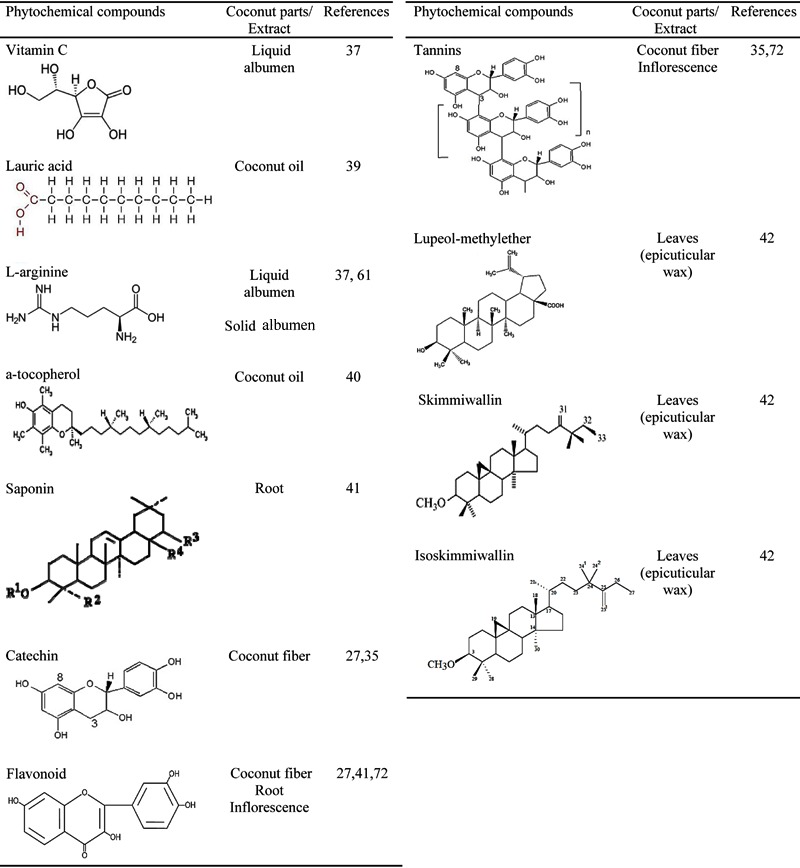
“The lyophilized extract and fractions, as well as ethyl acetate extracts, from the C. nucifera fiber are rich in polyphenols, compounds such as catechins, epicatechins, tannins, and flavonoids (7,33–35).”
§ Cocos nucifera (L.) (Arecaceae): A phytochemical and pharmacological review > Methods > Phytochemistry
What the sources say
- Not checked yetcites [7] Esquenazi MD Wigg MM Miranda, Rodrigues HM Tostes JBF Rozental S Antimicrobial and antiviral activities of polyphenolics from Cocos nucifera Linn. (Palmae) husk fiber extract Res Microbiol 2002 153 647 652 10.1016/S0923-2508(02)01377-3 12558183 source
- Not checked yetcites [33] Mendonca-Filho RR Rodrigues IA Alviano DS Santos AL Soares RM Alviano CS Leishmanicidal activity of polyphenolic-rich extract from husk fiber of Cocos nucifera Linn. (Palmae) Res Microbiol 2004 155 136 143 10.1016/j.resmic.2003.12.001 15059625 source
- Not checked yetcites [34] Rodrigues S Pinto GAS Ultrasound extraction of phenolic compounds from coconut (Cocos nucifera) shell powder J Food Eng 2007 80 869 872 17400017 source
- Partly supportedcites [35] Freitas JCC Nunes-Pinheiro DCS Pessoa AWP Silva LCR Girão VCC Lopes-Neto BE Effect of ethyl acetate extract from husk fiber water of Cocos nucifera in Leishmania braziliensis infected hamsters Rev Bras Farmacogn 2011 21 1006 1011 10.1590/S0102-695X2011005000138 sourceExperimental — accuracy not yet measured
The Results section of our copy states directly that 'The phytochemical study of EAE revealed the presence of condensed tannins, flavanonols, flavanons and flavonols. HPLC analysis indicated high concentrations of polyphenolic compounds such as catechins and epicatechins', and the Discussion repeats that EAE 'presents high concentrations of catechins and epicatechins' — so the polyphenol/catechin/epicatechin/tannin/flavonoid characterisation is supported for the ethyl acetate extract of C. nucifera husk fiber. However, the claim also extends this richness to 'the lyophilized extract and fractions': in our copy the lyophilized aqueous husk-fiber extract is only the starting material that was partitioned with ethyl acetate (Extraction and fraction isolation), and the phytochemical screening (Methods, 'Phytochemical study of EAE') was performed on EAE alone, not on the lyophilized extract or on the other fractions. That broader part of the sentence is not supported by this source. (LLM, conf=0.70)
plain- Asserted: passes — The authors put it forward as true.
- Checkable: passes — It can be checked against evidence.
- Load-bearing: unclear — It is unclear whether the paper’s conclusions depend on it.
- Based: passes — The paper gives a reason why it holds.
Every source the paper cites for this claim was checked and supports it.
In the paper
“In cell culture, green dwarf water protected against oxidative damage induced by hydrogen peroxide.”
§ Cocos nucifera (L.) (Arecaceae): A phytochemical and pharmacological review > Methods > Antioxidant activity
What the sources say
- Supportedcites [57] Santos JL Bispo VS Filho AB Pinto IF Dantas LS Vasconcelos DF Evaluation of chemical constituents and antioxidant activity of coconut water (Cocus nucifera L.) and caffeic acid in cell culture An Acad Bras Cienc 2013 85 1235 1247 10.1590/0001-37652013105312 24141413 source
The Evaluation of Antioxidant Activity of Coconut Water section describes pretreating cultured cells with green dwarf coconut water before hydrogen peroxide exposure. The Results and Discussion section reports significantly lower intracellular ROS after coconut-water pretreatment than in the hydrogen-peroxide group. Page numbers are not provided in our copy. (LLM, conf=0.93)
plainstates a cause- Asserted: passes — The authors put it forward as true.
- Checkable: passes — It can be checked against evidence.
- Load-bearing: unclear — It is unclear whether the paper’s conclusions depend on it.
- Based: passes — The paper gives a reason why it holds.
- Supported
59 more claims · 10 with their cited sources checked
Create a free account to see all 118 claims and to verify the 97 references still open.
- It may state two separate claims as one. 51
- Probably not a substantial claim. 7
- The quote only partly states this claim. 2
Claims other papers make about this one
Each is checked against this paper’s own text: does it say what the citing paper says it does?
The source backs part of the claim, not all of it — or backs it for a different population, condition or comparison.
In the citing paper
“Rsearchers identified a diverse array of bioactive constituents in coconuts, including carotenoids, polyphenols (primarily tannins, flavonoids and phenolic compounds), and sterols, each present in varying quantities [72].”
From Nutritional composition and bioactive properties of tropical coconut palm fruit with functional food applications (2025) · cites this paper as [72]
Experimental — accuracy not yet measuredThe source backs part of the claim, not all of it — or backs it for a different population, condition or comparison.
In the citing paper
“Similarly, Lima et al. [72] found that tender CW administration protected against isoproterenol-induced myocardial infarction and reduced mitochondrial lipid peroxidation in a rat model.”
From Nutritional composition and bioactive properties of tropical coconut palm fruit with functional food applications (2025) · cites this paper as [72]
Experimental — accuracy not yet measuredThe cited source says what the claim attributes to it.
In the citing paper
“Coconuts are an excellent source of natural antioxidants, containing diverse bioactive constituents such as polyphenols, alkaloids, tannins, and sterols [72].”
From Nutritional composition and bioactive properties of tropical coconut palm fruit with functional food applications (2025) · cites this paper as [72]
The cited source says what the claim attributes to it.
In the citing paper
“These and other compounds have been reported to show antimicrobial effects against bacterial pathogens and other microorganisms (Fan et al., 2017;Lima et al., 2015;Effiong et al., 2010).”
From The use of High-Pressure Processing (HPP) to improve the safety and quality of raw coconut (Cocos nucifera L) water (2020) · cites this paper as Lima et al., 2015
Self-check
Percentages, sums and reported differences re-computed from the paper’s own numbers.
Each contradiction between two passages listed here was confirmed by an independent check.
Rated minor: it would not touch a result — a value no result rests on, a p-value that stays on the same side of the significance level, or a conflict that is clerical, resolved elsewhere in the paper, or outside its own findings.
In the paper
§ Cocos nucifera (L.) (Arecaceae): A phytochemical and pharmacological review > Toxicity
“Five female and five male mice received a single dose orally (5000 mg/kg) of this extract.”
§ Cocos nucifera (L.) (Arecaceae): A phytochemical and pharmacological review > Toxicity
“All male and female rats were observed for signs of toxicity and mortality on the day of dosing; at 1, 3, and 4 h after administration; and then twice daily for 14 days.”
Citations
Cites
Extraction and analysis of phenolics in food
Naczk, M., & Shahidi, F. (2004) · Journal of Chromatography A · doi:10.1016/j.chroma.2004.08.059 · Cited by 1,838
Tropical Crops: Monocotyledons
Smith, A. C., & Purseglove, J. W. (1973) · Taxon · doi:10.2307/1218645 · Cited by 847
The Chemical Composition and Biological Properties of Coconut (Cocos nucifera L.) Water
Yong, J. W. H., Ge, L., Ng, Y. F., & Tan, S. N. (2009) · Molecules · doi:10.3390/molecules14125144 · Cited by 753 · cited 1×
“003 mg/mL), with trace quantities of vitamins B1, B6, and C, pyridoxine, thiamine, folic acid, amino acids, L-arginine, plant hormones (auxin, 1,3-diphenylurea, cytokinin), enzymes (acid phosphatase, catalase, dehydrogenase, diastase, peroxidase, RNA polymerases), and growth-promoting factors (36-38).”
The effects of tannin-rich plants on parasitic nematodes in ruminants
Hoste, H., Jackson, F., Athanasiadou, S., Thamsborg, S. M., & Hoskin, S. O. (2006) · Trends in Parasitology · doi:10.1016/j.pt.2006.04.004 · Cited by 706
Micronutrients: oxidant/antioxidant status
Evans, P., & Halliwell, B. (2001) · British Journal of Nutrition · doi:10.1049/bjn2000296 · Cited by 564
Chemical properties of virgin coconut oil
Marina, A. M., Che Man, Y. B., Nazimah, S. A. H., & Amin, I. (2009) · Journal of the American Oil Chemists' Society · doi:10.1007/s11746-009-1351-1 · Cited by 397
Medical ethnobotany of the Siddis of Uttara Kannada district, Karnataka, India
Bhandary, M. J., Chandrashekar, K. R., & Kaveriappa, K. M. (1995) · Journal of Ethnopharmacology · doi:10.1016/0378-8741(95)01274-h · Cited by 320 · cited 1×
“In India, infusions made with the coconut inflorescence are used for the oral treatment of menstrual cycle disorders (15).”
BackgroundEsquenazi, D., Wigg, M. D., Miranda, M. M. F. S., Rodrigues, H. M., Tostes, J. B. F., Rozental, S., da Silva, A. J. R., & Alviano, C. S. (2002) · Research in Microbiology · doi:10.1016/s0923-2508(02)01377-3 · Cited by 291 · cited 6×
“nucifera fiber are rich in polyphenols, compounds such as catechins, epicatechins, tannins, and flavonoids (7,33-35).”
BackgroundInfluentialBöger, R. H., Bode-Böger, S. M., Mügge, A., Kienke, S., Brandes, R., Dwenger, A., & Frölich, J. C. (1995) · Atherosclerosis · doi:10.1016/0021-9150(95)05582-h · Cited by 252
Cáceres, A., Girón, L. M., Alvarado, S. R., & Torres, M. F. (1987) · Journal of Ethnopharmacology · doi:10.1016/0378-8741(87)90050-x · Cited by 208
Rodrigues, S., Pinto, G. A. S., & Fernandes, F. A. N. (2008) · Ultrasonics Sonochemistry · doi:10.1016/j.ultsonch.2007.01.006 · Cited by 192
Ultrasound extraction of phenolic compounds from coconut (Cocos nucifera) shell powder
Rodrigues, S., & Pinto, G. A. S. (2007) · Journal of Food Engineering · doi:10.1016/j.jfoodeng.2006.08.009 · Cited by 187 · cited 1×
“nucifera fiber are rich in polyphenols, compounds such as catechins, epicatechins, tannins, and flavonoids (7,33-35).”
BackgroundTraditional medicine in Fiji: some herbal folk cures used by Fiji Indians
Singh, Y. N. (1986) · Journal of Ethnopharmacology · doi:10.1016/0378-8741(86)90104-2 · Cited by 158 · cited 1×
“In Fiji, coconut oil is used to prevent hair loss and coconut water is used to treat renal disease (10).”
Cedillo‐Rivera, R., Chávez, B., González‐Robles, A., Tapia‐Contreras, A., & Yépez‐Mulia, L. (2002) · Journal of Eukaryotic Microbiology · doi:10.1111/j.1550-7408.2002.tb00523.x · Cited by 138
A review of medicinal plant research at the University of the West Indies, Jamaica, 1948–2001
Mitchell, S., & Ahmad, M. (2006) · West Indian Medical Journal · doi:10.1590/s0043-31442006000400008 · Cited by 132 · cited 1×
“In Jamaica, the husk fiber extract is used to treat diabetes (19,20).”
BackgroundSome folk medicinal plants from Trinidad
Wong, W. (1976) · Economic Botany · doi:10.1007/bf02862958 · Cited by 127 · cited 1×
“In Trinidad, bark extract is used orally for amenorrhea and dysmenorrhea, and bark tea is used to treat venereal diseases (23).”
BackgroundVariation of phenolic content in coconut oil extracted by two conventional methods
Seneviratne, K. N., & Sudarshana Dissanayake, D. M. (2008) · International Journal of Food Science & Technology · doi:10.1111/j.1365-2621.2006.01493.x · Cited by 124 · cited 1×
“Studies with virgin coconut oil (VCO) indicated that the total phenolic content was almost seven times that of commercial coconut oil, because the process of obtaining refined oil destroys some of the biologically active components (55).”
BackgroundEffect of Mexican medicinal plant used to treat trichomoniasis on Trichomonas vaginalis trophozoites
Calzada, F., Yépez-Mulia, L., & Tapia-Contreras, A. (2007) · Journal of Ethnopharmacology · doi:10.1016/j.jep.2007.06.001 · Cited by 120 · cited 2×
“Further research is needed to isolate the substances responsible for this activity and to test appropriate doses so that they can be used in the treatment of trichomoniasis (24).”
BackgroundArora, R., Chawla, R., Marwah, R., Arora, P., Sharma, R. K., Kaushik, V., Goel, R., Kaur, A., Silambarasan, M., Tripathi, R. P., et al. (2011) · Evidence-Based Complementary and Alternative Medicine · doi:10.1155/2011/586506 · Cited by 117 · cited 1×
“Coconut oil is very effective against a variety of viruses with lipid capsules, such as visna virus, cytomegalovirus, and Epstein-Barr virus (53).”
BackgroundMendonça-Filho, R. R., Rodrigues, I. A., Alviano, D. S., Santos, A. L. S., Soares, R. M. A., Alviano, C. S., Lopes, A. H. C. S., & do Socorro S. Rosa, M. (2004) · Research in Microbiology · doi:10.1016/j.resmic.2003.12.001 · Cited by 115
La medecine populaire dans le Plateau Central D'Haiti. 2 Inventaire ethnopharmacologique
Weniger, B., Rouzier, M., Daguilh, R., Henrys, D., Henrys, J. H., & Anton, R. (1986) · Journal of Ethnopharmacology · doi:10.1016/0378-8741(86)90070-x · Cited by 104
Arginine rich coconut kernel protein modulates diabetes in alloxan treated rats
Salil, G., Nevin, K. G., & Rajamohan, T. (2010) · Chemico-Biological Interactions · doi:10.1016/j.cbi.2010.10.015 · Cited by 90
Tangwatcharin, P., & Khopaibool, P. (2012) · PubMed · Cited by 89
Nagata, J. M., Jew, A. R., Kimeu, J. M., Salmen, C. R., Bukusi, E. A., & Cohen, C. R. (2011) · Journal of Ethnopharmacology · doi:10.1016/j.jep.2011.03.051 · Cited by 81 · cited 1×
“In Kenya, the fruit is used to relieve skin rash caused by HIV infection (26).”
BackgroundLoki, A. L., & Rajamohan, T. (2003) · PubMed · Cited by 80
Bankar, G. R., Nayak, P. G., Bansal, P., Paul, P., Pai, K. S. R., Singla, R. K., & Bhat, V. G. (2011) · Journal of Ethnopharmacology · doi:10.1016/j.jep.2010.11.047 · Cited by 78 · cited 1×
“These activities can be explained by the presence of phenolic compounds and flavonoids in the extract used (74).”
BackgroundVirgin Coconut Oil Supplementation Prevents Bone Loss in Osteoporosis Rat Model
Hayatullina, Z., Muhammad, N., Mohamed, N., & Soelaiman, I. N. (2012) · Evidence-based Complementary and Alternative Medicine · doi:10.1155/2012/237236 · Cited by 78
Cardioprotective effect of tender coconut water in experimental myocardial infarction
Anurag, P., & Rajamohan, T. (2003) · Plant Foods for Human Nutrition · doi:10.1023/b:qual.0000040363.64356.05 · Cited by 75 · cited 1×
“Cardioprotective activity An important biological action of coconut was demonstrated using an experimental model of myocardial infarction induced by isoproterenol in rats (67).”
MethodInfluence Of Ascorbic Acid Against Nickel-Induced Hepatic Lipid Peroxidation In Rats
Das, Das, & Gupta (2001) · Journal of Basic and Clinical Physiology and Pharmacology · doi:10.1515/jbcpp.2001.12.3.187 · Cited by 69
Anti-inflammatory, antioxidant, and antimicrobial activities of Cocos nucifera var. typica
Silva, R. R., e Silva, D. O., Fontes, H. R., Alviano, C. S., Fernandes, P. D., & Alviano, D. S. (2013) · BMC Complementary and Alternative Medicine · doi:10.1186/1472-6882-13-107 · Cited by 66 · cited 3×
“aureus and MRSA, with a minimum inhibitory concentration (MIC) of 1024 mg/mL for both (45).”
BackgroundMethodHirschhorn, H. H. (1983) · Journal of Ethnopharmacology · doi:10.1016/0378-8741(83)90016-8 · Cited by 64 · cited 1×
“In Indonesia, the oil is used as a wound ointment, the coconut milk is used as an oral contraceptive, and fever and diarrhea are treated with the root extract (16-18).”
BackgroundArlee, R., Suanphairoch, S., & Pakdeechanuan, P. (2013) · International Food Research Journal · Cited by 62
SANTOS, J. L. A., BISPO, V. S., B.C. FILHO, A., PINTO, I. F. D., DANTAS, L. S., VASCONCELOS, D. F., ABREU, F. F., MELO, D. A., MATOS, I. A., FREITAS, F. P., et al. (2013) · Anais da Academia Brasileira de Ciências · doi:10.1590/0001-37652013105312 · Cited by 61 · cited 1×
“In another study, the antioxidant potential of four varieties of coconut (green dwarf, yellow dwarf, red dwarf, and Malaysian yellow) were evaluated and compared with industrialized and lyophilized water of the green dwarf variety (57).”
BackgroundGandhi, M., Aggarwal, M., Puri, S., & Singla, S. K. (2013) · International braz j urol · doi:10.1590/s1677-5538.ibju.2013.01.14 · Cited by 60
Rinaldi, S., Silva, D. O., Bello, F., Alviano, C. S., Alviano, D. S., Matheus, M. E., & Fernandes, P. D. (2009) · Journal of Ethnopharmacology · doi:10.1016/j.jep.2009.01.024 · Cited by 56 · cited 4×
“than (F2) 1 kDa were studied for their analgesic activity by acetic acid-induced abdominal writhing, tail-flick, and hot plate tests in mice (44).”
BackgroundMethodInfluentialEvaluation of the use of Cocos nucifera as antimalarial remedy in Malaysian folk medicine
Al-Adhroey, A. H., Nor, Z. M., Al-Mekhlafi, H. M., Amran, A. A., & Mahmud, R. (2011) · Journal of Ethnopharmacology · doi:10.1016/j.jep.2011.01.026 · Cited by 49 · cited 2×
“05) decrease after treatment with the extract (200 and 400 mg/kg) compared to the reference drug for the treatment of the disease (25).”
BackgroundBeneficial effects of coconut water feeding on lipid metabolism in cholesterol-fed rats
Sandhya, V. G., & Rajamohan, T. (2006) · Journal of Medicinal Food · doi:10.1089/jmf.2006.9.400 · Cited by 46
Brondegaard, V. (1973) · Planta Medica · doi:10.1055/s-0028-1099428 · Cited by 45
Cytoprotective, antihyperglycemic and phytochemical properties of Cocos nucifera (L.) inflorescence
Renjith, R., Chikku, A., & Rajamohan, T. (2013) · Asian Pacific Journal of Tropical Medicine · doi:10.1016/s1995-7645(13)60142-x · Cited by 44 · cited 1×
“Administering immature coconut inflorescence methanol extract (West Coast Tall variety) to diabetic rats significantly reduced fasting glucose levels and increased insulin levels compared with a diabetic control (72).”
BackgroundMedicinal Plants of the Admiralty Islands, Papua New Guinea Part I
Holdsworth, D., & Wamoi, B. (1982) · International Journal of Crude Drug Research · doi:10.3109/13880208209083300 · Cited by 43 · cited 1×
“In Papua New Guinea, the leaves and roots of young plants are chewed as treatment for diarrhea and stomachaches (8,9).”
BackgroundAnthelmintic activity of Cocos nucifera L. on intestinal nematodes of mice
Costa, C. T. C., Bevilaqua, C. M. L., Morais, S. M., Camurça-Vasconcelos, A. L. F., Maciel, M. V., Braga, R. R., & Oliveira, L. M. B. (2010) · Research in Veterinary Science · doi:10.1016/j.rvsc.2009.05.008 · Cited by 42 · cited 4×
“The ovicidal and larvicidal activity of the liquid from the coconut husk (LCCV) and butanolic LCCV extract were also tested against Haemonchus contortus (28).”
BackgroundMethodInfluentialEthnomedicinal Herbs Used in Oral Health and Hygiene in Coastal Dakshina Kannada
Shantaram, M., Jose, M., & Bhagya, B. (2011) · Journal of Oral Health and Community Dentistry · doi:10.5005/johcd-5-3-119 · Cited by 40
Antimicrobial properties of Cocos nucifera (coconut) husk: An extrapolation to oral health
Shantaram, M., Jose, M., Cyriac, M., Pai, V., & Varghese, I. (2014) · Journal of Natural Science, Biology and Medicine · doi:10.4103/0976-9668.136184 · Cited by 39 · cited 2×
“coconut fruit were tested, showing different activities, including antihypertensive; analgesia; vasodilation; protection of kidney, heart, and liver functions; protection against ulcers; and anti-inflammatory, anti-oxidant, antiosteoporosis, antidiabetes, antineoplastic, bactericidal, antihelminthic, antimalarial, lei…”
BackgroundMethodThe husk fiber of Cocos nucifera L. (Palmae) is a source of anti-neoplastic activity
Koschek, P. R., Alviano, D. S., Alviano, C. S., & Gattass, C. R. (2007) · Brazilian Journal of Medical and Biological Research · doi:10.1590/s0100-879x2006005000153 · Cited by 36 · cited 1×
“In both varieties, the antitumoral activity was concentrated in fractions with molecular weights between 1 and 10 kDa (63).”
BackgroundAkinpelu, D. A., Alayande, K. A., Aiyegoro, O. A., Akinpelu, O. F., & Okoh, A. I. (2015) · BMC Complementary and Alternative Medicine · doi:10.1186/s12906-015-0634-3 · Cited by 35
Hypolipidemic and antiperoxidative effect of coconut protein in hypercholesterolemic rats.
Salil, G., & Rajamohan, T. (2001) · PubMed · Cited by 33
Antioxidative and Antiviral Properties of Flowering Cherry Fruits (Prunus serrulataL. var.spontanea)
Yook, H., Kim, K.-H., Park, J.-E., & Shin, H. (2010) · The American Journal of Chinese Medicine · doi:10.1142/s0192415x10008366 · Cited by 30
Hawaiian materia medica for asthma.
Be, H., Massey, D. G., & Fournier-Massey, G. (1993) · PubMed · Cited by 29
Antifungal activity of the alcoholic extract of coconut shell — Cocos nucifera Linn.
Venkataraman, S., Ramanujam, T., & Venkatasubbu, V. (1980) · Journal of Ethnopharmacology · doi:10.1016/s0378-8741(80)81007-5 · Cited by 26
Akinyele, T. A., Okoh, O. O., Akinpelu, D. A., & Okoh, A. I. (2011) · Molecules · doi:10.3390/molecules16032135 · Cited by 25
Medicinal plants of the Gazelle peninsula, New Britain Island, Papua New Guinea, Part I
Holdsworth, D. (1992) · International Journal of Pharmacognosy · doi:10.3109/13880209209053992 · Cited by 24 · cited 1×
“In Papua New Guinea, the leaves and roots of young plants are chewed as treatment for diarrhea and stomachaches (8,9).”
BackgroundCNS depressant activities of roots of Coccos nucifera in mice.
Pal, D., Sarkar, A., Gain, S., et al. (2011) · PubMed · Cited by 23
Huang, X., Kojima‐Yuasa, A., Xu, S., Kennedy, D. O., Hasuma, T., & Matsui‐Yuasa, I. (2009) · The American Journal of Chinese Medicine · doi:10.1142/s0192415x09006758 · Cited by 21
Antimalarial Activity of Cocos nucifera Husk Fibre: Further Studies
Adebayo, J. O., Balogun, E. A., Malomo, S. O., Soladoye, A. O., Olatunji, L. A., Kolawole, O. M., Oguntoye, O. S., Babatunde, A. S., Akinola, O. B., Aguiar, A. C. C., et al. (2013) · Evidence-Based Complementary and Alternative Medicine · doi:10.1155/2013/742476 · Cited by 21 · cited 1×
“05) plasma creatinine concentration compared with controls (65).”
BackgroundYartey, J., Harisson, E. K., Brakohiapa, L. A., Troph, D. O., & Nkrumah, F. K. (1993) · Journal of Tropical Pediatrics · doi:10.1093/tropej/39.4.234 · Cited by 20
Dietary coconut sprout beneficially modulates cardiac damage induced by isoproterenol in rats
Chikku, A. M., & Rajamohan, T. (2012) · Bangladesh Journal of Pharmacology · doi:10.3329/bjp.v7i4.12143 · Cited by 20 · cited 1×
“In another study, dietary coconut sprout (West Coast Tall variety) was tested on isoproterenol-induced myocardial infarction in rats (68).”
Hepatoprotective Effect ofShidagonglaoon Acute Liver Injury Induced by Carbon Tetrachloride
Chao, J., Lee, M., Amagaya, S., Liao, J., Wu, J., Ho, L., & Peng, W. (2009) · The American Journal of Chinese Medicine · doi:10.1142/s0192415x0900751x · Cited by 19
Pirólise de resíduos do coco-da-baía (Cocos nucifera Linn) e análise do carvão vegetal
de Andrade, A. M., Passos, P. R. D. A., Marques, L. G. D. C., et al. (2004) · Revista Árvore · doi:10.1590/s0100-67622004000500010 · Cited by 18
Preetha, P. P., Devi, V. G., & Rajamohan, T. (2014) · Comparative Clinical Pathology · doi:10.1007/s00580-013-1784-7 · Cited by 17 · cited 1×
“The effects of mature coconut water were also evaluated and compared with glibenclamide in alloxan-induced diabetic rats (71).”
Major components from the epicuticular wax of "Cocos nucifera"
Escalante‐Erosa, F., León, M. R. G., Lecher, J. G., Arroyo-Serralta, G. A., Villareal, D. Z., Oropeza, C., & Peña-Rodríguez, L. M. (2002) · Redalyc (Universidad Autónoma del Estado de México) · Cited by 16
Antioxidant & Antimicrobial Activities of Cocos Nucifera Linn. (Arecaceae) Endocarp Extracts
K Singla, R., Jaiswal, N., Bhat G, V., & Jagani, H. (2011) · Indo Global Journal of Pharmaceutical Sciences · doi:10.35652/igjps.2011.34 · Cited by 16 · cited 2×
“oligosporus at all concentrations (48).”
BackgroundÜber die Wundbehandlung mit Kokosöl bei indonesischen Naturvölkern
Sachs, M., von Eichel, J., & Asskali, F. (2002) · Der Chirurg · doi:10.1007/s00104-001-0382-4 · Cited by 15
Freitas, J. C. C., Nunes-Pinheiro, D. C. S., Pessoa, A. W. P., Silva, L. C. R., Girão, V. C. C., Lopes-Neto, B. E., Agostinho, M. S., & Abreu, C. R. A. (2011) · Revista Brasileira de Farmacognosia · doi:10.1590/s0102-695x2011005000138 · Cited by 14 · cited 2×
“Animal tests revealed significant activity supporting the use of these husk fiber extracts in traditional medicine (35).”
BackgroundSilva, L. C. R., Nunes-Pinheiro, D. C. S., Morais, S. M., Lopes-Neto, B. E., Santos, G. J. L., & Campello, C. C. (2009) · Revista Brasileira de Plantas Medicinais · doi:10.1590/s1516-05722009000400011 · Cited by 7
Lee, M. G. (1983) · The Lancet · doi:10.1016/s0140-6736(83)91913-x · Cited by 5
Research works printed but not linked: 6
- Morrison EY St A Local remedies. Yeh or nay West Indian Med J 1994 43 (Suppl 2) 9
- Amico A Medicinal plants of Southern Zambesia Fitoterapia 1977 48 101 139
- Magda RR Coco soft drink: health beverage from coconut water Food Market Technol 1992 6 22 23
- Solangih A Iqbal ZA Chemical composition of meat (kernel) and nut water of major coconut (Cocos nucifera L.) cultivars at coastal area of Pakistan. Pak Am J Bot 2011 43 357 363
- Verma V Bhardwaj A Rathi S Raja RB Potential antimicrobial agent from Cocos nucifera mesocarp extract Int Res J Biol Sci 2012 1 48 54
- Borate PP Disale SD Ghalme RS Studies on isolation, analysis and antimicrobial properties of coconut shell oil Int J Adv Sci Technol Res 2013 2 146 157
Cited by
Flavonoids: biological activities and therapeutic potential
Jucá, M. M., Cysne Filho, F. M. S., de Almeida, J. C., Mesquita, D. D. S., Barriga, J. R. D. M., Dias, K. C. F., Barbosa, T. M., Vasconcelos, L. C., Leal, L. K. A. M., Ribeiro, J. E., et al. (2020) · Natural Product Research · doi:10.1080/14786419.2018.1493588 · Cited by 463
Self-citationSebastian, A., Nangia, A., & Prasad, M. N. V. (2018) · Journal of Cleaner Production · doi:10.1016/j.jclepro.2017.10.343 · Cited by 211
Sinsinwar, S., Sarkar, M. K., Suriya, K. R., Nithyanand, P., & Vadivel, V. (2018) · Microbial Pathogenesis · doi:10.1016/j.micpath.2018.08.025 · Cited by 120
Rabizadeh, F., Mirian, M. S., Doosti, R., Kiani‐Anbouhi, R., & Eftekhari, E. (2022) · Evidence-based Complementary and Alternative Medicine · doi:10.1155/2022/8022599 · Cited by 165
Asghar, M. T., Yusof, Y. A., Mokhtar, M. N., Ya’acob, M. E., Ghazali, H. M., Chang, L. S., & Manaf, Y. N. A. (2019) · Food Science & Nutrition · doi:10.1002/fsn3.1191 · Cited by 98
Metadata
- Authors
- Lima, E. B. C., Sousa, C. N. S., Meneses, L. N., Ximenes, N. C., Santos Júnior, M. A., Vasconcelos, G. S., Lima, N. B. C., Patrocínio, M. C. A., Macedo, D., & Vasconcelos, S. M. M.
- Affiliations
- Universidade Federal do Ceará (BR)
- Universidade Federal do Ceará, Brasil
- Unichristus (BR)
- Venue
- Brazilian Journal of Medical and Biological Research
- Publisher
- FapUNIFESP (SciELO)
- Published
- 2015-11
- Volume
- 48
- Issue
- 11
- Pages
- 953-964
- ISSN
- 0100-879X (ISSN-L)
- 1414-431X
- PMC
- PMC4671521
- OpenAlex
- W1797711379
- Cited by
- 295
- References
- 68
- Citations by year
- 2026: 23 · 2025: 23 · 2024: 37 · 2023: 50 · 2022: 41 · 2021: 43 · 2020: 25 · 2019: 13 · 2018: 17 · 2017: 17 · 2016: 6
- FWCI
- 0.52
- Type
- journal article
- Language
- en
- Open access
- gold
- doi.org
- Licence
- cc-by
- creativecommons.org/licenses/by/4.0/ (vor)
- creativecommons.org/licenses/by/4.0/ (am)
- creativecommons.org/licenses/by/4.0/ (tdm)
- Locations
- Brazilian Journal of Medical and Biological Research (publishedVersion, cc-by)
- Europe PMC (PubMed Central) (publishedVersion, cc-by)
- PubMed Central (publishedVersion, cc-by)
- PubMed (publishedVersion)
- LA Referencia (Red Federada de Repositorios Institucionales de Publicaciones Científicas) (publishedVersion, other-oa)
- Americanae (AECID Library) (submittedVersion, other-oa)
- DOAJ (DOAJ: Directory of Open Access Journals) (submittedVersion, cc-by-sa)
- Funders
- Coordenação de Aperfeiçoamento de Pessoal de Nível Superior
- Conselho Nacional de Desenvolvimento Científico e Tecnológico
- Fundação Cearense de Apoio ao Desenvolvimento Científico e Tecnológico
- Topics
- Life Sciences › Agricultural and Biological Sciences › Food Science › Coconut Research and Applications
- Life Sciences › Agricultural and Biological Sciences › Plant Science › Medicinal Plant Research
- Life Sciences › Agricultural and Biological Sciences › Plant Science › Phytochemistry Medicinal Plant Applications
- Keywords
- Cocos nucifera, coconut, phytochemical composition, pharmacological activity, toxicology, anthelmintic activity, anti-inflammatory activity, antioxidant activity, antimicrobial activity, antifungal activity, anticancer activity, analgesic activity, hepatoprotection, renal protection, cardioprotective activity, anti-arthritic activity, antidiarrheal activity, hypoglycemic activity, antiseizure activity, cytotoxicity, plant parts
- MeSH terms
- Analgesics, Animals, Anti-Infective Agents, Anti-Inflammatory Agents, Anticonvulsants, Antihypertensive Agents, Bone and Bones, Cocos, Humans, Hypoglycemic Agents, Phytotherapy, Plant Extracts, Protective Agents
About these checks
Registry, retraction, Cites and statistics results are computed, not judged, with one exception: a printed reference that no index lists is read once by a model before it counts as a citation error. Claims are extracted by a model and kept only when their quote appears verbatim in the text; each cited source is then checked, with a model’s help, for whether it says what the claim relies on. Those verdicts can be wrong — read the claim’s quote and the cited source before relying on one.
The claim verdicts this report counts are experimental: their accuracy is not yet measured.
A language model drew the claims from the paper on 2026-10-04, under version 3 of the claim definition (model deepseek-v4.1-flash, prompt extract-v3).
A second model labelled each claim on 2026-10-04 (model jev-1.13-20260917, definition revision gold-guideline-v0.2).
Cited sources are checked with a language model’s help (gpt-6-sol and qwen3.8-omni-flash).
Statistics and arithmetic are recomputed, not judged.
Confidence bands are shown only for fields calibrated on our annotated test set. None is calibrated yet, so no band is shown.
What counts as a claim ›How we measure confidence ›How we check this ›
Are you an author, or do you see a problem with this page? Request a review
Data sources
Bibliographic data: Semantic Scholar, OpenAlex, Crossref.
Contains information from the Semantic Scholar Academic Graph Datasets, made available under the ODC Attribution License (ODC-BY 1.0).
Semantic Scholar’s data is described in: Kinney, R., et al. (2023). The Semantic Scholar Open Data Platform. arXiv:2301.10140.
