

Men Also Like Shopping: Reducing Gender Bias Amplification using Corpus-level Constraints
Open accessThe DOI matches its Crossref record; 30 of the 30 references it cites were found in a registry or an index.
Abstract
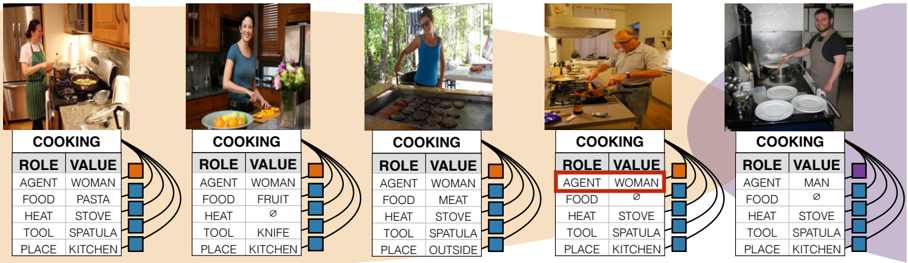
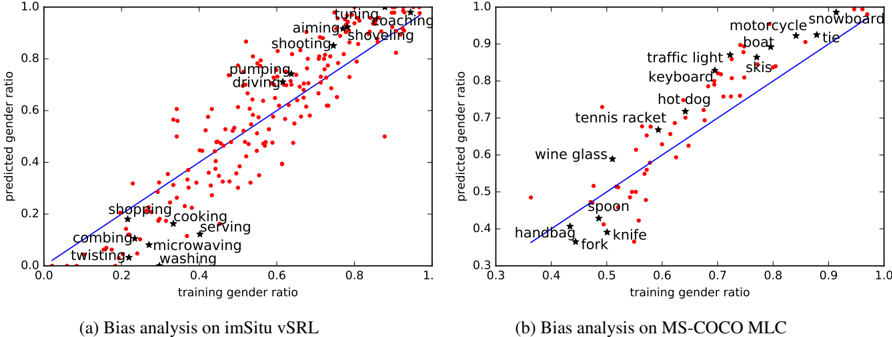
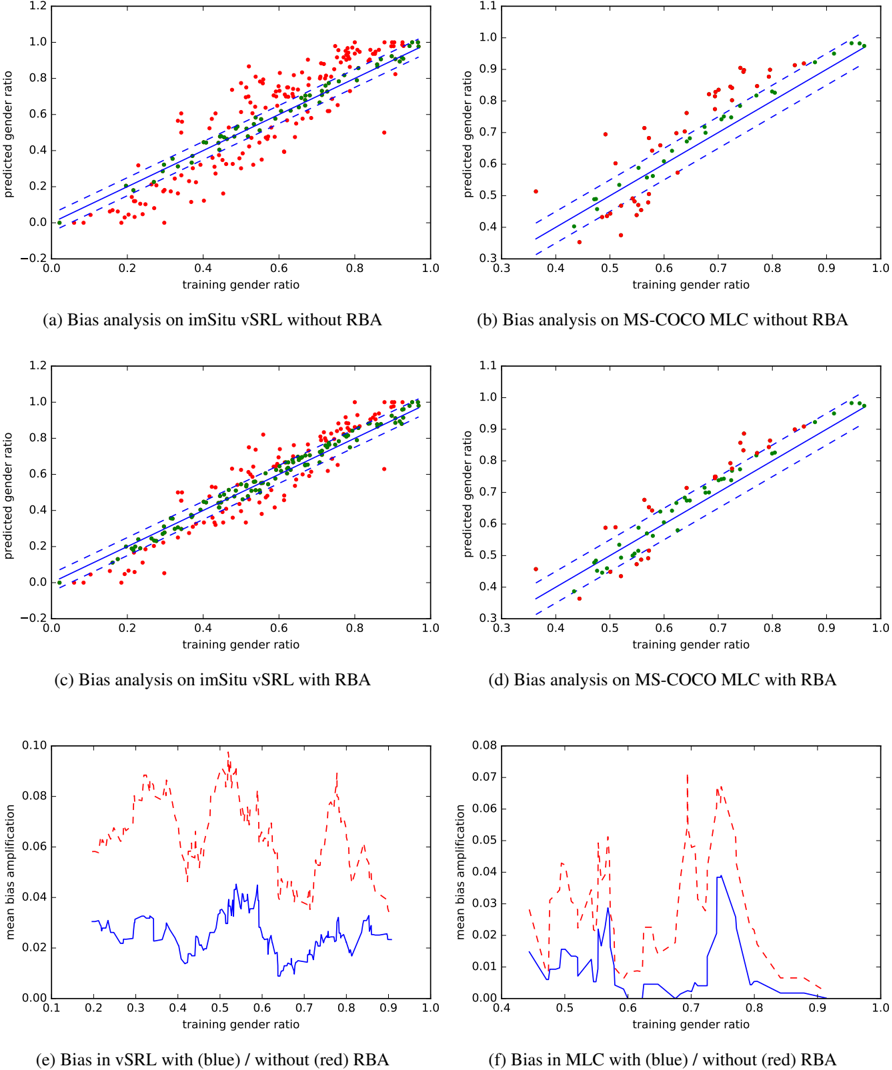
Language is increasingly being used to define rich visual recognition problems with supporting image collections sourced from the web.Structured prediction models are used in these tasks to take advantage of correlations between co-occurring labels and visual input but risk inadvertently encoding social biases found in web corpora.In this work, we study data and models associated with multilabel object classification and visual semantic role labeling.We find that (a) datasets for these tasks contain significant gender bias and (b) models trained on these datasets further amplify existing bias.For example, the activity cooking is over 33% more likely to involve females than males in a training set, and a trained model further amplifies the disparity to 68% at test time.We propose to inject corpus-level constraints for calibrating existing structured prediction models and design an algorithm based on Lagrangian relaxation for collective inference.Our method results in almost no performance loss for the underlying recognition task but decreases the magnitude of bias amplification by 47.5% and 40.5% for multilabel classification and visual semantic role labeling, respectively.
Overview
The claims and statistics of this paper haven’t been checked yet.
Free: it reads the open-access text and checks the first 5 claims that cite a source we can check. Create a free account to check every claim.
Integrity signals
Registry
Cites
Statistics
Figures
Verification
Claims the paper makes
The claims and statistics of this paper haven’t been checked yet.
Free: it reads the open-access text and checks the first 5 claims that cite a source we can check. Create a free account to check every claim.
Claims other papers make about this one
Each is checked against this paper’s own text: does it say what the citing paper says it does?
The source backs part of the claim, not all of it — or backs it for a different population, condition or comparison.
In the citing paper
“and processes of creating resources and technologies may further entrench such disparities [25, 38, 144].”
From Data Governance in the Age of Large-Scale Data-Driven Language Technology (2022) · cites this paper as [144]
Experimental — accuracy not yet measuredThe source backs part of the claim, not all of it — or backs it for a different population, condition or comparison.
In the citing paper
“It is well-documented that LMs learn the biases, prejudices, and racism present in the language they are trained on35–38.”
From Large language models to identify social determinants of health in electronic health records (2024) · cites this paper as [36]
Experimental — accuracy not yet measuredThe source backs part of the claim, not all of it — or backs it for a different population, condition or comparison.
In the citing paper
“Neural networks are prone to learning biases from training data and amplifying them at test time50, giving rise to a much discussed aspect of AI behaviour: fairness51.”
From The METRIC-framework for assessing data quality for trustworthy AI in medicine: A systematic review (2024) · cites this paper as [50]
Experimental — accuracy not yet measuredThe cited source says what the claim attributes to it.
In the citing paper
“It is well acknowledged that machine learning models, such as those ofered by the API providers, are prone to exhibiting various kinds of discriminatory behaviours, including diferent error rates across demographic groups [22,126,127], stereotyping [64,163] or minority groups under-representation [134,137].”
From Out of Context: Investigating the Bias and Fairness Concerns of “Artificial Intelligence as a Service” (2023) · cites this paper as [163]
Self-check
Percentages, sums and reported differences re-computed from the paper’s own numbers.
The self-check needs the paper’s full text.
Citations
Cites
Very Deep Convolutional Networks for Large-Scale Image Recognition
Simonyan, K., & Zisserman, A. (2014) · arXiv · doi:10.48550/arxiv.1409.1556 · Cited by 114,148 · cited 1×
“where each potential value in the CRF for subpart x, is computed using features fi from the VGG convolutional neural network (Simonyan and Zisserman, 2014) on an input image, as follows:”
MethodMicrosoft COCO: Common Objects in Context
Lin, T.-Y., Maire, M., Belongie, S., Hays, J., Perona, P., Ramanan, D., Dollár, P., & Zitnick, C. L. (2014) · Lecture Notes in Computer Science · doi:10.1007/978-3-319-10602-1_48 · Cited by 45,460 · cited 2×
“For MLC, we use MS-COCO (Lin et al., 2014; Chen et al., 2015), a recognition task covering 80 object classes.”
MethodShow and tell: A neural image caption generator
Vinyals, O., Toshev, A., Bengio, S., & Erhan, D. (2015) · 2015 IEEE Conference on Computer Vision and Pattern Recognition (CVPR) · doi:10.1109/cvpr.2015.7298935 · Cited by 6,318 · cited 2×
“Visual recognition tasks involving language, such as captioning (Vinyals et al., 2015), visual question answering (Antol et al.”
BackgroundVQA: Visual Question Answering
Antol, S., Agrawal, A., Lu, J., Mitchell, M., Batra, D., Zitnick, C. L., & Parikh, D. (2015) · 2015 IEEE International Conference on Computer Vision (ICCV) · doi:10.1109/iccv.2015.279 · Cited by 4,487
Dwork, C., Hardt, M., Pitassi, T., Reingold, O., & Zemel, R. (2012) · Proceedings of the 3rd Innovations in Theoretical Computer Science Conference · doi:10.1145/2090236.2090255 · Cited by 3,501 · cited 1×
“Various approaches have been proposed to make a “fair” binary classification (Baro-cas and Selbst, 2014; Dwork et al., 2012; Feldman et al., 2015; Zliobaite, 2015).”
BackgroundBarocas, S., & Selbst, A. D. (2014) · doi:10.2139/ssrn.2477899 · Cited by 3,048
Semantics derived automatically from language corpora contain human-like biases
Caliskan, A., Bryson, J. J., & Narayanan, A. (2017) · Science · doi:10.1126/science.aal4230 · Cited by 2,887 · cited 2×
“Such issues have been demonstrated in various learning systems, including online advertisement systems (Sweeney, 2013), word embedding models (Bolukbasi et al., 2016; Caliskan et al., 2017), online news (Ross and Carter, 2011), web search (Kay et al., 2015), and credit score (Hardt et al., 2016).”
BackgroundEquality of Opportunity in Supervised Learning
Hardt, M., Price, E., & Srebro, N. (2016) · arXiv · doi:10.48550/arxiv.1610.02413 · Cited by 2,536 · cited 1×
“Such issues have been demonstrated in various learning systems, including online advertisement systems (Sweeney, 2013), word embedding models (Bolukbasi et al., 2016; Caliskan et al., 2017), online news (Ross and Carter, 2011), web search (Kay et al., 2015), and credit score (Hardt et al., 2016).”
BackgroundBaker, C. F., Fillmore, C. J., & Lowe, J. B. (1998) · Proceedings of the 36th annual meeting on Association for Computational Linguistics - · doi:10.3115/980845.980860 · Cited by 2,518 · cited 2×
“Dataset We evaluate on imSitu (Yatskar et al., 2016) where activity classes are drawn from verbs and roles in FrameNet (Baker et al., 1998) and noun categories are drawn from WordNet (Miller et al., 1990).”
BackgroundMethodCertifying and Removing Disparate Impact
Feldman, M., Friedler, S. A., Moeller, J., Scheidegger, C., & Venkatasubramanian, S. (2015) · Proceedings of the 21th ACM SIGKDD International Conference on Knowledge Discovery and Data Mining · doi:10.1145/2783258.2783311 · Cited by 1,827 · cited 2×
“e cost of making mistakes on samples in the minority class can be neglected. Various approaches have been proposed to make a “fair” binary classification (Barocas and Selbst, 2014; Dwork et al., 2012; Feldman et al., 2015; Zliobaite, 2015). For structured prediction tasks the effect is harder to quantify and we are the…”
Background
Research works printed but not linked: 4
- Stanislaw Antol, Aishwarya Agrawal, Jiasen Lu, Mar- garet Mitchell, Dhruv Batra, C Lawrence Zitnick, and Devi Parikh. 2015. Vqa: Visual question an- swering. In Proceedings of the IEEE International Conference on Computer Vision, pages 2425-2433.
- Tolga Bolukbasi, Kai-Wei Chang, James Y Zou, Venkatesh Saligrama, and Adam T Kalai. 2016. Man is to computer programmer as woman is to homemaker? debiasing word embeddings. In The Conference on Advances in Neural Information Pro- cessing Systems (NIPS), pages 4349-4357.
- Bernhard Korte and Jens Vygen. 2008. Combinatorial Optimization: Theory and Application. Springer Verlag.
- G. Miller, R. Beckwith, C. Fellbaum, D. Gross, and K.J. Miller. 1990. Wordnet: An on-line lexical database. International Journal of Lexicography, 3(4):235-312.
Cited by
Items 601–700 of 834
Are You Not Entertained? Computational Storytelling with Non-Verbal Interaction
Wicke, P., & Veale, T. (2021) · ACM/IEEE International Conference on Human-Robot Interaction (HRI) · doi:10.1145/3434074.3447159 · Cited by 5
“…against 0.0 +0.9 -0.9 +0.4 +0.4 -0.4 0.0 rebel against 0.0 +0.9 -0.9 +0.4 +0.4 -0.4 0.0 stand up to 0.0 +0.9 -0.9 +0.4 +0.4 -0.4 0.0 turn against 0.0 -0.9 +0.9 +0.4 -0. system to identify and prevent generating storylines that can be perceived as offensive, such as corpus-level constraints [44].”
InfluentialToward Deconfounding the Effect of Entity Demographics for Question Answering Accuracy
Gor, M., Webster, K., & Boyd-Graber, J. L. (2021) · Conference on Empirical Methods in Natural Language Processing (EMNLP) · doi:10.18653/v1/2021.emnlp-main.444 · Cited by 7
“Given the many findings of gender bias in NLU (Zhao et al., 2017; Webster et al., 2018; Zhao et al., 2018; Stanovsky et al., 2019), this is surprising.”
BackgroundSimplicity Bias Leads to Amplified Performance Disparities
Bell, S. J., & Sagun, L. (2023) · ACM Conference on Fairness, Accountability, and Transparency (FAccT) · doi:10.1145/3593013.3594003 · Cited by 20
Detecting and Reducing Bias in a High Stakes Domain
Zhong, R., Chen, Y., Patton, D. U., Selous, C., & McKeown, K. (2019) · Conference on Empirical Methods in Natural Language Processing (EMNLP) · doi:10.18653/v1/d19-1483 · Cited by 4
“Biases might be based on gender (Bolukbasi et al., 2016; Zhao et al., 2017), race (Kiritchenko and Mohammad, 2018; Rudinger et al., 2017), writing styles (Madnani et al., 2017), or other factors.”
BackgroundMaximal adversarial perturbations for obfuscation: Hiding certain attributes while preserving restPreprint
Ilanchezian, I., Vepakomma, P., Singh, A., Gupta, O., Prasanna, G. N. S., & Raskar, R. (2019) · arXiv (Cornell University) · doi:10.48550/arxiv.1909.12734 · Cited by 4
“…, 2018; Srinivasan et al. , 2019; Chen et al. , 2018; Chen, 2018), healthcare (Vepakomma et al. , 2018; Chang et al. , 2018), government, retail (Zhao et al. , 2017; Yao & Huang, 2017) and hiring (Kay et al. , 2015; Harrison et al. , 2018) due to privacy, fairness, ethical and regulatory issues.”
On the Unintended Social Bias of Training Language Generation Models with Data from Local MediaPreprint
Florez, O. U. (2019) · arXiv (Cornell University) · doi:10.48550/arxiv.1911.00461 · Cited by 6
“As originally introduced by Zhao et al. (2017), we compute the bias score of a word x considering its word embedding hfair(x)1 and two gender indicators (words man and woman).”
MethodWeighted Empirical Risk Minimization: Sample Selection Bias Correction based on Importance SamplingPreprint
Vogel, R., Achab, M., Clémençon, S., & Tillier, C. (2020) · arXiv (Cornell University) · doi:10.48550/arxiv.2002.05145 · Cited by 11
“Bias selection issues in machine-learning are now the subject of much attention in the literature, see Bolukbasi et al. (2016), Zhao et al. (2017), Burns et al. (2019), Liu et al. (2016) or Huang et al. (2007).”
BackgroundInclusive GAN: Improving Data and Minority Coverage in Generative ModelsPreprint
Yu, N., Li, K., Zhou, P., Malik, J., Davis, L. S., & Fritz, M. (2020) · arXiv (Cornell University) · doi:10.48550/arxiv.2004.03355 · Cited by 3
“Bias in machine learning results from data imbalance, which can be detected and alleviated by three categories of approaches: The pre-process approaches that purify data from bias before training [7,13,14,53], the in-process approaches that enforce fairness during training with constraints or regularization in the obj…”
BackgroundDialect Diversity in Text Summarization on TwitterPreprint
Celis, L. E., & Keswani, V. (2020) · arXiv (Cornell University) · Cited by 2
PASS: An ImageNet replacement for self-supervised pretraining without humans
Asano, Y. M., Rupprecht, C., Zisserman, A., & Vedaldi, A. (2021) · Zenodo (CERN European Organization for Nuclear Research) · doi:10.5281/zenodo.5267181 · Cited by 3
Marletta, D. A., Nanni, M., Giuca, G., Sanzarello, I., Zampogna, B., & Leonetti, D. (2024) · Applied Sciences · doi:10.3390/app142411652 · Cited by 4
Oportunidades desde la economía social en la lucha contra las amenazas de la IA
Burguillos, M. G., & Robles, E. S. (2024) · Revista CIDOB d Afers Internacionals · doi:10.24241/rcai.2024.138.3.145 · Cited by 5
Evaluating Fairness and Bias in Large Language Models for Tabular Data
Tayebi, A., & Garibay, Ö. Ö. (2025) · Lecture notes in computer science · doi:10.1007/978-3-031-93415-5_7 · Cited by 5
Gender bias in machine learning: insights from official labour statistics and textual analysis
Mastromichalakis, O. M., Filandrianos, G., Symeonaki, M., Stamatopoulou, G., Parsanoglou, D., & Stamou, G. B. (2025) · Quality & Quantity · doi:10.1007/s11135-025-02261-0 · Cited by 7
“Likewise, Zhao et al. (2017) emphasised the bias of translation algorithms toward masculine pronouns, even in cases where the gender is not specified.”
Chakraborty, C., & Howard, A. (2025) · IEEE International Symposium on Ethics in Engineering, Science, and Technology (ETHICS) · doi:10.1109/ethics65148.2025.11098392 · Cited by 3
Sensitivity to Risk Profiles of Users When Developing AI Systems
Cohen, R. A., Agarwal, R., Kumar, D., Parmentier, A., & Leung, T. H. (2020) · Lecture notes in computer science · doi:10.1007/978-3-030-47358-7_13 · Cited by 2
Mining the online infosphere: A survey
Adak, S., Chakraborty, S., Das, P., Das, M., Dash, A., Hazra, R., Mathew, B., Saha, P., Sarkar, S., & Mukherjee, A. (2022) · Wiley Interdisciplinary Reviews Data Mining and Knowledge Discovery · doi:10.1002/widm.1453 · Cited by 6
The Need for Transparent Demographic Group Trade-Offs in Credit Risk and Income Classification
Balashankar, A., & Lees, A. (2022) · Lecture notes in computer science · doi:10.1007/978-3-030-96957-8_30 · Cited by 4
“We compare our transparent trade-off approach with optimization techniques that use fairness constraints such as Equality Constraint [3], Adversarial [23], and Min-Max fairness [24].”
BackgroundMethodAnalysis of Bias in NLP Models With Regression and Effect Sizes
Dayanık, E., Vu, N. T., & Padó, S. (2022) · Northern European Journal of Language Technology · doi:10.3384/nejlt.2000-1533.2022.3505 · Cited by 4
“At the system level, Zhao et al. (2017) proposed to constrain model predictions to follow a distribution from a training corpus.”
BackgroundImproving Video Model Transfer with Dynamic Representation Learning
Li, Y., & Vasconcelos, N. M. (2022) · IEEE Computer Society Conference on Computer Vision and Pattern Recognition/Proceedings - IEEE Computer Society Conference on Computer Vision and Pattern Recognition/Proceedings · doi:10.1109/cvpr52688.2022.01868 · Cited by 3
Addressing Bias in Fine-Grained Classification Datasets: A Strategy for Reliable Evaluation
Wolf, S., Koch, J., Sommer, L. W., & Beyerer, J. (2023) · International Conference on Pattern Recognition Systems (ICPRS) · doi:10.1109/icprs58416.2023.10179055 · Cited by 2
“defined based on classification results [20], [21].”
Fair Scratch Tickets: Finding Fair Sparse Networks without Weight Training
Tang, P., Yao, W., Li, Z., & Liu, Y. (2023) · IEEE Computer Society Conference on Computer Vision and Pattern Recognition/Proceedings - IEEE Computer Society Conference on Computer Vision and Pattern Recognition/Proceedings · doi:10.1109/cvpr52729.2023.02338 · Cited by 8
“Extensive work has been done to alleviate unfairness in CV using pre-processing [37, 54, 64, 66], in-processing [5, 6, 12, 57], and post-processing methods [39, 74].”
BackgroundMethodStudying bias in visual features through the lens of optimal transport
Fabbrizzi, S., Zhao, X., Krasanakis, E., Papadopoulos, S., & Ntoutsi, E. (2023) · Data Mining and Knowledge Discovery · doi:10.1007/s10618-023-00972-2 · Cited by 4
“A common strategy (Fabbrizzi et al. 2022) is to extract information from the visual data, arrange it into tabular form, and quantify and mitigate bias on this data type (Zhao et al. 2017; Buolamwini and Gebru 2018; Merler et al. 2019; Wang et al. 2022).”
Ganesh, P. (2024) · IEEE Winter Conference on Applications of Computer Vision · doi:10.1109/wacv57701.2024.00443 · Cited by 11
“Group fairness is a measure of performance disparity between different protected groups, rooted in concerns of algorithmic bias propagated from the dataset to the model [1,4,8,44].”
BackgroundFairness, Relationship, and Identity Construction in Human–AI Interaction
Dong, J. (2024) · Journal of Sociolinguistics · doi:10.1111/josl.12687 · Cited by 4
Local Binary Pattern Based Robust Coverless Information Hiding Approach
Gautam, S., & Kumar, M. (2024) · SN Computer Science · doi:10.1007/s42979-024-03559-w · Cited by 2
“…of secret data finds a specific hash sequence and creates a mapping file by storing all hash sequence number and image IDs according to their corresponding The MS COCO 2017 dataset [44] This dataset contains 1,18,287 images for training, and 5000 for validation, along with 40,670 test images.”
RESPECT: A framework for promoting inclusive and respectful conversations in online communications
Raza, S., Muaad, A. Y. M., Hasan, E., Garg, M., Al-Zanbouri, Z., & Bashir, S. R. (2025) · Natural Language Processing Journal · doi:10.1016/j.nlp.2025.100126 · Cited by 5
Understanding and Mitigating Gender Bias in Information Retrieval Systems
Seyedsalehi, S., Bigdeli, A., Arabzadeh, N., AlMousawi, B., Marshall, Z., Zihayat, M., & Bagheri, E. (2025) · Foundations and Trends® in Information Retrieval · doi:10.1561/1500000103 · Cited by 5
Digital divides in scene recognition: uncovering socioeconomic biases in deep learning systems
Greene, M. R., Josyula, M., Si, W., & Hart, J. A. (2025) · Humanities and Social Sciences Communications · doi:10.1057/s41599-025-04719-w · Cited by 3
“…Gebru 2018), as well as biased assumptions about groups of people from photographs (Barlas et al. 2021; Bianchi et al. 2023; Hirota et al. 2022; Otterbacher et al. 2017; Papakyr-iakopoulos and Mboya 2023; Zhao et al. 2017), comparatively little is known about the biases that may exist for places.”
InfluentialWhat Could Go Wrong? Discovering and Describing Failure Modes in Computer Vision
Csurka, G., Hayes, T. L., Larlus, D., & Volpi, R. (2025) · Lecture notes in computer science · doi:10.1007/978-3-031-92648-8_12 · Cited by 2
Lin, X., & Losavio, M. (2025) · Smart innovation, systems and technologies · doi:10.1007/978-981-96-7273-8_22 · Cited by 9
A set of distinct facial traits learned by machines is not predictive of appearance bias in the wild
Steed, R., & Caliskan, A. (2021) · AI and Ethics · doi:10.1007/s43681-020-00035-y · Cited by 7
Minimally-Supervised Joint Learning of Event Volitionality and Subject Animacy Classification
Kiyomaru, H., & Kurohashi, S. (2022) · Proceedings of the AAAI Conference on Artificial Intelligence · doi:10.1609/aaai.v36i10.21339 · Cited by 3
“While bias reduction has been actively studied in the field of fairness in machine learning (Bolukbasi et al. 2016; Zhao et al. 2017, 2019; Kennedy et al. 2020), we use this technique to prevent our model from over-exploiting the volitionality/animacy indicating words.”
MethodSharma, G., Brar, G. S., Singh, P., Gupta, N., Kalra, N., & Parashar, A. (2022) · Lecture notes in networks and systems · doi:10.1007/978-981-19-3679-1_45 · Cited by 4
Anić, N., & Anić, P. (2021) · National security and the future · doi:10.37458/nstf.21.3.4 · Cited by 4
Enhancing Fairness of Visual Attribute Predictors
Hänel, T., Kumar, N., V, Schlesinger, D., Li, M., Ünal, E., Eslami, A., & Gumhold, S. (2023) · Lecture notes in computer science · doi:10.1007/978-3-031-26351-4_10 · Cited by 3
Assessing and Suing an Algorithm: Perceptions of Algorithmic Decisionmaking
Treyger, E., Taylor, J., Kim, D., & Holliday, M. A. (2023) · RAND Corporation eBooks · doi:10.7249/rra2100-1 · Cited by 5
FairGridSearch: A Framework to Compare Fairness-Enhancing Models
Ma, S.-C., Ermakova, T., & Fabian, B. (2023) · IEEE/WIC/ACM International Conference on Web Intelligence and Intelligent Agent Technology (WI-IAT) · doi:10.1109/wi-iat59888.2023.00064 · Cited by 5
“Even though ML algorithms are not intentionally designed to incorporate bias, studies have shown that ML models not only reproduce existing biases in the training data [7] but also amplify them [8], [9], [10].”
BackgroundSobhani, N., Sengupta, K., Microsoft, D., & Delany, S. J. (2023) · International conference Recent advances in natural language processing · doi:10.26615/978-954-452-092-2_119 · Cited by 12
“Additionally, word embeddings, which are representations of words and sentences generated from large amounts of natural language text, may also exhibit and even magnify certain features of the data, such as gender stereotypes (Bolukbasi et al., 2016; Caliskan et al., 2017; Zhao et al., 2017).”
BackgroundAmin, M. N., Imran, A. A., Bayram, F. S., & Jesser, A. (2023) · International Conference on Computer and Information Technology (ICCIT) · doi:10.1109/iccit60459.2023.10441224 · Cited by 2
“This period also saw the emergence of hybrid techniques, as showcased by [7] and [26], which combined elements from pre-processing, in-processing, and post-processing to achieve holistic debiasing.”
Fair Visual Recognition in Limited Data Regime using Self-Supervision and Self-Distillation
Mazumder, P., Singh, P. P., & Namboodiri, V. P. (2022) · IEEE Winter Conference on Applications of Computer Vision · doi:10.1109/wacv51458.2022.00394 · Cited by 2
“, mean per-class per-domain accuracy (primary) and bias amplification [31].”
BackgroundMethodInfluentialExploring Stereotypes and Biased Data with the CrowdPreprint
Hu, Z., & Strout, J. (2018) · arXiv (Cornell University) · doi:10.48550/arxiv.1801.03261 · Cited by 4
“When a model was trained on this data set, 47.5% of the verbs saw a mean amplification of 0.05%, with originally heavily biased verbs seeing even more amplifica-tion (Zhao et al. 2017).”
BackgroundMethodInfluentialKann, K. (2019) · arXiv (Cornell University) · doi:10.48550/arxiv.1910.09729 · Cited by 2
“For instance, Bolukbasi et al. (2016) and Zhao et al. (2017) note that the engineer embedding has a higher cosine similarity with man than with woman, reflecting a structural imbalance in the gender of the profession; they propose to debias the embeddings such that gender no longer plays a role.”
BackgroundTowards Reducing Bias in Gender ClassificationPreprint
Teru, K. K., & Chakraborty, A. (2019) · arXiv (Cornell University) · doi:10.48550/arxiv.1911.08556 · Cited by 4
“There has been work in NLP on reducing gender bias like Zhao et al. (2017).”
BackgroundFaithful Target Attribute Prediction in Neural Machine TranslationPreprint
Niu, X., Dinu, G., Mathur, P., & Currey, A. (2021) · arXiv (Cornell University) · doi:10.48550/arxiv.2109.12105 · Cited by 4
“Unfortunately, this is not guaranteed; training data skewness may even be amplified (Zhao et al., 2017; Vanmassenhove et al., 2021).”
BackgroundSelfExplain: A Self-Explaining Architecture for Neural Text ClassifiersPreprint
Rajagopal, D., Balachandran, V., Hovy, E. H., & Tsvetkov, Y. (2021) · arXiv (Cornell University) · doi:10.48550/arxiv.2103.12279 · Cited by 29
“There has been ample evidence that such models overfit to spurious artifacts (Gu-rurangan et al., 2018; McCoy et al., 2019; Kumar et al., 2019) and amplify biases in data (Zhao et al., 2017; Sun et al., 2019).”
BackgroundRace and Computer VisionPreprint
Monea, A. (2019) · MediArXiv (OSF Preprints) · doi:10.33767/osf.io/xza9q · Cited by 2
Proceedings of the Fifth Workshop on Teaching NLP
(2021) · doi:10.18653/v1/2021.teachingnlp-1 · Cited by 3
The Extremism Machine: Exploring the Effects of Digital Capitalism on the Far-Right Field
Lindsay, A. (2024) · Open Access Victoria University of Wellington | Te Herenga Waka (Figshare) · doi:10.26686/wgtn.25476043 · Cited by 4
DOMAIN SPECIFIC KEY FEATURE EXTRACTION USING KNOWLEDGE GRAPH MINING
Barai, M. K., & Sanyal, S. (2020) · Multiple Criteria Decision Making · doi:10.22367/mcdm.2020.15.01 · Cited by 2
Path-specific Causal Fair Prediction via Auxiliary Graph Structure Learning
Yao, L., Li, Y., Ding, B., Zhou, J., Liu, J., Huai, M., & Gao, J. (2023) · International World Wide Web Conference (WWW) · doi:10.1145/3543507.3583280 · Cited by 6
Explaining Relation Classification Models with Semantic Extents
Klöser, L., Büsgen, A., Kohl, P., Kraft, B., & Zündorf, A. (2023) · Communications in computer and information science · doi:10.1007/978-3-031-39059-3_13 · Cited by 1
“Approaches, such as [17,30,32], tried to remove these biases.”
BackgroundJeoung, S., Diesner, J., & Kilicoglu, H. (2023) · Workshop on Trustworthy Natural Language Processing (TrustNLP) · doi:10.18653/v1/2023.trustnlp-1.7 · Cited by 14
Reducing Bias in Face Recognition
Gong, S., Liu, X., & Jain, A. K. (2023) · Springer eBooks · doi:10.1007/978-3-031-43567-6_12 · Cited by 2
How Different is Stereotypical Bias Across Languages?
Öztürk, I. T., Nedelchev, R., Heumann, C., Arias, E. G., Roger, M., Bischl, B., & Aßenmacher, M. (2025) · Communications in computer and information science · doi:10.1007/978-3-031-74630-7_15 · Cited by 7
Do Fairness Interventions Come at the Cost of Privacy: Evaluations for Binary Classifiers
Tian, H., Zhang, G., Liu, B., Zhu, T., Ding, M., & Zhou, W. (2025) · IEEE Transactions on Dependable and Secure Computing · doi:10.1109/tdsc.2025.3551157 · Cited by 3
“In the experiments, we adopt bias amplification (BA) from [69] and equalized odds (EO) from [70] as fairness metrics.”
Human-Computer Interaction, User Experience, and AI Systems
Fischer, M., & Rößler, S. (2025) · Human-computer interaction series · doi:10.1007/978-3-031-61375-3_2 · Cited by 1
Bias in Content-Generating AI Algorithms: Technical Analysis, Detection, And Mitigation with Python
MPAMPI, A. N. (2025) · INTERNATIONAL JOURNAL OF MATHEMATICS AND COMPUTER RESEARCH · doi:10.47191/ijmcr/v13i4.10 · Cited by 2
Creating Robust Data Sets for AI by Leveraging Ontological Structures
Vonderhaar, L., Elvira, T., Procko, T., & Ochoa, O. (2025) · IEEE International Conference on Semantic Computing (ICSC) · doi:10.1109/icsc64641.2025.00030 · Cited by 1
“After training on a biased dataset, models can amplify the bias found in the training data [10].”
Gutiérrez, M., Ubani, C., & Cano, A. M. (2025) · Journal of Systems and Information Technology · doi:10.1108/jsit-02-2025-0050 · Cited by 3
Empirical Study of Social Bias in Medical Question Answering via Large Language Models
Xiao, X., Zhao, J., Payne, T. R., & Fang, M. (2025) · Lecture notes in computer science · doi:10.1007/978-3-032-00652-3_1 · Cited by 2
Self-citationGenderBias-VL: Benchmarking Gender Bias in Vision Language Models via Counterfactual Probing
Xiao, Y., Liu, X., Cheng, Q., Yin, Z., Liang, S., Li, J., Shao, J., Liu, A., & Tao, D. (2025) · International Journal of Computer Vision · doi:10.1007/s11263-025-02556-7 · Cited by 46
“Then, given occ m (male-dominated) and occ f (female-dominated), their base images V occ m and V occ f (100 over-generated images of each occupation), names t occ m and t occ f , we utilize CLIP model’s vision encoder E img and text encoder E text to calculate visual and textual similarities as…”
Gender bias in Artificial Intelligence
Cuesta, J. (2025) · Journal of Economic Policy Reform · doi:10.1080/17487870.2025.2579039 · Cited by 5
“Lastly, Lagrangian Relaxation for Collective Inference optimizes decision-making by breaking problems into simpler parts, solving them individually, and combining the results for the best overall solution (Zhao et al. 2017).”
Task-adaptive debiasing with SCM for sentiment analysis
Zhu, C., Ziabari, S. S. M., & Alsahag, A. M. M. (2025) · Machine learning for computational science and engineering · doi:10.1007/s44379-025-00043-x · Cited by 4
“Garg et al. [9] further quantified over a century of gender and ethnic stereotypes in word embeddings, while Zhao et al. [10] proposed using corpus-level constraints to limit gender bias amplification.”
Wu, C., Cai, Y., Cheng, Y., & Xue, Y. (2025) · Lecture notes in computer science · doi:10.1007/978-981-95-3352-7_39 · Cited by 1
Díaz, E., Lakshminarayanan, V., & Calderón-Benavides, L. (2026) · Machine Learning Health · doi:10.1088/3049-477x/ae209d · Cited by 2
“Artificial intelligence (AI) is rapidly transforming medical imaging, enabling faster diagnoses, greater accuracy, and improved clinical outcomes across fields such as radiology and dermatology (Wang et al 2017, Irvin et al 2019, Esteva et al 2021).”
RSD-BiasEval: A Framework for Remote Sensing Dataset Bias Analysis and Evaluation
Xie, X., He, J., Lin, Z., Li, H., Qi, J., Wang, Y., Chen, Y., & Zhang, X. (2025) · IEEE Transactions on Geoscience and Remote Sensing · doi:10.1109/tgrs.2025.3626672 · Cited by 3
“Numerous studies have examined social biases in image datasets, including those related to gender, race, skin color, and geography, utilizing statistical methods to quantify these biases [14], [15], [16], [17].”
Inference-Time Rule Eraser: Fair Recognition via Distilling and Removing Biased Rules
Zhang, Y., Lu, D., & Sang, J. (2026) · IEEE Transactions on Multimedia · doi:10.1109/tmm.2026.3654438 · Cited by 3
Masculinity Development in the Manosphere: An Ecological Systems Perspective
White, A. C., & Zarling, A. L. (2026) · Journal of Family Theory & Review · doi:10.1111/jftr.70065 · Cited by 1
Wang, Y., Wu, X., Huang, J., Liu, L., Zhaı, X., & Liu, N. (2026) · Lecture notes in computer science · doi:10.1007/978-3-032-29773-0_3 · Cited by 3
Peng, K. (2020) · International Conference on Artificial Intelligence and Computer Engineering (ICAICE) · doi:10.1109/icaice51518.2020.00009 · Cited by 1
“…in 16% of cooking scenes”to “Men appears in 20% of cooking scenes” [12] Machine Learning Income prediction Adversarial Learning [13] ED* Women: TPR =55.42%, FPR(False Positive Rate)= 6.47% Men: TPR=56.51%, FPR= 7.01% [13] *AC:Fairness Based on Accuracy;EO: Equal Opportunity; ED: Equalized Odds.”
BackgroundInfluentialSIAMES: Social Impact Advisor and Measurement System
Marin, D. H., & García, M. S. (2021) · IEEE Technology and Society Magazine · doi:10.1109/mts.2021.3056299 · Cited by 1
“In fact, it is already known, in other areas, that AI tends to increase human biases instead of correcting them if they are not taken into account [17].”
BackgroundLearning to Lemmatize in the Word Representation Space.
Lagus, J., & Arto Klami, A. (2021) · DSpace repository (University of Tartu) · Cited by 1
Towards Fairness in Classification: Comparison of Methods to Decrease Bias
Martinez-Eguiluz, M., Irazabal-Urrutia, O., & Arbelaitz, O. (2021) · Lecture notes in computer science · doi:10.1007/978-3-030-85713-4_9 · Cited by 1
Common Sense Bias in Semantic Role Labeling
Lent, H., & Søgaard, A. (2021) · Workshop on Noisy User-generated Text (W-NUT) · doi:10.18653/v1/2021.wnut-1.14 · Cited by 6
“Previous work has shown that SRL systems exhibit demographic biases (Zhao et al., 2017); we focus on a form of belief bias (Sternberg and Leighton, 2004), which we will refer to as common sense bias, reflecting how language models encode conventional associations, which in many ways are indistinguishable from common s…”
BackgroundPirozelli, P., & Câmara, I. D. C. E. S. (2022) · Manuscrito · doi:10.1590/0100-6045.2022.v45n2.pi · Cited by 3
Lures of Engagement: An Outlook on Tactical AI Art
Grba, D. (2022) · doi:10.24840/xcoax_2022_39 · Cited by 4
The Distributed Image: Stream – Archive – Ambience
Rothöhler, S. (2022) · Brill | Fink eBooks · doi:10.30965/9783846767771 · Cited by 1
Does a Compromise on Fairness Exist in Using AI Models?
Zhou, J. J., Li, Z., Xiao, C., & Chen, F. (2022) · Lecture notes in computer science · doi:10.1007/978-3-031-22695-3_14 · Cited by 2
Fair-Siamese Approach for Accurate Fairness in Image Classification
Lee, K., Pham, V.-T., & He, J. (2023) · doi:10.1109/fairware59297.2023.00005 · Cited by 2
“Although at a fundamental level, many of the used metrics are correlated with notions of group fairness such as statistical parity, many studies design their own metric inspired by other studies, or use a small combination of more advanced approaches for evaluation, such as bias amplification [12].”
Background-, & Uhunoma, E. (2023) · INTERNATIONAL JOURNAL OF MULTIDISCIPLINARY RESEARCH AND ANALYSIS · doi:10.47191/ijmra/v6-i7-51 · Cited by 1
“Other studies focusing on the application of FRT on one-demand-asynchronous video interviews found that the application of FRT in selecting candidates leads to discrimination (Zhao et al, 2017; Lohia et al, 2018).”
BackgroundDammu, P. P. S., Feng, Y., & Shah, C. S. (2023) · International Joint Conference on Artificial Intelligence · doi:10.24963/ijcai.2023/659 · Cited by 2
“Studies have shown that underrepresentation of certain demographics in datasets imparts bias to machine learning (ML) models [Zhao et al. , 2017; Hendricks et al. , 2018; Buolamwini and Gebru, 2018 ] .”
InfluentialGender Bias Analysis in Commonsense Knowledge Graph Embeddings
Thwe, K. M., Racharak, T., & Nguyen, L.-M. (2023) · International Conference on Knowledge and Systems Engineering/Proceedings · doi:10.1109/kse59128.2023.10299485 · Cited by 2
“In 2016, Bolukbasi et al [4] discovered this issue related to gender bias in word Later, in 2017, Zhao et al [32] showed that KGEs could also contain biases like stereotypes and prejudices due to training data that are used to make the model.”
BackgroundBias Neutralization in Non-Parallel Texts: A Cyclic Approach with Auxiliary Guidance
Madanagopal, K., & Caverlee, J. (2023) · Conference on Empirical Methods in Natural Language Processing (EMNLP) · doi:10.18653/v1/2023.emnlp-main.882 · Cited by 3
“Efforts to address bias neutralization in text often focus on demographic bias such as gender bias (Manzini et al., 2019; Zhao et al., 2017, 2019; Bordia and Bowman, 2019; Wang et al., 2018).”
BackgroundGururaja, H. S., Kulkarni, S., & Padmanabha, J. (2024) · International Research Journal on Advanced Engineering Hub (IRJAEH) · doi:10.47392/irjaeh.2024.0024 · Cited by 1
“Central to this endeavor is the aspiration to shed light on quantifying gender bias in image captioning, thereby enriching the ongoing conversation surrounding ethical AI practices [10,11].”
BackgroundNakanishi, T. (2024) · IEEE International Conference on Semantic Computing (ICSC) · doi:10.1109/icsc59802.2024.00036 · Cited by 2
Bias and Fairness in AI Technology
Muhsina, & Kachhi, Z. (2024) · Advances in computational intelligence and robotics book series · doi:10.4018/979-8-3693-1565-1.ch003 · Cited by 2
GECOBench: a gender-controlled text dataset and benchmark for quantifying biases in explanations
Wilming, R., Dox, A., Schulz, H., Oliveira, M., Clark, B., & Haufe, S. (2026) · Frontiers in Artificial Intelligence · doi:10.3389/frai.2025.1694388 · Cited by 7
“We employ a co-occurrence metric (Zhao et al., 2017), a rudimentary bias measure, highlighting the unbiasedness of GECO.”
Una imagen vale más que mil tokens
Martínez, S. B. (2024) · Edetania: estudios y propuestas socio-educativas · doi:10.46583/edetania_2024.65.1136 · Cited by 1
Towards Deconfounded Visual Question Answering via Dual-causal Intervention
Peng, D., & Wei, W. (2024) · ACM International Conference on Information and Knowledge Management (CIKM) · doi:10.1145/3627673.3679594 · Cited by 3
AmbiBias Contrast: Enhancing debiasing networks via disentangled space from ambiguity-bias clusters
Kim, S., & Lee, S. (2024) · Neural Networks · doi:10.1016/j.neunet.2024.106857 · Cited by 1
Addressing discretization-induced bias in demographic prediction
Dong, E., Schein, A., Wang, Z., & Garg, N. (2025) · PNAS Nexus · doi:10.1093/pnasnexus/pgaf027 · Cited by 12
Pre-training for Action Recognition with Automatically Generated Fractal Datasets
Svyezhentsev, D., Retsinas, G., & Maragos, P. A. (2025) · International Journal of Computer Vision · doi:10.1007/s11263-025-02420-8 · Cited by 2
“Second, it has been noted that vision datasets may inherit human biases [66,8,75,79] and contain inappropriate content [7].”
Top-GAP: Integrating Size Priors in CNNs for More Interpretability, Robustness, and Bias Mitigation
Nieradzik, L., Stephani, H., & Keuper, J. (2025) · Lecture notes in computer science · doi:10.1007/978-3-031-92648-8_9 · Cited by 1
Viés em Aprendizagem de Máquina: como a inteligência Artificial pode prejudicar as minorias
Tamayo, S. C., Pessoa, M., & Jessica Luana Oliveira de, L. I. M. A. (2019) · doi:10.29327/112260.8-1 · Cited by 1
Without a blink: Machine ways of seeing in contemporary visual culture
Sezen, D. (2020) · Interactions Studies in Communication & Culture · doi:10.1386/iscc_00010_7 · Cited by 1
Direitos Humanos, inteligência artificial e privacidade
Cassino, J. F., Avelino, R. D. S., & da Silveira, S. A. (2019) · Monções Revista de Relações Internacionais da UFGD · doi:10.30612/rmufgd.v8i15.11546 · Cited by 5
Restoring Hebrew Diacritics Without a Dictionary
Gershuni, E., & Pinter, Y. (2022) · Findings of the Association for Computational Linguistics: NAACL · doi:10.18653/v1/2022.findings-naacl.75 · Cited by 3
“…readings, we recognize the large body of work on gender bias in NLP (Blodgett et al., 2020), including in Hebrew NLP (Moryossef et al., 2019), and the findings that an imbalanced training set may result in an even more skewed distribution of gender bias in applications (Zhao et al., 2017).”
Learning from Biased Data: A Semi-Parametric Approach
Clémençon, S., Bertail, P., Guyonvarch, Y., & Noiry, N. (2021) · HAL · Cited by 1
Metadata
- Authors
- Zhao, J., Wang, T., Yatskar, M., Ordonez, V., & Chang, K.-W.
- Affiliations
- University of Virginia (US)
- University of Washington (US)
- Venue
- Proceedings of the 2017 Conference on Empirical Methods in Natural Language Processing
- Published
- 2017
- Pages
- 2979-2989
- OpenAlex
- W2962787423
- Semantic Scholar
- 135bafc83e9a73c88e759f98a28edfdb5c02f81d
- Cited by
- 829
- References
- 30
- Citations by year
- 2026: 36 · 2025: 86 · 2024: 82 · 2023: 133 · 2022: 122 · 2021: 114 · 2020: 108 · 2019: 97 · 2018: 48 · 2017: 3
- FWCI
- 174.43
- Type
- conference paper
- Language
- en
- Open access
- hybrid
- doi.org
- Licence
- cc-by
- Locations
- Conference on Empirical Methods in Natural Language Processing (EMNLP) (publishedVersion, cc-by)
- arXiv (Cornell University) (submittedVersion)
- arXiv (Cornell University)
- Funders
- National Science Foundation (1657193)
- Nvidia
- Topics
- Physical Sciences › Computer Science › Artificial Intelligence › Ethics and Social Impacts of AI
- Physical Sciences › Computer Science › Computer Vision and Pattern Recognition › Advanced Neural Network Applications
- Physical Sciences › Computer Science › Computer Vision and Pattern Recognition › Multimodal Machine Learning Applications
- Keywords
- gender bias, bias amplification, structured prediction, Lagrangian relaxation, collective inference, image collections, cooking
About these checks
Registry, retraction, Cites and statistics results are computed, not judged, with one exception: a printed reference that no index lists is read once by a model before it counts as a citation error. Claims are extracted by a model and kept only when their quote appears verbatim in the text; each cited source is then checked, with a model’s help, for whether it says what the claim relies on. Those verdicts can be wrong — read the claim’s quote and the cited source before relying on one.
Statistics and arithmetic are recomputed, not judged.
Confidence bands are shown only for fields calibrated on our annotated test set. None is calibrated yet, so no band is shown.
What counts as a claim ›How we measure confidence ›How we check this ›
Are you an author, or do you see a problem with this page? Request a review
Data sources
Bibliographic data: Semantic Scholar, OpenAlex, Crossref.
Contains information from the Semantic Scholar Academic Graph Datasets, made available under the ODC Attribution License (ODC-BY 1.0).
Semantic Scholar’s data is described in: Kinney, R., et al. (2023). The Semantic Scholar Open Data Platform. arXiv:2301.10140.
