

Men Also Like Shopping: Reducing Gender Bias Amplification using Corpus-level Constraints
Open accessThe DOI matches its Crossref record; 30 of the 30 references it cites were found in a registry or an index.
Abstract
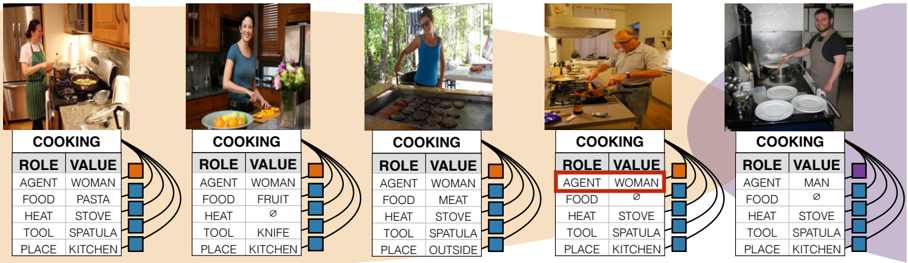
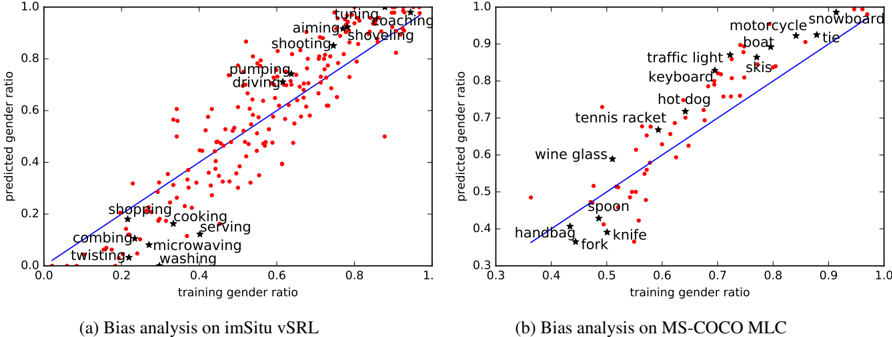
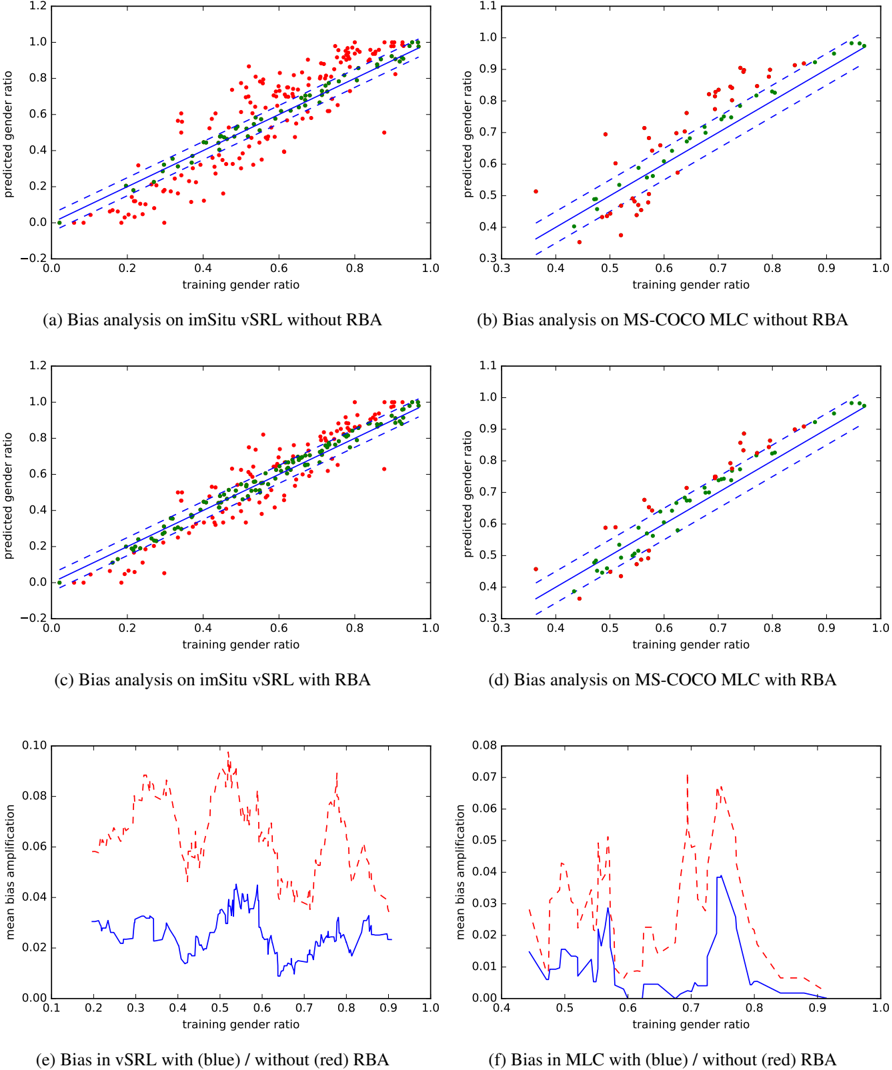
Language is increasingly being used to define rich visual recognition problems with supporting image collections sourced from the web.Structured prediction models are used in these tasks to take advantage of correlations between co-occurring labels and visual input but risk inadvertently encoding social biases found in web corpora.In this work, we study data and models associated with multilabel object classification and visual semantic role labeling.We find that (a) datasets for these tasks contain significant gender bias and (b) models trained on these datasets further amplify existing bias.For example, the activity cooking is over 33% more likely to involve females than males in a training set, and a trained model further amplifies the disparity to 68% at test time.We propose to inject corpus-level constraints for calibrating existing structured prediction models and design an algorithm based on Lagrangian relaxation for collective inference.Our method results in almost no performance loss for the underlying recognition task but decreases the magnitude of bias amplification by 47.5% and 40.5% for multilabel classification and visual semantic role labeling, respectively.
Overview
The claims and statistics of this paper haven’t been checked yet.
Free: it reads the open-access text and checks the first 5 claims that cite a source we can check. Create a free account to check every claim.
Integrity signals
Registry
Cites
Statistics
Figures
Verification
Claims the paper makes
The claims and statistics of this paper haven’t been checked yet.
Free: it reads the open-access text and checks the first 5 claims that cite a source we can check. Create a free account to check every claim.
Claims other papers make about this one
Each is checked against this paper’s own text: does it say what the citing paper says it does?
The source backs part of the claim, not all of it — or backs it for a different population, condition or comparison.
In the citing paper
“and processes of creating resources and technologies may further entrench such disparities [25, 38, 144].”
From Data Governance in the Age of Large-Scale Data-Driven Language Technology (2022) · cites this paper as [144]
Experimental — accuracy not yet measuredThe source backs part of the claim, not all of it — or backs it for a different population, condition or comparison.
In the citing paper
“It is well-documented that LMs learn the biases, prejudices, and racism present in the language they are trained on35–38.”
From Large language models to identify social determinants of health in electronic health records (2024) · cites this paper as [36]
Experimental — accuracy not yet measuredThe source backs part of the claim, not all of it — or backs it for a different population, condition or comparison.
In the citing paper
“Neural networks are prone to learning biases from training data and amplifying them at test time50, giving rise to a much discussed aspect of AI behaviour: fairness51.”
From The METRIC-framework for assessing data quality for trustworthy AI in medicine: A systematic review (2024) · cites this paper as [50]
Experimental — accuracy not yet measuredThe cited source says what the claim attributes to it.
In the citing paper
“It is well acknowledged that machine learning models, such as those ofered by the API providers, are prone to exhibiting various kinds of discriminatory behaviours, including diferent error rates across demographic groups [22,126,127], stereotyping [64,163] or minority groups under-representation [134,137].”
From Out of Context: Investigating the Bias and Fairness Concerns of “Artificial Intelligence as a Service” (2023) · cites this paper as [163]
Self-check
Percentages, sums and reported differences re-computed from the paper’s own numbers.
The self-check needs the paper’s full text.
Citations
Cites
Very Deep Convolutional Networks for Large-Scale Image Recognition
Simonyan, K., & Zisserman, A. (2014) · arXiv · doi:10.48550/arxiv.1409.1556 · Cited by 114,148 · cited 1×
“where each potential value in the CRF for subpart x, is computed using features fi from the VGG convolutional neural network (Simonyan and Zisserman, 2014) on an input image, as follows:”
MethodMicrosoft COCO: Common Objects in Context
Lin, T.-Y., Maire, M., Belongie, S., Hays, J., Perona, P., Ramanan, D., Dollár, P., & Zitnick, C. L. (2014) · Lecture Notes in Computer Science · doi:10.1007/978-3-319-10602-1_48 · Cited by 45,460 · cited 2×
“For MLC, we use MS-COCO (Lin et al., 2014; Chen et al., 2015), a recognition task covering 80 object classes.”
MethodShow and tell: A neural image caption generator
Vinyals, O., Toshev, A., Bengio, S., & Erhan, D. (2015) · 2015 IEEE Conference on Computer Vision and Pattern Recognition (CVPR) · doi:10.1109/cvpr.2015.7298935 · Cited by 6,318 · cited 2×
“Visual recognition tasks involving language, such as captioning (Vinyals et al., 2015), visual question answering (Antol et al.”
BackgroundVQA: Visual Question Answering
Antol, S., Agrawal, A., Lu, J., Mitchell, M., Batra, D., Zitnick, C. L., & Parikh, D. (2015) · 2015 IEEE International Conference on Computer Vision (ICCV) · doi:10.1109/iccv.2015.279 · Cited by 4,487
Dwork, C., Hardt, M., Pitassi, T., Reingold, O., & Zemel, R. (2012) · Proceedings of the 3rd Innovations in Theoretical Computer Science Conference · doi:10.1145/2090236.2090255 · Cited by 3,501 · cited 1×
“Various approaches have been proposed to make a “fair” binary classification (Baro-cas and Selbst, 2014; Dwork et al., 2012; Feldman et al., 2015; Zliobaite, 2015).”
BackgroundBarocas, S., & Selbst, A. D. (2014) · doi:10.2139/ssrn.2477899 · Cited by 3,048
Semantics derived automatically from language corpora contain human-like biases
Caliskan, A., Bryson, J. J., & Narayanan, A. (2017) · Science · doi:10.1126/science.aal4230 · Cited by 2,887 · cited 2×
“Such issues have been demonstrated in various learning systems, including online advertisement systems (Sweeney, 2013), word embedding models (Bolukbasi et al., 2016; Caliskan et al., 2017), online news (Ross and Carter, 2011), web search (Kay et al., 2015), and credit score (Hardt et al., 2016).”
BackgroundEquality of Opportunity in Supervised Learning
Hardt, M., Price, E., & Srebro, N. (2016) · arXiv · doi:10.48550/arxiv.1610.02413 · Cited by 2,536 · cited 1×
“Such issues have been demonstrated in various learning systems, including online advertisement systems (Sweeney, 2013), word embedding models (Bolukbasi et al., 2016; Caliskan et al., 2017), online news (Ross and Carter, 2011), web search (Kay et al., 2015), and credit score (Hardt et al., 2016).”
BackgroundBaker, C. F., Fillmore, C. J., & Lowe, J. B. (1998) · Proceedings of the 36th annual meeting on Association for Computational Linguistics - · doi:10.3115/980845.980860 · Cited by 2,518 · cited 2×
“Dataset We evaluate on imSitu (Yatskar et al., 2016) where activity classes are drawn from verbs and roles in FrameNet (Baker et al., 1998) and noun categories are drawn from WordNet (Miller et al., 1990).”
BackgroundMethodCertifying and Removing Disparate Impact
Feldman, M., Friedler, S. A., Moeller, J., Scheidegger, C., & Venkatasubramanian, S. (2015) · Proceedings of the 21th ACM SIGKDD International Conference on Knowledge Discovery and Data Mining · doi:10.1145/2783258.2783311 · Cited by 1,827 · cited 2×
“e cost of making mistakes on samples in the minority class can be neglected. Various approaches have been proposed to make a “fair” binary classification (Barocas and Selbst, 2014; Dwork et al., 2012; Feldman et al., 2015; Zliobaite, 2015). For structured prediction tasks the effect is harder to quantify and we are the…”
Background
Research works printed but not linked: 4
- Stanislaw Antol, Aishwarya Agrawal, Jiasen Lu, Mar- garet Mitchell, Dhruv Batra, C Lawrence Zitnick, and Devi Parikh. 2015. Vqa: Visual question an- swering. In Proceedings of the IEEE International Conference on Computer Vision, pages 2425-2433.
- Tolga Bolukbasi, Kai-Wei Chang, James Y Zou, Venkatesh Saligrama, and Adam T Kalai. 2016. Man is to computer programmer as woman is to homemaker? debiasing word embeddings. In The Conference on Advances in Neural Information Pro- cessing Systems (NIPS), pages 4349-4357.
- Bernhard Korte and Jens Vygen. 2008. Combinatorial Optimization: Theory and Application. Springer Verlag.
- G. Miller, R. Beckwith, C. Fellbaum, D. Gross, and K.J. Miller. 1990. Wordnet: An on-line lexical database. International Journal of Lexicography, 3(4):235-312.
Cited by
Items 301–400 of 834
Frank, S., Elliott, D., & Specia, L. (2018) · Natural Language Engineering · doi:10.1017/s1351324918000074 · Cited by 27
FairALM: Augmented Lagrangian Method for Training Fair Models with Little Regret
Lokhande, V. S., Akash, A. K., Ravi, S. N., & Singh, V. (2020) · Lecture notes in computer science · doi:10.1007/978-3-030-58610-2_22 · Cited by 38
“We introduced FairALM, an augmented Lagrangian framework to impose constraints on fairness measures studied in the literature.”
BackgroundMethodInfluentialAdversarial Attacks of Vision Tasks in the Past 10 Years: A Survey
Zhang, C., Zhou, L. Q., Xu, X., Wu, J., & Liu, Z. (2025) · ACM Computing Surveys · doi:10.1145/3743126 · Cited by 85
“Biases [57] can lead LLMs to learn stereotypes, such as associating Muslim with violent content [2] or assuming cooking involves women [312].”
How Do We Talk about Other People? Group (Un)Fairness in Natural Language Image Descriptions
Otterbacher, J., Barlas, P., Kleanthous, S., & Kyriakou, K. (2019) · Proceedings of the AAAI Conference on Human Computation and Crowdsourcing · doi:10.1609/hcomp.v7i1.5267 · Cited by 20
Word embeddings are biased. But whose bias are they reflecting?
Petreski, D., & Hashim, I. (2022) · AI & Society · doi:10.1007/s00146-022-01443-w · Cited by 27
“Further, word embeddings are found to even amplify the pre-existing biases in the training data (Zhao et al. 2017).”
BackgroundOn The Impact of Machine Learning Randomness on Group Fairness
Ganesh, P., Chang, H., Strobel, M., & Shokri, R. (2023) · ACM Conference on Fairness, Accountability, and Transparency (FAccT) · doi:10.1145/3593013.3594116 · Cited by 63
“Machine learning models are shown to manifest and escalate historical biases present in their training data [1, 4, 16, 56].”
BackgroundEvaluating Biased Attitude Associations of Language Models in an Intersectional Context
Sabbaghi, S. O., Wolfe, R., & Caliskan, A. (2023) · AAAI/ACM Conference on AI, Ethics, and Society · doi:10.1145/3600211.3604666 · Cited by 38
A Turning IR Landscape in a Shifting Media Ecology: The State of IR Literature on New Media1
Jackson, S. T. (2018) · International Studies Review · doi:10.1093/isr/viy046 · Cited by 28
Applications of Artificial Intelligence in Media and Entertainment
Lachman, R., & Joffe, M. (2020) · Advances in computational intelligence and robotics book series · doi:10.4018/978-1-7998-3499-1.ch012 · Cited by 24
Does Gender Matter in the News? Detecting and Examining Gender Bias in News Articles
Dacon, J., & Liu, H. (2021) · International World Wide Web Conference (WWW) · doi:10.1145/3442442.3452325 · Cited by 44
Nissim, M., Patti, V., Plank, B., & Wagner, C. (2018) · doi:10.18653/v1/w18-11 · Cited by 20
Pretrained AI Models: Performativity, Mobility, and Change
Varshney, L. R., Keskar, N. S., & Socher, R. (2019) · arXiv · doi:10.48550/arxiv.1909.03290 · Cited by 20
“[97] Jieyu Zhao, Tianlu Wang, Mark Yatskar, Vicente Ordonez, and Kai-”
BackgroundInfluentialAdvancing ophthalmology with large language models: Applications, challenges, and future directions
Zhang, Q., Wang, S., Wang, X., Xu, C., Liang, J., & Liu, Z. (2025) · Survey of Ophthalmology · doi:10.1016/j.survophthal.2025.02.009 · Cited by 21
Optimising Equal Opportunity Fairness in Model Training
Shen, A., Han, X., Cohn, T., Baldwin, T., & Frermann, L. (2022) · Conference of the North American Chapter of the Association for Computational Linguistics: Human Language Technologies (NAACL-HLT) · doi:10.18653/v1/2022.naacl-main.299 · Cited by 35
On the Sensitivity and Stability of Model Interpretations in NLP
Yin, F., Shi, Z., Hsieh, C., & Chang, K.-W. (2022) · Proceedings of the conference - Association for Computational Linguistics. Meeting · doi:10.18653/v1/2022.acl-long.188 · Cited by 61
Self-citationChoose Your Lenses: Flaws in Gender Bias Evaluation
Orgad, H., & Belinkov, Y. (2022) · Workshop on Gender Bias in Natural Language Processing (GeBNLP) · doi:10.18653/v1/2022.gebnlp-1.17 · Cited by 38
“…Sedoc and Ungar (2019) Kaneko and Bollegala (2019); Liang et al. (2020) Dev et al. (2020b); Shin et al. (2020) Kaneko and Bollegala (2021b) 0 Zhao et al. (2017, 2018b) Li et al. (2018); Elazar and Goldberg (2018) Zmigrod et al. (2019); Zhao et al. (2019) Kumar et al. (2020); Bartl et al.…”
BackgroundLarge language models (LLMs) as agents for augmented democracy
Gudiño, J., Grandi, U., & Hidalgo, C. A. (2024) · Philosophical Transactions of the Royal Society A Mathematical Physical and Engineering Sciences · doi:10.1098/rsta.2024.0100 · Cited by 51
TuringBox: An Experimental Platform for the Evaluation of AI Systems
Epstein, Z., Payne, B. H., Shen, J. H., Hong, C., Felbo, B., Dubey, A., Groh, M., Obradovich, N., Cebrian, M., & Rahwan, I. (2018) · International Joint Conference on Artificial Intelligence · doi:10.24963/ijcai.2018/851 · Cited by 17
An Intersectional Definition of FairnessPreprint
Foulds, J. R., Islam, R., Keya, K. N., & Pan, S. (2018) · arXiv (Cornell University) · doi:10.13016/m2pv6bb0c · Cited by 58
Exposing and Correcting the Gender Bias in Image Captioning Datasets and ModelsPreprint
Bhargava, S., & Forsyth, D. A. (2019) · arXiv (Cornell University) · doi:10.48550/arxiv.1912.00578 · Cited by 61
“We create such a dataset by first computing the gender bias [Zhao et al., 2017] in the training data for each word.”
BackgroundMethodResultInfluentialEnd-To-End Bias Mitigation: Removing Gender Bias in Deep Learning
Feldman, T., & Peake, A. (2021) · arXiv · doi:10.48550/arxiv.2104.02532 · Cited by 19
“Zhao et al. propose a method for training a fair classifier by injecting corpus-level constraints [49].”
On Guiding Visual Attention with Language Specification
Petryk, S., Dunlap, L., Nasseri, K., Gonzalez, J. E., Darrell, T., & Rohrbach, A. (2022) · IEEE Computer Society Conference on Computer Vision and Pattern Recognition/Proceedings - IEEE Computer Society Conference on Computer Vision and Pattern Recognition/Proceedings · doi:10.1109/cvpr52688.2022.01756 · Cited by 45
“We present a second dataset with implicit bias, MSCOCO-ApparentGender, which is constructed based on MSCOCO Captions [3] and prior work [11, 52].”
MethodPotential Pitfalls With Automatic Sentiment Analysis: The Example of Queerphobic Bias
Ungless, E. L., Roß, B., & Belle, V. (2023) · Social Science Computer Review · doi:10.1177/08944393231152946 · Cited by 24
“It is likely that signi fi cant differences in the distribution of terms in the training data resulted in these differences, as the systems learned to ‘ focus ’ on these terms as an almost ‘ heuristic ’ way of assigning score (Zhao et al., 2017).”
Assessing and Mitigating Bias in Artificial Intelligence: A Review
Sinha, A., Sapra, D., Sinwar, D., Singh, V., & Raghuwanshi, G. (2023) · Recent Advances in Computer Science and Communications · doi:10.2174/2666255816666230523114425 · Cited by 24
Identifying Race and Gender Bias in Stable Diffusion AI Image Generation
Chauhan, A., Anand, T., Jauhari, T., Shah, A., Singh, R., Rajaram, A., & Vanga, R. (2024) · IEEE International Conference on AI in Cybersecurity (ICAIC) · doi:10.1109/icaic60265.2024.10433840 · Cited by 37
“Furthermore, further studies [4] analyze bias through context association, building off of previous work [5] in their study surrounding the reduction of gender bias amplification.”
BackgroundAuditing GPT's Content Moderation Guardrails: Can ChatGPT Write Your Favorite TV Show?
Mahomed, Y., Crawford, C. M., Gautam, S., Friedler, S. A., & Metaxa, D. (2024) · ACM Conference on Fairness, Accountability, and Transparency (FAccT) · doi:10.1145/3630106.3658932 · Cited by 38
Balestri, R. (2025) · Frontiers in Artificial Intelligence · doi:10.3389/frai.2025.1558696 · Cited by 28
Word Embeddings (Also) Encode Human Personality Stereotypes
Agarwal, O., Durupınar, F., Badler, N. I., & Nenkova, A. (2019) · Joint Conference on Lexical and Computational Semantics · doi:10.18653/v1/s19-1023 · Cited by 28
“Work further developing this line of analysis and debiasing has appeared in recent computational linguistics venues (Zhao et al., 2017, 2018; Rudinger et al., 2018).”
BackgroundVariation across Scales: Measurement Fidelity under Twitter Data Sampling
Wu, S., Rizoiu, M.-A., & Xie, L. (2020) · Proceedings of the International AAAI Conference on Web and Social Media · doi:10.1609/icwsm.v14i1.7337 · Cited by 25
“For example, models overly classify agents doing cooking activity as female due to overrepresented correlations (Zhao et al. 2017), or lack the capacity to identify dark-skinned women due to underrepresented data (Buolamwini and Gebru 2018).”
On the Limitations of Dataset Balancing: The Lost Battle Against Spurious Correlations
Schwartz, R., & Stanovsky, G. (2022) · Findings of the Association for Computational Linguistics: NAACL · doi:10.18653/v1/2022.findings-naacl.168 · Cited by 35
Auditing and Achieving Intersectional Fairness in Classification ProblemsPreprint
Morina, G., Oliinyk, V., Waton, J., Marušić, I., & Georgatzis, K. (2019) · arXiv (Cornell University) · doi:10.48550/arxiv.1911.01468 · Cited by 65
“In particular, if we assume that two models achieve ε-differential fairness for ε1 and ε2 respectively, then the quantity exp(ε2 −ε1) can be interpreted as a multiplicative increase/decrease of one model’s bias with respect to the other, a phenomenon known as bias amplification [41].”
BackgroundContrastive Learning for Fair RepresentationsPreprint
Shen, A., Han, X., Cohn, T., Baldwin, T., & Frermann, L. (2021) · arXiv (Cornell University) · doi:10.48550/arxiv.2109.10645 · Cited by 61
“Task and Dataset Given an image, the task is to predict the activity depicted in the image based on the imSitu dataset (Zhao et al. 2017; Wang et al. 2019), which contains 211 activity classes and binary gender labels.”
InfluentialDebiasing Vandalism Detection Models at Wikidata
Heindorf, S., Scholten, Y., Engels, G., & Potthast, M. (2019) · International World Wide Web Conference (WWW) · doi:10.1145/3308558.3313507 · Cited by 20
“Several potential sources of bias can be identified (see Figure 1): model bias refers to the vandalism detection model used, and may result from its selection of features and its learning algorithm.”
BackgroundDISAPERE: A Dataset for Discourse Structure in Peer Review Discussions
Kennard, N., O’Gorman, T., Das, R., Sharma, A., Bagchi, C., Clinton, M., Yelugam, P. K., Zamani, H., & McCallum, A. (2022) · Proceedings of the 2022 Conference of the North American Chapter of the Association for Computational Linguistics: Human Language Technologies · doi:10.18653/v1/2022.naacl-main.89 · Cited by 17
Inclusive HRI: Equity and Diversity in Design, Application, Methods, and Community
de Graaf, M. M. A., Perugia, G., Fosch‐Villaronga, E., Lim, A., Broz, F., Short, E. S., & Neerincx, M. A. (2022) · ACM/IEEE International Conference on Human-Robot Interaction (HRI) · doi:10.1109/hri53351.2022.9889455 · Cited by 23
Crowdsourcing Detection of Sampling Biases in Image Datasets
Hu, X., Wang, H., Vegesana, A., Dube, S., Yu, K., Kao, G., Chen, S.-H., Lu, Y.-H., Thiruvathukal, G. K., & Yin, M. (2020) · International World Wide Web Conference (WWW) · doi:10.1145/3366423.3380063 · Cited by 19
“Visual semantic role labeling models were found to exhibit societal biases and stereotypes [23], such as frequently associating certain activity labels with specific gender (e.g., associate “cooking” with woman).”
BackgroundLi, C., Xing, W., & Leite, W. L. (2021) · International Conference on Learning Analytics and Knowledge (LAK) · doi:10.1145/3448139.3448200 · Cited by 25
Correcting Exposure Bias for Link RecommendationPreprint
Gupta, S., Wang, H., Lipton, Z. C., & Wang, Y. (2021) · arXiv (Cornell University) · doi:10.48550/arxiv.2106.07041 · Cited by 54
“Zhao et al. (2017) show that models amplify biases in training data and propose a constraint-based method to mitigate this.”
BackgroundPerceptual Score: What Data Modalities Does Your Model Perceive?Preprint
Gat, I., Schwartz, I., & Schwing, A. G. (2021) · arXiv (Cornell University) · doi:10.48550/arxiv.2110.14375 · Cited by 40
DISAPERE: A Dataset for Discourse Structure in Peer Review Discussions
Kennard, N., O'Gorman, T., Das, R., Sharma, A., Bagchi, C., Clinton, M., Yelugam, P. K., Zamani, H., & McCallum, A. (2021) · arXiv · doi:10.48550/arxiv.2110.08520 · Cited by 17
Gender Bias in Natural Language Processing and Computer Vision: A Comparative Survey
Bartl, M., Mandal, A., Leavy, S., & Little, S. (2025) · ACM Computing Surveys · doi:10.1145/3700438 · Cited by 48
“Zhao et al. [140] used corpus-level constraints and Lagrangian relaxation to enforce distributions learnt from a debiasing dataset on the model outputs.”
InfluentialStewart, O. G., & Rodgers, D. J. (2025) · Learning Media and Technology · doi:10.1080/17439884.2025.2527179 · Cited by 27
The Role of Protected Class Word Lists in Bias Identification of Contextualized Word Representations
Sedoc, J., & Ungar, L. (2019) · Proceedings of the First Workshop on Gender Bias in Natural Language Processing · doi:10.18653/v1/w19-3808 · Cited by 16
“…age and gender (Hovy, 2015; Dixon et al., 2018), to over-amplification of demographic differences in language generation (Yatskar et al., 2016; Zhao et al., 2017), to diverging implicit associations be-tween words or concepts within embeddings or language models (Bolukbasi et al., 2016;…”
BackgroundControlled Analyses of Social Biases in Wikipedia Bios
Field, A., Park, C. Y., Lin, K., & Tsvetkov, Y. (2022) · International World Wide Web Conference (WWW) · doi:10.1145/3485447.3512134 · Cited by 37
“prone to absorbing and even amplifying data bias [7, 54].”
BackgroundFirst the Worst: Finding Better Gender Translations During Beam Search
Saunders, D., Sallis, R., & Byrne, B. (2022) · Findings of the Association for Computational Linguistics: ACL 2022 · doi:10.18653/v1/2022.findings-acl.301 · Cited by 16
“More insidiously, generating the most likely output based only on corpus statistics can amplify any existing biases in the corpus (Zhao et al., 2017).”
BackgroundGender bias in legal corpora and debiasing it
Sevim, N., Şahinuç, F., & Koç, A. (2022) · Natural Language Engineering · doi:10.1017/s1351324922000122 · Cited by 31
“Zhao et al .”
Metamorphic Testing of a Deep Learning Based Forecaster
Dwarakanath, A., Ahuja, M., Podder, S., Vinu, S., Naskar, A., & Koushik, M. R. S. (2019) · IEEE/ACM International Workshop on Metamorphic Testing (MET) · doi:10.1109/met.2019.00014 · Cited by 21
“Efforts have been made to detect & mitigate instances of bias in training data [21] and an ML algorithm [12].”
MethodA GENDERED PERSPECTIVE ON ARTIFICIAL INTELLIGENCE
Parsheera, S. (2018) · ITU Kaleidoscope Academic Conference (ITU K) · doi:10.23919/itu-wt.2018.8597618 · Cited by 16
TextFlint: Unified Multilingual Robustness Evaluation Toolkit for Natural Language ProcessingPreprint
Gui, T., Wang, X., Zhang, Q., Liu, Q., Zou, Y., Zhou, X., Zheng, R., Zhang, C., Wu, Q., Ye, J., et al. (2021) · arXiv (Cornell University) · doi:10.48550/arxiv.2103.11441 · Cited by 44
Self-citationMeasuring and Mitigating Gender Bias in Legal Contextualized Language Models
Bozdag, M., Sevim, N., & Koç, A. (2024) · ACM Transactions on Knowledge Discovery from Data · doi:10.1145/3628602 · Cited by 15
Anoop, K. R., Gangan, M. P., Deepak, P., & Lajish, V. L. (2022) · Lecture notes in electrical engineering · doi:10.1007/978-981-19-4453-6_2 · Cited by 21
“All such biases are disturbing when one observes that word embeddings, being the base constituent of most language systems, can propagate or even intensify them [22,61,127] causing unfavorable outcomes when deployed in a plethora of downstream applications such as sentiment analysis [79], language generation [66], tox…”
BackgroundThe Ethics of Computational Social Science
Leslie, D. (2023) · Springer eBooks · doi:10.1007/978-3-031-16624-2_4 · Cited by 20
SOAR: Scene-debiasing Open-set Action Recognition
Zhai, Y., Liu, Z., Wu, Z., Wu, Y., Zhou, C., Doermann, D., Yuan, J., & Hua, G. (2023) · IEEE/CVF International Conference on Computer Vision (ICCV) · doi:10.1109/iccv51070.2023.00940 · Cited by 26
“Previous works in the image domain include mitigating the gender bias [7, 81, 8, 28], and texture bias [24, 30].”
BackgroundThe Social and the Neural Network: How to Make Natural Language Processing about People again
Hovy, D. (2018) · doi:10.18653/v1/w18-1106 · Cited by 18
“Demographic bias in the training data can severely distort the performance of our tools (Jørgensen et al., 2015; Hovy and Søgaard, 2015; Zhao et al., 2017), while accounting for demographic factors can actually improve performance in a variety of tasks (Volkova et al., 2013; Hovy, 2015; Lynn et…”
BackgroundMethodUnsupervised Discovery of Gendered Language through Latent-Variable Modeling
Hoyle, A., Wolf-Sonkin, L., Wallach, H., Augenstein, I., & Cotterell, R. (2019) · Proceedings of the conference - Association for Computational Linguistics. Meeting · doi:10.18653/v1/p19-1167 · Cited by 43
“Recent NLP research has focused on gender biases in word embeddings (Bolukbasi et al., 2016; Zhao et al., 2017) and co-reference systems (Zhao et al.”
BackgroundQuantifying Social Biases in Contextual Word Representations
Kurita, K., Vyas, N., Pareek, A., Black, A. W., & Tsvetkov, Y. (2019) · Cited by 16
Tracing Antisemitic Language Through Diachronic Embedding Projections: France 1789-1914
Tripodi, R., Warglien, M., Sullam, S. L., & Paci, D. (2019) · Workshop on Computational Approaches to Historical Language Change (LChange) · doi:10.18653/v1/w19-4715 · Cited by 32
“Zhao et al. (2017) analyzed the amplification effect that learning models present on the gender di-mension when trained on biased data.”
BackgroundSim2real transfer learning for 3D human pose estimation: motion to the rescuePreprint
Doersch, C., & Zisserman, A. (2019) · arXiv (Cornell University) · doi:10.48550/arxiv.1907.02499 · Cited by 144
On measuring and mitigating biased inferences of word embeddings
Dev, S., Li, T., Phillips, J. M., & Srikumar, V. (2020) · Proceedings of the AAAI Conference on Artificial Intelligence · doi:10.1609/aaai.v34i05.6267 · Cited by 14
“To discover biases, several lines of existing work (Bolukbasi et al. 2016; Caliskan, Bryson, and Narayanan 2017; Zhao et al. 2017; Dev and Phillips 2019) employ measurements intrinsic to the vector representations, which despite their utility, have two key problems.”
MethodFine-tuning protein language models unlocks the potential of underrepresented viral proteomes
Sawhney, R., Ferrell, B. D., Dejean, T., Schreiber, Z., Harrigan, W., Polson, S. W., Wommack, K. E., & Belcaid, M. (2025) · PeerJ · doi:10.7717/peerj.19919 · Cited by 14
Understanding and evaluating harms of AI-generated image captions in political images
Sarhan, H., & Hegelich, S. (2023) · Frontiers in Political Science · doi:10.3389/fpos.2023.1245684 · Cited by 21
Lehr, S. A., Saichandran, K. S., Harmon‐Jones, E., Vitali, N., & Banaji, M. R. (2025) · Proceedings of the National Academy of Sciences · doi:10.1073/pnas.2501823122 · Cited by 40
“Concerns about AI typically fall into two categories: societal implications—such as bias amplification ( 54 – 56 ) and economic upheaval ( 57 , 58 )—and more existential dangers.”
Importance Weighted Generative Networks
Diesendruck, M., Elenberg, E. R., Sen, R. S., Cole, G. W., Shakkottai, S., & Williamson, S. A. (2020) · Lecture notes in computer science · doi:10.1007/978-3-030-46147-8_15 · Cited by 17
“This could arise either because observations are obtained via a biased sampling mechanism [4, 33], or in a transfer learning setting where our target distribution differs from our training distribution.”
BackgroundLOGAN: Local Group Bias Detection by Clustering
Zhao, J., & Chang, K.-W. (2020) · Conference on Empirical Methods in Natural Language Processing (EMNLP) · doi:10.18653/v1/2020.emnlp-main.155 · Cited by 24
Self-citationPruksachatkun, Y., Krishna, S., Dhamala, J., Gupta, R., & Chang, K.-W. (2021) · Findings of the Association for Computational Linguistics: ACL (Findings of ACL) · doi:10.18653/v1/2021.findings-acl.294 · Cited by 31
“…datasets (Park et al., 2018; Zhao et al., 2018a), developing methods optimized for particular fairness notions (Zhang et al., 2017, 2020), model calibration (Zhao et al., 2017; Jia et al., 2020), and reducing representational bias (Bolukbasi et al., 2016b; Zhao et al., 2018b; Liang et al., 2020).”
MethodSelf-citationChairs Can Be Stood On: Overcoming Object Bias in Human-Object Interaction Detection
Wang, G., Guo, Y., Wong, Y., & Kankanhalli, M. (2022) · Lecture notes in computer science · doi:10.1007/978-3-031-20053-3_38 · Cited by 14
Ethical Implications of Generative AI in Art and the Media
Vyas, B. (2022) · International Journal For Multidisciplinary Research · doi:10.36948/ijfmr.2022.v04i04.9392 · Cited by 46
Man is to Person as Woman is to Location: Measuring Gender Bias in Named Entity RecognitionPreprint
Mehrabi, N., Gowda, T., Morstatter, F., Peng, N., & Galstyan, A. (2019) · arXiv (Cornell University) · doi:10.48550/arxiv.1910.10872 · Cited by 14
“Other work tried to show and address bias in co-reference resolution (Zhao et al. 2018a), semantic role labeling (Zhao et al. 2017), machine translation (Font and Costa-jussà 2019), language models (Bordia and Bowman Female Name CoreNLP version 3.8 CoreNLP version 3.9 Isabel Not Tagged Tagged as…”
MethodInfluentialRissanen Data Analysis: Examining Dataset Characteristics via Description LengthPreprint
Perez, E., Kiela, D., & Cho, K. (2021) · arXiv (Cornell University) · doi:10.48550/arxiv.2103.03872 · Cited by 16
“, 2017), models also reflect other aspects of learning (Zhao et al., 2017), such as the optimization procedure, inductive bias of the model class and architecture, hyperparameters, and randomness during training.”
BackgroundOn the Faithfulness Measurements for Model Interpretations.Preprint
Yin, F., Shi, Z., Hsieh, C., & Chang, K.-W. (2021) · arXiv (Cornell University) · Cited by 13
Self-citationGrill, G. (2022) · OSF Preprints (OSF Preprints) · doi:10.31219/osf.io/zekqv · Cited by 20
It’s About Time: A View of Crowdsourced Data Before and During the Pandemic
Christoforou, E., Barlas, P., & Otterbacher, J. (2021) · CHI Conference on Human Factors in Computing Systems · doi:10.1145/3411764.3445317 · Cited by 15
“MS COCO dataset [47], as a result of the types of images included in the dataset, but also the annotations accompanying them, leading”
MethodAssessing Multilingual Fairness in Pre-trained Multimodal Representations
Wang, J., Liu, Y., & Wang, X. (2022) · Findings of the Association for Computational Linguistics: ACL (Findings of ACL) · doi:10.18653/v1/2022.findings-acl.211 · Cited by 47
Structured Verification of Machine Learning Models in Industrial Settings
Kaminwar, S. R., Goschenhofer, J., Thomas, J., Thon, I., & Bischl, B. (2022) · Big Data · doi:10.1089/big.2021.0112 · Cited by 23
Sabbaghi, S. O., & Caliskan, A. (2022) · Proceedings of the AAAI/ACM Conference on AI Ethics and Society · doi:10.1145/3514094.3534176 · Cited by 19
“Since potentially harmful biases learned by word embeddings may propagate to downstream applications such as resume screening, essay grading, or university admissions [33, 60, 61], answers to the questions outlined earlier have important implications.”
BackgroundLMCap: Few-shot Multilingual Image Captioning by Retrieval Augmented Language Model Prompting
Ramos, R., Martins, B., & Elliott, D. (2023) · Findings of the Association for Computational Linguistics: ACL (Findings of ACL) · doi:10.18653/v1/2023.findings-acl.104 · Cited by 36
Achieve fairness without demographics for dermatological disease diagnosis
Chiu, C.-H., Chen, Y.-J., Wu, Y., Shi, Y., & Ho, T.-Y. (2024) · Medical Image Analysis · doi:10.1016/j.media.2024.103188 · Cited by 25
“This calibration is done by taking the model’s predictions and the sensitive attribute as inputs [23], [27], [28].”
MethodEthical Considerations for Artificial Intelligence Applications for HIV
Garett, R., Kim, S., & Young, S. D. (2024) · AI · doi:10.3390/ai5020031 · Cited by 16
“Recent studies have noted the existence of gender [18] and race [19] bias in AI programs that may alienate communities and call into question the role of AI in being part of the solution.”
BackgroundKasunic, A., & Kaufman, G. F. (2018) · Workshop on Storytelling (StoryNLP) · doi:10.18653/v1/w18-1501 · Cited by 17
“gender biases) in NLP techniques (Dwork et al., 2012; Zhao et al., 2017; Bolukbasi et al., 2016; Voigt et al., 2017), AI storytelling has the potential to amplify and exacerbate issues of bias and diversity, which in turn excludes certain individuals from experiencing the potential benefits of story engagement.”
BackgroundRemedies against bias in analytics systems
Edwards, J. S., & Rodríguez, E. (2019) · Journal of Business Analytics · doi:10.1080/2573234x.2019.1633890 · Cited by 16
Gender Bias in Pretrained Swedish Embeddings
Sahlgren, M., & Olsson, F. (2019) · DSpace repository (University of Tartu) · Cited by 30
Mashhadi, A., Winder, S. G., Lia, E. H., & Wood, S. A. (2021) · Proceedings of the International AAAI Conference on Web and Social Media · doi:10.1609/icwsm.v15i1.18071 · Cited by 16
“Other works have presented the societal bias of under-representation in identification of gender (Zhao et al. 2017) and race (Klare et al.”
BackgroundGender Bias in Machine Translation Systems
Ullmann, S. (2022) · Social and cultural studies of robots and AI · doi:10.1007/978-3-030-88615-8_7 · Cited by 17
Fair and Interpretable Models for Survival Analysis
Rahman, M. M., & Purushotham, S. (2022) · ACM SIGKDD Conference on Knowledge Discovery and Data Mining (KDD) · doi:10.1145/3534678.3539259 · Cited by 36
“In order to handle algorithmic bias and circumvent the inequitable and discriminatory predictions from models, researchers have introduced fairness definitions such as individual fairness [11], group fairness [15], intersection fairness [12] and used them as constraints to enforce fairness while training themodels [7,…”
BackgroundFlores, L., & Young, S. D. (2022) · Minds and Machines · doi:10.1007/s11023-022-09610-0 · Cited by 18
“…rising trend of using social media data in surveillance meth-ods, the gravity of the pandemic, and errors found in the development and application of AI models (Buolamwini & Gebru, 2018; Zhao et al., 2017), ethical concerns on using AI on social media data to monitor COVID-19 warrant examination.”
MethodExplaining Deep Convolutional Neural Networks via Latent Visual-Semantic Filter Attention
Yang, Y., Kim, S., & Joo, J. (2022) · IEEE Computer Society Conference on Computer Vision and Pattern Recognition/Proceedings - IEEE Computer Society Conference on Computer Vision and Pattern Recognition/Proceedings · doi:10.1109/cvpr52688.2022.00815 · Cited by 20
“3 For example, Zhao et al. [69] showed that in popular image datasets gender is associated with activities such as shopping for women and driving for men.”
BackgroundMethodInfluentialGender Stereotyping Impact in Facial Expression Recognition
Dominguez-Catena, I., Paternain, D., & Galar, M. (2023) · Communications in computer and information science · doi:10.1007/978-3-031-23618-1_1 · Cited by 30
“These dataset biases can be found in the demographic proportions of the datasets [18], in the relationships between data of multimodal datasets [33,8], in the sample labeling and the label themselves [25], and even in the images of the dataset [31].”
BackgroundInformation-Theoretic Bias Reduction via Causal View of Spurious Correlation
Seo, S., Lee, J., & Han, B. (2022) · Proceedings of the AAAI Conference on Artificial Intelligence · doi:10.1609/aaai.v36i2.20115 · Cited by 26
Why Fair Labels Can Yield Unfair Predictions: Graphical Conditions for Introduced Unfairness
Ashurst, C., Carey, R., Chiappa, S., & Everitt, T. (2022) · Proceedings of the AAAI Conference on Artificial Intelligence · doi:10.1609/aaai.v36i9.21182 · Cited by 26
“There is also a broader literature that investigates the relationship between biased labels and biased models for particular applications, such as object recognition (Wang et al. 2019; Zhao et al. 2017).”
BackgroundUnderstanding Bias in Machine LearningPreprint
Gu, J., & Oelke, D. (2019) · arXiv (Cornell University) · doi:10.48550/arxiv.1909.01866 · Cited by 39
“Bias in datasets can lead to unfairness and discrimination such as gender bias, racism [4,5,6].”
BackgroundHi, my name is Martha: Using names to measure and mitigate bias in generative dialogue models
Smith, E. M., & Williams, A. (2021) · arXiv (Cornell University) · doi:10.48550/arxiv.2109.03300 · Cited by 13
Gehrmann, S., Strobelt, H., Rush, A. M., et al. (2019) · doi:10.18653/v1/p19-3 · Cited by 14
Quantifying gender bias towards politicians in cross-lingual language models
Stańczak, K., Ray Choudhury, S., Pimentel, T., Cotterell, R., & Augenstein, I. (2023) · PLOS ONE · doi:10.1371/journal.pone.0277640 · Cited by 13
“However, alongside capturing the linguistic nuances of a language, they also perpetuate (and potentially amplify) biases (Zhao et al., 2017; Bender et al., 2021).”
BackgroundBridging Fairness and Environmental Sustainability in Natural Language Processing
Hessenthaler, M., Strubell, E., Hovy, D., & Lauscher, A. (2022) · Conference on Empirical Methods in Natural Language Processing (EMNLP) · doi:10.18653/v1/2022.emnlp-main.533 · Cited by 25
The Inclusive Images Competition
Atwood, J. R., Halpern, Y., Baljekar, P. N., Breck, E. J., Sculley, D., Ostyakov, P., Nikolenko, S., Ivanov, I., Solovyev, R. A., Wang, W., et al. (2019) · The Springer series on challenges in machine learning · doi:10.1007/978-3-030-29135-8_6 · Cited by 21
Person Perception Biases Exposed: Revisiting the First Impressions Dataset
Jacques, J. C. S., Lapedriza, À., Palmero, C., Baró, X., & Escalera, S. (2021) · IEEE/CVF Winter Conference on Applications of Computer Vision Workshops (WACVW) · doi:10.1109/wacvw52041.2021.00006 · Cited by 24
Application of fairness to healthcare, organizational justice, and finance: A survey
Birzhandi, P., & Cho, Y.-S. (2022) · Expert Systems with Applications · doi:10.1016/j.eswa.2022.119465 · Cited by 23
Toward Fairness Through Fair Multi-Exit Framework for Dermatological Disease Diagnosis
Chiu, C.-H., Chung, H.-W., Chen, Y.-J., Shi, Y., & Ho, T.-Y. (2023) · Lecture notes in computer science · doi:10.1007/978-3-031-43898-1_10 · Cited by 27
“This calibration is done by taking the model’s prediction, and the sensitive attribute as inputs [8,11,28].”
MethodHuang, X., & Paul, M. J. (2019) · Joint Conference on Lexical and Computational Semantics · doi:10.18653/v1/s19-1015 · Cited by 20
“To avoid learning biases, researchers have proposed adding demographic constraints (Zhao et al., 2017) or using adversarial training (Elazar and Goldberg, 2018).”
Metadata
- Authors
- Zhao, J., Wang, T., Yatskar, M., Ordonez, V., & Chang, K.-W.
- Affiliations
- University of Virginia (US)
- University of Washington (US)
- Venue
- Proceedings of the 2017 Conference on Empirical Methods in Natural Language Processing
- Published
- 2017
- Pages
- 2979-2989
- OpenAlex
- W2962787423
- Semantic Scholar
- 135bafc83e9a73c88e759f98a28edfdb5c02f81d
- Cited by
- 829
- References
- 30
- Citations by year
- 2026: 36 · 2025: 86 · 2024: 82 · 2023: 133 · 2022: 122 · 2021: 114 · 2020: 108 · 2019: 97 · 2018: 48 · 2017: 3
- FWCI
- 174.43
- Type
- conference paper
- Language
- en
- Open access
- hybrid
- doi.org
- Licence
- cc-by
- Locations
- Conference on Empirical Methods in Natural Language Processing (EMNLP) (publishedVersion, cc-by)
- arXiv (Cornell University) (submittedVersion)
- arXiv (Cornell University)
- Funders
- National Science Foundation (1657193)
- Nvidia
- Topics
- Physical Sciences › Computer Science › Artificial Intelligence › Ethics and Social Impacts of AI
- Physical Sciences › Computer Science › Computer Vision and Pattern Recognition › Advanced Neural Network Applications
- Physical Sciences › Computer Science › Computer Vision and Pattern Recognition › Multimodal Machine Learning Applications
- Keywords
- gender bias, bias amplification, structured prediction, Lagrangian relaxation, collective inference, image collections, cooking
About these checks
Registry, retraction, Cites and statistics results are computed, not judged, with one exception: a printed reference that no index lists is read once by a model before it counts as a citation error. Claims are extracted by a model and kept only when their quote appears verbatim in the text; each cited source is then checked, with a model’s help, for whether it says what the claim relies on. Those verdicts can be wrong — read the claim’s quote and the cited source before relying on one.
Statistics and arithmetic are recomputed, not judged.
Confidence bands are shown only for fields calibrated on our annotated test set. None is calibrated yet, so no band is shown.
What counts as a claim ›How we measure confidence ›How we check this ›
Are you an author, or do you see a problem with this page? Request a review
Data sources
Bibliographic data: Semantic Scholar, OpenAlex, Crossref.
Contains information from the Semantic Scholar Academic Graph Datasets, made available under the ODC Attribution License (ODC-BY 1.0).
Semantic Scholar’s data is described in: Kinney, R., et al. (2023). The Semantic Scholar Open Data Platform. arXiv:2301.10140.
