

Men Also Like Shopping: Reducing Gender Bias Amplification using Corpus-level Constraints
Open accessThe DOI matches its Crossref record; 30 of the 30 references it cites were found in a registry or an index.
Abstract
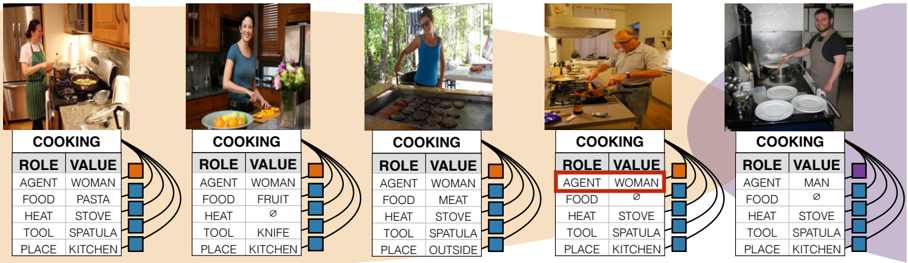
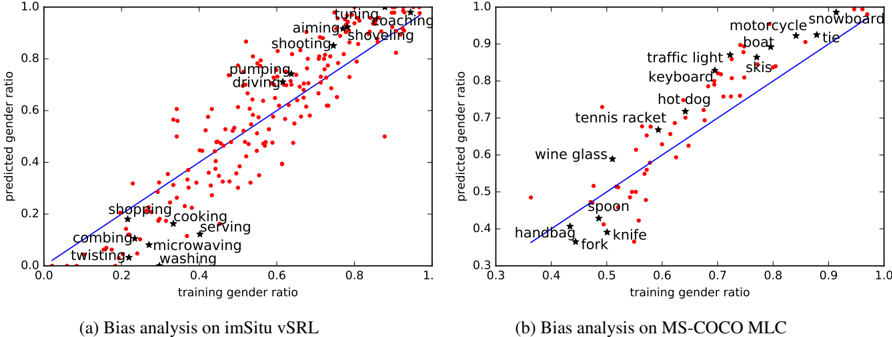
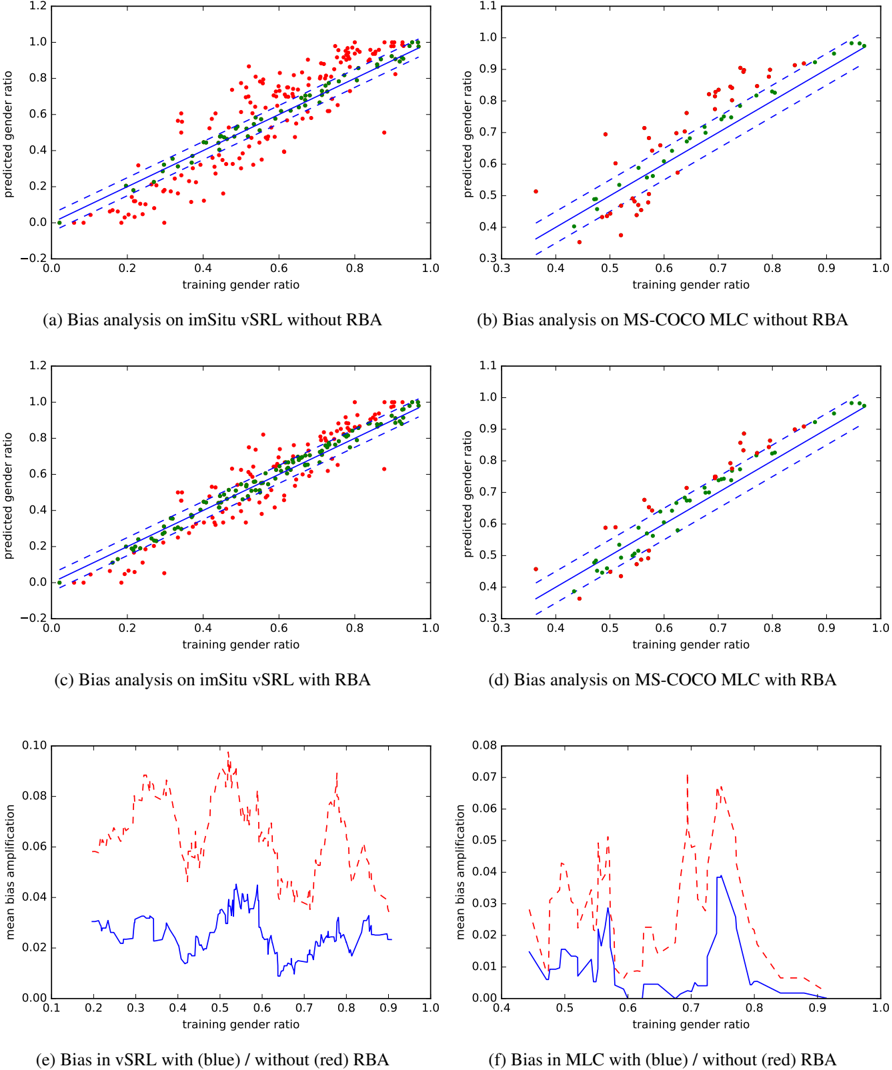
Language is increasingly being used to define rich visual recognition problems with supporting image collections sourced from the web.Structured prediction models are used in these tasks to take advantage of correlations between co-occurring labels and visual input but risk inadvertently encoding social biases found in web corpora.In this work, we study data and models associated with multilabel object classification and visual semantic role labeling.We find that (a) datasets for these tasks contain significant gender bias and (b) models trained on these datasets further amplify existing bias.For example, the activity cooking is over 33% more likely to involve females than males in a training set, and a trained model further amplifies the disparity to 68% at test time.We propose to inject corpus-level constraints for calibrating existing structured prediction models and design an algorithm based on Lagrangian relaxation for collective inference.Our method results in almost no performance loss for the underlying recognition task but decreases the magnitude of bias amplification by 47.5% and 40.5% for multilabel classification and visual semantic role labeling, respectively.
Overview
The claims and statistics of this paper haven’t been checked yet.
Free: it reads the open-access text and checks the first 5 claims that cite a source we can check. Create a free account to check every claim.
Integrity signals
Registry
Cites
Statistics
Figures
Verification
Claims the paper makes
The claims and statistics of this paper haven’t been checked yet.
Free: it reads the open-access text and checks the first 5 claims that cite a source we can check. Create a free account to check every claim.
Claims other papers make about this one
Each is checked against this paper’s own text: does it say what the citing paper says it does?
The source backs part of the claim, not all of it — or backs it for a different population, condition or comparison.
In the citing paper
“and processes of creating resources and technologies may further entrench such disparities [25, 38, 144].”
From Data Governance in the Age of Large-Scale Data-Driven Language Technology (2022) · cites this paper as [144]
Experimental — accuracy not yet measuredThe source backs part of the claim, not all of it — or backs it for a different population, condition or comparison.
In the citing paper
“It is well-documented that LMs learn the biases, prejudices, and racism present in the language they are trained on35–38.”
From Large language models to identify social determinants of health in electronic health records (2024) · cites this paper as [36]
Experimental — accuracy not yet measuredThe source backs part of the claim, not all of it — or backs it for a different population, condition or comparison.
In the citing paper
“Neural networks are prone to learning biases from training data and amplifying them at test time50, giving rise to a much discussed aspect of AI behaviour: fairness51.”
From The METRIC-framework for assessing data quality for trustworthy AI in medicine: A systematic review (2024) · cites this paper as [50]
Experimental — accuracy not yet measuredThe cited source says what the claim attributes to it.
In the citing paper
“It is well acknowledged that machine learning models, such as those ofered by the API providers, are prone to exhibiting various kinds of discriminatory behaviours, including diferent error rates across demographic groups [22,126,127], stereotyping [64,163] or minority groups under-representation [134,137].”
From Out of Context: Investigating the Bias and Fairness Concerns of “Artificial Intelligence as a Service” (2023) · cites this paper as [163]
Self-check
Percentages, sums and reported differences re-computed from the paper’s own numbers.
The self-check needs the paper’s full text.
Citations
Cites
Very Deep Convolutional Networks for Large-Scale Image Recognition
Simonyan, K., & Zisserman, A. (2014) · arXiv · doi:10.48550/arxiv.1409.1556 · Cited by 114,148 · cited 1×
“where each potential value in the CRF for subpart x, is computed using features fi from the VGG convolutional neural network (Simonyan and Zisserman, 2014) on an input image, as follows:”
MethodMicrosoft COCO: Common Objects in Context
Lin, T.-Y., Maire, M., Belongie, S., Hays, J., Perona, P., Ramanan, D., Dollár, P., & Zitnick, C. L. (2014) · Lecture Notes in Computer Science · doi:10.1007/978-3-319-10602-1_48 · Cited by 45,460 · cited 2×
“For MLC, we use MS-COCO (Lin et al., 2014; Chen et al., 2015), a recognition task covering 80 object classes.”
MethodShow and tell: A neural image caption generator
Vinyals, O., Toshev, A., Bengio, S., & Erhan, D. (2015) · 2015 IEEE Conference on Computer Vision and Pattern Recognition (CVPR) · doi:10.1109/cvpr.2015.7298935 · Cited by 6,318 · cited 2×
“Visual recognition tasks involving language, such as captioning (Vinyals et al., 2015), visual question answering (Antol et al.”
BackgroundVQA: Visual Question Answering
Antol, S., Agrawal, A., Lu, J., Mitchell, M., Batra, D., Zitnick, C. L., & Parikh, D. (2015) · 2015 IEEE International Conference on Computer Vision (ICCV) · doi:10.1109/iccv.2015.279 · Cited by 4,487
Dwork, C., Hardt, M., Pitassi, T., Reingold, O., & Zemel, R. (2012) · Proceedings of the 3rd Innovations in Theoretical Computer Science Conference · doi:10.1145/2090236.2090255 · Cited by 3,501 · cited 1×
“Various approaches have been proposed to make a “fair” binary classification (Baro-cas and Selbst, 2014; Dwork et al., 2012; Feldman et al., 2015; Zliobaite, 2015).”
BackgroundBarocas, S., & Selbst, A. D. (2014) · doi:10.2139/ssrn.2477899 · Cited by 3,048
Semantics derived automatically from language corpora contain human-like biases
Caliskan, A., Bryson, J. J., & Narayanan, A. (2017) · Science · doi:10.1126/science.aal4230 · Cited by 2,887 · cited 2×
“Such issues have been demonstrated in various learning systems, including online advertisement systems (Sweeney, 2013), word embedding models (Bolukbasi et al., 2016; Caliskan et al., 2017), online news (Ross and Carter, 2011), web search (Kay et al., 2015), and credit score (Hardt et al., 2016).”
BackgroundEquality of Opportunity in Supervised Learning
Hardt, M., Price, E., & Srebro, N. (2016) · arXiv · doi:10.48550/arxiv.1610.02413 · Cited by 2,536 · cited 1×
“Such issues have been demonstrated in various learning systems, including online advertisement systems (Sweeney, 2013), word embedding models (Bolukbasi et al., 2016; Caliskan et al., 2017), online news (Ross and Carter, 2011), web search (Kay et al., 2015), and credit score (Hardt et al., 2016).”
BackgroundBaker, C. F., Fillmore, C. J., & Lowe, J. B. (1998) · Proceedings of the 36th annual meeting on Association for Computational Linguistics - · doi:10.3115/980845.980860 · Cited by 2,518 · cited 2×
“Dataset We evaluate on imSitu (Yatskar et al., 2016) where activity classes are drawn from verbs and roles in FrameNet (Baker et al., 1998) and noun categories are drawn from WordNet (Miller et al., 1990).”
BackgroundMethodCertifying and Removing Disparate Impact
Feldman, M., Friedler, S. A., Moeller, J., Scheidegger, C., & Venkatasubramanian, S. (2015) · Proceedings of the 21th ACM SIGKDD International Conference on Knowledge Discovery and Data Mining · doi:10.1145/2783258.2783311 · Cited by 1,827 · cited 2×
“e cost of making mistakes on samples in the minority class can be neglected. Various approaches have been proposed to make a “fair” binary classification (Barocas and Selbst, 2014; Dwork et al., 2012; Feldman et al., 2015; Zliobaite, 2015). For structured prediction tasks the effect is harder to quantify and we are the…”
Background
Research works printed but not linked: 4
- Stanislaw Antol, Aishwarya Agrawal, Jiasen Lu, Mar- garet Mitchell, Dhruv Batra, C Lawrence Zitnick, and Devi Parikh. 2015. Vqa: Visual question an- swering. In Proceedings of the IEEE International Conference on Computer Vision, pages 2425-2433.
- Tolga Bolukbasi, Kai-Wei Chang, James Y Zou, Venkatesh Saligrama, and Adam T Kalai. 2016. Man is to computer programmer as woman is to homemaker? debiasing word embeddings. In The Conference on Advances in Neural Information Pro- cessing Systems (NIPS), pages 4349-4357.
- Bernhard Korte and Jens Vygen. 2008. Combinatorial Optimization: Theory and Application. Springer Verlag.
- G. Miller, R. Beckwith, C. Fellbaum, D. Gross, and K.J. Miller. 1990. Wordnet: An on-line lexical database. International Journal of Lexicography, 3(4):235-312.
Cited by
Items 201–300 of 834
Language Generation Models Can Cause Harm: So What Can We Do About It? An Actionable Survey
Kumar, S., Balachandran, V., Njoo, L., Anastasopoulos, A., & Tsvetkov, Y. (2023) · Proceedings of the 17th Conference of the European Chapter of the Association for Computational Linguistics · doi:10.18653/v1/2023.eacl-main.241 · Cited by 38
Natural Language Processing in Marketing
Hartmann, J., & Netzer, O. (2023) · Artificial Intelligence in Marketing · doi:10.1108/s1548-643520230000020011 · Cited by 38
Gendering algorithms in social media
Fosch‐Villaronga, E., Poulsen, A., Søraa, R. A., & Custers, B. H. M. (2021) · ACM SIGKDD Explorations Newsletter · doi:10.1145/3468507.3468512 · Cited by 58
“Datasets imSitu and MS-COCO are significantly gender-biased and “models trained to perform prediction on these datasets amplify the existing gender bias when evaluated on development data” [65].”
BackgroundMethodUnshuffling Data for Improved Generalization
Teney, D., Abbasnejad, E., & van den Hengel, A. (2020) · arXiv (Cornell University) · doi:10.48550/arxiv.2002.11894 · Cited by 35
“Some of the above methods are related to fair and bias-resilient machine learning [1, 23, 51, 56].”
BackgroundFACET: Fairness in Computer Vision Evaluation Benchmark
Gustafson, L., Rolland, C., Ravi, N., Duval, Q., Adcock, A., Fu, C.-Y., Hall, M. A., & Ross, C. (2023) · IEEE/CVF International Conference on Computer Vision (ICCV) · doi:10.1109/iccv51070.2023.01863 · Cited by 97
“[101] Jieyu Zhao, Tianlu Wang, Mark Yatskar, Vicente Ordonez, and Kai-Wei Chang.”
BackgroundMethodInfluentialGender and Racial Bias in Visual Question Answering Datasets
Hirota, Y., Nakashima, Y., & García, N. (2022) · ACM Conference on Fairness, Accountability, and Transparency (FAccT) · doi:10.1145/3531146.3533184 · Cited by 69
“3 Gender-answer correlations reflect gender stereotypes and discrimination We calculate the correlation between answers and women/men questions by utilizing the bias score (BS) defined in [60].”
BackgroundMethodInfluentialHartmann, J., Schwenzow, J., & Witte, M. (2023) · arXiv · doi:10.48550/arxiv.2301.01768 · Cited by 37
“Understanding the contribution of these different sources of bias will increase the possibility to tackle them appropriately (e.g., (50)).”
Unsupervised Vision-and-Language Pre-training Without Parallel Images and Captions
Li, L. H., You, H., Wang, Z., Zareian, A., Chang, S., & Chang, K.-W. (2021) · Conference of the North American Chapter of the Association for Computational Linguistics: Human Language Technologies (NAACL-HLT) · doi:10.18653/v1/2021.naacl-main.420 · Cited by 78
“One caveat of the proposed method is that data collected from the web may contain biases (Zhao et al., 2017), toxic contents (Schmidt and Wiegand, 2017), and other ethical issues.”
MethodSelf-citationQuijano-Sánchez, L., Liberatore, F., Camacho-Collados, J., & Camacho‐Collados, M. (2018) · Knowledge-Based Systems · doi:10.1016/j.knosys.2018.03.010 · Cited by 56
Gender Classification and Bias Mitigation in Facial Images
Wu, W., Protopapas, P., Yang, Z., & Michalatos, P. (2020) · ACM Web Science Conference (WebSci) · doi:10.1145/3394231.3397900 · Cited by 45
OpenBias: Open-Set Bias Detection in Text-to-Image Generative Models
Moreno D’Incà, Peruzzo, E., Mancini, M., Xu, D., Goe, V., Xu, X., Wang, Z., Shi, H., & Sebe, N. (2024) · IEEE Computer Society Conference on Computer Vision and Pattern Recognition/Proceedings - IEEE Computer Society Conference on Computer Vision and Pattern Recognition/Proceedings · doi:10.1109/cvpr52733.2024.01162 · Cited by 123
“It is widely acknowledged that deep learning models learn the underlying biases present in their training sets [3, 20, 64], and generative models are no exception [11, 15, 36, 62].”
Gender De-Biasing in Speech Emotion Recognition
Gorrostieta, C., Lotfian, R., Taylor, K. M., Brutti, R. A., & Kane, J. (2019) · Interspeech (USB) · doi:10.21437/interspeech.2019-1708 · Cited by 66
“Several publications have investigated gender de-biasing in natural language processing (see for instance [10, 18]).”
BackgroundInterpreting the Rhetoric of Visual Advertisements
Ye, K., Nazari, N. H., Hahn, J., Hussain, Z., Zhang, M., & Kovashka, A. (2019) · IEEE Transactions on Pattern Analysis and Machine Intelligence · doi:10.1109/tpami.2019.2947440 · Cited by 47
“Finally, ads are both affected by, and affect, how we think about objects and people, thus our work broadly fits into recent efforts to cope with social biases creeping into machine models [17], [18].”
BackgroundLeins, K., Lau, J. H., & Baldwin, T. (2020) · Proceedings of the conference - Association for Computational Linguistics. Meeting · doi:10.18653/v1/2020.acl-main.261 · Cited by 45
“Alongside the rise in technical capabilities has been a growing awareness of the moral obligation of the field to self-assess issues including: dataset and system bias (Zhao et al., 2017), dataset ethics (Bender and Friedman, 2018), and dual use (Hovy and Spruit, 2016).”
BackgroundHullman, J. R., Kapoor, S., Nanayakkara, P., Gelman, A., & Narayanan, A. (2022) · Proceedings of the AAAI/ACM Conference on AI Ethics and Society · doi:10.1145/3514094.3534196 · Cited by 59
“power) leading to biased estimates [40] ◦ Differential measurement error [39, 155, 189, 213]; unmodeled measurement error [118, 126] ◦ Label errors [35, 151] and disagreement [54, 92]”
BackgroundFairGRAPE: Fairness-Aware GRAdient Pruning mEthod for Face Attribute Classification
Lin, X., Kim, S., & Joo, J. (2022) · Lecture notes in computer science · doi:10.1007/978-3-031-19778-9_24 · Cited by 59
SensitiveNets: Learning Agnostic Representations with Application to Face Recognition.Preprint
Morales, A., Fiérrez, J., & Vera-Rodríguez, R. (2019) · arXiv (Cornell University) · Cited by 37
Don't Take the Easy Way Out: Ensemble Based Methods for Avoiding Known Dataset BiasesPreprint
Clark, C., Yatskar, M., & Zettlemoyer, L. (2019) · arXiv (Cornell University) · doi:10.48550/arxiv.1909.03683 · Cited by 116
“A related task is preventing models from using particular problematic dataset features, which is often studied from the perspective of fairness (Zhao et al., 2017; Burns et al., 2018).”
BackgroundSelf-citationBias Disparity in Recommendation SystemsPreprint
Tsintzou, V., Pitoura, E., & Tsaparas, P. (2018) · arXiv (Cornell University) · doi:10.48550/arxiv.1811.01461 · Cited by 72
“The notion of bias disparity is examined in [14] but in a classification setting.”
BackgroundMitigating Gender Bias in Natural Language Processing: Literature ReviewPreprint
Sun, T., Gaut, A., Tang, S., Huang, Y., ElSherief, M., Zhao, J., Mirza, D., Belding, E., Chang, K.-W., & Wang, W. Y. (2019) · arXiv (Cornell University) · doi:10.48550/arxiv.1906.08976 · Cited by 257
“Second, most gender debiasing methods have only been empirically verified in limited applications (Zhang et al., 2018; Zhao et al., 2017), and it is not clear that these methods can generalize to other tasks or models.”
BackgroundInfluentialSelf-citationPre-trained Language Models in Biomedical Domain: A Systematic Survey
Wang, B., Xie, Q., Pei, J., Chen, Z., Tiwari, P., Li, Z., & Fu, J. (2021) · arXiv (Cornell University) · doi:10.48550/arxiv.2110.05006 · Cited by 34
“With the rapid development of AI systems and applications in industrial products, it should be aware that they should not introduce any bias for special groups or populations [177], and some of the eforts were taken in the NLP ield [24, 74, 260, 342].”
BackgroundDisembodied Machine Learning: On the Illusion of Objectivity in NLP
Waseem, Z., Lulz, S., Bingel, J., & Augenstein, I. (2021) · arXiv · doi:10.48550/arxiv.2101.11974 · Cited by 34
“However, more and more research suggests that social biases are common in ML models, and that such biases in the underlying data may be exacerbated by the ML models (Zhao et al. 2017).”
BackgroundOSCaR: Orthogonal Subspace Correction and Rectification of Biases in Word Embeddings
Dev, S., Li, T., Phillips, J. M., & Srikumar, V. (2021) · Conference on Empirical Methods in Natural Language Processing (EMNLP) · doi:10.18653/v1/2021.emnlp-main.411 · Cited by 74
“But they are also known to capture a significant amount of societal biases [1, 6, 5, 17, 21] such as gender, race, nationality, or religion related biases, which gets expressed not just intrinsically but also downstream in the tasks that they are used for [5, 18, 20].”
BackgroundASTRAEA: Grammar-based Fairness Testing
Soremekun, E., Udeshi, S., & Chattopadhyay, S. (2022) · IEEE Transactions on Software Engineering · doi:10.1109/tse.2022.3141758 · Cited by 53
“Indeed, most NLP tools do not account for nonbinary genders [40], [64], [78].”
BackgroundPastaltzidis, I., Dimitriou, N., Quezada-Tavarez, K., Aidinlis, S., Marquenie, T., Gurzawska, A., & Tzovaras, D. (2022) · 2022 ACM Conference on Fairness Accountability and Transparency · doi:10.1145/3531146.3534644 · Cited by 32
Erroneous data: The Achilles' heel of AI and personalized medicine
Kristiansen, T. B., Kristensen, K., Uffelmann, J., & Brandslund, I. (2022) · Frontiers in Digital Health · doi:10.3389/fdgth.2022.862095 · Cited by 35
“This can even become self-perpetuating because the imprecisions and systematic errors of an AI application, can subsequently impact the training data for the future (13, 14).”
BackgroundDiscover and Mitigate Unknown Biases with Debiasing Alternate Networks
Li, Z., Hoogs, A. J., & Xu, C. (2022) · Lecture notes in computer science · doi:10.1007/978-3-031-19778-9_16 · Cited by 65
Gender Bias in Contextualized Word Embeddings
Zhao, J., Wang, T., Yatskar, M., Cotterell, R., Ordóñez, V., & Chang, K.-W. (2019) · arXiv (Cornell University) · doi:10.48550/arxiv.1904.03310 · Cited by 33
“In many cases, a model not only replicates bias in the training data but also amplifies it (Zhao et al., 2017).”
BackgroundSelf-citationStereotypes in ChatGPT: an empirical study
Busker, T., Choenni, S., & Bargh, M. S. (2023) · International Conference on Theory and Practice of Electronic Governance · doi:10.1145/3614321.3614325 · Cited by 56
“In the literature, it is shown that unintended human bias inherent in data can be amplified when using language models [31].”
BackgroundBehavior Analysis of NLI Models: Uncovering the Influence of Three Factors on Robustness
Sanchez, I., Mitchell, J., & Riedel, S. (2018) · Conference of the North American Chapter of the Association for Computational Linguistics: Human Language Technologies (NAACL-HLT) · doi:10.18653/v1/n18-1179 · Cited by 55
Worst of Both Worlds: Biases Compound in Pre-trained Vision-and-Language Models
Srinivasan, T., & Bisk, Y. (2022) · Workshop on Gender Bias in Natural Language Processing (GeBNLP) · doi:10.18653/v1/2022.gebnlp-1.10 · Cited by 83
“Zhao et al. (2017) showed that multimodal models can amplify gender biases in training data.”
BackgroundRES: A Robust Framework for Guiding Visual Explanation
Gao, Y., Sun, T., Bai, G., Gu, S., Hong, S.-S., & Liang, Z. (2022) · ACM SIGKDD Conference on Knowledge Discovery and Data Mining (KDD) · doi:10.1145/3534678.3539419 · Cited by 44
Taxonomizing and Measuring Representational Harms: A Look at Image Tagging
Katzman, J., Wang, A., Scheuerman, M., Blodgett, S. L., Laird, K., Wallach, H., & Barocas, S. (2023) · Proceedings of the AAAI Conference on Artificial Intelligence · doi:10.1609/aaai.v37i12.26670 · Cited by 32
Towards Explainable Neural-Symbolic Visual Reasoning
Bennetot, A., Laurent, J.-L., Chatila, R., & Díaz-Rodríguez, N. (2019) · arXiv · doi:10.48550/arxiv.1909.09065 · Cited by 32
“Interchangeable words are more likely to be victims of overuse of context [Zhao et al., 2017].”
BackgroundLewicki, K., Lee, M. S. A., Cobbe, J., & Singh, J. (2023) · Proceedings of the 2023 CHI Conference on Human Factors in Computing Systems · doi:10.1145/3544548.3581463 · Cited by 30
Large Language Models Can be Lazy Learners: Analyze Shortcuts in In-Context Learning
Tang, R., Kong, D., Huang, L., & Xue, H. (2023) · Findings of the Association for Computational Linguistics: ACL 2023 · doi:10.18653/v1/2023.findings-acl.284 · Cited by 31
“Shortcut learning has been identified as a major cause of the low robustness in large language models and has become a benchmark for evaluating models’ generalization ability (Zhao et al., 2017; Agrawal et al., 2018; Tang et al., 2021).”
BackgroundTopics to Avoid: Demoting Latent Confounds in Text Classification
Kumar, S., Wintner, S., Smith, N. A., & Tsvetkov, Y. (2019) · Conference on Empirical Methods in Natural Language Processing (EMNLP) · doi:10.18653/v1/d19-1425 · Cited by 35
“Zhao et al. (2017) showed that visual semantic role labeling models implicitly capture actions stereotypically associated with men or women (e.”
BackgroundGender Slopes: Counterfactual Fairness for Computer Vision Models by Attribute Manipulation
Joo, J., & Kärkkäinen, K. (2020) · doi:10.1145/3422841.3423533 · Cited by 64
“Many studies have reported skewed classification accuracy of existing computer vision models and APIs between gender and racial groups (Buolamwini and Gebru, 2018; Kyriakou et al., 2019; Kärkkäinen and Joo, 2019; Zhao et al., 2017).”
BackgroundExploring racial and gender disparities in voice biometrics
Chen, X., Li, Z., Setlur, S., & Xu, W. (2022) · Scientific Reports · doi:10.1038/s41598-022-06673-y · Cited by 36
Aligning Generative Language Models with Human Values
Liu, R., Zhang, G., Feng, X., & Vosoughi, S. (2022) · Findings of the Association for Computational Linguistics: NAACL · doi:10.18653/v1/2022.findings-naacl.18 · Cited by 82
“For example, there are many studies on bias in NLP, including gender bias (Wang et al., 2019; Zhao et al., 2017), race bias (Sheng et al., 2019a), sentiment bias (Sheng et al., 2021; Huang et al., 2020), and etc. Everitt et al. (2018) give a review of Artificial General Intelligence (AGI) safety…”
BackgroundEvaluations and Methods for Explanation through Robustness AnalysisPreprint
Hsieh, C.-Y., Yeh, C., Liu, X., Ravikumar, P., Kim, S., Kumar, S., & Hsieh, C. (2020) · arXiv (Cornell University) · doi:10.48550/arxiv.2006.00442 · Cited by 65
“Researchers have explored various notions of model interpretability, ranging from trustability [30], fairness of a model [48], to characterizing the model’s weak points [22, 42].”
BackgroundHow developments in natural language processing help us in understanding human behaviour
Mihalcea, R. F., Biester, L., Boyd, R. L., Jin, Z., Pérez‐Rosas, V., Wilson, S. R., & Pennebaker, J. W. (2024) · Nature Human Behaviour · doi:10.1038/s41562-024-01938-0 · Cited by 58
“Word representations 206 and language models 207 have been shown to replicate and even amplify 208 the social biases and stereotypes that exist in their training data.”
Mitigating Gender Bias Amplification in Distribution by Posterior Regularization
Jia, S., Meng, T., Zhao, J., & Chang, K.-W. (2020) · Proceedings of the 58th Annual Meeting of the Association for Computational Linguistics · doi:10.18653/v1/2020.acl-main.264 · Cited by 30
“To quantify the gender bias given a particular activity v ∗ , Zhao et al. (2017) uses the percentage that v ∗ is predicted together with male agents among all prediction with genders.”
BackgroundMethodInfluentialSelf-citationCase Study: Deontological Ethics in NLP
Prabhumoye, S., Boldt, B., Salakhutdinov, R., & Black, A. W. (2021) · Conference of the North American Chapter of the Association for Computational Linguistics: Human Language Technologies (NAACL-HLT) · doi:10.18653/v1/2021.naacl-main.297 · Cited by 45
Dictionary-based Debiasing of Pre-trained Word Embeddings
Kaneko, M., & Bollegala, D. (2021) · Conference of the European Chapter of the Association for Computational Linguistics · doi:10.18653/v1/2021.eacl-main.16 · Cited by 48
“Depending on the source of documents used for training the embed-dings, different types of biases will be learnt and amplified by different word embedding learning algorithms to different degrees (Zhao et al., 2017).”
MethodWhen Do Pre-Training Biases Propagate to Downstream Tasks? A Case Study in Text Summarization
Ladhak, F., Durmus, E., Suzgun, M., Zhang, T., Jurafsky, D., McKeown, K., & Hashimoto, T. (2023) · Proceedings of the 17th Conference of the European Chapter of the Association for Computational Linguistics · doi:10.18653/v1/2023.eacl-main.234 · Cited by 30
“…2017, 2018; Zhao et al., 2018b; Park et al., 2018), tagging training data with gender labels (Prates et al., 2018; Van-massenhove et al., 2018), debiasing word embed-dings (Bolukbasi et al., 2016; Zhao et al., 2018b), and explicitly balancing gender ratios in model predictions (Zhao et al., 2017).”
BackgroundDirectional Bias Amplification
Wang, A., & Russakovsky, O. (2021) · arXiv · doi:10.48550/arxiv.2102.12594 · Cited by 30
“We propose a new way of measuring bias amplification, BiasAmp→ (Directional Bias Amplification),1 that builds off a prior metric from “Men Also Like Shopping: Reducing Gender Bias Amplification using Corpus-level Constraints” (Zhao et al., 2017), that we will call BiasAmpMALS.”
MethodResultInfluentialConceptor Debiasing of Word Representations Evaluated on WEAT
Karve, S., Ungar, L., & Sedoc, J. (2019) · Workshop on Gender Bias in Natural Language Processing (GeBNLP) · doi:10.18653/v1/w19-3806 · Cited by 38
“…age and gender (Hovy, 2015; Dixon et al., 2018), to over-amplification of demographic differences in language generation (Yatskar et al., 2016; Zhao et al., 2017), to diverging implicit associations be-tween words or concepts within embeddings or language models (Bolukbasi et al., 2016;…”
BackgroundFrom data points to people: feminist situated ethics in online big data research
Corple, D. J., & Linabary, J. R. (2019) · International Journal of Social Research Methodology · doi:10.1080/13645579.2019.1649832 · Cited by 55
“In a study examining bias in image recognition software, ‘ the activity “ cooking ” [was] over 33% more likely to involve females than males in a training set, and a trained model further ampli fi es the disparity to 68% at test time ’ (Zhao, Wang, Yatskar, Ordonez, & Chang, 2017, p. 1).”
BackgroundBloem, P., Wilcke, X., Berkel, L. V., & de Boer, V. (2021) · Lecture notes in computer science · doi:10.1007/978-3-030-77385-4_37 · Cited by 40
“In many cases, the models themselves also amplify the biases present in the data[37].”
BackgroundTo what extent do DNN-based image classification models make unreliable inferences?
Tian, Y., Ma, S., Wen, M., Liu, Y., Cheung, S.-C., & Zhang, X. (2021) · Empirical Software Engineering · doi:10.1007/s10664-021-09985-1 · Cited by 44
“We selected these two models because they have been popularly adopted by existing studies for testing DNN systems (Pei et al. 2017; Ma et al. 2018a; Tian et al. 2020b; Zhao et al. 2017).”
MethodToward Clinical-Grade Evaluation of Large Language Models
Moreno, A. C., & Bitterman, D. S. (2024) · International Journal of Radiation Oncology*Biology*Physics · doi:10.1016/j.ijrobp.2023.11.012 · Cited by 28
Differential Fairness: An Intersectional Framework for Fair AI
Islam, R., Keya, K. N., Pan, S., Sarwate, A. D., & Foulds, J. R. (2023) · Entropy · doi:10.3390/e25040660 · Cited by 45
“…fairness of a labeled dataset and (cid:101) 2 is the differential fairness of a classifier measured on the same dataset, (cid:101) 2 − (cid:101) 1 is a measure of the extent to which the classifier increases the unfairness over the original data, a phenomenon that [10] refer to as bias amplification .”
BackgroundSelecting Directors Using Machine LearningPreprint
Erel, I., Stern, L. H., Tan, C., & Weisbach, M. S. (2018) · SSRN Electronic Journal · doi:10.2139/ssrn.3233309 · Cited by 29
Promise and Perils of Large Language Models for Cancer Survivorship and Supportive Care
Bitterman, D. S., Downing, A., Maués, J., & Lustberg, M. B. (2024) · Journal of Clinical Oncology · doi:10.1200/jco.23.02439 · Cited by 31
Implicit Diversity in Image Summarization
Celis, L. E., & Keswani, V. (2020) · Proceedings of the ACM on Human-Computer Interaction · doi:10.1145/3415210 · Cited by 48
“[90] found that datasets used for visual recognition tasks have significant gender bias.”
BackgroundTowards Understanding Gender Bias in Relation Extraction
Gaut, A., Sun, T., Tang, S., Huang, Y., Qian, J., ElSherief, M., Zhao, J., Mirza, D., Belding, E., Chang, K.-W., et al. (2020) · Proceedings of the conference - Association for Computational Linguistics. Meeting · doi:10.18653/v1/2020.acl-main.265 · Cited by 54
“Existing studies have revealed gender bias in various NLP tasks (Zhao et al., 2017; Rudinger et al., 2018; Zhao et al., 2018; Dixon et al., 2018; Lu et al., 2018; Kir-itchenko and Mohammad, 2018; Romanov et al., 2019; Sheng et al., 2019; Sun et al., 2019).”
BackgroundSelf-citationRevisiting Popularity and Demographic Biases in Recommender Evaluation and Effectiveness
Neophytou, N., Mitra, B., & Stinson, C. (2022) · Lecture notes in computer science · doi:10.1007/978-3-030-99736-6_43 · Cited by 52
“Recommendation algorithms may further amplify these biases [35, 39] resulting in homogeneity of recommendations and reduced utility [7, 18].”
BackgroundFairness in Mobile Phone–Based Mental Health Assessment Algorithms: Exploratory Study
Park, J., Arunachalam, R., Silenzio, V., & Singh, V. K. (2022) · JMIR Formative Research · doi:10.2196/34366 · Cited by 35
“Furthermore, Zhao et al [20] tackled the problem of the effect of data imbalance, arguing that such data imbalance can worsen discrimination in terms of gender.”
BackgroundTowards Composable Bias Rating of AI Services
Srivastava, B., & Rossi, F. (2018) · Proceedings of the 2018 AAAI/ACM Conference on AI, Ethics, and Society · doi:10.1145/3278721.3278744 · Cited by 24
The AI Act, gender equality and non-discrimination: what role for the AI office?
Lütz, F. (2024) · ERA Forum · doi:10.1007/s12027-024-00785-w · Cited by 48
“For how to address or understand the bias in relation to gender, see Zhao [51], Mikolov et al. [39], Schauer [44], Pasquale [42], and European Commission AI Act [20], notably Article 3.”
Correcting Sociodemographic Selection Biases for Population Prediction from Social Media
Giorgi, S., Lynn, V., Gupta, K., Ahmed, F., Matz, S., Ungar, L., & Schwartz, H. A. (2022) · Proceedings of the International AAAI Conference on Web and Social Media · doi:10.1609/icwsm.v16i1.19287 · Cited by 51
Comparative Evaluation of Label-Agnostic Selection Bias in Multilingual Hate Speech Datasets
Ousidhoum, N. D., Song, Y., & Yeung, D. (2020) · Conference on Empirical Methods in Natural Language Processing (EMNLP) · doi:10.18653/v1/2020.emnlp-main.199 · Cited by 36
“Shah et al. (2020) present a framework to predict the origin of different types of bias including label bias (Sap et al., 2019), selection bias (Garimella et al., 2019), model over-amplification (Zhao et al., 2017), and semantic bias (Garg et al., 2018).”
BackgroundEquitable Allocation of Healthcare Resources with Fair Survival Models
Keya, K. N., Islam, R., Pan, S., Stockwell, I., & Foulds, J. R. (2021) · Society for Industrial and Applied Mathematics eBooks · doi:10.1137/1.9781611976700.22 · Cited by 44
Dealing with Gender Bias Issues in Data-Algorithmic Processes: A Social-Statistical Perspective
Castaneda, J., Jover-Leal, A., Calvet, L., Torrado, S. Y., Juan, A. A., & Ibáñez, M. S. (2022) · Algorithms · doi:10.3390/a15090303 · Cited by 35
“For instance, women are represented as cooking twice as often as men [47].”
BackgroundT2IAT: Measuring Valence and Stereotypical Biases in Text-to-Image Generation
Wang, J., Liu, X., Di, Z., Liu, Y., & Wang, X. E. (2023) · Findings of the Association for Computational Linguistics: ACL (Findings of ACL) · doi:10.18653/v1/2023.findings-acl.160 · Cited by 78
Towards Interpretable Natural Language Understanding with Explanations as Latent Variables
Zhou, W., Hu, J., Zhang, H., Liang, X., Sun, M., Xiong, C., & Tang, J. (2020) · neural information processing systems · doi:10.48550/arxiv.2011.05268 · Cited by 53
“For example, the generated natural language could have certain biases, which have been reported in many natural language understanding systems [39, 40].”
BackgroundEnhancing Fairness in Face Detection in Computer Vision Systems by Demographic Bias Mitigation
Yang, Y., Gupta, A., Feng, J., Singhal, P., Yadav, V., Wu, Y., Natarajan, P., Hedau, V., & Joo, J. (2022) · Proceedings of the 2022 AAAI/ACM Conference on AI, Ethics, and Society · doi:10.1145/3514094.3534153 · Cited by 24
“Similar demographic biases have been reported for a range of tasks such as image classification [15, 23, 47], face attribute classification [10, 13, 24], expression recognition [9, 46], face recognition and verification [18, 39], visual semantic role labeling [51], image captioning [20], Visual Bias Measurement and Mi…”
BackgroundMethodNew Digital Inequalities. Algorithms Divide
Ragnedda, M. (2020) · Springer eBooks · doi:10.1007/978-3-030-49079-9_4 · Cited by 34
A review of causality-based fairness machine learning
Su, C., Yu, G., Wang, J., Yan, Z., & Cui, L. (2022) · Intelligence & Robotics · doi:10.20517/ir.2022.17 · Cited by 37
“[75] found that the datasets associated with multi-label object classification and visual semantic role labeling exhibit discrimination towards gender attribute, and, unfortunately, the model trained with these data would further amplify the disparity.”
BackgroundHow Gender and Skin Tone Modifiers Affect Emoji Semantics in Twitter
Barbieri, F., & Camacho-Collados, J. (2018) · Joint Conference on Lexical and Computational Semantics · doi:10.18653/v1/s18-2011 · Cited by 26
“Additionally, the understanding of emoji semantics provided in our analysis paves the way for the development of debiasing techniques to be leveraged on supervised and unsupervised models which make use of social media data, in the lines of Bolukbasi et al. (2016) and Zhao et al. (2017).”
BackgroundMethodAttribute-Guided Adversarial Training for Robustness to Natural Perturbations
Gokhale, T., Anirudh, R., Kailkhura, B., Thiagarajan, J. J., Baral, C. R., & Yang, Y. (2021) · Proceedings of the AAAI Conference on Artificial Intelligence · doi:10.1609/aaai.v35i9.16927 · Cited by 40
“Recent studies (Bolukbasi et al. 2016; Zhao et al. 2017; Hendricks et al. 2018) have shown that models trained on biased data can in fact amplify this bias when performing inference on test samples.”
BackgroundConsumer Artificial Intelligence Mishaps and Mitigation Strategies
Saeedi, S., Fong, A. C. M., Mohanty, S. P., Gupta, A., & Carr, S. (2021) · IEEE Consumer Electronics Magazine · doi:10.1109/mce.2021.3075329 · Cited by 28
AI-Fairness Towards Activity Recognition of Older Adults
Alam, M. A. U. (2020) · EAI International Conference on Mobile and Ubiquitous Systems: Computing, Networking and Services (MobiQuitous) · doi:10.1145/3448891.3448943 · Cited by 31
Vision Matters When It Should: Sanity Checking Multimodal Machine Translation Models
Li, J., Ataman, D., & Sennrich, R. (2021) · Conference on Empirical Methods in Natural Language Processing (EMNLP) · doi:10.18653/v1/2021.emnlp-main.673 · Cited by 25
Kirat, T., Tambou, O., Do, V., & Tsoukiàs, A. (2023) · EURO Journal on Decision Processes · doi:10.1016/j.ejdp.2023.100036 · Cited by 43
InfoFair: Information-Theoretic Intersectional Fairness
Kang, J. L., Xie, T., Wu, X., Maciejewski, R., & Tong, H. (2022) · IEEE International Conference on Big Data (BigData) · doi:10.1109/bigdata55660.2022.10020588 · Cited by 52
“sively studied in many application domains, including credit scoring [5], recidivism [25], healthcare [12], recommender systems [26] and natural language processing [27].”
BackgroundUnsupervised Dense Retrieval with Relevance-Aware Contrastive Pre-Training
Lei, Y., Ding, L., Cao, Y. H., Zan, C., Yates, A., & Tao, D. (2023) · Findings of the Association for Computational Linguistics: ACL (Findings of ACL) · doi:10.18653/v1/2023.findings-acl.695 · Cited by 87
Overwriting Pretrained Bias with Finetuning Data
Wang, A., & Russakovsky, O. (2023) · IEEE/CVF International Conference on Computer Vision (ICCV) · doi:10.1109/iccv51070.2023.00366 · Cited by 77
“We begin our analysis by considering bias in the form of spurious correlations between the target label and a sensitive attribute which is predictive on the training set but not necessarily so on the test set [65, 60, 51, 61, 43].”
BackgroundMethodInfluentialGender Artifacts in Visual Datasets
Meister, N., Zhao, D., Wang, A., Ramaswamy, V., Fong, R., & Russakovsky, O. (2023) · IEEE/CVF International Conference on Computer Vision (ICCV) · doi:10.1109/iccv51070.2023.00446 · Cited by 55
“COCO has been the testbed for previous work on bias mitigation [31, 76, 83] making it central to our analyses.”
BackgroundMethodInfluentialThe Democratization of Artificial Intelligence: Net Politics in the Era of Learning Algorithms
Sudmann, A. (2019) · AI critique · doi:10.14361/9783839447192 · Cited by 60
Investigating Societal Biases in a Poetry Composition SystemPreprint
Sheng, E., & Uthus, D. (2020) · arXiv (Cornell University) · doi:10.48550/arxiv.2011.02686 · Cited by 42
“…can occur in language understanding tasks, such as coreference resolution (Rudinger et al., 2018; Zhao et al., 2018a), semantic role labeling (Zhao et al., 2017), abusive language detection (Park et al., 2018), sentiment analysis (Shen et al., 2018; Kiritchenko and Mohammad, 2018), and…”
BackgroundLegal AI Systems in the EU’s proposed Artificial Intelligence ActPreprint
Schwemer, S. F., Tomada, L., & Pasini, T. (2022) · SocArXiv (OSF Preprints) · doi:10.31235/osf.io/kpz5t · Cited by 28
The Democratization of Artificial Intelligence: Net Politics in the Era of Learning Algorithms
Sudmann, A. (2019) · transcript Verlag eBooks · doi:10.1515/9783839447192 · Cited by 46
Ethical Considerations and Fairness in the Use of Artificial Intelligence for Neuroradiology
Filippi, C. G., Stein, J. M., Wang, Z., Bakas, S., Liu, Y., Chang, P., Lui, Y. W., Hess, C. P., Barboriak, D. P., Flanders, A. E., et al. (2023) · American Journal of Neuroradiology · doi:10.3174/ajnr.a7963 · Cited by 35
Software Fairness: An Analysis and Survey
Soremekun, E., Papadakis, M., Cordy, M., & Traon, Y. L. (2025) · ACM Computing Surveys · doi:10.1145/3762170 · Cited by 50
Towards Cross-Lingual Generalization of Translation Gender Bias
Cho, W. I., Kim, J., Yang, J., & Kim, N. S. (2021) · ACM Conference on Fairness, Accountability, and Transparency (FAccT) · doi:10.1145/3442188.3445907 · Cited by 35
“Onepioneer work on gender issues deals with image semantic role labeling, mainly on AIs’ prejudice in comprehending pictures depicting real-life topics [30].”
BackgroundRating AI systems for bias to promote trustable applications
Srivastava, B., & Rossi, F. (2019) · IBM Journal of Research and Development · doi:10.1147/jrd.2019.2935966 · Cited by 22
Matthews, J. (2020) · AI Magazine · doi:10.1609/aimag.v41i1.5204 · Cited by 22
An Investigation of Critical Issues in Bias Mitigation Techniques
Shrestha, R., Kafle, K., & Kanan, C. (2022) · 2022 IEEE/CVF Winter Conference on Applications of Computer Vision (WACV) · doi:10.1109/wacv51458.2022.00257 · Cited by 22
Multi-objective search for gender-fair and semantically correct word embeddings
Hort, M., Moussa, R., & Sarro, F. (2022) · Applied Soft Computing · doi:10.1016/j.asoc.2022.109916 · Cited by 29
“Blindly using pre-trained word embedding models, without considering underlying biases, can lead to problems, which have been already detected in various software applications, such as multi-label classification [22] and co-reference resolution [23].”
MethodDiscovering and Mitigating Visual Biases Through Keyword Explanation
Kim, Y., Mo, S., Kim, M., Lee, K., Lee, J., & Shin, J. (2024) · IEEE Computer Society Conference on Computer Vision and Pattern Recognition/Proceedings - IEEE Computer Society Conference on Computer Vision and Pattern Recognition/Proceedings · doi:10.1109/cvpr52733.2024.01054 · Cited by 89
“These failures are closely related to fairness concerns, as models often perform poorly on particular gender [6, 24, 90] or race [32, 37].”
BackgroundRight for the Right Reason: Training Agnostic Networks
Jia, S., Lansdall-Welfare, T., & Cristianini, N. (2018) · Lecture notes in computer science · doi:10.1007/978-3-030-01768-2_14 · Cited by 23
“classifiers incorporating biases that are present in the data and are not intended to be used [2], which run the risk of reinforcing or amplifying cultural (and other) biases [20].”
BackgroundReducing Sentiment Bias in Language Models via Counterfactual Evaluation
Huang, P.-S., Zhang, H., Jiang, R., Stanforth, R., Welbl, J., Rae, J. W., Maini, V., Yogatama, D., & Kohli, P. (2019) · arXiv (Cornell University) · doi:10.48550/arxiv.1911.03064 · Cited by 22
“, 2018), visual semantic role labeling (Zhao et al., 2017), image captioning (Hendricks et al.”
BackgroundDetecting ‘Dirt’ and ‘Toxicity’: Rethinking Content Moderation as Pollution Behaviour
Thylstrup, N., & Waseem, Z. (2020) · SSRN Electronic Journal · doi:10.2139/ssrn.3709719 · Cited by 22
Target Language-Aware Constrained Inference for Cross-lingual Dependency Parsing
Meng, T., Peng, N., & Chang, K.-W. (2019) · Conference on Empirical Methods in Natural Language Processing (EMNLP) · doi:10.18653/v1/d19-1103 · Cited by 21
“Zhao et al. (2017) incorporate corpus-level constraints to avoid amplifying gender bias on visual semantic role labeling and multilabel classification.”
MethodSelf-citationLabeling Poststorm Coastal Imagery for Machine Learning: Measurement of Interrater Agreement
Goldstein, E. B., Buscombe, D., Lazarus, E. D., Mohanty, S. D., Rafique, S. N., Anarde, K., Ashton, A. D., Beuzen, T., Castagno, K. A., Cohn, N. T., et al. (2021) · Earth and Space Science · doi:10.1029/2021ea001896 · Cited by 24
“ML systems that make decisions based on a threshold (or maxima, or minima) are prone to amplifying biases (e.g., Peterson et al., 2019; Zhao et al., 2017).”
BackgroundExamining and mitigating gender bias in text emotion detection task
Odbal, O., Zhang, G., & Ananiadou, S. (2022) · Neurocomputing · doi:10.1016/j.neucom.2022.04.057 · Cited by 30
A Quantitative Analysis of Labeling Issues in the CelebA Dataset
Lingenfelter, B., Davis, S. R., & Hand, E. (2022) · Lecture notes in computer science · doi:10.1007/978-3-031-20713-6_10 · Cited by 35
A study on the distribution of social biases in self-supervised learning visual models
Sirotkin, K., Carballeira, P., & Escudero-Viñolo, M. (2022) · IEEE Computer Society Conference on Computer Vision and Pattern Recognition/Proceedings - IEEE Computer Society Conference on Computer Vision and Pattern Recognition/Proceedings · doi:10.1109/cvpr52688.2022.01019 · Cited by 33
“Whereas one cannot assign prejudices or preferences to deep learning approaches as these are highly subjective characteristics attributed solely to humans, deep learning methods can wrongly correlate certain concepts if the labeled training data distribution is biased itself [45].”
Background
Metadata
- Authors
- Zhao, J., Wang, T., Yatskar, M., Ordonez, V., & Chang, K.-W.
- Affiliations
- University of Virginia (US)
- University of Washington (US)
- Venue
- Proceedings of the 2017 Conference on Empirical Methods in Natural Language Processing
- Published
- 2017
- Pages
- 2979-2989
- OpenAlex
- W2962787423
- Semantic Scholar
- 135bafc83e9a73c88e759f98a28edfdb5c02f81d
- Cited by
- 829
- References
- 30
- Citations by year
- 2026: 36 · 2025: 86 · 2024: 82 · 2023: 133 · 2022: 122 · 2021: 114 · 2020: 108 · 2019: 97 · 2018: 48 · 2017: 3
- FWCI
- 174.43
- Type
- conference paper
- Language
- en
- Open access
- hybrid
- doi.org
- Licence
- cc-by
- Locations
- Conference on Empirical Methods in Natural Language Processing (EMNLP) (publishedVersion, cc-by)
- arXiv (Cornell University) (submittedVersion)
- arXiv (Cornell University)
- Funders
- National Science Foundation (1657193)
- Nvidia
- Topics
- Physical Sciences › Computer Science › Artificial Intelligence › Ethics and Social Impacts of AI
- Physical Sciences › Computer Science › Computer Vision and Pattern Recognition › Advanced Neural Network Applications
- Physical Sciences › Computer Science › Computer Vision and Pattern Recognition › Multimodal Machine Learning Applications
- Keywords
- gender bias, bias amplification, structured prediction, Lagrangian relaxation, collective inference, image collections, cooking
About these checks
Registry, retraction, Cites and statistics results are computed, not judged, with one exception: a printed reference that no index lists is read once by a model before it counts as a citation error. Claims are extracted by a model and kept only when their quote appears verbatim in the text; each cited source is then checked, with a model’s help, for whether it says what the claim relies on. Those verdicts can be wrong — read the claim’s quote and the cited source before relying on one.
Statistics and arithmetic are recomputed, not judged.
Confidence bands are shown only for fields calibrated on our annotated test set. None is calibrated yet, so no band is shown.
What counts as a claim ›How we measure confidence ›How we check this ›
Are you an author, or do you see a problem with this page? Request a review
Data sources
Bibliographic data: Semantic Scholar, OpenAlex, Crossref.
Contains information from the Semantic Scholar Academic Graph Datasets, made available under the ODC Attribution License (ODC-BY 1.0).
Semantic Scholar’s data is described in: Kinney, R., et al. (2023). The Semantic Scholar Open Data Platform. arXiv:2301.10140.
