

Men Also Like Shopping: Reducing Gender Bias Amplification using Corpus-level Constraints
Open accessThe DOI matches its Crossref record; 30 of the 30 references it cites were found in a registry or an index.
Abstract
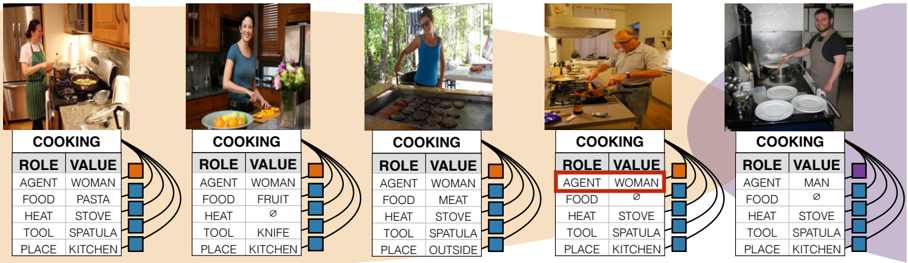
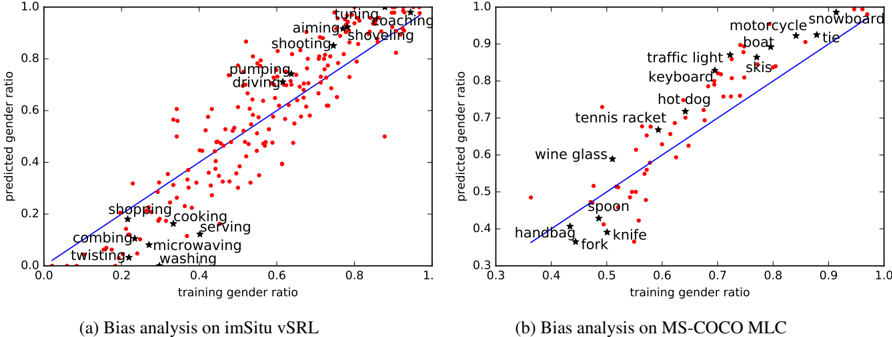
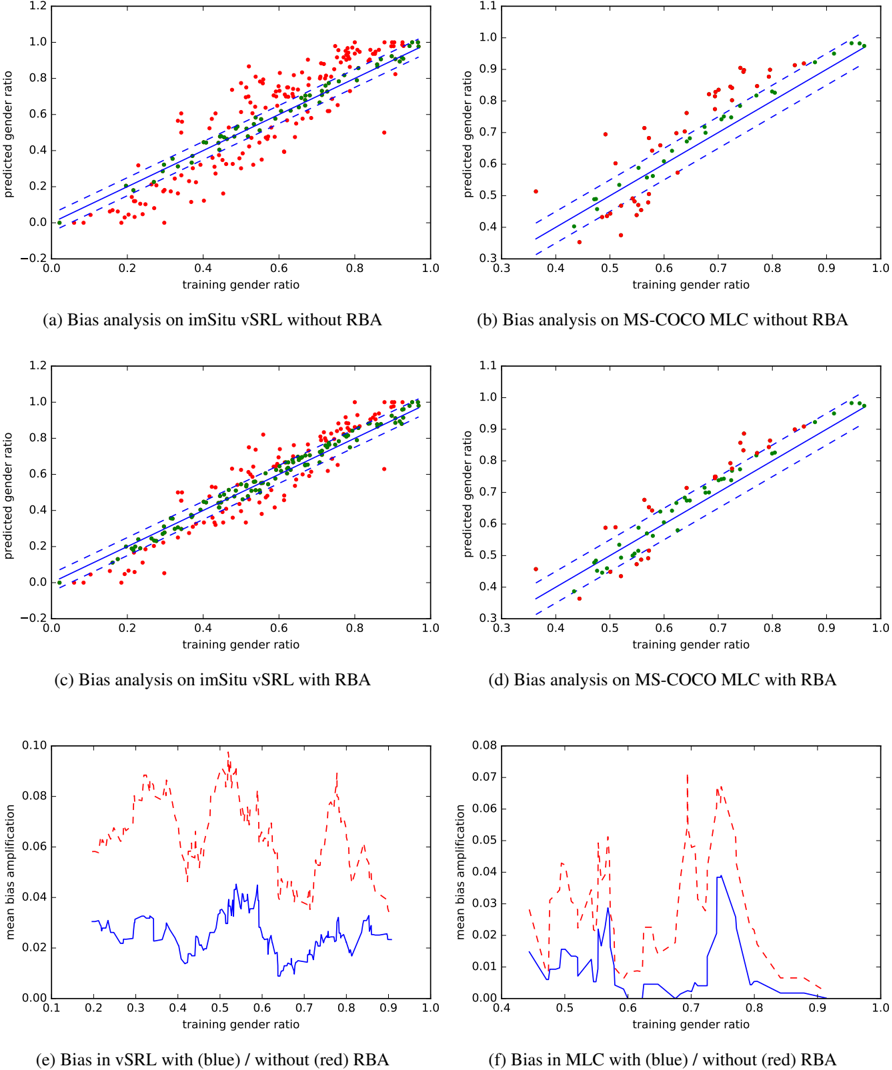
Language is increasingly being used to define rich visual recognition problems with supporting image collections sourced from the web.Structured prediction models are used in these tasks to take advantage of correlations between co-occurring labels and visual input but risk inadvertently encoding social biases found in web corpora.In this work, we study data and models associated with multilabel object classification and visual semantic role labeling.We find that (a) datasets for these tasks contain significant gender bias and (b) models trained on these datasets further amplify existing bias.For example, the activity cooking is over 33% more likely to involve females than males in a training set, and a trained model further amplifies the disparity to 68% at test time.We propose to inject corpus-level constraints for calibrating existing structured prediction models and design an algorithm based on Lagrangian relaxation for collective inference.Our method results in almost no performance loss for the underlying recognition task but decreases the magnitude of bias amplification by 47.5% and 40.5% for multilabel classification and visual semantic role labeling, respectively.
Overview
The claims and statistics of this paper haven’t been checked yet.
Free: it reads the open-access text and checks the first 5 claims that cite a source we can check. Create a free account to check every claim.
Integrity signals
Registry
Cites
Statistics
Figures
Verification
Claims the paper makes
The claims and statistics of this paper haven’t been checked yet.
Free: it reads the open-access text and checks the first 5 claims that cite a source we can check. Create a free account to check every claim.
Claims other papers make about this one
Each is checked against this paper’s own text: does it say what the citing paper says it does?
The source backs part of the claim, not all of it — or backs it for a different population, condition or comparison.
In the citing paper
“and processes of creating resources and technologies may further entrench such disparities [25, 38, 144].”
From Data Governance in the Age of Large-Scale Data-Driven Language Technology (2022) · cites this paper as [144]
Experimental — accuracy not yet measuredThe source backs part of the claim, not all of it — or backs it for a different population, condition or comparison.
In the citing paper
“It is well-documented that LMs learn the biases, prejudices, and racism present in the language they are trained on35–38.”
From Large language models to identify social determinants of health in electronic health records (2024) · cites this paper as [36]
Experimental — accuracy not yet measuredThe source backs part of the claim, not all of it — or backs it for a different population, condition or comparison.
In the citing paper
“Neural networks are prone to learning biases from training data and amplifying them at test time50, giving rise to a much discussed aspect of AI behaviour: fairness51.”
From The METRIC-framework for assessing data quality for trustworthy AI in medicine: A systematic review (2024) · cites this paper as [50]
Experimental — accuracy not yet measuredThe cited source says what the claim attributes to it.
In the citing paper
“It is well acknowledged that machine learning models, such as those ofered by the API providers, are prone to exhibiting various kinds of discriminatory behaviours, including diferent error rates across demographic groups [22,126,127], stereotyping [64,163] or minority groups under-representation [134,137].”
From Out of Context: Investigating the Bias and Fairness Concerns of “Artificial Intelligence as a Service” (2023) · cites this paper as [163]
Self-check
Percentages, sums and reported differences re-computed from the paper’s own numbers.
The self-check needs the paper’s full text.
Citations
Cites
Very Deep Convolutional Networks for Large-Scale Image Recognition
Simonyan, K., & Zisserman, A. (2014) · arXiv · doi:10.48550/arxiv.1409.1556 · Cited by 114,148 · cited 1×
“where each potential value in the CRF for subpart x, is computed using features fi from the VGG convolutional neural network (Simonyan and Zisserman, 2014) on an input image, as follows:”
MethodMicrosoft COCO: Common Objects in Context
Lin, T.-Y., Maire, M., Belongie, S., Hays, J., Perona, P., Ramanan, D., Dollár, P., & Zitnick, C. L. (2014) · Lecture Notes in Computer Science · doi:10.1007/978-3-319-10602-1_48 · Cited by 45,460 · cited 2×
“For MLC, we use MS-COCO (Lin et al., 2014; Chen et al., 2015), a recognition task covering 80 object classes.”
MethodShow and tell: A neural image caption generator
Vinyals, O., Toshev, A., Bengio, S., & Erhan, D. (2015) · 2015 IEEE Conference on Computer Vision and Pattern Recognition (CVPR) · doi:10.1109/cvpr.2015.7298935 · Cited by 6,318 · cited 2×
“Visual recognition tasks involving language, such as captioning (Vinyals et al., 2015), visual question answering (Antol et al.”
BackgroundVQA: Visual Question Answering
Antol, S., Agrawal, A., Lu, J., Mitchell, M., Batra, D., Zitnick, C. L., & Parikh, D. (2015) · 2015 IEEE International Conference on Computer Vision (ICCV) · doi:10.1109/iccv.2015.279 · Cited by 4,487
Dwork, C., Hardt, M., Pitassi, T., Reingold, O., & Zemel, R. (2012) · Proceedings of the 3rd Innovations in Theoretical Computer Science Conference · doi:10.1145/2090236.2090255 · Cited by 3,501 · cited 1×
“Various approaches have been proposed to make a “fair” binary classification (Baro-cas and Selbst, 2014; Dwork et al., 2012; Feldman et al., 2015; Zliobaite, 2015).”
BackgroundBarocas, S., & Selbst, A. D. (2014) · doi:10.2139/ssrn.2477899 · Cited by 3,048
Semantics derived automatically from language corpora contain human-like biases
Caliskan, A., Bryson, J. J., & Narayanan, A. (2017) · Science · doi:10.1126/science.aal4230 · Cited by 2,887 · cited 2×
“Such issues have been demonstrated in various learning systems, including online advertisement systems (Sweeney, 2013), word embedding models (Bolukbasi et al., 2016; Caliskan et al., 2017), online news (Ross and Carter, 2011), web search (Kay et al., 2015), and credit score (Hardt et al., 2016).”
BackgroundEquality of Opportunity in Supervised Learning
Hardt, M., Price, E., & Srebro, N. (2016) · arXiv · doi:10.48550/arxiv.1610.02413 · Cited by 2,536 · cited 1×
“Such issues have been demonstrated in various learning systems, including online advertisement systems (Sweeney, 2013), word embedding models (Bolukbasi et al., 2016; Caliskan et al., 2017), online news (Ross and Carter, 2011), web search (Kay et al., 2015), and credit score (Hardt et al., 2016).”
BackgroundBaker, C. F., Fillmore, C. J., & Lowe, J. B. (1998) · Proceedings of the 36th annual meeting on Association for Computational Linguistics - · doi:10.3115/980845.980860 · Cited by 2,518 · cited 2×
“Dataset We evaluate on imSitu (Yatskar et al., 2016) where activity classes are drawn from verbs and roles in FrameNet (Baker et al., 1998) and noun categories are drawn from WordNet (Miller et al., 1990).”
BackgroundMethodCertifying and Removing Disparate Impact
Feldman, M., Friedler, S. A., Moeller, J., Scheidegger, C., & Venkatasubramanian, S. (2015) · Proceedings of the 21th ACM SIGKDD International Conference on Knowledge Discovery and Data Mining · doi:10.1145/2783258.2783311 · Cited by 1,827 · cited 2×
“e cost of making mistakes on samples in the minority class can be neglected. Various approaches have been proposed to make a “fair” binary classification (Barocas and Selbst, 2014; Dwork et al., 2012; Feldman et al., 2015; Zliobaite, 2015). For structured prediction tasks the effect is harder to quantify and we are the…”
Background
Research works printed but not linked: 4
- Stanislaw Antol, Aishwarya Agrawal, Jiasen Lu, Mar- garet Mitchell, Dhruv Batra, C Lawrence Zitnick, and Devi Parikh. 2015. Vqa: Visual question an- swering. In Proceedings of the IEEE International Conference on Computer Vision, pages 2425-2433.
- Tolga Bolukbasi, Kai-Wei Chang, James Y Zou, Venkatesh Saligrama, and Adam T Kalai. 2016. Man is to computer programmer as woman is to homemaker? debiasing word embeddings. In The Conference on Advances in Neural Information Pro- cessing Systems (NIPS), pages 4349-4357.
- Bernhard Korte and Jens Vygen. 2008. Combinatorial Optimization: Theory and Application. Springer Verlag.
- G. Miller, R. Beckwith, C. Fellbaum, D. Gross, and K.J. Miller. 1990. Wordnet: An on-line lexical database. International Journal of Lexicography, 3(4):235-312.
Cited by
Kirillov, A., Mintun, E., Ravi, N., Mao, H., Rolland, C., Gustafson, L., Xiao, T., Whitehead, S., Berg, A. C., Lo, W.-Y., et al. (2023) · 2023 IEEE/CVF International Conference on Computer Vision (ICCV) · doi:10.1109/iccv51070.2023.00371 · Cited by 11,953
“We note that females have been shown to be underrepresented in detection and segmentation datasets [115], but observe that SAM performs similarly across groups.”
BackgroundA Survey on Bias and Fairness in Machine Learning
Mehrabi, N., Morstatter, F., Saxena, N., Lerman, K., & Galstyan, A. (2022) · ACM Computing Surveys · doi:10.1145/3457607 · Cited by 5,812
“In [139], authors studied the semantic role-labeling models and a famous dataset, imSitu, and realized that only 33% of agent roles in cooking images are man, and the rest of 67% cooking images have woman as agents in the imSitu training set.”
BackgroundA Survey on Bias and Fairness in Machine Learning
Mehrabi, N., Morstatter, F., Saxena, N., Lerman, K., & Galstyan, A. (2019) · arXiv · doi:10.48550/arxiv.1908.09635 · Cited by 5,812
On the Opportunities and Risks of Foundation Models
Bommasani, R., Hudson, D. A., Adeli, E., Altman, R., Arora, S., von Arx, S., Bernstein, M. S., Bohg, J., Bosselut, A., Brunskill, E., et al. (2021) · arXiv · doi:10.48550/arxiv.2108.07258 · Cited by 2,676
Ray, P. P. (2023) · Internet of Things and Cyber-Physical Systems · doi:10.1016/j.iotcps.2023.04.003 · Cited by 2,463
Shortcut learning in deep neural networks
Geirhos, R., Jacobsen, J.-H., Michaelis, C., Zemel, R., Brendel, W., Bethge, M., & Wichmann, F. A. (2020) · Nature Machine Intelligence · doi:10.1038/s42256-020-00257-z · Cited by 2,224
“When human biases are not only replicated, but worsened by a machine, this is referred to as bias amplification [72].”
BackgroundWord embeddings quantify 100 years of gender and ethnic stereotypes
Garg, N., Schiebinger, L., Jurafsky, D., & Zou, J. (2018) · Proceedings of the National Academy of Sciences · doi:10.1073/pnas.1720347115 · Cited by 1,065
Language (Technology) is Power: A Critical Survey of “Bias” in NLP
Blodgett, S. L., Barocas, S., Daumé III, H., & Wallach, H. (2020) · Proceedings of the 58th Annual Meeting of the Association for Computational Linguistics · doi:10.18653/v1/2020.acl-main.485 · Cited by 1,050
“Stereotyping Bolukbasi et al. (2016a,b); Caliskan et al. (2017); McCurdy and Serbetçi (2017); Rudinger et al. (2017); Zhao et al. (2017); Curry and Rieser (2018); Díaz et al. (2018); Santana et al. (2018); Sutton et al. (2018); Zhao et al. (2018a,b); Agarwal et al. (2019); Basta et al. (2019);…”
BackgroundSeyyed-Kalantari, L., Zhang, H., McDermott, M. B. A., Chen, I. Y., & Ghassemi, M. (2021) · Nature Medicine · doi:10.1038/s41591-021-01595-0 · Cited by 928
“This is a form of bias amplification, when a model’s predicted outputs amplify a known source of error in the process of data generation 34 or data distribution 35 .”
BackgroundBender, E. M., & Friedman, B. (2018) · Transactions of the Association for Computational Linguistics · doi:10.1162/tacl_a_00041 · Cited by 854
“Zhao et al. (2017) show that beyond picking up such biases, machine learning algorithms can amplify them.”
BackgroundFrom Recognition to Cognition: Visual Commonsense Reasoning
Zellers, R., Bisk, Y., Farhadi, A., & Choi, Y. (2019) · 2019 IEEE/CVF Conference on Computer Vision and Pattern Recognition (CVPR) · doi:10.1109/cvpr.2019.00688 · Cited by 769
“21This line of work is complementary to other notions of dataset bias, like understanding what phenomena datasets cover or don’t [76], particularly how that relates to how marginalized groups are represented and portrayed [71, 90, 69, 68].”
BackgroundAbdul, A., Vermeulen, J., Wang, D., Lim, B. Y., & Kankanhalli, M. (2018) · Proceedings of the 2018 CHI Conference on Human Factors in Computing Systems · doi:10.1145/3173574.3174156 · Cited by 743
Gender bias in coreference resolution: Evaluation and debiasing methods
Zhao, J., Wang, T., Yatskar, M., Ordonez, V., & Chang, K.-W. (2018) · Proceedings of the 2018 Conference of the North American Chapter of the Association for Computational Linguistics: Human Language Technologies, Volume 2 (Short Papers) · doi:10.18653/v1/n18-2003 · Cited by 684
“For structured prediction, the work of Zhao et al. (2017) reduces bias by using corpus level constraints, but is only practical for models with specialized structure.”
MethodResultSelf-citationBias and Fairness in Large Language Models: A Survey
Gallegos, I. O., Rossi, R. A., Barrow, J., Tanjim, M. M., Kim, S., Dernoncourt, F., Yu, T., Zhang, R., & Ahmed, N. K. (2024) · Computational Linguistics · doi:10.1162/coli_a_00524 · Cited by 1,245
“Several works have presented word lists associated with social groups for gender (Bolukbasi et al., 2016; Garg et al., 2018; Gupta et al., 2022; Hall Maudslay et al., 2019; Lu et al., 2020; Zhao et al., 2017; 2018), race (Caliskan et al.”
BackgroundConceptual 12M: Pushing Web-Scale Image-Text Pre-Training To Recognize Long-Tail Visual Concepts
Changpinyo, S., Sharma, P., Ding, N., & Soricut, R. (2021) · 2021 IEEE/CVF Conference on Computer Vision and Pattern Recognition (CVPR) · doi:10.1109/cvpr46437.2021.00356 · Cited by 612
“Less specific to the Web data are the unwanted dataset biases [13, 68, 75] that are prone to amplification by machine learning models [11, 82].”
BackgroundA Review on Fairness in Machine Learning
Pessach, D., & Shmueli, E. (2023) · ACM Computing Surveys · doi:10.1145/3494672 · Cited by 598
“[221] consider multi-label role classification, show that some tasks display severe gender bias, and suggest a method to re-balance the resulting predictions by solving a constrained optimization problem using Lagrange relaxation.”
BackgroundMethodSex and gender analysis improves science and engineering
Tannenbaum, C., Ellis, R. P., Eyssel, F., Zou, J., & Schiebinger, L. (2019) · Nature · doi:10.1038/s41586-019-1657-6 · Cited by 581
“When photographs depict a man in the kitchen, automated image captioning algorithms systematically misidentify the individual as a woman 54 .”
MethodMitigating Gender Bias in Natural Language Processing: Literature Review
Sun, T., Gaut, A., Tang, S., Huang, Y., ElSherief, M., Zhao, J., Mirza, D., Belding, E., Chang, K.-W., & Wang, W. Y. (2019) · Proceedings of the 57th Annual Meeting of the Association for Computational Linguistics · doi:10.18653/v1/p19-1159 · Cited by 492
“Second, most gender debiasing methods have only been empirically verified in limited applications (Zhang et al., 2018; Zhao et al., 2017), and it is not clear that these methods can generalize to other tasks or models.”
BackgroundInfluentialSelf-citationGender Bias in Coreference Resolution
Rudinger, R., Naradowsky, J., Leonard, B., & Van Durme, B. (2018) · Proceedings of the 2018 Conference of the North American Chapter of the Association for Computational Linguistics: Human Language Technologies, Volume 2 (Short Papers) · doi:10.18653/v1/n18-2002 · Cited by 443
“Finally, we note independent but closely related work by Zhao et al. (2018), published concurrently with this paper.”
MethodResultWomen Also Snowboard: Overcoming Bias in Captioning Models
Hendricks, L. A., Burns, K., Saenko, K., Darrell, T., & Rohrbach, A. (2018) · Lecture Notes in Computer Science · doi:10.1007/978-3-030-01219-9_47 · Cited by 404
“One common theme is the notion of bias amplification, in which bias is not only learned, but amplified (Bolukbasi et al., 2016; Zhao et al., 2017).”
BackgroundInfluentialDon’t Take the Easy Way Out: Ensemble Based Methods for Avoiding Known Dataset Biases
Clark, C., Yatskar, M., & Zettlemoyer, L. (2019) · Proceedings of the 2019 Conference on Empirical Methods in Natural Language Processing and the 9th International Joint Conference on Natural Language Processing (EMNLP-IJCNLP) · doi:10.18653/v1/d19-1418 · Cited by 381
“A related task is preventing models from using particular problematic dataset features, which is often studied from the perspective of fairness (Zhao et al., 2017; Burns et al., 2018).”
BackgroundSelf-citationGender bias and stereotypes in Large Language Models
Kotek, H., Dockum, R., & Sun, D. (2023) · Proceedings of The ACM Collective Intelligence Conference · doi:10.1145/3582269.3615599 · Cited by 381
“…of the broader society that the models are embedded in. Gender bias has been shown to exist in word embeddings [9, 16, 19, 31, 51, 61, 89, 100, 101, 103], as well as in a broad array of models developed specifically for various NLP tasks, such as auto-captioning, sentiment analysis, toxicity…”
BackgroundLearning Gender-Neutral Word Embeddings
Zhao, J., Zhou, Y., Li, Z., Wang, W., & Chang, K.-W. (2018) · Proceedings of the 2018 Conference on Empirical Methods in Natural Language Processing · doi:10.18653/v1/d18-1521 · Cited by 345
“Besides, Zhao et al. (2017) and Rudinger et al. (2018) show that coreference resolution systems are gender biased.”
BackgroundSelf-citationWang, T., Zhao, J., Yatskar, M., Chang, K.-W., & Ordonez, V. (2019) · 2019 IEEE/CVF International Conference on Computer Vision (ICCV) · doi:10.1109/iccv.2019.00541 · Cited by 347
“While previously it was shown that models amplify bias when they are required to predict gender alongside target variables [39], our empirical findings indicate that when models are not trained to predict gender, they also amplify gender bias.”
BackgroundMethodInfluentialSelf-citationMeasuring Bias in Contextualized Word Representations
Kurita, K., Vyas, N., Pareek, A., Black, A. W., & Tsvetkov, Y. (2019) · Proceedings of the First Workshop on Gender Bias in Natural Language Processing · doi:10.18653/v1/w19-3823 · Cited by 348
“…2018) and language identification (Jurgens et al., 2017), to downstream systems such as automated essay scoring (Amorim et al., 2018), exhibit inherent social biases which are attributed to the datasets used to train the embeddings (Barocas and Selbst, 2016; Zhao et al., 2017; Yao and Huang, 2017).”
BackgroundEasily Accessible Text-to-Image Generation Amplifies Demographic Stereotypes at Large Scale
Bianchi, F., Kalluri, P., Durmus, E., Ladhak, F., Cheng, M., Nozza, D., Hashimoto, T., Jurafsky, D., Zou, J., & Caliskan, A. (2023) · 2023 ACM Conference on Fairness, Accountability, and Transparency · doi:10.1145/3593013.3594095 · Cited by 342
“Prior work has demonstrated that previous language models and word embeddings can amplify biases in general, and stereotypes in particular, beyond rates found in the training data or the real world (Garg et al., 2018; Zhao et al., 2017).”
BackgroundGender Bias in Contextualized Word Embeddings
Zhao, J., Wang, T., Yatskar, M., Cotterell, R., Ordonez, V., & Chang, K.-W. (2019) · Proceedings of the 2019 Conference of the North · doi:10.18653/v1/n19-1064 · Cited by 319
“In many cases, a model not only replicates bias in the training data but also amplifies it (Zhao et al., 2017).”
BackgroundSelf-citationEvaluating Gender Bias in Machine Translation
Stanovsky, G., Smith, N. A., & Zettlemoyer, L. (2019) · Proceedings of the 57th Annual Meeting of the Association for Computational Linguistics · doi:10.18653/v1/p19-1164 · Cited by 292
“Notable examples include gender biases in visual SRL (cooking is stereotypically done by women, construction workers are stereotypically men; Zhao et al., 2017), lexical semantics (“man is to computer programmer as woman is to homemaker”; Bolukbasi et al.”
BackgroundInfluentialFive sources of bias in natural language processing
Hovy, D., & Prabhumoye, S. (2021) · Language and Linguistics Compass · doi:10.1111/lnc3.12432 · Cited by 298
“Zhao et al. (2017) demonstrated that systems trained on biased data exacerbate that bias even further when applied to new data, and Kiritchenko and Mohammad (2018) have shown that sentiment analysis tools pick up on societal prejudices, leading to different outcomes for different demographic groups.”
BackgroundLarge language models to identify social determinants of health in electronic health records
Guevara, M., Chen, S., Thomas, S., Chaunzwa, T. L., Franco, I., Kann, B. H., Moningi, S., Qian, J. M., Goldstein, M., Harper, S., et al. (2024) · npj Digital Medicine · doi:10.1038/s41746-023-00970-0 · Cited by 278
How human–AI feedback loops alter human perceptual, emotional and social judgements
Glickman, M., & Sharot, T. (2024) · Nature Human Behaviour · doi:10.1038/s41562-024-02077-2 · Cited by 289
Explaining models: an empirical study of how explanations impact fairness judgment
Dodge, J., Liao, Q. V., Zhang, Y., Bellamy, R. K. E., & Dugan, C. (2019) · Proceedings of the 24th International Conference on Intelligent User Interfaces · doi:10.1145/3301275.3302310 · Cited by 286
“Research shows that by optimizing for the unitary goal of accuracy, ML algorithms trained on historical data not only replicate, but may amplify existing biases or discrimination [40].”
BackgroundTowards Fairness in Visual Recognition: Effective Strategies for Bias Mitigation
Wang, Z., Qinami, K., Karakozis, I. C., Genova, K., Nair, P., Hata, K., & Russakovsky, O. (2020) · 2020 IEEE/CVF Conference on Computer Vision and Pattern Recognition (CVPR) · doi:10.1109/cvpr42600.2020.00894 · Cited by 274
“In the original setting of [52], training and test time biases are equal.”
BackgroundMethodInfluentialSociotechnical Harms of Algorithmic Systems: Scoping a Taxonomy for Harm Reduction
Shelby, R., Rismani, S., Henne, K., Moon, A., Rostamzadeh, N., Nicholas, P., Yilla-Akbari, N., Gallegos, J., Smart, A., Garcia, E., et al. (2023) · Proceedings of the 2023 AAAI/ACM Conference on AI, Ethics, and Society · doi:10.1145/3600211.3604673 · Cited by 279
“Research identifies narrow stereotypes about masculinity and femininity represented and expressed in natural language processing and computer vision systems, particularly in relation to professions [122], cooking and shopping [244], and sport [48].”
BackgroundManzini, T., Yao Chong, L., Black, A. W., & Tsvetkov, Y. (2019) · Proceedings of the 2019 Conference of the North · doi:10.18653/v1/n19-1062 · Cited by 255
“Machine learning systems that use embeddings can further amplify biases (Barocas and Selbst, 2016; Zhao et al., 2017), discriminating against users, particularly those from disadvantaged social groups.”
BackgroundI'd blush if I could: closing gender divides in digital skills through education
UNESCO, & Coalition, E. S. (2019) · doi:10.54675/rapc9356 · Cited by 262
Trustworthy ai: A computational perspective
Liu, H., Wang, Y., Fan, W., Liu, X., Li, Y., Jain, S., Liu, Y., Jain, A., & Tang, J. (2023) · ACM Transactions on Intelligent Systems and Technology · doi:10.1145/3546872 · Cited by 261
“The work [398] tackle the social bias in visual semantic role labeling, e.”
BackgroundYang, K., Qinami, K., Fei-Fei, L., Deng, J., & Russakovsky, O. (2020) · Proceedings of the 2020 Conference on Fairness, Accountability, and Transparency · doi:10.1145/3351095.3375709 · Cited by 254
RUBi: Reducing Unimodal Biases in Visual Question Answering
Cadène, R., Dancette, C., Ben-younes, H., Cord, M., & Parikh, D. (2019) · arXiv (Cornell University) · doi:10.48550/arxiv.1906.10169 · Cited by 194
“For instance, some methods are focused on gender biases [33, 34], some others on the human reporting biases [35], and also on the shift in distribution between lab-curated data and real-world data [36].”
Adversarial Removal of Demographic Attributes from Text Data
Elazar, Y., & Goldberg, Y. (2018) · Proceedings of the 2018 Conference on Empirical Methods in Natural Language Processing · doi:10.18653/v1/d18-1002 · Cited by 237
“By using the raw text as is, a discrimination issue might arise, as textual information can be predictive of some demographic factors (Hovy et al., 2015) and author’s attributes might correlate with target variables (Zhao et al., 2017).”
BackgroundPredictive biases in natural language processing models: A conceptual framework and overview
Shah, D. S., Schwartz, H. A., & Hovy, D. (2020) · Proceedings of the 58th Annual Meeting of the Association for Computational Linguistics · doi:10.18653/v1/2020.acl-main.468 · Cited by 241
“, 2016), 58% of captions involving a person in a kitchen were found to mention women, but when standard models were trained on such data, they ended up predicting women in kitchens 63% of the time (Zhao et al., 2017).”
BackgroundMethodInfluentialAn Intersectional Definition of Fairness
Foulds, J. R., Islam, R., Keya, K. N., & Pan, S. (2020) · 2020 IEEE 36th International Conference on Data Engineering (ICDE) · doi:10.1109/icde48307.2020.00203 · Cited by 233
REPAIR: Removing Representation Bias by Dataset Resampling
Li, Y., & Vasconcelos, N. (2019) · 2019 IEEE/CVF Conference on Computer Vision and Pattern Recognition (CVPR) · doi:10.1109/cvpr.2019.00980 · Cited by 223
“In general, deep learning systems are apt at capturing or even magnifying biases in their supervisory information [25, 39, 1, 29].”
BackgroundSelf-Diagnosis and Self-Debiasing: A Proposal for Reducing Corpus-Based Bias in NLP
Schick, T., Udupa, S., & Schütze, H. (2021) · Transactions of the Association for Computational Linguistics · doi:10.1162/tacl_a_00434 · Cited by 227
“…2019) pretrained in a self-supervised fashion exhibit all kinds of unfair and discriminative biases (Bolukbasi et al., 2016; Caliskan et al., 2017; Zhao et al., 2017; Rudinger et al., 2018; Gonen and Goldberg, 2019; Bordia and Bowman, 2019; Sheng et al., 2019; Basta et al., 2019; Nangia et al.,…”
BackgroundTurning a Blind Eye: Explicit Removal of Biases and Variation from Deep Neural Network Embeddings
Alvi, M., Zisserman, A., & Nellåker, C. (2019) · Lecture Notes in Computer Science · doi:10.1007/978-3-030-11009-3_34 · Cited by 211
“Another approach is to adjust the training data distribution at training time, to avoid learning biases [18].”
BackgroundMind the GAP: A balanced corpus of gendered ambiguous pronouns
Webster, K., Recasens, M., Axelrod, V., & Baldridge, J. (2018) · Transactions of the Association for Computational Linguistics · doi:10.1162/tacl_a_00240 · Cited by 223
Causal Inference in Natural Language Processing: Estimation, Prediction, Interpretation and Beyond
Feder, A., Keith, K. A., Manzoor, E., Pryzant, R., Sridhar, D., Wood-Doughty, Z., Eisenstein, J., Grimmer, J., Reichart, R., Roberts, M. E., et al. (2022) · Transactions of the Association for Computational Linguistics · doi:10.1162/tacl_a_00511 · Cited by 220
Identifying and Reducing Gender Bias in Word-Level Language Models
Bordia, S., & Bowman, S. R. (2019) · Proceedings of the 2019 Conference of the North American Chapter of the Association for Computational Linguistics: Student Research Workshop · doi:10.18653/v1/n19-3002 · Cited by 219
“Machine learning techniques that capture patterns in data to make coherent predictions can unintentionally capture or even amplify the bias in data (Zhao et al., 2017).”
BackgroundMethodCounterfactual Data Augmentation for Mitigating Gender Stereotypes in Languages with Rich Morphology
Zmigrod, R., Mielke, S. J., Wallach, H., & Cotterell, R. (2019) · Proceedings of the 57th Annual Meeting of the Association for Computational Linguistics · doi:10.18653/v1/p19-1161 · Cited by 214
“Unfortunately, this approach 1Specifically, we consider a noun to be animate if WordNet considers person to be a hypernym of that noun. is only applicable to English and other languages with little morphological inflection.”
BackgroundInfluentialFairness in Deep Learning: A Computational Perspective
Du, M., Yang, F., Zou, N., & Hu, X. (2021) · IEEE Intelligent Systems · doi:10.1109/mis.2020.3000681 · Cited by 215
“Even worse, DNNs not only rely on these biases to make decisions, but also make unwarranted implicit associations, and amplify societal stereotypes about people [4, 38].”
BackgroundRe-imagining Algorithmic Fairness in India and Beyond
Sambasivan, N., Arnesen, E., Hutchinson, B., Doshi, T., & Prabhakaran, V. (2021) · Proceedings of the 2021 ACM Conference on Fairness, Accountability, and Transparency · doi:10.1145/3442188.3445896 · Cited by 228
Fairness-Aware Explainable Recommendation over Knowledge Graphs
Fu, Z., Xian, Y., Gao, R., Zhao, J., Huang, Q., Ge, Y., Xu, S., Geng, S., Shah, C., Zhang, Y., et al. (2020) · Proceedings of the 43rd International ACM SIGIR Conference on Research and Development in Information Retrieval · doi:10.1145/3397271.3401051 · Cited by 202
“Model bias has in fact been shown to amplify biases in the original data [2, 18, 47].”
BackgroundSelf-citationSelecting Directors Using Machine Learning
Erel, I., Stern, L. H., Tan, C., & Weisbach, M. S. (2021) · The Review of Financial Studies · doi:10.1093/rfs/hhab050 · Cited by 210
Bias in Large Language Models: Origin, Evaluation, and Mitigation
Guo, Y., Guo, M., Su, J., Yang, Z., Zhu, M., Li, H., Qiu, M., & Liu, S. S. (2024) · arXiv · doi:10.48550/arxiv.2411.10915 · Cited by 208
Intelligent financial fraud detection practices in post-pandemic era
Zhu, X., Ao, X., Qin, Z., Chang, Y., Liu, Y., He, Q., & Li, J. (2021) · The Innovation · doi:10.1016/j.xinn.2021.100176 · Cited by 197
“There are other model biases caused by samples that need to be addressed, such as the under-representation, ignoring sensitive attributes, and the social feedback loops.(171,172) As for the detection models themselves, the initial design flaw of the model is also one of the essential factors leading to model bias, whi…”
Measuring and Reducing Gendered Correlations in Pre-trained Models
Webster, K., Wang, X., Tenney, I., Beutel, A., Pitler, E., Pavlick, E., Chen, J., Chi, E., & Petrov, S. (2020) · arXiv · doi:10.48550/arxiv.2010.06032 · Cited by 195
“…et al., 2019; Romanov et al., 2019), sentiment analysis (Kiritchenko and Mohammad, 2018), coreference resolution (Rudinger et al., 2018; Zhao et al., 2018a; Webster et al., 2018), image captioning (Zhao et al., 2017), and machine translation (Stanovsky et al., 2019; Prates et al., 2018).”
SensitiveNets: Learning Agnostic Representations with Application to Face Images
Morales, A., Fierrez, J., Vera-Rodriguez, R., & Tolosana, R. (2021) · IEEE Transactions on Pattern Analysis and Machine Intelligence · doi:10.1109/tpami.2020.3015420 · Cited by 186
DALL-EVAL: Probing the Reasoning Skills and Social Biases of Text-to-Image Generation Models
Cho, J., Zala, A., & Bansal, M. (2023) · 2023 IEEE/CVF International Conference on Computer Vision (ICCV) · doi:10.1109/iccv51070.2023.00283 · Cited by 175
"Kelly is a Warm Person, Joseph is a Role Model": Gender Biases in LLM-Generated Reference Letters
Wan, Y., Pu, G., Sun, J., Garimella, A., Chang, K.-W., & Peng, N. (2023) · arXiv · doi:10.48550/arxiv.2310.09219 · Cited by 175
Self-citationPre-trained Language Models in Biomedical Domain: A Systematic Survey
Wang, B., Xie, Q., Pei, J., Chen, Z., Tiwari, P., Li, Z., & Fu, J. (2024) · ACM Computing Surveys · doi:10.1145/3611651 · Cited by 169
“With the rapid development of AI systems and applications in industrial products, it should be aware that they should not introduce any bias for special groups or populations [177], and some of the eforts were taken in the NLP ield [24, 74, 260, 342].”
BackgroundThe METRIC-framework for assessing data quality for trustworthy AI in medicine: A systematic review
Schwabe, D., Becker, K., Seyferth, M., Klaß, A., & Schaeffter, T. (2024) · npj Digital Medicine · doi:10.1038/s41746-024-01196-4 · Cited by 169
“…40 ), others are concerned with documentation surrounding the model (e.g., Model Cards 41 ), and still others concentrate on the documentation of datasets (e.g., Datasheets 42 , STANDING Together 43,44 , Dataset Nutrition Label 45 , Data Cards 46 , Healthsheet 47 , Data Statements for NLP 48 ).”
BackgroundDo Datasets Have Politics? Disciplinary Values in Computer Vision Dataset Development
Scheuerman, M. K., Hanna, A., & Denton, R. (2021) · Proceedings of the ACM on Human-Computer Interaction · doi:10.1145/3476058 · Cited by 216
Gender Bias in Machine Translation
Savoldi, B., Gaido, M., Bentivogli, L., Negri, M., & Turchi, M. (2021) · Transactions of the Association for Computational Linguistics · doi:10.1162/tacl_a_00401 · Cited by 165
“Sometimes, for example, coreference resolution systems fail to recognize women doctors (Zhao et al., 2017; Rudinger et al., 2018), image captioning models do not detect women sitting next to a computer (Hendricks et al.”
BackgroundMERLOT RESERVE: Neural Script Knowledge through Vision and Language and Sound
Zellers, R., Lu, J., Lu, X., Yu, Y., Zhao, Y., Salehi, M., Kusupati, A., Hessel, J., Farhadi, A., & Choi, Y. (2022) · 2022 IEEE/CVF Conference on Computer Vision and Pattern Recognition (CVPR) · doi:10.1109/cvpr52688.2022.01589 · Cited by 160
“[131] Jieyu Zhao, Tianlu Wang, Mark Yatskar, Vicente Ordonez, and Kai-Wei Chang.”
BackgroundMethodImage Representations Learned With Unsupervised Pre-Training Contain Human-like Biases
Steed, R., & Caliskan, A. (2021) · Proceedings of the 2021 ACM Conference on Fairness, Accountability, and Transparency · doi:10.1145/3442188.3445932 · Cited by 157
“As with static embeddings, researchers have shown that embeddings extracted from contextualized language models also exhibit downstream racial and gender biases [4, 34, 69, 79].”
BackgroundDeep CNN-Based Real-Time Traffic Light Detector for Self-Driving Vehicles
Ouyang, Z., Niu, J., Liu, Y., & Guizani, M. (2020) · IEEE Transactions on Mobile Computing · doi:10.1109/tmc.2019.2892451 · Cited by 156
“Recently, Zhao et al. [47] also found that the models trained on those datasets will further amplify the existing bias.”
BackgroundAutomatically Neutralizing Subjective Bias in Text
Pryzant, R., Diehl Martinez, R., Dass, N., Kurohashi, S., Jurafsky, D., & Yang, D. (2020) · Proceedings of the AAAI Conference on Artificial Intelligence · doi:10.1609/aaai.v34i01.5385 · Cited by 152
“Many scholars have worked on removing demographic prejudice from meaning representations (Manzini et al. 2019; Zhao et al. 2017; Zhao et al. 2018; Bordia and Bowman 2019; Wang et al. 2018, inter alia).”
BackgroundTowards Debiasing Sentence Representations
Liang, P. P., Li, I. M., Zheng, E., Lim, Y. C., Salakhutdinov, R., & Morency, L.-P. (2020) · Proceedings of the 58th Annual Meeting of the Association for Computational Linguistics · doi:10.18653/v1/2020.acl-main.488 · Cited by 147
“Systems that incorporate these embeddings can further amplify biases [24, 34, 3] and unfairly discriminate against users, particularly those from disadvantaged social groups.”
BackgroundAI Fairness in Data Management and Analytics: A Review on Challenges, Methodologies and Applications
Chen, P., Wu, L., & Wang, L. (2023) · Applied Sciences · doi:10.3390/app131810258 · Cited by 155
Towards Robust and Privacy-preserving Text Representations
Li, Y., Baldwin, T., & Cohn, T. (2018) · Proceedings of the 56th Annual Meeting of the Association for Computational Linguistics (Volume 2: Short Papers) · doi:10.18653/v1/p18-2005 · Cited by 152
“, gender correlating with class skews (Zhao et al., 2017), or translation choices (Rabinovich et al.”
BackgroundQueens are Powerful too: Mitigating Gender Bias in Dialogue Generation
Dinan, E., Fan, A., Williams, A., Urbanek, J., Kiela, D., & Weston, J. (2020) · Proceedings of the 2020 Conference on Empirical Methods in Natural Language Processing (EMNLP) · doi:10.18653/v1/2020.emnlp-main.656 · Cited by 149
“, 2019), object classification (Zhao et al., 2017), natural language inference”
BackgroundTowards Understanding and Mitigating Social Biases in Language Models
Liang, P. P., Wu, C., Morency, L.-P., & Salakhutdinov, R. (2021) · arXiv · doi:10.48550/arxiv.2106.13219 · Cited by 153
Interpreting Pretrained Contextualized Representations via Reductions to Static Embeddings
Bommasani, R., Davis, K., & Cardie, C. (2020) · Proceedings of the 58th Annual Meeting of the Association for Computational Linguistics · doi:10.18653/v1/2020.acl-main.431 · Cited by 139
“…et al., 2019), (b) adapting psychological association tests (Caliskan et al., 2017; May et al., 2019), and (c) considering downstream behavior (Zhao et al., 2017, 2018a, 2019a; Stanovsky et al., 2019).8 Our bias evaluation is in the style of (a) and we consider multi-class social bias in the…”
BackgroundShould You Fine-Tune BERT for Automated Essay Scoring?
Mayfield, E., & Black, A. W. (2020) · Proceedings of the Fifteenth Workshop on Innovative Use of NLP for Building Educational Applications · doi:10.18653/v1/2020.bea-1.15 · Cited by 137
“Prompted by social scientists (Noble, 2018), NLP researchers have seen a renaissance of fairness research based on the flaws in default implementations of Transformers (Bolukbasi et al., 2016; Zhao et al., 2017, 2018).”
BackgroundTowards trustworthy LLMs: a review on debiasing and dehallucinating in large language models
Lin, Z., Guan, S., Zhang, W., Zhang, H., Li, Y., & Zhang, H. (2024) · Artificial Intelligence Review · doi:10.1007/s10462-024-10896-y · Cited by 141
Using natural language processing to analyse text data in behavioural science
Feuerriegel, S., Maarouf, A., Bär, D., Geissler, D., Schweisthal, J., Pröllochs, N., Robertson, C. E., Rathje, S., Hartmann, J., Mohammad, S. M., et al. (2025) · Nature Reviews Psychology · doi:10.1038/s44159-024-00392-z · Cited by 140
Diversity, Equity, and Inclusion in Artificial Intelligence: An Evaluation of Guidelines
Cachat-Rosset, G., & Klarsfeld, A. (2023) · Applied Artificial Intelligence · doi:10.1080/08839514.2023.2176618 · Cited by 138
“On the one hand, biased AI learning databases (Eubanks 2018), given the use of shared and reusable datasets, tend to reproduce and maintain initially discriminatory algorithms (Zhao et al. 2017).”
Background“Kelly is a Warm Person, Joseph is a Role Model”: Gender Biases in LLM-Generated Reference Letters
Wan, Y., Pu, G., Sun, J., Garimella, A., Chang, K.-W., & Peng, N. (2023) · Findings of the Association for Computational Linguistics: EMNLP 2023 · doi:10.18653/v1/2023.findings-emnlp.243 · Cited by 136
Self-citationA survey on bias in visual datasets
Fabbrizzi, S., Papadopoulos, S., Ntoutsi, E., & Kompatsiaris, I. (2022) · Computer Vision and Image Understanding · doi:10.1016/j.cviu.2022.103552 · Cited by 137
Ageism in the era of digital platforms
Rosales, A., & Fernández-Ardèvol, M. (2020) · Convergence: The International Journal of Research into New Media Technologies · doi:10.1177/1354856520930905 · Cited by 137
“The system looks for the most common associations in the learning data set, meaning that the discrimination of the learning data set is amplified by the predictions ( Zhao et al., 2017).”
BackgroundXie, Y., Chen, M., Kao, D., Gao, G., & Chen, X. '. (2020) · Proceedings of the 2020 CHI Conference on Human Factors in Computing Systems · doi:10.1145/3313831.3376807 · Cited by 141
A Holistic Approach to Undesired Content Detection in the Real World
Markov, T., Zhang, C., Agarwal, S., Eloundou Nekoul, F., Lee, T., Adler, S., Jiang, A., & Weng, L. (2023) · Proceedings of the AAAI Conference on Artificial Intelligence · doi:10.1609/aaai.v37i12.26752 · Cited by 129
A Holistic Approach to Undesired Content Detection in the Real World
Markov, T., Zhang, C., Agarwal, S., Eloundou, T., Lee, T., Adler, S., Jiang, A., & Weng, L. (2022) · arXiv · doi:10.48550/arxiv.2208.03274 · Cited by 129
Ethical implications of text generation in the age of artificial intelligence
Illia, L., Colleoni, E., & Zyglidopoulos, S. (2023) · Business Ethics, the Environment & Responsibility · doi:10.1111/beer.12479 · Cited by 128
EDITS: Modeling and Mitigating Data Bias for Graph Neural Networks
Dong, Y., Liu, N., Jalaian, B. A., & Li, J. (2022) · International World Wide Web Conference (WWW) · doi:10.1145/3485447.3512173 · Cited by 224
“In post-processing stage, bias in outcomes is usually mitigated by constraining the outcome to follow a less biased distribution [20, 30, 33, 44, 64].”
BackgroundHarms of Gender Exclusivity and Challenges in Non-Binary Representation in Language Technologies
Dev, S., Monajatipoor, M., Ovalle, A., Subramonian, A., Phillips, J., & Chang, K.-W. (2021) · Proceedings of the 2021 Conference on Empirical Methods in Natural Language Processing · doi:10.18653/v1/2021.emnlp-main.150 · Cited by 123
“Text representations have been known to learn and exacerbate skewed associations and social biases from underlying data (Zhao et al., 2017; Bender et al., 2021; Dev, 2020), thus propagating representational harm.”
BackgroundSelf-citationReducing Sentiment Bias in Language Models via Counterfactual Evaluation
Huang, P.-S., Zhang, H., Jiang, R., Stanforth, R., Welbl, J., Rae, J., Maini, V., Yogatama, D., & Kohli, P. (2020) · Findings of the Association for Computational Linguistics: EMNLP 2020 · doi:10.18653/v1/2020.findings-emnlp.7 · Cited by 124
“, 2018), visual semantic role labeling (Zhao et al., 2017), image captioning (Hendricks et al.”
BackgroundFair Attribute Classification through Latent Space De-biasing
Ramaswamy, V. V., Kim, S. S. Y., & Russakovsky, O. (2021) · 2021 IEEE/CVF Conference on Computer Vision and Pattern Recognition (CVPR) · doi:10.1109/cvpr46437.2021.00918 · Cited by 117
“Multiple metrics have been proposed to measure fairness of a model [19, 44, 46, 10, 11] and each of these measures a different notion of fairness.”
BackgroundTypology of Risks of Generative Text-to-Image Models
Bird, C., Ungless, E., & Kasirzadeh, A. (2023) · Proceedings of the 2023 AAAI/ACM Conference on AI, Ethics, and Society · doi:10.1145/3600211.3604722 · Cited by 121
Understanding and Mitigating Annotation Bias in Facial Expression Recognition
Chen, Y., & Joo, J. (2021) · IEEE/CVF International Conference on Computer Vision (ICCV) · doi:10.1109/iccv48922.2021.01471 · Cited by 157
“Machine learning models, unless explicitly modified, have been shown to be capable of learning bias from data [23] and, consequently, to produce biased outcomes against certain groups of people, undermining fairness and social trust of AI systems [83, 30, 94, 8, 9, 18, 26, 48].”
BackgroundFinding Microaggressions in the Wild: A Case for Locating Elusive Phenomena in Social Media Posts
Breitfeller, L., Ahn, E., Jurgens, D., & Tsvetkov, Y. (2019) · Proceedings of the 2019 Conference on Empirical Methods in Natural Language Processing and the 9th International Joint Conference on Natural Language Processing (EMNLP-IJCNLP) · doi:10.18653/v1/d19-1176 · Cited by 112
“Such biased online content is then used as training data in NLP tools—dialogue systems, question answering, and others—thereby perpetuating and amplifying biases (Zhao et al., 2017).”
BackgroundDetecting Human-Object Interactions via Functional Generalization
Bansal, A., Rambhatla, S. S., Shrivastava, A., & Chellappa, R. (2020) · Proceedings of the AAAI Conference on Artificial Intelligence · doi:10.1609/aaai.v34i07.6616 · Cited by 57
“Additionally, we show that the proposed approach can be used as a way to deal with social/systematic biases present in image captioning and other vision + language datasets [19, 20].”
InfluentialAlgorithmic fairness datasets: the story so far
Fabris, A., Messina, S., Silvello, G., & Susto, G. A. (2022) · Data Mining and Knowledge Discovery · doi:10.1007/s10618-022-00854-z · Cited by 224
Women also Snowboard: Overcoming Bias in Captioning Models
Burns, K., Hendricks, L. A., Saenko, K., Darrell, T. J., & Rohrbach, A. (2018) · arXiv (Cornell University) · doi:10.48550/arxiv.1803.09797 · Cited by 100
“One common theme is the notion of bias amplification, in which bias is not only learned, but amplified (Bolukbasi et al., 2016; Zhao et al., 2017).”
BackgroundInfluentialMerler, M., Ratha, N., Feris, R. S., & Smith, J. R. (2019) · arXiv · doi:10.48550/arxiv.1901.10436 · Cited by 30
A little bird told me your gender: Gender inferences in social media
Fosch-Villaronga, E., Poulsen, A., Søraa, R. A., & Custers, B. H. M. (2021) · Information Processing & Management · doi:10.1016/j.ipm.2021.102541 · Cited by 98
Algorithmic inclusion: Shaping the predictive algorithms of artificial intelligence in hiring
Kelan, E. K. (2024) · Human Resource Management Journal · doi:10.1111/1748-8583.12511 · Cited by 106
Pessach, D., & Shmueli, E. (2023) · Springer eBooks · doi:10.1007/978-3-031-24628-9_37 · Cited by 286
Demoting Racial Bias in Hate Speech Detection
Xia, M., Field, A., & Tsvetkov, Y. (2020) · International Workshop on Natural Language Processing for Social Media (SocialNLP) · doi:10.18653/v1/2020.socialnlp-1.2 · Cited by 149
“Furthermore, even with perfect annotations, current hate speech detection models may still learn and amplify spurious correlations between AAE and abusive language (Zhao et al., 2017; Lloyd, 2018).”
BackgroundReducing Gender Bias in Neural Machine Translation as a Domain Adaptation Problem
Saunders, D., & Byrne, B. (2020) · Proceedings of the 58th Annual Meeting of the Association for Computational Linguistics · doi:10.18653/v1/2020.acl-main.690 · Cited by 97
“We suspect this set suffers from bias amplification (Zhao et al., 2017) introduced by the baseline sys-tem during forward-translation.”
Metadata
- Authors
- Zhao, J., Wang, T., Yatskar, M., Ordonez, V., & Chang, K.-W.
- Affiliations
- University of Virginia (US)
- University of Washington (US)
- Venue
- Proceedings of the 2017 Conference on Empirical Methods in Natural Language Processing
- Published
- 2017
- Pages
- 2979-2989
- OpenAlex
- W2962787423
- Semantic Scholar
- 135bafc83e9a73c88e759f98a28edfdb5c02f81d
- Cited by
- 829
- References
- 30
- Citations by year
- 2026: 36 · 2025: 86 · 2024: 82 · 2023: 133 · 2022: 122 · 2021: 114 · 2020: 108 · 2019: 97 · 2018: 48 · 2017: 3
- FWCI
- 174.43
- Type
- conference paper
- Language
- en
- Open access
- hybrid
- doi.org
- Licence
- cc-by
- Locations
- Conference on Empirical Methods in Natural Language Processing (EMNLP) (publishedVersion, cc-by)
- arXiv (Cornell University) (submittedVersion)
- arXiv (Cornell University)
- Funders
- National Science Foundation (1657193)
- Nvidia
- Topics
- Physical Sciences › Computer Science › Artificial Intelligence › Ethics and Social Impacts of AI
- Physical Sciences › Computer Science › Computer Vision and Pattern Recognition › Advanced Neural Network Applications
- Physical Sciences › Computer Science › Computer Vision and Pattern Recognition › Multimodal Machine Learning Applications
- Keywords
- gender bias, bias amplification, structured prediction, Lagrangian relaxation, collective inference, image collections, cooking
About these checks
Registry, retraction, Cites and statistics results are computed, not judged, with one exception: a printed reference that no index lists is read once by a model before it counts as a citation error. Claims are extracted by a model and kept only when their quote appears verbatim in the text; each cited source is then checked, with a model’s help, for whether it says what the claim relies on. Those verdicts can be wrong — read the claim’s quote and the cited source before relying on one.
Statistics and arithmetic are recomputed, not judged.
Confidence bands are shown only for fields calibrated on our annotated test set. None is calibrated yet, so no band is shown.
What counts as a claim ›How we measure confidence ›How we check this ›
Are you an author, or do you see a problem with this page? Request a review
Data sources
Bibliographic data: Semantic Scholar, OpenAlex, Crossref.
Contains information from the Semantic Scholar Academic Graph Datasets, made available under the ODC Attribution License (ODC-BY 1.0).
Semantic Scholar’s data is described in: Kinney, R., et al. (2023). The Semantic Scholar Open Data Platform. arXiv:2301.10140.
