

End-to-end Sequence Labeling via Bi-directional LSTM-CNNs-CRF
Open accessThe DOI matches its Crossref record; 64 of the 65 references it cites were found in a registry or an index.
Abstract
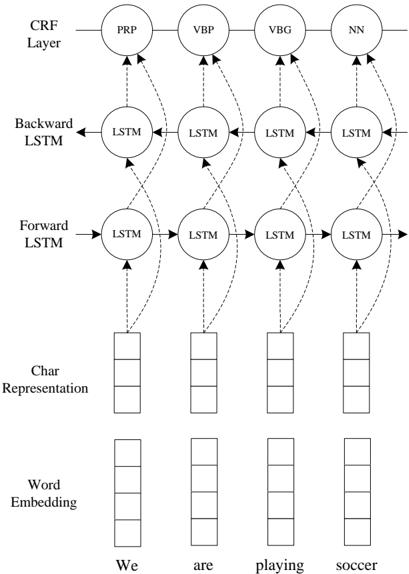
State-of-the-art sequence labeling systems traditionally require large amounts of taskspecific knowledge in the form of handcrafted features and data pre-processing.In this paper, we introduce a novel neutral network architecture that benefits from both word-and character-level representations automatically, by using combination of bidirectional LSTM, CNN and CRF.Our system is truly end-to-end, requiring no feature engineering or data preprocessing, thus making it applicable to a wide range of sequence labeling tasks.We evaluate our system on two data sets for two sequence labeling tasks -Penn Treebank WSJ corpus for part-of-speech (POS) tagging and CoNLL 2003 corpus for named entity recognition (NER).We obtain state-of-the-art performance on both datasets -97.55% accuracy for POS tagging and 91.21% F1 for NER.
Overview
The claims and statistics of this paper haven’t been checked yet.
Free: it reads the open-access text and checks the first 5 claims that cite a source we can check. Create a free account to check every claim.
Integrity signals
Registry
Cites
Statistics
Figures
Verification
Claims the paper makes
The claims and statistics of this paper haven’t been checked yet.
Free: it reads the open-access text and checks the first 5 claims that cite a source we can check. Create a free account to check every claim.
Claims other papers make about this one
Each is checked against this paper’s own text: does it say what the citing paper says it does?
The cited source says what the claim attributes to it.
In the citing paper
“Empirically, for those token [81] or span [30] prediction tasks (e.g., NER), prompt decomposition can be considered, while for those span relation prediction [66] tasks (e.g., entity coreference), prompts composition would be a better choice.”
From Pre-train, Prompt, and Predict: A Systematic Survey of Prompting Methods in Natural Language Processing (2023) · cites this paper as [81]
Self-check
Percentages, sums and reported differences re-computed from the paper’s own numbers.
The self-check needs the paper’s full text.
Citations
Cites
Hochreiter, S., & Schmidhuber, J. (1997) · Neural Computation · doi:10.1162/neco.1997.9.8.1735 · Cited by 102,318 · cited 2×
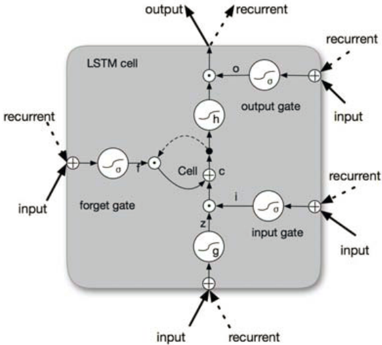
“Recently, recurrent neural networks (RNN) (Goller and Kuchler, 1996), together with its variants such as long-short term memory (LSTM) (Hochreiter and Schmidhuber, 1997; Gers et al., 2000) and gated recurrent unit (GRU) (Cho et al., 2014), have shown great success in modeling sequential data.”
BackgroundAdam: A Method for Stochastic Optimization
Kingma, D. P., & Ba, J. (2014) · arXiv · doi:10.48550/arxiv.1412.6980 · Cited by 98,946
Glove: Global Vectors for Word Representation
Pennington, J., Socher, R., & Manning, C. (2014) · Proceedings of the 2014 Conference on Empirical Methods in Natural Language Processing (EMNLP) · doi:10.3115/v1/d14-1162 · Cited by 34,071 · cited 1×
“glove/ trained on 6 billion words from Wikipedia and web text (Pennington et al., 2014)”
Background(2014) · Cited by 33,419
Distributed Representations of Words and Phrases and their Compositionality
Mikolov, T., Sutskever, I., Chen, K., Corrado, G., & Dean, J. (2013) · arXiv · doi:10.48550/arxiv.1310.4546 · Cited by 24,533 · cited 2×
“, 2011), and Google’s Word2Vec 300 dimensional embeddings3 trained on 100 billion words from Google News (Mikolov et al., 2013).”
BackgroundDelving Deep into Rectifiers: Surpassing Human-Level Performance on ImageNet Classification
He, K., Zhang, X., Ren, S., & Sun, J. (2015) · 2015 IEEE International Conference on Computer Vision (ICCV) · doi:10.1109/iccv.2015.123 · Cited by 19,741 · cited 1×
“To test the effectiveness of pretrained word embeddings, we experimented with randomly initialized embeddings with 100 dimensions, where embeddings are uniformly sampled from range [ − where dim is the dimension of embeddings (He et al., 2015).”
Method(2010) · Cited by 14,134
Conditional Random Fields: Probabilistic Models for Segmenting and Labeling Sequence Data
Lafferty, J., McCallum, A., & Pereira, F. C. N. (2001) · ScholarlyCommons (University of Pennsylvania) · Cited by 12,935
Backpropagation Applied to Handwritten Zip Code Recognition
LeCun, Y., Boser, B., Denker, J. S., Henderson, D., Howard, R. E., Hubbard, W., & Jackel, L. D. (1989) · Neural Computation · doi:10.1162/neco.1989.1.4.541 · Cited by 11,891 · cited 2×
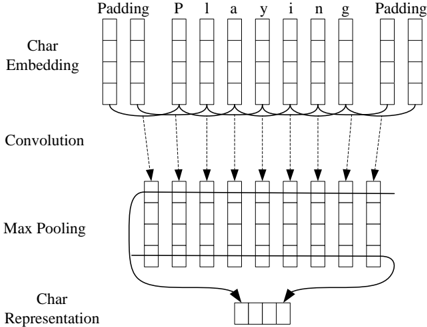
“We first use convolutional neural networks (CNNs) (LeCun et al., 1989) to encode character-level information of a word into its character-level representation.”
MethodSpeech recognition with deep recurrent neural networks
Graves, A., Mohamed, A.-R., & Hinton, G. (2013) · 2013 IEEE International Conference on Acoustics, Speech and Signal Processing · doi:10.1109/icassp.2013.6638947 · Cited by 8,893 · cited 4×
“Several RNN-based neural network models have been proposed to solve sequence labeling tasks like speech recognition (Graves et al., 2013), POS tagging (Huang et al., 2015) and NER (Chiu and Nichols, 2015; Hu et al., 2016), achieving competitive performance against traditional models.”
MethodInfluential
Research works printed but not linked: 6
- [3]3. James Bergstra, Olivier Breuleux, Frédéric Bastien, Pascal Lamblin, Razvan Pascanu, Guillaume Des- jardins, Joseph Turian, David Warde-Farley, and Yoshua Bengio. 2010. Theano: a cpu and gpu math expression compiler. In Proceedings of the Python for scientific computing conference (SciPy), volume 4, page 3. Austin, TX.
- [15]15. Felix A Gers, Nicol N Schraudolph, and Jürgen Schmidhuber. 2003. Learning precise timing with lstm recurrent networks. The Journal of Machine Learning Research, 3:115-143.
- [37]37. Xuezhe Ma and Hai Zhao. 2012a. Fourth-order depen- dency parsing. In Proceedings of COLING 2012: Posters, pages 785-796, Mumbai, India, December.
- [43]43. Tomas Mikolov, Ilya Sutskever, Kai Chen, Greg S Cor- rado, and Jeff Dean. 2013. Distributed representa- tions of words and phrases and their compositional- ity. In Advances in neural information processing systems, pages 3111-3119.
- [58]58. Erik F. Tjong Kim Sang and Jorn Veenstra. 1999. Rep- resenting text chunks. In Proceedings of EACL'99, pages 173-179. Bergen, Norway.
- [59]59. Kristina Toutanova, Dan Klein, Christopher D Man- ning, and Yoram Singer. 2003. Feature-rich part- of-speech tagging with a cyclic dependency net- work. In Proceedings of NAACL-HLT-2003, Volume 1, pages 173-180.
Cited by
Deep Contextualized Word Representations
Peters, M., Neumann, M., Iyyer, M., Gardner, M., Clark, C., Lee, K., & Zettlemoyer, L. (2018) · Proceedings of the 2018 Conference of the North American Chapter of the Association for Computational Linguistics: Human Language Technologies, Volume 1 (Long Papers) · doi:10.18653/v1/n18-1202 · Cited by 11,983
“Similar to WSD, the biLM representations are competitive with carefully tuned, task specific biLSTMs (Ling et al., 2015; Ma and Hovy, 2016).”
MethodLiu, P., Yuan, W., Fu, J., Jiang, Z., Hayashi, H., & Neubig, G. (2023) · ACM Computing Surveys · doi:10.1145/3560815 · Cited by 4,361
Contextual String Embeddings for Sequence Labeling
Akbik, A., Blythe, D. A. J., & Vollgraf, R. (2018) · International Conference on Computational Linguistics · Cited by 1,755
A Survey on Deep Learning for Named Entity Recognition
Li, J., Sun, A., Han, J., & Li, C. (2022) · IEEE Transactions on Knowledge and Data Engineering · doi:10.1109/tkde.2020.2981314 · Cited by 1,567
“In addition, GloVe [96], [97] and fastText [98] are also widely used in NER tasks.”
BackgroundMethodInfluentialChinese NER Using Lattice LSTM
Zhang, Y., & Yang, J. (2018) · Proceedings of the 56th Annual Meeting of the Association for Computational Linguistics (Volume 1: Long Papers) · doi:10.18653/v1/p18-1144 · Cited by 878
“The current stateof-the-art for English NER has been achieved by using LSTM-CRF models (Lample et al., 2016; Ma and Hovy, 2016; Chiu and Nichols, 2016; Liu et al., 2018) with character information being integrated into word representations.”
BackgroundMethodInfluentialBERTweet: A pre-trained language model for English Tweets
Nguyen, D. Q., Vu, T., & Tuan Nguyen, A. (2020) · Proceedings of the 2020 Conference on Empirical Methods in Natural Language Processing: System Demonstrations · doi:10.18653/v1/2020.emnlp-demos.2 · Cited by 843
A Unified MRC Framework for Named Entity Recognition
Li, X., Feng, J., Meng, Y., Han, Q., Wu, F., & Li, J. (2020) · Proceedings of the 58th Annual Meeting of the Association for Computational Linguistics · doi:10.18653/v1/2020.acl-main.519 · Cited by 697
Semi-supervised sequence tagging with bidirectional language models
Peters, M., Ammar, W., Bhagavatula, C., & Power, R. (2017) · Proceedings of the 55th Annual Meeting of the Association for Computational Linguistics (Volume 1: Long Papers) · doi:10.18653/v1/p17-1161 · Cited by 655
“The baseline sequence tagger uses 30 dimensional character embeddings and a CNN with 30 filters of width 3 characters followed by a tanh non-linearity for the token character encoder.”
BackgroundMethodInfluentialDice Loss for Data-imbalanced NLP Tasks
Li, X., Sun, X., Meng, Y., Liang, J., Wu, F., & Li, J. (2020) · Proceedings of the 58th Annual Meeting of the Association for Computational Linguistics · doi:10.18653/v1/2020.acl-main.45 · Cited by 646
Marshall, I. J., & Wallace, B. C. (2019) · Systematic Reviews · doi:10.1186/s13643-019-1074-9 · Cited by 638
Deep Learning for Aspect-Based Sentiment Analysis: A Comparative Review
Do, H. H., Prasad, P., Maag, A., & Alsadoon, A. (2019) · Expert Systems with Applications · doi:10.1016/j.eswa.2018.10.003 · Cited by 614
“…demonstrated in the areas of ‘name-entity recognition’ (Chiu & Nichols, 2015; Lample, Ballesteros, Subramanian, Kawakami, & Dyer, 2016; X. Ma & Hovy, 2016; Shen, Yun, Lipton, Kronrod, & Anandkumar, 2017; Strubell, Verga, Belanger, & McCallum, 2017; Yang, Salakhutdinov, & Cohen, 2016);,…”
Adaptive Methods for Nonconvex Optimization
Zaheer, M., Reddi, S. J., Sachan, D. S., Kale, S., & Kumar, S. (2018) · neural information processing systems · Cited by 605
Harnessing Deep Neural Networks with Logic Rules
Hu, Z., Ma, X., Liu, Z., Hovy, E., & Xing, E. (2016) · Proceedings of the 54th Annual Meeting of the Association for Computational Linguistics (Volume 1: Long Papers) · doi:10.18653/v1/p16-1228 · Cited by 545
“Further integration of the list rule (Row 3) provides a second boost in performance, achieving an F1 score very close to the best-performing systems including Joint-NER-EL (Luo et al., 2015) (Row 8), a probabilistic graphical model optimizing NER and entity linking jointly with massive external resources, and BLSTM-CR…”
MethodInfluentialSelf-citation“A neural approach to automated essay scoring,”
Taghipour, K., & Ng, H. T. (2016) · Proceedings of the 2016 Conference on Empirical Methods in Natural Language Processing · doi:10.18653/v1/d16-1193 · Cited by 537
“Apart from these examples, recurrent neural networks have also been used for opinion mining (Ir-soy and Cardie, 2014), sequence labeling (Ma and Hovy, 2016), language modeling (Kim et al., 2016; Sundermeyer et al., 2015), etc.”
BackgroundA Joint Many-Task Model: Growing a Neural Network for Multiple NLP Tasks
Hashimoto, K., xiong, C., Tsuruoka, Y., & Socher, R. (2017) · Proceedings of the 2017 Conference on Empirical Methods in Natural Language Processing · doi:10.18653/v1/d17-1206 · Cited by 535
AraVec: A set of Arabic Word Embedding Models for use in Arabic NLP
Soliman, A. B., Eissa, K., & El-Beltagy, S. R. (2017) · Procedia Computer Science · doi:10.1016/j.procs.2017.10.117 · Cited by 509
Liu, P., Yuan, W., Fu, J., Jiang, Z., Hayashi, H., & Neubig, G. (2021) · arXiv · doi:10.48550/arxiv.2107.13586 · Cited by 4,352
Fast and Accurate Entity Recognition with Iterated Dilated Convolutions
Strubell, E., Verga, P., Belanger, D., & McCallum, A. (2017) · Proceedings of the 2017 Conference on Empirical Methods in Natural Language Processing · doi:10.18653/v1/d17-1283 · Cited by 474
“…models for sequence labeling include an inference step that searches the space of possible output sequences of a chain-structured graphical model, or approximates this search with a beam (Collobert et al., 2011; Weiss et al., 2015; Lample et al., 2016; Ma and Hovy, 2016; Chiu and Nichols, 2016).”
BackgroundA Survey on Vision--Language--Action Models for Embodied AI
Ma, Y., Song, Z., Zhuang, Y., Hao, J., & King, I. (2026) · IEEE Transactions on Neural Networks and Learning Systems · doi:10.1109/tnnls.2025.3650584 · Cited by 486
“Many have made significant progress [111], [116], but still lack generalization capability on par with LLMs in NLP. Attaining such a level of generalization is very challenging, as it requires the development of many core AGI capabilities.”
A Survey on Recent Advances in Named Entity Recognition from Deep Learning models
Yadav, V., & Bethard, S. J. (2019) · arXiv (Cornell University) · doi:10.48550/arxiv.1910.11470 · Cited by 464
“Ma and Hovy (2016) implemented this model to achieve 91.21% F1 score on the CoNLL 2003 English dataset and 97.55% POS-tagging accuracy on the WSJ portion of PTB (Marcus et al., 1993).”
MethodInfluentialReimers, N., & Gurevych, I. (2017) · Proceedings of the 2017 Conference on Empirical Methods in Natural Language Processing · doi:10.18653/v1/d17-1035 · Cited by 463
“Further we will focus on Long-Short-Term-Memory (LSTM) Networks (Hochreiter and Schmidhuber, 1997b), as those demonstrated state-of-the-art performance for a wide variety of sequence tagging tasks (Ma and Hovy, 2016; Lample et al., 2016; Søgaard and Goldberg, 2016).”
BackgroundMethodNamed Entity Recognition as Dependency Parsing
Yu, J., Bohnet, B., & Poesio, M. (2020) · Proceedings of the 58th Annual Meeting of the Association for Computational Linguistics · doi:10.18653/v1/2020.acl-main.577 · Cited by 458
PhoBERT: Pre-trained language models for Vietnamese
Nguyen, D. Q., & Tuan Nguyen, A. (2020) · Findings of the Association for Computational Linguistics: EMNLP 2020 · doi:10.18653/v1/2020.findings-emnlp.92 · Cited by 456
Joint entity recognition and relation extraction as a multi-head selection problem
Bekoulis, G., Deleu, J., Demeester, T., & Develder, C. (2018) · Expert Systems with Applications · doi:10.1016/j.eswa.2018.07.032 · Cited by 436
“In this work, we also use character embeddings since they are commonly applied to neural NER (Ma & Hovy, 2016; Lample et al., 2016).”
BackgroundMethodInfluentialAn attention-based BiLSTM-CRF approach to document-level chemical named entity recognition
Luo, L., Yang, Z., Yang, P., Zhang, Y., Wang, L., Lin, H., & Wang, J. (2018) · Bioinformatics · doi:10.1093/bioinformatics/btx761 · Cited by 417
On the Origin of Deep Learning
Wang, H., & Raj, B. (2017) · arXiv (Cornell University) · doi:10.48550/arxiv.1702.07800 · Cited by 83
“, 2016), and together with CNN components (Ma and Hovy, 2016).”
A Comprehensive Survey on Automatic Knowledge Graph Construction
Zhong, L., Wu, J., Li, Q., Peng, H., & Wu, X. (2024) · ACM Computing Surveys · doi:10.1145/3618295 · Cited by 382
“Combinations of character and word encoders are also widely-applied structures, such as a structure comprising a CNN for character embedding and an LSTM for word embedding [10].”
BackgroundMethodAdaptive Co-attention Network for Named Entity Recognition in Tweets
Zhang, Q., Fu, J., Liu, X., & Huang, X. (2018) · Proceedings of the AAAI Conference on Artificial Intelligence · doi:10.1609/aaai.v32i1.11962 · Cited by 381
“• CNN+BiLSTM+CRF: This model was proposed by Ma and Hovy (2016) and is a truly end-to-end system, requiring no feature engineering or data preprocessing.”
MethodExploiting BERT for End-to-End Aspect-based Sentiment Analysis
Li, X., Bing, L., Zhang, W., & Lam, W. (2019) · Proceedings of the 5th Workshop on Noisy User-generated Text (W-NUT 2019) · doi:10.18653/v1/d19-5505 · Cited by 348
“Conditional Random Fields Conditional Random Fields (CRF) (Lafferty et al., 2001) is effective in sequence modeling and has been widely adopted for solving the sequence labeling tasks together with neural models (Huang et al., 2015; Lample et al., 2016; Ma and Hovy, 2016).”
BackgroundMethodChoosing Transfer Languages for Cross-Lingual Learning
Lin, Y.-H., Chen, C.-Y., Lee, J., Li, Z., Zhang, Y., Xia, M., Rijhwani, S., He, J., Zhang, Z., Ma, X., et al. (2019) · Proceedings of the conference - Association for Computational Linguistics. Meeting · doi:10.18653/v1/p19-1301 · Cited by 344
“POS Tagging We train a bi-directional LSTMCNNs-CRF model (Ma and Hovy, 2016) on word”
MethodSelf-citationTemplate-Based Named Entity Recognition Using BART
Cui, L., Wu, Y., Liu, J., Yang, S., & Zhang, Y. (2021) · arXiv · doi:10.48550/arxiv.2106.01760 · Cited by 342
“Third, compared with traditional meth-ods (pre-trained model with a softmax/CRF), our method can be applied to arbitrary new categories of named entities without changing the output layer, and therefore allows continual learning (Lin et al., 2020).”
BackgroundMethodInfluentialA Unified Model for Opinion Target Extraction and Target Sentiment Prediction
Li, X., Bing, L., Li, P., & Lam, W. (2019) · Proceedings of the AAAI Conference on Artificial Intelligence · doi:10.1609/aaai.v33i01.33016714 · Cited by 338
Entity-Relation Extraction as Multi-Turn Question Answering
Li, X., Yin, F., Sun, Z., Li, X., Yuan, A., Chai, D., Zhou, M., & Li, J. (2019) · Proceedings of the 57th Annual Meeting of the Association for Computational Linguistics · doi:10.18653/v1/p19-1129 · Cited by 336
“To tackle this issue, we formalize the task as a query-based tagging problem (Lafferty et al., 2001; Huang et al., 2015; Ma and Hovy, 2016).”
MethodEmpower Sequence Labeling with Task-Aware Neural Language Model
Liu, L., Shang, J., Ren, X., Xu, F., Gui, H., Peng, J., & Han, J. (2018) · Proceedings of the AAAI Conference on Artificial Intelligence · doi:10.1609/aaai.v32i1.12006 · Cited by 333
Template-Based Named Entity Recognition Using BART
Cui, L., Wu, Y., Liu, J., Yang, S., & Zhang, Y. (2021) · Findings of the Association for Computational Linguistics: ACL-IJCNLP 2021 · doi:10.18653/v1/2021.findings-acl.161 · Cited by 314
A general framework for information extraction using dynamic span graphs
Luan, Y., Wadden, D., He, L., Shah, A., Ostendorf, M., & Hajishirzi, H. (2019) · Proceedings of the 2019 Conference of the North · doi:10.18653/v1/n19-1308 · Cited by 311
“Unlike previous BIO-based entity recognition systems (Collobert and Weston, 2008; Lample et al., 2016; Ma and Hovy, 2016) that assign a text span to at most one entity, our framework enumerates and represents all possible spans to recognize arbitrarily overlapping entities.”
BackgroundA Neural Layered Model for Nested Named Entity Recognition
Ju, M., Miwa, M., & Ananiadou, S. (2018) · Proceedings of the 2018 Conference of the North American Chapter of the Association for Computational Linguistics: Human Language Technologies, Volume 1 (Long Papers) · doi:10.18653/v1/n18-1131 · Cited by 309
“The success of neural networks has boosted the performance of flat named NER in different domains (Lample et al., 2016; Ma and Hovy, 2016; Gridach, 2017; Strubell et al., 2017).”
BackgroundMethodVisual Attention Model for Name Tagging in Multimodal Social Media
Lu, D., Neves, L., Carvalho, V., Zhang, N., & Ji, H. (2018) · Proceedings of the 56th Annual Meeting of the Association for Computational Linguistics (Volume 1: Long Papers) · doi:10.18653/v1/p18-1185 · Cited by 298
“In recent years, (Chiu and Nichols, 2015; Lample et al., 2016; Ma and Hovy, 2016) proposed several neural network architectures for named tagging that outperform traditional explicit features based methods (Chieu and Ng, 2002; Florian et al., 2003; Ando and Zhang, 2005; Ratinov and Roth, 2009; Lin…”
BackgroundMethodInfluentialA Deep-Learned Embedding Technique for Categorical Features Encoding
Dahouda, M. K., & Joe, I. (2021) · IEEE Access · doi:10.1109/access.2021.3104357 · Cited by 294
“Deep neural network architectures have recently gained a lot of traction in the NLP community [12] due to their ability to allow researchers to build and train deep neural networks, implement vectorized neural networks [13], and identify architecture parameters [14].”
BackgroundSimplify the Usage of Lexicon in Chinese NER
Ma, R., Peng, M., Zhang, Q., Wei, Z., & Huang, X. (2020) · Proceedings of the 58th Annual Meeting of the Association for Computational Linguistics · doi:10.18653/v1/2020.acl-main.528 · Cited by 294
When and Why Are Pre-Trained Word Embeddings Useful for Neural Machine Translation?
Qi, Y., Sachan, D., Felix, M., Padmanabhan, S., & Neubig, G. (2018) · Proceedings of the 2018 Conference of the North American Chapter of the Association for Computational Linguistics: Human Language Technologies, Volume 2 (Short Papers) · doi:10.18653/v1/n18-2084 · Cited by 292
“Pre-trained word embeddings have proven to be highly useful in neural network models for NLP tasks such as sequence tagging (Lample et al., 2016; Ma and Hovy, 2016) and text classification (Kim, 2014).”
MethodBOND: BERT-Assisted Open-Domain Named Entity Recognition with Distant Supervision
Liang, C., Yu, Y., Jiang, H., Er, S., Wang, R., Zhao, T., & Zhang, C. (2020) · ACM SIGKDD Conference on Knowledge Discovery and Data Mining (KDD) · doi:10.1145/3394486.3403149 · Cited by 288
“To alleviate the burden of designing handcrafted features, deep learning models [11, 25] have been proposed for NER and shown strong performance.”
BackgroundMethodCharacter-Based LSTM-CRF with Radical-Level Features for Chinese Named Entity Recognition
Dong, C., Zhang, J., Zong, C., Hattori, M., & Di, H. (2016) · Lecture Notes in Computer Science · doi:10.1007/978-3-319-50496-4_20 · Cited by 284
“[22] proposed a BLSTM-CNNs-CRF architecture using CNNs to model character-level information.”
MethodYu, J., Jiang, J., Yang, L., & Xia, R. (2020) · Proceedings of the 58th Annual Meeting of the Association for Computational Linguistics · doi:10.18653/v1/2020.acl-main.306 · Cited by 281
“Besides, we also consider several competitive multimodal approaches for MNER: (1) GVATT-HBiLSTM-CRF (Lu et al., 2018), a state-of-the-art approach for MNER, which integrates HBiLSTM-CRF with the visual context by proposing a visual attention mechanism followed by a visual gate to obtain word-aware visual representatio…”
BackgroundMethodInfluentialCross-type biomedical named entity recognition with deep multi-task learning
Wang, X., Zhang, Y., Ren, X., Zhang, Y., Zitnik, M., Shang, J., Langlotz, C., & Han, J. (2019) · Bioinformatics · doi:10.1093/bioinformatics/bty869 · Cited by 273
Automated Concatenation of Embeddings for Structured Prediction
Wang, X., Jiang, Y., Bach, N., Wang, T., Huang, Z., Huang, F., & Tu, K. (2021) · Proceedings of the 59th Annual Meeting of the Association for Computational Linguistics and the 11th International Joint Conference on Natural Language Processing (Volume 1: Long Papers) · doi:10.18653/v1/2021.acl-long.206 · Cited by 144
“We use BiLSTM-CRF model (Ma and Hovy, 2016; Lample et al., 2016) for sequence-structured outputs and use BiLSTM-Biaffine model (Dozat and Manning, 2017) for graph-structured outputs: P seq ( y | x ) = BiLSTM-CRF ( V , y ) V ∈ R d × n is a matrix of the word representations for the input sentence x…”
MethodCNN-Based Chinese NER with Lexicon Rethinking
Gui, T., Ma, R., Zhang, Q., Zhao, L., Jiang, Y.-G., & Huang, X. (2019) · Proceedings of the Twenty-Eighth International Joint Conference on Artificial Intelligence · doi:10.24963/ijcai.2019/692 · Cited by 265
GPT-NER: Named Entity Recognition via Large Language Models
Wang, S., Sun, X., Li, X., Ouyang, R., Wu, F., Zhang, T., Li, J., Wang, G., & Guo, C. (2025) · Findings of the Association for Computational Linguistics: NAACL 2025 · doi:10.18653/v1/2025.findings-naacl.239 · Cited by 264
Leveraging Knowledge Bases in LSTMs for Improving Machine Reading
Yang, B., & Mitchell, T. (2017) · Proceedings of the 55th Annual Meeting of the Association for Computational Linguistics (Volume 1: Long Papers) · doi:10.18653/v1/p17-1132 · Cited by 261
“Such ability has been shown to be generally helpful in various NLP tasks such as named entity recognition (Huang et al., 2015; Chiu and Nichols, 2016; Ma and Hovy, 2016), semantic role labeling (Zhou and Xu, 2015), and reading comprehension (Hermann et al.”
BackgroundCrossNER: Evaluating Cross-Domain Named Entity Recognition
Liu, Z., Xu, Y., Yu, T., Dai, W., Ji, Z., Cahyawijaya, S., Madotto, A., & Fung, P. (2021) · Proceedings of the AAAI Conference on Artificial Intelligence · doi:10.1609/aaai.v35i15.17587 · Cited by 261
MasakhaNER: Named Entity Recognition for African Languages
Adelani, D. I., Abbott, J., Neubig, G., D’souza, D., Kreutzer, J., Lignos, C., Palen-Michel, C., Buzaaba, H., Rijhwani, S., Ruder, S., et al. (2021) · Transactions of the Association for Computational Linguistics · doi:10.1162/tacl_a_00416 · Cited by 257
Survey on Deep Neural Networks in Speech and Vision Systems
Alam, M., Samad, M. D., Vidyaratne, L., Glandon, A., & Iftekharuddin, K. M. (2020) · Neurocomputing · doi:10.1016/j.neucom.2020.07.053 · Cited by 252
Joint entity and relation extraction based on a hybrid neural network
Zheng, S., Hao, Y., Lu, D., Bao, H., Xu, J., Hao, H., & Xu, B. (2017) · Neurocomputing · doi:10.1016/j.neucom.2016.12.075 · Cited by 251
Named Entity Recognition and Relation Extraction: State-of-the-Art
Nasar, Z., Jaffry, S. W., & Malik, M. K. (2022) · ACM Computing Surveys · doi:10.1145/3445965 · Cited by 245
“A hybrid approach that uses CNN, Bi-LSTMs and CRF to solve the problems of POS tagging and NER is proposed in Reference [33].”
BackgroundMethodOpenTag: Open Attribute Value Extraction from Product Profiles
Zheng, G., Mukherjee, S., Dong, X. L., & Li, F. (2018) · Proceedings of the 24th ACM SIGKDD International Conference on Knowledge Discovery & Data Mining · doi:10.1145/3219819.3219839 · Cited by 154
Sentence-State LSTM for Text Representation
Zhang, Y., Liu, Q., & Song, L. (2018) · Proceedings of the 56th Annual Meeting of the Association for Computational Linguistics (Volume 1: Long Papers) · doi:10.18653/v1/p18-1030 · Cited by 239
“Bi-directional extensions have become a standard configuration for achieving state-of-the-art accuracies among various tasks (Wen et al., 2015; Ma and Hovy, 2016; Dozat and Manning, 2017).”
BackgroundMethodResultA neural joint model for entity and relation extraction from biomedical text
Li, F., Zhang, M., Fu, G., & Ji, D. (2017) · BMC Bioinformatics · doi:10.1186/s12859-017-1609-9 · Cited by 238
“Following state-of-the-art neural models [22, 23, 26], biomedical entity recognition is casted as a sequence labeling problem.”
MethodInfluentialDeep Exhaustive Model for Nested Named Entity Recognition
Sohrab, M. G., & Miwa, M. (2018) · Proceedings of the 2018 Conference on Empirical Methods in Natural Language Processing · doi:10.18653/v1/d18-1309 · Cited by 235
“Recent successes in neural networks have shown impressive performance gains on flat named entity recognition in several domains (Lample et al., 2016; Ma and Hovy, 2016; Gridach, 2017; Strubell et al., 2017).”
BackgroundMethodASRNN: A recurrent neural network with an attention model for sequence labeling
Lin, J. C.-W., Shao, Y., Djenouri, Y., & Yun, U. (2021) · Knowledge-Based Systems · doi:10.1016/j.knosys.2020.106548 · Cited by 234
Multimodal Language Analysis with Recurrent Multistage Fusion
Liang, P. P., Liu, Z., Bagher Zadeh, A., & Morency, L.-P. (2018) · Proceedings of the 2018 Conference on Empirical Methods in Natural Language Processing · doi:10.18653/v1/d18-1014 · Cited by 230
“, 2007) were shown to work well on modeling sequential data from the language (Misawa et al., 2017; Ma and Hovy, 2016; Huang et al., 2015) and acoustic (Yuan and Liberman, 2008) modalities.”
BackgroundPeng, N., & Dredze, M. (2016) · Proceedings of the 54th Annual Meeting of the Association for Computational Linguistics (Volume 2: Short Papers) · doi:10.18653/v1/p16-2025 · Cited by 230
Text Processing Like Humans Do: Visually Attacking and Shielding NLP Systems
Eger, S., Şahin, G. G., Rücklé, A., Lee, J.-U., Schulz, C., Mesgar, M., Swarnkar, K., Simpson, E., & Gurevych, I. (2019) · Conference of the North American Chapter of the Association for Computational Linguistics: Human Language Technologies (NAACL-HLT) · doi:10.18653/v1/n19-1165 · Cited by 230
“…treat characters as discrete units forming a word or they represent characters by randomly initialized embeddings and update them during training—typically in order to generate a character-based word representation that is robust to morphological variation or spelling mistakes (Ma and Hovy, 2016).”
BackgroundTENER: Adapting Transformer Encoder for Named Entity Recognition
Yan, H. R., Deng, B., Li, X., & Qiu, X. (2019) · arXiv (Cornell University) · doi:10.48550/arxiv.1911.04474 · Cited by 227
“To alleviate the problems of data sparsity and outof-vocabulary (OOV), most NER models adopted the CNN character encoder (Ma and Hovy, 2016; Ye and Ling, 2018; Chen et al., 2019) to represent words.”
BackgroundMethodInfluentialLearning Named Entity Tagger using Domain-Specific Dictionary
Shang, J., Liu, L., Gu, X., Ren, X., Ren, T., & Han, J. (2018) · Proceedings of the 2018 Conference on Empirical Methods in Natural Language Processing · doi:10.18653/v1/d18-1230 · Cited by 227
“We follow previous works (Liu et al., 2018; Ma and Hovy, 2016; Lample et al., 2016) to define the score of the predicted sequence, the score of the predicted sequence ( y 1 , y 2 , . . . , y n ) is defined as: where, Φ y i ,y i +1 is the transition probability from a label y i to its next label where…”
BackgroundMethodInfluentialHybrid Transformer with Multi-level Fusion for Multimodal Knowledge Graph Completion
Chen, X., Zhang, N., Li, L., Deng, S., Tan, C., Xu, C., Huang, F., Si, L., & Chen, H. (2022) · Proceedings of the 45th International ACM SIGIR Conference on Research and Development in Information Retrieval · doi:10.1145/3477495.3531992 · Cited by 226
Nye, B., Li, J. J., Patel, R., Yang, Y., Marshall, I., Nenkova, A., & Wallace, B. (2018) · Proceedings of the 56th Annual Meeting of the Association for Computational Linguistics (Volume 1: Long Papers) · doi:10.18653/v1/p18-1019 · Cited by 224
“We consider two baseline models: a linear Conditional Random Field (CRF) (Lafferty et al., 2001) and a Long Short-Term Memory (LSTM) neural tagging model, an LSTM-CRF (Lample et al., 2016; Ma and Hovy, 2016).”
MethodNeural Cross-Lingual Named Entity Recognition with Minimal Resources
Xie, J., Yang, Z., Neubig, G., Smith, N. A., & Carbonell, J. (2018) · Conference on Empirical Methods in Natural Language Processing (EMNLP) · doi:10.18653/v1/d18-1034 · Cited by 223
“Named entity recognition (NER), the task of detecting and classifying named entities from text into a few predefined categories such as people, locations or organizations, has seen the state-of-theart greatly advanced by the introduction of neural architectures (Collobert et al., 2011; Huang et al., 2015; Chiu and Nic…”
BackgroundMethodAdversarial training for multi-context joint entity and relation extraction
Bekoulis, G., Deleu, J., Demeester, T., & Develder, C. (2018) · Conference on Empirical Methods in Natural Language Processing (EMNLP) · doi:10.18653/v1/d18-1307 · Cited by 220
“…network methods have recently been exploited in various natural language processing (NLP) tasks, such as parsing (Zhang et al., 2017), POS tagging (Lample et al., 2016), relation extraction (dos Santos et al., 2015), translation (Bahdanau et al., 2015), and joint tasks (Miwa and Bansal, 2016).”
BackgroundMethodInfluentialDeep Dominance - How to Properly Compare Deep Neural Models
Dror, R., Shlomov, S., & Reichart, R. (2019) · Proceedings of the 57th Annual Meeting of the Association for Computational Linguistics · doi:10.18653/v1/p19-1266 · Cited by 95
“The U-test states that (Lample et al., 2016) is stochastically larger than (Ma and Hovy, 2016) with a p -value of 0 .”
MethodResultInfluentialDe-identification of clinical notes via recurrent neural network and conditional random field
Liu, Z., Tang, B., Wang, X., & Chen, Q. (2017) · Journal of Biomedical Informatics · doi:10.1016/j.jbi.2017.05.023 · Cited by 152
Improving Named Entity Recognition by External Context Retrieving and Cooperative Learning
Wang, X., Jiang, Y., Bách, N., Wang, T., Huang, Z., Huang, F., & Tu, K. (2021) · doi:10.18653/v1/2021.acl-long.142 · Cited by 218
“Most of the work takes NER as a sequence labeling problem and applies the linear-chain CRF (Lafferty et al., 2001) to achieve state-of-the-art accuracy (Ma and Hovy, 2016; Lample et al., 2016; Akbik et al., 2018, 2019; Wang et al., 2020b).”
MethodWei, X., Zhang, L., Yang, H.-Q., Zhang, L., & Yao, Y.-P. (2021) · Geoscience Frontiers · doi:10.1016/j.gsf.2020.04.011 · Cited by 217
Few-NERD: A Few-shot Named Entity Recognition Dataset
Ding, N., Xu, G., Chen, Y., Wang, X., Han, X., Xie, P., Zheng, H., & Liu, Z. (2021) · Proceedings of the 59th Annual Meeting of the Association for Computational Linguistics and the 11th International Joint Conference on Natural Language Processing (Volume 1: Long Papers) · doi:10.18653/v1/2021.acl-long.248 · Cited by 212
“As approaches equipped with deep neural networks have shown satisfactory performance on NER with sufficient supervision (Lample et al., 2016; Ma and Hovy, 2016), few-shot NER has received increasing attention (Hofer et al.”
BackgroundOpen Research Knowledge Graph: Next Generation Infrastructure for Semantic Scholarly Knowledge
Jaradeh, M. Y., Oelen, A., Farfar, K. E., Prinz, M., D'Souza, J., Kismihók, G., Stocker, M., & Auer, S. (2019) · Proceedings of the 10th International Conference on Knowledge Capture · doi:10.1145/3360901.3364435 · Cited by 212
“[4] Named Entity Recognition task-specific neural architecture atop pretrained SciBERT embeddings with a CRF-based sequence tag decoder [18].”
MethodMulti-modal Graph Fusion for Named Entity Recognition with Targeted Visual Guidance
Zhang, D., Wei, S., Li, S., Wu, H., Zhu, Q., & Zhou, G. (2021) · Proceedings of the AAAI Conference on Artificial Intelligence · doi:10.1609/aaai.v35i16.17687 · Cited by 211
“Besides, ACoA outperforms CNN-BiLSTM-CRF by 3.54% and 2.78%, respectively.”
BackgroundMethodInfluentialRetractedA Knowledge-Based Recommendation System That Includes Sentiment Analysis and Deep Learning
Rosa, R. L., Schwartz, G. M., Ruggiero, W. V., & Rodriguez, D. Z. (2019) · IEEE Transactions on Industrial Informatics · doi:10.1109/tii.2018.2867174 · Cited by 211
“Ma and Hovy [20] introduce a network architecture to analyze sentences meaning through character-level representations by using a combination of long short-term memory (LSTM), a convolutional neural network (CNN), and conditional random field (CRF).”
BackgroundWu, Z., Zheng, C., Cai, Y., Chen, J., Leung, H.-F., & Li, Q. (2020) · ACM International Conference on Multimedia (ACM MM) · doi:10.1145/3394171.3413650 · Cited by 212
“Figure 4 shows the case study of comparing our method with the CNN+LSTM+CRF [17] model and AdapCoAtt Model [28].”
BackgroundMethodInfluentialVnCoreNLP: A Vietnamese Natural Language Processing Toolkit
Vu, T., Nguyen, D. Q., Nguyen, D. Q., Dras, M., & Johnson, M. (2018) · Conference of the North American Chapter of the Association for Computational Linguistics: Human Language Technologies (NAACL-HLT) · doi:10.18653/v1/n18-5012 · Cited by 210
“BiLSTMCNN-CRF, is an extension of BiLSTM-CRF, using CNN to derive character-based word representations (Ma and Hovy, 2016).”
MethodMultimodal Relation Extraction with Efficient Graph Alignment
Zheng, C., Feng, J., Fu, Z., Cai, Y., Li, Q., & Wang, T. (2021) · ACM International Conference on Multimedia (ACM MM) · doi:10.1145/3474085.3476968 · Cited by 209
“Following the success of Lample et al. [11], Ma and Hovy [16] , we represent each word in a input text message by combining character embedding into word embedding to obtain its textual features.”
BackgroundFei, H., Wu, S., Li, J., Li, B., Li, F., Qin, L., Zhang, M., Zhang, M., & Chua, T.-S. (2022) · neural information processing systems · doi:10.52202/068431-1125 · Cited by 213
Machine Knowledge: Creation and Curation of Comprehensive Knowledge Bases
Weikum, G., Dong, X. L., Razniewski, S., & Suchanek, F. M. (2021) · Foundations and Trends in Databases · doi:10.1561/1900000064 · Cited by 205
Multimodal Named Entity Recognition for Short Social Media Posts
Moon, S., Neves, L., & Carvalho, V. (2018) · Proceedings of the 2018 Conference of the North American Chapter of the Association for Computational Linguistics: Human Language Technologies, Volume 1 (Long Papers) · doi:10.18653/v1/n18-1078 · Cited by 200
“An alternative approach for obtaining character embeddings is using a convolutional neural network as in (Ma and Hovy, 2016), but we find that Bi-LSTM representation of characters yields empirically better results in our experiments.”
InfluentialGraph Convolution for Multimodal Information Extraction from Visually Rich Documents
Liu, X., Gao, F., Zhang, Q., & Zhao, H. (2019) · Proceedings of the 2019 Conference of the North · doi:10.18653/v1/n19-2005 · Cited by 199
“However, most works focus on plain text documents (Peng et al., 2017; Lample et al., 2016; Ma and Hovy, 2016; Chiu and Nichols, 2016).”
BackgroundRice Crop Detection Using LSTM, Bi-LSTM, and Machine Learning Models from Sentinel-1 Time Series
Crisóstomo de Castro Filho, H., Abílio de Carvalho Júnior, O., Ferreira de Carvalho, O. L., Pozzobon de Bem, P., dos Santos de Moura, R., Olino de Albuquerque, A., Rosa Silva, C., Guimarães Ferreira, P. H., Fontes Guimarães, R., & Trancoso Gomes, R. A. (2020) · Remote Sensing · doi:10.3390/rs12162655 · Cited by 199
StrucTexT: Structured Text Understanding with Multi-Modal Transformers
Li, Y., Qian, Y., Yu, Y., Qin, X., Zhang, C., Liu, Y., Yao, K., Han, J., Liu, J., & Ding, E. (2021) · ACM International Conference on Multimedia (ACM MM) · doi:10.1145/3474085.3475345 · Cited by 200
“Then a Named Entity Recognition (NER) [17, 23] model is utilized to label each token such as word or character with an IOB (Inside, Outside, Beginning) tag.”
MethodNeural Sequence Learning Models for Word Sense Disambiguation
Raganato, A., Delli Bovi, C., & Navigli, R. (2017) · Proceedings of the 2017 Conference on Empirical Methods in Natural Language Processing · doi:10.18653/v1/d17-1120 · Cited by 197
“Sequence learning, especially using LSTM (Hochreiter and Schmidhuber, 1997; Graves and Schmidhuber, 2005; Graves, 2013), has become a well-established standard in numerous NLP tasks (Zhou and Xu, 2015; Ma and Hovy, 2016; Wang and Chang, 2016).”
BackgroundMethodFine-Grained Named Entity Recognition in Legal Documents
Leitner, E., Rehm, G., & Moreno-Schneider, J. (2019) · Lecture Notes in Computer Science · doi:10.1007/978-3-030-33220-4_20 · Cited by 128
A Survey of Event Extraction From Text
Xiang, W., & Wang, B. (2019) · IEEE Access · doi:10.1109/access.2019.2956831 · Cited by 195
An Encoding Strategy Based Word-Character LSTM for Chinese NER
Liu, W., Tongge, X., Xu, Q., Song, J., & Zu, Y. (2019) · Conference of the North American Chapter of the Association for Computational Linguistics: Human Language Technologies (NAACL-HLT) · doi:10.18653/v1/n19-1247 · Cited by 195
“Ma and Hovy (2016) and Chiu and Nichols (2016) use CNN to capture spelling characteristics and Lample et al. (2016) use LSTM instead.”
BackgroundTransfer Learning for Sequence Tagging with Hierarchical Recurrent Networks
Yang, Z., Salakhutdinov, R., & Cohen, W. W. (2017) · arXiv (Cornell University) · doi:10.48550/arxiv.1703.06345 · Cited by 194
“Both of the word-level layer and the character-level layer can be implemented as convolutional neural networks (CNNs) or recurrent neural networks (RNNs) (Collobert et al., 2011; Chiu & Nichols, 2015; Lample et al., 2016; Ma & Hovy, 2016).”
BackgroundMethodInfluentialYu, W., Lü, N., Qi, X., Gong, P., & Xiao, R. (2021) · Proceedings - International Conference on Pattern Recognition/Proceedings/International Conference on Pattern Recognition · doi:10.1109/icpr48806.2021.9412927 · Cited by 194
“The majority of methods, however, pay attention to the textual features, through various features extractors such as recurrent neural networks (RNNs) or convolutional neural networks (CNNs) on word- and character- level [2], [12], [13].”
BackgroundA survey of word embeddings based on deep learning
Wang, S., Zhou, W., & Jiang, C. (2020) · Computing · doi:10.1007/s00607-019-00768-7 · Cited by 193
“…model the word and its context, have become mainstream methods of word distribution representations [34, 37–42], and play a powerful role in many downstream tasks such as natural language inference [43, 44],text classification [45, 46], knowledge mining [47], and named entity recognition [48–51].”
Jin, X., Jie, L., Wang, S., Qi, H., & Li, S. (2018) · Remote Sensing · doi:10.3390/rs10030395 · Cited by 191
A Multi-task Approach for Named Entity Recognition in Social Media Data
Aguilar, G., Maharjan, S., López-Monroy, A. P., & Solorio, T. (2017) · Workshop on Noisy User-generated Text (W-NUT) · doi:10.18653/v1/w17-4419 · Cited by 191
“coded word, we represent each character with a 30-dimensional vector (Ma and Hovy, 2016).”
BackgroundChen, X., Zhang, N., Li, L., Yao, Y., Deng, S., Tan, C., Huang, F., Si, L., & Chen, H. (2022) · Findings of the Association for Computational Linguistics: NAACL · doi:10.18653/v1/2022.findings-naacl.121 · Cited by 192
Natural Language Processing Advancements By Deep Learning: A Survey
Torfi, A., Shirvani, R. A., Keneshloo, Y., Tavaf, N., & Fox, E. A. (2020) · arXiv (Cornell University) · doi:10.48550/arxiv.2003.01200 · Cited by 190
Glyce: Glyph-vectors for Chinese Character Representations
Meng, Y., Wu, W., Wang, F., Li, X., Nie, P., Yin, F., Li, M., Wang, G., Han, Q., Sun, X., et al. (2019) · arXiv (Cornell University) · doi:10.48550/arxiv.1901.10125 · Cited by 144
Stack-Pointer Networks for Dependency Parsing
Ma, X., Hu, Z., Liu, J., Peng, N., Neubig, G., & Hovy, E. H. (2018) · Proceedings of the conference - Association for Computational Linguistics. Meeting · doi:10.18653/v1/p18-1130 · Cited by 188
“The encoder of our parsing model is based on the bi-directional LSTM-CNN architecture (BLSTMCNNs) (Chiu and Nichols, 2016; Ma and Hovy, 2016) where CNNs encode character-level information of a word into its character-level repre-”
MethodSelf-citationSoft-Label Dataset Distillation and Text Dataset Distillation
Sucholutsky, I., & Schonlau, M. (2021) · International Joint Conference on Neural Networks (IJCNN) · doi:10.1109/ijcnn52387.2021.9533769 · Cited by 189
“This is a common practice when working with many modern natural language processing models, though the embedding method itself can vary greatly [36]–[38].”
BackgroundHou, Y., Che, W., Lai, Y., Zhou, Z., Liu, Y., Liu, H., & Liu, T. (2020) · Proceedings of the 58th Annual Meeting of the Association for Computational Linguistics · doi:10.18653/v1/2020.acl-main.128 · Cited by 182
Metadata
- Authors
- Ma, X., & Hovy, E.
- Affiliations
- Carnegie Mellon University (US)
- Venue
- Proceedings of the 54th Annual Meeting of the Association for Computational Linguistics (Volume 1: Long Papers)
- Published
- 2016
- Pages
- 1064-1074
- ISSN
- 0736-587X (ISSN-L)
- OpenAlex
- W2962902328
- Cited by
- 2,567
- References
- 65
- Citations by year
- 2026: 63 · 2025: 120 · 2024: 153 · 2023: 271 · 2022: 291 · 2021: 408 · 2020: 424 · 2019: 434 · 2018: 280 · 2017: 96 · 2016: 26
- FWCI
- 150.15
- Type
- conference paper
- Language
- en
- Open access
- hybrid
- doi.org
- Licence
- cc-by
- Locations
- Proceedings of the conference - Association for Computational Linguistics. Meeting (publishedVersion, cc-by)
- Funders
- Defense Advanced Research Projects Agency (FA8750, FA8750-12-2-0342)
- Topics
- Physical Sciences › Computer Science › Artificial Intelligence › Natural Language Processing Techniques
- Physical Sciences › Computer Science › Artificial Intelligence › Topic Modeling
- Physical Sciences › Computer Science › Computer Vision and Pattern Recognition › Handwritten Text Recognition Techniques
- Keywords
- sequence labeling, end-to-end learning, bidirectional LSTM, convolutional neural networks, conditional random fields, part-of-speech tagging, named entity recognition, CoNLL-2003
About these checks
Registry, retraction, Cites and statistics results are computed, not judged, with one exception: a printed reference that no index lists is read once by a model before it counts as a citation error. Claims are extracted by a model and kept only when their quote appears verbatim in the text; each cited source is then checked, with a model’s help, for whether it says what the claim relies on. Those verdicts can be wrong — read the claim’s quote and the cited source before relying on one.
Statistics and arithmetic are recomputed, not judged.
Confidence bands are shown only for fields calibrated on our annotated test set. None is calibrated yet, so no band is shown.
What counts as a claim ›How we measure confidence ›How we check this ›
Are you an author, or do you see a problem with this page? Request a review
Data sources
Bibliographic data: Semantic Scholar, OpenAlex, Crossref.
Contains information from the Semantic Scholar Academic Graph Datasets, made available under the ODC Attribution License (ODC-BY 1.0).
Semantic Scholar’s data is described in: Kinney, R., et al. (2023). The Semantic Scholar Open Data Platform. arXiv:2301.10140.
