

End-to-end Sequence Labeling via Bi-directional LSTM-CNNs-CRF
Open accessThe DOI matches its Crossref record; 64 of the 65 references it cites were found in a registry or an index.
Abstract
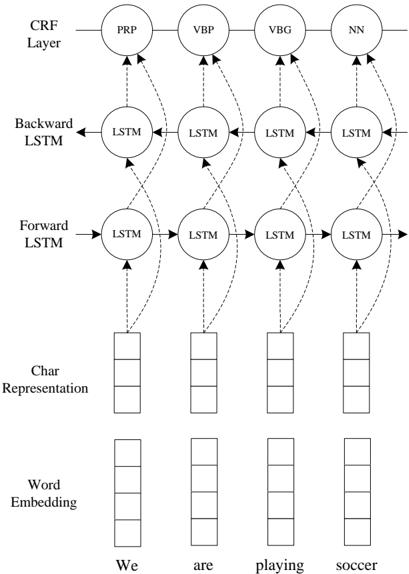
State-of-the-art sequence labeling systems traditionally require large amounts of taskspecific knowledge in the form of handcrafted features and data pre-processing.In this paper, we introduce a novel neutral network architecture that benefits from both word-and character-level representations automatically, by using combination of bidirectional LSTM, CNN and CRF.Our system is truly end-to-end, requiring no feature engineering or data preprocessing, thus making it applicable to a wide range of sequence labeling tasks.We evaluate our system on two data sets for two sequence labeling tasks -Penn Treebank WSJ corpus for part-of-speech (POS) tagging and CoNLL 2003 corpus for named entity recognition (NER).We obtain state-of-the-art performance on both datasets -97.55% accuracy for POS tagging and 91.21% F1 for NER.
Overview
The claims and statistics of this paper haven’t been checked yet.
Free: it reads the open-access text and checks the first 5 claims that cite a source we can check. Create a free account to check every claim.
Integrity signals
Registry
Cites
Statistics
Figures
Verification
Claims the paper makes
The claims and statistics of this paper haven’t been checked yet.
Free: it reads the open-access text and checks the first 5 claims that cite a source we can check. Create a free account to check every claim.
Claims other papers make about this one
Each is checked against this paper’s own text: does it say what the citing paper says it does?
The cited source says what the claim attributes to it.
In the citing paper
“Empirically, for those token [81] or span [30] prediction tasks (e.g., NER), prompt decomposition can be considered, while for those span relation prediction [66] tasks (e.g., entity coreference), prompts composition would be a better choice.”
From Pre-train, Prompt, and Predict: A Systematic Survey of Prompting Methods in Natural Language Processing (2023) · cites this paper as [81]
Self-check
Percentages, sums and reported differences re-computed from the paper’s own numbers.
The self-check needs the paper’s full text.
Citations
Cites
Hochreiter, S., & Schmidhuber, J. (1997) · Neural Computation · doi:10.1162/neco.1997.9.8.1735 · Cited by 102,318 · cited 2×
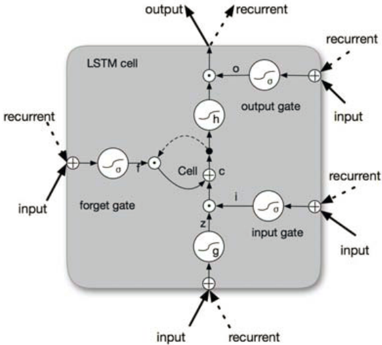
“Recently, recurrent neural networks (RNN) (Goller and Kuchler, 1996), together with its variants such as long-short term memory (LSTM) (Hochreiter and Schmidhuber, 1997; Gers et al., 2000) and gated recurrent unit (GRU) (Cho et al., 2014), have shown great success in modeling sequential data.”
BackgroundAdam: A Method for Stochastic Optimization
Kingma, D. P., & Ba, J. (2014) · arXiv · doi:10.48550/arxiv.1412.6980 · Cited by 98,946
Glove: Global Vectors for Word Representation
Pennington, J., Socher, R., & Manning, C. (2014) · Proceedings of the 2014 Conference on Empirical Methods in Natural Language Processing (EMNLP) · doi:10.3115/v1/d14-1162 · Cited by 34,071 · cited 1×
“glove/ trained on 6 billion words from Wikipedia and web text (Pennington et al., 2014)”
Background(2014) · Cited by 33,419
Distributed Representations of Words and Phrases and their Compositionality
Mikolov, T., Sutskever, I., Chen, K., Corrado, G., & Dean, J. (2013) · arXiv · doi:10.48550/arxiv.1310.4546 · Cited by 24,533 · cited 2×
“, 2011), and Google’s Word2Vec 300 dimensional embeddings3 trained on 100 billion words from Google News (Mikolov et al., 2013).”
BackgroundDelving Deep into Rectifiers: Surpassing Human-Level Performance on ImageNet Classification
He, K., Zhang, X., Ren, S., & Sun, J. (2015) · 2015 IEEE International Conference on Computer Vision (ICCV) · doi:10.1109/iccv.2015.123 · Cited by 19,741 · cited 1×
“To test the effectiveness of pretrained word embeddings, we experimented with randomly initialized embeddings with 100 dimensions, where embeddings are uniformly sampled from range [ − where dim is the dimension of embeddings (He et al., 2015).”
Method(2010) · Cited by 14,134
Conditional Random Fields: Probabilistic Models for Segmenting and Labeling Sequence Data
Lafferty, J., McCallum, A., & Pereira, F. C. N. (2001) · ScholarlyCommons (University of Pennsylvania) · Cited by 12,935
Backpropagation Applied to Handwritten Zip Code Recognition
LeCun, Y., Boser, B., Denker, J. S., Henderson, D., Howard, R. E., Hubbard, W., & Jackel, L. D. (1989) · Neural Computation · doi:10.1162/neco.1989.1.4.541 · Cited by 11,891 · cited 2×
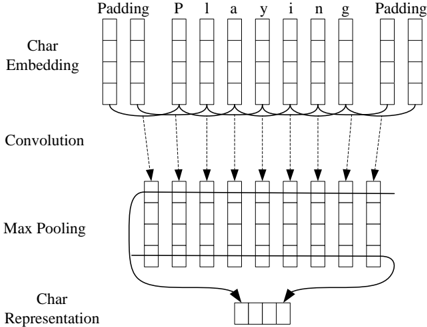
“We first use convolutional neural networks (CNNs) (LeCun et al., 1989) to encode character-level information of a word into its character-level representation.”
MethodSpeech recognition with deep recurrent neural networks
Graves, A., Mohamed, A.-R., & Hinton, G. (2013) · 2013 IEEE International Conference on Acoustics, Speech and Signal Processing · doi:10.1109/icassp.2013.6638947 · Cited by 8,893 · cited 4×
“Several RNN-based neural network models have been proposed to solve sequence labeling tasks like speech recognition (Graves et al., 2013), POS tagging (Huang et al., 2015) and NER (Chiu and Nichols, 2015; Hu et al., 2016), achieving competitive performance against traditional models.”
MethodInfluential
Research works printed but not linked: 6
- [3]3. James Bergstra, Olivier Breuleux, Frédéric Bastien, Pascal Lamblin, Razvan Pascanu, Guillaume Des- jardins, Joseph Turian, David Warde-Farley, and Yoshua Bengio. 2010. Theano: a cpu and gpu math expression compiler. In Proceedings of the Python for scientific computing conference (SciPy), volume 4, page 3. Austin, TX.
- [15]15. Felix A Gers, Nicol N Schraudolph, and Jürgen Schmidhuber. 2003. Learning precise timing with lstm recurrent networks. The Journal of Machine Learning Research, 3:115-143.
- [37]37. Xuezhe Ma and Hai Zhao. 2012a. Fourth-order depen- dency parsing. In Proceedings of COLING 2012: Posters, pages 785-796, Mumbai, India, December.
- [43]43. Tomas Mikolov, Ilya Sutskever, Kai Chen, Greg S Cor- rado, and Jeff Dean. 2013. Distributed representa- tions of words and phrases and their compositional- ity. In Advances in neural information processing systems, pages 3111-3119.
- [58]58. Erik F. Tjong Kim Sang and Jorn Veenstra. 1999. Rep- resenting text chunks. In Proceedings of EACL'99, pages 173-179. Bergen, Norway.
- [59]59. Kristina Toutanova, Dan Klein, Christopher D Man- ning, and Yoram Singer. 2003. Feature-rich part- of-speech tagging with a cyclic dependency net- work. In Proceedings of NAACL-HLT-2003, Volume 1, pages 173-180.
Cited by
Items 801–900 of 1,008
Towards Open Intent Discovery for Conversational TextPreprint
Vedula, N., Lipka, N., Maneriker, P., & Parthasarathy, S. (2019) · arXiv (Cornell University) · doi:10.48550/arxiv.1904.08524 · Cited by 29
Proceedings of The 5th Workshop on BioNLP Open Shared Tasks
Kim, J.-D., Nédellec, C., Bossy, R., & Deléger, L. (2019) · doi:10.18653/v1/d19-57 · Cited by 30
PromptNER: A Prompting Method for Few-shot Named Entity Recognition via k Nearest Neighbor SearchPreprint
Zhang, M., Yan, H., Zhou, Y., & Qiu, X. (2023) · arXiv (Cornell University) · doi:10.48550/arxiv.2305.12217 · Cited by 29
“In traditional fully supervised NER scenarios, deep neural architectures (Huang et al., 2015; Lample et al., 2016; Ma and Hovy, 2016; Yan et al., 2019) have shown great ability to recognize entities with sufficient human-annotated data.”
BackgroundLearning Orthographic Features in Bi-directional LSTM for Biomedical Named Entity Recognition
Limsopatham, N., & Collier, N. (2016) · International Conference on Computational Linguistics · Cited by 28
The effect of morphology in named entity recognition with sequence tagging
Güngör, O., Güngör, T., & Üsküdarlı, S. (2018) · Natural Language Engineering · doi:10.1017/s1351324918000281 · Cited by 28
“Another similar approach processes characters in each surface form in the sentence with a convolutional neural network (Ma and Hovy 2016).”
BackgroundMethodResultInfluentialRUREBUS-2020 SHARED TASK: RUSSIAN RELATION EXTRACTION FOR BUSINESS
ABBYY, Ivanin, V., Artemova, E., Batura, T. V., Ivanov, V. V., Sarkisyan, V. V., Tutubalina, E. V., Smurov, I., & ABBYY (2020) · Computational Linguistics and Intellectual Technologies · doi:10.28995/2075-7182-2020-19-416-431 · Cited by 28
“Anh et al. [2] investigated a combination of bidirectional Long Short Term Memory (LSTM) with CRF and word embeddings presented in [20], [24], [26].”
BackgroundMethodAlexa Conversations: An Extensible Data-driven Approach for Building Task-oriented Dialogue Systems
Acharya, A., Adhikari, S., Agarwal, S., Auvray, V., Belgamwar, N., Biswas, A., Chandra, S., Chung, T., Fazel-Zarandi, M., Gabriel, R., et al. (2021) · doi:10.18653/v1/2021.naacl-demos.15 · Cited by 28
QUEACO: Borrowing Treasures from Weakly-labeled Behavior Data for Query Attribute Value Extraction
Zhang, D., Li, Z., Cao, T., Luo, C., Wu, T., Lu, H., Song, Y., Yin, B., Zhao, T., & Yang, Q. (2021) · ACM International Conference on Information and Knowledge Management (CIKM) · doi:10.1145/3459637.3481946 · Cited by 28
“With the recent advances in deep learning, many RNN-CRF based models are applied to the sequence tagging task [18, 22, 34], and have achieved promising results.”
MethodNamed Entity Recognition Architecture Combining Contextual and Global Features
Tran, H. T. H., Doucet, A., Sidère, N., Moreno, J. G., & Pollak, S. (2021) · Lecture notes in computer science · doi:10.1007/978-3-030-91669-5_21 · Cited by 28
“Neural architectures for NER often make use of either Recurrent Neural Networks (RNNs) or Convolution Neural Networks (CNNs) in conjunction with CRFs [3] to extract information automatically.”
BackgroundMethodInfluentialKnowledge Mining: A Cross-disciplinary Survey
Rui, Y., Carmona, V. I. S., Pourvali, M., Xing, Y., Yi, W.-W., Ruan, H., & Zhang, Y. (2022) · Machine Intelligence Research · doi:10.1007/s11633-022-1323-6 · Cited by 28
Towards Lean Automation: Fine-Grained sentiment analysis for customer value identification
Xiao, Y., Li, C., Thürer, M., Liu, Y., & Qu, T. (2022) · Computers & Industrial Engineering · doi:10.1016/j.cie.2022.108186 · Cited by 30
A Label-Aware Autoregressive Framework for Cross-Domain NER
Hu, J., Zhao, H., Guo, D., Wan, X., & Chang, T. (2022) · Findings of the Association for Computational Linguistics: NAACL · doi:10.18653/v1/2022.findings-naacl.171 · Cited by 28
Learning What's Easy: Fully Differentiable Neural Easy-First Taggers
Martins, A. F. T., & Kreutzer, J. (2017) · Conference on Empirical Methods in Natural Language Processing (EMNLP) · doi:10.18653/v1/d17-1036 · Cited by 28
“The current state of the art on these datasets (Gillick et al., 2016; Lample et al., 2016; Ma and Hovy, 2016) is achieved by more sophisticated systems with more paramDut.”
MethodAutomatic Normalization of Anatomical Phrases in Radiology Reports Using Unsupervised Learning
Tahmasebi, A. M., Zhu, H., Mankovich, G. R., Prinsen, P., Klassen, P., Pilato, S., van Ommering, R., Patel, P., Gunn, M. L. D., & Chang, P. J. (2018) · Journal of Imaging Informatics in Medicine · doi:10.1007/s10278-018-0116-5 · Cited by 28
Convolutional Neural Networks with Recurrent Neural Filters
Yang, Y. (2018) · Conference on Empirical Methods in Natural Language Processing (EMNLP) · doi:10.18653/v1/d18-1109 · Cited by 28
“Ma and Hovy (2016) propose to compose character representations of a word using a CNN, whose output is then fed into a BiLSTM for sequence tagging.”
BackgroundA Deep Learning-Based Framework for Intersectional Traffic Simulation and Editing
Bi, H., Mao, T., Wang, Z., & Deng, Z. (2019) · IEEE Transactions on Visualization and Computer Graphics · doi:10.1109/tvcg.2018.2889834 · Cited by 28
“Previously, LSTM has been successfully used for human motion prediction and natural language processing [56], [57], [58].”
MethodCoreference Aware Representation Learning for Neural Named Entity Recognition
Dai, Z., Fei, H., & Li, P. (2019) · International Joint Conference on Artificial Intelligence · doi:10.24963/ijcai.2019/687 · Cited by 28
Transfer learning for Turkish named entity recognition on noisy text
Akkaya, E. K., & Can, B. (2020) · Natural Language Engineering · doi:10.1017/s1351324919000627 · Cited by 28
“(2016), Ma and Hovy (2016).”
BackgroundInfluentialKhalifa, M., Abdul-Mageed, M., & Shaalan, K. F. (2021) · Conference of the European Chapter of the Association for Computational Linguistics · doi:10.18653/v1/2021.eacl-main.65 · Cited by 28
Deep-Aligned Convolutional Neural Network for Skeleton-Based Action Recognition and Segmentation
Hosseini, B., Montagné, R., & Hammer, B. (2019) · Data Science and Engineering · doi:10.1007/s41019-020-00123-3 · Cited by 28
“CMU Mocap Method JI Method JI YNL [34] (2015) 27.1 HACA [19] (2013) 71.4 Terrier [34] (2015) 53.9 SSSM [18] (2017) 75.7 Quads [34] (2015) 74.6 LSTM-CRF [40](2016) 85.9 Ismar [34] (2015) 74.7 End2End [39] (2016) 88.4 Gesture Labeling [42] (2014) 78.4 RNN-CRF [41] (2016) 88.1 CNN+LSTM2 [43] (2018) 79.5 ConvS2S [16] (201…”
MethodInfluentialGPT3-to-plan: Extracting plans from text using GPT-3
Olmo, A., Sreedharan, S., & Kambhampati, S. (2021) · arXiv · doi:10.48550/arxiv.2106.07131 · Cited by 27
“We then compare it to previously published results for task-specific action extractors which use a varied range of solutions, including, reinforcement learning, (Feng, Zhuo, and Kambhampati 2018), sequence-to-sequence models (Daniele, Bansal, and Walter 2017), Bi-directional LSTMs (Ma and Hovy 2016) or clustering of ac…”
InfluentialWhy pay more? A simple and efficient named entity recognition system for tweets
Suman, C., Reddy, S. M., Saha, S., & Bhattacharyya, P. (2021) · Expert Systems with Applications · doi:10.1016/j.eswa.2020.114101 · Cited by 27
Hierarchical Multi-Task Word Embedding Learning for Synonym Prediction
Fei, H., Tan, S., & Li, P. (2019) · ACM SIGKDD Conference on Knowledge Discovery and Data Mining (KDD) · doi:10.1145/3292500.3330914 · Cited by 27
“Although one can leverage state-of-the-art named entity recognition tools [21] to discover more entities, there is little work to construct labeled data with annotations for informal descriptions and synonyms for training.”
BackgroundMethodMulti-Task Learning for Chemical Named Entity Recognition with Chemical Compound Paraphrasing
Watanabe, T., Tamura, A., Ninomiya, T., Makino, T., & Iwakura, T. (2019) · Conference on Empirical Methods in Natural Language Processing (EMNLP) · doi:10.18653/v1/d19-1648 · Cited by 27
“LSTM-CRF NER models, which combine a conditional random field (CRF) and a long short-term memory (LSTM), have achieved high performance (Lample et al., 2016; Ma and Hovy, 2016).”
MethodHierarchical multi-task learning with CRF for implicit discourse relation recognition
Wu, C., Chaowen, H., Li, R., Lin, H., & Su, J. (2020) · Knowledge-Based Systems · doi:10.1016/j.knosys.2020.105637 · Cited by 27
LEAN-LIFE: A Label-Efficient Annotation Framework Towards Learning from Explanation
Lee, D., Khanna, R., Lin, B. Y., Lee, S., Ye, Q., Boschee, E., Neves, L., & Ren, X. (2020) · Annual Meeting of the Association for Computational Linguistics: System Demonstrations (ACL Demo) · doi:10.18653/v1/2020.acl-demos.42 · Cited by 26
Unsupervised multi-granular Chinese word segmentation and term discovery via graph partition
Yuan, Z. P., Liu, Y., Yin, Q., Li, B., Feng, X., Zhang, G., & Yu, S. (2020) · Journal of Biomedical Informatics · doi:10.1016/j.jbi.2020.103542 · Cited by 27
Uncertainty-Aware Label Refinement for Sequence Labeling
Gui, T., Ye, J., Zhang, Q., Li, Z., Fei, Z., Gong, Y., & Huang, X. (2020) · Conference on Empirical Methods in Natural Language Processing (EMNLP) · doi:10.18653/v1/2020.emnlp-main.181 · Cited by 27
“In recent years, modeling label dependencies has been the other focus of sequence labeling tasks, such as using a CRF layer integrated with neural encoders to capture label transition patterns (Zhou and Xu, 2015; Ma and Hovy, 2016), and introducing label embeddings to manage longer ranges of dependencies (Vaswani et a…”
BackgroundMethodInfluentialCogAlign: Learning to Align Textual Neural Representations to Cognitive Language Processing Signals
Ren, Y., & Xiong, D. (2021) · Annual Meeting of the Association for Computational Linguistics · doi:10.18653/v1/2021.acl-long.291 · Cited by 27
“…we employ the conditional random field (CRF) (Lafferty et al., 2001) as the predictor as Bi-LSTM-CRF is widely used in many sequence labeling tasks (Ma and Hovy, 2016; Luo et al., 2018) due to the excellent performance and also in cognitively inspired NLP (Hollenstein and Zhang, 2019; Hollenstein…”
MethodComputer Science Named Entity Recognition in the Open Research Knowledge Graph
D’Souza, J., & Auer, S. (2022) · Lecture notes in computer science · doi:10.1007/978-3-031-21756-2_3 · Cited by 28
“The basic building blocks to these six architectural variants, inspired from state-of-the-art neural sequence labelers in the general domain [13,45,41,67,58], were are follows: 1) a CNN, a LSTM, or a BiLSTM first layer over word representations of the data, 2) with and without a second char CNN layer, and 3) an output…”
BackgroundMethodXu, B., Huang, S., Du, M., Wang, H., Song, H., Xiao, Y., & Lin, X. A. (2023) · Lecture notes in computer science · doi:10.1007/978-3-031-30675-4_40 · Cited by 27
Juez-Hernandez, R., Quijano-Sánchez, L., Liberatore, F., & Gómez, J. (2023) · Applied Soft Computing · doi:10.1016/j.asoc.2023.110540 · Cited by 27
“…classifier; [TENS2] Lample et al. [72] Character Embeddings stacked with Word GloVe Embed-dings + LSTM + LSTM + CRF classifier; [TENS3] Ma and Hovy [73] Character Embeddings stacked with Word GloVe Embeddings + Convolutional Network + LSTM + CRF classifier; and compared them as in Pérez-Díez et…”
MethodNamed Entity Recognition as Structured Span Prediction
Zaratiana, U., Tomeh, N., Holat, P., & Charnois, T. (2022) · doi:10.18653/v1/2022.umios-1.1 · Cited by 27
“Usually, NER tasks are designed as sequence labelling (Chiu and Nichols, 2016; Huang et al., 2015; Ma and Hovy, 2016; Lample et al., 2016; Strubell et al., 2017; Rei, 2017; Ak-bik et al., 2018) where the goal is to predict BIO tags.”
BackgroundCai, Y., Liu, Q., Gan, Y., Lin, R., Li, C., Liu, X., Luo, D., & JiayeYang, J. (2024) · Proceedings of the conference - Association for Computational Linguistics. Meeting · doi:10.18653/v1/2024.acl-long.349 · Cited by 28
“Conventional approaches have primarily focused on identifying non-nested entities (Chiu and Nichols, 2016; Lample et al., 2016b; Ma and Hovy, 2016), a trend largely attributed to the constraints of corpus annotations that emphasize flat entity structures.”
METS-CoV: A Dataset of Medical Entity and Targeted Sentiment on COVID-19 Related Tweets
Zhou, P., Wang, Z., Chong, D., Guo, Z., Hua, Y., Su, Z., Teng, Z., Wu, J., & Yang, J. (2022) · neural information processing systems · doi:10.52202/068431-1593 · Cited by 27
Wise Crowd Content Assessment and Educational Rubrics
Passonneau, R. J., Poddar, A., Gite, G. B., Krivokapic, A., Yang, Q., & Perin, D. (2016) · International Journal of Artificial Intelligence in Education · doi:10.1007/s40593-016-0128-6 · Cited by 27
“While much work uses 300-dimensions or more (Mikolov et al. 2013), much shorter latent semantic vectors have done well for tasks like Named Entity Recognition (Ma and Hovy 2016).”
BackgroundLearning from Relatives: Unified Dialectal Arabic Segmentation
Samih, Y., Eldesouki, M., Attia, M. A., Darwish, K. M., Abdelalí, A., Mubarak, H., & Kallmeyer, L. (2017) · Conference on Computational Natural Language Learning · doi:10.18653/v1/k17-1043 · Cited by 27
“It is a slight variant of the bi-LSTM-CRF architecture first proposed by Huang et al. (2015), Lample et al. (2016), and Ma and Hovy (2016)”
An Eye-tracking Study of Named Entity Annotation
Tokunaga, T., Nishikawa, H., & Iwakura, T. (2017) · International conference Recent advances in natural language processing · doi:10.26615/978-954-452-049-6_097 · Cited by 27
“It would be interesting to see to what extent the latter tendency, i.e. considering broader contexts, could be captured by the recent LSTM-based NE methods (Ma and Hovy, 2016; Chiu and Nichols, 2016).”
BackgroundSegment-Level Neural Conditional Random Fields for Named Entity Recognition
Sato, M., Shindo, H., Yamada, I., & Matsumoto, Y. (2017) · International Joint Conference on Natural Language Processing · Cited by 27
A Joint Named-Entity Recognizer for Heterogeneous Tag-sets Using a Tag Hierarchy
Beryozkin, G., Drori, Y., Gilon, O., Hartman, T., & Szpektor, I. (2019) · Proceedings of the conference - Association for Computational Linguistics. Meeting · doi:10.18653/v1/p19-1014 · Cited by 27
“Such models achieve state-of-the-art performance with little or no manual feature engineering (Collobert et al., 2011; Huang et al., 2015; Lample et al., 2016; Ma and Hovy, 2016; Dernoncourt et al., 2017).”
BackgroundMethodJoint Detection and Location of English Puns
Zou, Y., & Lu, W. (2019) · Conference of the North American Chapter of the Association for Computational Linguistics: Human Language Technologies (NAACL-HLT) · doi:10.18653/v1/n19-1217 · Cited by 27
“Neural models have shown their effectiveness on sequence labeling tasks (Chiu and Nichols, 2016; Ma and Hovy, 2016; Liu et al., 2018).”
BackgroundMethodInfluentialA deep learning methodology for automatic extraction and discovery of technical intelligence
Xu, J., Guo, L., Jiang, J., Ge, B., & Li, M. (2019) · Technological Forecasting and Social Change · doi:10.1016/j.techfore.2019.06.004 · Cited by 27
A step towards information extraction: Named entity recognition in Bangla using deep learning
Karim, R., Islam, M. A., Simanto, S. R., Chowdhury, S. A., Roy, K., Neon, A. A., Hasan, M. S., Firoze, A., & Rahman, R. M. (2019) · Journal of Intelligent & Fuzzy Systems · doi:10.3233/jifs-179349 · Cited by 27
Aspect Detection using Word and Char Embeddings with (Bi) LSTM and CRF
Augustyniak, Ł., Kajdanowicz, T. J., & Kazienko, P. (2019) · IEEE International Conference on Artificial Intelligence and Knowledge Engineering (AIKE) · doi:10.1109/aike.2019.00016 · Cited by 27
“Ma and Hovym [2] introduced a neural network architecture of bidirectional LSTM, CNN, and CRF.”
BackgroundMethodLinguistically Aided Speaker Diarization Using Speaker Role Information
Flemotomos, N., Georgiou, P., & Narayanan, S. (2020) · The Speaker and Language Recognition Workshop (Odyssey) · doi:10.21437/odyssey.2020-17 · Cited by 27
“In particular, we address the problem building a Bidirectional LSTM (BiLSTM) network with a Conditional Random Field (CRF) inference layer [43], as shown in Figure 2.”
MethodA framework based on (probabilistic) soft logic and neural network for NLP
Gridach, M. (2020) · Applied Soft Computing · doi:10.1016/j.asoc.2020.106232 · Cited by 26
Zhang, D., Xia, C., Xu, C., Jia, Q., Yang, S., Luo, X., & Xie, Y. (2020) · IEEE Access · doi:10.1109/access.2020.3015056 · Cited by 27
Chinese Named Entity Recognition Method in History and Culture Field Based on BERT
Liu, S., Yang, H., Li, J., & Kolmanič, S. (2021) · International Journal of Computational Intelligence Systems · doi:10.1007/s44196-021-00019-8 · Cited by 27
“Ma et al. [13] proposed a model based on LSTM-CNNs-CRF to deal with sequence labeling problems.”
MethodDomain Specific Entity Recognition With Semantic-Based Deep Learning Approach
Ngo, Q. H., Kechadi, T., & Le‐Khac, N. (2021) · IEEE Access · doi:10.1109/access.2021.3128178 · Cited by 27
“For instance, Deep Learning (DL) approaches were used on NER with Bidirectional Long-Short Term Memory (BiLSTM), Convolutional Neural Networks (CNN) and Conditional Random Fields (CRF), [17], [18], [31] (as shown in Table 2).”
MethodProceedings of the 4th Workshop on Representation Learning for NLP (RepL4NLP-2019)
Augenstein, I., Gella, S., Ruder, S., Kann, K., Can, B., Conneau, A., Welbl, J., Ren, X., & Rei, M. (2019) · doi:10.18653/v1/w19-43 · Cited by 27
FRCL-MNER: A Finer Grained Rank-Based Contrastive Learning Framework for Multimodal NER
Yan, T., Zhao, S., Ma, W., Song, S., Wang, C., Rao, Z., Chen, S., Luo, Z., & Liu, X. (2025) · IEEE Transactions on Neural Networks and Learning Systems · doi:10.1109/tnnls.2025.3528567 · Cited by 26
Identifikasi Cyberbullying pada Media Sosial Twitter Menggunakan Metode LSTM dan BiLSTM
Fadli, H. F., & Hidayatullah, A. F. (2021) · AUTOMATA · Cited by 26
Taylor’s theorem: A new perspective for neural tensor networks
Li, W., Zhu, L., & Cambria, E. (2021) · Knowledge-Based Systems · doi:10.1016/j.knosys.2021.107258 · Cited by 26
“Similarly, we follow the experiment protocols as described in [38], and use identical CNN for character-level representation.”
GNNer: Reducing Overlapping in Span-based NER Using Graph Neural Networks
Zaratiana, U., Tomeh, N., Holat, P., & Charnois, T. (2022) · Annual Meeting of the Association for Computational Linguistics: Student Research Workshop (ACL SRW) · doi:10.18653/v1/2022.acl-srw.9 · Cited by 26
“Usually, NER tasks are designed as sequence labelling (Chiu and Nichols, 2016; Huang et al., 2015; Ma and Hovy, 2016; Lample et al., 2016; Akbik et al., 2018; Zaratiana et al., 2022).”
BackgroundGraphRevisedIE: Multimodal information extraction with graph-revised network
Cao, P., & Wu, J. F. (2023) · Pattern Recognition · doi:10.1016/j.patcog.2023.109542 · Cited by 26
“[4, 5, 6] are based on bidirectional LSTM (BiLSTM) and add an additional convolutional neural network (CNN) layer to enrich the feature representation for entity extraction.”
BackgroundMethodImproving Named Entity Recognition for Social Media with Data Augmentation
Liu, W., & Cui, X. (2023) · Applied Sciences · doi:10.3390/app13095360 · Cited by 26
Qu, X., Zeng, J., Liu, D., Wang, Z., Huai, B., & Zhou, P. (2023) · Proceedings of the AAAI Conference on Artificial Intelligence · doi:10.1609/aaai.v37i11.26583 · Cited by 26
MPMRC-MNER: A Unified MRC framework for Multimodal Named Entity Recognition based Multimodal Prompt
Bao, X., Tian, M., Zha, Z., & Qin, B. (2023) · ACM International Conference on Information and Knowledge Management (CIKM) · doi:10.1145/3583780.3614975 · Cited by 26
“…MPMRC-MNER framework, we first consider several representative text-only NER models that formalize NER as a sequence labeling task: BiLSTM-CRF [13], CNN-BiLSTM-CRF [24], HBiLSTM-CRF [15], which are classic NER methods with a bidirectional LSTM layer and a CRF layer, and the improvement is that…”
MethodZhang, G., Zhou, Y., Hu, Y., Xu, H., Weng, C., & Peng, Y. (2024) · Journal of the American Medical Informatics Association · doi:10.1093/jamia/ocae065 · Cited by 17
Hierarchical Aligned Multimodal Learning for NER on Tweet Posts
Liu, P., Li, H., Ren, Y., Liu, J., Si, S., Zhu, H., & Sun, L. (2024) · Proceedings of the AAAI Conference on Artificial Intelligence · doi:10.1609/aaai.v38i17.29831 · Cited by 26
Zeng, Q., Yuan, M., Wan, J., Wang, K., Shi, N., Che, Q., & Liu, B. (2024) · Expert Systems with Applications · doi:10.1016/j.eswa.2024.124867 · Cited by 26
Maimaiti, M., Wumaier, A., Abiderexiti, K., & Yibulayin, T. (2017) · Information · doi:10.3390/info8040157 · Cited by 26
“Therefore, an elegant solution is BI-LSTM [25], which can be regarded as a stack of two LSTM layers.”
BackgroundFabregat, H., Araujo, L., & Martínez-Romo, J. (2018) · Computer Methods and Programs in Biomedicine · doi:10.1016/j.cmpb.2018.07.007 · Cited by 26
Political Text Scaling Meets Computational Semantics
Nanni, F., Glavaš, G., Rehbein, I., Ponzetto, S. P., & Stuckenschmidt, H. (2021) · ACM/IMS Transactions on Data Science · doi:10.1145/3485666 · Cited by 28
“13 To test the effects that different parts of speech have on the scaling procedure, we have used a POS tagger to filter for nouns and verbs in the input texts for each of the five languages under consideration.”
MethodNeural Chinese Address Parsing
Li, H., Lu, W., Xie, P., & Li, L. (2019) · Conference of the North American Chapter of the Association for Computational Linguistics: Human Language Technologies (NAACL-HLT) · doi:10.18653/v1/n19-1346 · Cited by 26
“Ma and Hovy (2016) proposed a LSTM-CNNs-CRF model that utilizes convolutional neural networks (CNNs) to extract character-level features besides word-level features.”
BackgroundArabic Named Entity Recognition: What Works and What’s Next
Liu, L., Shang, J., & Han, J. (2019) · Arabic Natural Language Processing Workshop (WANLP) · doi:10.18653/v1/w19-4607 · Cited by 26
“Many attempts have been made to reduce the reliance on feature engineering or other human endeavors, which makes the NER task be solved in an end-to-end manner (Lample et al., 2016; Ma and Hovy, 2016; Shang et al., 2018).”
BackgroundSequence Labeling With Deep Gated Dual Path CNN
Zhao, L., Qiu, X., Zhang, Q., & Huang, X. (2019) · IEEE/ACM Transactions on Audio Speech and Language Processing · doi:10.1109/taslp.2019.2944563 · Cited by 26
“We study the use of deep CNN architecture in sequence labeling, which can achieve faster speed than RNN-based models and capture large context than shallow CNN; To reduce the vanishing gradient problem, we introduce gated linear units, residual connections and dense connections in the proposed deep CNN model; Extensiv…”
BackgroundMethodResultInfluentialAttention-based Multi-level Feature Fusion for Named Entity Recognition
Yang, Z., Chen, H., Zhang, J., Ma, J., & Chang, Y. (2020) · International Joint Conference on Artificial Intelligence · doi:10.24963/ijcai.2020/497 · Cited by 26
Gait acquisition and analysis system for osteoarthritis based on hybrid prediction model
Chen, F., Cui, X., Zhao, Z., Zhang, D., Ma, C., Zhang, X., & Liao, H. (2020) · Computerized Medical Imaging and Graphics · doi:10.1016/j.compmedimag.2020.101782 · Cited by 26
Named Entity Recognition Only from Word Embeddings
Luo, Y., Zhao, H., & Zhan, J. (2020) · Conference on Empirical Methods in Natural Language Processing (EMNLP) · doi:10.18653/v1/2020.emnlp-main.723 · Cited by 26
Dependency-based syntax-aware word representations
Zhang, M., Li, Z., Fu, G., & Zhang, M. (2020) · Artificial Intelligence · doi:10.1016/j.artint.2020.103427 · Cited by 26
Using BiLSTM Networks for Context-Aware Deep Sensitivity Labelling on Conversational Data
Pogiatzis, A., & Samakovitis, G. (2020) · Applied Sciences · doi:10.3390/app10248924 · Cited by 26
“The use of Conditional Random Fields (CRFs) in this work is inspired by state-of-the-art results of Neural CRFs [32] particularly combined with BiLSTMS in fundamental sequence labelling NLP tasks such as NER and POS tagging [6,33].”
BackgroundMethodShahzad, M., Amin, A., Esteves, D., & Ngomo, A.-C. N. (2021) · Proceedings of the ... International Florida Artificial Intelligence Research Society Conference · doi:10.32473/flairs.v34i1.128538 · Cited by 26
“We then initialize the character sequences with a random uniform distribution of − 3 dim , + 3 dim to a lookup table to output a character embedding of 30 dimensions (Aguilar et al. 2017; Ma and Hovy 2016).”
MethodAn End-to-End Solution for Named Entity Recognition in eCommerce Search
Cheng, X., Bowden, M., Bhange, B. R., Goyal, P., Packer, T. L., & Javed, F. (2021) · Proceedings of the AAAI Conference on Artificial Intelligence · doi:10.1609/aaai.v35i17.17773 · Cited by 26
Towards Computationally Feasible Deep Active Learning
Tsvigun, A., Shelmanov, A., Kuzmin, G., Sanochkin, L., Larionov, D., Gusev, G., Avetisian, M., & Евгеньевич, Ж. Л. (2022) · Findings of the Association for Computational Linguistics: NAACL · doi:10.18653/v1/2022.findings-naacl.90 · Cited by 26
Modeling Composite Labels for Neural Morphological Tagging
Tkachenko, A., & Sirts, K. (2018) · Conference on Computational Natural Language Learning · doi:10.18653/v1/k18-1036 · Cited by 26
“Most previous work on neural POS and morphological tagging has shared the general idea of using bidirectional LSTM for computing contextual features for words (Ling et al., 2015; Huang et al., 2015; Labeau et al., 2015; Ma and Hovy, 2016; Heigold et al., 2017).”
BackgroundInfluentialImproving Named Entity Recognition by Jointly Learning to Disambiguate Morphological TagsPreprint
Güngör, O., Üsküdarlı, S., & Güngör, T. (2018) · arXiv (Cornell University) · doi:10.48550/arxiv.1807.06683 · Cited by 26
“Recently, RNN based sequence taggers have dominated the state of the art in NER (Lample et al., 2016; Ma and Hovy, 2016; Huang et al., 2015; Yang et al., 2016).”
BackgroundMisspelling Oblivious Word EmbeddingsPreprint
Edizel, B., Piktus, A., Bojanowski, P., Ferreira, R., Grave, É., & Silvestri, F. (2019) · arXiv (Cornell University) · doi:10.48550/arxiv.1905.09755 · Cited by 26
“We use a state-of-the-art POS tagger (Ma and Hovy, 2016) consisting of a Conditional Random Fields (CRF) model where embeddings of the words in a sentence constitute observations and the tags to assign constitute the latent variables.”
Self-attention-based BiGRU and capsule network for named entity recognitionPreprint
Deng, J., Cheng, L., & Wang, Z. (2020) · arXiv (Cornell University) · doi:10.48550/arxiv.2002.00735 · Cited by 26
“Later researchers improved LSTM and proposed that bidirectional long short-term memory network(BiLSTM) [18].”
BackgroundMundotiya, R. K., Kumar, S., Kumar, A., Chaudhary, U., Chauhan, S., Mishra, S., Gatla, P., & Singh, A. K. (2022) · ACM Transactions on Asian and Low-Resource Language Information Processing · doi:10.1145/3533428 · Cited by 25
“LSTM-CNNs-CRF model [40] consists of three components which are sequentially arranged.”
MethodInfluentialZhang, T., Lin, H., Ren, Y., Yang, Z., Wang, J., Duan, X., & Xu, B. (2021) · Neurocomputing · doi:10.1016/j.neucom.2021.05.007 · Cited by 25
Robust Self-Augmentation for Named Entity Recognition with Meta Reweighting
Wu, L., Xie, P., Zhou, J., Zhang, M., Chunping, M., Xu, G., & Zhang, M. (2022) · Conference of the North American Chapter of the Association for Computational Linguistics: Human Language Technologies (NAACL-HLT) · doi:10.18653/v1/2022.naacl-main.297 · Cited by 25
Bie, Y., Yang, Y. Z., & Zhang, Y. (2022) · Tsinghua Science & Technology · doi:10.26599/tst.2021.9010095 · Cited by 25
TechPat: Technical Phrase Extraction for Patent Mining
Liu, Y., Wu, H., Huang, Z., Wang, H., Ning, Y., Ma, J., Liu, Q., & Chen, E. (2023) · ACM Transactions on Knowledge Discovery from Data · doi:10.1145/3596603 · Cited by 25
“[33] proposed a hybrid BiLSTM-CNNs-CRF architecture to locate named entities in the original text.”
BackgroundMNER-MI: A Multi-image Dataset for Multimodal Named Entity Recognition in Social Media
Huang, S., Xu, B., Li, C., Ye, J., & Lin, X. A. (2024) · Language Resources and Evaluation Conference (LREC) · doi:10.63317/26e4yx7gpgmd · Cited by 25
“Specifically, GVATT-HBiLSTM-CRF (Lu et al., 2018) and AdaCAN-CNN-BiLSTM-CRF (Zhang et al., 2018) use the attention mechanism to combine text and images based on HBiLSTM-CRF and CNN-BiLSTM-CRF, respectively.”
MethodInfluentialCharacter and Subword-Based Word Representation for Neural Language Modeling Prediction
Labeau, M., & Allauzen, A. (2017) · Workshop on Subword and Character Level Models in NLP (SCLeM) · doi:10.18653/v1/w17-4101 · Cited by 25
“…word representations (Qiu et al., 2014; Cotterell et al., 2016; Bojanowski et al., 2016; Wieting et al., 2016), POS tagging (Plank et al., 2016; Ma and Hovy, 2016; Heigold et al., 2017), Named entity recognition (Gillick et al., 2016), Parsing (Ballesteros et al., 2015) and Machine translation…”
BackgroundDetecting Multiple Coexisting Emotions in Microblogs with Convolutional Neural Networks
Feng, S., Wang, Y., Song, K., Wang, D., & Yu, G. (2017) · Cognitive Computation · doi:10.1007/s12559-017-9521-1 · Cited by 25
“CNNs have been successfully used in image recognition [8], speech recognition [1], and machine translation [27] and have achieved remarkable performance for various challenging NLP tasks [4, 24, 39, 42].”
MethodEffective Use of Context in Noisy Entity Linking
Mueller, D., & Durrett, G. (2018) · Conference on Empirical Methods in Natural Language Processing (EMNLP) · doi:10.18653/v1/d18-1126 · Cited by 25
“One solution to this is to allow our model to consult character-level information, which past models have done successfully for named entity recognition (Chiu and Nichols, 2015; Lample et al., 2016; Ma and Hovy, 2016), text classification (Zhang et al.”
MethodChinese NER Using Dynamic Meta-Embeddings
Zhang, N., Li, F., Xu, G., Zhang, W., & Yu, H. (2019) · IEEE Access · doi:10.1109/access.2019.2916816 · Cited by 25
Towards Robust Named Entity Recognition for Historic German
Schweter, S., & Baiter, J. (2019) · Workshop on Representation Learning for NLP (RepL4NLP) · doi:10.18653/v1/w19-4312 · Cited by 26
“Recent systems are using neural network architectures like bidirectional LSTM with a CRF-layer ontop and pre-trained word embeddings (Ma and Hovy, 2016; Lample et al., 2016a; Reimers and Gurevych, 2017; Lin et al., 2017).”
MethodLeveraging Document-Level Label Consistency for Named Entity Recognition
Gui, T., Ye, J., Zhang, Q., Zhou, Y., Gong, Y., & Huang, X. (2020) · International Joint Conference on Artificial Intelligence · doi:10.24963/ijcai.2020/550 · Cited by 25
“For all the experiments, we use the BIOES tag scheme instead of standard BIO2, as previous studies have reported a meaningful improvement with this scheme [ Ma and Hovy, 2016; Lample et al. , 2016 ] .”
MethodInfluentialReducing Confusion in Active Learning for Part-Of-Speech Tagging
Chaudhary, A., Anastasopoulos, A., Sheikh, Z., & Neubig, G. (2021) · Transactions of the Association for Computational Linguistics · doi:10.1162/tacl_a_00350 · Cited by 25
Geng, B. (2021) · Computational Intelligence · doi:10.1111/coin.12455 · Cited by 25
Arabic Name Entity Recognition Using Deep Learning
Awad, D., Sabty, C., Elmahdy, M., & Abdennadher, S. (2018) · Lecture notes in computer science · doi:10.1007/978-3-030-00810-9_10 · Cited by 25
Sequential Evaluation and Generation Framework for Combinatorial Recommender SystemPreprint
Wang, F., Fang, X., Liu, L., Chen, Y., Tao, J., Peng, Z., Jin, C.-H., & Tian, H. (2019) · arXiv (Cornell University) · doi:10.48550/arxiv.1902.00245 · Cited by 25
“2c), which we call Bi-directional([24]) GRNN(Bi-GRNN).”
Using Similarity Measures to Select Pretraining Data for NERPreprint
Dai, X., Karimi, S., Hachey, B., & Paris, C. L. (2019) · arXiv (Cornell University) · doi:10.48550/arxiv.1904.00585 · Cited by 25
“, 2016), except that we use two BiLSTM-layers and employ a CNN network to learn character-level representations (Ma and Hovy, 2016).”
CrossWeigh: Training Named Entity Tagger from Imperfect AnnotationsPreprint
Wang, Z., Shang, J., Liu, L., Lu, L., Liu, J., & Han, J. (2019) · arXiv (Cornell University) · doi:10.48550/arxiv.1909.01441 · Cited by 24
“Neural models have been widely used for Named Entity Recognition, and the state-of-the-art models integrate LSTMs, conditional random field and language models (Lample et al., 2016; Ma and Hovy, 2016; Liu et al., 2018b; Peters et al., 2018; Akbik et al., 2018).”
BackgroundMethodImproving Neural Named Entity Recognition with GazetteersPreprint
Song, C. H., Lawrie, D., Finin, T., & Mayfield, J. (2020) · arXiv (Cornell University) · doi:10.13016/m2ifgq-yed1 · Cited by 25
Metadata
- Authors
- Ma, X., & Hovy, E.
- Affiliations
- Carnegie Mellon University (US)
- Venue
- Proceedings of the 54th Annual Meeting of the Association for Computational Linguistics (Volume 1: Long Papers)
- Published
- 2016
- Pages
- 1064-1074
- ISSN
- 0736-587X (ISSN-L)
- OpenAlex
- W2962902328
- Cited by
- 2,567
- References
- 65
- Citations by year
- 2026: 63 · 2025: 120 · 2024: 153 · 2023: 271 · 2022: 291 · 2021: 408 · 2020: 424 · 2019: 434 · 2018: 280 · 2017: 96 · 2016: 26
- FWCI
- 150.15
- Type
- conference paper
- Language
- en
- Open access
- hybrid
- doi.org
- Licence
- cc-by
- Locations
- Proceedings of the conference - Association for Computational Linguistics. Meeting (publishedVersion, cc-by)
- Funders
- Defense Advanced Research Projects Agency (FA8750, FA8750-12-2-0342)
- Topics
- Physical Sciences › Computer Science › Artificial Intelligence › Natural Language Processing Techniques
- Physical Sciences › Computer Science › Artificial Intelligence › Topic Modeling
- Physical Sciences › Computer Science › Computer Vision and Pattern Recognition › Handwritten Text Recognition Techniques
- Keywords
- sequence labeling, end-to-end learning, bidirectional LSTM, convolutional neural networks, conditional random fields, part-of-speech tagging, named entity recognition, CoNLL-2003
About these checks
Registry, retraction, Cites and statistics results are computed, not judged, with one exception: a printed reference that no index lists is read once by a model before it counts as a citation error. Claims are extracted by a model and kept only when their quote appears verbatim in the text; each cited source is then checked, with a model’s help, for whether it says what the claim relies on. Those verdicts can be wrong — read the claim’s quote and the cited source before relying on one.
Statistics and arithmetic are recomputed, not judged.
Confidence bands are shown only for fields calibrated on our annotated test set. None is calibrated yet, so no band is shown.
What counts as a claim ›How we measure confidence ›How we check this ›
Are you an author, or do you see a problem with this page? Request a review
Data sources
Bibliographic data: Semantic Scholar, OpenAlex, Crossref.
Contains information from the Semantic Scholar Academic Graph Datasets, made available under the ODC Attribution License (ODC-BY 1.0).
Semantic Scholar’s data is described in: Kinney, R., et al. (2023). The Semantic Scholar Open Data Platform. arXiv:2301.10140.
