

End-to-end Sequence Labeling via Bi-directional LSTM-CNNs-CRF
Open accessThe DOI matches its Crossref record; 64 of the 65 references it cites were found in a registry or an index.
Abstract
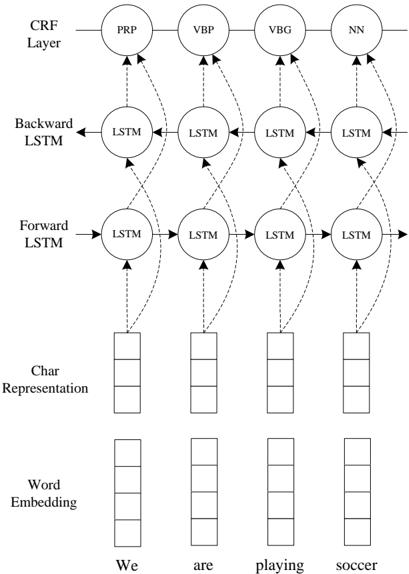
State-of-the-art sequence labeling systems traditionally require large amounts of taskspecific knowledge in the form of handcrafted features and data pre-processing.In this paper, we introduce a novel neutral network architecture that benefits from both word-and character-level representations automatically, by using combination of bidirectional LSTM, CNN and CRF.Our system is truly end-to-end, requiring no feature engineering or data preprocessing, thus making it applicable to a wide range of sequence labeling tasks.We evaluate our system on two data sets for two sequence labeling tasks -Penn Treebank WSJ corpus for part-of-speech (POS) tagging and CoNLL 2003 corpus for named entity recognition (NER).We obtain state-of-the-art performance on both datasets -97.55% accuracy for POS tagging and 91.21% F1 for NER.
Overview
The claims and statistics of this paper haven’t been checked yet.
Free: it reads the open-access text and checks the first 5 claims that cite a source we can check. Create a free account to check every claim.
Integrity signals
Registry
Cites
Statistics
Figures
Verification
Claims the paper makes
The claims and statistics of this paper haven’t been checked yet.
Free: it reads the open-access text and checks the first 5 claims that cite a source we can check. Create a free account to check every claim.
Claims other papers make about this one
Each is checked against this paper’s own text: does it say what the citing paper says it does?
The cited source says what the claim attributes to it.
In the citing paper
“Empirically, for those token [81] or span [30] prediction tasks (e.g., NER), prompt decomposition can be considered, while for those span relation prediction [66] tasks (e.g., entity coreference), prompts composition would be a better choice.”
From Pre-train, Prompt, and Predict: A Systematic Survey of Prompting Methods in Natural Language Processing (2023) · cites this paper as [81]
Self-check
Percentages, sums and reported differences re-computed from the paper’s own numbers.
The self-check needs the paper’s full text.
Citations
Cites
Hochreiter, S., & Schmidhuber, J. (1997) · Neural Computation · doi:10.1162/neco.1997.9.8.1735 · Cited by 102,318 · cited 2×
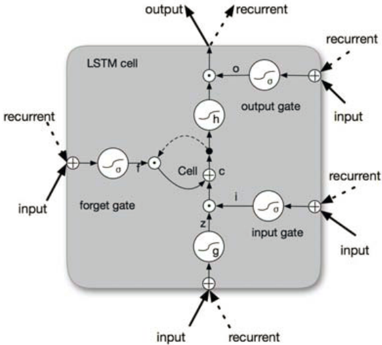
“Recently, recurrent neural networks (RNN) (Goller and Kuchler, 1996), together with its variants such as long-short term memory (LSTM) (Hochreiter and Schmidhuber, 1997; Gers et al., 2000) and gated recurrent unit (GRU) (Cho et al., 2014), have shown great success in modeling sequential data.”
BackgroundAdam: A Method for Stochastic Optimization
Kingma, D. P., & Ba, J. (2014) · arXiv · doi:10.48550/arxiv.1412.6980 · Cited by 98,946
Glove: Global Vectors for Word Representation
Pennington, J., Socher, R., & Manning, C. (2014) · Proceedings of the 2014 Conference on Empirical Methods in Natural Language Processing (EMNLP) · doi:10.3115/v1/d14-1162 · Cited by 34,071 · cited 1×
“glove/ trained on 6 billion words from Wikipedia and web text (Pennington et al., 2014)”
Background(2014) · Cited by 33,419
Distributed Representations of Words and Phrases and their Compositionality
Mikolov, T., Sutskever, I., Chen, K., Corrado, G., & Dean, J. (2013) · arXiv · doi:10.48550/arxiv.1310.4546 · Cited by 24,533 · cited 2×
“, 2011), and Google’s Word2Vec 300 dimensional embeddings3 trained on 100 billion words from Google News (Mikolov et al., 2013).”
BackgroundDelving Deep into Rectifiers: Surpassing Human-Level Performance on ImageNet Classification
He, K., Zhang, X., Ren, S., & Sun, J. (2015) · 2015 IEEE International Conference on Computer Vision (ICCV) · doi:10.1109/iccv.2015.123 · Cited by 19,741 · cited 1×
“To test the effectiveness of pretrained word embeddings, we experimented with randomly initialized embeddings with 100 dimensions, where embeddings are uniformly sampled from range [ − where dim is the dimension of embeddings (He et al., 2015).”
Method(2010) · Cited by 14,134
Conditional Random Fields: Probabilistic Models for Segmenting and Labeling Sequence Data
Lafferty, J., McCallum, A., & Pereira, F. C. N. (2001) · ScholarlyCommons (University of Pennsylvania) · Cited by 12,935
Backpropagation Applied to Handwritten Zip Code Recognition
LeCun, Y., Boser, B., Denker, J. S., Henderson, D., Howard, R. E., Hubbard, W., & Jackel, L. D. (1989) · Neural Computation · doi:10.1162/neco.1989.1.4.541 · Cited by 11,891 · cited 2×
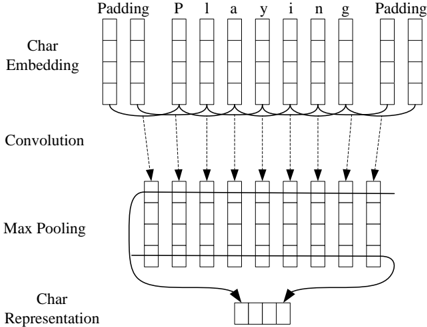
“We first use convolutional neural networks (CNNs) (LeCun et al., 1989) to encode character-level information of a word into its character-level representation.”
MethodSpeech recognition with deep recurrent neural networks
Graves, A., Mohamed, A.-R., & Hinton, G. (2013) · 2013 IEEE International Conference on Acoustics, Speech and Signal Processing · doi:10.1109/icassp.2013.6638947 · Cited by 8,893 · cited 4×
“Several RNN-based neural network models have been proposed to solve sequence labeling tasks like speech recognition (Graves et al., 2013), POS tagging (Huang et al., 2015) and NER (Chiu and Nichols, 2015; Hu et al., 2016), achieving competitive performance against traditional models.”
MethodInfluential
Research works printed but not linked: 6
- [3]3. James Bergstra, Olivier Breuleux, Frédéric Bastien, Pascal Lamblin, Razvan Pascanu, Guillaume Des- jardins, Joseph Turian, David Warde-Farley, and Yoshua Bengio. 2010. Theano: a cpu and gpu math expression compiler. In Proceedings of the Python for scientific computing conference (SciPy), volume 4, page 3. Austin, TX.
- [15]15. Felix A Gers, Nicol N Schraudolph, and Jürgen Schmidhuber. 2003. Learning precise timing with lstm recurrent networks. The Journal of Machine Learning Research, 3:115-143.
- [37]37. Xuezhe Ma and Hai Zhao. 2012a. Fourth-order depen- dency parsing. In Proceedings of COLING 2012: Posters, pages 785-796, Mumbai, India, December.
- [43]43. Tomas Mikolov, Ilya Sutskever, Kai Chen, Greg S Cor- rado, and Jeff Dean. 2013. Distributed representa- tions of words and phrases and their compositional- ity. In Advances in neural information processing systems, pages 3111-3119.
- [58]58. Erik F. Tjong Kim Sang and Jorn Veenstra. 1999. Rep- resenting text chunks. In Proceedings of EACL'99, pages 173-179. Bergen, Norway.
- [59]59. Kristina Toutanova, Dan Klein, Christopher D Man- ning, and Yoram Singer. 2003. Feature-rich part- of-speech tagging with a cyclic dependency net- work. In Proceedings of NAACL-HLT-2003, Volume 1, pages 173-180.
Cited by
Items 201–300 of 1,008
Dual Adversarial Neural Transfer for Low-Resource Named Entity Recognition
Zhou, J. T., Zhang, H., Jin, D., Zhu, H., Fang, M., Goh, R. S. M., & Kwok, K. (2019) · Proceedings of the conference - Association for Computational Linguistics. Meeting · doi:10.18653/v1/p19-1336 · Cited by 117
“For the base model, we follow the state-of-the-art LSTM-CNN-CRF based structure (Huang et al., 2015; Lample et al., 2016; Chiu and Nichols, 2016; Ma and Hovy, 2016) for NER task, as shown in Figure 1(a).”
BackgroundMethodInfluentialKnowledge graph quality control: A survey
Wang, X., Chen, L., Ban, T., Usman, M., Guan, Y., Liu, S., Wu, T., & Chen, H. (2021) · Fundamental Research · doi:10.1016/j.fmre.2021.09.003 · Cited by 120
GCDT: A Global Context Enhanced Deep Transition Architecture for Sequence Labeling
Liu, Y., Meng, F., Zhang, J., Xu, J., Chen, Y., & Zhou, J. (2019) · Proceedings of the conference - Association for Computational Linguistics. Meeting · doi:10.18653/v1/p19-1233 · Cited by 117
“20 (Ma and Hovy, 2016) 91.”
Early stopping by correlating online indicators in neural networks
Ferro, M. V., Doval, Y., Ribadas, F. J., & Bilbao, V. M. D. (2022) · Neural Networks · doi:10.1016/j.neunet.2022.11.035 · Cited by 119
GRN: Gated Relation Network to Enhance Convolutional Neural Network for Named Entity Recognition
Chen, H., Lin, Z., Ding, G., Lou, J., Zhang, Y., & Karlsson, B. F. (2019) · Proceedings of the AAAI Conference on Artificial Intelligence · doi:10.1609/aaai.v33i01.33016236 · Cited by 115
“Although these systems can achieve high performance, they heavily rely on hand-crafted features or task-specific resources (Ma and Hovy 2016), which are expensive to obtain and hard to adapt to other domains or languages.”
BackgroundMethodResultInfluentialKansei engineering for new energy vehicle exterior design: An internet big data mining approach
Lai, X., Zhang, S., Mao, N., Liu, J., & Chen, Q. (2021) · Computers & Industrial Engineering · doi:10.1016/j.cie.2021.107913 · Cited by 115
Improving Aspect Term Extraction With Bidirectional Dependency Tree Representation
Luo, H., Li, T., Liu, B., Wang, B., & Unger, H. (2019) · IEEE/ACM Transactions on Audio Speech and Language Processing · doi:10.1109/taslp.2019.2913094 · Cited by 114
“BiLSTM+CNN: BiLSTM+CNN10 is the Bi-directional LSTM-CNNs-CRF model from [44].”
MethodInfluentialAn Effective Transition-based Model for Discontinuous NER
Dai, X., Karimi, S., Hachey, B., & Paris, C. L. (2020) · Proceedings of the conference - Association for Computational Linguistics. Meeting · doi:10.18653/v1/2020.acl-main.520 · Cited by 114
Towards Robust Visual Information Extraction in Real World: New Dataset and Novel Solution
Wang, J.-P., Liu, C., Jin, L., Tang, G., Zhang, J., Zhang, S., Wang, Q., Wu, Y., & Cai, M. (2021) · Proceedings of the AAAI Conference on Artificial Intelligence · doi:10.1609/aaai.v35i4.16378 · Cited by 114
Dialogue Act Recognition via CRF-Attentive Structured Network
Chen, Z., Yang, R., Zhao, Z., Cai, D., & He, X. (2018) · International ACM SIGIR Conference on Research and Development in Information Retrieval (SIGIR) · doi:10.1145/3209978.3209997 · Cited by 113
Improved Differentiable Architecture Search for Language Modeling and Named Entity Recognition
Jiang, Y., Hu, C., Xiao, T., Zhang, C., & Zhu, J. (2019) · Conference on Empirical Methods in Natural Language Processing (EMNLP) · doi:10.18653/v1/d19-1367 · Cited by 118
“3588 model because it achieved state-of-the-art results on several sequence labeling tasks (Lample et al., 2016; Ma and Hovy, 2016).”
BackgroundSpanNER: Named Entity Re-/Recognition as Span Prediction
Fu, J., Huang, X., & Liu, P. (2021) · Proceedings of the 59th Annual Meeting of the Association for Computational Linguistics and the 11th International Joint Conference on Natural Language Processing (Volume 1: Long Papers) · doi:10.18653/v1/2021.acl-long.558 · Cited by 112
“NER as Different Tasks Although NER is commonly formulated as a sequence labeling task (Chiu and Nichols, 2015; Huang et al., 2015; Ma and Hovy, 2016; Lample et al., 2016; Akbik et al., 2018; Peters et al., 2018; Devlin et al., 2018; Xia et al., 2019; Akbik et al., 2019; Luo et al., 2020; Lin et al., 2020), recently o…”
BackgroundMethodInfluentialScientific Information Extraction with Semi-supervised Neural Tagging
Luan, Y., Ostendorf, M., & Hajishirzi, H. (2017) · Proceedings of the 2017 Conference on Empirical Methods in Natural Language Processing · doi:10.18653/v1/d17-1279 · Cited by 77
A4NT: Author Attribute Anonymity by Adversarial Training of Neural Machine Translation
Shetty, R., Schiele, B., & Fritz, M. (2018) · Max Planck Digital Library · doi:10.60882/cispa.24612720 · Cited by 61
Differentiable Dynamic Programming for Structured Prediction and AttentionPreprint
Mensch, A., & Blondel, M. (2018) · arXiv (Cornell University) · doi:10.48550/arxiv.1802.03676 · Cited by 113
SECNLP: A survey of embeddings in clinical natural language processing
Kalyan, K. S., & Sangeetha, S. (2020) · Journal of Biomedical Informatics · doi:10.1016/j.jbi.2019.103323 · Cited by 111
“Further, the use of character level embeddings generated using CNN [101] along with health2vec embeddings improved the performance.”
MethodPhonologically Aware Neural Model for Named Entity Recognition in Low Resource Transfer Settings
Bharadwaj, A., Mortensen, D. R., Dyer, C., & Carbonell, J. (2016) · Conference on Empirical Methods in Natural Language Processing (EMNLP) · doi:10.18653/v1/d16-1153 · Cited by 113
“(Klein et al., 2003; Florian et al., 2003; McCallum and Li, 2003; Ratinov and Roth, 2009; Chandra et al., 1981; Lin and Wu, 2009; Lample et al., 2016; Yang et al., 2016; Ma and Hovy, 2016).”
BackgroundNamed Entity Recognition on Code-Switched Data: Overview of the CALCS 2018 Shared Task
Aguilar, G., AlGhamdi, F., Soto, V., Diab, M., Hirschberg, J., & Solorio, T. (2018) · Workshop on Computational Approaches to Code Switching · doi:10.18653/v1/w18-3219 · Cited by 111
“2% of F1score on well-formatted text (Lample et al., 2016; Ma and Hovy, 2016; Liu et al., 2017).”
Neural Chinese Named Entity Recognition via CNN-LSTM-CRF and Joint Training with Word Segmentation
Wu, F., Liu, J., Wu, C., Huang, Y., & Xie, X. (2019) · The World Wide Web Conference · doi:10.1145/3308558.3313743 · Cited by 82
“NER has been studied for many years and various methods have been proposed [16, 25].”
BackgroundMethodInfluentialPart-of-Speech Tagging for Twitter with Adversarial Neural Networks
Gui, T., Zhang, Q., Huang, H., Peng, M.-L., & Huang, X. (2017) · Conference on Empirical Methods in Natural Language Processing · doi:10.18653/v1/d17-1256 · Cited by 83
“Bi-LSTMs with word, character or unicode byte embedding were also introduced to achieve the POS tagging and named entity recognition tasks (Plank et al., 2016; Chiu and Nichols, 2015; Ma and Hovy, 2016).”
MethodGraphIE: A Graph-Based Framework for Information Extraction
Qian, Y., Santus, E., Jin, Z., Guo, J., & Barzilay, R. (2019) · Conference of the North American Chapter of the Association for Computational Linguistics: Human Language Technologies (NAACL-HLT) · doi:10.18653/v1/n19-1082 · Cited by 109
“This architecture and its variants have been extensively studied and demonstrated to be successful in previous work on information extraction (Lample et al., 2016; Ma and Hovy, 2016).”
BackgroundDWIE: An entity-centric dataset for multi-task document-level information extraction
Zaporojets, K., Deleu, J., Develder, C., & Demeester, T. (2021) · Information Processing & Management · doi:10.1016/j.ipm.2021.102563 · Cited by 110
Good Examples Make A Faster Learner: Simple Demonstration-based Learning for Low-resource NER
Lee, D., Kadakia, A., Tan, K., Agarwal, M., Feng, X., Shibuya, T., Mitani, R., Sekiya, T., Pujara, J., & Ren, X. (2022) · Proceedings of the conference - Association for Computational Linguistics. Meeting · doi:10.18653/v1/2022.acl-long.192 · Cited by 110
Deep learning for named entity recognition: a survey
Hu, Z., Hou, W. Z., & Liu, X. (2024) · Neural Computing and Applications · doi:10.1007/s00521-024-09646-6 · Cited by 110
“12, Ma et al. [59] used CNNs to derive character-level word representations, and the word-level and character-level coding vectors from the CNNs are cascaded and fed into the BiLSTM-CRF.”
LSTM-CRF for Drug-Named Entity Recognition
Zeng, D., Sun, C., Lin, L., & Liu, B. (2017) · Entropy · doi:10.3390/e19060283 · Cited by 108
“Unfortunately, among the preliminary experiment [32], none of them could enhance the SGD.”
BackgroundBetter Modeling of Incomplete Annotations for Named Entity Recognition
Jie, Z., Xie, P., Lu, W., Ding, R., & Li, L. (2019) · Conference of the North American Chapter of the Association for Computational Linguistics: Human Language Technologies (NAACL-HLT) · doi:10.18653/v1/n19-1079 · Cited by 107
“These benchmark results are comparable with the results re-ported in the state-of-the-art NER systems (Lam-ple et al., 2016; Ma and Hovy, 2016; Reimers and Gurevych, 2017).”
ResultMNER-QG: An End-to-End MRC Framework for Multimodal Named Entity Recognition with Query Grounding
Jia, M., Shen, L., Shen, X., Liao, L., Chen, M., He, X., Chen, Z., & Li, J. (2023) · Proceedings of the AAAI Conference on Artificial Intelligence · doi:10.1609/aaai.v37i7.25971 · Cited by 107
Robust Lexical Features for Improved Neural Network Named-Entity RecognitionPreprint
Ghaddar, A., & Langlais, P. (2018) · arXiv (Cornell University) · doi:10.48550/arxiv.1806.03489 · Cited by 108
“Various approaches have been proposed to tackle the task, from hand-crafted feature-based machine learning models like conditional random fields (Finkel et al., 2005) and perceptron (Ratinov and Roth, 2009), to deep neural models (Collobert et al., 2011; Ma and Hovy, 2016; Strubell et al., 2017).”
BackgroundMethodFedNER: Privacy-preserving Medical Named Entity Recognition with Federated LearningPreprint
Ge, S., Wu, F., Wu, C., Qi, T., Huang, Y., & Xie, X. (2020) · arXiv (Cornell University) · doi:10.48550/arxiv.2003.09288 · Cited by 107
“(4) CNN-LSTM-CRF (Ma and Hovy, 2016), using CNN to learn character representations and LSTM to learn word representations; (5) S-LSTM-CRF (Lample et al., 2016), a variant of LSTM-CRF that uses a stacked Bi-LSTM for word representation; (6) CNN-CLSTM-CRF (Shen et al., 2017), a variant of…”
InfluentialWebFormer: The Web-page Transformer for Structure Information Extraction
Wang, Q., Fang, Y. Q., Ravula, A., Feng, F., Quan, X., & Liu, D. (2022) · International World Wide Web Conference (WWW) · doi:10.1145/3485447.3512032 · Cited by 106
“Recently, there has been an increasing number of works that develop natural language models with sequence modeling [9, 20, 26, 30, 34, 61] for web information extraction.”
BackgroundExplainable Authorship Verification in Social Media via Attention-based Similarity Learning
Boenninghoff, B., Hessler, S., Kolossa, D., & Nickel, R. M. (2019) · 2019 IEEE International Conference on Big Data (Big Data) · doi:10.1109/bigdata47090.2019.9005650 · Cited by 62
Luo, L., Yang, Z., Cao, M., Wang, L., Zhang, Y., & Lin, H. (2020) · Journal of Biomedical Informatics · doi:10.1016/j.jbi.2020.103384 · Cited by 106
Character-based Joint Segmentation and POS Tagging for Chinese using Bidirectional RNN-CRF
Shao, Y., Hardmeier, C., Tiedemann, J., & Nivre, J. (2017) · Helda - University of Helsinki Institutional Repository · doi:10.48550/arxiv.1704.01314 · Cited by 105
Deep Learning-Based Named Entity Recognition and Knowledge Graph Construction for Geological Hazards
Fan, R., Wang, L., Yan, J., Song, W., Zhu, Y., & Chen, X. (2019) · ISPRS International Journal of Geo-Information · doi:10.3390/ijgi9010015 · Cited by 104
Text-to-Table: A New Way of Information Extraction
Wu, X., Zhang, J., & Li, H. (2022) · Proceedings of the conference - Association for Computational Linguistics. Meeting · doi:10.18653/v1/2022.acl-long.180 · Cited by 105
Weakly Supervised Sequence Tagging from Noisy Rules
Safranchik, E., Luo, S., & Bach, S. (2020) · Proceedings of the AAAI Conference on Artificial Intelligence · doi:10.1609/aaai.v34i04.6009 · Cited by 78
“We use both word embeddings and a CNN-based character encoder (Lample et al. 2016; Ma and Hovy 2016).”
MethodBipartite Flat-Graph Network for Nested Named Entity Recognition
Luo, Y., & Zhao, H. (2020) · Proceedings of the conference - Association for Computational Linguistics. Meeting · doi:10.18653/v1/2020.acl-main.571 · Cited by 103
Towards reliable named entity recognition in the biomedical domain
Giorgi, J., & Bader, G. D. (2019) · Bioinformatics · doi:10.1093/bioinformatics/btz504 · Cited by 103
BiLSTM-CRF for geological named entity recognition from the geoscience literature
Qiu, Q., Xie, Z., Wu, L., Tao, L., & Li, W. (2019) · Earth Science Informatics · doi:10.1007/s12145-019-00390-3 · Cited by 102
“BiLSTM-CNNs-CRF (Ma and Hovy 2016): this method uses a combination of bidirectional LSTM, CNN and CRF for NER, which benefits from both word-and character-level representations automatically.”
TriggerNER: Learning with Entity Triggers as Explanations for Named Entity Recognition
Lin, B. Y., Lee, D.-H., Shen, M., Moreno, R., Huang, X., Shiralkar, P., & Ren, X. (2020) · Proceedings of the conference - Association for Computational Linguistics. Meeting · doi:10.18653/v1/2020.acl-main.752 · Cited by 102
An Embarrassingly Easy but Strong Baseline for Nested Named Entity Recognition
Yan, H., Sun, Y., Li, X., & Qiu, X. (2023) · Proceedings of the conference - Association for Computational Linguistics. Meeting · doi:10.18653/v1/2023.acl-short.123 · Cited by 103
SqueezedText: A Real-Time Scene Text Recognition by Binary Convolutional Encoder-Decoder Network
Liu, Z., Li, Y., Ren, F., Goh, W. L., & Yu, H. (2018) · Proceedings of the AAAI Conference on Artificial Intelligence · doi:10.1609/aaai.v32i1.12252 · Cited by 97
“The extracted sequence U will be fed into a Bi-RNN network (Ma and Hovy 2016) that corrects the detecting error in U by performing a contextual correction and classification and then outputs the recognition results.”
MethodLow-Resource Name Tagging Learned with Weakly Labeled Data
Cao, Y., Hu, Z., Chua, T., Liu, Z., & Ji, H. (2019) · Conference on Empirical Methods in Natural Language Processing (EMNLP) · doi:10.18653/v1/d19-1025 · Cited by 100
“The difference between them mainly lies in whether the method models sequential label constraints, which have been demonstrated effective in many NN-CRFs models (Lample et al., 2016; Ma and Hovy, 2016; Chiu and Nichols, 2016).”
MethodWhen is multitask learning effective? Semantic sequence prediction under varying data conditionsPreprint
Alonso, H. M., & Plank, B. (2017) · University of Groningen research database (University of Groningen / Centre for Information Technology) · Cited by 100
Proceedings of the 18th BioNLP Workshop and Shared Task
(2019) · doi:10.18653/v1/w19-50 · Cited by 97
LightNER: A Lightweight Tuning Paradigm for Low-resource NER via Pluggable PromptingPreprint
Chen, X., Li, L., Deng, S., Tan, C., Xu, C., Huang, F., Si, L., Chen, H., & Zhang, N. (2021) · arXiv (Cornell University) · doi:10.48550/arxiv.2109.00720 · Cited by 121
“The current dominant methods (Ma and Hovy, 2016; Liu et al., 2019; Zhang et al., 2020b; Liu et al., 2021a,b) treat NER as a sequence tagging problem with label-specific classifiers or CRF.”
MethodDeepRan: Attention-based BiLSTM and CRF for Ransomware Early Detection and Classification
Roy, K. C., & Chen, Q. (2020) · Information Systems Frontiers · doi:10.1007/s10796-020-10017-4 · Cited by 102
“of attention-based BiLSTM-CRF is represented as a single log-linear distribution as a function of each observation sequence (Ma and Hovy 2016).”
BackgroundMethodInfluentialHedderich, M. A., Adelani, D. I., Zhu, D., Alabi, J. O., Markus, U., & Klakow, D. (2020) · Conference on Empirical Methods in Natural Language Processing (EMNLP) · doi:10.18653/v1/2020.emnlp-main.204 · Cited by 101
Yu, M., Zhang, Y., Huang, J., Wang, X., Zhang, Y., Ji, H., & Han, J. (2021) · Conference on Empirical Methods in Natural Language Processing (EMNLP) · doi:10.18653/v1/2021.emnlp-main.810 · Cited by 99
“In recent years, deep neural models (Devlin et al., 2019; Huang et al., 2015; Lample et al., 2016; Ma and Hovy, 2016) have achieved enormous success for NER, thanks to their strong representation learning power that accurately captures the entity semantics in textual contexts.”
BackgroundMethodEvaluating the carbon footprint of NLP methods: a survey and analysis of existing tools
Bannour, N., Ghannay, S., Névéol, A., & Ligozat, A.-L. (2021) · Proceedings of the Second Workshop on Simple and Efficient Natural Language Processing · doi:10.18653/v1/2021.sustainlp-1.2 · Cited by 98
“, 2020) while the bottom part presents the results obtained with an implementation of the method by (Ma and Hovy, 2016).”
BackgroundMethodResultInfluentialMeta Multi-Task Learning for Sequence Modeling
Chen, J., Qiu, X., Liu, P., & Huang, X. (2018) · Proceedings of the AAAI Conference on Artificial Intelligence · doi:10.1609/aaai.v32i1.12007 · Cited by 98
Chung, S., Moon, S., Kim, J.-H., Kim, J., Lim, S. P., & Chi, S. (2023) · Automation in Construction · doi:10.1016/j.autcon.2023.105020 · Cited by 100
Biomedical Named Entity Recognition with Multilingual BERT
Hakala, K., & Pyysalo, S. (2019) · Proceedings of The 5th Workshop on BioNLP Open Shared Tasks · doi:10.18653/v1/d19-5709 · Cited by 96
Biomedical Named Entity Recognition at Scale
Kocaman, V., & Talby, D. (2021) · Lecture notes in computer science · doi:10.1007/978-3-030-68763-2_48 · Cited by 96
SemParser: A Semantic Parser for Log Analytics
Huo, Y., Su, Y., Lee, C., & Lyu, M. R. (2023) · 2023 IEEE/ACM 45th International Conference on Software Engineering (ICSE) · doi:10.1109/icse48619.2023.00082 · Cited by 58
“Firstly, inspired by previous ndings that character-level representation helps exploit sub-word-level information [46], we adapt a Convolution Neural Network (CNN) to extract character-level features of each word.”
MethodParsing Tweets into Universal Dependencies
Liu, Y., Zhu, Y., Che, W., Qin, B., Schneider, N., & Smith, N. A. (2018) · Conference of the North American Chapter of the Association for Computational Linguistics: Human Language Technologies (NAACL-HLT) · doi:10.18653/v1/n18-1088 · Cited by 97
“We introduce a new character-level bidirectional LSTM (bi-LSTM) sequence-labeling model (Huang et al., 2015; Ma and Hovy, 2016) for tok-enization.”
MethodDevika, R., Subramaniyaswamy, V., Mahenthar, C. S. J., Varadarajan, V., & Kotecha, K. V. (2021) · IEEE Access · doi:10.1109/access.2021.3133651 · Cited by 95
Neural networks versus Logistic regression for 30 days all-cause readmission prediction
Allam, A., Nagy, M. L., Thoma, G. R., & Krauthammer, M. O. (2019) · Scientific Reports · doi:10.1038/s41598-019-45685-z · Cited by 94
“Based on data from 272,778 (49% female) patients with a mean (SD) age of 73 years (14) and 343,328 HF admissions (67% of total admissions), we trained and tested our predictive readmission models following a stratified 5-fold cross-validation scheme.”
MethodJi, B., Yu, J., Li, S., Ma, J., Wu, Q., Tan, Y., & Liu, H. (2020) · International Conference on Computational Linguistics · doi:10.18653/v1/2020.coling-main.8 · Cited by 94
“Various neural networks have been widely investigated for the two subtasks, such as RNNs (Huang et al., 2015; Ma and Hovy, 2016), CNNs (Limsopatham and Collier, 2016) for entity detection, and RNNs (Zhang and Wang, 2015), CNNs (Zeng et al.”
MethodEnhancing Multimodal Entity and Relation Extraction With Variational Information Bottleneck
Cui, S., Cao, J., Cong, X., Sheng, J., Li, Q., Liu, T., & Shi, J. (2024) · IEEE/ACM Transactions on Audio Speech and Language Processing · doi:10.1109/taslp.2023.3345146 · Cited by 95
“The NER baselines contain 1) CNNBiLSTM-CRF [37] utilizes word-and character-level representations via BiLSTM and CNN for NER; 2) HBiLSTMCRF [38] replaces the CNN in CNNBiLSTM-CRF with an LSTM; 3) T-NER [39] is a Twitter-specific NER system with various features to boost performance, and we refer to…”
MethodCharacter Recognition in Air-Writing Based on Network of Radars for Human-Machine Interface
Arsalan, M., & Santra, A. (2019) · IEEE Sensors Journal · doi:10.1109/jsen.2019.2922395 · Cited by 93
“BLSTMs [19], is a variant of LSTM, which duplicates the LSTM layer such that one LSTM layer takes input of the input sequence, same as in (uni-directional) LSTM, and another takes the reversed copy of the input sequence to the other”
BackgroundMulti-Scale Self-Attention for Text Classification
Guo, Q., Qiu, X., Liu, P., Xue, X., & Zhang, Z. (2020) · Proceedings of the AAAI Conference on Artificial Intelligence · doi:10.1609/aaai.v34i05.6290 · Cited by 92
Li, Y., Zhu, M., Ma, Y., & Yang, J. (2020) · IET Radar Sonar & Navigation · doi:10.1049/iet-rsn.2020.0060 · Cited by 93
“The basic seq2seq method and its variants have been widely investigated in domains like neural machine translation [29, 30], sequence labelling [31], document analysis [32] and image captioning [33].”
MethodZhong, Z., Sun, A. Y., Yang, Q., & Ouyang, Q. (2019) · Journal of Hydrology · doi:10.1016/j.jhydrol.2019.04.015 · Cited by 95
GraphIE: A Graph-Based Framework for Information ExtractionPreprint
Qian, Y., Santus, E., Jin, Z., Guo, J., & Barzilay, R. (2018) · arXiv (Cornell University) · doi:10.48550/arxiv.1810.13083 · Cited by 93
“This architecture and its variants have been extensively studied and demonstrated to be successful in previous work on information extraction (Lample et al., 2016; Ma and Hovy, 2016).”
BackgroundNested Named Entity Recognition with Span-level Graphs
Wan, J., Ru, D., Zhang, W., & Yu, Y. H. (2022) · Proceedings of the conference - Association for Computational Linguistics. Meeting · doi:10.18653/v1/2022.acl-long.63 · Cited by 92
“Recently, neural-based NER architectures have shown remarkable performance with minimal feature engineering, such as CNN-CRF (Collobert et al., 2011), BiLSTM+CRF (Lample et al., 2016), LSTM-CNN-CRF (Ma and Hovy, 2016) and Lat-tice LSTM (Zhang and Yang, 2018a).”
Dandala, B., Joopudi, V., & Devarakonda, M. V. (2019) · Drug Safety · doi:10.1007/s40264-018-0764-x · Cited by 93
Label-Aware Double Transfer Learning for Cross-Specialty Medical Named Entity Recognition
Wang, Z., Qu, Y., Chen, L., Shen, J. G., Zhang, W., Zhang, S., Gao, Y., Gu, G., Chen, K., & Yu, Y. H. (2018) · Conference of the North American Chapter of the Association for Computational Linguistics: Human Language Technologies (NAACL-HLT) · doi:10.18653/v1/n18-1001 · Cited by 91
“Thus, bidirectional LSTM (Bi-LSTM) was employed in many previous works (Chiu and Nichols, 2016; Ma and Hovy, 2016; Lample et al., 2016) to capture bidirectional information in a sequence.”
BackgroundMethodEnhanced Meta-Learning for Cross-Lingual Named Entity Recognition with Minimal Resources
Wu, Q., Lin, Z., Wang, G., Chen, H., Karlsson, B. F., Huang, B., & Lin, C.-Y. (2020) · Proceedings of the AAAI Conference on Artificial Intelligence · doi:10.1609/aaai.v34i05.6466 · Cited by 92
TheoryOn: A Design Framework and System for Unlocking Behavioral Knowledge Through Ontology Learning
Li, J., Larsen, K. R. T., & Abbasi, A. (2020) · MIS Quarterly · doi:10.25300/misq/2020/15323 · Cited by 91
“…extraction benchmarks included the BiLSTM + CRF classifier by Huang et al. (2015), the character-level CNN (CharCNN) + BiLSTM + CRF classifier by Ma and Hovy (2016), CRF, the domain relevance measure (DRM) (Jiang and Tan, 2010), the C/NC value (Drymonas et al. 2010), noun phrase term…”
MethodTemporal Effects on Pre-trained Models for Language Processing Tasks
Agarwal, O., & Nenkova, A. (2022) · Transactions of the Association for Computational Linguistics · doi:10.1162/tacl_a_00497 · Cited by 91
“GloVe+char BiLSTM (Hochreiter and Schmidhuber, 1997) with 840B-300d-cased GloVe (Pennington et al., 2014) and character-based word representation (Ma and Hovy, 2016) as input.”
MethodExtending Multilingual BERT to Low-Resource Languages
Wang, Z., K, K., Mayhew, S., & Roth, D. (2020) · Findings of the Association for Computational Linguistics: EMNLP 2020 · doi:10.18653/v1/2020.findings-emnlp.240 · Cited by 90
A Finnish news corpus for named entity recognition
Ruokolainen, T., Kauppinen, P., Silfverberg, M., & Lindén, K. (2019) · Language Resources and Evaluation · doi:10.1007/s10579-019-09471-7 · Cited by 91
“The state-of-the-art in statistical NER is currently yielded by recurrent neural network architectures (Lample et al., 2016; Ma and Hovy, 2016).”
BackgroundMethodInfluentialRethinking Generalization of Neural Models: A Named Entity Recognition Case Study
Fu, J., Liu, P., & Zhang, Q. (2020) · Proceedings of the AAAI Conference on Artificial Intelligence · doi:10.1609/aaai.v34i05.6276 · Cited by 69
TARGER: Neural Argument Mining at Your Fingertips
Chernodub, A., Oliynyk, O., Heidenreich, P., Bondarenko, A., Hagen, M., Biemann, C., & Panchenko, A. (2019) · Annual Meeting of the Association for Computational Linguistics: System Demonstrations (ACL Demo) · doi:10.18653/v1/p19-3031 · Cited by 90
“We implemented a BiLSTM-CNN-CRF neural tagger (Ma and Hovy, 2016) for identifying argument components and classifying them as claims or premises.”
MethodTime for aCTIon: Automated Analysis of Cyber Threat Intelligence in the WildPreprint
Siracusano, G., Sanvito, D., Gonzalez, R., Srinivasan, M., Kamatchi, S., Takahashi, W., Masaru, K., Kakumaru, T., & Bifulco, R. (2023) · arXiv (Cornell University) · doi:10.48550/arxiv.2307.10214 · Cited by 92
“The three main families of models used in state-of-the-art NER tasks are Convolutional Neural Networks (CNN), BiLSTM [35] and Transformers [26].”
BackgroundIdentifying Clinical Terms in Medical Text Using Ontology-Guided Machine Learning
Arbabi, A., Adams, D. R., Fidler, S., & Brudno, M. (2019) · JMIR Medical Informatics · doi:10.2196/12596 · Cited by 89
“On the other hand, in the more general domain of natural language processing, many machine learning–based text classification and NER tools have been recently introduced [17-19].”
BackgroundInterpretable Multi-dataset Evaluation for Named Entity Recognition
Fu, J., Liu, P., & Neubig, G. (2020) · Proceedings of the 2020 Conference on Empirical Methods in Natural Language Processing (EMNLP) · doi:10.18653/v1/2020.emnlp-main.489 · Cited by 48
Automated Attack Synthesis by Extracting Finite State Machines from Protocol Specification Documents
Pacheco, M. L., von Hippel, M., Weintraub, B., Goldwasser, D., & Nita-Rotaru, C. (2022) · IEEE Symposium on Security and Privacy (S&P) · doi:10.1109/sp46214.2022.9833673 · Cited by 89
Multilingual Code-switching Identification via LSTM Recurrent Neural Networks
Samih, Y., Maharjan, S., Attia, M. A., Kallmeyer, L., & Solorio, T. (2016) · Workshop on Computational Approaches to Code Switching · doi:10.18653/v1/w16-5806 · Cited by 89
Optimizing Bi-Encoder for Named Entity Recognition via Contrastive LearningPreprint
Zhang, S., Cheng, H., Gao, J., & Poon, H. (2022) · arXiv (Cornell University) · doi:10.48550/arxiv.2208.14565 · Cited by 89
“Depending on the way they formulate the task, these techniques can be categorized as NER as sequence labeling (Chiu & Nichols, 2016; Ma & Hovy, 2016; Katiyar & Cardie, 2018); NER as parsing (Lample et al., 2016; Yu et al., 2020); NER as span classification (Sohrab & Miwa, 2018; Xia et al., 2019;…”
BackgroundMethodA method for named entity normalization in biomedical articles: application to diseases and plants
Cho, H., Choi, W., & Lee, H. (2017) · BMC Bioinformatics · doi:10.1186/s12859-017-1857-8 · Cited by 88
“Ma et al. [22] proposed a neural network architecture that combines bidirectional LSTM, convolutional neural networks, and conditional random fields for the sequence labeling tasks, including part-of-speech tagging and NER.”
BackgroundWRENCH: A Comprehensive Benchmark for Weak SupervisionPreprint
Zhang, J., Yu, Y., Li, Y., Wang, Y., Yang, Y., Yang, M., & Ratner, A. (2021) · arXiv (Cornell University) · doi:10.48550/arxiv.2109.11377 · Cited by 90
“Following the standard protocols, we use entity-level F1-score as the metric [53, 60] and use BIO schema [90, 50, 53], which labels the beginning token of an entity as B-X and the other tokens inside that entity as I-X, while non-entity tokens are marked as O.”
MethodAutoregressive Structured Prediction with Language Models
Liu, T., Jiang, Y. E., Monath, N., Cotterell, R., & Sachan, M. (2022) · Findings of the Association for Computational Linguistics: EMNLP (Findings of EMNLP) · doi:10.18653/v1/2022.findings-emnlp.70 · Cited by 87
Few-Shot Named Entity Recognition: A Comprehensive StudyPreprint
Huang, J., Li, C., Subudhi, K., Jose, D., Balakrishnan, S., Chen, W., Peng, B., Gao, J., & Han, J. (2020) · arXiv (Cornell University) · doi:10.48550/arxiv.2012.14978 · Cited by 86
“, 2016) such as Bidrectional LSTMs (Chiu and Nichols, 2016) and adding CRFs to capture structures (Ma and Hovy, 2016).”
Sanskrit Word Segmentation Using Character-level Recurrent and Convolutional Neural Networks
Hellwig, O., & Nehrdich, S. (2018) · Conference on Empirical Methods in Natural Language Processing (EMNLP) · doi:10.18653/v1/d18-1295 · Cited by 85
De-identification of electronic health record using neural network
Ahmed, T., Aziz, M. M. A., & Mohammed, N. (2020) · Scientific Reports · doi:10.1038/s41598-020-75544-1 · Cited by 86
A multi-agent adaptive deep learning framework for online intrusion detection
Soltani, M., Khajavi, K., Siavoshani, M. J., & Jahangir, A. H. (2024) · Cybersecurity · doi:10.1186/s42400-023-00199-0 · Cited by 88
“For instance, in the field of natural language processing (NLP), the research studies (e.g. , Ma and Hovy (2016) and Huang et al. (2015)) have used LSTMs to tackle sequence labeling tasks like part of speech tagging and chunking .”
MethodCoarse-to-Fine Pre-training for Named Entity Recognition
Xue, M., Yu, B., Zhang, Z., Liu, T., Zhang, Y., & Wang, B. (2020) · Conference on Empirical Methods in Natural Language Processing (EMNLP) · doi:10.18653/v1/2020.emnlp-main.514 · Cited by 84
UD_BBC: Named entity recognition in social network combined BERT-BiLSTM-CRF with active learning
Li, W., Du, Y., Li, X., Chen, X., Xie, C., Li, H., & Li, X. (2022) · Engineering Applications of Artificial Intelligence · doi:10.1016/j.engappai.2022.105460 · Cited by 84
Obligation and Prohibition Extraction Using Hierarchical RNNs
Chalkidis, I., Androutsopoulos, I., & Michos, A. (2018) · Proceedings of the 56th Annual Meeting of the Association for Computational Linguistics (Volume 2: Short Papers) · doi:10.18653/v1/p18-2041 · Cited by 62
“or stacked BILSTM-CRF models (Ma and Hovy, 2016); hierarchical BILSTMs were not considered.”
MethodDeep Neural Approaches to Relation Triplets Extraction: a Comprehensive Survey
Nayak, T. K., Majumder, N., Goyal, P., & Poria, S. (2021) · Cognitive Computation · doi:10.1007/s12559-021-09917-7 · Cited by 84
Satirical News Detection and Analysis using Attention Mechanism and Linguistic Features
Yang, F., Mukherjee, A., & Dragut, E. C. (2017) · Conference on Empirical Methods in Natural Language Processing (EMNLP) · doi:10.18653/v1/d17-1211 · Cited by 83
“CNN is effective in extracting morphological information and name entities (Ma and Hovy, 2016), both of which are common in news.”
BackgroundStar-TransformerPreprint
Guo, Q., Qiu, X., Liu, P., Shao, Y., Xue, X., & Zhang, Z. (2019) · arXiv (Cornell University) · doi:10.48550/arxiv.1902.09113 · Cited by 84
“35 (Ma and Hovy, 2016) X X 97.”
Catelli, R., Gargiulo, F., Casola, V., Pietro, G. D., Fujita, H., & Esposito, M. (2020) · Applied Soft Computing · doi:10.1016/j.asoc.2020.106779 · Cited by 82
Automated Extraction and Presentation of Data Practices in Privacy Policies
Bui, D., Shin, K. G., Choi, J., & Shin, J. (2021) · Proceedings on Privacy Enhancing Technologies · doi:10.2478/popets-2021-0019 · Cited by 82
“We create a large dataset of data practices in real-world privacy policies to train a stateof-the-art neural NER model [18] with contextualized word embeddings [19].”
MethodInfluentialMeng, T., Fang, A., Rokhlenko, O., & Malmasi, S. (2021) · Conference of the North American Chapter of the Association for Computational Linguistics: Human Language Technologies (NAACL-HLT) · doi:10.18653/v1/2021.naacl-main.118 · Cited by 82
“The BiLSTM model has 3 inputs: GloVe embeddings (Pennington et al., 2014), ELMo embeddings (Peters et al., 2018) and CharCNN embeddings (Ma and Hovy, 2016).”
MethodMEgo2Vec: Embedding Matched Ego Networks for User Alignment Across Social Networks
Zhang, J., Chen, B., Wang, X., Chen, H., Li, C., Jin, F., Song, G., & Zhang, Y. (2018) · ACM International Conference on Information and Knowledge Management (CIKM) · doi:10.1145/3269206.3271705 · Cited by 82
“Many works demonstrate the effectiveness of CNN in representing texts [14].”
BackgroundA Dataset of German Legal Documents for Named Entity RecognitionPreprint
Leitner, E., Rehm, G., & Schneider, J. M. (2020) · arXiv (Cornell University) · doi:10.48550/arxiv.2003.13016 · Cited by 82
“End-to-end Sequence Labeling via Bi-directional LSTM-CNNs-CRF.”
MethodBhola, A., Halder, K., Prasad, A., & Kan, M.-Y. (2020) · International Conference on Computational Linguistics · doi:10.18653/v1/2020.coling-main.513 · Cited by 65
“Typically these methods employ Bidirectional Long Short Term Memory (BiLSTM) stacked with Conditional Random Field (CRF) layers to decode the sequence (Huang et al., 2015; Ma and Hovy, 2016).”
Method
Metadata
- Authors
- Ma, X., & Hovy, E.
- Affiliations
- Carnegie Mellon University (US)
- Venue
- Proceedings of the 54th Annual Meeting of the Association for Computational Linguistics (Volume 1: Long Papers)
- Published
- 2016
- Pages
- 1064-1074
- ISSN
- 0736-587X (ISSN-L)
- OpenAlex
- W2962902328
- Cited by
- 2,567
- References
- 65
- Citations by year
- 2026: 63 · 2025: 120 · 2024: 153 · 2023: 271 · 2022: 291 · 2021: 408 · 2020: 424 · 2019: 434 · 2018: 280 · 2017: 96 · 2016: 26
- FWCI
- 150.15
- Type
- conference paper
- Language
- en
- Open access
- hybrid
- doi.org
- Licence
- cc-by
- Locations
- Proceedings of the conference - Association for Computational Linguistics. Meeting (publishedVersion, cc-by)
- Funders
- Defense Advanced Research Projects Agency (FA8750, FA8750-12-2-0342)
- Topics
- Physical Sciences › Computer Science › Artificial Intelligence › Natural Language Processing Techniques
- Physical Sciences › Computer Science › Artificial Intelligence › Topic Modeling
- Physical Sciences › Computer Science › Computer Vision and Pattern Recognition › Handwritten Text Recognition Techniques
- Keywords
- sequence labeling, end-to-end learning, bidirectional LSTM, convolutional neural networks, conditional random fields, part-of-speech tagging, named entity recognition, CoNLL-2003
About these checks
Registry, retraction, Cites and statistics results are computed, not judged, with one exception: a printed reference that no index lists is read once by a model before it counts as a citation error. Claims are extracted by a model and kept only when their quote appears verbatim in the text; each cited source is then checked, with a model’s help, for whether it says what the claim relies on. Those verdicts can be wrong — read the claim’s quote and the cited source before relying on one.
Statistics and arithmetic are recomputed, not judged.
Confidence bands are shown only for fields calibrated on our annotated test set. None is calibrated yet, so no band is shown.
What counts as a claim ›How we measure confidence ›How we check this ›
Are you an author, or do you see a problem with this page? Request a review
Data sources
Bibliographic data: Semantic Scholar, OpenAlex, Crossref.
Contains information from the Semantic Scholar Academic Graph Datasets, made available under the ODC Attribution License (ODC-BY 1.0).
Semantic Scholar’s data is described in: Kinney, R., et al. (2023). The Semantic Scholar Open Data Platform. arXiv:2301.10140.
