

End-to-end Sequence Labeling via Bi-directional LSTM-CNNs-CRF
Open accessThe DOI matches its Crossref record; 64 of the 65 references it cites were found in a registry or an index.
Abstract
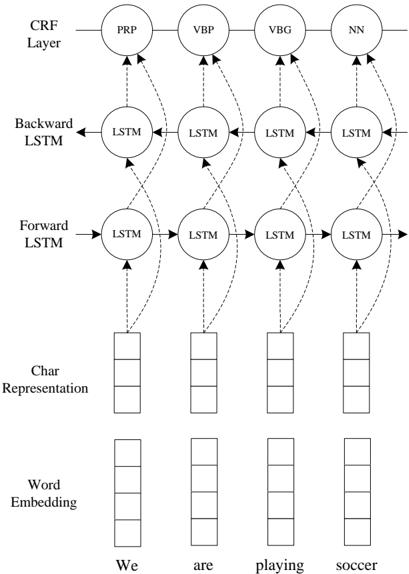
State-of-the-art sequence labeling systems traditionally require large amounts of taskspecific knowledge in the form of handcrafted features and data pre-processing.In this paper, we introduce a novel neutral network architecture that benefits from both word-and character-level representations automatically, by using combination of bidirectional LSTM, CNN and CRF.Our system is truly end-to-end, requiring no feature engineering or data preprocessing, thus making it applicable to a wide range of sequence labeling tasks.We evaluate our system on two data sets for two sequence labeling tasks -Penn Treebank WSJ corpus for part-of-speech (POS) tagging and CoNLL 2003 corpus for named entity recognition (NER).We obtain state-of-the-art performance on both datasets -97.55% accuracy for POS tagging and 91.21% F1 for NER.
Overview
The claims and statistics of this paper haven’t been checked yet.
Free: it reads the open-access text and checks the first 5 claims that cite a source we can check. Create a free account to check every claim.
Integrity signals
Registry
Cites
Statistics
Figures
Verification
Claims the paper makes
The claims and statistics of this paper haven’t been checked yet.
Free: it reads the open-access text and checks the first 5 claims that cite a source we can check. Create a free account to check every claim.
Claims other papers make about this one
Each is checked against this paper’s own text: does it say what the citing paper says it does?
The cited source says what the claim attributes to it.
In the citing paper
“Empirically, for those token [81] or span [30] prediction tasks (e.g., NER), prompt decomposition can be considered, while for those span relation prediction [66] tasks (e.g., entity coreference), prompts composition would be a better choice.”
From Pre-train, Prompt, and Predict: A Systematic Survey of Prompting Methods in Natural Language Processing (2023) · cites this paper as [81]
Self-check
Percentages, sums and reported differences re-computed from the paper’s own numbers.
The self-check needs the paper’s full text.
Citations
Cites
Hochreiter, S., & Schmidhuber, J. (1997) · Neural Computation · doi:10.1162/neco.1997.9.8.1735 · Cited by 102,318 · cited 2×
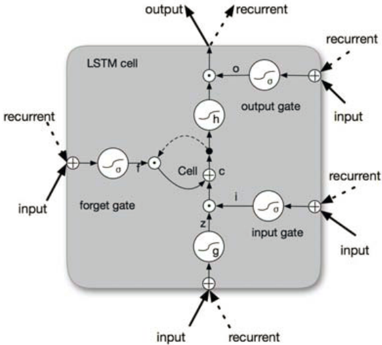
“Recently, recurrent neural networks (RNN) (Goller and Kuchler, 1996), together with its variants such as long-short term memory (LSTM) (Hochreiter and Schmidhuber, 1997; Gers et al., 2000) and gated recurrent unit (GRU) (Cho et al., 2014), have shown great success in modeling sequential data.”
BackgroundAdam: A Method for Stochastic Optimization
Kingma, D. P., & Ba, J. (2014) · arXiv · doi:10.48550/arxiv.1412.6980 · Cited by 98,946
Glove: Global Vectors for Word Representation
Pennington, J., Socher, R., & Manning, C. (2014) · Proceedings of the 2014 Conference on Empirical Methods in Natural Language Processing (EMNLP) · doi:10.3115/v1/d14-1162 · Cited by 34,071 · cited 1×
“glove/ trained on 6 billion words from Wikipedia and web text (Pennington et al., 2014)”
Background(2014) · Cited by 33,419
Distributed Representations of Words and Phrases and their Compositionality
Mikolov, T., Sutskever, I., Chen, K., Corrado, G., & Dean, J. (2013) · arXiv · doi:10.48550/arxiv.1310.4546 · Cited by 24,533 · cited 2×
“, 2011), and Google’s Word2Vec 300 dimensional embeddings3 trained on 100 billion words from Google News (Mikolov et al., 2013).”
BackgroundDelving Deep into Rectifiers: Surpassing Human-Level Performance on ImageNet Classification
He, K., Zhang, X., Ren, S., & Sun, J. (2015) · 2015 IEEE International Conference on Computer Vision (ICCV) · doi:10.1109/iccv.2015.123 · Cited by 19,741 · cited 1×
“To test the effectiveness of pretrained word embeddings, we experimented with randomly initialized embeddings with 100 dimensions, where embeddings are uniformly sampled from range [ − where dim is the dimension of embeddings (He et al., 2015).”
Method(2010) · Cited by 14,134
Conditional Random Fields: Probabilistic Models for Segmenting and Labeling Sequence Data
Lafferty, J., McCallum, A., & Pereira, F. C. N. (2001) · ScholarlyCommons (University of Pennsylvania) · Cited by 12,935
Backpropagation Applied to Handwritten Zip Code Recognition
LeCun, Y., Boser, B., Denker, J. S., Henderson, D., Howard, R. E., Hubbard, W., & Jackel, L. D. (1989) · Neural Computation · doi:10.1162/neco.1989.1.4.541 · Cited by 11,891 · cited 2×
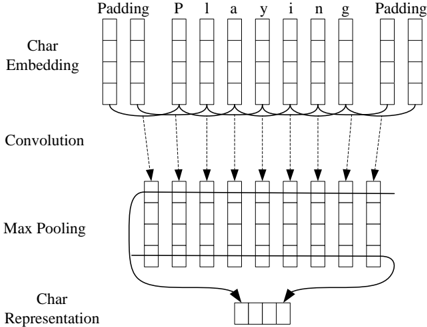
“We first use convolutional neural networks (CNNs) (LeCun et al., 1989) to encode character-level information of a word into its character-level representation.”
MethodSpeech recognition with deep recurrent neural networks
Graves, A., Mohamed, A.-R., & Hinton, G. (2013) · 2013 IEEE International Conference on Acoustics, Speech and Signal Processing · doi:10.1109/icassp.2013.6638947 · Cited by 8,893 · cited 4×
“Several RNN-based neural network models have been proposed to solve sequence labeling tasks like speech recognition (Graves et al., 2013), POS tagging (Huang et al., 2015) and NER (Chiu and Nichols, 2015; Hu et al., 2016), achieving competitive performance against traditional models.”
MethodInfluential
Research works printed but not linked: 6
- [3]3. James Bergstra, Olivier Breuleux, Frédéric Bastien, Pascal Lamblin, Razvan Pascanu, Guillaume Des- jardins, Joseph Turian, David Warde-Farley, and Yoshua Bengio. 2010. Theano: a cpu and gpu math expression compiler. In Proceedings of the Python for scientific computing conference (SciPy), volume 4, page 3. Austin, TX.
- [15]15. Felix A Gers, Nicol N Schraudolph, and Jürgen Schmidhuber. 2003. Learning precise timing with lstm recurrent networks. The Journal of Machine Learning Research, 3:115-143.
- [37]37. Xuezhe Ma and Hai Zhao. 2012a. Fourth-order depen- dency parsing. In Proceedings of COLING 2012: Posters, pages 785-796, Mumbai, India, December.
- [43]43. Tomas Mikolov, Ilya Sutskever, Kai Chen, Greg S Cor- rado, and Jeff Dean. 2013. Distributed representa- tions of words and phrases and their compositional- ity. In Advances in neural information processing systems, pages 3111-3119.
- [58]58. Erik F. Tjong Kim Sang and Jorn Veenstra. 1999. Rep- resenting text chunks. In Proceedings of EACL'99, pages 173-179. Bergen, Norway.
- [59]59. Kristina Toutanova, Dan Klein, Christopher D Man- ning, and Yoram Singer. 2003. Feature-rich part- of-speech tagging with a cyclic dependency net- work. In Proceedings of NAACL-HLT-2003, Volume 1, pages 173-180.
Cited by
Items 601–700 of 1,008
On the Evolution of Knowledge Graphs: A Survey and Perspective
Jiang, X., Xu, C., Shen, Y., Sun, X., Tang, L., Wang, S., Chen, Z., Wang, Y., & Guo, J. (2023) · arXiv · doi:10.48550/arxiv.2310.04835 · Cited by 42
“Named Entity Recognition All types Static & Discriminative Static embeddings are utilized in sequence labeling tasks and taggers are employed to identify and consolidate entities word2vec [39], GloVe [40], [41], fastText [42].”
MethodMagalhães, I. A. L., Júnior, O. A. D. C., de Carvalho, O. L. F., de Albuquerque, A. O., Hermuche, P. M., Merino, É. R., Gomes, R. A. T., & Guimarães, R. F. (2022) · Remote Sensing · doi:10.3390/rs14194858 · Cited by 42
Learning Better Internal Structure of Words for Sequence Labeling
Xin, Y., Hart, E., Mahajan, V., & Ruvini, J.-D. (2018) · Conference on Empirical Methods in Natural Language Processing (EMNLP) · doi:10.18653/v1/d18-1279 · Cited by 43
“2017); the other focuses on learning representations of words for the purpose of eliminating handcrafted features for word shape information (Lample et al., 2016; Ma and Hovy, 2016).”
BackgroundInfluentialWord-Character Graph Convolution Network for Chinese Named Entity Recognition
Tang, Z., Wan, B., & Yang, L. (2020) · IEEE/ACM Transactions on Audio Speech and Language Processing · doi:10.1109/taslp.2020.2994436 · Cited by 42
“In the works of [25], CNN is used to extract character-level representation and BiLSTM is responsible to model context information of each word.”
MethodUnsupervised Cross-Lingual Part-of-Speech Tagging for Truly Low-Resource Scenarios
Eskander, R., Muresan, S., & Collins, M. (2020) · Conference on Empirical Methods in Natural Language Processing (EMNLP) · doi:10.18653/v1/2020.emnlp-main.391 · Cited by 42
“BiLSTMs have been widely used for POS tagging (Huang et al., 2015; Wang et al., 2015; Plank et al., 2016; Ma and Hovy, 2016; Cotterell and Heigold, 2017) and other sequence-labeling tasks.”
MethodUnsupervised cross-domain named entity recognition using entity-aware adversarial training
Peng, Q., Zheng, C., Cai, Y., Wang, T., Xie, H., & Li, Q. (2020) · Neural Networks · doi:10.1016/j.neunet.2020.12.027 · Cited by 42
Liu, Z., Cao, J., You, J., Chen, S., Lu, Y., & Zhou, P. (2021) · Journal of Petroleum Science and Engineering · doi:10.1016/j.petrol.2021.108913 · Cited by 42
A fuzzy supply chain risk assessment approach using real-time disruption event data from Twitter
Janjua, N. K., Nawaz, F., & Prior, D. D. (2021) · Enterprise Information Systems · doi:10.1080/17517575.2021.1959652 · Cited by 42
Laparra, E., Xu, D., & Bethard, S. J. (2018) · Transactions of the Association for Computational Linguistics · doi:10.1162/tacl_a_00025 · Cited by 42
“…a CNN or LSTM for learning character-based representations of words with an LSTM or LSTM-CRF for word-by-word labeling (Chiu and Nichols, 2016; Lample et al., 2016b; Ma and Hovy, 2016), as well as character-by-character sequence-to-sequence networks (Gillick et al., 2016; Kuru et al., 2016).”
BackgroundJiang, Z., Zhao, C., He, B., Guan, Y., & Jiang, J. (2017) · Journal of Biomedical Informatics · doi:10.1016/j.jbi.2017.10.003 · Cited by 42
“Many modified and combined deep neural networks have been applied to tagging tasks, from the simplest feed-forward neural networks [15] to long short-term memory (LSTM) networks [16] and various combinations, such as LSTM-CRF [17], LSTM-CNNs [18], CNN-LSTM-CRF [19], and so on.”
BackgroundSciBERT: A Pretrained Language Model for Scientific Text
Beltagy, I., Lo, K., & Cohan, A. (2019) · arXiv · doi:10.48550/arxiv.1903.10676 · Cited by 41
“For sequence tagging, we use a CRF on top of the BiLSTM, as done in (Ma and Hovy, 2016).”
Few-shot Named Entity Recognition: Definition, Taxonomy and Research Directions
Moscato, V., Postiglione, M., & Sperlí, G. (2023) · ACM Transactions on Intelligent Systems and Technology · doi:10.1145/3609483 · Cited by 41
Continual Named Entity Recognition without Catastrophic Forgetting
Zhang, D., Wei, C., Dong, J., Yu, Y., Chen, X., Zhang, Y., & Fang, Z. Y. (2023) · Conference on Empirical Methods in Natural Language Processing (EMNLP) · doi:10.18653/v1/2023.emnlp-main.509 · Cited by 41
A Span-based Joint Model for Opinion Target Extraction and Target Sentiment Classification
Zhou, Y., Huang, L., Guo, T., Han, J., & Hu, S. (2019) · International Joint Conference on Artificial Intelligence · doi:10.24963/ijcai.2019/762 · Cited by 41
Improving Low-Resource Named Entity Recognition using Joint Sentence and Token Labeling
Kruengkrai, C., Nguyen, T. H., Aljunied, S. M., & Bing, L. (2020) · Proceedings of the conference - Association for Computational Linguistics. Meeting · doi:10.18653/v1/2020.acl-main.523 · Cited by 41
“Neural named entity recognition (NER) has become a mainstream approach due to its superior performance (Huang et al., 2015; Lample et al., 2016; Ma and Hovy, 2016; Chiu and Nichols, 2016; Akbik et al., 2018).”
BackgroundA Large-Scale Chinese Multimodal NER Dataset with Speech Clues
Sui, D., Tian, Z., Chen, Y., Liu, K., & Zhao, J. (2021) · Annual Meeting of the Association for Computational Linguistics · doi:10.18653/v1/2021.acl-long.218 · Cited by 41
“Nanjing Mayor Daqiao Jiang Speech: Sentence: Sentence: Most of the research on NER, such as Lam-ple et al. (2016); Ma and Hovy (2016); Chiu and Nichols (2016), only relies on the textual modality to infer tags.”
BackgroundChaudhary, A., Xie, J., Sheikh, Z., Neubig, G., & Carbonell, J. (2019) · Conference on Empirical Methods in Natural Language Processing (EMNLP) · doi:10.18653/v1/d19-1520 · Cited by 41
“Recent advances in deep learning have yielded state-of-the-art performance on many sequence labeling tasks, including NER (Collobert et al., 2011; Ma and Hovy, 2016; Lample et al., 2016; Peters et al., 2018).”
BackgroundMethodChen, X., Zhang, N., Li, L., Yao, Y., Deng, S., Tan, C., Huang, F., Si, L., & Chen, H. (2022) · arXiv (Cornell University) · doi:10.48550/arxiv.2205.03521 · Cited by 41
“Text-based models: we first consider a group of representative text-based models: 1) CNNBiLSTM-CRF (Ma and Hovy, 2016), 2) HBiLSTMCRF (Lample et al.”
When is multitask learning effective? Semantic sequence prediction under varying data conditionsPreprint
Alonso, H. M., & Plank, B. (2016) · arXiv (Cornell University) · doi:10.48550/arxiv.1612.02251 · Cited by 41
Named Entity Recognition with Gated Convolutional Neural Networks
Wang, C., Chen, W., & Xu, B. (2017) · Lecture notes in computer science · doi:10.1007/978-3-319-69005-6_10 · Cited by 40
“Our model is signi(cid:12)cantly different with previous RNN based models in that we only use CNN for feature extraction.”
BackgroundMethodResultInfluentialA Self-Attention-Based Approach for Named Entity Recognition in Cybersecurity
Li, T., Guo, Y., & Ju, A. (2019) · International Conference on Computational Intelligence and Security (CIS) · doi:10.1109/cis.2019.00039 · Cited by 40
“Moreover, some scholars integrated the complementary character feature extracted by CNN or BiLSTM model into the input of the deep neural network model, resulting in the further improvement of model performance [10, 11].”
BackgroundDual Learning for Semi-Supervised Natural Language Understanding
Zhu, S., Cao, R., & Yu, K. (2020) · IEEE/ACM Transactions on Audio Speech and Language Processing · doi:10.1109/taslp.2020.3001684 · Cited by 40
Catelli, R., Gargiulo, F., Casola, V., Pietro, G. D., Fujita, H., & Esposito, M. (2021) · IEEE Access · doi:10.1109/access.2021.3054479 · Cited by 40
“…systems [2], [34]–[36] improved the performances obtained for many NLP tasks and also for clinical NER [9], [37], exploiting two important elements: embeddings [38], that is a numerical representation of textual elements, and complex (deep) neural networks architecture [2], [34], [36], [39]–[41].”
BackgroundCycleNER: An Unsupervised Training Approach for Named Entity Recognition
Iovine, A., Fang, A., Fetahu, B., Rokhlenko, O., & Malmasi, S. (2022) · International World Wide Web Conference (WWW) · doi:10.1145/3485447.3512012 · Cited by 40
“Supervised NER: NER is typically cast as a supervised learning task, with most of the state-of-the-art approaches relying on deep recurrent models [10, 21], convolution based [16], or pre-trained transformer architectures [8, 32].”
MethodA Multi-Task BERT-BiLSTM-AM-CRF Strategy for Chinese Named Entity Recognition
Tang, X., Huang, Y., Xia, M., & Long, C. (2022) · Neural Processing Letters · doi:10.1007/s11063-022-10933-3 · Cited by 40
Long Short-Term Memory with Dynamic Skip Connections
Gui, T., Zhang, Q., Zhao, L., Lin, Y., Peng, M., Gong, J., & Huang, X. (2019) · Proceedings of the AAAI Conference on Artificial Intelligence · doi:10.1609/aaai.v33i01.33016481 · Cited by 40
Jiang (2019) · doi:10.1145/3292500.3330942 · Cited by 39
“The subtasks share the same encoder-decoder models [13, 27, 30] but use dierent linear-softmax layers for predictions.”
POLYIE: A Dataset of Information Extraction from Polymer Material Scientific Literature
Cheung, J. J., Zhuang, Y., Li, Y., Shetty, P., Zhao, W., Grampurohit, S., Ramprasad, R., & Zhang, C. (2024) · Conference of the North American Chapter of the Association for Computational Linguistics: Human Language Technologies (NAACL-HLT) · doi:10.18653/v1/2024.naacl-long.131 · Cited by 39
A Mixture Model for Learning Multi-Sense Word Embeddings
Nguyen, D. Q., Nguyen, D. Q., Modi, A., Thater, S., & Pinkal, M. (2017) · Joint Conference on Lexical and Computational Semantics · doi:10.18653/v1/s17-1015 · Cited by 39
Abatemarco, D., Perera, S., Bao, S. H., Desai, S., Assuncao, B., Tetarenko, N., Danysz, K., Mockute, R., Widdowson, M., Fornarotto, N., et al. (2018) · Pharmaceutical Medicine · doi:10.1007/s40290-018-0251-9 · Cited by 39
“To perform entity annotation, we implemented a recurrent neural network with bidirectional long–short-term memory layer to encode the input text and conditional random field-based decoder to identify the words that indicate interested entities in the encoded input text [11].”
BackgroundMethodRoSeq: Robust Sequence Labeling
Zhou, J. T., Zhang, H., Jin, D., Peng, X., Xiao, Y., & Cao, Z. (2019) · IEEE Transactions on Neural Networks and Learning Systems · doi:10.1109/tnnls.2019.2911236 · Cited by 39
“In practice, character-level representation learning method could be roughly classified into two subjects: one is character-level BiLSTM (Char-BiLSTM) [2] and the other is character-level CNN (Char-CNN) [9], [10].”
MethodInfluentialSyntax-aware Neural Semantic Role Labeling with Supertags
Kasai, J., Friedman, D., Frank, R., Radev, D., & Rambow, O. (2019) · Conference of the North American Chapter of the Association for Computational Linguistics: Human Language Technologies (NAACL-HLT) · doi:10.18653/v1/n19-1075 · Cited by 39
Reinforcement-based denoising of distantly supervised NER with partial annotation
Nooralahzadeh, F., Lønning, J. T., & Øvrelid, L. (2019) · Workshop on Deep Learning Approaches for Low-Resource NLP (DeepLo) · doi:10.18653/v1/d19-6125 · Cited by 39
“**: is the state-of-the-art result on BC5CDR dataset, where they use Pretrained Contextualized Embeddings for Scientific Text (SciBERT) in Ma and Hovy (2016) for NER.”
BackgroundMethodLearning Chinese Word Embeddings from Stroke, Structure and Pinyin of Characters
Zhang, Y., Liu, Y., Zhu, J., Zheng, Z., Liu, X., Wang, W., Chen, Z., & Zhai, S. (2019) · ACM International Conference on Information and Knowledge Management (CIKM) · doi:10.1145/3357384.3358005 · Cited by 39
“We implement the NER model in [19], where only word embeddings are fed into the input layer.”
MethodBanner: A Cost-Sensitive Contextualized Model for Bangla Named Entity Recognition
Ashrafi, I., Mohammad, M., Mauree, A. S., Nijhum, G. M. A., Karim, R., Mohammed, N., & Momen, S. (2020) · IEEE Access · doi:10.1109/access.2020.2982427 · Cited by 39
“[2], [28], [31], [35], [45], [51].”
BackgroundMethodInfluentialGuarino, C., Marziano, M., Tartaglia, M., Prigioniero, A., Postiglione, A., Scarano, P., & Sciarrillo, R. (2020) · Agronomy · doi:10.3390/agronomy10040547 · Cited by 39
Deep Learning Model for Identifying Critical Structural Motifs in Potential Endocrine Disruptors
Mukherjee, A., Su, A., & Rajan, K. (2021) · Journal of Chemical Information and Modeling · doi:10.1021/acs.jcim.0c01409 · Cited by 39
Canary Extraction in Natural Language Understanding Models
Parikh, R., Dupuy, C., & Gupta, R. (2022) · Proceedings of the conference - Association for Computational Linguistics. Meeting · doi:10.18653/v1/2022.acl-short.61 · Cited by 39
Research on the construction and implementation of power grid fault handling knowledge graphs
Xiao, N., Peng, B., Li, X., Wu, J., Lou, J., & Si, Y. (2023) · Energy Reports · doi:10.1016/j.egyr.2023.02.073 · Cited by 39
DocTag2Vec: An Embedding Based Multi-label Learning Approach for Document Tagging
Chen, S., Soni, A., Pappu, A., & Mehdad, Y. (2017) · Workshop on Representation Learning for NLP (RepL4NLP) · doi:10.18653/v1/w17-2614 · Cited by 39
“…unannotated corpus has gained immense popularity in many NLP tasks, such as Named Entity Recognition (Passos et al., 2014; Lample et al., 2016; Ma and Hovy, 2016), sentiment classification (Socher et al., 2011; Tang et al., 2014; dos Santos and Gatti, 2014) and summarization (Kaageback et al.,…”
BackgroundAdversarial Learning for Chinese NER From Crowd Annotations
Yang, Y., Zhang, M., Chen, W., Zhang, W., Wang, H., & Zhang, M. (2018) · Proceedings of the AAAI Conference on Artificial Intelligence · doi:10.1609/aaai.v32i1.11507 · Cited by 40
Multimodal Named Entity Recognition with Bottleneck Fusion and Contrastive Learning
Wang, P., Xiaohang, C. H. E. N., Shang, Z., & Ke, W. (2023) · IEICE Transactions on Information and Systems · doi:10.1587/transinf.2022edp7116 · Cited by 38
Zha, E., Zeng, D., Lin, M., & Shen, Y. (2024) · Knowledge-Based Systems · doi:10.1016/j.knosys.2024.111730 · Cited by 38
Time Expression Recognition Using a Constituent-based Tagging Scheme
Zhong, X., & Cambria, E. (2018) · International World Wide Web Conference (WWW) · doi:10.1145/3178876.3185997 · Cited by 38
“5% on the test set [12, 20, 24, 25, 29, 33, 46], and why more than 10 years’ effort improves the F1 by only 0.”
BackgroundCode-Switched Named Entity Recognition with Embedding Attention
Wang, C., Cho, K., & Kiela, D. (2018) · Workshop on Computational Approaches to Code Switching · doi:10.18653/v1/w18-3221 · Cited by 38
“Our architecture is similar to more recent neural architectures for NER, e.g. Huang et al. (2015); Lample et al. (2016); Ma and Hovy (2016).”
MethodAutomatic users extraction from patents
Chiarello, F., Cimino, A., Fantoni, G., & Dell’Orletta⋄, F. (2018) · World Patent Information · doi:10.1016/j.wpi.2018.07.006 · Cited by 38
Cross-lingual Transfer Learning for Japanese Named Entity Recognition
Johnson, A., Karanasou, P., Gaspers, J., & Klakow, D. (2019) · Conference of the North American Chapter of the Association for Computational Linguistics: Human Language Technologies (NAACL-HLT) · doi:10.18653/v1/n19-2023 · Cited by 38
“A Bi-LSTM-CNN-CRF showed state-of-the-art performance on NER (Ma and Hovy, 2016).”
BackgroundActive Learning with Deep Pre-trained Models for Sequence Tagging of Clinical and Biomedical Texts
Shelmanov, A., Liventsev, V., Kireev, D., Khromov, N., Panchenko, A., Fedulova, I., & Dylov, D. V. (2019) · IEEE International Conference on Bioinformatics and Biomedicine (BIBM) · doi:10.1109/bibm47256.2019.8983157 · Cited by 38
Modeling Content and Context with Deep Relational Learning
Pacheco, M. L., & Goldwasser, D. (2021) · Transactions of the Association for Computational Linguistics · doi:10.1162/tacl_a_00357 · Cited by 38
“More generally, deep structured prediction approaches have been successfully applied to various NLP tasks such as named entity recognition and dependency parsing (Chen and Manning, 2014; Weiss et al., 2015; Ma and Hovy, 2016; Lample et al., 2016; Kiperwasser and Goldberg, 2016; Malaviya et al., 2018).”
MethodImproving Skip-Gram Embeddings Using BERT
Wang, Y., Cui, L., & Zhang, Y. (2021) · IEEE/ACM Transactions on Audio Speech and Language Processing · doi:10.1109/taslp.2021.3065201 · Cited by 38
Deep Span Representations for Named Entity Recognition
Zhu, E., Liu, Y., & Li, J. (2023) · Findings of the Association for Computational Linguistics: ACL (Findings of ACL) · doi:10.18653/v1/2023.findings-acl.672 · Cited by 38
Recurrent Neural Network Approach for Table Field Extraction in Business Documents
Sage, C., Aussem, A., Elghazel, H., Églin, V., & Espinas, J. (2019) · IAPR International Conference on Document Analysis and Recognition (ICDAR) · doi:10.1109/icdar.2019.00211 · Cited by 38
“Some authors [12], [13] reported NER performance”
Proceedings of the Fourth Arabic Natural Language Processing Workshop
El-Hajj, W., Belguith, L. H., Bougares, F., Magdy, W., Zitouni, I., Tomeh, N., & El Hajj, M. (2019) · doi:10.18653/v1/w19-46 · Cited by 38
Improving Feature Extraction Using a Hybrid of CNN and LSTM for Entity Identification
Parsaeimehr, E., Fartash, M., & Torkestani, J. A. (2023) · Neural Processing Letters · doi:10.1007/s11063-022-11122-y · Cited by 37
“[27], the BLSTM-CNNsCRF by Ma and Hovy [6], and the modularized interaction network model by Li et al.”
BackgroundMethodResultOn the Role of Morphological Information for Contextual Lemmatization
Toporkov, O., & Agerri, R. (2024) · Computational Linguistics · doi:10.1162/coli_a_00497 · Cited by 38
“Flair is a NLP framework based on a BiLSTM-CRF architecture (Huang, Xu, and Yu 2015; Ma and Hovy 2016) and pre-trained language models that leverage character-based word representations that, according to the authors, capture implicit information about natural language syntax and semantics.”
MethodCross-lingual Multi-Level Adversarial Transfer to Enhance Low-Resource Name Tagging
Huang, L., Ji, H., & May, J. (2019) · Conference of the North American Chapter of the Association for Computational Linguistics: Human Language Technologies (NAACL-HLT) · doi:10.18653/v1/n19-1383 · Cited by 38
“Language-agnostic sequential feature extraction: For each sentence of t and s , we apply a sequence encoder to extract sequential features, and a Convolutional Neural Network (CNN) (Krizhevsky et al., 2012) based sequence discriminator to predict the language source of each sentence.”
BackgroundMethodInfluentialZhang, M., Geng, G., & Chen, J. (2020) · Entropy · doi:10.3390/e22020252 · Cited by 37
“It is always necessary to consider the correlations between sequential tags and model the dependencies between the output tags [43,44].”
BackgroundOn the Importance of Word Order Information in Cross-lingual Sequence Labeling
Liu, Z., Winata, G. I., Cahyawijaya, S., Madotto, A., Lin, Z., & Fung, P. (2021) · Proceedings of the AAAI Conference on Artificial Intelligence · doi:10.1609/aaai.v35i15.17588 · Cited by 37
“Our Models and Baselines All our models and baseline models consist of a sequence encoder to produce features for input sequences and a conditional random field (CRF) layer (Lample et al. 2016; Ma and Hovy 2016) to make predictions based on the sequence features.”
MethodLearning to Contextually Aggregate Multi-Source Supervision for Sequence Labeling
Lan, O., Huang, X., Lin, B. Y., Jiang, H., Liu, L., & Ren, X. (2020) · Proceedings of the conference - Association for Computational Linguistics. Meeting · doi:10.18653/v1/2020.acl-main.193 · Cited by 37
Suicidal Ideation Cause Extraction From Social Texts
Liu, D., Fu, Q., Wan, C., Liu, X., Tengjiao, J., Liao, G., Qiu, X., & Liu, R. (2020) · IEEE Access · doi:10.1109/access.2020.3019491 · Cited by 37
Boroş, E., Romero, V., Maarand, M., Zenklova, K., Kreckova, J., Vidal, E., Stutzmann, D., & Kermorvant, C. (2020) · International Conference on Frontiers in Handwriting Recognition · doi:10.1109/icfhr2020.2020.00025 · Cited by 37
Pattern-enhanced Named Entity Recognition with Distant Supervision
Wang, X., Guan, Y., Zhang, Y., Li, Q., & Han, J. (2020) · IEEE International Conference on Big Data (BigData) · doi:10.1109/bigdata50022.2020.9378052 · Cited by 37
“In recent years, deep learning models, such as recurrent neural networks (RNNs), have been widely applied to NER, achieving state-of-the-art results [2], [7], [8], [11], [13], [31].”
BackgroundA survey on syntactic processing techniques
Zhang, X., Mao, R., & Cambria, E. (2022) · Artificial Intelligence Review · doi:10.1007/s10462-022-10300-7 · Cited by 37
“Ma and Hovy (2016) introduced a Bi-LSTM-CNN-CRF model, which utilizes both word-level and character-level representations automatically, requiring no task-specific resources, feature engineering or data pre-processing.”
MethodAn innovative hybrid approach for extracting named entities from unstructured text data
Thomas, A., & Sangeetha, S. (2019) · Computational Intelligence · doi:10.1111/coin.12214 · Cited by 37
“More recently, the works of Lample et al, 31 Ma and Hovy, 32 and Chiu and Nichols 33 introduced a hierarchical architecture by replacing hand-engineered character-level features in earlier works with BI-LSTM and CNN encoders, respectively.”
MethodProceedings of the 3rd Workshop on Noisy User-generated Text
(2017) · doi:10.18653/v1/w17-44 · Cited by 37
Online Embedding Compression for Text Classification Using Low Rank Matrix Factorization
Acharya, A., Goel, R., Metallinou, A., & Dhillon, I. S. (2019) · Proceedings of the AAAI Conference on Artificial Intelligence · doi:10.1609/aaai.v33i01.33016196 · Cited by 36
Feng, J., Wang, G., Zheng, C., Cai, Y., Fu, Z., Wang, Y., Wei, X.-Y., & Li, Q. (2023) · IEEE Transactions on Circuits and Systems for Video Technology · doi:10.1109/tcsvt.2023.3284474 · Cited by 36
“Inspired by Lample et al. [44], Ma and Hovy [45], we obtain each token’s textual features by combining character embedding into word embedding.”
MethodHe, X., Li, S., Zhang, Y., Li, B., Xu, S., & Zhou, Y. (2024) · Information Processing & Management · doi:10.1016/j.ipm.2024.103875 · Cited by 37
Survey on terminology extraction from texts
Xu, K., Feng, Y., Li, Q., Dong, Z., & Wei, J. (2025) · Journal Of Big Data · doi:10.1186/s40537-025-01077-x · Cited by 36
“In [119], the BiLSTM-CNNs-CRF model is introduced.”
Artificial Intelligence Techniques and Health Literacy: A Systematic Review
Abeo, A. N. A., Armstrong, S., Scriney, M., & Goss, H. R. (2025) · Mayo Clinic Proceedings Digital Health · doi:10.1016/j.mcpdig.2025.100269 · Cited by 37
“40 A hybrid deep learning model, BiLSTM-CNN-CRF, 46,47 which integrates bidirectional long short-term memory (BiLSTM), convolutional neural networks (CNNs), and conditional random fields (CRFs), was used for medical entity identification in the MediReader mobile health application.”
Neural Factor Graph Models for Cross-lingual Morphological Tagging
Malaviya, C., Gormley, M. R., & Neubig, G. (2018) · Proceedings of the conference - Association for Computational Linguistics. Meeting · doi:10.18653/v1/p18-1247 · Cited by 36
“Our work is similar in spirit to Huang et al. (2015) and Ma and Hovy (2016), who proposed models that use a CRF with features from neural models.”
MethodSC-LSTM: Learning Task-Specific Representations in Multi-Task Learning for Sequence Labeling
Lu, P., Bai, T., & Langlais, P. (2019) · Conference of the North American Chapter of the Association for Computational Linguistics: Human Language Technologies (NAACL-HLT) · doi:10.18653/v1/n19-1249 · Cited by 36
“To compare with the state-of-art models, we further implemented three more variants: SC-LSTM-CNN-CRF which makes use of CNN-based character level features with a CRF layer on top, very similar to (Ma and Hovy, 2016), and SC-LSTM-LM-CNN, a variant which considers contextualized word embeddings as in (Peters et al., 201…”
BackgroundMethodResultInfluentialTL-NER: A Transfer Learning Model for Chinese Named Entity Recognition
Peng, D., Wang, Y., Liu, C., & Chen, Z. (2019) · Information Systems Frontiers · doi:10.1007/s10796-019-09932-y · Cited by 36
“Literatures (Lample et al. 2016; Chiu and Nichols 2016; Liu et al. 2018; Ma and Hovy 2016) achieve the state-of-the-art for English NER by using LSTM-CRF models with character information being integrated into word representations.”
MethodLearning to Infer Entities, Properties and their Relations from Clinical Conversations
Du, N., Wang, M., Tran, L. Q., Lee, G., & Shafran, I. (2019) · Conference on Empirical Methods in Natural Language Processing (EMNLP) · doi:10.18653/v1/d19-1503 · Cited by 35
“…of the encoder h (cid:48)(cid:48) is fed into a conditional random field (CRF) layer to predict the BIO-style tags (Collobert et al., 2011; Huang et al., 2015; Ma and Hovy, 2016; Chiu and Nichols, 2016; Lample et al., 2016; Peters et al., 2017; Yang et al., 2017; Changpinyo et al., 2018).”
MethodLiu, S., Sun, Y., Li, B., Wang, W., & Zhao, X. H. (2020) · Proceedings of the AAAI Conference on Artificial Intelligence · doi:10.1609/aaai.v34i05.6358 · Cited by 36
D’Souza, J., Hoppe, A., Brack, A., Jaradeh, M. Y., Auer, S., & Ewerth, R. (2020) · Institutional Repository of Leibniz Universität Hannover (Leibniz Universität Hannover) · doi:10.15488/16291 · Cited by 36
An evaluation of recent neural sequence tagging models in Turkish named entity recognition
Aras, G., Makaroğlu, D., Demir, Ş., & CAKIR, A. M. (2021) · Expert Systems with Applications · doi:10.1016/j.eswa.2021.115049 · Cited by 38
Scientific Discourse Tagging for Evidence Extraction
Li, X., Burns, G., & Peng, N. (2021) · Conference of the European Chapter of the Association for Computational Linguistics · doi:10.18653/v1/2021.eacl-main.218 · Cited by 36
“…for classic word-level sequence tagging problems such as named entity recognition (NER), part of speech tagging (POS), and word segmentation (Huang et al., 2015; Peng and Dredze, 2015, 2016; Ma and Hovy, 2016; Chiu and Nichols, 2016; Peng and Dredze, 2017; Wang et al., 2017; Huang et al., 2019).”
Enhanced Language Representation with Label Knowledge for Span Extraction
Yang, P., Cong, X., Sun, Z., & Liu, X. (2021) · Conference on Empirical Methods in Natural Language Processing (EMNLP) · doi:10.18653/v1/2021.emnlp-main.379 · Cited by 36
“Named Entity Recognition We use the following models as baselines: (1) BiLSTM-CRF (Ma and Hovy, 2016) uses the Bi-LSTM layer as encoder.”
MethodDeep entity matching with adversarial active learning
Huang, J., Hu, W. P., Bao, Z., Chen, Q., & Qu, Y. (2022) · The VLDB Journal · doi:10.1007/s00778-022-00745-1 · Cited by 36
“…L } , we aim to find a label sequence { label 1 , label 2 , . . . , label L } , where label l ∈ { 0 , 1 } , such that r Specifically, we follow a widely used sequence labeling model [30] in NLP, and use both word embedding and character embedding for each token t l to generate a token embedding t l .”
MethodLiu, P., Li, H., Wang, Z., Liu, J., Ren, Y., & Zhu, H. (2022) · Proceedings - International Conference on Pattern Recognition/Proceedings/International Conference on Pattern Recognition · doi:10.1109/icpr56361.2022.9956373 · Cited by 36
“For the out of vocabulary (OOV) words, embeddings are randomly initialized within (− √ 3.0 worddim , √ 3.0 worddim ), where worddim is the word dimension size.”
BackgroundInfluentialZhang, O., Li, S., Zhang, J., Wang, Z., Wang, J., Jiang, D., Bian, Z., Zhang, Y., Deng, Y., Song, J., et al. (2023) · Chemical Science · doi:10.1039/d2sc04429c · Cited by 36
Task Relation Distillation and Prototypical Pseudo Label for Incremental Named Entity Recognition
Zhang, D., Li, H., Cong, W. W., Xu, R., Dong, J., & Chen, X. (2023) · ACM International Conference on Information and Knowledge Management (CIKM) · doi:10.1145/3583780.3615075 · Cited by 36
Adapt in Contexts: Retrieval-Augmented Domain Adaptation via In-Context Learning
Long, Q., Wang, W., & Pan, S. J. (2023) · Conference on Empirical Methods in Natural Language Processing (EMNLP) · doi:10.18653/v1/2023.emnlp-main.402 · Cited by 37
Joshi, R., Ghosh, J., Kalani, N. B., & Tanna, R. L. (2024) · IEEE Transactions on Plasma Science · doi:10.1109/tps.2024.3355283 · Cited by 36
“In recent studies, many various RNN and LSTM-based neural network frameworks are deployed in different studies [5], [6], [7], [8], [9], [10].”
MethodBidirectional LSTMs — CRFs networks for bangla POS tagging
Alam, F., Chowdhury, S. A., & Noori, S. R. H. (2016) · International Conference on Computer and Information Technology (ICCIT) · doi:10.1109/iccitechn.2016.7860227 · Cited by 37
“Research of distributed representations are mainly focused on word-level, and very recently the use of character-level representations has also been reported in the literatures [14], [15], [16], [17].”
BackgroundInfluentialResearch and Design on Cognitive Computing Framework for Predicting Judicial Decisions
Li, J., Zhang, G., Yu, L., & Meng, T. (2018) · Journal of Signal Processing Systems · doi:10.1007/s11265-018-1429-9 · Cited by 36
“Even without further manual confirmation, they can be used as a sequence role tagging corpus as they are produced from expert written rules, so sequence tagging algorithms like Bi-LSTM and CRF [20, 21] can be used.”
MethodDeep Learning and Its Applications to Natural Language Processing
Yang, H., Luo, L., Chueng, L. P., Ling, D., & Chin, F. Y. L. (2019) · Cognitive computation trends · doi:10.1007/978-3-030-06073-2_4 · Cited by 37
Alternative Weighting Schemes for ELMo EmbeddingsPreprint
Reimers, N., & Gurevych, I. (2019) · TUbilio (Technical University of Darmstadt) · doi:10.48550/arxiv.1904.02954 · Cited by 36
LightNER: A Lightweight Generative Framework with Prompt-guided Attention for Low-resource NERPreprint
Chen, X., Zhang, N., Li, L., Xie, X. Y., Deng, S., Tan, C., Huang, F., Si, L., & Chen, H. (2021) · arXiv (Cornell University) · Cited by 36
Haque, M. Z., Zaman, S., Saurav, J. R., Haque, S., Islam, M. S., & Amin, M. R. (2023) · IEEE Access · doi:10.1109/access.2023.3267746 · Cited by 35
“In recent days, with the advancement of deep learning methods and large-scale language models like BERT, it has become easier to develop a robust NER system [20], [21], [22].”
BackgroundAudio De-identification - a New Entity Recognition Task
Cohn, I., Laish, I., Beryozkin, G., Li, G., Shafran, I., Szpektor, I., Hartman, T., Hassidim, A., & Matias, Y. (2019) · Conference of the North American Chapter of the Association for Computational Linguistics: Human Language Technologies (NAACL-HLT) · doi:10.18653/v1/n19-2025 · Cited by 35
“Adoption of neural network models boosted the performance of NER on text without requiring hand-crafted rules and complex feature engineering (Collobert et al., 2011; Huang et al., 2015; Lample et al., 2016; Ma and Hovy, 2016; Dernon-court et al., 2017a).”
MethodDual Adversarial Transfer for Sequence Labeling
Zhou, J. T., Zhang, H., Jin, D., & Peng, X. (2019) · IEEE Transactions on Pattern Analysis and Machine Intelligence · doi:10.1109/tpami.2019.2931569 · Cited by 35
Biomedical event extraction with a novel combination strategy based on hybrid deep neural networks
Zhu, L., & Zheng, H. (2020) · BMC Bioinformatics · doi:10.1186/s12859-020-3376-2 · Cited by 35
“The module is inspired by previouswork[21]thathasbeen shown to be effective due to the ability to capture the morphological information [30].”
BackgroundEhrmann, M., Romanello, M., Bircher, S., & Clematide, S. (2020) · Lecture notes in computer science · doi:10.1007/978-3-030-45442-5_68 · Cited by 35
“Modeling NER as a sequence labeling problem and applying Bi-LSTM networks is state of the art [1, 4, 17, 19].”
Position-aware self-attention based neural sequence labeling
Wei, W., Wang, Z., Mao, X.-L., Zhou, G., Zhou, P., & Jiang, S. (2020) · Pattern Recognition · doi:10.1016/j.patcog.2020.107636 · Cited by 35
“in deep learning, many research efforts have been dedicated to enhancing SL [1] by automatically extracting features via different types of neural networks (NNs), where various characteristics of word information are encoded in distributed representations for inputs [6] and the sentence-level context representations a…”
BackgroundMethodResultInfluentialMarapelli, B., Carie, A., & Islam, S. M. N. (2020) · International Conference on Innovative Technologies in Intelligent Systems and Industrial Applications (CITISIA) · doi:10.1109/citisia50690.2020.9371770 · Cited by 35
“4 consists of a BiLSTM layer, which is a form of RNN with forwarding and backward feature learning [24].”
BackgroundA Semantic Conceptualization Using Tagged Bag-of-Concepts for Sentiment Analysis
Mehanna, Y. S., & Mahmuddin, M. (2021) · IEEE Access · doi:10.1109/access.2021.3107237 · Cited by 35
“This method is based on aspect extraction methods introduced by Poria et al. [91] and Ma and Hovy [92].”
MethodPart-of-Speech (POS) Tagging Using Deep Learning-Based Approaches on the Designed Khasi POS Corpus
Warjri, S., Pakray, P., Lyngdoh, S. A., & Maji, A. K. (2021) · ACM Transactions on Asian and Low-Resource Language Information Processing · doi:10.1145/3488381 · Cited by 35
Metadata
- Authors
- Ma, X., & Hovy, E.
- Affiliations
- Carnegie Mellon University (US)
- Venue
- Proceedings of the 54th Annual Meeting of the Association for Computational Linguistics (Volume 1: Long Papers)
- Published
- 2016
- Pages
- 1064-1074
- ISSN
- 0736-587X (ISSN-L)
- OpenAlex
- W2962902328
- Cited by
- 2,567
- References
- 65
- Citations by year
- 2026: 63 · 2025: 120 · 2024: 153 · 2023: 271 · 2022: 291 · 2021: 408 · 2020: 424 · 2019: 434 · 2018: 280 · 2017: 96 · 2016: 26
- FWCI
- 150.15
- Type
- conference paper
- Language
- en
- Open access
- hybrid
- doi.org
- Licence
- cc-by
- Locations
- Proceedings of the conference - Association for Computational Linguistics. Meeting (publishedVersion, cc-by)
- Funders
- Defense Advanced Research Projects Agency (FA8750, FA8750-12-2-0342)
- Topics
- Physical Sciences › Computer Science › Artificial Intelligence › Natural Language Processing Techniques
- Physical Sciences › Computer Science › Artificial Intelligence › Topic Modeling
- Physical Sciences › Computer Science › Computer Vision and Pattern Recognition › Handwritten Text Recognition Techniques
- Keywords
- sequence labeling, end-to-end learning, bidirectional LSTM, convolutional neural networks, conditional random fields, part-of-speech tagging, named entity recognition, CoNLL-2003
About these checks
Registry, retraction, Cites and statistics results are computed, not judged, with one exception: a printed reference that no index lists is read once by a model before it counts as a citation error. Claims are extracted by a model and kept only when their quote appears verbatim in the text; each cited source is then checked, with a model’s help, for whether it says what the claim relies on. Those verdicts can be wrong — read the claim’s quote and the cited source before relying on one.
Statistics and arithmetic are recomputed, not judged.
Confidence bands are shown only for fields calibrated on our annotated test set. None is calibrated yet, so no band is shown.
What counts as a claim ›How we measure confidence ›How we check this ›
Are you an author, or do you see a problem with this page? Request a review
Data sources
Bibliographic data: Semantic Scholar, OpenAlex, Crossref.
Contains information from the Semantic Scholar Academic Graph Datasets, made available under the ODC Attribution License (ODC-BY 1.0).
Semantic Scholar’s data is described in: Kinney, R., et al. (2023). The Semantic Scholar Open Data Platform. arXiv:2301.10140.
