

End-to-end Sequence Labeling via Bi-directional LSTM-CNNs-CRF
Open accessThe DOI matches its Crossref record; 64 of the 65 references it cites were found in a registry or an index.
Abstract
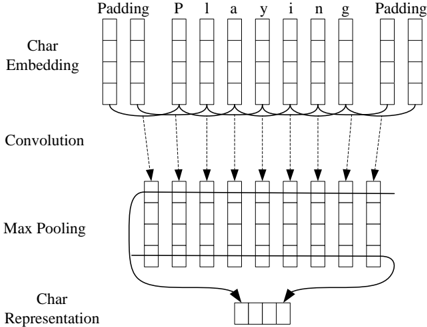
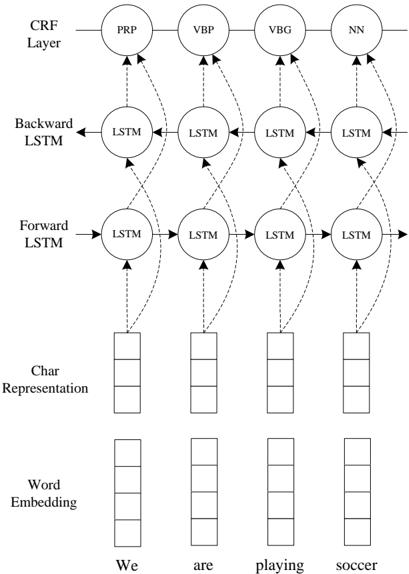
State-of-the-art sequence labeling systems traditionally require large amounts of taskspecific knowledge in the form of handcrafted features and data pre-processing.In this paper, we introduce a novel neutral network architecture that benefits from both word-and character-level representations automatically, by using combination of bidirectional LSTM, CNN and CRF.Our system is truly end-to-end, requiring no feature engineering or data preprocessing, thus making it applicable to a wide range of sequence labeling tasks.We evaluate our system on two data sets for two sequence labeling tasks -Penn Treebank WSJ corpus for part-of-speech (POS) tagging and CoNLL 2003 corpus for named entity recognition (NER).We obtain state-of-the-art performance on both datasets -97.55% accuracy for POS tagging and 91.21% F1 for NER.
Overview
The claims and statistics of this paper haven’t been checked yet.
Free: it reads the open-access text and checks the first 5 claims that cite a source we can check. Create a free account to check every claim.
Integrity signals
Registry
Cites
Statistics
Figures
Verification
Claims the paper makes
The claims and statistics of this paper haven’t been checked yet.
Free: it reads the open-access text and checks the first 5 claims that cite a source we can check. Create a free account to check every claim.
Claims other papers make about this one
Each is checked against this paper’s own text: does it say what the citing paper says it does?
The cited source says what the claim attributes to it.
In the citing paper
“Empirically, for those token [81] or span [30] prediction tasks (e.g., NER), prompt decomposition can be considered, while for those span relation prediction [66] tasks (e.g., entity coreference), prompts composition would be a better choice.”
From Pre-train, Prompt, and Predict: A Systematic Survey of Prompting Methods in Natural Language Processing (2023) · cites this paper as [81]
Self-check
Percentages, sums and reported differences re-computed from the paper’s own numbers.
The self-check needs the paper’s full text.
Citations
Cites
Hochreiter, S., & Schmidhuber, J. (1997) · Neural Computation · doi:10.1162/neco.1997.9.8.1735 · Cited by 102,318 · cited 2×
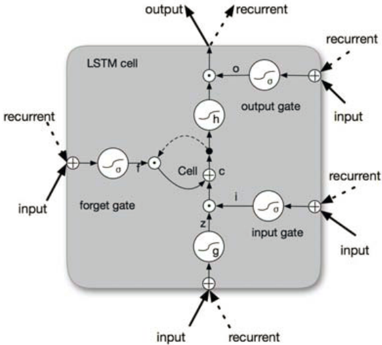
“Recently, recurrent neural networks (RNN) (Goller and Kuchler, 1996), together with its variants such as long-short term memory (LSTM) (Hochreiter and Schmidhuber, 1997; Gers et al., 2000) and gated recurrent unit (GRU) (Cho et al., 2014), have shown great success in modeling sequential data.”
BackgroundAdam: A Method for Stochastic Optimization
Kingma, D. P., & Ba, J. (2014) · arXiv · doi:10.48550/arxiv.1412.6980 · Cited by 98,946
Glove: Global Vectors for Word Representation
Pennington, J., Socher, R., & Manning, C. (2014) · Proceedings of the 2014 Conference on Empirical Methods in Natural Language Processing (EMNLP) · doi:10.3115/v1/d14-1162 · Cited by 34,071 · cited 1×
“glove/ trained on 6 billion words from Wikipedia and web text (Pennington et al., 2014)”
Background(2014) · Cited by 33,419
Distributed Representations of Words and Phrases and their Compositionality
Mikolov, T., Sutskever, I., Chen, K., Corrado, G., & Dean, J. (2013) · arXiv · doi:10.48550/arxiv.1310.4546 · Cited by 24,533 · cited 2×
“, 2011), and Google’s Word2Vec 300 dimensional embeddings3 trained on 100 billion words from Google News (Mikolov et al., 2013).”
BackgroundDelving Deep into Rectifiers: Surpassing Human-Level Performance on ImageNet Classification
He, K., Zhang, X., Ren, S., & Sun, J. (2015) · 2015 IEEE International Conference on Computer Vision (ICCV) · doi:10.1109/iccv.2015.123 · Cited by 19,741 · cited 1×
“To test the effectiveness of pretrained word embeddings, we experimented with randomly initialized embeddings with 100 dimensions, where embeddings are uniformly sampled from range [ − where dim is the dimension of embeddings (He et al., 2015).”
Method(2010) · Cited by 14,134
Conditional Random Fields: Probabilistic Models for Segmenting and Labeling Sequence Data
Lafferty, J., McCallum, A., & Pereira, F. C. N. (2001) · ScholarlyCommons (University of Pennsylvania) · Cited by 12,935
Backpropagation Applied to Handwritten Zip Code Recognition
LeCun, Y., Boser, B., Denker, J. S., Henderson, D., Howard, R. E., Hubbard, W., & Jackel, L. D. (1989) · Neural Computation · doi:10.1162/neco.1989.1.4.541 · Cited by 11,891 · cited 2×
“We first use convolutional neural networks (CNNs) (LeCun et al., 1989) to encode character-level information of a word into its character-level representation.”
MethodSpeech recognition with deep recurrent neural networks
Graves, A., Mohamed, A.-R., & Hinton, G. (2013) · 2013 IEEE International Conference on Acoustics, Speech and Signal Processing · doi:10.1109/icassp.2013.6638947 · Cited by 8,893 · cited 4×
“Several RNN-based neural network models have been proposed to solve sequence labeling tasks like speech recognition (Graves et al., 2013), POS tagging (Huang et al., 2015) and NER (Chiu and Nichols, 2015; Hu et al., 2016), achieving competitive performance against traditional models.”
MethodInfluential
Research works printed but not linked: 6
- [3]3. James Bergstra, Olivier Breuleux, Frédéric Bastien, Pascal Lamblin, Razvan Pascanu, Guillaume Des- jardins, Joseph Turian, David Warde-Farley, and Yoshua Bengio. 2010. Theano: a cpu and gpu math expression compiler. In Proceedings of the Python for scientific computing conference (SciPy), volume 4, page 3. Austin, TX.
- [15]15. Felix A Gers, Nicol N Schraudolph, and Jürgen Schmidhuber. 2003. Learning precise timing with lstm recurrent networks. The Journal of Machine Learning Research, 3:115-143.
- [37]37. Xuezhe Ma and Hai Zhao. 2012a. Fourth-order depen- dency parsing. In Proceedings of COLING 2012: Posters, pages 785-796, Mumbai, India, December.
- [43]43. Tomas Mikolov, Ilya Sutskever, Kai Chen, Greg S Cor- rado, and Jeff Dean. 2013. Distributed representa- tions of words and phrases and their compositional- ity. In Advances in neural information processing systems, pages 3111-3119.
- [58]58. Erik F. Tjong Kim Sang and Jorn Veenstra. 1999. Rep- resenting text chunks. In Proceedings of EACL'99, pages 173-179. Bergen, Norway.
- [59]59. Kristina Toutanova, Dan Klein, Christopher D Man- ning, and Yoram Singer. 2003. Feature-rich part- of-speech tagging with a cyclic dependency net- work. In Proceedings of NAACL-HLT-2003, Volume 1, pages 173-180.
Cited by
Items 101–200 of 1,008
Named Entity Recognition and Classification in Historical Documents: A Survey
Ehrmann, M., Hamdi, A., Pontes, E. L., Romanello, M., & Doucet, A. (2024) · ACM Computing Surveys · doi:10.1145/3604931 · Cited by 181
“[121] on CoNLL-03, and the systematically better results of Lample et al.”
ResultDOER: Dual Cross-Shared RNN for Aspect Term-Polarity Co-Extraction
Luo, H., Li, T., Liu, B., & Zhang, J. (2019) · Proceedings of the conference - Association for Computational Linguistics. Meeting · doi:10.18653/v1/p19-1056 · Cited by 181
“The difference is that LSTM+CRF-LSTMc (Lample et al., 2016) encodes char embedding by BiLSTM, while LSTM+CRF-CNNc (Ma and Hovy, 2016) uses CNN. • LM-LSTM-CRF : It is a language model enhanced LSTM-CRF model proposed in (Liu et al., 2018), which achieved competitive re-sults on several sequence labeling tasks 12 .”
MethodRobust Multilingual Part-of-Speech Tagging via Adversarial Training
Yasunaga, M., Kasai, J., & Radev, D. (2018) · Conference of the North American Chapter of the Association for Computational Linguistics: Human Language Technologies (NAACL-HLT) · doi:10.18653/v1/n18-1089 · Cited by 182
“AT enhanced F1 score from the baseline BiLSTM-CRF model’s 95.18 to 95.25 for chunking, and from 91.22 to 91.56 for NER, also significantly outperforming Ma and Hovy (2016).”
BackgroundMethodInfluentialDistantly Supervised NER with Partial Annotation Learning and Reinforcement Learning
Yang, Y., Chen, W., Li, Z., He, Z., & Zhang, M. (2018) · International Conference on Computational Linguistics · Cited by 179
Leverage Lexical Knowledge for Chinese Named Entity Recognition via Collaborative Graph Network
Sui, D., Chen, Y., Liu, K., Zhao, J., & Liu, S. (2019) · Conference on Empirical Methods in Natural Language Processing (EMNLP) · doi:10.18653/v1/d19-1396 · Cited by 180
“In English NER, LSTM-CRF models (Lample et al., 2016; Ma and Hovy, 2016; Chiu and Nichols, 2016; Liu et al., 2018) leveraging word-level representations and character-level representations achieve the state-of-the-art results.”
BackgroundMethodNested Named Entity Recognition via Second-best Sequence Learning and Decoding
Shibuya, T., & Hovy, E. H. (2020) · Transactions of the Association for Computational Linguistics · doi:10.1162/tacl_a_00334 · Cited by 179
“Next, we compare with methods that can handle only flat NER.”
MethodResultInfluentialSelf-citationBidirectional LSTM-CRF for Named Entity Recognition.
Panchendrarajan, R., & Amaresan, A. (2018) · Institutional Repositories DataBase (IRDB) · Cited by 179
Lexicon Enhanced Chinese Sequence Labeling Using BERT Adapter
Liu, W., Fu, X., Zhang, Y., & Xiao, W. (2021) · Proceedings of the 59th Annual Meeting of the Association for Computational Linguistics and the 11th International Joint Conference on Natural Language Processing (Volume 1: Long Papers) · doi:10.18653/v1/2021.acl-long.454 · Cited by 177
“The current state-of-the-art results for sequence labeling have been achieved by neural network approaches (Lample et al., 2016; Ma and Hovy, 2016; Chiu and Nichols, 2016; Gui et al., 2017).”
BackgroundDesign Challenges and Misconceptions in Neural Sequence LabelingPreprint
Yang, J., Liang, S., & Zhang, Y. (2018) · arXiv (Cornell University) · doi:10.48550/arxiv.1806.04470 · Cited by 180
Entity recognition from clinical texts via recurrent neural network
Liu, Z., Yang, M., Wang, X., Chen, Q., Tang, B., Wang, Z., & Xu, H. (2017) · BMC Medical Informatics and Decision Making · doi:10.1186/s12911-017-0468-7 · Cited by 176
Learning Sparse Sharing Architectures for Multiple Tasks
Sun, T., Shao, Y., Li, X., Liu, P., Yan, H. R., Qiu, X., & Huang, X. (2020) · Proceedings of the AAAI Conference on Artificial Intelligence · doi:10.1609/aaai.v34i05.6424 · Cited by 176
Recent Advances in Named Entity Recognition: A Comprehensive Survey and Comparative StudyPreprint
Keraghel, I., Morbieu, S., & Nadif, M. (2024) · arXiv (Cornell University) · doi:10.48550/arxiv.2401.10825 · Cited by 178
NCRF++: An Open-source Neural Sequence Labeling Toolkit
Yang, J., & Zhang, Y. (2018) · Proceedings of ACL 2018, System Demonstrations · doi:10.18653/v1/p18-4013 · Cited by 175
“Although many authors released their code along with their sequence labeling papers (Lample et al., 2016; Ma and Hovy, 2016; Liu et al., 2018), the implementations are mostly focused on specific model structures and specific tasks.”
BackgroundMethodInfluentialPyramid: A Layered Model for Nested Named Entity Recognition
WANG, J., Shou, L., Chen, K., & Chen, G. (2020) · Proceedings of the 58th Annual Meeting of the Association for Computational Linguistics · doi:10.18653/v1/2020.acl-main.525 · Cited by 174
“It is typically modeled as a sequence labeling problem, which can be effectively solved by RNN-based approach (Huang et al., 2015; Lample et al., 2016; Ma and Hovy, 2016).”
BackgroundCAN-NER: Convolutional Attention Network for Chinese Named Entity Recognition
Zhu, Y., & Wang, G. (2019) · Conference of the North American Chapter of the Association for Computational Linguistics: Human Language Technologies (NAACL-HLT) · doi:10.18653/v1/n19-1342 · Cited by 174
“Many works integrating word-level information and character-level information have been found to achieve good performance [35], [7], [6], [5].”
BackgroundAn Investigation of Deep Learning Models for EEG-Based Emotion Recognition
Zhang, Y., Chen, J., Tan, J. H., Chen, Y., Chen, Y., Li, D., Yang, L., Su, J., Huang, X., & Che, W. (2020) · Frontiers in Neuroscience · doi:10.3389/fnins.2020.622759 · Cited by 148
“So, a hybrid model of the CNN and LSTM have been proven to have good performance in natural signal recognition (Ma and Hovy, 2016; Zhao et al., 2019).”
MethodUniParser: A Unified Log Parser for Heterogeneous Log Data
Liu, Y., Zhang, X., He, S., Zhang, H., Li, L., Kang, Y., Xu, Y., Ma, M., Lin, Q., Dang, Y., et al. (2022) · Proceedings of the ACM Web Conference 2022 · doi:10.1145/3485447.3511993 · Cited by 125
“On the one hand, the results in Table 3 indicate that deep learning based log parsers benefit from the supervised labels on token-level and indeed perform better than previous unsupervised methods (both models outperform other existing log parsers such as Drain on Android dataset); On the other hand, our UniParser out…”
MethodBoundary Smoothing for Named Entity Recognition
Zhu, E., & Li, J. (2022) · Proceedings of the conference - Association for Computational Linguistics. Meeting · doi:10.18653/v1/2022.acl-long.490 · Cited by 174
Siddhant, A., & Lipton, Z. C. (2018) · Proceedings of the 2018 Conference on Empirical Methods in Natural Language Processing · doi:10.18653/v1/d18-1318 · Cited by 172
“The two architectures used for training are CNN-BiLSTM-CRF (CNN for character-level encoding, BiLSTM for word-level encoding, and CRF for decoding) (Ma and Hovy, 2016) and CNN-CNN-LSTM (CNN for character-level encoding, CNN for word-level encoding, and LSTM for decoding) (Shen et al., 2018).”
MethodJoint Extraction of Entities and Overlapping Relations Using Position-Attentive Sequence Labeling
Dai, D., Xiao, X., Lyu, Y., Dou, S., She, Q., & Wang, H. (2019) · Proceedings of the AAAI Conference on Artificial Intelligence · doi:10.1609/aaai.v33i01.33016300 · Cited by 172
“Consistent with previous work, the character-level representations are helpful to capture the morphological information and deal with OOV words in sequence labeling task (Ma and Hovy 2016).”
MethodTarget-Aspect-Sentiment Joint Detection for Aspect-Based Sentiment Analysis
Wan, H., Yang, Y., Du, J., Liu, Y., Qi, K., & Pan, J. Z. (2020) · Proceedings of the AAAI Conference on Artificial Intelligence · doi:10.1609/aaai.v34i05.6447 · Cited by 171
“In case a CRF decoder is used, the probability for predicting a label sequence T, denoted by p(T | P), can be computed in the way presented by (Ma and Hovy 2016), where P is a n × o matrix composed of Ps1 , .”
MethodInfluentialGREEK-BERT: The Greeks visiting Sesame Street
Koutsikakis, J., Chalkidis, I., Malakasiotis, P., & Androutsopoulos, I. (2020) · Hellenic Conference on Artificial Intelligence · doi:10.1145/3411408.3411440 · Cited by 172
A Boundary-aware Neural Model for Nested Named Entity Recognition
Zheng, C., Cai, Y., Xu, J., Leung, H.-F., & Xu, G. (2019) · Conference on Empirical Methods in Natural Language Processing (EMNLP) · doi:10.18653/v1/d19-1034 · Cited by 170
“Several methods have been proposed on flat named entity recognition (Lample et al., 2016; Ma and Hovy, 2016; Strubell et al., 2017) while few of them address nested entities.”
BackgroundMethodNeural Segmental Hypergraphs for Overlapping Mention Recognition
Wang, B., & Lu, W. (2018) · Proceedings of the 2018 Conference on Empirical Methods in Natural Language Processing · doi:10.18653/v1/d18-1019 · Cited by 169
“Huang et al. (2015) replaced the CNN with a bidirectional long short-term memory network (LSTM) (Hochreiter and Schmidhuber, 1997).”
InfluentialCross-Domain NER using Cross-Domain Language Modeling
Chen, J., Liang, X., & Zhang, Y. (2019) · Proceedings of the conference - Association for Computational Linguistics. Meeting · doi:10.18653/v1/p19-1236 · Cited by 170
“Most recent work uses LSTM-CRF (Lample et al., 2016; Ma and Hovy, 2016; Chiu and Nichols, 2016; Yang et al., 2018).”
MethodA comprehensive survey on relation extraction: recent advances and new frontiers
Zhao, X., Deng, Y., Yang, M., Wang, L., Zhang, R., Cheng, H., Lam, W., Shen, Y., & Xu, R. (2024) · ACM Computing Surveys · doi:10.1145/3674501 · Cited by 168
“However, these models can be computationally expensive and require a significant amount of data to train effectively.”
Causality extraction based on self-attentive BiLSTM-CRF with transferred embeddings
Li, Z., Li, Q., Zou, X., & Ren, J. (2020) · Neurocomputing · doi:10.1016/j.neucom.2020.08.078 · Cited by 168
MAF: A General Matching and Alignment Framework for Multimodal Named Entity Recognition
Xu, B., Huang, S., Sha, C., & Wang, H. (2022) · ACM International Conference on Web Search and Data Mining (WSDM) · doi:10.1145/3488560.3498475 · Cited by 168
“• CNN-BiLSTM-CRF [13], which is an improvement of BiLSTMCRF.”
MethodMassively Multilingual Transfer for NER
Rahimi, A., Li, Y., & Cohn, T. (2019) · Proceedings of the 57th Annual Meeting of the Association for Computational Linguistics · doi:10.18653/v1/p19-1015 · Cited by 167
“, 2016), which has been shown to result in state-of-the-art results in high resource settings (Ma and Hovy, 2016; Lample et al., 2016).”
BackgroundNeural End-to-End Learning for Computational Argumentation Mining
Eger, S., Daxenberger, J., & Gurevych, I. (2017) · Proceedings of the 55th Annual Meeting of the Association for Computational Linguistics (Volume 1: Long Papers) · doi:10.18653/v1/p17-1002 · Cited by 167
Bi-LSTM-CRF Sequence Labeling for Keyphrase Extraction from Scholarly Documents
Alzaidy, R., Caragea, C., & Giles, C. L. (2019) · The World Wide Web Conference · doi:10.1145/3308558.3313642 · Cited by 167
“Recently, a sequence labeling framework that takes into consideration both types of dependencies has been explored on a variety of NLP tasks such as part-of-speech tagging, noun phrase chunking, and named entity recognition [19, 26, 30].”
BackgroundMethodA hybrid model based on neural networks for biomedical relation extraction
Zhang, Y., Lin, H., Yang, Z., Wang, J., Zhang, S., Sun, Y., & Yang, L. (2018) · Journal of Biomedical Informatics · doi:10.1016/j.jbi.2018.03.011 · Cited by 170
Hierarchical Contextualized Representation for Named Entity Recognition
Luo, Y., Xiao, F., & Zhao, H. Y. (2020) · Proceedings of the AAAI Conference on Artificial Intelligence · doi:10.1609/aaai.v34i05.6363 · Cited by 165
Few-Shot Named Entity Recognition via Meta-Learning
Li, J., Chiu, B., Feng, S., & Wang, H. (2022) · IEEE Transactions on Knowledge and Data Engineering · doi:10.1109/tkde.2020.3038670 · Cited by 165
Aly, S., & Aly, W. (2020) · IEEE Access · doi:10.1109/access.2020.2990699 · Cited by 165
“A combination of bi-directional LSTM, CNN, and CRF was developed for sequence labeling in [54].”
MethodCharNER: Character-Level Named Entity Recognition
Kuru, O., Can, O. A., & Yüret, D. (2016) · International Conference on Computational Linguistics · Cited by 164
LeNER-Br: A Dataset for Named Entity Recognition in Brazilian Legal Text
de Araujo, P. H. L., de Campos, T. E., de Oliveira, R. R. R., Stauffer, M., Couto, S., & Bermejo, P. H. D. S. (2018) · Lecture notes in computer science · doi:10.1007/978-3-319-99722-3_32 · Cited by 164
“The state-of-the-art entity recognition systems [13, 14] are based on Machine Learning techniques, employing statistical models that need to be trained on a large amount of labeled data to achieve good performance and generalization capabilities [15].”
BackgroundBERT based clinical knowledge extraction for biomedical knowledge graph construction and analysis
Harnoune, A., Rhanoui, M., Mikram, M., Yousfi, S., Elkaimbillah, Z., & Asri, B. E. (2021) · Computer Methods and Programs in Biomedicine Update · doi:10.1016/j.cmpbup.2021.100042 · Cited by 164
“Ma et al. [39] proposed a novel neutral network architecture that automatically benefits from word-and character-level representations, using a combination of bidirectional LSTM, CNN, and CRF.”
CONTaiNER: Few-Shot Named Entity Recognition via Contrastive Learning
Das, S. S. S., Katiyar, A., Passonneau, R., & Zhang, R. (2022) · Proceedings of the 60th Annual Meeting of the Association for Computational Linguistics (Volume 1: Long Papers) · doi:10.18653/v1/2022.acl-long.439 · Cited by 161
Code and Named Entity Recognition in StackOverflow
Tabassum, J., Maddela, M., Xu, W., & Ritter, A. (2020) · Proceedings of the 58th Annual Meeting of the Association for Computational Linguistics · doi:10.18653/v1/2020.acl-main.443 · Cited by 105
Baviskar, D., Ahirrao, S., Potdar, V., & Kotecha, K. (2021) · IEEE Access · doi:10.1109/access.2021.3072900 · Cited by 160
“It implies that it is useful to train over more data [29], [34], [111]–[113].”
BackgroundMethodInformation extraction from scientific articles: a survey
Nasar, Z., Jaffry, S. W., & Malik, M. K. (2018) · Scientometrics · doi:10.1007/s11192-018-2921-5 · Cited by 160
“This hybrid Neuro-CRF approach is currently giving state-of-theart results in general Information extraction tasks as well (Huang et al. 2015; Ma and Hovy 2016; Strubell et al. 2017; Lee 2017).”
MethodArabic aspect based sentiment analysis using bidirectional GRU based models
Abdelgwad, M. M., Soliman, T. H. A., Taloba, A. I., & Farghaly, M. F. (2021) · Journal of King Saud University - Computer and Information Sciences · doi:10.1016/j.jksuci.2021.08.030 · Cited by 160
“In this paper, the OTE task was considered as a sequence labeling task, so we suggested a sequence labeling DL-based model proposed by the authors (Ma and Hovy, 2016) for this task, where their model made use of character level representations and used the CRF layer as the output layer.”
MethodPretrained domain-specific language model for natural language processing tasks in the AEC domain
Zheng, Z., Lu, X., Chen, K., Zhou, Y., & Lin, J. (2022) · Computers in Industry · doi:10.1016/j.compind.2022.103733 · Cited by 155
One for All: Neural Joint Modeling of Entities and Events
Nguyen, T. M., & Nguyen, T. H. (2019) · Proceedings of the AAAI Conference on Artificial Intelligence · doi:10.1609/aaai.v33i01.33016851 · Cited by 154
A Span-Based Model for Joint Overlapped and Discontinuous Named Entity Recognition
Li, F., Lin, Z., Zhang, M., & Ji, D. (2021) · doi:10.18653/v1/2021.acl-long.372 · Cited by 154
“In addition, we compare our model with BiLSTM-CRF (Lample et al., 2016; Ma and Hovy, 2016; Yang et al., 2018), to show our model does not influence the performance of regular NER significantly.”
MethodInfluentialBiomedical named entity recognition using deep neural networks with contextual information
Cho, H., & Lee, H. (2019) · BMC Bioinformatics · doi:10.1186/s12859-019-3321-4 · Cited by 152
“Therefore, we jointly decode label sequences using a CRF layer instead of independently modeling tagging decisions [8, 20, 21, 44].”
BackgroundMethodExploring deep neural networks for rumor detection
Asghar, M. Z., Habib, A., Habib, A., Khan, A., Ali, R., & Khattak, A. M. (2019) · Journal of Ambient Intelligence and Humanized Computing · doi:10.1007/s12652-019-01527-4 · Cited by 152
“Therefore, the BiLSTM keeps track of richer information required for processing the encoded tweet, sequence labeling (Ma and Hovy 2016).”
BackgroundWang, Q., Zhou, Y., Ruan, T., Gao, D., Xia, Y., & He, P. (2019) · Journal of Biomedical Informatics · doi:10.1016/j.jbi.2019.103133 · Cited by 150
Dialogue Act Classification with Context-Aware Self-Attention
Raheja, V., & Tetreault, J. (2019) · Conference of the North American Chapter of the Association for Computational Linguistics: Human Language Technologies (NAACL-HLT) · doi:10.18653/v1/n19-1373 · Cited by 150
“The word embedding is then concatenated with its CNN-based 50D character-level embedding (Chiu and Nichols, 2016; Ma and Hovy, 2016) to get the complete word-level representations.”
MethodTRIE: End-to-End Text Reading and Information Extraction for Document Understanding
Zhang, P., Xu, Y., Cheng, Z., Pu, S., Lu, J., Liang, Q., Niu, Y., & Wu, F. Q. (2020) · ACM International Conference on Multimedia (ACM MM) · doi:10.1145/3394171.3413900 · Cited by 149
“Learning-based networks [7, 10, 24, 36, 55, 56] were firstly proposed to work on plain text documents.”
BackgroundMethodInfluentialMohammed, S., Shi, P., & Lin, J. (2018) · Proceedings of the 2018 Conference of the North American Chapter of the Association for Computational Linguistics: Human Language Technologies, Volume 2 (Short Papers) · doi:10.18653/v1/n18-2047 · Cited by 106
“Note that since we’re examining baselines, we do not layer a CRF on top of the BiLSTM (Lample et al., 2016; Ma and Hovy, 2016).”
BackgroundInfluentialVnCoreNLP: A Vietnamese Natural Language Processing Toolkit
Vu, T., Nguyen, D., Dras, M., & Johnson, M. (2018) · Deakin Research Online (Deakin University) · doi:10.26187/deakin.33412309 · Cited by 146
Few-Shot Named Entity Recognition: An Empirical Baseline Study
Huang, J., Li, C., Subudhi, K., Jose, D., Balakrishnan, S., Chen, W., Peng, B., Gao, J., & Han, J. (2021) · Conference on Empirical Methods in Natural Language Processing (EMNLP) · doi:10.18653/v1/2021.emnlp-main.813 · Cited by 147
“Early efforts include exploring various neural architectures (Lam-ple et al., 2016) such as Bidrectional LSTMs (Chiu and Nichols, 2016) and adding CRFs to capture structures (Ma and Hovy, 2016).”
BackgroundChinese clinical named entity recognition via multi-head self-attention based BiLSTM-CRF
An, Y., Xia, X., Chen, X., Wu, F., & Wang, J. (2022) · Artificial Intelligence in Medicine · doi:10.1016/j.artmed.2022.102282 · Cited by 147
A Survey on Programmatic Weak SupervisionPreprint
Zhang, J., Hsieh, C.-Y., Yu, Y., Zhang, C., & Ratner, A. (2022) · arXiv (Cornell University) · doi:10.48550/arxiv.2202.05433 · Cited by 147
“For sequence tagging problem, Consensus Network (Con-Net) [Lan et al. , 2020] trains BiLSTM-CRF [Ma and Hovy, 2016] with multiple CRF layers for each labeling source individually.”
MethodNeural Models for Sequence Chunking
Zhai, F., Potdar, S., Xiang, B., & Zhou, B. (2017) · Proceedings of the AAAI Conference on Artificial Intelligence · doi:10.1609/aaai.v31i1.10995 · Cited by 145
“This dataset has a vocabulary size of 16,049 and the number of slot labels is 116 (191 with IOB prefix included).”
BackgroundPacked Levitated Marker for Entity and Relation Extraction
Ye, D., Lin, Y., Li, P., & Sun, M. (2022) · Proceedings of the 60th Annual Meeting of the Association for Computational Linguistics (Volume 1: Long Papers) · doi:10.18653/v1/2022.acl-long.337 · Cited by 144
When is multitask learning effective? Semantic sequence prediction under varying data conditions
Alonso, H. M., & Plank, B. (2017) · Conference of the European Chapter of the Association for Computational Linguistics · doi:10.18653/v1/e17-1005 · Cited by 144
CrossWeigh: Training Named Entity Tagger from Imperfect Annotations
Wang, Z., Shang, J., Liu, L., Lu, L., Liu, J., & Han, J. (2019) · Conference on Empirical Methods in Natural Language Processing (EMNLP) · doi:10.18653/v1/d19-1519 · Cited by 146
“Neural models have been widely used for Named Entity Recognition, and the state-of-the-art models integrate LSTMs, conditional random field and language models (Lample et al., 2016; Ma and Hovy, 2016; Liu et al., 2018b; Peters et al., 2018; Akbik et al., 2018).”
BackgroundMethodDecomposed Meta-Learning for Few-Shot Named Entity Recognition
Ma, T., Jiang, H., Wu, Q., Zhao, T., & Lin, C.-Y. (2022) · Findings of the Association for Computational Linguistics: ACL (Findings of ACL) · doi:10.18653/v1/2022.findings-acl.124 · Cited by 143
Temporal Sentence Grounding in Videos: A Survey and Future Directions
Zhang, H., Sun, A., Jing, W., & Zhou, J. T. (2023) · IEEE Transactions on Pattern Analysis and Machine Intelligence · doi:10.1109/tpami.2023.3258628 · Cited by 143
“In particular, SeqPAN [101] introduces the concept of named entity recognition [154], [155], [156] in NLP by splitting the snippet”
BackgroundBalog, K. (2018) · The Kluwer international series on information retrieval · doi:10.1007/978-3-319-93935-3 · Cited by 145
SeqVAT: Virtual Adversarial Training for Semi-Supervised Sequence Labeling
Chen, L., Ruan, W., Liu, X., & Lu, J. (2020) · Proceedings of the conference - Association for Computational Linguistics. Meeting · doi:10.18653/v1/2020.acl-main.777 · Cited by 140
Combinatorial feature embedding based on CNN and LSTM for biomedical named entity recognition
Cho, M., Ha, J., Park, C., & Park, S. (2020) · Journal of Biomedical Informatics · doi:10.1016/j.jbi.2020.103381 · Cited by 140
Automated Chemical Reaction Extraction from Scientific Literature
Guo, J., Ibanez-Lopez, A. S., Gao, H., Quach, V., Coley, C. W., Jensen, K. F., & Barzilay, R. (2022) · Journal of Chemical Information and Modeling · doi:10.1021/acs.jcim.1c00284 · Cited by 104
“…reported the performance of a pioneering rule-based system, OPSIN, 7 as well as a bidirectional LSTM (BiLSTM), which has been a standard approach for a wide range of tagging tasks in NLP. 33 OPSIN identi fi es products by a set of rules based on the tagging and parsing outputs of ChemicalTagger.”
BackgroundSpatial Dependency Parsing for Semi-Structured Document Information Extraction
Hwang, W., Yim, J., Park, S., Yang, S., & Seo, M. (2021) · Findings of the Association for Computational Linguistics: ACL (Findings of ACL) · doi:10.18653/v1/2021.findings-acl.28 · Cited by 140
“Previous formulation: Sequence tagging As mentioned, IOB sequence tagging is appropriate for document IE when the layout and the information structure are simple (Ramshaw and Marcus 1995; Lample et al. 2016; Ma and Hovy 2020; Chiu and Nichols 2016).”
Methodcw2vec: Learning Chinese Word Embeddings with Stroke n-gram Information
Cao, S., Lu, W., Zhou, J. W., & Li, X. (2018) · Proceedings of the AAAI Conference on Artificial Intelligence · doi:10.1609/aaai.v32i1.12029 · Cited by 140
“We implement the model described in (Ma and Hovy 2016) for performing NER, where only word embeddings are fed into the input layer as features.”
MethodMulti-channel BiLSTM-CRF Model for Emerging Named Entity Recognition in Social Media
Lin, B. Y., Xu, F. F., Luo, Z., & Zhu, K. Q. (2017) · Workshop on Noisy User-generated Text (W-NUT) · doi:10.18653/v1/w17-4421 · Cited by 137
“There are two main network structures to make use of character embeddings: one is CNN (Ma and Hovy, 2016) and the other is BiLSTM(Lample et al., 2016).”
BackgroundParadigm Shift in Natural Language Processing
Sun, T.-X., Liu, X.-Y., Qiu, X.-P., & Huang, X.-J. (2022) · Machine Intelligence Research · doi:10.1007/s11633-022-1331-6 · Cited by 86
PromptNER: Prompt Locating and Typing for Named Entity Recognition
Shen, Y., Tan, Z., Wu, S., Zhang, W., Zhang, R., Xi, Y., Lü, W., & Zhuang, Y. (2023) · Proceedings of the conference - Association for Computational Linguistics. Meeting · doi:10.18653/v1/2023.acl-long.698 · Cited by 136
Guo, Q., Qiu, X., Liu, P., Shao, Y., Xue, X., & Zhang, Z. (2019) · Proceedings of the 2019 Conference of the North American Chapter of the Association for Computational Linguistics: Human Language Technologies, Volume 1 (Long and Short Papers) · doi:10.18653/v1/n19-1133 · Cited by 135
“35 (Ma and Hovy, 2016) X X 97.”
Dependency-Guided LSTM-CRF for Named Entity Recognition
Jie, Z., & Lu, W. (2019) · Conference on Empirical Methods in Natural Language Processing (EMNLP) · doi:10.18653/v1/d19-1399 · Cited by 135
“, 2014) 100-d word embeddings, which was shown to be effective in English NER task (Ma and Hovy, 2016; Peters et al., 2018a).”
BackgroundMethodA joint model for entity and relation extraction based on BERT
Qiao, B., Zou, Z., Huang, Y., Fang, K., Zhu, X., & Chen, Y. (2021) · Neural Computing and Applications · doi:10.1007/s00521-021-05815-z · Cited by 133
Data Integration and Machine Learning: A Natural Synergy
Dong, X. L., & Rekatsinas, T. (2018) · Proceedings of the 2018 International Conference on Management of Data · doi:10.1145/3183713.3197387 · Cited by 92
Zhao, S., Liu, T., Zhao, S., & Wang, F. (2019) · Proceedings of the AAAI Conference on Artificial Intelligence · doi:10.1609/aaai.v33i01.3301817 · Cited by 132
Hierarchically-Refined Label Attention Network for Sequence Labeling
Cui, L., & Zhang, Y. (2019) · Conference on Empirical Methods in Natural Language Processing (EMNLP) · doi:10.18653/v1/d19-1422 · Cited by 131
“Ma and Hovy (2016) 7.”
InfluentialVashishth, S., Bhandari, M., Yadav, P., Rai, P., Bhattacharyya, C., & Talukdar, P. P. (2019) · Proceedings of the conference - Association for Computational Linguistics. Meeting · doi:10.18653/v1/p19-1320 · Cited by 130
“, 2013), and part-of-speech (POS) tagging (Ma and Hovy, 2016).”
Xu, Z., Mei, X., Wang, X., Yue, M., Jin, J., Yang, Y., & Li, C. (2021) · Renewable Energy · doi:10.1016/j.renene.2021.10.024 · Cited by 130
How Robust is GPT-3.5 to Predecessors? A Comprehensive Study on Language Understanding Tasks
Chen, X., Ye, J., Zu, C., Xu, N., Zheng, R., Peng, M., Zhou, J., Gui, T., Zhang, Q., & Huang, X. (2023) · arXiv (Cornell University) · doi:10.48550/arxiv.2303.00293 · Cited by 35
“Table 18: Robustness test results of GPT series models (zero-shot and few-shot) and fine-tuned models (i.e., ELMo-BiLSTM-CRF, Flair-BiLSTM-CRF, CNN-BiLSTM-CRF, BERT-BiLSTM-CRF (Devlin et al., 2019)) on WSJ dataset.”
Multi-task Domain Adaptation for Sequence Tagging
Peng, N., & Dredze, M. H. (2017) · Workshop on Representation Learning for NLP (RepL4NLP) · doi:10.18653/v1/w17-2612 · Cited by 129
“We use dropout on the embeddings and the BiLSTM output vectors as in Ma and Hovy (2016).”
InfluentialAutomated evaluation of psychotherapy skills using speech and language technologies
Flemotomos, N., Martinez, V. R., Chen, Z., Singla, K., Ardulov, V., Peri, R., Caperton, D. D., Gibson, J., Tanana, M. J., Georgiou, P., et al. (2021) · Behavior Research Methods · doi:10.3758/s13428-021-01623-4 · Cited by 98
Connecting Pixels to Privacy and Utility: Automatic Redaction of Private Information in Images
Orekondy, T., Fritz, M., & Schiele, B. (2018) · 2018 IEEE/CVF Conference on Computer Vision and Pattern Recognition · doi:10.1109/cvpr.2018.00883 · Cited by 87
T-NER: An All-Round Python Library for Transformer-based Named Entity Recognition
Ushio, A., & Camacho-Collados, J. (2021) · Conference of the European Chapter of the Association for Computational Linguistics · doi:10.18653/v1/2021.eacl-demos.7 · Cited by 130
“, 2011), which was improved by carefully designed neural network approaches (Lample et al., 2016; Chiu and Nichols, 2016; Ma and Hovy, 2016).”
BackgroundAssessing the quality of the steps to reproduce in bug reports
Chaparro, O., Bernal-Cárdenas, C., Lu, J., Moran, K., Marcus, A., Penta, M. D., Poshyvanyk, D., & Ng, V. (2019) · ACM Joint European Software Engineering Conference and Symposium on the Foundations of Software Engineering (ESEC/FSE) · doi:10.1145/3338906.3338947 · Cited by 126
“In order to handle vocabulary outside of this corpus, we use a one-layer Convolutional Neural Network (CNN) with max-pooling to capture character-level representations [41].”
MethodLearning to Extract Attribute Value from Product via Question Answering: A Multi-task Approach
Wang, Q., Li, Y., Kanagal, B., Sanghai, S. K., Sivakumar, D., Shu, B., Yu, Z., & Elsas, J. (2020) · ACM SIGKDD Conference on Knowledge Discovery and Data Mining (KDD) · doi:10.1145/3394486.3403047 · Cited by 126
“Ma and Hovy [26] propose an end to end LSTM-CNNs-CRF model.”
Xu, H., Wan, M., Mao, X., Jiang, X., & Lan, M. (2019) · Proceedings of the conference - Association for Computational Linguistics. Meeting · doi:10.18653/v1/p19-1514 · Cited by 124
“Ma and Hovy (2016) propose an end to end LSTM-CNNs-CRF model.”
BackgroundMAVE: A Product Dataset for Multi-source Attribute Value Extraction
Li, Y., Wang, Q., Yu, Z., Kulkarni, A., Sanghai, S. K., Shu, B., Elsas, J., & Kanagal, B. (2022) · ACM International Conference on Web Search and Data Mining (WSDM) · doi:10.1145/3488560.3498377 · Cited by 123
“Chiu and Nichols [7] model character level information using convolutional neural network (CNN), which achieves competitive performance and has been extended in [32] with an end to end LSTM-CNNs-CRF model.”
MethodA Multi-lingual Multi-task Architecture for Low-resource Sequence Labeling
Lin, Y., Yang, S., Stoyanov, V., & Ji, H. (2018) · Proceedings of the conference - Association for Computational Linguistics. Meeting · doi:10.18653/v1/p18-1074 · Cited by 123
“For cross-lingual transfer, we share the linear layer and CRFs layer among languages to transfer taskspecific knowledge, such as the transition score between two tags.”
BackgroundInfluentialImproved Word Sense Disambiguation Using Pre-Trained Contextualized Word Representations
Hadiwinoto, C., Ng, H. T., & Gan, W. C. (2019) · Conference on Empirical Methods in Natural Language Processing (EMNLP) · doi:10.18653/v1/d19-1533 · Cited by 123
“They concatenated the hidden states of the forward and backward LSTMs and fed the concatenation into an affine transformation followed by softmax normalization, similar to the approach to incorporate a bidirectional LSTM adopted in sequence labeling tasks such as part-ofspeech tagging and named entity recognition (Ma…”
MethodNeural Adaptation Layers for Cross-domain Named Entity Recognition
Lin, B. Y., & Lu, W. (2018) · Conference on Empirical Methods in Natural Language Processing (EMNLP) · doi:10.18653/v1/d18-1226 · Cited by 122
“Most earlier approaches to NER are based on conventional structured prediction models such as conditional random fields (CRF) (Lafferty et al., 2001; Sarawagi and Cohen, 2004), relying on hand-crafted features which can be designed based on domain-specific knowledge (Yang and Cardie, 2012; Passos et al., 2014; Luo et al…”
MethodInfluentialLi, J., Ji, D., Li, F., Zhang, M., & Liu, Y. (2020) · International Conference on Computational Linguistics · doi:10.18653/v1/2020.coling-main.370 · Cited by 124
“As deep learning develops, recent studies begin to treat the EDC task as a sequence labeling problem (Laf-ferty et al., 2001; Ma and Hovy, 2016) and leverage deep recurrent neural networks (RNNs) to handle it (Poria et al., 2017; Tzirakis et al., 2017; Majumder et al., 2019; Jiao et al., 2019).”
BackgroundFeng, D., & Chen, H. (2021) · Advanced Engineering Informatics · doi:10.1016/j.aei.2021.101256 · Cited by 122
Med-BERT: A Pretraining Framework for Medical Records Named Entity Recognition
Liu, N., Hu, Q., Xu, H., Xu, X., & Chen, M. (2021) · IEEE Transactions on Industrial Informatics · doi:10.1109/tii.2021.3131180 · Cited by 122
“Forexample,Ma et al. [19] proposed the employment of the CNN architecture to obtain character-level expression, and finally, combined the character vector and word vector of the phrase as BiLSTM-CRF input; BERT provides a model for transfer learning for other tasks, which provides more powerful…”
MethodObject-Aware Multimodal Named Entity Recognition in Social Media Posts With Adversarial Learning
Zheng, C., Wu, Z., Wang, T., Cai, Y., & Li, Q. (2020) · IEEE Transactions on Multimedia · doi:10.1109/tmm.2020.3013398 · Cited by 122
End-To-End Named Entity And Semantic Concept Extraction From Speech
Ghannay, S., Caubrière, A., Estève, Y., Camelin, N., Simonnet, E., Laurent, A., & Morin, E. (2018) · IEEE Spoken Language Technology Workshop (SLT) · doi:10.1109/slt.2018.8639513 · Cited by 120
“Recent approaches [14, 15] takes benefits from both word and/or character-level embeddings learned automatically, by using combination of bidirectional LSTM, CNN and CRF.”
BackgroundMethodMulti-grained Named Entity Recognition
Xia, C., Zhang, C., Yang, T., Li, Y., Du, N., Wu, X., Fan, W., Ma, F., & Yu, P. S. (2019) · Proceedings of the conference - Association for Computational Linguistics. Meeting · doi:10.18653/v1/p19-1138 · Cited by 120
“The first type of models including 1) Lample et al. (2016) which adopt the LSTM-CRF structure; 2) Ma and Hovy (2016) which use a LSTM-CNNs-CRF architecture; 3) Chiu and Nichols (2016) which propose a CNN-LSTM-CRF model; 4) Peters et al. (2017) which add semi-supervised language model embeddings; and…”
MethodTowards Improving Neural Named Entity Recognition with Gazetteers
Liu, T., Yao, J.-G., & Lin, C.-Y. (2019) · Proceedings of the conference - Association for Computational Linguistics. Meeting · doi:10.18653/v1/p19-1524 · Cited by 119
“In the past few years, neural models have become dominant in research on named entity recognition (NER) (Lample et al., 2016; Ma and Hovy, 2016; Chiu and Nichols, 2016, inter alia ), as they effectively utilize distributed representations learned from large-scale unlabeled texts (Pennington et al.,…”
BackgroundA Neural Transition-based Model for Nested Mention Recognition
Wang, B., Lu, W., Wang, Y., & Jin, H. (2018) · Conference on Empirical Methods in Natural Language Processing (EMNLP) · doi:10.18653/v1/d18-1124 · Cited by 118
“As neural network based approaches are proven effective in entity or mention recognition (Col-lobert et al., 2011; Lample et al., 2016; Huang et al., 2015; Chiu and Nichols, 2016; Ma and Hovy, 2016), recent efforts focus on incorporating neural components for recognizing nested mentions.”
Background
Metadata
- Authors
- Ma, X., & Hovy, E.
- Affiliations
- Carnegie Mellon University (US)
- Venue
- Proceedings of the 54th Annual Meeting of the Association for Computational Linguistics (Volume 1: Long Papers)
- Published
- 2016
- Pages
- 1064-1074
- ISSN
- 0736-587X (ISSN-L)
- OpenAlex
- W2962902328
- Cited by
- 2,567
- References
- 65
- Citations by year
- 2026: 63 · 2025: 120 · 2024: 153 · 2023: 271 · 2022: 291 · 2021: 408 · 2020: 424 · 2019: 434 · 2018: 280 · 2017: 96 · 2016: 26
- FWCI
- 150.15
- Type
- conference paper
- Language
- en
- Open access
- hybrid
- doi.org
- Licence
- cc-by
- Locations
- Proceedings of the conference - Association for Computational Linguistics. Meeting (publishedVersion, cc-by)
- Funders
- Defense Advanced Research Projects Agency (FA8750, FA8750-12-2-0342)
- Topics
- Physical Sciences › Computer Science › Artificial Intelligence › Natural Language Processing Techniques
- Physical Sciences › Computer Science › Artificial Intelligence › Topic Modeling
- Physical Sciences › Computer Science › Computer Vision and Pattern Recognition › Handwritten Text Recognition Techniques
- Keywords
- sequence labeling, end-to-end learning, bidirectional LSTM, convolutional neural networks, conditional random fields, part-of-speech tagging, named entity recognition, CoNLL-2003
About these checks
Registry, retraction, Cites and statistics results are computed, not judged, with one exception: a printed reference that no index lists is read once by a model before it counts as a citation error. Claims are extracted by a model and kept only when their quote appears verbatim in the text; each cited source is then checked, with a model’s help, for whether it says what the claim relies on. Those verdicts can be wrong — read the claim’s quote and the cited source before relying on one.
Statistics and arithmetic are recomputed, not judged.
Confidence bands are shown only for fields calibrated on our annotated test set. None is calibrated yet, so no band is shown.
What counts as a claim ›How we measure confidence ›How we check this ›
Are you an author, or do you see a problem with this page? Request a review
Data sources
Bibliographic data: Semantic Scholar, OpenAlex, Crossref.
Contains information from the Semantic Scholar Academic Graph Datasets, made available under the ODC Attribution License (ODC-BY 1.0).
Semantic Scholar’s data is described in: Kinney, R., et al. (2023). The Semantic Scholar Open Data Platform. arXiv:2301.10140.
