

End-to-end Sequence Labeling via Bi-directional LSTM-CNNs-CRF
Open accessThe DOI matches its Crossref record; 64 of the 65 references it cites were found in a registry or an index.
Abstract
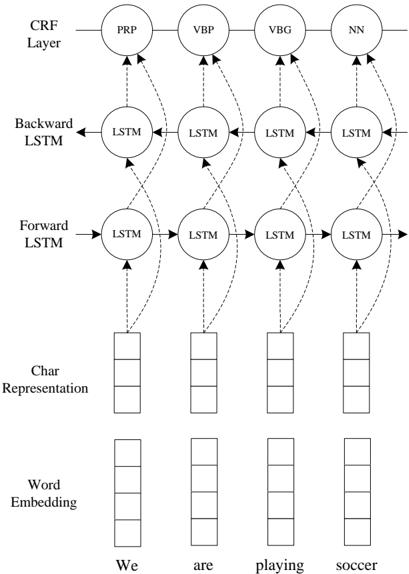
State-of-the-art sequence labeling systems traditionally require large amounts of taskspecific knowledge in the form of handcrafted features and data pre-processing.In this paper, we introduce a novel neutral network architecture that benefits from both word-and character-level representations automatically, by using combination of bidirectional LSTM, CNN and CRF.Our system is truly end-to-end, requiring no feature engineering or data preprocessing, thus making it applicable to a wide range of sequence labeling tasks.We evaluate our system on two data sets for two sequence labeling tasks -Penn Treebank WSJ corpus for part-of-speech (POS) tagging and CoNLL 2003 corpus for named entity recognition (NER).We obtain state-of-the-art performance on both datasets -97.55% accuracy for POS tagging and 91.21% F1 for NER.
Overview
The claims and statistics of this paper haven’t been checked yet.
Free: it reads the open-access text and checks the first 5 claims that cite a source we can check. Create a free account to check every claim.
Integrity signals
Registry
Cites
Statistics
Figures
Verification
Claims the paper makes
The claims and statistics of this paper haven’t been checked yet.
Free: it reads the open-access text and checks the first 5 claims that cite a source we can check. Create a free account to check every claim.
Claims other papers make about this one
Each is checked against this paper’s own text: does it say what the citing paper says it does?
The cited source says what the claim attributes to it.
In the citing paper
“Empirically, for those token [81] or span [30] prediction tasks (e.g., NER), prompt decomposition can be considered, while for those span relation prediction [66] tasks (e.g., entity coreference), prompts composition would be a better choice.”
From Pre-train, Prompt, and Predict: A Systematic Survey of Prompting Methods in Natural Language Processing (2023) · cites this paper as [81]
Self-check
Percentages, sums and reported differences re-computed from the paper’s own numbers.
The self-check needs the paper’s full text.
Citations
Cites
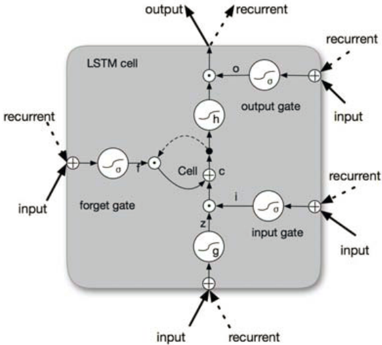
Hochreiter, S., & Schmidhuber, J. (1997) · Neural Computation · doi:10.1162/neco.1997.9.8.1735 · Cited by 102,318 · cited 2×
“Recently, recurrent neural networks (RNN) (Goller and Kuchler, 1996), together with its variants such as long-short term memory (LSTM) (Hochreiter and Schmidhuber, 1997; Gers et al., 2000) and gated recurrent unit (GRU) (Cho et al., 2014), have shown great success in modeling sequential data.”
BackgroundAdam: A Method for Stochastic Optimization
Kingma, D. P., & Ba, J. (2014) · arXiv · doi:10.48550/arxiv.1412.6980 · Cited by 98,946
Glove: Global Vectors for Word Representation
Pennington, J., Socher, R., & Manning, C. (2014) · Proceedings of the 2014 Conference on Empirical Methods in Natural Language Processing (EMNLP) · doi:10.3115/v1/d14-1162 · Cited by 34,071 · cited 1×
“glove/ trained on 6 billion words from Wikipedia and web text (Pennington et al., 2014)”
Background(2014) · Cited by 33,419
Distributed Representations of Words and Phrases and their Compositionality
Mikolov, T., Sutskever, I., Chen, K., Corrado, G., & Dean, J. (2013) · arXiv · doi:10.48550/arxiv.1310.4546 · Cited by 24,533 · cited 2×
“, 2011), and Google’s Word2Vec 300 dimensional embeddings3 trained on 100 billion words from Google News (Mikolov et al., 2013).”
BackgroundDelving Deep into Rectifiers: Surpassing Human-Level Performance on ImageNet Classification
He, K., Zhang, X., Ren, S., & Sun, J. (2015) · 2015 IEEE International Conference on Computer Vision (ICCV) · doi:10.1109/iccv.2015.123 · Cited by 19,741 · cited 1×
“To test the effectiveness of pretrained word embeddings, we experimented with randomly initialized embeddings with 100 dimensions, where embeddings are uniformly sampled from range [ − where dim is the dimension of embeddings (He et al., 2015).”
Method(2010) · Cited by 14,134
Conditional Random Fields: Probabilistic Models for Segmenting and Labeling Sequence Data
Lafferty, J., McCallum, A., & Pereira, F. C. N. (2001) · ScholarlyCommons (University of Pennsylvania) · Cited by 12,935
Backpropagation Applied to Handwritten Zip Code Recognition
LeCun, Y., Boser, B., Denker, J. S., Henderson, D., Howard, R. E., Hubbard, W., & Jackel, L. D. (1989) · Neural Computation · doi:10.1162/neco.1989.1.4.541 · Cited by 11,891 · cited 2×
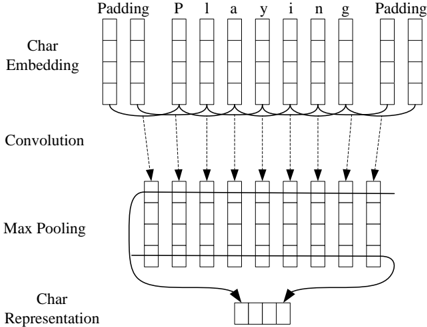
“We first use convolutional neural networks (CNNs) (LeCun et al., 1989) to encode character-level information of a word into its character-level representation.”
MethodSpeech recognition with deep recurrent neural networks
Graves, A., Mohamed, A.-R., & Hinton, G. (2013) · 2013 IEEE International Conference on Acoustics, Speech and Signal Processing · doi:10.1109/icassp.2013.6638947 · Cited by 8,893 · cited 4×
“Several RNN-based neural network models have been proposed to solve sequence labeling tasks like speech recognition (Graves et al., 2013), POS tagging (Huang et al., 2015) and NER (Chiu and Nichols, 2015; Hu et al., 2016), achieving competitive performance against traditional models.”
MethodInfluential
Research works printed but not linked: 6
- [3]3. James Bergstra, Olivier Breuleux, Frédéric Bastien, Pascal Lamblin, Razvan Pascanu, Guillaume Des- jardins, Joseph Turian, David Warde-Farley, and Yoshua Bengio. 2010. Theano: a cpu and gpu math expression compiler. In Proceedings of the Python for scientific computing conference (SciPy), volume 4, page 3. Austin, TX.
- [15]15. Felix A Gers, Nicol N Schraudolph, and Jürgen Schmidhuber. 2003. Learning precise timing with lstm recurrent networks. The Journal of Machine Learning Research, 3:115-143.
- [37]37. Xuezhe Ma and Hai Zhao. 2012a. Fourth-order depen- dency parsing. In Proceedings of COLING 2012: Posters, pages 785-796, Mumbai, India, December.
- [43]43. Tomas Mikolov, Ilya Sutskever, Kai Chen, Greg S Cor- rado, and Jeff Dean. 2013. Distributed representa- tions of words and phrases and their compositional- ity. In Advances in neural information processing systems, pages 3111-3119.
- [58]58. Erik F. Tjong Kim Sang and Jorn Veenstra. 1999. Rep- resenting text chunks. In Proceedings of EACL'99, pages 173-179. Bergen, Norway.
- [59]59. Kristina Toutanova, Dan Klein, Christopher D Man- ning, and Yoram Singer. 2003. Feature-rich part- of-speech tagging with a cyclic dependency net- work. In Proceedings of NAACL-HLT-2003, Volume 1, pages 173-180.
Cited by
Items 301–400 of 1,008
Active Learning for Sequence Tagging with Deep Pre-trained Models and Bayesian Uncertainty Estimates
Shelmanov, A., Puzyrev, D., Kupriyanova, L., Belyakov, D., Larionov, D., Khromov, N., Kozlova, O., Artemova, E., Dylov, D. V., & Panchenko, A. (2021) · Conference of the European Chapter of the Association for Computational Linguistics · doi:10.18653/v1/2021.eacl-main.145 · Cited by 82
Dependency syntax guided BERT-BiLSTM-GAM-CRF for Chinese NER
Li, D., Li, Y., Yang, J., & Ma, Z. (2022) · Expert Systems with Applications · doi:10.1016/j.eswa.2022.116682 · Cited by 81
GraphBTM: Graph Enhanced Autoencoded Variational Inference for Biterm Topic Model
Zhu, Q., Feng, Z., & Li, X. (2018) · Conference on Empirical Methods in Natural Language Processing (EMNLP) · doi:10.18653/v1/d18-1495 · Cited by 81
“With the rising of deep learning (LeCun et al., 2015), researchers achieve significant improvement in many areas including image classification (He et al., 2016), speech recognition (Hin-ton et al., 2012) and named entity recognition (Ma and Hovy, 2016; Zhu et al., 2018).”
BackgroundAttend, Copy, Parse End-to-end Information Extraction from Documents
Palm, R. B., Laws, F., & Winther, O. (2019) · IAPR International Conference on Document Analysis and Recognition (ICDAR) · doi:10.1109/icdar.2019.00060 · Cited by 80
Aiding Intra-Text Representations with Visual Context for Multimodal Named Entity Recognition
Arshad, O., Gallo, I., Nawaz, S., & Calefati, A. (2019) · IAPR International Conference on Document Analysis and Recognition (ICDAR) · doi:10.1109/icdar.2019.00061 · Cited by 80
“For tag prediction, final output Ofc is passed to Conditional Random Field (CRF) layer [20].”
MethodNamed Entity Recognition With Parallel Recurrent Neural Networks
Žukov-Gregorič, A., Bachrach, Y., & Coope, S. (2018) · Proceedings of the conference - Association for Computational Linguistics. Meeting · doi:10.18653/v1/p18-2012 · Cited by 81
“Over time neural methods such as (Chiu and Nichols, 2015; Ma and Hovy, 2016; Luo et al., 2015; Lample et al., 2016) emerged.”
MethodInterpreting Deep Learning Models in Natural Language Processing: A ReviewPreprint
Sun, X., Yang, D., Li, X., Zhang, T., Meng, Y., Qiu, H., Wang, G., Hovy, E. H., & Li, J. (2021) · arXiv (Cornell University) · doi:10.48550/arxiv.2110.10470 · Cited by 82
“Deep learning based models have achieved state-of-the-art results on a variety of natural language processing (NLP) tasks such as tagging [127, 165, 217, 120], text classification [100, 221, 144, 121, 32, 199], machine translation [194, 59, 222, 187], natural language understanding [210, 110, 181, 200], dialog [4, 207…”
BackgroundSelf-citationA neural model for text localization, transcription and named entity recognition in full pages
Carbonell, M., Fornés, A., Villegas, M., & Lladós, J. (2020) · Pattern Recognition Letters · doi:10.1016/j.patrec.2020.05.001 · Cited by 79
Chinese clinical named entity recognition with radical-level feature and self-attention mechanism
Yin, M., Mou, C., Xiong, K., & Ren, J. (2019) · Journal of Biomedical Informatics · doi:10.1016/j.jbi.2019.103289 · Cited by 79
Multi-Task Learning for Sequence Tagging: An Empirical StudyPreprint
Changpinyo, S., Hu, H., & Sha, F. (2018) · arXiv (Cornell University) · doi:10.48550/arxiv.1808.04151 · Cited by 79
“We use strategies suggested by (Ma and Hovy, 2016) for initializing other parameters in our networks.”
MethodA Dual-Attention Hierarchical Recurrent Neural Network for Dialogue Act Classification
Li, R., Lin, C., Collinson, M., Li, X., & Chen, G. (2019) · Conference on Computational Natural Language Learning · doi:10.18653/v1/k19-1036 · Cited by 80
“, 2014) and 50-dimensional character embeddings (Ma and Hovy, 2016).”
MethodWhy Attention? Analyze BiLSTM Deficiency and Its Remedies in the Case of NER
Li, P.-H., Fu, T.-J., & Ma, W.-Y. (2020) · Proceedings of the AAAI Conference on Artificial Intelligence · doi:10.1609/aaai.v34i05.6338 · Cited by 78
“The resulting 20-by-(25+4) feature map of each token is applied to a character-trigram CNN with 20 kernels per length 1 to 3 and max-over-time pooling to compute a 60d character-based word vector (Kim et al. 2016; Chiu and Nichols 2016; Ma and Hovy 2016).”
BackgroundMethodInfluentialLi, R., Mo, T., Yang, J., Li, D., Jiang, S., & Wang, D. (2021) · Advanced Engineering Informatics · doi:10.1016/j.aei.2021.101416 · Cited by 78
A hybrid approach for named entity recognition in Chinese electronic medical record
Ji, B., Liu, R., Li, S., Yu, J., Wu, Q., Tan, Y., & Wu, J. (2019) · BMC Medical Informatics and Decision Making · doi:10.1186/s12911-019-0767-2 · Cited by 78
A network security entity recognition method based on feature template and CNN-BiLSTM-CRF
Qin, Y. N., Shen, G., Zhao, W., Chen, Y., Yu, M., & Jin, X. (2019) · Frontiers of Information Technology & Electronic Engineering · doi:10.1631/fitee.1800520 · Cited by 78
Recent Trends in Named Entity Recognition (NER)Preprint
Roy, A. (2021) · arXiv (Cornell University) · doi:10.48550/arxiv.2101.11420 · Cited by 79
NER-BERT: A Pre-trained Model for Low-Resource Entity TaggingPreprint
Liu, Z., Jiang, F., Hu, Y., Chen, S., & Fung, P. (2021) · arXiv (Cornell University) · doi:10.48550/arxiv.2112.00405 · Cited by 79
“Current NER systems heavily rely on large training datasets to achieve good performance (Lample et al., 2016; Chiu and Nichols, 2016; Ma and Hovy, 2016; Yadav and Bethard, 2018; Li et al., 2020), and a well-designed NER model normally has a poor generalization ability on low-resource domains, where…”
BackgroundEnhance Robustness of Sequence Labelling with Masked Adversarial Training
Chen, L., Liu, X., Ruan, W., & Lu, J. (2020) · Findings of the Association for Computational Linguistics: EMNLP (Findings of EMNLP) · doi:10.18653/v1/2020.findings-emnlp.28 · Cited by 77
“Deep neural network (DNN) based methods have shown great success in various natural language processing (NLP) tasks, such as text classification, sentiment analysis, machine translation, and sequence labelling (Miyato et al., 2017; Ma and Hovy, 2016; Peters et al., 2018).”
MethodAn Annotated Corpus for Machine Reading of Instructions in Wet Lab Protocols
Kulkarni, C., Xu, W., Ritter, A., & Machiraju, R. (2018) · Proceedings of the 2018 Conference of the North American Chapter of the Association for Computational Linguistics: Human Language Technologies, Volume 2 (Short Papers) · doi:10.18653/v1/n18-2016 · Cited by 54
“We utilized the state-of-the-art Bidirectional LSTM with a Conditional Random Fields (CRF) layer (Ma and Hovy, 2016; Lample et al., 2016; Plank et al., 2016), initialized with 200-dimentional word vectors pretrained on 5.5 billion words from PubMed and PMC biomedical texts (Moen and Ananiadou,…”
InfluentialEntity Recognition at First Sight: Improving NER with Eye Movement Information
Hollenstein, N., & Zhang, C. (2019) · Conference of the North American Chapter of the Association for Computational Linguistics: Human Language Technologies (NAACL-HLT) · doi:10.18653/v1/n19-1001 · Cited by 77
“State-of-the-art NER Non-linear neural networks with distributed word representations as input have become increasingly successful for any sequence labeling task in NLP (Huang et al., 2015; Chiu and Nichols, 2016; Ma and Hovy, 2016).”
Spatial Dual-Modality Graph Reasoning for Key Information ExtractionPreprint
Sun, H., Kuang, Z., Yue, X., Lin, C., & Zhang, W. (2021) · arXiv (Cornell University) · doi:10.48550/arxiv.2103.14470 · Cited by 77
“Later, CloudScan [5] modeled the key information extraction problem as NER [9], [10], [11], [12], and concatenated the entire invoice texts as one dimensional sequences without utilizing the two-dimensional spatial layout information.”
MethodInstructionNER: A Multi-Task Instruction-Based Generative Framework for Few-shot NERPreprint
Wang, L., Li, R., Yang, Y. T., Yan, Y., Wang, S., Wu, W., & Xu, W. (2022) · arXiv (Cornell University) · doi:10.48550/arxiv.2203.03903 · Cited by 77
“Currently, the most popular approach is to formulate NER as a sequence labeling task (Chiu and Nichols, 2016; Strubell et al., 2017; Liu et al., 2019, 2021), adding token-level classifiers or CRF (Ma and Hovy, 2016) on top of sentence encoders.”
MethodNoisy-Labeled NER with Confidence Estimation
Liu, K., Fu, Y., Tan, C., Chen, M., Zhang, N., Huang, S., & Gao, S. (2021) · Conference of the North American Chapter of the Association for Computational Linguistics: Human Language Technologies (NAACL-HLT) · doi:10.18653/v1/2021.naacl-main.269 · Cited by 75
Label-Agnostic Sequence Labeling by Copying Nearest Neighbors
Wiseman, S., & Stratos, K. (2019) · Proceedings of the conference - Association for Computational Linguistics. Meeting · doi:10.18653/v1/p19-1533 · Cited by 76
“(2)While recent sequence labeling models (Ma and Hovy, 2016; Lample et al., 2016), often model inter-label dependence with a first-order CRF (Lafferty et al.”
Hybrid semi-Markov CRF for Neural Sequence Labeling
Ye, Z.-X., & Ling, Z.-H. (2018) · Proceedings of the conference - Association for Computational Linguistics. Meeting · doi:10.18653/v1/p18-2038 · Cited by 76
“Two character encoding models, LM-BLSTM (Liu et al., 2018) and CNN-BLSTM (Ma and Hovy, 2016), were adopted in our experiments.”
MethodData Association for Multi-Object Tracking via Deep Neural Networks
Yoon, K., Kim, D. Y., Yoon, Y.-C., & Jeon, M. (2019) · Sensors · doi:10.3390/s19030559 · Cited by 65
“to consider the context of a sequence when it outputs an association score by using the bi-directional LSTM to exploit future and past information [32].”
BackgroundDomain-Independent Extraction of Scientific Concepts from Research Articles
Brack, A., D’Souza, J., Hoppe, A., Auer, S., & Ewerth, R. (2020) · Lecture notes in computer science · doi:10.1007/978-3-030-45439-5_17 · Cited by 77
“It consists of three components: (a) a token embedding layer comprising a per-sentence sequence of tokens, where each token is represented as a concatenation of SciBERT word embedding and CNN-based character embeddings [33], (b) a token-level encoder with two stacked bidirectional LSTMs [21], and (c) a Conditional Ran…”
BackgroundSpan-ConveRT: Few-shot Span Extraction for Dialog with Pretrained Conversational Representations
Coope, S., Farghly, T., Gerz, D., Vulić, I., & Henderson, M. (2020) · Proceedings of the conference - Association for Computational Linguistics. Meeting · doi:10.18653/v1/2020.acl-main.11 · Cited by 76
Multi-Cell Compositional LSTM for NER Domain Adaptation
Chen, J., & Zhang, Y. (2020) · Proceedings of the conference - Association for Computational Linguistics. Meeting · doi:10.18653/v1/2020.acl-main.524 · Cited by 75
“Input : Source-domain NER dataset S ner , target-domain NER dataset T ner or raw data T lm and entity dictionary D e Output : Target-domain model 1: while training steps not end do 2:”
BackgroundNamed Entity Recognition by Using XLNet-BiLSTM-CRF
Yan, R., Jiang, X. F., & Dang, D. (2021) · Neural Processing Letters · doi:10.1007/s11063-021-10547-1 · Cited by 76
CAT-MNER: Multimodal Named Entity Recognition with Knowledge-Refined Cross-Modal Attention
Wang, X., Ye, J., Li, Z., Tian, J., Jiang, Y., Yan, M., Zhang, J., & Xiao, Y. (2022) · IEEE International Conference on Multimedia and Expo (ICME) · doi:10.1109/icme52920.2022.9859972 · Cited by 75
Information Extraction from Text Intensive and Visually Rich Banking Documents
Oral, B., Emekligil, E., Arslan, S., & Eryiğit, G. (2020) · Information Processing & Management · doi:10.1016/j.ipm.2020.102361 · Cited by 75
Enhancing Dialogue Symptom Diagnosis with Global Attention and Symptom Graph
Xinzhu, L., He, X., Chen, Q., Tou, H., Wei, Z., & Chen, T. (2019) · Conference on Empirical Methods in Natural Language Processing (EMNLP) · doi:10.18653/v1/d19-1508 · Cited by 72
“(Ma and Hovy, 2016) used an additional CNN to represent character-level features on the basis of BiLSTM-CRF.”
MethodLin, W., Gao, Q., Sun, L., Zhong, Z., Hu, K., Ren, Q., & Huo, Q. (2021) · Lecture notes in computer science · doi:10.1007/978-3-030-86549-8_35 · Cited by 74
Delving Deep into Regularity: A Simple but Effective Method for Chinese Named Entity Recognition
Gu, Y., Qu, X., Wang, Z., Zheng, Y., Huai, B., & Yuan, N. J. (2022) · Findings of the Association for Computational Linguistics: NAACL · doi:10.18653/v1/2022.findings-naacl.143 · Cited by 74
Zhang, Y., & Zhang, H. (2023) · Neural Processing Letters · doi:10.1007/s11063-023-11266-5 · Cited by 76
“A sequence labeling model [9, 14, 15] is trained to assign a tagging class to each unit within a sequence of tokens.”
MethodInfluentialGrounded Multimodal Named Entity Recognition on Social Media
Yu, J., Li, Z., Wang, J., & Xia, R. (2023) · Proceedings of the conference - Association for Computational Linguistics. Meeting · doi:10.18653/v1/2023.acl-long.508 · Cited by 74
“Many supervised learning methods have achieved satisfactory results on formal text (Li et al., 2020a), including feature engineering methods (Finkel et al., 2005; Ratinov and Roth, 2009) and deep learning methods (Chiu and Nichols, 2016; Ma and Hovy, 2016).”
BackgroundCross-lingual Argumentation Mining: Machine Translation (and a bit of Projection) is All You Need!
Eger, S., Daxenberger, J., Stab, C., & Gurevych, I. (2018) · TUbilio (Technical University of Darmstadt) · doi:10.48550/arxiv.1807.08998 · Cited by 74
“OOV words, they are still affected by them (Ma and Hovy, 2016; Müller et al., 2013).”
BackgroundMIE: A Medical Information Extractor towards Medical Dialogues
Zhang, Y., Jiang, Z., Zhang, T., Liu, S., Cao, J., Liu, K., Liu, S., & Zhao, J. (2020) · Proceedings of the conference - Association for Computational Linguistics. Meeting · doi:10.18653/v1/2020.acl-main.576 · Cited by 72
“A commonly utilized annotation paradigm is sequential labeling, where the medical entities are labeled using BIO tags (Du et al., 2019; Lin et al., 2019; Collobert et al., 2011; Huang et al., 2015; Ma and Hovy, 2016).”
MethodProceedings of the BioNLP 2018 workshop
(2018) · doi:10.18653/v1/w18-23 · Cited by 71
“This approach has been proven effective in the number of sequence labeling tasks, such as semantic role labeling (Zhou and Xu, 2015) and namedentity recognition (Ma and Hovy, 2016).”
Lightweight Multilingual Entity Extraction and Linking
Pappu, A., Blanco, R., Mehdad, Y., Stent, A. J., & Thadani, K. (2017) · ACM International Conference on Web Search and Data Mining (WSDM) · doi:10.1145/3018661.3018724 · Cited by 73
KazNERD: Kazakh Named Entity Recognition Dataset
Yeshpanov, R., Khassanov, Y., & Varol, H. A. (2022) · Language Resources and Evaluation Conference (LREC) · doi:10.63317/5398gpuejb6t · Cited by 73
APTNER: A Specific Dataset for NER Missions in Cyber Threat Intelligence Field
Wang, X., He, S., Xiong, Z., Wei, X., Jiang, Z., Chen, S., & Jiang, J. (2022) · International Conference on Computer Supported Cooperative Work in Design (CSCWD) · doi:10.1109/cscwd54268.2022.9776031 · Cited by 73
A review of named entity recognition: from learning methods to modelling paradigms and tasks
Seow, W. L., Chaturvedi, I., Hogarth, A., Mao, R., & Cambria, E. (2025) · Artificial Intelligence Review · doi:10.1007/s10462-025-11321-8 · Cited by 76
Misawa, S., Taniguchi, M., Miura, Y., & Ohkuma, T. (2017) · Workshop on Subword and Character Level Models in NLP (SCLeM) · doi:10.18653/v1/w17-4114 · Cited by 73
“Above all, BLSTM-CNNs-CRF (Ma and Hovy, 2016) achieved state-of-the-art performance on the standard English corpus: CoNLL2003 (Tjong Kim Sang and De Meulder, 2003).”
BackgroundMethodResultInfluentialMisspelling Oblivious Word Embeddings
Piktus, A., Edizel, B., Bojanowski, P., Grave, É., Ferreira, R., & Silvestri, F. (2019) · Conference of the North American Chapter of the Association for Computational Linguistics: Human Language Technologies (NAACL-HLT) · doi:10.18653/v1/n19-1326 · Cited by 73
“We use a state-of-the-art POS tagger (Ma and Hovy, 2016) consisting of a Conditional Random Fields (CRF) model where embeddings of the words in a sentence constitute observations and the tags to assign constitute the latent variables.”
An end-to-end joint model for evidence information extraction from court record document
Ji, D., Tao, P., Fei, H., & Ren, Y. (2020) · Information Processing & Management · doi:10.1016/j.ipm.2020.102305 · Cited by 74
An automatic speed adaption neural network model for planetary gearbox fault diagnosis
Chen, P., Li, Y., Wang, K., & Zuo, M. J. (2020) · Measurement · doi:10.1016/j.measurement.2020.108784 · Cited by 72
Neural ranking models for document retrieval
Trabelsi, M., Chen, Z., Davison, B. D., & Heflin, J. (2021) · Information Retrieval · doi:10.1007/s10791-021-09398-0 · Cited by 73
“Researchers have investigated the use of RNN to produce context-dependent representations for tokens (Yang et al., 2017; Ma & Hovy, 2016; Lample et al., 2016).”
Parallel Attention Network with Sequence Matching for Video Grounding
Zhang, H., Sun, A., Jing, W., Zhen, L., Zhou, J. T., & Goh, S. M. R. (2021) · Findings of the Association for Computational Linguistics: ACL (Findings of ACL) · doi:10.18653/v1/2021.findings-acl.69 · Cited by 72
“We use named entity recognition (NER) (Lample et al., 2016; Ma and Hovy, 2016) as an example sequence labeling task for illustration in Figure 2.”
MethodA Unified Target-Oriented Sequence-to-Sequence Model for Emotion-Cause Pair Extraction
Cheng, Z., Jiang, Z., Yin, Y., Li, N., & Gu, Q. (2021) · IEEE/ACM Transactions on Audio Speech and Language Processing · doi:10.1109/taslp.2021.3102194 · Cited by 72
“Theclassicneu-ralsequencelabelingmodelsincludeBiLSTM-Softmax[44], BiLSTM-CRF[45],BERT-Softmax[47],andsoon.”
MethodForough, J., & Momtazi, S. (2021) · Expert Systems · doi:10.1111/exsy.12795 · Cited by 72
“The combination of LSTM and CRF models has shown a success story in different sequence labelling tasks in text processing, including parts-of-speech tagging, named entity recognition, and chunking (Huang et al., 2015; Lample et al., 2016; Ma & Hovy, 2016).”
MethodQuery Prior Matters: A MRC Framework for Multimodal Named Entity Recognition
Jia, M., Shen, X., Shen, L., Pang, J., Liao, L., Song, Y., Chen, M., & He, X. (2022) · ACM International Conference on Multimedia (ACM MM) · doi:10.1145/3503161.3548427 · Cited by 72
“As a crucial component of natural language processing, named entity recognition (NER) aims to discover named entities in free text and classify them into predefined types [11, 12, 18, 34].”
BackgroundMethodNamed-Entity Recognition for Indonesian Language using Bidirectional LSTM-CNNs
Gunawan, W., Suhartono, D., Purnomo, F., & Ongko, A. (2018) · Procedia Computer Science · doi:10.1016/j.procs.2018.08.193 · Cited by 72
Wunnava, S., Qin, X., Kakar, T., Şen, C., Rundensteiner, E. A., & Kong, X. (2019) · Drug Safety · doi:10.1007/s40264-018-0765-9 · Cited by 72
Alleviating Digitization Errors in Named Entity Recognition for Historical Documents
Boroş, E., Hamdi, A. T. E., Pontes, E. L., Cabrera-Diego, L. A., Moreno, J. G., Sidère, N., & Doucet, A. (2020) · Conference on Computational Natural Language Learning · doi:10.18653/v1/2020.conll-1.35 · Cited by 74
“…embeddings encoded either by a bidirectional Long Short Term Memory (BiLSTM) network or a Convolutional Neural Network (CNN) (Collobert et al., 2011; Lample et al., 2016; Ma and Hovy, 2016; Aguilar et al., 2017; Chiu and Nichols, 2016), along with a Conditional Random Fields (CRF) decoder.”
BackgroundMethodA multitask multiview neural network for end-to-end aspect-based sentiment analysis
Bie, Y., & Yang, Y. T. (2021) · Big Data Mining and Analytics · doi:10.26599/bdma.2021.9020003 · Cited by 72
“The model[39] has the same structure as Ref.”
MethodIntegrating Learning and Reasoning with Deep Logic Models
Marra, G., Giannini, F., Diligenti, M., & Gori, M. (2020) · Lecture Notes in Computer Science · doi:10.1007/978-3-030-46147-8_31 · Cited by 71
Character convolutions for Arabic Named Entity Recognition with Long Short-Term Memory Networks
Khalifa, M., & Shaalan, K. F. (2019) · Computer Speech & Language · doi:10.1016/j.csl.2019.05.003 · Cited by 72
A hybrid deep-learning approach for complex biochemical named entity recognition
Liu, J., Gao, L., Guo, S., Ding, R., Huang, X., Ye, L., Meng, Q., Nazari, A., & Thiruvady, D. (2021) · Knowledge-Based Systems · doi:10.1016/j.knosys.2021.106958 · Cited by 71
Sachan, D. S., Xie, P., Sachan, M., & Xing, E. P. (2017) · arXiv (Cornell University) · doi:10.48550/arxiv.1711.07908 · Cited by 42
Pushing the Limits of ChatGPT on NLP TasksPreprint
Sun, X., Dong, L., Li, X., Wan, Z., Wang, S., Zhang, T., Li, J., Cheng, F., Lyu, L., Wu, F. Q., et al. (2023) · arXiv (Cornell University) · doi:10.48550/arxiv.2306.09719 · Cited by 71
“Named entity recognition (NER) (Chiu and Nichols, 2015; Shang et al., 2018; Wang et al., 2023b) is a task that extracts named entities of pre-defined categories (e.g., location, organization, etc.) from a given text, normally formalized as a sequence labeling problem.”
InfluentialBatbaatar, E., & Ryu, K. H. (2019) · International Journal of Environmental Research and Public Health · doi:10.3390/ijerph16193628 · Cited by 72
Reducing the Bias of Visual Objects in Multimodal Named Entity Recognition
Zhang, X., Yuan, J., Li, L., & Liu, J. (2023) · ACM International Conference on Web Search and Data Mining (WSDM) · doi:10.1145/3539597.3570485 · Cited by 70
“The first group contains several representative text-based NER approaches: • CNN-BiLSTM-CRF [15]: It is a classical neural network for NER based on CNN and LSTM. • HBiLSTM-CRF [11]: It is an improvement of CNN-BiLSTM-CRF, replacing the bottom CNN layer with the LSTM layer.”
MethodImproving Low Resource Named Entity Recognition using Cross-lingual Knowledge Transfer
Feng, X., Feng, X., Qin, B., Feng, Z., & Liu, T. (2018) · International Joint Conference on Artificial Intelligence · doi:10.24963/ijcai.2018/566 · Cited by 70
“[Ma and Hovy, 2016].”
Content to Node: Self-Translation Network Embedding
Liu, J., He, Z., Wei, L., & Huang, Y. (2018) · ACM SIGKDD Conference on Knowledge Discovery and Data Mining (KDD) · doi:10.1145/3219819.3219988 · Cited by 69
“Long short-term memory (LSTM) [10], a particular variant of RNN, have become particularly popular, and been successfully applied to a large number of tasks: speech recognition [8], sequence tagging [12, 15], document categorization [33].”
BackgroundPan, P., Chen, H., Li, Y., Cai, N., Cheng, L., & Wang, S. (2020) · Ultrasonics · doi:10.1016/j.ultras.2020.106271 · Cited by 70
Empirical Analysis of Unlabeled Entity Problem in Named Entity RecognitionPreprint
Li, Y., Liu, L., & Shi, S. (2020) · arXiv (Cornell University) · doi:10.48550/arxiv.2012.05426 · Cited by 70
“Previous methods typically cast it into a sequence labeling problem by adopting IOB tagging scheme (Huang et al., 2015; Ma & Hovy, 2016; Akbik et al., 2018).”
MethodCatelli, R., Casola, V., Pietro, G. D., Fujita, H., & Esposito, M. (2020) · Knowledge-Based Systems · doi:10.1016/j.knosys.2020.106649 · Cited by 69
Piskorski, J., Laskova, L., Marcińczuk, M., Pivovarova, L., Přibáň, P., Steinberger, J., & Yangarber, R. (2019) · Workshop on Balto-Slavic Natural Language Processing (BSNLP) · doi:10.18653/v1/w19-3709 · Cited by 69
“TLR used a standard end-to-end architecture for sequence labeling, namely: LSTM-CNNCRF, (Ma and Hovy, 2016).”
MethodJoint Entity and Relation Extraction for Legal Documents with Legal Feature Enhancement
Chen, Y., Sun, Y., Yang, Z., & Lin, H. (2020) · International Conference on Computational Linguistics · doi:10.18653/v1/2020.coling-main.137 · Cited by 69
“named entity recognition (Lample et al., 2016; Ma and Hovy, 2016; Chiu and Nichols, 2016; Zhu and Wang, 2019) and relation classification (Zeng et al.”
BackgroundSequence to sequence hybrid Bi-LSTM model for traffic speed prediction
Ounoughi, C., & Yahia, S. B. (2023) · Expert Systems with Applications · doi:10.1016/j.eswa.2023.121325 · Cited by 68
Named Entity Recognition, Linking and Generation for Greek Legislation
Angelidis, I., Chalkidis, I., & Koubarakis, M. (2018) · Frontiers in artificial intelligence and applications · doi:10.3233/978-1-61499-935-5-1 · Cited by 68
“They have also shown exceptional results on top of BILSTMs in sequence labeling [18].”
MethodResultLSTM-CRF Neural Network With Gated Self Attention for Chinese NER
Jin, Y., Xie, J., Guo, W., Luo, C., Wu, D., & Wang, R. (2019) · IEEE Access · doi:10.1109/access.2019.2942433 · Cited by 68
“Similarly, Ma and Hovy [5] conducted the character Convolutional Neural Network (CNN) to extract English character-level features based on the LSTM-CRF network structure.”
MethodGeneralizing Natural Language Analysis through Span-relation Representations
Jiang, Z., Xu, W. H., Araki, J., & Neubig, G. (2020) · Proceedings of the conference - Association for Computational Linguistics. Meeting · doi:10.18653/v1/2020.acl-main.192 · Cited by 67
Cotterell, R., & Duh, K. (2024) · arXiv (Cornell University) · doi:10.48550/arxiv.2404.09383 · Cited by 68
“…the application of long short-term memory (LSTM; Hochreiter and Schmidhuber, 1997) recurrent neural networks (RNNs; Elman, 1990) to CRFs, it has become clear that neural feature extractors are superior to the hand-crafted approaches (Huang et al., 2015; Lam-ple et al., 2016; Ma and Hovy, 2016).”
Nguyen, D. Q., & Verspoor, K. (2018) · Proceedings of the BioNLP 2018 workshop · doi:10.18653/v1/w18-2314 · Cited by 67
“Character-level embeddings: Given a word type w consisting of l characters w = c 1 c 2 ...c l where each j th character in w is represented by a character embedding c j ∈ R d 4 , we investigate two approaches for learning character-based word embedding e ( c ) w (1) Using CNN (dos Santos and Gatti, 2014; Ma and Hovy,…”
BackgroundMethodNeural Text Segmentation and its Application to Sentiment Analysis
Li, J., Chiu, B., Shang, S., & Shao, L. (2020) · IEEE Transactions on Knowledge and Data Engineering · doi:10.1109/tkde.2020.2983360 · Cited by 67
“Following [48], a body of works [21], [22], [49]– [51] applied a bidirectional LSTM (BiLSTM) as the basic architecture to encode sequential context information.”
BackgroundMethodInfluentialBlockage Prediction Using Wireless Signatures: Deep Learning Enables Real-World Demonstration
Wu, S., Alrabeiah, M., Chakrabarti, C., & Alkhateeb, A. (2022) · IEEE Open Journal of the Communications Society · doi:10.1109/ojcoms.2022.3162591 · Cited by 67
A Review of Knowledge Graph-Based Reasoning Technology in the Operation of Power Systems
Liu, R., Fu, R., Xu, K., Shi, X., & Ren, X. (2023) · Applied Sciences · doi:10.3390/app13074357 · Cited by 67
Interpretable deep learning to map diagnostic texts to ICD-10 codes
Atutxa, A., de Ilarraza, A. D., Gojenola, K., Oronoz, M., & Perez-de-Viñaspre, O. (2019) · International Journal of Medical Informatics · doi:10.1016/j.ijmedinf.2019.05.015 · Cited by 68
Cross-lingual Alignment vs Joint Training: A Comparative Study and A Simple Unified FrameworkPreprint
Wang, Z.-R., Xie, J., Xu, R., Yang, Y., Neubig, G., & Carbonell, J. (2019) · arXiv (Cornell University) · doi:10.48550/arxiv.1910.04708 · Cited by 92
Extracting Symptoms and their Status from Clinical Conversations
Du, N., Chen, K., Kannan, A., Tran, L., Chen, Y., & Shafran, I. (2019) · Proceedings of the 57th Annual Meeting of the Association for Computational Linguistics · doi:10.18653/v1/p19-1087 · Cited by 66
“…consisting of a bidirectional layer, a softmax layer and a conditional random field (CRF) to predict the BIO-style tags (Col-lobert et al., 2011; Huang et al., 2015; Ma and Hovy, 2016; Chiu and Nichols, 2016; Lample et al., 2016; Peters et al., 2017; Yang et al., 2017; Changpinyo et al., 2018).”
BackgroundDomBERT: Domain-oriented Language Model for Aspect-based Sentiment Analysis
Xu, H., Liu, B., Shu, L., & Yu, P. (2020) · Findings of the Association for Computational Linguistics: EMNLP (Findings of EMNLP) · doi:10.18653/v1/2020.findings-emnlp.156 · Cited by 66
Accurate Clinical and Biomedical Named Entity Recognition at Scale
Kocaman, V., & Talby, D. (2022) · Software Impacts · doi:10.1016/j.simpa.2022.100373 · Cited by 39
From Raw Text to Universal Dependencies - Look, No Tags!
de Lhoneux, M., Shao, Y., Basirat, A., Kiperwasser, E., Stymne, S., Goldberg, Y., & Nivre, J. (2017) · CoNLL Shared Task: Multilingual Parsing from Raw Text to Universal Dependencies · doi:10.18653/v1/k17-3022 · Cited by 66
“We model joint sentence and word segmentation as a character-level sequence labeling problem in a Bi-RNN-CRF model (Huang et al., 2015; Ma and Hovy, 2016).”
MethodExploiting Multiple Embeddings for Chinese Named Entity Recognition
Xu, C., Wang, F., Han, J., & Li, C. (2019) · ACM International Conference on Information and Knowledge Management (CIKM) · doi:10.1145/3357384.3358117 · Cited by 66
“Previous studies use character-level CNNmodel for NER tasks [10, 16].”
MethodNamed Entity Recognition with Partially Annotated Training Data
Mayhew, S., Chaturvedi, S., Tsai, C.-T., & Roth, D. (2019) · Conference on Computational Natural Language Learning · doi:10.18653/v1/k19-1060 · Cited by 65
“A common neural model for NER is the BiLSTM-CRF model (Ma and Hovy, 2016).”
ECG Language processing (ELP): A new technique to analyze ECG signals
Mousavi, S., Afghah, F., Khadem, F., & Acharya, U. R. (2021) · Computer Methods and Programs in Biomedicine · doi:10.1016/j.cmpb.2021.105959 · Cited by 67
“This problem is also called automatic sequence labeling [21], [22].”
BackgroundFreeDOM: A Transferable Neural Architecture for Structured Information Extraction on Web Documents
Lin, B. Y., Sheng, Y., Vo, N., & Tata, S. (2020) · ACM SIGKDD Conference on Knowledge Discovery and Data Mining (KDD) · doi:10.1145/3394486.3403153 · Cited by 66
“Similar to the architecture used for named entity recognition [29], wefirstinitializeacharacterembeddinglook-uptable E ∈ R |C|× dim 𝑐 for all characters ( C ) where dim 𝑐 is a hyper-parameter for the di-mension of character embedding vectors.”
MethodLocal Additivity Based Data Augmentation for Semi-supervised NER
Chen, J., Wang, Z., Tian, R., Yang, Z., & Yang, D. (2020) · Conference on Empirical Methods in Natural Language Processing (EMNLP) · doi:10.18653/v1/2020.emnlp-main.95 · Cited by 66
Twin Networks: Matching the Future for Sequence GenerationPreprint
Serdyuk, D., Ke, N. R., Sordoni, A., Trischler, A., Pal, C., & Bengio, Y. (2017) · arXiv (Cornell University) · doi:10.48550/arxiv.1708.06742 · Cited by 74
Left-to-Right Dependency Parsing with Pointer Networks
Fernández‐González, D., & Gómez‐Rodríguez, C. (2019) · Conference of the North American Chapter of the Association for Computational Linguistics: Human Language Technologies (NAACL-HLT) · doi:10.18653/v1/n19-1076 · Cited by 65
“As encoder, they employ a combination of CNNs and bi-directional LSTMs (Chiu and Nichols, 2016; Ma and Hovy, 2016).”
MethodMetaNER: Named Entity Recognition with Meta-Learning
Li, J., Shang, S., & Shao, L. (2020) · International World Wide Web Conference (WWW) · doi:10.1145/3366423.3380127 · Cited by 65
“Commonly used input representations include wordlevel and character-level representations [35, 42, 55].”
BackgroundIn-depth analysis of the impact of OCR errors on named entity recognition and linking
Hamdi, A. T. E., Pontes, E. L., Sidère, N., Coustaty, M., & Doucet, A. (2022) · Natural Language Engineering · doi:10.1017/s1351324922000110 · Cited by 67
Multi-granularity cross-modal representation learning for named entity recognition on social media
Liu, P., Wang, G., Li, H., Liu, J., Ren, Y., Zhu, H., & Sun, L. (2023) · Information Processing & Management · doi:10.1016/j.ipm.2023.103546 · Cited by 65
Chaudhary, A., Zhou, C., Levin, L. S., Neubig, G., Mortensen, D. R., & Carbonell, J. (2018) · Conference on Empirical Methods in Natural Language Processing (EMNLP) · doi:10.18653/v1/d18-1366 · Cited by 66
“We use state-of-the-art NER architecture (Ma and Hovy, 2016) as our model for evaluation.”
MethodDomain Generalization for Named Entity Boundary Detection via Metalearning
Li, J., Shang, S., & Chen, L. (2020) · IEEE Transactions on Neural Networks and Learning Systems · doi:10.1109/tnnls.2020.3015912 · Cited by 65
“Existing sequence labeling techniques can be broadly categorized into two paradigms: (i) recurrent neural networks with conditional random fields (RNN-CRF) [8]–[10]; (ii) one RNN to encode input sequences and another RNN as a language model to generate the output sequence (RNN-RNN) [11], [12].”
BackgroundWhen and Why are Pre-trained Word Embeddings Useful for Neural Machine Translation?Preprint
Ye, Q., Sachan, D. S., Felix, M., Padmanabhan, S. J., & Neubig, G. (2018) · arXiv (Cornell University) · doi:10.48550/arxiv.1804.06323 · Cited by 68
“Pre-trained word embeddings have proven to be highly useful in neural network models for NLP tasks such as sequence tagging (Lample et al., 2016; Ma and Hovy, 2016) and text classification (Kim, 2014).”
MethodA Review of Bangla Natural Language Processing Tasks and the Utility of Transformer ModelsPreprint
Alam, F., Hasan, M. A., Alam, T., Khan, A., Tajrin, J., Khan, N., & Chowdhury, S. A. (2021) · arXiv (Cornell University) · doi:10.48550/arxiv.2107.03844 · Cited by 65
“In a recent work, Alam et al. [6] reports Bidirectional LSTMs-CRFs networks for Bangla POS tagging on the LDC corpus developed by Microsoft Research India and achieved 86% accuracy.”
BackgroundInfluential
Metadata
- Authors
- Ma, X., & Hovy, E.
- Affiliations
- Carnegie Mellon University (US)
- Venue
- Proceedings of the 54th Annual Meeting of the Association for Computational Linguistics (Volume 1: Long Papers)
- Published
- 2016
- Pages
- 1064-1074
- ISSN
- 0736-587X (ISSN-L)
- OpenAlex
- W2962902328
- Cited by
- 2,567
- References
- 65
- Citations by year
- 2026: 63 · 2025: 120 · 2024: 153 · 2023: 271 · 2022: 291 · 2021: 408 · 2020: 424 · 2019: 434 · 2018: 280 · 2017: 96 · 2016: 26
- FWCI
- 150.15
- Type
- conference paper
- Language
- en
- Open access
- hybrid
- doi.org
- Licence
- cc-by
- Locations
- Proceedings of the conference - Association for Computational Linguistics. Meeting (publishedVersion, cc-by)
- Funders
- Defense Advanced Research Projects Agency (FA8750, FA8750-12-2-0342)
- Topics
- Physical Sciences › Computer Science › Artificial Intelligence › Natural Language Processing Techniques
- Physical Sciences › Computer Science › Artificial Intelligence › Topic Modeling
- Physical Sciences › Computer Science › Computer Vision and Pattern Recognition › Handwritten Text Recognition Techniques
- Keywords
- sequence labeling, end-to-end learning, bidirectional LSTM, convolutional neural networks, conditional random fields, part-of-speech tagging, named entity recognition, CoNLL-2003
About these checks
Registry, retraction, Cites and statistics results are computed, not judged, with one exception: a printed reference that no index lists is read once by a model before it counts as a citation error. Claims are extracted by a model and kept only when their quote appears verbatim in the text; each cited source is then checked, with a model’s help, for whether it says what the claim relies on. Those verdicts can be wrong — read the claim’s quote and the cited source before relying on one.
Statistics and arithmetic are recomputed, not judged.
Confidence bands are shown only for fields calibrated on our annotated test set. None is calibrated yet, so no band is shown.
What counts as a claim ›How we measure confidence ›How we check this ›
Are you an author, or do you see a problem with this page? Request a review
Data sources
Bibliographic data: Semantic Scholar, OpenAlex, Crossref.
Contains information from the Semantic Scholar Academic Graph Datasets, made available under the ODC Attribution License (ODC-BY 1.0).
Semantic Scholar’s data is described in: Kinney, R., et al. (2023). The Semantic Scholar Open Data Platform. arXiv:2301.10140.
