

End-to-end Sequence Labeling via Bi-directional LSTM-CNNs-CRF
Open accessThe DOI matches its Crossref record; 64 of the 65 references it cites were found in a registry or an index.
Abstract
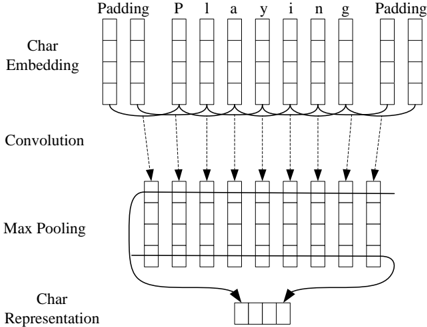
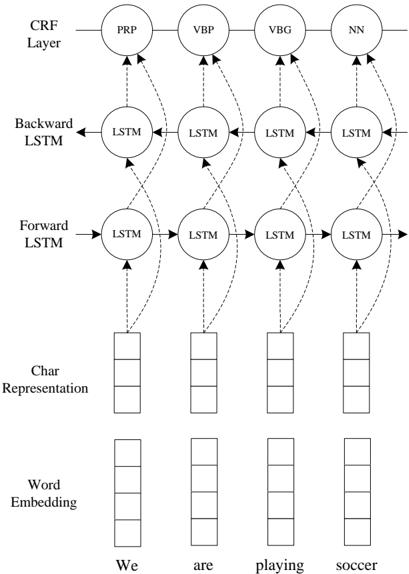
State-of-the-art sequence labeling systems traditionally require large amounts of taskspecific knowledge in the form of handcrafted features and data pre-processing.In this paper, we introduce a novel neutral network architecture that benefits from both word-and character-level representations automatically, by using combination of bidirectional LSTM, CNN and CRF.Our system is truly end-to-end, requiring no feature engineering or data preprocessing, thus making it applicable to a wide range of sequence labeling tasks.We evaluate our system on two data sets for two sequence labeling tasks -Penn Treebank WSJ corpus for part-of-speech (POS) tagging and CoNLL 2003 corpus for named entity recognition (NER).We obtain state-of-the-art performance on both datasets -97.55% accuracy for POS tagging and 91.21% F1 for NER.
Overview
The claims and statistics of this paper haven’t been checked yet.
Free: it reads the open-access text and checks the first 5 claims that cite a source we can check. Create a free account to check every claim.
Integrity signals
Registry
Cites
Statistics
Figures
Verification
Claims the paper makes
The claims and statistics of this paper haven’t been checked yet.
Free: it reads the open-access text and checks the first 5 claims that cite a source we can check. Create a free account to check every claim.
Claims other papers make about this one
Each is checked against this paper’s own text: does it say what the citing paper says it does?
The cited source says what the claim attributes to it.
In the citing paper
“Empirically, for those token [81] or span [30] prediction tasks (e.g., NER), prompt decomposition can be considered, while for those span relation prediction [66] tasks (e.g., entity coreference), prompts composition would be a better choice.”
From Pre-train, Prompt, and Predict: A Systematic Survey of Prompting Methods in Natural Language Processing (2023) · cites this paper as [81]
Self-check
Percentages, sums and reported differences re-computed from the paper’s own numbers.
The self-check needs the paper’s full text.
Citations
Cites
Hochreiter, S., & Schmidhuber, J. (1997) · Neural Computation · doi:10.1162/neco.1997.9.8.1735 · Cited by 102,318 · cited 2×
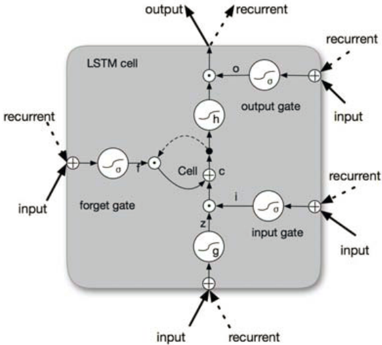
“Recently, recurrent neural networks (RNN) (Goller and Kuchler, 1996), together with its variants such as long-short term memory (LSTM) (Hochreiter and Schmidhuber, 1997; Gers et al., 2000) and gated recurrent unit (GRU) (Cho et al., 2014), have shown great success in modeling sequential data.”
BackgroundAdam: A Method for Stochastic Optimization
Kingma, D. P., & Ba, J. (2014) · arXiv · doi:10.48550/arxiv.1412.6980 · Cited by 98,946
Glove: Global Vectors for Word Representation
Pennington, J., Socher, R., & Manning, C. (2014) · Proceedings of the 2014 Conference on Empirical Methods in Natural Language Processing (EMNLP) · doi:10.3115/v1/d14-1162 · Cited by 34,071 · cited 1×
“glove/ trained on 6 billion words from Wikipedia and web text (Pennington et al., 2014)”
Background(2014) · Cited by 33,419
Distributed Representations of Words and Phrases and their Compositionality
Mikolov, T., Sutskever, I., Chen, K., Corrado, G., & Dean, J. (2013) · arXiv · doi:10.48550/arxiv.1310.4546 · Cited by 24,533 · cited 2×
“, 2011), and Google’s Word2Vec 300 dimensional embeddings3 trained on 100 billion words from Google News (Mikolov et al., 2013).”
BackgroundDelving Deep into Rectifiers: Surpassing Human-Level Performance on ImageNet Classification
He, K., Zhang, X., Ren, S., & Sun, J. (2015) · 2015 IEEE International Conference on Computer Vision (ICCV) · doi:10.1109/iccv.2015.123 · Cited by 19,741 · cited 1×
“To test the effectiveness of pretrained word embeddings, we experimented with randomly initialized embeddings with 100 dimensions, where embeddings are uniformly sampled from range [ − where dim is the dimension of embeddings (He et al., 2015).”
Method(2010) · Cited by 14,134
Conditional Random Fields: Probabilistic Models for Segmenting and Labeling Sequence Data
Lafferty, J., McCallum, A., & Pereira, F. C. N. (2001) · ScholarlyCommons (University of Pennsylvania) · Cited by 12,935
Backpropagation Applied to Handwritten Zip Code Recognition
LeCun, Y., Boser, B., Denker, J. S., Henderson, D., Howard, R. E., Hubbard, W., & Jackel, L. D. (1989) · Neural Computation · doi:10.1162/neco.1989.1.4.541 · Cited by 11,891 · cited 2×
“We first use convolutional neural networks (CNNs) (LeCun et al., 1989) to encode character-level information of a word into its character-level representation.”
MethodSpeech recognition with deep recurrent neural networks
Graves, A., Mohamed, A.-R., & Hinton, G. (2013) · 2013 IEEE International Conference on Acoustics, Speech and Signal Processing · doi:10.1109/icassp.2013.6638947 · Cited by 8,893 · cited 4×
“Several RNN-based neural network models have been proposed to solve sequence labeling tasks like speech recognition (Graves et al., 2013), POS tagging (Huang et al., 2015) and NER (Chiu and Nichols, 2015; Hu et al., 2016), achieving competitive performance against traditional models.”
MethodInfluential
Research works printed but not linked: 6
- [3]3. James Bergstra, Olivier Breuleux, Frédéric Bastien, Pascal Lamblin, Razvan Pascanu, Guillaume Des- jardins, Joseph Turian, David Warde-Farley, and Yoshua Bengio. 2010. Theano: a cpu and gpu math expression compiler. In Proceedings of the Python for scientific computing conference (SciPy), volume 4, page 3. Austin, TX.
- [15]15. Felix A Gers, Nicol N Schraudolph, and Jürgen Schmidhuber. 2003. Learning precise timing with lstm recurrent networks. The Journal of Machine Learning Research, 3:115-143.
- [37]37. Xuezhe Ma and Hai Zhao. 2012a. Fourth-order depen- dency parsing. In Proceedings of COLING 2012: Posters, pages 785-796, Mumbai, India, December.
- [43]43. Tomas Mikolov, Ilya Sutskever, Kai Chen, Greg S Cor- rado, and Jeff Dean. 2013. Distributed representa- tions of words and phrases and their compositional- ity. In Advances in neural information processing systems, pages 3111-3119.
- [58]58. Erik F. Tjong Kim Sang and Jorn Veenstra. 1999. Rep- resenting text chunks. In Proceedings of EACL'99, pages 173-179. Bergen, Norway.
- [59]59. Kristina Toutanova, Dan Klein, Christopher D Man- ning, and Yoram Singer. 2003. Feature-rich part- of-speech tagging with a cyclic dependency net- work. In Proceedings of NAACL-HLT-2003, Volume 1, pages 173-180.
Cited by
Items 401–500 of 1,008
A Neural Architecture for Dialectal Arabic Segmentation
Samih, Y., Attia, M. A., Eldesouki, M. H., Abdelalí, A., Mubarak, H., Kallmeyer, L., & Darwish, K. M. (2017) · Arabic Natural Language Processing Workshop (WANLP) · doi:10.18653/v1/w17-1306 · Cited by 64
“Note that replacing the softmax with CRF at the output layer in neural networks has proved to be very fruitful in many sequence labeling tasks (Ma and Hovy, 2016; Huang et al., 2015; Lample et al., 2016; Samih et al., 2016)”
MethodKöklü, M., Çınar, İ., & Taşpınar, Y. S. (2021) · Biomedical Signal Processing and Control · doi:10.1016/j.bspc.2021.103216 · Cited by 64
“) with the input content and exit the node as output [49,50].”
Near-Lossless Binarization of Word Embeddings
Tissier, J., Gravier, C., & Habrard, A. (2019) · Proceedings of the AAAI Conference on Artificial Intelligence · doi:10.1609/aaai.v33i01.33017104 · Cited by 64
“Although binary vectors can speed up vector computations, some NLP applications only work with real-valued vectors [15]; being able to reconstruct real-valued vectors from the binary ones is therefore required for such applications.”
BackgroundDeep Learning for Natural Language Processing
Zhang, J., & Zong, C. (2019) · Cognitive computation trends · doi:10.1007/978-3-030-06073-2_5 · Cited by 64
Guo, X., Zhou, H., Su, J., Hao, X., Tang, Z., Diao, L., & Li, L. (2020) · Computers and Electronics in Agriculture · doi:10.1016/j.compag.2020.105830 · Cited by 64
Multimodal Aspect Extraction with Region-Aware Alignment Network
Wu, H., Cheng, S., Wang, J., Li, S., & Chi, L. (2020) · Lecture notes in computer science · doi:10.1007/978-3-030-60450-9_12 · Cited by 63
SEML: A Semi-Supervised Multi-Task Learning Framework for Aspect-Based Sentiment Analysis
Li, N., Chow, C.-Y., & Zhang, J.-D. (2020) · IEEE Access · doi:10.1109/access.2020.3031665 · Cited by 64
“Moreover, because combining general embeddings with char-features can help handle misspelling words [43], SEML represents each word in the input sequence as the concatenation of the refined embedding vector and char-features from a character-level Convolutional Neural Network (CNN) [43].”
BackgroundInfluentialMi, B., & Fan, Y. H. (2022) · Artificial Intelligence Review · doi:10.1007/s10462-022-10197-2 · Cited by 63
“The NASA Air Traffic Management Data Integration System (Keller 2015, 2016; Cowell et al. 2015) is a prototype data integration system developed by the National Aeronautics and Space Administration (NASA).”
MethodA two-stage deep learning approach for extracting entities and relationships from medical texts
Suárez-Paniagua, V., Rivera-Zavala, R. M., Segura-Bédmar, I., & Martínez, P. (2019) · Journal of Biomedical Informatics · doi:10.1016/j.jbi.2019.103285 · Cited by 64
A Novel Deep Learning-Based Encoder-Decoder Model for Remaining Useful Life Prediction
Liu, H., Liu, Z., Jia, W., & Lin, X. (2019) · International Joint Conference on Neural Networks (IJCNN) · doi:10.1109/ijcnn.2019.8852129 · Cited by 63
“Scoring function when n=1 [23] A Novel Deep Learning-Based Encoder-Decoder Model for Remaining Useful Life Prediction”
BackgroundMethodAn Efficient DP-SGD Mechanism for Large Scale NLU Models
Dupuy, C., Arava, R., Gupta, R., & Rumshisky, A. (2022) · IEEE International Conference on Acoustics Speech and Signal Processing · doi:10.1109/icassp43922.2022.9746975 · Cited by 63
Improving reference prioritisation with PICO recognition.
Brockmeier, A. J., Ju, M., Przybyła, P., & Ananiadou, S. (2019) · BMC Medical Informatics and Decision Making · doi:10.1186/s12911-019-0992-8 · Cited by 62
“The model builds from previous neural architectures [22, 73, 74].”
Enhanced sequence labeling based on latent variable conditional random fields
Lin, J. C., Shao, Y., Zhang, J., & Yun, U. (2020) · Neurocomputing · doi:10.1016/j.neucom.2020.04.102 · Cited by 62
Word Representation Models for Morphologically Rich Languages in Neural Machine Translation
Vylomova, E., Cohn, T., He, X., & Haffari, G. (2017) · Workshop on Subword and Character Level Models in NLP (SCLeM) · doi:10.18653/v1/w17-4115 · Cited by 62
“Several authors have proposed convolutional neural networks over character sequences, as part of neural models for part of speech tagging (Santos and Zadrozny, 2014), named entity recognition (Ma and Hovy, 2016; Chiu and Nichols, 2015), language modelling (Kim et al.”
BackgroundA Deep Learning Approach to Contract Element Extraction
Chalkidis, I., & Androutsopoulos, I. (2017) · Frontiers in artificial intelligence and applications · doi:10.3233/978-1-61499-838-9-155 · Cited by 62
“Ma and Hovy [17] used a convolutional neural network (CNN) to obtain word embeddings from characters; the word embeddings were subsequently fed to a BILSTM layer followed by a CRF layer to perform POS tagging or named entity recognition.”
InfluentialAsgari-Chenaghlu, M., Feizi‐Derakhshi, M., Farzinvash, L., Balafar, M. A., & Motamed, C. (2021) · Neural Computing and Applications · doi:10.1007/s00521-021-06488-4 · Cited by 61
A Broad-coverage Corpus for Finnish Named Entity Recognition
Luoma, J., Oinonen, M., Pyykönen, M., Laippala, V., & Pyysalo, S. (2020) · Language Resources and Evaluation · Cited by 62
Zero-Resource Cross-Domain Named Entity Recognition
Liu, Z., Winata, G. I., & Fung, P. (2020) · Workshop on Representation Learning for NLP (RepL4NLP) · doi:10.18653/v1/2020.repl4nlp-1.1 · Cited by 62
MasakhaNER: Named entity recognition for African languages
(2021) · HAL · doi:10.1162/tacl · Cited by 61
Uncovering Main Causalities for Long-tailed Information Extraction
Nan, G., Zeng, J., Qiao, R., Guo, Z., & Lu, W. (2021) · Conference on Empirical Methods in Natural Language Processing (EMNLP) · doi:10.18653/v1/2021.emnlp-main.763 · Cited by 61
“Conventional models include BiLSTM (Chiu and Nichols, 2016), BiLSTM+CRF (Ma and Hovy, 2016), C-GCN (Zhang et al.”
MethodRethinking Multimodal Entity and Relation Extraction from a Translation Point of View
Zheng, C., Feng, J., Cai, Y., Wei, X.-Y., & Li, Q. (2023) · Proceedings of the conference - Association for Computational Linguistics. Meeting · doi:10.18653/v1/2023.acl-long.376 · Cited by 62
“Text-based Methods: CNN-BLSTM-CRF (Ma and Hovy, 2016), HBiLSTM-CRF (Lample et al.”
Named Entity Recognition From Biomedical Texts Using a Fusion Attention-Based BiLSTM-CRF
Wei, H., Gao, M., Zhou, A., Chen, F., Wen, Q., Wang, C., & Lu, M. (2019) · IEEE Access · doi:10.1109/access.2019.2920734 · Cited by 61
“Ma and Hovy [15] used a combination of CNNs and LSTM-CRF to identify entities.”
MethodInfluentialImproving Chemical Named Entity Recognition in Patents with Contextualized Word Embeddings
Zhai, Z., Nguyen, D. Q., Akhondi, S. A., Thorne, C., Druckenbrodt, C., Cohn, T., Gregory, M., & Verspoor, K. M. (2019) · BioNLP Workshop and Shared Task (BioNLP) · doi:10.18653/v1/w19-5035 · Cited by 61
“We use the BiLSTM-CNN-CRF model (Ma and Hovy, 2016) as our baseline.”
BackgroundMethodSantoso, J., Setiawan, E. I., Purwanto, C. N., Yuniarno, E. M., Hariadi, M., & Purnomo, M. H. (2021) · Expert Systems with Applications · doi:10.1016/j.eswa.2021.114856 · Cited by 63
Named Entity Recognition with stack residual LSTM and trainable bias decodingPreprint
Tran, Q., MacKinlay, A., & Yepes, A. J. (2017) · arXiv (Cornell University) · doi:10.48550/arxiv.1706.07598 · Cited by 61
“93) (2017), however, these results are not comparable to ours due to the difference in experimental setup (Ma and Hovy, 2016).”
MethodResultInfluentialImproving Chinese Named Entity Recognition by Large-Scale Syntactic Dependency Graph
Zhu, P. F., Cheng, D., Yang, F., Luo, Y., Huang, D., Qian, W., & Zhou, A. (2022) · IEEE/ACM Transactions on Audio Speech and Language Processing · doi:10.1109/taslp.2022.3153261 · Cited by 60
M3S: Scene Graph Driven Multi-Granularity Multi-Task Learning for Multi-Modal NER
Wang, J., Yang, Y. Z., Liu, K., Zhu, Z., & Liu, X. (2022) · IEEE/ACM Transactions on Audio Speech and Language Processing · doi:10.1109/taslp.2022.3221017 · Cited by 60
“(cid:2) CNN-BiLSTM-CRF [40]: A model that introduces the character-level information to enhance the word representation for NER.”
BackgroundPrompt Me Up: Unleashing the Power of Alignments for Multimodal Entity and Relation Extraction
Hu, X., Chen, J., Liu, A., Meng, S., Wen, L., & Yu, P. S. (2023) · ACM International Conference on Multimedia (ACM MM) · doi:10.1145/3581783.3611899 · Cited by 60
“Text-based models: 1) CNN-BiLSTM-CRF [39]; and 2) BERT-CRF for NER [11].”
Similarity Learning for Authorship Verification in Social Media
Boenninghoff, B., Nickel, R. M., Zeiler, S., & Kolossa, D. (2019) · IEEE International Conference on Acoustics Speech and Signal Processing · doi:10.1109/icassp.2019.8683405 · Cited by 60
“Including character-based representations similar to the ones proposed in [40] may be beneficial to take the author-specific use of prefixes and suffixes into account.”
MethodQuesNet: A Unified Representation for Heterogeneous Test Questions
Yin, Y., Liu, Q., Huang, Z., Chen, E., Tong, W., Wang, S., & Su, Y. (2019) · ACM SIGKDD Conference on Knowledge Discovery and Data Mining (KDD) · doi:10.1145/3292500.3330900 · Cited by 60
“Here, we choose Bi-LSTM because it can make the most of contextual content information of question sentence from both forward and backward directions [14, 17].”
MethodUnderstanding Medication Nonadherence from Social Media: A Sentiment-Enriched Deep Learning Approach
Xie, J., Liu, X., Zeng, D. D., & Fang, X. (2017) · MIS Quarterly · doi:10.25300/misq/2022/15336 · Cited by 61
Zhang, Y., Wang, X., Hou, Z., & Li, J. (2018) · JMIR Medical Informatics · doi:10.2196/medinform.9965 · Cited by 59
“Recently, multiple deep neural architectures have been exploited for NER tasks [26-28], among which RNN models usually achieve the best performance, especially the bidirectional LSTM-CRF model.”
Wu, Y., & Li, W. (2018) · IEEE/ACM Transactions on Audio Speech and Language Processing · doi:10.1109/taslp.2018.2879399 · Cited by 59
“The combination of BLSTM network and CRF can be seen in natural language sequence labelling tasks [4].”
BackgroundScaling Multi-Domain Dialogue State Tracking via Query Reformulation
Rastogi, P., Gupta, A. K., Chen, T., & Mathias, L. (2019) · Conference of the North American Chapter of the Association for Computational Linguistics: Human Language Technologies (NAACL-HLT) · doi:10.18653/v1/n19-2013 · Cited by 59
“We employ a recent state-of-art bi-directional LSTM with CRF decoding (Ma and Hovy, 2016) to implement our SLU system.”
MethodAssessing and Minimizing the Impact of OCR Quality on Named Entity Recognition
Hamdi, A. T. E., Jean-Caurant, A., Sidère, N., Coustaty, M., & Doucet, A. (2020) · Lecture notes in computer science · doi:10.1007/978-3-030-54956-5_7 · Cited by 59
“We have chosen, in this work, to use four majors systems available: the well-known NER tool using Conditional Random Fields CoreNLP [8] and three neural network systems BLSTM-CRF [17], BLSTM-CNN [3] and BLSTM-CNN-CRF [20].”
MethodADePT: Auto-encoder based Differentially Private Text Transformation
Krishna, S., Gupta, R., & Dupuy, C. (2021) · Conference of the European Chapter of the Association for Computational Linguistics · doi:10.18653/v1/2021.eacl-main.207 · Cited by 59
A Survey on Relation Extraction
Cui, M., Li, L., Wang, Z., & You, M. (2017) · Communications in computer and information science · doi:10.1007/978-981-10-7359-5_6 · Cited by 59
Named-entity recognition in Turkish legal texts
Çetindağ, C., Yazıcıoğlu, B., & Koç, A. (2022) · Natural Language Engineering · doi:10.1017/s1351324922000304 · Cited by 58
“Furthermore, we take into account the agglutinative structure of Turkish language and incorporate this feature to our model through Morph2Vec and character-level features extracted by convolutional neural networks (CNNs).”
BackgroundMethodInfluentialPre-trained Word Embeddings for Arabic Aspect-Based Sentiment Analysis of Airline Tweets
Ashi, M. M., Siddiqui, M. A., & Nadeem, F. (2018) · Advances in intelligent systems and computing · doi:10.1007/978-3-319-99010-1_22 · Cited by 58
Extracting Action Sequences from Texts Based on Deep Reinforcement Learning
Feng, W., Zhuo, H. H., & Kambhampati, S. (2018) · International Joint Conference on Artificial Intelligence · doi:10.24963/ijcai.2018/565 · Cited by 58
Domain Adaptive Multi-Modality Neural Attention Network for Financial Forecasting
Zhou, D., Zheng, L., Zhu, Y., Li, J., & He, J. (2020) · International World Wide Web Conference (WWW) · doi:10.1145/3366423.3380288 · Cited by 58
“• [Bi-LSTM [33]:] a bi-directional LSTM architecture, where the input time series is fed in normal time order for one network, and in reverse time order for another.”
BackgroundA Survey on Recent Advances in Sequence Labeling from Deep Learning ModelsPreprint
He, Z., Wang, Z., Wei, W., Feng, S., Mao, X.-L., & Jiang, S. (2020) · arXiv (Cornell University) · doi:10.48550/arxiv.2011.06727 · Cited by 61
“CRF model [45] has been proven to be powerful in learning the strong dependencies across output labels, thus most of the neural network-based models for sequence labeling employ CRF as the inference module [71], [121], [65], [88], [91], [85], [1], [125], [9], [22].”
BackgroundMethodInfluentialWhat do tokens know about their characters and how do they know it?
Kaushal, A., & Mahowald, K. (2022) · Conference of the North American Chapter of the Association for Computational Linguistics: Human Language Technologies (NAACL-HLT) · doi:10.18653/v1/2022.naacl-main.179 · Cited by 60
Veena, G., Kanjirangat, V., & Gupta, D. (2023) · Expert Systems with Applications · doi:10.1016/j.eswa.2023.120440 · Cited by 57
Pham, T.-H., & Le-Hong, P. (2018) · Communications in computer and information science · doi:10.1007/978-981-10-8438-6_18 · Cited by 57
An Extensive Empirical Evaluation of Character-Based Morphological Tagging for 14 Languages
Heigold, G., Neumann, G., & van Genabith, J. (2017) · Conference of the European Chapter of the Association for Computational Linguistics · doi:10.18653/v1/e17-1048 · Cited by 57
“…processing, including part-of-speech (POS) tagging (dos Santos and Zadrozny, 2014; Ling et al., 2015; Gillick et al., 2016; Plank et al., 2016; Ma and Hovy, 2016), morphological tagging (Labeau et al., 2015), parsing (Ballesteros et al., 2015), named entity recognition (Gillick et al., 2016),…”
BackgroundMethodInfluentialModeling Noisiness to Recognize Named Entities using Multitask Neural Networks on Social Media
Aguilar, G., López-Monroy, A. P., Gonzalez, F. A., & Solorio, T. (2018) · Conference of the North American Chapter of the Association for Computational Linguistics: Human Language Technologies (NAACL-HLT) · doi:10.18653/v1/n18-1127 · Cited by 57
Cai, X., Dong, S., & Hu, J. (2019) · BMC Medical Informatics and Decision Making · doi:10.1186/s12911-019-0762-7 · Cited by 57
How to Invest my Time: Lessons from Human-in-the-Loop Entity Extraction
Zhang, S., He, L., Dragut, E. C., & Vučetić, S. (2019) · ACM SIGKDD Conference on Knowledge Discovery and Data Mining (KDD) · doi:10.1145/3292500.3330773 · Cited by 57
“Distant-LSTM-CRF [13], AutoNER [24], and Swell-Shark [12, 23] are examples in this category.”
MethodComprehensive analysis of aspect term extraction methods using various text embeddings
Augustyniak, Ł., Kajdanowicz, T. J., & Kazienko, P. (2021) · Computer Speech & Language · doi:10.1016/j.csl.2021.101217 · Cited by 58
Instance-Based Learning of Span Representations: A Case Study through Named Entity Recognition
Ouchi, H., Suzuki, J., Kobayashi, S., Yokoi, S., Kuribayashi, T., Konno, R., & Inui, K. (2020) · Proceedings of the conference - Association for Computational Linguistics. Meeting · doi:10.18653/v1/2020.acl-main.575 · Cited by 57
Context-Aware Attentive Multilevel Feature Fusion for Named Entity Recognition
Yang, Z., Ma, J., Chen, H., Zhang, J., & Chang, Y. (2022) · IEEE Transactions on Neural Networks and Learning Systems · doi:10.1109/tnnls.2022.3178522 · Cited by 58
“As demonstrated by BiLSTM-CNN [31], convolutional neural networks (CNNs) are useful for capturing character-level information, such as capitalization.”
BackgroundMethodAdversarial Dropout for Supervised and Semi-Supervised Learning
Park, S., Park, J., Shin, S.-J., & Moon, I.-C. (2018) · Proceedings of the AAAI Conference on Artificial Intelligence · doi:10.1609/aaai.v32i1.11634 · Cited by 153
Contextualized Non-Local Neural Networks for Sequence Learning
Liu, P., Chang, S., Huang, X., Tang, J., & Cheung, J. C. K. (2019) · Proceedings of the AAAI Conference on Artificial Intelligence · doi:10.1609/aaai.v33i01.33016762 · Cited by 56
Soft Gazetteers for Low-Resource Named Entity Recognition
Rijhwani, S., Zhou, S., Neubig, G., & Carbonell, J. (2020) · Proceedings of the conference - Association for Computational Linguistics. Meeting · doi:10.18653/v1/2020.acl-main.722 · Cited by 56
Accelerating BERT Inference for Sequence Labeling via Early-Exit
Li, X., Shao, Y., Sun, T., Yan, H. R., Qiu, X., & Huang, X. (2021) · doi:10.18653/v1/2021.acl-long.16 · Cited by 56
“We compare our methods with three baselines: • BiLSTM-CRF (Huang et al., 2015; Ma and Hovy, 2016) The most widely used model in sequence labeling tasks before the pre-trained language model prevails in NLP. • BERT The powerful stacked Transformer encoder model, pre-trained on large-scale corpus,…”
Identifying Morality Frames in Political Tweets using Relational Learning
Roy, S., Pacheco, M. L., & Goldwasser, D. (2021) · Conference on Empirical Methods in Natural Language Processing (EMNLP) · doi:10.18653/v1/2021.emnlp-main.783 · Cited by 57
“, 2016) and sequence labeling systems (Ma and Hovy, 2016; Zhang et al., 2017).”
ChemNER: Fine-Grained Chemistry Named Entity Recognition with Ontology-Guided Distant Supervision
Wang, X., Hu, V. J., Song, X., Garg, S., Xiao, J., & Han, J. (2021) · Conference on Empirical Methods in Natural Language Processing (EMNLP) · doi:10.18653/v1/2021.emnlp-main.424 · Cited by 55
“BiLSTM-CRF: This baseline is the BiLSTM-CRF model (Ma and Hovy, 2016) that takes the results of KB-Matching (freq) as distant supervision.”
BackgroundMethodMining Insights From Esports Game Reviews With an Aspect-Based Sentiment Analysis Framework
Yu, Y., Dinh, D.-T., Nguyen, B.-H., Yu, F., & Huynh, V. (2023) · IEEE Access · doi:10.1109/access.2023.3285864 · Cited by 55
“Ma and Hovy [25] proposed an E2E-ABSA approach that combined LSTM, CNN, and CRF. Schmitt et al. [26] compared different neural network models such as LSTM and CNN, for ABSA tasks.”
BackgroundArslan, S. (2024) · Neural Computing and Applications · doi:10.1007/s00521-024-09532-1 · Cited by 55
“Similar to this work, in [19] an end-to-end BiLSTM-CRF architecture is proposed for the same task.”
A Simple and Effective Neural Model for Joint Word Segmentation and POS Tagging
Zhang, M., Yu, N., & Fu, G. (2018) · IEEE/ACM Transactions on Audio Speech and Language Processing · doi:10.1109/taslp.2018.2830117 · Cited by 55
“Recently, neural network models are able to achieve better performances than traditional statistical models based on discrete features, by using bi-directional LSTM to extract features [22], [23].”
BackgroundMethodTransfer Learning for Arabic Named Entity Recognition With Deep Neural Networks
AL-Smadi, M., Al-Zboon, S. A., Jararweh, Y., & Juola, P. (2020) · IEEE Access · doi:10.1109/access.2020.2973319 · Cited by 56
“Likewise reference reference [22], used character-level representation to be combined with pre-trained word-level embedding through a word lookup table.”
MethodA structural model for contextual code changes
Brody, S., Alon, U., & Yahav, E. (2020) · Proc. ACM Program. Lang. · doi:10.1145/3428283 · Cited by 45
“We further strengthened these models with neural Conditional Random Fields (CRFs) [Ma and Hovy 2016].”
MethodJiang, H., Hua, Y., Beeferman, D., & Roy, D. K. (2022) · Language Resources and Evaluation Conference (LREC) · doi:10.63317/2bvcs9wnncqb · Cited by 55
Multimodal Language Analysis with Recurrent Multistage FusionPreprint
Liang, P. P., Ziyin, L., Zadeh, A., & Morency, L. (2018) · arXiv (Cornell University) · doi:10.48550/arxiv.1808.03920 · Cited by 56
“, 2007) were shown to work well on modeling sequential data from the language (Misawa et al., 2017; Ma and Hovy, 2016; Huang et al., 2015) and acoustic (Yuan and Liberman, 2008) modalities.”
BackgroundEnd-to-end sequence labeling via deep learning for automatic extraction of agricultural regulations
Espejo-García, B., Lopez-Pellicer, F. J., Lacasta, J., Moreno, R. P., & Zarazaga-Soria, F. J. (2019) · Computers and Electronics in Agriculture · doi:10.1016/j.compag.2019.03.027 · Cited by 54
Better Feature Integration for Named Entity Recognition
Xu, L. T., Jie, Z., Lu, W., & Bing, L. (2021) · Conference of the North American Chapter of the Association for Computational Linguistics: Human Language Technologies (NAACL-HLT) · doi:10.18653/v1/2021.naacl-main.271 · Cited by 54
A Supervised Multi-Head Self-Attention Network for Nested Named Entity Recognition
Xu, Y., Huang, H., Feng, C., & Hu, Y. (2021) · Proceedings of the AAAI Conference on Artificial Intelligence · doi:10.1609/aaai.v35i16.17669 · Cited by 54
“Beside word-level word representation, several methods incorporate character-level word embeddings with word-level embeddings, such as, (Lample et al. 2016) utilizes a character LSTM to represent character-level features, (Chiu and Nichols 2016; Ma and Hovy 2016) employs a character CNN instead.”
MethodAn Empirical Study on Fine-Grained Named Entity Recognition
Mai, K., Pham, T.-H., Nguyen, M. T., Nguyen, T. D., Bollegala, D., Sasano, R., & Sekine, S. (2018) · International Conference on Computational Linguistics · Cited by 54
Arabic named entity recognition using deep learning approach
Bazi, I. E., & Laachfoubi, N. (2019) · International Journal of Electrical and Computer Engineering (IJECE) · doi:10.11591/ijece.v9i3.pp2025-2032 · Cited by 54
“These interesting characteristics, allow it to significantly boost the performance of various NLP tasks [15], [22].”
BackgroundMethodFGN: Fusion Glyph Network for Chinese Named Entity Recognition
Xuan, Z., Bao, R. M., & Jiang, S. (2021) · Communications in computer and information science · doi:10.1007/978-981-16-1964-9_3 · Cited by 54
Schindler, D., Bensmann, F., Dietze, S., & Krüger, F. (2022) · PeerJ Computer Science · doi:10.7717/peerj-cs.835 · Cited by 55
“More details on the model can be found in Ma & Hovy (2016) , Schindler, Zapilko & Krüger (2020) as well as in the implementation details in our published code.”
MethodHeinzerling, B., & Strube, M. (2019) · Proceedings of the conference - Association for Computational Linguistics. Meeting · doi:10.18653/v1/p19-1027 · Cited by 53
“8 F1 points (Ma and Hovy, 2016; Reimers and Gurevych, 2017) on a benchmark dataset.”
BackgroundUnderstanding ore-forming conditions using machine reading of text
Enkhsaikhan, M., Holden, E., Duuring, P., & Liu, W. (2021) · Ore Geology Reviews · doi:10.1016/j.oregeorev.2021.104200 · Cited by 53
A Neural Network Model for Part-Of-Speech Tagging of Social Media Texts
Meftah, S., & Semmar, N. (2018) · Language Resources and Evaluation Conference (LREC) · doi:10.63317/5d29u4hk8efv · Cited by 53
“To learn orthographic features at the character level, we use a CNN architecture similar to that of Ma and Hovy (2016).”
BackgroundMethodLiu, T., Luo, F., Xia, Q., Ma, S., Chang, B., & Sui, Z. (2019) · Proceedings of the AAAI Conference on Artificial Intelligence · doi:10.1609/aaai.v33i01.33016786 · Cited by 54
“Recently, there are many attempts to build end-to-end systems for sequence labeling (Lample et al. 2016; Ma and Hovy 2016).”
BackgroundChallenges in the construction of knowledge bases for human microbiome-disease associations
Badal, V. D., Wright, D., Katsis, Y., Kim, H., Swafford, A. D.-E., Knight, R. D., & Hsu, C. (2019) · Microbiome · doi:10.1186/s40168-019-0742-2 · Cited by 53
Rao, R. S., Vaishnavi, T., & Pais, A. R. (2019) · Pervasive and Mobile Computing · doi:10.1016/j.pmcj.2019.101084 · Cited by 53
Auto-labelling entities in low-resource text: a geological case study
Enkhsaikhan, M., Liu, W., Holden, E., & Duuring, P. (2021) · Knowledge and Information Systems · doi:10.1007/s10115-020-01532-6 · Cited by 53
“Word-level (WL) BiLSTM is demonstrated to lead the state of the art in NER [5,22].”
BackgroundMethodInfluentialNFLAT: Non-Flat-Lattice Transformer for Chinese Named Entity RecognitionPreprint
Wu, S., Song, X., Feng, Z., & Wu, X. (2022) · arXiv (Cornell University) · doi:10.48550/arxiv.2205.05832 · Cited by 53
Solanke, A. A. (2022) · Forensic Science International: Digital Investigation · doi:10.1016/j.fsidi.2022.301403 · Cited by 52
Chen, P., Zhang, M., Yu, X., & Li, S. (2022) · BMC Medical Informatics and Decision Making · doi:10.1186/s12911-022-02059-2 · Cited by 52
Zhao, Z., Yang, Z., Luo, L., Wang, L., Zhang, Y., Lin, H., & Wang, J. (2017) · BMC Medical Genomics · doi:10.1186/s12920-017-0316-8 · Cited by 52
“Ma and Hovy proposed LSTM-CNN-CRF approach to solve sequence labeling problems end-to-end [12].”
MethodA Named Entity Recognition Shootout for German
Riedl, M. J., & Padó, S. (2018) · Proceedings of the conference - Association for Computational Linguistics. Meeting · doi:10.18653/v1/p18-2020 · Cited by 52
“Among the various deep learning architectures applied for NER, the best results have been achieved with bidirectional LSTM methods combined with a top-level CRF model (Ma and Hovy, 2016; Lample et al., 2016; Reimers and Gurevych, 2017).”
BackgroundMethodZhai, Z., Nguyen, D. Q., & Verspoor, K. M. (2018) · International Workshop on Health Text Mining and Information Analysis (LOUHI) · doi:10.18653/v1/w18-5605 · Cited by 52
“However, the choice of CNN-based (Ma and Hovy, 2016) or LSTM-based character-level word embeddings (Lample et al.”
BackgroundData integration and machine learning: a natural synergy
Dong, X. L., & Rekatsinas, T. (2018) · Proceedings of the VLDB Endowment · doi:10.14778/3229863.3229876 · Cited by 52
“models to significantly improve extraction [20, 28, 51].”
Novel Event Detection and Classification for Historical Texts
Sprugnoli, R., & Tonelli, S. (2019) · Computational Linguistics · doi:10.1162/coli_a_00347 · Cited by 52
“…is based on a convolutional neural network (CNN) that takes into account only character trigrams without considering their position inside the word (Ma and Hovy 2016), the other uses a BiLSTM network considering all the characters of the word and also their position, thus distinguishing between…”
BackgroundUsing Similarity Measures to Select Pretraining Data for NER
Dai, X., Karimi, S., Hachey, B., & Paris, C. L. (2019) · Conference of the North American Chapter of the Association for Computational Linguistics: Human Language Technologies (NAACL-HLT) · doi:10.18653/v1/n19-1149 · Cited by 53
“, 2016), except that we use two BiLSTM-layers and employ a CNN network to learn character-level representations (Ma and Hovy, 2016).”
A Bi-LSTM mention hypergraph model with encoding schema for mention extraction
Lin, J. C., Shao, Y., Zhou, Y., Pirouz, M., & Chen, H. (2019) · Engineering Applications of Artificial Intelligence · doi:10.1016/j.engappai.2019.06.005 · Cited by 52
Joint Character-Level Word Embedding and Adversarial Stability Training to Defend Adversarial Text
Liu, H., Zhang, Y., Wang, Y., Lin, Z., & Chen, Y. (2020) · Proceedings of the AAAI Conference on Artificial Intelligence · doi:10.1609/aaai.v34i05.6356 · Cited by 51
“(Ma and Hovy 2016; Lample et al. 2016) use CNN and BLSTM to construct char embedding for sequence labeling.”
MethodInteractive medical image segmentation via a point-based interaction
Zhang, J., Shi, Y., Sun, J., Wang, L., Zhou, L., Gao, Y., & Shen, D. G. (2020) · Artificial Intelligence in Medicine · doi:10.1016/j.artmed.2020.101998 · Cited by 52
COVID-19 Named Entity Recognition for Vietnamese
Truong, T. H., Dao, M. H., & Nguyen, D. Q. (2021) · Conference of the North American Chapter of the Association for Computational Linguistics: Human Language Technologies (NAACL-HLT) · doi:10.18653/v1/2021.naacl-main.173 · Cited by 52
He, H. W., & Choi, J. D. (2019) · arXiv (Cornell University) · doi:10.48550/arxiv.1908.04943 · Cited by 78
Crossroads, Buildings and Neighborhoods: A Dataset for Fine-grained Location Recognition
Chen, P., Xu, H., Zhang, C., & Huang, R. (2022) · Conference of the North American Chapter of the Association for Computational Linguistics: Human Language Technologies (NAACL-HLT) · doi:10.18653/v1/2022.naacl-main.243 · Cited by 51
“We use the BiLSTM-CNN-CRF structure as a base model.”
MethodType-Aware Decomposed Framework for Few-Shot Named Entity Recognition
Li, Y., Yu, Y., & Qian, T. (2023) · Findings of the Association for Computational Linguistics: EMNLP (Findings of EMNLP) · doi:10.18653/v1/2023.findings-emnlp.598 · Cited by 51
Recognizing Complex Entity Mentions: A Review and Future Directions
Dai, X. (2018) · Annual Meeting of the Association for Computational Linguistics: Student Research Workshop (ACL SRW) · doi:10.18653/v1/p18-3006 · Cited by 51
“Sequential tagging models, such as linear-chain CRFs and BiLSTM-CRF, have achieved start-ofthe-art effectiveness in many NER data sets (Lample et al., 2016; Ma and Hovy, 2016; Chiu and Nichols, 2016), since most training data sets are also annotated based on these two assumptions.”
BackgroundEvaluating Pretrained Transformer-based Models on the Task of Fine-Grained Named Entity Recognition
Lothritz, C., Allix, K., Veiber, L., Bissyandé, T. F., & Klein, J. (2020) · International Conference on Computational Linguistics · doi:10.18653/v1/2020.coling-main.334 · Cited by 51
“They found that the BiLSTM-CNN-CRF model devised by Ma and Hovy (2016) combined with gazetteers performed the best in terms of F1 score for the English language.”
BackgroundMethodInfluentialDe-biasing Distantly Supervised Named Entity Recognition via Causal Intervention
Zhang, W., Lin, H., Han, X., & Sun, L. (2021) · doi:10.18653/v1/2021.acl-long.371 · Cited by 51
“The past several years have witnessed the remarkable success of supervised NER methods using neural networks (Lample et al., 2016; Ma and Hovy, 2016; Lin et al., 2020), which can automatically extract effective features from data and conduct NER in an end-to-end manner.”
BackgroundSequence Labeling with Meta-Learning
Li, J., Han, P., Ren, X., Hu, J., Chen, L., & Shang, S. (2021) · IEEE Transactions on Knowledge and Data Engineering · doi:10.1109/tkde.2021.3118469 · Cited by 51
“Recently, several neural architectures [8], [9], [11], [11], [31], [32], [33], [34], [35], [36] have been widely applied in NER because neural-based systems have the advantage of inferring latent features and learning sequence labels in an end-to-end fashion.”
BackgroundAutomated CPE Labeling of CVE Summaries with Machine Learning
Wåreus, E., & Hell, M. (2020) · Lecture notes in computer science · doi:10.1007/978-3-030-52683-2_1 · Cited by 50
“The model is inspired by the work of [2] and [12] in the context of generic NER, where the contribution was to feed the text-data into multiple input sequences to capture different levels of semantics in the text.”
MethodInfluential
Metadata
- Authors
- Ma, X., & Hovy, E.
- Affiliations
- Carnegie Mellon University (US)
- Venue
- Proceedings of the 54th Annual Meeting of the Association for Computational Linguistics (Volume 1: Long Papers)
- Published
- 2016
- Pages
- 1064-1074
- ISSN
- 0736-587X (ISSN-L)
- OpenAlex
- W2962902328
- Cited by
- 2,567
- References
- 65
- Citations by year
- 2026: 63 · 2025: 120 · 2024: 153 · 2023: 271 · 2022: 291 · 2021: 408 · 2020: 424 · 2019: 434 · 2018: 280 · 2017: 96 · 2016: 26
- FWCI
- 150.15
- Type
- conference paper
- Language
- en
- Open access
- hybrid
- doi.org
- Licence
- cc-by
- Locations
- Proceedings of the conference - Association for Computational Linguistics. Meeting (publishedVersion, cc-by)
- Funders
- Defense Advanced Research Projects Agency (FA8750, FA8750-12-2-0342)
- Topics
- Physical Sciences › Computer Science › Artificial Intelligence › Natural Language Processing Techniques
- Physical Sciences › Computer Science › Artificial Intelligence › Topic Modeling
- Physical Sciences › Computer Science › Computer Vision and Pattern Recognition › Handwritten Text Recognition Techniques
- Keywords
- sequence labeling, end-to-end learning, bidirectional LSTM, convolutional neural networks, conditional random fields, part-of-speech tagging, named entity recognition, CoNLL-2003
About these checks
Registry, retraction, Cites and statistics results are computed, not judged, with one exception: a printed reference that no index lists is read once by a model before it counts as a citation error. Claims are extracted by a model and kept only when their quote appears verbatim in the text; each cited source is then checked, with a model’s help, for whether it says what the claim relies on. Those verdicts can be wrong — read the claim’s quote and the cited source before relying on one.
Statistics and arithmetic are recomputed, not judged.
Confidence bands are shown only for fields calibrated on our annotated test set. None is calibrated yet, so no band is shown.
What counts as a claim ›How we measure confidence ›How we check this ›
Are you an author, or do you see a problem with this page? Request a review
Data sources
Bibliographic data: Semantic Scholar, OpenAlex, Crossref.
Contains information from the Semantic Scholar Academic Graph Datasets, made available under the ODC Attribution License (ODC-BY 1.0).
Semantic Scholar’s data is described in: Kinney, R., et al. (2023). The Semantic Scholar Open Data Platform. arXiv:2301.10140.
