

End-to-end Sequence Labeling via Bi-directional LSTM-CNNs-CRF
Open accessThe DOI matches its Crossref record; 64 of the 65 references it cites were found in a registry or an index.
Abstract
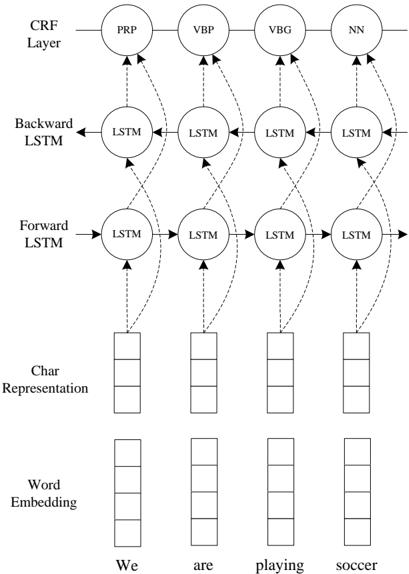
State-of-the-art sequence labeling systems traditionally require large amounts of taskspecific knowledge in the form of handcrafted features and data pre-processing.In this paper, we introduce a novel neutral network architecture that benefits from both word-and character-level representations automatically, by using combination of bidirectional LSTM, CNN and CRF.Our system is truly end-to-end, requiring no feature engineering or data preprocessing, thus making it applicable to a wide range of sequence labeling tasks.We evaluate our system on two data sets for two sequence labeling tasks -Penn Treebank WSJ corpus for part-of-speech (POS) tagging and CoNLL 2003 corpus for named entity recognition (NER).We obtain state-of-the-art performance on both datasets -97.55% accuracy for POS tagging and 91.21% F1 for NER.
Overview
The claims and statistics of this paper haven’t been checked yet.
Free: it reads the open-access text and checks the first 5 claims that cite a source we can check. Create a free account to check every claim.
Integrity signals
Registry
Cites
Statistics
Figures
Verification
Claims the paper makes
The claims and statistics of this paper haven’t been checked yet.
Free: it reads the open-access text and checks the first 5 claims that cite a source we can check. Create a free account to check every claim.
Claims other papers make about this one
Each is checked against this paper’s own text: does it say what the citing paper says it does?
The cited source says what the claim attributes to it.
In the citing paper
“Empirically, for those token [81] or span [30] prediction tasks (e.g., NER), prompt decomposition can be considered, while for those span relation prediction [66] tasks (e.g., entity coreference), prompts composition would be a better choice.”
From Pre-train, Prompt, and Predict: A Systematic Survey of Prompting Methods in Natural Language Processing (2023) · cites this paper as [81]
Self-check
Percentages, sums and reported differences re-computed from the paper’s own numbers.
The self-check needs the paper’s full text.
Citations
Cites
Hochreiter, S., & Schmidhuber, J. (1997) · Neural Computation · doi:10.1162/neco.1997.9.8.1735 · Cited by 102,318 · cited 2×
“Recently, recurrent neural networks (RNN) (Goller and Kuchler, 1996), together with its variants such as long-short term memory (LSTM) (Hochreiter and Schmidhuber, 1997; Gers et al., 2000) and gated recurrent unit (GRU) (Cho et al., 2014), have shown great success in modeling sequential data.”
BackgroundAdam: A Method for Stochastic Optimization
Kingma, D. P., & Ba, J. (2014) · arXiv · doi:10.48550/arxiv.1412.6980 · Cited by 98,946
Glove: Global Vectors for Word Representation
Pennington, J., Socher, R., & Manning, C. (2014) · Proceedings of the 2014 Conference on Empirical Methods in Natural Language Processing (EMNLP) · doi:10.3115/v1/d14-1162 · Cited by 34,071 · cited 1×
“glove/ trained on 6 billion words from Wikipedia and web text (Pennington et al., 2014)”
Background(2014) · Cited by 33,419
Distributed Representations of Words and Phrases and their Compositionality
Mikolov, T., Sutskever, I., Chen, K., Corrado, G., & Dean, J. (2013) · arXiv · doi:10.48550/arxiv.1310.4546 · Cited by 24,533 · cited 2×
“, 2011), and Google’s Word2Vec 300 dimensional embeddings3 trained on 100 billion words from Google News (Mikolov et al., 2013).”
BackgroundDelving Deep into Rectifiers: Surpassing Human-Level Performance on ImageNet Classification
He, K., Zhang, X., Ren, S., & Sun, J. (2015) · 2015 IEEE International Conference on Computer Vision (ICCV) · doi:10.1109/iccv.2015.123 · Cited by 19,741 · cited 1×
“To test the effectiveness of pretrained word embeddings, we experimented with randomly initialized embeddings with 100 dimensions, where embeddings are uniformly sampled from range [ − where dim is the dimension of embeddings (He et al., 2015).”
Method(2010) · Cited by 14,134
Conditional Random Fields: Probabilistic Models for Segmenting and Labeling Sequence Data
Lafferty, J., McCallum, A., & Pereira, F. C. N. (2001) · ScholarlyCommons (University of Pennsylvania) · Cited by 12,935
Backpropagation Applied to Handwritten Zip Code Recognition
LeCun, Y., Boser, B., Denker, J. S., Henderson, D., Howard, R. E., Hubbard, W., & Jackel, L. D. (1989) · Neural Computation · doi:10.1162/neco.1989.1.4.541 · Cited by 11,891 · cited 2×
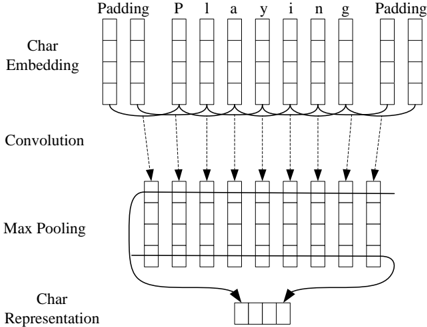
“We first use convolutional neural networks (CNNs) (LeCun et al., 1989) to encode character-level information of a word into its character-level representation.”
MethodSpeech recognition with deep recurrent neural networks
Graves, A., Mohamed, A.-R., & Hinton, G. (2013) · 2013 IEEE International Conference on Acoustics, Speech and Signal Processing · doi:10.1109/icassp.2013.6638947 · Cited by 8,893 · cited 4×
“Several RNN-based neural network models have been proposed to solve sequence labeling tasks like speech recognition (Graves et al., 2013), POS tagging (Huang et al., 2015) and NER (Chiu and Nichols, 2015; Hu et al., 2016), achieving competitive performance against traditional models.”
MethodInfluential
Research works printed but not linked: 6
- [3]3. James Bergstra, Olivier Breuleux, Frédéric Bastien, Pascal Lamblin, Razvan Pascanu, Guillaume Des- jardins, Joseph Turian, David Warde-Farley, and Yoshua Bengio. 2010. Theano: a cpu and gpu math expression compiler. In Proceedings of the Python for scientific computing conference (SciPy), volume 4, page 3. Austin, TX.
- [15]15. Felix A Gers, Nicol N Schraudolph, and Jürgen Schmidhuber. 2003. Learning precise timing with lstm recurrent networks. The Journal of Machine Learning Research, 3:115-143.
- [37]37. Xuezhe Ma and Hai Zhao. 2012a. Fourth-order depen- dency parsing. In Proceedings of COLING 2012: Posters, pages 785-796, Mumbai, India, December.
- [43]43. Tomas Mikolov, Ilya Sutskever, Kai Chen, Greg S Cor- rado, and Jeff Dean. 2013. Distributed representa- tions of words and phrases and their compositional- ity. In Advances in neural information processing systems, pages 3111-3119.
- [58]58. Erik F. Tjong Kim Sang and Jorn Veenstra. 1999. Rep- resenting text chunks. In Proceedings of EACL'99, pages 173-179. Bergen, Norway.
- [59]59. Kristina Toutanova, Dan Klein, Christopher D Man- ning, and Yoram Singer. 2003. Feature-rich part- of-speech tagging with a cyclic dependency net- work. In Proceedings of NAACL-HLT-2003, Volume 1, pages 173-180.
Cited by
Items 901–1,000 of 1,008
From POS tagging to dependency parsing for biomedical event extraction
Nguyen, D. Q., & Verspoor, K. (2019) · BMC Bioinformatics · doi:10.1186/s12859-019-2604-0 · Cited by 24
“Note that for PTB, CNNbased character-level word embeddings (Ma and Hovy, 2016) only provided a 0.”
BackgroundMethodBag of Experts Architectures for Model Reuse in Conversational Language Understanding
Jha, R. K., Marin, A., Shivaprasad, S., & Zitouni, I. (2018) · Conference of the North American Chapter of the Association for Computational Linguistics: Human Language Technologies (NAACL-HLT) · doi:10.18653/v1/n18-3019 · Cited by 24
“For our LSTM model, we follow a standard bidirectional LSTM architecture (Huang et al., 2015; Ma and Hovy, 2016; Lample et al., 2016).”
MethodImplementation of A Neural Natural Language Understanding Component for Arabic Dialogue Systems
Bashir, A., Hassan, A., Rosman, B., Duma, D., & Ahmed, M. (2018) · Procedia Computer Science · doi:10.1016/j.procs.2018.10.479 · Cited by 24
Bi-LSTM-CRF Network for Clinical Event Extraction With Medical Knowledge Features
Zhang, S., Li, Y., Li, S., & Yan, F. (2022) · IEEE Access · doi:10.1109/access.2022.3213676 · Cited by 24
“[34], convolutional neural networks (CNNs) are employed to model character-level information of a word.”
MethodPay Attention to Implicit Attribute Values: A Multi-modal Generative Framework for AVE Task
Zhang, Y., Wang, S., Li, P., Dong, G., Wang, S., Xian, Y., Li, Z., & Zhang, H. (2023) · Findings of the Association for Computational Linguistics: ACL (Findings of ACL) · doi:10.18653/v1/2023.findings-acl.831 · Cited by 24
Bringing Back Structure to Free Text Email Conversations with Recurrent Neural Networks
Repke, T., & Krestel, R. (2018) · Lecture notes in computer science · doi:10.1007/978-3-319-76941-7_9 · Cited by 24
“We base the model’s topology configuration on the analysis of related models [8, 13, 5].”
BackgroundMethodIdentifying and predicting social lifestyles in people’s trajectories by neural networks
Ben‐Zion, E., & Lerner, B. (2018) · EPJ Data Science · doi:10.1140/epjds/s13688-018-0173-5 · Cited by 24
“tions [5], and to dispense with the “bag of words” assumption, we can utilize, e.”
Mining Algorithm Roadmap in Scientific Publications
Zha, H., Chen, W., Li, K., & Yan, X. (2019) · ACM SIGKDD Conference on Knowledge Discovery and Data Mining (KDD) · doi:10.1145/3292500.3330913 · Cited by 24
“Lack of annotated corpus and well-covered in-domain knowledge bases, general entity recognition methods [18, 19] do not fit our candidate mention extraction.”
BackgroundAppellate Court Modifications Extraction for Portuguese
Fernandes, W. P. D., Schirmer, L., Frajhof, I. Z., Almeida, G., Konder, C. N., Nasser, R., de Carvalho, G. R., Barbosa, S. D. J., & Lopes, H. (2019) · Artificial Intelligence and Law · doi:10.1007/s10506-019-09256-x · Cited by 26
“LSTMs have been successfully applied to NLP tasks (Dyer et al. 2015; Hermann et al. 2015; Wen et al. 2015; Yang et al. 2016; Ma and Hovy 2016; Dozat and Manning 2017).”
MethodContent to Node: Self-Translation Network Embedding
He, Z., Liu, J., Zeng, Y., Wei, L., & Huang, Y. (2019) · IEEE Transactions on Knowledge and Data Engineering · doi:10.1109/tkde.2019.2932388 · Cited by 24
“LSTM [18], a representative variant of RNN, has becomeparticularly popular, and been successfully applied to a large number of tasks: speech recognition [17], sequence tagging [43], [44], and”
BackgroundInfluentialHybrid neural conditional random fields for multi-view sequence labeling
Sun, X., Sun, S., Yin, M., & Yang, H. (2019) · Knowledge-Based Systems · doi:10.1016/j.knosys.2019.105151 · Cited by 25
Fine-Tuned Neural Models for Propaganda Detection at the Sentence and Fragment levels
Alhindi, T., Pfeiffer, J., & Muresan, S. (2019) · Workshop on Natural Language Processing for Internet Freedom: Censorship, Disinformation, and Propaganda (NLP4IF) · doi:10.18653/v1/d19-5013 · Cited by 24
“Our architecture for the sequence labeling task builds on the flair framework (Akbik et al., 2018, 2019) that combines character level embeddings with different kinds of word embeddings as input to a BiLSTM-CRF model (Ma and Hovy, 2016; Lample et al., 2016).”
MethodTeaching the Old Dog New Tricks: Supervised Learning with Constraints
Detassis, F., Lombardi, M., & Milano, M. (2020) · AAAI Publications (The Association for the Advancement of Artificial Intelligence (AAAI)) · doi:10.1609/aaai.v35i5.16491 · Cited by 16
Research on Chinese Naming Recognition Model Based on BERT Embedding
Cai, Q. (2019) · IEEE International Conference on Software Engineering and Service Science (ICSESS) · doi:10.1109/icsess47205.2019.9040736 · Cited by 24
Extracting Opinion Targets Using Attention-Based Neural Model
Al-Dabet, S., Tedmori, S., & AL-Smadi, M. (2020) · SN Computer Science · doi:10.1007/s42979-020-00270-4 · Cited by 24
“The leverage of using CNN to represent the character-level vectors was previously observed in the literature for sequence labeling problems [7, 46, 53].”
BackgroundMethodInfluentialHandling Out-Of-Vocabulary Problem in Hangeul Word Embeddings
Kwon, O., Kim, D., Lee, S.-R., Choi, J., & Lee, S. (2021) · Conference of the European Chapter of the Association for Computational Linguistics · doi:10.18653/v1/2021.eacl-main.280 · Cited by 24
“CNN captures locational and morphological information of words and characters, and many studies using CNN have achieved good performance in various NLP tasks (Zhang et al., 2015; Kim et al., 2016, 2018; Ma and Hovy, 2016).”
Huang, J., Wu, Z., Mahowald, K., & Potts, C. (2023) · Findings of the Association for Computational Linguistics: ACL (Findings of ACL) · doi:10.18653/v1/2023.findings-acl.770 · Cited by 24
QA4IE: A Question Answering Based Framework for Information Extraction
Qiu, L., Zhou, H., Qu, Y., Zhang, W., Li, S., Rong, S., Ru, D., Qian, L., Tu, K., & Yu, Y. H. (2018) · Lecture notes in computer science · doi:10.1007/978-3-030-00671-6_12 · Cited by 24
“With the recent development of neural networks (NN), NN based NER models [18,26] and relation classification models [48] show better performance than previous handcrafted feature based methods.”
BackgroundMethodInfluentialAli, N. (2020) · arXiv (Cornell University) · doi:10.48550/arxiv.2007.04248 · Cited by 24
“Researchers have also achieved higher accuracy of NER models by combining CNNs, LSTMs [21] and Conditional Random Fields (CRF) [22].”
MethodImproving Sequence Tagging for Vietnamese Text using Transformer-based Neural Models.Preprint
Tran, T. O., & Le-Hong, P. (2020) · arXiv (Cornell University) · Cited by 24
A corpus of CO2 electrocatalytic reduction process extracted from the scientific literature
Wang, L., Gao, Y., Chen, X., Cui, W., Zhou, Y., Luo, X., Xu, S., Du, Y., & Wang, B. (2023) · Scientific Data · doi:10.1038/s41597-023-02089-z · Cited by 24
Xiao, L., Xu, Y., & Zhao, J. (2024) · arXiv (Cornell University) · doi:10.48550/arxiv.2409.10077 · Cited by 24
“Ma et al [13] and Chiu et al [14] introduced CNN-extracted character features in a word-level representation based on the BiLSTM-CRF framework to enhance the expressive power of the word-level representation.”
MethodTiftikci, M., Özgür, A., He, Y., & Hur, J. (2019) · BMC Bioinformatics · doi:10.1186/s12859-019-3195-5 · Cited by 23
“This representation has been shown to be powerful in encoding morphological information [20], which we expect to be useful in the biochemical domain as well.”
BackgroundMethodInfluentialLearning With Annotation of Various Degrees
Zhou, J. T., Fang, M., Zhang, H., Gong, C., Peng, X., Cao, Z., & Goh, R. S. M. (2019) · IEEE Transactions on Neural Networks and Learning Systems · doi:10.1109/tnnls.2018.2885854 · Cited by 23
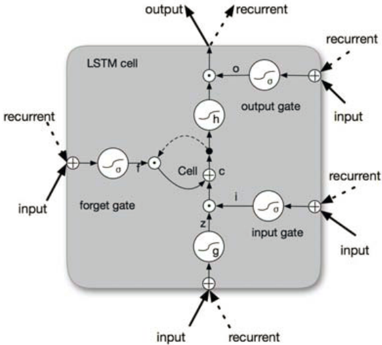
“4 has shown the schematic of a LSTM unit [56].”
BackgroundHybrid neural tagging model for open relation extraction
Jia, S., Shijia, E., Ding, L., Chen, X., & Xiang, Y. (2022) · Expert Systems with Applications · doi:10.1016/j.eswa.2022.116951 · Cited by 36
Tan, Y., Xu, H., Wu, Y., Zhang, Z., An, Y., Xiong, Y., & Wang, F. (2021) · Procedia Computer Science · doi:10.1016/j.procs.2021.04.072 · Cited by 23
Rice Mapping Using a BiLSTM-Attention Model from Multitemporal Sentinel-1 Data
Sun, C., Zhang, H., Xu, L., Wang, C., & Li, L. (2021) · Agriculture · doi:10.3390/agriculture11100977 · Cited by 24
“Therefore, researchers introduced the RNN into the study of multitemporal rice extraction to achieve the goals of rice extraction and rice distribution mapping [43,44].”
BackgroundNER-MQMRC: Formulating Named Entity Recognition as Multi Question Machine Reading Comprehension
Shrimal, A., Jain, A., Mehta, K., & Yenigalla, P. (2022) · Conference of the North American Chapter of the Association for Computational Linguistics: Human Language Technologies (NAACL-HLT) · doi:10.18653/v1/2022.naacl-industry.26 · Cited by 23
Internet and Telecommunication Fraud Prevention Analysis based on Deep Learning
Ni, P., & Wang, Q. (2022) · Applied Artificial Intelligence · doi:10.1080/08839514.2022.2137630 · Cited by 23
“(3) Risk factor extraction methods based on named entity recognition as a sequence labelingtask(Huang, Xu, and Yu 2015; Lample et al., 2016; Ma and Hovy, 2016).”
2INER: Instructive and In-Context Learning on Few-Shot Named Entity Recognition
Zhang, J., Liu, X., Lai, X., Gao, Y. F., Wang, S., Hu, Y., & Lin, Y. (2023) · Findings of the Association for Computational Linguistics: EMNLP (Findings of EMNLP) · doi:10.18653/v1/2023.findings-emnlp.259 · Cited by 23
“The current dominant method to solve flat NER is using token-level classification by turning it into a sequence labeling problem (Chiu and Nichols, 2016; Liu et al., 2019; Zhang et al., 2020; Liu et al., 2021), which apply a text encoder and CRF (Ma and Hovy, 2016) in sequence.”
MethodInfluentialExtraction of Medication and Temporal Relation from Clinical Text using Neural Language Models
Tu, H., Han, L., & Nenadić, G. (2023) · IEEE International Conference on Big Data (BigData) · doi:10.1109/bigdata59044.2023.10386489 · Cited by 23
“Similar structures including BiLSTM-CNN-CRF and BiLSTM-CRF were investigated in general domain NER and POS tagging by [49], [50].”
MethodWei, P., Ouyang, H., Hu, Q., Zeng, B., Feng, G., & Wen, Q. (2024) · International Conference on Multimedia Retrieval · doi:10.1145/3652583.3658097 · Cited by 23
“Forunimodalmethods,weconsider: BiLSTM-CRF [11]and CNN-BiLSTM-CRF [19], which is a classic NER model that combines BiLSTMandCRF.”
MethodChen, Y., Qi, X., Huang, C., & Zheng, J. (2024) · Ocean Engineering · doi:10.1016/j.oceaneng.2024.118953 · Cited by 23
Automatic Document Metadata Extraction Based on Deep Networks
Liu, R., Gao, L., An, D. U., Jiang, Z., & Tang, Z. (2018) · Lecture notes in computer science · doi:10.1007/978-3-319-73618-1_26 · Cited by 23
“[11] indicates that for sequence labeling tasks considering the correlations between neighboring labels could get better result.”
BackgroundWeegar, R., Pérez, A., Casillas, A., & Oronoz, M. (2019) · BMC Medical Informatics and Decision Making · doi:10.1186/s12911-019-0981-y · Cited by 23
“This approach is also similar to that of [3] where a bidirectional LSTM was combined with a convolutional neural net for learning the character representations.”
BackgroundMethodResultInfluentialCoreference Resolution: Toward End-to-End and Cross-Lingual Systems
Cruz, A. F., Rocha, G., & Cardoso, H. L. (2020) · Information · doi:10.3390/info11020074 · Cited by 23
Construction of Machine-Labeled Data for Improving Named Entity Recognition by Transfer Learning
Kim, J., Ko, Y., & Seo, J. (2020) · IEEE Access · doi:10.1109/access.2020.2981361 · Cited by 23
“Ma and Hovy [28] suggested integrating the model with bidirectional LSTM-CRF and convolutional neural networks (CNNs) [30].”
BackgroundBhattacharjee, K., Ballesteros, M., Anubhai, R., Muresan, S., Ma, J., Ladhak, F., & Al-Onaizan, Y. (2020) · Conference on Empirical Methods in Natural Language Processing (EMNLP) · doi:10.18653/v1/2020.emnlp-main.636 · Cited by 23
Li, X., Wen, Q., Hu, L. T., Jiao, Z., & Zhang, J. (2021) · Data Intelligence · doi:10.1162/dint_a_00093 · Cited by 23
“LSTM, BERT and other methods are applied in EE.”
MethodInfluentialKamath, U., Liu, J., & Whitaker, J. (2019) · Springer eBooks · doi:10.1007/978-3-030-14596-5_7 · Cited by 23
Medical named entity recognition based on dilated convolutional neural network
Zhang, R., Zhao, P., Guo, W., Wang, R., & Lü, W. (2021) · Cognitive Robotics · doi:10.1016/j.cogr.2021.11.002 · Cited by 23
An Improved Transfer Learning Model for Cyanobacterial Bloom Concentration Prediction
Ni, J., Liu, R., Li, Y., Tang, G., & Shi, P. (2022) · Water · doi:10.3390/w14081300 · Cited by 23
“The main reason for using this BiLSTM structure is that the error of the traditional LSTM will become larger and larger over time [44].”
MethodLexicon enhanced Chinese named entity recognition with pointer network
Guo, Q., & Guo, Y. (2022) · Neural Computing and Applications · doi:10.1007/s00521-022-07287-1 · Cited by 23
“With the development of neural network approaches, NER in English has achieved current state-of-the-art performance by utilizing the deep learning network architecture LSTM-CRF [31, 36, 40], in which word information is integrated into character representations.”
MethodDo CoNLL-2003 Named Entity Taggers Still Work Well in 2023?
Liu, S., & Ritter, A. (2023) · Proceedings of the conference - Association for Computational Linguistics. Meeting · doi:10.18653/v1/2023.acl-long.459 · Cited by 23
Multi-Task Active Learning for Neural Semantic Role Labeling on Low Resource Conversational Corpus
Ikhwantri, F., Louvan, S., Kurniawan, K., Abisena, B., Rachman, V., Wicaksono, A. F., & Mahendra, R. (2018) · Workshop on Deep Learning Approaches for Low-Resource NLP (DeepLo) · doi:10.18653/v1/w18-3406 · Cited by 22
“Second, we used character embedding with Convolutional Neural Networks as Characters Encoder (Ma and Hovy, 2016), to handle out-of-vocabulary problem caused by misspelled words, slangs, and ab-breviations common in informal chatting, as well as word embedding and predicate indicator feature…”
MethodPatel, S. V., & Bhatt, D. (2020) · arXiv (Cornell University) · doi:10.48550/arxiv.2009.05728 · Cited by 23
Approximate Cross-Validation for Structured ModelsPreprint
Ghosh, S., Stephenson, W. T., Nguyen, T. D., Deshpande, S. K., & Broderick, T. (2020) · arXiv (Cornell University) · doi:10.48550/arxiv.2006.12669 · Cited by 23
“While more general dependencies between x and z are possible a commonly used variant [Ma and Hovy, 2016, Lample et al., 2016] captures the conditional distribution of the joint defined in Equation Eq.”
MethodTRIE++: Towards End-to-End Information Extraction from Visually Rich DocumentsPreprint
Cheng, Z., Zhang, P., Li, C., Liang, Q., Xu, Y., Li, P., Pu, S., Niu, Y., & Wu, F. Q. (2022) · arXiv (Cornell University) · doi:10.48550/arxiv.2207.06744 · Cited by 23
“They are ‘TR+GAT’, ‘TR+LSTM-CRF’, ‘TR+Chargrid’, ‘TR+Bert-CRF’ and ‘TR+LLM v2’.”
InfluentialGood Examples Make A Faster Learner: Simple Demonstration-based Learning for Low-resource NERPreprint
Lee, D., Kadakia, A., Tan, K., Agarwal, M., Feng, X., Shibuya, T., Mitani, R., Sekiya, T., Pujara, J., & Ren, X. (2021) · arXiv (Cornell University) · doi:10.48550/arxiv.2110.08454 · Cited by 23
“Recent advances in deep neural models for named entity recognition (NER) have shown impressive results when sufficient human annotations are available (Lample et al., 2016; Ma and Hovy, 2016; Liu et al., 2018).”
BackgroundStylianou, N., Razis, G., Goulis, D. G., & Vlahavas, I. (2020) · Artificial Intelligence in Medicine · doi:10.1016/j.artmed.2020.101949 · Cited by 22
Named Entity Recognition - Is There a Glass Ceiling?
Stanisławek, T., Wróblewska, A., Wójcicka, A., Ziembicki, D., & Biecek, P. (2019) · Conference on Computational Natural Language Learning · doi:10.18653/v1/k19-1058 · Cited by 23
“Bi-LSTM-CNNs-CRF (Ma and Hovy, 2016) 91.”
Machine extraction of polymer data from tables using XML versions of scientific articles
Oka, H., Yoshizawa, A., Shindo, H., Matsumoto, Y., & Ishii, M. (2021) · Science and Technology of Advanced Materials Methods · doi:10.1080/27660400.2021.1899456 · Cited by 22
“…has been actively used for NLP and has led to the development of excellent NLP techniques such as Word2Vec [10], character-based convolutional neural networks (CNNs) [11], bidirectional long short-term memory (BiLSTM) [12], and bidirectional encoder representations from transformers (BERT) [13].”
MethodTEBNER: Domain Specific Named Entity Recognition with Type Expanded Boundary-aware Network
Fang, Z., Cao, Y., Li, T., Jia, R., Fang, F., Shang, Y., & Lu, Y. (2021) · Conference on Empirical Methods in Natural Language Processing (EMNLP) · doi:10.18653/v1/2021.emnlp-main.18 · Cited by 22
“Previous works (Ma and Hovy, 2016; Shang et al., 2018b; Cao et al., 2019; Wang et al., 2020) always jointly model the entity boundary detection and classification tasks.”
MethodHan, Z., Liu, W., Gao, Z., & Liu, D. (2024) · IEEE Transactions on Intelligent Vehicles · doi:10.1109/tiv.2024.3369951 · Cited by 22
“Ma and Hovy [34] implemented end-to-end learning using a combination of bidirectionalLSTM,CNNandCRFtoreducedatapreprocessing efforts.”
Miao, W., Zhao, X., Zhang, Y., Chen, S., Li, X., & Li, Q. (2024) · Sensors · doi:10.3390/s24134069 · Cited by 22
“Ma and Hovy also use the CNN to extract the feature representations of words [37].”
BackgroundNER for Medical Entities in Twitter using Sequence to Sequence Neural Networks.
Yepes, A. J., & MacKinlay, A. (2016) · Cited by 22
Kaewphan, S., Hakala, K., Miekka, N., Salakoski, T., & Ginter, F. (2018) · Database · doi:10.1093/database/bay096 · Cited by 22
“(29) but does not rely on word embeddings.”
BackgroundEmbedding Logic Rules Into Recurrent Neural Networks
Chen, B., Hao, Z., Cai, X., Cai, R., Wen, W., Zhu, J. L., & Xie, G. (2019) · IEEE Access · doi:10.1109/access.2019.2892140 · Cited by 22
“Lastly, Ma and Hovy [19] used a CNN to model character-level information, and achieved better NER performance without the use of data pre-processing.”
MethodInfluentialBenchmarking Approximate Inference Methods for Neural Structured Prediction
Tu, L., & Gimpel, K. (2019) · Conference of the North American Chapter of the Association for Computational Linguistics: Human Language Technologies (NAACL-HLT) · doi:10.18653/v1/n19-1335 · Cited by 22
“Characterbased word embeddings provide consistent improvements in sequence labeling (Lample et al., 2016; Ma and Hovy, 2016).”
BackgroundResultInfluentialLearning Morpheme Representation for Mongolian Named Entity Recognition
Wang, W., Bao, F., & Gao, G. (2019) · Neural Processing Letters · doi:10.1007/s11063-019-10044-6 · Cited by 22
“For example, character embedding learned concatenated into word vector in [28,37].”
BackgroundHyperparameter tuning for deep learning in natural language processing
Aghaebrahimian, A., & Cieliebak, M. (2019) · Zürcher Hochschule für Angewandte Wissenschaften digital collection (Zurich University of Applied Sciences) · doi:10.21256/zhaw-18993 · Cited by 22
“We used two different character encoding mechanisms, one CNN-based (Ma and Hovy, 2016) and the other LSTM-based (Lample et al., 2016), to investigate the impact of character-level features on the network performance.”
MethodDiscontinuous Constituent Parsing with Pointer Networks
Fernández‐González, D., & Gómez‐Rodríguez, C. (2020) · Proceedings of the AAAI Conference on Artificial Intelligence · doi:10.1609/aaai.v34i05.6275 · Cited by 22
SiNER: A Large Dataset for Sindhi Named Entity Recognition
Ali, W., Lu, J., & Xu, Z. (2020) · Language Resources and Evaluation · Cited by 22
Miyazaki, T., Morita, Y., & Sano, M. (2020) · Language Resources and Evaluation · Cited by 22
Named entity recognition for Chinese judgment documents based on BiLSTM and CRF
Huang, W., Hu, D., Deng, Z., & Nie, J. (2020) · EURASIP Journal on Image and Video Processing · doi:10.1186/s13640-020-00539-x · Cited by 22
“Ma et al. [8] used an LSTM-CNN-CRF which implements end-to-end NER for part-of-speech (POS) tagging task without feature engineering and data processing.”
MethodA Hybrid Deep Stacked LSTM and GRU for Water Price Prediction
Muhammad, A. U., Yahaya, A. S., Kamal, S. M., Adam, J. M., Muhammad, W. I., & Elsafi, A. (2020) · doi:10.1109/iccis49240.2020.9257651 · Cited by 22
Chen, P., Ding, H., Araki, J., & Huang, R. (2021) · doi:10.18653/v1/2021.acl-short.93 · Cited by 22
“NER research has a long history and recent approaches (Yang and Zhang, 2018; Jiang et al., 2019; Jie and Lu, 2019; Li et al., 2020) using Neural Network models like BiLSTM-CNN-CRF (Ma and Hovy, 2016) and contextual embeddings such as BERT (Devlin et al., 2019) and FLAIR (Akbik et al., 2018) have improved the NER perfo…”
BackgroundMethodInfluentialDirectQuote: A Dataset for Direct Quotation Extraction and Attribution in News Articles
Zhang, Y., & Liu, Y. (2022) · Language Resources and Evaluation Conference (LREC) · doi:10.63317/2v9cqo79q7wf · Cited by 22
Enhancing Korean Named Entity Recognition With Linguistic Tokenization Strategies
Kim, G., Son, J., Kim, J., Lee, H.-H., & Lim, H. (2021) · IEEE Access · doi:10.1109/access.2021.3126882 · Cited by 22
A relation aware embedding mechanism for relation extraction
Li, X., Li, Y., Yang, J., Liu, H., & Hu, P. (2022) · Applied Intelligence · doi:10.1007/s10489-021-02699-3 · Cited by 22
“BiLSTM-CRF [26] leverages conditional random fields (CRF) method to extract named entities.”
MethodUrdu Named Entity Recognition System Using Deep Learning Approaches
Haq, R., Zhang, X., Khan, W., & Feng, Z. (2022) · The Computer Journal · doi:10.1093/comjnl/bxac047 · Cited by 22
Huang, P., Zhao, X. M., Hu, M., Yang, F., Li, X., & Xiao, W. (2022) · Findings of the Association for Computational Linguistics: ACL (Findings of ACL) · doi:10.18653/v1/2022.findings-acl.9 · Cited by 22
“Previous studies usually treat NER as a sequential labeling problem (Ma and Hovy, 2016; Chiu and Nichols, 2016).”
BackgroundAPI Entity and Relation Joint Extraction from Text via Dynamic Prompt-tuned Language Model
Huang, Q. Y., Sun, Y., Xing, Z., Yu, M., Xu, X., & Lu, Q. (2023) · ACM Transactions on Software Engineering and Methodology · doi:10.1145/3607188 · Cited by 22
“However, the implementation of relation classifier is not limited to BERT, we can also use TextCNN [27] and FastText [28].”
MethodManikandan, R., Madgula, K., & Saha, S. (2018) · International Workshop on Semantic Evaluation (SemEval) · doi:10.18653/v1/s18-1140 · Cited by 22
“On the other hand, sub-task 2 was formulated as sequence tagging problem which is addressed till date by CRF (Finkel et al., 2005; R. et al., 2016, 2017), deep learning approaches (Chiu and Nichols, 2016; Ma and Hovy, 2016; Lample et al., 2016) and SVM (Ekbal and Bandyopadhyay, 2012).”
MethodExtraction of risk factors for cardiovascular diseases from Chinese electronic medical records
Su, J., Hu, J., Jiang, J., Xie, J., Yang, Y., He, B., Yang, J., & Guan, Y. (2019) · Computer Methods and Programs in Biomedicine · doi:10.1016/j.cmpb.2019.01.007 · Cited by 22
Challenges in the Automatic Analysis of Students’ Diagnostic Reasoning
Schulz, C., Meyer, C. M., & Gurevych, I. (2019) · Proceedings of the AAAI Conference on Artificial Intelligence · doi:10.1609/aaai.v33i01.33016974 · Cited by 13
Fine-Grained Named Entity Recognition using ELMo and WikidataPreprint
Dogan, C., Dutra, A. R. R., Gara, A., Gemma, A., Shi, L., Sigamani, M., & Walters, E. (2019) · arXiv (Cornell University) · doi:10.48550/arxiv.1904.10503 · Cited by 22
To Tune or Not To Tune? How About the Best of Both Worlds?Preprint
Wang, R., Su, H., Wang, C., Ji, K., & Ding, J. (2019) · arXiv (Cornell University) · doi:10.48550/arxiv.1907.05338 · Cited by 22
“In the sequence labeling task,we explore sub-task named entity recognition using CoNLL03 dataset [6], which is a public available used in many studies to test the accuracy of their proposed methods [30, 31, 32, 33, 2].”
MethodNeural Contract Element Extraction Revisited: Letters from Sesame StreetPreprint
Chalkidis, I., Fergadiotis, M., Malakasiotis, P., & Androutsopoulos, I. (2021) · arXiv (Cornell University) · doi:10.48550/arxiv.2101.04355 · Cited by 22
Named Entity Recognition in the Legal Domain using a Pointer Generator NetworkPreprint
Skylaki, S., Oskooei, A., Bari, O., Herger, N., & Kriegman, Z. (2020) · arXiv (Cornell University) · doi:10.48550/arxiv.2012.09936 · Cited by 22
“a final CRF layer (Ma and Hovy, 2016; Lample et al., 2016; Huang et al., 2015) as well as Transformers (Devlin et al.”
BackgroundYang, L., Yuan, L., Cui, L., Gao, W., & Zhang, Y. (2022) · arXiv (Cornell University) · doi:10.48550/arxiv.2208.11464 · Cited by 22
“It has attracted research from academia and industry due to its broadened usage in customer services and document parsing as a core task in natural language understanding (Nadeau and Sekine, 2007; Ma and Hovy, 2016; Cui and Zhang, 2019; Yamada et al., 2020).”
BackgroundTowards Tokenization and Part-of-Speech Tagging for Khmer: Data and Discussion
Kaing, H., Ding, C., Utiyama, M., Sumita, E., Sam, S., Seng, S., Sudoh, K., & Nakamura, S. (2021) · ACM Transactions on Asian and Low-Resource Language Information Processing · doi:10.1145/3464378 · Cited by 21
“…background for tokenization and POS-tagging has been solidly established, and the techniques have been applied to many well-studied languages, such as Chen et al. [4], Ma and Hovy [21], and Zhao et al. [33] for Chinese word segmentation and Kudo et al. [18] for Japanese morphology analysis.”
MethodGupta, M., Thakur, N., Bansal, D., Chaudhary, G., Davaasambuu, B., & Hua, Q. (2022) · Journal of Healthcare Engineering · doi:10.1155/2022/3978627 · Cited by 21
“Hovy [38] created a sequence labelling algorithm using a mixture of bidirectional LSTM, CNN, and CRF.”
MethodRetractedWang, J., Shen, Z., Liao, Y., Yuan, Z., Li, S., He, G., Lan, M., Qian, X. H., Zhang, K., & Li, H. (2022) · Briefings in Bioinformatics · doi:10.1093/bib/bbac461 · Cited by 21
“Here we have used BiLSTM combined CRF model, which not only captures bi-directional correlations as in BiLSTM but also inherits the capacity of CRF in extracting highly contextualized features, which has attracted extensive attention in this filed [38].”
MethodContrastNER: Contrastive-based Prompt Tuning for Few-shot NER
Layegh, A., Payberah, A. H., Soylu, A., Roman, D., & Matskin, M. (2023) · IEEE Annual International Computer Software and Applications Conference (COMPSAC) · doi:10.1109/compsac57700.2023.00038 · Cited by 22
“Earlier works investigated utilizing several neural architectures such as BiLSTM [16] or CNN [17] and training the model in a supervised learning paradigm, which often involves a large amount of annotated data [18] [19] [20] [21].”
MethodSplit-NER: Named Entity Recognition via Two Question-Answering-based Classifications
Arora, J., & Park, Y. H. (2023) · Proceedings of the conference - Association for Computational Linguistics. Meeting · doi:10.18653/v1/2023.acl-short.36 · Cited by 21
“Traditionally, NER has been seen as a sequence labeling task where a model is trained to classify each token of a sequence to a predefined class (Carreras et al., 2002, 2003; Chiu and Nichols, 2016; Lample et al., 2016; Ma and Hovy, 2016; Devlin et al., 2019; Wan et al., 2022).”
BackgroundMethodEntity linking for English and other languages: a survey
Guellil, I., García‐Domínguez, A., Lewis, P. R., Hussain, S., & Smith, G. (2024) · Knowledge and Information Systems · doi:10.1007/s10115-023-02059-2 · Cited by 21
Improving Opinion-Target Extraction with Character-Level Word Embeddings
Jebbara, S., & Cimiano, P. (2017) · Workshop on Subword and Character Level Models in NLP (SCLeM) · doi:10.18653/v1/w17-4124 · Cited by 21
“Most similar works from the area of character-level word representations can be found in (dos Santos and Zadrozny, 2014; dos Santos et al., 2015; Ma and Hovy, 2016).”
BackgroundMethodWang, D., Peng, N., & Duh, K. (2017) · International Joint Conference on Natural Language Processing · Cited by 21
Improving pix2code based Bi-directional LSTM
Liu, Y., Hu, Q., & Shu, K. (2018) · IEEE International Conference on Automation, Electronics and Electrical Engineering (AUTEEE) · doi:10.1109/auteee.2018.8720784 · Cited by 23
Tagging Address Queries in Maps Search
Mokhtari, S., Mahmoody, A., Yankov, D., & Xie, N. (2019) · Proceedings of the AAAI Conference on Artificial Intelligence · doi:10.1609/aaai.v33i01.33019547 · Cited by 21
“There are several neural network based approaches to address the sequence tagging task (Collobert et al. 2011; Ma and Hovy 2016).”
BackgroundMethodEarly detection of technology opportunity based on analogy design and phrase semantic representation
Zhang, J., & Yu, W. (2020) · Scientometrics · doi:10.1007/s11192-020-03641-z · Cited by 21
“…used for effect phrase combination are manually labeled, then the sequence labeling model BiLSTM-CRF is used for training because of its good performances in various tasks (Ma and Hovy 2016), and finally the words are labeled through the model on overall data and then combined as the effect phases.”
MethodUsta, A., Karakayali, A., & Ulusoy, Ö. (2021) · Proceedings of the VLDB Endowment · doi:10.14778/3446095.3446103 · Cited by 22
“Their study stand as the state-of-the-art in sequence tagging problems in NLP. Similar to [23], Ma and Hovy [26] proposed a neural architecture where character embeddings is done through CNN instead of LSTM.”
Chinese Spelling Error Detection Using a Fusion Lattice LSTM
Wang, H., Wang, B., Duan, J., & Zhang, J. (2021) · ACM Transactions on Asian and Low-Resource Language Information Processing · doi:10.1145/3426882 · Cited by 21
“We treat Chinese spelling error detection as a sequence tagging problem and take the state-ofthe-art LSTM-CRF without CNN layer as a baseline model [18].”
MethodSent2Span: Span Detection for PICO Extraction in the Biomedical Text without Span Annotations
Liu, S., Sun, Y., Li, B., Wang, W., Bourgeois, F. T., & Dunn, A. G. (2021) · Findings of the Association for Computational Linguistics: EMNLP 2021 · doi:10.18653/v1/2021.findings-emnlp.147 · Cited by 12
Weakly labeled data augmentation for social media named entity recognition
Kim, J., Kim, Y., & Kang, S. (2022) · Expert Systems with Applications · doi:10.1016/j.eswa.2022.118217 · Cited by 21
Improving part-of-speech tagging in Amharic language using deep neural network
Hirpassa, S., & Lehal, G. S. (2023) · Heliyon · doi:10.1016/j.heliyon.2023.e17175 · Cited by 21
“LSTM is a promising recurrent architecture, which is capable of bridging long delays among significant input and output occurrences, thus accessing long-range context events has become trivial [30,31].”
BackgroundNeural-Davidsonian Semantic Proto-role Labeling
Rudinger, R., Teichert, A. R., Culkin, R., Zhang, S., & Durme, B. V. (2018) · Conference on Empirical Methods in Natural Language Processing (EMNLP) · doi:10.18653/v1/d18-1114 · Cited by 21
“Future SPRL work could explore the use of models like the LSTM-CRF (Lample et al., 2016; Ma and Hovy, 2016) to combine the advantages of both paradigms.”
Method
Metadata
- Authors
- Ma, X., & Hovy, E.
- Affiliations
- Carnegie Mellon University (US)
- Venue
- Proceedings of the 54th Annual Meeting of the Association for Computational Linguistics (Volume 1: Long Papers)
- Published
- 2016
- Pages
- 1064-1074
- ISSN
- 0736-587X (ISSN-L)
- OpenAlex
- W2962902328
- Cited by
- 2,567
- References
- 65
- Citations by year
- 2026: 63 · 2025: 120 · 2024: 153 · 2023: 271 · 2022: 291 · 2021: 408 · 2020: 424 · 2019: 434 · 2018: 280 · 2017: 96 · 2016: 26
- FWCI
- 150.15
- Type
- conference paper
- Language
- en
- Open access
- hybrid
- doi.org
- Licence
- cc-by
- Locations
- Proceedings of the conference - Association for Computational Linguistics. Meeting (publishedVersion, cc-by)
- Funders
- Defense Advanced Research Projects Agency (FA8750, FA8750-12-2-0342)
- Topics
- Physical Sciences › Computer Science › Artificial Intelligence › Natural Language Processing Techniques
- Physical Sciences › Computer Science › Artificial Intelligence › Topic Modeling
- Physical Sciences › Computer Science › Computer Vision and Pattern Recognition › Handwritten Text Recognition Techniques
- Keywords
- sequence labeling, end-to-end learning, bidirectional LSTM, convolutional neural networks, conditional random fields, part-of-speech tagging, named entity recognition, CoNLL-2003
About these checks
Registry, retraction, Cites and statistics results are computed, not judged, with one exception: a printed reference that no index lists is read once by a model before it counts as a citation error. Claims are extracted by a model and kept only when their quote appears verbatim in the text; each cited source is then checked, with a model’s help, for whether it says what the claim relies on. Those verdicts can be wrong — read the claim’s quote and the cited source before relying on one.
Statistics and arithmetic are recomputed, not judged.
Confidence bands are shown only for fields calibrated on our annotated test set. None is calibrated yet, so no band is shown.
What counts as a claim ›How we measure confidence ›How we check this ›
Are you an author, or do you see a problem with this page? Request a review
Data sources
Bibliographic data: Semantic Scholar, OpenAlex, Crossref.
Contains information from the Semantic Scholar Academic Graph Datasets, made available under the ODC Attribution License (ODC-BY 1.0).
Semantic Scholar’s data is described in: Kinney, R., et al. (2023). The Semantic Scholar Open Data Platform. arXiv:2301.10140.
