

End-to-end Sequence Labeling via Bi-directional LSTM-CNNs-CRF
Open accessThe DOI matches its Crossref record; 64 of the 65 references it cites were found in a registry or an index.
Abstract
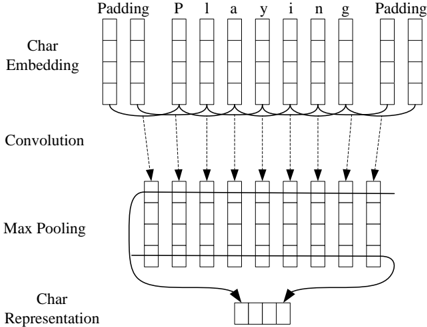
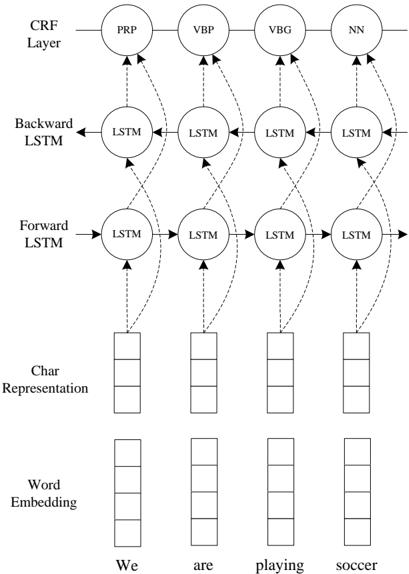
State-of-the-art sequence labeling systems traditionally require large amounts of taskspecific knowledge in the form of handcrafted features and data pre-processing.In this paper, we introduce a novel neutral network architecture that benefits from both word-and character-level representations automatically, by using combination of bidirectional LSTM, CNN and CRF.Our system is truly end-to-end, requiring no feature engineering or data preprocessing, thus making it applicable to a wide range of sequence labeling tasks.We evaluate our system on two data sets for two sequence labeling tasks -Penn Treebank WSJ corpus for part-of-speech (POS) tagging and CoNLL 2003 corpus for named entity recognition (NER).We obtain state-of-the-art performance on both datasets -97.55% accuracy for POS tagging and 91.21% F1 for NER.
Overview
The claims and statistics of this paper haven’t been checked yet.
Free: it reads the open-access text and checks the first 5 claims that cite a source we can check. Create a free account to check every claim.
Integrity signals
Registry
Cites
Statistics
Figures
Verification
Claims the paper makes
The claims and statistics of this paper haven’t been checked yet.
Free: it reads the open-access text and checks the first 5 claims that cite a source we can check. Create a free account to check every claim.
Claims other papers make about this one
Each is checked against this paper’s own text: does it say what the citing paper says it does?
The cited source says what the claim attributes to it.
In the citing paper
“Empirically, for those token [81] or span [30] prediction tasks (e.g., NER), prompt decomposition can be considered, while for those span relation prediction [66] tasks (e.g., entity coreference), prompts composition would be a better choice.”
From Pre-train, Prompt, and Predict: A Systematic Survey of Prompting Methods in Natural Language Processing (2023) · cites this paper as [81]
Self-check
Percentages, sums and reported differences re-computed from the paper’s own numbers.
The self-check needs the paper’s full text.
Citations
Cites
Hochreiter, S., & Schmidhuber, J. (1997) · Neural Computation · doi:10.1162/neco.1997.9.8.1735 · Cited by 102,318 · cited 2×
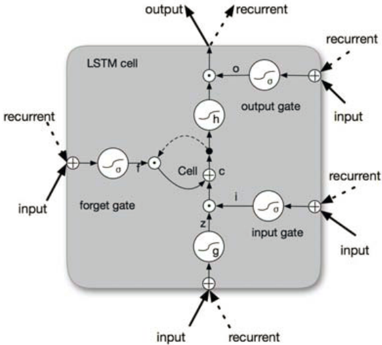
“Recently, recurrent neural networks (RNN) (Goller and Kuchler, 1996), together with its variants such as long-short term memory (LSTM) (Hochreiter and Schmidhuber, 1997; Gers et al., 2000) and gated recurrent unit (GRU) (Cho et al., 2014), have shown great success in modeling sequential data.”
BackgroundAdam: A Method for Stochastic Optimization
Kingma, D. P., & Ba, J. (2014) · arXiv · doi:10.48550/arxiv.1412.6980 · Cited by 98,946
Glove: Global Vectors for Word Representation
Pennington, J., Socher, R., & Manning, C. (2014) · Proceedings of the 2014 Conference on Empirical Methods in Natural Language Processing (EMNLP) · doi:10.3115/v1/d14-1162 · Cited by 34,071 · cited 1×
“glove/ trained on 6 billion words from Wikipedia and web text (Pennington et al., 2014)”
Background(2014) · Cited by 33,419
Distributed Representations of Words and Phrases and their Compositionality
Mikolov, T., Sutskever, I., Chen, K., Corrado, G., & Dean, J. (2013) · arXiv · doi:10.48550/arxiv.1310.4546 · Cited by 24,533 · cited 2×
“, 2011), and Google’s Word2Vec 300 dimensional embeddings3 trained on 100 billion words from Google News (Mikolov et al., 2013).”
BackgroundDelving Deep into Rectifiers: Surpassing Human-Level Performance on ImageNet Classification
He, K., Zhang, X., Ren, S., & Sun, J. (2015) · 2015 IEEE International Conference on Computer Vision (ICCV) · doi:10.1109/iccv.2015.123 · Cited by 19,741 · cited 1×
“To test the effectiveness of pretrained word embeddings, we experimented with randomly initialized embeddings with 100 dimensions, where embeddings are uniformly sampled from range [ − where dim is the dimension of embeddings (He et al., 2015).”
Method(2010) · Cited by 14,134
Conditional Random Fields: Probabilistic Models for Segmenting and Labeling Sequence Data
Lafferty, J., McCallum, A., & Pereira, F. C. N. (2001) · ScholarlyCommons (University of Pennsylvania) · Cited by 12,935
Backpropagation Applied to Handwritten Zip Code Recognition
LeCun, Y., Boser, B., Denker, J. S., Henderson, D., Howard, R. E., Hubbard, W., & Jackel, L. D. (1989) · Neural Computation · doi:10.1162/neco.1989.1.4.541 · Cited by 11,891 · cited 2×
“We first use convolutional neural networks (CNNs) (LeCun et al., 1989) to encode character-level information of a word into its character-level representation.”
MethodSpeech recognition with deep recurrent neural networks
Graves, A., Mohamed, A.-R., & Hinton, G. (2013) · 2013 IEEE International Conference on Acoustics, Speech and Signal Processing · doi:10.1109/icassp.2013.6638947 · Cited by 8,893 · cited 4×
“Several RNN-based neural network models have been proposed to solve sequence labeling tasks like speech recognition (Graves et al., 2013), POS tagging (Huang et al., 2015) and NER (Chiu and Nichols, 2015; Hu et al., 2016), achieving competitive performance against traditional models.”
MethodInfluential
Research works printed but not linked: 6
- [3]3. James Bergstra, Olivier Breuleux, Frédéric Bastien, Pascal Lamblin, Razvan Pascanu, Guillaume Des- jardins, Joseph Turian, David Warde-Farley, and Yoshua Bengio. 2010. Theano: a cpu and gpu math expression compiler. In Proceedings of the Python for scientific computing conference (SciPy), volume 4, page 3. Austin, TX.
- [15]15. Felix A Gers, Nicol N Schraudolph, and Jürgen Schmidhuber. 2003. Learning precise timing with lstm recurrent networks. The Journal of Machine Learning Research, 3:115-143.
- [37]37. Xuezhe Ma and Hai Zhao. 2012a. Fourth-order depen- dency parsing. In Proceedings of COLING 2012: Posters, pages 785-796, Mumbai, India, December.
- [43]43. Tomas Mikolov, Ilya Sutskever, Kai Chen, Greg S Cor- rado, and Jeff Dean. 2013. Distributed representa- tions of words and phrases and their compositional- ity. In Advances in neural information processing systems, pages 3111-3119.
- [58]58. Erik F. Tjong Kim Sang and Jorn Veenstra. 1999. Rep- resenting text chunks. In Proceedings of EACL'99, pages 173-179. Bergen, Norway.
- [59]59. Kristina Toutanova, Dan Klein, Christopher D Man- ning, and Yoram Singer. 2003. Feature-rich part- of-speech tagging with a cyclic dependency net- work. In Proceedings of NAACL-HLT-2003, Volume 1, pages 173-180.
Cited by
Items 701–800 of 1,008
Weight Decay With Tailored Adam on Scale-Invariant Weights for Better Generalization
Jia, X., Feng, X., Yong, H., & Meng, D. (2022) · IEEE Transactions on Neural Networks and Learning Systems · doi:10.1109/tnnls.2022.3213536 · Cited by 35
“Despite its success, Adam still suffers from inadequate generalization [12], [15], [16], [17], [18], especially, for applications, in image classification [19] and natural langue processing [20], where SGD with momentum is the default setting.”
BackgroundA Sub-Character Architecture for Korean Language Processing
Stratos, K. (2017) · Conference on Empirical Methods in Natural Language Processing (EMNLP) · doi:10.18653/v1/d17-1075 · Cited by 35
“For instance, Ma and Hovy (2016) and Kim et al. (2016) use CNNs over characters whereas Lample et al. (2016) and Ballesteros et al. (2015) use bidirectional LSTMs (BiLSTMs).”
Deep Recurrent Model for Server Load and Performance Prediction in Data Center
Huang, Z., Peng, J., Lian, H., Guo, J., & Qiu, W. (2017) · Complexity · doi:10.1155/2017/8584252 · Cited by 35
Human-Like Maneuver Decision Using LSTM-CRF Model for On-Road Self-Driving
Wang, X., Jin-qiang, W., Gu, Y., Sun, H., Xu, L., Kamijo, S., & Zheng, N. (2018) · IEEE International Conference on Intelligent Transportation Systems (ITSC) · doi:10.1109/itsc.2018.8569524 · Cited by 35
“[23] proposed a model that combined LSTM, CNN and CRF to solve sequence labeling problem, and achieved state-of-the-art performance on several popular NLP datasets.”
BackgroundFlat Multi-modal Interaction Transformer for Named Entity RecognitionPreprint
Lu, J., Zhang, D., & Zhang, P. (2022) · arXiv (Cornell University) · doi:10.48550/arxiv.2208.11039 · Cited by 35
“The first group is the representative textbased approaches for NER: (1) CNN-BiLSTMCRF (Ma and Hovy, 2016) and HBiLSTMCRF (Lample et al.”
MethodLarge language model enhanced corpus of CO2 reduction electrocatalysts and synthesis procedures
Chen, X., Gao, Y., Wang, L., Cui, W., Huang, J., Du, Y., & Wang, B. (2024) · Scientific Data · doi:10.1038/s41597-024-03180-9 · Cited by 37
“We selected several generic neural network tagging models, including bi-directional LSTM layers with conditional random field (CRF) layer 33,43,44 , bi-directional recurrent neural network Bi-GRU 45 , and BERT model with CRF layer.”
MethodA General Framework for Information Extraction using Dynamic Span Graphs
Luan, Y., Wadden, D., He, L., Shah, A., Ostendorf, M., & Hajishirzi, H. (2019) · arXiv · doi:10.48550/arxiv.1904.03296 · Cited by 34
“Unlike previous BIO-based entity recognition systems (Collobert and Weston, 2008; Lample et al., 2016; Ma and Hovy, 2016) that assign a text span to at most one entity, our framework enumerates and represents all possible spans to recognize arbitrarily overlapping entities.”
BackgroundPortuguese Named Entity Recognition Using LSTM-CRF
de Castro, P. V. Q., da Silva, N. F. F., & Soares, A. D. S. (2018) · Lecture notes in computer science · doi:10.1007/978-3-319-99722-3_9 · Cited by 34
BiLSTM-SSVM: Training the BiLSTM with a Structured Hinge Loss for Named-Entity Recognition
Poostchi, H., & Piccardi, M. (2019) · IEEE Transactions on Big Data · doi:10.1109/tbdata.2019.2938163 · Cited by 34
“For this experiment, we have used the DeLFT BiLSTM-CRF and BiLSTM-CNN-CRF with their default word em-9 beddings (a concatenation of GLoVe-300d 6 and ELMo-1024d 7 ).”
MethodInfluentialSources of Transfer in Multilingual Named Entity Recognition
Mueller, D., Andrews, N., & Dredze, M. H. (2020) · Proceedings of the conference - Association for Computational Linguistics. Meeting · doi:10.18653/v1/2020.acl-main.720 · Cited by 37
Data Augmentation for Training Dialog Models Robust to Speech Recognition Errors
Wang, L., Fazel-Zarandi, M., Tiwari, A., Matsoukas, S., & Polymenakos, L. (2020) · Workshop on NLP for Conversational AI (NLP4ConvAI) · doi:10.18653/v1/2020.nlp4convai-1.8 · Cited by 34
Learning to Diagnose with Simulations: Examples from Teacher Education and Medical Education
Fischer, F., & Opitz, A. (2022) · Springer eBooks · doi:10.1007/978-3-030-89147-3 · Cited by 34
A machine learning approach to extracting spatial information from geological texts in Chinese
Chu, D., Wan, B., Li, H., Dong, S., Fu, J., Liu, Y., Huang, K., & Liu, H. (2022) · International Journal of Geographical Information Systems · doi:10.1080/13658816.2022.2087224 · Cited by 34
“Table 3 summarizes the hyperparameters chosen for the experiments, which are referred to from the study of Ma and Hovy (2016).”
BackgroundMethodInfluentialImproving NER Tagging Performance in Low-Resource Languages via Multilingual Learning
Murthy, R., Khapra, M. M., & Bhattacharyya, P. (2018) · ACM Transactions on Asian and Low-Resource Language Information Processing · doi:10.1145/3238797 · Cited by 36
“…al. [7] ✓ ✓ Huang et al. [15] ✓ Chiu and Nichols [4] ✓ ✓ Murthy and Bhattacharyya [28] ✓ ✓ Lample et al. [23] ✓ ✓ Yang et al. [44] ✓ ✓ Ma and Hovy [27] ✓ ✓ Rei [31] ✓ ✓ Peters et al. [29] ✓ ✓ Liu et al. [26] ✓ ✓ Hammerton [14] but, Collobert et al. [5] were the first to successfully use neural…”
BackgroundSemi-Automated evidence synthesis in health psychology: current methods and future prospects
Marshall, I. J., Johnson, B. T., Wang, Z., Rajasekaran, S., & Wallace, B. (2020) · Health Psychology Review · doi:10.1080/17437199.2020.1716198 · Cited by 34
“More recent models add a CRF on top of word-level feature vectors induced by neural network architectures (Lample, Ballesteros, Subramanian, Kawakami, & Dyer, 2016; Ma & Hovy, 2016), such as BERT (discussed above).”
MethodApplication of Pre-training Models in Named Entity Recognition
Wang, Y., Sun, Y., Ma, Z., Gao, L., Xu, Y., & Sun, T. (2020) · International Conference on Intelligent Human-Machine Systems and Cybernetics · doi:10.1109/ihmsc49165.2020.00013 · Cited by 34
“Ma and Hovy [12] used a combination of the Convolutional Neural Networks (CNN) and the LSTM-CRF to recognize entities.”
MethodEnd-to-end named entity extraction from speechPreprint
Ghannay, S., Caubrière, A., Estève, Y., Laurent, A., & Morin, E. (2018) · arXiv (Cornell University) · doi:10.48550/arxiv.1805.12045 · Cited by 34
From Word Segmentation to POS Tagging for VietnamesePreprint
Nguyen, D. Q., Vu, T., Nguyen, D. Q., Dras, M., & Johnson, M. (2017) · arXiv (Cornell University) · doi:10.48550/arxiv.1711.04951 · Cited by 34
“BiLSTMCNN-CRF, is an extension of the BiLSTMCRF, using CNN to derive character-based representations (Ma and Hovy, 2016).”
BackgroundMethodInfluentialImproving Sequence Tagging for Vietnamese Text Using Transformer-based Neural ModelsPreprint
Bui, V. T., Thi, O. T., & Le-Hong, P. (2020) · arXiv (Cornell University) · doi:10.48550/arxiv.2006.15994 · Cited by 34
“These results once again gave a strong evidence to the above statement that further training mBERT on a small raw dataset could significantly improve the performance of transformation-based language models on downstream BiLSTM-CNN-CRF [11] 95.4 3.”
ResultInfluentialA Bidirectional Iterative Algorithm for Nested Named Entity Recognition
Dadas, S., & Protasiewicz, J. (2020) · IEEE Access · doi:10.1109/access.2020.3011598 · Cited by 33
Mix of Experts Language Model for Named Entity Recognition
Chen, X., Li, K., Song, T., & Guo, J. (2024) · International Conference on Communications, Information System and Computer Engineering (CISCE) · doi:10.1109/cisce62493.2024.10653372 · Cited by 33
“Our model then employs self-training to further boost the model performance.”
MethodChinese Named Entity Recognition with Character-Word Mixed Embedding
Shijia, E., & Xiang, Y. (2017) · ACM International Conference on Information and Knowledge Management (CIKM) · doi:10.1145/3132847.3133088 · Cited by 33
“[12] used the word- and characterlevel representations by using a combination of Bidirectional LSTM, CNN, and CRF.”
MethodEffect of Character and Word Features in Bidirectional LSTM-CRF for NER
Ronran, C., & Lee, S. (2020) · IEEE International Conference on Big Data and Smart Computing (BigComp) · doi:10.1109/bigcomp48618.2020.00132 · Cited by 33
“(2016) implemented Character-level and word-level architecture [6,12].”
TermInformer: unsupervised term mining and analysis in biomedical literature
Tiwari, P., Uprety, S., Dehdashti, S., & Hossain, M. S. (2020) · Neural Computing and Applications · doi:10.1007/s00521-020-05335-2 · Cited by 33
“Ma et al. [18] use lstm-cnns-crf model to recognize entities.”
De-identifying Spanish medical texts - named entity recognition applied to radiology reports
Pérez-Díez, I., Pérez-Moraga, R., López‐Cerdán, A., Redondo, M. C., Salinas-Serrano, J.-M., & de la Iglesia-Vayá, M. (2021) · Journal of Biomedical Semantics · doi:10.1186/s13326-021-00236-2 · Cited by 33
Wang, X., Chen, R., Song, B., Yang, J., Jiang, Z., Zhang, X., Li, X., & Ao, S. (2021) · International Conference on Computer Supported Cooperative Work in Design (CSCWD) · doi:10.1109/cscwd49262.2021.9437858 · Cited by 33
“The experimental comparison models include traditional entity recognition models like the CRF [13], LSTM [14], BiLSTM-CRF [15], CNN-BiLSTM-CRF [16], IDCNN-CRF [17] and LM-LSTM-CRF [18].”
MethodLi, T., Alipour, M., & Harris, D. K. (2021) · Advanced Engineering Informatics · doi:10.1016/j.aei.2021.101333 · Cited by 33
Learning with joint cross-document information via multi-task learning for named entity recognition
Wang, D., Fan, H., & Liu, J. (2021) · Information Sciences · doi:10.1016/j.ins.2021.08.015 · Cited by 33
Detecting Semantic Similarity Of Documents Using Natural Language Processing
Agarwala, S., Anagawadi, A., & Guddeti, R. M. R. (2021) · Procedia Computer Science · doi:10.1016/j.procs.2021.05.076 · Cited by 33
Information Extraction from Invoices
Hamdi, A. T. E., Carel, E., Joseph, A., Coustaty, M., & Doucet, A. (2021) · Lecture notes in computer science · doi:10.1007/978-3-030-86331-9_45 · Cited by 33
“In this work, similarly to [11,13], we combine sequence labeling methods.”
MethodBekoulis, G., Deleu, J., Demeester, T., & Develder, C. (2018) · Expert Systems with Applications · doi:10.1016/j.eswa.2018.02.031 · Cited by 33
Language Identification in Code-Mixed Data using Multichannel Neural Networks and Context Capture
Mandal, S., & Singh, A. K. (2018) · Workshop on Noisy User-generated Text (W-NUT) · doi:10.18653/v1/w18-6116 · Cited by 33
“(2018) and Ma and Hovy (2016). Both the models (Bn-En & Hi-En) had identical parameters.”
BackgroundImproving LSTM CRFs using character-based compositions for Korean named entity recognition
Na, S., Kim, H. J., Min, J., & Kim, K. (2018) · Computer Speech & Language · doi:10.1016/j.csl.2018.09.005 · Cited by 33
Semi-Supervised Semantic Role Labeling with Cross-View Training
Cai, R., & Lapata, M. (2019) · Conference on Empirical Methods in Natural Language Processing (EMNLP) · doi:10.18653/v1/d19-1094 · Cited by 33
A Multi-Channel Deep Neural Network for Relation Extraction
Chen, Y., Wang, K., Yang, W., Qing, Y., Huang, R., & Chen, P. (2020) · IEEE Access · doi:10.1109/access.2020.2966303 · Cited by 33
“Based on deep neural network, performance of many NLP tasks is significantly improved, e.g., Machine Translation [5], Named Entity Recognition [6], Question Answering [7], [8] and Sentence Parsing [9], etc.”
BackgroundExtracting Aspect Terms using CRF and Bi-LSTM Models
Gandhi, H., & Attar, V. (2020) · Procedia Computer Science · doi:10.1016/j.procs.2020.03.301 · Cited by 33
Zhang, J., Wang, X., Zhang, H., Sun, H., Pu, Y., & Liu, X. (2020) · IEEE/ACM International Conference on Automated Software Engineering (ASE) · doi:10.1145/3324884.3416568 · Cited by 33
“Since its superiority in learning the dependency and sentence level tag information, many studies [29, 41] use it for labeling sequences.”
BackgroundLicense Plate Localization in Unconstrained Scenes Using a Two-Stage CNN-RNN
Zhang, J., Li, Y., Li, T., Xun, L., & Shan, C. (2019) · IEEE Sensors Journal · doi:10.1109/jsen.2019.2900257 · Cited by 32
“Similarly in [6] and [7], the local word feature is represented by CNN and the sequential contexts are modeled with BLSTM.”
MethodJoint Learning of Correlated Sequence Labeling Tasks Using Bidirectional Recurrent Neural Networks
Pahuja, V., Laha, A., Mirkin, S., Raykar, V. C., Kotlerman, L., & Lev, G. (2017) · Interspeech (USB) · doi:10.21437/interspeech.2017-1247 · Cited by 32
“More recent approaches [4, 30, 27] considered RNNs, especially LSTMs and reported good results.”
BackgroundDistantly Supervised Biomedical Named Entity Recognition with Dictionary Expansion
Wang, X., Zhang, Y., Li, Q., Ren, X., Shang, J., & Han, J. (2019) · IEEE International Conference on Bioinformatics and Biomedicine (BIBM) · doi:10.1109/bibm47256.2019.8983212 · Cited by 32
“, convolutional neural networks (CNN) and bidirectional long short-term memory networks (BiLSTM)) to automatically generate quality features [3], [11], [13], [19], [31], [34].”
BackgroundA self-attention based neural architecture for Chinese medical named entity recognition
Wan, Q., Liu, J., Wei, L., & Ji, B. (2020) · Mathematical Biosciences & Engineering · doi:10.3934/mbe.2020197 · Cited by 32
PetroKG: Construction and Application of Knowledge Graph in Upstream Area of PetroChina
Zhou, X.-G., Gong, R., Shi, F.-G., & Wang, Z.-F. (2020) · Journal of Computer Science and Technology · doi:10.1007/s11390-020-9966-7 · Cited by 33
“Ma and Hovy [6] proposed a neural network architecture that benefits from both word- and characterlevel representations automatically, by using a combination of bidirectional LSTM, convolutional neural networks (CNN) and CRF.”
BackgroundBE-BLC: BERT-ELMO-Based Deep Neural Network Architecture for English Named Entity Recognition Task
Affi, M., & Latiri, C. (2021) · Procedia Computer Science · doi:10.1016/j.procs.2021.08.018 · Cited by 32
Inverse is Better! Fast and Accurate Prompt for Few-shot Slot Tagging
Hou, Y., Chen, C., Luo, X., Li, B., & Che, W. (2022) · Findings of the Association for Computational Linguistics: ACL (Findings of ACL) · doi:10.18653/v1/2022.findings-acl.53 · Cited by 32
Empirical Evaluation of Word Representations on Arabic Sentiment Analysis
Gridach, M., Haddad, H., & Mulki, H. (2018) · Communications in computer and information science · doi:10.1007/978-3-319-73500-9_11 · Cited by 32
Deep learning-based automatic downbeat tracking: a brief review
Jia, B., Lv, J., & Liu, D. (2019) · Multimedia Systems · doi:10.1007/s00530-019-00607-x · Cited by 33
“End-to-end deep architectures [17, 67, 73, 104] are feasible and alternative approaches to combine these two stages (feature extraction and feature learning).”
BackgroundMultitask learning for biomedical named entity recognition with cross-sharing structure
Wang, X., Lyu, J., Dong, L. M., & Xu, K. (2019) · BMC Bioinformatics · doi:10.1186/s12859-019-3000-5 · Cited by 32
“We choose the model from Ma and Hovy [16] For simplicity, w t denotes word embedding of word t and the c t denotes character embeddings of word t .”
MethodInfluentialImproving named entity recognition in noisy user-generated text with local distance neighbor feature
Al-Nabki, M. W., Fidalgo, E., Alegre, E., & Fernández-Robles, L. (2019) · Neurocomputing · doi:10.1016/j.neucom.2019.11.072 · Cited by 32
“Ma et al. [39] used a neural architecture similar to Lample, but instead of employing Bi-LSTM for the characters sequences, they used a Convolutional Neural Network (CNN) and had an F1 score of 91.21%.”
MethodInfluentialZhou, H., Ning, S., Liu, Z., Lang, C., Liu, Z., & Lei, B. (2020) · BMC Bioinformatics · doi:10.1186/s12859-020-3375-3 · Cited by 32
“Among them, bidirectional long short-term memory with conditional random field model (BiLSTM-CRF) exhibited promising results [6].”
BackgroundMethodWhen to Use OCR Post-correction for Named Entity Recognition?
Huynh, V.-N., Hamdi, A. T. E., & Doucet, A. (2020) · Lecture notes in computer science · doi:10.1007/978-3-030-64452-9_3 · Cited by 32
“We built three models based on BiLSTM-CRF [8], BiLSTM-CNN [2] and BiLSTM-CNN-CRF [11].”
MethodHierarchical self-adaptation network for multimodal named entity recognition in social media
Tian, Y., Sun, X., Yu, H., Li, Y., & Fu, K. (2021) · Neurocomputing · doi:10.1016/j.neucom.2021.01.060 · Cited by 32
Canonical and Surface Morphological Segmentation for Nguni Languages
Moeng, T., Reay, S., Daniels, A., & Buys, J. (2022) · Communications in computer and information science · doi:10.1007/978-3-030-95070-5_9 · Cited by 32
Taslimipoor, S., & Rohanian, O. (2018) · arXiv (Cornell University) · doi:10.48550/arxiv.1809.03056 · Cited by 32
“Addition of a CRF layer on top of a neural network has been experimented with in NER by Lample et al. (2016) and Ma and Hovy (2016).”
MethodDeep Reference Mining From Scholarly Literature in the Arts and Humanities
Alves, D. R., Colavizza, G., & Kaplan, F. (2018) · Frontiers in Research Metrics and Analytics · doi:10.3389/frma.2018.00021 · Cited by 32
“Current state-of-the-art architectures for sequence labeling include the use of a CRF prediction layer (Huang et al., 2015) and the use of character-level word embeddings to complement word embeddings, trained either with CNNs (Ma and Hovy, 2016) or BiLSTM RNNs (Lample et al., 2016).”
BackgroundMethodInfluentialA Feature-Enriched Neural Model for Joint Chinese Word Segmentation and Part-of-Speech Tagging
Chen, X., Qiu, X., & Huang, X. (2017) · International Joint Conference on Artificial Intelligence · doi:10.24963/ijcai.2017/553 · Cited by 31
“Besides, there are several similar neural models [Tsuboi, 2014; Labeau et al., 2015; Ma and Hovy, 2016; Santos and Zadrozny, 2014; Huang et al., 2015; Kim et al., 2015] .”
BackgroundMethodInfluentialChen, X., Ouyang, C., Liu, Y., & Bu, Y. (2020) · International Journal of Environmental Research and Public Health · doi:10.3390/ijerph17082687 · Cited by 31
“Instead of separating the three feature vectors as inputs, the hidden state h (consisting of three hidden states) is obtained by three independent Bi-LSTM models [4].”
MethodFan, Y., Zhou, S., Li, Y., & Zhang, R. (2020) · Journal of the American Medical Informatics Association · doi:10.1093/jamia/ocaa218 · Cited by 31
“Besides word-level information, character-level information was also considered since character-level embeddings have found to be beneficial for out-of-the-vocabulary words and are capable of capturing morphological information [26].”
BackgroundMethodAspect Based Abusive Sentiment Detection in Nepali Social Media Texts
Singh, O. M., Timilsina, S., Bal, B. K., & Joshi, A. (2020) · IEEE/ACM International Conference on Advances in Social Networks Analysis and Mining (ASONAM) · doi:10.1109/asonam49781.2020.9381292 · Cited by 31
“We start our experiment by training BiLSTM+CRF [24], [25] for aspect term extraction task and BiLSTM [26] & CNN for sentiment polarity classification task.”
MethodInfluentialIdentifying used methods and datasets in scientific publications
Färber, M., Albers, A., & Schüber, F. (2021) · Repository KITopen (Karlsruhe Institute of Technology) · doi:10.5445/ir/1000131503 · Cited by 31
Zhu, Q., Lin, Z., Zhang, Y., Sun, J., Li, X., Lin, Q., Dang, Y., & Xu, R. (2021) · International Workshop on Semantic Evaluation (SemEval) · doi:10.18653/v1/2021.semeval-1.63 · Cited by 31
“Following most existing work (Lample et al., 2016; Ma and Hovy, 2016), we leverage Conditional Random Fields (CRF) (Lafferty et al., 2001) for learning and inference.”
MethodJoint event causality extraction using dual-channel enhanced neural network
Gao, J., Yu, H., & Zhang, S. (2022) · Knowledge-Based Systems · doi:10.1016/j.knosys.2022.109935 · Cited by 31
An Improved Attention-based Bidirectional LSTM Model for Cyanobacterial Bloom Prediction
Ni, J., Liu, R., Tang, G., & Xie, Y. (2022) · International Journal of Control Automation and Systems · doi:10.1007/s12555-021-0802-9 · Cited by 31
“The error of the general LSTM will become larger and larger over time, and there will be a cumulative error [32].”
BackgroundRizou, S., Theofilatos, A., Paflioti, A., Pissari, E., Varlamis, I., Sarigiannidis, G., & Chatzisavvas, K. C. (2022) · Intelligent Systems with Applications · doi:10.1016/j.iswa.2023.200247 · Cited by 31
Decomposing Logits Distillation for Incremental Named Entity Recognition
Zhang, D., Yu, Y., Chen, F., & Chen, X. (2023) · International ACM SIGIR Conference on Research and Development in Information Retrieval (SIGIR) · doi:10.1145/3539618.3591970 · Cited by 31
“NER involves assigning an entity type ( e.g., Person, Location, Organization, etc.) or non-entity ( i.e.,Other -Class) to each token of a sentence[16].”
BackgroundDAE-NER: Dual-channel attention enhancement for Chinese named entity recognition
Liu, J., Sun, M., Zhang, W., Xie, G., Jing, Y., Li, X., & Shi, Z. (2023) · Computer Speech & Language · doi:10.1016/j.csl.2023.101581 · Cited by 31
Semi-supervised Structured Prediction with Neural CRF Autoencoder
Zhang, X., Jiang, Y., Peng, H., Tu, K., & Goldwasser, D. (2017) · Conference on Empirical Methods in Natural Language Processing (EMNLP) · doi:10.18653/v1/d17-1179 · Cited by 31
“Neural networks were successfully applied to many NLP tasks, including tagging (Ma and Hovy, 2016; Mesnil et al., 2015; Lample et al., 2016), parsing (Chen and Manning, 2014), text generation (Sutskever et al.”
MethodFive-Stroke Based CNN-BiRNN-CRF Network for Chinese Named Entity Recognition
Yang, F., Zhang, J., Liu, G., Zhou, J., Zhou, C., & Sun, H. (2018) · Lecture notes in computer science · doi:10.1007/978-3-319-99495-6_16 · Cited by 31
“An end-to-end architecture is implemented in [24], with a BiLSTM-CNNs-CRF model.”
MethodTowards Enabling Feedback on Rhetorical Structure with Neural Sequence Models
Fiacco, J., Cotos, E., & Rosé, C. P. (2019) · International Conference on Learning Analytics and Knowledge (LAK) · doi:10.1145/3303772.3303808 · Cited by 31
“State-of-the-art results in sequence modeling often use the recurrent neural network (RNN) conditional random field (CRF) as described in Huang et al. [16], a method of layering a CRF over a recurrent network in order to model tag transitions over a whole sequence [19, 29, 33].”
MethodNamed Entity Recognition on Arabic-English Code-Mixed Data
Sabty, C., Elmahdy, M., & Abdennadher, S. (2019) · IEEE International Conference on Semantic Computing (ICSC) · doi:10.1109/icosc.2019.8665500 · Cited by 31
“However, practically, they fail due to the vanishing or exploding gradient [17].”
BackgroundA fine-grained Chinese word segmentation and part-of-speech tagging corpus for clinical text
Xiong, Y., Wang, Z., Jiang, D., Wang, X., Chen, Q., Xu, H., Yan, J., & Tang, B. (2019) · BMC Medical Informatics and Decision Making · doi:10.1186/s12911-019-0770-7 · Cited by 31
Biomedical Knowledge Graphs Construction From Conditional Statements
Jiang, T., Zeng, Q., Zhao, T., Qin, B., Liu, T., Chawla, N. V., & Jiang, M. (2020) · IEEE Transactions on Computational Biology and Bioinformatics · doi:10.1109/tcbb.2020.2979959 · Cited by 31
“[38] combined CNNs-encoded character-level and word-level representations into BiLSTM to model contextual information of each word following a CRF to decode labels for the whole sentence.”
MethodLattice LSTM for Chinese Sentence Representation
Zhang, Y., Wang, Y.-L., & Yang, J. (2020) · IEEE/ACM Transactions on Audio Speech and Language Processing · doi:10.1109/taslp.2020.2991544 · Cited by 21
“It takes the word embedding e w ( w i ) for representation each word w i : where e w denotes a word embedding lookup Integrating character representations: Character CNN [28] and LSTM [30] are used for representing the character sequence within a word as two alternatives.”
MethodA Korean named entity recognition method using Bi-LSTM-CRF and masked self-attention
Jin, G., & Yu, Z. (2020) · Computer Speech & Language · doi:10.1016/j.csl.2020.101134 · Cited by 31
Nested Named Entity Recognition via Explicitly Excluding the Influence of the Best Path
Wang, Y., Shindo, H., Matsumoto, Y., & Watanabe, T. (2021) · doi:10.18653/v1/2021.acl-long.275 · Cited by 31
“Early research (Huang et al., 2015; Ma and Hovy, 2016; Lample et al., 2016) proposed to employ deep learning methods and obtained significant performance improvements.”
BackgroundMethodInspire the Large Language Model by External Knowledge on BioMedical Named Entity RecognitionPreprint
Bian, J., Zheng, J., Zhang, Y., & Zhu, S. (2023) · arXiv (Cornell University) · doi:10.48550/arxiv.2309.12278 · Cited by 31
“With the rise of deep learning, NER tasks are commonly regarded as end-to-end sequence labeling tasks, with classic LSTM-CRF model(Ma and Hovy, 2016) and BERT-based model (Kenton and Toutanova, 2019; Lee et al., 2020).”
MethodReimers, N., & Gurevych, I. (2018) · arXiv · doi:10.48550/arxiv.1803.09578 · Cited by 30
“For the system by Ma and Hovy (2016) we showed that the F1-score on the CoNLL 2003 NER dataset can vary between 89.88% and 91.00% and for the system by Lample et al. (2016) that the performance can vary between 90.19% and 90.81% depending on the random seed value.”
MethodInfluentialToward a Standardized and More Accurate Indonesian Part-of-Speech Tagging
Kurniawan, K., & Aji, A. F. (2018) · International Conference on Asian Language Processing · doi:10.1109/ialp.2018.8629236 · Cited by 30
Incorporating token-level dictionary feature into neural model for named entity recognition
Mu, X., Wang, W., & Xu, A. (2019) · Neurocomputing · doi:10.1016/j.neucom.2019.09.005 · Cited by 30
An Attention-Based BILSTM-CRF for Chinese Named Entity Recognition
Zhong, Q., & Tang, Y. (2020) · International Conference on Cloud Computing and Big Data Analytics (ICCCBDA) · doi:10.1109/icccbda49378.2020.9095727 · Cited by 30
“The current state-of-the-art for English NER has been achieved by using BILSTM-CRF [1-2] models.”
MethodHero-Gang Neural Model For Named Entity Recognition
Hu, J., Shen, Y., Liu, Y., Wan, X., & Chang, T. (2022) · Conference of the North American Chapter of the Association for Computational Linguistics: Human Language Technologies (NAACL-HLT) · doi:10.18653/v1/2022.naacl-main.140 · Cited by 30
SagDRE: Sequence-Aware Graph-Based Document-Level Relation Extraction with Adaptive Margin Loss
Wei, Y., & Li, Q. (2022) · ACM SIGKDD Conference on Knowledge Discovery and Data Mining (KDD) · doi:10.1145/3534678.3539304 · Cited by 30
Shah, S. A. A., Masood, M. A., & Yasin, A. (2022) · IEEE Access · doi:10.1109/access.2022.3206539 · Cited by 30
“628 5) BILSTM+CNN+CRF [37]: By combining bidirec629 tional LSTM, CNN, and CRF, a neutral network archi630 tecture is designed that automatically benefits from 631”
BackgroundZhang, L., Xia, P., Ma, X., Yang, C., & Ding, X. (2024) · Complex & Intelligent Systems · doi:10.1007/s40747-024-01383-6 · Cited by 30
“In the English domain, NER has made significant progress, particularly by adopting deep learning network structures such as LSTM-CRF [8–10], achieving mature results in terms of performance.”
Self-citationDiscourse Mode Identification in Essays
Song, W., Wang, D., Fu, R., Liu, L., Liu, T., & Hu, G. (2017) · Proceedings of the conference - Association for Computational Linguistics. Meeting · doi:10.18653/v1/p17-1011 · Cited by 31
“…(GRU) (Cho et al., 2014) neural networks show good performance for capturing long distance dependencies on tasks like Named Entity Recognition (NER) (Chiu and Nichols, 2016; Ma and Hovy, 2016), dependency parsing (Dyer et al., 2015) and semantic composition of documents (Tang et al., 2015).”
BackgroundLong Short-Term Memory for Japanese Word Segmentation
Kitagawa, Y., & Komachi, M. (2017) · Institutional Repositories DataBase (IRDB) · doi:10.48550/arxiv.1709.08011 · Cited by 30
“Traditional machine learning-based approaches, such as CRF and SVM, do not use the advantage of the sparse features while the LSTM-based proposed model successfully exploits this information.”
BackgroundAn empirical study on POS tagging for Vietnamese social media text
Bach, N. X., Linh, N. D., & Phuong, T. M. (2017) · Computer Speech & Language · doi:10.1016/j.csl.2017.12.004 · Cited by 30
Learning Tag Dependencies for Sequence Tagging
Zhang, Y., Chen, H., Zhao, Y., Liu, Q., & Yin, D. (2018) · International Joint Conference on Artificial Intelligence · doi:10.24963/ijcai.2018/637 · Cited by 30
A BiLSTM-CRF Method to Chinese Electronic Medical Record Named Entity Recognition
Ji, B., Liu, R., Li, S., Tang, J., Yu, J., Li, Q., & Xu, W. (2018) · International Conference on Algorithms, Computing and Artificial Intelligence (ACAI) · doi:10.1145/3302425.3302465 · Cited by 30
Fast and Accurate Sequence Labeling with Iterated Dilated Convolutions.Preprint
Strubell, E., Verga, P. W., Belanger, D., & McCallum, A. (2017) · arXiv (Cornell University) · Cited by 30
Transfer learning for language model adaptation
Saiful, B. M. (2023) · DR-NTU (Nanyang Technological University) · doi:10.32657/10356/169892 · Cited by 30
An Attentive Neural Sequence Labeling Model for Adverse Drug Reactions Mentions Extraction
Ding, P., Zhou, X., Zhang, X., Wang, J., & Lei, Z. (2018) · IEEE Access · doi:10.1109/access.2018.2882443 · Cited by 30
“Following [22], we divide the words in the test set into four subsets: In-Vocabulary words (IV), Out-Of-Training-Vocabulary words (OOTV), Out-Of-Embedding-Vocabulary words (OOEV) and Out-OfBoth-Vocabulary words (OOBV).”
BackgroundMethodInfluentialETNLP: A Visual-Aided Systematic Approach to Select Pre-Trained Embeddings for a Downstream Task
Vu, X.-S., Vu, T., Tran, S. N., & Jiang, L. (2019) · International conference Recent advances in natural language processing · doi:10.26615/978-954-452-056-4_147 · Cited by 29
“wemb dim cemb dim drpt lstm-s lrate BiLC3 (Ma and Hovy, 2016) 88.28 300 - - - - VNER (Dong and Nguyen, 2018) 89.58 300 300 0.6 - 0.001 VnCoreNLP (Vu et al., 2018a) 88 MAP@10 scores (i.e., before averaging) between different sets of embeddings.”
MethodInfluentialLeveraging Multi-Token Entities in Document-Level Named Entity Recognition
Hu, A., Dou, Z., Nie, J., & Wen, J.-R. (2020) · Proceedings of the AAAI Conference on Artificial Intelligence · doi:10.1609/aaai.v34i05.6304 · Cited by 29
“• BiLSTM+CNNS+CRF (Ma and Hovy 2016), which extracts morphological features from characters of word with a CNN and encodes sentences with a BiLSTM layer.”
BackgroundMethodInfluentialMultitask Pointer Network for multi-representational parsing
Fernández‐González, D., & Gómez‐Rodríguez, C. (2021) · Knowledge-Based Systems · doi:10.1016/j.knosys.2021.107760 · Cited by 29
“, wn is encoded by BiLSTM-CNN architecture [33], word by word, into a sequence f encoder hidden states h1, .”
MethodNamed Entity Recognition for Nepali Language
Singh, O. M., Padia, A., & Joshi, A. (2019) · IEEE International Conference on Collaboration and Internet Computing (CIC) · doi:10.1109/cic48465.2019.00031 · Cited by 29
“This model is partly inspired from multiple models (Chiu and Nichols, 2015),(Lam-ple et al., 2016), and(Ma and Hovy, 2016)”
BackgroundMethodInfluentialXiu, X., Qian, Q., & Wu, S. (2020) · JMIR Medical Informatics · doi:10.2196/18287 · Cited by 29
“For most sequence-labeling tasks, it is beneficial to access both past (left) and future (right) contexts [35].”
BackgroundAutomatic Part-of-Speech Tagging for Security Vulnerability Descriptions
Yitagesu, S., Zhang, X., Feng, Z., Li, X., & Xing, Z. (2021) · International Conference on Mining Software Repositories (MSR) · doi:10.1109/msr52588.2021.00016 · Cited by 29
“2) BiLSTM Model Architecture: We construct a neural architecture based on BiLSTM [35] that performs both a forward and backward pass over the input sequence [36], [37].”
MethodA segment enhanced span-based model for nested named entity recognition
Li, F., Wang, Z., Hui, S. C., Liao, L., Zhu, X., & Huang, H. (2021) · Neurocomputing · doi:10.1016/j.neucom.2021.08.094 · Cited by 30
Sequence Labeling: A Practical ApproachPreprint
Akhundov, A., Trautmann, D., & Groh, G. (2018) · arXiv (Cornell University) · doi:10.48550/arxiv.1808.03926 · Cited by 30
“Multiple works have introduced different neural architectures for universal sequence labeling after-wards (Huang et al., 2015; Lample et al., 2016; Ma and Hovy, 2016; Chiu and Nichols, 2016; Yang et al., 2016).”
BackgroundMethodInfluential
Metadata
- Authors
- Ma, X., & Hovy, E.
- Affiliations
- Carnegie Mellon University (US)
- Venue
- Proceedings of the 54th Annual Meeting of the Association for Computational Linguistics (Volume 1: Long Papers)
- Published
- 2016
- Pages
- 1064-1074
- ISSN
- 0736-587X (ISSN-L)
- OpenAlex
- W2962902328
- Cited by
- 2,567
- References
- 65
- Citations by year
- 2026: 63 · 2025: 120 · 2024: 153 · 2023: 271 · 2022: 291 · 2021: 408 · 2020: 424 · 2019: 434 · 2018: 280 · 2017: 96 · 2016: 26
- FWCI
- 150.15
- Type
- conference paper
- Language
- en
- Open access
- hybrid
- doi.org
- Licence
- cc-by
- Locations
- Proceedings of the conference - Association for Computational Linguistics. Meeting (publishedVersion, cc-by)
- Funders
- Defense Advanced Research Projects Agency (FA8750, FA8750-12-2-0342)
- Topics
- Physical Sciences › Computer Science › Artificial Intelligence › Natural Language Processing Techniques
- Physical Sciences › Computer Science › Artificial Intelligence › Topic Modeling
- Physical Sciences › Computer Science › Computer Vision and Pattern Recognition › Handwritten Text Recognition Techniques
- Keywords
- sequence labeling, end-to-end learning, bidirectional LSTM, convolutional neural networks, conditional random fields, part-of-speech tagging, named entity recognition, CoNLL-2003
About these checks
Registry, retraction, Cites and statistics results are computed, not judged, with one exception: a printed reference that no index lists is read once by a model before it counts as a citation error. Claims are extracted by a model and kept only when their quote appears verbatim in the text; each cited source is then checked, with a model’s help, for whether it says what the claim relies on. Those verdicts can be wrong — read the claim’s quote and the cited source before relying on one.
Statistics and arithmetic are recomputed, not judged.
Confidence bands are shown only for fields calibrated on our annotated test set. None is calibrated yet, so no band is shown.
What counts as a claim ›How we measure confidence ›How we check this ›
Are you an author, or do you see a problem with this page? Request a review
Data sources
Bibliographic data: Semantic Scholar, OpenAlex, Crossref.
Contains information from the Semantic Scholar Academic Graph Datasets, made available under the ODC Attribution License (ODC-BY 1.0).
Semantic Scholar’s data is described in: Kinney, R., et al. (2023). The Semantic Scholar Open Data Platform. arXiv:2301.10140.
