

Brain-derived Neurotrophic Factor (BDNF)-TrkB Signaling in Inflammation-related Depression and Potential Therapeutic Targets
Open accessThe DOI matches its Crossref record; 129 of the 131 references it cites were found in a registry or an index.
Abstract
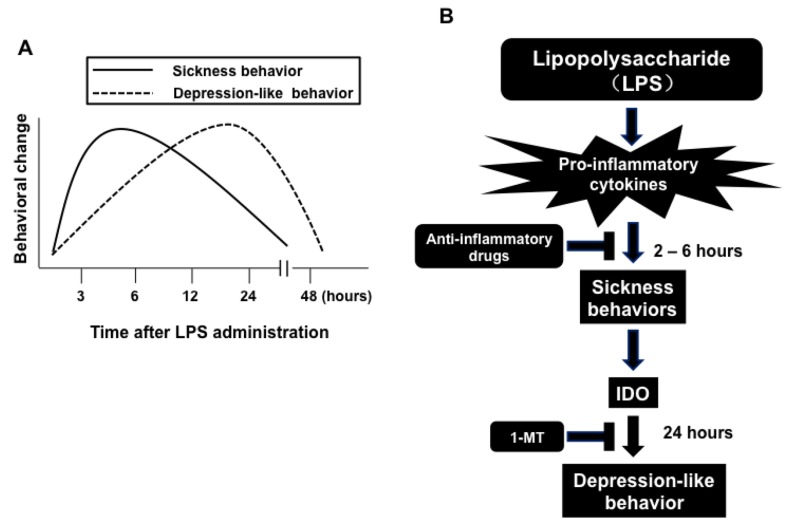
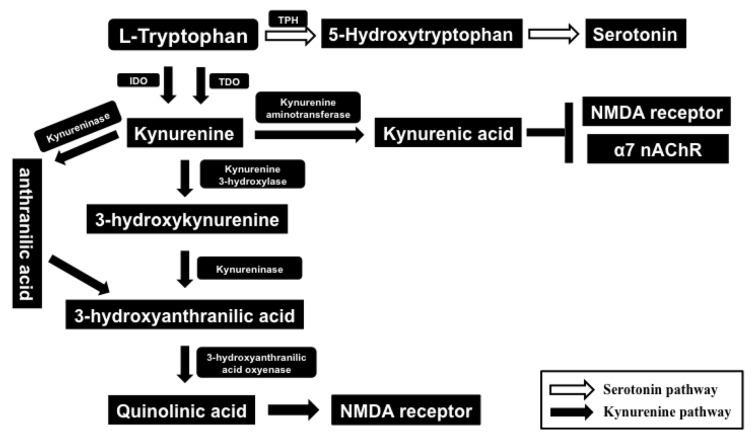
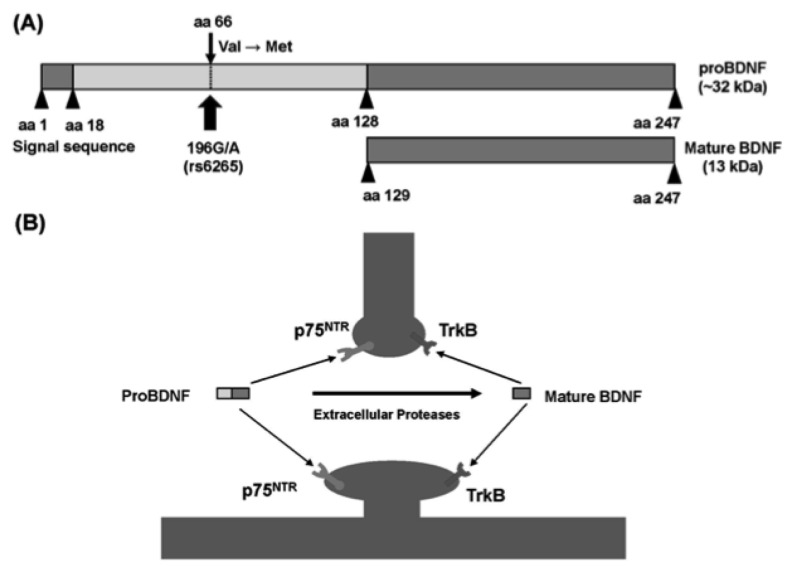
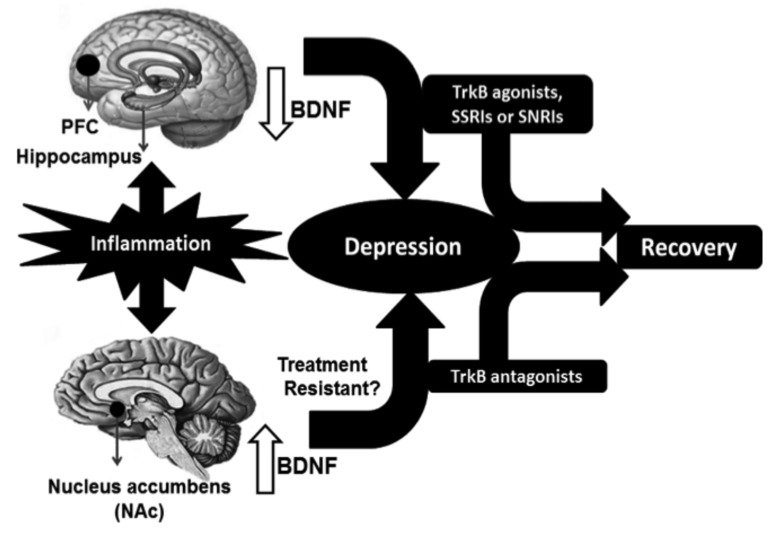
Depression is the most prevalent and among the most debilitating of psychiatric disorders. The precise neurobiology of this illness is unknown. Several lines of evidence suggest that peripheral and central inflammation plays a role in depressive symptoms, and that anti-inflammatory drugs can improve depressive symptoms in patients with inflammation-related depression. Signaling via brain-derived neurotrophic factor (BDNF) and its receptor, tropomycin receptor kinase B (TrkB) plays a key role in the pathophysiology of depression and in the therapeutic mechanisms of antidepressants. A recent paper showed that lipopolysaccharide (LPS)-induced inflammation gave rise to depression-like phenotype by altering BDNF-TrkB signaling in the prefrontal cortex, hippocampus, and nucleus accumbens, areas thought to be involved in the antidepressant effects of TrkB agonist, 7,8-dihydroxyflavone (7,8-DHF) and TrkB antagonist, ANA-12. Here we provide an overview of the tryptophan-kynurenine pathway and BDNF-TrkB signaling in the pathophysiology of inflammation-induced depression, and propose mechanistic actions for potential therapeutic agents. Additionally, the authors discuss the putative role of TrkB agonists and antagonists as novel therapeutic drugs for inflammation-related depression.
Overview
The claims and statistics of this paper haven’t been checked yet.
Free: it reads the open-access text and checks the first 5 claims that cite a source we can check. Create a free account to check every claim.
Integrity signals
Registry
Cites
Statistics
Figures
Verification
Claims the paper makes
The claims and statistics of this paper haven’t been checked yet.
Free: it reads the open-access text and checks the first 5 claims that cite a source we can check. Create a free account to check every claim.
Claims other papers make about this one
Each is checked against this paper’s own text: does it say what the citing paper says it does?
The source backs part of the claim, not all of it — or backs it for a different population, condition or comparison.
In the citing paper
“For the treatment of depression, targeting signaling transduction by BDNF and its receptor, tropomycin receptor kinase B (TrkB), is essential. 143 , 144”
From Major depressive disorder: hypothesis, mechanism, prevention and treatment (2024) · cites this paper as [144]
Experimental — accuracy not yet measured
Self-check
Percentages, sums and reported differences re-computed from the paper’s own numbers.
The self-check needs the paper’s full text.
Citations
Cites
1 retracted
Yang, C., Shirayama, Y., Zhang, J.-C., Ren, Q., & Hashimoto, K. (2015) · International Journal of Neuropsychopharmacology · doi:10.1093/ijnp/pyu121 · Cited by 103 · cited 2×
“In the rat learned helplessness model, we found that BDNF levels in the NAc were significantly higher in depressed rats compared with control and resilient rats, suggesting again that regional differences in BDNF levels may promote resilience to inescapable stress [113].”
Self-citationRetractedYaşlı Kadınlarda Üreme Sağlığı
Kokanalı, D., & Engin Üstün, Y. (n.d.) · DergiPark (Istanbul University) · Cited by 170,090
Yaşlı Kadınlarda Üreme Sağlığı
Kokanalı, D., & Üstün, Y. E. (2019) · Jinekoloji-Obstetrik ve Neonatoloji Tıp Dergisi · Cited by 169,629
Kessler, R. C. (1994) · Archives of General Psychiatry · doi:10.1001/archpsyc.1994.03950010008002 · Cited by 12,370
Molecular Mechanisms of Depression: Perspectives on New Treatment Strategies
Lang, U. E., & Borgwardt, S. (2013) · Cellular Physiology and Biochemistry · doi:10.1159/000350094 · Cited by 8,475
From inflammation to sickness and depression: when the immune system subjugates the brain
Dantzer, R., O'Connor, J. C., Freund, G. G., Johnson, R. W., & Kelley, K. W. (2008) · Nature Reviews Neuroscience · doi:10.1038/nrn2297 · Cited by 7,395 · cited 7×
“IDO activation results in decreased tryptophan levels and increased production of kynurenine and other tryptophanderived metabolites [36, 45].”
InfluentialA Meta-Analysis of Cytokines in Major Depression
Dowlati, Y., Herrmann, N., Swardfager, W., Liu, H., Sham, L., Reim, E. K., & Lanctôt, K. L. (2010) · Biological Psychiatry · doi:10.1016/j.biopsych.2009.09.033 · Cited by 4,729 · cited 1×
“Metaanalysis showed higher serum levels of TNF-α in drug-free depressed patients relative to healthy controls [26].”
Raetz, C. R. H., & Whitfield, C. (2002) · Annual Review of Biochemistry · doi:10.1146/annurev.biochem.71.110601.135414 · Cited by 4,404 · cited 1×
“Administration of LPS or pro-inflammatory cytokines results in a significant reduction of BDNF gene and protein expression [38, 92].”
Neurotrophins: Roles in Neuronal Development and Function
Huang, E. J., & Reichardt, L. F. (2001) · Annual Review of Neuroscience · doi:10.1146/annurev.neuro.24.1.677 · Cited by 4,394 · cited 2×
“It is well known that BDNF is integral to use-dependent plasticity mechanisms, such as long-term potentiation, learning and memory [80-85].”
Domingos da Silveira da Luz, A. C., Pereira Dias, G., do Nascimento Bevilaqua, M. C., Cocks, G., Gardino, P. F., Thuret, S., & Nardi, A. E. (2013) · Neuropsychobiology · doi:10.1159/000353269 · Cited by 3,995
Research works printed but not linked: 2
- [97]Duman R.S. Heninger G.R. Nestler E.J. A molecular and cellular theory of depression. Arch. Gen. Psychiatry 1997 54 7 597 606 [http://dx.doi.org/10.1001/archpsyc.1997.01830190015002]. [PMID: 9236543]. 9236543 · DOI · Paper page
- [102]Hashimoto K. Sigma-1 receptor chaperone and brain-derived neurotrophic factor: emerging links between cardiovascular disease and depression. Prog. Neurobiol. 2013 100 15 29 [pneurobio.].[http://dx.doi.org/10.1016/j.pneurobio.2012.09.001]. [PMID: 23044468]. 23044468 · DOI · Paper page
Cited by
Items 101–200 of 561
Ge, C., Wang, S., Wu, X., & Lei, L. (2023) · Journal of Chemical Neuroanatomy · doi:10.1016/j.jchemneu.2023.102313 · Cited by 50
L-DOPA-induced hyperhomocysteinemia in Parkinson's disease: Elephant in the room
Paul, R. K., & Borah, A. (2016) · Biochimica et Biophysica Acta (BBA) - General Subjects · doi:10.1016/j.bbagen.2016.06.018 · Cited by 50
Li, Q., Tian, C., Liu, X., Li, D., & Liu, H. (2023) · Frontiers in Pharmacology · doi:10.3389/fphar.2023.1203767 · Cited by 50
“The pathogenesis of inflammation mainly includes interleukin, tumor necrosis factor, and other inflammatory factors that change the cell environment; the interaction between inflammatory factors and oxidation reaction damages DNA and affects the homeostasis of endoplasmic reticulum, mitochondria, and other organelles;…”
BackgroundThe role of vitamin D in bipolar disorder: Epidemiology and influence on disease activity
Cereda, G., Enrico, P., Ciappolino, V., Delvecchio, G., & Brambilla, P. (2020) · Journal of Affective Disorders · doi:10.1016/j.jad.2020.09.039 · Cited by 46
Li, Q., Guo, L., Zhang, S., Wang, W., Li, W., Chen, X., Shi, J., Lu, C., & McIntyre, R. S. (2021) · Journal of Affective Disorders · doi:10.1016/j.jad.2021.03.074 · Cited by 47
Tang, R., Cao, Q., Hu, S.-W., He, L., Du, P., Chen, G., Fu, R., Xiao, F., Sun, Y., Zhang, J., et al. (2021) · Acta Pharmacologica Sinica · doi:10.1038/s41401-021-00727-z · Cited by 46
Self-citationGao, J., Xiong, B., Zhang, B., Li, S., Huang, N., Zhan, G., Jiang, R., Yang, L., Wu, Y., Miao, L., et al. (2018) · Neuroscience · doi:10.1016/j.neuroscience.2018.07.052 · Cited by 45
Maes, M. H. J., Plaimas, K., Suratanee, A., Noto, C. D. S., & Kanchanatawan, B. (2021) · Cells · doi:10.3390/cells10112929 · Cited by 46
“LPS-associated inflammation alters BDNF/TrkB signaling in the hippocampus, nucleus accumbens, and prefrontal cortex in association with the onset of depressive behaviors [32].”
BackgroundQu, Y., Shan, J., Wang, S., Chang, L., Pu, Y., Wang, X., Tan, Y., Yamamoto, M. P., & Hashimoto, K. (2020) · European Archives of Psychiatry and Clinical Neuroscience · doi:10.1007/s00406-020-01208-w · Cited by 44
Self-citationZhang, H., Zhou, Z., Chen, Z., Zhong, Z., & Li, Z. (2017) · Journal of Pharmacological Sciences · doi:10.1016/j.jphs.2017.03.007 · Cited by 43
Zhu, X., Hu, J., Deng, S., Tan, Y., Qiu, C., Zhang, M., Ni, X., Lu, H., Wang, Z., Li, L., et al. (2021) · Frontiers in Pharmacology · doi:10.3389/fphar.2021.687757 · Cited by 44
Hashimoto, K., Zhao, M., Zhu, T., Wang, X., & Yang, J. (2024) · Journal of Anesthesia and Translational Medicine · doi:10.1016/j.jatmed.2024.07.001 · Cited by 43
Self-citationChen, Y., Li, L., Zhang, J., Cui, H., Wang, J., Wang, C., Shi, M., & Fan, H. (2021) · Molecular Neurobiology · doi:10.1007/s12035-021-02512-9 · Cited by 43
Self-citationSoluble Epoxide Hydrolase as a Therapeutic Target for Neuropsychiatric Disorders
Shan, J., & Hashimoto, K. (2022) · International Journal of Molecular Sciences · doi:10.3390/ijms23094951 · Cited by 44
Self-citationRyu, D., Jee, H.-J., Kim, S., Hwang, S.-H., Pil, G. B., & Jung, Y. (2022) · Nutrients · doi:10.3390/nu14163314 · Cited by 43
Sadighparvar, S., Darband, S. G., Yousefi, B., Kaviani, M., Ghaderi‐Pakdel, F., Mihanfar, A., Babaei, G., Mobaraki, K., & Majidinia, M. (2020) · Experimental Physiology · doi:10.1113/ep088605 · Cited by 41
“More importantly, increased inflammation, which is a common event in various cancers, such as colorectal cancer, can reduce the expression levels of BDNF and inhibit its downstream signalling, hence playing a crucial role in cancer-related depression (Zhang et al., 2016).”
BackgroundCao, Q., Luo, S., Yao, W., Qu, Y., Wang, N., Hong, J., Murayama, S., Zhang, Z., Chen, J., Hashimoto, K., et al. (2022) · Molecular Therapy - Nucleic Acids · doi:10.1016/j.omtn.2022.05.037 · Cited by 41
Self-citationYin, R. M., Zhao, S., & Qiu, C. (2020) · Journal of Pharmacy and Pharmacology · doi:10.1111/jphp.13233 · Cited by 42
“Trk is a receptor-type tyrosine kinase,([18]) the family of which encodes a neurotrophin receptor with three subtypes, namely TrkA, TrkB and TrkC, which are encoded by the Ntrk1, Ntrk2 and Ntrk3 genes, respectively.”
BackgroundHuang, X., Li, W., You, B., Tang, W., Gan, T., Feng, C., Li, C., & Yang, R. (2020) · Journal of Agricultural and Food Chemistry · doi:10.1021/acs.jafc.0c02895 · Cited by 42
Chen, H., Dong, M., He, H., Piao, X., Han, X., Li, R., Jiang, H., Li, X., Li, B., & Cui, R. (2024) · Journal of Agricultural and Food Chemistry · doi:10.1021/acs.jafc.4c04394 · Cited by 42
Szymura, J., Kubica, J., Więcek, M., & Pera, J. (2020) · Journal of Clinical Medicine · doi:10.3390/jcm9010184 · Cited by 43
“It was postulated that the expression of specific BDNF transcripts may be affected by immune and inflammation processes [47], as BNDF is considered to have an indirect neuroprotective effect on microglial activation by reduction of neuronal injury and inflammation.”
BackgroundFang, M., Li, Y., Liao, Z., Gan, W., Cao, Q., Li, Y., Duan, Y., Han, Y., Deng, X., Wu, F., et al. (2023) · Immunity · doi:10.1016/j.immuni.2023.02.002 · Cited by 42
Val66Met polymorphism association with serum BDNF and inflammatory biomarkers in major depression
Caldieraro, M. A., McKee, M., Leistner-Segal, S., Vares, E. A., Kubaski, F., Spanemberg, L., Brusius-Facchin, A. C., Fleck, M. P., & Mischoulon, D. (2018) · The World Journal of Biological Psychiatry · doi:10.1080/15622975.2017.1347713 · Cited by 39
“The bacterial endotoxin lipopolysaccharide (LPS) is widely used to create an inflammatory animal model of depression (Zhang et al. 2016).”
BackgroundResultPan, F., Mou, T., Shao, J., Chen, H., Tao, S., Wang, L., Jiang, C., Zhao, M., Wang, Z., Hu, S., et al. (2022) · Journal of Affective Disorders · doi:10.1016/j.jad.2022.11.059 · Cited by 39
Hashimoto, K. (2019) · Current Psychiatry Reports · doi:10.1007/s11920-019-1063-7 · Cited by 44
Self-citationAnalysis of blood mature BDNF and proBDNF in mood disorders with specific ELISA assays
Lin, L., Fu, X.-Y., Zhou, X., Liu, D., Bobrovskaya, L., & Zhou, L. (2020) · Journal of Psychiatric Research · doi:10.1016/j.jpsychires.2020.12.021 · Cited by 40
The role of pro- and mature neurotrophins in the depression
Xue, Y., Liang, H., Yang, R., Deng, K., Tang, M., & Zhang, M. (2021) · Behavioural Brain Research · doi:10.1016/j.bbr.2021.113162 · Cited by 35
Bleibel, L., Sokołowska, P., Henrykowska, G. A., Owczarek, J., & Wiktorowska‐Owczarek, A. (2025) · Pharmaceuticals · doi:10.3390/ph18060867 · Cited by 40
Meng, J., Wang, D., & Luo, L. Q. (2019) · Biomedicine & Pharmacotherapy · doi:10.1016/j.biopha.2019.109489 · Cited by 38
Palmer, A. C. S., de Souza, A., dos Santos, V. S., Cavalheiro, J. A. C., Schuh, F., Zucatto, Â. E., Biazús, J. V., Torres, I. L. D. S., Fregni, F., & Caumo, W. (2019) · Frontiers in Pharmacology · doi:10.3389/fphar.2019.01382 · Cited by 42
Kim, H. R., Lee, Y.-J., Kim, T.-W., Lim, R.-N., Hwang, D. Y., Moffat, J. J., Kim, S., Seo, J., & Ka, M. (2020) · BMC Complementary Medicine and Therapies · doi:10.1186/s12906-020-03121-0 · Cited by 38
Wang, L., Ma, J., Wu, W., Fang, Y., Liu, F., Yang, Q., Hu, X., Gu, X., He, Z., Sun, D., et al. (2022) · Life Sciences · doi:10.1016/j.lfs.2022.120578 · Cited by 39
Liu, H., Du, Y., Liu, L. L., Liu, Q. S., Mao, H. H., & Cheng, Y. (2023) · European Journal of Pharmacology · doi:10.1016/j.ejphar.2023.175828 · Cited by 40
BDNF Signaling and Pain Modulation
Mazzitelli, M., Kiritoshi, T., Presto, P., Hurtado, Z., Antenucci, N., Ji, G., & Neugebauer, V. (2025) · Cells · doi:10.3390/cells14070476 · Cited by 42
“Together, the data suggest that while BDNF may exert antidepressive actions in forebrain regions such as the hippocampus and PFC, it may contribute to a depression-like phenotype in the mesolimbic pathway centered on the VTA and NAc [235].”
Lei, L., Wang, Y.-T., Hu, D., Gai, C., & Zhang, Y. (2023) · Cellular and Molecular Neurobiology · doi:10.1007/s10571-023-01426-5 · Cited by 38
“Moreover, TrkB agonists and antagonists may have the potential as fast-acting antidepressants for treating inflammation-related diseases (Zhang et al. 2016).”
BackgroundAssociation between gut microbiota and its functional metabolites with prenatal depression in women
Xie, T., Fan, X., Pang, H., Zang, T., Ni, W., Liu, J., Li, Z., Li, S., Zhu, Q., Slack, J. E., et al. (2023) · Neurobiology of Stress · doi:10.1016/j.ynstr.2023.100592 · Cited by 36
“A previous study (Zhang et al., 2016) indicated peripheral and central inflammation plays a role in the onset of depression, and anti-inflammatory drugs can ameliorate the symptoms in patients with inflammation-related depression, this may partly explain the protective role of…”
Zheng, T., Liu, H., Qin, L., Chen, B., Zhang, X., Hu, X., Xiao, L., & Qin, S. (2018) · Metabolism · doi:10.1016/j.metabol.2018.03.014 · Cited by 36
The Nrf2 pathway in psychiatric disorders: pathophysiological role and potential targeting
Bhandari, R., Kaur, J., Kaur, S., & Kuhad, A. (2021) · Expert Opinion on Therapeutic Targets · doi:10.1080/14728222.2021.1887141 · Cited by 38
“brain and a single bilateral infusion of BDNF was given into DG and CA3 regions of the hippocampus [51].”
BackgroundMethodYan, Y., Xu, X., Chen, R., Wu, S., Yang, Z. R., Wang, H., & Zhang, T. (2021) · Brain Behavior and Immunity · doi:10.1016/j.bbi.2021.02.007 · Cited by 36
Huang, B., Wu, Y., Li, C., Tang, Q., & Zhang, Y. (2023) · Chinese Herbal Medicines · doi:10.1016/j.chmed.2022.10.004 · Cited by 40
“Several clinical studies have been performed to investigate the system-wide responses associated with Jieyu Hehuan decoction administration (Chen & Zhang, 2007; Jia et al., 2017; Liang, Zhang, & Hu, 2018; Tian & Zhang, 2016; D. Zhang, 2018; G. Zhang, Sun, & Wang, 2009).”
BackgroundNumakawa, T., & Kajihara, R. (2024) · International Journal of Molecular Sciences · doi:10.3390/ijms25031596 · Cited by 37
“These inflammatory mediators can negatively affect BDNF expression and signaling [82,83].”
BackgroundFan, Y., Luan, X., Wang, X., Li, H., Zhao, H., Li, S., Li, X., & Qiu, Z. (2024) · Brain Research Bulletin · doi:10.1016/j.brainresbull.2024.111143 · Cited by 37
“…long-term depression (LTD), while the p75NTR receptor is mainly activated by its precursor proBDNF and then activates the downstream JNK, RhoA, and NF-kB signaling molecules, eventually leading to neuronal apoptosis, synaptic reduction and neurodegeneration (Zhang et al., 2016a; Lin et al., 2021).”
Maffioletti, E., Gennarelli, M., Gainelli, G., Bocchio‐Chiavetto, L., Bortolomasi, M., & Minelli, A. (2019) · Journal of Ect · doi:10.1097/yct.0000000000000583 · Cited by 36
Hao, Y., Xiong, R., & Gong, X. (2020) · Inflammation · doi:10.1007/s10753-020-01365-z · Cited by 39
Depression and Vitamin D: A Peculiar Relationship
Parel, N. S., Krishna, P. V., Gupta, A., Uthayaseelan, K., Uthayaseelan, K., Kadari, M., Subhan, M., & Kasire, S. P. (2022) · Cureus · doi:10.7759/cureus.24363 · Cited by 41
“…are necessary for neuron survival, development, and migration, in which they drive their physiological function by combining with their corresponding tropomyosin-related kinase (Trk) receptors, including BDNF/TrkB, NT-3/TrkC, NGF/TrkA, as well as the common p75 neurotrophin receptor (p75NTR) [36].”
Sun, Y., Wang, Z., Hou, J., Shi, J., Tang, Z., Wang, C., & Zhao, H. (2022) · Frontiers in Pharmacology · doi:10.3389/fphar.2022.832590 · Cited by 42
“Brain-derived neurotrophic factor (BDNF), a topic neurotrophic factor of intensive research in the mammalian brain, contributing to the maintenance and survival of neurons and activity-dependent regulation of synapse number and function, is integral to the pathophysiology of depression (Zhang et al., 2016).”
BackgroundZiaei, S., Mohammadi, S., Hasani, M., Morvaridi, M., Belančić, A., Daneshzad, E., Saleh, S. A. K., Adly, H. M., & Heshmati, J. (2023) · Nutritional Neuroscience · doi:10.1080/1028415x.2023.2245996 · Cited by 34
Wu, S., Guo, Y., Jiang, S., Wei, L., Liu, Z., Wang, X., & Su, Y. (2018) · Neurochemical Research · doi:10.1007/s11064-018-2552-5 · Cited by 34
Xiong, Z., Zhang, K., Ren, Q., Chang, L., Chen, J., & Hashimoto, K. (2018) · Journal of Affective Disorders · doi:10.1016/j.jad.2018.11.016 · Cited by 35
Self-citationGiustina, A. D., Goldim, M. P. D. S., Danielski, L. G., Florentino, D., Garbossa, L., Joaquim, L. D. S., de Oliveira, A. N., Mathias, K., Fileti, M. E., Zarbato, G. F., et al. (2018) · Nutrition · doi:10.1016/j.nut.2018.12.003 · Cited by 37
Lu, T., Cui, G., Peng, S.-Y., Wu, X., & Chen, G. (2020) · Medical Gas Research · doi:10.4103/2045-9912.296043 · Cited by 34
Li, C., Huang, B., & Zhang, Y. (2021) · Pharmaceuticals · doi:10.3390/ph14010065 · Cited by 35
Sohroforouzani, A. M., Shakerian, S., Ghanbarzadeh, M., & Alaei, H. (2021) · Behavioural Brain Research · doi:10.1016/j.bbr.2021.113645 · Cited by 35
Fang, X., Yang, C., Li, S., Zhan, G., Zhang, J., Huang, N., Du, X., Xu, H., Hashimoto, K., & Luo, A. (2018) · European Archives of Psychiatry and Clinical Neuroscience · doi:10.1007/s00406-018-0909-z · Cited by 34
Self-citationThe Epigenetic Overlap between Obesity and Mood Disorders: A Systematic Review
Gharipour, M., Barekatain, M., Sung, J., Emami, N., Sadeghian, L., Dianatkhah, M., Sarrafzadegan, N., & Jahanfar, S. (2020) · International Journal of Molecular Sciences · doi:10.3390/ijms21186758 · Cited by 33
Lara-Espinosa, J. V., Santana-Martínez, R. A., Maldonado, P. D., Zetter, M. A., Becerril‐Villanueva, E., Pérez‐Sánchez, G., Pavón, L., Mata‐Espinosa, D., Barrios‐Payán, J., López-Torres, M. O., et al. (2020) · International Journal of Molecular Sciences · doi:10.3390/ijms21249483 · Cited by 35
“In fact, the pro-inflammatory microglial cell is related to low BDNF brain levels in an LPS-induced depression-like model [49,50].”
BackgroundA review of pre-clinical models for Gulf War Illness
Ribeiro, A. C. R., & Deshpande, L. S. (2021) · Pharmacology & Therapeutics · doi:10.1016/j.pharmthera.2021.107936 · Cited by 34
Zhan, G., Huang, N., Li, S., Hua, D., Zhang, J., Fang, X., Yang, N., Luo, A., & Yang, C. (2018) · Psychopharmacology · doi:10.1007/s00213-018-5041-2 · Cited by 32
Self-citationNeuroinflammation and major depressive disorder: astrocytes at the crossroads
Puentes-Orozco, M., Albarracín, S. L., & Toledo, M. M. V. (2024) · Frontiers in Cellular Neuroscience · doi:10.3389/fncel.2024.1504555 · Cited by 35
Botanicals as modulators of depression and mechanisms involved
Zhang, Z., Deng, T.-M., Wu, M., Zhu, A., & Zhu, G. (2019) · Chinese Medicine · doi:10.1186/s13020-019-0246-9 · Cited by 34
Mravunac, M., Szymlek‐Gay, E. A., Daly, R. M., Roberts, B. R., Formica, M., Gianoudis, J., O’Connell, S. L., Nowson, C. A., & Cardoso, B. R. (2019) · Nutrients · doi:10.3390/nu11102503 · Cited by 32
“Considering the importance of neurotrophins for brain health maintenance, research has linked lower concentrations of BDNF with neurodegenerative diseases [45] and depression [46].”
BackgroundCyclooxygenase Inhibition Safety and Efficacy in Inflammation-Based Psychiatric Disorders
Perrone, M. G., Centonze, A., Miciaccia, M., Ferorelli, S., & Scilimati, A. (2020) · Molecules · doi:10.3390/molecules25225388 · Cited by 36
“Despite the variety of antidepressant therapies, only one-third of depressed patients show significant improve ent in response to first-line treatment [50,51].”
BackgroundA Novel Application of Ketamine for Improving Perioperative Sleep Disturbances
Song, B., & Zhu, J. (2021) · Nature and Science of Sleep · doi:10.2147/nss.s341161 · Cited by 33
Soluble epoxide hydrolase: a new therapeutic target for depression
Hashimoto, K. (2016) · Expert Opinion on Therapeutic Targets · doi:10.1080/14728222.2016.1226284 · Cited by 32
Self-citationQu, X., Zhang, L., & Wang, L. (2023) · Journal of Agricultural and Food Chemistry · doi:10.1021/acs.jafc.3c06238 · Cited by 38
Han, D. K., Zhao, Z., Mao, T., Gao, M., Yang, X., & Gao, Y. (2024) · CNS Neuroscience & Therapeutics · doi:10.1111/cns.70150 · Cited by 33
“Decreased BDNF levels in the hippocampus and PFC of patients with depression are associated with reduced hippocampal volume, decreased neuronal proliferation in the CA3 region, and increased neuronal apoptosis in the dentate gyrus region [95].”
Association of testosterone and BDNF serum levels with craving during alcohol withdrawal
Heberlein, A., Lenz, B., Opfermann, B., Gröschl, M., Janke, E., Stange, K., Groh, A., Kornhuber, J., Frieling, H., Bleich, S., et al. (2016) · Alcohol · doi:10.1016/j.alcohol.2016.06.004 · Cited by 31
“Indeed, there are preclinical study results that support the hypothesis that ethanol consumption may alter the relationship between testosterone and the HPA (Zhang et al., 2016).”
A Bibliometric Analysis of Research on the Role of BDNF in Depression and Treatment
He, T., Wu, Z., Zhang, X., Liu, H., Wang, Y., Jiang, R., Liu, C., Hashimoto, K., & Yang, C. (2022) · Biomolecules · doi:10.3390/biom12101464 · Cited by 34
Self-citationFerulic acid as a therapeutic agent in depression: Evidence from preclinical studies
Dong, X., & Zhao, D. (2023) · CNS Neuroscience & Therapeutics · doi:10.1111/cns.14265 · Cited by 32
Yao, W., Zhang, J., Ishima, T., Ren, Q., Yang, C., Dong, C., Ma, M., Saito, A., Honda, T., & Hashimoto, K. (2016) · European Journal of Pharmacology · doi:10.1016/j.ejphar.2016.10.037 · Cited by 31
Self-citationPitsillou, E., Liang, J. J., Hung, A., & Karagiannis, T. C. (2020) · Life Sciences · doi:10.1016/j.lfs.2020.118809 · Cited by 32
Cartmel, B., Hughes, M., Ercolano, E. A., Gottlieb, L. T., Li, F., Zhou, Y., Harrigan, M., Ligibel, J. A., von Gruenigen, V. E., Gogoi, R. P., et al. (2021) · Gynecologic Oncology · doi:10.1016/j.ygyno.2021.02.036 · Cited by 33
Zhang, J., Ma, L., Hashimoto, Y., Wan, X., Shan, J., Qu, Y., & Hashimoto, K. (2021) · Life Sciences · doi:10.1016/j.lfs.2021.119882 · Cited by 31
Self-citationWang, Y., Liu, Y., Zhang, M., Zhou, H., Gao, Y.-H., Cheng, W., Ye, Z., Yuan, Z.-Y., Xu, G., Li, C., et al. (2022) · ACS Chemical Neuroscience · doi:10.1021/acschemneuro.2c00348 · Cited by 31
The association of BDNF gene polymorphism with cognitive impairment in insomnia patients
Zaki, N. F. W., Saleh, E.-S., Elwasify, M., Mahmoud, E., Zaki, J., Spence, D. W., BaHammam, A. S., & Pandi-Perumal, S. R. (2018) · Progress in Neuro-Psychopharmacology and Biological Psychiatry · doi:10.1016/j.pnpbp.2018.07.025 · Cited by 30
“These results are consistent with those obtained by previous researchers (Lu et al., 2014; Bouckaert et al., 2016; Zhang et al., 2016; Gulyaeva, 2017).”
Xiong, Z., Zhang, K., Ishima, T., Ren, Q., Chang, L., Chen, J., & Hashimoto, K. (2018) · Pharmacology Biochemistry and Behavior · doi:10.1016/j.pbb.2018.10.005 · Cited by 29
Self-citationPotentially repurposable drugs for schizophrenia identified from its interactome
Karunakaran, K. B., Chaparala, S., & Ganapathiraju, M. K. (2019) · Scientific Reports · doi:10.1038/s41598-019-48307-w · Cited by 31
Rezaei, S., Prévot, T. D., Vieira, É. L. M., & Sibille, E. L. (2024) · Brain Behavior & Immunity - Health · doi:10.1016/j.bbih.2024.100761 · Cited by 36
“Decreased Bdnf expression is found in the brain of rodents injected with i. p. IL1-beta or LPS (Guan and Fang, 2006; Lapchak et al., 1993; Schnydrig et al., 2007; Zhang et al., 2016).”
BackgroundNatural Polyphenols and Terpenoids for Depression Treatment: Current Status
Ramos-Hryb, A. B., Cunha, M. P., Kaster, M. P., & Rodrigues, A. L. S. (2017) · Studies in natural products chemistry · doi:10.1016/b978-0-444-64068-0.00006-1 · Cited by 37
Ma, S., Wang, Y., Zhou, X., Li, Z., Zhang, Z., Wang, Y., Huang, T., Zhang, Y., Shi, J., & Guan, F. (2020) · ACS Chemical Neuroscience · doi:10.1021/acschemneuro.0c00268 · Cited by 30
Hou, Y., Wang, Y., Song, S., Zuo, Y., Zhang, H., Bai, C., Zhao, H., & Zhang, T. (2021) · Experimental Neurology · doi:10.1016/j.expneurol.2021.113908 · Cited by 30
Ren, Q. (2019) · Frontiers in Pharmacology · doi:10.3389/fphar.2019.00420 · Cited by 31
“Studies using animal models of depression have reported lipopolysaccharide (LPS)-induced depression-like behavior and dendritic changes (Zhang et al., 2015, 2016).”
MethodNeuropathology of Kynurenine Pathway of Tryptophan Metabolism
Tutakhail, A., Boulet, L., Khabil, S., Nazari, Q. A., Hamid, H., & Coudoré, F. (2020) · Current Pharmacology Reports · doi:10.1007/s40495-019-00208-2 · Cited by 28
Vascular endothelial growth factor and poor prognosis after ischaemic stroke
Escudero, C., Acurio, J., López, E., Rodríguez, A., Benavente, A., Lara, E., & Korzeniewski, S. J. (2020) · European Journal of Neurology · doi:10.1111/ene.14641 · Cited by 28
“inflammation resolution [3] enhancing repair [4] or a mix of both processes [5–7] Neurotrophins and angiotrophins probably participate as well, possibly by way of anti-inflammatory attributes [8,9] or otherwise influencing neurodevelopmental [10] or damage repair processes [11] Clinical studies have reported systemic-…”
BackgroundMiyanishi, H., Muramatsu, S., & Nitta, A. (2021) · Neuropsychopharmacology · doi:10.1038/s41386-021-01033-2 · Cited by 28
“Stress-induced alterations in brain-derived neurotrophic factor (BDNF) levels in the brain have been proposed to be involved in the mechanism of depression onset [17, 18].”
BackgroundWu, M., Xie, J., Zhou, Z., Wang, L., Hu, Y., Sun, Y., Wang, Y., & Tian, Y. (2021) · Journal of Affective Disorders · doi:10.1016/j.jad.2021.12.009 · Cited by 28
Tao, W., Zhang, X., Ding, J., Yu, S., Ge, P., Han, J., Luo, X., Cui, W., & Chen, J. (2022) · CNS Neuroscience & Therapeutics · doi:10.1111/cns.13809 · Cited by 28
Hsu, T., Chu, C., Ching, P., Chen, G., & Pan, C. (2022) · Journal of Affective Disorders · doi:10.1016/j.jad.2022.03.047 · Cited by 30
Pathophysiology of Depression: Stingless Bee Honey Promising as an Antidepressant
Zakaria, F. H., Ismail, S., Mustafa, M. Z., & Shafin, N. (2022) · Molecules · doi:10.3390/molecules27165091 · Cited by 34
Gupta, G. L., Sharma, L. K., & Sharma, M. (2022) · Neurochemical Research · doi:10.1007/s11064-022-03779-7 · Cited by 29
“In addition, the research implies that oxidative stress and inflammatory illnesses are associated with depression [10, 11].”
BackgroundNeuroprotective Effects of N-acetylserotonin and Its Derivative
Kang, J., Guo, X.-D., Wang, Y., & Kang, X. (2023) · Neuroscience · doi:10.1016/j.neuroscience.2023.02.017 · Cited by 28
Tan, Y., Zhou, L., Huang, J., Chen, X., Wu, Y., Song, X., Wang, J., Hu, H., & Yang, Q. (2023) · Neuropsychiatric Disease and Treatment · doi:10.2147/ndt.s399378 · Cited by 30
“Ntrk-2 is the gene for tropomyosin/tyrosine receptor kinase B, the receptor for brain-derived neurotropic factor, which plays an important role in the pathophysiology of depression and the antidepressant response.(56) Budni showed that folate exerted antidepressant effects with the involvement of N-methyl-D-aspartate…”
BackgroundXu, D., Xu, Y., Gao, X., Yan, M., Zhang, C., Wu, X., Xia, Q., & Ge, J. (2023) · International Immunopharmacology · doi:10.1016/j.intimp.2023.110903 · Cited by 28
Kordestani-Moghadam, P., Nasehi, M., Vaseghi, S., Khodagholi, F., & Zarrindast, M. (2020) · Physiology & Behavior · doi:10.1016/j.physbeh.2020.113023 · Cited by 28
Effect of Sinapic Acid on Scopolamine-Induced Learning and Memory Impairment in SD Rats
Lee, I.-S., Choi, G.-Y., Sreelatha, I., Yoon, J., Youn, S.-H., Maeng, S., & Park, J. H. (2023) · Brain Sciences · doi:10.3390/brainsci13030427 · Cited by 27
“BDNF is a well-known indicator of synaptic function regulation, neural survival, and differentiation, and can have therapeutic implications in various neurodegenerative diseases [39,40].”
BackgroundGoodkin, K., Evering, T. H., Anderson, A. M. L., Ragin, A. B., Monaco, C. L., Gavegnano, C., Avery, R. J., Rourke, S. B., Cysique, L. A., & Brew, B. J. (2023) · Frontiers in Cellular Neuroscience · doi:10.3389/fncel.2023.1130938 · Cited by 27
“In addition, antidepressant therapy has been associated with increases in BDNF and hippocampal neurogenesis (Zhang et al., 2016), and, related to comorbid HAND, the hippocampus is known to be preferentially affected by HIV with a high proviral load.”
BackgroundWróbel, A., Zapała, Ł., Kluz, T., Rogowski, A., Misiek, M., Juszczak, K., Sieńko, J., Gold, D., Stangel‐Wójcikiewicz, K., Poleszak, E., et al. (2021) · International Journal of Molecular Sciences · doi:10.3390/ijms22115853 · Cited by 28
“BDNF may be induced due to nerve damage and participates in chronic pain onset [32], while some authors claim it may become a biomarker of an overactive bladder [27].”
BackgroundDepression and HIV: a scoping review in search of neuroimmune biomarkers
Mudra Rakshasa-Loots, A. (2023) · Brain Communications · doi:10.1093/braincomms/fcad231 · Cited by 25
“Furthermore, there is some evidence that BDNF signalling may exhibit cross-talk with the kynurenine pathway and associated immuno-metabolic dysfunctions.(93) Pre-clinical studies show that induction of depression-like behaviours in rats was accompanied by decreased BDNF expression and increased IDO-1, Kyn, and Trp pro…”
BackgroundAnisman, H., Doubad, D., Asokumar, A., & Matheson, K. (2024) · Neuroscience & Biobehavioral Reviews · doi:10.1016/j.neubiorev.2024.105859 · Cited by 32
Evolution of BDNF serum levels during the first six months after alcohol withdrawal
Girard, M. F., Labrunie, A., Malauzat, D., & Nubukpo, P. (2020) · The World Journal of Biological Psychiatry · doi:10.1080/15622975.2020.1733079 · Cited by 26
Metadata
- Authors
- Zhang, J.-C., Yao, W., & Hashimoto, K.
- Affiliations
- Chiba University (JP)
- Corresponding author
- Hashimoto, Kenji
- Venue
- Current Neuropharmacology
- Publisher
- Bentham Science Publishers Ltd.
- Published
- 2016-08-26
- Volume
- 14
- Issue
- 7
- Pages
- 721-731
- ISSN
- 1570-159X (ISSN-L)
- PMC
- PMC5050398
- OpenAlex
- W2309165118
- Semantic Scholar
- 8c9bc4382355e7e712e5e9cf698e36fc7516725f
- Cited by
- 538
- References
- 131
- Citations by year
- 2026: 46 · 2025: 71 · 2024: 70 · 2023: 71 · 2022: 65 · 2021: 60 · 2020: 64 · 2019: 37 · 2018: 22 · 2017: 18 · 2016: 14
- FWCI
- 1.81
- Type
- journal article
- Language
- en
- Open access
- bronze
- doi.org
- Locations
- Current Neuropharmacology (publishedVersion)
- PubMed Central (publishedVersion, cc-by-nc)
- PubMed (publishedVersion)
- Funders
- Ministry of Education, Culture, Sports, Science and Technology (24116006)
- Japan Society for the Promotion of Science (15K19711)
- Topics
- Life Sciences › Neuroscience › Biological Psychiatry › Tryptophan and brain disorders
- Health Sciences › Medicine › Pharmacology (medical) › Treatment of Major Depression
- Life Sciences › Neuroscience › Cellular and Molecular Neuroscience › Nerve injury and regeneration
- Keywords
- brain-derived neurotrophic factor, TrkB signaling, neuroinflammation, kynurenine pathway, lipopolysaccharide-induced inflammation, antidepressant mechanism, 7,8-dihydroxyflavone, ANA-12, TrkB agonist, prefrontal cortex, hippocampus, nucleus accumbens
- MeSH terms
- Animals, Anti-Inflammatory Agents, Antidepressive Agents, Brain, Depressive Disorder, Humans, Inflammation, Brain-Derived Neurotrophic Factor, Receptor, trkB
About these checks
Registry, retraction, Cites and statistics results are computed, not judged, with one exception: a printed reference that no index lists is read once by a model before it counts as a citation error. Claims are extracted by a model and kept only when their quote appears verbatim in the text; each cited source is then checked, with a model’s help, for whether it says what the claim relies on. Those verdicts can be wrong — read the claim’s quote and the cited source before relying on one.
Statistics and arithmetic are recomputed, not judged.
Confidence bands are shown only for fields calibrated on our annotated test set. None is calibrated yet, so no band is shown.
What counts as a claim ›How we measure confidence ›How we check this ›
Are you an author, or do you see a problem with this page? Request a review
Data sources
Bibliographic data: Semantic Scholar, OpenAlex, Crossref.
Contains information from the Semantic Scholar Academic Graph Datasets, made available under the ODC Attribution License (ODC-BY 1.0).
Semantic Scholar’s data is described in: Kinney, R., et al. (2023). The Semantic Scholar Open Data Platform. arXiv:2301.10140.
