

The DOI matches its Crossref record; 39 of the 40 references it cites were found in a registry or an index; none of the 14 sources its claims cite is checked for support yet.
Adherence to a Smartphone Application for Weight Loss Compared to Website and Paper Diary: Pilot Randomized Controlled Trial
Open accessAbstract
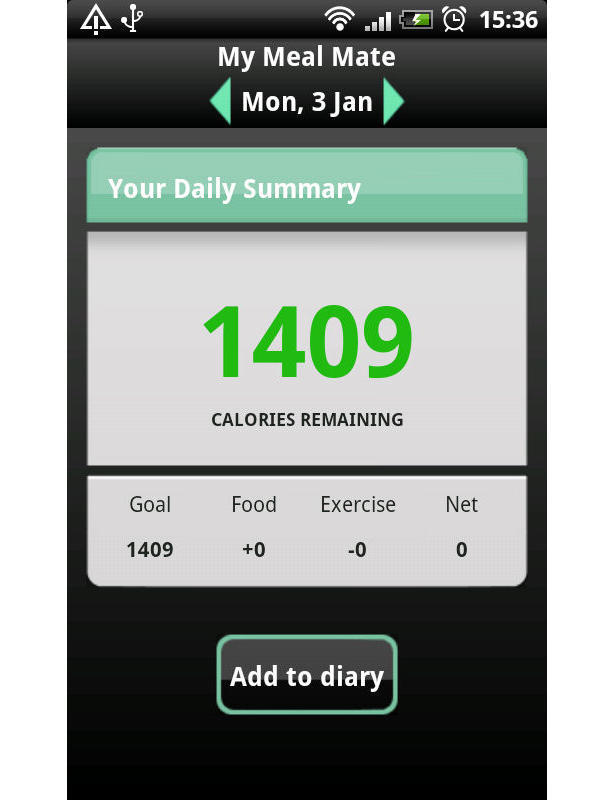
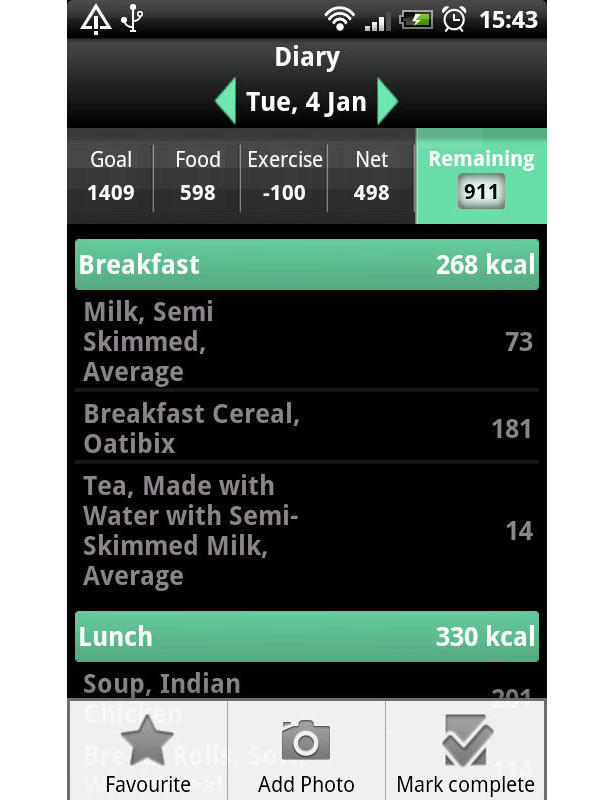
BACKGROUND: There is growing interest in the use of information communication technologies to treat obesity. An intervention delivered by smartphone could be a convenient, potentially cost-effective, and wide-reaching weight management strategy. Although there have been studies of texting-based interventions and smartphone applications (apps) used as adjuncts to other treatments, there are currently no randomized controlled trials (RCT) of a stand-alone smartphone application for weight loss that focuses primarily on self-monitoring of diet and physical activity. OBJECTIVE: The aim of this pilot study was to collect acceptability and feasibility outcomes of a self-monitoring weight management intervention delivered by a smartphone app, compared to a website and paper diary. METHODS: A sample of 128 overweight volunteers were randomized to receive a weight management intervention delivered by smartphone app, website, or paper diary. The smartphone app intervention, My Meal Mate (MMM), was developed by the research team using an evidence-based behavioral approach. The app incorporates goal setting, self-monitoring of diet and activity, and feedback via weekly text message. The website group used an existing commercially available slimming website from a company called Weight Loss Resources who also provided the paper diaries. The comparator groups delivered a similar self-monitoring intervention to the app, but by different modes of delivery. Participants were recruited by email, intranet, newsletters, and posters from large local employers. Trial duration was 6 months. The intervention and comparator groups were self-directed with no ongoing human input from the research team. The only face-to-face components were at baseline enrollment and brief follow-up sessions at 6 weeks and 6 months to take anthropometric measures and administer questionnaires. RESULTS: Trial retention was 40/43 (93%) in the smartphone group, 19/42 (55%) in the website group, and 20/43 (53%) in the diary group at 6 months. Adherence was statistically significantly higher in the smartphone group with a mean of 92 days (SD 67) of dietary recording compared with 35 days (SD 44) in the website group and 29 days (SD 39) in the diary group (P<.001). Self-monitoring declined over time in all groups. In an intention-to-treat analysis using baseline observation carried forward for missing data, mean weight change at 6 months was -4.6 kg (95% CI -6.2 to -3.0) in the smartphone app group, -2.9 kg (95% CI -4.7 to -1.1) in the diary group, and -1.3 kg (95% CI -2.7 to 0.1) in the website group. BMI change at 6 months was -1.6 kg/m(2) (95% CI -2.2 to -1.1) in the smartphone group, -1.0 kg/m(2) (95% CI -1.6 to -0.4) in the diary group, and -0.5 kg/m(2) (95% CI -0.9 to 0.0) in the website group. Change in body fat was -1.3% (95% CI -1.7 to -0.8) in the smartphone group, -0.9% (95% CI -1.5 to -0.4) in the diary group, and -0.5% (95% CI -0.9 to 0.0) in the website group. CONCLUSIONS: The MMM app is an acceptable and feasible weight loss intervention and a full RCT of this approach is warranted. TRIAL REGISTRATION: ClinicalTrials.gov NCT01744535; http://clinicaltrials.gov/ct2/show/NCT01744535 (Archived by WebCite at http://www.webcitation.org/6FEtc3PVB).
Overview
AI snapshot
Written from the paper’s full text.
TL;DR
In a 6-month pilot randomized controlled trial, a stand-alone smartphone app for weight loss self-monitoring (My Meal Mate) produced higher trial retention and dietary self-monitoring adherence than a website or paper diary. The app was rated acceptable and feasible, and the authors concluded that a full RCT is warranted.
Key findings
- Trial retention at 6 months was 40/43 (93%) in the smartphone group, 19/42 (55%) in the website group, and 20/43 (53%) in the diary group.
- Mean days of dietary recording were 92 (SD 67) in the smartphone group, 35 (SD 44) in the website group, and 29 (SD 39) in the diary group (P<.001); self-monitoring declined over time in all groups.
- In intention-to-treat analysis with baseline observation carried forward, mean weight change at 6 months was –4.6 kg (95% CI –6.2 to –3.0) for smartphone, –2.9 kg (95% CI –4.7 to –1.1) for diary, and –1.3 kg (95% CI –2.7 to 0.1) for website.
- Clinically significant weight loss (≥5% of initial weight) was achieved by 16/43 (37.2%) in the smartphone group, 12/43 (27.9%) in the diary group, and 7/42 (16.7%) in the website group.
Methods
- Three-arm parallel-group pilot RCT: 128 overweight volunteers with BMI ≥27 kg/m², aged 18–65 years, recruited from large employers in Leeds, UK; randomized by minimization to smartphone app, website, or paper diary for 6 months.
- The smartphone intervention (My Meal Mate) included goal setting, self-monitoring of diet and activity, and weekly tailored text-message feedback; comparator groups used a commercial slimming website or paper diary plus calorie-counting book, all based on the same Weight Loss Resources food database.
- Primary outcomes were feasibility and acceptability, including trial retention and intervention adherence/frequency of use; anthropometric measures were taken at baseline, 6 weeks, and 6 months, with descriptive analyses, ANOVA/Kruskal-Wallis tests, and intention-to-treat and completer analyses.
Limitations
- The paper states that generalizability is limited because the sample was predominantly white, female, and employed in managerial/professional occupations; the app was a prototype and participants reported frequent bugs causing it to close; and contamination occurred, with 20 participants reporting use of another intervention, including one diary-group participant who used MyFitnessPal and lost 32 kg, strongly influencing the diary-group mean.
- The paper also states that unequal dropout among groups is a potential source of bias for a larger RCT, and that the pilot was not statistically powered to detect change in anthropometric measures.
- Evident from the text: the small pilot sample and high overall attrition (38%) limit interpretation of weight-loss effect sizes.
Model-written summary. Check it against the paper before relying on it.
Integrity signals
Registry
Cites
Statistics
Figures
Verification
Claims the paper makes
42 Own result · 12 Own method · 10 Not checked yet · 6 Own interpretation · 1 No basis given
A result the paper reports from its own data — it cites no other source for it, so there is none to check. The quote shows it is in the paper.
In the paper
“When asked about how satisfied they were with the study equipment at 6 weeks, 86.8% reported that they were satisfied or very satisfied with the smartphone, compared with 57.7% in the diary group and 50.0% in the website group (P=.02).”
§ Adherence to a Smartphone Application for Weight Loss Compared to Website and Paper Diary: Pilot Randomized Controlled Trial > Results > Acceptability of Randomization and Satisfaction With Equipment
plainn = 93 ·- Asserted: passes — The authors put it forward as true.
- Checkable: passes — It can be checked against evidence.
- Load-bearing: passes — The paper’s conclusions depend on it.
- Based: passes — The paper gives a reason why it holds.
A result the paper reports from its own data — it cites no other source for it, so there is none to check. The quote shows it is in the paper.
In the paper
“Of those who completed the 6-week questionnaires (n=93), 91.2% of smartphone participants reported that they were initially satisfied or very satisfied with their group allocation at baseline compared with 23.1% in the diary group and 71.4% in the website group (P=.01).”
§ Adherence to a Smartphone Application for Weight Loss Compared to Website and Paper Diary: Pilot Randomized Controlled Trial > Results > Acceptability of Randomization and Satisfaction With Equipment
plainn = 93 ·- Asserted: passes — The authors put it forward as true.
- Checkable: passes — It can be checked against evidence.
- Load-bearing: unclear — It is unclear whether the paper’s conclusions depend on it.
- Based: passes — The paper gives a reason why it holds.
A result the paper reports from its own data — it cites no other source for it, so there is none to check. The quote shows it is in the paper.
In the paper
“In the smartphone group, 76.3% of participants agreed or strongly agreed that they felt comfortable using the study equipment to record their diet in social settings compared with 40.0% in the diary group and 21.1% in the website group (P<.001).”
§ Adherence to a Smartphone Application for Weight Loss Compared to Website and Paper Diary: Pilot Randomized Controlled Trial > Results > Acceptability of Randomization and Satisfaction With Equipment
plain- Asserted: passes — The authors put it forward as true.
- Checkable: passes — It can be checked against evidence.
- Load-bearing: passes — The paper’s conclusions depend on it.
- Based: passes — The paper gives a reason why it holds.
A result the paper reports from its own data — it cites no other source for it, so there is none to check. The quote shows it is in the paper.
In the paper
“No statistically significant difference was seen between the groups for self-reported ease of use of study equipment. In the smartphone group, 86.8% reported that they found their study equipment easy to use, compared with 65.0% in the diary group and 83.3% in the website group (P=.63).”
§ Adherence to a Smartphone Application for Weight Loss Compared to Website and Paper Diary: Pilot Randomized Controlled Trial > Results > Acceptability of Randomization and Satisfaction With Equipment
plain- Asserted: passes — The authors put it forward as true.
- Checkable: passes — It can be checked against evidence.
- Load-bearing: unclear — It is unclear whether the paper’s conclusions depend on it.
- Based: passes — The paper gives a reason why it holds.
A result the paper reports from its own data — it cites no other source for it, so there is none to check. The quote shows it is in the paper.
In the paper
“At 6 months, weight change over time was statistically significantly greater in the smartphone group compared to the website group (–3.3 kg, 95% CI –5.4 to 1.2), but not when the smartphone group was compared to the diary group (P=.12).”
§ Adherence to a Smartphone Application for Weight Loss Compared to Website and Paper Diary: Pilot Randomized Controlled Trial > Results > Change in Anthropometric Measures
plain- Asserted: passes — The authors put it forward as true.
- Checkable: passes — It can be checked against evidence.
- Load-bearing: unclear — It is unclear whether the paper’s conclusions depend on it.
- Based: passes — The paper gives a reason why it holds.
A result the paper reports from its own data — it cites no other source for it, so there is none to check. The quote shows it is in the paper.
In the paper
“The pilot trial suffered from 38% attrition overall.”
§ Adherence to a Smartphone Application for Weight Loss Compared to Website and Paper Diary: Pilot Randomized Controlled Trial > Discussion > Trial Retention
plain- Asserted: passes — The authors put it forward as true.
- Checkable: passes — It can be checked against evidence.
- Load-bearing: passes — The paper’s conclusions depend on it.
- Based: passes — The paper gives a reason why it holds.
A result the paper reports from its own data — it cites no other source for it, so there is none to check. The quote shows it is in the paper.
In the paper
“Questionnaire data collected at follow-up also supports dissatisfaction with treatment group because at 6 weeks and 6 months satisfaction with group allocation was statistically significantly lower in the diary and Web groups.”
§ Adherence to a Smartphone Application for Weight Loss Compared to Website and Paper Diary: Pilot Randomized Controlled Trial > Discussion > Trial Retention
plain- Asserted: passes — The authors put it forward as true.
- Checkable: passes — It can be checked against evidence.
- Load-bearing: passes — The paper’s conclusions depend on it.
- Based: passes — The paper gives a reason why it holds.
A result the paper reports from its own data — it cites no other source for it, so there is none to check. The quote shows it is in the paper.
In the paper
“At 6 months, weight change over time was statistically significantly greater in the smartphone group compared to the website group (–3.3 kg, 95% CI –5.4 to 1.2), but not when the smartphone group was compared to the diary group (P=.12).”
§ Adherence to a Smartphone Application for Weight Loss Compared to Website and Paper Diary: Pilot Randomized Controlled Trial > Results > Change in Anthropometric Measures
plain- Asserted: passes — The authors put it forward as true.
- Checkable: passes — It can be checked against evidence.
- Load-bearing: unclear — It is unclear whether the paper’s conclusions depend on it.
- Based: passes — The paper gives a reason why it holds.
A result the paper reports from its own data — it cites no other source for it, so there is none to check. The quote shows it is in the paper.
In the paper
“There was found to be a statistically significant difference in follow-up weight between the groups at 6 months (P=.004).”
§ Adherence to a Smartphone Application for Weight Loss Compared to Website and Paper Diary: Pilot Randomized Controlled Trial > Results > Change in Anthropometric Measures
plaincorrelational- Asserted: passes — The authors put it forward as true.
- Checkable: passes — It can be checked against evidence.
- Load-bearing: passes — The paper’s conclusions depend on it.
- Based: passes — The paper gives a reason why it holds.
A result the paper reports from its own data — it cites no other source for it, so there is none to check. The quote shows it is in the paper.
In the paper
“Unequal dropout among groups is likely to be intervention-related [32], and a dislike of the study equipment was the most popular reason given for nonattendance at follow-up.”
§ Adherence to a Smartphone Application for Weight Loss Compared to Website and Paper Diary: Pilot Randomized Controlled Trial > Discussion > Trial Retention
plain- Asserted: passes — The authors put it forward as true.
- Checkable: passes — It can be checked against evidence.
- Load-bearing: passes — The paper’s conclusions depend on it.
- Based: passes — The paper gives a reason why it holds.
- It may state two separate claims as one. 34
- Probably not a substantial claim. 18
- The quote only partly states this claim. 1
A result the paper reports from its own data — it cites no other source for it, so there is none to check. The quote shows it is in the paper.
In the paper
“In those who completed the trial, the mean weight change was –5.0 kg (95% CI –6.7 to –3.3) in the smartphone group, –6.2 kg (95% CI –9.8 to –2.7) in the diary group, and –2.8 kg (95% CI –5.9 to 0.2) in the website group.”
§ Adherence to a Smartphone Application for Weight Loss Compared to Website and Paper Diary: Pilot Randomized Controlled Trial > Results > Change in Anthropometric Measures
plain- Asserted: passes — The authors put it forward as true.
- Checkable: passes — It can be checked against evidence.
- Load-bearing: passes — The paper’s conclusions depend on it.
- Based: passes — The paper gives a reason why it holds.
It may state two separate claims as one.
A result the paper reports from its own data — it cites no other source for it, so there is none to check. The quote shows it is in the paper.
In the paper
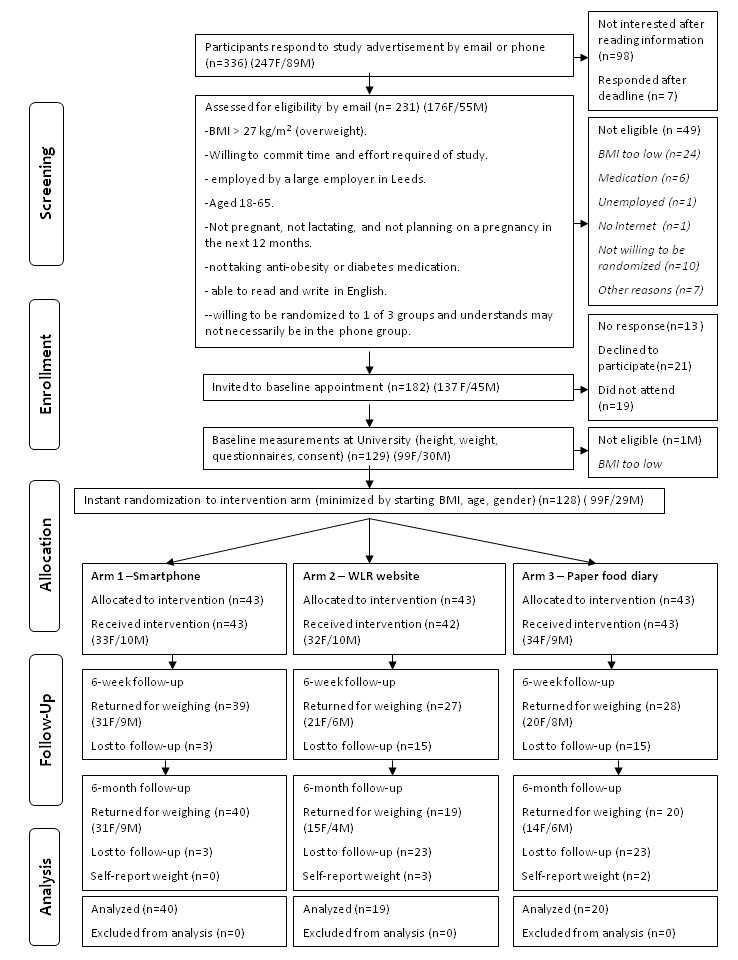
“In total, 128 people were randomly allocated to 1 of the 3 groups. These 128 represented 38.1% of those who had originally expressed an interest in taking part, and 70.3% of those who had been invited to take part who met the eligibility criteria.”
§ Adherence to a Smartphone Application for Weight Loss Compared to Website and Paper Diary: Pilot Randomized Controlled Trial > Results > Recruitment
plainn = 128- Asserted: passes — The authors put it forward as true.
- Checkable: passes — It can be checked against evidence.
- Load-bearing: fails — The paper’s conclusions may not depend on it.
- Based: passes — The paper gives a reason why it holds.
Probably not a substantial claim. The paper’s conclusions may not depend on it. It may state two separate claims as one.
A result the paper reports from its own data — it cites no other source for it, so there is none to check. The quote shows it is in the paper.
In the paper
“In an intention-to-treat analysis using baseline observation carried forward for missing data, mean weight change at 6 months was -4.6 kg (95% CI –6.2 to –3.0) in the smartphone app group, –2.9 kg (95% CI –4.7 to –1.1) in the diary group, and –1.3 kg (95% CI –2.7 to 0.1) in the website group.”
§ Adherence to a Smartphone Application for Weight Loss Compared to Website and Paper Diary: Pilot Randomized Controlled Trial > Abstract > Results
plain- Asserted: passes — The authors put it forward as true.
- Checkable: passes — It can be checked against evidence.
- Load-bearing: passes — The paper’s conclusions depend on it.
- Based: passes — The paper gives a reason why it holds.
It may state two separate claims as one.
A result the paper reports from its own data — it cites no other source for it, so there is none to check. The quote shows it is in the paper.
In the paper
“BMI change at 6 months was –1.6 kg/m2 (95% CI –2.2 to –1.1) in the smartphone group, –1.0 kg/m2 (95% CI –1.6 to –0.4) in the diary group, and –0.5 kg/m2 (95% CI –0.9 to 0.0) in the website group.”
§ Adherence to a Smartphone Application for Weight Loss Compared to Website and Paper Diary: Pilot Randomized Controlled Trial > Abstract > Results
plain- Asserted: passes — The authors put it forward as true.
- Checkable: passes — It can be checked against evidence.
- Load-bearing: passes — The paper’s conclusions depend on it.
- Based: passes — The paper gives a reason why it holds.
It may state two separate claims as one.
A result the paper reports from its own data — it cites no other source for it, so there is none to check. The quote shows it is in the paper.
In the paper
“Assuming baseline observation carried forward for those who did not return for follow-up at 6 months, 35/128 (27.3% of all participants randomized) achieved a clinically significant weight loss (≥5% of initial weight). This included 16/43 participants (37.2%) in the smartphone group, 12/43 (27.9%) participants in the diary group, and 7/42 (16.7%) participants in the website group.”
§ Adherence to a Smartphone Application for Weight Loss Compared to Website and Paper Diary: Pilot Randomized Controlled Trial > Results > Change in Anthropometric Measures
plainn = 43- Asserted: passes — The authors put it forward as true.
- Checkable: passes — It can be checked against evidence.
- Load-bearing: passes — The paper’s conclusions depend on it.
- Based: passes — The paper gives a reason why it holds.
It may state two separate claims as one.
A result the paper reports from its own data — it cites no other source for it, so there is none to check. The quote shows it is in the paper.
In the paper
“In terms of recruitment and response, we were able to recruit 128 participants to the pilot, which was 95% of the original recruitment target.”
§ Adherence to a Smartphone Application for Weight Loss Compared to Website and Paper Diary: Pilot Randomized Controlled Trial > Discussion > Recruitment and Response
plainn = 128- Asserted: passes — The authors put it forward as true.
- Checkable: passes — It can be checked against evidence.
- Load-bearing: fails — The paper’s conclusions may not depend on it.
- Based: passes — The paper gives a reason why it holds.
Probably not a substantial claim. The paper’s conclusions may not depend on it. It may state two separate claims as one.
A result the paper reports from its own data — it cites no other source for it, so there is none to check. The quote shows it is in the paper.
In the paper
“As is common to many weight loss trials, a large proportion of the sample (77%) were women and white (91%).”
§ Adherence to a Smartphone Application for Weight Loss Compared to Website and Paper Diary: Pilot Randomized Controlled Trial > Discussion > Recruitment and Response
plainn = 128- Asserted: passes — The authors put it forward as true.
- Checkable: passes — It can be checked against evidence.
- Load-bearing: fails — The paper’s conclusions may not depend on it.
- Based: passes — The paper gives a reason why it holds.
Probably not a substantial claim. The paper’s conclusions may not depend on it. It may state two separate claims as one.
A result the paper reports from its own data — it cites no other source for it, so there is none to check. The quote shows it is in the paper.
In the paper
“Change in body fat was –1.3% (95% CI –1.7 to –0.8) in the smartphone group, –0.9% (95% CI –1.5 to –0.4) in the diary group, and –0.5% (95% CI –0.9 to 0.0) in the website group.”
§ Adherence to a Smartphone Application for Weight Loss Compared to Website and Paper Diary: Pilot Randomized Controlled Trial > Abstract > Results
plain- Asserted: passes — The authors put it forward as true.
- Checkable: passes — It can be checked against evidence.
- Load-bearing: passes — The paper’s conclusions depend on it.
- Based: passes — The paper gives a reason why it holds.
It may state two separate claims as one.
A result the paper reports from its own data — it cites no other source for it, so there is none to check. The quote shows it is in the paper.
In the paper
“Of those screened, 49 (21.2%) were excluded for not meeting the inclusion criteria, and almost half (49.0%) were excluded because their self-reported BMI was less than 27 kg/m2.”
§ Adherence to a Smartphone Application for Weight Loss Compared to Website and Paper Diary: Pilot Randomized Controlled Trial > Results > Recruitment
plain- Asserted: passes — The authors put it forward as true.
- Checkable: passes — It can be checked against evidence.
- Load-bearing: fails — The paper’s conclusions may not depend on it.
- Based: passes — The paper gives a reason why it holds.
Probably not a substantial claim. The paper’s conclusions may not depend on it. It may state two separate claims as one.
A result the paper reports from its own data — it cites no other source for it, so there is none to check. The quote shows it is in the paper.
In the paper
“In the intention-to-treat analysis with baseline observation carried forward, change in BMI at 6 months was –1.6 kg/m2 (95% CI –2.2 to –1.1) in the smartphone group, –1.0 kg/m2 (95% CI –1.6 to –0.4) in the diary group, and –0.5 kg/m2 (95% CI –0.9 to 0.0).”
§ Adherence to a Smartphone Application for Weight Loss Compared to Website and Paper Diary: Pilot Randomized Controlled Trial > Results > Change in Anthropometric Measures
plainn = 128- Asserted: passes — The authors put it forward as true.
- Checkable: passes — It can be checked against evidence.
- Load-bearing: passes — The paper’s conclusions depend on it.
- Based: passes — The paper gives a reason why it holds.
It may state two separate claims as one.
A result the paper reports from its own data — it cites no other source for it, so there is none to check. The quote shows it is in the paper.
In the paper
“A similar trend in results was seen for BMI and BF.”
§ Adherence to a Smartphone Application for Weight Loss Compared to Website and Paper Diary: Pilot Randomized Controlled Trial > Results > Change in Anthropometric Measures
plain- Asserted: passes — The authors put it forward as true.
- Checkable: passes — It can be checked against evidence.
- Load-bearing: unclear — It is unclear whether the paper’s conclusions depend on it.
- Based: passes — The paper gives a reason why it holds.
The quote only partly states this claim.
A result the paper reports from its own data — it cites no other source for it, so there is none to check. The quote shows it is in the paper.
In the paper
“Most participants (83.6%) heard about the study from an electronic source, either by email (61.7%) or intranet (21.9%).”
§ Adherence to a Smartphone Application for Weight Loss Compared to Website and Paper Diary: Pilot Randomized Controlled Trial > Results > Recruitment
plainn = 128- Asserted: passes — The authors put it forward as true.
- Checkable: passes — It can be checked against evidence.
- Load-bearing: fails — The paper’s conclusions may not depend on it.
- Based: passes — The paper gives a reason why it holds.
Probably not a substantial claim. The paper’s conclusions may not depend on it.
A result the paper reports from its own data — it cites no other source for it, so there is none to check. The quote shows it is in the paper.
In the paper
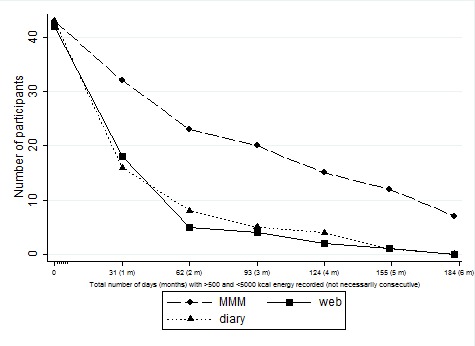
“Pairwise comparison showed that this difference lies between the smartphone group and the diary group (P<.001), between the smartphone group and the website group (P<.001), but not between the website group and the diary group (P=.14).”
§ Adherence to a Smartphone Application for Weight Loss Compared to Website and Paper Diary: Pilot Randomized Controlled Trial > Results > Frequency of Use of the Interventions
plain- Asserted: passes — The authors put it forward as true.
- Checkable: passes — It can be checked against evidence.
- Load-bearing: passes — The paper’s conclusions depend on it.
- Based: passes — The paper gives a reason why it holds.
It may state two separate claims as one.
A result the paper reports from its own data — it cites no other source for it, so there is none to check. The quote shows it is in the paper.
In the paper
“There were not found to be statistically significant differences in follow-up weight between the groups at 6 months (P=.63) or in difference in change over time (smartphone-diary, P=.99; smartphone-website, P=.40; diary-website, P=.47).”
§ Adherence to a Smartphone Application for Weight Loss Compared to Website and Paper Diary: Pilot Randomized Controlled Trial > Results > Change in Anthropometric Measures
plain- Asserted: passes — The authors put it forward as true.
- Checkable: passes — It can be checked against evidence.
- Load-bearing: passes — The paper’s conclusions depend on it.
- Based: passes — The paper gives a reason why it holds.
It may state two separate claims as one.
A result the paper reports from its own data — it cites no other source for it, so there is none to check. The quote shows it is in the paper.
In the paper
“Trial retention was 40/43 (93%) in the smartphone group, 19/42 (55%) in the website group, and 20/43 (53%) in the diary group at 6 months.”
§ Adherence to a Smartphone Application for Weight Loss Compared to Website and Paper Diary: Pilot Randomized Controlled Trial > Abstract > Results
plain- Asserted: passes — The authors put it forward as true.
- Checkable: passes — It can be checked against evidence.
- Load-bearing: passes — The paper’s conclusions depend on it.
- Based: passes — The paper gives a reason why it holds.
It may state two separate claims as one.
A result the paper reports from its own data — it cites no other source for it, so there is none to check. The quote shows it is in the paper.
In the paper
“In the intention-to-treat analysis using all of the participants assigned to their original group, the mean weight change was –4.6 kg (95% CI –6.2 to –3.0) in the smartphone group, –2.9 kg (95% CI –4.7 to –1.1) in the diary group, and –1.3 kg (95% CI –2.7 to 0.1) in the website group.”
§ Adherence to a Smartphone Application for Weight Loss Compared to Website and Paper Diary: Pilot Randomized Controlled Trial > Results > Change in Anthropometric Measures
plain- Asserted: passes — The authors put it forward as true.
- Checkable: passes — It can be checked against evidence.
- Load-bearing: passes — The paper’s conclusions depend on it.
- Based: passes — The paper gives a reason why it holds.
It may state two separate claims as one.
A result the paper reports from its own data — it cites no other source for it, so there is none to check. The quote shows it is in the paper.
In the paper
“Recruitment to the trial took 3 months between March and May 2011.”
§ Adherence to a Smartphone Application for Weight Loss Compared to Website and Paper Diary: Pilot Randomized Controlled Trial > Results > Recruitment
plain- Asserted: passes — The authors put it forward as true.
- Checkable: passes — It can be checked against evidence.
- Load-bearing: fails — The paper’s conclusions may not depend on it.
- Based: passes — The paper gives a reason why it holds.
Probably not a substantial claim. The paper’s conclusions may not depend on it.
A result the paper reports from its own data — it cites no other source for it, so there is none to check. The quote shows it is in the paper.
In the paper
“In fact, the smartphone group had extremely high retention with 93% returning for follow-up at 6 months (compared with 53% in the diary group and 55% in the website group).”
§ Adherence to a Smartphone Application for Weight Loss Compared to Website and Paper Diary: Pilot Randomized Controlled Trial > Discussion > Trial Retention
boosted- Asserted: passes — The authors put it forward as true.
- Checkable: passes — It can be checked against evidence.
- Load-bearing: passes — The paper’s conclusions depend on it.
- Based: passes — The paper gives a reason why it holds.
It may state two separate claims as one.
A result the paper reports from its own data — it cites no other source for it, so there is none to check. The quote shows it is in the paper.
In the paper
“One person allocated to the diary group reported that they had actually used a commercially available weight loss smartphone app during the trial rather than the paper diary. This person lost 32 kg overall; if they are excluded from the diary group analysis, the mean weight change in completers is –4.8 kg (95% CI –7.1 to –2.7).”
§ Adherence to a Smartphone Application for Weight Loss Compared to Website and Paper Diary: Pilot Randomized Controlled Trial > Results > Change in Anthropometric Measures
plain- Asserted: passes — The authors put it forward as true.
- Checkable: passes — It can be checked against evidence.
- Load-bearing: unclear — It is unclear whether the paper’s conclusions depend on it.
- Based: passes — The paper gives a reason why it holds.
It may state two separate claims as one.
A result the paper reports from its own data — it cites no other source for it, so there is none to check. The quote shows it is in the paper.
In the paper
“Change in BF was –1.3% (95% CI –1.7 to –0.8) in the smartphone group, –0.9% (95% CI –1.5 to –0.4) in the diary group, and –0.5% (95% CI –0.9 to 0.0) in the website group.”
§ Adherence to a Smartphone Application for Weight Loss Compared to Website and Paper Diary: Pilot Randomized Controlled Trial > Results > Change in Anthropometric Measures
plainn = 128- Asserted: passes — The authors put it forward as true.
- Checkable: passes — It can be checked against evidence.
- Load-bearing: passes — The paper’s conclusions depend on it.
- Based: passes — The paper gives a reason why it holds.
It may state two separate claims as one.
A result the paper reports from its own data — it cites no other source for it, so there is none to check. The quote shows it is in the paper.
In the paper
“The noncompleters in the trial were more likely to have a higher BMI at baseline and report poorer health status.”
§ Adherence to a Smartphone Application for Weight Loss Compared to Website and Paper Diary: Pilot Randomized Controlled Trial > Discussion > Trial Retention
plaincorrelational- Asserted: passes — The authors put it forward as true.
- Checkable: passes — It can be checked against evidence.
- Load-bearing: unclear — It is unclear whether the paper’s conclusions depend on it.
- Based: passes — The paper gives a reason why it holds.
It may state two separate claims as one.
A result the paper reports from its own data — it cites no other source for it, so there is none to check. The quote shows it is in the paper.
In the paper
“In all 3 groups, self-monitoring declined over time so that by 6 months only 7 participants (16% of the group) in the smartphone group had managed to record their dietary intake every day (no participants in the diary and Web group had done this).”
§ Adherence to a Smartphone Application for Weight Loss Compared to Website and Paper Diary: Pilot Randomized Controlled Trial > Discussion > Frequency of Usage of the Interventions
plaincorrelationaln = 7- Asserted: passes — The authors put it forward as true.
- Checkable: passes — It can be checked against evidence.
- Load-bearing: passes — The paper’s conclusions depend on it.
- Based: passes — The paper gives a reason why it holds.
It may state two separate claims as one.
A result the paper reports from its own data — it cites no other source for it, so there is none to check. The quote shows it is in the paper.
In the paper
“The MMM app was a prototype app and participants reported that they frequently encountered bugs that caused the app to close.”
§ Adherence to a Smartphone Application for Weight Loss Compared to Website and Paper Diary: Pilot Randomized Controlled Trial > Discussion > Limitations
plain- Asserted: passes — The authors put it forward as true.
- Checkable: passes — It can be checked against evidence.
- Load-bearing: passes — The paper’s conclusions depend on it.
- Based: passes — The paper gives a reason why it holds.
It may state two separate claims as one.
What the paper did — it cites no source for this, so there is none to check. The quote shows it is in the paper.
In the paper
“This was not a phase III trial; therefore, a formal sample size calculation was not appropriate and there are few published guidelines on recommended sample sizes for pilot trials. The trial aimed to recruit a sample size of 135, which was a pragmatic decision based partly on the amount of available study equipment.”
§ Adherence to a Smartphone Application for Weight Loss Compared to Website and Paper Diary: Pilot Randomized Controlled Trial > Methods > Sample Size Determination
plain- Asserted: passes — The authors put it forward as true.
- Checkable: passes — It can be checked against evidence.
- Load-bearing: unclear — It is unclear whether the paper’s conclusions depend on it.
- Based: passes — The paper gives a reason why it holds.
It may state two separate claims as one.
In the paper
“After measurements were taken, participants were randomized by a process of minimization using the Minim software package [31] to 1 of 3 groups. The minimization balanced equally at the medians on 3 factors: starting BMI, age, and gender.”
§ Adherence to a Smartphone Application for Weight Loss Compared to Website and Paper Diary: Pilot Randomized Controlled Trial > Methods > Procedure
What the sources say
- Not checked yetcites [31] EvansSRoystonPDaySMinim: allocation by minimisation in clinical trials2013-02-08http://www-users.york.ac.uk/~mb55/guide/minim.htm6EHn7EFx0
plain- Asserted: passes — The authors put it forward as true.
- Checkable: passes — It can be checked against evidence.
- Load-bearing: fails — The paper’s conclusions may not depend on it.
- Based: passes — The paper gives a reason why it holds.
Probably not a substantial claim. The paper’s conclusions may not depend on it. It may state two separate claims as one.
What the paper did — it cites no source for this, so there is none to check. The quote shows it is in the paper.
In the paper
“Fieldworkers carrying out measurements on participants were blinded to group assignment and participants were asked not to discuss their group allocation when measurements were taken.”
§ Adherence to a Smartphone Application for Weight Loss Compared to Website and Paper Diary: Pilot Randomized Controlled Trial > Methods > Procedure
plain- Asserted: passes — The authors put it forward as true.
- Checkable: passes — It can be checked against evidence.
- Load-bearing: fails — The paper’s conclusions may not depend on it.
- Based: passes — The paper gives a reason why it holds.
Probably not a substantial claim. The paper’s conclusions may not depend on it. It may state two separate claims as one.
What the paper did — it cites no source for this, so there is none to check. The quote shows it is in the paper.
In the paper
“There were no statistically significant differences found among the 3 intervention groups for the factors balanced at minimization: gender (P=.97), age (P=.82), and BMI (P=.74).”
§ Adherence to a Smartphone Application for Weight Loss Compared to Website and Paper Diary: Pilot Randomized Controlled Trial > Results > Baseline Characteristics
plainn = 128- Asserted: passes — The authors put it forward as true.
- Checkable: passes — It can be checked against evidence.
- Load-bearing: unclear — It is unclear whether the paper’s conclusions depend on it.
- Based: passes — The paper gives a reason why it holds.
It may state two separate claims as one.
What the paper did — it cites no source for this, so there is none to check. The quote shows it is in the paper.
In the paper
“As there is a proportion of missing data and unequal dropout, an intention-to-treat analysis was completed with baseline observations carried forward for missing data (Table 5).”
§ Adherence to a Smartphone Application for Weight Loss Compared to Website and Paper Diary: Pilot Randomized Controlled Trial > Results > Change in Anthropometric Measures
plain- Asserted: passes — The authors put it forward as true.
- Checkable: passes — It can be checked against evidence.
- Load-bearing: passes — The paper’s conclusions depend on it.
- Based: passes — The paper gives a reason why it holds.
Probably not a substantial claim. It may state two separate claims as one.
In the paper
“Current UK evidence-based obesity guidelines advocate a lifestyle change approach to treatment [23]; therefore, in-line with this, the key behavioral strategies of goal setting, self-monitoring, and feedback underpin the MMM app.”
§ Adherence to a Smartphone Application for Weight Loss Compared to Website and Paper Diary: Pilot Randomized Controlled Trial > Methods > Interventions
What the sources say
- Not checked yetcites [23] National Institute for Health and Clinical ExcellenceNational Collaborating Centre for Primary CareObesity: the prevention, identification, assessment and management of overweight and obesity in adults and children2006122013-02-08http://www.ncbi.nlm.nih.gov/books/NBK63696/pdf/TOC.pdf6EHmUsiDu
plain- Asserted: passes — The authors put it forward as true.
- Checkable: passes — It can be checked against evidence.
- Load-bearing: unclear — It is unclear whether the paper’s conclusions depend on it.
- Based: passes — The paper gives a reason why it holds.
It may state two separate claims as one.
In the paper
“Attrition is a serious difficulty in weight loss trials because of its potential to bias results [35].”
§ Adherence to a Smartphone Application for Weight Loss Compared to Website and Paper Diary: Pilot Randomized Controlled Trial > Discussion > Trial Retention
What the sources say
- Not checked yetcites [35] source
plainconditional- Asserted: passes — The authors put it forward as true.
- Checkable: passes — It can be checked against evidence.
- Load-bearing: fails — The paper’s conclusions may not depend on it.
- Based: passes — The paper gives a reason why it holds.
Probably not a substantial claim. The paper’s conclusions may not depend on it.
What the paper did — it cites no source for this, so there is none to check. The quote shows it is in the paper.
In the paper
“Trial dropout was statistically significantly different among the groups (P=.001) with 3 people not attending 6-month follow-up in the smartphone group compared with 23 people not attending 6-month follow-up in the diary group and 23 people not attending 6-month follow-up in the website group.”
§ Adherence to a Smartphone Application for Weight Loss Compared to Website and Paper Diary: Pilot Randomized Controlled Trial > Results > Adherence to the Trial
plaincorrelationaln = 23 ·- Asserted: passes — The authors put it forward as true.
- Checkable: passes — It can be checked against evidence.
- Load-bearing: passes — The paper’s conclusions depend on it.
- Based: passes — The paper gives a reason why it holds.
It may state two separate claims as one.
What the paper did — it cites no source for this, so there is none to check. The quote shows it is in the paper.
In the paper
“Most analyses are descriptive because this was a pilot trial and not powered to detect weight change.”
§ Adherence to a Smartphone Application for Weight Loss Compared to Website and Paper Diary: Pilot Randomized Controlled Trial > Methods > Statistical Analysis
plain- Asserted: passes — The authors put it forward as true.
- Checkable: passes — It can be checked against evidence.
- Load-bearing: passes — The paper’s conclusions depend on it.
- Based: passes — The paper gives a reason why it holds.
Probably not a substantial claim. It may state two separate claims as one.
What the paper did — it cites no source for this, so there is none to check. The quote shows it is in the paper.
In the paper
“Two analyses were conducted because there was a proportion of missing data and unequal dropout between groups: an intention-to-treat analysis in which all are included but using baseline weight carried forward for missing data, and an analysis in just those who completed 6-month follow-up.”
§ Adherence to a Smartphone Application for Weight Loss Compared to Website and Paper Diary: Pilot Randomized Controlled Trial > Methods > Statistical Analysis
plain- Asserted: passes — The authors put it forward as true.
- Checkable: passes — It can be checked against evidence.
- Load-bearing: fails — The paper’s conclusions may not depend on it.
- Based: passes — The paper gives a reason why it holds.
Probably not a substantial claim. The paper’s conclusions may not depend on it. It may state two separate claims as one.
A conclusion the paper draws from its own results — it cites no other source for it, so there is none to check. The quote shows it is in the paper.
In the paper
“The MMM app is an acceptable and feasible weight loss intervention and a full RCT of this approach is warranted.”
§ Adherence to a Smartphone Application for Weight Loss Compared to Website and Paper Diary: Pilot Randomized Controlled Trial > Abstract > Conclusions
plain- Asserted: passes — The authors put it forward as true.
- Checkable: passes — It can be checked against evidence.
- Load-bearing: passes — The paper’s conclusions depend on it.
- Based: passes — The paper gives a reason why it holds.
It may state two separate claims as one.
In the paper
“A large community-based survey showed that individuals desire alternatives to face-to-face weight loss treatments and, if given the choice, some would be interested in engaging with minimal contact weight management programs [5].”
§ Adherence to a Smartphone Application for Weight Loss Compared to Website and Paper Diary: Pilot Randomized Controlled Trial > Introduction
What the sources say
- Not checked yetcites [5] Sherwood, NE, 1998, Am J Health Promot source
hedged- Asserted: passes — The authors put it forward as true.
- Checkable: passes — It can be checked against evidence.
- Load-bearing: fails — The paper’s conclusions may not depend on it.
- Based: passes — The paper gives a reason why it holds.
Probably not a substantial claim. The paper’s conclusions may not depend on it. It may state two separate claims as one.
In the paper
“The diet measures captured on MMM have been found to correlate well with a reference measure of diet [24].”
§ Adherence to a Smartphone Application for Weight Loss Compared to Website and Paper Diary: Pilot Randomized Controlled Trial > Methods > Interventions
What the sources say
- Not checked yetcites [24] source
boostedcorrelational- Asserted: passes — The authors put it forward as true.
- Checkable: passes — It can be checked against evidence.
- Load-bearing: fails — The paper’s conclusions may not depend on it.
- Based: passes — The paper gives a reason why it holds.
Probably not a substantial claim. The paper’s conclusions may not depend on it.
A conclusion the paper draws from its own results — it cites no other source for it, so there is none to check. The quote shows it is in the paper.
In the paper
“This pilot trial has shown the MMM app to be a feasible and acceptable weight loss intervention.”
- Also stated in: § Conclusion · boosted
“This pilot trial of a smartphone app for weight loss has shown that it is both an acceptable and feasible intervention.”
§ Adherence to a Smartphone Application for Weight Loss Compared to Website and Paper Diary: Pilot Randomized Controlled Trial > Discussion
boosted- Asserted: passes — The authors put it forward as true.
- Checkable: passes — It can be checked against evidence.
- Load-bearing: passes — The paper’s conclusions depend on it.
- Based: passes — The paper gives a reason why it holds.
It may state two separate claims as one.
- Also stated in: § Conclusion · boosted
In the paper
“Mobile phones, in particular, are an intuitively appealing intervention platform given that they are ubiquitous, engaging, and portable [6].”
§ Adherence to a Smartphone Application for Weight Loss Compared to Website and Paper Diary: Pilot Randomized Controlled Trial > Introduction
What the sources say
- Not checked yetcites [6] source
plain- Asserted: passes — The authors put it forward as true.
- Checkable: fails — It may be too vague to check against evidence.
- Load-bearing: fails — The paper’s conclusions may not depend on it.
- Based: passes — The paper gives a reason why it holds.
Probably not a substantial claim. It may be too vague to check against evidence. The paper’s conclusions may not depend on it.
What the paper did — it cites no source for this, so there is none to check. The quote shows it is in the paper.
In the paper
“This pilot trial has several strengths including its randomized design.”
§ Adherence to a Smartphone Application for Weight Loss Compared to Website and Paper Diary: Pilot Randomized Controlled Trial > Discussion > Strengths
plain- Asserted: passes — The authors put it forward as true.
- Checkable: passes — It can be checked against evidence.
- Load-bearing: passes — The paper’s conclusions depend on it.
- Based: passes — The paper gives a reason why it holds.
Probably not a substantial claim.
A conclusion the paper draws from its own results — it cites no other source for it, so there is none to check. The quote shows it is in the paper.
In the paper
“The degree of contamination seen in the trial is a serious issue and has implications for the design of a definitive RCT.”
§ Adherence to a Smartphone Application for Weight Loss Compared to Website and Paper Diary: Pilot Randomized Controlled Trial > Discussion > Limitations
plainn = 20- Asserted: passes — The authors put it forward as true.
- Checkable: passes — It can be checked against evidence.
- Load-bearing: passes — The paper’s conclusions depend on it.
- Based: passes — The paper gives a reason why it holds.
It may state two separate claims as one.
A conclusion the paper draws from its own results — it cites no other source for it, so there is none to check. The quote shows it is in the paper.
In the paper
“Another strength of the trial is the up-to-date app for tracking diet and physical activity which is comparable in appearance and functionality to commercial diet tracking apps.”
§ Adherence to a Smartphone Application for Weight Loss Compared to Website and Paper Diary: Pilot Randomized Controlled Trial > Discussion > Strengths
plain- Asserted: passes — The authors put it forward as true.
- Checkable: passes — It can be checked against evidence.
- Load-bearing: fails — The paper’s conclusions may not depend on it.
- Based: fails — The paper may give no reason why it holds.
Probably not a substantial claim. The paper’s conclusions may not depend on it. The paper may give no reason why it holds. It may state two separate claims as one.
A conclusion the paper draws from its own results — it cites no other source for it, so there is none to check. The quote shows it is in the paper.
In the paper
“Unequal dropout is a potential source of bias in a large RCT so this will need to be considered for the full trial.”
§ Adherence to a Smartphone Application for Weight Loss Compared to Website and Paper Diary: Pilot Randomized Controlled Trial > Discussion > Trial Retention
hedgedconditional- Asserted: passes — The authors put it forward as true.
- Checkable: passes — It can be checked against evidence.
- Load-bearing: passes — The paper’s conclusions depend on it.
- Based: passes — The paper gives a reason why it holds.
Probably not a substantial claim.
The paper relies on this without support.
Smartphone apps are likely to be used as a stand-alone intervention rather than as an adjunct to another intervention.
“A trial of this type is necessary because smartphone apps are readily available to the public to download and likely to be used as a stand-alone intervention rather than as an adjunct to another intervention (such as podcasts or face-to-face advice).”
The paper relies on this without support.
Commercial diet tracking apps have not been comprehensively evaluated to date.
“Despite their apparent popularity, these commercial apps have not been comprehensively evaluated to date.”
The paper relies on this without support.
There have been no large RCTs of smartphone apps for weight loss.
“To our knowledge, there have been no large RCTs of smartphone apps for weight loss and this pilot trial provides valuable data that could be used to inform such a trial.”
Claims other papers make about this one
Each is checked against this paper’s own text: does it say what the citing paper says it does?
The cited source says what the claim attributes to it.
In the citing paper
“Electronic self-monitoring tools, as compared to paper-and-pencil tracking, have produced increased adherence to self-monitoring within BWL”
From Associations Between Self-Monitoring and Weight Change in Behavioral Weight Loss Interventions (2019) · cites this paper as Carter, Burley, Nykjaer, & Cade, 2013
In the citing paper
“One pilot trial recently demonstrated that adherence to diet self-monitoring is higher among patients using a smartphone app compared to patients using a paper diary (13).”
From Effectiveness of a Smartphone Application for Weight Loss Compared With Usual Care in Overweight Primary Care Patients: A Randomized, Controlled Trial (2014) · cites this paper as [13]
In the citing paper
“Brief, daily or weekly feedback and encouragement could also boost usage and self-efficacy in dieting (13).”
From Effectiveness of a Smartphone Application for Weight Loss Compared With Usual Care in Overweight Primary Care Patients: A Randomized, Controlled Trial (2014) · cites this paper as [13]
In the citing paper
“This contrasts with previous research revealing positive usage and views of app-based self-monitoring interventions [16,17,44]”
From Understanding Usage of a Hybrid Website and Smartphone App for Weight Management: A Mixed-Methods Study (2014) · cites this paper as [17]
In the citing paper
“Previous examinations of hybrid interventions designed to promote self-monitoring of behavior have reported that app-based delivery was associated with better adherence to self-monitoring compared to Web-based formats [17,44].”
From Understanding Usage of a Hybrid Website and Smartphone App for Weight Management: A Mixed-Methods Study (2014) · cites this paper as [17]
In the citing paper
“Unlike the interventions provided by Carter et al [17] and Kirwan et al [44], self-monitoring was not the only technique promoted by the POWeR intervention.”
From Understanding Usage of a Hybrid Website and Smartphone App for Weight Management: A Mixed-Methods Study (2014) · cites this paper as [17]
Self-check
Percentages, sums and reported differences re-computed from the paper’s own numbers.
Each contradiction between two passages listed here was confirmed by an independent check.
Rated major: it would touch a result — a value a result rests on, reported and recomputed p-values on opposite sides of the significance level, two passages that conflict with no sign which is right, or a cited work retracted before this paper was published.
In the paper
“20/43 (53%) in the diary group”
§ Adherence to a Smartphone Application for Weight Loss Compared to Website and Paper Diary: Pilot Randomized Controlled Trial > Abstract > Results
Reported 53 · recomputed 46.511628
Rated major: it would touch a result — a value a result rests on, reported and recomputed p-values on opposite sides of the significance level, two passages that conflict with no sign which is right, or a cited work retracted before this paper was published.
In the paper
“19/42 (55%) in the website group”
§ Adherence to a Smartphone Application for Weight Loss Compared to Website and Paper Diary: Pilot Randomized Controlled Trial > Abstract > Results
Reported 55 · recomputed 45.238095
Rated minor: it would not touch a result — a value no result rests on, a p-value that stays on the same side of the significance level, or a conflict that is clerical, resolved elsewhere in the paper, or outside its own findings.
In the paper
§ Adherence to a Smartphone Application for Weight Loss Compared to Website and Paper Diary: Pilot Randomized Controlled Trial > Results > Adherence to the Trial
“| Weight (kg), mean (SD) | 96.4 (16.0) | 97.9 (18.7) | 96.4 (19.9) |”
§ Adherence to a Smartphone Application for Weight Loss Compared to Website and Paper Diary: Pilot Randomized Controlled Trial > Results > Change in Anthropometric Measures
“| | Baseline | 43 | 96.8 (91.9-101.8) | 43 | 97.9 (92.2-103.6) | 42 | 96.4 (90.2-102.6) | |”
Rated minor: it would not touch a result — a value no result rests on, a p-value that stays on the same side of the significance level, or a conflict that is clerical, resolved elsewhere in the paper, or outside its own findings.
In the paper
§ Adherence to a Smartphone Application for Weight Loss Compared to Website and Paper Diary: Pilot Randomized Controlled Trial > Results > Adherence to the Trial
“94 (73.4%) people returned for 6-week follow-up measurements”
§ Adherence to a Smartphone Application for Weight Loss Compared to Website and Paper Diary: Pilot Randomized Controlled Trial > Results > Change in Anthropometric Measures
“Table: Table 6 Change in recorded anthropometric measures at 6 weeks (n=95) and 6 months (n=79) for trial completers.”
Rated minor: it would not touch a result — a value no result rests on, a p-value that stays on the same side of the significance level, or a conflict that is clerical, resolved elsewhere in the paper, or outside its own findings.
In the paper
§ Adherence to a Smartphone Application for Weight Loss Compared to Website and Paper Diary: Pilot Randomized Controlled Trial > Results > Frequency of Use of the Interventions
“and 6 months (P=.001).”
§ Adherence to a Smartphone Application for Weight Loss Compared to Website and Paper Diary: Pilot Randomized Controlled Trial > Results > Change in Anthropometric Measures
“| 6 months (184 days), median (IQR) | 82 (28-172) | 18 (0-37) | 15 (7-45) | <.001 |”
Rated minor: it would not touch a result — a value no result rests on, a p-value that stays on the same side of the significance level, or a conflict that is clerical, resolved elsewhere in the paper, or outside its own findings.
In the paper
“| Completing 0 days/not returningpaper diary, n (%) | 1 (2) | 31 (78) | 3(7) | |”
§ Adherence to a Smartphone Application for Weight Loss Compared to Website and Paper Diary: Pilot Randomized Controlled Trial > Results > Change in Anthropometric Measures
Reported 78 · recomputed 72.093023
Rated minor: it would not touch a result — a value no result rests on, a p-value that stays on the same side of the significance level, or a conflict that is clerical, resolved elsewhere in the paper, or outside its own findings.
In the paper
§ Adherence to a Smartphone Application for Weight Loss Compared to Website and Paper Diary: Pilot Randomized Controlled Trial > Results > Frequency of Use of the Interventions
“among the groups at 6 weeks (P<.001)”
§ Adherence to a Smartphone Application for Weight Loss Compared to Website and Paper Diary: Pilot Randomized Controlled Trial > Results > Change in Anthropometric Measures
“| 6 weeks (42 days), median (IQR) | 36 (21-42) | 29 (0-38) | 15 (6-33) | .004 |”
Rated minor: it would not touch a result — a value no result rests on, a p-value that stays on the same side of the significance level, or a conflict that is clerical, resolved elsewhere in the paper, or outside its own findings.
In the paper
§ Adherence to a Smartphone Application for Weight Loss Compared to Website and Paper Diary: Pilot Randomized Controlled Trial > Results > Change in Anthropometric Measures
“weight change over time was statistically significantly greater in the smartphone group compared to the website group”
§ Adherence to a Smartphone Application for Weight Loss Compared to Website and Paper Diary: Pilot Randomized Controlled Trial > Results > Change in Anthropometric Measures
“(–3.3 kg, 95% CI –5.4 to 1.2)”
Citations
Cites
International physical activity questionnaire: 12-country reliability and validity
CRAIG, C. L., MARSHALL, A. L., SJ??STR??M, M., BAUMAN, A. E., BOOTH, M. L., AINSWORTH, B. E., PRATT, M., EKELUND, U., YNGVE, A., SALLIS, J. F., et al. (2003) · Medicine & Science in Sports & Exercise · doi:10.1249/01.mss.0000078924.61453.fb · Cited by 21,619
CONSORT 2010 Statement: updated guidelines for reporting parallel group randomised trials
the CONSORT Group, Schulz, K. F., Altman, D. G., & Moher, D. (2010) · BMC Medicine · doi:10.1186/1741-7015-8-18 · Cited by 13,371
Practical Statistics for Medical Research.
Walter, S., & Altman, D. G. (1992) · Biometrics · doi:10.2307/2532320 · Cited by 11,666
Practical Statistics for Medical Research
Altman, D. G. (1990) · doi:10.1201/9780429258589 · Cited by 10,668
CONSORT 2010 Statement: updated guidelines for reporting parallel group randomised trials
Schulz, K. F., Altman, D. G., Moher, D., & for the CONSORT Group (2010) · BMJ · doi:10.1136/bmj.c332 · Cited by 9,329
The three-factor eating questionnaire to measure dietary restraint, disinhibition and hunger
Stunkard, A. J., & Messick, S. (1985) · Journal of Psychosomatic Research · doi:10.1016/0022-3999(85)90010-8 · Cited by 4,687
The international personality item pool and the future of public-domain personality measures
Goldberg, L. R., Johnson, J. A., Eber, H. W., Hogan, R., Ashton, M. C., Cloninger, C. R., & Gough, H. G. (2006) · Journal of Research in Personality · doi:10.1016/j.jrp.2005.08.007 · Cited by 3,185
Fuller, N. R., Colagiuri, S., SCHOFIELD, D. J., Olson, A. D., Shrestha, R. N., Holzapfel, C., Wolfenstetter, S. B., Holle, R., Ahern, A. L., Hauner, H., et al. (2012) · International Journal of Obesity · doi:10.1038/ijo.2012.139 · Cited by 2,127
Eysenbach, G., & CONSORT-EHEALTH Group (2011) · Journal of Medical Internet Research · doi:10.2196/jmir.1923 · Cited by 1,863 · cited 1×
“gov NCT01744535) and reported in accordance with the CONSORT-EHEALTH checklist [33].”
MethodThe consideration of future consequences: Weighing immediate and distant outcomes of behavior.
Strathman, A., Gleicher, F., Boninger, D. S., & Edwards, C. S. (1994) · Journal of Personality and Social Psychology · doi:10.1037/0022-3514.66.4.742 · Cited by 1,782
Self-monitoring in weight loss: a systematic review of the literature
Burke, L. E., Wang, J., & Sevick, M. A. (2011) · Journal of the American Dietetic Association · doi:10.1016/j.jada.2010.10.008 · Cited by 1,203 · cited 1×
“Adherence to self-monitoring is an important process outcome because it has been consistently linked to weight loss [39].”
BackgroundConsolvo, S., McDonald, D. W., Toscos, T., Chen, M. Y., Froehlich, J. E., Harrison, B. L., Klasnja, P., LaMarca, A., LeGrand, L., Libby, R., et al. (2008) · CHI Conference on Human Factors in Computing Systems · doi:10.1145/1357054.1357335 · Cited by 1,133
CONSORT 2010 statement: Updated guidelines for reporting parallel group randomised trials
Schulz, K. F., Altman, D. G., & Moher, D. (2011) · International Journal of Surgery · doi:10.1016/j.ijsu.2011.09.004 · Cited by 1,044
Healthcare in the pocket: Mapping the space of mobile-phone health interventions
Klasnja, P., & Pratt, W. (2012) · Journal of Biomedical Informatics · doi:10.1016/j.jbi.2011.08.017 · Cited by 970
Foresight. Tackling obesities: future choices. Project report.
Butland, B. K., Jebb, S. A., Kopelman, P., McPherson, K., Thomas, S., Mardell, J., & Parry, V. G. (2007) · Cited by 832
A Text Message–Based Intervention for Weight Loss: Randomized Controlled Trial
Patrick, K., Raab, F., Adams, M. A., Dillon, L., Zabinski, M., Rock, C. L., Griswold, W. G., & Norman, G. J. (2009) · Journal of Medical Internet Research · doi:10.2196/jmir.1100 · Cited by 671
Douketis, J. D., Macie, C., Thabane, L., & Williamson, D. F. (2005) · International Journal of Obesity · doi:10.1038/sj.ijo.0802982 · Cited by 665
Hurling, R., Catt, M., De Boni, M., Fairley, B. W., Hurst, T., Murray, P., Richardson, A., & Sodhi, J. S. (2007) · Journal of Medical Internet Research · doi:10.2196/jmir.9.2.e7 · Cited by 536
Neve, M., Morgan, P. J., Jones, P. R., & Collins, C. E. (2010) · Obesity Reviews · doi:10.1111/j.1467-789x.2009.00646.x · Cited by 459
Jolly, K., Lewis, A., Beach, J., Denley, J., Adab, P., Deeks, J. J., Daley, A., & Aveyard, P. (2011) · BMJ · doi:10.1136/bmj.d6500 · Cited by 359
Burke, L. E., Conroy, M. B., Sereika, S. M., Elci, O. U., Styn, M. A., Acharya, S. D., Sevick, M. A., Ewing, L. J., & Glanz, K. (2011) · Obesity · doi:10.1038/oby.2010.208 · Cited by 329
Truby, H., Baic, S., deLooy, A., Fox, K. R., Livingstone, M. B. E., Logan, C. M., Macdonald, I. A., Morgan, L. M., Taylor, M. A., & Millward, D. J. (2006) · BMJ · doi:10.1136/bmj.38833.411204.80 · Cited by 284
Weight loss by mobile phone: a 1-year effectiveness study
Haapala, I., Barengo, N. C., Biggs, S., Surakka, L., & Manninen, P. (2009) · Public Health Nutrition · doi:10.1017/s1368980009005230 · Cited by 280
Tsai, C. C., Lee, G., Raab, F., Norman, G. J., Sohn, T. Y., Griswold, W. G., & Patrick, K. (2007) · Mobile Networks and Applications · doi:10.1007/s11036-007-0014-4 · Cited by 267
Turner-McGrievy, G., & Tate, D. (2011) · Journal of Medical Internet Research · doi:10.2196/jmir.1841 · Cited by 263
MobileMums: A Randomized Controlled Trial of an SMS-Based Physical Activity Intervention
Fjeldsoe, B. S., Miller, Y. D., & Marshall, A. L. (2010) · Annals of Behavioral Medicine · doi:10.1007/s12160-010-9170-z · Cited by 244
Emotion rating from short blog texts
Gill, A. J., Gergle, D., French, R. M., & Oberlander, J. (2008) · CHI Conference on Human Factors in Computing Systems · doi:10.1145/1357054.1357229 · Cited by 232
Interpreting Incomplete Data in Studies of Diet and Weight Loss
Ware, J. H. (2003) · New England Journal of Medicine · doi:10.1056/nejme030054 · Cited by 205
Joo, N.-S., & Kim, B.-T. (2007) · Journal of Telemedicine and Telecare · doi:10.1258/135763307783064331 · Cited by 161
Text4Diet: A randomized controlled study using text messaging for weight loss behaviors
Shapiro, J. R., Koro, T., Doran, N., Thompson, S., Sallis, J. F., Calfas, K., & Patrick, K. (2012) · Preventive Medicine · doi:10.1016/j.ypmed.2012.08.011 · Cited by 151
Carter, M. C., Burley, V. J., Nykjaer, C., & Cade, J. E. (2013) · British Journal of Nutrition · doi:10.1017/s0007114512001353 · Cited by 144
Self-citationTurner-McGrievy, G. M., Campbell, M. K., Tate, D. F., Truesdale, K. P., Bowling, J. M., & Crosby, L. (2009) · American Journal of Preventive Medicine · doi:10.1016/j.amepre.2009.06.010 · Cited by 112
Evaluation of a mobile phone-based diet game for weight control
Lee, W., Chae, Y. M., Kim, S., Ho, S. H., & Choi, I. (2010) · Journal of Telemedicine and Telecare · doi:10.1258/jtt.2010.090913 · Cited by 92
Yon, B. A., Johnson, R. K., Harvey‐Berino, J., & Gold, B. C. (2006) · Journal of the American Dietetic Association · doi:10.1016/j.jada.2006.05.004 · Cited by 91
Consumer Preferences in Format and Type of Community-Based Weight Control Programs
Sherwood, N. E., Morton, N., Jeffery, R. W., French, S. A., Neumark-Sztainer, D., & Falkner, N. H. (1998) · American Journal of Health Promotion · doi:10.4278/0890-1171-13.1.12 · Cited by 86
Empowering Citizens for Well-being and Chronic Disease Management With Wellness Diary
Mattila, E., Korhonen, I., Salminen, J. H., Ahtinen, A., Koskinen, E., Sarela, A., Parkka, J., & Lappalainen, R. (2010) · IEEE Transactions on Information Technology in Biomedicine · doi:10.1109/titb.2009.2037751 · Cited by 86
Obesity: Mechanisms and Clinical Management
Kennel, K. A. (2004) · Mayo Clinic Proceedings · doi:10.4065/79.2.280-d · Cited by 75
Use of a mobile phone diary for observing weight management and related behaviours
Mattila, E., Lappalainen, R. I., Pärkkä, J., Salminen, J., & Korhonen, I. (2010) · Journal of Telemedicine and Telecare · doi:10.1258/jtt.2009.091103 · Cited by 47
Tsai, C. C., Lee, G., Raab, F., Norman, G. J., Sohn, T. Y., Griswold, W. G., & Patrick, K. (2006) · doi:10.1109/pcthealth.2006.361659 · Cited by 13
Research works printed but not linked: 3
- National Institute for Health and Clinical ExcellenceNational Collaborating Centre for Primary CareObesity: the prevention, identification, assessment and management of overweight and obesity in adults and children2006122013-02-08http://www.ncbi.nlm.nih.gov/books/NBK63696/pdf/TOC.pdf6EHmUsiDu
- Kellow, J, 2011, Calorie, Carb & Fat Bible
- 10.1038/oby.2010.208 · DOI · Paper page
Cited by
Sorted by citations
Perski, O., Blandford, A., West, R., & Michie, S. (2017) · Translational Behavioral Medicine · doi:10.1007/s13142-016-0453-1 · Cited by 1,193
The Rise of Consumer Health Wearables: Promises and Barriers
Piwek, L., Ellis, D. A., Andrews, S., & Joinson, A. (2016) · PLoS Medicine · doi:10.1371/journal.pmed.1001953 · Cited by 1,301
Smartphones for smarter delivery of mental health programs: A systematic review
Donker, T., Petrie, K., Proudfoot, J., Clarke, J., Birch, M.-R., & Christensen, H. (2013) · Journal of Medical Internet Research · doi:10.2196/jmir.2791 · Cited by 1,136
“Advantages of mHealth include the improvement of treatment accessibility and participant retention, real-time symptom and activity monitoring and tracking of treatment progress through ecological momentary assessment (EMA), provision of personalized feedback and motivational support, portability and flexibility of use…”
BackgroundGill, S., & Panda, S. (2015) · Cell Metabolism · doi:10.1016/j.cmet.2015.09.005 · Cited by 894
Can Mobile Phone Apps Influence People’s Health Behavior Change? An Evidence Review
Zhao, J., Freeman, B., & Li, M. (2016) · Journal of Medical Internet Research · doi:10.2196/jmir.5692 · Cited by 618
“A total of 10 studies were at low risk of attrition bias [9-11,31,35,36,38,42,43,45].”
BackgroundMethodInfluential
Metadata
- Authors
- Carter, M. C., Burley, V. J., Nykjaer, C., & Cade, J. E.
- Affiliations
- University of Leeds (GB)
- Corresponding author
- Carter, Michelle Clare
- Venue
- Journal of Medical Internet Research
- Publisher
- JMIR Publications Inc.
- Published
- 2013-04-15
- Volume
- 15
- Issue
- 4
- Pages
- e32
- ISSN
- 1438-8871 (ISSN-L)
- PMC
- PMC3636323
- OpenAlex
- W2016679476
- Cited by
- 666
- References
- 40
- Citations by year
- 2026: 20 · 2025: 19 · 2024: 29 · 2023: 30 · 2022: 53 · 2021: 36 · 2020: 66 · 2019: 72 · 2018: 63 · 2017: 76 · 2016: 85 · 2015: 71 · 2014: 40 · 2013: 6
- FWCI
- 121.96
- Type
- journal article
- Language
- en
- Open access
- gold
- doi.org
- Licence
- public-domain
- Locations
- Journal of Medical Internet Research (publishedVersion, public-domain)
- Europe PMC (PubMed Central) (publishedVersion, cc-by)
- PubMed Central (publishedVersion, cc-by)
- PubMed (publishedVersion)
- DOAJ (DOAJ: Directory of Open Access Journals) (submittedVersion, cc-by-sa)
- Topics
- Health Sciences › Health Professions › General Health Professions › Mobile Health and mHealth Applications
- Social Sciences › Psychology › Applied Psychology › Digital Mental Health Interventions
- Physical Sciences › Computer Science › Information Systems › Mobile Learning in Education
- Keywords
- mobile application, weight loss, obesity, self-monitoring, dietary self-monitoring, paper diaries, intervention adherence, acceptability, feasibility, weight management, goal setting, overweight adults, trial retention, weight change, physical activity, self-guided intervention, information and communication technologies
- MeSH terms
- Adult, Female, Humans, Male, Middle Aged, Obesity, Patient Acceptance of Health Care, Patient Compliance, Pilot Projects, Diet Records, Telemedicine, Internet, Cell Phone, Weight Reduction Programs, Mobile Applications
About these checks
Registry, retraction, Cites and statistics results are computed, not judged, with one exception: a printed reference that no index lists is read once by a model before it counts as a citation error. Claims are extracted by a model and kept only when their quote appears verbatim in the text; each cited source is then checked, with a model’s help, for whether it says what the claim relies on. Those verdicts can be wrong — read the claim’s quote and the cited source before relying on one.
A language model drew the claims from the paper on 2026-10-10, under version 3 of the claim definition (model deepseek-v4.1-flash, prompt extract-v3).
A second model labelled each claim on 2026-10-10 (model jev-1.13-20260917, definition revision gold-guideline-v0.2).
Statistics and arithmetic are recomputed, not judged.
Confidence bands are shown only for fields calibrated on our annotated test set. None is calibrated yet, so no band is shown.
What counts as a claim ›How we measure confidence ›How we check this ›
Are you an author, or do you see a problem with this page? Request a review
