

Reconsolidation Behavioral Updating of Human Emotional Memory: A Comprehensive Review and Unified Analysis to Identify the Causes of Replication Failures, the Role of Prediction Error, and Optimal Clinical Translation
Open accessPublished version of a preprint
The DOI matches its Crossref record; 191 of the 192 references it cites were found in a registry or an index, and 1 are not checked yet; none of the 366 sources its claims cite is checked for support yet.
Abstract
Memory reconsolidation (MR) has been recruited via behavioral updating procedures to achieve full annulment of a human emotional memory in over 20 studies since first reported in 2010. However, at least 14 studies have reported non-replication, the cause(s) of which have remained unclear despite extensive speculation and experimental investigation. This review examines 20 successful and 14 unsuccessful studies in detail, in an attempt to identify (a) the specific probable causes of non-replication, (b) the role of prediction error (PE), and (c) optimal clinical translation. A set of criteria is defined for principled identification of specific moments of PE and of latent cause transition in experimental procedures. Applying these criteria, a failure to induce PE is identified in every non-replication study, in most cases due to a previously overlooked element of experimental procedure. For each non-replication study, I identify a simple change of procedure that is predicted to produce PE and result in successful replication. The emerging, advanced account of PE phenomenology explains how MR produces a wide range of experimental observations, including the success of both retrieval-extinction and extinction-retrieval in driving behavioral updating. A well-defined process of unlearning and annulment of emotional memory emerges from the 20 successful studies, and the clinical translation of this potent process is illustrated by a real psychotherapy case. Lastly, this review’s compendium of empirical findings is applied to evaluating previously proposed frameworks of memory reconsolidation in psychotherapy, exposing significant departures from scientific fidelity.
Checked 2026-11-28 · 1 reference not checked yet
Overview
CoChat Summary
TL;DR
This review argues that human emotional memory can be fully annulled through behavioral updating when procedures create three invariant experiences—reactivated target memory, prediction error (PE), and counter-learning—collectively termed the EIPA. It proposes that all 14 non-replications failed because no PE was created, often due to how the transition to the 10-min break was communicated, and outlines clinical translation.
Key findings
- Across 20 successful human behavioral annulment studies (Table 1), concrete procedures varied widely, but each produced the same three experiences: target memory in a reactivated state, a PE experience during reactivation, and a counter-learning experience contradicting the target memory’s knowledge/expectations; the review names this set the EIPA.
- Of 34 reviewed studies, 14 failed to replicate annulment (Table 2). The review concludes absence of PE is the probable cause in all: 13 of 14 non-replications used partial reinforcement, and in 11 of those 13 subjects were probably or definitely led to view the 10-min period as a “break” outside the study, inducing a latent-cause change and preventing PE; one 100% reinforcement study had a too-weak mismatch, and one had a too-long reactivation mismatch inducing a new latent cause.
- Annulment was prompt and long-lasting, with persistence shown out to 18 months in some studies; one study found fear could return before, but not after, one period of sleep. A clinical case describes a woman in her 50s whose long-term depression and sexual aversion lifted after the schema “The rest of my life as a woman is ruined. I’ll never marry. I’ll never have children” was disconfirmed and nullified, with changes maintained over another 14 months and 20 therapy sessions.
- The review critiques three proposed psychotherapy frameworks of memory reconsolidation—Lane et al. (2015), Stevens (2019), and Welling (2012)—for omitting the PE requirement and for characterizing therapeutic MR as emotion-centric, conjoining, or requiring extended “working through,” rather than the EIPA’s prompt annulment process.
Methods
- Qualitative, phenomenological review, explicitly “not a formal systematic review” and not concerned with effect sizes or statistical analyses; it compares concrete procedures and the subjective experiences those procedures induce.
- Studies were identified by combing behavioral-updating review articles since 2016 and searching PsycINFO on 2021-09-01 with specified terms; human behavioral updating studies through September 2021 were included. Table 1 includes 20 studies only if data unambiguously showed full annulment—return-of-response statistically indistinguishable from zero at least one day after manipulation, in spontaneous recovery and/or reinstatement, with manipulation at least one day after acquisition. Table 2 lists 14 non-replication studies.
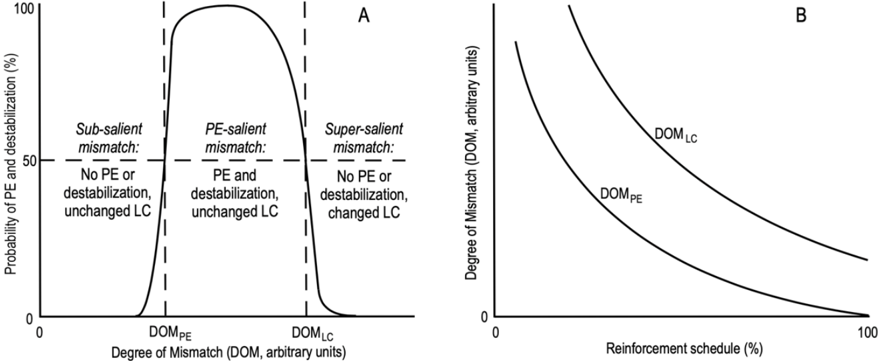
- A provisional PE evaluation framework was applied uniformly: PE is necessary for destabilization/updating; PE is relative to the entirety of target memory contents; mismatch is an external procedural feature while PE is a subjective experience; sub-salient and super-salient mismatches do not create PE; and PE specificity destabilizes specific memory components. Each study’s procedure and induced experiences were analyzed, including the transition from reactivation to the 10-min interval.
Limitations
- The paper states it is not a formal systematic review, uses a qualitative approach, and does not analyze effect sizes or statistics; the PE evaluation framework is described as “principled but provisional” and may need revision as research continues.
- The paper states that PE analyses range from confident to speculative because studies varied widely in procedural detail; some key information, such as transition details or 10-min interval content, was often missing. It also notes the review is limited to human behavioral updating and does not cover pharmacological propranolol studies, which it identifies as a desirable future extension.
- The author reports a conflict: he is unpaid co-director of a clinical training institute providing training in the clinical methodology described. Evident from the text: some PE conclusions rely on reverse-engineering from successful annulment, the clinical case is a single vignette and “does not represent a general template,” and direct detection of human engram nullification is not yet available.
Model-written summary of a shortened version of the paper’s full text (it is longer than we read). Check it against the paper before relying on it.
Integrity signals
Registry
Cites
Statistics
Figures
Verification
Claims the paper makes
0 Valid · 3 Not valid · 243 Not checked · 285 Own results and interpretations
A result the paper states — it cites no source for it, so there is none to check. The quote shows it is in the paper.
In the paper
“However, fourteen studies have reported non-replication, the cause(s) of which remain unclear.”
§ Reconsolidation behavioral updating of human emotional memory: A comprehensive review and unified analysis of successes, replication failures, and clinical translation > Abstract
plain- Asserted: passes — The authors put it forward as true.
- Checkable: passes — It can be checked against evidence.
- Load-bearing: passes — The paper’s conclusions depend on it.
- Based: passes — The paper gives a reason why it holds.
A result the paper states — it cites no source for it, so there is none to check. The quote shows it is in the paper.
In the paper
“Memory reconsolidation has been recruited via behavioral updating procedures to achieve full annulment of a human emotional memory in over twenty studies since first reported in 2010.”
§ Reconsolidation behavioral updating of human emotional memory: A comprehensive review and unified analysis of successes, replication failures, and clinical translation > Abstract
plainstates a cause- Asserted: passes — The authors put it forward as true.
- Checkable: passes — It can be checked against evidence.
- Load-bearing: passes — The paper’s conclusions depend on it.
- Based: passes — The paper gives a reason why it holds.
A result the paper states — it cites no source for it, so there is none to check. The quote shows it is in the paper.
In the paper
“(In the case of 100% reinforcement in acquisition, as used by three studies in Table 1, the single unreinforced CS+ at Day 2 reactivation does reliably create a PE experience.)”
§ Reconsolidation behavioral updating of human emotional memory: A comprehensive review and unified analysis of successes, replication failures, and clinical translation > Reconsolidation behavioral updating of human emotional memory: A comprehensive review and unified analysis 30 of 187
boostedstates a cause- Asserted: passes — The authors put it forward as true.
- Checkable: passes — It can be checked against evidence.
- Load-bearing: passes — The paper’s conclusions depend on it.
- Based: unclear — It is unclear why the paper says it holds.
In the paper
“Therefore the 10-min interval is present in all subsequent human studies of behavioral updating of emotional memory (with significant variations of other parameters), i.e., all of the studies in Tables 1 and 2 except Pine et al. (2014).”
§ Reconsolidation behavioral updating of human emotional memory: A comprehensive review and unified analysis of successes, replication failures, and clinical translation > 3.3. PE evaluation framework applied to the retrieval-extinction protocol
What the sources say
- Not checked yetcites Pine et al. (2014) matched to “Unconscious learning of likes and dislikes is persistent, resilient, and reconsolidates” (2014) source
plain- Asserted: passes — The authors put it forward as true.
- Checkable: passes — It can be checked against evidence.
- Load-bearing: unclear — It is unclear whether the paper’s conclusions depend on it.
- Based: passes — The paper gives a reason why it holds.
A result the paper reports from its own data — it cites no other source for it, so there is none to check. The quote shows it is in the paper.
In the paper
“This transition is in that way found to be a serious candidate cause of nonreplication in 11 of the 14 non-replication studies, as indicated in Table 2.”
§ Reconsolidation behavioral updating of human emotional memory: A comprehensive review and unified analysis of successes, replication failures, and clinical translation > Reconsolidation behavioral updating of human emotional memory: A comprehensive review and unified analysis 30 of 187
plainstates a possible cause- Asserted: passes — The authors put it forward as true.
- Checkable: passes — It can be checked against evidence.
- Load-bearing: passes — The paper’s conclusions depend on it.
- Based: passes — The paper gives a reason why it holds.
219 more claims
Create a free account to see all 531 claims and to verify the 313 references still open.
- Probably not a substantial claim. 113
- It may state two separate claims as one. 238
- The quote only partly states this claim. 4
Self-check
Percentages, sums and reported differences re-computed from the paper’s own numbers.
Each contradiction between two passages listed here was confirmed by an independent check.
Rated minor: it would not touch a result — a value no result rests on, a p-value that stays on the same side of the significance level, or a conflict that is clerical, resolved elsewhere in the paper, or outside its own findings.
In the paper
§ Reconsolidation behavioral updating of human emotional memory: A comprehensive review and unified analysis of successes, replication failures, and clinical translation > 5. Significant patterns in unsuccessful human behavioral annulment studies
“In all of the non-replication studies in Table 2, the target threat memory was created using 50 to 100% reinforcement”
§ Reconsolidation behavioral updating of human emotional memory: A comprehensive review and unified analysis of successes, replication failures, and clinical translation > B.4. Meir Drexler et al. (2014): "Effects of postretrieval-extinction learning on return of contextually controlled cued fear"
“All other parameters duplicated those of Schiller et al., including measurement of fear via SCR.”
Rated minor: it would not touch a result — a value no result rests on, a p-value that stays on the same side of the significance level, or a conflict that is clerical, resolved elsewhere in the paper, or outside its own findings.
In the paper
§ Reconsolidation behavioral updating of human emotional memory: A comprehensive review and unified analysis of successes, replication failures, and clinical translation > 5. Significant patterns in unsuccessful human behavioral annulment studies
“In these 13 partial reinforcement studies, whether or not a PE experience would occur on Day 2 was therefore determined entirely by the post-reactivation procedure immediately following reminder offset (disappearance), namely the transition to the 10-min interval between offset and the beginning of extinction training.”
§ Reconsolidation behavioral updating of human emotional memory: A comprehensive review and unified analysis of successes, replication failures, and clinical translation > 5. Significant patterns in unsuccessful human behavioral annulment studies
“In one study, the long duration of reactivation was very probably a too-large mismatch that induced a new latent cause rather than a PE experience (Meir Drexler et al., 2014, reviewed in Section B.4), a conclusion supported by direct comparison to one of the successful studies (Hu et al., 2018, reviewed in Section A.13).”
Citations
Cites
The cognitive control of emotion
OCHSNER, K., & GROSS, J. (2005) · Trends in Cognitive Sciences · doi:10.1016/j.tics.2005.03.010 · Cited by 4,495
Fear memories require protein synthesis in the amygdala for reconsolidation after retrieval
Nader, K., Schafe, G. E., & Le Doux, J. E. (2000) · Nature · doi:10.1038/35021052 · Cited by 2,706
Mediators and Mechanisms of Change in Psychotherapy Research
Kazdin, A. E. (2007) · Annual Review of Clinical Psychology · doi:10.1146/annurev.clinpsy.3.022806.091432 · Cited by 2,504
Meta-analysis of psychotherapy outcome studies.
Smith, M. L., & Glass, G. V. (1977) · American Psychologist · doi:10.1037/0003-066x.32.9.752 · Cited by 2,154
Context and Behavioral Processes in Extinction: Table 1.
Bouton, M. E. (2004) · Learning & Memory · doi:10.1101/lm.78804 · Cited by 1,808
The Great Psychotherapy Debate: The Evidence for What Makes Psychotherapy Work
Wampold, B. E. (2015) · doi:10.4324/9780203582015 · Cited by 1,773
Phelps, E. A., Delgado, M. R., Nearing, K. I., & LeDoux, J. E. (2004) · Neuron · doi:10.1016/j.neuron.2004.08.042 · Cited by 1,753
Preventing the return of fear in humans using reconsolidation update mechanisms
Schiller, D., Monfils, M.-H., Raio, C. M., Johnson, D. C., LeDoux, J. E., & Phelps, E. A. (2010) · Nature · doi:10.1038/nature08637 · Cited by 1,248
Memory Reconsolidation and Extinction Have Distinct Temporal and Biochemical Signatures
Suzuki, A., Josselyn, S. A., Frankland, P. W., Masushige, S., Silva, A. J., & Kida, S. (2004) · The Journal of Neuroscience · doi:10.1523/jneurosci.5491-03.2004 · Cited by 1,127
Dissociable stages of human memory consolidation and reconsolidation
Walker, M. P., Brakefield, T., Allan Hobson, J., & Stickgold, R. (2003) · Nature · doi:10.1038/nature01930 · Cited by 1,025
A shared neural ensemble links distinct contextual memories encoded close in time
Cai, D. J., Aharoni, D., Shuman, T., Shobe, J., Biane, J., Song, W., Wei, B., Veshkini, M., La-Vu, M., Lou, J., et al. (2016) · Nature · doi:10.1038/nature17955 · Cited by 968
Extinction-Reconsolidation Boundaries: Key to Persistent Attenuation of Fear Memories
Monfils, M.-H., Cowansage, K. K., Klann, E., & LeDoux, J. E. (2009) · Science · doi:10.1126/science.1167975 · Cited by 960
Beyond extinction: erasing human fear responses and preventing the return of fear
Kindt, M., Soeter, M., & Vervliet, B. (2009) · Nature Neuroscience · doi:10.1038/nn.2271 · Cited by 826
A single standard for memory: The case for reconsolidation
Nader, K., & Hardt, O. (2009) · Nature Reviews Neuroscience · doi:10.1038/nrn2590 · Cited by 811
Cellular and Systems Reconsolidation in the Hippocampus
Debiec, J., LeDoux, J. E., & Nader, K. (2002) · Neuron · doi:10.1016/s0896-6273(02)01001-2 · Cited by 763
The Role of Common Factors in Psychotherapy Outcomes
Cuijpers, P., Reijnders, M., & Huibers, M. J. H. (2019) · Annual Review of Clinical Psychology · doi:10.1146/annurev-clinpsy-050718-095424 · Cited by 748
Understanding how and why psychotherapy leads to change
Kazdin, A. E. (2009) · Psychotherapy Research · doi:10.1080/10503300802448899 · Cited by 728
Lane, R. D., Ryan, L., Nadel, L., & Greenberg, L. (2015) · Behavioral and Brain Sciences · doi:10.1017/s0140525x14000041 · Cited by 686
Fear Extinction and Relapse: State of the Art
Vervliet, B., Craske, M. G., & Hermans, D. (2013) · Annual Review of Clinical Psychology · doi:10.1146/annurev-clinpsy-050212-185542 · Cited by 671
An Update on Memory Reconsolidation Updating
Lee, J. L. C., Nader, K., & Schiller, D. (2017) · Trends in Cognitive Sciences · doi:10.1016/j.tics.2017.04.006 · Cited by 557
Reconsolidation of episodic memories: A subtle reminder triggers integration of new information
Hupbach, A., Gomez, R., Hardt, O., & Nadel, L. (2007) · Learning & Memory · doi:10.1101/lm.365707 · Cited by 544
Stability of retrieved memory: Inverse correlation with trace dominance
Eisenberg, M., Kobilo, T., Berman, D. E., & Dudai, Y. (2003) · Science · doi:10.1126/science.1086881 · Cited by 518
Reconsolidation: maintaining memory relevance
Lee, J. L. C. (2009) · Trends in Neurosciences · doi:10.1016/j.tins.2009.05.002 · Cited by 516
Bidirectional switch of the valence associated with a hippocampal contextual memory engram
Redondo, R. L., Kim, J., Arons, A. L., Ramirez, S., Liu, X., & Tonegawa, S. (2014) · Nature · doi:10.1038/nature13725 · Cited by 512
Calcium-Permeable AMPA Receptor Dynamics Mediate Fear Memory Erasure
Clem, R. L., & Huganir, R. L. (2010) · Science · doi:10.1126/science.1195298 · Cited by 493
Reconsolidation and Extinction of Conditioned Fear: Inhibition and Potentiation
Lee, J. L. C., Milton, A. L., & Everitt, B. J. (2006) · The Journal of Neuroscience · doi:10.1523/jneurosci.2466-06.2006 · Cited by 479
Consolidation of Fear Extinction Requires Protein Synthesis in the Medial Prefrontal Cortex
Santini, E., Ge, H., Ren, K., de Ortiz, S. P., & Quirk, G. J. (2004) · The Journal of Neuroscience · doi:10.1523/jneurosci.0786-04.2004 · Cited by 479
Bayesian theories of conditioning in a changing world
Courville, A. C., Daw, N. D., & Touretzky, D. S. (2006) · Trends in Cognitive Sciences · doi:10.1016/j.tics.2006.05.004 · Cited by 457
Temporally graded requirement for protein synthesis following memory reactivation
Milekic, M. H., & Alberini, C. M. (2002) · Neuron · doi:10.1016/s0896-6273(02)00976-5 · Cited by 455
Competition between engrams influences fear memory formation and recall
Rashid, A. J., Yan, C., Mercaldo, V., Hsiang, H.-L. (., Park, S., Cole, C. J., De Cristofaro, A., Yu, J., Ramakrishnan, C., Lee, S. Y., et al. (2016) · Science · doi:10.1126/science.aaf0594 · Cited by 415
Protein Synthesis Subserves Reconsolidation or Extinction Depending on Reminder Duration
Pedreira, M. E., & Maldonado, H. (2003) · Neuron · doi:10.1016/s0896-6273(03)00352-0 · Cited by 406
Altered fear learning across development in both mouse and human
Pattwell, S. S., Duhoux, S., Hartley, C. A., Johnson, D. C., Jing, D., Elliott, M. D., Ruberry, E. J., Powers, A., Mehta, N., Yang, R. R., et al. (2012) · Proceedings of the National Academy of Sciences · doi:10.1073/pnas.1206834109 · Cited by 404
Psychotherapy Relationships that Work: Volume 1: Evidence-Based Therapist Contributions
(2019) · Oxford University Press eBooks · doi:10.1093/med-psych/9780190843953.001.0001 · Cited by 401
Characterization of fear memory reconsolidation
Duvarci, S., & Nader, K. (2004) · The Journal of Neuroscience · doi:10.1523/jneurosci.2971-04.2004 · Cited by 379
Disruption of Reconsolidation Erases a Fear Memory Trace in the Human Amygdala
Agren, T., Engman, J., Frick, A., Björkstrand, J., Larsson, E.-M., Furmark, T., & Fredrikson, M. (2012) · Science · doi:10.1126/science.1223006 · Cited by 376
Pedreira, M. E., Pérez-Cuesta, L. M., & Maldonado, H. (2004) · Learning & Memory · doi:10.1101/lm.76904 · Cited by 367
Prediction Error Governs Pharmacologically Induced Amnesia for Learned Fear
Sevenster, D., Beckers, T., & Kindt, M. (2013) · Science · doi:10.1126/science.1231357 · Cited by 305
Extinction during reconsolidation of threat memory diminishes prefrontal cortex involvement
Schiller, D., Kanen, J. W., LeDoux, J. E., Monfils, M.-H., & Phelps, E. A. (2013) · Proceedings of the National Academy of Sciences · doi:10.1073/pnas.1320322110 · Cited by 304
Dissociating response systems: Erasing fear from memory
Soeter, M., & Kindt, M. (2010) · Neurobiology of Learning and Memory · doi:10.1016/j.nlm.2010.03.004 · Cited by 290
Rossato, J. I., Bevilaqua, L. R. M., Myskiw, J. C., Medina, J. H., Izquierdo, I., & Cammarota, M. (2007) · Learning & Memory · doi:10.1101/lm.422607 · Cited by 282
Disrupting reconsolidation: Pharmacological and behavioral manipulations
Soeter, M., & Kindt, M. (2011) · Learning & Memory · doi:10.1101/lm.2148511 · Cited by 262
Memory Retrieval and the Passage of Time: From Reconsolidation and Strengthening to Extinction
Inda, M. C., Muravieva, E. V., & Alberini, C. M. (2011) · The Journal of Neuroscience · doi:10.1523/jneurosci.4736-10.2011 · Cited by 261
Seeking a Spotless Mind: Extinction, Deconsolidation, and Erasure of Fear Memory
Maren, S. (2011) · Neuron · doi:10.1016/j.neuron.2011.04.023 · Cited by 259
Stability of recent and remote contextual fear memory
Frankland, P. W., Ding, H.-K., Takahashi, E., Suzuki, A., Kida, S., & Silva, A. J. (2006) · Learning & Memory · doi:10.1101/lm.183406 · Cited by 259
A new therapy for each patient: Evidence‐based relationships and responsiveness
Norcross, J. C., & Wampold, B. E. (2018) · Journal of Clinical Psychology · doi:10.1002/jclp.22678 · Cited by 247
Merlo, E., Milton, A. L., Goozée, Z. Y., Theobald, D. E., & Everitt, B. J. (2014) · The Journal of Neuroscience · doi:10.1523/jneurosci.4001-13.2014 · Cited by 242
Reconsolidation in a human fear conditioning study: A test of extinction as updating mechanism
Kindt, M., & Soeter, M. (2013) · Biological Psychology · doi:10.1016/j.biopsycho.2011.09.016 · Cited by 240
Retrieval per se is not sufficient to trigger reconsolidation of human fear memory
Sevenster, D., Beckers, T., & Kindt, M. (2012) · Neurobiology of Learning and Memory · doi:10.1016/j.nlm.2012.01.009 · Cited by 238
Propranolol for the treatment of anxiety disorders: Systematic review and meta-analysis
Steenen, S. A., van Wijk, A. J., van der Heijden, G. J., van Westrhenen, R., de Lange, J., & de Jongh, A. (2016) · Journal of Psychopharmacology · doi:10.1177/0269881115612236 · Cited by 237
Reconsolidation of Human Memory: Brain Mechanisms and Clinical Relevance
Schwabe, L., Nader, K., & Pruessner, J. C. (2014) · Biological Psychiatry · doi:10.1016/j.biopsych.2014.03.008 · Cited by 233
Funayama, E. S., Grillon, C., Davis, M., & Phelps, E. A. (2001) · Journal of Cognitive Neuroscience · doi:10.1162/08989290152541395 · Cited by 225
Reconsolidation and the dynamic nature of memory
Nader, K. (2015) · Cold Spring Harbor Perspectives in Biology · doi:10.1101/cshperspect.a021782 · Cited by 221
Reconsolidation and the Dynamic Nature of Memory
Nader, K. (2016) · Novel Mechanisms of Memory · doi:10.1007/978-3-319-24364-1_1 · Cited by 216
Pedreira, M. E., Pérez-Cuesta, L. M., & Maldonado, H. (2002) · The Journal of Neuroscience · doi:10.1523/jneurosci.22-18-08305.2002 · Cited by 213
Reconsolidation of fresh, remote, and extinguished fear memory in medaka: old fears don't die
Eisenberg, M., & Dudai, Y. (2004) · European Journal of Neuroscience · doi:10.1111/j.1460-9568.2004.03818.x · Cited by 208
Updating memories—The role of prediction errors in memory reconsolidation
Exton-McGuinness, M. T. J., Lee, J. L. C., & Reichelt, A. C. (2015) · Behavioural Brain Research · doi:10.1016/j.bbr.2014.10.011 · Cited by 203
Human memory reconsolidation: A guiding framework and critical review of the evidence.
Elsey, J. W. B., Van Ast, V. A., & Kindt, M. (2018) · Psychological Bulletin · doi:10.1037/bul0000152 · Cited by 199
Forcato, C., Argibay, P. F., Pedreira, M. E., & Maldonado, H. (2008) · Neurobiology of Learning and Memory · doi:10.1016/j.nlm.2008.09.011 · Cited by 196
The fate of memory: Reconsolidation and the case of Prediction Error
Fernández, R. S., Boccia, M. M., & Pedreira, M. E. (2016) · Neuroscience & Biobehavioral Reviews · doi:10.1016/j.neubiorev.2016.06.004 · Cited by 176
The computational nature of memory modification
Gershman, S. J., Monfils, M.-H., Norman, K. A., & Niv, Y. (2017) · eLife · doi:10.7554/elife.23763 · Cited by 172
Beckers, T., & Kindt, M. (2017) · Annual Review of Clinical Psychology · doi:10.1146/annurev-clinpsy-032816-045209 · Cited by 171
Memory editing from science fiction to clinical practice
Phelps, E. A., & Hofmann, S. G. (2019) · Nature · doi:10.1038/s41586-019-1433-7 · Cited by 170
Detection of a Temporal Error Triggers Reconsolidation of Amygdala-Dependent Memories
Díaz-Mataix, L., Ruiz Martinez, R. C., Schafe, G. E., LeDoux, J. E., & Doyère, V. (2013) · Current Biology · doi:10.1016/j.cub.2013.01.053 · Cited by 168
Emotions, the great captains of our lives: Their role in the process of change in psychotherapy.
Greenberg, L. S. (2012) · American Psychologist · doi:10.1037/a0029858 · Cited by 166
Prediction error demarcates the transition from retrieval, to reconsolidation, to new learning
Sevenster, D., Beckers, T., & Kindt, M. (2014) · Learning & Memory · doi:10.1101/lm.035493.114 · Cited by 161
Gradual extinction prevents the return of fear: implications for the discovery of state
Gershman, S. J., Jones, C. E., Norman, K. A., Monfils, M.-H., & Niv, Y. (2013) · Frontiers in Behavioral Neuroscience · doi:10.3389/fnbeh.2013.00164 · Cited by 160
Emotion-Focused Therapy: A Clinical Synthesis
Greenberg, L. S. (2010) · Focus · doi:10.1176/foc.8.1.foc32 · Cited by 159
Improving Outcome of Psychosocial Treatments by Enhancing Memory and Learning
Harvey, A. G., Lee, J., Williams, J., Hollon, S. D., Walker, M. P., Thompson, M. A., & Smith, R. (2014) · Perspectives on Psychological Science · doi:10.1177/1745691614521781 · Cited by 159
Auber, A., Tedesco, V., Jones, C. E., Monfils, M.-H., & Chiamulera, C. (2013) · Psychopharmacology · doi:10.1007/s00213-013-3004-1 · Cited by 148
Reconsolidation in humans opens up declarative memory to the entrance of new information
Forcato, C., Rodríguez, M. L. C., Pedreira, M. E., & Maldonado, H. (2010) · Neurobiology of Learning and Memory · doi:10.1016/j.nlm.2009.08.006 · Cited by 147
Prediction error and memory reactivation: How incomplete reminders drive reconsolidation
Sinclair, A. H., & Barense, M. D. (2019) · Trends in Neurosciences · doi:10.1016/j.tins.2019.08.007 · Cited by 147
Monfils, M. H., & Holmes, E. A. (2018) · The Lancet Psychiatry · doi:10.1016/s2215-0366(18)30270-0 · Cited by 145
Kredlow, M. A., Unger, L. D., & Otto, M. W. (2016) · Psychological Bulletin · doi:10.1037/bul0000034 · Cited by 130
Winters, B. D., Tucci, M. C., & DaCosta-Furtado, M. (2009) · Learning & Memory · doi:10.1101/lm.1509909 · Cited by 130
Human reconsolidation: A reactivation and update
Agren, T. (2014) · Brain Research Bulletin · doi:10.1016/j.brainresbull.2013.12.010 · Cited by 129
An Unconditioned Stimulus Retrieval Extinction Procedure to Prevent the Return of Fear Memory
Liu, J., Zhao, L., Xue, Y., Shi, J., Suo, L., Luo, Y., Chai, B., Yang, C., Fang, Q., Zhang, Y., et al. (2014) · Biological Psychiatry · doi:10.1016/j.biopsych.2014.03.027 · Cited by 129
Cognitive strategies to regulate emotions—current evidence and future directions
Moyal, N., Henik, A., & Anholt, G. E. (2014) · Frontiers in Psychology · doi:10.3389/fpsyg.2013.01019 · Cited by 129
Consolidation and Reconsolidation of Incentive Learning in the Amygdala
Wang, S.-H., Ostlund, S. B., Nader, K., & Balleine, B. W. (2005) · The Journal of Neuroscience · doi:10.1523/jneurosci.4716-04.2005 · Cited by 128
Oyarzún, J. P., Lopez-Barroso, D., Fuentemilla, L., Cucurell, D., Pedraza, C., Rodriguez-Fornells, A., & de Diego-Balaguer, R. (2012) · PLoS ONE · doi:10.1371/journal.pone.0038849 · Cited by 125
Golkar, A., Bellander, M., Olsson, A., & Öhman, A. (2012) · Frontiers in Behavioral Neuroscience · doi:10.3389/fnbeh.2012.00080 · Cited by 120
Hernandez, P. J., & Kelley, A. E. (2004) · Learning & Memory · doi:10.1101/lm.84904 · Cited by 119
Emotional Automaticity Is a Matter of Timing
Luo, Q., Holroyd, T., Majestic, C., Cheng, X., Schechter, J., & Blair, R. J. (2010) · The Journal of Neuroscience · doi:10.1523/jneurosci.bc-5668-09.2010 · Cited by 118
Reconsolidation: A brief history, a retrieval view, and some recent issues
Riccio, D. C., Millin, P. M., & Bogart, A. R. (2006) · Learning & Memory · doi:10.1101/lm.290706 · Cited by 118
Depth of emotional experience and outcome
Goldman, R. N., Greenberg, L. S., & Pos, A. E. (2005) · Psychotherapy Research · doi:10.1080/10503300512331385188 · Cited by 117
Duvarci, S., Mamou, C. B., & Nader, K. (2006) · European Journal of Neuroscience · doi:10.1111/j.1460-9568.2006.04907.x · Cited by 110
Obtaining consensus in psychotherapy: What holds us back?
Goldfried, M. R. (2019) · American Psychologist · doi:10.1037/amp0000365 · Cited by 110
The amygdala encodes specific sensory features of an aversive reinforcer
Dębiec, J., Díaz-Mataix, L., Bush, D. E. A., Doyère, V., & LeDoux, J. E. (2010) · Nature Neuroscience · doi:10.1038/nn.2520 · Cited by 104
Haubrich, J., Crestani, A. P., Cassini, L. F., Santana, F., Sierra, R. O., Alvares, L. D. O., & Quillfeldt, J. A. (2015) · Neuropsychopharmacology · doi:10.1038/npp.2014.174 · Cited by 100
Erasing fear for an imagined threat event
Soeter, M., & Kindt, M. (2012) · Psychoneuroendocrinology · doi:10.1016/j.psyneuen.2012.03.011 · Cited by 95
Björkstrand, J., Agren, T., Åhs, F., Frick, A., Larsson, E.-M., Hjorth, O., Furmark, T., & Fredrikson, M. (2016) · Current Biology · doi:10.1016/j.cub.2016.08.022 · Cited by 94
New learning and unlearning: strangers or accomplices in threat memory attenuation?
Clem, R. L., & Schiller, D. (2016) · Trends in Neurosciences · doi:10.1016/j.tins.2016.03.003 · Cited by 90
Where Is the Evidence for “Evidence-Based” Therapy?
Shedler, J. (2018) · Psychiatric Clinics of North America · doi:10.1016/j.psc.2018.02.001 · Cited by 90
Noradrenergic Blockade of Memory Reconsolidation: A Failure to Reduce Conditioned Fear Responding
Bos, M. G. N., Beckers, T., & Kindt, M. (2014) · Frontiers in Behavioral Neuroscience · doi:10.3389/fnbeh.2014.00412 · Cited by 86
Steinfurth, E. C. K., Kanen, J. W., Raio, C. M., Clem, R. L., Huganir, R. L., & Phelps, E. A. (2014) · Learning & Memory · doi:10.1101/lm.033589.113 · Cited by 84
Extinction during memory reconsolidation blocks recovery of fear in adolescents
Johnson, D. C., & Casey, B. J. (2015) · Scientific Reports · doi:10.1038/srep08863 · Cited by 80
Memory retrieval before or after extinction reduces recovery of fear in adolescent rats
Baker, K. D., McNally, G. P., & Richardson, R. (2013) · Learning & Memory · doi:10.1101/lm.031989.113 · Cited by 78
Human fear reconsolidation and allelic differences in serotonergic and dopaminergic genes
Agren, T., Furmark, T., Eriksson, E., & Fredrikson, M. (2012) · Translational Psychiatry · doi:10.1038/tp.2012.5 · Cited by 74
Alfei, J. M., Ferrer Monti, R. I., Molina, V. A., Bueno, A. M., & Urcelay, G. P. (2015) · Learning & Memory · doi:10.1101/lm.038513.115 · Cited by 71
Memory retrieval, extinction, and reinstatement of alcohol seeking
Millan, E. Z., Milligan-Saville, J., & McNally, G. P. (2013) · Neurobiology of Learning and Memory · doi:10.1016/j.nlm.2012.12.010 · Cited by 66
Reconsolidation and psychopathology: Moving towards reconsolidation-based treatments
Dunbar, A. B., & Taylor, J. R. (2017) · Neurobiology of Learning and Memory · doi:10.1016/j.nlm.2016.11.005 · Cited by 66
Translational Approaches Targeting Reconsolidation
Kroes, M. C. W., Schiller, D., LeDoux, J. E., & Phelps, E. A. (2015) · Current Topics in Behavioral Neurosciences · doi:10.1007/7854_2015_5008 · Cited by 66
Björkstrand, J., Agren, T., Frick, A., Engman, J., Larsson, E.-M., Furmark, T., & Fredrikson, M. (2015) · PLOS ONE · doi:10.1371/journal.pone.0129393 · Cited by 65
Memory destabilization is critical for the success of the reactivation–extinction procedure
Piñeyro, M. E., Ferrer Monti, R. I., Alfei, J. M., Bueno, A. M., & Urcelay, G. P. (2014) · Learning & Memory · doi:10.1101/lm.032714.113 · Cited by 64
Memory as a new therapeutic target
Nader, K., Hardt, O., & Lanius, R. (2013) · Dialogues in Clinical Neuroscience · doi:10.31887/dcns.2013.15.4/knader · Cited by 64
Chalkia, A., Schroyens, N., Leng, L., Vanhasbroeck, N., Zenses, A.-K., Van Oudenhove, L., & Beckers, T. (2020) · Cortex · doi:10.1016/j.cortex.2020.04.017 · Cited by 63
Chalkia, A., Oudenhove, L. V., & Beckers, T. (2020) · Cortex · doi:10.1016/j.cortex.2020.03.031 · Cited by 63
Warren, V. T., Anderson, K. M., Kwon, C., Bosshardt, L., Jovanovic, T., Bradley, B., & Norrholm, S. D. (2014) · Neurobiology of Learning and Memory · doi:10.1016/j.nlm.2013.10.014 · Cited by 62
Tackling maladaptive memories through reconsolidation: From neural to clinical science
Elsey, J. W. B., & Kindt, M. (2017) · Neurobiology of Learning and Memory · doi:10.1016/j.nlm.2017.03.007 · Cited by 60
Strengthening a consolidated memory: The key role of the reconsolidation process
Forcato, C., Fernandez, R. S., & Pedreira, M. E. (2014) · Journal of Physiology-Paris · doi:10.1016/j.jphysparis.2014.09.001 · Cited by 60
Treanor, M., Brown, L. A., Rissman, J., & Craske, M. G. (2017) · Perspectives on Psychological Science · doi:10.1177/1745691616664725 · Cited by 58
Feng, P., Zheng, Y., & Feng, T. (2016) · Social Cognitive and Affective Neuroscience · doi:10.1093/scan/nsw031 · Cited by 58
Boccia, M. M., Blake, M. G., Acosta, G. B., & Baratti, C. M. (2006) · Learning & Memory · doi:10.1101/lm.150306 · Cited by 58
The essence of the engram: Cellular or synaptic?
Han, D. H., Park, P., Choi, D. I., Bliss, T. V. P., & Kaang, B.-K. (2022) · Seminars in Cell & Developmental Biology · doi:10.1016/j.semcdb.2021.05.033 · Cited by 58
Klucken, T., Kruse, O., Schweckendiek, J., Kuepper, Y., Mueller, E. M., Hennig, J., & Stark, R. (2016) · Cortex · doi:10.1016/j.cortex.2016.03.015 · Cited by 57
Diaz-Mataix, L., Debiec, J., LeDoux, J. E., & Doyere, V. (2011) · Journal of Neuroscience · doi:10.1523/jneurosci.5808-10.2011 · Cited by 57
Reactivation of Fear Memory Renders Consolidated Amygdala Synapses Labile
Kim, J., Song, B., Hong, I., Kim, J., Lee, J., Park, S., Yong Eom, J., Lee, C. J., Lee, S., & Choi, S. (2010) · Journal of Neuroscience · doi:10.1523/jneurosci.0940-10.2010 · Cited by 55
Function and mechanisms of memory destabilization and reconsolidation after retrieval
KIDA, S. (2020) · Proceedings of the Japan Academy, Series B · doi:10.2183/pjab.96.008 · Cited by 53
Asthana, M. K., Brunhuber, B., Mühlberger, A., Reif, A., Schneider, S., & Herrmann, M. J. (2015) · International Journal of Neuropsychopharmacology · doi:10.1093/ijnp/pyv137 · Cited by 52
Jarome, T. J., Kwapis, J. L., Werner, C. T., Parsons, R. G., Gafford, G. M., & Helmstetter, F. J. (2012) · Learning & Memory · doi:10.1101/lm.024901.111 · Cited by 51
Limits on lability: boundaries of reconsolidation and the relationship to metaplasticity
Zhang, J. J., Haubrich, J., Bernabo, M., Finnie, P. S. B., & Nader, K. (2018) · Neurobiology of Learning and Memory · doi:10.1016/j.nlm.2018.02.018 · Cited by 50
Drysdale, A. T., Hartley, C. A., Pattwell, S. S., Ruberry, E. J., Somerville, L. H., Compton, S. N., Lee, F. S., Casey, B. J., & Walkup, J. T. (2014) · Biological Psychiatry · doi:10.1016/j.biopsych.2013.08.015 · Cited by 50
Olshavsky, M. E., Song, B. J., Powell, D. J., Jones, C. E., Monfils, M.-H., & Lee, H. J. (2013) · Frontiers in Behavioral Neuroscience · doi:10.3389/fnbeh.2013.00186 · Cited by 50
The Promises and Pitfalls of Retrieval-Extinction Procedures in Preventing Relapse to Drug Seeking
Hutton-Bedbrook, K., & McNally, G. P. (2013) · Frontiers in Psychiatry · doi:10.3389/fpsyt.2013.00014 · Cited by 49
Molecular Mechanisms of Reconsolidation-Dependent Memory Updating
Bellfy, L., & Kwapis, J. L. (2020) · International Journal of Molecular Sciences · doi:10.3390/ijms21186580 · Cited by 49
Krawczyk, M., Fernández, R. S., Pedreira, M. E., & Boccia, M. M. (2016) · Neurobiology of Learning and Memory · doi:10.1016/j.nlm.2016.12.011 · Cited by 47
Neurochemical and molecular mechanisms underlying the retrieval-extinction effect
Cahill, E., & Milton, A. L. (2019) · Psychopharmacology · doi:10.1007/s00213-018-5121-3 · Cited by 47
Memory expression is independent of memory labilization/reconsolidation
Barreiro, K. A., Suárez, L. D., Lynch, V. M., Molina, V. A., & Delorenzi, A. (2013) · Neurobiology of Learning and Memory · doi:10.1016/j.nlm.2013.10.006 · Cited by 43
Effects of postretrieval-extinction learning on return of contextually controlled cued fear.
Meir Drexler, S., Merz, C. J., Hamacher-Dang, T. C., Marquardt, V., Fritsch, N., Otto, T., & Wolf, O. T. (2014) · Behavioral Neuroscience · doi:10.1037/a0036688 · Cited by 43
Björkstrand, J., Agren, T., Åhs, F., Frick, A., Larsson, E.-M., Hjorth, O., Furmark, T., & Fredrikson, M. (2017) · Behavioural Brain Research · doi:10.1016/j.bbr.2017.02.016 · Cited by 42
Haubrich, J., Bernabo, M., Baker, A. G., & Nader, K. (2020) · Annual Review of Neuroscience · doi:10.1146/annurev-neuro-091319-024636 · Cited by 41
A flexible and generalizable model of online latent-state learning
Cochran, A. L., & Cisler, J. M. (2019) · PLoS Computational Biology · doi:10.1371/journal.pcbi.1007331 · Cited by 41
Cahill, E. N., Wood, M. A., Everitt, B. J., & Milton, A. L. (2019) · Neuropsychopharmacology · doi:10.1038/s41386-018-0299-y · Cited by 40
Memory reconsolidation understood and misunderstood
Ecker, B. (2015) · International Journal of Neuropsychotherapy · doi:10.12744/ijnpt.2015.0002-0046 · Cited by 40
Self-citationAcute but Not Permanent Effects of Propranolol on Fear Memory Expression in Humans
Chalkia, A., Weermeijer, J. D. M., Oudenhove, L. V., & Beckers, T. (2019) · Frontiers in Human Neuroscience · doi:10.3389/fnhum.2019.00051 · Cited by 39
Vicarious extinction learning during reconsolidation neutralizes fear memory
Golkar, A., Tjaden, C., & Kindt, M. (2017) · Behaviour Research and Therapy · doi:10.1016/j.brat.2017.02.004 · Cited by 38
Ecker, B., & Bridges, S. K. (2020) · Clinical Social Work Journal · doi:10.1007/s10615-020-00754-z · Cited by 38
Self-citationDelayed extinction fails to reduce skin conductance reactivity to fear‐conditioned stimuli
Fricchione, J. G., Greenberg, M. S., Spring, J. D., Wood, N. E., Mueller‐Pfeiffer, C., Milad, M. R., Pitman, R. K., & Orr, S. P. (2016) · Psychophysiology · doi:10.1111/psyp.12687 · Cited by 38
Grégoire, L., & Greening, S. G. (2018) · Cognition · doi:10.1016/j.cognition.2018.12.001 · Cited by 38
Determinants to trigger memory reconsolidation: The role of retrieval and updating information
Rodríguez‐Ortiz, C. J., & Bermúdez‐Rattoni, F. (2016) · Neurobiology of Learning and Memory · doi:10.1016/j.nlm.2016.12.005 · Cited by 35
Thompson, A., & Lipp, O. V. (2017) · Behaviour Research and Therapy · doi:10.1016/j.brat.2017.01.017 · Cited by 34
Li, J., Chen, W., Caoyang, J., Hu, Y., Yang, Y., Liang, X., Jie, J., & Xifu, Z. (2019) · Cortex · doi:10.1016/j.cortex.2019.09.003 · Cited by 34
Meyer, F., & Louilot, A. (2014) · Frontiers in Behavioral Neuroscience · doi:10.3389/fnbeh.2013.00118 · Cited by 32
Santoyo-Zedillo, M., Rodriguez-Ortiz, C. J., Chavez-Marchetta, G., Bermúdez‐Rattoni, F., & Balderas, I. (2014) · Learning & Memory · doi:10.1101/lm.035428.114 · Cited by 32
Reminder duration determines threat memory modification in humans
Hu, J., Wang, W., Homan, P., Wang, P., Zheng, X., & Schiller, D. (2018) · Scientific Reports · doi:10.1038/s41598-018-27252-0 · Cited by 32
López, M. A., Santos, M. J., Cortasa, S. A., Fernández, R. S., Tano, M. C., & Pedreira, M. E. (2016) · Neurobiology of Learning and Memory · doi:10.1016/j.nlm.2016.10.016 · Cited by 31
Högberg, G. (2011) · Psychology Research and Behavior Management · doi:10.2147/prbm.s10380 · Cited by 31
Memory reconsolidation and the crisis of mechanism in psychotherapy
Ecker, B., & Vaz, A. (2022) · New Ideas in Psychology · doi:10.1016/j.newideapsych.2022.100945 · Cited by 30
Self-citationChen, W., Li, J., Zhang, X., Dong, Y., Shi, P., Luo, P., & Zheng, X. (2021) · Behaviour Research and Therapy · doi:10.1016/j.brat.2021.103831 · Cited by 30
Behavioral disruption of memory reconsolidation: From bench to bedside and back again.
Drexler, S. M., & Wolf, O. T. (2018) · Behavioral Neuroscience · doi:10.1037/bne0000231 · Cited by 30
Fernández, R. S., Bavassi, L., Forcato, C., & Pedreira, M. E. (2016) · Neurobiology of Learning and Memory · doi:10.1016/j.nlm.2016.03.001 · Cited by 29
Limited replicability of drug-induced amnesia after contextual fear memory retrieval in rats
Schroyens, N., Alfei, J. M., Schnell, A. E., Luyten, L., & Beckers, T. (2019) · Neurobiology of Learning and Memory · doi:10.1016/j.nlm.2019.107105 · Cited by 29
Pharmacological Disruption of Maladaptive Memory
Taylor, J. R., & Torregrossa, M. M. (2015) · Handbook of experimental pharmacology · doi:10.1007/978-3-319-16522-6_13 · Cited by 28
Debiec, J., Diaz-Mataix, L., Bush, D. E. A., Doyère, V., & LeDoux, J. E. (2013) · Learning & Memory · doi:10.1101/lm.031609.113 · Cited by 28
Kroes, M. C. W., Dunsmoor, J. E., Lin, Q., Evans, M., & Phelps, E. A. (2017) · Scientific Reports · doi:10.1038/s41598-017-10682-7 · Cited by 28
Ecker, B. (2018) · International Journal of Neuropsychotherapy · doi:10.12744/ijnpt.2018.0001-0092 · Cited by 27
Self-citationLi, J., Chen, W., Caoyang, J., Wu, W., Jie, J., Xu, L., & Zheng, X. (2017) · Frontiers in Human Neuroscience · doi:10.3389/fnhum.2017.00575 · Cited by 27
Reichelt, A. C., & Lee, J. L. C. (2012) · Psychopharmacology · doi:10.1007/s00213-012-2934-3 · Cited by 26
Delorenzi, A., Maza, F. J., Suárez, L. D., Barreiro, K., Molina, V. A., & Stehberg, J. (2014) · Journal of Physiology-Paris · doi:10.1016/j.jphysparis.2014.07.002 · Cited by 26
Chen, W., Li, J., Xu, L., Zhao, S., Fan, M., & Zheng, X. (2021) · Frontiers in Behavioral Neuroscience · doi:10.3389/fnbeh.2020.598924 · Cited by 25
Zuccolo, P. F., & Hunziker, M. H. L. (2019) · Behavioural Processes · doi:10.1016/j.beproc.2019.01.011 · Cited by 23
Exploring the boundaries of post-retrieval extinction in healthy and anxious individuals
Kredlow, M. A., Orr, S. P., & Otto, M. W. (2018) · Behaviour Research and Therapy · doi:10.1016/j.brat.2018.06.010 · Cited by 23
Coppens, E., Spruyt, A., Vandenbulcke, M., Paesschen, W. V., & Vansteenwegen, D. (2009) · Neuropsychologia · doi:10.1016/j.neuropsychologia.2009.04.021 · Cited by 22
Retrieval and Reconsolidation Accounts of Fear Extinction
Ponnusamy, R., Zhuravka, I., Poulos, A. M., Shobe, J., Merjanian, M., Huang, J., Wolvek, D., O’Neill, P.-K., & Fanselow, M. S. (2016) · Frontiers in Behavioral Neuroscience · doi:10.3389/fnbeh.2016.00089 · Cited by 21
Depotentiation of symptom-producing implicit memory in coherence therapy.
Ecker, B., & Toomey, B. (2008) · Journal of Constructivist Psychology · doi:10.1080/10720530701853685 · Cited by 21
Self-citationCampos-Arteaga, G., Forcato, C., Wainstein, G., Lagos, R., Palacios-García, I., Artigas, C., Morales, R., Pedreira, M. E., & Rodríguez, E. (2020) · Neurobiology of Learning and Memory · doi:10.1016/j.nlm.2020.107279 · Cited by 19
A novel method to trigger the reconsolidation of fear memory
Yang, Y., Jie, J., Li, J., Chen, W., & Zheng, X. (2019) · Behaviour Research and Therapy · doi:10.1016/j.brat.2019.103461 · Cited by 19
Autobiographical Memory and Mindfulness: a Critical Review with a Systematic Search
Dominguez, E., Casagrande, M., & Raffone, A. (2022) · Mindfulness · doi:10.1007/s12671-022-01902-x · Cited by 16
Attenuating fearful memories: Effect of cued extinction on intrusions.
Marks, E. H., & Zoellner, L. A. (2014) · Emotion · doi:10.1037/a0037862 · Cited by 15
Transformative emotional sequence: Towards a common principle of change.
Welling, H. (2012) · Journal of Psychotherapy Integration · doi:10.1037/a0027786 · Cited by 15
Rey, J. F., Gonzalez-Gonzalez, D., & Redondo, J. (2018) · Behavioral Neuroscience · doi:10.1037/bne0000245 · Cited by 14
Reactivation of the Unconditioned Stimulus Inhibits the Return of Fear Independent of Cortisol
Drexler, S. M., Merz, C. J., Lissek, S., Tegenthoff, M., & Wolf, O. T. (2019) · Frontiers in Behavioral Neuroscience · doi:10.3389/fnbeh.2019.00254 · Cited by 13
Zimmermann, J., & Bach, D. R. (2020) · Learning & Memory · doi:10.1101/lm.050211.119 · Cited by 13
Identification of a Novel Retrieval-dependent Memory Process in the Crab Neohelice granulata
Merlo, S. A., Santos, M. J., Pedreira, M. E., & Merlo, E. (2020) · Neuroscience · doi:10.1016/j.neuroscience.2020.09.035 · Cited by 12
Houtekamer, M. C., Henckens, M. J. A. G., Mackey, W. E., Dunsmoor, J. E., Homberg, J. R., & Kroes, M. C. W. (2020) · Scientific Reports · doi:10.1038/s41598-020-73139-4 · Cited by 12
Prediction error determines how memories are organized in the brain
Kennedy, N. G. W., Lee, J. C., Killcross, S., Westbrook, R. F., & Holmes, N. M. (2024) · eLife · doi:10.7554/elife.95849 · Cited by 12
Kitamura, H., Johnston, P., Johnson, L., & Strodl, E. (2020) · Neurobiology of Learning and Memory · doi:10.1016/j.nlm.2020.107285 · Cited by 11
Ecker, B. (2024) · Journal of Psychotherapy Integration · doi:10.1037/int0000330 · Cited by 11
Self-citationCHEN, W., LI, J., CAOYANG, J., YANG, Y., Hu, Y., & ZHENG, X. (2018) · Acta Psychologica Sinica · doi:10.3724/sp.j.1041.2018.00739 · Cited by 10
Ecker, B., Hulley, L., & Ticic, R. (2015) · Behavioral and Brain Sciences · doi:10.1017/s0140525x14000168 · Cited by 10
Self-citationAffect regulation and affect reconsolidation as organizing principles in psychotherapy.
Stevens, F. L. (2019) · Journal of Psychotherapy Integration · doi:10.1037/int0000130 · Cited by 9
Competing Visions of the Implications of Neuroscience for Psychotherapy
Toomey, B., & Ecker, B. (2009) · Journal of Constructivist Psychology · doi:10.1080/10720530802675748 · Cited by 9
Self-citationMemory Reconsolidation Therapy for Police Officers with Post-traumatic Stress Disorder
Kerswell, N. L., Strodl, E. S., Hawkins, D., & Johnson, L. R. (2020) · Journal of Police and Criminal Psychology · doi:10.1007/s11896-020-09363-5 · Cited by 9
Erasing Problematic Emotional Learnings: Psychotherapeutic Use of Memory Reconsolidation Research
Ecker, B. (2020) · Oxford University Press eBooks · doi:10.1093/oso/9780190881511.003.0011 · Cited by 7
Self-citationSchiller, D., LeDoux, J. E., & Phelps, E. A. (2020) · PsyArXiv (OSF Preprints) · doi:10.31234/osf.io/jn6uw · Cited by 7
Memory reconsolidation in psychotherapy for severe perfectionism within borderline personality
Vaz, A., & Ecker, B. (2020) · Journal of Clinical Psychology · doi:10.1002/jclp.23058 · Cited by 6
Self-citationUnconscious learning of likes and dislikes is persistent, resilient, and reconsolidates
Pine, A., Mendelsohn, A., & Dudai, Y. (2014) · Frontiers in Psychology · doi:10.3389/fpsyg.2014.01051 · Cited by 6
Gender difference in retrieval-extinction of conditioned fear memory
CHEN, W., LIN, X., LI, J., ZHANG, W., SUN, N., & ZHENG, X. (2021) · Acta Psychologica Sinica · doi:10.3724/sp.j.1041.2021.01082 · Cited by 4
Zuccolo, P. F., & Hunziker, M. H. L. (2018) · Revista Brasileira de Análise do Comportamento · doi:10.18542/rebac.v14i2.7532 · Cited by 3
Ecker, B. (2015) · The Neuropsychotherapist · doi:10.12744/tnpt(10)050-056 · Cited by 3
Self-citationAlberini, C. M. (2015) · Journal of the American Psychoanalytic Association · doi:10.1177/0003065115579720 · Cited by 2
(1980) · New American Library eBooks
(2012)
Self-citation
Research works printed but not linked: 5
- Reconsolidation behavioral updating of human emotional memory: A comprehensive review and unified analysis 180 of 187
- Jarome, T.J., Kwapis, J.L., Werner, C.T., Parsons, R.G., Gafford, G.M., Helmstetter, F.J., 2012b. The timing of multiple retrieval events can alter GluR1 phosphorylation and the requirement for protein synthesis in fear memory reconsolidation. Learn. Mem. 19, 300-306. https://doi.org/10.1101/lm.024901.111 · DOI · Paper page
- Meir Drexler, S., Wolf, O.T., 2018b. Behavioral disruption of memory reconsolidation: From bench to bedside and back again. Behav. Neurosci. 132, 13-22. https://doi.org/10.1037/bne0000231 · DOI
- Sevenster, D., Beckers, T., Kindt, M., 2014. Prediction error demarcates the transition from retrieval, to reconsolidation, to new learning. Learn. Mem. 21, 580-584. https://doi.org/10.1101/lm.035493.114 · DOI · Paper page
- Walker, M.P., Brakefield, T., Hobson, J.A., Stickgold, R., 2003. Dissociable stages of human memory consolidation and reconsolidation. Nature 425, 616-620. https://doi.org/10.1038/nature01930 · DOI · Paper page
Cited by
Face your fears: attenuating remote fear memories by reconsolidation-updating
Silva, B. A., & Gräff, J. (2023) · Trends in Cognitive Sciences · doi:10.1016/j.tics.2023.01.004 · Cited by 20
Bui, U. T. D., & Milton, A. L. (2023) · Neuroscience · doi:10.1016/j.neuroscience.2023.03.013 · Cited by 15
Reconsolidation: A paradigm shift
Schiller, D. (2022) · Brain Research Bulletin · doi:10.1016/j.brainresbull.2022.09.008 · Cited by 7
Kramer, U., Simonini, A., Rrustemi, E., Fellrath, R., Stucchi, K., Noseda, E., Martin-Söelch, C., Kolly, S., Machinea, J. B., Boritz, T. Z., et al. (2024) · Psychotherapy Research · doi:10.1080/10503307.2024.2406543 · Cited by 1
Exposing Narrative Exposure Therapy
Lord, J., Schroder, T., Sabin‐Farrell, R., & Naidoo, R. (2023) · Nottingham ePrints (University of Nottingham) · Cited by 1
Metadata
- Authors
- Ecker, B.
- Corresponding author
- Ecker, Bruce
- ORCID
- Ecker, Bruce
- Venue
- Journal of Psychiatry and Psychiatric Disorders
- Publisher
- Fortune Journals
- Published
- 2024
- Volume
- 8
- Issue
- 6
- ISSN
- 2572-519X (ISSN-L)
- OpenAlex
- W4404146484
- Semantic Scholar
- 47bf371d9466aafbd706f2e23295411d5d084261
- Cited by
- 9
- References
- 190
- Citations by year
- 2026: 4 · 2024: 1
- FWCI
- 0.74
- Type
- journal article
- Language
- en
- Open access
- hybrid
- doi.org
- Licence
- cc-by
- Locations
- Journal of Psychiatry and Psychiatric Disorders (publishedVersion, cc-by)
- PsyArXiv (OSF Preprints) (submittedVersion, cc-by)
- PsyArXiv (OSF Preprints) (submittedVersion)
- Topics
- Life Sciences › Neuroscience › Cognitive Neuroscience › Memory and Neural Mechanisms
- Life Sciences › Neuroscience › Cognitive Neuroscience › Memory Processes and Influences
- Social Sciences › Psychology › Clinical Psychology › Posttraumatic Stress Disorder Research
- Keywords
- memory reconsolidation, emotional memory, prediction error, replication failure, extinction retrieval, unlearning, psychotherapy, clinical translation
About these checks
Registry, retraction, Cites and statistics results are computed, not judged, with one exception: a printed reference that no index lists is read once by a model before it counts as a citation error. Claims are extracted by a model and kept only when their quote appears verbatim in the text; each cited source is then checked, with a model’s help, for whether it says what the claim relies on. Those verdicts can be wrong — read the claim’s quote and the cited source before relying on one.
A language model drew the claims from the paper on 2026-11-28, under version 3 of the claim definition (model deepseek-v4.1-flash, prompt extract-v3).
A second model labelled each claim on 2026-11-28 (model jev-1.13-20260917, definition revision gold-guideline-v0.2).
Statistics and arithmetic are recomputed, not judged.
Confidence bands are shown only for fields calibrated on our annotated test set. None is calibrated yet, so no band is shown.
What counts as a claim ›How we measure confidence ›How we check this ›
Are you an author, or do you see a problem with this page? Request a review
Data sources
Bibliographic data: Semantic Scholar, OpenAlex, Crossref.
Contains information from the Semantic Scholar Academic Graph Datasets, made available under the ODC Attribution License (ODC-BY 1.0).
Semantic Scholar’s data is described in: Kinney, R., et al. (2023). The Semantic Scholar Open Data Platform. arXiv:2301.10140.
