

The DOI matches its Crossref record; 197 of the 197 references it cites were found in a registry or an index.
Emerging role of microRNAs in major depressive disorder: diagnosis and therapeutic implications
Open accessAbstract
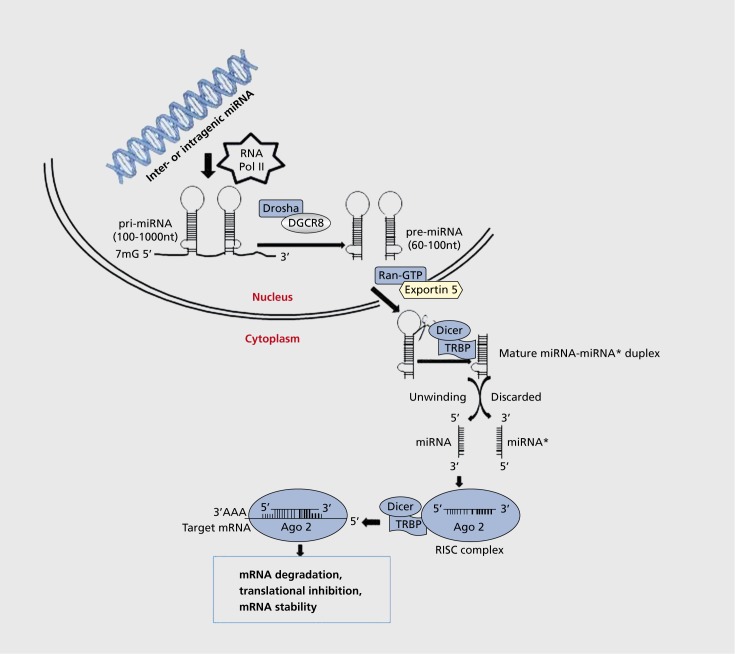
Major depressive disorder (MDD) is a major public health concern. Despite tremendous advances, the pathogenic mechanisms associated with MDD are still unclear. Moreover, a significant number of MDD subjects do not respond to the currently available medication. MicroRNAs (miRNAs) are a class of small noncoding RNAs that control gene expression by modulating translation, messenger RNA (mRNA) degradation, or stability of mRNA targets. The role of miRNAs in disease pathophysiology is emerging rapidly. Recent studies demonstrating the involvement of miRNAs in several aspects of neural plasticity, neurogenesis, and stress response, and more direct studies in human postmortem brain provide strong evidence that miRNAs can not only play a critical role in MDD pathogenesis, but can also open up new avenues for the development of therapeutic targets. Circulating miRNAs are now being considered as possible biomarkers in disease pathogenesis and in monitoring therapeutic responses because of the presence and/or release of miRNAs in blood cells as well as in other peripheral tissues. In this review, these aspects are discussed in a comprehensive and critical manner.
Overview
The claims and statistics of this paper haven’t been checked yet.
Run the check — free, no account needed. It reads the open-access text and checks the sources it cites.
Integrity signals
Registry
Cites
Statistics
Figures
Verification
Claims the paper makes
The claims and statistics of this paper haven’t been checked yet.
Run the check — free, no account needed. It reads the open-access text and checks the sources it cites.
Claims other papers make about this one
Each is checked against this paper’s own text: does it say what the citing paper says it does?
In the citing paper
“A common post-transcriptional process mediated at least in part by miRNA alters the structure of dendrites and neurogenesis.”
From Epigenetic mechanisms of major depression: Targeting neuronal plasticity (2018) · cites this paper as [140]
Self-check
Percentages, sums and reported differences re-computed from the paper’s own numbers.
The self-check needs the paper’s full text.
Citations
Cites
Bartel (2004) · doi:10.1016/s0092-8674(04)00045-5 · Cited by 34,714
Kessler, R. C. (1994) · Archives of General Psychiatry · doi:10.1001/archpsyc.1994.03950010008002 · Cited by 12,370
The functions of animal microRNAs
Ambros, V. (2004) · Nature · doi:10.1038/nature02871 · Cited by 10,728
Chen, X., Ba, Y., Ma, L., Cai, X., Yin, Y., Wang, K., Guo, J., Zhang, Y., Chen, J., Guo, X., et al. (2008) · Cell Research · doi:10.1038/cr.2008.282 · Cited by 4,560
A Mammalian microRNA Expression Atlas Based on Small RNA Library Sequencing
Landgraf, P., Rusu, M., Sheridan, R., Sewer, A., Iovino, N., Aravin, A., Pfeffer, S., Rice, A., Kamphorst, A. O., Landthaler, M., et al. (2007) · Cell · doi:10.1016/j.cell.2007.04.040 · Cited by 3,626
Identification of tissue-specific microRNAs from mouse
Lagos-Quintana, M., Rauhut, R., Yalcin, A., Meyer, J., Lendeckel, W., & Tuschl, T. (2002) · Current Biology · doi:10.1016/s0960-9822(02)00809-6 · Cited by 3,355
Arroyo, J. D., Chevillet, J. R., Kroh, E. M., Ruf, I. K., Pritchard, C. C., Gibson, D. F., Mitchell, P. S., Bennett, C. F., Pogosova-Agadjanyan, E. L., Stirewalt, D. L., et al. (2011) · Proceedings of the National Academy of Sciences · doi:10.1073/pnas.1019055108 · Cited by 3,294
Switching from Repression to Activation: MicroRNAs Can Up-Regulate Translation
Vasudevan, S., Tong, Y., & STEITZ, J. A. (2007) · Science · doi:10.1126/science.1149460 · Cited by 2,911
MicroRNAs are transported in plasma and delivered to recipient cells by high-density lipoproteins
Vickers, K. C., Palmisano, B. T., Shoucri, B. M., Shamburek, R. D., & Remaley, A. T. (2011) · Nature Cell Biology · doi:10.1038/ncb2210 · Cited by 2,741
The MicroRNA Spectrum in 12 Body Fluids
Weber, J. A., Baxter, D. H., Zhang, S., Huang, D. Y., How Huang, K., Jen Lee, M., Galas, D. J., & Wang, K. (2010) · Clinical Chemistry · doi:10.1373/clinchem.2010.147405 · Cited by 2,477
Research works printed but not linked: 11
- Honer WG., 1999, J Neurosci., 24, 116
- Michalak P., 2006, J EvolBiol., 19, 1768
- Kapsimali M., 2007, Biol., 8, R173
- Lee MM., 2013, Curr Top Behav Neurosci., 14, 153
- Lang MF., 2012, Front Neurosci., 6, 71
- Dorval V., 2013, Front Mol Neurosci., 6, 24
- Cao MQ., 2013, Zhongguo Zhong Yao Za Zhi., 38, 1585
- Saito Y., 2012, Front Genet., 3, 194
- Chan AW., 2012, Front Genet., 17, 3
- Dwivedi Y., 2011, Am Coll Neuropsychophramacol., 36, S75
- Kalani A., Mol Neurobiol 2013. [Epub ahead of print] PMID:23999871.
Cited by
Sorted by citations
Brites, D., & Fernandes, A. (2015) · Frontiers in Cellular Neuroscience · doi:10.3389/fncel.2015.00476 · Cited by 599
“As already mentioned, actively secreted miRNAs are enclosed in exosomes, which are excreted in response to stress signaling (Mendell and Olson, 2012) and thus considered as potential biomarkers in depression and antidepressant response (Dwivedi, 2014).”
BackgroundInfluentialTreatment resistant depression: A multi-scale, systems biology approach
Akil, H., Gordon, J. A., Hen, R., Javitch, J. A., Mayberg, H. S., McEwen, B. S., Meaney, M. J., & Nestler, E. J. (2017) · Neuroscience & Biobehavioral Reviews · doi:10.1016/j.neubiorev.2017.08.019 · Cited by 463
Luciano, M., Hagenaars, S. P., Davies, G., Hill, W. D., Clarke, T.-K., Shirali, M., Harris, S. E., Marioni, R. E., Liewald, D. C., Fawns-Ritchie, C., et al. (2018) · Nature Genetics · doi:10.1038/s41588-017-0013-8 · Cited by 391
Epigenetic mechanisms of major depression: Targeting neuronal plasticity
Uchida, S., Yamagata, H., Seki, T., & Watanabe, Y. (2018) · Psychiatry and Clinical Neurosciences · doi:10.1111/pcn.12621 · Cited by 181
Neuron secrete exosomes containing miR-9-5p to promote polarization of M1 microglia in depression
Xian, X., Cai, L.-L., Li, Y., Wang, R.-C., Xu, Y.-H., Chen, Y.-J., Xie, Y.-H., Zhu, X.-L., & Li, Y.-F. (2022) · Journal of Nanobiotechnology · doi:10.1186/s12951-022-01332-w · Cited by 169
MicroRNAs and exosomes in depression: Potential diagnostic biomarkers
Tavakolizadeh, J., Roshanaei, K., Salmaninejad, A., Yari, R., Nahand, J. S., Khoshdel‐Sarkarizi, H., Mousavi, S. M., Salarinia, R., Rahmati, M., Mousavi, S. F., et al. (2017) · Journal of Cellular Biochemistry · doi:10.1002/jcb.26599 · Cited by 162
Hippocampal MicroRNA-124 Enhances Chronic Stress Resilience in Mice
Higuchi, F., Uchida, S., Yamagata, H., Abe-Higuchi, N., Hobara, T., Hara, K., Kobayashi, A., Shintaku, T., Itoh, Y., Suzuki, T., et al. (2016) · Journal of Neuroscience · doi:10.1523/jneurosci.0319-16.2016 · Cited by 158
Depressive disorders: treatment failures and poor prognosis over the last 50 years
Blackburn, T. P. (2019) · Pharmacology Research & Perspectives · doi:10.1002/prp2.472 · Cited by 136
Omics-Based Biomarkers: Application of Metabolomics in Neuropsychiatric Disorders
Sethi, S., & Brietzke, E. M. (2015) · The International Journal of Neuropsychopharmacology · doi:10.1093/ijnp/pyv096 · Cited by 125
Borderline personality disorder and childhood maltreatment: A genome-wide methylation analysis
Prados, J., Stenz, L., Courtet, P., Prada, P., Nicastro, R., Adouan, W., Guillaume, S., Olié, E., Aubry, J. ‐., Dayer, A., et al. (2015) · Genes, Brain and Behavior · doi:10.1111/gbb.12197 · Cited by 112
Biomarkers for major depressive disorder
Hacımusalar, Y., & Eşel, E. (2017) · Nöro Psikiyatri Arşivi · doi:10.5152/npa.2017.19482 · Cited by 123
Saeedi, S., Nagy, C., Ibrahim, P., Théroux, J., Wakid, M., Fiori, L. M., Yang, J., Rotzinger, S., Foster, J. A., Mechawar, N., et al. (2021) · Molecular Psychiatry · doi:10.1038/s41380-021-01255-2 · Cited by 110
Novel drug developmental strategies for treatment‐resistant depression
Borbély, É., Simon, M., Fuchs, E., Wiborg, O., Czéh, B., & Helyes, Z. (2021) · British Journal of Pharmacology · doi:10.1111/bph.15753 · Cited by 116
Circulating microRNA-144-5p is associated with depressive disorders
Wang, X., Sundquist, K., Hedelius, A., Palmér, K., Memon, A. A., & Sundquist, J. (2015) · Clinical Epigenetics · doi:10.1186/s13148-015-0099-8 · Cited by 102
Exploiting Circulating MicroRNAs as Biomarkers in Psychiatric Disorders
Roy, B., Yoshino, Y., McKibben, L. A., Prall, K., Schell, G., & Dwivedi, Y. (2020) · Molecular Diagnosis & Therapy · doi:10.1007/s40291-020-00464-9 · Cited by 101
Self-citationSu, M., HONG, J., ZHAO, Y., Liu, S., & XUE, X. (2015) · Molecular Medicine Reports · doi:10.3892/mmr.2015.4104 · Cited by 93
Luarte, A., Cisternas, P., Caviedes, A., Bátiz, L. F., Lafourcade, C., Wyneken, Ú., & Henzi, R. (2017) · Stem Cells International · doi:10.1155/2017/1719050 · Cited by 91
Altered miRNA expression network in locus coeruleus of depressed suicide subjects
Roy, B., Wang, Q., Palkovits, M., Faludi, G., & Dwivedi, Y. (2017) · Scientific Reports · doi:10.1038/s41598-017-04300-9 · Cited by 86
Self-citationCirculating microRNAs as biomarkers for depression: Many candidates, few finalists
Yuan, H., Mischoulon, D., Fava, M., & Otto, M. W. (2018) · Journal of Affective Disorders · doi:10.1016/j.jad.2017.06.058 · Cited by 86
Non-Coding RNAs in Psychiatric Disorders and Suicidal Behavior
Yoshino, Y., & Dwivedi, Y. (2020) · Frontiers in Psychiatry · doi:10.3389/fpsyt.2020.543893 · Cited by 85
Self-citationGruzdev, S. K., Yakovlev, A. A., Druzhkova, T. A., Guekht, A. B., & Gulyaeva, N. V. (2019) · Cellular and Molecular Neurobiology · doi:10.1007/s10571-019-00684-6 · Cited by 75
The Role of MicroRNAs in Environmental Risk Factors, Noise-Induced Hearing Loss, and Mental Stress
Miguel, V., Cui, J. Y., Daimiel, L., Espinosa‐Díez, C., Fernandez-Hernando, C. F., Kavanagh, T. J., & Lamas, S. (2017) · Antioxidants and Redox Signaling · doi:10.1089/ars.2017.7175 · Cited by 79
ENĂTESCU, V. R., Papavă, I., Enătescu, I., Antonescu, M., Anghel, A., Șeclăman, E. P., Sîrbu, I. O., & Marian, C. (2016) · Psychiatry Investigation · doi:10.4306/pi.2016.13.5.549 · Cited by 74
Kuang, W.-H., Dong, Z.-Q., Tian, L.-T., & Li, J. (2018) · Brazilian Journal of Medical and Biological Research · doi:10.1590/1414-431x20187212 · Cited by 70
Understanding epigenetic architecture of suicide neurobiology: A critical perspective
Roy, B., & Dwivedi, Y. (2016) · Neuroscience & Biobehavioral Reviews · doi:10.1016/j.neubiorev.2016.10.031 · Cited by 70
Self-citationMicroglia and HPA axis in depression: An overview of participation and relationship
Pereira, G. C., Piton, E., dos Santos, B. M., Ramanzini, L. G., Camargo, L. F. M., da Silva, R. M., & Bochi, G. V. (2021) · The World Journal of Biological Psychiatry · doi:10.1080/15622975.2021.1939154 · Cited by 72
Muhammad, R. N., Ahmed, L. A., Abdelsalam, R. M., Ahmed, K. A., & Attia, A. S. (2021) · Neurotherapeutics · doi:10.1007/s13311-021-01140-4 · Cited by 71
Fan, C., Zhu, X., Song, Q., Wang, P., Liu, Z., & Yu, S. Y. (2018) · Neuropharmacology · doi:10.1016/j.neuropharm.2018.01.009 · Cited by 63
Function of exosomes in neurological disorders and brain tumors
Xiao, L., Hareendran, S., & Loh, Y. P. (2021) · Extracellular Vesicles and Circulating Nucleic Acids · doi:10.20517/evcna.2021.04 · Cited by 62
Prefrontal cortex miR-29b-3p plays a key role in the antidepressant-like effect of ketamine in rats
Wan, Y.-Q., Feng, J.-G., Li, M., Wang, M.-Z., Liu, L., Liu, X., Duan, X.-X., Zhang, C.-X., & Wang, X.-B. (2018) · Experimental & Molecular Medicine · doi:10.1038/s12276-018-0164-4 · Cited by 60
miR-124 ameliorates depressive-like behavior by targeting STAT3 to regulate microglial activation
Lou, D., Wang, J., & Wang, X. (2019) · Molecular and Cellular Probes · doi:10.1016/j.mcp.2019.101470 · Cited by 58
Differential serum exosome microRNA profile in a stress-induced depression rat model
Fang, K., Xu, J., Chen, X.-X., Gao, X., Huang, L.-L., Du, A.-Q., Jiang, C., & Ge, J. (2020) · Journal of Affective Disorders · doi:10.1016/j.jad.2020.05.017 · Cited by 64
Altered expression of neuroplasticity-related genes in the brain of depressed suicides
Fuchsová, B., Juliá, A. A., Rizavi, H. S., Frasch, A. C. C., & Pandey, G. N. (2015) · Neuroscience · doi:10.1016/j.neuroscience.2015.04.057 · Cited by 59
Identification of a MicroRNA Signature for the Diagnosis of Fibromyalgia
Cerdá‐Olmedo, G., Mena-Durán, A. V., Monsalve, V., & Oltra, E. (2015) · PLoS ONE · doi:10.1371/journal.pone.0121903 · Cited by 58
MicroRNAs as critical biomarkers of major depressive disorder: a comprehensive perspective
Ortega, M. A., Alvarez-Mon, M. A., García-Montero, C., Fraile-Martinez, O., Lahera, G., Monserrat, J., Muñoz-Merida, L., Mora, F., Rodríguez-Jiménez, R., Fernandez-Rojo, S., et al. (2021) · Biomedicines · doi:10.3390/biomedicines9111659 · Cited by 57
Li, L., Naveed, M., Du, Z., Ding, H., Gu, K., Wei, L., Zhou, Y., Meng, F. J., Wang, C., Han, F., et al. (2021) · Human Genomics · doi:10.1186/s40246-021-00354-z · Cited by 58
Ampuero, E., Luarte, A., Santibáñez, M., Varas‐Godoy, M., Toledo, J. A., Díaz‐Véliz, G., Cavada, G., Rubio, F. J., & Wyneken, Ú. (2015) · The International Journal of Neuropsychopharmacology · doi:10.1093/ijnp/pyv038 · Cited by 57
Miao, Z., Mao, F., Liang, J., Szyf, M., Wang, Y., & Sun, Z. S. (2017) · Molecular Neurobiology · doi:10.1007/s12035-016-0378-1 · Cited by 58
Lin, E., & Tsai, S. (2015) · Progress in Neuro-Psychopharmacology and Biological Psychiatry · doi:10.1016/j.pnpbp.2015.02.008 · Cited by 55
Psychotherapy and Genetic Neuroscience: An Emerging Dialog
Jiménez, J. P., Botto, A., Herrera, L., Leighton, C., Rossi, J. L., Quevedo, Y., Silva, J. R., Martínez, F. I., Assar, R., Salazar, L. A., et al. (2018) · Frontiers in Genetics · doi:10.3389/fgene.2018.00257 · Cited by 62
Nöthling, J., Malan-Müller, S., Abrahams, N., Hemmings, S. M. J., & Seedat, S. (2020) · The World Journal of Biological Psychiatry · doi:10.1080/15622975.2019.1583369 · Cited by 74
Hung, Y.-Y., Huang, Y., Chang, C., & Kang, H. (2019) · Cells · doi:10.3390/cells8091021 · Cited by 54
Khandelwal, N., Dey, S. K., Chakravarty, S., & Kumar, A. (2019) · Frontiers in Molecular Neuroscience · doi:10.3389/fnmol.2019.00188 · Cited by 51
Seeking an Objective Diagnosis of Depression
Bilello, J. A. (2016) · Biomarkers in Medicine · doi:10.2217/bmm-2016-0076 · Cited by 52
Anabolic Androgenic Steroids: Searching New Molecular Biomarkers
Sessa, F., Salerno, M., Mizio, G. D., Bertozzi, G., Messina, G., Tomaiuolo, B., Pisanelli, D., Maglietta, F., Ricci, P., & Pomara, C. (2018) · Frontiers in Pharmacology · doi:10.3389/fphar.2018.01321 · Cited by 49
Heterogeneity and Individuality: microRNAs in Mental Disorders
Hommers, L. G., Domschke, K., & Deckert, J. (2014) · Journal of Neural Transmission · doi:10.1007/s00702-014-1338-4 · Cited by 45
Miguel-Hidalgo, J. J., Hall, K. O., Bonner, H., Roller, A., Syed, M., Park, C. J., Ball, J. P., Rothenberg, M. E., Stockmeier, C. A., & Romero, D. G. (2017) · Progress in Neuro-Psychopharmacology and Biological Psychiatry · doi:10.1016/j.pnpbp.2017.08.009 · Cited by 47
Ferrúa, C. P., Giorgi, R., Camerini, L., do Amaral, C. C., Ghisleni, G., Pinheiro, R. T., & Nedel, F. (2019) · Journal of Chemical Neuroanatomy · doi:10.1016/j.jchemneu.2019.101650 · Cited by 44
Epigenetic mechanisms of stress and depression
Chmielewska, N., Szyndler, J., Maciejak, P., & Płaźnik, A. (2019) · Psychiatria Polska · doi:10.12740/pp/94375 · Cited by 49
Segaran, R. C., Chan, L. Y., Wang, H., Sethi, G., & Tang, F. R. (2020) · Current Medicinal Chemistry · doi:10.2174/0929867327666200121122910 · Cited by 42
Kolshus, E., Ryan, K. M., Blackshields, G., Smyth, P. C., Sheils, O. M., & McLoughlin, D. M. (2017) · Acta Psychiatrica Scandinavica · doi:10.1111/acps.12821 · Cited by 43
Menke, A. (2018) · Pharmacogenomics and Personalized Medicine · doi:10.2147/pgpm.s146110 · Cited by 41
MicroRNAs, Multiple Sclerosis, and Depression
Wang, H. (2021) · International Journal of Molecular Sciences · doi:10.3390/ijms22157802 · Cited by 43
Gut microbiome-gut brain axis-depression: interconnection
Patel, R. A., Panche, A. N., & Harke, S. N. (2024) · The World Journal of Biological Psychiatry · doi:10.1080/15622975.2024.2436854 · Cited by 46
Rasheed, M., Asghar, R., Firdoos, S., Ahmad, N., Nazir, A., Ullah, K. M., Li, N., Zhuang, F., Chen, Z., & Deng, Y. (2022) · International Journal of Molecular Sciences · doi:10.3390/ijms23031294 · Cited by 41
Żurawek, D., Kuśmider, M., Faron‐Górecka, A., Gruca, P., Pabian, P., Kolasa, M., Solich, J., Szafran‐Pilch, K., Papp, M., & Dziedzicka‐Wasylewska, M. (2015) · European Neuropsychopharmacology · doi:10.1016/j.euroneuro.2015.11.013 · Cited by 38
Xie, L., Chen, J., Yong-min, D., Gui, X., Wu, L., Tian, S., & Wu, W. (2019) · Biochemical and Biophysical Research Communications · doi:10.1016/j.bbrc.2019.02.078 · Cited by 38
Ni, X., Liao, Y., Li, L., Zhang, X., & Wu, Z. (2018) · Journal of Integrative Neuroscience · doi:10.31083/jin-170052 · Cited by 37
Circulating Long Noncoding RNAs as Novel Biomarkers of Human Diseases
Jiang, X., Lei, R., & Ning, Q. (2016) · Biomarkers in Medicine · doi:10.2217/bmm-2016-0039 · Cited by 34
Wiegand, C., Savelsbergh, A., & Heusser, P. (2017) · Biomedicine Hub · doi:10.1159/000481126 · Cited by 37
Ma, K., Zhang, H., Wei, G., Dong, Z., Zhao, H., Han, X., Song, X., Zhang, H., Zong, X., Baloch, Z., et al. (2019) · Neuropsychiatric Disease and Treatment · doi:10.2147/ndt.s200264 · Cited by 32
Roy, B., Ochi, S., & Dwivedi, Y. (2023) · International Journal of Molecular Sciences · doi:10.3390/ijms24054664 · Cited by 37
Self-citationExpression and Biological Functions of miRNAs in Chronic Pain: A Review on Human Studies
Sabina, S., Panìco, A., Mincarone, P., Leo, C. G., Garbarino, S., Grassi, T., Bagordo, F., Donno, A. D., Scoditti, E., & Tumolo, M. R. (2022) · International Journal of Molecular Sciences · doi:10.3390/ijms23116016 · Cited by 35
miR-138 Increases Depressive-Like Behaviors by Targeting SIRT1 in Hippocampus
Li, C., Wang, F., Pei, M., Yan, L., Liu, S., Wang, X., Jin, Z., & Gu, Z. (2020) · Neuropsychiatric Disease and Treatment · doi:10.2147/ndt.s237558 · Cited by 33
Differential exosomal microRNA profile in the serum of a patient with depression
Zhang, Y., Zhao, Y., Tian, C., Wang, J., Li, W., & Zhong, C. (2017) · The European Journal of Psychiatry · doi:10.1016/j.ejpsy.2017.10.002 · Cited by 30
Liang, Y., Zhao, G., Sun, R., Mao, Y., Li, G., Chen, X., Gao, L., & Hu, Z. (2015) · Journal of Affective Disorders · doi:10.1016/j.jad.2015.04.035 · Cited by 28
Peripheral blood SIRT1 mRNA levels in depression and treatment with electroconvulsive therapy
McGrory, C. L., Ryan, K. M., Kolshus, E., Finnegan, M., & McLoughlin, D. M. (2018) · European Neuropsychopharmacology · doi:10.1016/j.euroneuro.2018.06.007 · Cited by 29
McKibben, L. A., & Dwivedi, Y. (2021) · BMC Genomics · doi:10.1186/s12864-021-08003-4 · Cited by 28
Self-citationGrape-Derived Polyphenols Ameliorate Stress-Induced Depression by Regulating Synaptic Plasticity
Caracci, F., Harary, J. M., Simkovic, S. J., & Pasinetti, G. M. (2019) · Journal of Agricultural and Food Chemistry · doi:10.1021/acs.jafc.9b01970 · Cited by 29
Physical exercise prevents mice from L-Kynurenine-induced depression-like behavior.
Su, C., Chuang, H., & Hong, C. (2019) · Asian Journal of Psychiatry · doi:10.1016/j.ajp.2019.101894 · Cited by 26
Ni, X., Liao, Y., Li, L., Zhang, X., & Wu, Z. (2018) · Journal of Integrative Neuroscience · doi:10.3233/jin-170052 · Cited by 26
Roy, B., Ochi, S., & Dwivedi, Y. (2022) · The International Journal of Neuropsychopharmacology · doi:10.1093/ijnp/pyac068 · Cited by 25
Self-citationMiR-186-5p Dysregulation Leads to Depression-like Behavior by De-repressing SERPINF1 in Hippocampus
Jiang, M., Gu, Y., Cai, J.-F., Wang, A., He, Y., & Feng, Y. (2021) · Neuroscience · doi:10.1016/j.neuroscience.2021.10.005 · Cited by 26
Resende, L. S., Amaral, C. E., Soares, R. B., Alves, A. S., Alves-dos-Santos, L., Britto, L. R. G., & Chiavegatto, S. (2016) · Translational Psychiatry · doi:10.1038/tp.2016.202 · Cited by 26
Regulatory Role of MicroRNAs in Brain Development and Function
Yapijakis, C. (2020) · Advances in experimental medicine and biology · doi:10.1007/978-3-030-32633-3_32 · Cited by 26
Chen, Y., & Wang, H. (2020) · Current Medicinal Chemistry · doi:10.2174/0929867327666200425214906 · Cited by 25
Mavrikaki, M., Pantano, L., Potter, D. N., Rogers-Grazado, M., Anastasiadou, E., Slack, F. J., Amr, S. S., Ressler, K. J., Daskalakis, N. P., & Chartoff, E. H. (2019) · Frontiers in Molecular Neuroscience · doi:10.3389/fnmol.2019.00236 · Cited by 24
Kim, H., Kim, J., Lee, H., Shin, E., Kang, H., Jeon, J., & Youn, B. (2021) · Neurobiology of Stress · doi:10.1016/j.ynstr.2021.100423 · Cited by 24
Solomon, M. G., Griffin, W. C., Lopez, M. F., & Becker, H. C. (2019) · Neuroscience · doi:10.1016/j.neuroscience.2019.02.012 · Cited by 23
Kidnapillai, S., Wade, B., Bortolasci, C. C., Panizzutti, B., Spolding, B., Connor, T., Crowley, T. M., Jamain, S., Gray, L. J., Leboyer, M., et al. (2020) · Journal of Psychopharmacology · doi:10.1177/0269881119895534 · Cited by 24
Maulik, U., Sen, S., Mallik, S., & Bandyopadhyay, S. (2018) · BMC Genetics · doi:10.1186/s12863-017-0574-7 · Cited by 23
Liu, Z., Yang, J., Fang, Q., Shao, H., Yang, D., Sun, J., & Gao, L. (2021) · Brain and Behavior · doi:10.1002/brb3.2107 · Cited by 22
Luchting, B., Heyn, J., Hinske, L. C., & Azad, S. C. (2016) · Spine · doi:10.1097/brs.0000000000001763 · Cited by 23
Suento, W. J., Kunisawa, K., Wulaer, B., Kosuge, A., Iida, T., Fujigaki, S., Fujigaki, H., Yamamoto, Y., Tanra, A. J., Saito, K., et al. (2020) · Journal of Neurochemistry · doi:10.1111/jnc.15222 · Cited by 22
Periodontal Pathogens and Neuropsychiatric Health
Wadhawan, A., Reynolds, M. A., Makkar, H., Scott, A. J., Potocki, E., Hoisington, A. J., Brenner, L. A., Dagdag, A., Lowry, C. A., Dwivedi, Y., et al. (2020) · Current Topics in Medicinal Chemistry · doi:10.2174/1568026620666200110161105 · Cited by 22
Self-citationHasegawa, M., Kunisawa, K., Wulaer, B., Kubota, H., Kurahashi, H., Sakata, T., Ando, H., Fujigaki, S., Fujigaki, H., Yamamoto, Y., et al. (2024) · British Journal of Pharmacology · doi:10.1111/bph.17407 · Cited by 20
Homorogan, C., Nițușcă, D., Șeclăman, E. P., ENĂTESCU, V. R., & Marian, C. (2021) · Life · doi:10.3390/life11101073 · Cited by 19
Understanding the Neuroepigenetic Constituents of Suicide Brain
Roy, B., & Dwivedi, Y. (2018) · Progress in Molecular Biology and Translational Science · doi:10.1016/bs.pmbts.2018.01.007 · Cited by 17
Self-citationLiu, W., Zhang, F., Zheng, Y., Shen, H., Zhang, T., Guo, Q., Xu, H. J., Chen, H., Liu, C., Yu, S., et al. (2021) · Neuroscience Letters · doi:10.1016/j.neulet.2021.136184 · Cited by 17
Therapeutic Implications of microRNAs in Depressive Disorders: A Review
Hassan, M., Amir, A., Shahzadi, S., & Kloczkowski, A. (2022) · International Journal of Molecular Sciences · doi:10.3390/ijms232113530 · Cited by 21
A Genome-Wide Association Study and Complex Network Identify Four Core Hub Genes in Bipolar Disorder
Xie, Z., Yang, X., Deng, X., Ma, M.-Y., & Shu, K. (2017) · International Journal of Molecular Sciences · doi:10.3390/ijms18122763 · Cited by 17
Yang, J., Sun, J., Lu, Y., An, T., Lu, W., & Wang, J. (2020) · Psychopharmacology · doi:10.1007/s00213-020-05593-x · Cited by 15
Li, S., Ma, H., Yuan, X., Zhou, X., Wan, Y., & Chen, S. (2020) · Neuropsychiatric Disease and Treatment · doi:10.2147/ndt.s243920 · Cited by 17
miR-218: A Stress-Responsive Epigenetic Modifier
Schell, G., Roy, B., Prall, K., & Dwivedi, Y. (2022) · Non-Coding RNA · doi:10.3390/ncrna8040055 · Cited by 17
Self-citationMendez‐David, I., David, D. J., Deloménie, C., Tritschler, L., Beaulieu, J., Colle, R., Corruble, E., Gardier, A. M., & Hen, R. (2023) · Hippocampus · doi:10.1002/hipo.23568 · Cited by 15
Diagnostic value of MicroRNAs for depression: A systematic review and meta-analysis
Li, W., Li, X., Li, Y., Chen, Y., Zhu, L., & Guo, R. (2022) · Journal of Psychiatric Research · doi:10.1016/j.jpsychires.2022.11.028 · Cited by 14
miRNAs in treatment-resistant depression: a systematic review
Cai, L., Xu, J., Liu, J., Luo, H., Yang, R., Gui, X., & Wei, L. (2024) · Molecular Biology Reports · doi:10.1007/s11033-024-09554-x · Cited by 15
Ahmadimanesh, M., Etemad, L., Rad, D. M., Ghahremani, M. H., Mohammadpour, A. H., Esfehani, R. J., Jowsey, P. A., Behdani, F., Moallem, S. A., & Abbaszadegan, M. R. (2023) · PubMed Central · doi:10.22038/ijbms.2023.66496.14595 · Cited by 12
Lu, Y., Yang, J., Sun, J., Lu, W., & Wang, J. (2020) · Pharmacology Biochemistry and Behavior · doi:10.1016/j.pbb.2020.173062 · Cited by 13
Andolina, D., Savi, M., Ielpo, D., Barbetti, M., Bocchi, L., Stilli, D., Ventura, R., Iacono, L. L., Sgoifo, A., & Carnevali, L. (2021) · Stress · doi:10.1080/10253890.2021.1942830 · Cited by 14
Metadata
- Authors
- Dwivedi, Y.
- Affiliations
- University of Alabama at Birmingham (US)
- Corresponding author
- Dwivedi, Yogesh
- ORCID
- Dwivedi, Yogesh
- Venue
- Dialogues in Clinical Neuroscience
- Publisher
- Informa UK Limited
- Published
- 2014-03-31
- Volume
- 16
- Issue
- 1
- Pages
- 43-61
- ISSN
- 1294-8322 (ISSN-L)
- 1958-5969
- PMC
- PMC3984890
- OpenAlex
- W2166817991
- Cited by
- 169
- References
- 196
- Citations by year
- 2026: 8 · 2025: 8 · 2024: 12 · 2023: 9 · 2022: 13 · 2021: 23 · 2020: 20 · 2019: 15 · 2018: 15 · 2017: 21 · 2016: 10 · 2015: 12 · 2014: 3
- FWCI
- 4.91
- Type
- journal article
- Language
- en
- Open access
- diamond
- doi.org
- Licence
- Locations
- Dialogues in Clinical Neuroscience (publishedVersion, cc-by-nc-nd)
- Europe PMC (PubMed Central) (publishedVersion, cc-by-nc-nd)
- PubMed Central (publishedVersion, cc-by-nc-nd)
- PubMed (publishedVersion)
- Funders
- National Institutes of Health (UL1TR000050)
- National Institute of Mental Health (1R01MH0100616, R21MH081099, R01MH101890, R01MH082802, R01MH100616, R21MH091509)
- National Center for Advancing Translational Sciences
- Topics
- Life Sciences › Biochemistry, Genetics and Molecular Biology › Cancer Research › MicroRNA in disease regulation
- Health Sciences › Medicine › Pharmacology (medical) › Treatment of Major Depression
- Life Sciences › Neuroscience › Biological Psychiatry › Tryptophan and brain disorders
- Keywords
- major depressive disorder, microRNA, circulating microRNAs, biomarkers, depression diagnosis, depression treatment response, postmortem brain, neuroplasticity, neurogenesis, stress response, therapeutic target, non-coding RNA
- MeSH terms
- Animals, Major Depressive Disorder, Humans, Neuronal Plasticity, Biomarkers, MicroRNAs, Neurogenesis
About these checks
Registry, retraction, Cites and statistics results are computed, not judged, with one exception: a printed reference that no index lists is read once by a model before it counts as a citation error. Claims are extracted by a model and kept only when their quote appears verbatim in the text; each cited source is then checked, with a model’s help, for whether it says what the claim relies on. Those verdicts can be wrong — read the claim’s quote and the cited source before relying on one.
Statistics and arithmetic are recomputed, not judged.
Confidence bands are shown only for fields calibrated on our annotated test set. None is calibrated yet, so no band is shown.
What counts as a claim ›How we measure confidence ›How we check this ›
Are you an author, or do you see a problem with this page? Request a review
