

Neuroimaging-based biomarkers for treatment selection in major depressive disorder
Open accessThe DOI matches its Crossref record; 75 of the 75 references it cites were found in a registry or an index.
Abstract
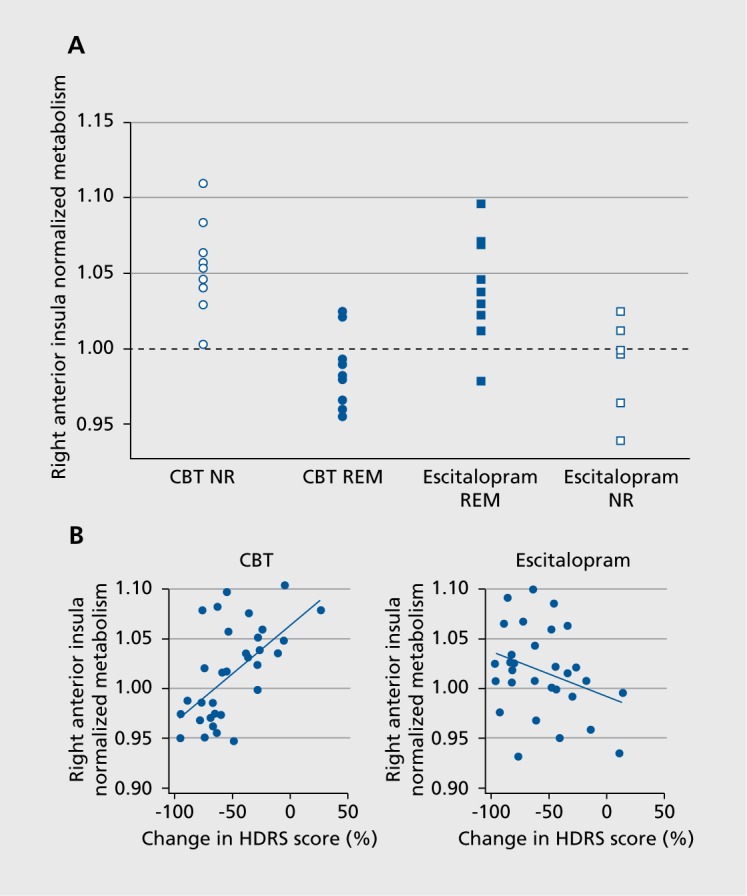
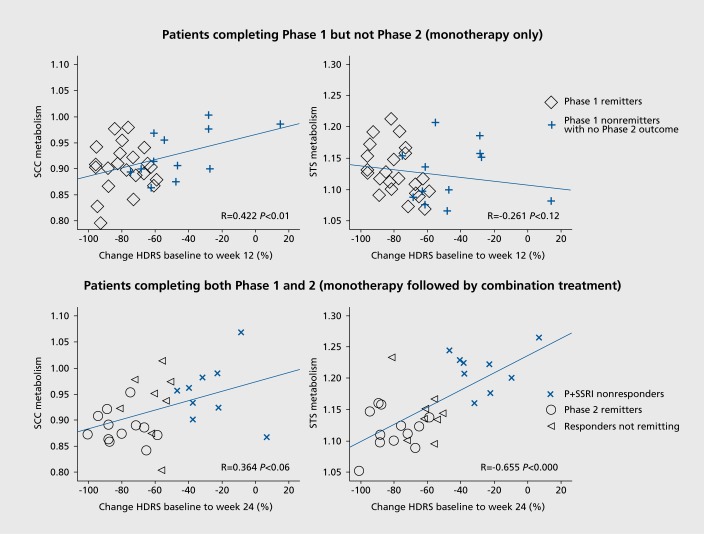
The use of neuroimaging approaches to identify likely treatment outcomes in patients with major depressive disorder is developing rapidly. Emerging work suggests that resting state pretreatment metabolic activity in the fronto-insular cortex may distinguish between patients likely to respond to psychotherapy or medication and may function as a treatment-selection biomarker. In contrast, high metabolic activity in the subgenual anterior cingulate cortex may be predictive of poor outcomes to both medication and psychotherapy, suggesting that nonstandard treatments may be pursued earlier in the treatment course. Although these findings will require replication before clinical adoption, they provide preliminary support for the concept that brain states can be measured and applied to the selection of a specific treatment most likely to be beneficial for an individual patient.
Overview
The claims and statistics of this paper haven’t been checked yet.
Free: it reads the open-access text and checks the first 5 claims that cite a source we can check. Create a free account to check every claim.
Integrity signals
Registry
Cites
Statistics
Figures
Verification
Claims the paper makes
The claims and statistics of this paper haven’t been checked yet.
Free: it reads the open-access text and checks the first 5 claims that cite a source we can check. Create a free account to check every claim.
Claims other papers make about this one
Each is checked against this paper’s own text: does it say what the citing paper says it does?
The cited source says what the claim attributes to it.
In the citing paper
“this region is thought to play a central role in the pathophysiology of MDD (Dunlop & Mayberg, 2014).”
From A novel resting-state functional magnetic resonance imaging signature of resilience to recurrent depression (2017) · cites this paper as Dunlop & Mayberg, 2014
Self-check
Percentages, sums and reported differences re-computed from the paper’s own numbers.
The self-check needs the paper’s full text.
Citations
Cites
A default mode of brain function
Raichle, M. E., MacLeod, A. M., Snyder, A. Z., Powers, W. J., Gusnard, D. A., & Shulman, G. L. (2001) · Proceedings of the National Academy of Sciences · doi:10.1073/pnas.98.2.676 · Cited by 12,190
The Brain's Default Network: Anatomy, Function, and Relevance to Disease
Buckner, R. L., Andrews‐Hanna, J. R., & Schacter, D. L. (2008) · Annals of the New York Academy of Sciences · doi:10.1196/annals.1440.011 · Cited by 9,761
Murray, C. J. L., Vos, T., Lozano, R., Naghavi, M., Flaxman, A. D., Michaud, C., Ezzati, M., Shibuya, K., Salomon, J. A., Abdalla, S., et al. (2012) · The Lancet · doi:10.1016/s0140-6736(12)61689-4 · Cited by 8,888
Dissociable intrinsic connectivity networks for salience processing and executive control
Seeley, W. W., Menon, V., Schatzberg, A. F., Keller, J., Glover, G. H., Kenna, H., Reiss, A. L., & Greicius, M. D. (2007) · The Journal of Neuroscience · doi:10.1523/jneurosci.5587-06.2007 · Cited by 7,426
Spontaneous fluctuations in brain activity observed with functional magnetic resonance imaging
Fox, M. D., & Raichle, M. E. (2007) · Nature Reviews Neuroscience · doi:10.1038/nrn2201 · Cited by 6,700 · cited 1×
“31,32,34 Although single-treatment modality imaging do not help answer the clinical question of what is the optimal type of intervention for an individual, they may provide supporting data toward understanding treatment response patterns for a specific modality.”
BackgroundHow do you feel — now? The anterior insula and human awareness
(Bud) Craig, A. D. (2009) · Nature Reviews Neuroscience · doi:10.1038/nrn2555 · Cited by 6,657 · cited 1×
“64 Thus, of the structural imaging predictors, reduced hippocampal volume may serve as a nonspecific predictor of a poor treatment outcome, but the data, to date, do”
BackgroundSaliency, switching, attention and control: a network model of insula function
Menon, V., & Uddin, L. Q. (2010) · Brain Structure and Function · doi:10.1007/s00429-010-0262-0 · Cited by 5,592
Deep Brain Stimulation for Treatment-Resistant Depression
Mayberg, H. S., Lozano, A. M., Voon, V., McNeely, H. E., Seminowicz, D., Hamani, C., Schwalb, J. M., & Kennedy, S. H. (2005) · Neuron · doi:10.1016/j.neuron.2005.02.014 · Cited by 4,059 · cited 2×
“…group-level continuous outcomes, such as overall mean change or percent improvement) are the most appropriate outcome metric for TSB studies because the individual is the unit of analysis, although more sophisticated determine a trajectory of change for each individual patient may allow for…”
BackgroundSelf-citationInflammation and Its Discontents: The Role of Cytokines in the Pathophysiology of Major Depression
Miller, A. H., Maletic, V., & Raison, C. L. (2009) · Biological Psychiatry · doi:10.1016/j.biopsych.2008.11.029 · Cited by 3,848 · cited 1×
“Most recently, the pathophysiologic role of inflammation has been recognized as a potential 13 or other predictors of treatment outcomes.”
BackgroundSridharan, D., Levitin, D. J., & Menon, V. (2008) · Proceedings of the National Academy of Sciences · doi:10.1073/pnas.0800005105 · Cited by 2,892
Mediators and Moderators of Treatment Effects in Randomized Clinical Trials
Kraemer, H. C., Wilson, G. T., Fairburn, C. G., & Agras, W. S. (2002) · Archives of General Psychiatry · doi:10.1001/archpsyc.59.10.877 · Cited by 2,562 · cited 2×
“…studies of MDD patients have found inconsistent results regarding the level of metabolic activity in the insula relative to healthy controls, both in the resting state and during emotion processing tasks. inconsistency likely represents the heterogeneity between studies of the types of MDD…”
BackgroundResultGreicius, M. D., Flores, B. H., Menon, V., Glover, G. H., Solvason, H. B., Kenna, H., Reiss, A. L., & Schatzberg, A. F. (2007) · Biological Psychiatry · doi:10.1016/j.biopsych.2006.09.020 · Cited by 2,214 · cited 1×
“…outcomes, such as overall mean change or percent improvement) are the most appropriate outcome metric for TSB studies because the individual is the unit of analysis, although more sophisticated determine a trajectory of change for each individual patient may allow for more sensitive analyses.”
BackgroundThe Evolution of the Cognitive Model of Depression and Its Neurobiological Correlates
Beck, A. T. (2008) · American Journal of Psychiatry · doi:10.1176/appi.ajp.2008.08050721 · Cited by 1,537 · cited 1×
“64 Thus, of the structural imaging predictors, reduced hippocampal volume may serve as a nonspecific predictor of a poor treatment outcome, but the data, to date, do”
BackgroundThe default mode network and self-referential processes in depression
Sheline, Y. I., Barch, D. M., Price, J. L., Rundle, M. M., Vaishnavi, S. N., Snyder, A. Z., Mintun, M. A., Wang, S., Coalson, R. S., & Raichle, M. E. (2009) · Proceedings of the National Academy of Sciences · doi:10.1073/pnas.0812686106 · Cited by 1,480
Fox, M. D., Buckner, R. L., White, M. P., Greicius, M. D., & Pascual-Leone, A. (2012) · Biological Psychiatry · doi:10.1016/j.biopsych.2012.04.028 · Cited by 1,270
A functional anatomical study of unipolar depression
Drevets, W., Videen, T., Price, J., Preskorn, S., Carmichael, S., & Raichle, M. (1992) · The Journal of Neuroscience · doi:10.1523/jneurosci.12-09-03628.1992 · Cited by 1,266 · cited 1×
“8,9 Another commonly reported finding, reduced hippocampal volume in patients, may also arise from averaging effects.”
BackgroundDiscovering Endophenotypes for Major Depression
Hasler, G., Drevets, W. C., Manji, H. K., & Charney, D. S. (2004) · Neuropsychopharmacology · doi:10.1038/sj.npp.1300506 · Cited by 1,123
Mayberg, H. S., Brannan, S. K., Tekell, J. L., Silva, J. A., Mahurin, R. K., McGinnis, S., & Jerabek, P. A. (2000) · Biological Psychiatry · doi:10.1016/s0006-3223(00)01036-2 · Cited by 1,115 · cited 1×
“64 Thus, of the structural imaging predictors, reduced hippocampal volume may serve as a nonspecific predictor of a poor treatment outcome, but the data, to date, do”
BackgroundSelf-citationGoldapple, K., Segal, Z., Garson, C., Lau, M., Bieling, P., Kennedy, S., & Mayberg, H. (2004) · Archives of General Psychiatry · doi:10.1001/archpsyc.61.1.34 · Cited by 1,068 · cited 2×
“8,9 Another commonly reported finding, reduced hippocampal volume in patients, may also arise from averaging effects.”
BackgroundSelf-citationTargeting abnormal neural circuits in mood and anxiety disorders: from the laboratory to the clinic
Ressler, K. J., & Mayberg, H. S. (2007) · Nature Neuroscience · doi:10.1038/nn1944 · Cited by 1,007 · cited 1×
“6 Hy-peractivity of the subcallosal cingulate cortex (SCC) is another replicated finding.”
BackgroundSelf-citationFrontocingulate Dysfunction in Depression: Toward Biomarkers of Treatment Response
Pizzagalli, D. A. (2011) · Neuropsychopharmacology · doi:10.1038/npp.2010.166 · Cited by 945
A meta‐analytic study of changes in brain activation in depression
Fitzgerald, P. B., Laird, A. R., Maller, J., & Daskalakis, Z. J. (2008) · Human Brain Mapping · doi:10.1002/hbm.20426 · Cited by 903
Chang, L. J., Yarkoni, T., Khaw, M. W., & Sanfey, A. G. (2013) · Cerebral Cortex · doi:10.1093/cercor/bhs065 · Cited by 879 · cited 1×
“64 Thus, of the structural imaging predictors, reduced hippocampal volume may serve as a nonspecific predictor of a poor treatment outcome, but the data, to date, do”
BackgroundHamilton, J. P., Furman, D. J., Chang, C., Thomason, M. E., Dennis, E., & Gotlib, I. H. (2011) · Biological Psychiatry · doi:10.1016/j.biopsych.2011.02.003 · Cited by 823
Functional connectivity of the insula in the resting brain
Cauda, F., D'Agata, F., Sacco, K., Duca, S., Geminiani, G., & Vercelli, A. (2011) · NeuroImage · doi:10.1016/j.neuroimage.2010.11.049 · Cited by 793
Kennedy, S. H., Evans, K. R., Krüger, S., Mayberg, H. S., Meyer, J. H., McCann, S., Arifuzzman, A. I., Houle, S., & Vaccarino, F. J. (2001) · American Journal of Psychiatry · doi:10.1176/appi.ajp.158.6.899 · Cited by 710
Self-citationPhillips, M. L., & Swartz, H. A. (2014) · American Journal of Psychiatry · doi:10.1176/appi.ajp.2014.13081008 · Cited by 636
Pizzagalli, D., Pascual-Marqui, R. D., Nitschke, J. B., Oakes, T. R., Larson, C. L., Abercrombie, H. C., Schaefer, S. M., Koger, J. V., Benca, R. M., & Davidson, R. J. (2001) · American Journal of Psychiatry · doi:10.1176/appi.ajp.158.3.405 · Cited by 630
Toward a Neuroimaging Treatment Selection Biomarker for Major Depressive Disorder
McGrath, C. L., Kelley, M. E., Holtzheimer, P. E., Dunlop, B. W., Craighead, W. E., Franco, A. R., Craddock, R. C., & Mayberg, H. S. (2013) · JAMA Psychiatry · doi:10.1001/jamapsychiatry.2013.143 · Cited by 561 · cited 1×
“64 Thus, of the structural imaging predictors, reduced hippocampal volume may serve as a nonspecific predictor of a poor treatment outcome, but the data, to date, do”
BackgroundSelf-citationLorenzetti, V., Allen, N. B., Fornito, A., & Yücel, M. (2009) · Journal of Affective Disorders · doi:10.1016/j.jad.2008.11.021 · Cited by 553 · cited 2×
“10 Although a subgroup of MDD patients may demonstrate reduced hippocampal volumes, there is currently no biological reason to expect MDD patients to have increased volumes compared with controls.”
BackgroundResultThe Dexamethasone Suppression Test for Diagnosis and Prognosis in Psychiatry: Commentary and Review
Arana, G. W. (1985) · Archives of General Psychiatry · doi:10.1001/archpsyc.1985.01790350067012 · Cited by 526 · cited 1×
“The first of these approaches was the dexamethasone suppression test, 11 by identification of a broad array of putative endo-phenotypes.”
MethodUse of fMRI to Predict Recovery From Unipolar Depression With Cognitive Behavior Therapy
Siegle, G. J., Carter, C. S., & Thase, M. E. (2006) · American Journal of Psychiatry · doi:10.1176/ajp.2006.163.4.735 · Cited by 495 · cited 1×
“Categorical outcomes group-level continuous outcomes, such as overall mean change or percent improvement) are the most appropriate outcome metric for TSB studies because the individual is the unit of analysis, although more sophisticated determine a trajectory of change for each individual patient…”
BackgroundKennedy, S. H., Konarski, J. Z., Segal, Z. V., Lau, M. A., Bieling, P. J., McIntyre, R. S., & Mayberg, H. S. (2007) · American Journal of Psychiatry · doi:10.1176/ajp.2007.164.5.778 · Cited by 420
Self-citationUher, R., Tansey, K. E., Dew, T., Maier, W., Mors, O., Hauser, J., Dernovsek, M. Z., Henigsberg, N., Souery, D., Farmer, A., et al. (2014) · American Journal of Psychiatry · doi:10.1176/appi.ajp.2014.14010094 · Cited by 418
Fu, C. H. Y., Steiner, H., & Costafreda, S. G. (2013) · Neurobiology of Disease · doi:10.1016/j.nbd.2012.05.008 · Cited by 399 · cited 2×
“58 In the largest study to date, smaller left hippocampal volumes predicted poorer response among 167 depressed inpatients treated with medication; this effect was primarily driven by patients with recurrent MDD. Smaller hippocampal volume is also associated with poorer treatment outcomes…”
BackgroundZhang, W.-N., Chang, S.-H., Guo, L.-Y., Zhang, K.-L., & Wang, J. (2013) · Journal of Affective Disorders · doi:10.1016/j.jad.2013.06.039 · Cited by 355
Fournier, J. C., DeRubeis, R. J., Shelton, R. C., Hollon, S. D., Amsterdam, J. D., & Gallop, R. (2009) · Journal of Consulting and Clinical Psychology · doi:10.1037/a0015401 · Cited by 340 · cited 1×
“…structure volume (structural MRI); (ii) white matter integrity and density [diffusion tensor imaging (DTI)]; or (iii) functional metabolic activity patterns (fMRI), either in the resting state or in response to a certain challenge or . fMRI patterns reflect states magnetic field of the MRI scanner.”
BackgroundMartin, S. D., Martin, E., Rai, S. S., Richardson, M. A., & Royall, R. (2001) · Archives of General Psychiatry · doi:10.1001/archpsyc.58.7.641 · Cited by 321
Bruder, G. E., Sedoruk, J. P., Stewart, J. W., McGrath, P. J., Quitkin, F. M., & Tenke, C. E. (2008) · Biological Psychiatry · doi:10.1016/j.biopsych.2007.10.009 · Cited by 301
State-dependent changes in hippocampal grey matter in depression
Arnone, D., McKie, S., Elliott, R., Juhasz, G., Thomas, E. J., Downey, D., Williams, S., Deakin, J. F. W., & Anderson, I. M. (2013) · Molecular Psychiatry · doi:10.1038/mp.2012.150 · Cited by 287 · cited 1×
“In contrast, forms of MDD that do not improve with psychotherapy may reflect brain states that fail to adapt in the setting of negative emotion and cannot effectively incorporate psychotherapy to alter the mood state.”
BackgroundDelaveau, P., Jabourian, M., Lemogne, C., Guionnet, S., Bergouignan, L., & Fossati, P. (2011) · Journal of Affective Disorders · doi:10.1016/j.jad.2010.09.032 · Cited by 281
Frodl, T., Jäger, M., Smajstrlova, I., Born, C., Bottlender, R., Palladino, T., Reiser, M., Möller, H.-J., & Meisenzahl, E. M. (2008) · Journal of Psychiatry and Neuroscience · doi:10.1139/jpn.0840 · Cited by 279
de Almeida, J. R. C., & Phillips, M. L. (2013) · Biological Psychiatry · doi:10.1016/j.biopsych.2012.06.010 · Cited by 277
MacQueen, G. M., Yucel, K., Taylor, V. H., Macdonald, K., & Joffe, R. (2008) · Biological Psychiatry · doi:10.1016/j.biopsych.2008.06.027 · Cited by 274 · cited 1×
“…is a brain state specifically predictive for response to psychotherapy, in particular CBT. Psychotherapy-responsive depression may represent a brain state that is able to effectively adapt to negative capable of integrating externally presented information, such as psychotherapeutic interventions.”
BackgroundA meta-analytic study of changes in brain activation in depression
Fitzgerald, P., Maller, J., Hoy, K., Oxley, T., Daskalakis, Z., & Laird, A. (2006) · Acta Neuropsychiatrica · doi:10.1017/s0924270800031173 · Cited by 231
Sliz, D., & Hayley, S. (2012) · Frontiers in Human Neuroscience · doi:10.3389/fnhum.2012.00323 · Cited by 222
Kocsis, J. H. (2009) · Archives of General Psychiatry · doi:10.1001/archgenpsychiatry.2009.144 · Cited by 214
Siegle, G. J., Thompson, W. K., Collier, A., Berman, S. R., Feldmiller, J., Thase, M. E., & Friedman, E. S. (2012) · Archives of General Psychiatry · doi:10.1001/archgenpsychiatry.2012.65 · Cited by 208 · cited 1×
“Categorical outcomes group-level continuous outcomes, such as overall mean change or percent improvement) are the most appropriate outcome metric for TSB studies because the individual is the unit of analysis, although more sophisticated determine a trajectory of change for each individual patient…”
BackgroundDougherty, D. D., Weiss, A. P., Cosgrove, G. R., Alpert, N. M., Cassem, E. H., Nierenberg, A. A., Price, B. H., Mayberg, H. S., Fischman, A. J., & Rauch, S. L. (2003) · Journal of Neurosurgery · doi:10.3171/jns.2003.99.6.1010 · Cited by 193 · cited 1×
“16 For categorical outcomes, remission should be the standard for successful treatment, not response as typically defined (ie, ≥ 50% reduction from baseline score).”
BackgroundSelf-citationNeuroanatomic Correlates of Psychopathologic Components of Major Depressive Disorder
Milak, M. S., Parsey, R. V., Keilp, J., Oquendo, M. A., Malone, K. M., & Mann, J. J. (2005) · Archives of General Psychiatry · doi:10.1001/archpsyc.62.4.397 · Cited by 178
Leuchter, A. F., Cook, I. A., Marangell, L. B., Gilmer, W. S., Burgoyne, K. S., Howland, R. H., Trivedi, M. H., Zisook, S., Jain, R., McCracken, J. T., et al. (2009) · Psychiatry Research · doi:10.1016/j.psychres.2009.06.004 · Cited by 177
Tendolkar, I., van Beek, M., van Oostrom, I., Mulder, M., Janzing, J., Voshaar, R. O., & van Eijndhoven, P. (2013) · Psychiatry Research: Neuroimaging · doi:10.1016/j.pscychresns.2013.09.004 · Cited by 161
Tenke, C. E., Kayser, J., Manna, C. G., Fekri, S., Kroppmann, C. J., Schaller, J. D., Alschuler, D. M., Stewart, J. W., McGrath, P. J., & Bruder, G. E. (2011) · Biological Psychiatry · doi:10.1016/j.biopsych.2011.02.016 · Cited by 158
Levy‐Gigi, E., Szabó, C., Kelemen, O., & Kéri, S. (2013) · Biological Psychiatry · doi:10.1016/j.biopsych.2013.05.017 · Cited by 155
Konarski, J. Z., Kennedy, S. H., Segal, Z. V., Lau, M. A., Bieling, P. J., McIntyre, R. S., & Mayberg, H. S. (2009) · Journal of Psychiatry and Neuroscience · doi:10.1139/jpn.0923 · Cited by 149 · cited 1×
“Categorical outcomes group-level continuous outcomes, such as overall mean change or percent improvement) are the most appropriate outcome metric for TSB studies because the individual is the unit of analysis, although more sophisticated determine a trajectory of change for each individual patient…”
BackgroundSelf-citationPretreatment Brain States Identify Likely Nonresponse to Standard Treatments for Depression
McGrath, C. L., Kelley, M. E., Dunlop, B. W., Holtzheimer III, P. E., Craighead, W. E., & Mayberg, H. S. (2014) · Biological Psychiatry · doi:10.1016/j.biopsych.2013.12.005 · Cited by 139
Self-citationCraighead, W. E., & Dunlop, B. W. (2014) · Annual Review of Psychology · doi:10.1146/annurev.psych.121208.131653 · Cited by 128
Self-citationBreast Cancer in the Personal Genomics Era
Ellsworth, R. E., Decewicz, D. J., Shriver, C. D., & Ellsworth, D. L. (2010) · Current Genomics · doi:10.2174/138920210791110951 · Cited by 108
Hippocampal volume and 2-year outcome in depression
Kronmüller, K.-T., Pantel, J., Köhler, S., Victor, D., Giesel, F., Magnotta, V. A., Mundt, C., Essig, M., & Schröder, J. (2008) · British Journal of Psychiatry · doi:10.1192/bjp.bp.107.040378 · Cited by 107
Little, J. T., Ketter, T. A., Kimbrell, T. A., Dunn, R. T., Benson, B. E., Willis, M. W., Luckenbaugh, D. A., & Post, R. M. (2005) · Biological Psychiatry · doi:10.1016/j.biopsych.2004.10.033 · Cited by 104
Heller, A. S., Johnstone, T., Peterson, M. J., Kolden, G. G., Kalin, N. H., & Davidson, R. J. (2013) · JAMA Psychiatry · doi:10.1001/jamapsychiatry.2013.2430 · Cited by 98
Wagner, G., Koch, K., Schachtzabel, C., Sobanski, T., Reichenbach, J. R., Sauer, H., & Schlösser, R. G. M. (2010) · Journal of Psychiatry and Neuroscience · doi:10.1139/jpn.090081 · Cited by 81
Brain activation predicts treatment improvement in patients with major depressive disorder
Samson, A. C., Meisenzahl, E., Scheuerecker, J., Rose, E., Schoepf, V., Wiesmann, M., & Frodl, T. (2011) · Journal of Psychiatric Research · doi:10.1016/j.jpsychires.2011.03.009 · Cited by 78
Treadway, M. T., & Pizzagalli, D. A. (2014) · Biology of Mood & Anxiety Disorders · doi:10.1186/2045-5380-4-5 · Cited by 76
Kito, S., Hasegawa, T., & Koga, Y. (2011) · Psychiatry and Clinical Neurosciences · doi:10.1111/j.1440-1819.2010.02183.x · Cited by 68 · cited 1×
“64 Thus, of the structural imaging predictors, reduced hippocampal volume may serve as a nonspecific predictor of a poor treatment outcome, but the data, to date, do”
BackgroundFrodl, T., Scheuerecker, J., Schoepf, V., Linn, J., Koutsouleris, N., Bokde, A. L. W., Hampel, H., Möller, H.-J., Brückmann, H., Wiesmann, M., et al. (2011) · The Journal of Clinical Psychiatry · doi:10.4088/jcp.09m05393blu · Cited by 62
Milak, M. S., Parsey, R. V., Lee, L., Oquendo, M. A., Olvet, D. M., Eipper, F., Malone, K., & Mann, J. J. (2009) · Psychiatry Research: Neuroimaging · doi:10.1016/j.pscychresns.2008.09.004 · Cited by 58 · cited 1×
“58 In the largest study to date, smaller left hippocampal volumes predicted poorer response among 167 depressed inpatients treated with medication; this effect was primarily driven by patients with recurrent MDD. Smaller hippocampal volume is also associated with poorer treatment outcomes…”
BackgroundBaseline Brain Metabolism in Resistant Depression and Response to Transcranial Magnetic Stimulation
Martinot, M.-L. P., Martinot, J.-L., Ringuenet, D., Galinowski, A., Gallarda, T., Bellivier, F., Lefaucheur, J.-P., Lemaitre, H., & Artiges, E. (2011) · Neuropsychopharmacology · doi:10.1038/npp.2011.161 · Cited by 55
Prediction of antidepressant treatment response from gray matter volume across diagnostic categories
Sämann, P. G., Höhn, D., Chechko, N., Kloiber, S., Lucae, S., Ising, M., Holsboer, F., & Czisch, M. (2013) · European Neuropsychopharmacology · doi:10.1016/j.euroneuro.2013.07.004 · Cited by 55
Rizvi, S. J., Salomons, T. V., Konarski, J. Z., Downar, J., Giacobbe, P., McIntyre, R. S., & Kennedy, S. H. (2013) · Journal of Affective Disorders · doi:10.1016/j.jad.2013.06.050 · Cited by 45 · cited 1×
“64 Thus, of the structural imaging predictors, reduced hippocampal volume may serve as a nonspecific predictor of a poor treatment outcome, but the data, to date, do”
BackgroundDunlop, B. W., Kelley, M. E., McGrath, C. L., Craighead, W. E., & Mayberg, H. S. (2015) · The Journal of Neuropsychiatry and Clinical Neurosciences · doi:10.1176/appi.neuropsych.14030048 · Cited by 43
Self-citationConway, C. R., Chibnall, J. T., Gangwani, S., Mintun, M. A., Price, J. L., Hershey, T., Giuffra, L. A., Bucholz, R. D., Christensen, J. J., & Sheline, Y. I. (2012) · Journal of Affective Disorders · doi:10.1016/j.jad.2012.02.007 · Cited by 40 · cited 1×
“64 Thus, of the structural imaging predictors, reduced hippocampal volume may serve as a nonspecific predictor of a poor treatment outcome, but the data, to date, do”
BackgroundShould We Expect “Neural Signatures” forDSMDiagnoses?
Gillihan, S. J., & Parens, E. (2011) · The Journal of Clinical Psychiatry · doi:10.4088/jcp.10r06332gre · Cited by 34 · cited 1×
“7 Indeed, some studies have found increased activity in the DLPFC, suggesting that different subgroups of patients may neurologically neurologically adapt to the depressive illness in divergent ways.”
BackgroundRentzsch, J., Adli, M., Wiethoff, K., de Castro, A. G.-C., & Gallinat, J. (2013) · European Archives of Psychiatry and Clinical Neuroscience · doi:10.1007/s00406-013-0424-1 · Cited by 29
Brody, A. L., Saxena, S., Stoessel, P., Gillies, L. A., Fairbanks, L. A., Alborzian, S., Phelps, M. E., Huang, S.-C., Wu, H.-M., Ho, M. L., et al. (2001) · Archives of General Psychiatry · doi:10.1001/archpsyc.58.7.631 · Cited by 5
Research works printed but not linked: 1
- 33. American Psychiatric Association. Practice Guideline for the Treatment of Patients With Major Depressive Disorder. 3rd ed. Arlington, VA: American Psychiatric Association; 2010.
Cited by
Lactate in the brain: from metabolic end-product to signalling molecule
Magistretti, P. J., & Allaman, I. (2018) · Nature Reviews Neuroscience · doi:10.1038/nrn.2018.19 · Cited by 1,298
McIntyre, R. S., Rosenblat, J. D., Nemeroff, C. B., Sanacora, G., Murrough, J. W., Berk, M., Brietzke, E., Dodd, S., Gorwood, P., Ho, R., et al. (2021) · American Journal of Psychiatry · doi:10.1176/appi.ajp.2020.20081251 · Cited by 731
“Overactivity in the sgACC is a replicated pathological feature ofmajor depressive disorder, and reduction of activity in the sgACC is associatedwith response to conventional antidepressant treatments (31, 33).”
ResultPrecision psychiatry: a neural circuit taxonomy for depression and anxiety
Williams, L. M. (2016) · The Lancet Psychiatry · doi:10.1016/s2215-0366(15)00579-9 · Cited by 641
Psilocybin for treatment-resistant depression: fMRI-measured brain mechanisms
Carhart-Harris, R. L., Roseman, L., Bolstridge, M., Demetriou, L., Pannekoek, J. N., Wall, M. B., Tanner, M., Kaelen, M., McGonigle, J., Murphy, K., et al. (2017) · Scientific Reports · doi:10.1038/s41598-017-13282-7 · Cited by 587
Dunlop, B. W., Rajendra, J. K., Craighead, W. E., Kelley, M. E., McGrath, C. L., Choi, K. S., Kinkead, B., Nemeroff, C. B., & Mayberg, H. S. (2017) · American Journal of Psychiatry · doi:10.1176/appi.ajp.2016.16050518 · Cited by 342
“We have previously proposed that psychotherapy-responsive depression may represent a brain state with sufficiently adequate connectivity in mood-regulating systems such that engagement of these systems via psychotherapy can reduce negative emotional states (25).”
Self-citation
Metadata
- Authors
- Dunlop, B. W., & Mayberg, H. S.
- Affiliations
- Emory University (US)
- Corresponding author
- Dunlop, Boadie W.
- Venue
- Dialogues in Clinical Neuroscience
- Publisher
- Informa UK Limited
- Published
- 2014-12-31
- Volume
- 16
- Issue
- 4
- Pages
- 479-490
- ISSN
- 1294-8322 (ISSN-L)
- 1958-5969
- PMC
- PMC4336918
- OpenAlex
- W202043522
- Cited by
- 127
- References
- 75
- Citations by year
- 2026: 7 · 2025: 10 · 2024: 8 · 2023: 7 · 2022: 7 · 2021: 9 · 2020: 15 · 2019: 12 · 2018: 14 · 2017: 16 · 2016: 15 · 2015: 5
- FWCI
- 8.75
- Type
- journal article
- Language
- en
- Open access
- diamond
- doi.org
- Licence
- Locations
- Dialogues in Clinical Neuroscience (publishedVersion, cc-by-nc-nd)
- Europe PMC (PubMed Central) (publishedVersion, cc-by-nc-nd)
- PubMed Central (publishedVersion, cc-by-nc-nd)
- PubMed (publishedVersion)
- Funders
- National Institute of Mental Health (R01MH073719)
- Topics
- Health Sciences › Medicine › Pharmacology (medical) › Treatment of Major Depression
- Life Sciences › Neuroscience › Cognitive Neuroscience › Functional Brain Connectivity Studies
- Life Sciences › Neuroscience › Neurology › Transcranial Magnetic Stimulation Studies
- Keywords
- major depressive disorder, treatment selection, neuroimaging biomarkers, subgenual anterior cingulate cortex, treatment response prediction, psychotherapy, antidepressants, personalized treatment
- MeSH terms
- Antidepressive Agents, Brain, Depressive Disorder, Major, Major Depressive Disorder, Humans, Biomarkers, Precision Medicine, Neuroimaging
About these checks
Registry, retraction, Cites and statistics results are computed, not judged, with one exception: a printed reference that no index lists is read once by a model before it counts as a citation error. Claims are extracted by a model and kept only when their quote appears verbatim in the text; each cited source is then checked, with a model’s help, for whether it says what the claim relies on. Those verdicts can be wrong — read the claim’s quote and the cited source before relying on one.
Statistics and arithmetic are recomputed, not judged.
Confidence bands are shown only for fields calibrated on our annotated test set. None is calibrated yet, so no band is shown.
What counts as a claim ›How we measure confidence ›How we check this ›
Are you an author, or do you see a problem with this page? Request a review
Data sources
Bibliographic data: Semantic Scholar, OpenAlex, Crossref.
Contains information from the Semantic Scholar Academic Graph Datasets, made available under the ODC Attribution License (ODC-BY 1.0).
Semantic Scholar’s data is described in: Kinney, R., et al. (2023). The Semantic Scholar Open Data Platform. arXiv:2301.10140.
