

The frontoparietal network: function, electrophysiology, and importance of individual precision mapping
Open accessThe DOI matches its Crossref record; 63 of the 63 references it cites were found in a registry or an index.
Abstract
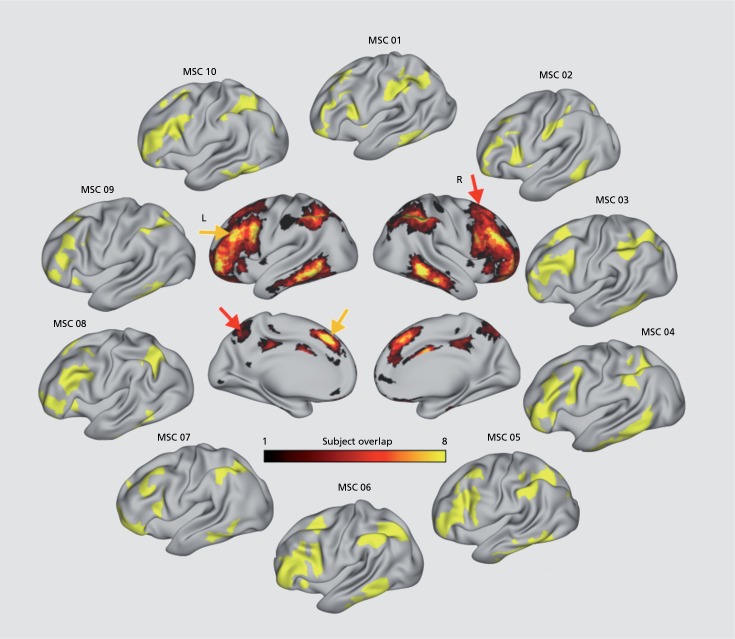
The frontoparietal network is critical for our ability to coordinate behavior in a rapid, accurate, and flexible goal-driven manner. In this review, we outline support for the framing of the frontoparietal network as a distinct control network, in part functioning to flexibly interact with and alter other functional brain networks. This network coordination likely occurs in a 4 Hz to 73 Hz θ/α rhythm, both during resting state and task state. Precision mapping of individual human brains has revealed that the functional topography of the frontoparietal network is variable between individuals, underscoring the notion that group-average studies of the frontoparietal network may be obscuring important typical and atypical features. Many forms of psychopathology implicate the frontoparietal network, such as schizophrenia and attention-deficit/hyperactivity disorder. Given the interindividual variability in frontoparietal network organization, clinical studies will likely benefit greatly from acquiring more individual subject data to accurately characterize resting-state networks compromised in psychopathology.
Overview
The claims and statistics of this paper haven’t been checked yet.
Free: it reads the open-access text and checks the first 5 claims that cite a source we can check. Create a free account to check every claim.
Integrity signals
Registry
Cites
Statistics
Figures
Verification
Claims the paper makes
The claims and statistics of this paper haven’t been checked yet.
Free: it reads the open-access text and checks the first 5 claims that cite a source we can check. Create a free account to check every claim.
Claims other papers make about this one
Each is checked against this paper’s own text: does it say what the citing paper says it does?
The source backs part of the claim, not all of it — or backs it for a different population, condition or comparison.
In the citing paper
“These dorsal cognitive regions connect to inferior parietal regions, forming the frontoparietal network [162–163]”
From Toward a neurocircuit-based taxonomy to guide treatment of obsessive-compulsive disorder (2021) · cites this paper as [162]
Experimental — accuracy not yet measuredIn the citing paper
“The most common target in MDD has been left dorsolateral prefrontal cortex (DLPFC), which is generally considered to be a node in the cognitive control network, albeit one that interfaces with the fronto-parietal attention network130.”
From Paying attention to attention in depression (2019) · cites this paper as [130]
Self-check
Percentages, sums and reported differences re-computed from the paper’s own numbers.
The self-check needs the paper’s full text.
Citations
Cites
The attention system of the human brain
Posner, M. I., & Petersen, S. E. (1990) · Annual Review of Neuroscience · doi:10.1146/annurev.ne.13.030190.000325 · Cited by 8,070
Saliency, switching, attention and control: a network model of insula function
Menon, V., & Uddin, L. Q. (2010) · Brain Structure and Function · doi:10.1007/s00429-010-0262-0 · Cited by 5,592
A mechanism for cognitive dynamics: neuronal communication through neuronal coherence.
Fries, P. (2005) · Trends in Cognitive Sciences · doi:10.1016/j.tics.2005.08.011 · Cited by 4,284
Functional Network Organization of the Human Brain
Power, J. D., Cohen, A. L., Nelson, S. M., Wig, G. S., Barnes, K. A., Church, J. A., Vogel, A. C., Laumann, T. O., Miezin, F. M., Schlaggar, B. L., et al. (2011) · Neuron · doi:10.1016/j.neuron.2011.09.006 · Cited by 4,124
EEG alpha oscillations: The inhibition–timing hypothesis
Klimesch, W., Sauseng, P., & Hanslmayr, S. (2007) · Brain Research Reviews · doi:10.1016/j.brainresrev.2006.06.003 · Cited by 3,891
Conflict monitoring and anterior cingulate cortex: an update
Botvinick, M. M., Cohen, J. D., & Carter, C. S. (2004) · Trends in Cognitive Sciences · doi:10.1016/j.tics.2004.10.003 · Cited by 3,623
The attention system of the human brain: 20 years after
Petersen, S. E., & Posner, M. I. (2012) · Annual Review of Neuroscience · doi:10.1146/annurev-neuro-062111-150525 · Cited by 3,439
Toward the future of psychiatric diagnosis: the seven pillars of RDoC
Cuthbert, B. N., & Insel, T. R. (2013) · BMC Medicine · doi:10.1186/1741-7015-11-126 · Cited by 3,053
Sridharan, D., Levitin, D. J., & Menon, V. (2008) · Proceedings of the National Academy of Sciences · doi:10.1073/pnas.0800005105 · Cited by 2,892
Neurocognitive deficit in schizophrenia: A quantitative review of the evidence.
Heinrichs, R. W., & Zakzanis, K. K. (1998) · Neuropsychology · doi:10.1037/0894-4105.12.3.426 · Cited by 2,798
Cited by
Items 101–200 of 836
Hawco, C. S., Yoganathan, L., Voineskos, A. N., Lyon, R. E., Tan, T., Daskalakis, Z. J., Blumberger, D. M., Croarkin, P. E., Lai, M., Szatmári, P., et al. (2020) · NeuroImage Clinical · doi:10.1016/j.nicl.2020.102260 · Cited by 34
Soleimani, G., Kuplicki, R., Bodurka, J., Paulus, M. P., & Ekhtiari, H. (2022) · Brain stimulation · doi:10.1016/j.brs.2022.01.008 · Cited by 31
“, default mode) networks based on detecting and filtering salient stimuli [1].”
BackgroundMethodSaviola, F., Zigiotto, L., Novello, L., Zacà, D., Annicchiarico, L., Corsini, F., Rozzanigo, U., Papagno, C., Jovicich, J., & Sarubbo, S. (2022) · Brain Structure and Function · doi:10.1007/s00429-022-02490-1 · Cited by 35
The brain’s cingulo-opercular action-mode networkPreprint
Dosenbach, N. U. F., Raichle, M. E., & Gordon, E. M. (2024) · doi:10.31234/osf.io/2vt79 · Cited by 32
Self-citationFunctional Coupling of the Locus Coeruleus Is Linked to Successful Cognitive Control
Grueschow, M., Kleim, B., & Ruff, C. C. (2022) · Brain Sciences · doi:10.3390/brainsci12030305 · Cited by 37
“This preferential processing of relevant information incurs processing costs, supported by the fronto-parietal network, resulting in increased reaction times [18,19].”
BackgroundKaiser, J., Iliopoulos, P., Steinmassl, K., & Schütz‐Bosbach, S. (2022) · Journal of Cognitive Neuroscience · doi:10.1162/jocn_a_01846 · Cited by 33
“Previous studies found evidence that cognitive control is related to increased activity in the frontoparietal network ( Jiang et al., 2018; Marek & Dosenbach, 2018; Kaiser et al. 1085 Walsh, Buonocore, Carter, &Mangun, 2011).”
BackgroundZhang, J., Zhao, T., Zhang, J., Zhang, Z., Li, H., Cheng, B., Pang, Y., Wu, H., & Wang, J. (2022) · Human Brain Mapping · doi:10.1002/hbm.25985 · Cited by 32
“…Perkins et al., 2015; Wang et al., 2019) while FPN is implicated in cognitive control process during externally oriented tasks (Cheng et al., 2021; Marek & Dosenbach, 2018; Wang, Wei, et al., 2018; Wang, Wei, et al., 2020), sustained attention, and working memory (Liu et al., 2021; Ptak, 2012).”
BackgroundZou, J., Yin, Y., Lin, Z., & Gong, Y. (2023) · Frontiers in Neuroscience · doi:10.3389/fnins.2023.1168773 · Cited by 30
“The functional integration of the FPN and overall cognitive ability have a significant positive correlation, suggesting that the strength of functional integration of the FPN and the rest of the brain is crucial for supporting superior cognitive functioning (Marek and Dosenbach, 2018).”
BackgroundFunctional connectivity in rumination: a systematic review of magnetic resonance imaging studies
Mısır, E., Alıcı, Y. H., & Koçak, O. M. (2023) · Journal of Clinical and Experimental Neuropsychology · doi:10.1080/13803395.2024.2315312 · Cited by 32
“The FPN is a crucial brain network consisting of interconnected regions in the frontal and parietal lobes responsible for a wide range of cognitive functions, including attention, working memory, decision-making, and goal-directed behavior (Marek & Dosenbach, 2018).”
BackgroundCortical and subcortical functional connectivity and cognitive impairment in Parkinson’s disease
Yeager, B. E., Twedt, H. P., Bruss, J., Schultz, J. L., & Narayanan, N. S. (2024) · NeuroImage Clinical · doi:10.1016/j.nicl.2024.103610 · Cited by 42
“It is necessary for coordinating and adapting behavior in a top-down, goal-directed manner (Dosenbach et al., 2008; Marek and Dosenbach, 2018).”
BackgroundResting-State Functional Correlates of Social Cognition in Multiple Sclerosis: An Explorative Study
Bisecco, A., Altieri, M., Santangelo, G., Nardo, F. D., Docimo, R., Caiazzo, G., Capuano, R., Pappacena, S., d’Ambrosio, A., Bonavita, S., et al. (2020) · Frontiers in Behavioral Neuroscience · doi:10.3389/fnbeh.2019.00276 · Cited by 32
“…al., 2018); (2) the right and left fronto-parietal network (FPN), involved in cognitive control and in allocating attentional resources (Marek and Dosenbach, 2018); (3) the executive network (EN), engaged in high-level cognitive functions such as goal-directed behavior, working memory, and…”
BackgroundBahi, C., Irrmischer, M., Franken, K., Fejer, G., Schlenker, A., Deijen, J. B., & Engelbregt, H. (2023) · Current Psychology · doi:10.1007/s12144-023-05119-6 · Cited by 35
“Research shows that the frontoparietal network demonstrates a large degree of connectivity to many diverse brain networks and is crucial for supporting superior cognitive functioning (Marek & Dosenbach, 2018).”
Neural synchronization as a function of engagement with the narrative
Ohad, T., & Yeshurun, Y. (2023) · NeuroImage · doi:10.1016/j.neuroimage.2023.120215 · Cited by 36
Coronel‐Oliveros, C., Medel, V., Whitaker, G. A., Astudillo, A., Gallagher, D. M., Rivera, L. Z., Prado, P., El‐Deredy, W., Orio, P., & Weinstein, A. (2024) · Network Neuroscience · doi:10.1162/netn_a_00352 · Cited by 30
“These results are consistent both with the cognitive deficits triggered by high altitude (Asmaro et al., 2013; de Aquino Lemos et al., 2012; Malle et al., 2016) and the role of the fronto-parietal network in supporting attention and executive functions (Marek & Dosenbach, 2018).”
ResultMultimodal multilayer network centrality relates to executive functioning
Breedt, L. C., Santos, F. A. N., Hillebrand, A., Reneman, L., van Rootselaar, A., Schoonheim, M. M., Stam, C. J., Ticheler, A., Tijms, B. M., Veltman, D. J., et al. (2023) · Network Neuroscience · doi:10.1162/netn_a_00284 · Cited by 29
Shahdadian, S., Wang, X., Wanniarachchi, H. I., Chaudhari, A., Truong, N. C. D., & Liu, H. (2022) · Journal of Neural Engineering · doi:10.1088/1741-2552/ac9ede · Cited by 31
“A significant increase in alpha power over the frontal-parietal regions clearly confirmed the ability of tPBM to neuromodulate the frontoparietal network, which is an executive network facilitating rapid instantiation of new tasks [78].”
BackgroundYu, Q., Zhang, Z., Ludyga, S., Erickson, K. I., Cheval, B., Hou, M., Pindus, D. M., Hillman, C. H., Kramer, A. F., Falck, R. S., et al. (2025) · Advanced Science · doi:10.1002/advs.202406631 · Cited by 27
Ishihara, T., Miyazaki, A., Tanaka, H., & Matsuda, T. (2020) · NeuroImage · doi:10.1016/j.neuroimage.2020.117152 · Cited by 29
“The FPN is a flexible hub, amongst other brain networks, contributing to cognitive control (Cole et al., 2013; Marek and Dosenbach, 2018).”
BackgroundNeurocognitive and functional heterogeneity in depressed youth
Baller, E. B., Kaczkurkin, A. N., Sotiras, A., Adebimpe, A., Bassett, D. S., Calkins, M. E., Chand, G. B., Cui, Z., Gur, R. E., Gur, R. C., et al. (2020) · Neuropsychopharmacology · doi:10.1038/s41386-020-00871-w · Cited by 36
Hu, Z., Liu, L., Wang, M., Jia, G., Li, H., Si, F., Dong, M., Qian, Q., & Niu, H. (2021) · Biomedical Optics Express · doi:10.1364/boe.418921 · Cited by 28
Ladda, A. M., Wallwork, S. B., & Lotze, M. (2020) · Frontiers in Psychology · doi:10.3389/fpsyg.2020.576120 · Cited by 34
Neuropsychopharmacological effects of midazolam on the human brain
Wang, J., Sun, P., & Liang, P. (2020) · Brain Informatics · doi:10.1186/s40708-020-00116-y · Cited by 30
Abdallah, M., Zahr, N. M., Saranathan, M., Honnorat, N., Farrugia, N., Pfefferbaum, A., Sullivan, E. V., & Chanraud, S. (2021) · The Cerebellum · doi:10.1007/s12311-021-01241-y · Cited by 29
Cognitive Behavioral Therapy for Anxiety in Parkinson’s Disease Induces Functional Brain Changes
Carey, G., Lopes, R., Moonen, A. J. H., Mulders, A. E. P., de Jong, J. J. A., Kuchcinski, G., Defebvre, L., Kuijf, M. L., Dujardin, K., & Leentjens, A. F. G. (2022) · Journal of Parkinson s Disease · doi:10.3233/jpd-223527 · Cited by 52
Precision functional mapping of the subcortex and cerebellum
Marek, S., & Greene, D. J. (2021) · Current Opinion in Behavioral Sciences · doi:10.1016/j.cobeha.2020.12.011 · Cited by 25
Self-citationEarl, E. H., Goyal, M. K., Mishra, S., Kannan, B., Mishra, A., Chowdhury, N., & Mishra, P. (2024) · Clinical Neurophysiology · doi:10.1016/j.clinph.2024.05.017 · Cited by 30
Choi, E. J., Vandewouw, M. M., Taylor, M. J., Arnold, P. D., Brian, J. A., Crosbie, J., Kelley, E. A., Lai, M., Liu, X., Schachar, R. J., et al. (2020) · NeuroImage Clinical · doi:10.1016/j.nicl.2020.102476 · Cited by 32
Xu, Z., Xia, M., Wang, X., Liao, X., Zhao, T., & He, Y. (2022) · Communications Biology · doi:10.1038/s42003-022-04028-x · Cited by 30
Ren, J., Su, W., Zhou, Y. C., Han, K., Pan, R., Duan, X., Liu, J., Lu, H., Zhang, P., Zhang, W., et al. (2025) · Brain stimulation · doi:10.1016/j.brs.2025.02.009 · Cited by 29
“The FCN, including parts of the DLPFC, serves as a central hub for flexible cognitive functions and executive control [24].”
Neural basis of working memory in ADHD: Load versus complexity
Mukherjee, P., Hartanto, T. A., Iosif, A., Dixon, J. F., Hinshaw, S. P., Pakyürek, M., van den Bos, W., Guyer, A. E., McClure, S. M., Schweitzer, J. B., et al. (2021) · NeuroImage Clinical · doi:10.1016/j.nicl.2021.102662 · Cited by 29
“The fronto-parietal control network is a control network which interacts with and manages tasks and other networks to support goals (Marek and Dosenbach, 2018).”
Brain Structure and Function Predict Adherence to an Exercise Intervention in Older Adults
Morris, T. P., Burzynska, A. Z., Voss, M. W., Fanning, J. T., Salerno, E. A., Prakash, R. S., Gothe, N. P., Whitfield, S., Hillman, C. H., McAuley, E., et al. (2022) · Medicine & Science in Sports & Exercise · doi:10.1249/mss.0000000000002949 · Cited by 28
Ballard, H. K., Jackson, T. B., Symm, A. C., Hicks, T. H., & Bernard, J. A. (2022) · Human Brain Mapping · doi:10.1002/hbm.26184 · Cited by 30
Karim, S. M. S., Fahad, M. S., & Rathore, R. S. (2024) · Frontiers in Neuroinformatics · doi:10.3389/fninf.2024.1384720 · Cited by 29
“Similarly significantly loss of FC in FPN, which is strongly associated with executive function and cognitive control were reported (Marek and Dosenbach, 2018; Wei et al., 2018).”
Backgroundvan den Berg, L., de Weerd, A., Reuvekamp, M., & van der Meere, J. J. (2021) · Child Neuropsychology · doi:10.1080/09297049.2021.1888906 · Cited by 27
“Some studies have shown executive (dys) function beyond the frontal lobe(Lima et al., 2017; Oyegible et al., 2018; Van Itterson & de Jong, 2018)and there is also growing evidence for a fronto-parietal network (Luckmann et al., 2014; Marek & Dosenbach, 2018; Ptak et al., 2017).”
BackgroundKuramoto Model-Based Analysis Reveals Oxytocin Effects on Brain Network Dynamics
Zheng, S., Liang, Z., Qu, Y., Wu, Q., Wu, H., & Liu, Q. (2021) · International Journal of Neural Systems · doi:10.1142/s0129065722500022 · Cited by 23
Wei, J., Hou, J., Mu, T., Sun, J., Li, S., Wu, H., Su, B., & Zhang, T. (2022) · JAMA Network Open · doi:10.1001/jamanetworkopen.2022.0970 · Cited by 27
Romanello, A., Krohn, S., von Schwanenflug, N., Chien, C., Bellmann–Strobl, J., Ruprecht, K., Paul, F., & Finke, C. (2022) · NeuroImage Clinical · doi:10.1016/j.nicl.2022.103203 · Cited by 29
“Additionally, the FPN is typically regarded as a task-positive network involved in cognitive control and facilitating coordination between other brain networks (Marek and Dosenbach, 2018).”
Resting-state BOLD signal variability is associated with individual differences in metacontrol
Zhang, C., Beste, C., Prochazkova, L., Wang, K., Speer, S. P. H., Smidts, A., Boksem, M. A. S., & Hommel, B. (2022) · Scientific Reports · doi:10.1038/s41598-022-21703-5 · Cited by 29
Zhu, Z., & Yin, L. (2023) · Frontiers in Human Neuroscience · doi:10.3389/fnhum.2023.1266753 · Cited by 26
“Human behavior is not governed by a single region of the brain, rather the collaboration of multiple brain regions is responsible for its control (Park and Friston, 2013; Marek and Dosenbach, 2018).”
BackgroundRodríguez-Vidal, L., Alcauter, S., & Barrios, F. A. (2024) · PLoS ONE · doi:10.1371/journal.pone.0298349 · Cited by 31
Shinozuka, K., Jerotic, K., Mediano, P. A. M., Zhao, A. T., Preller, K. H., Carhart-Harris, R. L., & Kringelbach, M. L. (2024) · Translational Psychiatry · doi:10.1038/s41398-024-03187-1 · Cited by 36
“We encourage future research to develop tools for modelling these relationships in order to improve our scienti fi c understanding of psychedelics.”
Childhood neglect is associated with corticostriatal circuit dysfunction in bipolar disorder adults
Hsieh, Y., Wu, R., Tseng, H., Wei, S., Huang, M., Chang, H. H., Yang, Y. K., & Chen, P. S. (2020) · Psychiatry Research · doi:10.1016/j.psychres.2020.113550 · Cited by 25
Li, J., Zeng, Q., Zhou, W., Zhai, X., Lai, C., Zhu, J., Dong, S., Lin, Z., & Cheng, G. (2020) · Frontiers in Neurology · doi:10.3389/fneur.2020.563624 · Cited by 27
Vallesi, A., Visalli, A., Gracia-Tabuenca, Z., Tarantino, V., Capizzi, M., Alcauter, S., Mantini, D., & Pini, L. (2021) · Brain Structure and Function · doi:10.1007/s00429-021-02312-w · Cited by 25
Emerson, J. R., Scott, M. W., van Schaik, P., Butcher, N. L., Kenny, R. P. W., & Eaves, D. L. (2022) · Brain and Behavior · doi:10.1002/brb3.2407 · Cited by 26
“This network is involved in many perceptual, motor, affective, and cognitive functions, such as mental imagery, theory of mind, self-awareness, integrating perceptions, spatial mapping, guidingmotor responses, and metacognition (Marek & Dosenbach, 2018).”
BackgroundTask-specific network interactions across key cognitive domains
Williams, K. A., Numssen, O., & Hartwigsen, G. (2022) · Cerebral Cortex · doi:10.1093/cercor/bhab531 · Cited by 29
Bharti, K., Graham, S. J., Benatar, M. G., Briemberg, H., Chenji, S., Dupré, N., Dionne, A., Frayne, R., Genge, A. L., Korngut, L. W., et al. (2022) · PLoS ONE · doi:10.1371/journal.pone.0269154 · Cited by 28
Luo, L., Xiao, M., Luo, Y., Yi, H., Dong, D., Liu, Y., Chen, X., Li, W., & Chen, H. (2022) · Journal of Affective Disorders · doi:10.1016/j.jad.2022.07.051 · Cited by 24
Abdallah, M., Zanitti, G., Iovène, V., & Wassermann, D. (2022) · eLife · doi:10.7554/elife.76926 · Cited by 25
Hemispheric Asymmetries of Individual Differences in Functional Connectivity
Perez, D. C., Dworetsky, A., Braga, R. M., Beeman, M. J., & Gratton, C. (2023) · Journal of Cognitive Neuroscience · doi:10.1162/jocn_a_01945 · Cited by 26
“The frontoparietal network is an important cognitive control network that is highly integrated with other large-scale systems and is thought to provide rapid and flexible modulation of other networks (Marek & Dosenbach, 2018).”
BackgroundGraph Theoretic Analysis Reveals Intranasal Oxytocin Induced Network Changes Over Frontal Regions
Zheng, S., Punia, D., Wu, H., & Liu, Q. (2021) · Neuroscience · doi:10.1016/j.neuroscience.2021.01.018 · Cited by 20
Towards causal mechanisms of consciousness through focused transcranial brain stimulation
Havlík, M., Hlinka, J., Klírová, M., Adámek, P., & Horáček, J. (2023) · Neuroscience of Consciousness · doi:10.1093/nc/niad008 · Cited by 29
Ebisch, S. J. H., Scalabrini, A., Northoff, G., Mucci, C., Sergi, M. R., Saggino, A., Aquino, A., Alparone, F. R., Perrucci, M. G., Gallese, V., et al. (2022) · Brain Sciences · doi:10.3390/brainsci12040477 · Cited by 23
“Such a multiplicity of cognitive functions of the frontoparietal network could be backed by its characteristic flexible interactions with other networks [16,55,100].”
BackgroundPerceived stress modulates the activity between the amygdala and the cortex
Caetano, I., Ferreira, S., Coelho, A., Amorim, L., Castanho, T. C., Portugal‐Nunes, C., Soares, J. M., Gonçalves, N., Sousa, R., Reis, J. S., et al. (2022) · Molecular Psychiatry · doi:10.1038/s41380-022-01780-8 · Cited by 24
McDermott, T. J., Kirlić, N., Akeman, E., Touthang, J., Cosgrove, K. T., DeVille, D. C., Clausen, A. N., White, E. J., Kuplicki, R., & Aupperle, R. L. (2020) · NeuroImage · doi:10.1016/j.neuroimage.2020.117077 · Cited by 21
Robust brain network identification from multi-subject asynchronous fMRI data
Li, J., Wisnowski, J. L., Joshi, A. A., & Leahy, R. M. (2020) · NeuroImage · doi:10.1016/j.neuroimage.2020.117615 · Cited by 18
The neural correlates of intermanual transfer
Dirren, E., Bourgeois, A., Klug, J., Kleinschmidt, A. K., van Assche, M., & Carrera, E. (2021) · NeuroImage · doi:10.1016/j.neuroimage.2021.118657 · Cited by 24
Wu, G., Mei, B., Hou, X., Wang, F., Zang, C., Zhang, X., & Zhang, Z. (2023) · BJPsych Open · doi:10.1192/bjo.2023.30 · Cited by 20
Li, H., Wang, Y., Xi, H., Zhang, J., Zhao, M., & Jia, X. (2023) · Journal of Psychiatric Research · doi:10.1016/j.jpsychires.2023.07.036 · Cited by 26
Resting‐state networks of the neonate brain identified using independent component analysis
Rajasilta, O., Tuulari, J. J., Björnsdotter, M., Scheinin, N. M., Lehtola, S. J., Saunavaara, J. P., Häkkinen, S., Merisaari, H., Parkkola, R. K., Lähdesmäki, T., et al. (2020) · Developmental Neurobiology · doi:10.1002/dneu.22742 · Cited by 28
“In adults, these prefrontal and frontal regions have been associated with various higher-order cognitive functions, such as goal-driven behavior (Marek & Dosenbach, 2018) and reward processing (Huckins et al., 2019), attention and working memory (Lara & Wallis, 2015) and mimicry to others'…”
BackgroundIncreased large-scale inter-network connectivity in relation to impulsivity in Parkinson’s disease
Koh, J., Kaneoke, Y., Donishi, T., Ishida, T., Sakata, M., Hiwatani, Y., Nakayama, Y., Yasui, M., Ishiguchi, H., Hironishi, M., et al. (2020) · Scientific Reports · doi:10.1038/s41598-020-68266-x · Cited by 23
Ketai, L. H., Komesu, Y. M., Schrader, R. M., Rogers, R. G., Sapién, R. E., Dodd, A. B., & Mayer, A. R. (2020) · American Journal of Obstetrics and Gynecology · doi:10.1016/j.ajog.2020.10.041 · Cited by 21
Wang, X., Wanniarachchi, H. I., Wu, A., & Liu, H. (2022) · Frontiers in Human Neuroscience · doi:10.3389/fnhum.2022.853909 · Cited by 22
“It is known that the FPN plays a key role in human cognition (Jann et al., 2010; Marek and Dosenbach, 2018), including attention and memory during tasks, such as memory encoding and cognitive flexibility (Chan et al.”
BackgroundXia, J., Chan, Y. H., Girish, D., & Rajapakse, J. C. (2025) · Medical Image Analysis · doi:10.1016/j.media.2025.103509 · Cited by 28
Fuentes‐Claramonte, P., Ramiro, N., Torres, L., Argila‐Plaza, I., Salgado‐Pineda, P., Soler‐Vidal, J., García‐León, M. Á., Albacete, À., Bosque, C., Panicali, F., et al. (2022) · NeuroImage Clinical · doi:10.1016/j.nicl.2022.103119 · Cited by 21
“findings [57, 58], as well as other lines of evidence [59], the parietal cortex has been considered to form part of a ‘frontoparietal network’ that contributes to cognitive control.”
BackgroundResearch on Top Archer’s EEG Microstates and Source Analysis in Different States
Gu, F., Gong, A., Qu, Y., Xiao, H., Wu, J., Nan, W., Jiang, C., & Fu, Y. (2022) · Brain Sciences · doi:10.3390/brainsci12081017 · Cited by 22
“Dorsal attention network has functional specialization nodes that promote specific processes of attention control [73], which is considered to be related to the voluntary control of attention [32,74–76], and the network supports orienting [77].”
BackgroundChronic back pain sub-grouped via psychosocial, brain and physical factors using machine learning
Tagliaferri, S. D., Wilkin, T., Angelova, M. N., Fitzgibbon, B. M., Owen, P. J., Miller, C. T., & Belavý, D. L. (2022) · Scientific Reports · doi:10.1038/s41598-022-19542-5 · Cited by 20
Urquhart, E. L., Wang, X., Liu, H., Fadel, P. J., & Alexandrakis, G. (2020) · Frontiers in Neuroscience · doi:10.3389/fnins.2020.00167 · Cited by 19
Mansouri, A., Germann, J., Boutet, A., Elias, G. J. B., Mithani, K., Chow, C. T., Karmur, B. S., Ibrahim, G. M., McAndrews, M. P., Lozano, A. M., et al. (2020) · Scientific Reports · doi:10.1038/s41598-020-67626-x · Cited by 20
Porcu, M., Cocco, L., Saloner, D., Suri, J. S., Montisci, R., Carriero, A., & Saba, L. (2020) · Journal of Neuroimaging · doi:10.1111/jon.12777 · Cited by 23
Disrupted functional brain network topology in Parkinson’s disease patients with freezing of gait
Li, N., Suo, X., Zhang, J., Lei, D., Wang, L., Li, J., Peng, J., Duan, L., Gong, Q., & Peng, R. (2021) · Neuroscience Letters · doi:10.1016/j.neulet.2021.135970 · Cited by 19
Ishihara, T., Miyazaki, A., Tanaka, H., Fujii, T., Takahashi, M., Nishina, K., Kanari, K., Takagishi, H., & Matsuda, T. (2021) · NeuroImage · doi:10.1016/j.neuroimage.2021.118196 · Cited by 22
Bilingual experience and intrinsic functional connectivity in adults, aging, and Alzheimer's disease
Jafari, Z., Perani, D., Kolb, B. E., & Mohajerani, M. H. (2021) · Annals of the New York Academy of Sciences · doi:10.1111/nyas.14666 · Cited by 23
A transdiagnostic data-driven study of children’s behaviour and the functional connectome
Jones, J. S., the CALM Team, & Astle, D. E. (2021) · Developmental Cognitive Neuroscience · doi:10.1016/j.dcn.2021.101027 · Cited by 22
The role of plasticity in the recovery of consciousness
Bagnato, S. (2022) · Handbook of clinical neurology · doi:10.1016/b978-0-12-819410-2.00020-5 · Cited by 18
Simonet, M., Ruggeri, P., Sallard, E., & Barral, J. (2022) · Scientific Reports · doi:10.1038/s41598-022-11580-3 · Cited by 19
Zhu, H., Zuo, L., Zhu, W., Jing, J., Zhang, Z., Ding, L., Wang, F., Cheng, J., Wu, Z., Wang, Y., et al. (2022) · Brain Imaging and Behavior · doi:10.1007/s11682-022-00689-8 · Cited by 22
“FPN and CON are extremely important in the support of cognitive control (Marek & Dosenbach, 2018) and execution function(Engelhardt et al., 2019).”
BackgroundHoornweder, S. V., Blanco-Mora, D. A., Depestele, S., Frieske, J., van Dun, K., Cuypers, K., Verstraelen, S., & Meesen, R. (2022) · Neuroscience · doi:10.1016/j.neuroscience.2022.06.008 · Cited by 18
Lam, T. K., Vartanian, O. A., & Hollands, J. G. (2022) · Neuropsychologia · doi:10.1016/j.neuropsychologia.2022.108350 · Cited by 23
Accumulation of network redundancy marks the early stage of Alzheimer's disease
Ghanbari, M., Li, G., Hsu, L., & Yap, P. (2023) · Human Brain Mapping · doi:10.1002/hbm.26257 · Cited by 19
Impacts of urban green infrastructure on attentional functioning: insights from an fMRI study
Jiang, X., Hu, Y., Larsen, L., Chang, C., & SULLIVAN, W. C. (2023) · Frontiers in Psychology · doi:10.3389/fpsyg.2023.1047993 · Cited by 24
“The FPCN is critical for our ability to coordinate behavior in a rapid, accurate, and flexible goal-driven manner (Marek and Dosenbach, 2018).”
Backgroundvan Esch, R., Shi, S., Bernas, A., Zinger, S., Aldenkamp, A. P., & den Hof, P. M. J. V. (2020) · Computers in Biology and Medicine · doi:10.1016/j.compbiomed.2020.104055 · Cited by 22
“These connections are of interest, because the default mode networks and the fronto-parietal right network are involved in cognitive processing [28, 35].”
BackgroundMartens, M., Filippini, N., Masaki, C., & Godlewska, B. R. (2021) · Pharmaceuticals · doi:10.3390/ph14060534 · Cited by 19
“The FPN, consisting of prefrontal and parietal cortices, is responsible for a flexible and coordinated higher order modulation of cognitive and emotional processes [19,20] and the DAN, consisting of bilateral parietal cortices and frontal eye fields (FEF), is concerned with goal-directed top-down controlled attentiona…”
BackgroundDysregulated connectivity configuration of triple-network model in obsessive-compulsive disorder
Li, H., Li, B., Cao, L., Jiang, J., Chai, S., Zhou, H., Gao, Y., Zhang, L., Zhou, Z., Hu, X., et al. (2025) · Molecular Psychiatry · doi:10.1038/s41380-025-02921-5 · Cited by 22
Stimulant medications affect arousal and reward, not attention networks
Kay, B. P., Wheelock, M. D., Siegel, J. S., Raut, R. V., Chauvin, R. J., Metoki, A., Rajesh, A., Eck, A., Pollaro, J., Wang, A., et al. (2025) · Cell · doi:10.1016/j.cell.2025.11.039 · Cited by 27
“…task-fMRI data 54 reported significant FC changes associated with stimulants in the dorsal and ventral attention networks (DAN, VAN) 55–59 and in cognitive con-trol networks such as the frontoparietal network (FPN) 60–63 and the default mode network (DMN), 64,65 which intersect prefrontal cortex.”
Self-citationWu, X., Yu, G., Zhang, K., Feng, J., Zhang, J., Sahakian, B. J., & Robbins, T. W. (2021) · Biological Psychiatry Cognitive Neuroscience and Neuroimaging · doi:10.1016/j.bpsc.2021.06.011 · Cited by 23
Fractal-Based Analysis of fMRI BOLD Signal During Naturalistic Viewing Conditions
Campbell, O., Vanderwal, T., & Weber, A. M. (2022) · Frontiers in Physiology · doi:10.3389/fphys.2021.809943 · Cited by 22
“that the frontoparietal network functions as “a flexible hub of cognitive control” (Marek and Dosenbach, 2018).”
BackgroundSrisrisawang, N., & Müller-Putz, G. (2022) · Frontiers in Human Neuroscience · doi:10.3389/fnhum.2022.830221 · Cited by 20
“As the task in this study involved the visuomotor task, we would expect the activity in the regions to correspond to the parietofrontal network (Culham and Valyear, 2006; Marek and Dosenbach, 2018).”
BackgroundMethodRattanavichit, Y., Chaikeeree, N., Boonsinsukh, R., & Kitiyanant, K. (2022) · Frontiers in Psychology · doi:10.3389/fpsyg.2022.906898 · Cited by 19
“A previous study showed that one of the early signs of dementia is cognitive rigidity, which is associated with dysfunction of the frontoparietal network (Uddin, 2021), a flexible hub for cognitive control (Marek and Dosenbach, 2018).”
BackgroundZeng, X., Han, X., Gao, F., Sun, Y., & Yuan, Z. (2023) · Journal of Behavioral Addictions · doi:10.1556/2006.2023.00025 · Cited by 20
“…dorsolateral prefrontal cortex (DLPFC) and lateral posterior parietal cortex, plays a primary role in the representation and maintenance of goals during motivated behavior, thereby supporting the selection of behavioral responses based on external and internal information (Marek & Dosenbach, 2018).”
BackgroundDiverse functional interaction driven by control-default network hubs supports creative thinking
Zhuang, K., Zeitlen, D. C., Beaty, R. E., Vatansever, D., Chen, Q., & Qiu, J. (2023) · Cerebral Cortex · doi:10.1093/cercor/bhad356 · Cited by 24
Testing the triple network model of psychopathology in a transdiagnostic neurodevelopmental cohort
Jones, J. S., Monaghan, A., Leyland‐Craggs, A., & Astle, D. E. (2023) · NeuroImage Clinical · doi:10.1016/j.nicl.2023.103539 · Cited by 23
“The CEN regulates cognitive control by coordinating externally oriented networks and suppressing the internally oriented default-mode network (Marek and Dosenbach, 2018 Jun).”
Dagnino, P. C., Escrichs, A., López‐González, A., Gosseries, O., Annen, J., Perl, Y. S., Kringelbach, M. L., Laureys, S., & Deco, G. (2024) · PLoS Computational Biology · doi:10.1371/journal.pcbi.1011350 · Cited by 21
“In addition, the fronto-parietal network has been found essential for cognitive control and goal-driven behavior coordination [87].”
BackgroundTemporal modes of hub synchronization at rest
de Pasquale, F., Spadone, S., Betti, V., Corbetta, M., & Penna, S. D. (2021) · NeuroImage · doi:10.1016/j.neuroimage.2021.118005 · Cited by 20
Resting-state functional connectivity of social brain regions predicts motivated dishonesty
Pang, L., Li, H., Liu, Q., Luo, Y., Mobbs, D., & Wu, H. (2022) · NeuroImage · doi:10.1016/j.neuroimage.2022.119253 · Cited by 18
Liu, X., TYLER, L. K., Cam‐CAN, Rowe, J. B., & Tsvetanov, K. A. (2022) · Human Brain Mapping · doi:10.1002/hbm.26025 · Cited by 17
“The FPN is an important control network, in which functional integration is positively correlated with general cognitive ability including (Marek & Dosenbach, 2018; Samu et al., 2017; Sheffield et al., 2015).”
Armstrong, M., Castellanos, J. P., & Christie, D. (2024) · Frontiers in Pain Research · doi:10.3389/fpain.2024.1346053 · Cited by 24
“These networks are the focus of much research in a variety of neuropsychiatric conditions and are described extensively elsewhere (19 – 22).”
BackgroundYu, J., Xu, Q., Ma, L., Huang, Y., Zhu, W., Liang, Y., Wang, Y., Tang, W., Zhu, C., & Jiang, X. (2024) · Frontiers in Psychiatry · doi:10.3389/fpsyt.2024.1401623 · Cited by 22
“The FPN is a fl exible cognitive control center that typically regulates and adjusts behavior in a goal-directed manner during both resting and task states (85).”
BackgroundSoman, S. M., Vijayakumar, N., Ball, G., Hyde, C. E., & Silk, T. J. (2022) · Biological Psychiatry Cognitive Neuroscience and Neuroimaging · doi:10.1016/j.bpsc.2022.01.001 · Cited by 14
Altered functional connectivity in children born very preterm at school age
Cho, H. J., Jeong, H.-J., Park, C.-A., Son, D. W., & Shim, S. (2022) · Scientific Reports · doi:10.1038/s41598-022-11184-x · Cited by 20
Metadata
- Authors
- Marek, S., & Dosenbach, N. U. F.
- Affiliations
- Washington University in St. Louis (US)
- Corresponding author
- Marek, Scott
- Venue
- Dialogues in Clinical Neuroscience
- Publisher
- Informa UK Limited
- Published
- 2018-06-30
- Volume
- 20
- Issue
- 2
- Pages
- 133-140
- ISSN
- 1294-8322 (ISSN-L)
- 1958-5969
- PMC
- PMC6136121
- OpenAlex
- W2989074529
- Cited by
- 836
- References
- 63
- Citations by year
- 2026: 136 · 2025: 142 · 2024: 131 · 2023: 113 · 2022: 124 · 2021: 93 · 2020: 77 · 2019: 17 · 2018: 2
- FWCI
- 28.14
- Type
- journal article
- Language
- en
- Open access
- diamond
- doi.org
- Licence
- Locations
- Dialogues in Clinical Neuroscience (publishedVersion, cc-by-nc-nd)
- Europe PMC (PubMed Central) (publishedVersion, cc-by-nc-nd)
- PubMed Central (publishedVersion, cc-by-nc-nd)
- PubMed (publishedVersion)
- Funders
- National Institutes of Health (UL1TR000448, UL1TR002345)
- National Institute of Mental Health (T32MH100019)
- National Institute of Neurological Disorders and Stroke (K23NS088590, P30NS098577)
- National Center for Advancing Translational Sciences
- Eunice Kennedy Shriver National Institute of Child Health and Human Development (U54HD087011)
- Topics
- Life Sciences › Neuroscience › Cognitive Neuroscience › Functional Brain Connectivity Studies
- Life Sciences › Neuroscience › Cognitive Neuroscience › Neural and Behavioral Psychology Studies
- Life Sciences › Neuroscience › Cognitive Neuroscience › Neural dynamics and brain function
- Keywords
- frontoparietal network, control network, interindividual variability, theta-alpha oscillations, resting-state networks, schizophrenia, attention deficit hyperactivity disorder, functional topography, electrophysiology
- MeSH terms
- Animals, Attention Deficit Disorder with Hyperactivity, Brain, Brain Mapping, Humans, Nerve Net, Neural Pathways, Electrophysiological Phenomena
About these checks
Registry, retraction, Cites and statistics results are computed, not judged, with one exception: a printed reference that no index lists is read once by a model before it counts as a citation error. Claims are extracted by a model and kept only when their quote appears verbatim in the text; each cited source is then checked, with a model’s help, for whether it says what the claim relies on. Those verdicts can be wrong — read the claim’s quote and the cited source before relying on one.
Statistics and arithmetic are recomputed, not judged.
Confidence bands are shown only for fields calibrated on our annotated test set. None is calibrated yet, so no band is shown.
What counts as a claim ›How we measure confidence ›How we check this ›
Are you an author, or do you see a problem with this page? Request a review
Data sources
Bibliographic data: Semantic Scholar, OpenAlex, Crossref.
Contains information from the Semantic Scholar Academic Graph Datasets, made available under the ODC Attribution License (ODC-BY 1.0).
Semantic Scholar’s data is described in: Kinney, R., et al. (2023). The Semantic Scholar Open Data Platform. arXiv:2301.10140.
