

The frontoparietal network: function, electrophysiology, and importance of individual precision mapping
Open accessThe DOI matches its Crossref record; 63 of the 63 references it cites were found in a registry or an index.
Abstract
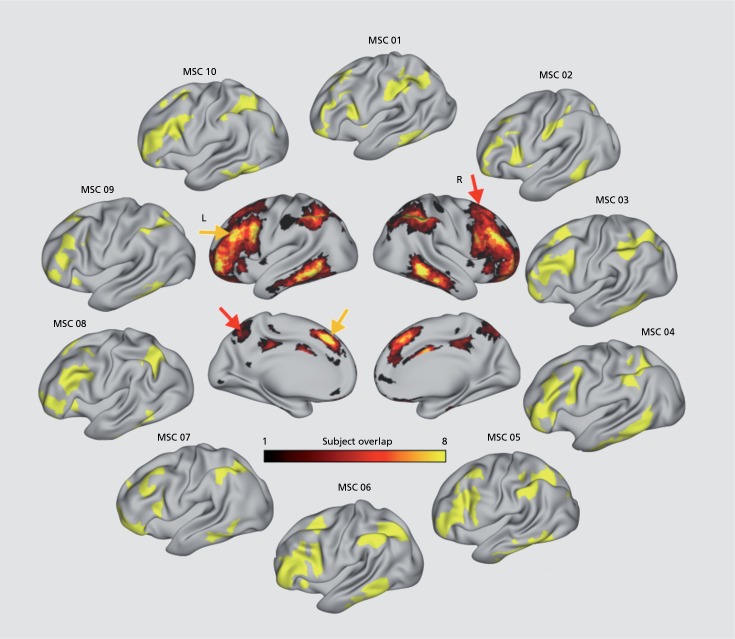
The frontoparietal network is critical for our ability to coordinate behavior in a rapid, accurate, and flexible goal-driven manner. In this review, we outline support for the framing of the frontoparietal network as a distinct control network, in part functioning to flexibly interact with and alter other functional brain networks. This network coordination likely occurs in a 4 Hz to 73 Hz θ/α rhythm, both during resting state and task state. Precision mapping of individual human brains has revealed that the functional topography of the frontoparietal network is variable between individuals, underscoring the notion that group-average studies of the frontoparietal network may be obscuring important typical and atypical features. Many forms of psychopathology implicate the frontoparietal network, such as schizophrenia and attention-deficit/hyperactivity disorder. Given the interindividual variability in frontoparietal network organization, clinical studies will likely benefit greatly from acquiring more individual subject data to accurately characterize resting-state networks compromised in psychopathology.
Overview
The claims and statistics of this paper haven’t been checked yet.
Free: it reads the open-access text and checks the first 5 claims that cite a source we can check. Create a free account to check every claim.
Integrity signals
Registry
Cites
Statistics
Figures
Verification
Claims the paper makes
The claims and statistics of this paper haven’t been checked yet.
Free: it reads the open-access text and checks the first 5 claims that cite a source we can check. Create a free account to check every claim.
Claims other papers make about this one
Each is checked against this paper’s own text: does it say what the citing paper says it does?
The source backs part of the claim, not all of it — or backs it for a different population, condition or comparison.
In the citing paper
“These dorsal cognitive regions connect to inferior parietal regions, forming the frontoparietal network [162–163]”
From Toward a neurocircuit-based taxonomy to guide treatment of obsessive-compulsive disorder (2021) · cites this paper as [162]
Experimental — accuracy not yet measuredIn the citing paper
“The most common target in MDD has been left dorsolateral prefrontal cortex (DLPFC), which is generally considered to be a node in the cognitive control network, albeit one that interfaces with the fronto-parietal attention network130.”
From Paying attention to attention in depression (2019) · cites this paper as [130]
Self-check
Percentages, sums and reported differences re-computed from the paper’s own numbers.
The self-check needs the paper’s full text.
Citations
Cites
The attention system of the human brain
Posner, M. I., & Petersen, S. E. (1990) · Annual Review of Neuroscience · doi:10.1146/annurev.ne.13.030190.000325 · Cited by 8,070
Saliency, switching, attention and control: a network model of insula function
Menon, V., & Uddin, L. Q. (2010) · Brain Structure and Function · doi:10.1007/s00429-010-0262-0 · Cited by 5,592
A mechanism for cognitive dynamics: neuronal communication through neuronal coherence.
Fries, P. (2005) · Trends in Cognitive Sciences · doi:10.1016/j.tics.2005.08.011 · Cited by 4,284
Functional Network Organization of the Human Brain
Power, J. D., Cohen, A. L., Nelson, S. M., Wig, G. S., Barnes, K. A., Church, J. A., Vogel, A. C., Laumann, T. O., Miezin, F. M., Schlaggar, B. L., et al. (2011) · Neuron · doi:10.1016/j.neuron.2011.09.006 · Cited by 4,124
EEG alpha oscillations: The inhibition–timing hypothesis
Klimesch, W., Sauseng, P., & Hanslmayr, S. (2007) · Brain Research Reviews · doi:10.1016/j.brainresrev.2006.06.003 · Cited by 3,891
Conflict monitoring and anterior cingulate cortex: an update
Botvinick, M. M., Cohen, J. D., & Carter, C. S. (2004) · Trends in Cognitive Sciences · doi:10.1016/j.tics.2004.10.003 · Cited by 3,623
The attention system of the human brain: 20 years after
Petersen, S. E., & Posner, M. I. (2012) · Annual Review of Neuroscience · doi:10.1146/annurev-neuro-062111-150525 · Cited by 3,439
Toward the future of psychiatric diagnosis: the seven pillars of RDoC
Cuthbert, B. N., & Insel, T. R. (2013) · BMC Medicine · doi:10.1186/1741-7015-11-126 · Cited by 3,053
Sridharan, D., Levitin, D. J., & Menon, V. (2008) · Proceedings of the National Academy of Sciences · doi:10.1073/pnas.0800005105 · Cited by 2,892
Neurocognitive deficit in schizophrenia: A quantitative review of the evidence.
Heinrichs, R. W., & Zakzanis, K. K. (1998) · Neuropsychology · doi:10.1037/0894-4105.12.3.426 · Cited by 2,798
Cited by
Items 401–500 of 836
Li, J., Liu, Z., Du, Z., Zhu, N., Qiu, X., & Xu, X. (2021) · Frontiers in Human Neuroscience · doi:10.3389/fnhum.2021.774656 · Cited by 9
“A great deal of evidence suggests that the coordination of goaldriven behavior is supported by the frontoparietal network (FPN) (He et al., 2007; Marek and Dosenbach, 2018).”
BackgroundCamera, V., Mariano, R., Messina, S., Menke, R., Griffanti, L., Craner, M. J., Leite, M. I., Calabrese, M., Meletti, S., Geraldes, R., et al. (2023) · Brain Communications · doi:10.1093/braincomms/fcad107 · Cited by 6
“In the context of the demyelinating diseases of the CNS, we hypothesize that fatigue could emerge from any alterations (lesional or not) involving the salience network afferent and efferent pathways (including subcortical grey matter structures) and its functionally associated networks as the fronto-parietal network,…”
BackgroundRen, Q., Kaiser, J., Gentsch, A., & Schütz‐Bosbach, S. (2023) · Cerebral Cortex · doi:10.1093/cercor/bhad141 · Cited by 7
Peng, X.-R., Bundil, I., Schulreich, S., & Li, S. (2023) · NeuroImage · doi:10.1016/j.neuroimage.2023.120327 · Cited by 7
“…the cingulo-opercular (CON) network, including the anterior cingulate and bilateral insula, was suggested to process unexpected events, highly interact with the frontoparietal regions, and engage in cognitive control (Dos-enbach et al., 2008; Marek and Dosenbach, 2018; Visalli et al., 2019).”
Individual-level functional connectivity predicts cognitive control efficiency
Deck, B. L., Kelkar, A. S., Erickson, B. A., Erani, F. R., McConathey, E. M., Sacchetti, D. L., Faseyitan, O. K., Hamilton, R. H., & Medaglia, J. D. (2023) · NeuroImage · doi:10.1016/j.neuroimage.2023.120386 · Cited by 9
Neural Systems Underlying the Implementation of Working Memory Removal Operations
DeRosa, J., Kim, H., Lewis‐Peacock, J. A., & Banich, M. T. (2023) · Journal of Neuroscience · doi:10.1523/jneurosci.0283-23.2023 · Cited by 9
Yoon, N., Kim, S., Oh, M. R., Kim, M., Lee, M.-J., & Kim, B.-N. (2024) · Brain Imaging and Behavior · doi:10.1007/s11682-024-00858-x · Cited by 9
“The fronto-frontal and fronto-parietal networks, where the most evident decreases were observed in this study, play central roles in CC (Marek & Dosenbach, 2018).”
Rivas‐Fernández, M. Á., Lindı́n, M., Dı́az, F., Zurrón, M., & Galdo‐Álvarez, S. (2021) · Biological Psychology · doi:10.1016/j.biopsycho.2021.108208 · Cited by 6
Ingram, R. U., Halai, A. D., Pobric, G., Sajjadi, S. A., Patterson, K. E., & Ralph, M. A. L. (2019) · bioRxiv (Cold Spring Harbor Laboratory) · doi:10.1101/2019.12.29.882068 · Cited by 6
Handiru, V. S., Alivar, A., Hoxha, A., Saleh, S., Suviseshamuthu, E. S., Yue, G. H., & Allexandre, D. (2020) · bioRxiv (Cold Spring Harbor Laboratory) · doi:10.1101/2020.10.08.332353 · Cited by 6
Personalized Functional Brain Network Topography Predicts Individual Differences in Youth CognitionPreprint
Keller, A. S., Pines, A. R., Sydnor, V. J., Cui, Z., Bertolero, M. A., Barzilay, R., Alexander‐Bloch, A. F., Byington, N., Chen, A. A., Conan, G. M., et al. (2022) · bioRxiv (Cold Spring Harbor Laboratory) · doi:10.1101/2022.10.11.511823 · Cited by 6
New horizons in emotional well‐being and brain aging: Potential lessons from cross‐species research
Lin, F. V., Zuo, Y., Conwell, Y., & Wang, K. H. (2023) · International Journal of Geriatric Psychiatry · doi:10.1002/gps.5936 · Cited by 7
“Activity in this network also scales with task difficulty suggesting a domain general role in effortful cognitive performance.(74) Meanwhile, vmPFC‐centered cortical networks coordinate with selected subcortical networks, such as basal ganglia”
BackgroundDong, Y., Wu, X., Zhou, Y., & Qiu, K. (2024) · Journal of Integrative Neuroscience · doi:10.31083/j.jin2301009 · Cited by 5
Yang, B., Zhou, Z., Chen, Y., Devakonda, V., Cai, T., Lee, T., & Qu, Y. (2024) · Journal of Research on Adolescence · doi:10.1111/jora.12949 · Cited by 6
ESI-GAL: EEG source imaging-based trajectory estimation for grasp and lift task
Jain, A., & Kumar, L. (2024) · Computers in Biology and Medicine · doi:10.1016/j.compbiomed.2024.109608 · Cited by 9
Houldin, E., Babbitt, E. M., Hurwitz, R., Baliki, M. N., & Cherney, L. R. (2025) · Stroke · doi:10.1161/strokeaha.124.047683 · Cited by 8
“30 Accordingly, the WAB-R comprises a wide variety of tasks, including command-following, repetition, comprehension, and spontaneous speech.”
Chen, G., Zhao, X., Xie, M., Chen, H., Shao, C., Zhang, X., Wu, Y., Liu, N., & Zhang, N. (2025) · Brain Behavior and Immunity · doi:10.1016/j.bbi.2025.01.013 · Cited by 6
Structural Cerebellar and Lateral Frontoparietal Networks are altered in CUD: An SBM Analysis
Lacomba‐Arnau, E., Martínez‐Molina, A., & Barrós‐Loscertales, A. (2025) · Addiction Biology · doi:10.1111/adb.70021 · Cited by 5
“At this point, it is important to note that the FPN exhibits significant neuro-anatomical variability among individuals [102, 110, 111], which could impact results concerning clinical and self-report variables.”
Sazhin, D., Dachs, A., & Smith, D. V. (2025) · European Journal of Neuroscience · doi:10.1111/ejn.70081 · Cited by 10
The Cognitive–Affective Social Processing and Emotion Regulation (CASPER) model
Camacho, M. C., Deshpande, E., & Perino, M. T. (2025) · Neuropsychopharmacology · doi:10.1038/s41386-025-02224-x · Cited by 11
“While the speci fi c execution of cognitive control involves coordinating functions of other networks such as the expressive language network to adjust speech or the motor network to move, the core function of cognitive control has been shown to largely fall under the CON, and FPN [107, 116, 128].”
Spatiotemporal dynamics of selective attention and visual conflict monitoring using a Stroop task
Jarrar, R., Monahan, C., Shattuck, J., Teale, P. D., Kronberg, E., Kluger, B. M., & Buard, I. (2023) · Cognitive Neuroscience · doi:10.1080/17588928.2023.2259554 · Cited by 6
“It is also heavily theorized that while the ACC detects informational conflict, it will convey the information to the DLPFC and parietal cortex (Grandjean et al., 2012; Marek & Dosenbach, 2018).”
BackgroundNkrumah, R. O., von Schröder, C., Demirakça, T., Schmahl, C. G., & Ende, G. (2023) · Neurobiology of Stress · doi:10.1016/j.ynstr.2023.100586 · Cited by 12
“For anatomical and functional details of FPN, please see (Budisavljevic et al., 2017; Marek and Dosenbach, 2018; Parlatini et al., 2017; Thomas Yeo et al., 2011).”
Obsessive-compulsive and perseverative behaviors in Huntington’s disease
Zadegan, S. A., Kupcha, L., Patiño, J., Rocha, N. P., Teixeira, A. L., & Furr-Stimming, E. E. (2023) · Behavioural Brain Research · doi:10.1016/j.bbr.2023.114767 · Cited by 9
Peters, A., Bruchmann, M., Dellert, T., Moeck, R., Schloßmacher, I., & Straube, T. (2023) · Scientific Reports · doi:10.1038/s41598-023-49857-w · Cited by 5
“Possible awareness effects in several frontoparietal areas may be associated with high interindividual heterogeneity 45 , requiring other analytical approaches.”
BackgroundMazzi, C., Mele, S., Bagattini, C., Sánchez-López, J., & Savazzi, S. (2024) · Frontiers in Human Neuroscience · doi:10.3389/fnhum.2024.1362742 · Cited by 6
“…coupled fronto-parietal network within the right hemisphere, a network that has been found to be relevant for several cognitive functions (Marek and Dosenbach, 2018), such as for example attentional performance (Fellrath et al., 2016; Rogala et al., 2020), visuo-motor processes (Naranjo…”
BackgroundLuo, L., Luo, Y., Chen, X., Xiao, M., Bian, Z., Leng, X., Li, W., Yang, Y., Yang, Y., Liu, Y., et al. (2024) · Psychiatry Research Neuroimaging · doi:10.1016/j.pscychresns.2024.111825 · Cited by 6
Structural and functional imaging features of cognitive phenotypes in pediatric multiple sclerosis
Mistri, D., Margoni, M., Pagani, E., Valsasina, P., Meani, A., Moiola, L., Filippi, M., & Rocca, M. A. (2024) · Annals of Clinical and Translational Neurology · doi:10.1002/acn3.52090 · Cited by 5
“45,46 It plays a crucial role in multiple cognitive abilities, including the retrieval of lexical information from long-term memory.”
BackgroundExamining the neurostructural architecture of intelligence: The Lothian Birth Cohort 1936 study
Page, D., Buchanan, C. R., Moodie, J. E., Harris, M. A., Taylor, A. M., Hernández, M. V., Maniega, S. M., Corley, J., Bastin, M. E., Wardlaw, J. M., et al. (2024) · Cortex · doi:10.1016/j.cortex.2024.06.007 · Cited by 5
“…implicated in the P-FIT (Jung & Haier, 2007), multiple demand network (Camilleri et al., 2018; Duncan, 2010), fronto-parietal control network (Marek et al., 2018), superordi-nate cognitive control network (Miller, 2000; Niendam et al., 2012), and extrinsic mode network (Hugdahl et al., 2019).”
BackgroundTranscutaneous auricular vagus nerve stimulation can modulate fronto-parietal brain networks
Han, S., Shim, L., Lee, H., & Park, M. K. (2024) · Frontiers in Neuroscience · doi:10.3389/fnins.2024.1368754 · Cited by 5
“This network is involved in sustained attention, novelty detection, problem-solving, working memory, and decision-making (Vincent et al., 2008; Marek and Dosenbach, 2018; De Ridder et al., 2022).”
BackgroundZhou, M.-Y., Shi, Y., Bai, S.-J., Lu, Y., Zhang, Y., Zhang, W., Wang, W., Zhu, Y., Cao, J., & Wang, L. (2025) · Journal of Clinical Anesthesia · doi:10.1016/j.jclinane.2025.111771 · Cited by 5
Triple network dynamics and future alcohol consumption in adolescents
McIntyre, C. C., Khodaei, M., Lyday, R. G., Weiner, J. L., Laurienti, P. J., & Shappell, H. M. (2025) · Alcohol, Clinical and Experimental Research · doi:10.1111/acer.70043 · Cited by 5
Hartman, S., Arnon, T., & Erez, Y. (2025) · Neuropsychologia · doi:10.1016/j.neuropsychologia.2025.109207 · Cited by 5
González, A., Pérez, P. A. G., Santapau, M., González, J. J., & Modroño, C. (2020) · Brain and Cognition · doi:10.1016/j.bandc.2020.105623 · Cited by 6
Spatiospectral brain networks reflective of improvisational experience
Faller, J., Goldman, A., Lin, Y., McIntosh, J. R., & Sajda, P. (2021) · NeuroImage · doi:10.1016/j.neuroimage.2021.118458 · Cited by 6
Locked-in Intact Functional Networks in Children with Autism Spectrum Disorder: A Case-Control Study
Pines, A. R., Sussman, B. L., Wyckoff, S. N., McCarty, P. J., Bunch, R., Frye, R. E., & Boerwinkle, V. L. (2021) · Journal of Personalized Medicine · doi:10.3390/jpm11090854 · Cited by 6
“If network engagement capacity is a key mechanism of ASD, then individual-based analysis may elucidate the network engagement potential and allow a better understanding of the clinical heterogeneity of ASD [5].”
BackgroundLam, Y.-S., Li, J., Ke, Y., & Yung, W. (2022) · Cerebral Cortex · doi:10.1093/cercor/bhac045 · Cited by 6
Verriotis, M., Sorger, C., Peters, J., Ayoub, L. J., Seunarine, K. K., Clark, C. A., Walker, S. M., & Moayedi, M. (2022) · Frontiers in Pain Research · doi:10.3389/fpain.2022.918766 · Cited by 8
Mallio, C. A., Spagnolo, G., Piervincenzi, C., Petsas, N., Boccetti, D., Spani, F., Gallo, I. F., Sisto, A., Quintiliani, L., Gennaro, G. D., et al. (2022) · Neuroradiology · doi:10.1007/s00234-022-03043-3 · Cited by 6
Na, C.-H., Jütten, K., Forster, S. D., Clusmann, H., & Mainz, V. (2022) · Brain Sciences · doi:10.3390/brainsci12111463 · Cited by 7
“With the DMPFC also being engaged in the frontoparietal control network [66], it is furthermore believed to integrate cognitive control processes into SRP and affect regulation [74].”
BackgroundKaiser, J., Gentsch, A., Rodriguez-Manrique, D., & Schütz‐Bosbach, S. (2022) · Cerebral Cortex · doi:10.1093/cercor/bhac478 · Cited by 6
Gajardo‐Vidal, A., Montembeault, M., Lorca‐Puls, D. L., Licata, A. E., Bogley, R., Erlhoff, S. J., Ratnasiri, B. M., Ezzes, Z., Battistella, G., Tsoy, E., et al. (2023) · Cortex · doi:10.1016/j.cortex.2023.10.011 · Cited by 6
“In fact, findings from previous functional imaging studies in healthy controls (Marek & Dosenbach, 2018) add to the results of our VBM analysis in PPA patients by revealing that two of the identified GM regions may be part of a fronto-parietal network, which is functionally distinct from and…”
ResultBrain Network Interconnectivity Dynamics Explain Metacognitive Differences in Listening Behavior
Alavash, M., & Obleser, J. (2024) · Journal of Neuroscience · doi:10.1523/jneurosci.2322-23.2024 · Cited by 6
Altered patterns of brain dynamics linked with body mass index in youth with autism
Kupis, L. B., Goodman, Z. T., Kircher, L., Romero, C., Dirks, B., Chang, C., Nomi, J. S., & Uddin, L. Q. (2021) · Autism Research · doi:10.1002/aur.2488 · Cited by 6
“Frontal networks are important for coordinating behavior flexibly and accurately (Marek & Dosenbach, 2018).”
BackgroundEEG topographic features for assessing skill levels during laparoscopic surgical trainingPreprint
Manabe, T., Walia, P., Fu, Y., Intes, X., De, S., Schwaitzberg, S. D., Cavuoto, L. A., & Dutta, A. (2022) · Research Square · doi:10.21203/rs.3.rs-1934633/v1 · Cited by 6
Qu, Y., Chen, J.-Z., Tam, A., Ooi, L., Dhamala, E., Cocuzza, C., Lawhead, C., Yeo, B. T. T., & Holmes, A. (2023) · bioRxiv · doi:10.1101/2023.05.20.541490 · Cited by 4
Chopra, S., Cocuzza, C. V., Lawhead, C., Ricard, J. A., Labache, L., Patrick, L. M., Kumar, P., Rubenstein, A., Moses, J., Chen, L., et al. (2024) · medRxiv · doi:10.1101/2024.06.18.24309054 · Cited by 5
Mapping the neural and molecular basis underlying fatigue in Parkinson’s disease
Yang, F., Shen, J.-Y., Sun, Z.-Q., Tan, L., Yang, R., Zhu, L., Mo, Y., Shao, H., Hou, J., Sun, Z., et al. (2025) · npj Parkinson s Disease · doi:10.1038/s41531-025-01216-4 · Cited by 5
Neurofeedback for alcohol addiction: Changes in resting state network activity✰
Sanader, B., Karch, S., Paolini, M., Reidler, P., Rauchmann, B., Koller, G., Pogarell, O. M., & Keeser, D. (2024) · Psychiatry Research Neuroimaging · doi:10.1016/j.pscychresns.2024.111786 · Cited by 6
Damiani, S., La‐Torraca‐Vittori, P., Tarchi, L., Tosi, E., Ricca, V., Scalabrini, A., Politi, P., & Fusar‐Poli, P. (2024) · NeuroImage · doi:10.1016/j.neuroimage.2024.120585 · Cited by 4
“PLPC is a higher-level association area, suggested to play a role in the executive control of attention, sensory integration and problem solving (Marek and Dosenbach, 2018; Middag-van Spanje et al., 2022; Thomson and Jaque, 2017).”
BackgroundKelsey, C. M., Kamenetskiy, A., Mulligan, K., Tiras, C., Kent, M., Bayet, L., Richards, J. E., Enlow, M. B., & Nelson, C. A. (2024) · Developmental Science · doi:10.1111/desc.13604 · Cited by 8
Zhu, J., Gu, R., & Ji, F. (2025) · International Journal of Neuroscience · doi:10.1080/00207454.2024.2449382 · Cited by 4
“…rapid performance. it is another important network which is primarily activated during executive control processes and flexible goal-driven manner [30]. it has been proved that lFPN is closely related to working memory, language, visual and motor function[31,32]. after 3 months of VNs, the…”
Resting-state functional brain connectivity in female adolescents with first-onset anorexia nervosa
Bracké, K. F. M., Dias, L. M. R., Meijer, M. N., Steegers, C. P. M., den Heijer, L. F., van der Harst, T., Dremmen, M. H. G., Vernooij, M. W., Dieleman, G. C., & White, T. J. H. (2025) · NeuroImage Clinical · doi:10.1016/j.nicl.2025.103745 · Cited by 5
“…processing (Boehm et al., 2014) which may contribute to the perseverative internal focus on weight and body issues, reflected in connectivity differences between the IN and DMN. Finally, the FPN is implicated in cognitive processes and executive function (Marek and Dosenbach, 2018).”
Zhen, Z., Guo, R., Tan, B., Wang, Y., Shi, S., Ye, Y., & Che, X. (2025) · Clinical Neurophysiology · doi:10.1016/j.clinph.2025.03.020 · Cited by 4
An integrative model of perseverative thinking
Mattioni, L., Nikčević, A. V., Ferri, F., Spada, M. M., & Sestieri, C. (2025) · Dialogues in Clinical Neuroscience · doi:10.1080/19585969.2025.2481658 · Cited by 13
“…based on goals or expectations (Sestieri et al. 2017) and DMN, such as inferior frontal gyrus (Hampshire et al. 2010) and intraparietal sulcus (Marek and Dosenbach 2018). it can be divided into two distinct subsystems (Dixon et al. 2018). the first subsystem is closely connected to the dorsal…”
Cremona, S., Gillig, A., Mellet, E., & Joliot, M. (2025) · Scientific Reports · doi:10.1038/s41598-025-10432-0 · Cited by 6
“These latter two are defined by alternating internal and external attention, and their CFN-PMN integration likely supports this cognitive flexibility and attentional reorientation, consistent with their known roles in task switching and attentional control 25,30,70 .”
InfluentialFlexibility of Brain Networks May Curtail Cognitive Consequences of Poor Sleep
Zhou, X., Lauharatanahirun, N., Thurman, S. M., Vettel, J. M., Giesbrecht, B., Grafton, S. T., Elliott, J. C., Lawhern, V. J., Flynn‐Evans, E. E., Falk, E. B., et al. (2025) · Human Brain Mapping · doi:10.1002/hbm.70362 · Cited by 4
“This network is critical for coor-dinating behavior in a rapid, accurate, and flexible goal-driven manner and has been shown to act as a flexible hub interacting with and altering other functional brain networks during cognitive control (Marek and Dosenbach 2018).”
Cohen, N. T., Xie, H., Illapani, V. S. P., Leikin, S. M., Li, X., Chaza, A. M., Hooker, C. A., Vezina, L. G., Oluigbo, C. O., Loblein, H., et al. (2025) · Neurology · doi:10.1212/wnl.0000000000214352 · Cited by 6
Disrupted resting-state functional connectivity of frontal network in opium use disorder
Taremian, F., Eskandari, Z., Dadashi, M., & Hosseini, S. R. (2021) · Applied Neuropsychology Adult · doi:10.1080/23279095.2021.1938051 · Cited by 4
“ACC is involved in conflict monitoring via evaluation of actions (Marek & Dosenbach, 2018).”
BackgroundMethodImplicit Bias Scenario Design: What Can We Learn from Cognitive Science?
Gilbert, M., & Keyser, V. (2022) · Clinical Simulation in Nursing · doi:10.1016/j.ecns.2022.08.003 · Cited by 4
Vazquez-Trejo, V., Nardos, B., Schlaggar, B. L., Fair, D. A., & Miranda-Domínguez, Ó. (2022) · Frontiers in Neuroscience · doi:10.3389/fnins.2022.951907 · Cited by 5
“This network also initiates and adjusts cognitive control to produce higher-level cognitive functions (Marek and Dosenbach, 2018).”
BackgroundResting-state functional connectivity in adults with 47,XXX: a 7 Tesla MRI study
Serrarens, C., Kashyap, S., Riveiro-Lago, L., Otter, M., Campforts, B. C. M., Schrander-Stumpel, C. T. R. M., Jansma, H., Linden, D. E. J., van Amelsvoort, T., & Vingerhoets, C. (2022) · Cerebral Cortex · doi:10.1093/cercor/bhac410 · Cited by 5
The Life Course Approach to Cognitive Aging and Dementia
Chey, J., & Kwak, S. (2023) · Cambridge University Press eBooks · doi:10.1017/9781108974325.009 · Cited by 5
Yang, K., Du, R., Yang, Q., Zhao, R., Fan, F., Chen, S., Luο, X., Tan, S., Wang, Z., Yu, T. Y., et al. (2023) · Brain Imaging and Behavior · doi:10.1007/s11682-023-00838-7 · Cited by 5
“This process of volitional goal-directed behavior is referred to as cognitive control that is mainly executed by the fronto-parietal networks (Cole et al., 2014; Marek & Dosenbach, 2018).”
Li, J., Cao, Y., Huang, M., Li, Z., Qin, Z., & Lang, J. (2024) · Neuroscience Letters · doi:10.1016/j.neulet.2024.137788 · Cited by 8
Flinkenflügel, K., Gruber, M., Meinert, S., Thiel, K., Winter, A., Goltermann, J., Usemann, P., Brosch, K., Stein, F., Thomas‐Odenthal, F., et al. (2023) · Molecular Psychiatry · doi:10.1016/j.nsa.2023.103474 · Cited by 5
Zhang, Y., Yang, T., Jin, X., Huang, J., Li, Z., Huang, C., Luo, X., He, Y., & Cui, X. (2025) · Journal of Child Psychology and Psychiatry · doi:10.1111/jcpp.14154 · Cited by 4
Effects of focal brain damage on political behaviour across different political ideologies
Siddiqi, S., Balters, S., Zamboni, G., Cohen‐Zimerman, S., & Grafman, J. H. (2025) · Brain · doi:10.1093/brain/awaf101 · Cited by 5
Gilbert, K., Wheelock, M. D., Kandala, S., Eggebrecht, A. T., Luby, J. L., & Barch, D. M. (2021) · Cortex · doi:10.1016/j.cortex.2021.05.015 · Cited by 4
Koh, J., Takahashi, M., Ohmae, Y., Taruya, J., Sakata, M., Yasui, M., Terada, M., & Ito, H. (2022) · PLoS ONE · doi:10.1371/journal.pone.0266354 · Cited by 5
“The FPN is a key network in instan-tiating and flexibly modulating cognitive control [49].”
Fang, F., Gong, Y., Luo, Q., Ge, R., Kang, M., Ma, M., Zhang, L., Mu, D., Yin, D., & Wang, Y. (2022) · Frontiers in Endocrinology · doi:10.3389/fendo.2022.874538 · Cited by 6
“IPL is a major hub (critically important for information integration) of the frontoparietal control system (18) which is involved in processing a diverse range of higher cognitive functions (19).”
BackgroundSarmukadam, K., Bitsika, V., & Sharpley, C. F. (2022) · Advances in Neurodevelopmental Disorders · doi:10.1007/s41252-022-00271-9 · Cited by 5
“Measurement of alpha and beta frequency bands, particularly in the resting state (i.e., with minimal input from external stimuli), also enables the assessment of long-range connectivity (such as the FPN) (Hinkley et al., 2011; Marek & Dosenback, 2018).”
BackgroundResultInfluentialLi, L., Han, X., Ji, E., Tao, X., Shen, M., Zhu, D., Zhang, L., Li, L., Yang, H., & Zhang, Z. (2022) · Journal of Affective Disorders · doi:10.1016/j.jad.2022.01.045 · Cited by 7
Fan, B., Wu, P., Zhou, X., Chen, Z., Pang, L., Shi, K., & Zheng, J. (2022) · Neuroradiology · doi:10.1007/s00234-022-02983-0 · Cited by 5
Sarcoid myocarditis: a report of three cases.
Temple‐Camp, C. (1989) · PubMed · Cited by 5
Population-level differences in the neural substrates supporting Statistical LearningPreprint
Orpella, J., Assaneo, M. F., Ripollés, P., Noejovich, L., López-Barroso, D., de Diego‐Balaguer, R., & Poeppel, D. (2020) · bioRxiv (Cold Spring Harbor Laboratory) · doi:10.1101/2020.07.03.187260 · Cited by 4
“, (43)) that flexibly interacts with other task-specific networks (e.”
BackgroundCooper, G., Blackburne, G., Dekker, T. M., Das, R., & Skipper, J. I. (2023) · bioRxiv (Cold Spring Harbor Laboratory) · doi:10.1101/2023.09.18.558347 · Cited by 6
Salience Network And Cognitive Impairment in Parkinson's DiseasePreprint
Yeager, B. E., Twedt, H. P., Bruss, J., Schultz, J. L., & Narayanan, N. S. (2023) · medRxiv · doi:10.1101/2023.10.13.23296825 · Cited by 4
Altered gait speed and brain network connectivity in Parkinson’s disease
Wang, S., Xiao, Y., Hou, Y., Li, C., Lin, J., Yang, T., Che, N., Jiang, Q., Zheng, X., Liu, J., et al. (2024) · Cerebral Cortex · doi:10.1093/cercor/bhae429 · Cited by 3
Effective connectivity of working memory performance: a DCM study of MEG data
Santo-Angles, A., Temudo, A., Babushkin, V., & Sreenivasan, K. K. (2024) · Frontiers in Human Neuroscience · doi:10.3389/fnhum.2024.1339728 · Cited by 3
“…of brain networks (Bastos et al., 2015; Michalareas et al., 2016; Nee and D’Esposito, 2016; Gratton C. et al., 2018; Gratton G. et al., 2018; Marek and Dosenbach, 2018) and previous DCM studies about WM (Dima et al., 2014; Heinzel et al., 2017), prefrontal cortex was placed at the top and…”
BackgroundAlbertazzi, A., & Murphy, C. (2025) · Neurobiology of Aging · doi:10.1016/j.neurobiolaging.2025.02.001 · Cited by 3
“Activation of the SFL regions and middle cingulate cortex (MCC) is considered necessary for task performance (Marek and Dosenbach, 2018; Oane et al., 2020).”
Korponay, C. H., Cohen‐Gilbert, J. E., Cheng, Y., Kumar, P., Harnett, N. G., Medina, A., Forester, B. P., Ressler, K. J., Demsar, J., Frederick, B. B., et al. (2025) · Communications Biology · doi:10.1038/s42003-025-08543-5 · Cited by 3
“Whilealsocontaininglateralvisualareas, Network10primarilyresembledaright-lateralizedFPNcomponent,sug-gestingaroleforthisnetworkintop-downexecutivecontrol,whichmay becomeincreasinglyrecruitedoverthecourseofthemorechallengingtask blocks.”
Christodoulou, M. V., Alexiou, G. Α., Lampros, M. G., Astrakas, L. G., Katsanos, K. H., & Argyropoulou, M. I. (2025) · Neuroradiology · doi:10.1007/s00234-025-03756-1 · Cited by 4
“The frontoparietal network acts as a control network and plays an important role in emotion regulation [74].”
Acupuncture on Post-Stroke Cognitive Impairment: A Systematic Review of Neuroimaging Studies
Yang, S., Bao, Q.-N., Zhong, W., Wu, K., Zhang, X., Yao, J., Chen, Z., Xu, P., Yin, Z., & Liang, F. (2025) · Journal of Multidisciplinary Healthcare · doi:10.2147/jmdh.s544389 · Cited by 6
“Future consensus on standardized thresholds is critical for cross-study synthesis.”
Beaumier, A.-S., Bastos, A. P., Malcorra, B. L. C., da Rocha, B. R., Bisol, V., Borges, F. S. E., Rodrigues, E. D. S., Carthery‐Goulart, M. T., Schilling, L. P., Marcotte, K., et al. (2025) · Brain Sciences · doi:10.3390/brainsci15111139 · Cited by 3
“The FPN is frequently emphasized in cognitive training literature because of its role as a higher-order cognitive hub, supporting executive control, cognitive flexibility, semantic regulation, and working memory [33,34].”
Song, Y., Huang, Y., Zheng, Q., Yang, X., Guo, Y., Geng, Y., Gou, H., Bu, J., Jia, T., Zhou, G., et al. (2025) · Brain stimulation · doi:10.1016/j.brs.2025.10.025 · Cited by 5
Liu, X., Wang, X., Zhuang, X., Qiu, S., Tang, Y., & Qin, Y. (2025) · Journal of NeuroEngineering and Rehabilitation · doi:10.1186/s12984-025-01776-9 · Cited by 3
“The FPN is typically considered to have a top-down influence on the primary motor network to control motor outputs [45].”
Mitterová, K., Pupíková, M., Gajdoš, M., Eliášová, I., & Rektorová, I. (2025) · Alzheimer s Research & Therapy · doi:10.1186/s13195-025-01922-4 · Cited by 5
“In addition, theta oscillations help organize local neural activity by modulating gamma bursts, with neurons firing in the gamma range nested at the troughs of the theta wave [11, 12].”
Che, X., Zhao, H., Ye, X., Ye, S., Zhen, Z., Huang, Z., Li, Y., Zhang, S., Xu, P., Chen, X., et al. (2025) · Cell Reports Medicine · doi:10.1016/j.xcrm.2025.102470 · Cited by 15
“45,46 12 Building on these studies, we add the finding that excitatory a-iTBS treatment is able to restore frontoparietal connectivity in individuals with TRD.”
Preservation of anticorrelated brain networks predicts recovery after traumatic brain injury
Snider, S. B., Shi, H., Bodien, Y. G., Howard, C., Sun, X., Golby, A. J., Zimmerman, K. A., Bertolini, G., Magnoni, S., Dunet, V., et al. (2025) · Proceedings of the National Academy of Sciences · doi:10.1073/pnas.2518159122 · Cited by 6
Resting-state EEG markers associated with violence risk in patients with major depressive disorder
Xie, Y., Lu, W., Chen, J., Tan, S., Ma, T., Gu, Y., Li, Y., & Li, G. (2025) · Psychological Medicine · doi:10.1017/s0033291725102730 · Cited by 3
“Individuals with increased microstate A may experience heightened internal verbal activity and rumination (Tarailis, Koenig, Michel, &”
The dynamics of EEG microstates covary with spontaneous thoughts
Zanesco, A. P., Pandya, S., Denkova, E., & Jha, A. P. (2026) · Cortex · doi:10.1016/j.cortex.2025.12.011 · Cited by 6
Baptista, C., Vallesi, A., & Menardi, A. (2026) · Developmental Review · doi:10.1016/j.dr.2026.101250 · Cited by 6
Ma, R., Wang, S., Yin, Z., Gan, Y., Zhao, Z., Yuan, T., Chen, Y., Du, T., Voon, V., Zhu, G., et al. (2026) · Journal of Psychiatry and Neuroscience · doi:10.1139/jpn-24-0163 · Cited by 3
Ye, F., Köhler, R., Serio, B., Lichenstein, S. D., & Yip, S. W. (2022) · Developmental Cognitive Neuroscience · doi:10.1016/j.dcn.2022.101160 · Cited by 3
Chrysikou, E. G., Wintering, N., Hriso, C., Shahrampour, S., Yaden, D. B., Kaufman, S. B., Alizedah, M., Mohamed, F. B., & Newberg, A. B. (2023) · Creativity Research Journal · doi:10.1080/10400419.2023.2200617 · Cited by 3
“…distribution, these posterior networks and their connections with the frontal cortex serve as modulators of activity across the brain (e.g., Marek & Dosenbach, 2018), and the intra-network communication across these systems is better established in eminent relative to non-eminent creators.”
Linking a latent variable trait-state-occasion model of emotion regulation to cognitive control
Olatunji, B. O., Knowles, K. A., Adamis, A. M., & Cole, D. A. (2024) · Cognition & Emotion · doi:10.1080/02699931.2024.2332594 · Cited by 6
“Neuroimaging research suggests that cognitive control processes may facilitate e ff ective ER largely through the fronto-parietal network (Etkin et al., 2015; Marek & Dosenbach, 2018; Niendam et al., 2012; Picó-Pérez et al.,2017).”
Dynamic functional connectivity signatures of focused attention on the breath in adolescents
Treves, I. N., Kucyi, A., Tierney, A. O., Balkind, E. G., Whitfield, S., Schuman‐Olivier, Z., Gabrieli, J. D. E., & Webb, C. A. (2025) · Cerebral Cortex · doi:10.1093/cercor/bhaf024 · Cited by 3
Rodríguez‐Herrera, R., León, J. J., Fernández‐Martín, P., Sánchez-Kuhn, A., Ontoso, M. S., Amaya‐Pascasio, L., Martínez‐Sánchez, P., & Flores, P. (2025) · Comprehensive Psychiatry · doi:10.1016/j.comppsych.2025.152589 · Cited by 6
Described neural connections enhance classroom learning of neuroanatomy
Hindy, N. C., Bishara, A. J., & Pani, J. R. (2025) · Anatomical Sciences Education · doi:10.1002/ase.70051 · Cited by 5
“28 Neural connections and discon-nections revealed by DTI and measures of functional connectivity predict long-term symptoms in stroke patients, 29 patient-specific benefits of deep brain stimulation, 30 and individual differences in abilities and behaviors.”
Altered network efficiency in isolated REM sleep behavior disorder: A multicentric study
Tremblay, C., Pastor‐Bernier, A., Rheault, F., Daneault, V., Ayral, V., Filiatrault, M., Desaulniers, L., Vo, A., Gagnon, J., Postuma, R. B., et al. (2025) · Alzheimer s & Dementia · doi:10.1002/alz.70574 · Cited by 5
Metadata
- Authors
- Marek, S., & Dosenbach, N. U. F.
- Affiliations
- Washington University in St. Louis (US)
- Corresponding author
- Marek, Scott
- Venue
- Dialogues in Clinical Neuroscience
- Publisher
- Informa UK Limited
- Published
- 2018-06-30
- Volume
- 20
- Issue
- 2
- Pages
- 133-140
- ISSN
- 1294-8322 (ISSN-L)
- 1958-5969
- PMC
- PMC6136121
- OpenAlex
- W2989074529
- Cited by
- 836
- References
- 63
- Citations by year
- 2026: 136 · 2025: 142 · 2024: 131 · 2023: 113 · 2022: 124 · 2021: 93 · 2020: 77 · 2019: 17 · 2018: 2
- FWCI
- 28.14
- Type
- journal article
- Language
- en
- Open access
- diamond
- doi.org
- Licence
- Locations
- Dialogues in Clinical Neuroscience (publishedVersion, cc-by-nc-nd)
- Europe PMC (PubMed Central) (publishedVersion, cc-by-nc-nd)
- PubMed Central (publishedVersion, cc-by-nc-nd)
- PubMed (publishedVersion)
- Funders
- National Institutes of Health (UL1TR000448, UL1TR002345)
- National Institute of Mental Health (T32MH100019)
- National Institute of Neurological Disorders and Stroke (K23NS088590, P30NS098577)
- National Center for Advancing Translational Sciences
- Eunice Kennedy Shriver National Institute of Child Health and Human Development (U54HD087011)
- Topics
- Life Sciences › Neuroscience › Cognitive Neuroscience › Functional Brain Connectivity Studies
- Life Sciences › Neuroscience › Cognitive Neuroscience › Neural and Behavioral Psychology Studies
- Life Sciences › Neuroscience › Cognitive Neuroscience › Neural dynamics and brain function
- Keywords
- frontoparietal network, control network, interindividual variability, theta-alpha oscillations, resting-state networks, schizophrenia, attention deficit hyperactivity disorder, functional topography, electrophysiology
- MeSH terms
- Animals, Attention Deficit Disorder with Hyperactivity, Brain, Brain Mapping, Humans, Nerve Net, Neural Pathways, Electrophysiological Phenomena
About these checks
Registry, retraction, Cites and statistics results are computed, not judged, with one exception: a printed reference that no index lists is read once by a model before it counts as a citation error. Claims are extracted by a model and kept only when their quote appears verbatim in the text; each cited source is then checked, with a model’s help, for whether it says what the claim relies on. Those verdicts can be wrong — read the claim’s quote and the cited source before relying on one.
Statistics and arithmetic are recomputed, not judged.
Confidence bands are shown only for fields calibrated on our annotated test set. None is calibrated yet, so no band is shown.
What counts as a claim ›How we measure confidence ›How we check this ›
Are you an author, or do you see a problem with this page? Request a review
Data sources
Bibliographic data: Semantic Scholar, OpenAlex, Crossref.
Contains information from the Semantic Scholar Academic Graph Datasets, made available under the ODC Attribution License (ODC-BY 1.0).
Semantic Scholar’s data is described in: Kinney, R., et al. (2023). The Semantic Scholar Open Data Platform. arXiv:2301.10140.
