

The frontoparietal network: function, electrophysiology, and importance of individual precision mapping
Open accessThe DOI matches its Crossref record; 63 of the 63 references it cites were found in a registry or an index.
Abstract
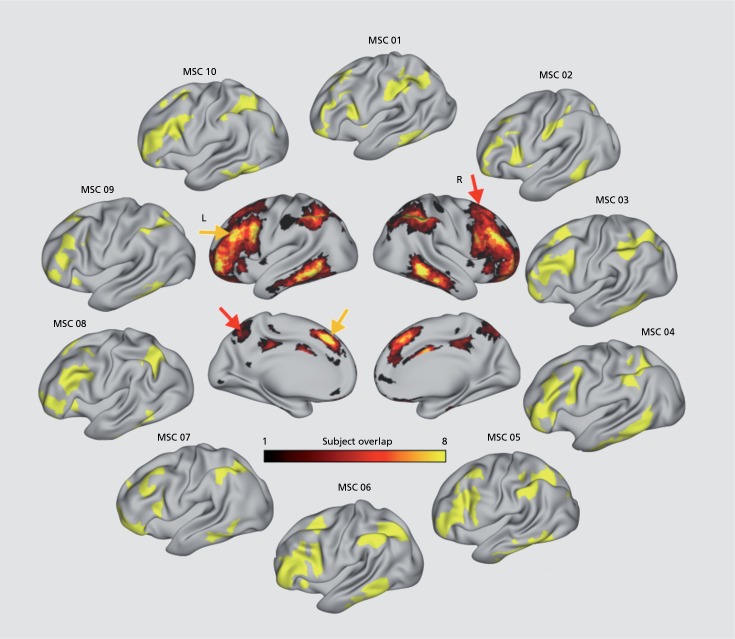
The frontoparietal network is critical for our ability to coordinate behavior in a rapid, accurate, and flexible goal-driven manner. In this review, we outline support for the framing of the frontoparietal network as a distinct control network, in part functioning to flexibly interact with and alter other functional brain networks. This network coordination likely occurs in a 4 Hz to 73 Hz θ/α rhythm, both during resting state and task state. Precision mapping of individual human brains has revealed that the functional topography of the frontoparietal network is variable between individuals, underscoring the notion that group-average studies of the frontoparietal network may be obscuring important typical and atypical features. Many forms of psychopathology implicate the frontoparietal network, such as schizophrenia and attention-deficit/hyperactivity disorder. Given the interindividual variability in frontoparietal network organization, clinical studies will likely benefit greatly from acquiring more individual subject data to accurately characterize resting-state networks compromised in psychopathology.
Overview
The claims and statistics of this paper haven’t been checked yet.
Free: it reads the open-access text and checks the first 5 claims that cite a source we can check. Create a free account to check every claim.
Integrity signals
Registry
Cites
Statistics
Figures
Verification
Claims the paper makes
The claims and statistics of this paper haven’t been checked yet.
Free: it reads the open-access text and checks the first 5 claims that cite a source we can check. Create a free account to check every claim.
Claims other papers make about this one
Each is checked against this paper’s own text: does it say what the citing paper says it does?
The source backs part of the claim, not all of it — or backs it for a different population, condition or comparison.
In the citing paper
“These dorsal cognitive regions connect to inferior parietal regions, forming the frontoparietal network [162–163]”
From Toward a neurocircuit-based taxonomy to guide treatment of obsessive-compulsive disorder (2021) · cites this paper as [162]
Experimental — accuracy not yet measuredIn the citing paper
“The most common target in MDD has been left dorsolateral prefrontal cortex (DLPFC), which is generally considered to be a node in the cognitive control network, albeit one that interfaces with the fronto-parietal attention network130.”
From Paying attention to attention in depression (2019) · cites this paper as [130]
Self-check
Percentages, sums and reported differences re-computed from the paper’s own numbers.
The self-check needs the paper’s full text.
Citations
Cites
The attention system of the human brain
Posner, M. I., & Petersen, S. E. (1990) · Annual Review of Neuroscience · doi:10.1146/annurev.ne.13.030190.000325 · Cited by 8,070
Saliency, switching, attention and control: a network model of insula function
Menon, V., & Uddin, L. Q. (2010) · Brain Structure and Function · doi:10.1007/s00429-010-0262-0 · Cited by 5,592
A mechanism for cognitive dynamics: neuronal communication through neuronal coherence.
Fries, P. (2005) · Trends in Cognitive Sciences · doi:10.1016/j.tics.2005.08.011 · Cited by 4,284
Functional Network Organization of the Human Brain
Power, J. D., Cohen, A. L., Nelson, S. M., Wig, G. S., Barnes, K. A., Church, J. A., Vogel, A. C., Laumann, T. O., Miezin, F. M., Schlaggar, B. L., et al. (2011) · Neuron · doi:10.1016/j.neuron.2011.09.006 · Cited by 4,124
EEG alpha oscillations: The inhibition–timing hypothesis
Klimesch, W., Sauseng, P., & Hanslmayr, S. (2007) · Brain Research Reviews · doi:10.1016/j.brainresrev.2006.06.003 · Cited by 3,891
Conflict monitoring and anterior cingulate cortex: an update
Botvinick, M. M., Cohen, J. D., & Carter, C. S. (2004) · Trends in Cognitive Sciences · doi:10.1016/j.tics.2004.10.003 · Cited by 3,623
The attention system of the human brain: 20 years after
Petersen, S. E., & Posner, M. I. (2012) · Annual Review of Neuroscience · doi:10.1146/annurev-neuro-062111-150525 · Cited by 3,439
Toward the future of psychiatric diagnosis: the seven pillars of RDoC
Cuthbert, B. N., & Insel, T. R. (2013) · BMC Medicine · doi:10.1186/1741-7015-11-126 · Cited by 3,053
Sridharan, D., Levitin, D. J., & Menon, V. (2008) · Proceedings of the National Academy of Sciences · doi:10.1073/pnas.0800005105 · Cited by 2,892
Neurocognitive deficit in schizophrenia: A quantitative review of the evidence.
Heinrichs, R. W., & Zakzanis, K. K. (1998) · Neuropsychology · doi:10.1037/0894-4105.12.3.426 · Cited by 2,798
Cited by
Items 501–600 of 837
Altered network efficiency in isolated REM sleep behavior disorder: A multicentric study
Tremblay, C., Pastor‐Bernier, A., Rheault, F., Daneault, V., Ayral, V., Filiatrault, M., Desaulniers, L., Vo, A., Gagnon, J., Postuma, R. B., et al. (2025) · Alzheimer s & Dementia · doi:10.1002/alz.70574 · Cited by 5
Enhancing cognitive performance with fronto-parietal transcranial alternating current stimulation
Wan, Q., ten Oever, S., Sack, A. T., & Schuhmann, T. (2025) · Biological Psychology · doi:10.1016/j.biopsycho.2025.109111 · Cited by 3
Gordon, A., Krug, M. K., Wulff, R. A., Elliott, M., Hogeveen, J., Lesh, T. A., Carter, C., & Solomon, M. (2020) · Biological Psychiatry Cognitive Neuroscience and Neuroimaging · doi:10.1016/j.bpsc.2020.11.008 · Cited by 5
Kınay, D., Ulaşoğlu-Yıldız, Ç., Kurt, E., Eryürek, K., Demıralp, T., & Coşkun, M. (2021) · Psychiatry and Clinical Psychopharmacology · doi:10.5152/pcp.2021.20169 · Cited by 4
“36,37 Therefore, alterations in FPN can be linked to excessive monitoring of thoughts in OCD, which could explain some of the symptoms.”
Reconciliation of Two Cognitive Models in Obsessive-Compulsive Disorder: An fMRI Study
Kim, S., Lee, S. W., Cha, H., Kim, E., Chang, Y., & Lee, S. J. (2021) · Psychiatry Investigation · doi:10.30773/pi.2020.0347 · Cited by 3
Marrosu, F., Mancosu, S., Lai, G., Fraschini, M., Muroni, A., Demuru, M., Monticone, M., & Defazio, G. (2021) · Spinal Cord Series and Cases · doi:10.1038/s41394-021-00441-2 · Cited by 3
“In this perspective these results could suggest that, before HBO, the temporal–parietal part of the neural circuitry is arbitrarily acting as a whole by downplaying the role of the frontal regions in the process of sensory-motor integration which instead should have been working in a flexibly interacting reciprocity […”
BackgroundTaniguchi, S., Higashi, Y., Kataoka, H., Nakajima, H., & Shimokawa, T. (2021) · Frontiers in Human Neuroscience · doi:10.3389/fnhum.2021.707502 · Cited by 3
“Subsequently, a denoising pipeline was performed by implementing the aCompCor strategy (Behzadi et al., 2007), including linear regression (regression of noise variables derived from motion, cerebrospinal fluid, and white matter) and band-pass filtering (0.008–0.09 Hz) (Nieto-Castanon, 2020).”
MethodInfluentialToller, G., Cobigo, Y., Ljubenkov, P. A., Appleby, B. S., Dickerson, B. C., Domoto‐Reilly, K., Fong, J. C., Forsberg, L. K., Gavrilova, R. H., Ghoshal, N., et al. (2022) · Neurology · doi:10.1212/wnl.0000000000200582 · Cited by 3
“By contrast, the FPN that is recruited by the SN(48) is responsible for top-down control of attention and executive functioning and helps to exert task control in social cognition.(18,49) The role of the middle frontal gyrus is to maintain stable cognitive control, whereas parietal regions of the FPN are involved in a…”
BackgroundFronto-parietal alpha ERD and visuo-spatial attention in pregnant women
Plamberger, C., Mayer, L. M., Klimesch, W., Gruber, W. R., Kerschbaum, H., & Hoedlmoser, K. (2022) · Brain Research · doi:10.1016/j.brainres.2022.148130 · Cited by 4
Xia, N. L., He, C., Wei, X., Li, Y.-A., Lou, W., Gu, M., Chen, Z., Xu, J., Liu, Y., Han, X., et al. (2023) · Frontiers in Neuroscience · doi:10.3389/fnins.2023.1112046 · Cited by 3
“Additionally, the FPN to which the dlPFC belongs serves as a flexible hub to rapidly instantiate task states through interactions with other control and processing networks (Marek and Dosenbach, 2018).”
BackgroundDirectional Alpha Frontoparietal Connectivity and Anxiety in Autistic Boys
Bitsika, V., Sarmukadam, K., & Sharpley, C. F. (2023) · Journal of Developmental and Physical Disabilities · doi:10.1007/s10882-023-09893-w · Cited by 3
“As well as helping to increase functional integration, cognitive control and task adaptation, which have been associated with PFC-P connectivity (Marek & Dosenback, 2018), neurofeedback might also potentially decrease some of the anxiety symptoms (e.g., controlling worries and decreasing tension )…”
BackgroundWon, N. R., Son, Y., Kim, S. M., Bae, S., Kim, J.-H., Kim, J., & Han, D. H. (2023) · Clinical Psychopharmacology and Neuroscience · doi:10.9758/cpn.22.1029 · Cited by 4
“Several brain imaging studies have suggested that the attention network could be associated with the control of affective networks in healthy individuals and patient groups [13,14].”
BackgroundStudy of structural network connectivity using DTI tractography in insomnia disorder
Rostampour, M., Gharaylou, Z., Rostampour, A., Shahbodaghy, F., Zarei, M., Fadaei, R., & Khazaie, H. (2023) · Psychiatry Research Neuroimaging · doi:10.1016/j.pscychresns.2023.111730 · Cited by 3
A precision-mapping approach to physical exercise interventions targeting cognitive function
Moreau, D., & Wiebels, K. (2024) · Progress in brain research · doi:10.1016/bs.pbr.2023.12.001 · Cited by 5
Heterogeneity Analysis on Multi-State Brain Functional Connectivity and Adolescent Neurocognition
Wang, S., Constable, R. T., Zhang, H., & Zhao, Y. (2024) · Journal of the American Statistical Association · doi:10.1080/01621459.2024.2311363 · Cited by 4
“Evidence has shown that FPN serves as a flexible hub of cognitive control (Marek and Dosenbach 2018).”
BackgroundNorm atlas of lifespan for age and cognitive ability prediction based on dual-paradigm fMRI
Wen, X., Dong, L., Cao, R., Wu, X., & Xiang, J. (2024) · Chinese Science Bulletin (Chinese Version) · doi:10.1360/tb-2024-0049 · Cited by 3
narrative research of experiences of STEM teachers pursuing doctoral degree
Abrigo, J. N. F., Abrogena, A. A. A., Alcantara, D. R. E., Gracia, N. A. V. D., Juliano, A. C., & Ador, Z. I. (2024) · Journal of Social Humanity and Education · doi:10.35912/jshe.v4i3.1567 · Cited by 12
A computational account of self-control
Suri, G., & Paap, K. R. (2024) · Journal of Mathematical Psychology · doi:10.1016/j.jmp.2024.102886 · Cited by 3
Insulin resistance, cognition, and functional brain network topology in older adults with obesity
McIntyre, C. C., Lyday, R. G., Su, Y., Nicklas, B. J., Simpson, S. L., Deep, G., Macauley, S. L., & Hugenschmidt, C. E. (2025) · Scientific Reports · doi:10.1038/s41598-025-06038-1 · Cited by 5
“The finding that the interaction between hippocampal connectivity and PIR is associated with executive function (which is typically thought to be governed by the CEN in the frontal and parietal lobes 18 ) is at first counterintuitive.”
Shibata, M., Tsurumi, K., Kobayashi, K., Yoshimura, S., Spantios, M., Oishi, N., Murai, T., & Fujiwara, H. (2025) · Frontiers in Neuroscience · doi:10.3389/fnins.2025.1599987 · Cited by 4
“…thinking in patients with remitted major depression (Lydon-Staley et al., 2019), presumably because it functions as a hub of cognitive control (Marek and Dosenbach, 2018), and there is an interaction between cognition and mood response, as shown in the Person-Affect-Cognition-Execution model…”
Wade, B., Barbour, T. A., Ellard, K. K., & Camprodon, J. A. (2025) · Nature Mental Health · doi:10.1038/s44220-025-00469-5 · Cited by 3
“The FPCN serves as a ‘functional hub’ that modulates communication across brain networks to flexibly meet task-oriented demands 76 and has been linked with transdiagnostic symptom disturbances 77 , including depression 78 .”
Weeland, C. J., van den Heuvel, O. A., White, T. J. H., Tiemeier, H. W., & Vriend, C. (2022) · Brain Imaging and Behavior · doi:10.1007/s11682-022-00732-8 · Cited by 3
“The frontoparietal network is responsible for executive functions important for adequate coordination of goal-directed behavior (Marek & Dosenbach, 2018).”
BackgroundInvitto, S., Keshmiri, S., Mazzatenta, A., Grasso, A., Romano, D., Bona, F., Shiomi, M., Sumioka, H., & Ishiguro, H. (2021) · Frontiers in Systems Neuroscience · doi:10.3389/fnsys.2021.650528 · Cited by 5
“The bilateral frontoparietal network is linked to cognitive control, cognitive flexibility, and auditory consciousness (He et al., 2007; Brancucci et al., 2016; Marek and Dosenbach, 2018).”
BackgroundKuramoto model based analysis reveals oxytocin effects on brain network dynamicsPreprint
Zheng, S., Liang, Z., Qu, Y., Wu, Q., Wu, H., & Liu, Q. (2021) · arXiv (Cornell University) · doi:10.48550/arxiv.2105.08288 · Cited by 3
Testing the Triple Network Model of Psychopathology in a Transdiagnostic Neurodevelopmental CohortPreprint
Jones, J. S., The CALM Team, Leyland‐Craggs, A., & Astle, D. E. (2022) · medRxiv · doi:10.1101/2022.05.05.22274709 · Cited by 4
Functional Connectivity and Complexity Analyses of Resting-State fMRI in Pre-Adolescents with ADHDPreprint
Zhang, R., Murray, S. B., Duval, C. J., Wang, D. J. J., & Jann, K. (2023) · medRxiv · doi:10.1101/2023.08.17.23294136 · Cited by 3
“The FPN has been hypothesized to play a role in instantiating and flexibly modulating cognitive control (Marek & Dosenbach, 2018).”
Sex differences in the functional network underpinnings of psychotic-like experiences in childrenPreprint
Dhamala, E., Chopra, S., Ooi, L. Q. R., Rubio, J. M., Yeo, B. T. T., Malhotra, A. K., & Holmes, A. J. (2024) · Research Square · doi:10.21203/rs.3.rs-5167657/v1 · Cited by 2
Connectome embedding in multidimensional graph spaces
Mach, M., Amico, E., Liégeois, R., Preti, M. G., Griffa, A., Ville, D. V. D., & Pedersen, M. (2024) · Network Neuroscience · doi:10.1162/netn_a_00393 · Cited by 11
“The frontoparietal regions are known to be involved in complex cognitive activities (Marek & Dosenbach, 2018); thus, it is reasonable that these regions are subject-specific and express high distances from each other in fMRI data.”
Zhang, J., Qin, T., Sun, H., Zhao, T., Pan, J., Bi, B., Chen, K., & Chen, M. (2025) · Cerebral Cortex · doi:10.1093/cercor/bhae495 · Cited by 3
Ross, G., Huang, W. A., Reiling, J., Zhang, M., Park, J., Radtke‐Schuller, S., Hopfinger, J. B., Zuberer, A., & Frӧhlich, F. (2025) · Progress in Neurobiology · doi:10.1016/j.pneurobio.2025.102777 · Cited by 2
“Specifically, we recorded the local field potential (LFP) from two nodes of the dFPN, a functional hub for orchestrating communication between brain regions in order to meet task relevant demands ((Marek and Dosenbach, 2018; Sellers et al., 2016); Fig.”
Leenaerts, N., Broeders, T., Ceccarini, J., Sunaert, S., Schoonheim, M., Vinkers, C., & Vrieze, E. (2025) · European Archives of Psychiatry and Clinical Neuroscience · doi:10.1007/s00406-025-02055-3 · Cited by 2
“…parietal lobule), the default-mode network (DMN; medial prefrontal cortex, posterior cingulate cortex, posterior inferior parietal lobule) and the ventral attention network (VAN; anterior insula and anterior midcingulate cortex) which is sometimes referred to as the salience network [17–21].”
The relationship between deviant brain activity and executive functioning in glioma patients
Zimmermann, M., Ulrich, C., Breedt, L. C., van Lingen, M. R., Hamer, P. C. D. W., Klein, M., Hillebrand, A., & Douw, L. (2025) · Neuro-Oncology Advances · doi:10.1093/noajnl/vdaf168 · Cited by 2
“18,19 Also, it has not been investigated how activity around the tumor and beyond may change over time, and how this associates with cognition.”
Itzkovitch, A., Oren, S., Chopra, S., Fornito, A., & Schönberg, T. (2025) · Journal of Neuroscience · doi:10.1523/jneurosci.0702-25.2025 · Cited by 2
“…patterns to higher-order networks between the groups may suggest that the NC group engages a broader, more covert mechanism of behavioral change involving the DMN [associated with spontaneous cognition (Kucyi et al., 2016)], rather than the FPN [task-positive network (Marek and Dosenbach, 2018)].”
Dhanoa, A., Dlamini, N., Andersen, J. C., Fehlings, D. L., Kirton, A., & Carlson, H. L. (2025) · Human Brain Mapping · doi:10.1002/hbm.70342 · Cited by 2
“Seeds in the lateral prefrontal and posterior parietal cortices were selected due to their association with the frontoparietal network and potential roles in cognitive control and memory (Marek and Dosenbach 2018; Nagel et al. 2013).”
Xu, L., Yin, Y., Wang, X., Xu, T., Zhang, X., & Feng, T. (2025) · NeuroImage · doi:10.1016/j.neuroimage.2025.121529 · Cited by 2
Frontal Disorders and Consciousness: A Review
Berenbaum, J. G., Morrison, B., Hagan, B., Xie, K. Y., Turk, K. W., & Budson, A. E. (2025) · Current Neurology and Neuroscience Reports · doi:10.1007/s11910-025-01464-0 · Cited by 2
“However, these subregions do not exist in isolation; they are connected to complex networks throughout the frontal lobes and the rest of the brain [ 63–69 ].”
Zhang, L., Han, Y., Lv, D., Yao, P., Chen, L., Yuan, Y., Zhao, J., Guo, W., Guo, Z., & Ou, Y. (2025) · Asian Journal of Psychiatry · doi:10.1016/j.ajp.2025.104756 · Cited by 2
Wang, S., Zhang, J., Shao, Z., Deng, H., Wang, C., Wang, C., & Wang, C. (2025) · BMC Psychiatry · doi:10.1186/s12888-025-07629-y · Cited by 5
“The FPN supports task initiation and error monitoring [45, 46], while the CON is mainly responsible for goal-directed behavioral control and also processes directive cues and regulates physiological states through sympathetic modulation [47].”
Chen, K., Xiao, Y.-A., Zhu, S., Cao, F., Che, Q., Liu, Y., Wan, K., Chen, X., Zhang, W., Ye, J., et al. (2025) · Progress in Neuro-Psychopharmacology and Biological Psychiatry · doi:10.1016/j.pnpbp.2025.111561 · Cited by 2
Lorenzon, G., Marseglia, A., Poulakis, K., Imbimbo, C., Rydén, L., Galaris, E., Lindberg, O. E., Shams, S., Mohanty, R., Ferreira, D., et al. (2025) · BMC Medicine · doi:10.1186/s12916-025-04583-0 · Cited by 2
“These frontoparietal regions play a critical role in higher-order cognitive functions [53], and their degeneration may impair cognition [3].”
Wigley, I. M. M., Lautarescu, A., Vartiainen, E., Pulli, E., Hashempour, N., Merisaari, H., Bano, W., Luotonen, S., Jolly, A., Suuronen, I., et al. (2026) · Pediatric Research · doi:10.1038/s41390-025-04726-2 · Cited by 3
MCI-LB brain networks reorganization in relation to specific cognitive domains deficits
Onofrj, V., Franciotti, R., Mitterová, K., Brabenec, L., Gajdoš, M., Morávková, I., Ferretti, A., Spadone, S., Padulo, C., Baldassarre, A., et al. (2026) · Scientific Reports · doi:10.1038/s41598-026-36953-w · Cited by 2
Relapse in alcohol dependence is characterized by disrupted modular brain network organization
Böhmer, J., Marxen, M., Veer, I. M., Garbusow, M., Bottino, M., Zimmermann, U. S., Smolka, M. N., Heinz, A., Friedel, E., Heim, C., et al. (2026) · European Archives of Psychiatry and Clinical Neuroscience · doi:10.1007/s00406-026-02198-x · Cited by 3
“Notably, the dlPFC, superior parietal, and inferior temporal cortices are central to the frontoparietal network [51], supporting goal-directed behavior and executive control [52, 53], while the vmPFC and amygdala play key roles in emotion regulation [54, 55].”
Amandola, M., Kim, M. E., Rheault, F., Landman, B. A., & Schilling, K. (2026) · Human Brain Mapping · doi:10.1002/hbm.70520 · Cited by 2
“To facilitate these cognitive tasks, the PFC is highly structurally and functionally connected to other association regions of the cortex, such as the posterior parietal cortex and motor association areas (Petrides and Pandya 1999; Marek and Dosenbach 2018).”
Devine, J. J., Hosterman, G., Sloss, J. A., & Romer, A. L. (2026) · JCPP Advances · doi:10.1002/jcv2.70135 · Cited by 2
“- as maintaining and manipulating memory, decision - making, and executing goal - directed behaviors (Marek & Dosenbach, 2018; Menon & D’Esposito, 2022).”
Korom, M., Tabachnick, A. R., Sellers, T., Valadez, E. A., Tottenham, N., & Dozier, M. (2023) · Psychophysiology · doi:10.1111/psyp.14391 · Cited by 2
Intrinsic functional connectivity mediates the effect of personality traits on depressive symptoms
Lee, Z. L., Siew, S. K. H., & Yu, J. (2024) · PLoS ONE · doi:10.1371/journal.pone.0300462 · Cited by 4
An Exploratory Study of Large-Scale Brain Networks during Gambling Using SEEG
Taylor, C., Breault, M. S., Dormán, D. B., Greene, P., Sacré, P., Sampson, A. L., Niebur, E., Stuphorn, V., González-Martínez, J., & Sarma, S. V. (2024) · Brain Sciences · doi:10.3390/brainsci14080773 · Cited by 2
“The FN, also known as the central executive network, is linked to flexible cognitive control by harnessing working memory and cognitive reasoning [14].”
BackgroundResting‐State Network Plasticity Following Category Learning Depends on Sensory Modality
Tabrik, S., Dinse, H. R., Tegenthoff, M., & Behroozi, M. (2024) · Human Brain Mapping · doi:10.1002/hbm.70111 · Cited by 3
Lyons, S. J., Beck, I., & Depue, B. E. (2025) · NeuroImage · doi:10.1016/j.neuroimage.2025.121127 · Cited by 3
“Systems neuroscience provides evidence that these major brain networks support adaptive functioning in daily life by facilitating awareness, goal-directed behavior, and flexible updating (Marek and Dosenbach, 2018; Menon and Uddin, 2010; Seeley, 2019; Seeley et al., 2007).”
Hu, X., Long, X., Wu, J., Liu, N., Huang, N., Liu, F., Qi, A., Chen, Q., & Lu, Z. (2025) · Neuroscience · doi:10.1016/j.neuroscience.2025.03.059 · Cited by 3
Nenning, K., Fischmeister, F. P. S., Novak, A., Seidl, R., Ovadia‐Caro, S., Xu, T., Kasprian, G. J., Bartha‐Doering, L., & Kollndorfer, K. (2025) · Human Brain Mapping · doi:10.1002/hbm.70248 · Cited by 3
Nagy, P., Kovács, P., Boncz, Á., Szalárdy, O., Baumgartner, R., Ignatiadis, K., Winkler, I., & Tóth, B. (2026) · Frontiers in Neuroscience · doi:10.3389/fnins.2026.1739294 · Cited by 2
“Consistent with their roles in executive control and working memory (Seeley et al., 2007; Uddin, 2015), these frontal regions likely served as “flexible hubs” coordinating top-down preparatory processes for temporal prediction (Cole et al., 2013; Marek and Dosenbach, 2018).”
Chen, K., Ho, T., Siow, T. Y., Yeh, Y.-C., & Huang, S. (2022) · Cerebral Cortex Communications · doi:10.1093/texcom/tgac008 · Cited by 3
Functional neuroanatomy of cognition in Parkinson's disease
Mirpour, K., Wolfe, C. B., Florence, T. J., & Pouratian, N. (2022) · Progress in brain research · doi:10.1016/bs.pbr.2022.01.007 · Cited by 2
Synesthesia has specific cognitive processing during Go/No-go paradigms
Aoki, Y., Shibasaki, M., & Nakata, H. (2023) · Scientific Reports · doi:10.1038/s41598-023-32389-8 · Cited by 3
“The frontoparietal network is a control network, linking between frontal and parietal cortices, serving to rapidly and instantiate new task states by flexibly interacting with other control and processing networks 24 .”
Task-dependent functional connectivity changes in response to varying levels of social support
Burhanoğlu, B. B., Uslu, Ö., Özkul, B., Oğuz, K., Eroglu-Koc, S., Kizilates-Evin, G., Candemir, C., Erdoğan, Y., Mull, D. D., Kitiş, Ö., et al. (2024) · BJPsych Open · doi:10.1192/bjo.2024.742 · Cited by 2
“This might have limited the resources available for higher-order processing in the DMN and FPN. 16 Salience network activation is often associated with affective processing and the experience of social distress that indicates a difference between what is expected and what is obtained from close ones or a social group.”
BackgroundResultInfluentialAdolescent neurocognitive development and cannabis use
Tervo‐Clemmens, B., Musket, C. W., Calabro, F. J., & Luna, B. (2021) · Elsevier eBooks · doi:10.1016/b978-0-12-817986-4.00046-8 · Cited by 1
Xefteris, V.-R., Styliadis, C., Anagnostopoulou, A., Kartsidis, P. E., Paraskevopoulos, E., Klados, M. A., Zilidou, V. I., Karagianni, M. A., & Bamidis, P. D. (2020) · medRxiv · doi:10.1101/2020.10.21.20209502 · Cited by 3
Maruyama, S., Fukunaga, M., Sugawara, S. K., Hamano, Y. H., Yamamoto, T., & Sadato, N. (2021) · Research Square · doi:10.21203/rs.3.rs-197014/v1 · Cited by 2
Avrămiea, A.-E., Masood, A., Mansvelder, H. D., & Linkenkaer‐Hansen, K. (2021) · bioRxiv (Cold Spring Harbor Laboratory) · doi:10.1101/2021.03.15.435461 · Cited by 2
Connectome embedding in multidimensional graph-invariant spacesPreprint
Mach, M., Amico, E., Liégeois, R., Preti, M. G., Griffa, A., Ville, D. V. D., & Pedersen, M. (2023) · bioRxiv (Cold Spring Harbor Laboratory) · doi:10.1101/2023.04.25.538320 · Cited by 2
“The frontoparietal regions are known to be involved in complex cognitive activities [37]; thus, it is reasonable that these regions are subject-specific and express high distances from each other in fMRI data.”
BackgroundAging Impairs Reactive Attentional Control but Not Proactive Distractor InhibitionPreprint
Kim, A. J., Senior, J. A., Chu, S., & Mather, M. (2023) · doi:10.31234/osf.io/kvfst · Cited by 2
Jarrett, C. E., Zwosta, K., Wang, X., Wolfensteller, U., Iglesias, J. E., von Kriegstein, K., & Ruge, H. (2024) · bioRxiv (Cold Spring Harbor Laboratory) · doi:10.1101/2024.08.26.609333 · Cited by 2
“On the other hand, the role of the CON is to implement task sets (Marek & Dosenbach, 2018) and to regulate actions (D'Andrea et al., 2023).”
MethodKorponay, C. H., Cohen‐Gilbert, J. E., Kumar, P., Harnett, N. G., Medina, A., Forester, B. P., Ressler, K. J., Beckmann, C. F., Harper, D. G., & Nickerson, L. D. H. (2024) · bioRxiv (Cold Spring Harbor Laboratory) · doi:10.1101/2024.09.21.613739 · Cited by 2
“The positive component of both networks included the frontoparietal network (FPN) ( Fig.”
BackgroundAcer, İ., & İçer, S. (2020) · European Journal of Science and Technology · doi:10.31590/ejosat.araconf38 · Cited by 1
The Left Amygdala and Right Frontoparietal Cortex Support Emotional Adaptation Aftereffects
Su, X., Fu, R., Li, H., Jiang, N., Li, A., Yang, J., & Mei, L. (2024) · Brain Sciences · doi:10.3390/brainsci14030257 · Cited by 2
“More importantly, the angular gyrus and the inferior frontal gyrus together form part of the frontoparietal control network [90], which subserves cognitive control and is critical for coordinating behavior in a rapid, accurate, and flexible goal-driven manner [91].”
BackgroundLyons, K., Ho, W., Saljoughi, S., Owen, A. M., Stevenson, R., & Stojanoski, B. B. (2026) · Developmental Neuroscience · doi:10.1159/dne/aclag002 · Cited by 1
Gimenez-Aparisi, G., Guijarro-Estellés, E., Chornet-Lurbe, A., Cerveró-Albert, D., Hao, D., Li, G., & Ye-Lin, Y. (2024) · Heliyon · doi:10.1016/j.heliyon.2024.e41500 · Cited by 4
“The frontal-parietal network, which mainly occurs in 4 – 13 Hz α / θ rhythm, regulates the spontaneous decisions involved in planning and is essential for coordination in a rapid, accurate, and flexible goal-driven manner [39].”
Gyral peak variations between HCP and CHCP: functional and structural implications
Cao, G., Zhang, S., He, Z., Wang, Z., Guo, L., Yan, Z., Han, J., Jiang, X., & Zhang, T. (2025) · Brain Structure and Function · doi:10.1007/s00429-025-02894-9 · Cited by 2
The impact of hyperventilation on brain alpha activity: An EEG study
Yang, X., Qi, F., Li, C., Liu, K., Yu, H., Han, Y., Chen, Y., Sun, Y., & Li, C. (2025) · Brain Research Bulletin · doi:10.1016/j.brainresbull.2025.111343 · Cited by 2
“…in studies of cognitive deficits triggered by high altitude (Asmaro et al., 2013; de de de Aquino Lemos et al., 2012; Malle et al., 2016), and may involve the role of the frontoparietal network in supporting attention and executive functions (Marek and Dosenbach, 2018; Friend et al., 2019).”
Ji, R., Zhang, S., Chen, H., Deng, C., Xu, Z., Zhang, J., & Luo, B. (2025) · Journal of Integrative Neuroscience · doi:10.31083/jin36330 · Cited by 1
“The FPN, comprising the posterior parietal cortex and lateral prefrontal cortex, serves as a critical hub for cognitive regulation, particularly fluid intelligence [43].”
Neural mechanisms in resolving prior and likelihood uncertainty in scene recognition
Hayashi, K., Katayama, R., Fujimoto, K., Yoshida, W., & Ishii, S. (2025) · iScience · doi:10.1016/j.isci.2025.112663 · Cited by 2
“The SPL and prefrontal cortex are integral components of the FPN, 66 influencing surprise and conflict processes.”
Afonso, A. D. S., Machado‐Pinheiro, W., & Carreiro, L. R. R. (2025) · Psychophysiology · doi:10.1111/psyp.70098 · Cited by 2
“…also known as the central executive network, includes the DLPFC and the posterior parietal cortex (Friedman and Robbins 2022; Menon and D'Esposito 2022), and acts as a flexible hub for the coordination of cognitive con-trol supposedly by modulating other brain networks (Marek and Dosenbach 2018).”
Sheculski, M., & D’Angiulli, A. (2025) · Machine Learning and Knowledge Extraction · doi:10.3390/make7030082 · Cited by 1
Disrupted cortical organization in schizophrenia based on functional connectivity gradients
Uslu, Ö., Burhanoğlu, B. B., Hinc, A. C., & Gönül, A. S. (2025) · European Archives of Psychiatry and Clinical Neuroscience · doi:10.1007/s00406-025-02090-0 · Cited by 4
Filimonova, E., Pashkov, A. A., Poptsova, A., Moysak, G., Martirosyan, A., Prozorova, P., Kurilov, V., & RZAEV, J. A. (2025) · Frontiers in Neurology · doi:10.3389/fneur.2025.1644138 · Cited by 2
Novel Treatment Options Through Light-Based Neurostimulation
Horning, M., Aasheim, N. J., & Carstensen, M. (2025) · Springer eBooks · doi:10.1007/978-3-031-94215-0_6 · Cited by 1
Duell, N., Alvarez, G., Telzer, E. H., & Muscatell, K. A. (2025) · Developmental Cognitive Neuroscience · doi:10.1016/j.dcn.2025.101625 · Cited by 1
“Finally, the fronto-parietal network, which includes the intraparietal sulcus and dorsolateral prefrontal cortex, is essential for goal-directed behavior (Marek and Dosenbach, 2022).”
A neuroecological perspective on the prefrontal cortex
Mars, R. B., & Passingham, R. E. (2025) · Neuroscience & Biobehavioral Reviews · doi:10.1016/j.neubiorev.2025.106400 · Cited by 1
Connectome-based markers predict the sub-types of frontotemporal dementia
Zeng, X., He, J., Zhang, K., Xu, S., Xia, X., & Yuan, Z. (2025) · Molecular Psychiatry · doi:10.1038/s41380-025-03290-9 · Cited by 1
“Understanding these common mechanisms could potentially lead to more effective diagnostic tools and targeted therapeutic interventions.”
More Complex Cognitive Tasks Increasingly Connect Functionally Dissimilar Brain Regions
Zeitlen, D. C., Zhuang, K., Benedek, M., Qiu, J., & Beaty, R. E. (2026) · Journal of Cognitive Neuroscience · doi:10.1162/jocn.a.2396 · Cited by 4
Progressive Changes Between Thalamic Nuclei and Cortical Networks Across Stimulus–Response Learning
Jarrett, C. E., Zwosta, K., Wang, X., Wolfensteller, U., Iglesias, J. E., von Kriegstein, K., & Ruge, H. (2025) · Human Brain Mapping · doi:10.1002/hbm.70382 · Cited by 2
Guan, X., Zheng, W., Hu, B., Zhai, H., Ni, J., Han, X., Hu, C., Wu, J., Wang, J., Xu, F., et al. (2025) · Neurosurgery · doi:10.1227/neu.0000000000003823 · Cited by 1
A Tragedy of Errors: The State of Psychedelic Research in the Treatment of Alcohol Use Disorder
Srivastava, A. B., & Gold, M. S. (2025) · Brain Sciences · doi:10.3390/brainsci15111190 · Cited by 3
“Other networks potentially involved underlie language (language network) [124,125] and momentary task control (the fronto-parietal network) [126–129], the latter of which may be engaged, on a fast timescale, when confronted with alcohol “in the moment”.”
Aberrant regional homogeneity in multiple frequency bands in patients with alcohol use disorder
Ruan, X., Yu, T., You, C., Yang, M., & Chen, J. (2025) · Frontiers in Psychiatry · doi:10.3389/fpsyt.2025.1549970 · Cited by 1
Functional Connectome Alterations Across the Spectrum of Alzheimer’s Disease
Ghaffari, A., Zhao, Y., Abouzaki, M., Romero, Y., Langley, J. A., & Hu, X. (2025) · Journal of dementia and Alzheimer's disease · doi:10.3390/jdad2040046 · Cited by 3
“Evidence suggests that the SN and FPN exhibit stage-specific hyperconnectivity, consistent with their function as multimodal hubs linking widespread regions and supporting global information processing [150].”
Neumann, D., Razlighi, Q. R., Stern, Y., Devanand, D. P., Jamison, K. W., Kuceyeski, A. F., & Tozlu, C. (2025) · Human Brain Mapping · doi:10.1002/hbm.70427 · Cited by 4
Verza, F. A., Freitas, I. D. S., Pérez-Valenzuela, E., Grace, A. A., Guimarães, F. S., & Gomes, F. G. F. L. R. (2026) · Cerebral Cortex · doi:10.1093/cercor/bhaf342 · Cited by 1
McDonald, K. M., Son, J. J., Schantell, M. D., Petro, N. M., Glesinger, R. J., Okelberry, H. J., John, J. A., Horne, L. K., May-Weeks, P. E., Case, A. J., et al. (2026) · Journal of Neuroinflammation · doi:10.1186/s12974-026-03697-3 · Cited by 2
“Specifically, key regions of the frontal and parietal cortices emerged in our results, including the FEF, PMC, and dlPFC, which are major hubs in the frontoparietal network and are integral for selective attention [40, 42].”
Taniguchi, M., Noda, T., Takamura, T., Tose, K., Sunada, M., Morimoto, K., Yang, Y., Kozuki, H., Sudo, Y., Kamashita, R., et al. (2026) · Biological Psychiatry Global Open Science · doi:10.1016/j.bpsgos.2026.100699 · Cited by 3
“The SN is involved in detecting salient stimuli and attentional control (26,27), while the CEN governs executive functions such as planning and rule-based decision making (25).”
Slade, B., Williams, B. J., Engelbrecht, R., Woods, W., Bhar, S. S., & Ciorciari, J. (2026) · Biomedicines · doi:10.3390/biomedicines14020452 · Cited by 2
“The FPCN prioritises and coordinates information flow across multiple networks, including the DMN [28], and transfers task components such as task rules, knowledge, and skills from previous tasks to novel tasks [18].”
Hu, L., Li, K., He, H., Li, S., Qiu, N., Zhao, G., Hu, T., Chen, Y., & Luo, C. (2026) · Frontiers in Psychiatry · doi:10.3389/fpsyt.2026.1775531 · Cited by 2
“…are predominantly implicated in the brain ’ s dorsal attention network (DAN), ventral attention network (VAN), and frontoparietal network (FPN), all of which are typical task-positive networks and play critical roles in cognitive control, attentional processes, and goal-directed behaviors (43, 44).”
Morais, S., d’Almeida, O. C., Pereira, D. J., Sayal, A., Direito, B., Pereira, J., Caldeira, S., Meneses, S., Areias, G., Girão, V., et al. (2026) · Frontiers in Psychiatry · doi:10.3389/fpsyt.2026.1757647 · Cited by 3
“ROIs were centered on the coordinates MNI xyz (right DLPFC [44, 48, 26] and left DLPFC [-44, 34, 34], right IPS [40, -42, 44], and left IPS [-42, -42, 50], right insula [36, 28, 4], and left insula [-30, 26, 4]).”
Spatiotemporal characterisation of information coding in the multiple demand network
Karimi-Rouzbahani, H., Rich, A. N., & Woolgar, A. (2026) · Imaging Neuroscience · doi:10.1162/imag.a.1171 · Cited by 2
“A prominent candidate for this high-level executive function is a network of regions known as the multiple demand network (MDN; Duncan et al., 2020), also called the frontoparietal control network (e.g., Marek & Dosenbach, 2018), or cognitive control network/networks (e.g., Cole & Schneider, 2007).”
Singh, S., Thusyanthan, V., Mizzi, A. L., Levy, Y., Kinley, I., Shaw, S. B., & Becker, S. (2026) · Frontiers in Human Neuroscience · doi:10.3389/fnhum.2026.1731382 · Cited by 1
Predicting apathy using connectome-based models derived from static and dynamic brain connectivity
Lin, Y., Wang, Y., Xu, P., Luo, Y., & Han, S. (2026) · Social Cognitive and Affective Neuroscience · doi:10.1093/scan/nsag016 · Cited by 1
Blanchette, C., Vrinceanu, T., Saillant, K., Lussier, M., & Bherer, L. (2026) · Journal of Cognitive Enhancement · doi:10.1007/s41465-026-00350-y · Cited by 2
“Evidence for this can be found in studies that show that attentional con-trol tasks are associated with specific patterns of functional brain activation in the frontoparietal regions (Chatham et al., 2011 ; Marek & Dosenbach, 2018 ).”
Wu, J., Zou, W., Zhang, J., Gao, B., Li, R., Zhang, Z., Zhang, J., & Yan, T. (2026) · Journal of NeuroEngineering and Rehabilitation · doi:10.1186/s12984-026-01935-6 · Cited by 1
“The frontoparietal network, long associated with higher-order cognitive control [29], demonstrated strengthened theta-band connectivity post-training in BRT and VGI groups relative to controls, indicating improved information transfer motor and cognitive regions through both physical and imagined…”
Avram, M.-M., Bayly-Bureau, L., Livingston, N. R., Fusar‐Poli, P., Kempton, M. J., Raduà, J., Mehta, M. A., & Modinos, G. (2026) · Neuroscience & Biobehavioral Reviews · doi:10.1016/j.neubiorev.2026.106686 · Cited by 1
Metadata
- Authors
- Marek, S., & Dosenbach, N. U. F.
- Affiliations
- Washington University in St. Louis (US)
- Corresponding author
- Marek, Scott
- Venue
- Dialogues in Clinical Neuroscience
- Publisher
- Informa UK Limited
- Published
- 2018-06-30
- Volume
- 20
- Issue
- 2
- Pages
- 133-140
- ISSN
- 1294-8322 (ISSN-L)
- 1958-5969
- PMC
- PMC6136121
- OpenAlex
- W2989074529
- Cited by
- 836
- References
- 63
- Citations by year
- 2026: 136 · 2025: 142 · 2024: 131 · 2023: 113 · 2022: 124 · 2021: 93 · 2020: 77 · 2019: 17 · 2018: 2
- FWCI
- 28.14
- Type
- journal article
- Language
- en
- Open access
- diamond
- doi.org
- Licence
- Locations
- Dialogues in Clinical Neuroscience (publishedVersion, cc-by-nc-nd)
- Europe PMC (PubMed Central) (publishedVersion, cc-by-nc-nd)
- PubMed Central (publishedVersion, cc-by-nc-nd)
- PubMed (publishedVersion)
- Funders
- National Institutes of Health (UL1TR000448, UL1TR002345)
- National Institute of Mental Health (T32MH100019)
- National Institute of Neurological Disorders and Stroke (K23NS088590, P30NS098577)
- National Center for Advancing Translational Sciences
- Eunice Kennedy Shriver National Institute of Child Health and Human Development (U54HD087011)
- Topics
- Life Sciences › Neuroscience › Cognitive Neuroscience › Functional Brain Connectivity Studies
- Life Sciences › Neuroscience › Cognitive Neuroscience › Neural and Behavioral Psychology Studies
- Life Sciences › Neuroscience › Cognitive Neuroscience › Neural dynamics and brain function
- Keywords
- frontoparietal network, control network, interindividual variability, theta-alpha oscillations, resting-state networks, schizophrenia, attention deficit hyperactivity disorder, functional topography, electrophysiology
- MeSH terms
- Animals, Attention Deficit Disorder with Hyperactivity, Brain, Brain Mapping, Humans, Nerve Net, Neural Pathways, Electrophysiological Phenomena
About these checks
Registry, retraction, Cites and statistics results are computed, not judged, with one exception: a printed reference that no index lists is read once by a model before it counts as a citation error. Claims are extracted by a model and kept only when their quote appears verbatim in the text; each cited source is then checked, with a model’s help, for whether it says what the claim relies on. Those verdicts can be wrong — read the claim’s quote and the cited source before relying on one.
Statistics and arithmetic are recomputed, not judged.
Confidence bands are shown only for fields calibrated on our annotated test set. None is calibrated yet, so no band is shown.
What counts as a claim ›How we measure confidence ›How we check this ›
Are you an author, or do you see a problem with this page? Request a review
Data sources
Bibliographic data: Semantic Scholar, OpenAlex, Crossref.
Contains information from the Semantic Scholar Academic Graph Datasets, made available under the ODC Attribution License (ODC-BY 1.0).
Semantic Scholar’s data is described in: Kinney, R., et al. (2023). The Semantic Scholar Open Data Platform. arXiv:2301.10140.
