

The frontoparietal network: function, electrophysiology, and importance of individual precision mapping
Open accessThe DOI matches its Crossref record; 63 of the 63 references it cites were found in a registry or an index.
Abstract
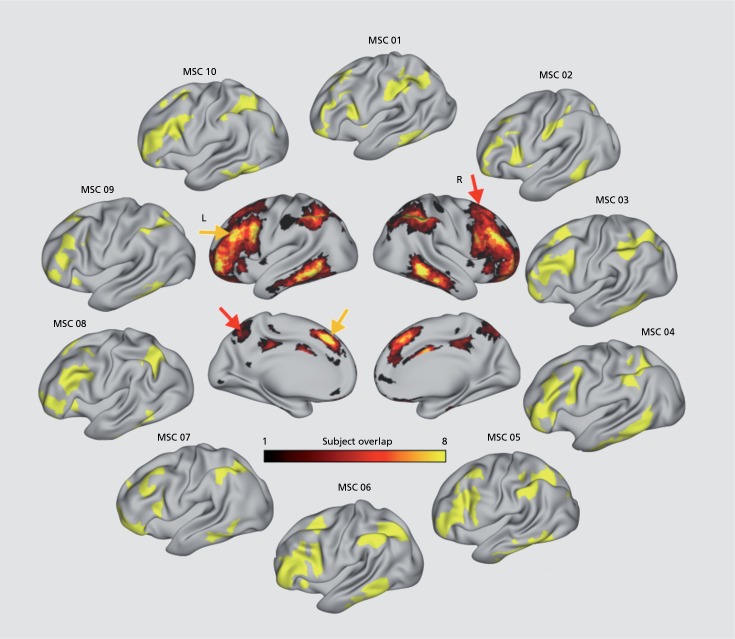
The frontoparietal network is critical for our ability to coordinate behavior in a rapid, accurate, and flexible goal-driven manner. In this review, we outline support for the framing of the frontoparietal network as a distinct control network, in part functioning to flexibly interact with and alter other functional brain networks. This network coordination likely occurs in a 4 Hz to 73 Hz θ/α rhythm, both during resting state and task state. Precision mapping of individual human brains has revealed that the functional topography of the frontoparietal network is variable between individuals, underscoring the notion that group-average studies of the frontoparietal network may be obscuring important typical and atypical features. Many forms of psychopathology implicate the frontoparietal network, such as schizophrenia and attention-deficit/hyperactivity disorder. Given the interindividual variability in frontoparietal network organization, clinical studies will likely benefit greatly from acquiring more individual subject data to accurately characterize resting-state networks compromised in psychopathology.
Overview
The claims and statistics of this paper haven’t been checked yet.
Free: it reads the open-access text and checks the first 5 claims that cite a source we can check. Create a free account to check every claim.
Integrity signals
Registry
Cites
Statistics
Figures
Verification
Claims the paper makes
The claims and statistics of this paper haven’t been checked yet.
Free: it reads the open-access text and checks the first 5 claims that cite a source we can check. Create a free account to check every claim.
Claims other papers make about this one
Each is checked against this paper’s own text: does it say what the citing paper says it does?
The source backs part of the claim, not all of it — or backs it for a different population, condition or comparison.
In the citing paper
“These dorsal cognitive regions connect to inferior parietal regions, forming the frontoparietal network [162–163]”
From Toward a neurocircuit-based taxonomy to guide treatment of obsessive-compulsive disorder (2021) · cites this paper as [162]
Experimental — accuracy not yet measuredIn the citing paper
“The most common target in MDD has been left dorsolateral prefrontal cortex (DLPFC), which is generally considered to be a node in the cognitive control network, albeit one that interfaces with the fronto-parietal attention network130.”
From Paying attention to attention in depression (2019) · cites this paper as [130]
Self-check
Percentages, sums and reported differences re-computed from the paper’s own numbers.
The self-check needs the paper’s full text.
Citations
Cites
The attention system of the human brain
Posner, M. I., & Petersen, S. E. (1990) · Annual Review of Neuroscience · doi:10.1146/annurev.ne.13.030190.000325 · Cited by 8,070
Saliency, switching, attention and control: a network model of insula function
Menon, V., & Uddin, L. Q. (2010) · Brain Structure and Function · doi:10.1007/s00429-010-0262-0 · Cited by 5,592
A mechanism for cognitive dynamics: neuronal communication through neuronal coherence.
Fries, P. (2005) · Trends in Cognitive Sciences · doi:10.1016/j.tics.2005.08.011 · Cited by 4,284
Functional Network Organization of the Human Brain
Power, J. D., Cohen, A. L., Nelson, S. M., Wig, G. S., Barnes, K. A., Church, J. A., Vogel, A. C., Laumann, T. O., Miezin, F. M., Schlaggar, B. L., et al. (2011) · Neuron · doi:10.1016/j.neuron.2011.09.006 · Cited by 4,124
EEG alpha oscillations: The inhibition–timing hypothesis
Klimesch, W., Sauseng, P., & Hanslmayr, S. (2007) · Brain Research Reviews · doi:10.1016/j.brainresrev.2006.06.003 · Cited by 3,891
Conflict monitoring and anterior cingulate cortex: an update
Botvinick, M. M., Cohen, J. D., & Carter, C. S. (2004) · Trends in Cognitive Sciences · doi:10.1016/j.tics.2004.10.003 · Cited by 3,623
The attention system of the human brain: 20 years after
Petersen, S. E., & Posner, M. I. (2012) · Annual Review of Neuroscience · doi:10.1146/annurev-neuro-062111-150525 · Cited by 3,439
Toward the future of psychiatric diagnosis: the seven pillars of RDoC
Cuthbert, B. N., & Insel, T. R. (2013) · BMC Medicine · doi:10.1186/1741-7015-11-126 · Cited by 3,053
Sridharan, D., Levitin, D. J., & Menon, V. (2008) · Proceedings of the National Academy of Sciences · doi:10.1073/pnas.0800005105 · Cited by 2,892
Neurocognitive deficit in schizophrenia: A quantitative review of the evidence.
Heinrichs, R. W., & Zakzanis, K. K. (1998) · Neuropsychology · doi:10.1037/0894-4105.12.3.426 · Cited by 2,798
Cited by
Items 301–400 of 837
Yang, Y., Kong, T., Ji, F., Liu, R., & Luo, L. (2024) · Psychological Medicine · doi:10.1017/s0033291724001855 · Cited by 11
“The FPN, which consists of dorsolateral prefrontal and posterior parietal cortices, functions as a control network orchestrating behavior towards specific goals (Marek & Dosenbach, 2018).”
InfluentialPalma, R. D., Falco, L., Coccia, A., Amitrano, F., Pagano, G., & D’Addio, G. (2025) · Frontiers in Neurology · doi:10.3389/fneur.2025.1638254 · Cited by 10
“Individual variability in frontoparietal network organization and synchronization significantly informs differences in cognition and susceptibility to psychopathology, with implications for personalized rehabilitation (11–13).”
Neural correlates of consciousness in an auditory no-report fMRI study
Dellert, T., Balster, H., Schloßmacher, I., Bruchmann, M., Moeck, R., & Straube, T. (2025) · Current Biology · doi:10.1016/j.cub.2025.10.026 · Cited by 15
Camacho, M. C., Williams, E. M., Ding, K., & Perlman, S. B. (2021) · Developmental Cognitive Neuroscience · doi:10.1016/j.dcn.2021.100917 · Cited by 12
Wei, X., Shen, Q., Litvan, I., Huang, M., Lee, R. R., & Harrington, D. L. (2022) · Frontiers in Aging Neuroscience · doi:10.3389/fnagi.2022.853029 · Cited by 12
“However, stronger pDMN-FPN couplings were beneficial for MoCA performance only in PDCN, in agreement with favorable effects of cooperative DMN-FPN communications on diverse cognitive processes (Fornito et al., 2012; Utevsky et al., 2014; Marek and Dosenbach, 2018).”
BackgroundJiang, L., Liu, S., Li, L., Wu, W., Ai, Z., Chen, H., Yin, X., & Chen, Y. (2022) · ESC Heart Failure · doi:10.1002/ehf2.13967 · Cited by 11
“known to be associated with cognitive and emotional processing,(28) and FPN is critical for the ability to coordinate behaviour in a rapid, accurate, and flexible goal-driven manner.(29) Heart failure patients had tissue injury in most of brain regions (including hippocampus, anterior thalamus, fornix, mammillary bodi…”
BackgroundWinners and losers in brain computer interface competitive gaming: directional connectivity analysis
Putri, F. D., Luca, I. S., Pedro, J. A. G., Ding, H., & Vučković, A. (2022) · Journal of Neural Engineering · doi:10.1088/1741-2552/ac8451 · Cited by 10
“The frontoparietal network is known to be activated during cognitive control, and it has been proposed that its role is to regulate the activities of antagonistic networks of the default mode network (DMN) and the dorsal attention network (Gao and Lin 2012, Marek and Dosenbach 2018).”
Longitudinal Patterns of Functional Connectivity in Moderate-to-Severe Traumatic Brain Injury
So, I., Meusel, L.-A., Sharma, B., Monette, G. A., Colella, B., Wheeler, A. L., Rabin, J. S., Mikulis, D. J., & Green, R. (2023) · Journal of Neurotrauma · doi:10.1089/neu.2022.0242 · Cited by 12
Functional connectivity of sub-cortical brain regions: disparities and similarities
Alahmadi, A. A. S. (2023) · Neuroreport · doi:10.1097/wnr.0000000000001881 · Cited by 11
Li, Y. P., Wang, Y., Turk‐Browne, N. B., Kuhl, B. A., & Hutchinson, J. B. (2023) · NeuroImage · doi:10.1016/j.neuroimage.2023.120221 · Cited by 11
Jaya, S. S., Shetty, S., Shettigar, D., Pagilla, V., & Maiya, A. G. (2023) · Journal of Clinical Neuroscience · doi:10.1016/j.jocn.2023.09.029 · Cited by 10
Debarnot, U., Rienzo, F. D., Daligault, S., & Schwartz, S. (2020) · Brain Topography · doi:10.1007/s10548-020-00763-8 · Cited by 12
Spadone, S., Perrucci, M. G., Cosmo, G. D., Costantini, M., Penna, S. D., & Ferri, F. (2021) · Scientific Reports · doi:10.1038/s41598-021-00048-5 · Cited by 10
Altered brain functional connectivity in the frontoparietal network following an ice hockey season
DiFabio, M., Smith, D. R., Breedlove, K. M., Pohlig, R. T., Buckley, T. A., & Johnson, C. L. (2022) · European Journal of Sport Science · doi:10.1080/17461391.2022.2069512 · Cited by 11
“…the FPN has been described as the “functional hub” and “functional backbone” of the brain’s networks, as FPN regions share the most connections to other networks (“functional hub”) and are therefore able to modulate other networks as well (“functional backbone”) (Marek & Dosenbach, 2018).”
BackgroundNeural substrates of continuous and discrete inhibitory control
Howlett, J. R., Park, H., & Paulus, M. P. (2023) · Translational Psychiatry · doi:10.1038/s41398-022-02295-0 · Cited by 12
“[28] for review) in addition to its well-established role in attention and executive control for goal-driven behavior [29, 30].”
BackgroundSyan, S. K., McIntyre‐Wood, C., Vandehei, E., Vidal, M. L., Hargreaves, T., Levitt, E. E., Scarfe, M. L., Marsden, E., MacKillop, E., Sarles‐Whittlesey, H., et al. (2023) · Alcoholism Clinical and Experimental Research · doi:10.1111/acer.15123 · Cited by 11
Matsuhashi, K., Itahashi, T., Aoki, R., & Hashimoto, R. (2023) · Brain Research Bulletin · doi:10.1016/j.brainresbull.2023.110827 · Cited by 13
“These functional networks may suggest that this region is important for attention-demanding and controlled processes, including working memory and executive control functions (Marek and Dosenbach, 2018; Zanto and Gazzaley, 2013), particularly for sensory and motor integration.”
BackgroundKoithan, E. M., Demeter, D. V., Ali, S. A., Feigelis, M., & Greene, D. J. (2024) · Current Opinion in Behavioral Sciences · doi:10.1016/j.cobeha.2024.101429 · Cited by 16
Unveiling altered connectivity between cognitive networks and cerebellum in schizophrenia
Biondi, M., Marino, M., Mantini, D., & Spironelli, C. (2024) · Schizophrenia Research · doi:10.1016/j.schres.2024.06.044 · Cited by 12
Brain topology underlying executive functions across the lifespan: focus on the default mode network
Menardi, A., Spoa, M., & Vallesi, A. (2024) · Frontiers in Psychology · doi:10.3389/fpsyg.2024.1441584 · Cited by 11
Inhibition of the inferior parietal lobe triggers state-dependent network adaptations
Williams, K. A., Numssen, O., Guerra, J. D., Kopál, J., Bzdok, D., & Hartwigsen, G. (2024) · Heliyon · doi:10.1016/j.heliyon.2024.e39735 · Cited by 10
Intrinsic functional connectivity correlates of pro-environmentalism
Carlson, J. M., Oja, M., & Fang, L. (2024) · Journal of Environmental Psychology · doi:10.1016/j.jenvp.2024.102512 · Cited by 10
Yao, Y., Ti, S. U., Wang, X., Hu, B., Zhang, R., Zhou, F., & Feng, T. (2025) · Cerebral Cortex · doi:10.1093/cercor/bhae503 · Cited by 11
Task-based functional connectivity of the Useful Field of View (UFOV) fMRI task
Kraft, J. N., Hausman, H. K., Hardcastle, C., Albizu, A., O’Shea, A. M., Evangelista, N. D., Boutzoukas, E. M., Etten, E. J. V., Bharadwaj, P. K., Song, H., et al. (2022) · GeroScience · doi:10.1007/s11357-022-00632-1 · Cited by 10
“The FPCN, a functional connectivity resting state network critical in higher-order cognition, is associated with directing attention to relevant stimuli, manipulation of stimuli, and set-shifting abilities [29, 46, 47].”
BackgroundBrain network flexibility as a predictor of skilled musical performance
Uehara, K., Yasuhara, M., Koguchi, J., Oku, T., Shiotani, S., Morise, M., & Furuya, S. (2023) · Cerebral Cortex · doi:10.1093/cercor/bhad298 · Cited by 10
Chaudhari, A., Wang, X., Wu, A., & Liu, H. (2023) · Bioengineering · doi:10.3390/bioengineering10091043 · Cited by 9
“The FPN is known to play an important role in cognition [114,118,119], attention, memory consolidation, and memory encoding [120–123].”
BackgroundBrain connectivity disruptions in PTSD related to early adversity: a multimodal neuroimaging study
Nkrumah, R. O., Demirakça, T., von Schröder, C., Zehirlioğlu, L., Valencia, N., Grauduszus, Y., Vollstädt‐Klein, S., Schmahl, C. G., & Ende, G. (2024) · European Journal of Psychotraumatology · doi:10.1080/20008066.2024.2430925 · Cited by 13
“…group exhibited hypoconnectivity (i.e. decrease in positive FC measure and indicative of colour blue in Figure 3(A)) in the left and right lPFC, a component of the central executive network, responsible for cognitive control and executive functioning (Marek & Dosenbach, 2018; Olson et al., 2019).”
Dunne, L., & Opitz, B. (2020) · Brain and Cognition · doi:10.1016/j.bandc.2020.105602 · Cited by 13
Price, R. B., Panny, B., Degutis, M., & Griffo, A. (2021) · Journal of Abnormal Psychology · doi:10.1037/abn0000651 · Cited by 11
ten Brinke, L. F., Hsu, C. L., Erickson, K. I., Handy, T. C., & Liu-Ambrose, T. Y. L. (2021) · Journal of Alzheimer s Disease · doi:10.3233/jad-200844 · Cited by 8
“TheFPNisatask-positivenetworkandis involvedinattentionandexecutivecontrol,andis abletoadjustandcontrolprocessesbasedonchang-ingdemands[13].”
Wrege, J. S., Carcone, D., Lee, A. C. H., Cane, C., Lang, U. E., Borgwardt, S., Walter, M., & Ruocco, A. C. (2021) · Psychological Medicine · doi:10.1017/s0033291721000118 · Cited by 10
“Saliency processing is one aspect among others of cognitive control, which could underlie difficulties with response inhibition, and these frontoparietal networks are also altered in many forms of psychopathology, including ADHD, major depression, and schizophrenia (Marek & Dosenbach, 2018).”
Zhang, Y., Yang, Y., Xu, X., & Yuan, Y. (2021) · Brain Imaging and Behavior · doi:10.1007/s11682-021-00490-z · Cited by 10
Topography of Emotions in Cerebellum as Appraised by Functional Imaging
Habas, C. (2022) · Advances in experimental medicine and biology · doi:10.1007/978-3-030-99550-8_6 · Cited by 9
Spanje, M. M., Duecker, F., Gallotto, S., de Graaf, T. A., Heugten, C. M. V., Sack, A. T., & Schuhmann, T. (2022) · European Journal of Neuroscience · doi:10.1111/ejn.15830 · Cited by 11
“…the basal ganglia and the thalamus (Fernandez-Duque & Posner, 2001), but it has been hypothesized that the PPC, which is known to be involved in alerting and orienting, also plays a role in the executive control of attention (Friedman-Hill et al., 2003; Lega et al., 2019; Marek & Dosenbach, 2018).”
BackgroundGehrt, T. B., Macoveanu, J., Bailey, C. J., Fisher, P. M., Pallesen, K. J., & Frostholm, L. (2023) · Journal of Affective Disorders · doi:10.1016/j.jad.2022.12.138 · Cited by 8
The Role of Extra-motor Networks in Upper Limb Motor Performance Post-stroke
Mattos, D. J. D. S., Rutlin, J. R., Hong, X., Zinn, K., Shimony, J. S., & Carter, A. R. (2023) · Neuroscience · doi:10.1016/j.neuroscience.2023.01.033 · Cited by 8
Causal functional connectivity in Alzheimer's disease computed from time series fMRI data
Biswas, R., & Sripada, S. (2023) · Frontiers in Computational Neuroscience · doi:10.3389/fncom.2023.1251301 · Cited by 12
“It has been interpreted as a compensatory mechanism where alternative paths within the brain’s network are recruited (Hillary and Grafman, 2017; Marek and Dosenbach, 2022; Oldham and Fornito, 2019).”
BackgroundZanchi, P., Mullier, E., Fornari, E., de Dumast, P., Alemán‐Gómez, Y., Ledoux, J., Beaty, R. E., Hagmann, P., & Denervaud, S. (2024) · npj Science of Learning · doi:10.1038/s41539-024-00254-6 · Cited by 11
“The FP network is involved in coordinating whole-brain network activity and is crucial for fl exible interaction with other control and processingnetworks 37 .”
BackgroundPort, A. P., Paulo, A. J. M., Neto, R. M. D. A., Lacerda, S. S., Radvany, J., Santaella, D. F., & Kozasa, E. H. (2024) · Frontiers in Integrative Neuroscience · doi:10.3389/fnint.2024.1420339 · Cited by 7
Torres, F. A., Otero, M., Lea‐Carnall, C., Cabral, J., Weinstein, A., & El‐Deredy, W. (2024) · Scientific Reports · doi:10.1038/s41598-024-80510-2 · Cited by 10
Neural Mechanisms Underlying the Auditory Looming Bias
Ignatiadis, K., Baier, D., Tóth, B., & Baumgartner, R. (2021) · Auditory Perception & Cognition · doi:10.1080/25742442.2021.1977582 · Cited by 12
Structural and functional connectivity of the inferior temporal numeral area
Conrad, B. N., Pollack, C., Yeo, D. J. S., & Price, G. R. (2022) · Cerebral Cortex · doi:10.1093/cercor/bhac492 · Cited by 10
Preclinical Brain Network Abnormalities in Patients with Subjective Cognitive Decline
Serra, L., Bonarota, S., Domenico, C. D., Caruso, G., Giulietti, G., Caltagirone, C., Cercignani, M., & Bozzali, M. (2023) · Journal of Alzheimer s Disease · doi:10.3233/jad-230536 · Cited by 9
“Conversely, in the current study we identified significant differences between SCD individuals and HS in functional brain connectivity within the FPN and CEN, which are regard as networks critically involved in cognition [47, 48].”
Aging impairs reactive attentional control but not proactive distractor inhibition.
Kim, A. J., Senior, J. A., Chu, S., & Mather, M. (2024) · Journal of Experimental Psychology General · doi:10.1037/xge0001602 · Cited by 10
Semantic Integration Demands Modulate Large‐Scale Network Interactions in the Brain
Nieberlein, L., Martin, S., Williams, K. A., Gussew, A., Cyriaks, S. D., Scheer, M., Rampp, S., Prell, J., & Hartwigsen, G. (2024) · Human Brain Mapping · doi:10.1002/hbm.70113 · Cited by 10
Entrainment of rhythmic tonal sequences on neural oscillations and the impact on subjective emotion
Ding, J., Zhang, X., Liu, J., Hu, Z., Yang, Z., Tang, Y., & Ding, Y. (2025) · Scientific Reports · doi:10.1038/s41598-025-98548-1 · Cited by 10
“This connection likely plays a crucial role in facilitating the coordination of activities across the entire brain network 40 .”
Fronto-temporal cortical atrophy in ‘nyaope’ combination heroin and cannabis use disorder
Ndlovu, N. A., Morgan, N., Malapile, S., Subramaney, U., Daniels, W. M. U., Naidoo, J., van den Heuvel, M. P., & Calvey, T. (2021) · Drug and Alcohol Dependence · doi:10.1016/j.drugalcdep.2021.108630 · Cited by 11
Post-error slowing is associated with intelligence
Varriale, V., Pascalis, V. D., & van der Molen, M. W. (2021) · Intelligence · doi:10.1016/j.intell.2021.101599 · Cited by 9
Wang, Y., Jiang, Y., Liu, D., Zhang, J., Yao, D., Luo, C., & Wang, J. (2021) · Psychiatry Investigation · doi:10.30773/pi.2020.0418 · Cited by 9
Weaker connectivity in resting state networks is associated with disinhibited eating in older adults
Brennan, A., Marstaller, L., Burianová, H., Benton, D., Hanley, C., Newstead, S., & Young, H. A. (2022) · International Journal of Obesity · doi:10.1038/s41366-021-01056-1 · Cited by 8
“In addition, the FPN is highly interconnected with other brain networks such as the DMN, and is thought to be involved in their task-related modulation [45].”
BackgroundCharacterization of the angular gyrus in an older adult population: a multimodal multilevel approach
Jockwitz, C., Krämer, C., Stumme, J., Dellani, P. R., Moebus, S., Bittner, N., & Caspers, S. (2022) · Brain Structure and Function · doi:10.1007/s00429-022-02529-3 · Cited by 7
“2016; Marek and Dosenbach 2018; Yao et al.”
ResultZhang, X., Yang, Y., Kuai, H., Chen, J., Huang, J., Liang, P., & Zhong, N. (2022) · Frontiers in Neuroscience · doi:10.3389/fnins.2022.866734 · Cited by 7
“Therefore, the FPN can be regarded as a defined control network, whose partial function is to interact with and change other cognitive networks (Marek and Dosenbach, 2018).”
BackgroundZhang, C., Zhang, K., Hu, X., Cai, X., Chen, Y., Gao, F., & Wang, G. (2024) · Cerebral Cortex · doi:10.1093/cercor/bhad535 · Cited by 8
Suess, N., Hartmann, T., & Weisz, N. (2021) · Cortex · doi:10.1016/j.cortex.2021.01.008 · Cited by 9
Zondo, S. (2023) · F1000Research · doi:10.12688/f1000research.132166.1 · Cited by 7
Meda, N., Baggio, M., Collantoni, E., & Sambataro, F. (2025) · European Neuropsychopharmacology · doi:10.1016/j.euroneuro.2025.01.009 · Cited by 9
Shen, C., Liu, C., Chen, N., & Qiu, A. (2025) · NeuroImage · doi:10.1016/j.neuroimage.2025.121183 · Cited by 13
“The frontoparietal network consists of the dorsolateral prefrontal and posterior parietal cortices, which are often involved when performing cognitively challenging tasks (Marek and Dosenbach, 2018).”
Mohammad, S. I., Azzam, E. R., Vasudevan, A., Ismail, S. M., Ayaz, H., & Prasad, K. (2025) · Frontiers in Human Neuroscience · doi:10.3389/fnhum.2025.1669431 · Cited by 9
“Network topography predicts executive functioning performance (r = 0.16– 0.17, p < 0.001), indicating that individual differences in network organization contribute to variations in attentional control and cognitive adaptability (Marek and Dosenbach, 2018; Cole, 2024).”
InfluentialDiao, Y., Huang, Y., Guo, M., Li, W., Wang, W., Li, Z., Zhang, H., Zhou, J., Li, X., Wu, F., et al. (2026) · Translational Psychiatry · doi:10.1038/s41398-026-03965-z · Cited by 10
“…more comprehensive clinical metadata and harmonized data collection procedures, as well as environmental measures [110 – 113], to better account for these potential confounding effects and to further strengthen the interpretability and generalizability of network-based fi ndings in MDDSI.”
León, J. J., Fernández‐Martín, P., González-Rodríguez, A., Rodríguez‐Herrera, R., García-Pinteño, J., Pérez-Fernández, C., Sánchez-Kuhn, A., Amaya‐Pascasio, L., Ontoso, M. S., Martínez‐Sánchez, P., et al. (2023) · Addictive Behaviors · doi:10.1016/j.addbeh.2023.107683 · Cited by 10
Lateropulsion in Right-Sided Stroke: Brain Anatomical Correlates of Severity and Duration
Salazar-López, E., Krewer, C., Bergmann, J., Möhwald, K., Müller, F., & Jahn, K. (2023) · Neurology Report · doi:10.1097/npt.0000000000000446 · Cited by 9
Holczer, A., Vékony, T., Klivènyi, P., & Must, A. (2023) · Scientific Reports · doi:10.1038/s41598-023-39161-y · Cited by 8
Kim, H. E., Kim, J., Seok, J., Park, J. Y., & Oh, J. (2023) · Comprehensive Psychiatry · doi:10.1016/j.comppsych.2023.152445 · Cited by 8
Pelletier‐Baldelli, A., Sheridan, M. A., Rudolph, M. D., Eisenlohr-Moul, T. A., Martin, S., Srabani, E., Giletta, M., Hastings, P. D., Nock, M. K., Slavich, G. M., et al. (2024) · Developmental Cognitive Neuroscience · doi:10.1016/j.dcn.2024.101357 · Cited by 8
“…(Blakemore and Mills, 2014; Braams et al., 2015; Crone and Dahl, 2012a; Galvan, 2013; Ladouceur et al., 2019), increased engagement of cognitive control networks (Marek et al., 2022) and strengthening of integration among these brain circuits (Luna et al., 2015; Marek and Dosenbach, 2018).”
BackgroundInfluentialBrain network changes and cognitive function after cardiac arrest
Zarifkar, P., Wagner, M. K., Fisher, P. M., Stenbæk, D. S., Berg, S. K., Knudsen, G. M., Benros, M. E., Kondziella, D., & Hassager, C. (2024) · Brain Communications · doi:10.1093/braincomms/fcae174 · Cited by 8
“The frontoparietal network is important for cognitive control and the coordination of behaviour, enabling rapid, accurate and flexible responses to goal-driven tasks, 34 and decreased connectivity within the frontoparietal network but increased connectivity”
BackgroundPerez, D. C., Hernandez, J. J., Wulfekuhle, G. E., & Gratton, C. (2024) · Neurobiology of Aging · doi:10.1016/j.neurobiolaging.2024.11.010 · Cited by 11
Connectome‐Based Predictive Modeling of Trait Mindfulness
Treves, I. N., Kucyi, A., Park, M. S., Kral, T. R. A., Goldberg, S. B., Davidson, R. J., Rosenkranz, M. A., Whitfield, S., & Gabrieli, J. D. E. (2025) · Human Brain Mapping · doi:10.1002/hbm.70123 · Cited by 10
“FPN connectivity could be related to top-down regulation of attention (Marek and Dosenbach 2018), and individuals who score high on AA may regulate their attention using the FPN.”
Ge, W. H., Gao, Y., Li, X., Wang, J., Im, H., Zhu, W., Zhao, G. W., Hu, Y., Wang, P., Wu, X., et al. (2025) · International Journal of Clinical and Health Psychology · doi:10.1016/j.ijchp.2024.100537 · Cited by 7
“Previous research has implicated the FPN in cognitive control and the regulation of reward, emotion, and goal-directed behavior (Marek & Dosenbach, 2018; Zanto & Gazzaley, 2013), which are all relevant to the elevated reward sensitivity, mood instability, and goal-oriented behaviors seen in…”
Yang, B., Balodis, I. M., Kober, H., Worhunsky, P. D., Lacadie, C., Gelernter, J. E., & Potenza, M. N. (2020) · Addictive Behaviors · doi:10.1016/j.addbeh.2020.106695 · Cited by 7
Guo, Q., Wei, Z., Fan, Z., Hu, J., Sun, B., Jiang, S., Feng, R., Lang, L., & Chen, L. (2020) · Epilepsy & Behavior · doi:10.1016/j.yebeh.2020.107553 · Cited by 7
Filho, C. A. S., Serrano, J. I., Attux, R., Castellano, G., Rocón, E., & del Castillo, M. D. (2021) · Applied Sciences · doi:10.3390/app11052372 · Cited by 7
“Moreover, the frontoparietal network has been consistently implicated in higher cognitive control and considered as a functional hub that interacts with other brain networks, being flexible in its functional communications to allow the learning of new tasks involving cognitive control [53].”
BackgroundPorcu, M., Cocco, L., Cau, R., Suri, J. S., Mannelli, L., Yang, Q., Defazio, G., Wintermark, M., & Saba, L. (2021) · Neuroradiology · doi:10.1007/s00234-021-02815-7 · Cited by 8
Tseng, A., Camchong, J., Francis, S. M., Mueller, B. A., Lim, K. O., Conelea, C. A., & Jacob, S. (2022) · Journal of Psychiatric Research · doi:10.1016/j.jpsychires.2022.01.066 · Cited by 9
Multitask fMRI Data Classification via Group-Wise Hybrid Temporal and Spatial Sparse Representations
Song, L., Ren, Y., Hou, Y., He, X., & Liu, H. (2022) · eNeuro · doi:10.1523/eneuro.0478-21.2022 · Cited by 7
A systematic examination of the neural correlates of subjective time perception with fMRI and tDCS
Li, W. O., Yu, C. K.-C., & Yuen, K. S. L. (2022) · NeuroImage · doi:10.1016/j.neuroimage.2022.119368 · Cited by 9
Interactive Brain Stimulation Neurotherapy Based on BOLD Signal in Stroke Rehabilitation
Khruscheva, N., Мельников, М. Е., Bezmaternykh, D. D., Savelov, A. A., Викторович, К. К., Petrovsky, Y., Shurunova, A. V., Shtark, M. B., & Sokhadze, E. M. (2022) · NeuroRegulation · doi:10.15540/nr.9.3.147 · Cited by 7
Deng, F., Taylor, N., Owen, A. M., Cusack, R., & Naçi, L. (2023) · Human Brain Mapping · doi:10.1002/hbm.26199 · Cited by 8
Dong, Y., Wu, X., Dong, Y., Li, Y., & Qiu, K. (2024) · Nursing Open · doi:10.1002/nop2.2118 · Cited by 8
“In contrast, the left frontoparietal network mainly involves speech, semantic recognition, and cognition (Marek & Dosenbach, 2018; Vendetti & Bunge, 2014 ).”
BackgroundTreatment-Resistant Depression and Ketamine Response in a Patient With Bilateral Amygdala Damage
Scheele, D., Zimbal, S., Feinstein, J. S., Delis, A., Neumann, C., Mielacher, C., Philipsen, A., & Hurlemann, R. (2019) · American Journal of Psychiatry · doi:10.1176/appi.ajp.2019.18101219 · Cited by 7
Miles, M. E., Mueller, D. A., Gay-Betton, D., Miller, S. H. B., Massa, S., Shi, Y., Shotwell, M. S., Lane-Fall, M. B., & Schlesinger, J. J. (2019) · Critical Care Medicine · doi:10.1097/ccm.0000000000004205 · Cited by 8
Hakimdavoodi, H., & Amirmazlaghani, M. (2020) · Journal of Neural Engineering · doi:10.1088/1741-2552/ab965b · Cited by 7
“The FPN mainly include anterior cingulate cortex (ACC), anterior insula (AI), anterior prefrontal cortex (APFC), dorsolateral prefrontal cortex (DLPFC), and anterior inferior parietal lobule (AIPL) (Yeo et al 2011), and operates as a distinct control network in brain (Marek and Dosenbach 2018).”
BackgroundCerebral amyloid angiopathy is associated with decreased functional brain connectivity
Drenth, N., van der Grond, J., Rombouts, S. A. R. B., van Buchem, M. A., Terwindt, G. M., Wermer, M. J. H., Chhatwal, J. P., Gurol, M. E., Greenberg, S. M., & van Rooden, S. (2020) · NeuroImage Clinical · doi:10.1016/j.nicl.2020.102546 · Cited by 7
“As network connectivity is thought to underlie cognition (Medaglia et al., 2015; Mǐsić & Sporns, 2016), it could be hypothesized that lower connectivity in the frontoparietal network might be a first sign of cognitive degeneration not captured by cognitive behavioral tests.”
BackgroundSchienle, A., Gremsl, A., & Wabnegger, A. (2021) · Frontiers in Behavioral Neuroscience · doi:10.3389/fnbeh.2021.653359 · Cited by 11
Feng, N., Palaniyappan, L. K., Robbins, T. W., Cao, L., Fang, S., Luo, X., Wang, X., & Luo, Q. (2022) · Neuropsychopharmacology · doi:10.1038/s41386-022-01499-8 · Cited by 9
Rodríguez-Vidal, L., Alcauter, S., & Barrios, F. A. (2019) · bioRxiv (Cold Spring Harbor Laboratory) · doi:10.1101/705350 · Cited by 7
“2) Frontoparietal network (FPN) core regions are the lateral prefrontal cortex along the middle frontal gyrus (including the rostral and dorsolateral prefrontal cortex) and the posterior parietal cortex [49, 52, 59, 60].”
BackgroundInfluentialMurphy, C., Ranganath, C., & Gruber, M. J. (2021) · bioRxiv (Cold Spring Harbor Laboratory) · doi:10.1101/2021.07.26.453739 · Cited by 7
“…form the frontoparietal network (FPN), which is thought to be critical for our ability to coordinate behaviour in a flexible goal-driven manner (Marek & Dosenbach, 2018) and has been suggested as a possible candidate for mediating curiosity states based on its connection to reward-related…”
BackgroundEffects of Locus Coeruleus Activation on n-Back Performance and Frontoparietal Activity
Negelspach, D., Alkozei, A., Huskey, A., & Killgore, W. D. S. (2025) · Journal of Cognitive Neuroscience · doi:10.1162/jocn_a_02252 · Cited by 9
Functional brain networks in clinical high-risk for bipolar disorder and psychosis
Demirlek, C., Verim, B., Zorlu, N., Demir, M., Yalınçetin, B., Eyuboglu, M. S., Cesim, E., Ozbek, S. U., Süt, E., Öngür, D., et al. (2024) · Psychiatry Research · doi:10.1016/j.psychres.2024.116251 · Cited by 6
Ma, L., Tao, Q., Dang, J., Sun, J., Niu, X., Zhang, M., Kang, Y., Wang, W., Cheng, J., & Zhang, Y. (2025) · Frontiers in Psychiatry · doi:10.3389/fpsyt.2025.1403604 · Cited by 11
Boeken, O. J., & Markett, S. A. (2023) · Frontiers in Neuroimaging · doi:10.3389/fnimg.2022.1074674 · Cited by 6
“, 2022), cognitive control (Cole and Schneider, 2007; Power et al., 2011; Marek and Dosenbach, 2018), cognitive flexibility (Cohen et al.”
BackgroundXiang, Y., Yu, J., Li, Y., Cong, J., Wang, C., Fan, R., Wang, W., Zhou, L., Xu, C., Li, Y., et al. (2023) · Frontiers in Neuroscience · doi:10.3389/fnins.2023.1241993 · Cited by 6
“The FPN is involved in goal-directed attention and cognitive control, and responsible for maintaining attention, working memory, and task switching, which highly integrated with other brain networks (Marek and Dosenbach, 2018; Kuchenhoff et al., 2021).”
BackgroundFunctional alterations in overweight/obesity: focusing on the reward and executive control network
Guo, H., Han, J., Xiao, M., & Chen, H. (2024) · Reviews in the Neurosciences · doi:10.1515/revneuro-2024-0034 · Cited by 8
Functional connectome gradient predicts clinical symptoms of chronic insomnia disorder
Wu, J., Yang, J., Yuan, Z., Zhang, J., Zhang, Z., Qin, T., Li, X., Deng, H., & Gong, L. (2024) · Progress in Neuro-Psychopharmacology and Biological Psychiatry · doi:10.1016/j.pnpbp.2024.111120 · Cited by 6
He, J., Bore, M. C., Jiang, H., Gan, X., Wang, J., Li, J., Xu, X., Wang, L., Fu, K., Li, L., et al. (2024) · Biological Psychiatry Cognitive Neuroscience and Neuroimaging · doi:10.1016/j.bpsc.2024.08.019 · Cited by 12
Zheng, S., Zhang, X., Shum, H. P. H., Zhang, H., Song, N., Song, M., & Jia, H. (2024) · BMC Psychiatry · doi:10.1186/s12888-024-06096-1 · Cited by 6
“The SMN is responsible for sensory and motor processing [59], contributing to the bodily self [60]; the FPN governs executive functions like attention and working memory [61], while the DMN is involved in self-referential thoughts and daydreaming [62].”
BackgroundZhu, X., Zhang, C., Hellerstein, D. J., Feusner, J. D., Wheaton, M. G., Gomez, G. J., & Schneier, F. R. (2024) · Psychedelics. · doi:10.61373/pp024r.0028 · Cited by 7
Zhang, L., Yan, H., Zhang, C., Li, X., Liang, J., Tang, C., Wu, W., Deng, W., Xie, G., & Guo, W. (2025) · CNS Neuroscience & Therapeutics · doi:10.1111/cns.70236 · Cited by 7
“FPN, as a cognitive hub, interacts with the rest of the brain and affects individual cognitive functioning [41].”
Jande, J., Treves, I. N., Ely, S. L., Gowatch, L. C., Carpenter, C., Shampine, M. M., Webb, C. A., Sacchet, M. D., Gabrieli, J. D. E., & Marusak, H. A. (2025) · Brain Imaging and Behavior · doi:10.1007/s11682-025-00989-9 · Cited by 8
“The FPN is characterized by regions of the lateral PFC and anterior inferior parietal structures (Uddin et al., 2019 ), contributing to flexible cognitive control processes (Marek & Dosenbach, 2018).”
Liu, H., Li, C., Qin, R., Li, L., Yuan, X., Chen, B., Chen, L., Li, T., & Wang, X. (2025) · Cerebral Cortex · doi:10.1093/cercor/bhaf047 · Cited by 6
Bao, W., Gao, Y., Feng, R., Li, X., Li, H., Cao, L., Zhou, Z., Tang, M., Wang, Y., Zhuo, L., et al. (2025) · Progress in Neuro-Psychopharmacology and Biological Psychiatry · doi:10.1016/j.pnpbp.2025.111357 · Cited by 6
Metadata
- Authors
- Marek, S., & Dosenbach, N. U. F.
- Affiliations
- Washington University in St. Louis (US)
- Corresponding author
- Marek, Scott
- Venue
- Dialogues in Clinical Neuroscience
- Publisher
- Informa UK Limited
- Published
- 2018-06-30
- Volume
- 20
- Issue
- 2
- Pages
- 133-140
- ISSN
- 1294-8322 (ISSN-L)
- 1958-5969
- PMC
- PMC6136121
- OpenAlex
- W2989074529
- Cited by
- 836
- References
- 63
- Citations by year
- 2026: 136 · 2025: 142 · 2024: 131 · 2023: 113 · 2022: 124 · 2021: 93 · 2020: 77 · 2019: 17 · 2018: 2
- FWCI
- 28.14
- Type
- journal article
- Language
- en
- Open access
- diamond
- doi.org
- Licence
- Locations
- Dialogues in Clinical Neuroscience (publishedVersion, cc-by-nc-nd)
- Europe PMC (PubMed Central) (publishedVersion, cc-by-nc-nd)
- PubMed Central (publishedVersion, cc-by-nc-nd)
- PubMed (publishedVersion)
- Funders
- National Institutes of Health (UL1TR000448, UL1TR002345)
- National Institute of Mental Health (T32MH100019)
- National Institute of Neurological Disorders and Stroke (K23NS088590, P30NS098577)
- National Center for Advancing Translational Sciences
- Eunice Kennedy Shriver National Institute of Child Health and Human Development (U54HD087011)
- Topics
- Life Sciences › Neuroscience › Cognitive Neuroscience › Functional Brain Connectivity Studies
- Life Sciences › Neuroscience › Cognitive Neuroscience › Neural and Behavioral Psychology Studies
- Life Sciences › Neuroscience › Cognitive Neuroscience › Neural dynamics and brain function
- Keywords
- frontoparietal network, control network, interindividual variability, theta-alpha oscillations, resting-state networks, schizophrenia, attention deficit hyperactivity disorder, functional topography, electrophysiology
- MeSH terms
- Animals, Attention Deficit Disorder with Hyperactivity, Brain, Brain Mapping, Humans, Nerve Net, Neural Pathways, Electrophysiological Phenomena
About these checks
Registry, retraction, Cites and statistics results are computed, not judged, with one exception: a printed reference that no index lists is read once by a model before it counts as a citation error. Claims are extracted by a model and kept only when their quote appears verbatim in the text; each cited source is then checked, with a model’s help, for whether it says what the claim relies on. Those verdicts can be wrong — read the claim’s quote and the cited source before relying on one.
Statistics and arithmetic are recomputed, not judged.
Confidence bands are shown only for fields calibrated on our annotated test set. None is calibrated yet, so no band is shown.
What counts as a claim ›How we measure confidence ›How we check this ›
Are you an author, or do you see a problem with this page? Request a review
Data sources
Bibliographic data: Semantic Scholar, OpenAlex, Crossref.
Contains information from the Semantic Scholar Academic Graph Datasets, made available under the ODC Attribution License (ODC-BY 1.0).
Semantic Scholar’s data is described in: Kinney, R., et al. (2023). The Semantic Scholar Open Data Platform. arXiv:2301.10140.
