

The frontoparietal network: function, electrophysiology, and importance of individual precision mapping
Open accessThe DOI matches its Crossref record; 63 of the 63 references it cites were found in a registry or an index.
Abstract
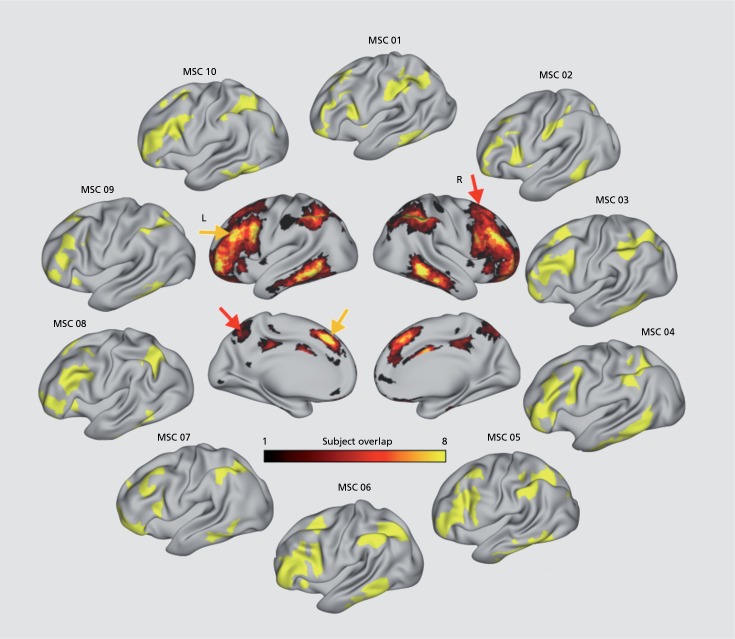
The frontoparietal network is critical for our ability to coordinate behavior in a rapid, accurate, and flexible goal-driven manner. In this review, we outline support for the framing of the frontoparietal network as a distinct control network, in part functioning to flexibly interact with and alter other functional brain networks. This network coordination likely occurs in a 4 Hz to 73 Hz θ/α rhythm, both during resting state and task state. Precision mapping of individual human brains has revealed that the functional topography of the frontoparietal network is variable between individuals, underscoring the notion that group-average studies of the frontoparietal network may be obscuring important typical and atypical features. Many forms of psychopathology implicate the frontoparietal network, such as schizophrenia and attention-deficit/hyperactivity disorder. Given the interindividual variability in frontoparietal network organization, clinical studies will likely benefit greatly from acquiring more individual subject data to accurately characterize resting-state networks compromised in psychopathology.
Overview
The claims and statistics of this paper haven’t been checked yet.
Free: it reads the open-access text and checks the first 5 claims that cite a source we can check. Create a free account to check every claim.
Integrity signals
Registry
Cites
Statistics
Figures
Verification
Claims the paper makes
The claims and statistics of this paper haven’t been checked yet.
Free: it reads the open-access text and checks the first 5 claims that cite a source we can check. Create a free account to check every claim.
Claims other papers make about this one
Each is checked against this paper’s own text: does it say what the citing paper says it does?
The source backs part of the claim, not all of it — or backs it for a different population, condition or comparison.
In the citing paper
“These dorsal cognitive regions connect to inferior parietal regions, forming the frontoparietal network [162–163]”
From Toward a neurocircuit-based taxonomy to guide treatment of obsessive-compulsive disorder (2021) · cites this paper as [162]
Experimental — accuracy not yet measuredIn the citing paper
“The most common target in MDD has been left dorsolateral prefrontal cortex (DLPFC), which is generally considered to be a node in the cognitive control network, albeit one that interfaces with the fronto-parietal attention network130.”
From Paying attention to attention in depression (2019) · cites this paper as [130]
Self-check
Percentages, sums and reported differences re-computed from the paper’s own numbers.
The self-check needs the paper’s full text.
Citations
Cites
The attention system of the human brain
Posner, M. I., & Petersen, S. E. (1990) · Annual Review of Neuroscience · doi:10.1146/annurev.ne.13.030190.000325 · Cited by 8,070
Saliency, switching, attention and control: a network model of insula function
Menon, V., & Uddin, L. Q. (2010) · Brain Structure and Function · doi:10.1007/s00429-010-0262-0 · Cited by 5,592
A mechanism for cognitive dynamics: neuronal communication through neuronal coherence.
Fries, P. (2005) · Trends in Cognitive Sciences · doi:10.1016/j.tics.2005.08.011 · Cited by 4,284
Functional Network Organization of the Human Brain
Power, J. D., Cohen, A. L., Nelson, S. M., Wig, G. S., Barnes, K. A., Church, J. A., Vogel, A. C., Laumann, T. O., Miezin, F. M., Schlaggar, B. L., et al. (2011) · Neuron · doi:10.1016/j.neuron.2011.09.006 · Cited by 4,124
EEG alpha oscillations: The inhibition–timing hypothesis
Klimesch, W., Sauseng, P., & Hanslmayr, S. (2007) · Brain Research Reviews · doi:10.1016/j.brainresrev.2006.06.003 · Cited by 3,891
Conflict monitoring and anterior cingulate cortex: an update
Botvinick, M. M., Cohen, J. D., & Carter, C. S. (2004) · Trends in Cognitive Sciences · doi:10.1016/j.tics.2004.10.003 · Cited by 3,623
The attention system of the human brain: 20 years after
Petersen, S. E., & Posner, M. I. (2012) · Annual Review of Neuroscience · doi:10.1146/annurev-neuro-062111-150525 · Cited by 3,439
Toward the future of psychiatric diagnosis: the seven pillars of RDoC
Cuthbert, B. N., & Insel, T. R. (2013) · BMC Medicine · doi:10.1186/1741-7015-11-126 · Cited by 3,053
Sridharan, D., Levitin, D. J., & Menon, V. (2008) · Proceedings of the National Academy of Sciences · doi:10.1073/pnas.0800005105 · Cited by 2,892
Neurocognitive deficit in schizophrenia: A quantitative review of the evidence.
Heinrichs, R. W., & Zakzanis, K. K. (1998) · Neuropsychology · doi:10.1037/0894-4105.12.3.426 · Cited by 2,798
Cited by
Items 201–300 of 837
Yang, Y., Li, J., Li, T., Li, Z., Zhuo, Z., Han, X., Duan, Y., Cao, G., Zheng, F., Tian, D., et al. (2023) · Journal of Translational Medicine · doi:10.1186/s12967-023-04164-w · Cited by 17
“On the other hand, the FPN, which is overrepresented in the cerebellum [52] with components overlapping the PMB and SM, modulates the integration of association and motor networks [53].”
BackgroundHow do tasks impact the reliability of fMRI functional connectivity?
Rai, S., Graff, K., Tansey, R. C., & Bray, S. (2024) · Human Brain Mapping · doi:10.1002/hbm.26535 · Cited by 18
“Additionally, high FC-TRC is visible in the middle frontal gyrus, a region of the frontoparietal network (FPN) (Marek & Dosenbach, 2018).”
BackgroundFrontoparietal network topology as a neural marker of musical perceptual abilities
Lumaca, M., Keller, P. E., Baggio, G., Pando‐Naude, V., Bajada, C. J., Martinez, M. A., Hansen, J. H., Ravignani, A., Joe, N., Vuust, P., et al. (2024) · Nature Communications · doi:10.1038/s41467-024-52479-z · Cited by 19
Mallio, C. A., Piervincenzi, C., Carducci, F., Quintiliani, L., Parizel, P. M., Pantano, P., & Quattrocchi, C. C. (2020) · Neuroradiology · doi:10.1007/s00234-020-02415-x · Cited by 16
“print across several disorders including schizophrenia, depression, and anxiety [43].”
BackgroundFrontoparietal Network Connectivity During an N-Back Task in Adults With Autism Spectrum Disorder
Yuk, V., Urbain, C. M., Anagnostou, E. A., & Taylor, M. J. (2020) · Frontiers in Psychiatry · doi:10.3389/fpsyt.2020.551808 · Cited by 25
Detecting abnormal connectivity in schizophrenia via a joint directed acyclic graph estimation model
Zhang, G., Cai, B., Zhang, A., Tu, Z., Xiao, L., Stephen, J. M., Wilson, T. W., Calhoun, V. D., & Wang, Y. (2022) · NeuroImage · doi:10.1016/j.neuroimage.2022.119451 · Cited by 17
Yu, F., Fang, H., Zhang, J., Wang, Z., Ai, H., Kwok, V. P. Y., Fang, Y., Guo, Y., Wang, X., Zhu, C., et al. (2022) · Depression and Anxiety · doi:10.1002/da.23292 · Cited by 20
“The FPN, a network known for cognitive control and emotion regulation, functions inversely correlated with DMN normally (Dodds et al., 2011; Marek & Dosenbach, 2018).”
MethodUnraveling reproducible dynamic states of individual brain functional parcellation
Boukhdhir, A., Zhang, Y., Mignotte, M., & Bellec, P. (2020) · Network Neuroscience · doi:10.1162/netn_a_00168 · Cited by 15
“Researchers reported that the lateral prefrontal cortex and the lateral temporal occipital cortex were among the most variable parcels across subjects (Marek & Dosenbach, 2018).”
BackgroundMotor learning in developmental coordination disorder: behavioral and neuroimaging study
Al-Yahya, E., Esser, P., Weedon, B. D., Joshi, S., Liu, Y.-C., Springett, D. N., Salvan, P., Meaney, A., Collett, J., Inácio, M., et al. (2023) · Frontiers in Neuroscience · doi:10.3389/fnins.2023.1187790 · Cited by 20
“The frontoparietal regions are known to be involved in motor planning, execution, and sensorimotor integration processes (Marek and Dosenbach, 2018).”
BackgroundYang, Q., Qu, X., Sheng, C., Zhao, X. Q., Chen, G., Wang, X., Li, Y., Du, W., Wang, X., Sun, Y., et al. (2025) · NeuroImage · doi:10.1016/j.neuroimage.2025.121305 · Cited by 19
“The FPN is critical for ability to coordinate behavior in a rapid, accurate, and flexible goal-driven manner (Marek and Dosenbach, 2018; Yeo et al., 2011).”
Ríos, A. S., Temuulen, U., Khalil, A. A., Villringer, K., Ali, H. F., Akdeniz, A., Grittner, U., Becher, M., Rackoll, T., Nave, A. H., et al. (2025) · Stroke · doi:10.1161/strokeaha.125.051858 · Cited by 16
Balbim, G. M., Ajilore, O., Erickson, K. I., Lamar, M., Aguiñaga, S., Bustamante, E. E., & Márquez, D. X. (2020) · Journal of Cognitive Enhancement · doi:10.1007/s41465-020-00185-1 · Cited by 18
Yeager, B. E., Dougher, C. C., Cook, R. H., & Medaglia, J. D. (2021) · Current Research in Neurobiology · doi:10.1016/j.crneur.2021.100017 · Cited by 18
Albertina, E. A., Barch, D. M., & Karcher, N. R. (2022) · Biological Psychiatry Cognitive Neuroscience and Neuroimaging · doi:10.1016/j.bpsc.2022.04.001 · Cited by 19
Klugah‐Brown, B., Wang, P., Jiang, Y., Becker, B., Hu, P., Uddin, L. Q., & Biswal, B. B. (2022) · Cerebral Cortex · doi:10.1093/cercor/bhac168 · Cited by 15
Bulgarelli, C., Pinti, P., Aburumman, N., & Jones, E. J. H. (2023) · Oxford Open Neuroscience · doi:10.1093/oons/kvad012 · Cited by 24
“The DLPFC-IPL connectivity may possibly belong to the frontoparietal network (FPN), which is known to be involved in sustained attention and goal-oriented cognition [75, 76].”
BackgroundStanford, W., Mucha, P. J., & Dayan, E. (2024) · Communications Biology · doi:10.1038/s42003-024-06392-2 · Cited by 22
“Thefronto-parietalcontrolnetworkisimportantforallocationofattention, fl exible goal-driven behavior, working memory, and decision making 76,77 .”
Zeng, C., Ross, B., Xue, Z., Huang, X., Wu, G., Liu, Z., Tao, H., & Pu, W. (2021) · Frontiers in Psychiatry · doi:10.3389/fpsyt.2021.634299 · Cited by 16
Revisiting Persistent Neuronal Activity During Covert Spatial Attention
Amengual, J. L., & Hamed, S. B. (2021) · Frontiers in Neural Circuits · doi:10.3389/fncir.2021.679796 · Cited by 18
Kaur, Y., Weiss, S., Zhou, C., Fischer, R., & Hildebrandt, A. (2021) · Journal of Intelligence · doi:10.3390/jintelligence9040059 · Cited by 17
Effective connectivity between resting-state networks in depression
DeMaster, D., Godlewska, B. R., Liang, M., Vannucci, M., Bockmann, T., Cao, B., & Selvaraj, S. (2022) · Journal of Affective Disorders · doi:10.1016/j.jad.2022.03.041 · Cited by 18
Activation in Right Dorsolateral Prefrontal Cortex Underlies Stuttering Anticipation
Jackson, E. S., Dravida, S., Zhang, X., Noah, J. A., Gracco, V. L., & Hirsch, J. (2022) · Neurobiology of Language · doi:10.1162/nol_a_00073 · Cited by 18
“…R-DLPFC and right supramarginal gyrus (R-SMG) (Menon & D’Esposito, 2021), is particularly relevant because it co-activates with multiple other networks (e.g., salience network, cingulo-opercular network) to carry out the diverse processes associated with cognitive control (Marek & Dosenbach, 2018).”
BackgroundThe impact of aging on morphometric changes in the cerebellum: A voxel-based morphometry study
Stalter, J., Yogeswaran, V., Vogel, W., Sörös, P., Mathys, C., & Witt, K. (2023) · Frontiers in Aging Neuroscience · doi:10.3389/fnagi.2023.1078448 · Cited by 15
“Cluster 2 is predominantly localized in the frontoparietal network, which controls other neuronal networks and provides flexible cognitive control (Marek and Dosenbach, 2018).”
BackgroundCognitive and neural predictors of speech comprehension in noisy backgrounds in older adults
Fitzhugh, M. C., Schaefer, S. Y., Baxter, L. C., & Rogalsky, C. (2020) · Language Cognition and Neuroscience · doi:10.1080/23273798.2020.1828946 · Cited by 15
“…parietal regions) known to support aspects of working memory, particularly the initiation of attentional resources toward task goals and memory maintenance (Cole & Schneider, 2007; Dosenbach et al., 2007; Gazzaley & Nobre, 2012; Harding et al., 2015; Marek & Dosenbach, 2018; Wallis et al., 2015).”
BackgroundJanuszko, P., Gmaj, B., Piotrowski, T., Kopera, M., Klimkiewicz, A., Wnorowska, A., Wołyńczyk-Gmaj, D., Brower, K. J., Wojnar, M., & Jakubczyk, A. (2020) · Drug and Alcohol Dependence · doi:10.1016/j.drugalcdep.2020.108393 · Cited by 16
The Cerebellum and Beauty: The Impact of the Cerebellum in Art Experience and Creativity
Adamaszek, M., Cattaneo, Z., Ciricugno, A., & Chatterjee, A. K. (2022) · Advances in experimental medicine and biology · doi:10.1007/978-3-030-99550-8_14 · Cited by 20
Alvand, A., Kuruvilla-Mathew, A., Kirk, I. J., Roberts, R. P., Pedersen, M., & Purdy, S. C. (2022) · NeuroImage Clinical · doi:10.1016/j.nicl.2022.103139 · Cited by 18
Unbalanced amygdala communication in major depressive disorder
Wen, X., Han, B., Li, H., Dou, F., Wei, G., Hou, G., & Wu, X. (2023) · Journal of Affective Disorders · doi:10.1016/j.jad.2023.02.091 · Cited by 17
Redefining stroke rehabilitation: Mobilizing the embodied goal-oriented brain
Verschure, P. F. M. J., dos Santos, F. P., & Sharma, V. (2023) · Current Opinion in Neurobiology · doi:10.1016/j.conb.2023.102807 · Cited by 21
“This latter relationship is particularly intriguing because it directly links stroke recovery to the broader network underlying executive control [35].”
Label-based meta-analysis of functional brain dysconnectivity across mood and psychotic disorders
Grot, S., Smine, S., Potvin, S., Darcey, M., Pavlov, V., Genon, S., Nguyen, H. D., & Orban, P. (2024) · Progress in Neuro-Psychopharmacology and Biological Psychiatry · doi:10.1016/j.pnpbp.2024.110950 · Cited by 19
Zhang, J., Zhang, Z., Sun, H. G., Ma, Y., Yang, J. Y., Chen, K., Yu, X., Qin, T., Zhao, T., Zhang, J., et al. (2024) · Translational Psychiatry · doi:10.1038/s41398-024-02797-z · Cited by 18
“All the evidence suggests that edge-centric co-fl uctuation analysis could provide new insight into connectivity disruptions in brain disorders.”
BackgroundUpdating functional brain units: Insights far beyond Luria
Peña‐Casanova, J., Sánchez‐Benavides, G., & Sigg-Alonso, J. (2024) · Cortex · doi:10.1016/j.cortex.2024.02.004 · Cited by 17
Li, Z., Jiang, K., Zhu, Y., Du, H., Im, H., Zhu, Y., Feng, L., Zhu, W., Zhao, G. W., Jia, X., et al. (2024) · NeuroImage · doi:10.1016/j.neuroimage.2024.120690 · Cited by 17
“In addition, the FPN is considered crucial for coordinating individual behavior in a rapid, accurate, and flexible goal-driven manner, and likewise needs to interact with other networks to achieve its functioning (Marek & Dosenbach, 2018; Zanto & Gazzaley, 2013).”
BackgroundCurtis, M., Flournoy, J. C., Kandala, S., Sanders, A. F. P., Harms, M. P., Omary, A., Somerville, L. H., & Barch, D. M. (2024) · Developmental Cognitive Neuroscience · doi:10.1016/j.dcn.2024.101473 · Cited by 22
“These networks are involved in cognitive processes that are refined throughout development (Marek and Dosenbach, 2018).”
Aumer, P., Brandt, G. A., Hirjak, D., & Bähner, F. (2024) · Biomarkers in Neuropsychiatry · doi:10.1016/j.bionps.2024.100111 · Cited by 18
Sarpal, D. K., Tarcijonas, G., Calabro, F. J., Foran, W., Haas, G. L., Luna, B., & Murty, V. P. (2020) · Psychological Medicine · doi:10.1017/s0033291720004201 · Cited by 15
“Our finding of decreased context-specific DLPFC connectivity with the parietal lobe reflects limitations in engaging the frontoparietal network, which supports the ability to generate optimal executive responses by linking visuospatial and higher-order processing regions (Marek & Dosenbach, 2018).”
BackgroundChanges in Brain Functional Network Connectivity in Adult Moyamoya Diseases
Zheng, G., Lei, Y., Li, Y., Zhang, W., Su, J., Qi, X., Chen, L., Zhang, X., Gu, Y., Yu, Y., et al. (2021) · Cognitive Neurodynamics · doi:10.1007/s11571-021-09666-1 · Cited by 15
Garrison, J. R., Saviola, F., Morgenroth, E., Barker, H., Lührs, M., Simons, J. S., Fernyhough, C., & Allen, P. (2021) · NeuroImage · doi:10.1016/j.neuroimage.2021.118640 · Cited by 19
Graff, K., Tansey, R. C., Rai, S., Ip, A., Rohr, C. S., Dimond, D., Dewey, D., & Bray, S. (2022) · NeuroImage · doi:10.1016/j.neuroimage.2022.119367 · Cited by 15
Cross-task specificity and within-task invariance of cognitive control processes
Xiao, Y., Chou, C., Cosgrove, G. R., Crone, N. E., Stone, S. S. D., Madsen, J. R., Reucroft, I., Shih, Y., Weisholtz, D. S., Yu, H., et al. (2023) · Cell Reports · doi:10.1016/j.celrep.2022.111919 · Cited by 16
Chmiel, J., & Malinowska, A. (2025) · Journal of Clinical Medicine · doi:10.3390/jcm14155357 · Cited by 19
“This localisation is not arbitrary; fronto-parietal alpha synchrony is the electrophysiological backbone of adaptive control [100,101], and its disruption predicts smaller P3 latency in inhibitory tasks, even in non-clinical gamers [102].”
Decoding task specific and task general functional architectures of the brain
Gupta, S., Lim, M. J. W., & Rajapakse, J. C. (2022) · Human Brain Mapping · doi:10.1002/hbm.25817 · Cited by 15
“The FP task control network acts as a flexible hub for cognitive control facilitating special attention to trial specific information (Marek & Dosenbach, 2018) whereas the CO task control network maintains alertness during task performance and correction based on feedback from each trial (Cocchi,…”
BackgroundWang, X., Wu, H., Wang, D., Wang, W., Wang, W., Jin, W., Luo, J., Jiang, W., Tang, Y., Ren, Y., et al. (2023) · Frontiers in Psychiatry · doi:10.3389/fpsyt.2023.1224914 · Cited by 20
“The SFG is a key node in the frontoparietal network (FPN), a cognitive control system responsible for cognitive control and coordination between brain networks (21).”
BackgroundRavi, S., Camacho, M. C., Fleming, B., Scudder, M. R., & Humphreys, K. L. (2023) · Biological Psychology · doi:10.1016/j.biopsycho.2023.108717 · Cited by 15
Yu, S., Konjusha, A., Ziemssen, T., & Beste, C. (2024) · NeuroImage · doi:10.1016/j.neuroimage.2024.120541 · Cited by 17
“According to the frontoparietal network theory, frontal and parietal regions are crucial areas for working memory functions (Marek and Dosenbach, 2018), which has also been demonstrated in research studies (Gazzaley et al., 2004; Palva et al., 2011; Sauseng et al., 2005).”
BackgroundSpirituality as a Therapeutic Approach for Severe Mental Illness: Insights from Neural Networks
Knegtering, H., Bruggeman, R., & Spoelstra, S. K. (2024) · Religions · doi:10.3390/rel15040489 · Cited by 25
Boyatzis, R. E. (2024) · doi:10.1093/9780197765142.001.0001 · Cited by 27
Anesthetics as Treatments for Depression: Clinical Insights and Underlying Mechanisms
Breault, M. S., Orguc, S., Kwon, O., Kang, G. H., Tseng, B., Schreier, D. R., & Brown, E. N. (2025) · Annual Review of Neuroscience · doi:10.1146/annurev-neuro-112723-062031 · Cited by 13
Neural dynamics of spontaneous memory recall and future thinking in the continuous flow of thoughts
Su, H., Li, X., Born, S., Honey, C. J., Chen, J., & Lee, H. (2025) · Nature Communications · doi:10.1038/s41467-025-61807-w · Cited by 23
“In addition, spon-taneous thoughts share neural correlates with memory recall and future thinking 1,14 – 16 , particularly involving the default network 17 and the frontoparietal control network 18 .”
Antisocial behavior is associated with reduced frontoparietal network efficiency in youth
Tillem, S., Dotterer, H. L., Goetschius, L. G., Lopez‐Duran, N. L., Mitchell, C. M., Monk, C. S., & Hyde, L. W. (2023) · Social Cognitive and Affective Neuroscience · doi:10.1093/scan/nsad026 · Cited by 16
“…functioning (e.g. interpreting other agents’ affective cues; Spreng and Grady, 2010; Jack et al., 2013), salience processing (e.g. fixating on potentially rewarding and/or threatening stimuli; Uddin, 2016) and executive functioning (e.g. response inhibition; Marek and Dosenbach, 2018).”
BackgroundChopra, S., Cocuzza, C. V., Lawhead, C., Ricard, J. A., Labache, L., Patrick, L. M., Kumar, P., Rubenstein, A., Moses, J., Chen, L., et al. (2025) · Scientific Data · doi:10.1038/s41597-025-04895-z · Cited by 34
“…but with a relatively more pronounced centrality in frontoparietal B network regions, and relatively reduced centrality in visual and cerebellar network regions, which is broadly consistent with the theory that frontoparietal network interactions support cognitive control processes 136,137 .”
Yao, W., Initiative, A. D. N., Zhang, X., Zhao, H., Xu, Y., & Bai, F. (2022) · Journal of Alzheimer s Disease · doi:10.3233/jad-220475 · Cited by 10
“TheFPNcomprisesthe lateralprefrontalcortex,dorsalanteriorcingulatecor-tex,precuneus,anteriorinferiorparietallobule,and inferiortemporalcortexandappearstobeinvolvedin instantiatingandflexiblymodulatingcognitivecon-trol[22].”
Smolders, L., Baene, W. D., van der Hofstad, R., Florack, L. M. J., & Rutten, G.-J. M. (2023) · Journal of Neuroscience Research · doi:10.1002/jnr.25242 · Cited by 13
Kember, J., Stepien, L., Panda, E., & Tekok-Kılıç, A. (2023) · PLoS ONE · doi:10.1371/journal.pone.0277382 · Cited by 13
Wards, Y., Ehrhardt, S. E., Filmer, H. L., Mattingley, J. B., Garner, K., & Dux, P. E. (2023) · Cerebral Cortex · doi:10.1093/cercor/bhad406 · Cited by 14
Saccà, V., Wen, Y., Hodges, S., & Kong, J. (2023) · NeuroImage · doi:10.1016/j.neuroimage.2023.120433 · Cited by 15
“One of them is the frontoparietal network (FPN) which is involved in perceptual attention, information manipulation in working memory, and goal-directed tasks (Marek and Dosenbach, 2018).”
Jafari, Z., Kolb, B. E., & Mohajerani, M. H. (2024) · European Journal of Neuroscience · doi:10.1111/ejn.16295 · Cited by 14
“The FPN, including portions of the lateral prefrontal cortex and posterior parietal cortex (Gratton et al., 2018; Heinonen et al., 2016), is involved in working memory, attentional tasks (Marek & Dosenbach, 2018) and language control (Wu et al., 2019).”
BackgroundBodensohn, L., Maurer, A., Daamen, M., Upadhyay, N., Werkhausen, J., Lohaus, M., Manunzio, U., Manunzio, C., Radbruch, A., Attenberger, U. I., et al. (2024) · Brain and Cognition · doi:10.1016/j.bandc.2024.106156 · Cited by 14
“The FPN plays an important role in EF and cognitive control, i.e., voluntary goal-directed behavior, top-down control, and cognitively demanding tasks (Chenot et al., 2021; Marek & Dosenbach, 2018; Seitzman et al., 2019).”
Wu, Y., Zhang, H., Shen, Q., Jiang, X., Yuan, X., Li, M., Chen, M., Zhou, J., & Cui, J. (2024) · Journal of Psychiatric Research · doi:10.1016/j.jpsychires.2024.07.009 · Cited by 14
Systematic review on resting-state fMRI in people with AUD and people who binge drink
Rodríguez, G. C., Russell, M. A., & Claus, E. D. (2024) · Molecular Psychiatry · doi:10.1038/s41380-024-02796-y · Cited by 16
Brain photobiomodulation: a potential treatment in Alzheimer’s and Parkinson’s diseases
Blivet, G., Touchon, B., Cavadore, H., Guillemin, S., Pain, F., Weiner, M. W., Sabbagh, M. N., Moro, C., & Touchon, J. (2025) · The Journal of Prevention of Alzheimer s Disease · doi:10.1016/j.tjpad.2025.100185 · Cited by 17
“…default mode network (cortical areas that show synchronous activity when individuals are seemingly at rest, not engaged in any specific mental task [ 33 ]) and frontoparietal network (a brain region involved in cognitive control and executive function such task-switching and decision-making [ 34 ]).”
Dandash, O., Cherbuin, N., Schwartz, O., Allen, N. B., & Whittle, S. (2021) · Scientific Reports · doi:10.1038/s41598-021-90474-2 · Cited by 15
Hawks, Z., Todorov, A. A., Marrus, N. M., Nishino, T., Talović, M., Nebel, M. B., Girault, J. B., Davis, S. C., Marek, S. A., Seitzman, B. A., et al. (2021) · Biological Psychiatry Global Open Science · doi:10.1016/j.bpsgos.2021.12.004 · Cited by 14
“Evidence from studies of functional connectivity suggest that the function of a given cerebellar region is determined by its network membership (34,36,37), with cerebellar regions in the somatomotor network supporting error signaling for movement (38) and cerebellar regions in the frontoparietal network (FPN) supporti…”
BackgroundSelf-citationLessons Learned in Outpatient Physical Therapy for Motor Functional Neurological Disorder
Maggio, J., Kyle, K., Stephen, C. D., & Perez, D. L. (2022) · Neurology Report · doi:10.1097/npt.0000000000000415 · Cited by 27
Brooks, S. J., Tian, L., Parks, S. M., & Stamoulis, C. (2022) · Scientific Reports · doi:10.1038/s41598-022-22299-6 · Cited by 22
Chen, Q., Hattori, T., Tomisato, H., Ohara, M., Hirata, K., Yokota, T., & Initiative, A. D. N. (2022) · Human Brain Mapping · doi:10.1002/hbm.26151 · Cited by 13
Otte, M., Schmitgen, M. M., Wolf, N. D., Kubera, K. M., Calhoun, V. D., Fritze, S., Geiger, L. S., Tost, H., Seidl, U., Meyer‐Lindenberg, A., et al. (2023) · European Archives of Psychiatry and Clinical Neuroscience · doi:10.1007/s00406-023-01566-1 · Cited by 13
“First, the frontoparietal network plays an important role in goal-driven behavior, making it possible to react in a fast, accurate and flexible way [53].”
BackgroundBalfroid, T., Warren, A. E. L., Dalic, L. J., Aeby, A., Berlangieri, S. U., & Archer, J. S. (2023) · Epilepsy Research · doi:10.1016/j.eplepsyres.2023.107131 · Cited by 13
Davis, M., Fitzgerald, P. B., Bailey, N. W., Sullivan, C. M., Stout, J. C., Hill, A. T., & Hoy, K. E. (2023) · Brain Research · doi:10.1016/j.brainres.2023.148379 · Cited by 15
Khan, A., Mosbacher, J. A., Vogel, S., Binder, M., Wehovz, M., Moshammer, A., Halverscheid, S., Pustelnik, K., Nitsche, M. A., Tong, R. K., et al. (2023) · Brain Structure and Function · doi:10.1007/s00429-023-02667-2 · Cited by 13
Rahman, S., Mulvihill, K. G., Wood, C., Quah, S., Horst, N. K., Clarke, H. F., Cockcroft, G. J., Santangelo, A., & Roberts, A. (2021) · Cerebral Cortex · doi:10.1093/cercor/bhab121 · Cited by 8
Common functional brain networks between attention deficit and disruptive behaviors in youth
Wong, T. Y., Zhang, H., White, T. J. H., Xu, L., & Qiu, A. (2021) · NeuroImage · doi:10.1016/j.neuroimage.2021.118732 · Cited by 17
Garrett, D. D., Kloosterman, N. A., Epp, S. M., Chopurian, V., Kosciessa, J. Q., Waschke, L., Skowron, A., Shine, J. M., Perry, A., Salami, A., et al. (2022) · bioRxiv (Cold Spring Harbor Laboratory) · doi:10.1101/2022.05.05.490687 · Cited by 16
Slade, B., Williams, B. J., Engelbrecht, R., & Ciorciari, J. (2025) · Journal of Alzheimer s Disease · doi:10.1177/13872877251327762 · Cited by 12
“106 The FPCN prioritizes and coordinates information fl ow across multiple networks, including the DMN, 110 and transfers task components such as task rules, knowledge, and skills, from previous tasks to novel tasks.”
InfluentialPalmer, W. C., Park, S., & Levendovszky, S. R. (2022) · Frontiers in Neuroscience · doi:10.3389/fnins.2022.975305 · Cited by 13
“This evidence points to the FPN’s role in flexibly changing network configurations to match present needs (Marek and Dosenbach, 2018).”
BackgroundJames, C. E., Müller, D., Müller, C. A. H., van de Looij, Y., ALTENMÜLLER, E. O., Kliegel, M., Ville, D. V. D., & Marié, D. (2024) · Heliyon · doi:10.1016/j.heliyon.2024.e26674 · Cited by 20
“These results included restored lateralization effects on frontoparietal networks, essential for effective goal-driven coordination [88].”
Ou, Z., Ding, Q., Yao, S., Zhang, L., Li, Y., Lan, Y., & Xu, G. (2024) · European Journal of Neuroscience · doi:10.1111/ejn.16333 · Cited by 13
“The frontoparietal network is a control network, which flexibly interacts with other control and processing networks (Marek & Dosenbach, 2018).”
BackgroundSlowing of Parameterized Resting-State Electroencephalography After Mild Traumatic Brain Injury
Nwakamma, M. C., Stillman, A., Gabard-Durnam, L. J., Cavanagh, J. F., Hillman, C. H., & Morris, T. P. (2024) · Neurotrauma Reports · doi:10.1089/neur.2024.0004 · Cited by 12
“16,17 Neuropsychological assessments are typically used with the purpose of detecting changes in brain and cognitive outcomes post-injury to inform clinical treatment and prognosis, 18 but are not sensitive enough to detect subclinical brain damage, which may better inform prognostic models of…”
MethodJanet, R., Smallwood, J., Hutcherson, C. A. C., Plaßmann, H., Mckeown, B., & Tusche, A. (2024) · Proceedings of the National Academy of Sciences · doi:10.1073/pnas.2314224121 · Cited by 11
“We hypothesized that regulatory, health - focused settings in HC would elicit greater engagement of the FP network (33–35).”
BackgroundYao, Y., Zhang, S., Wang, B., Lin, X., Zhao, G., Deng, H., & Chen, Y. (2024) · Cerebral Cortex · doi:10.1093/cercor/bhae267 · Cited by 13
Connectome-based predictive modeling of early and chronic psychosis symptoms
Foster, M. L., Ye, J., Powers, A. R., Dvornek, N. C., & Scheinost, D. (2025) · Neuropsychopharmacology · doi:10.1038/s41386-025-02064-9 · Cited by 14
Constantino, F. C., Garat, S., Nicolaisen‐Sobesky, E., Paz, V., Martínez‐Montes, E., Kessel, D., Cabana, Á., & Gradin, V. B. (2020) · Social Neuroscience · doi:10.1080/17470919.2020.1859410 · Cited by 12
Freitas, L. G. A., Liverani, M. C., Siffredi, V., Schnider, A., Tolsa, C. B., Leuchter, R. H., Ville, D. V. D., & Hüppi, P. S. (2021) · NeuroImage Clinical · doi:10.1016/j.nicl.2021.102668 · Cited by 10
“These regions are key nodes of the frontoparietal network, which is crucial for the ability to coordinate behaviour in a flexible, accurate and timely manner (Marek and Dosenbach, 2018).”
BackgroundEffect of education on functional network edge efficiency in Alzheimer’s disease
Kim, Y., Kim, S.-W., Seo, S. W., Jang, H., Kim, K. W., Cho, S. H., Kim, S. E., Kim, S. J., Lee, J. S., Kim, S. T., et al. (2021) · Scientific Reports · doi:10.1038/s41598-021-96361-0 · Cited by 12
Rovetti, J., Goy, H., Zara, M., & Russo, F. (2021) · Ear and Hearing · doi:10.1097/aud.0000000000001137 · Cited by 13
“…network, composed of dorsal cingulate, inferior frontal, and anterior insula regions (Dosenbach et al. 2006; Eckert et al. 2009); and the frontoparietal network, composed of brain areas along the dorsolateral prefrontal cortex (DLPFC) and intraparietal sulcus (Ptak 2011; Marek & Dosenbach 2018).”
BackgroundGray-Matter Morphometry of Internalizing-Symptom Dimensions During Adolescence
Smolker, H. R., Snyder, H. R., Hankin, B. L., & Banich, M. T. (2022) · Clinical Psychological Science · doi:10.1177/21677026211071091 · Cited by 16
“…Madian et al., 2019), the anxiousapprehension-specific factor was the only dimension in the current study to show associations with graymatter morphometry within the FPN, a brain network that supports cognitive control over working memory and attention (e.g., Marek & Dosenbach, 2018; Ptak, 2012).”
BackgroundCombining MRI and cognitive evaluation to classify concussion in university athletes
Ly, M. T., Scarneo‐Miller, S. E., Lepley, A. S., Coleman, K. A., Hirschhorn, R. M., Yeargin, S. W., Casa, D. J., & Chen, C.-M. (2022) · Brain Imaging and Behavior · doi:10.1007/s11682-022-00687-w · Cited by 15
Li, Y., Ran, Y., & Chen, Q. (2023) · Frontiers in Neuroscience · doi:10.3389/fnins.2023.1236696 · Cited by 16
“The FPN is highly integrated with other brain networks associated with cognitive control, providing a functional backbone for rapid and flexible modulation of other brain networks (Marek and Dosenbach, 2018).”
BackgroundHunt, K. J., Knight, L. K., & Depue, B. E. (2023) · BMC Neuroscience · doi:10.1186/s12868-023-00812-5 · Cited by 13
“The frontoparietal control network (sometimes referred to as the central executive network or frontoparietal attention network) is “critical for our ability to coordinate behavior in a rapid, accurate, and flexible goal-driven manner” [33].”
BackgroundEkdahl, N., Möller, M. C., Deboussard, C. N., Stålnacke, B., Lannsjö, M., & Nordin, L. E. (2023) · BMC Neurology · doi:10.1186/s12883-023-03509-8 · Cited by 11
Quantitative EEG Findings in Patients With Psychogenic Nonepileptic Seizures
Arıkan, M. K., Öksüz, Ö., Metin, B., Günver, M. G., Çetin, H. L., Esmeray, M. T., & Tarhan, N. (2020) · Clinical EEG and Neuroscience · doi:10.1177/1550059420918756 · Cited by 13
Patterns of brain-wide associations reflect socioeconomics
Marek, S. A., Donohue, M. R., Karcher, N. R., Hoyniak, C. P., Chauvin, R. J., Meyer, A. C., Miller, J. M., Van, A. N., Wang, A., Baden, N. J., et al. (2026) · Science · doi:10.1126/science.aee6213 · Cited by 27
“The FPN (yellow) ( 47 ), preferentially activated during complex cognition and linked to interindividual variation in fluid IQ by task fMRI ( 23 , 48 ), had the least overlap with the RSFC exposome pattern (Fig.”
Self-citationDistinguishing Laparoscopic Surgery Experts from Novices Using EEG Topographic Features
Manabe, T., Rahul, F. N. U., Fu, Y., Intes, X., Schwaitzberg, S. D., De, S., Cavuoto, L. A., & Dutta, A. (2023) · Brain Sciences · doi:10.3390/brainsci13121706 · Cited by 12
Connectome dysfunction in patients at clinical high risk for psychosis and modulation by oxytocin
Davies, C., Martins, D., Dipasquale, O., McCutcheon, R. A., Micheli, A. D., Ramella‐Cravaro, V., Provenzani, U., Rutigliano, G., Cappucciati, M., Oliver, D., et al. (2024) · Molecular Psychiatry · doi:10.1038/s41380-024-02406-x · Cited by 10
Gaber, M. M., Hosny, H., Hussein, M., Ashmawy, M. A., & Magdy, R. (2024) · BMC Neurology · doi:10.1186/s12883-023-03518-7 · Cited by 12
“The frontoparietal is a fundamental brain region for short-term memory (e.g., working memory) [33], while the medial temporal region is for long-term memory [34].”
BackgroundBruno, A., Lothmann, K., Bludau, S., Mohlberg, H., & Amunts, K. (2024) · Frontiers in Neuroimaging · doi:10.3389/fnimg.2024.1339244 · Cited by 12
“The frontoparietal network of the DLPFC is involved in cognitive control and working memory (Harding et al., 2015; Marek and Dosenbach, 2018).”
BackgroundNeudorf, J., Shen, K., & McIntosh, A. R. (2024) · Network Neuroscience · doi:10.1162/netn_a_00377 · Cited by 18
“In comparison, the OA adult structural brain network has reprioritized the connectivity of the ventral inferior temporal lobe (also part of the frontoparietal network; Marek & Dosenbach, 2018).”
ResultLu, Q., Zhu, Z., Zhang, H., Gan, C., Shan, A., Gao, M., Sun, H., Cao, X., Yuan, Y., Tracy, J. I., et al. (2024) · Translational Psychiatry · doi:10.1038/s41398-024-03070-z · Cited by 13
Jiang, K., Wang, J., Gao, Y., Li, X., Im, H., Zhu, Y., Du, H., Feng, L., Zhu, W., Zhao, G. W., et al. (2024) · NeuroImage · doi:10.1016/j.neuroimage.2024.120856 · Cited by 10
“The FPN, crucial for executive functions including decision-making, cognitive control, and goal-directed behavior (Marek and Dosenbach, 2018), could impair one ’ s ability to exert self-control and make long-term beneficial decisions when connectivity within this network is dysfunctional.”
BackgroundVarela‐López, B., Zurrón, M., Lindín, M., Díaz, F., & Galdo‐Álvarez, S. (2024) · GeroScience · doi:10.1007/s11357-024-01369-9 · Cited by 13
“It also encompasses regions primarily associated with feedback in the context of cognitive control, including the dorsolateral prefrontal cortex, inferior parietal lobe, caudate nucleus, and lateral cerebellum [13].”
Metadata
- Authors
- Marek, S., & Dosenbach, N. U. F.
- Affiliations
- Washington University in St. Louis (US)
- Corresponding author
- Marek, Scott
- Venue
- Dialogues in Clinical Neuroscience
- Publisher
- Informa UK Limited
- Published
- 2018-06-30
- Volume
- 20
- Issue
- 2
- Pages
- 133-140
- ISSN
- 1294-8322 (ISSN-L)
- 1958-5969
- PMC
- PMC6136121
- OpenAlex
- W2989074529
- Cited by
- 836
- References
- 63
- Citations by year
- 2026: 136 · 2025: 142 · 2024: 131 · 2023: 113 · 2022: 124 · 2021: 93 · 2020: 77 · 2019: 17 · 2018: 2
- FWCI
- 28.14
- Type
- journal article
- Language
- en
- Open access
- diamond
- doi.org
- Licence
- Locations
- Dialogues in Clinical Neuroscience (publishedVersion, cc-by-nc-nd)
- Europe PMC (PubMed Central) (publishedVersion, cc-by-nc-nd)
- PubMed Central (publishedVersion, cc-by-nc-nd)
- PubMed (publishedVersion)
- Funders
- National Institutes of Health (UL1TR000448, UL1TR002345)
- National Institute of Mental Health (T32MH100019)
- National Institute of Neurological Disorders and Stroke (K23NS088590, P30NS098577)
- National Center for Advancing Translational Sciences
- Eunice Kennedy Shriver National Institute of Child Health and Human Development (U54HD087011)
- Topics
- Life Sciences › Neuroscience › Cognitive Neuroscience › Functional Brain Connectivity Studies
- Life Sciences › Neuroscience › Cognitive Neuroscience › Neural and Behavioral Psychology Studies
- Life Sciences › Neuroscience › Cognitive Neuroscience › Neural dynamics and brain function
- Keywords
- frontoparietal network, control network, interindividual variability, theta-alpha oscillations, resting-state networks, schizophrenia, attention deficit hyperactivity disorder, functional topography, electrophysiology
- MeSH terms
- Animals, Attention Deficit Disorder with Hyperactivity, Brain, Brain Mapping, Humans, Nerve Net, Neural Pathways, Electrophysiological Phenomena
About these checks
Registry, retraction, Cites and statistics results are computed, not judged, with one exception: a printed reference that no index lists is read once by a model before it counts as a citation error. Claims are extracted by a model and kept only when their quote appears verbatim in the text; each cited source is then checked, with a model’s help, for whether it says what the claim relies on. Those verdicts can be wrong — read the claim’s quote and the cited source before relying on one.
Statistics and arithmetic are recomputed, not judged.
Confidence bands are shown only for fields calibrated on our annotated test set. None is calibrated yet, so no band is shown.
What counts as a claim ›How we measure confidence ›How we check this ›
Are you an author, or do you see a problem with this page? Request a review
Data sources
Bibliographic data: Semantic Scholar, OpenAlex, Crossref.
Contains information from the Semantic Scholar Academic Graph Datasets, made available under the ODC Attribution License (ODC-BY 1.0).
Semantic Scholar’s data is described in: Kinney, R., et al. (2023). The Semantic Scholar Open Data Platform. arXiv:2301.10140.
