

The frontoparietal network: function, electrophysiology, and importance of individual precision mapping
Open accessThe DOI matches its Crossref record; 63 of the 63 references it cites were found in a registry or an index.
Abstract
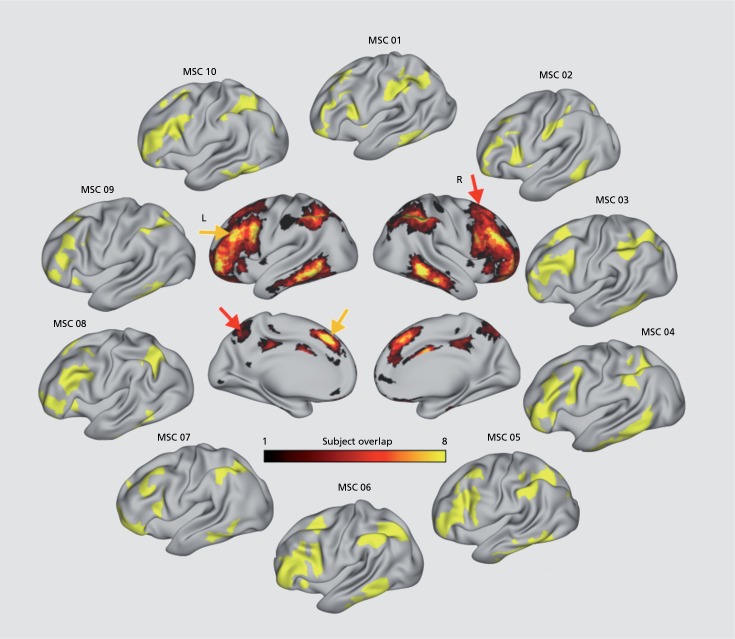
The frontoparietal network is critical for our ability to coordinate behavior in a rapid, accurate, and flexible goal-driven manner. In this review, we outline support for the framing of the frontoparietal network as a distinct control network, in part functioning to flexibly interact with and alter other functional brain networks. This network coordination likely occurs in a 4 Hz to 73 Hz θ/α rhythm, both during resting state and task state. Precision mapping of individual human brains has revealed that the functional topography of the frontoparietal network is variable between individuals, underscoring the notion that group-average studies of the frontoparietal network may be obscuring important typical and atypical features. Many forms of psychopathology implicate the frontoparietal network, such as schizophrenia and attention-deficit/hyperactivity disorder. Given the interindividual variability in frontoparietal network organization, clinical studies will likely benefit greatly from acquiring more individual subject data to accurately characterize resting-state networks compromised in psychopathology.
Overview
The claims and statistics of this paper haven’t been checked yet.
Free: it reads the open-access text and checks the first 5 claims that cite a source we can check. Create a free account to check every claim.
Integrity signals
Registry
Cites
Statistics
Figures
Verification
Claims the paper makes
The claims and statistics of this paper haven’t been checked yet.
Free: it reads the open-access text and checks the first 5 claims that cite a source we can check. Create a free account to check every claim.
Claims other papers make about this one
Each is checked against this paper’s own text: does it say what the citing paper says it does?
The source backs part of the claim, not all of it — or backs it for a different population, condition or comparison.
In the citing paper
“These dorsal cognitive regions connect to inferior parietal regions, forming the frontoparietal network [162–163]”
From Toward a neurocircuit-based taxonomy to guide treatment of obsessive-compulsive disorder (2021) · cites this paper as [162]
Experimental — accuracy not yet measuredIn the citing paper
“The most common target in MDD has been left dorsolateral prefrontal cortex (DLPFC), which is generally considered to be a node in the cognitive control network, albeit one that interfaces with the fronto-parietal attention network130.”
From Paying attention to attention in depression (2019) · cites this paper as [130]
Self-check
Percentages, sums and reported differences re-computed from the paper’s own numbers.
The self-check needs the paper’s full text.
Citations
Cites
The attention system of the human brain
Posner, M. I., & Petersen, S. E. (1990) · Annual Review of Neuroscience · doi:10.1146/annurev.ne.13.030190.000325 · Cited by 8,070
Saliency, switching, attention and control: a network model of insula function
Menon, V., & Uddin, L. Q. (2010) · Brain Structure and Function · doi:10.1007/s00429-010-0262-0 · Cited by 5,592
A mechanism for cognitive dynamics: neuronal communication through neuronal coherence.
Fries, P. (2005) · Trends in Cognitive Sciences · doi:10.1016/j.tics.2005.08.011 · Cited by 4,284
Functional Network Organization of the Human Brain
Power, J. D., Cohen, A. L., Nelson, S. M., Wig, G. S., Barnes, K. A., Church, J. A., Vogel, A. C., Laumann, T. O., Miezin, F. M., Schlaggar, B. L., et al. (2011) · Neuron · doi:10.1016/j.neuron.2011.09.006 · Cited by 4,124
EEG alpha oscillations: The inhibition–timing hypothesis
Klimesch, W., Sauseng, P., & Hanslmayr, S. (2007) · Brain Research Reviews · doi:10.1016/j.brainresrev.2006.06.003 · Cited by 3,891
Conflict monitoring and anterior cingulate cortex: an update
Botvinick, M. M., Cohen, J. D., & Carter, C. S. (2004) · Trends in Cognitive Sciences · doi:10.1016/j.tics.2004.10.003 · Cited by 3,623
The attention system of the human brain: 20 years after
Petersen, S. E., & Posner, M. I. (2012) · Annual Review of Neuroscience · doi:10.1146/annurev-neuro-062111-150525 · Cited by 3,439
Toward the future of psychiatric diagnosis: the seven pillars of RDoC
Cuthbert, B. N., & Insel, T. R. (2013) · BMC Medicine · doi:10.1186/1741-7015-11-126 · Cited by 3,053
Sridharan, D., Levitin, D. J., & Menon, V. (2008) · Proceedings of the National Academy of Sciences · doi:10.1073/pnas.0800005105 · Cited by 2,892
Neurocognitive deficit in schizophrenia: A quantitative review of the evidence.
Heinrichs, R. W., & Zakzanis, K. K. (1998) · Neuropsychology · doi:10.1037/0894-4105.12.3.426 · Cited by 2,798
Cited by
Items 701–800 of 837
van Dongen, J. D. M., Haveman, Y. R. A., Slob, E. A. W., Muetzel, R. L., & Bolhuis, K. (2025) · Research Square · doi:10.21203/rs.3.rs-6906172/v1 · Cited by 1
Bertrand, C. M., Hong, Y., Deater-Deckard, K. D., & Bell, M. A. (2026) · Journal of Family Psychology · doi:10.1037/fam0001374
Chronic pain is linked to a resting-state neural archetype that optimizes learning from punishmentsPreprint
Scarlatti, F., Dormegny-Jeanjean, L. C., Schefzik, R., Banaschewski, T., Bokde, A. L. W., Brühl, R., Desrivières, S., Garavan, H., Gowland, P. A., Grigis, A., et al. (2025) · bioRxiv (Cold Spring Harbor Laboratory) · doi:10.1101/2025.07.11.664303 · Cited by 1
“In summary, the neural and cognitive characteristics of Archetype C suggest it embodies a future-oriented, goal-directed cognitive strategy optimized for self-control and conscientious decision-making.”
Kim, H., Byun, J., Jung, K., & Kim, K. H. (2025) · Biomedical Engineering Letters · doi:10.1007/s13534-025-00493-5
“This finding suggests poten - tial engagement of the fronto-parietal attentional network, which is known to support working memory and top-down modulation of visual processing [46].”
Zhang, Z.-F., He, Y., Su, Y., & Liu, J.-M. (2025) · World Journal of Psychiatry · doi:10.5498/wjp.v15.i8.107860
Li, S., Ma, J., Tong, Z., Jiang, H., Li, L., & Zhang, Y. (2025) · Brain and Behavior · doi:10.1002/brb3.70730
“Areas such as the superior frontal gyrus, middle frontal gyrus, and superior parietal lobule are crucial components of the FPN, which is vital for executive functioning, cognitive flexibility, and attention control (Marek and Dosenbach 2018, Menon et al. 2023).”
Qian, Y., & Wu, J. (2025) · Springer eBooks · doi:10.1007/978-981-96-3671-6_10
Alexithymia moderates brain function during suppression of negative emotions in fibromyalgia
Vidal, A. A. D. C., Norman‐Nott, N., Gustin, S. M., & Quidé, Y. (2026) · Pain · doi:10.1097/j.pain.0000000000004109
“42 Recruiting such clinical populations remains challenging; only large consortia such as the Enhancing NeuroImaging Genetics through Meta-Analysis (ENIGMA)-Chronic Pain working group 59 can achieve this.”
Connectome‐Based Predictive Models of General and Specific Executive Functions
Qu, S., Qu, Y. L., Yoo, K., & Chun, M. M. (2025) · Human Brain Mapping · doi:10.1002/hbm.70358 · Cited by 4
Phunruangsakao, C., Hosoda, C., & Hayashibe, M. (2025) · Cognitive Neurodynamics · doi:10.1007/s11571-025-10336-9
“Furthermore, theta-band oscillations in the occipital region are associated with visuospatial attention, while alpha-band oscillations in the occipital cortex support top-down modulation of perception and working memory (Marek and Dosenbach 2018; Cartier et al. 2012).”
Sun, H.-H., Yang, H., Liu, X., Zhang, F., Wang, S., Dai, Z., Gu, S., & Pan, P. (2025) · Frontiers in Systems Neuroscience · doi:10.3389/fnsys.2025.1640639 · Cited by 1
“…cognitive functions such as cognitive control, executive functions, and goal-directed behavior (Dixon et al., 2018; Zanto and Gazzaley, 2013; Marek and Dosenbach, 2018), emerges as a functionally convergent hub for the structural correlates of extraversion (Toschi et al., 2018; Pang et al.,…”
Functional connectivity in neuroinflammatory conditions
Filippi, M., Valsasina, P., & Rocca, M. A. (2025) · Elsevier eBooks · doi:10.1016/b978-0-443-19099-5.00011-8
Xue, H., Dokienko, F., Gentile, F., & Jansma, B. M. (2025) · bioRxiv (Cold Spring Harbor Laboratory) · doi:10.1101/2025.10.13.682063
“She thought of the recurrent waves of pain ) were represented in the temporal pole, parietal operculum, anterior cingulate, and angular gyrus within the ventral pathway (Mak et al., 2023; Marek & Dosenbach, 2018).”
Rodríguez‐Herrera, R., Fernández‐Martín, P., Sánchez-Kuhn, A., Marcos, S.-L., Miguel, S.-O., Laura, A.-P., Patricia, M.-S., León, J. J., & Pilar, F. (2025) · Virtual Reality · doi:10.1007/s10055-025-01214-0
“…be attributed to the heterogeneity of behavioural and neurobiologi - cal profiles observed in this disorder (Fernández-Martín et al. 2023 ; Karalunas and Nigg 2020 ), as well as to variations in methodologies and conceptual frameworks used to interpret the findings (Marek and Dosenbach 2018 ).”
Dang, G., Hu, B., Li, G., Han, J., Zhu, L., & Guo, Y. (2025) · Clinical EEG and Neuroscience · doi:10.1177/15500594251387165
Sex difference in neural substrates linking negative body image and disordered eating behaviors
Cui, Y., Pang, Y., Wang, S., & Chen, H. (2025) · Brain Structure and Function · doi:10.1007/s00429-025-03041-0
Neuro-functional correlates of personality dimensions in Parkinson’s disease
Boussac, M., Harroch, E., Joineau, K., Descamps, É., & Brefel‐Courbon, C. (2025) · Frontiers in Pharmacology · doi:10.3389/fphar.2025.1705937
Zhao, Y., Shi, X., Shen, G., Zhang, H., Xu, Y., Gao, J., Zhao, Z., Chen, M., Zhang, W., Huang, G., et al. (2025) · Nature and Science of Sleep · doi:10.2147/nss.s542235
“P -values for all metrics were corrected using the Benjamini–Hochberg procedure for controlling the false discovery rate.”
Todorović, S., Compa, M. F., Margulies, D. S., Rutkowska, E., Mysak, Y., Lipowska, M., Sitnik‐Warchulska, K., Izydorczyk, B., Kaczmarek‐Majer, K., Skotak, K., et al. (2025) · medRxiv · doi:10.1101/2025.11.16.25340328
Data-driven cognitive clusters in persistent developmental dyslexia
Pinheiro‐Chagas, P., Kersey, M., Bahar, N., Inkelis, S. M., Mauer, E., Siebert, J. M., Vonk, J. M. J., Bogley, R., Carpenter, E., Martin-Moreno, D. V., et al. (2026) · Cortex · doi:10.1016/j.cortex.2026.08.006 · Cited by 1
Reyes, H. A., Mondragón, J. D., Frank, C., & Murphy, C. A. (2025) · Brain Research · doi:10.1016/j.brainres.2025.150084
Wong, Y.-S., & Yu, J. (2025) · Cognitive Affective & Behavioral Neuroscience · doi:10.3758/s13415-025-01349-2
“…consistently associated with cognitive flexibility, with the frontoparietal network supporting adaptive, trial-by-trial control adjustments and the cingulo-opercular network maintaining stable task sets across trials (Adamczyk & Wyczesany, 2023; Dosenbach et al., 2008; Marek & Dosenbach, 2018).”
The effects of transcranial random noise stimulation on excitation/inhibition balance in ADHD
Dakwar-Kawar, O., Francis, A. J. A., Arya, R., Mairon, N., Mishra, J., Berger, I., Kadosh, R. C., Balasubramani, P. P., & Nahum, M. (2025) · NeuroImage Clinical · doi:10.1016/j.nicl.2025.103923 · Cited by 1
Belflower, M. A. (2026) · Child & Youth Care Forum · doi:10.1007/s10566-026-09949-w
Wei, J., Zhang, H., Penzel, T., Qiu, H., Zhang, Y., & Vai, M. I. (2025) · IEEE Transactions on Affective Computing · doi:10.1109/taffc.2025.3643454 · Cited by 1
“The FPCN typically refers to the functional connections between the prefrontal cortex and parietal cortex, involving cognitive control, attention, and other functions [37], [38], [39], [40].”
McIntyre, C. C., O'Donnell, S. M., Lyday, R. G., Burdette, J. H., Cummings, S. R., Kritchevsky, S. B., & Laurienti, P. J. (2026) · Aging Cell · doi:10.1111/acel.70596 · Cited by 2
“These regions are typically associated with cognitive functions (Briggs et al. 2021; Marek and Dosenbach 2018; Menon 2011; Menon and D'Esposito 2022) rather than motor function, so we did not hypothesize this relationship.”
Hemispheric Fingerprinting: Identifying left and right hemispheres using functional connectivityPreprint
Day, T. K. M., Turkeltaub, P. E., Newport, E. L., & DeMarco, A. T. (2025) · bioRxiv (Cold Spring Harbor Laboratory) · doi:10.64898/2025.12.12.694044
Díaz, D. E., Norman, L. J., Block, S. R., Iturra-Mena, A. M., Phan, K. L., Monk, C. S., & Fitzgerald, K. D. (2025) · Biological Psychiatry Cognitive Neuroscience and Neuroimaging · doi:10.1016/j.bpsc.2025.12.005 · Cited by 1
Yang, Y., Li, J., Li, T., Li, Z., Zhuo, Z., Han, X., Duan, Y., Cao, G., Zheng, F., Tian, D., et al. (2024) · Figshare · doi:10.6084/m9.figshare.26592407
Separable neurocomputational mechanisms underlying multisensory learningPreprint
Bedi, S., Casimiro, E., de Hollander, G., Raduner, N., Helmchen, F., Brem, S., Konovalov, A., & Ruff, C. C. (2025) · bioRxiv (Cold Spring Harbor Laboratory) · doi:10.1101/2025.11.18.688925 · Cited by 2
“These brain regions overlap with both the salience network and the frontoparietal network, indicating that uRPEs may engage systems responsible for detecting behaviorally relevant events and implementing adaptive cognitive control [66, 67].”
Strouza, A. I., Lawrence, A. J., Dimitrova, L. I., Vissia, E. M., Chalavi, S., Veltman, D. J., & Reinders, A. A. T. S. (2025) · BJPsych Open · doi:10.1192/bjo.2025.10914 · Cited by 1
“…findings corroborate earlier outcomes on the neural biomarkers of DID 35 and support PTSD-based neurobiological models, 4,5,23,29,34 which emphasise the trauma-related nature of DID 2 and, ultimately, the trauma-informed practices that clinicians should adopt in their assessments and interventions.”
Acute effects of nitrous oxide on visual processing: a connectome study in healthy adultsPreprint
Pouyan, N., Kaplan, C., Larkin, T., Ichesco, E., Eagan, M., Preller, K., Dunworth, J. B., Harris, R. E., Mashour, G. A., & Harte, S. (2026) · Research Square · doi:10.21203/rs.3.rs-8430361/v1
“Stronger coupling with salience and frontoparietal networks may facilitate heightened aversive appraisal of sensory input as observed in individuals with chronic widespread pain 50–53 .”
Lueckel, M., Kachel, K. M., Engelmann, J., Bergmann, T. O., & Müller‐Dahlhaus, F. (2026) · medRxiv · doi:10.64898/2026.01.25.26344778
Resilient hubs, shifting links: The brain’s network architecture during deceptive behavior
Saryazdi, A. R., Ghassemi, F., & Baghdadi, G. (2026) · Behavioural Brain Research · doi:10.1016/j.bbr.2026.116076
Devita, M., Ravelli, A., Ceolin, C., RUI, M. D., Pini, L., Bendini, M., Sarlo, M., Sergi, G., Castiello, U., Mapelli, D., et al. (2026) · Frontiers in Neuroscience · doi:10.3389/fnins.2026.1724744
Branigan, K. S., Saroka, K. S., Corradini, P. L., ̈re, M. L., & Dotta, B. T. (2026) · Scientific Reports · doi:10.1038/s41598-026-42063-4
“Prior work has shown that oscillatory activity in the theta and high-alpha ranges facilitates long-range communication between frontal and parietal cortices during memory encoding, retrieval, and executive control 46 .”
Wang, X., Shao, J., & Lin, P. (2026) · Behavioural Brain Research · doi:10.1016/j.bbr.2026.116135
Liu, Q., Li, Q., Li, X., Wei, X., Zhang, X., Zhou, W., Zhang, L., Ren, T., Huang, C., Tan, H., et al. (2026) · bioRxiv (Cold Spring Harbor Laboratory) · doi:10.64898/2026.03.02.708940
Lam, T. K., Rhind, S. G., Tenn, C. C., Nakashima, A., Shiu, M. Y., King, K. A., Caddy, N., Vallikanthan, J., Crouzat, M., Lester, L., et al. (2026) · Neuroimage Reports · doi:10.1016/j.ynirp.2026.100335
“The frontoparietal network is involved in setting task goals [Dosenbach et al., 2007] and controlling other brain networks [Marek and Dosenbach, 2018], which is important for the coordination of higher-level cognitive processes, such as multitasking [Lam et al., 2022].”
Yun, S., & Min, B. (2026) · Research Square · doi:10.21203/rs.3.rs-8810043/v1
Hardi, F. A., Gunther, K. E., Keding, T. J., Petrie, D. J., Pérez‐Edgar, K. E., Geier, C. F., & Gee, D. G. (2026) · Biological Psychiatry Global Open Science · doi:10.1016/j.bpsgos.2026.100724
“As top-down processes cut across many domains, researchers postulate that the FPN accomplishes broad regulation via flexible functional connections with other cortical and subcortical brain structures (5,8).”
The unity and diversity of functional brain connectivity underlying executive function tasks
Nugiel, T., Porter, B. M., Demeter, D. V., Ben-Asher, E., & Church, J. A. (2026) · Developmental Cognitive Neuroscience · doi:10.1016/j.dcn.2026.101712
“The fronto-parietal network has been characterized as a flexible switchboard that changes its connectivity pattern for different task demands (Cole et al., 2013; Marek and Dosenbach, 2018; Zanto and Gazzaley, 2013).”
The Potential for Individual Mapping of Working Memory Using the N-Back fMRI Task
Pechenkova, E., Panikratova, Y. R., Korolkova, O. A., Pchelintseva, M. E., Smirnova, A. V., Mening, S. M., Makovskaya, L. A., & Sinitsyn, V. E. (2026) · Journal of radiology and nuclear medicine · doi:10.20862/0042-4676-2025-106-6-192-206
Liu, H., Jiang, Y., Sun, H., Rosenblatt, M., Ye, J., Yu, C., & Scheinost, D. (2026) · Research Square · doi:10.21203/rs.3.rs-8777490/v1
Sex-dependent hemodynamic responses in the whole brain during single-session fNIRS neurofeedback
Wu, P., Wei, M., Li, Y., Bi, Y., Xue, Y., Zhao, X., Wang, C., & Jiang, W. (2026) · Brain Research Bulletin · doi:10.1016/j.brainresbull.2026.111840
Zhu, E., Yuan, C., Hao, H., & Kong, Q. (2026) · Buildings · doi:10.3390/buildings16061237
Disrupted Structural Covariance in Schizophrenia, Bipolar Disorder, and Major Depressive Disorder
Yin, Y., Wei, W., Deng, L., Li, X., Ma, X., Zhao, L., Deng, W., Guo, W., Sham, P. C., Wang, Q., et al. (2026) · Schizophrenia Bulletin · doi:10.1093/schbul/sbaf250
A network for self-transcendence derived from patients with brain lesionsPreprint
Healey, M. R., Gama, Y. S., Ding, M., McMahon, J. T., Bourbon, C., Jesani, R., Atwood, G. D., Lord, B., Sanguinetti, J., Brewer, J. A., et al. (2026) · bioRxiv (Cold Spring Harbor Laboratory) · doi:10.64898/2026.03.24.713239
“…serves as an intermediary between the internally-oriented DMN functions and externally-oriented dorsal attention networks (Cole et al., 2013; Marek & Dosenbach, 2018; Vincent et al., 2008), and provides support for theoretical models that implicate both self-referential and regulatory…”
Aberrant functional connectivity and Granger causality analysis in patients with β-thalassemia major
Zheng, H., Yu, H., Yang, X., Deng, X., Bu, M., Qin, Y., Chen, B. T., Wang, Y., & Jiang, M. (2026) · Annals of Hematology · doi:10.1007/s00277-026-06893-6
“This finding aligns with the understanding that delayed memory retrieval requires top-down modulation from control networks like the frontopa - rietal network [ 31–33 ].”
Su, S., Qin, B., Sun, Y., Qin, L., Hu, H., Zhou, Q., & Zheng, J. (2026) · Neurobiology of Disease · doi:10.1016/j.nbd.2026.107371
Benzina, N. (2019) · theses.fr (ABES) · doi:10.70675/95bc5546zab41z46f9z8b4dz8e7820eeb9cc · Cited by 1
Böhmer, J., Esch, L.-F., Eidenmueller, K., Nkrumah, R. O., Wetzel, L., Reinhardt, P., Zacharias, N., Winterer, G., Bach, P., Spanagel, R., et al. (2026) · bioRxiv (Cold Spring Harbor Laboratory) · doi:10.64898/2026.04.02.716016 · Cited by 1
Li, L., Ma, J., Wu, J.-J., Xue, X., Sun, Y.-Y., Hua, X.-Y., Guo, Q.-H., & Xu, J.-G. (2026) · Alzheimer's Research & Therapy · doi:10.1186/s13195-026-02030-7
“Moreover, the consolidation and retrieval of episodic memory, as well as the cognitive flexibility and task coordination associated with executive function, depend critically on this cross-regional synergy [83, 85].”
Chang, Y., Ma, J., Teng, C., Hu, W., Cong, L., Cheng, S., Dang, W., Liu, Z., Zhang, Z., Chen, Y., et al. (2026) · Frontiers in Psychology · doi:10.3389/fpsyg.2026.1798764
Pedrollo, G. R., Franco, A. R., & Balbinot, A. (2026) · Research on Biomedical Engineering · doi:10.1007/s42600-026-00471-5 · Cited by 1
“The frontoparietal connectivity network was identified as a key discriminative feature between control and ADHD groups by both the Ridge and AdaBoost classifiers, support - ing the findings reported by Marek and Dosenbach (2018 ).”
Peters, A., Hense, A., Bruchmann, M., Dellert, T., Schloßmacher, I., Moeck, R., & Straube, T. (2026) · Neuroscience of Consciousness · doi:10.1093/nc/niag012 · Cited by 1
“Another limitation is a possible decrease of sensitivity of the fMRI measurement due to interindividual differences in neuroanatomy and in neuronal peak responses even in the same regions (e.g. Saxe et al. 2006, Fedorenko and Kanwisher 2009, Marek and Dosenbach 2018).”
Ye, X., Ye, S., Wei, S., Chen, X., Zhou, Z., Zhao, H., Zhang, S., Li, Y., Xu, P., Wu, R. Y., et al. (2026) · npj Mental Health Research · doi:10.1038/s44184-026-00206-5
Seyedzadeh, P., & Hosseini, S. (2026) · Brain and Behavior · doi:10.1002/brb3.71339 · Cited by 1
“Given the FPN’s central role in executive control and cognitive flexibility (Marek 2018 ), such modulation could plausibly relate to cognitive symptoms that are prominent in MDD. Importantly, however, because medication exposure in this dataset is cross-sectional and not randomized, and medication…”
Large-Scale Brain Network Dysfunction in FibromyalgiaPreprint
Hou, J., & Xu, P. (2026) · Research Square · doi:10.21203/rs.3.rs-9054674/v1
Yahyavi, S., Nami, M., Masjoodi, S., Kamali, A., Yalmeh, R., & Namavar, M. R. (2026) · BMC Neurology · doi:10.1186/s12883-026-04806-8
“This dual-anode, frontoparietal montage was chosen to simultaneously target two key nodes of the left frontoparietal network, a control network critically involved in visual memory and executive functions [35, 36].”
Kemp, E. C., Patel, H., Estradaflores, S., Du, Z., Aks, I. R., Ralston, F. A., & Pelham, W. E. (2026) · Biological Psychiatry Global Open Science · doi:10.1016/j.bpsgos.2026.100756
“Hypoconnectivity within the FPN has also been noted in cross-sectional studies of youths with poor cognitive control (15), and one resting-state functional magnetic resonance imaging (rs-fMRI) study of 84 adolescents reported that higher CU traits were associated with lower FPN density (17).”
Salvatierra-Calderón, V., Carneiro, L. S. R. D. S. F., Petermann-Rocha, F. E., López-Gil, J. F., Ferrari, G., Brazo‐Sayavera, J., & Cristi‐Montero, C. (2026) · Journal of Affective Disorders · doi:10.1016/j.jad.2026.121955
Embodiment constraint: On how (not) to approach the possibility of consciousness in neural organoids
Cea, I., Villalobos, M., & Paz, A. W. (2026) · Neuroethics · doi:10.1007/s12152-026-09648-2
“This sequence reflects the emergence of cognitive functions during this age [28].”
Rapid connectivity alterations of thalamic nuclei during initial learning of goal-directed behaviourPreprint
Jarrett, C. E., Fregni, S., von Kriegstein, K., & Ruge, H. (2026) · bioRxiv (Cold Spring Harbor Laboratory) · doi:10.64898/2026.05.15.725154
“…(Andrews-Hanna et al. , 2010; de Bourbon-Teles et al. , 2014; Bodien et al. , 2019), whilst later learning processes and increasingly automatic behaviour are supported by visual thalamic nuclei and cortical networks which support the implementation of learned task sets (Marek & Dosenbach, 2018).”
Cognitive Dysfunction and Suicide
Sunzeri, F. (2026) · Springer eBooks · doi:10.1007/978-3-032-14465-2_19
Fu, H., Fan, J., Liu, X.-B., Li, Y.-X., Zhang, J., Xue, C., Zhang, J., Xie, C., Zheng, Z., Jiang, L.-B., et al. (2026) · Journal of Chinese Integrative Medicine · doi:10.1016/j.joim.2026.05.002
Learning via short videos impairs memory accuracy and reduces brain synchrony
Wei, M., Li, Y., Ni, H., 李正隆, Liu, J., & Dong, G.-H. (2026) · Communications Psychology · doi:10.1038/s44271-026-00476-x · Cited by 3
“Meanwhile, the FPN is primarily responsible for top-down cognitive control 67 .”
Ellis, K. E., Camara, A., Archer, C., Chen, Y. D., & Kaczkurkin, A. N. (2026) · Psychoradiology · doi:10.1093/psyrad/kkag022
“…in self-referential processing, executive control, socioemotional functioning, and reward-related behavior, which are processes that are closely aligned with the externalizing and attention symptoms observed in the present study (Marek and Dosenbach, 2018 ; Elliott et al. , 2022 ; Menon, 2023 ).”
Bet, M. D. A., van Dam, M., Broeders, T. A. A., Ruet, A., Barkhof, F., Strijbis, E. M. M., Douw, L., Koubiyr, I., Hulst, H. E., & Schoonheim, M. M. (2026) · Multiple Sclerosis Journal - Experimental Translational and Clinical · doi:10.1177/20552173261448282
“…like the default-mode network (DMN), involved in conceptual and self-processing 9 ; the frontoparietal network (FPN), involved in modulating cognitive control and goal-directed behavior; 10 and the dorsal attention network (DAN), involved in directing attention toward goal-relevant stimuli.”
Davison, C., Capobianco, L., Carter, K. E. P., & Wells, A. (2026) · Frontiers in Psychiatry · doi:10.3389/fpsyt.2026.1766748
Differences in functional connectivity during midlife between menopause stages
Testo, A. A., & Dumas, J. A. (2026) · Menopause The Journal of The North American Menopause Society · doi:10.1097/gme.0000000000002836
Ebrahimi, A., Salamat, M. R., Sharini, H., & Choghazardi, Y. (2026) · Brain Topography · doi:10.1007/s10548-026-01212-8
Sanada, M., & Katayama, J. (2026) · Biological Psychology · doi:10.1016/j.biopsycho.2026.109317
Solares, L., Garcés-Arilla, S., Méndez, M., & Méndez-López, M. (2026) · Cognitive Affective & Behavioral Neuroscience · doi:10.3758/s13415-026-01463-9
Zhang, Q., Liu, Q., Huang, Y., Zhang, Y., Jin, X., Le, L., Wu, M., & Chen, Z. (2026) · Musculoskeletal Science and Practice · doi:10.1016/j.msksp.2026.103598 · Cited by 1
Data and Materials for: Described Neural Connections Enhance Classroom Learning of NeuroanatomyPreprint
Hindy, N. C., Bishara, A. J., & Pani, J. R. (2024) · doi:10.17605/osf.io/dnu9x
Treatment resistance in bipolar disorder is associated with intrinsic network power
Dahan, S., Casburn, M., Fernandes, A., Quirke, J., Corley, E., Broin, P. Ó., Zhang, L., Gao, K., Cannon, D. M., & Sweet, J. A. (2026) · Journal of Affective Disorders Reports · doi:10.1016/j.jadr.2026.101107 · Cited by 1
Functional reorganization of brain networks from childhood to adolescence: A multi-level approach
Tapia‐Medina, M. G., Cosío‐Guirado, R., Peró, M., Cañete‐Massé, C., Villuendas‐González, E. R., & Guàrdia‐Olmos, J. (2026) · International Journal of Clinical and Health Psychology · doi:10.1016/j.ijchp.2026.100700
“Prior work indicates FPN maturation involves increased connectivity (Chai et al., 2017), and disruption of this network is implicated across psychopathology (Marek & Dosenbach, 2018).”
Perceptions of Exercise in Latin Americans and Non-Hispanic Whites with Overweight and Obesity
Bigliassi, M., Antonio, D. S., Oparina, E., & Kostrna, J. R. (2026) · Restorative Neurology and Neuroscience · doi:10.1177/09226028261436633
The Rhythmic Embodied Perception Framework of breath, brain, and perception
Andrews, R., & Dockree, P. M. (2026) · Neuroscience of Consciousness · doi:10.1093/nc/niag030
“These rhythms are associated with the frontoparietal network ( Marek and Dosenbach 2018) and are thought to underpin the discrete nature of attentional sampling, whereby perceptual access emerges rhythmi-cally rather than continuously.”
Mapping Whole-Brain Nonlinear Structure-Function Dynamics in Aging via Neural Granger Causality
Niu, M., Ren, S., Lin, C., Wang, Q., Yin, Y., Guo, H., & Fu, Y. (2026) · Brain Topography · doi:10.1007/s10548-026-01228-0
“The FPN servs as a cognitive “switch”, actively engaging or disengaging other networks to regulate complex problem-solving and working memory (Cole et al. 2013 ; Sheffield et al. 2015; Marek and Dosenbach 2018).”
Frontoparietal control-default mode connectivity predicts TMS effects on cognitive control
Kim, B., & Medaglia, J. D. (2026) · Imaging Neuroscience · doi:10.1162/imag.a.1298 · Cited by 1
“The L-FPN is a large-scale brain network that activates in response to cognitive control demands ( Marek & Dosenbach, 2018), while the M-FPN activates in response to internally-directed or self-generated thought ( Andrews-Hanna et al., 2014).”
Decomposition of task-specific responses in the multiple demand networkPreprint
Afzalian, N., Katebi, M. E., & Rajimehr, R. (2026) · bioRxiv (Cold Spring Harbor Laboratory) · doi:10.64898/2026.06.21.732474
“Key MD regions include the dorsolateral prefrontal cortex, inferior frontal junction, anterior insula, and parietal territories surrounding the intraparietal sulcus and superior parietal lobule [24,25].”
Zhang, S., Ma, L., Sun, J., Chen, Y., He, Y., Long, Q., Jiao, B., Huang, H., Mo, L., & Lin, J. (2026) · Brain Structure and Function · doi:10.1007/s00429-026-03144-2
“Prior research indicates that individuals experiencing depression display unique linguistic patterns when contrasted with those who are healthy, marked by a notable prevalence of negative emotional terminology and a propensity for self-referential language (Hartnagel et al. 2024; Lyons et al. 2018).”
Organización anatomofuncional de la red de atención frontoparietal en la infancia
Martínez, S. S. (2026) · Escritos de Psicología / Psychological Writings · doi:10.24310/escpsi.19.1.2026.22181
“…propia, caracte-rizada por una menor especialización intrahemisférica e interhemisférica de sus patrones de activación (Baron, 2018; Westfall et al., 2020), cuestión que ha sido reportada en trabajos anteriores (Cosío-Guirado et al., 2024; Marek y Dosenbach, 2018; Fischer et al., 2021).”
InfluentialZhang, Y. Q., Liu, Z. H., Chen, Y., Wang, C., Qian, L., Liao, H., Cai, S., & Zhong, M. (2026) · Journal of Affective Disorders · doi:10.1016/j.jad.2026.122212
Briley, P. M., Webster, L., Hall, B., Davison, L., Gallagher, P., Pszczółkowski, S., Lankappa, S. T., Auer, D. P., Liddle, P. F., McAllister-Williams, H., et al. (2026) · Psychological Medicine · doi:10.1017/s0033291726104899
“However, a fixed ROI approach has the disadvantage that it does not account for inter-individual variability in network topography (Marek & Dosenbach, 2018).”
Zhou, Z., Yang, X., Ju, P., Rong, M., Jefferies, E., & Zuo, X. (2026) · iScience · doi:10.1016/j.isci.2026.116704
“…subnetworks or is disproportionately driven by specific subsystems, such as the frontoparietal con-trol network, given its role in task adaptation and implementation 40 and its distributed functional coupling with other brain networks, which positively correlates with higher intelligence scores.”
Hori, Y., Endo, H., Tagai, K., Kataoka, Y., Goto, R., Kurose, S., Momota, Y., Kokubo, N., Seki, C., Moriguchi, S., et al. (2026) · Science Advances · doi:10.1126/sciadv.aed0348 · Cited by 5
“These functions of the network are well consistent with major symptoms of the PSP. Note that, however, the PSP-tau network was also overlapped with a part of the FPN, with which the AMN jointly supports adaptive and goal-directed behavior ( 47 ).”
Lyons, S. J., Foley, J., Cook, O., & Depue, B. E. (2026) · Imaging Neuroscience · doi:10.1162/imag.a.1327
“Frontoparietal dynamics are particularly interesting to researchers as they contribute to executive functioning ( Marek & Dosenbach, 2018; Miller & Cohen, 2001), one core executive function thought to underpin cognitive and affective symptomatology in BD ( Bora, 2018).”
Capelleman, R., CLOET, E., Pieters, D., Vanrenterghem, J., Wezenbeek, E., Witvrouw, E., & Lehmann, T. (2026) · Sports Medicine - Open · doi:10.1186/s40798-026-01071-4
“Results of M1 and S1 are specified for the ipsilateral and contralateral cortex (IL/CL) relative to the injured leg network, which supports initiation and flexible adaptation of cognitive control during goal-directed behavior [70, 71].”
Anagnostopoulou, A., Kartsidis, P. E., Tsoukaki, N., Karagianni, Μ., Melanitis, N., Liozidou, A., Nikolaidis, I., Chatzichristos, C., Poghosyan, V., Grigoriadis, N., et al. (2026) · Frontiers in Neuroscience · doi:10.3389/fnins.2026.1869738 · Cited by 1
Wang, W., Wang, R., Lin, P., Leng, Y., Huang, T., & Ge, S. (2026) · Human Brain Mapping · doi:10.1002/hbm.70615
“These networks were chosen to represent four functional domains relevant to the present study: sensorimotor processing, salience/interoceptive processing (Seeley et al. 2007), externally oriented attention (Corbetta and Shulman 2002), and flexible cognitive control (Marek and Dosenbach 2018).”
Skorska, M. N., Folkierska-Żukowska, M., Rodkong, A., Saokhieo, P., Parent, O., Hu, D. Z., Peragine, D. E., Kaur, S., Thurston, L. T., Supintham, T., et al. (2026) · Neuroscience · doi:10.1016/j.neuroscience.2026.07.051
Brain network dynamics in the wake-sleep transition reorganize according to task engagement
Kumar, S. S., Arzi, A., Bareham, C. A., González-Castillo, J., Fernandez, I. S., Tagliazucchi, E., Mediano, P. A. M., Bandettini, P. A., & Bekinschtein, T. A. (2026) · Imaging Neuroscience · doi:10.1162/imag.a.1336
“Frontoparietal networks, which are crucial for cognitive control and goal-oriented behavior ( Marek & Dosenbach, 2018), also have dampened activity in other decreased states of consciousness ( Laureys, 2005).”
The maintenance of attention over time influences the dynamics of EEG microstates
Zanesco, A. P., Gross, A. M., Spivey, D. J., Stevenson, B. M., Horn, L. F., & Zanelli, S. R. (2026) · Cognitive Affective & Behavioral Neuroscience · doi:10.3758/s13415-026-01478-2 · Cited by 2
Zhang, F., Shao, Y., Jia, Z., & Wang, X. (2026) · Brain Topography · doi:10.1007/s10548-026-01241-3
“As mentioned earlier, the DLPFC plays a major role in the selection of external and internal information responses related to motivational behavior (Marek and Dosenbach 2018 ).”
Metadata
- Authors
- Marek, S., & Dosenbach, N. U. F.
- Affiliations
- Washington University in St. Louis (US)
- Corresponding author
- Marek, Scott
- Venue
- Dialogues in Clinical Neuroscience
- Publisher
- Informa UK Limited
- Published
- 2018-06-30
- Volume
- 20
- Issue
- 2
- Pages
- 133-140
- ISSN
- 1294-8322 (ISSN-L)
- 1958-5969
- PMC
- PMC6136121
- OpenAlex
- W2989074529
- Cited by
- 836
- References
- 63
- Citations by year
- 2026: 136 · 2025: 142 · 2024: 131 · 2023: 113 · 2022: 124 · 2021: 93 · 2020: 77 · 2019: 17 · 2018: 2
- FWCI
- 28.14
- Type
- journal article
- Language
- en
- Open access
- diamond
- doi.org
- Licence
- Locations
- Dialogues in Clinical Neuroscience (publishedVersion, cc-by-nc-nd)
- Europe PMC (PubMed Central) (publishedVersion, cc-by-nc-nd)
- PubMed Central (publishedVersion, cc-by-nc-nd)
- PubMed (publishedVersion)
- Funders
- National Institutes of Health (UL1TR000448, UL1TR002345)
- National Institute of Mental Health (T32MH100019)
- National Institute of Neurological Disorders and Stroke (K23NS088590, P30NS098577)
- National Center for Advancing Translational Sciences
- Eunice Kennedy Shriver National Institute of Child Health and Human Development (U54HD087011)
- Topics
- Life Sciences › Neuroscience › Cognitive Neuroscience › Functional Brain Connectivity Studies
- Life Sciences › Neuroscience › Cognitive Neuroscience › Neural and Behavioral Psychology Studies
- Life Sciences › Neuroscience › Cognitive Neuroscience › Neural dynamics and brain function
- Keywords
- frontoparietal network, control network, interindividual variability, theta-alpha oscillations, resting-state networks, schizophrenia, attention deficit hyperactivity disorder, functional topography, electrophysiology
- MeSH terms
- Animals, Attention Deficit Disorder with Hyperactivity, Brain, Brain Mapping, Humans, Nerve Net, Neural Pathways, Electrophysiological Phenomena
About these checks
Registry, retraction, Cites and statistics results are computed, not judged, with one exception: a printed reference that no index lists is read once by a model before it counts as a citation error. Claims are extracted by a model and kept only when their quote appears verbatim in the text; each cited source is then checked, with a model’s help, for whether it says what the claim relies on. Those verdicts can be wrong — read the claim’s quote and the cited source before relying on one.
Statistics and arithmetic are recomputed, not judged.
Confidence bands are shown only for fields calibrated on our annotated test set. None is calibrated yet, so no band is shown.
What counts as a claim ›How we measure confidence ›How we check this ›
Are you an author, or do you see a problem with this page? Request a review
Data sources
Bibliographic data: Semantic Scholar, OpenAlex, Crossref.
Contains information from the Semantic Scholar Academic Graph Datasets, made available under the ODC Attribution License (ODC-BY 1.0).
Semantic Scholar’s data is described in: Kinney, R., et al. (2023). The Semantic Scholar Open Data Platform. arXiv:2301.10140.
