

The frontoparietal network: function, electrophysiology, and importance of individual precision mapping
Open accessThe DOI matches its Crossref record; 63 of the 63 references it cites were found in a registry or an index.
Abstract
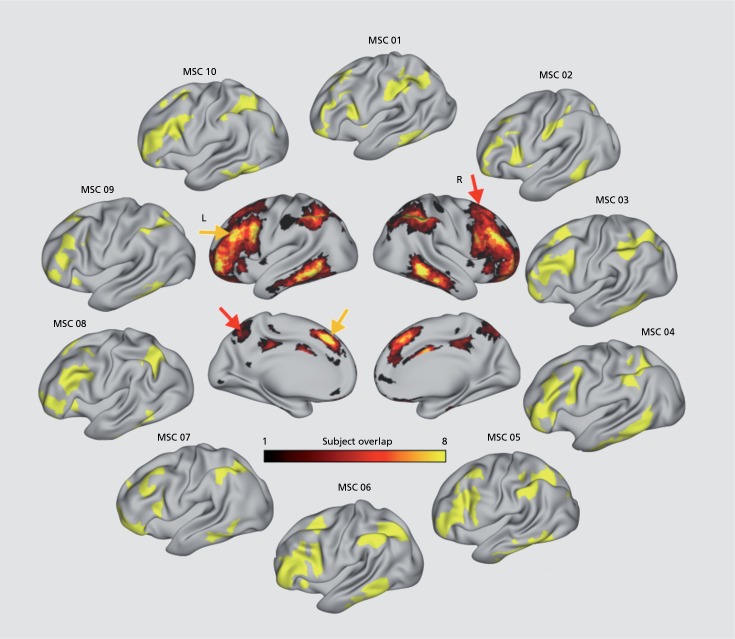
The frontoparietal network is critical for our ability to coordinate behavior in a rapid, accurate, and flexible goal-driven manner. In this review, we outline support for the framing of the frontoparietal network as a distinct control network, in part functioning to flexibly interact with and alter other functional brain networks. This network coordination likely occurs in a 4 Hz to 73 Hz θ/α rhythm, both during resting state and task state. Precision mapping of individual human brains has revealed that the functional topography of the frontoparietal network is variable between individuals, underscoring the notion that group-average studies of the frontoparietal network may be obscuring important typical and atypical features. Many forms of psychopathology implicate the frontoparietal network, such as schizophrenia and attention-deficit/hyperactivity disorder. Given the interindividual variability in frontoparietal network organization, clinical studies will likely benefit greatly from acquiring more individual subject data to accurately characterize resting-state networks compromised in psychopathology.
Overview
The claims and statistics of this paper haven’t been checked yet.
Free: it reads the open-access text and checks the first 5 claims that cite a source we can check. Create a free account to check every claim.
Integrity signals
Registry
Cites
Statistics
Figures
Verification
Claims the paper makes
The claims and statistics of this paper haven’t been checked yet.
Free: it reads the open-access text and checks the first 5 claims that cite a source we can check. Create a free account to check every claim.
Claims other papers make about this one
Each is checked against this paper’s own text: does it say what the citing paper says it does?
The source backs part of the claim, not all of it — or backs it for a different population, condition or comparison.
In the citing paper
“These dorsal cognitive regions connect to inferior parietal regions, forming the frontoparietal network [162–163]”
From Toward a neurocircuit-based taxonomy to guide treatment of obsessive-compulsive disorder (2021) · cites this paper as [162]
Experimental — accuracy not yet measuredIn the citing paper
“The most common target in MDD has been left dorsolateral prefrontal cortex (DLPFC), which is generally considered to be a node in the cognitive control network, albeit one that interfaces with the fronto-parietal attention network130.”
From Paying attention to attention in depression (2019) · cites this paper as [130]
Self-check
Percentages, sums and reported differences re-computed from the paper’s own numbers.
The self-check needs the paper’s full text.
Citations
Cites
The attention system of the human brain
Posner, M. I., & Petersen, S. E. (1990) · Annual Review of Neuroscience · doi:10.1146/annurev.ne.13.030190.000325 · Cited by 8,070
Saliency, switching, attention and control: a network model of insula function
Menon, V., & Uddin, L. Q. (2010) · Brain Structure and Function · doi:10.1007/s00429-010-0262-0 · Cited by 5,592
A mechanism for cognitive dynamics: neuronal communication through neuronal coherence.
Fries, P. (2005) · Trends in Cognitive Sciences · doi:10.1016/j.tics.2005.08.011 · Cited by 4,284
Functional Network Organization of the Human Brain
Power, J. D., Cohen, A. L., Nelson, S. M., Wig, G. S., Barnes, K. A., Church, J. A., Vogel, A. C., Laumann, T. O., Miezin, F. M., Schlaggar, B. L., et al. (2011) · Neuron · doi:10.1016/j.neuron.2011.09.006 · Cited by 4,124
EEG alpha oscillations: The inhibition–timing hypothesis
Klimesch, W., Sauseng, P., & Hanslmayr, S. (2007) · Brain Research Reviews · doi:10.1016/j.brainresrev.2006.06.003 · Cited by 3,891
Conflict monitoring and anterior cingulate cortex: an update
Botvinick, M. M., Cohen, J. D., & Carter, C. S. (2004) · Trends in Cognitive Sciences · doi:10.1016/j.tics.2004.10.003 · Cited by 3,623
The attention system of the human brain: 20 years after
Petersen, S. E., & Posner, M. I. (2012) · Annual Review of Neuroscience · doi:10.1146/annurev-neuro-062111-150525 · Cited by 3,439
Toward the future of psychiatric diagnosis: the seven pillars of RDoC
Cuthbert, B. N., & Insel, T. R. (2013) · BMC Medicine · doi:10.1186/1741-7015-11-126 · Cited by 3,053
Sridharan, D., Levitin, D. J., & Menon, V. (2008) · Proceedings of the National Academy of Sciences · doi:10.1073/pnas.0800005105 · Cited by 2,892
Neurocognitive deficit in schizophrenia: A quantitative review of the evidence.
Heinrichs, R. W., & Zakzanis, K. K. (1998) · Neuropsychology · doi:10.1037/0894-4105.12.3.426 · Cited by 2,798
Cited by
Paying attention to attention in depression
Keller, A. S., Leikauf, J. E., Holt-Gosselin, B., Staveland, B. R., & Williams, L. M. (2019) · Translational Psychiatry · doi:10.1038/s41398-019-0616-1 · Cited by 329
Spatial and Temporal Organization of the Individual Human Cerebellum
Marek, S., Siegel, J. S., Gordon, E. M., Raut, R. V., Gratton, C., Newbold, D. J., Ortega, M., Laumann, T. O., Adeyemo, B., Miller, D. B., et al. (2018) · Neuron · doi:10.1016/j.neuron.2018.10.010 · Cited by 289
Self-citationIndividual Variation in Functional Topography of Association Networks in Youth
Cui, Z., Li, H., Xia, C. H., Larsen, B., Adebimpe, A., Baum, G. L., Cieslak, M., Gur, R. E., Gur, R. C., Moore, T. M., et al. (2020) · Neuron · doi:10.1016/j.neuron.2020.01.029 · Cited by 269
Global waves synchronize the brain’s functional systems with fluctuating arousal
Raut, R. V., Snyder, A. Z., Mitra, A., Yellin, D., Fujii, N., Malach, R., & Raichle, M. E. (2021) · Science Advances · doi:10.1126/sciadv.abf2709 · Cited by 260
“Thus, FC most strongly distinguishes between two major, distributed functional brain systems (12, 17): an extrinsic system comprising sensorimotor and “task-positive” (44) regions and an intrinsic system comprising the default mode network (“task-negative”) and frontoparietal regions that preferentially respond to cha…”
BackgroundToward a neurocircuit-based taxonomy to guide treatment of obsessive-compulsive disorder
Shephard, E., Stern, E. R., van den Heuvel, O. A., Costa, D. L. C., Batistuzzo, M. C., Godoy, P. B. G., Lopes, A. C., Brunoni, A. R., Hoexter, M. Q., Shavitt, R. G., et al. (2021) · Molecular Psychiatry · doi:10.1038/s41380-020-01007-8 · Cited by 250
Chen, J., Tam, A., Kebets, V., Orban, C., Ooi, L. Q. R., Asplund, C. L., Marek, S., Dosenbach, N. U. F., Eickhoff, S. B., Bzdok, D., et al. (2022) · Nature Communications · doi:10.1038/s41467-022-29766-8 · Cited by 224
Self-citationNeuroimaging the consciousness of self: Review, and conceptual-methodological framework
Frewen, P., Schroeter, M. L., Riva, G., Cipresso, P., Fairfield, B., Padulo, C., Kemp, A. H., Palaniyappan, L., Owolabi, M., Kusi-Mensah, K., et al. (2020) · Neuroscience & Biobehavioral Reviews · doi:10.1016/j.neubiorev.2020.01.023 · Cited by 179
Default-mode network streams for coupling to language and control systems
Gordon, E. M., Laumann, T. O., Marek, S., Raut, R. V., Gratton, C., Newbold, D. J., Greene, D. J., Coalson, R. S., Snyder, A. Z., Schlaggar, B. L., et al. (2020) · Proceedings of the National Academy of Sciences · doi:10.1073/pnas.2005238117 · Cited by 172
“The Frontoparietal network is believed to exert top-down regulatory control over lower-level processing systems (71 – 73), including the DMN (74).”
BackgroundSelf-citationThe brain’s action-mode network
Dosenbach, N. U. F., Raichle, M. E., & Gordon, E. M. (2025) · Nature Reviews Neuroscience · doi:10.1038/s41583-024-00895-x · Cited by 162
“The strongest SCAN–AMN inter-connectivity is found”
Self-citationKolesar, T. A., Bilevicius, E., Wilson, A. D., & Kornelsen, J. (2019) · NeuroImage: Clinical · doi:10.1016/j.nicl.2019.102016 · Cited by 154
Gee, D. G. (2021) · American Journal of Psychiatry · doi:10.1176/appi.ajp.2021.21090944 · Cited by 148
The Margins of the Language Network in the Brain
Hertrich, I., Dietrich, S., & Ackermann, H. (2020) · Frontiers in Communication · doi:10.3389/fcomm.2020.519955 · Cited by 181
“In spite of some variability across studies and task demands (Camilleri et al., 2018; Marek and Dosenbach, 2018), some bilateral core regions of the MDS have been listed, comprising parts of inferior, middle, and orbitofrontal cortex, precentral gyrus, insula, supplementary motor area, anterior cingulate cortex, and t…”
BackgroundTownley, R. A., Graff-Radford, J., Mantyh, W. G., Botha, H., Polsinelli, A. J., Przybelski, S. A., Machulda, M. M., Makhlouf, A. T., Senjem, M. L., Murray, M. E., et al. (2020) · Brain Communications · doi:10.1093/braincomms/fcaa068 · Cited by 145
“These networks also have a high degree of between-subject variability (Marek and Dosenbach, 2018).”
BackgroundThe neurobiology of human fear generalization: meta-analysis and working neural model
Webler, R. D., Berg, H. E., Fhong, K., Tuominen, L. J., Holt, D. J., Morey, R. A., Lange, I., Burton, P. C., Fullana, M. A., Raduà, J., et al. (2021) · Neuroscience & Biobehavioral Reviews · doi:10.1016/j.neubiorev.2021.06.035 · Cited by 159
“The frontoparietal network is involved in a range of higher-order cognitive functions including attention, cognitive control, and emotional regulation (Marek and Dosenbach, 2018; Rees et al., 2002).”
Functional brain connectivity changes across the human life span: From fetal development to old age
Edde, M., Leroux, G., Altena, E., & Chanraud, S. (2021) · Journal of Neuroscience Research · doi:10.1002/jnr.24669 · Cited by 143
“In addition, a global increase in connectivity strength between networks, in particular for higher order networks, improves the ability for different networks to collaborate (Marek & Dosenbach, 2018).”
BackgroundMarek, S. A., Tervo‐Clemmens, B., Nielsen, A. N., Wheelock, M. D., Miller, R. L., Laumann, T. O., Earl, E., Foran, W., Cordova, M., Doyle, O. J., et al. (2019) · Developmental Cognitive Neuroscience · doi:10.1016/j.dcn.2019.100706 · Cited by 140
“Finally, the current study did not include subcortical regions or the cerebellum, which also support cognitive function and undergo developmental changes in RSFC (Greene et al., 2014; Guell et al., 2018a, 2018b; Marek et al., 2018; Schmahmann, 2019).”
BackgroundMethodSelf-citationDhamala, E., Jamison, K. W., Jaywant, A., Dennis, S., & Kuceyeski, A. F. (2021) · Human Brain Mapping · doi:10.1002/hbm.25420 · Cited by 115
“The frontoparietal network is implicated in modulating executive function, cognitive flexibility, and working memory (Cole, Yarkoni, Repovs, Anticevic, & Braver, 2012; Iidaka, Matsumoto, Nogawa, Yamamoto, & Sadato, 2006; Marek & Dosenbach, 2018; Wallis, Stokes, Cousijn, Woolrich, & Nobre, 2015).”
Evidence for exercise-related plasticity in functional and structural neural network connectivity
Won, J., Callow, D. D., Pena, G. S., Gogniat, M. A., Kommula, Y., Arnold-Nedimala, N. A., Jordan, L. S., & Smith, J. C. (2021) · Neuroscience & Biobehavioral Reviews · doi:10.1016/j.neubiorev.2021.10.013 · Cited by 118
Rocca, M. A., Schoonheim, M. M., Valsasina, P., Geurts, J. J. G., & Filippi, M. (2022) · NeuroImage Clinical · doi:10.1016/j.nicl.2022.103076 · Cited by 112
“(Marek and Dosenbach, 2018) For this reason, it has also been named as the “task-positive” network, together with the dorsal attention network (DAN).”
BackgroundMalagurski, B., Liem, F., Oschwald, J., Mérillat, S., & Jäncke, L. (2020) · NeuroImage · doi:10.1016/j.neuroimage.2020.116680 · Cited by 115
Schmitt, A. G., Upadhyay, N., Martin, J. A., Rojas, S., Strüder, H. K., & Boecker, H. (2019) · Brain Plasticity · doi:10.3233/bpl-190081 · Cited by 105
“The FPN plays a fundamental role in attentional monitoring [37], cognitive processing [38], and higher order motor control [39–41].”
BackgroundNeural Mechanisms and Psychology of Psychedelic Ego Dissolution
Stoliker, D., Egan, G. F., Friston, K. J., & Razi, A. (2022) · Pharmacological Reviews · doi:10.1124/pharmrev.121.000508 · Cited by 81
Dissociable multi-scale patterns of development in personalized brain networks
Pines, A. R., Larsen, B., Cui, Z., Sydnor, V. J., Bertolero, M. A., Adebimpe, A., Alexander‐Bloch, A. F., Davatzikos, C. A., Fair, D. A., Gur, R. C., et al. (2022) · Nature Communications · doi:10.1038/s41467-022-30244-4 · Cited by 97
“…of control networks situated in the middle of the hierarchy, may serve to reduce cross-modal interference (Sonuga-Barke & Castellanos, 2007; Bomyea et al, 2018) while facilitating coordination of brain networks specialized for top-down cognitive control (Cole et al., 2013; Marek & Dosenbach, 2018).”
BackgroundResultChahal, R., Miller, J. G., Yuan, J. P., Buthmann, J. L., & Gotlib, I. H. (2022) · Development and Psychopathology · doi:10.1017/s0954579421001814 · Cited by 90
“The FPN, composed of dorsolateral prefrontal and posterior parietal cortices, is a control network involved in coordinating behavior in a goal-directed manner (Marek & Dosenbach, 2018).”
BackgroundKoşkulu‐Sancar, S., van de Weijer‐Bergsma, E., Mulder, H., & Blom, E. (2022) · Developmental Review · doi:10.1016/j.dr.2022.101063 · Cited by 108
Dellert, T., Müller-Bardorff, M., Schlossmacher, I., Pitts, M., Hofmann, D., Bruchmann, M., & Straube, T. (2021) · The Journal of Neuroscience · doi:10.1523/jneurosci.2799-20.2021 · Cited by 77
“For example, the relative weakness of awareness effects in frontoparietal compared with visual networks may be related to the former ’ s pronounced interindividual heterogeneity (Marek and Dosenbach, 2018).”
Yan, B., Xu, X., Liu, M., Zheng, K., Liu, J., Li, J., Wei, L., Zhang, B., Lu, H., & Li, B. (2020) · Frontiers in Neuroscience · doi:10.3389/fnins.2020.00191 · Cited by 75
“More importantly, both of the MFG and IPL are subregions of FPN, which is a cognitive control network, especially a goal-directed regulation of attention and emotion, etc. (Marek and Dosenbach, 2018).”
BackgroundKeller, A. S., Pines, A. R., Shanmugan, S., Sydnor, V. J., Cui, Z., Bertolero, M. A., Barzilay, R., Alexander‐Bloch, A. F., Byington, N., Chen, A. A., et al. (2023) · Nature Communications · doi:10.1038/s41467-023-44087-0 · Cited by 89
Reorganization of functional brain network architecture in chronic osteoarthritis pain
Barroso, J., Wakaizumi, K., Reis, A. M., Baliki, M. N., Schnitzer, T. J., Galhardo, V., & Apkarian, A. V. (2020) · Human Brain Mapping · doi:10.1002/hbm.25287 · Cited by 76
“Middle frontal gyrus, part of the frontoparietal network, is highly related to task-control, serving to initiate new task states by flexibly interacting with other control and processing networks (Marek & Dosenbach, 2018).”
BackgroundBondi, E., Maggioni, E., Brambilla, P., & Delvecchio, G. (2022) · Neuroscience & Biobehavioral Reviews · doi:10.1016/j.neubiorev.2022.104972 · Cited by 77
Oschmann, M., Gawryluk, J. R., & Initiative, A. D. N. (2020) · Brain Connectivity · doi:10.1089/brain.2019.0724 · Cited by 77
“The FPN system is associated with attention shift control, cognitive control, and decision-making (Marek and Dosenbach, 2018; Vincent et al., 2008).”
Mulder, D., Aarts, E., Vásquez, A. A., & Bloemendaal, M. (2023) · Molecular Psychiatry · doi:10.1038/s41380-023-02146-4 · Cited by 77
Pathobiology of Cognitive Impairment in Parkinson Disease: Challenges and Outlooks
Jellinger, K. A. (2023) · International Journal of Molecular Sciences · doi:10.3390/ijms25010498 · Cited by 79
“The SAN, according to some, included the left and right prefrontal cortex [277,299,300], whereas others did not [274,298,301].”
BackgroundMoore, D., Jung, M., Hillman, C. H., Kang, M., & Loprinzi, P. D. (2022) · Psychophysiology · doi:10.1111/psyp.14014 · Cited by 71
Cotter, D. L., Campbell, C. E., Sukumaran, K., McConnell, R., Berhane, K. T., Schwartz, J. D., Hackman, D. A., Ahmadi, H., Chen, J., & Herting, M. M. (2023) · Environment International · doi:10.1016/j.envint.2023.108001 · Cited by 65
Dual-process contributions to creativity in jazz improvisations: An SPM-EEG study
Rosen, D. S., Oh, Y., Erickson, B. A., Zhang, F., Kim, Y. E., & Kounios, J. (2020) · NeuroImage · doi:10.1016/j.neuroimage.2020.116632 · Cited by 76
Catalino, M. P., Yao, S., Green, D. L., Laws, E. R., Golby, A. J., & Tie, Y. (2020) · Neurosurgical FOCUS · doi:10.3171/2019.11.focus19773 · Cited by 59
Camacho, M. C., Quiñones‐Camacho, L. E., & Perlman, S. B. (2020) · NeuroImage · doi:10.1016/j.neuroimage.2020.116688 · Cited by 67
Parkinson’s disease as a somato-cognitive action network disorder
Ren, J., Zhang, W., Dahmani, L., Gordon, E. M., Li, S., Zhou, Y., Long, Y., Huang, J., Zhu, Y., Guo, N., et al. (2026) · Nature · doi:10.1038/s41586-025-10059-1 · Cited by 55
“We performed an analysis using 11 functional networks, including the SCAN and 10 canonical functional networks 51 : the foot, hand, mouth, visual (VIS), action mode (AMN) 36 , dorsal attention (DAN), ventral attention (VAN), default mode (DMN) 119 , frontoparietal (FPN) 120 and salience (SAL) 121 networks.”
Self-citationUrquhart, E. L., Wanniarachchi, H. I., Wang, X., Gonzalez-Lima, F., Alexandrakis, G., & Liu, H. (2020) · Biomedical Optics Express · doi:10.1364/boe.402047 · Cited by 61
DiNicola, L. M., & Buckner, R. L. (2021) · Current Opinion in Behavioral Sciences · doi:10.1016/j.cobeha.2021.03.029 · Cited by 65
“‘frontoparietal control’ network [23]) also occupy expanded association zones, including regions showing marked individual variability [28,29,76].”
BackgroundIngram, R. U., Halai, A. D., Pobric, G., Sajjadi, S. A., Patterson, K. E., & Ralph, M. A. L. (2020) · Brain · doi:10.1093/brain/awaa245 · Cited by 60
Wang, X., Wanniarachchi, H. I., Wu, A., Gonzalez-Lima, F., & Liu, H. (2021) · Scientific Reports · doi:10.1038/s41598-021-97987-w · Cited by 61
Tozzi, L., Fleming, S. L., Taylor, Z. D., Raterink, C., & Williams, L. M. (2020) · Network Neuroscience · doi:10.1162/netn_a_00148 · Cited by 50
“This pattern bears a striking resemblance to what has been labeled the fronto-parietal network (Marek & Dosenbach, 2018).”
Chan, M. M. Y., & Han, Y. M. Y. (2022) · Neuropsychology · doi:10.1037/neu0000777 · Cited by 64
Cheng, H.-J., Ng, K. K., Qian, X., Ji, F., Lu, Z. K., Teo, W., Hong, X., Nasrallah, F. A., Ang, K. K., Chuang, K., et al. (2021) · Scientific Reports · doi:10.1038/s41598-021-87789-5 · Cited by 56
Long-Range Amplitude Coupling Is Optimized for Brain Networks That Function at Criticality
Avrămiea, A.-E., Masood, A., Mansvelder, H. D., & Linkenkaer‐Hansen, K. (2022) · Journal of Neuroscience · doi:10.1523/jneurosci.1095-21.2022 · Cited by 55
“…in the brain often relies on quantifying such phase (Sauseng et al., 2005; Stam et al., 2007; Palva et al., 2010; CrespoGarcia et al., 2013; Marzetti et al., 2019; Tewarie et al., 2019) and amplitude dependencies (Daffertshofer and van Wijk, 2011; Hipp et al., 2012; Vidal et al., 2012;…”
BackgroundBrain Resting-State Network Alterations Associated With Crohn's Disease
Kornelsen, J., Wilson, A. D., Labus, J. S., Witges, K., Mayer, E. A., & Bernstein, C. N. (2020) · Frontiers in Neurology · doi:10.3389/fneur.2020.00048 · Cited by 55
Establishing two principal dimensions of cognitive variation in logopenic progressive aphasia
Ramanan, S., Roquet, D., Goldberg, Z.-L., Hodges, J. R., Piguet, O., Irish, M., & Ralph, M. A. L. (2020) · Brain Communications · doi:10.1093/braincomms/fcaa125 · Cited by 49
Infant Visual Brain Development and Inherited Genetic Liability in Autism
Girault, J. B., Donovan, K., Hawks, Z., Talović, M., Forsen, E., Elison, J. T., Shen, M. D., Swanson, M. R., Wolff, J. J., Kim, S. H., et al. (2022) · American Journal of Psychiatry · doi:10.1176/appi.ajp.21101002 · Cited by 51
Increased functional connectivity patterns in mild Alzheimer’s disease: A rsfMRI study
Penalba‐Sánchez, L., Oliveira‐Silva, P., Sumich, A. L., & Cifré, I. (2023) · Frontiers in Aging Neuroscience · doi:10.3389/fnagi.2022.1037347 · Cited by 59
“These multimodal networks connect several regions and integrate information processing, providing high value at a high cost (Hillary and Grafman, 2017; Marek and Dosenbach, 2018).”
BackgroundDefault mode network electrophysiological dynamics and causal role in creative thinking
Bartoli, E., Devara, E., Dang, H. Q., Rabinovich, R. J., Mathura, R. K., Anand, A., Pascuzzi, B., Adkinson, J. A., Kenett, Y. N., Bijanki, K. R., et al. (2024) · Brain · doi:10.1093/brain/awae199 · Cited by 65
“58 We found that during mind wandering, theta activity differed between the two networks, with higher theta activity in DMN during the early stage and lower theta in DMN during the response stage.”
An fMRI Study of Response and Semantic Conflict in the Stroop Task
Parris, B. A., Wadsley, M. G., Hasshim, N., Benattayallah, A., Augustinova, M., & Ferrand, L. (2019) · Frontiers in Psychology · doi:10.3389/fpsyg.2019.02426 · Cited by 54
Direct impact of cognitive control on sentence processing and comprehension
Hsu, N. S., Kuchinsky, S. E., & Novick, J. M. (2020) · Language Cognition and Neuroscience · doi:10.1080/23273798.2020.1836379 · Cited by 63
Breakdown of specific functional brain networks in clinical variants of Alzheimer’s disease
Pini, L., Wennberg, A. M. V., Salvalaggio, A., Vallesi, A., Pievani, M., & Corbetta, M. (2021) · Ageing Research Reviews · doi:10.1016/j.arr.2021.101482 · Cited by 51
Adolescent development of cortical oscillations: Power, phase, and support of cognitive maturation
Marek, S., Tervo-Clemmens, B., Klein, N., Foran, W., Ghuman, A. S., & Luna, B. (2018) · PLOS Biology · doi:10.1371/journal.pbio.2004188 · Cited by 48
Self-citationQiu, Z., & Wang, J. (2021) · Psychological Medicine · doi:10.1017/s0033291721000362 · Cited by 49
A comparative study on inter-brain synchrony in real and virtual environments using hyperscanning
Gumilar, I., Sareen, E., Bell, R. E., Stone, A., Hayati, A. F., Mao, J., Barde, A., Gupta, A., Dey, A., Lee, G., et al. (2020) · Computers & Graphics · doi:10.1016/j.cag.2020.10.003 · Cited by 56
Martens, M., Filippini, N., Harmer, C. J., & Godlewska, B. R. (2021) · Psychopharmacology · doi:10.1007/s00213-021-05915-7 · Cited by 47
Al‐Ezzi, A. A. A., Al-Shargabi, A. A., Al-Shargie, F., & Zahary, A. T. (2022) · IEEE Access · doi:10.1109/access.2022.3165199 · Cited by 56
“The frontoparietal network is crucial for our potency to coordinate behavior in a immediate, accurate, and resilient goal-driven system [62].”
BackgroundCamacho, M. C., Nielsen, A. N., Balser, D., Furtado, E., Steinberger, D. C., Fruchtman, L., Culver, J. P., Sylvester, C. M., & Barch, D. M. (2023) · Nature Neuroscience · doi:10.1038/s41593-023-01358-9 · Cited by 57
del Re, E. C., Stone, W. S., Bouix, S., Seitz, J., Zeng, V., Guliano, A., Somes, N., Zhang, T., Reid, B. E., Lyall, A. E., et al. (2020) · Schizophrenia Bulletin · doi:10.1093/schbul/sbaa127 · Cited by 50
Voigt, K., Liang, E. X., Mišić, B., Ward, P. G. D., Egan, G. F., & Jamadar, S. D. (2022) · Cerebral Cortex · doi:10.1093/cercor/bhac150 · Cited by 51
The Impact of Mindfulness-Based Interventions on Brain Functional Connectivity: a Systematic Review
Melis, M., Schroyen, G., Pollefeyt, J., Raes, F., Smeets, A., Sunaert, S. G., Deprez, S., & der Gucht, K. V. (2022) · Mindfulness · doi:10.1007/s12671-022-01919-2 · Cited by 56
Hofhansel, L., Weidler, C., Votinov, M., Clemens, B., Raine, A., & Habel, U. (2020) · Brain Structure and Function · doi:10.1007/s00429-020-02106-6 · Cited by 57
Mantwill, M., Gell, M., Krohn, S., & Finke, C. (2022) · Communications Biology · doi:10.1038/s42003-022-03185-3 · Cited by 51
Brooks, S. J., Katz, E. S., & Stamoulis, C. (2021) · Cerebral Cortex Communications · doi:10.1093/texcom/tgab062 · Cited by 46
“…ventrolateral prefrontal cortex and parts of the posterior parietal cortex) plays a critical role in executive control, integration of information for action planning, working memory, and other fundamental processes such as pain processing (Kong et al. 2013; Zanto and Gazzaley 2013; Marek 2018).”
Development of Network Topology and Functional Connectivity of the Prefrontal Cortex
Lopez, K. C., Kandala, S., Marek, S. A., & Barch, D. M. (2019) · Cerebral Cortex · doi:10.1093/cercor/bhz255 · Cited by 49
Self-citationDemeter, D. V., Engelhardt, L. E., Mallett, R., Gordon, E. M., Nugiel, T., Harden, K. P., Tucker–Drob, E. M., Lewis‐Peacock, J. A., & Church, J. A. (2019) · iScience · doi:10.1016/j.isci.2019.100801 · Cited by 44
Haciahmet, C. C., Frings, C., & Pastötter, B. (2021) · Cognitive Affective & Behavioral Neuroscience · doi:10.3758/s13415-021-00876-y · Cited by 42
“The attentional amplification of target features, induced by parietal areas, might be a parallel process to interference management in the ACC, thus supporting the dual frontoparietal conflict network account (Marek & Dosenbach, 2018).”
BackgroundResultInfluentialJütten, K., Mainz, V., Delev, D., Gauggel, S., Binkofski, F., Wiesmann, M., Clusmann, H., & Na, C. (2020) · Human Brain Mapping · doi:10.1002/hbm.25140 · Cited by 40
“This network has been suggested to play a crucial role for memory and cognitive control (Cabeza & Nyberg, 2000; Higgins, Peterson, Pihl, & Lee, 2007; Kievit et al., 2014; Marek & Dosenbach, 2018; Shen et al., 2018).”
BackgroundFear extinction learning and anandamide: an fMRI study in healthy humans
Spohrs, J., Martin, U., Grön, G., Prost, M., Plener, P. L., Fegert, J. M., Bîndilă, L., & Abler, B. (2021) · Translational Psychiatry · doi:10.1038/s41398-020-01177-7 · Cited by 45
A shared neural code for the physics of actions and object events
Akbıyık, S., Caramazza, A., & Wurm, M. F. (2023) · Nature Communications · doi:10.1038/s41467-023-39062-8 · Cited by 53
Aguilar, D. D., & McNally, J. M. (2022) · Brain Research Bulletin · doi:10.1016/j.brainresbull.2022.05.005 · Cited by 47
Early deafness leads to re-shaping of functional connectivity beyond the auditory cortex
Bonna, K., Finc, K., Zimmermann, M., Bola, Ł., Mostowski, P., Szul, M. J., Rutkowski, P., Duch, W., Marchewka, A., Jednoróg, K., et al. (2020) · Brain Imaging and Behavior · doi:10.1007/s11682-020-00346-y · Cited by 52
Ventromedial and dorsolateral prefrontal interactions underlie will to fight and die for a cause
Pretus, C., Hamid, N., Sheikh, H., Gómez, Á., Ginges, J., Tobeña, A., Davis, R. E., Vilarroya, Ó., & Atran, S. (2019) · Social Cognitive and Affective Neuroscience · doi:10.1093/scan/nsz034 · Cited by 41
“More generally, the fronto-parietal network, including areas found to be less active in the high vs low WFD conditions (inferior frontal gyrus and the parietal lobules), has been associated with cognitive control enabling rapid and flexible goal-oriented behavior (Marek and Dosenbach, 2018).”
BackgroundMaruyama, S., Fukunaga, M., Sugawara, S. K., Hamano, Y. H., Yamamoto, T., & Sadato, N. (2021) · Scientific Reports · doi:10.1038/s41598-021-97974-1 · Cited by 45
Fang, F. Z., Godlewska, B. R., Cho, R. Y., Savitz, S. I., Selvaraj, S., & Zhang, Y. (2022) · NeuroImage · doi:10.1016/j.neuroimage.2022.119465 · Cited by 38
“In contrast, FPN is thought to support distinct functional roles such as task-switching and task-set maintenance [71].”
BackgroundMapping the Relationship of White Matter Lesions to Depression in Multiple Sclerosis
Baller, E. B., Sweeney, E. M., Cieslak, M., Robert‐Fitzgerald, T., Covitz, S. C., Martin, M. L., Schindler, M. K., Bar‐Or, A., Elahi, A., Larsen, B., et al. (2023) · Biological Psychiatry · doi:10.1016/j.biopsych.2023.11.010 · Cited by 39
“Importantly, planning and concentration dif fi culties are core de fi cits in depression (52,53).”
Control networks of the frontal lobes
Marek, S. A., & Dosenbach, N. U. F. (2019) · Handbook of clinical neurology · doi:10.1016/b978-0-12-804281-6.00018-5 · Cited by 46
Self-citationKrukow, P., Jonak, K., Grochowski, C., Plechawska–Wójcik, M., & Karakuła‐Juchnowicz, H. (2020) · Progress in Neuro-Psychopharmacology and Biological Psychiatry · doi:10.1016/j.pnpbp.2020.109959 · Cited by 37
Connectivity Correlates of Anxiety Symptoms in Drug‐Naive Parkinson's Disease Patients
Micco, R. D., Satolli, S., Siciliano, M., Nardo, F. D., Caiazzo, G., Russo, A., Giordano, A., Esposito, F., Tedeschi, G., & Tessitore, A. (2020) · Movement Disorders · doi:10.1002/mds.28372 · Cited by 45
Cerebellar network organization across the human menstrual cycle
Fitzgerald, M., Pritschet, L., Santander, T., Grafton, S. T., & Jacobs, E. G. (2020) · Scientific Reports · doi:10.1038/s41598-020-77779-4 · Cited by 40
Yang, X., Wu, H., Song, Y., Chen, S., Ge, H., Yan, Z., Yuan, Q., Liang, X., Lin, X., & Chen, J. (2023) · Frontiers in Aging Neuroscience · doi:10.3389/fnagi.2023.1165908 · Cited by 37
“, 2021), the anterior cingulate cortices (ACC) (Marek and Dosenbach, 2018; Goodman et al., 2021), the orbital part of left inferior frontal gyrus (IFG) (Jiang et al.”
BackgroundInfluentialWang, Y., Wang, C., Zhou, J., Chen, X., Liu, R., Zhang, Z., Feng, Y., Feng, L., Liu, J., Zhou, Y., et al. (2024) · Translational Psychiatry · doi:10.1038/s41398-024-03117-1 · Cited by 35
“Additionally, as part of our study design, outpatient participants self-reported their medication status, lacking robust objective adherence monitoring mechanisms.”
BackgroundDorsman, K. A., Weiner‐Light, S., Staffaroni, A. M., Brown, J. A., Wolf, A. A., Cobigo, Y., Walters, S. M., Kramer, J. H., & Casaletto, K. B. (2020) · Frontiers in Aging Neuroscience · doi:10.3389/fnagi.2020.00104 · Cited by 40
“Likewise, the FPN is accountable for goal-driven, organized and controlled execution of behaviors (Marek and Dosenbach, 2018).”
BackgroundBrooks, S. J., Parks, S. M., & Stamoulis, C. (2021) · Cerebral Cortex · doi:10.1093/cercor/bhab126 · Cited by 43
Frontoparietal network activation is associated with motor recovery in ischemic stroke patients
Olafson, E. R., Russello, G., Jamison, K. W., Liu, H., Wang, D., Bruss, J., Boes, A. D., & Kuceyeski, A. F. (2022) · Communications Biology · doi:10.1038/s42003-022-03950-4 · Cited by 38
Perera, M. P. N., Gotsis, E. S., Bailey, N. W., Fitzgibbon, B. M., & Fitzgerald, P. B. (2024) · Cerebral Cortex · doi:10.1093/cercor/bhae327 · Cited by 34
Varela‐López, B., Cruz-Gómez, Á. J., Lojo‐Seoane, C., Díaz, F., Pereiro, A. X., Zurrón, M., Lindín, M., & Galdo‐Álvarez, S. (2022) · Neurobiology of Aging · doi:10.1016/j.neurobiolaging.2022.05.012 · Cited by 35
Adamczyk, A. K., & Wyczesany, M. (2023) · Journal of Cognitive Neuroscience · doi:10.1162/jocn_a_02034 · Cited by 43
Wang, Y., Wang, C., Wei, Y., Miao, P., Liu, J., Wu, L., Li, Z., Li, X., Wang, K., & Cheng, J. (2022) · Human Brain Mapping · doi:10.1002/hbm.25982 · Cited by 33
“In other words, the FPN is a functional hub that affects whole-brain communication to meet MD tasks (Marek & Dosenbach, 2018).”
BackgroundOrpella, J., Assaneo, M. F., Ripollés, P., Noejovich, L., López-Barroso, D., de Diego‐Balaguer, R., & Poeppel, D. (2022) · PLoS Biology · doi:10.1371/journal.pbio.3001712 · Cited by 44
“, [42]) that flexibly interacts with other task-specific networks (e.”
BackgroundDiNicola, L. M., Ariyo, O., & Buckner, R. L. (2022) · Journal of Neurophysiology · doi:10.1152/jn.00211.2022 · Cited by 38
Zeng, X., Han, X., Zheng, D., Jiang, P., & Yuan, Z. (2022) · Psychological Medicine · doi:10.1017/s0033291723003434 · Cited by 39
“Besides, FPN, also referred to as the central executive network, is anchored in the dorsolateral PFC (dlPFC) and lateral posterior parietal cortex, involving fundamental roles in working memory and decision-making in goal-directed behaviors (Gong et al., 2016; Marek & Dosenbach, 2018).”
Vishnubhotla, R. V., Radhakrishnan, R., Kveraga, K., Deardorff, R. L., Ram, C., Pawale, D., Wu, Y., Renschler, J. S., Subramaniam, B., & Sadhasivam, S. (2021) · Frontiers in Psychology · doi:10.3389/fpsyg.2021.745344 · Cited by 36
“The frontoparietal network, also known as the central executive network (CEN), primarily includes the dorsolateral prefrontal cortex (dl-PFC), and posterior parietal cortex (PPC) and is involved with executive functions and cognitive control (Marek and Dosenbach, 2018).”
BackgroundHehr, A., Huntley, E. D., & Marusak, H. A. (2023) · Journal of Adolescent Health · doi:10.1016/j.jadohealth.2023.01.010 · Cited by 37
Guardiola-Ripoll, M., & Fatjó‐Vilas, M. (2023) · International Journal of Molecular Sciences · doi:10.3390/ijms24043597 · Cited by 35
“complex cognitive processes and social cognition [87,88].”
Zhang, R., Murray, S. B., Duval, C. J., Wang, D. J. J., & Jann, K. (2024) · Psychiatry Research · doi:10.1016/j.psychres.2024.115794 · Cited by 35
“The FPN has been hypothesized to play a role in instantiating and flexibly modulating cognitive control (Marek and Dosenbach, 2018).”
Prosocial Helping Behavior: Conceptual Issues and Neural Mechanisms
Rigney, N., & Hong, W. (2025) · Biological Psychiatry · doi:10.1016/j.biopsych.2025.03.003 · Cited by 33
Metadata
- Authors
- Marek, S., & Dosenbach, N. U. F.
- Affiliations
- Washington University in St. Louis (US)
- Corresponding author
- Marek, Scott
- Venue
- Dialogues in Clinical Neuroscience
- Publisher
- Informa UK Limited
- Published
- 2018-06-30
- Volume
- 20
- Issue
- 2
- Pages
- 133-140
- ISSN
- 1294-8322 (ISSN-L)
- 1958-5969
- PMC
- PMC6136121
- OpenAlex
- W2989074529
- Cited by
- 836
- References
- 63
- Citations by year
- 2026: 136 · 2025: 142 · 2024: 131 · 2023: 113 · 2022: 124 · 2021: 93 · 2020: 77 · 2019: 17 · 2018: 2
- FWCI
- 28.14
- Type
- journal article
- Language
- en
- Open access
- diamond
- doi.org
- Licence
- Locations
- Dialogues in Clinical Neuroscience (publishedVersion, cc-by-nc-nd)
- Europe PMC (PubMed Central) (publishedVersion, cc-by-nc-nd)
- PubMed Central (publishedVersion, cc-by-nc-nd)
- PubMed (publishedVersion)
- Funders
- National Institutes of Health (UL1TR000448, UL1TR002345)
- National Institute of Mental Health (T32MH100019)
- National Institute of Neurological Disorders and Stroke (K23NS088590, P30NS098577)
- National Center for Advancing Translational Sciences
- Eunice Kennedy Shriver National Institute of Child Health and Human Development (U54HD087011)
- Topics
- Life Sciences › Neuroscience › Cognitive Neuroscience › Functional Brain Connectivity Studies
- Life Sciences › Neuroscience › Cognitive Neuroscience › Neural and Behavioral Psychology Studies
- Life Sciences › Neuroscience › Cognitive Neuroscience › Neural dynamics and brain function
- Keywords
- frontoparietal network, control network, interindividual variability, theta-alpha oscillations, resting-state networks, schizophrenia, attention deficit hyperactivity disorder, functional topography, electrophysiology
- MeSH terms
- Animals, Attention Deficit Disorder with Hyperactivity, Brain, Brain Mapping, Humans, Nerve Net, Neural Pathways, Electrophysiological Phenomena
About these checks
Registry, retraction, Cites and statistics results are computed, not judged, with one exception: a printed reference that no index lists is read once by a model before it counts as a citation error. Claims are extracted by a model and kept only when their quote appears verbatim in the text; each cited source is then checked, with a model’s help, for whether it says what the claim relies on. Those verdicts can be wrong — read the claim’s quote and the cited source before relying on one.
Statistics and arithmetic are recomputed, not judged.
Confidence bands are shown only for fields calibrated on our annotated test set. None is calibrated yet, so no band is shown.
What counts as a claim ›How we measure confidence ›How we check this ›
Are you an author, or do you see a problem with this page? Request a review
Data sources
Bibliographic data: Semantic Scholar, OpenAlex, Crossref.
Contains information from the Semantic Scholar Academic Graph Datasets, made available under the ODC Attribution License (ODC-BY 1.0).
Semantic Scholar’s data is described in: Kinney, R., et al. (2023). The Semantic Scholar Open Data Platform. arXiv:2301.10140.
