

The frontoparietal network: function, electrophysiology, and importance of individual precision mapping
Open accessThe DOI matches its Crossref record; 63 of the 63 references it cites were found in a registry or an index.
Abstract
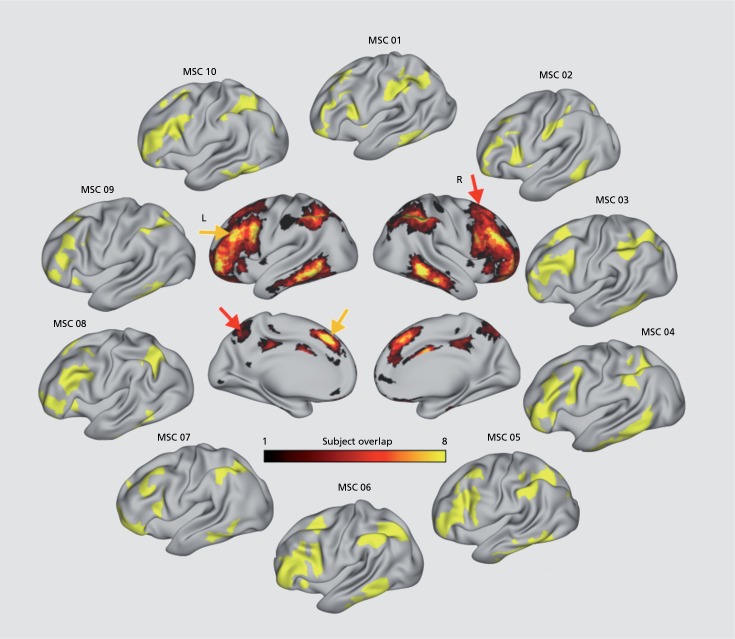
The frontoparietal network is critical for our ability to coordinate behavior in a rapid, accurate, and flexible goal-driven manner. In this review, we outline support for the framing of the frontoparietal network as a distinct control network, in part functioning to flexibly interact with and alter other functional brain networks. This network coordination likely occurs in a 4 Hz to 73 Hz θ/α rhythm, both during resting state and task state. Precision mapping of individual human brains has revealed that the functional topography of the frontoparietal network is variable between individuals, underscoring the notion that group-average studies of the frontoparietal network may be obscuring important typical and atypical features. Many forms of psychopathology implicate the frontoparietal network, such as schizophrenia and attention-deficit/hyperactivity disorder. Given the interindividual variability in frontoparietal network organization, clinical studies will likely benefit greatly from acquiring more individual subject data to accurately characterize resting-state networks compromised in psychopathology.
Overview
The claims and statistics of this paper haven’t been checked yet.
Free: it reads the open-access text and checks the first 5 claims that cite a source we can check. Create a free account to check every claim.
Integrity signals
Registry
Cites
Statistics
Figures
Verification
Claims the paper makes
The claims and statistics of this paper haven’t been checked yet.
Free: it reads the open-access text and checks the first 5 claims that cite a source we can check. Create a free account to check every claim.
Claims other papers make about this one
Each is checked against this paper’s own text: does it say what the citing paper says it does?
The source backs part of the claim, not all of it — or backs it for a different population, condition or comparison.
In the citing paper
“These dorsal cognitive regions connect to inferior parietal regions, forming the frontoparietal network [162–163]”
From Toward a neurocircuit-based taxonomy to guide treatment of obsessive-compulsive disorder (2021) · cites this paper as [162]
Experimental — accuracy not yet measuredIn the citing paper
“The most common target in MDD has been left dorsolateral prefrontal cortex (DLPFC), which is generally considered to be a node in the cognitive control network, albeit one that interfaces with the fronto-parietal attention network130.”
From Paying attention to attention in depression (2019) · cites this paper as [130]
Self-check
Percentages, sums and reported differences re-computed from the paper’s own numbers.
The self-check needs the paper’s full text.
Citations
Cites
The attention system of the human brain
Posner, M. I., & Petersen, S. E. (1990) · Annual Review of Neuroscience · doi:10.1146/annurev.ne.13.030190.000325 · Cited by 8,070
Saliency, switching, attention and control: a network model of insula function
Menon, V., & Uddin, L. Q. (2010) · Brain Structure and Function · doi:10.1007/s00429-010-0262-0 · Cited by 5,592
A mechanism for cognitive dynamics: neuronal communication through neuronal coherence.
Fries, P. (2005) · Trends in Cognitive Sciences · doi:10.1016/j.tics.2005.08.011 · Cited by 4,284
Functional Network Organization of the Human Brain
Power, J. D., Cohen, A. L., Nelson, S. M., Wig, G. S., Barnes, K. A., Church, J. A., Vogel, A. C., Laumann, T. O., Miezin, F. M., Schlaggar, B. L., et al. (2011) · Neuron · doi:10.1016/j.neuron.2011.09.006 · Cited by 4,124
EEG alpha oscillations: The inhibition–timing hypothesis
Klimesch, W., Sauseng, P., & Hanslmayr, S. (2007) · Brain Research Reviews · doi:10.1016/j.brainresrev.2006.06.003 · Cited by 3,891
Conflict monitoring and anterior cingulate cortex: an update
Botvinick, M. M., Cohen, J. D., & Carter, C. S. (2004) · Trends in Cognitive Sciences · doi:10.1016/j.tics.2004.10.003 · Cited by 3,623
The attention system of the human brain: 20 years after
Petersen, S. E., & Posner, M. I. (2012) · Annual Review of Neuroscience · doi:10.1146/annurev-neuro-062111-150525 · Cited by 3,439
Toward the future of psychiatric diagnosis: the seven pillars of RDoC
Cuthbert, B. N., & Insel, T. R. (2013) · BMC Medicine · doi:10.1186/1741-7015-11-126 · Cited by 3,053
Sridharan, D., Levitin, D. J., & Menon, V. (2008) · Proceedings of the National Academy of Sciences · doi:10.1073/pnas.0800005105 · Cited by 2,892
Neurocognitive deficit in schizophrenia: A quantitative review of the evidence.
Heinrichs, R. W., & Zakzanis, K. K. (1998) · Neuropsychology · doi:10.1037/0894-4105.12.3.426 · Cited by 2,798
Cited by
Items 601–700 of 837
Cognitive Dysfunction in Migraine: Underlying Mechanisms and Clinical Implications
Cuneo, A. Z., Robertson, C. E., Stern, J. I., Krashin, D. L., Siddika, A., & Murinova, N. (2026) · Current Pain and Headache Reports · doi:10.1007/s11916-026-01466-8 · Cited by 1
Imperatori, C., Benvenuti, S. M., Ardito, R. B., Rossi, E. D., Allegrini, G., Dell’Acqua, C., Carbone, G. A., Gatto, C. D., Presti, A. L., Adenzato, M., et al. (2026) · Behaviour Research and Therapy · doi:10.1016/j.brat.2026.105041 · Cited by 2
Lim, T. E., Humburg, P., Reay, W. R., Gustin, S. M., & Quidé, Y. (2026) · Pain · doi:10.1097/j.pain.0000000000003995 · Cited by 3
Prolonged Visual Entrainment Induces Long‐Lasting Alpha‐Band Modulations
Marsicano, G., Gallina, J., Giovagnoli, S., Ronconi, L., & Bertini, C. (2026) · Psychophysiology · doi:10.1111/psyp.70321 · Cited by 2
“This coordination is especially prominent in frontal and midline structures, where both resting-state and task-related theta activity have been linked to the top-down regulation of attentional resources (Marek and Dosenbach 2018; Ahn et al. 2022; Gallina et al. 2024).”
Romanò, F., Valsasina, P., Albergoni, M., Amato, M. P., Brichetto, G., Chataway, J., Chiaravalloti, N. D., Cutter, G., Dalgas, U., DeLuca, J., et al. (2026) · Journal of Neurology · doi:10.1007/s00415-026-13869-z · Cited by 1
“Lastly, the FPN functions as a flexible hub for executive functions and complex cognitive tasks, facilitating the rapid initiation, adaptation, and modulation of task-related brain activity in response to changing demands [36].”
Li, M., Yuan, X., Zhang, C., Li, R., Wang, B., & Li, K. (2026) · Medical & Biological Engineering & Computing · doi:10.1007/s11517-026-03600-5 · Cited by 3
“Static functional connectivity analyses revealed significantly reduced insula-SMG and insula-DLPFC connectivity in male adolescents with OCD, involving key regions of the frontoparietal con - trol network [ 40 ].”
Cerebellar rTMS ameliorates cognitive impairment in Alzheimer's disease: A randomized trial
Wang, D., Fan, J., Wang, T., Tang, F., Yao, Q., Ye, X., Qi, X., Tian, M., Lin, X., & Shi, J. (2026) · Brain stimulation · doi:10.1016/j.brs.2026.103138 · Cited by 1
Sebastián Rivera, R., Gómez-Lombardi, A., Alonso-Sánchez, M. F., Chabert, S., Munro, K. J., & El‐Deredy, W. (2026) · Trends in Hearing · doi:10.1177/23312165261459418 · Cited by 1
Hemisphere fingerprinting: Identifying left and right hemispheres using functional connectivity
Day, T. K. M., Turkeltaub, P. E., Newport, E. L., & DeMarco, A. T. (2026) · Imaging Neuroscience · doi:10.1162/imag.a.1397 · Cited by 1
“Broadly speaking, the FPN regulates both the DMN and the LN ( Gordon et al., 2020), and connectivity between these networks and between these networks and the rest of the brain is positively correlated with measures of intelligence ( Marek & Dosenbach, 2018).”
Anatomy and physiology of attention
Baghdadi, G., Towhidkhah, F., & Rajabi, M. (2021) · Elsevier eBooks · doi:10.1016/b978-0-323-90935-8.00002-0 · Cited by 2
Resting state connectivity in people living with HIV before and after stopping heavy drinking
Gullett, J. M., DeFelice, J. S., Richards, V. L., Porges, E. C., Cohen, R. A., Govind, V., Salan, T., Wang, Y., Zhou, Z., & Cook, R. L. (2023) · Frontiers in Psychiatry · doi:10.3389/fpsyt.2023.1102368 · Cited by 1
Zaky, M. H., Shoorangiz, R., Poudel, G. R., Yang, L., Innes, C., & Jones, R. D. (2024) · Human Brain Mapping · doi:10.1002/hbm.26781 · Cited by 2
“It also suggests that the FPN contributes to the decoupling process, as the FPN is associated with coordination of visuospatial attention (Lückmann et al., 2014; Marek & Dosenbach, 2018; Scolari et al., 2015) and working memory (Borst & Anderson, 2013).”
BackgroundMethodInfluentialKanel, D., Zugman, A., Stohr, G. M., Scheinberg, B., Cardinale, E. M., Winkler, A. M., Kircanski, K., Fox, N. A., Brotman, M. A., Linke, J. O., et al. (2024) · Journal of Mood and Anxiety Disorders · doi:10.1016/j.xjmad.2024.100094 · Cited by 3
“This highly-connected network acts as a hub to flexibly modulate other networks [45] coordinating cognitive control.”
Chai, Z., Yang, B. T., Qu, X., Li, T., Wang, Q., & Xian, J. (2024) · Brain Imaging and Behavior · doi:10.1007/s11682-024-00959-7 · Cited by 2
“The variability of the FPN between individuals underscores the importance of acquiring subject-specific data for accurate characterization (Marek & Dosenbach, 2018 ).”
Zhao, X., Yin, R., Chen, C., Markett, S. A., Wang, X., Xue, G., Dong, Q., & Chen, C. (2025) · Human Brain Mapping · doi:10.1002/hbm.70114 · Cited by 2
“…precentral, supplementary motor area, insula, cingulate and paracingulate, putamen, superior parietal, supramarginal gyrus, and angular gyrus (Figure 2), consistent with the literature (Braun et al. 2015; Braunlich, Gomez-Lavin, and Seger 2015; Darki and Klingberg 2015; Marek and Dosenbach 2018).”
Variability of Spatiotemporal-Rhythmic Network During Inhibitory Control in Repetitive Subconcussion
Li, X., Fu, Z., Zhou, H., Xiang, Y., Li, Y., He, Y., Zhang, J., Li, H., Gao, L., Gao, J., et al. (2025) · IEEE Journal of Biomedical and Health Informatics · doi:10.1109/jbhi.2025.3556595 · Cited by 1
“The FPN was engaged in the adaptive coordination of cognitive control [80], and the increased alpha band right FPN connectivity was associated with better performance in the attention, working memory, and executive function domains [81].”
Nieciecka, W., Lewandowska, P., Adamczyk, S., Binkowska, A. A., Brzezicka, A., Szczeciński, P., & Jakubowska, N. (2025) · Computers in Human Behavior · doi:10.1016/j.chb.2025.108689 · Cited by 1
Functional connectivity alterations in women with subjective cognitive decline
Parker, A. F., Szoeke, C. E. I., Kwan, H., Henri‐Bhargava, A., & Gawryluk, J. R. (2025) · Journal of Alzheimer s Disease Reports · doi:10.1177/25424823251328340 · Cited by 1
Organization of areal connectivity in the monkey frontoparietal network
Conklin, B. D., & Bressler, S. L. (2021) · NeuroImage · doi:10.1016/j.neuroimage.2021.118414 · Cited by 2
Muroni, A., Barbar, D., Fraschini, M., Monticone, M., Defazio, G., & Marrosu, F. (2022) · Signals · doi:10.3390/signals3030033 · Cited by 1
“The possible contamination of the signals recorded by noise was assessed by the EEGLab plugin ASR [16].”
MethodRight lateralized posterior parietal theta-gamma coupling during sustained attention in micePreprint
Yang, R., Dunbar, C., Sonesra, A., Park, S., Pham, T., Samaco, R. C., Foster, B. L., & Maheshwari, A. (2020) · bioRxiv (Cold Spring Harbor Laboratory) · doi:10.1101/2020.06.11.147330 · Cited by 2
“…coordination of network activities between distant sites occurs in the theta frequency range both during the resting state and the attentive state (Marek and Dosenbach, 2018), and theta rhythms have specifically been shown to aid in rhythmic sampling of the environment with large scale…”
BackgroundWanniarachchi, H. I., Wang, X., Wu, A., Gonzalez-Lima, F., & Liu, H. (2021) · Research Square · doi:10.21203/rs.3.rs-359452/v1 · Cited by 1
Soleimani, G., Kuplicki, R., Bodurka, J., Paulus, M. P., & Ekhtiari, H. (2021) · bioRxiv (Cold Spring Harbor Laboratory) · doi:10.1101/2021.04.12.439544 · Cited by 2
Alcohol Use Disrupts Age-Appropriate Cortical Thinning in Adolescence: A Data Driven ApproachPreprint
Sun, D., Adduru, V. R., Phillips, R., Bouchard, H. C., Sotiras, A., Michael, A. M., Baker, F. C., Tapert, S. F., Brown, S. A., Clark, D. B., et al. (2021) · bioRxiv (Cold Spring Harbor Laboratory) · doi:10.1101/2021.05.17.444458 · Cited by 1
“The FPN is known for coordinating goal-directed behaviors in a rapid, accurate, and flexible manner (25).”
BackgroundXu, Z., Xia, M., Wang, X., Liao, X., Zhao, T., & Yong He, A. (2021) · bioRxiv (Cold Spring Harbor Laboratory) · doi:10.1101/2021.11.29.470494 · Cited by 1
Liu, X., TYLER, L. K., Cam-CAN, Rowe, J. B., & Tsvetanov, K. A. (2021) · bioRxiv (Cold Spring Harbor Laboratory) · doi:10.1101/2021.12.22.473894 · Cited by 1
Yang, Y., Li, J., Li, Z., Liu, Y., & Wang, J. (2022) · bioRxiv (Cold Spring Harbor Laboratory) · doi:10.1101/2022.01.16.476492 · Cited by 2
Resting-state BOLD signal variability is associated with individual differences in metacontrolPreprint
Zhang, C., Beste, C., Prochazkova, L., Wang, K., Speer, S. P. H., Smidts, A., Boksem, M. A. S., & Hommel, B. (2022) · Research Square · doi:10.21203/rs.3.rs-1470645/v1 · Cited by 1
Cortical thickness relates to working memory performance after non-invasive brain stimulationPreprint
Razza, L. B., Vanderhasselt, M., Luethi, M., Rapple, J., Busatto, G. F., Buchpiguel, C. A., Brunoni, A. R., & da Silva, P. R. (2022) · Research Square · doi:10.21203/rs.3.rs-2235830/v1 · Cited by 1
Manabe, T., Rahul, F. N. U., Fu, Y., Intes, X., Schwaitzberg, S. D., De, S., Cavuoto, L. A., & Dutta, A. (2023) · Research Square · doi:10.21203/rs.3.rs-2434988/v1 · Cited by 1
Brain network dynamics in transitions of consciousness reorganize according to task engagementPreprint
Kumar, S. S., Arzi, A., Bareham, C. A., González-Castillo, J., Fernandez, I. S., Tagliazucchi, E., Mediano, P. A. M., Bandettini, P. A., & Bekinschtein, T. A. (2023) · bioRxiv (Cold Spring Harbor Laboratory) · doi:10.1101/2023.06.08.544178 · Cited by 1
Locating the core areas of frontal-parietal network: A systematic review and meta-analysisPreprint
Cai, Z., Li, J., Wang, C., & Zhong, Y. (2023) · Research Square · doi:10.21203/rs.3.rs-3282656/v1 · Cited by 1
Curtis, M., Flournoy, J. C., Kandala, S., Sanders, A. F. P., Harms, M. P., Omary, A., Somerville, L. H., & Barch, D. M. (2024) · doi:10.31234/osf.io/tvbq8 · Cited by 1
Neural networks representing temporal expectation in micePreprint
Wendlandt, T. A., Wenk, P., Henschke, J. U., Michalek, A., Noesselt, T., Pakan, J. M. P., & Budinger, E. (2024) · bioRxiv (Cold Spring Harbor Laboratory) · doi:10.1101/2024.04.25.589683 · Cited by 1
“…accumulated sensory information and combined multisensory input may require integration via macro-scale cortical networks comprised of wider brain networks (Driver & Noesselt, 2008; Garner & Keller, 2022; Gazzaley & Nobre, 2012; Hawellek et al., 2016; Marek & Dosenbach, 2018; Pinto et al., 2019).”
BackgroundConnectome predictive modeling of trait mindfulnessPreprint
Treves, I. N., Kucyi, A., Park, M. S., Kral, T. R. A., Goldberg, S. B., Davidson, R. J., Rosenkranz, M. A., Whitfield, S., & Gabrieli, J. D. E. (2024) · bioRxiv (Cold Spring Harbor Laboratory) · doi:10.1101/2024.07.09.602725 · Cited by 1
“FPN connectivity could be related to top-down regulation of attention (Marek & Dosenbach, 2018), and individuals who score high on Acting with Awareness may regulate their attention using the FPN.”
MethodSpatiotemporal characterisation of information coding and exchange in the multiple demand networkPreprint
Karimi-Rouzbahani, H., Rich, A. N., & Woolgar, A. (2024) · bioRxiv (Cold Spring Harbor Laboratory) · doi:10.1101/2024.10.07.617103 · Cited by 1
Zhang, J., Ma, R., Wang, S., Yin, Z., Gan, Y., Zhao, Z., Yuan, T., Chen, Y., Du, T., Voon, V., et al. (2024) · Research Square · doi:10.21203/rs.3.rs-4806412/v1 · Cited by 1
The mechanism at hand: A goal-driven approach to modeling the human sensorimotor system
Weidler, T. (2024) · Research Publications (Maastricht University) · doi:10.26481/dis.20250110tw · Cited by 1
De neurale correlaten van cognitieve-functietraining bij ziekte en gezondheid
Vriend, C., van Balkom, T. D., & van den Heuvel, O. A. (2019) · Neuropraxis · doi:10.1007/s12474-019-00236-0
Trufanov, A. G., Frunza, D., Markin, K. V., Litvinenko, I., & Odinak, M. M. (2020) · Vestnik nevrologii psihiatrii i nejrohirurgii (Bulletin of Neurology Psychiatry and Neurosurgery) · doi:10.33920/med-01-2001-05
Cooper, S. R. (2020) · Open Scholarship Institutional Repository (Washington University in St. Louis) · doi:10.7936/rbs3-e340 · Cited by 1
“For further reading on this network, see Marek & Dosenbach (2018).”
BackgroundMorris, T. P., Redondo‐Camós, M., Cattaneo, G., Macià, D., Sánchez, J. S., España‐Irla, G., Delgado‐Gallén, S., Alviarez‐Schulze, V., Pachón‐García, C., Santarnecchi, E., et al. (2020) · bioRxiv (Cold Spring Harbor Laboratory) · doi:10.1101/2020.08.03.234518
“Cognitive control however is not executed by a single brain region, rather via several largely non-overlapping networks, including the frontoparietal, cingulo-opercular and salience networks (Marek & Dosenbach, 2018).”
BackgroundThe Resolution Matrix for Visualizing Functional Network ConnectivityPreprint
Dillon, K. J. (2020) · arXiv (Cornell University) · doi:10.48550/arxiv.2009.03187
Impaired dynamic profile of brain recurring functional connectivity states in Alzheimer’s diseasePreprint
Balajoo, S. M., Asemani, D., Khadem, A. A., & Soltanian-Zadeh, H. (2020) · bioRxiv (Cold Spring Harbor Laboratory) · doi:10.1101/2020.10.03.324673 · Cited by 1
“…and self-related processing (L. Zhang et al., 2020), frontoparietal network (FPN), flexibly controlling and interacting with other brain networks (Marek & Dosenbach, 2018), the salience network (SN), directing attention toward or away from internal processing in concert with the DMN (Menon &…”
BackgroundEpilepsy out of control: when frontal lobe epilepsy becomes more than seizures
van den Berg, L. (2021) · University of Groningen research database (University of Groningen / Centre for Information Technology) · doi:10.33612/diss.165771038
Yao, W., Zhang, X., Zhao, H., Xu, Y., & Bai, F. (2021) · Research Square · doi:10.21203/rs.3.rs-845199/v1
García, M. B., Grueschow, M., Moisa, M., Polanía, R., & Ruff, C. C. (2021) · bioRxiv (Cold Spring Harbor Laboratory) · doi:10.1101/2021.10.04.462977
Resting state functional connectivity in pediatric populations
Chen, D. Y., Ji, K., Varshney, S., Hafiz, R., & Biswal, B. B. (2021) · Advances in magnetic resonance technology and applications · doi:10.1016/b978-0-12-816633-8.00005-3
Task-specific neural processes underlying conflict resolution during cognitive controlPreprint
Xiao, Y., Chou, C., Cosgrove, G. R., Crone, N. E., Stone, S. S. D., Madsen, J. R., Reucroft, I., Shih, Y., Weisholtz, D. S., Yu, H., et al. (2022) · bioRxiv (Cold Spring Harbor Laboratory) · doi:10.1101/2022.01.16.476535
“These results suggest that cognitive control processes recruit distributed and task-specific networks rather than a single brain region (Dosenbach et al., 2007; Dosenbach et al., 2006; Fan et al., 2003; Marek and Dosenbach, 2018).”
BackgroundPsychophysiological basis of lucid dreaming
Giermakowski, M., Jankowiak-Siuda, K., & Duszyk-Bogorodzka, A. (2021) · Neuropsychiatria i Neuropsychologia · doi:10.5114/nan.2021.113320
Razza, L. B. (2021) · Digital Library of Theses and Dissertations (Universidade de São Paulo) · doi:10.11606/t.5.2021.tde-30032022-082010
Ye, F., Köhler, R., Serio, B., Lichenstein, S. D., & Yip, S. W. (2022) · SSRN Electronic Journal · doi:10.2139/ssrn.4117134
A shared neural code for the physics of actions and object eventsPreprint
Akbıyık, S., Caramazza, A., & Wurm, M. F. (2022) · bioRxiv (Cold Spring Harbor Laboratory) · doi:10.1101/2022.11.19.517091
Determinants of recovery after traumatic brain injury
Rakers, S. E. (2022) · doi:10.33612/diss.259627370
Regulation of critical brain dynamics and its functional implications
Avrămiea, A.-E. (2023) · doi:10.5463/thesis.144 · Cited by 1
The Impact of Bilingualism on Cognitive Reserve as a Protectant Against Cognitive Decline
Zak, L., & Cascone, A. (2023) · Journal of Student Research · doi:10.47611/jsrhs.v12i2.4229
Fnirs Evidence Behind the Mutual Interference of Different Dual TasksPreprint
Ou, Z., Ding, Q., Yao, S., Zhang, L., Li, Y., Lan, Y., & Xu, G. (2023) · SSRN Electronic Journal · doi:10.2139/ssrn.4462773
Dalprá, F. A. R. (2023) · Digital Library of Theses and Dissertations (Universidade de São Paulo) · doi:10.11606/t.5.2023.tde-15062023-155203
Murphy, J. (2023) · Open Access Victoria University of Wellington | Te Herenga Waka (Figshare) · doi:10.26686/wgtn.23664465 · Cited by 1
Society Interacting with Brain, Cognition, and Health in Late Life
Chey, J. (2023) · Cambridge University Press eBooks · doi:10.1017/9781108974325.008
Huang, L.-Y., Parker, D., Ethridge, L. E., Hamm, J. P., Keedy, S., Tamminga, C. A., Pearlson, G. D., Keshavan, M. S., Hill, S. K., Sweeney, J. A., et al. (2023) · Schizophrenia Research · doi:10.1016/j.schres.2023.09.025
Shetty, A., & Keller, A. S. (2023) · Journal of Neuroscience · doi:10.1523/jneurosci.0849-23.2023
Zeng, X., Jiangshan, H., Kaixi, Z., Xiaoluan, X., Shiyang, X., & Yuan, Z. (2023) · bioRxiv (Cold Spring Harbor Laboratory) · doi:10.1101/2023.10.29.564589
MacSweeney, N., Cabral, J., Stolicyn, A., Louvet, P., Zafar, S., Klinkhamer, L., Casey, H., Atkinson, K., Chan, S. W. Y., Lawrie, S., et al. (2023) · doi:10.31234/osf.io/7293n
MacSweeney, N., Cabral, J., Stolicyn, A., Louvet, P., Zafar, S., Klinkhamer, L., Casey, H., Atkinson, K., Chan, S. W. Y., Lawrie, S. M., et al. (2023) · Wellcome Open Research · doi:10.12688/wellcomeopenres.20201.1
Rakers, S., Liemburg, E., van der Horn, H. J., de Groot, J. C., Spikman, J., & van der Naalt, J. (2023) · PLoS ONE · doi:10.1371/journal.pone.0287832
Leenaerts, N., Broeders, T. A. A., Ceccarini, J., Sunaert, S. G., Schoonheim, M. M., Vinkers, C. H., & Vrieze, E. (2024) · doi:10.31234/osf.io/9ew4c
Wu, X., Palaniyappan, L. K., van Velzen, L. S., Yu, G., Fan, H., Liu, Y., Becker, B., Cheng, W., Zhao, X., Feng, J., et al. (2024) · medRxiv · doi:10.1101/2024.04.13.24305772
Stili di attaccamento genitoriale e salute mentale dei figli
Carbonella, S., & Coniglio, M. (2024) · PNEI REVIEW · doi:10.3280/pnei2024-001002
Age differences in eating traits associated with risk of obesity: The role of interoception
Brennan, A. (2024) · Cronfa (Swansea University) · doi:10.23889/suthesis.66724
Post-Stroke Cognitive Rehabilitation: A Single Case Research
Saha, N., Sengupta, A., Nag, M., & Mukhopadhyay, P. (2024) · Journal of Psychosocial Rehabilitation and Mental Health · doi:10.1007/s40737-024-00428-w
Tipping Points to Transitions: PEA and NEA (Principles 2 and 3)
Boyatzis, R. E. (2024) · Oxford University Press eBooks · doi:10.1093/9780197765142.003.0003
Resonant Relationships Are the Context for Change (Principle 7)
Boyatzis, R. E. (2024) · Oxford University Press eBooks · doi:10.1093/9780197765142.003.0007
Dreams, Shared Vision, and Purpose as the Driver of Change (Principle 1)
Boyatzis, R. E. (2024) · Oxford University Press eBooks · doi:10.1093/9780197765142.003.0002
The Real Self: Who Am I? Who Are We? (Principle 4)
Boyatzis, R. E. (2024) · Oxford University Press eBooks · doi:10.1093/9780197765142.003.0004
The Quest for Sustained, Desired Change
Boyatzis, R. E. (2024) · Oxford University Press eBooks · doi:10.1093/9780197765142.003.0001
What Next? The Call to Study Change
Boyatzis, R. E. (2024) · Oxford University Press eBooks · doi:10.1093/9780197765142.003.0009
A Path to My/Our Dreams: Joyful Planning and Preparation (Principle 5)
Boyatzis, R. E. (2024) · Oxford University Press eBooks · doi:10.1093/9780197765142.003.0005
Exploring Possibilities: Experimenting and Practice to Mastery (Principle 6)
Boyatzis, R. E. (2024) · Oxford University Press eBooks · doi:10.1093/9780197765142.003.0006
Boyatzis, R. E. (2024) · Oxford University Press eBooks · doi:10.1093/9780197765142.005.0001
Leading Change at Multiple Levels (Principles 8, 9, and 10)
Boyatzis, R. E. (2024) · Oxford University Press eBooks · doi:10.1093/9780197765142.003.0008
Griffith, O., Fornini, R., Walter, A. E., Wilkes, J., Bai, X., & Slobounov, S. (2024) · Brain Research · doi:10.1016/j.brainres.2024.149200 · Cited by 3
Jin, T., Li, H., Bao, C., ZHUANG, M., Weiqiang, C. A. I., Hu, R., & Yi, W. U. (2024) · Rehabilitation Medicine · doi:10.3724/sp.j.1329.2024.04005 · Cited by 1
Severe motor impairment is associated with lower contralesional brain age in chronic strokePreprint
Park, G., Khan, M. T., Andrushko, J. W., Banaj, N., Borich, M. R., Boyd, L. A., Brodtmann, A. G., Brown, T. R., Buetefisch, C. M., Conforto, A. B., et al. (2024) · medRxiv · doi:10.1101/2024.10.26.24316190
“49 Importantly, increased activity and connectivity in contralesional FPN structures have been observed during the subacute and chronic stages of stroke, promoting recovery of motor function.”
BackgroundFunctional magnetic resonance imaging in multiple sclerosis
Krijnen, E. A., & Schoonheim, M. M. (2024) · Elsevier eBooks · doi:10.1016/b978-0-323-95739-7.00002-2
P3a, P3b Characteristics of OSA Patients in the Acute Stroke Population
Zhang, P., Qian, H., Yuan, J., Ou, Y., Yuan, X., Cao, L., Duan, L., & Ling, Q. (2025) · Clinical EEG and Neuroscience · doi:10.1177/15500594251319079
“56,57”
Warren, S. L., Geller, W. N., Droncheff, B., & Liu, K. (2025) · Journal of Affective Disorders Reports · doi:10.1016/j.jadr.2025.100895 · Cited by 1
Visual experience shapes functional connectome gradientsPreprint
Koba, C., Falcó-Roget, J., Collignon, O., Rączy, K., Bedny, M., Tian, M., Szwed, M., & Stroh, A. (2025) · bioRxiv (Cold Spring Harbor Laboratory) · doi:10.1101/2025.02.28.640746
Inhibitory control in Bipolar Disorder disclosed by theta band modulation
Bertoli, M., Zappasodi, F., Croce, P., de Iure, D., Pettorruso, M., Cavallotto, C., Martinotti, G., Matteo, R. D., & Brunetti, M. (2025) · Journal of Affective Disorders · doi:10.1016/j.jad.2025.03.027 · Cited by 1
Structure-function multilayer network integration and cognition in multiple sclerosisPreprint
Breedt, L. C., Pontillo, G., Santos, F. A. N., Vriend, C., Prados, F., Wink, A. M., Bisecco, A., Cagol, A., Calabrese, M., Castellaro, M., et al. (2025) · medRxiv · doi:10.1101/2025.03.31.25324960
Zhu, H. (2025) · OSF Preprints (OSF Preprints) · doi:10.31219/osf.io/vqadg_v2
Neural correlates of consciousness in an auditory no-report fMRI studyPreprint
Dellert, T., Balster, H., Schloßmacher, I., Bruchmann, M., Moeck, R., & Straube, T. (2025) · bioRxiv (Cold Spring Harbor Laboratory) · doi:10.1101/2025.05.16.654468 · Cited by 2
ONOFRJ, M. C., & Liviello, D. (2025) · Neuropsychoanalysis · doi:10.1080/15294145.2025.2503986 · Cited by 2
“…area in the operculum, Wernicke area for language, fusiform gyri for visual gnosis, idiotypic cortices for sensory perception, which are preserving distinct maps, the prefrontal, anterior cingulate and orbitofrontal areas function as a control panel (Zald & Kim, 2001; Marek & Dosenbach, 2018).”
Child plasma vitamin B12 concentrations and executive functions at age 7–11 years: the GUSTO study
Loh, J., Chan, S. Y., Toh, J. Y., Tan, K. M. L., Godfrey, K. M., Yap, F. K. P., Chong, Y. S., Eriksson, J. G., Chong, M. F., Tan, A. P., et al. (2025) · European Journal of Nutrition · doi:10.1007/s00394-025-03735-5 · Cited by 1
“Given that DAN is important for working memory [ 38] and FPN is important for cognitive flexibility [ 39 ], this finding is consistent with our findings using EFs cognitive tests.”
Multimodal analysis of neural signals related to source memory encoding in young children
Lei, Y., Richards, J., Geng, F., & Riggins, T. (2025) · Developmental Cognitive Neuroscience · doi:10.1016/j.dcn.2025.101580
“Both regions are considered a part of the frontoparietal network, an integral network to complex cognitive processes (Marek & Dosenbach, 2018) that is previously found to be recruited during memory formation (Geng et al., 2022).”
Metadata
- Authors
- Marek, S., & Dosenbach, N. U. F.
- Affiliations
- Washington University in St. Louis (US)
- Corresponding author
- Marek, Scott
- Venue
- Dialogues in Clinical Neuroscience
- Publisher
- Informa UK Limited
- Published
- 2018-06-30
- Volume
- 20
- Issue
- 2
- Pages
- 133-140
- ISSN
- 1294-8322 (ISSN-L)
- 1958-5969
- PMC
- PMC6136121
- OpenAlex
- W2989074529
- Cited by
- 836
- References
- 63
- Citations by year
- 2026: 136 · 2025: 142 · 2024: 131 · 2023: 113 · 2022: 124 · 2021: 93 · 2020: 77 · 2019: 17 · 2018: 2
- FWCI
- 28.14
- Type
- journal article
- Language
- en
- Open access
- diamond
- doi.org
- Licence
- Locations
- Dialogues in Clinical Neuroscience (publishedVersion, cc-by-nc-nd)
- Europe PMC (PubMed Central) (publishedVersion, cc-by-nc-nd)
- PubMed Central (publishedVersion, cc-by-nc-nd)
- PubMed (publishedVersion)
- Funders
- National Institutes of Health (UL1TR000448, UL1TR002345)
- National Institute of Mental Health (T32MH100019)
- National Institute of Neurological Disorders and Stroke (K23NS088590, P30NS098577)
- National Center for Advancing Translational Sciences
- Eunice Kennedy Shriver National Institute of Child Health and Human Development (U54HD087011)
- Topics
- Life Sciences › Neuroscience › Cognitive Neuroscience › Functional Brain Connectivity Studies
- Life Sciences › Neuroscience › Cognitive Neuroscience › Neural and Behavioral Psychology Studies
- Life Sciences › Neuroscience › Cognitive Neuroscience › Neural dynamics and brain function
- Keywords
- frontoparietal network, control network, interindividual variability, theta-alpha oscillations, resting-state networks, schizophrenia, attention deficit hyperactivity disorder, functional topography, electrophysiology
- MeSH terms
- Animals, Attention Deficit Disorder with Hyperactivity, Brain, Brain Mapping, Humans, Nerve Net, Neural Pathways, Electrophysiological Phenomena
About these checks
Registry, retraction, Cites and statistics results are computed, not judged, with one exception: a printed reference that no index lists is read once by a model before it counts as a citation error. Claims are extracted by a model and kept only when their quote appears verbatim in the text; each cited source is then checked, with a model’s help, for whether it says what the claim relies on. Those verdicts can be wrong — read the claim’s quote and the cited source before relying on one.
Statistics and arithmetic are recomputed, not judged.
Confidence bands are shown only for fields calibrated on our annotated test set. None is calibrated yet, so no band is shown.
What counts as a claim ›How we measure confidence ›How we check this ›
Are you an author, or do you see a problem with this page? Request a review
Data sources
Bibliographic data: Semantic Scholar, OpenAlex, Crossref.
Contains information from the Semantic Scholar Academic Graph Datasets, made available under the ODC Attribution License (ODC-BY 1.0).
Semantic Scholar’s data is described in: Kinney, R., et al. (2023). The Semantic Scholar Open Data Platform. arXiv:2301.10140.
