

The DOI matches its Crossref record; 234 of the 237 references it cites were found in a registry or an index.
Oxidative Stress, Synaptic Dysfunction, and Alzheimer’s Disease
Open accessAbstract
Alzheimer's disease (AD) is a devastating neurodegenerative disorder without a cure. Most AD cases are sporadic where age represents the greatest risk factor. Lack of understanding of the disease mechanism hinders the development of efficacious therapeutic approaches. The loss of synapses in the affected brain regions correlates best with cognitive impairment in AD patients and has been considered as the early mechanism that precedes neuronal loss. Oxidative stress has been recognized as a contributing factor in aging and in the progression of multiple neurodegenerative diseases including AD. Increased production of reactive oxygen species (ROS) associated with age- and disease-dependent loss of mitochondrial function, altered metal homeostasis, and reduced antioxidant defense directly affect synaptic activity and neurotransmission in neurons leading to cognitive dysfunction. In addition, molecular targets affected by ROS include nuclear and mitochondrial DNA, lipids, proteins, calcium homeostasis, mitochondrial dynamics and function, cellular architecture, receptor trafficking and endocytosis, and energy homeostasis. Abnormal cellular metabolism in turn could affect the production and accumulation of amyloid-β (Aβ) and hyperphosphorylated Tau protein, which independently could exacerbate mitochondrial dysfunction and ROS production, thereby contributing to a vicious cycle. While mounting evidence implicates ROS in the AD etiology, clinical trials with antioxidant therapies have not produced consistent results. In this review, we will discuss the role of oxidative stress in synaptic dysfunction in AD, innovative therapeutic strategies evolved based on a better understanding of the complexity of molecular mechanisms of AD, and the dual role ROS play in health and disease.
Overview
The claims and statistics of this paper haven’t been checked yet.
Run the check — free, no account needed. It reads the open-access text and checks the sources it cites.
Integrity signals
Registry
Cites
Statistics
Figures
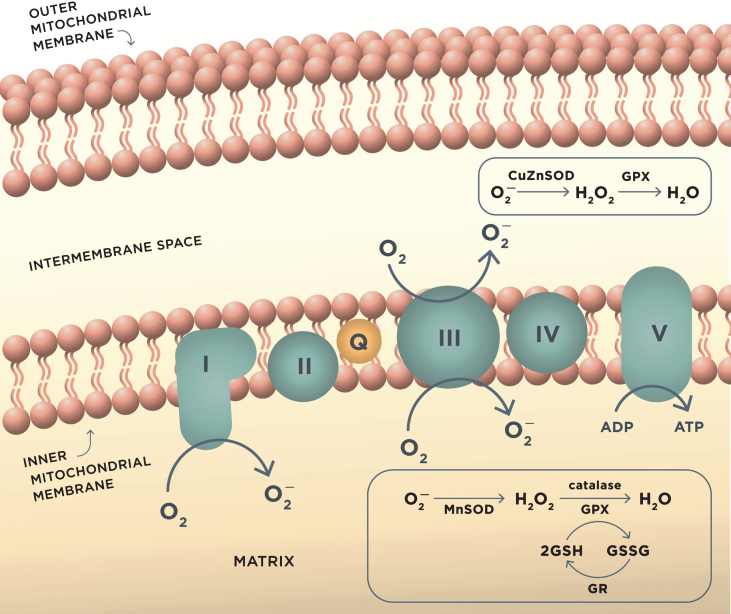
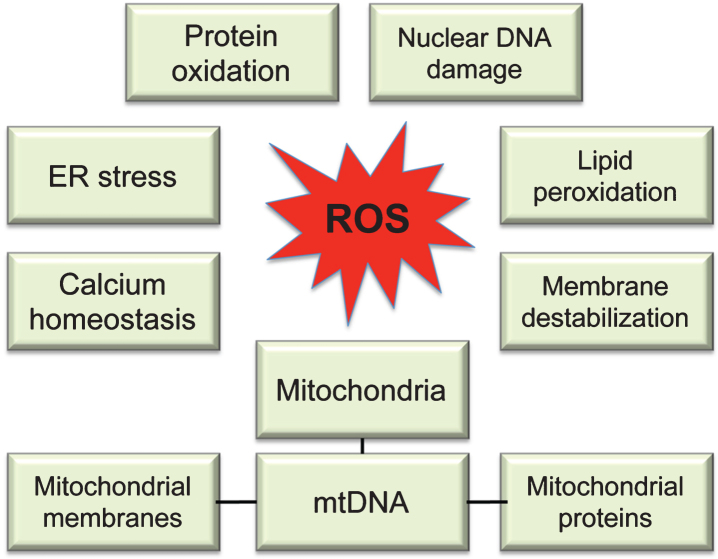
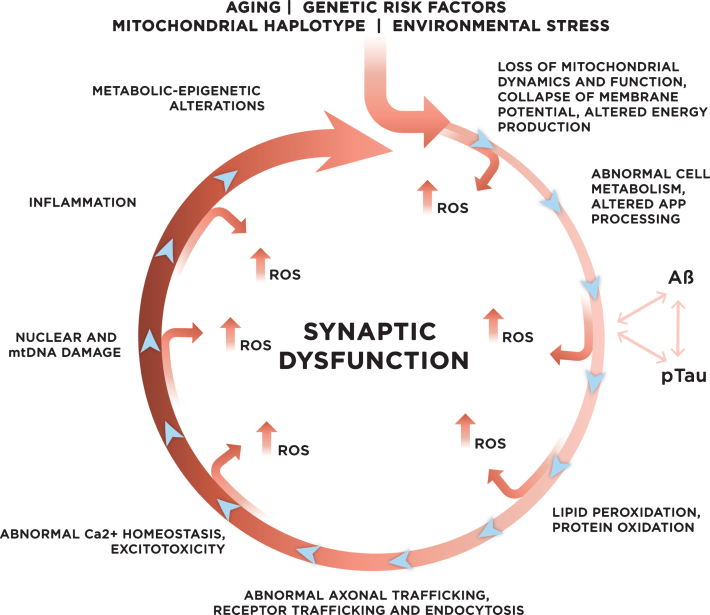
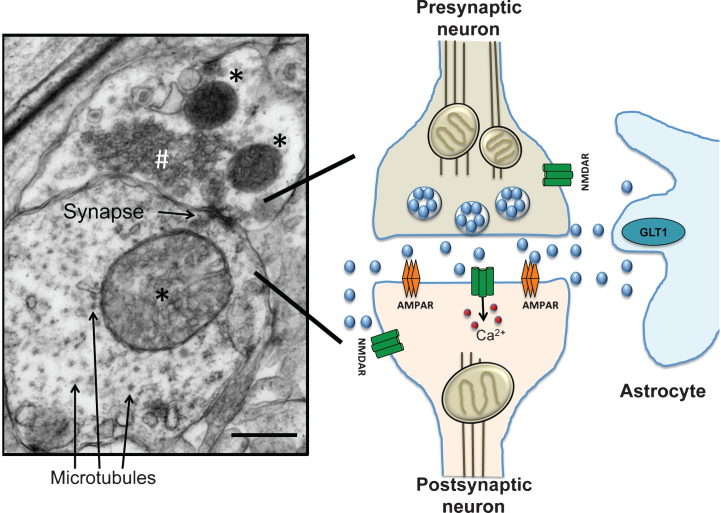
Verification
Claims the paper makes
The claims and statistics of this paper haven’t been checked yet.
Run the check — free, no account needed. It reads the open-access text and checks the sources it cites.
Claims other papers make about this one
Each is checked against this paper’s own text: does it say what the citing paper says it does?
The source backs part of the claim, not all of it — or backs it for a different population, condition or comparison.
In the citing paper
“Oxidative stress is associated with a number of inflammatory and degenerative pathologies and is a significant biomarker common to the pathophysiology of both AD and PD. 55 , 58”
From Therapeutic Properties and Pharmacological Activities of Asiaticoside and Madecassoside: A Review (2023) · cites this paper as [58]
Experimental — accuracy not yet measuredIn the citing paper
“since there is a strong correlation between immune activation and oxidative damage in neurodegenerative disease [42,43,44]”
From ROS Generation in Microglia: Understanding Oxidative Stress and Inflammation in Neurodegenerative Disease (2020) · cites this paper as [43]
Self-check
Percentages, sums and reported differences re-computed from the paper’s own numbers.
The self-check needs the paper’s full text.
Citations
Cites
Free Radicals in the Physiological Control of Cell Function
Dröge, W. (2002) · Physiological Reviews · doi:10.1152/physrev.00018.2001 · Cited by 9,855
Oxyl radicals, redox-sensitive signalling cascades and antioxidants
Genestra, M. (2007) · Cellular Signalling · doi:10.1016/j.cellsig.2007.04.009 · Cited by 4,930
Hypothetical model of dynamic biomarkers of the Alzheimer's pathological cascade
Jack, C. R., Knopman, D. S., Jagust, W. J., Shaw, L. M., Aisen, P. S., Weiner, M. W., Petersen, R. C., & Trojanowski, J. Q. (2010) · The Lancet Neurology · doi:10.1016/s1474-4422(09)70299-6 · Cited by 4,806
Terry, R. D., Masliah, E., Salmon, D. P., Butters, N., DeTeresa, R., Hill, R., Hansen, L. A., & Katzman, R. (1991) · Annals of Neurology · doi:10.1002/ana.410300410 · Cited by 4,397
Reactive oxygen species (ROS) homeostasis and redox regulation in cellular signaling
Ray, P. D., Huang, B.-W., & Tsuji, Y. (2012) · Cellular Signalling · doi:10.1016/j.cellsig.2012.01.008 · Cited by 4,373
Oxidative mechanisms in the toxicity of metal ions
Stohs, S. J., & Bagchi, D. (1995) · Free Radical Biology and Medicine · doi:10.1016/0891-5849(94)00159-h · Cited by 4,219
Triple-Transgenic Model of Alzheimer’s Disease with Plaques and Tangles
Oddo, S., Caccamo, A., Shepherd, J. D., Murphy, M. P., Golde, T. E., Kayed, R., Metherate, R., Mattson, M. P., Akbari, Y., & LaFerla, F. M. (2003) · Neuron · doi:10.1016/s0896-6273(03)00434-3 · Cited by 4,126
Malenka, R. C., & Bear, M. F. (2004) · Neuron · doi:10.1016/j.neuron.2004.09.012 · Cited by 3,968
Clinical and biomarker changes in dominantly inherited Alzheimer's disease
Bateman, R. J., Xiong, C., Benzinger, T. L. S., Fagan, A. M., Goate, A., Fox, N. C., Marcus, D. S., Cairns, N. J., Xie, X., Blazey, T. M., et al. (2012) · New England Journal of Medicine · doi:10.1056/nejmoa1202753 · Cited by 3,814
Cell Survival Responses to Environmental Stresses Via the Keap1-Nrf2-ARE Pathway
Kensler, T. W., Wakabayashi, N., & Biswal, S. (2007) · Annual Review of Pharmacology and Toxicology · doi:10.1146/annurev.pharmtox.46.120604.141046 · Cited by 3,630
Research works printed but not linked: 1
- 10.1007/s12603-013-0004-0 · DOI
Cited by
Sorted by citations
Items 401–500 of 1,001
Islamie, R., Myint, S. L. L., Rojanaratha, T., Ritthidej, G. C., Wanakhachornkrai, O., Wattanathamsan, O., & Rodsiri, R. (2023) · BMC Complementary Medicine and Therapies · doi:10.1186/s12906-023-04125-2 · Cited by 35
Lasure, V., Gautam, A. S., & Singh, R. K. (2024) · Food & Function · doi:10.1039/d4fo02602k · Cited by 35
Bacterial exopolysaccharides: Characteristics and antioxidant mechanism
Dong, J., Chi, Z., Lu, S., Xie, X., Gong, P., Li, H., & Liu, W. (2024) · International Journal of Biological Macromolecules · doi:10.1016/j.ijbiomac.2024.138849 · Cited by 36
Patel, J. C., Shukla, M., & Shukla, M. (2025) · Cells · doi:10.3390/cells14120918 · Cited by 39
Li, L., Tian, X., Peng, W., Deng, Y., & Li, J. (2019) · Neural Regeneration Research · doi:10.4103/1673-5374.265564 · Cited by 34
Alzheimer's disease mechanisms in peripheral cells: Promises and challenges
Trushina, E. V. (2019) · Alzheimer s & Dementia Translational Research & Clinical Interventions · doi:10.1016/j.trci.2019.06.008 · Cited by 35
Self-citationChen, X., Liao, D.-C., Sun, M., Cui, X.-H., & Wang, H. (2020) · Oxidative Medicine and Cellular Longevity · doi:10.1155/2020/3515609 · Cited by 35
Exploring the Causal Relationship Between Telomere Biology and Alzheimer’s Disease
Kuan, X.-Y., Fauzi, N. S. A., Ng, K. Y., & Bakhtiar, A. (2023) · Molecular Neurobiology · doi:10.1007/s12035-023-03337-4 · Cited by 35
Wang, J., Dove, A., Song, R., Qi, X., Ma, J., Bennett, D. A., & Xu, W. (2022) · Alzheimer's & Dementia · doi:10.1002/alz.12625 · Cited by 34
Jadiya, P., Cohen, H. M., Kolmetzky, D. W., Kadam, A. A., Tomar, D., & Elrod, J. W. (2023) · iScience · doi:10.1016/j.isci.2023.106296 · Cited by 35
Akhtar, A., Singh, S., Kaushik, R., Awasthi, R., & Behl, T. (2024) · Ageing Research Reviews · doi:10.1016/j.arr.2024.102289 · Cited by 38
Liu, Y., Cao, Y., Li, H., Liu, H., Bi, L., Chen, Q., & Peng, R. (2024) · Environment International · doi:10.1016/j.envint.2024.108740 · Cited by 38
Olloquequi, J., Díaz‐Peña, R., Verdaguer, E., Ettcheto, M., Auladell, C., & Camins, A. (2024) · International Journal of Molecular Sciences · doi:10.3390/ijms25136928 · Cited by 40
The relationship between hypoxia and Alzheimer’s disease: an updated review
Tao, B., Gong, W., Xu, C., Ma, Z., Mei, J., & Chen, M. (2024) · Frontiers in Aging Neuroscience · doi:10.3389/fnagi.2024.1402774 · Cited by 36
Structural analysis of copper(I) interaction with amyloid β peptide
Gregorio, G. D., Biasotto, F., Hecel, A., Łuczkowski, M., Kozłowski, H., & Valensin, D. (2019) · Journal of Inorganic Biochemistry · doi:10.1016/j.jinorgbio.2019.03.006 · Cited by 34
Wang, H., Dou, S., Zhu, J., Shao, Z., Wang, C., Xu, X., & Cheng, B. (2021) · Neuropeptides · doi:10.1016/j.npep.2021.102134 · Cited by 34
Antioxidant and anti-acetylcholinesterase potential of artichoke phenolic compounds
El-Aziz, N. M. A., Awad, O., Shehata, M. G., & Sohaimy, S. A. E. (2021) · Food Bioscience · doi:10.1016/j.fbio.2021.101006 · Cited by 36
Nutraceutical and therapeutic potential of Phycocyanobilin for treating Alzheimer’s disease
Piniella‐Matamoros, B., Marín‐Prida, J., & Pentón‐Rol, G. (2021) · Journal of Biosciences · doi:10.1007/s12038-021-00161-7 · Cited by 34
Oh, S.-Y., Jang, M. J., Choi, Y., Hwang, H., Rhim, H., Lee, B., Choi, C. W., & Kim, M. S. (2021) · Scientific Reports · doi:10.1038/s41598-021-88463-6 · Cited by 35
Leguerrier, D. M. D., Barré, R., Molloy, J. K., & Thomas, F. (2021) · Coordination Chemistry Reviews · doi:10.1016/j.ccr.2021.214133 · Cited by 34
PARK7 enhances antioxidative‐stress processes of BMSCs via the ERK1/2 pathway
Zhang, F., Peng, W., Zhang, J., Wang, L., Dong, W., Zheng, Y., Wang, Z., Xie, Z., Wang, T., Wang, C., et al. (2020) · Journal of Cellular Biochemistry · doi:10.1002/jcb.29845 · Cited by 35
Europium-Doped Cerium Oxide Nanoparticles for Microglial Amyloid Beta Clearance and Homeostasis
Machhi, J., Yeapuri, P., Marković, M., Patel, M., Yan, W., Lu, Y., Cohen, J. D., Hasan, M., Abdelmoaty, M. M., Zhou, Y., et al. (2022) · ACS Chemical Neuroscience · doi:10.1021/acschemneuro.1c00847 · Cited by 36
Zhu, T., Zhang, F., Li, H., He, Y., Zhang, G., Huang, N., Guo, M., & Li, X. (2019) · Clinical Interventions in Aging · doi:10.2147/cia.s208068 · Cited by 33
Batool, Z., Chen, J., Gao, Y., Lu, L. W., Xu, H., Liu, B., Wang, M., & Chen, F. (2022) · Journal of Agricultural and Food Chemistry · doi:10.1021/acs.jafc.2c06206 · Cited by 33
Role of Calcitriol and Vitamin D Receptor (VDR) Gene Polymorphisms in Alzheimer’s Disease
Jeong, S. P., Sharma, N., & An, S. S. A. (2024) · International Journal of Molecular Sciences · doi:10.3390/ijms25094806 · Cited by 33
Neuroinflammation and Natural Antidepressants: Balancing Fire with Flora
Godoy, A. C. F., Frota, F. F., Araújo, L. P., Valenti, V. E., Pereira, E. D. S. B. M., Detregiachi, C. R. P., Galhardi, C. M., Caracio, F. C. C., Haber, R. S. A., Laurindo, L. F., et al. (2025) · Biomedicines · doi:10.3390/biomedicines13051129 · Cited by 41
Dual impact of neuroinflammation on cognitive and motor impairments in Alzheimer's disease
Fakorede, S., Lateef, O. M., Garuba, W. A., Akosile, P. O., Okon, D. A., & Aborode, A. T. (2025) · Journal of Alzheimer s Disease Reports · doi:10.1177/25424823251341870 · Cited by 40
Effect of Caffeine and Other Methylxanthines on Aβ-Homeostasis in SH-SY5Y Cells
Janitschke, D., Nelke, C., Lauer, A. A., Regner-Nelke, L., Winkler, J., Thiel, A., Grimm, H. S., Hartmann, T., & Grimm, M. O. W. (2019) · Biomolecules · doi:10.3390/biom9110689 · Cited by 34
Early Onset of Sex-Dependent Mitochondrial Deficits in the Cortex of 3xTg Alzheimer’s Mice
Djordjevic, J., Chowdhury, S. R., Snow, W. M., Pérez, C. I., Cadonic, C., Fernyhough, P., & Albensi, B. C. (2020) · Cells · doi:10.3390/cells9061541 · Cited by 36
Synaptosome as a tool in Alzheimer’s disease research
Ahmad, F., & Liu, P. (2020) · Brain Research · doi:10.1016/j.brainres.2020.147009 · Cited by 33
The improvement of cognitive deficits after whole-body cryotherapy – A randomised controlled trial
Rymaszewska, J., Lion, K., Stańczykiewicz, B., Rymaszewska, J. E., Trypka, E., Pawlik-Sobecka, L., Kokot, I., Płaczkowska, S., Zabłocka, A., & Szcześniak, D. M. (2021) · Experimental Gerontology · doi:10.1016/j.exger.2021.111237 · Cited by 34
The effects of astaxanthin treatment on a rat model of Alzheimer’s disease
Chen, M.-H., Wang, T., Chen, L.-J., Jiang, M.-Y., Wang, Y., Tseng, G., & Chen, J. (2021) · Brain Research Bulletin · doi:10.1016/j.brainresbull.2021.04.020 · Cited by 33
Li, Y., Jin, Y., Pan, J., He, X., Zhong, S., Zhang, R., Choi, L., Su, W., & Chen, J. (2022) · Journal of Agricultural and Food Chemistry · doi:10.1021/acs.jafc.2c02140 · Cited by 33
Carthamus tinctorius L.: A natural neuroprotective source for anti-Alzheimer's disease drugs
Liang, Y., & Wang, L. (2022) · Journal of Ethnopharmacology · doi:10.1016/j.jep.2022.115656 · Cited by 36
Vogrinc, D., Kramberger, M. G., Emeršič, A., Čučnik, S., Goričar, K., & Dolžan, V. (2023) · Antioxidants · doi:10.3390/antiox12020316 · Cited by 38
Angelova, V. T., GEORGIEV, B., Pencheva, T., Pajeva, I. K., Rangelov, M. A., Todorova, N. H., Zheleva‐Dimitrova, D., Kalcheva-Yovkova, E., Valkova, I., Vassilev, N. G., et al. (2023) · Pharmaceuticals · doi:10.3390/ph16091194 · Cited by 33
Atlante, A., & Valenti, D. (2023) · International Journal of Molecular Sciences · doi:10.3390/ijms242115951 · Cited by 33
Sighencea, M. G., Popescu, R. Ș., & Trifu, S. C. (2024) · International Journal of Molecular Sciences · doi:10.3390/ijms252212311 · Cited by 33
Zheng, Y., Qiang, X., Xu, R., Song, Q., Tian, C., Liu, H., Li, W., Tan, Z., & Deng, Y. (2018) · Bioorganic Chemistry · doi:10.1016/j.bioorg.2018.03.016 · Cited by 32
Han, Y., Yang, H., Li, L., Du, X., & Sun, C. (2018) · International Journal of Neuroscience · doi:10.1080/00207454.2018.1503183 · Cited by 33
Verapamil and Alzheimer’s Disease: Past, Present, and Future
Popović, N., Morales-Delgado, N., Mena, D. V., Alonso, A., Martínez, M. P., Bleda, M. C., & Popović, M. (2020) · Frontiers in Pharmacology · doi:10.3389/fphar.2020.00562 · Cited by 34
Wu, Q., Chen, Y., Gu, Y., Fang, S., Li, W., Wang, Q., Fang, J., & Cai, C. (2020) · BMC Complementary Medicine and Therapies · doi:10.1186/s12906-020-03066-4 · Cited by 31
Xia, B., Huang, X., Sun, G., & Tao, W. (2020) · Journal of Ethnopharmacology · doi:10.1016/j.jep.2020.113665 · Cited by 31
Sun, Y., Liu, Z., Pi, Z., Song, F., Wu, J., & Liu, S. (2021) · Phytotherapy Research · doi:10.1002/ptr.7014 · Cited by 32
Jiang, P. H., Chen, L., Xu, J., Liu, W., Feng, F., & Qu, W. (2021) · Neurochemical Research · doi:10.1007/s11064-021-03343-9 · Cited by 32
Cortés, A., Solas, M., Pejenaute, Á., Abellanas, M. A., Garcia-Lacarte, M., Aymerich, M. S., Marqués, J., Ramírez, M. J., & Zalba, G. (2021) · Antioxidants · doi:10.3390/antiox10081311 · Cited by 32
Jin, S., Wang, X., Xiang, X., Wu, Y., Hu, J., Li, Y., Dong, Y. L., Tan, Y., & Wu, X. G. (2021) · International Immunopharmacology · doi:10.1016/j.intimp.2021.108335 · Cited by 33
Sun, D., Gao, G., Zhong, B., Zhang, H., Ding, S., Sun, Z., Zhang, Y., & Li, W. (2021) · Behavioral and Brain Functions · doi:10.1186/s12993-021-00185-x · Cited by 37
Som, S., Antony, J., Dhanabal, S. P., & Ponnusankar, S. (2022) · Metabolic Brain Disease · doi:10.1007/s11011-021-00880-8 · Cited by 33
Alkahtani, S. H., AL–Johani, N. S., & Alarifi, S. A. (2023) · International Journal of Molecular Sciences · doi:10.3390/ijms24021340 · Cited by 36
Antioxidant activity of phenylethanoid glycosides on glutamate-induced neurotoxicity
Ji, S., Cao, K.-K., Zhao, X.-X., Kang, N.-X., Zhang, Y., Xu, Q., Yang, S., Liu, Y.-L., & Wang, C. (2019) · Bioscience Biotechnology and Biochemistry · doi:10.1080/09168451.2019.1637243 · Cited by 33
Cryo‐EM structures of human ABCA7 provide insights into its phospholipid translocation mechanisms
Le, L. T. M., Thompson, J. R., Dehghani‐Ghahnaviyeh, S., Pant, S., Dang, P. X., French, J. B., Kanikeyo, T., Tajkhorshid, E., & Alam, A. (2023) · The EMBO Journal · doi:10.15252/embj.2022111065 · Cited by 31
Khamies, S. M., El-Yamany, M. F., & Ibrahim, S. M. (2024) · Journal of Neuroimmune Pharmacology · doi:10.1007/s11481-024-10140-y · Cited by 32
Recent Insights into the Neurobiology of Alzheimer’s Disease and Advanced Treatment Strategies
Anitha, K., Singh, M. K., Kohat, K., Varshini, T. S., Chenchula, S., Padmavathi, R., Amerneni, L. S., Vishnu Vardhan, K., Mythili Bai, K., Chavan, M. R., et al. (2024) · Molecular Neurobiology · doi:10.1007/s12035-024-04384-1 · Cited by 35
Nanoscale drug formulations for the treatment of Alzheimer's disease progression
Liqin, L., He, H., Du, B., & He, Y. (2025) · RSC Advances · doi:10.1039/d4ra08128e · Cited by 38
Yu, H. W., Yuan, B., Chu, Q., Wang, C., & Bi, H. C. (2019) · International Journal of Molecular Medicine · doi:10.3892/ijmm.2019.4058 · Cited by 31
Zhang, Y., Liu, M., Liu, Z., Zhao, J., Zhao, Y., Li, H., Li, W., & Zhang, J. (2019) · CNS Neuroscience & Therapeutics · doi:10.1111/cns.13108 · Cited by 31
Huang, J.-L., Yu, C., Su, M., Yang, S., Zhang, F., Chen, Y., Liu, J.-Y., Jiang, Y.-F., Zhong, Z.-G., & Wu, D. (2019) · Aging · doi:10.18632/aging.102337 · Cited by 31
Cheng, S. Y., Cao, Y., Rouzbehani, M., & Cheng, K. H. (2020) · Biophysical Chemistry · doi:10.1016/j.bpc.2020.106355 · Cited by 30
Xiao, L., Liao, F., Ide, R., Horie, T., Fan, Y., Saiki, C., & Miwa, N. (2020) · Neural Regeneration Research · doi:10.4103/1673-5374.285000 · Cited by 31
Non-Coding RNAs as Sensors of Oxidative Stress in Neurodegenerative Diseases
Gámez‐Valero, A., Guisado-Corcoll, A., Herrero‐Lorenzo, M., Solaguren‐Beascoa, M., & Martí, E. (2020) · Antioxidants · doi:10.3390/antiox9111095 · Cited by 34
Zhao, Q., Zhang, T., Zhu, B., Bi, Y., Jiang, S., Zhu, Y., Zhao, D., & Liu, F. (2021) · Journal of Inflammation Research · doi:10.2147/jir.s321656 · Cited by 31
Posttranscriptional regulation of Nrf2 through miRNAs and their role in Alzheimer's disease
Kaundal, R. K., Datusalia, A. K., & Sharma, S. S. (2021) · Pharmacological Research · doi:10.1016/j.phrs.2021.106018 · Cited by 32
Singh, Y. P., Kumar, N., Priya, K., Chauhan, B. S., Shankar, G., Kumar, S., Singh, G. K., Srikrishna, S., Garg, P., Singh, G., et al. (2021) · ACS Chemical Neuroscience · doi:10.1021/acschemneuro.1c00443 · Cited by 32
Genetics of Alzheimer’s Disease in the African American Population
Logue, M. W., Dasgupta, S., & Farrer, L. A. (2023) · Journal of Clinical Medicine · doi:10.3390/jcm12165189 · Cited by 29
Han, G., Zhen, W., Dai, Y., Yu, H., Li, D., & Ma, T. (2022) · Frontiers in Aging Neuroscience · doi:10.3389/fnagi.2022.873929 · Cited by 30
Zhang, H., Wang, Z., Li, Y., Han, J., Cui, C., Lu, C., Zhou, J., Cheong, L., Li, Y., Sun, T., et al. (2018) · Frontiers in Aging Neuroscience · doi:10.3389/fnagi.2018.00187 · Cited by 31
Dehydroepiandrosterone (DHEA) and its Sulphate (DHEAS) in Alzheimer’s Disease
Štrac, D. Š., Konjevod, M., Perković, M. N., Tudor, L., Erjavec, G. N., & Pivac, N. (2020) · Current Alzheimer Research · doi:10.2174/1567205017666200317092310 · Cited by 31
Yan, W., Yue, H., Ji, X., Li, G., & Sang, N. (2020) · Environment International · doi:10.1016/j.envint.2020.105659 · Cited by 30
Oxidative Stress in DNA Repeat Expansion Disorders: A Focus on NRF2 Signaling Involvement
Rosa, P. L., Petrillo, S., Bertini, E., & Piemonte, F. (2020) · Biomolecules · doi:10.3390/biom10050702 · Cited by 30
Kim, J. H., Meng, H. W., He, M. T., Choi, J. M., Lee, D., & Cho, E. J. (2020) · Molecules · doi:10.3390/molecules25173942 · Cited by 31
Mannan, A., Singh, T. G., Singh, V., Garg, N., Kaur, A., & Singh, M. (2021) · Current Drug Targets · doi:10.2174/1389450122666210707120256 · Cited by 30
Melatonin and Sleep Disturbances in Alzheimer’s Disease
Prodhan, A. H. M. S. U., Cavestro, C., Kamal, M. A., & Islam, M. A. (2021) · CNS & Neurological Disorders - Drug Targets · doi:10.2174/1871527320666210804155617 · Cited by 30
Liang, X., Liu, T., Li, L., Li, J., Li, S., Zeng, K., Song, C., Chen, T., & Zou, Y. (2022) · Chemical Engineering Journal · doi:10.1016/j.cej.2022.135984 · Cited by 30
Optineurin regulates NRF2-mediated antioxidant response in a mouse model of Paget’s disease of bone
Hu, X., Wong, S., Liang, K., Wu, T., Wang, S., Wang, L., Liu, J., Yamauchi, M., Foster, B. L., Ting, J. P. ‐., et al. (2023) · Science Advances · doi:10.1126/sciadv.ade6998 · Cited by 30
Botchway, B. O., Okoye, F. C., Chen, Y., Arthur, W. E., & Fang, M. (2022) · Aging and disease · doi:10.14336/ad.2021.0616 · Cited by 32
Role of angiotensin II in aging
Yi, W., Chen, F., Zhang, H., Tang, P., Yuan, M., Wen, J., Wang, S., & Cai, Z. (2022) · Frontiers in Aging Neuroscience · doi:10.3389/fnagi.2022.1002138 · Cited by 31
Alipourfard, F., Shajiee, H., Nazari-Serenjeh, F., Hojati, V., & Alirezaie, M. (2023) · Research in Pharmaceutical Sciences · doi:10.4103/1735-5362.371583 · Cited by 29
Luo, Z., Chen, J., Dai, Y., So, K., & Zhang, L. (2023) · Communications Biology · doi:10.1038/s42003-023-05003-w · Cited by 32
Bio–Nano Toolbox for Precision Alzheimer's Disease Gene Therapy
Liu, Y., Xia, X., Zheng, M., & Shi, B. (2024) · Advanced Materials · doi:10.1002/adma.202314354 · Cited by 31
Osteoporosis and Alzheimer´s disease (or Alzheimer´s disease and Osteoporosis)
Wanionok, N. E., Morel, G. R., & Fernández, J. M. (2024) · Ageing Research Reviews · doi:10.1016/j.arr.2024.102408 · Cited by 31
Shedding light on Alzheimer's disease: Recent advances in highly selective fluorescent probes
Liu, J., Li, Y., Kulsoom, & Wang, F. (2024) · Coordination Chemistry Reviews · doi:10.1016/j.ccr.2024.216221 · Cited by 29
Işık, S., Alhelwani, S., Sahsahi, A., Balcilar, H., & Yeman-Kıyak, B. (2025) · Drug Delivery and Translational Research · doi:10.1007/s13346-025-01955-0 · Cited by 33
Multi-Protection of DL0410 in Ameliorating Cognitive Defects in D-Galactose Induced Aging Mice
Lian, W., Jia, H., Xu, L., Zhou, W., Kang, D., Liu, A., & Du, G. (2017) · Frontiers in Aging Neuroscience · doi:10.3389/fnagi.2017.00409 · Cited by 29
Regulatory microRNAs and vascular cognitive impairment and dementia
Zhang, J., Sun, P., Zhou, C., Zhang, X., Ma, F., Xu, Y., Hamblin, M. H., & Yin, K. (2020) · CNS Neuroscience & Therapeutics · doi:10.1111/cns.13472 · Cited by 28
Nutraceutical based SIRT3 activators as therapeutic targets in Alzheimer's disease
Govindarajulu, M., Ramesh, S., Neel, L. T., Fabbrini, M., Buabeid, M. A., Fujihashi, A., Dwyer, D., Lynd, T. O., Shah, K., Mohanakumar, K. P., et al. (2021) · Neurochemistry International · doi:10.1016/j.neuint.2021.104958 · Cited by 31
Shalabalija, D., Mihailova, L., Crcarevska, M. S., Karanfilova, I. C., Ivanovski, V., Nestorovska, A. K., Novotni, G., & Dodov, M. G. (2021) · Journal of Drug Delivery Science and Technology · doi:10.1016/j.jddst.2021.102434 · Cited by 29
Ahammed, M. S., Afrin, R., Uddin, N., Al-Amin, M. Y., Hasan, K., Haque, U., Islam, K. M. M., Alam, A. H. M. K., Tanaka, T., & Sadik, G. (2021) · Advances in Pharmacological and Pharmaceutical Sciences · doi:10.1155/2021/5569054 · Cited by 32
Intersection between Redox Homeostasis and Autophagy: Valuable Insights into Neurodegeneration
Park, H., Kim, J., Shin, C., & Lee, S. (2021) · Antioxidants · doi:10.3390/antiox10050694 · Cited by 32
A Novel Cu(II)-Binding Peptide Identified by Phage Display Inhibits Cu2+-Mediated Aβ Aggregation
Zhang, X., Zhang, X., Zhong, M., Zhao, P., Guo, C., Li, Y., Xu, H. J., Wang, T., & Gao, H. (2021) · International Journal of Molecular Sciences · doi:10.3390/ijms22136842 · Cited by 30
Fan, C., Li, Y., Lan, T., Wang, W., Mao, X., & Yu, S. Y. (2021) · Food & Function · doi:10.1039/d1fo02676c · Cited by 29
Dimethyl Fumarate is a Potential Therapeutic Option for Alzheimer’s Disease
Sun, X., Suo, X., Xia, X., Yu, C., & Dou, Y. (2021) · Journal of Alzheimer s Disease · doi:10.3233/jad-215074 · Cited by 32
Mitochondrial Deficits With Neural and Social Damage in Early-Stage Alzheimer’s Disease Model Mice
Misrani, A., Tabassum, S., Huo, Q., Tabassum, S., Jiang, J., Ahmed, A., Chen, X., Zhou, J., Zhang, J., Liu, S., et al. (2021) · Frontiers in Aging Neuroscience · doi:10.3389/fnagi.2021.748388 · Cited by 29
Wang, Y., Wang, K., Yan, J., Zhou, Q., & Wang, X. (2022) · International Journal of Molecular Sciences · doi:10.3390/ijms232213886 · Cited by 32
Montero‐Calle, A., Coronel, R., Garranzo‐Asensio, M., Solís‐Fernández, G., Rábano, A., Ríos, V. D. L., Fernández‐Aceñero, M. J., Mendes, M. L., Martínez‐Useros, J., Megías, D., et al. (2023) · Cellular and Molecular Life Sciences · doi:10.1007/s00018-023-04791-y · Cited by 32
SERS-Based Optical Nanobiosensors for the Detection of Alzheimer’s Disease
Gao, F., Li, F., Wang, J., Yu, H., Li, X., Chen, H., Wang, J., Qin, D., Li, Y., Liu, S., et al. (2023) · Biosensors · doi:10.3390/bios13090880 · Cited by 31
Xin, Y., Fang, F., Yue, Q., Luo, Y., Tian, S., Cheng, L., Yang, X., Yang, X., Luo, L., & Meng, F. (2024) · Nano Today · doi:10.1016/j.nantod.2024.102178 · Cited by 29
Sharma, S., Sharma, N., Saini, A., & Nehru, B. (2018) · Neurotoxicity Research · doi:10.1007/s12640-018-9975-2 · Cited by 29
Involvement of the Renin-Angiotensin System in Stress: State of the Art and Research Perspectives
Correa, B. H. M., Becari, L., Fontes, M. A. P., Silva, A. C. S. E., & Kangussu, L. M. (2021) · Current Neuropharmacology · doi:10.2174/1570159x19666210719142300 · Cited by 31
Most recent advances and applications of extracellular vesicles in tackling neurological challenges
Kaur, M., Fusco, S., den Broek, B. V., Aseervatham, J., Rostami, A. M., Iacovitti, L., Grassi, C., Łukomska, B., & Srivastava, A. K. (2024) · Medicinal Research Reviews · doi:10.1002/med.22035 · Cited by 28
Metadata
- Authors
- Tönnies, E., & Trushina, E.
- Affiliations
- Mayo Clinic (US)
- Corresponding author
- Trushina, Eugenia
- ORCID
- Trushina, Eugenia
- Venue
- Journal of Alzheimer s Disease
- Publisher
- SAGE Publications
- Published
- 2017-04-19
- Volume
- 57
- Issue
- 4
- Pages
- 1105-1121
- ISSN
- 1387-2877 (ISSN-L)
- 1875-8908
- PMC
- PMC5409043
- OpenAlex
- W2568450381
- Cited by
- 1,750
- References
- 237
- Citations by year
- 2026: 135 · 2025: 220 · 2024: 259 · 2023: 258 · 2022: 253 · 2021: 246 · 2020: 193 · 2019: 101 · 2018: 54 · 2017: 30
- FWCI
- 12.72
- Type
- journal article
- Language
- en
- Open access
- bronze
- doi.org
- Locations
- Journal of Alzheimer s Disease (publishedVersion)
- PubMed Central (publishedVersion, cc-by-nc)
- PubMed (publishedVersion)
- Funders
- National Institutes of Health
- National Institute on Aging (RF1AG055549)
- National Institute of Environmental Health Sciences (R01ES020715)
- Topics
- Life Sciences › Neuroscience › Cellular and Molecular Neuroscience › Alzheimer's disease research and treatments
- Life Sciences › Biochemistry, Genetics and Molecular Biology › Molecular Biology › Mitochondrial Function and Pathology
- Health Sciences › Medicine › Psychiatry and Mental health › Dementia and Cognitive Impairment Research
- Keywords
- Alzheimer's disease, oxidative stress
- MeSH terms
- Alzheimer Disease, Animals, Humans, Synapses, Oxidative Stress
About these checks
Registry, retraction, Cites and statistics results are computed, not judged, with one exception: a printed reference that no index lists is read once by a model before it counts as a citation error. Claims are extracted by a model and kept only when their quote appears verbatim in the text; each cited source is then checked, with a model’s help, for whether it says what the claim relies on. Those verdicts can be wrong — read the claim’s quote and the cited source before relying on one.
Statistics and arithmetic are recomputed, not judged.
Confidence bands are shown only for fields calibrated on our annotated test set. None is calibrated yet, so no band is shown.
What counts as a claim ›How we measure confidence ›How we check this ›
Are you an author, or do you see a problem with this page? Request a review
