

The DOI matches its Crossref record; 141 of the 146 references it cites were found in a registry or an index, and 1 are not checked yet; none of the 90 sources its claims cite is checked for support yet.
Sex, Receptors, and Attachment: A Review of Individual Factors Influencing Response to Oxytocin
Open accessAbstract
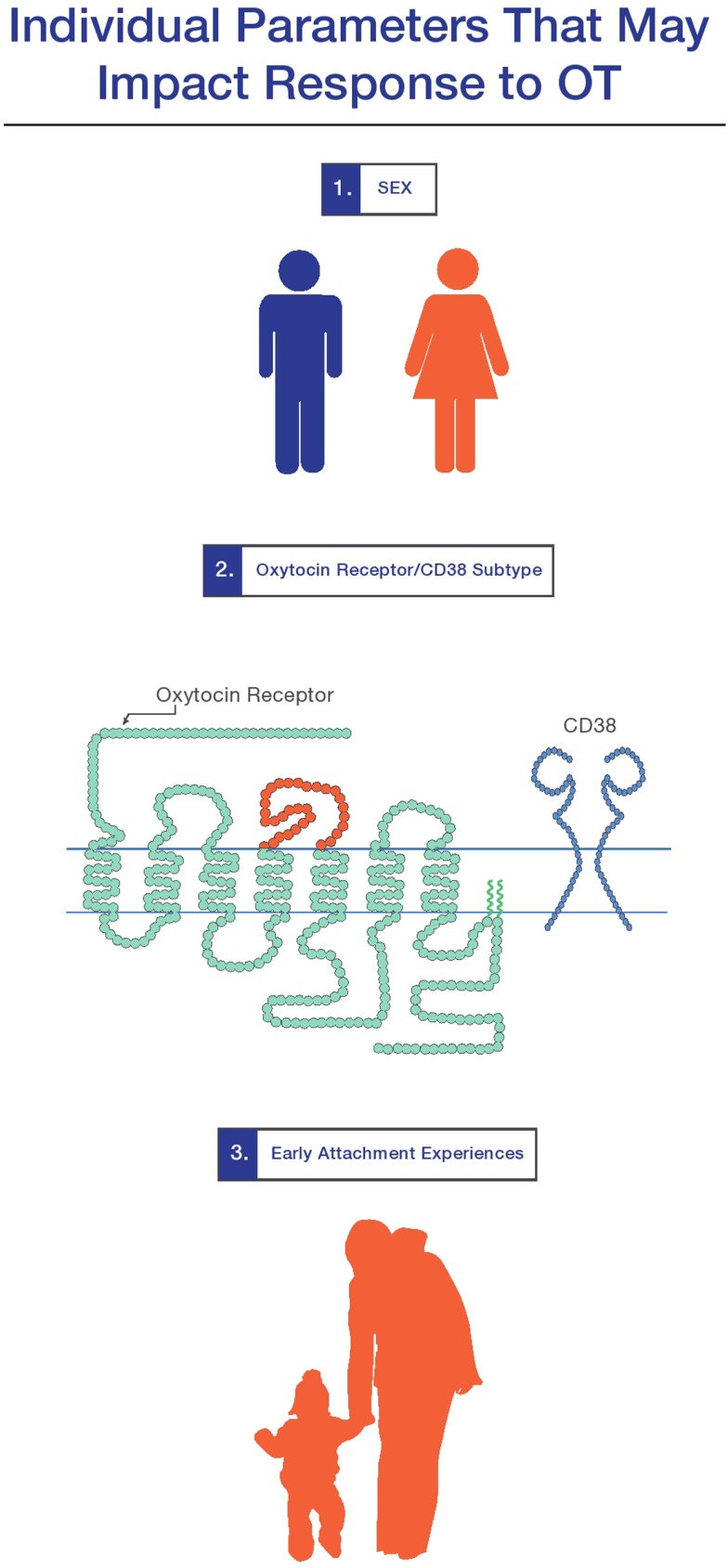
As discussed in the larger review in this special issue (MacDonald and Feifel), intranasal oxytocin (OT) is demonstrating a growing potential as a therapeutic agent in psychiatry. Importantly, research suggests that a variety of individual factors may influence a person's response to OT. In this mini-review, I provide a review of three: (1) sex and hormonal status; (2) genetic variation in aspects of the OT system (i.e., OT receptors); and (3) attachment history. Each of these factors will be important to monitor as we strive to develop a richer understanding of OT's role in human development, brain-based disease, and the potential for individualized, OT-targeted treatments.
Checked 2026-10-09 · 1 reference not checked yet
Overview
AI snapshot
Written from the paper’s full text.
TL;DR
This mini-review argues that sex and hormonal status, genetic variation in the oxytocin system (OTR and CD38), and early attachment history are individual factors that may moderate response to intranasal oxytocin. It concludes that clinical evidence for these moderators is sparse and requires larger therapeutic trials.
Key findings
- Sex and hormonal status: animal and human evidence indicates sex-specific oxytocin effects; in a randomized, double-blind, within-subjects crossover trial of intranasal oxytocin (40 IU BID for 3 weeks) in generalized anxiety disorder, there was a trend-level dose-by-gender effect, with males showing significant HAM-A improvement on oxytocin while females showed higher HAM-A scores during treatment. Three multi-week schizophrenia studies had male-biased recruitment (62 males treated vs. 13 females) and none showed a sex-by-drug effect.
- Genetic variation: OTR and CD38 variants have been linked to personality, social behavior, stress/maltreatment responses, brain anatomy/function, and disease states such as schizophrenia and autism; however, no published studies have examined genetic variation in the OT system in relation to clinical response to oxytocin in psychiatrically ill patients. Examples include moderation of subjective responses to infant faces by OTR rs53576G, associations of OTR rs53576, rs2254298, and rs2228485 with Reading the Mind in the Eyes Test performance, and modulation of neural responses to emotional faces by OXTR rs2268498.
- Attachment history: early attachment experiences may shape the central OT system through epigenetic and neuroplastic changes, and intranasal oxytocin effects can be moderated by parental love-withdrawal and attachment representations. The only published clinical study cited in this area found that patients with borderline personality disorder and anxious attachment showed less trust than those with more secure attachment after intranasal oxytocin.
- Overall, the review presents these three factors as candidate moderators of oxytocin response, but emphasizes that clinical trial evidence remains limited.
Methods
- Design: narrative mini-review of three individual factors influencing response to intranasal oxytocin: sex and hormonal status, genetic variation in aspects of the OT system (OTR and CD38), and attachment history.
- Data or sample: no primary data or new sample; the paper synthesizes animal studies, human neurotypical studies, genetic and imaging studies, and clinical trials, including cited trials in generalized anxiety disorder, schizophrenia, and borderline personality disorder.
- Main analysis: narrative synthesis of cited literature; no systematic search, meta-analysis, or new statistical analysis is reported.
Limitations
- The paper states that given the paucity of clinical trials with intranasal oxytocin, the suggestion that these factors moderate clinical response should be viewed with circumspection, and larger-scale therapeutic trials are needed.
- The paper states that no published studies have examined genetic variation in the OT system in relation to clinical response to oxytocin in psychiatrically ill patients, and that evidence for early experience impacting OT response in clinical populations is sparse, with only one published study in borderline personality disorder.
- Evident from the text: as a mini-review, it does not report a systematic search or formal quality appraisal, and it notes replicability and effect-size concerns, including failed associations in some OTR studies.
Model-written summary. Check it against the paper before relying on it.
Integrity signals
Registry
Cites
Statistics
Figures
Verification
Claims the paper makes
47 Not checked yet · 6 Own interpretation · 1 No basis given
None of the sources cited for this claim have been checked yet.
In the paper
“testosterone seems from one perspective to have opposite behavioral effects to the prosocial impact classically associated with OT: decreasing trust, generosity, empathy (van Honk and Schutter, 2007; Zak et al., 2009; Bos et al., 2010)”
§ Sex, Receptors, and Attachment: A Review of Individual Factors Influencing Response to Oxytocin > Sex and Hormonal Status
What the sources say
- Not checked yetcites van Honk and Schutter, 2007
- Not checked yetcites Zak et al., 2009
- Not checked yetcites Bos et al., 2010
hedgedconditional- Asserted: passes — The authors put it forward as true.
- Checkable: passes — It can be checked against evidence.
- Load-bearing: unclear — It is unclear whether the paper’s conclusions depend on it.
- Based: passes — The paper gives a reason why it holds.
None of the sources cited for this claim have been checked yet.
In the paper
“men and women show differences in plasma OT levels (Ozsoy et al., 2009; Gordon et al., 2010; Holt-Lunstad et al., 2011; Weisman et al., 2012b)”
§ Sex, Receptors, and Attachment: A Review of Individual Factors Influencing Response to Oxytocin > Sex and Hormonal Status
What the sources say
- Not checked yetcites Ozsoy et al., 2009
- Not checked yetcites Gordon et al., 2010
- Not checked yetcites Holt-Lunstad et al., 2011
plaincorrelational- Asserted: passes — The authors put it forward as true.
- Checkable: passes — It can be checked against evidence.
- Load-bearing: passes — The paper’s conclusions depend on it.
- Based: passes — The paper gives a reason why it holds.
In the paper
“many other single-dose studies have not found an effect of sex (see Bartz et al., 2011b for review).”
§ Sex, Receptors, and Attachment: A Review of Individual Factors Influencing Response to Oxytocin > Sex and Hormonal Status
What the sources say
- Not checked yetcites Bartz et al., 2011b
plain- Asserted: passes — The authors put it forward as true.
- Checkable: passes — It can be checked against evidence.
- Load-bearing: unclear — It is unclear whether the paper’s conclusions depend on it.
- Based: passes — The paper gives a reason why it holds.
A conclusion the paper draws from its own results — it cites no other source for it, so there is none to check. The quote shows it is in the paper.
In the paper
“Importantly, research suggests that a variety of individual factors may influence a person’s response to OT.”
§ Sex, Receptors, and Attachment: A Review of Individual Factors Influencing Response to Oxytocin > Abstract
hedgedconditional- Asserted: passes — The authors put it forward as true.
- Checkable: passes — It can be checked against evidence.
- Load-bearing: passes — The paper’s conclusions depend on it.
- Based: passes — The paper gives a reason why it holds.
None of the sources cited for this claim have been checked yet.
In the paper
“though other studies in this area have failed to find a sex bias (Rodrigues et al., 2009; Saphire-Bernstein et al., 2011; Feldman et al., 2012).”
§ Sex, Receptors, and Attachment: A Review of Individual Factors Influencing Response to Oxytocin > Sex and Hormonal Status
What the sources say
- Not checked yetcites Rodrigues et al., 2009
- Not checked yetcites Saphire-Bernstein et al., 2011
- Not checked yetcites Feldman et al., 2012
plain- Asserted: passes — The authors put it forward as true.
- Checkable: passes — It can be checked against evidence.
- Load-bearing: unclear — It is unclear whether the paper’s conclusions depend on it.
- Based: passes — The paper gives a reason why it holds.
A conclusion the paper draws from its own results — it cites no other source for it, so there is none to check. The quote shows it is in the paper.
In the paper
“In this mini-review, I provide a review of three: (1) sex and hormonal status; (2) genetic variation in aspects of the OT system (i.e., OT receptors); and (3) attachment history.”
§ Sex, Receptors, and Attachment: A Review of Individual Factors Influencing Response to Oxytocin > Abstract
plainconditional- Asserted: passes — The authors put it forward as true.
- Checkable: passes — It can be checked against evidence.
- Load-bearing: passes — The paper’s conclusions depend on it.
- Based: passes — The paper gives a reason why it holds.
None of the sources cited for this claim have been checked yet.
In the paper
“gender-dependent effects have been demonstrated in some single-dose studies (Hurlemann et al., 2010), including studies of effects on they amygdala (Domes et al., 2010; Rupp et al., 2012), and interpersonal behavior (Liu et al., 2012)”
§ Sex, Receptors, and Attachment: A Review of Individual Factors Influencing Response to Oxytocin > Sex and Hormonal Status
What the sources say
- Not checked yetcites Hurlemann et al., 2010
- Not checked yetcites Domes et al., 2010
- Not checked yetcites Rupp et al., 2012
boostedcorrelational- Asserted: passes — The authors put it forward as true.
- Checkable: passes — It can be checked against evidence.
- Load-bearing: passes — The paper’s conclusions depend on it.
- Based: passes — The paper gives a reason why it holds.
In the paper
“which has many opponent actions to OT (Neumann and Landgraf, 2012).”
§ Sex, Receptors, and Attachment: A Review of Individual Factors Influencing Response to Oxytocin > Sex and Hormonal Status
What the sources say
- Not checked yetcites Neumann and Landgraf, 2012
plaindirect- Asserted: passes — The authors put it forward as true.
- Checkable: passes — It can be checked against evidence.
- Load-bearing: unclear — It is unclear whether the paper’s conclusions depend on it.
- Based: passes — The paper gives a reason why it holds.
A conclusion the paper draws from its own results — it cites no other source for it, so there is none to check. The quote shows it is in the paper.
In the paper
“In this mini-review, I provide a review of three: (1) sex and hormonal status; (2) genetic variation in aspects of the OT system (i.e., OT receptors); and (3) attachment history.”
§ Sex, Receptors, and Attachment: A Review of Individual Factors Influencing Response to Oxytocin > Abstract
plainconditional- Asserted: passes — The authors put it forward as true.
- Checkable: passes — It can be checked against evidence.
- Load-bearing: passes — The paper’s conclusions depend on it.
- Based: passes — The paper gives a reason why it holds.
None of the sources cited for this claim have been checked yet.
In the paper
“As background, animal studies indicate that sex-specific differences in response to OT are common (Williams et al., 1994; Cho et al., 1999; Bales and Carter, 2003; Bales et al., 2007)”
§ Sex, Receptors, and Attachment: A Review of Individual Factors Influencing Response to Oxytocin > Sex and Hormonal Status
What the sources say
- Not checked yetcites Williams et al., 1994
- Not checked yetcites Cho et al., 1999
- Not checked yetcites Bales and Carter, 2003
hedgedcorrelational- Asserted: passes — The authors put it forward as true.
- Checkable: passes — It can be checked against evidence.
- Load-bearing: unclear — It is unclear whether the paper’s conclusions depend on it.
- Based: passes — The paper gives a reason why it holds.
- It may state two separate claims as one. 15
- The quote only partly states this claim. 1
- Probably not a substantial claim. 1
In the paper
“the histological structure for OT neurons is sexually dimorphic, suggesting that sex steroids play a role in early morphogenesis of this system (de Vries, 2008).”
§ Sex, Receptors, and Attachment: A Review of Individual Factors Influencing Response to Oxytocin > Sex and Hormonal Status
What the sources say
- Not checked yetcites de Vries, 2008
hedgedconditional- Asserted: passes — The authors put it forward as true.
- Checkable: passes — It can be checked against evidence.
- Load-bearing: unclear — It is unclear whether the paper’s conclusions depend on it.
- Based: passes — The paper gives a reason why it holds.
It may state two separate claims as one.
In the paper
“Scheele et al. (2012) found in a group of 86 normal heterosexual males that IN OT preferentially stimulated men in a monogamous relationship – but not single males – to maintain more personal space from women (but not men).”
§ Sex, Receptors, and Attachment: A Review of Individual Factors Influencing Response to Oxytocin > Sex and Hormonal Status
What the sources say
- Not checked yetcites Scheele et al., 2012
plaindirect- Asserted: passes — The authors put it forward as true.
- Checkable: passes — It can be checked against evidence.
- Load-bearing: passes — The paper’s conclusions depend on it.
- Based: passes — The paper gives a reason why it holds.
It may state two separate claims as one.
None of the sources cited for this claim have been checked yet.
In the paper
“testosterone promotes both OTR binding in the hypothalamus (Johnson et al., 1991) as well as production of AVP (Delville et al., 1996)”
§ Sex, Receptors, and Attachment: A Review of Individual Factors Influencing Response to Oxytocin > Sex and Hormonal Status
What the sources say
- Not checked yetcites Johnson et al., 1991
- Not checked yetcites Delville et al., 1996
plaindirect- Asserted: passes — The authors put it forward as true.
- Checkable: passes — It can be checked against evidence.
- Load-bearing: unclear — It is unclear whether the paper’s conclusions depend on it.
- Based: passes — The paper gives a reason why it holds.
It may state two separate claims as one.
None of the sources cited for this claim have been checked yet.
In the paper
“Estrogen upregulates OT and OT receptor (OTR) production (Patisaul et al., 2003; Windle et al., 2006; Choleris et al., 2008)”
§ Sex, Receptors, and Attachment: A Review of Individual Factors Influencing Response to Oxytocin > Sex and Hormonal Status
What the sources say
- Not checked yetcites Patisaul et al., 2003
- Not checked yetcites Windle et al., 2006
- Not checked yetcites Choleris et al., 2008
plaindirect- Asserted: passes — The authors put it forward as true.
- Checkable: passes — It can be checked against evidence.
- Load-bearing: passes — The paper’s conclusions depend on it.
- Based: passes — The paper gives a reason why it holds.
It may state two separate claims as one.
A conclusion the paper draws from its own results — it cites no other source for it, so there is none to check. The quote shows it is in the paper.
In the paper
“In this mini-review, I provide a review of three: (1) sex and hormonal status; (2) genetic variation in aspects of the OT system (i.e., OT receptors); and (3) attachment history.”
§ Sex, Receptors, and Attachment: A Review of Individual Factors Influencing Response to Oxytocin > Abstract
plainconditional- Asserted: passes — The authors put it forward as true.
- Checkable: passes — It can be checked against evidence.
- Load-bearing: passes — The paper’s conclusions depend on it.
- Based: passes — The paper gives a reason why it holds.
The quote only partly states this claim.
In the paper
“This trial demonstrated a trend level dose-by-gender effect such that males treated with OT showed a significant clinical improvement in HAM-A scores with OT, whereas females showed higher HAM-A scores during 3 weeks of treatment.”
§ Sex, Receptors, and Attachment: A Review of Individual Factors Influencing Response to Oxytocin > Sex and Hormonal Status
What the sources say
- Not checked yetcites Feifel et al., 2011
boosteddirect- Asserted: passes — The authors put it forward as true.
- Checkable: passes — It can be checked against evidence.
- Load-bearing: passes — The paper’s conclusions depend on it.
- Based: passes — The paper gives a reason why it holds.
It may state two separate claims as one.
None of the sources cited for this claim have been checked yet.
In the paper
“in neurotypical subjects, genetic differences in the OT system impacts positive personality factors and social behavior (Bakermans-Kranenburg and van Ijzendoorn, 2008; Rodrigues et al., 2009; Montag et al., 2011; Saphire-Bernstein et al., 2011; Walter et al., 2012)”
§ Sex, Receptors, and Attachment: A Review of Individual Factors Influencing Response to Oxytocin > Neuropeptidergic Individuality: Genetic Variations in OTR and CD38
What the sources say
- Not checked yetcites Bakermans-Kranenburg and van Ijzendoorn, 2008
- Not checked yetcites Rodrigues et al., 2009
- Not checked yetcites Montag et al., 2011
plaindirect- Asserted: passes — The authors put it forward as true.
- Checkable: passes — It can be checked against evidence.
- Load-bearing: passes — The paper’s conclusions depend on it.
- Based: passes — The paper gives a reason why it holds.
It may state two separate claims as one.
In the paper
“female OTR (rs4813625) carriers demonstrated greater stress-induced dopamine release, higher attachment and trait anxiety, and lower emotional well-being scores (Love et al., 2012).”
§ Sex, Receptors, and Attachment: A Review of Individual Factors Influencing Response to Oxytocin > Neuropeptidergic Individuality: Genetic Variations in OTR and CD38
What the sources say
- Not checked yetcites Love et al., 2012
boostedcorrelational- Asserted: passes — The authors put it forward as true.
- Checkable: passes — It can be checked against evidence.
- Load-bearing: unclear — It is unclear whether the paper’s conclusions depend on it.
- Based: passes — The paper gives a reason why it holds.
It may state two separate claims as one.
None of the sources cited for this claim have been checked yet.
In the paper
“retinoids (vitamin-A related compounds) can be used to increase CD38 expression (Riebold et al., 2011), thus providing an alternative way to stimulate the OT system or potentially augment IN OT treatment (Ebstein et al., 2011).”
§ Sex, Receptors, and Attachment: A Review of Individual Factors Influencing Response to Oxytocin > Neuropeptidergic Individuality: Genetic Variations in OTR and CD38
What the sources say
- Not checked yetcites Riebold et al., 2011
- Not checked yetcites Ebstein et al., 2011
hedgeddirect- Asserted: passes — The authors put it forward as true.
- Checkable: passes — It can be checked against evidence.
- Load-bearing: unclear — It is unclear whether the paper’s conclusions depend on it.
- Based: passes — The paper gives a reason why it holds.
It may state two separate claims as one.
None of the sources cited for this claim have been checked yet.
In the paper
“The three extant studies using multiple weeks of OT treatment in patients with schizophrenia demonstrated a male bias in recruitment (62 males treated vs. 13 females), though none showed a sex-by-drug effect (Feifel et al., 2010; Pedersen et al., 2011; Modabbernia et al., 2012).”
§ Sex, Receptors, and Attachment: A Review of Individual Factors Influencing Response to Oxytocin > Sex and Hormonal Status
What the sources say
- Not checked yetcites Feifel et al., 2010
- Not checked yetcites Pedersen et al., 2011
- Not checked yetcites Modabbernia et al., 2012
boosted- Asserted: passes — The authors put it forward as true.
- Checkable: passes — It can be checked against evidence.
- Load-bearing: unclear — It is unclear whether the paper’s conclusions depend on it.
- Based: passes — The paper gives a reason why it holds.
It may state two separate claims as one.
None of the sources cited for this claim have been checked yet.
In the paper
“these parameters may impact OT levels (Salonia et al., 2005, but, see Rubin et al., 2011) and psychiatric symptoms (Rubin et al., 2010).”
§ Sex, Receptors, and Attachment: A Review of Individual Factors Influencing Response to Oxytocin > Sex and Hormonal Status
What the sources say
- Not checked yetcites Salonia et al., 2005
- Not checked yetcites Rubin et al., 2011
- Not checked yetcites Rubin et al., 2010
hedgedconditional- Asserted: passes — The authors put it forward as true.
- Checkable: passes — It can be checked against evidence.
- Load-bearing: passes — The paper’s conclusions depend on it.
- Based: passes — The paper gives a reason why it holds.
It may state two separate claims as one.
None of the sources cited for this claim have been checked yet.
In the paper
“These socially hapless mice forget the location of their pups as well as previous social encounters, and synthesize, but don’t properly secrete OT.”
§ Sex, Receptors, and Attachment: A Review of Individual Factors Influencing Response to Oxytocin > Neuropeptidergic Individuality: Genetic Variations in OTR and CD38
plaindirect- Asserted: passes — The authors put it forward as true.
- Checkable: passes — It can be checked against evidence.
- Load-bearing: passes — The paper’s conclusions depend on it.
- Based: passes — The paper gives a reason why it holds.
It may state two separate claims as one.
In the paper
“other potential contributors to neuropeptidergic individuality include: (1) differences in baseline and dynamic levels of OT release in the brain and/or secretion into the plasma, the latter found to correlate with personality and brain structure (Andari et al., 2012)”
§ Sex, Receptors, and Attachment: A Review of Individual Factors Influencing Response to Oxytocin > Neuropeptidergic Individuality: Genetic Variations in OTR and CD38
What the sources say
- Not checked yetcites Andari et al., 2012
hedgedconditional- Asserted: passes — The authors put it forward as true.
- Checkable: passes — It can be checked against evidence.
- Load-bearing: unclear — It is unclear whether the paper’s conclusions depend on it.
- Based: passes — The paper gives a reason why it holds.
It may state two separate claims as one.
None of the sources cited for this claim have been checked yet.
In the paper
“In humans, variants in the CD38 gene have been tied to OT secretion (Kiss et al., 2011), social processing (Higashida et al., 2012a; Sauer et al., 2012), sensitive parenting (Feldman, 2012), and potentially autism (Higashida et al., 2011, 2012b for review).”
§ Sex, Receptors, and Attachment: A Review of Individual Factors Influencing Response to Oxytocin > Neuropeptidergic Individuality: Genetic Variations in OTR and CD38
What the sources say
- Not checked yetcites Kiss et al., 2011
- Not checked yetcites Higashida et al., 2012a
- Not checked yetcites Sauer et al., 2012
hedgedcorrelational- Asserted: passes — The authors put it forward as true.
- Checkable: passes — It can be checked against evidence.
- Load-bearing: passes — The paper’s conclusions depend on it.
- Based: passes — The paper gives a reason why it holds.
It may state two separate claims as one.
None of the sources cited for this claim have been checked yet.
In the paper
“genetic variation in the OT system has been implicated in several of the disease states where OT has shown the most therapeutic promise: schizophrenia (Teltsh et al., 2011; Montag et al., 2012) and autism (Ebstein et al., 2012).”
§ Sex, Receptors, and Attachment: A Review of Individual Factors Influencing Response to Oxytocin > Neuropeptidergic Individuality: Genetic Variations in OTR and CD38
What the sources say
- Not checked yetcites Teltsh et al., 2011
- Not checked yetcites Montag et al., 2012
- Not checked yetcites Ebstein et al., 2012
plaincorrelational- Asserted: passes — The authors put it forward as true.
- Checkable: passes — It can be checked against evidence.
- Load-bearing: unclear — It is unclear whether the paper’s conclusions depend on it.
- Based: passes — The paper gives a reason why it holds.
It may state two separate claims as one.
A conclusion the paper draws from its own results — it cites no other source for it, so there is none to check. The quote shows it is in the paper.
In the paper
“Given the paucity of clinical trials with IN OT, the suggestion that the above factors may be moderators of clinical response to IN OT should be viewed with circumspection.”
§ Sex, Receptors, and Attachment: A Review of Individual Factors Influencing Response to Oxytocin > Conclusion
hedgedconditional- Asserted: passes — The authors put it forward as true.
- Checkable: fails — It may be too vague to check against evidence.
- Load-bearing: passes — The paper’s conclusions depend on it.
- Based: passes — The paper gives a reason why it holds.
Probably not a substantial claim. It may be too vague to check against evidence.
- Rests on an assumption: No published studies have examined the role of genetic variation in the oxytocin system to a psychiatrically ill person's clinical response to oxytocin.
- Rests on an assumption: Evidence that early experience impacts oxytocin response in clinical populations is sparse.
None of the sources cited for this claim have been checked yet.
In the paper
“aversive early attachment experiences and attachment style impact stress systems, CSF, and plasma OT levels (Heim et al., 2009; Strathearn et al., 2009, 2012; Bertsch et al., 2012; Weisman et al., 2012a) as well as later response to IN OT”
§ Sex, Receptors, and Attachment: A Review of Individual Factors Influencing Response to Oxytocin > Early Experience, Epigenetics, and Neuroplasticity
What the sources say
- Not checked yetcites Heim et al., 2009
- Not checked yetcites Strathearn et al., 2009
- Not checked yetcites Huffmeijer et al., 2011
plaindirect- Asserted: passes — The authors put it forward as true.
- Checkable: passes — It can be checked against evidence.
- Load-bearing: passes — The paper’s conclusions depend on it.
- Based: passes — The paper gives a reason why it holds.
It may state two separate claims as one.
The paper relies on this without support.
No published studies have examined the role of genetic variation in the oxytocin system to a psychiatrically ill person's clinical response to oxytocin.
“Though no published studies have examined the role of genetic variation in the OT system to a psychiatrically ill person’s clinical response to OT”
The paper relies on this without support.
Evidence that early experience impacts oxytocin response in clinical populations is sparse.
“To date, in keeping with the general trend noted throughout this and the accompanying larger review (MacDonald and Feifel, this issue) the evidence that early experience impacts OT response in clinical populations is sparse.”
Claims other papers make about this one
Each is checked against this paper’s own text: does it say what the citing paper says it does?
In the citing paper
“because sex-based differences in responses to oxytocin administration have been reported (Table 1, Figure 1).2, 38”
From Oxytocin efficacy is modulated by dosage and oxytocin receptor genotype in young adults with high-functioning autism: a 24-week randomized clinical trial (2016) · cites this paper as [38]
In the citing paper
“We conducted intention-to-treat (ITT) analyses including all participants, and subgroup analyses in only male participants with good adherence (>50%) because sex-based differences in responses to oxytocin administration have been reported (Table 1, Figure 1).2, 38”
From Oxytocin efficacy is modulated by dosage and oxytocin receptor genotype in young adults with high-functioning autism: a 24-week randomized clinical trial (2016) · cites this paper as [38]
In the citing paper
“Measuring trust with a single decision (rather than averaging several consecutive decisions) has the advantage that it prevents hedge betting and may thus encourage intuitive thinking, which is the decision making type OT is most likely to influence, 7,47 rather than complicated deliberation.”
From A registered replication study on oxytocin and trust (2020) · cites this paper as [47]
Citations
Cites
Biobehavioral responses to stress in females: Tend-and-befriend, not fight-or-flight.
Taylor, S. E., Klein, L. C., Lewis, B. P., Gruenewald, T. L., Gurung, R. A. R., & Updegraff, J. A. (2000) · Psychological Review · doi:10.1037/0033-295x.107.3.411 · Cited by 3,308
Meaney, M. J. (2001) · Annual Review of Neuroscience · doi:10.1146/annurev.neuro.24.1.1161 · Cited by 2,708
Social effects of oxytocin in humans: context and person matter
Bartz, J. A., Zaki, J., Bolger, N., & Ochsner, K. N. (2011) · Trends in Cognitive Sciences · doi:10.1016/j.tics.2011.05.002 · Cited by 1,581 · cited 2×
“The only published study in this area demonstrated that patients with borderline personality disorder and anxious attachment showed less trust than those with more secure attachment after IN OT (Bartz et al., 2011a).”
BackgroundResultThe environment and schizophrenia
van Os, J., Kenis, G., & Rutten, B. P. F. (2010) · Nature · doi:10.1038/nature09563 · Cited by 1,572
The Neuropeptide Oxytocin Regulates Parochial Altruism in Intergroup Conflict Among Humans
De Dreu, C. K. W., Greer, L. L., Handgraaf, M. J. J., Shalvi, S., Van Kleef, G. A., Baas, M., Ten Velden, F. S., Van Dijk, E., & Feith, S. W. W. (2010) · Science · doi:10.1126/science.1189047 · Cited by 1,148
Neumann, I. D., & Landgraf, R. (2012) · Trends in Neurosciences · doi:10.1016/j.tins.2012.08.004 · Cited by 954
Dannlowski, U., Stuhrmann, A., Beutelmann, V., Zwanzger, P., Lenzen, T., Grotegerd, D., Domschke, K., Hohoff, C., Ohrmann, P., Bauer, J., et al. (2012) · Biological Psychiatry · doi:10.1016/j.biopsych.2011.10.021 · Cited by 954
Oxytocin promotes human ethnocentrism
De Dreu, C. K. W., Greer, L. L., Van Kleef, G. A., Shalvi, S., & Handgraaf, M. J. J. (2011) · Proceedings of the National Academy of Sciences · doi:10.1073/pnas.1015316108 · Cited by 870 · cited 1×
“…Honk and Schutter, 2007; Zak et al., 2009; Bos et al., 2010), though more recent conceptualizations of the parochial, “us vs. them” aspect of OT make this picture more complex, and evidence OT’s “darker” side (Shamay-Tsoory et al., 2009; De Dreu et al., 2010, 2011, 2012; Declerck et al., 2010).”
BackgroundEpigenetic mechanisms and the transgenerational effects of maternal care
Champagne, F. A. (2008) · Frontiers in Neuroendocrinology · doi:10.1016/j.yfrne.2008.03.003 · Cited by 812
Oxytocin receptor genetic variation relates to empathy and stress reactivity in humans
Rodrigues, S. M., Saslow, L. R., Garcia, N., John, O. P., & Keltner, D. (2009) · Proceedings of the National Academy of Sciences · doi:10.1073/pnas.0909579106 · Cited by 812
Cited by
Sorted by citations
Olff, M., Frijling, J. L., Kubzansky, L. D., Bradley, B., Ellenbogen, M. A., Cardoso, C., Bartz, J. A., Yee, J. R., & van Zuiden, M. (2013) · Psychoneuroendocrinology · doi:10.1016/j.psyneuen.2013.06.019 · Cited by 620
Is oxytocin “nature’s medicine”
Carter, C. S., Kenkel, W. M., MacLean, E. L., Wilson, S. R., Perkeybile, A. M., Yee, J. R., Ferris, C. F., Nazarloo, H. P., Porges, S. W., Davis, J. M., et al. (2020) · Pharmacological Reviews · doi:10.1124/pr.120.019398 · Cited by 394
The Evolution and Social Dynamics of Compassion
Gilbert, P. (2015) · Social and Personality Psychology Compass · doi:10.1111/spc3.12176 · Cited by 250
Chronic and acute intranasal oxytocin produce divergent social effects in mice
Huang, H., Michetti, C., Busnelli, M., Managò, F., Sannino, S., Scheggia, D., Giancardo, L., Sona, D., Murino, V., Chini, B., et al. (2014) · Neuropsychopharmacology · doi:10.1038/npp.2013.310 · Cited by 199
Paloyelis, Y., Doyle, O. M., Zelaya, F. O., Maltezos, S., Williams, S. C., Fotopoulou, A., & Howard, M. A. (2016) · Biological Psychiatry · doi:10.1016/j.biopsych.2014.10.005 · Cited by 187
MacDonald, K., & Feifel, D. (2013) · Frontiers in Neuroscience · doi:10.3389/fnins.2013.00035 · Cited by 181
Self-citationBredewold, R., Smith, C. J. W., Dumais, K. M., & Veenema, A. H. (2014) · Frontiers in Behavioral Neuroscience · doi:10.3389/fnbeh.2014.00216 · Cited by 164
Buisman‐Pijlman, F. T. A., Sumracki, N. M., Gordon, J. J., Hull, P. R., Carter, C. S., & Tops, M. (2013) · Pharmacology Biochemistry and Behavior · doi:10.1016/j.pbb.2013.09.005 · Cited by 147
MacDonald, K., MacDonald, T. M., Brüne, M., Lamb, K., Wilson, M. P., Golshan, S., & Feifel, D. (2013) · Psychoneuroendocrinology · doi:10.1016/j.psyneuen.2013.05.014 · Cited by 140
Self-citationOxytocin׳s role in anxiety: A critical appraisal
MacDonald, K., & Feifel, D. (2014) · Brain Research · doi:10.1016/j.brainres.2014.01.025 · Cited by 139
Self-citationHarari-Dahan, O., & Bernstein, A. (2014) · Neuroscience & Biobehavioral Reviews · doi:10.1016/j.neubiorev.2014.10.007 · Cited by 143
A registered replication study on oxytocin and trust
Declerck, C. H., Boone, C., Pauwels, L., Vogt, B., & Fehr, E. (2020) · Nature Human Behaviour · doi:10.1038/s41562-020-0878-x · Cited by 137
Effects of oxytocin administration on spirituality and emotional responses to meditation
Cappellen, P. V., Way, B. M., Isgett, S. F., & Fredrickson, B. L. (2016) · Social Cognitive and Affective Neuroscience · doi:10.1093/scan/nsw078 · Cited by 143
Sex differences in fear extinction
Velasco, E. R., Florido, A., Milad, M. R., & Andero, R. (2019) · Neuroscience & Biobehavioral Reviews · doi:10.1016/j.neubiorev.2019.05.020 · Cited by 132
Bell, A. F., Carter, C. S., Steer, C. D., Golding, J., Davis, J. M., Steffen, A. D., Rubin, L. H., Lillard, T. S., Gregory, S., Harris, J. C., et al. (2015) · Frontiers in Genetics · doi:10.3389/fgene.2015.00243 · Cited by 131
Engel, S., Klusmann, H., Ditzen, B., Knaevelsrud, C., & Schumacher, S. (2018) · Frontiers in Neuroendocrinology · doi:10.1016/j.yfrne.2018.11.002 · Cited by 128
Kosaka, H., Okamoto, Y., Munesue, T., Yamasue, H., Inohara, K., Fujioka, T., Anme, T., Orisaka, M., Ishitobi, M., Jung, M., et al. (2016) · Translational Psychiatry · doi:10.1038/tp.2016.152 · Cited by 117
Hormonal Physiology of Childbearing: Evidence and Implications for Women, Babies, and Maternity Care
Buckley, S. J. (2015) · Issue Lab (Candid) · Cited by 113
The Relationship Between Attachment and Psychopathy: A Study with a Sample of Violent Offenders
Schimmenti, A., Passanisi, A., Pace, U., Manzella, S., Carlo, G. D., & Caretti, V. (2014) · Current Psychology · doi:10.1007/s12144-014-9211-z · Cited by 108
Sabihi, S., Dong, S. M., Durosko, N. E., & Leuner, B. (2014) · Frontiers in Behavioral Neuroscience · doi:10.3389/fnbeh.2014.00258 · Cited by 101
Oxytocin’s effect on resting-state functional connectivity varies by age and sex
Ebner, N. C., Chen, H., Porges, E., Lin, T., Fischer, H., Feifel, D., & Cohen, R. A. (2016) · Psychoneuroendocrinology · doi:10.1016/j.psyneuen.2016.03.013 · Cited by 84
Potential of Oxytocin in the Treatment of Schizophrenia
Shilling, P. D., & Feifel, D. (2016) · CNS Drugs · doi:10.1007/s40263-016-0315-x · Cited by 84
Ebner, N. C., Lin, T., Muradoglu, M., Weir, D. H., Plasencia, G. M., Lillard, T. S., Pournajafi-Nazarloo, H., Cohen, R. A., Sue Carter, C., & Connelly, J. J. (2019) · International Journal of Psychophysiology · doi:10.1016/j.ijpsycho.2018.01.008 · Cited by 79
Oxytocin and socioemotional aging: current knowledge and future trends
Ebner, N. C., Maura, G. M., MacDonald, K., Westberg, L., & Fischer, H. (2013) · Frontiers in Human Neuroscience · doi:10.3389/fnhum.2013.00487 · Cited by 78
Self-citationOxytocin and the Pharmacological Dissection of Affiliation
Bartz, J. A. (2016) · Current Directions in Psychological Science · doi:10.1177/0963721415626678 · Cited by 77
Oxytocin-augmented labor and risk for autism in males
Weisman, O., Agerbo, E., Carter, C. S., Harris, J. C., Uldbjerg, N., Henriksen, T. B., Thygesen, M., Mortensen, P. B., Leckman, J. F., & Dalsgaard, S. (2015) · Behavioural Brain Research · doi:10.1016/j.bbr.2015.02.028 · Cited by 78
Intranasal oxytocin increases neural responses to social reward in post-traumatic stress disorder
Nawijn, L., van Zuiden, M., Koch, S. B. J., Frijling, J. L., Veltman, D. J., & Olff, M. (2016) · Social Cognitive and Affective Neuroscience · doi:10.1093/scan/nsw123 · Cited by 72
Tabak, B. A., Meyer, M. L., Castle, E., Dutcher, J. M., Irwin, M. R., Han, J. H., Lieberman, M. D., & Eisenberger, N. I. (2015) · Psychoneuroendocrinology · doi:10.1016/j.psyneuen.2014.10.006 · Cited by 67
Sex- and context-dependent effects of oxytocin on social sharing
Ma, X., Zhao, W., Luo, R., Zhou, F., Geng, Y., Xu, L., Gao, Z., Zheng, X., Becker, B., & Kendrick, K. M. (2018) · NeuroImage · doi:10.1016/j.neuroimage.2018.08.004 · Cited by 68
Oxytocin improves synchronisation in leader-follower interaction
Gebauer, L., Witek, M. A. G., Hansen, N. C., Thomas, J., Konvalinka, I., & Vuust, P. (2016) · Scientific Reports · doi:10.1038/srep38416 · Cited by 98
MacDonald, K. S., Berlow, R., & Thomas, M. L. (2013) · Journal of Affective Disorders · doi:10.1016/j.jad.2013.07.040 · Cited by 65
Self-citationAntitumor activity of benzaldehyde.
Kochi, M., Takeuchi, S., Mizutani, T., Mochizuki, K., Matsumoto, Y., & Saito, Y. (1980) · PubMed · Cited by 62
Paloyelis, Y., Krahé, C., Maltezos, S., Williams, S. C., Howard, M. A., & Fotopoulou, A. (2016) · Journal of Neuroendocrinology · doi:10.1111/jne.12347 · Cited by 61
Fang, A., Hoge, E. A., Heinrichs, M., & Hofmann, S. G. (2014) · Clinical Psychological Science · doi:10.1177/2167702614527948 · Cited by 60
Nawijn, L., van Zuiden, M., Koch, S. B. J., Frijling, J. L., Veltman, D. J., & Olff, M. (2016) · Psychoneuroendocrinology · doi:10.1016/j.psyneuen.2016.01.020 · Cited by 60
Opposing Oxytocin Effects on Intergroup Cooperative Behavior in Intuitive and Reflective Minds
Ma, Y., Liu, Y., Rand, D. G., Heatherton, T. F., & Han, S. (2015) · Neuropsychopharmacology · doi:10.1038/npp.2015.87 · Cited by 55
Hormones as “difference makers” in cognitive and socioemotional aging processes
Ebner, N. C., Kamin, H. S., Diaz, V. G., Cohen, R. A., & MacDonald, K. S. (2015) · Frontiers in Psychology · doi:10.3389/fpsyg.2014.01595 · Cited by 59
Self-citationJarskog, L. F., Pedersen, C. A., Johnson, J. L., Hamer, R. M., Rau, S. W., Elliott, T., & Penn, D. L. (2017) · Schizophrenia Research · doi:10.1016/j.schres.2017.01.008 · Cited by 56
Oxytocin Selectively Improves Empathic Accuracy: A Replication in Men and Novel Insights in Women
Bartz, J. A., Nitschke, J. P., Krol, S. A., & Tellier, P. (2019) · Biological Psychiatry Cognitive Neuroscience and Neuroimaging · doi:10.1016/j.bpsc.2019.01.014 · Cited by 64
Vargas-Martínez, F., Uvnäs-Moberg, K., Petersson, M., Olausson, H. A., & Jiménez-Estrada, I. (2014) · Progress in Neurobiology · doi:10.1016/j.pneurobio.2014.10.001 · Cited by 51
Engel, S., Laufer, S., Miller, R., Niemeyer, H., Knaevelsrud, C., & Schumacher, S. (2019) · Frontiers in Neuroendocrinology · doi:10.1016/j.yfrne.2019.100775 · Cited by 50
Huetter, F. K., Bachmann, H. S., Reinders, A., Siffert, D., Stelmach, P., Knop, D., Horn, P. A., & Siffert, W. (2016) · PLOS ONE · doi:10.1371/journal.pone.0160059 · Cited by 50
Muin, D. A., Wolzt, M., Marculescu, R., Sheikh Rezaei, S., Salama, M., Fuchs, C., Luger, A., Bragagna, E., Litschauer, B., & Bayerle-Eder, M. (2015) · Fertility and Sterility · doi:10.1016/j.fertnstert.2015.06.010 · Cited by 48
Kamp‐Becker, I., Poustka, L., Bachmann, C., Ehrlich, S., Hoffmann, F., Kanske, P., Kirsch, P., Krach, S., Paulus, F. M., Rietschel, M., et al. (2017) · BMC Psychiatry · doi:10.1186/s12888-017-1362-7 · Cited by 47
Seeley, S. H., Chou, Y., & O'Connor, M. (2018) · Neuroscience & Biobehavioral Reviews · doi:10.1016/j.neubiorev.2018.09.011 · Cited by 43
Flanagan, J. C., Allan, N. P., Calhoun, C. D., Badour, C. L., Maria, M. M. M., Brady, K. T., & Back, S. E. (2018) · Experimental and Clinical Psychopharmacology · doi:10.1037/pha0000232 · Cited by 43
Theodoridou, A., Rowe, A. C., & Mohr, C. (2013) · Frontiers in Human Neuroscience · doi:10.3389/fnhum.2013.00197 · Cited by 40
“Given that these sex differences are absent in the OT group, we infer that OT might have sex-dimorphic effects on this measure of perspective taking ability, an inference that is in line with a recent review by MacDonald (2012).”
BackgroundResultOxytocin modulates meta-mood as a function of age and sex
Ebner, N. C., Horta, M., Lin, T., Feifel, D., Fischer, H., & Cohen, R. A. (2015) · Frontiers in Aging Neuroscience · doi:10.3389/fnagi.2015.00175 · Cited by 40
The oxytocinergic system mediates synchronized interpersonal movement during dance
Josef, L., Goldstein, P., Mayseless, N., Ayalon, L., & Shamay-Tsoory, S. G. (2019) · Scientific Reports · doi:10.1038/s41598-018-37141-1 · Cited by 43
Powell, L., Edwards, K. M., Michael, S., McGreevy, P., Bauman, A., Guastella, A. J., Drayton, B., & Stamatakis, E. (2020) · Anthrozoös · doi:10.1080/08927936.2020.1694310 · Cited by 39
Childhood emotional neglect and oxytocin receptor variants: Association with limbic brain volumes
Womersley, J. S., Hemmings, S. M. J., Ziegler, C., Gutridge, A., Ahmed-Leitao, F., Rosenstein, D., Domschke, K., & Seedat, S. (2019) · The World Journal of Biological Psychiatry · doi:10.1080/15622975.2019.1584331 · Cited by 42
Vitriol, V. G., Cancino, A., Weil, K., Salgado, C., Asenjo, M. A., & Potthoff, S. (2014) · Depression Research and Treatment · doi:10.1155/2014/608671 · Cited by 41
Characterizing Sexual Behavior in Frontotemporal Dementia
Ahmed, R. M., Kaizik, C., Irish, M., Mioshi, E., Dermody, N., Kiernan, M. C., Piguet, O., & Hodges, J. R. (2015) · Journal of Alzheimer s Disease · doi:10.3233/jad-150034 · Cited by 39
The neuroendocrinology of love
Seshadri, K. (2016) · Indian Journal of Endocrinology and Metabolism · doi:10.4103/2230-8210.183479 · Cited by 40
Simpson, E. A., Paukner, A., Sclafani, V., Kaburu, S., Suomi, S. J., & Ferrari, P. F. (2016) · Psychopharmacology · doi:10.1007/s00213-016-4480-x · Cited by 38
Social Behavior of Pet Dogs Is Associated with Peripheral OXTR Methylation
Cimarelli, G., Virányi, Z., Turcsán, B., Rónai, Z., Sasvári‐Székely, M., & Bánlaki, Z. (2017) · Frontiers in Psychology · doi:10.3389/fpsyg.2017.00549 · Cited by 36
Oxytocin and Behavior: Evidence for Effects in the Brain
Stevens, F. L., Wiesman, O., Feldman, R., Hurley, R. A., & Taber, K. H. (2013) · Journal of Neuropsychiatry · doi:10.1176/appi.neuropsych.13030061 · Cited by 38
Lebowitz, E. R., Silverman, W. K., Martino, A., Zagoory‐Sharon, O., Feldman, R., & Leckman, J. F. (2017) · Depression and Anxiety · doi:10.1002/da.22585 · Cited by 36
From Oxytocin to Compassion: The Saliency of Distress
Kucerova, B., Levit‐Binnun, N., Gordon, I., & Golland, Y. (2023) · Biology · doi:10.3390/biology12020183 · Cited by 36
Oxytocin and social salience: a call for gene-environment interaction research
Tabak, B. A. (2013) · Frontiers in Neuroscience · doi:10.3389/fnins.2013.00199 · Cited by 34
Plasma oxytocin levels in major depressive and bipolar II disorders
Lien, Y.-J., Chang, H. H., Tsai, H.-C., Yang, Y. K., Lu, R., & Chen, P. S. (2017) · Psychiatry Research · doi:10.1016/j.psychres.2017.08.080 · Cited by 31
The Role of Intranasal Oxytocin on Social Cognition: an Integrative Human Lifespan Approach
Horta, M., Pehlivanoglu, D., & Ebner, N. C. (2020) · Current Behavioral Neuroscience Reports · doi:10.1007/s40473-020-00214-5 · Cited by 31
Kim, E. U., Varlinskaya, E. I., Dannenhoffer, C. A., & SPEAR, L. P. (2018) · Alcohol · doi:10.1016/j.alcohol.2018.05.002 · Cited by 30
Horta, M., Ziaei, M., Lin, T., Porges, E. C., Fischer, H., Feifel, D., Spreng, R. N., & Ebner, N. C. (2019) · Neurobiology of Aging · doi:10.1016/j.neurobiolaging.2019.01.016 · Cited by 26
Flanagan, J. C., Fischer, M. S., Nietert, P. J., Back, S. E., Maria, M. M.-S., Snead, A., & Brady, K. T. (2018) · Psychiatry Research · doi:10.1016/j.psychres.2017.12.003 · Cited by 27
Tabak, B. A., Meyer, M. L., Dutcher, J. M., Castle, E., Irwin, M. R., Lieberman, M. D., & Eisenberger, N. I. (2016) · Social Cognitive and Affective Neuroscience · doi:10.1093/scan/nsw041 · Cited by 29
Plasma oxytocin and personality traits in psychiatric outpatients
Bendix, M., Uvnäs‐Moberg, K., Petersson, M., Gustavsson, P. J., Svanborg, P., Åsberg, M., & Jokinen, J. (2015) · Psychoneuroendocrinology · doi:10.1016/j.psyneuen.2015.04.003 · Cited by 26
Frontiers in oxytocin science: from basic to practice
Shalev, I., & Ebstein, R. P. (2013) · Frontiers in Neuroscience · doi:10.3389/fnins.2013.00250 · Cited by 23
The oxytocin receptor gene, an integral piece of the evolution of Canis familaris from Canis lupus
Oliva, J. L., Wong, Y. T., Rault, J., Appleton, B., & Lill, A. (2016) · Pet Behaviour Science · doi:10.21071/pbs.v0i2.4000 · Cited by 23
Bhandari, R., van der Veen, R., Parsons, C. E., Young, K. S., Voorthuis, A., Bakermans‐Kranenburg, M. J., Stein, A. L., Kringelbach, M. L., & van IJzendoorn, M. H. (2014) · Social Neuroscience · doi:10.1080/17470919.2014.932307 · Cited by 23
Dyadic Coping and Its Underlying Neuroendocrine Mechanisms – Implications for Stress Regulation
Zietlow, A., Eckstein, M., Hernández, C., Nonnenmacher, N., Reck, C., Schaer, M., Bodenmann, G., Heinrichs, M., & Ditzen, B. (2019) · Frontiers in Psychology · doi:10.3389/fpsyg.2018.02600 · Cited by 22
The role of oxytocin in early mother-infant interactions: Variations in maternal affect attunement
Marková, G., & Šipošová, B. (2019) · Infant Behavior and Development · doi:10.1016/j.infbeh.2019.03.003 · Cited by 21
Sex differences in stress reactivity after intranasal oxytocin in recreational cannabis users
Reed, S. C., Haney, M., Manubay, J. M., Campagna, B. R., Reed, B., Foltin, R. W., & Evans, S. M. (2018) · Pharmacology Biochemistry and Behavior · doi:10.1016/j.pbb.2018.11.008 · Cited by 20
Oxytocin facilitates valence-dependent valuation of social evaluation of the self
Wang, D., & Ma, Y. (2020) · Communications Biology · doi:10.1038/s42003-020-01168-w · Cited by 19
Current Practice and Future Avenues in Autism Therapy
Poustka, L., & Kamp‐Becker, I. (2016) · Current topics in behavioral neurosciences · doi:10.1007/7854_2016_442 · Cited by 17
Schuh‐Hofer, S., Eichhorn, N., Grinevich, V., & Treede, R. (2018) · Frontiers in Behavioral Neuroscience · doi:10.3389/fnbeh.2018.00161 · Cited by 16
Frazier, I. R., Lin, T., Liu, P., Skarsten, S. N., Feifel, D., & Ebner, N. C. (2021) · Psychology and Aging · doi:10.1037/pag0000545 · Cited by 18
Stauffer, C. S., Meinzer, N. K., Morrison, T., Wen, J., Radanovich, L., Leung, D., Niles, A. N., O’Donovan, A., Batki, S. L., & Woolley, J. D. (2019) · Alcoholism Clinical and Experimental Research · doi:10.1111/acer.14217 · Cited by 17
Bomann, A. C., Jørgensen, M. B., Bo, S., Nielsen, M., Gede, L. B., Elfving, B., & Simonsen, E. H. (2017) · Personality and Mental Health · doi:10.1002/pmh.1369 · Cited by 16
Jarnecke, A. M., Barden, E. P., Back, S. E., Brady, K. T., & Flanagan, J. C. (2018) · Psychiatry Research · doi:10.1016/j.psychres.2018.10.003 · Cited by 16
Intranasal oxytocin administration in relationship to social behaviour in domestic pigs
Camerlink, I., Reimert, I., & Bolhuis, J. E. (2016) · Physiology & Behavior · doi:10.1016/j.physbeh.2016.04.054 · Cited by 16
Emeny, R. T., Huber, D., Bidlingmaier, M., Reincke, M., Klug, G., & Ladwig, K. (2015) · Psychoneuroendocrinology · doi:10.1016/j.psyneuen.2015.03.014 · Cited by 14
Haram, M., Tesli, M., Dieset, I., Steen, N. E., Røssberg, J. I., Djurovic, S., Andreassen, O. A., & Melle, I. S. (2014) · Neuropsychobiology · doi:10.1159/000356965 · Cited by 14
Polk, R. J., Horta, M., Lin, T., Porges, E. C., Ojeda, M., Nazarloo, H. P., Carter, C. S., & Ebner, N. C. (2022) · Philosophical Transactions of the Royal Society B Biological Sciences · doi:10.1098/rstb.2021.0048 · Cited by 12
Reiner, I., Frieling, H., Beutel, M. E., & Michal, M. (2016) · Psychological Studies · doi:10.1007/s12646-016-0378-2 · Cited by 12
Exploring a Possible Interplay between Schizophrenia, Oxytocin, and Estrogens: A Narrative Review
Papadea, D., Dalla, C., & Tata, D. Α. (2023) · Brain Sciences · doi:10.3390/brainsci13030461 · Cited by 12
Borowiak, K., & von Kriegstein, K. (2020) · Translational Psychiatry · doi:10.1038/s41398-020-00903-5 · Cited by 11
Dumais, K. M., & Veenema, A. H. (2015) · Elsevier eBooks · doi:10.1016/b978-0-12-802114-9.00011-1 · Cited by 11
Oxytocin is involved in the proconvulsant effects of Sildenafil: Possible role of CREB
Khoshneviszadeh, M., Rahimian, R., Fakhfouri, G., Payandemehr, B., Khodagholi, F., Mehr, S. E., & Dehpour, A. R. (2016) · Toxicology Letters · doi:10.1016/j.toxlet.2016.05.018 · Cited by 9
Stauffer, C. S., Morrison, T. E., Meinzer, N. K., Leung, D., Buffington, J., Sheh, E. G., Neylan, T. C., O’Donovan, A., & Woolley, J. D. (2021) · Psychiatry Research · doi:10.1016/j.psychres.2021.114340 · Cited by 10
Four-Week Intranasal Oxytocin Administration Reduces Attachment Avoidance in Older Women
Wright, K. A., Polk, R. J., Lin, T., Feifel, D., & Ebner, N. C. (2022) · Hormones and Behavior · doi:10.1016/j.yhbeh.2023.105413 · Cited by 7
Feng, C., Zhou, X., Zhu, X., Zhu, R., Han, S., & Luo, Y. (2020) · Psychoneuroendocrinology · doi:10.1016/j.psyneuen.2020.104804 · Cited by 8
der Donck, S. V., Moerkerke, M., Dlhosova, T., Vettori, S., Dzhelyova, M. P., Alaerts, K., & Boets, B. (2022) · Psychophysiology · doi:10.1111/psyp.14026 · Cited by 8
The Evolution of Pro-social Behavior
Gilbert, P. (2020) · Cambridge University Press eBooks · doi:10.1017/9781108131797.035 · Cited by 6
Khani, P., Dezfouli, M. A., Nasri, F., Rahemi, M., Ahmadloo, S., Afkhami, H., Saeidi, F., Tereshchenko, S. Y., Bigdeli, M. R., & Modarressi, M. H. (2023) · Frontiers in Genetics · doi:10.3389/fgene.2023.1002048 · Cited by 8
Stoffel, N., von der Weid, L., Gross, J. J., Concetti, C., Bruckmaier, R. M., & Aybek, S. (2025) · Neurobiology of Stress · doi:10.1016/j.ynstr.2025.100765 · Cited by 5
Norholt, H. (2021) · Frontiers in Psychology · doi:10.3389/fpsyg.2020.590051 · Cited by 4
Viniegra, C., & Aumeunier-Gizard, M. F. (2021) · European Journal of Trauma & Dissociation · doi:10.1016/j.ejtd.2021.100214 · Cited by 4
Tereshchenko, S. Y., Каспаров, Э. В., Николаевна, З. С., Smolnikova, M. V., Evert, L. S., Zaitseva, O., Зайцева, О. И., Nina, G., Lapteva, L., & Semenova, N. (2021) · Frontiers in Psychiatry · doi:10.3389/fpsyt.2021.714093 · Cited by 4
Qiao, Z., der Donck, S. V., Moerkerke, M., Dlhosova, T., Vettori, S., Dzhelyova, M. P., van Winkel, R., Alaerts, K., & Boets, B. (2022) · Brain Sciences · doi:10.3390/brainsci12091224 · Cited by 5
Metadata
- Authors
- MacDonald, K. S.
- Affiliations
- University of California San Diego (US)
- Corresponding author
- MacDonald, Kai S.
- Venue
- Frontiers in Neuroscience
- Publisher
- Frontiers Media SA
- Published
- 2013
- Volume
- 6
- Pages
- 194-194
- ISSN
- 1662-453X (ISSN-L)
- 1662-4548
- PMC
- PMC3541513
- OpenAlex
- W2134862200
- Semantic Scholar
- ad3697e908167c192241d32b8a01114f0f6fff84
- Cited by
- 119
- References
- 143
- Citations by year
- 2026: 2 · 2025: 2 · 2024: 1 · 2023: 3 · 2022: 7 · 2021: 8 · 2020: 8 · 2019: 10 · 2018: 10 · 2017: 7 · 2016: 19 · 2015: 15 · 2014: 14 · 2013: 12
- FWCI
- 30.02
- Type
- journal article
- Language
- en
- Open access
- gold
- doi.org
- Licence
- cc-by
- Locations
- Frontiers in Neuroscience (publishedVersion, cc-by)
- PubMed Central (publishedVersion, cc-by)
- PubMed (publishedVersion)
- DOAJ (DOAJ: Directory of Open Access Journals) (submittedVersion, cc-by-sa)
- Topics
- Life Sciences › Neuroscience › Endocrine and Autonomic Systems › Neuroendocrine regulation and behavior
- Life Sciences › Neuroscience › Sensory Systems › Olfactory and Sensory Function Studies
- Life Sciences › Neuroscience › Behavioral Neuroscience › Stress Responses and Cortisol
- Keywords
- oxytocin, intranasal oxytocin, oxytocin receptor, sex differences, hormonal status, genetic variation, attachment history, individual differences in treatment response, human development
About these checks
Registry, retraction, Cites and statistics results are computed, not judged, with one exception: a printed reference that no index lists is read once by a model before it counts as a citation error. Claims are extracted by a model and kept only when their quote appears verbatim in the text; each cited source is then checked, with a model’s help, for whether it says what the claim relies on. Those verdicts can be wrong — read the claim’s quote and the cited source before relying on one.
A language model drew the claims from the paper on 2026-10-09, under version 3 of the claim definition (model deepseek-v4.1-flash, prompt extract-v3).
A second model labelled each claim on 2026-10-09 (model jev-1.13-20260917, definition revision gold-guideline-v0.2).
Statistics and arithmetic are recomputed, not judged.
Confidence bands are shown only for fields calibrated on our annotated test set. None is calibrated yet, so no band is shown.
What counts as a claim ›How we measure confidence ›How we check this ›
Are you an author, or do you see a problem with this page? Request a review
