

A study of the impact of project-based learning on student learning effects: a meta-analysis study
Open accessThe DOI matches its Crossref record; 48 of the 48 references it cites were found in a registry or an index; 2 of the 9 sources its claims cite were checked for support.
Abstract
Introduction: With the educational reform for skills in the 21st century, a large number of scholars have explored project-based learning. However, whether project-based learning can effectively improve the learning effect of students has not yet reached a unified conclusion. Method: This study uses a meta-analysis method to transform 66 experimental or quasi-experimental research papers based on project-based learning over the past 20 years into 190 effect values from the sample size, mean, and standard deviation of experimental data during their experiments, and to conduct in-depth quantitative analysis. Results: The results of the study showed that compared with the traditional teaching model, project-based learning significantly improved students' learning outcomes and positively contributed to academic achievement, affective attitudes, and thinking skills, especially academic achievement. Discussion: The results of the moderating effects test indicated that the effectiveness of project-based learning and teaching was influenced by different moderating variables, including country region, subject area, type of course, academic period, group size, class size, and experimental period : (1) from the perspective of country geography, the effects of project-based learning in Asia, especially in Southeast Asia, were significantly better than those in Western Europe and North America; (2) in terms of curriculum, project-based learning promotes student learning effects more significantly in engineering and technology subjects, and is better applied in laboratory classes than in theory classes; (3) from a pedagogical point of view, project-based learning is more suitable for small group teaching, in which the group size is 4-5 people teaching the best results; (4) in view of the experimental period, 9-18 weeks is more appropriate and has more obvious advantages for application at the high school level.
Overview
CoChat Summary
## TL;DR
This meta-analysis synthesizes 66 experimental or quasi-experimental studies (190 effect sizes) and finds that project-based learning (PBL) significantly improves student learning outcomes versus traditional teaching. The overall effect is moderate, with stronger effects in Asia, engineering/technology, laboratory classes, high school, small classes, and groups of 4–5 students.
## Key findings
- Across 66 empirical studies and 190 effect sizes, the combined effect of PBL on student learning outcomes was SMD = 0.441, p < 0.001, indicating a moderate positive effect.
- PBL had significant positive effects on all three outcome types reported: academic achievement (SMD = 0.650), thinking skills (SMD = 0.387, p < 0.001), and affective attitudes (SMD = 0.379, p < 0.001).
- Moderator analyses found stronger effects in Asia, especially Southeast Asia (SMD = 0.684), than in Western Europe and North America; the effect in North America was not significant (SMD = 0.061, p = 0.429).
- The largest subgroup effects were reported for high school (SMD = 0.720), engineering and technology (SMD = 0.619), experimental/laboratory classes (SMD = 0.498), groups of 4–5 students (SMD = 0.909), and 9–18 weeks of intervention (SMD = 0.673).
## Methods
- The study is a meta-analysis of project-based learning interventions compared with traditional teaching.
- The sample consisted of 66 experimental or quasi-experimental papers published from 2003 to 2023, yielding 190 effect sizes; the authors extracted sample size, mean, and standard deviation data.
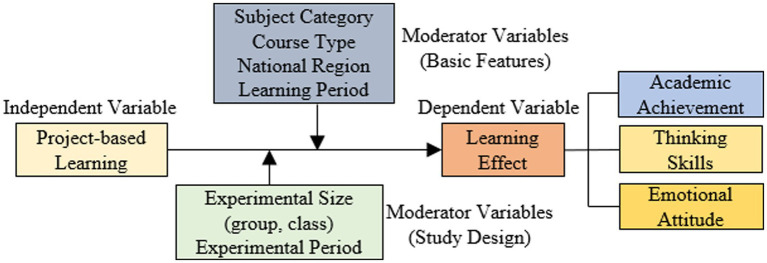
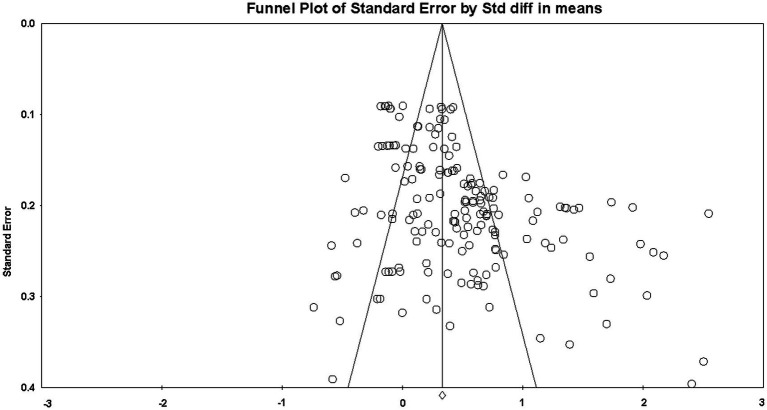
- Analyses were conducted in Comprehensive Meta Analysis 3.0, including publication bias tests (funnel plot, Begg’s test, Trim and Fill, Fail-safe N), heterogeneity tests (Q, I²), effect-size synthesis using standardized mean differences (SMD), and moderator analyses for country region, subject area, course type, academic section, class size, group size, and experiment period.
## Limitations
- The paper states that some PBL studies lacked sufficient statistical information for inclusion, and most studies did not provide a specific classification of learning effectiveness, limiting more detailed analysis.
- The text also makes evident that the meta-analysis had high heterogeneity (I² = 87.4%, Q = 1496.2, p < 0.001); this is not framed as a limitation by the authors but does indicate substantial between-study variability.
- The authors note that the included literature was weighted toward primary and secondary education, with less research on universities and young children; this is stated by the paper as a direction for future research.
Model-written summary. Check it against the paper before relying on it.
Integrity signals
Registry
Cites
Statistics
Figures
Verification
Claims the paper makes
1 Valid · 0 Not valid · 6 Not checked · 57 Own results and interpretations
A result the paper reports from its own data — it cites no other source for it, so there is none to check. The quote shows it is in the paper.
In the paper
“Moderately positive impact (SMD = 0.650), and the total effect values for affective attitudes and thinking skills were 0.389 and 0.386, respectively.”
§ A study of the impact of project-based learning on student learning effects: a meta-analysis study > Results > Results about problem of studies’ fields
plainstates a cause- Asserted: passes — The authors put it forward as true.
- Checkable: passes — It can be checked against evidence.
- Load-bearing: passes — The paper’s conclusions depend on it.
- Based: passes — The paper gives a reason why it holds.
- Rests on 3 assumptions not shown here.
A result the paper reports from its own data — it cites no other source for it, so there is none to check. The quote shows it is in the paper.
In the paper
“and also had moderate positive effects on learning motivation (SMD = 0.401) and learning attitudes (SMD = 0.536)”
§ A study of the impact of project-based learning on student learning effects: a meta-analysis study > Results > Results about problem of studies’ fields
plainstates a cause- Asserted: passes — The authors put it forward as true.
- Checkable: passes — It can be checked against evidence.
- Load-bearing: passes — The paper’s conclusions depend on it.
- Based: passes — The paper gives a reason why it holds.
- Rests on 2 assumptions not shown here.
A result the paper reports from its own data — it cites no other source for it, so there is none to check. The quote shows it is in the paper.
In the paper
“computational thinking skills (SMD = 0.719) had the most significant effect”
§ A study of the impact of project-based learning on student learning effects: a meta-analysis study > Results > Results about problem of studies’ fields
plainstates a cause- Asserted: passes — The authors put it forward as true.
- Checkable: passes — It can be checked against evidence.
- Load-bearing: passes — The paper’s conclusions depend on it.
- Based: passes — The paper gives a reason why it holds.
- Rests on 2 assumptions not shown here.
A result the paper reports from its own data — it cites no other source for it, so there is none to check. The quote shows it is in the paper.
In the paper
“its effect on student learning outcomes was not significant (SMD = 0.061, p = 0.429 > 0.05)”
§ A study of the impact of project-based learning on student learning effects: a meta-analysis study > Results > Results about problem of studies’ fields
plain- Asserted: passes — The authors put it forward as true.
- Checkable: passes — It can be checked against evidence.
- Load-bearing: passes — The paper’s conclusions depend on it.
- Based: passes — The paper gives a reason why it holds.
- Rests on 2 assumptions not shown here.
A result the paper reports from its own data — it cites no other source for it, so there is none to check. The quote shows it is in the paper.
In the paper
“Moderately positive impact (SMD = 0.650), and the total effect values for affective attitudes and thinking skills were 0.389 and 0.386, respectively.”
§ A study of the impact of project-based learning on student learning effects: a meta-analysis study > Results > Results about problem of studies’ fields
plainstates a cause- Asserted: passes — The authors put it forward as true.
- Checkable: passes — It can be checked against evidence.
- Load-bearing: passes — The paper’s conclusions depend on it.
- Based: passes — The paper gives a reason why it holds.
- Rests on 3 assumptions not shown here.
24 more claims
Create a free account to see all 64 claims and every source verdict.
- Probably not a substantial claim. 10
- It may state two separate claims as one. 31
- The quote only partly states this claim. 3
Claims other papers make about this one
Each is checked against this paper’s own text: does it say what the citing paper says it does?
The cited source says what the claim attributes to it.
In the citing paper
“Several meta-analyses and systematic reviews have synthesized the effects of PBL in education, demonstrating positive impacts on academic achievement (Chen and Yang, 2019; Zhang and Hu, 2019; Zhang and Ma, 2023).”
From Can project-based learning improve students’ mathematics learning outcomes: a three-level meta-analysis (2026) · cites this paper as Zhang and Ma, 2023
The cited source says what the claim attributes to it.
In the citing paper
“Conversely, Zhang and Ma (2023) report stronger effects of PBL in Asia, especially Southeast Asia, than in Western Europe and North America.”
From Can project-based learning improve students’ mathematics learning outcomes: a three-level meta-analysis (2026) · cites this paper as Zhang and Ma, 2023
The cited source says what the claim attributes to it.
In the citing paper
“However, some research reports non-significant effects on non-cognitive outcomes (Zhang and Ma, 2023; Chen and Yang, 2019).”
From Can project-based learning improve students’ mathematics learning outcomes: a three-level meta-analysis (2026) · cites this paper as Zhang and Ma, 2023
The cited source says what the claim attributes to it.
In the citing paper
“Zhang and Ma (2023) demonstrated that interventions lasting 9–18 weeks produce the most significant effects, with diminishing returns beyond 18 weeks.”
From Can project-based learning improve students’ mathematics learning outcomes: a three-level meta-analysis (2026) · cites this paper as Zhang and Ma, 2023
The cited source says what the claim attributes to it.
In the citing paper
“Zhang and Ma (2023) confirmed advantages for small classes, senior high schools, and groups of 4–5 students.”
From Can project-based learning improve students’ mathematics learning outcomes: a three-level meta-analysis (2026) · cites this paper as Zhang and Ma, 2023
1 more claim about this paper
Create a free account to see every claim other papers make about this one.
Self-check
Percentages, sums and reported differences re-computed from the paper’s own numbers.
Each contradiction between two passages listed here was confirmed by an independent check.
Rated minor: it would not touch a result — a value no result rests on, a p-value that stays on the same side of the significance level, or a conflict that is clerical, resolved elsewhere in the paper, or outside its own findings.
In the paper
§ A study of the impact of project-based learning on student learning effects: a meta-analysis study > Results > Results about problem of studies’ fields
“This study included 190 experimental data from 66 empirical research papers, and as shown in Table 2, the combined effect value of the impact of project-based learning on student learning outcomes was 0.441, close to 0.5 and p < 0.001, indicating that project-based learning has a large degree of impact on learning outcomes and is an effective teaching approach.”
§ A study of the impact of project-based learning on student learning effects: a meta-analysis study > Results > Results about problem of studies’ fields
“when the ES is less than 0.2, it means that there is a small effect impact, when the ES is between 0.2–0.8 means that there is a moderate effect, when the ES > 0.8 means that there is a significant effect impact.”
Citations
Cites
Preferred Reporting Items for Systematic Reviews and Meta-Analyses: The PRISMA Statement
Moher, D., Liberati, A., Tetzlaff, J., Altman, D. G., & The PRISMA Group (2009) · PLoS Medicine · doi:10.1371/journal.pmed.1000097 · Cited by 64,042 · cited 2×
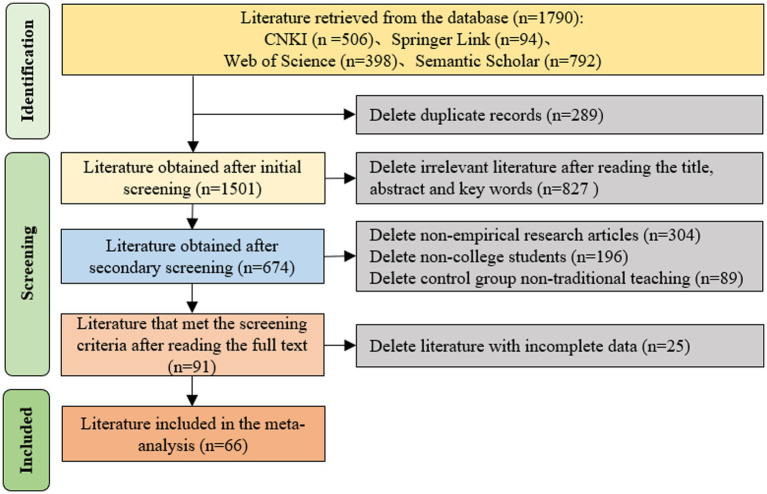
“To find articles that meet the subject matter requirements, this study used the (Page, 2021) process for literature processing (Vrabel, 2009), the literature search, screening, and inclusion process is shown in Figure 2.”
Preferred reporting items for systematic reviews and meta-analyses: the PRISMA Statement.
(2009) · PubMed Central · Cited by 44,859
Quantifying heterogeneity in a meta‐analysis
Higgins, J. P. T., & Thompson, S. G. (2002) · Statistics in Medicine · doi:10.1002/sim.1186 · Cited by 36,763
Page, M. J., Moher, D., Bossuyt, P. M., Boutron, I., Hoffmann, T. C., Mulrow, C. D., Shamseer, L., Tetzlaff, J. M., Akl, E. A., Brennan, S. E., et al. (2021) · BMJ · doi:10.1136/bmj.n160 · Cited by 13,262 · cited 2×
“To find articles that meet the subject matter requirements, this study used the (Page, 2021) process for literature processing (Vrabel, 2009), the literature search, screening, and inclusion process is shown in Figure 2.”
MethodPrimary, Secondary, and Meta-Analysis of Research
GLASS, G. V. (1976) · Educational Researcher · doi:10.3102/0013189x005010003 · Cited by 4,890 · cited 1×
“To ensure the quality of the study, this study strictly followed the meta-analysis criteria proposed by Glass (1976), which was mainly divided into four assessment procedures: literature collection, literature coding, effect size calculation, and moderating variable analysis, and finally a…”
MethodHung, C., Hwang, G., & Huang, I. (2012) · Educational Technology & Society · Cited by 635
Publication Bias in Meta‐Analysis
Rothstein, H. R., Sutton, A. J., & Borenstein, M. (2005) · Publication Bias in Meta‐Analysis · doi:10.1002/0470870168.ch1 · Cited by 603
Tseng, K.-H., Chang, C.-C., Lou, S.-J., & Chen, W.-P. (2013) · International Journal of Technology and Design Education · doi:10.1007/s10798-011-9160-x · Cited by 554
Kilpatrick, W. H. (1918) · Teachers College Record: The Voice of Scholarship in Education · doi:10.1177/016146811801900404 · Cited by 431
The effect of authentic project‐based learning on attitudes and career aspirations in STEM
Beier, M. E., Kim, M. H., Saterbak, A., Leautaud, V., Bishnoi, S., & Gilberto, J. M. (2019) · Journal of Research in Science Teaching · doi:10.1002/tea.21465 · Cited by 321
Research works printed but not linked: 41
- Changming, 2020, Why do we need project-based learning?, Primary Secondary School Manage, 8, 5
- Chung, 2021, Students’ perception of self-regulated learning in a project-based learning
- Cohen, 1988, Statistical power analysis for behavioral science, Technometrics, 31, 499
- Cong, 2021, Research on the design and implementation of project-based teaching of high school chemistry based on STSE education
- 2020, Research on the impact of project-based learning STEM curriculum on elementary school students’ problem solving ability [Master’s thesis].
- Gao, 2020, Research on the teaching model of high school biology unit based on project-based learning
- Hongxing, 2017, Project-based learning: classroom teaching activities to cultivate students’ core literacy, J. Lanzhou Univ., 6, 165, 10.13885/j.issn.1000-2804.2017.06.021 · doi:10.13885/j.issn.1000-2804.2017.06.021
- Jina, 2022, The application of project-based learning based on problem awareness in primary school mathematics classroom
- Jingfu, 2002, Project-based learning model, Foreign Educ. Res., 11, 18
- Keleşoğlu, 2011, nvestigating the effects of project-based learning on students’ Academic Achievement and Attitudes Towards English Lesson. vol.1
- Lei, 2020, The design and implementation of project-based learning for high school chemistry teaching
- Ling, 2020, Design and practice of teaching activities based on project-based learning to cultivate primary school students’ computational thinking
- Linxiao, 2020, The application of project learning in senior high school biology classroom study
- Lu, 2020, Research on teaching design of junior high school information technology curriculum based on project-based learning
- Luo, 2020, Research on the development of computational thinking skills based on project-based learning
- Ma, 2022, Project learning self-efficacy in elementary programming impact study
- Ma, 2021, Cooperative reasoning learning to promote the development of higher-order thinking, Educ. Dev. Res., 24, 64, 10.14121/j.cnki.1008-3855.2021.24.011 · doi:10.14121/j.cnki.1008-3855.2021.24.011
- Mark, 2022, The effectiveness of PBL classes using multimedia tools: a case study of a university liberal arts English class, Multimedia Lang. Teach., 25, 237
- Mingquan, 2020, Project learning in senior high school geography teaching research and practice
- Rui, 2020, An empirical study on the development of computational thinking skills of high school students based on project-based learning
- Ruiz-Rosa, 2021, Project-Based Learning as a tool to foster entrepreneurial competences (El Aprendizaje Basado en Proyectos como herramienta para potenciar la competencia emprendedora), Cult. Educ., 33, 1, 10.1080/11356405.2021.1904657 · DOI
- ShiXuan, 2017, Research on the design of project-based learning activities based on Moodle
- Wang, Project learning perspective of organic chemistry teaching design and implementation of high school
- Wang, Design and practice of open source hardware project-based learning for primary schools with problem-solving skills development
- Wang, 2022, Research on the design and application of a comprehensive practical activity curriculum for primary schools based on project-based learning
- Wei, 2020, The impact of cooperative learning on students' learning outcomes: A meta-analysis based on 48 experimental or quasi-experimental studies, Shanghai J. Educ. Res., 7, 34, 10.16194/j.cnki.31-1059/g4.2020.07.008 · doi:10.16194/j.cnki.31-1059/g4.2020.07.008
- Weihong, 2019, Promoting Students' high-level thinking development through project-based learning -- design and implementation of "baby market" exploration project, Basic Educ Curric, 6, 20
- Wenlan, 2019, Does project-based learning play a role in learning? -- meta-analysis based on 46 experimental and quasi-experimental studies, Res. Visual Educ., 2, 95, 10.13811/j.cnki.eer.2019.02.012 · doi:10.13811/j.cnki.eer.2019.02.012
- Xiaolei, 2021, Research on the design and practice of high school information technology curriculum based on project-based learning
- Xu, 2022, A practical study of project-based learning for developing core literacy in subjects
- Xuezhi, 2022, Research on the design and practice of project-based learning in junior high school mathematics curriculum
- Yanan, 2020, An experimental study of Jigsaw-based project-based learning in elementary school IT class
- Yang, 2020, Practical research on teaching reform of information technology curriculum in Baochang No. 1 Middle School
- Yating, 2022, Research on the design and practice of teaching elemental compounds in high school based on project-based learning
- Yexin, 2019, The application of robot project learning in middle school teaching research
- Ying, 2022, A study on the influence of project-based teaching on the intrinsic motivation of private university students’ English learning, J. Sci. Educ, 13, 29, 10.16400/j.cnki.kjdk.2022.13.010 · doi:10.16400/j.cnki.kjdk.2022.13.010
- Yuan, 2017, A Study on the Teaching Reform of Information Technology Course in Baochang No.1 Middle School - Taking “Project-based Learning” as an Example
- Yun, 2022, Practical exploration of project-oriented deep ritual education -- take the project-oriented learning of searching for roots Xu Huiyuan in grade 5 as an example, Shanghai J. Educ. Res., 9, 64, 10.16194/j.cnki.31-1059/g4.2022.09.006 · doi:10.16194/j.cnki.31-1059/g4.2022.09.006
- Yuting, 2022, Practical research on project-based learning based on the development of scientific inquiry ability in secondary school biology teaching
- Zhang, 2022, A study on the effect of project-based teaching on the intrinsic motivation of private university students’ English learning, J. Sci. Educ., 13, 29, 10.16400/j.cnki.kjdk.2022.13.010 · doi:10.16400/j.cnki.kjdk.2022.13.010
- Zhang, 2022, Based on the junior high school students information technology subject core. Mesh type teaching mode design and application research
Cited by
Kooli, C., & Yusuf, N. (2024) · International Journal of Human–Computer Interaction · doi:10.1080/10447318.2024.2338330 · Cited by 63
“Within the educational context, AI’s potential benefits are increasingly promising as they span from personalization and improved learning outcomes to increased access to education and efficient resource utilization (Yuskovych-Zhukovska et al., 2022; Zawacki-Richter et al., 2019; Zhang & Ma, 2023).”
Husin, M., Usmeldi, U., Masdi, H., Simatupang, W., Fadhilah, F., & Hendriyani, Y. (2025) · International Journal of Sociology of Education · doi:10.17583/rise.15125 · Cited by 45
“Studies show that PjBL participants exhibit higher motivation and deeper subject understanding than those in traditional settings (Zhang & Ma, 2023).”
Zhang, J., Zhu, J., Tu, W., Wang, M., Yang, Y., Qian, F., & Xu, Y. (2024) · Applied Sciences · doi:10.3390/app14156484 · Cited by 79
“This teaching method encourages students to engage in group collaboration to solve complex and challenging problems from the real world or to complete tasks derived from real-world experiences that require deep thinking [21].”
BackgroundInnovaciones en la didáctica de la lengua y literatura: estrategias del siglo XXI
Villamar, F. M. M., Párraga, A. P. B., Ayala, E. T. M., et al. (2024) · Ciencia Latina Revista Científica Multidisciplinar · doi:10.37811/cl_rcm.v8i3.11595 · Cited by 41
Could ChatGPT get an engineering degree? Evaluating higher education vulnerability to AI assistants
Borges, B., Foroutan, N., Bayazit, D., Sotnikova, A., Montariol, S., Nazaretsky, T., Banaei, M., Sakhaeirad, A., Servant, P., Neshaei, S. P., et al. (2024) · Proceedings of the National Academy of Sciences · doi:10.1073/pnas.2414955121 · Cited by 75
Students’ Perspectives and Experiences in Project-Based Learning: A Qualitative Study
Mutanga, M. B. (2024) · Trends in Higher Education · doi:10.3390/higheredu3040052 · Cited by 110
The impact of mobile-assisted project-based learning on developing EFL students' speaking skills
Benlaghrissi, H., & Ouahidi, L. M. (2024) · Smart Learning Environments · doi:10.1186/s40561-024-00303-y · Cited by 144
“To stimulate EFL speaking, recent evidence has proven the effectiveness of PBL in providing various options and opportunities to support learners and overcome the dif - ficulties above (Fitriati & Mafruudloh, 2020; Suryani & Argawati, 2023; Zhang & Ma, 2023).”
BackgroundThe impact of educational robots on students' computational thinking: A meta-analysis of K-12
Hong, L. (2023) · Education and Information Technologies · doi:10.1007/s10639-023-12415-y · Cited by 52
“That is, literature on the same research topic but with different findings is compared and combined (Zhang & Ma, 2023).”
Younas, M. S., Ismayil, I., El‐Dakhs, D. A. S., & Anwar, B. (2025) · Open Praxis · doi:10.55982/openpraxis.17.3.842 · Cited by 42
Rehman, N., Huang, X., Batool, S., Andleeb, I., & Mahmood, A. (2024) · ASR Chiang Mai University Journal of Social Sciences and Humanities · doi:10.12982/cmujasr.2024.015 · Cited by 44
Mota, F. B., Cabral, B. P., Braga, L. A. M., & Lopes, R. M. (2025) · Frontiers in Education · doi:10.3389/feduc.2025.1522694 · Cited by 58
Nie, X., Tian, Y., Liu, M., Wu, D., & Guo, Y. (2025) · Education and Information Technologies · doi:10.1007/s10639-025-13735-x · Cited by 20
“Drawing on prior meta-analysis studies of HOT (Ilgun Dibek et al., 2024; Wahono et al., 2020; Zhan et al., 2023; Zhang & Ma, 2023), this study incorporates subcat-egories such as critical thinking, metacognitive thinking, reflection, problem-solving, creativity, and computational thinking.”
InfluentialZheng, R., Xu, H., Wang, M., & Lu, J. (2024) · IEEE Transactions on Learning Technologies · doi:10.1109/tlt.2024.3488086 · Cited by 30
“Byguidingstudentstointegrateknowledgefrommultiple disciplinestosolvechallengingproblemsintherealworld,PBL encouragesstudentstoexplorecontinuouslyintheprocedureof problem solving, thus improving the development of students’ higher order thinking [5].”
Omelianenko, O., & Аrtyukhova, N. (2024) · Economics & Education · doi:10.30525/2500-946x/2024-1-6 · Cited by 79
“The results of Zhang and Ma (2023) show that PjBL significantly improves students' learning outcomes compared to traditional teaching methods.”
ResultZhong, J., Ismail, L., & Lin, Y. (2025) · Frontiers in Psychology · doi:10.3389/fpsyg.2025.1598513 · Cited by 61
Li, M., & Rohayati, M. I. (2024) · Sustainability · doi:10.3390/su16146080 · Cited by 47
Academic Integrity Within the Medical Curriculum in the Age of Generative Artificial Intelligence
Kldiashvili, E., Ana, M., & Zarnadze, M. (2025) · Health Science Reports · doi:10.1002/hsr2.70489 · Cited by 31
Arrieta-Cohen, M. C., Torres-Arizal, L. A., & Gómez-Yepes, R. L. (2024) · Education Sciences · doi:10.3390/educsci14121341 · Cited by 14
Petchamé, J., Iriondo, I., Torné, O., & Solanellas, F. (2024) · Education Sciences · doi:10.3390/educsci14111148 · Cited by 28
Wang, C., Song, L., & Jiang, J. (2025) · Frontiers in Psychology · doi:10.3389/fpsyg.2025.1495105 · Cited by 26
Fostering creativity in kindergarten: The impact of collaborative project-based learning
Parwoto, P., Ilyas, S. N., Bachtiar, M. Y., & Marzuki, K. (2024) · South African Journal of Childhood Education · doi:10.4102/sajce.v14i1.1462 · Cited by 35
Shi, Y., & Li, W. (2024) · SAGE Open · doi:10.1177/21582440241276600 · Cited by 25
“The results regarding knowledge integration demonstrate that PBL effectively promotes students’ ability to assimilate and apply new knowledge, consistent with previous research by Zhang and Ma (2023) and Bertel et al. (2022).”
Stalmach, A., D’Elia, P., Sano, S. D., & Casale, G. (2024) · Open Education Studies · doi:10.1515/edu-2024-0023 · Cited by 31
Saparbayeva, E., Abdualiyeva, M., Torebek, Y., Kostangeldinova, A., Tursynbayev, A., Takibayeva, G., & Sabalakhova, A. (2025) · Cogent Education · doi:10.1080/2331186x.2025.2461978 · Cited by 11
“Meta-analyses and systematic reviews have provided valuable insights into the overall impact of PjBL across educational contexts (Zhang & Ma, 2023).”
Weber, A. M., van Laar, E., Borgonovi, F., Ackerman, P. L., Nixon, N., Graesser, A. C., & Greiff, S. (2025) · Educational Psychology Review · doi:10.1007/s10648-025-10014-6 · Cited by 14
Hridoy, M. A. A. M., Bordin, C., Baki, A. O., David, G. S., Sa’adi, Z., Nath, A. R., Mim, M. M. M., Jahan, T., Chanda, S., Meem, T. I., et al. (2025) · Marine Ecology · doi:10.1111/maec.70074 · Cited by 11
“In addition to CBL, Project-Based Learning (PBL) (Zhang and Ma 2023) encourages deeper learning by engaging students in research-based tasks, such as analyzing genetic data, evaluating invasive species' impacts, and developing conservation strategies.”
Effects of Project‐Based Learning on Entrepreneurship Skills and Characteristics of Nursing Students
Chularee, S., Tapin, J., Chainok, L., et al. (2024) · Nursing and Health Sciences · doi:10.1111/nhs.13160 · Cited by 9
Gu, P., Cheng, Z., Cheng, M., Poggio, J. P., & Dong, Y. (2025) · Journal of Computer Assisted Learning · doi:10.1111/jcal.70011 · Cited by 22
Hindun, I., Nurwidodo, N., Wahyuni, S., & Fauziah, N. A. (2024) · JPBI (Jurnal Pendidikan Biologi Indonesia) · doi:10.22219/jpbi.v10i1.31628 · Cited by 70
Sepulveda, R. A. Y., Hinojosa-Torres, C., Cortés-Roco, G., & Zavala-Crichton, J. P. (2024) · Retos · doi:10.47197/retos.v60.107939 · Cited by 23
Gregg, K., Ryan, O., Katz, A., Huerta, M. V., & Sajadi, S. (2025) · Journal of Engineering Education · doi:10.1002/jee.70024 · Cited by 18
“…courses are a common pedagogical approach for teaching engineering (Borrego et al., 2010) to help students develop essential professional skills such as communication (Beagon et al., 2019), conflict management (Ryan et al., 2023), and collaboration with diverse team members (L. Zhang & Ma, 2023).”
Hinostroza, J. E., Armstrong-Gallegos, S., Valenzuela, P. S., & Villafaena, M. (2025) · Education Sciences · doi:10.3390/educsci15081021 · Cited by 21
Educational practices for improvement of sustainability education at secondary school level
Jäggle, G., Posekany, A., Lepuschitz, W., et al. (2024) · Science Activities · doi:10.1080/00368121.2024.2376758 · Cited by 7
“It has also been shown that PBL has a significant beneficial impact on students’ thinking skills (Zhang and Ma 2023), motivation (Shin 2018), creativity (Usmeldi, 2019/1902) and empower them to work cooperatively (Chiang and Lee 2016).”
Exploring PBL and e-PBL: implications for 21st-century skills in EFL education
Jelodari, Z., Zenouzagh, Z. M., & Hashamdar, M. (2025) · Discover Education · doi:10.1007/s44217-025-00773-3 · Cited by 27
“Also, Zhang and Ma [61] believed that its reason relies on the use of digital technologies.”
Tu, F., Wu, L., Kinshuk, K., Ding, J., & Chen, H. (2024) · Education and Information Technologies · doi:10.1007/s10639-024-12870-1 · Cited by 6
“Studies have shown that collaborative PBL works better than traditional PBL (Cheng & Yang, 2023; Zhang & Ma, 2023).”
InfluentialJuandi, D., Suparman, S., Putri, A. D., Dahlan, J. A., & Dasari, D. (2025) · International Electronic Journal of Mathematics Education · doi:10.29333/iejme/16899 · Cited by 7
“…date, some meta-analytic reviews have studied PBL and academic achievement whereby the intervention of PBL had positive modest effect to positive moderate effect on the opti mization of students’ academic achievement (Chen & Yang, 2019; Goyal et al., 2022; Santhosh et al., 2023; Zhang & Ma, 2023).”
Constructing Human Service Learning in the AI Digital Sphere: China's Case of LivePBL DEEP Method
Liu, Y., Li, Y., & Zhao, T. (2024) · Advances in educational marketing, administration, and leadership book series · doi:10.4018/979-8-3693-5443-8.ch012 · Cited by 7
Gustafson, J. R. D., Jhajj, G., Zhang, X., & Lin, F. O. (2024) · Advances in educational marketing, administration, and leadership book series · doi:10.4018/979-8-3693-5443-8.ch006 · Cited by 9
Sultanova, G., & Shora, N. (2024) · Education Sciences · doi:10.3390/educsci14101109 · Cited by 9
Li, S., Qi, C., Li, R., Jin, Y., Cheng, L., & Liu, G. (2025) · Acta Psychologica · doi:10.1016/j.actpsy.2025.104962 · Cited by 18
Rubio, A. D. J. (2024) · Porta Linguarum Revista Interuniversitaria de Didáctica de las Lenguas Extranjeras · doi:10.30827/portalin.vi42.30164 · Cited by 6
Rosliani, E., Muhafidin, D., Rusli, B., et al. (2025) · Sustainability · doi:10.3390/su17146621 · Cited by 5
GÜLEY, B., & KESKİNKILIÇ, A. U. (2024) · Humanities and Social Sciences Communications · doi:10.1057/s41599-024-03444-0 · Cited by 15
“…in which the results of the study showed that compared with the traditional teaching model, PBL signi fi cantly improved students ’ learning outcomes and positively contributed to academic achievement, affective attitudes, and thinking skills, especially academic achievement (Zhang and Ma, 2023).”
Effectiveness and Design of PBL-Based Project Approach for Non-Major University Computing Courses
Choi, J.-I., & Yang, S. (2024) · Applied Sciences · doi:10.3390/app15010050 · Cited by 13
Chan, S. C. H., Chan, W. T. Y., & Xiao, J. (2025) · Journal of Education for Business · doi:10.1080/08832323.2024.2449506 · Cited by 11
“Several recent studies have indicated that project-based learning (PBL) is an efficient strategy to engage students in learning (Saad & Zainudin, 2024; Widarbowo et al., 2023; Zhang & Ma, 2023).”
Wu, T., Sari, N. A. R. M., Putri, A. P. R. Z., Chen, H.-R., & Huang, Y. (2025) · The International Journal of Management Education · doi:10.1016/j.ijme.2025.101195 · Cited by 11
Castrillo, C. J. H., Casanova-Villalba, C. I., & Herrera-Sánchez, M. J. (2025) · Revista Científica Enfoques del Conocimiento · doi:10.55813/gaea/revistacec/v2/n1/29 · Cited by 5
“…la discusión desde la valoración general del método hacia evidencias más precisas sobre cómo los proyectos fortalecen capacidades para formular problemas, buscar información, diseñar rutas metodológicas, analizar datos y comunicar conocimiento científico (Guo et al., 2020; Zhang & Ma, 2023).”
InfluentialAmalia, M., Adlim, M., Khaldun, I., Winarni, S., & Hasan, M. (2024) · Jurnal Penelitian Pendidikan IPA · doi:10.29303/jppipa.v10i5.7132 · Cited by 7
Jabbar, R. A., & Halim, N. D. A. (2024) · Innovative Teaching and Learning Journal · doi:10.11113/itlj.v8.152 · Cited by 5
Chen, B. (2025) · Journal of Chemical Education · doi:10.1021/acs.jchemed.5c00537 · Cited by 4
The Dual Role of AI in Online Project-Based Learning at Scale
Ou, C., & Joyner, D. A. (2025) · ACM Conference on Learning @ Scale (L@S) · doi:10.1145/3698205.3733950 · Cited by 5
Lutz, K. C., Young, S. G., Chambers, L., & Su, L. J. (2025) · Journal of Medical Education and Curricular Development · doi:10.1177/23821205251376539 · Cited by 6
“12 The effectiveness of group learning can be in fl uenced by team formation strategies, such as mixed grades and complementary skills, which signi fi cantly enhance individual performance within teams.”
The challenges encountered by preschool and primary educators in implementing educational robotics
Gavrilas, L., Kotsis, K. Τ., & Papanikolaou, M.-S. (2025) · Research in Science & Technological Education · doi:10.1080/02635143.2025.2578308 · Cited by 4
Puri, A. (2024) · Journal of Education and Research · doi:10.51474/jer.v14i1.733 · Cited by 6
How does educational inequality affect residents’ subjective well-being?—Evidence from China
Lin, D., & Liu, Z. (2024) · Frontiers in Psychology · doi:10.3389/fpsyg.2024.1432789 · Cited by 5
“On the other hand, schools with better education quality are more conducive to stimulating students’ learning motivation, promoting the improvement of their learning abilities, and consequently enhancing their academic performance (Sekreter, 2019; Zhang and Ma, 2023).”
Aprendizaje Basado en Proyectos en la indagación científica en estudiantes de secundaria
Lezama, G. J. V., Luján, F. N. C., Azahuanche, M. Á. P., & León, L. M. R. (2025) · Revista Tribunal · doi:10.59659/revistatribunal.v5i10.105 · Cited by 10
Lin, L., Zhang, H., Dong, Y., Lin, Z., Ma, Y., & Wang, J. (2025) · International Journal of Educational Research · doi:10.1016/j.ijer.2025.102570 · Cited by 4
Self-citationNoguez, J., Gutiérrez, E. O., Neri, L., & Rubio, J. E. (2025) · Frontiers in Education · doi:10.3389/feduc.2025.1541117 · Cited by 10
Nguyen, A. N., & Tuan, V. V. (2024) · SSRN Electronic Journal · doi:10.2139/ssrn.4884158 · Cited by 4
Dewi, R. K., Yusuf, M., & Subagya, S. (2025) · Jurnal Paedagogy · doi:10.33394/jp.v12i1.13949 · Cited by 3
Ntunka, M. G., Maladzhi, R. W., Mthombeni, N. H., & Nemavhola, F. J. (2024) · World Engineering Education Forum - Global Engineering Deans Council (WEEF-GEDC) · doi:10.1109/weef-gedc63419.2024.10854923 · Cited by 8
Hsu, L. (2025) · International Journal of Computer-Assisted Language Learning and Teaching · doi:10.4018/ijcallt.382182 · Cited by 5
Guaya, D. E., Romero-Benavides, J. C., Jaramillo, N. D. C. F., & Jiménez, L. (2025) · Sustainability · doi:10.3390/su17198820 · Cited by 9
“PBL has been widely adopted in higher education for its proven effectiveness in promoting academic achievement and in strengthening the professional and personal competencies necessary for career success [19].”
Neyarasmi, F., & Mardatillah, R. (2025) · DEIKTIS Jurnal Pendidikan Bahasa dan Sastra · doi:10.53769/deiktis.v5i4.2447 · Cited by 8
Salamah, Suriagiri, Mizani, H., Mudhiah, & Juhaidi, A. (2026) · Cogent Education · doi:10.1080/2331186x.2025.2611650 · Cited by 13
Šmitienė, G., Strazdienė, N., Melnikova, J., & Norvilienė, A. (2026) · Journal of Early Childhood Teacher Education · doi:10.1080/10901027.2026.2634048 · Cited by 6
Inquiry Project Laboratory: The Collaborative Problem Solving and Critical Thinking on Laboratory
Saputra, H., Firmansyah, J., & Ihsan, A. (2023) · Jurnal Penelitian Pendidikan IPA · doi:10.29303/jppipa.v9i9.5038 · Cited by 12
IMPROVING STEM LITERACY THROUGH PROJECT-BASED GEOSCIENCE LEARNING (PJBGL) MODEL
Nastiti, L. R., Sunarno, W., Sukarmin, S., Saputro, S., & Baehaqi, L. (2024) · Journal of Baltic Science Education · doi:10.33225/jbse/24.23.694 · Cited by 3
Helping First-Year University Students to Overcome the Threshold Concept of Ohm’s Law
Canet, M. J., Pérez-Pascual, A., Atarés, L., & Trujillo, M. (2024) · IEEE Transactions on Education · doi:10.1109/te.2024.3468002 · Cited by 3
“Lecturers perceive that most students are highly motivated thanks to the PBL approach, as highlighted in the meta-analysis conducted in [59].”
Metodologías innovadoras y tendencias curriculares: redefiniendo la educación del siglo XXI
Quelal, D. P. M. (2024) · LATAM Revista Latinoamericana de Ciencias Sociales y Humanidades · doi:10.56712/latam.v5i5.2859 · Cited by 3
Tomalá, I. K. M., Ochoa, L. E. C., & Párraga, G. A. L. (2025) · South Florida Journal of Development · doi:10.46932/sfjdv6n4-002 · Cited by 3
Qasem, A. A. (2025) · Discover Education · doi:10.1007/s44217-025-00633-0 · Cited by 7
“The findings of Zhang et al. [31] indicated that students who participated in the PBL course surpassed those in traditional courses, and the extent of the impact of group size facilitates student learning outcomes [38–41], and it facilitated their understanding of lessons, encouraged more active…”
InfluentialSPIRINA, Y., Gorbunova, N., Samoilova, I., et al. (2025) · Frontiers in Education · doi:10.3389/feduc.2025.1668913 · Cited by 3
Ukobizaba, F., Maniraho, J. F., & Uworwabayeho, A. (2025) · Frontiers in Education · doi:10.3389/feduc.2025.1623269 · Cited by 7
TRANSFORMATIVE EDUCATION WITH AGILE PROJECT MANAGEMENT AND PROJECT-BASED LEARNING
Paľová, D., & Vejačka, M. (2023) · AD ALTA Journal of Interdisciplinary Research · doi:10.33543/j.1302.197206 · Cited by 5
“As stated, by Zhang & Ma (2023) and Guo et al. (2020), despite the high number of published studies in the field of PBL implementation, it is not always possible to evaluate and compare the performances because many publications do not provide enough statistical information to compare the published…”
BackgroundGhazali, A., Ashari, Z. M., Hardman, J., & Yazid, A. A. (2024) · Journal of Baltic Science Education · doi:10.33225/jbse/24.23.221 · Cited by 8
Abas, A., Amin, M., Ibrohim, I., & Indriwati, S. E. (2024) · JPBI (Jurnal Pendidikan Biologi Indonesia) · doi:10.22219/jpbi.v10i2.34305 · Cited by 16
Generative-AI Assisted Feedback Provisioning for Project-Based Learning in CS Courses
Kusam, V. A., Moore, L., Shrestha, S., Song, Z., Lu, J., & Zhu, Q. (2024) · ASEE Annual Conference & Exposition · doi:10.18260/1-2--47494 · Cited by 9
Gao, H., Hashim, H. B., & Yunus, M. M. (2024) · Cogent Education · doi:10.1080/2331186x.2024.2396715 · Cited by 2
“…explored the significant educational transformation introduced by PjBL, including its theoretical foundation, characteristics, advantages, and the roles of teachers and students play, as well as the teaching philosophy that, etc (Korkmaz & Kalayci, 2021; Revelle et al., 2020; Zhang & Ma, 2023).”
Enhancing Project‐Based Manufacturing Education With Integrated Engineering Software Tools
Guo, G. (2025) · Computer Applications in Engineering Education · doi:10.1002/cae.70012 · Cited by 7
Sudarsono, B., Saputra, W. N. E., & Ghozali, F. A. (2025) · The Education and science journal · doi:10.17853/1994-5639-2025-6-29-54 · Cited by 2
Hidayat, H., Radya, A. F., & Wu, T. (2025) · Lecture notes in computer science · doi:10.1007/978-3-031-98197-5_12 · Cited by 2
VİTHANAGE, V., & Nakashima, N. (2025) · School Science and Mathematics · doi:10.1111/ssm.18388 · Cited by 9
Krys, S., & Braßler, M. (2025) · Education Sciences · doi:10.3390/educsci15101337 · Cited by 3
Osman, S. A., Abulibdeh, E., Bashir, R., & Sukar, H. K. (2025) · International Generative AI and Computational Language Modelling Conference (GACLM) · doi:10.1109/gaclm67198.2025.11232407 · Cited by 3
Validity of a Scale to Measure IC-PBL Learning Outcome in Engineering Education
Lee, Y., Yi, B.-J., Park, H., Lee, H., Yang, J., & Park, Y.-M. (2025) · World Engineering Education Forum - Global Engineering Deans Council (WEEF-GEDC) · doi:10.1109/weef-gedc66748.2025.11256219 · Cited by 2
“…and convergent thinking are emphasized, especially in the engineering field, and various domestic and international studies have reported that it is effective in improving core competencies such as self-directed learning, creative problem-solving, communication and collaboration [9][10][11].”
Why aren’t we building parks in the metaverse?
Williams, N. (2025) · Leisure Studies · doi:10.1080/02614367.2025.2607495 · Cited by 2
Giarratano, G., Gallitto, A. A., Fazio, C., & Battaglia, O. R. (2026) · Education Sciences · doi:10.3390/educsci16020209 · Cited by 3
Li, Z., & Wang, D. (2026) · Sustainability · doi:10.3390/su18052439 · Cited by 2
Evaluating the impact of a project-based learning framework on overall skill development
Pawar, V. S., Desai, G. T., & Borotikar, M. (2026) · Frontiers in Education · doi:10.3389/feduc.2026.1780665 · Cited by 5
Wang, X., & Sitthiworachart, J. (2024) · doi:10.53555/kuey.v30i4.1169 · Cited by 2
Purwanti, K. L., Rofiq, M., Fashihah, I., et al. (2024) · Journal of Integrated Elementary Education · doi:10.21580/jieed.v4i1.21249 · Cited by 2
“PjBL allows students to learn through direct experience in the context of real-life (Zhang & Ma, 2023).”
BackgroundDrinkwater, K., Ryan, O., Hale, M. F., et al. (2024) · ASEE Annual Conference & Exposition · doi:10.18260/1-2--47593 · Cited by 2
Maiyanti, A. A., Imtiyaza, M. I., Laili, U. F., et al. (2024) · Islamic Journal of Integrated Science Education (IJISE) · doi:10.30762/ijise.v3i2.3397 · Cited by 2
Integrating PjBL and service-learning to improve 21st-century skills in tourism education
Rosita, R., Pratama, A. R., Sukriah, E., Susilana, R., & Rusman, R. (2024) · Inovasi Kurikulum · doi:10.17509/jik.v21i3.69249 · Cited by 6
Girgin, Ş., & Çoştu, B. (2024) · Buca eğitim fakültesi dergisi (Online)/Buca Eğitim Fakültesi dergisi · doi:10.53444/deubefd.1423636 · Cited by 9
Aprendizaje basado en proyectos en el desarrollo de la comprensión lectora del inglés
Calahorrano, L. V. C., Agila, V. J. S., & García, F. A. R. (2024) · ConcienciaDigital · doi:10.33262/concienciadigital.v7i4.3209 · Cited by 2
Ahmad, F., Raza, M. A., Abbas, N., et al. (2025) · The critical review of social sciences studies · doi:10.59075/ec4t4y55 · Cited by 2
“Zhang and Ma (2023) stated that there is significant improvement in critical thinking’s and learning outcomes when PBL is applied.”
Impacto del aprendizaje basado en proyectos en estudiantes de bachillerato técnico
Jurado, R. A. B., Bejarano, A. A. E., Ballesteros, J. E. A., et al. (2025) · Revista Científica Arbitrada Multidisciplinaria PENTACIENCIAS · doi:10.59169/pentaciencias.v7i1.1381 · Cited by 2
Sinche, J., Cisneros, J., Arce, D., et al. (2024) · 2022 IEEE Frontiers in Education Conference (FIE) · doi:10.1109/fie61694.2024.10893459 · Cited by 2
Metadata
- Authors
- Zhang, L., & Ma, Y.
- Affiliations
- Chongqing Normal University (CN)
- Corresponding author
- Ma, Yan
- Venue
- Frontiers in Psychology
- Publisher
- Frontiers Media SA
- Published
- 2023-07-17
- Volume
- 14
- Pages
- 1202728-1202728
- ISSN
- 1664-1078 (ISSN-L)
- PMC
- PMC10411581
- OpenAlex
- W4384498111
- Semantic Scholar
- 62a083ea55ae0b7bcb659bba3159fada89e8945f
- Cited by
- 455
- References
- 47
- Citations by year
- 2026: 192 · 2025: 168 · 2024: 88 · 2023: 7
- FWCI
- 27.58
- Type
- journal article
- Language
- en
- Open access
- gold
- doi.org
- Licence
- Locations
- Frontiers in Psychology (publishedVersion, cc-by)
- PubMed Central (publishedVersion, cc-by)
- PubMed (publishedVersion)
- DOAJ (DOAJ: Directory of Open Access Journals) (submittedVersion, cc-by-sa)
- Funders
- Chongqing Normal University
- Division of Graduate Education
- Topics
- Social Sciences › Education › Problem and Project Based Learning
- Social Sciences › Psychology › Developmental and Educational Psychology › Innovative Teaching and Learning Methods
- Social Sciences › Education › Innovative Teaching Methods
- Keywords
- project-based learning, learning outcomes, academic performance, affective attitudes, thinking skills, moderating effect, group size, technology and engineering education, laboratory classes, upper secondary school, 21st century skills
About these checks
Registry, retraction, Cites and statistics results are computed, not judged, with one exception: a printed reference that no index lists is read once by a model before it counts as a citation error. Claims are extracted by a model and kept only when their quote appears verbatim in the text; each cited source is then checked, with a model’s help, for whether it says what the claim relies on. Those verdicts can be wrong — read the claim’s quote and the cited source before relying on one.
The claim verdicts this report counts are experimental: their accuracy is not yet measured.
A language model drew the claims from the paper on 2026-10-10, under version 3 of the claim definition (model deepseek-v4.1-flash, prompt extract-v3).
A second model labelled each claim on 2026-10-10 (model jev-1.13-20260917, definition revision gold-guideline-v0.2).
Statistics and arithmetic are recomputed, not judged.
Confidence bands are shown only for fields calibrated on our annotated test set. None is calibrated yet, so no band is shown.
What counts as a claim ›How we measure confidence ›How we check this ›
Are you an author, or do you see a problem with this page? Request a review
Data sources
Bibliographic data: Semantic Scholar, OpenAlex, Crossref.
Contains information from the Semantic Scholar Academic Graph Datasets, made available under the ODC Attribution License (ODC-BY 1.0).
Semantic Scholar’s data is described in: Kinney, R., et al. (2023). The Semantic Scholar Open Data Platform. arXiv:2301.10140.
