

The DOI matches its Crossref record; 176 of the 179 references it cites were found in a registry or an index.
Senolytics for Cancer Therapy: Is All that Glitters Really Gold?
Open accessAbstract
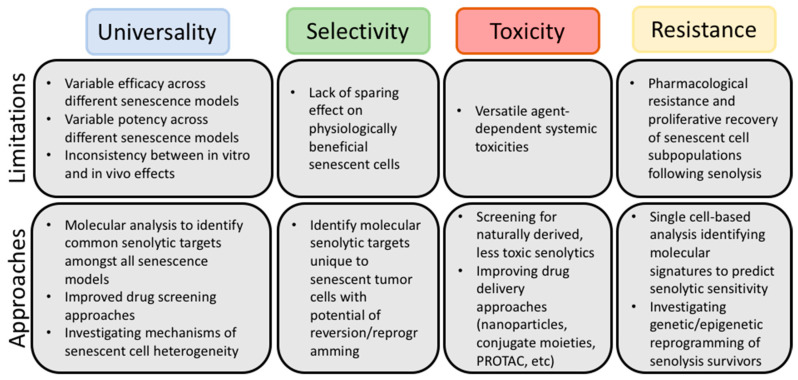
Senolytics represent a group of mechanistically diverse drugs that can eliminate senescent cells, both in tumors and in several aging-related pathologies. Consequently, senolytic use has been proposed as a potential adjuvant approach to improve the response to senescence-inducing conventional and targeted cancer therapies. Despite the unequivocal promise of senolytics, issues of universality, selectivity, resistance, and toxicity remain to be further clarified. In this review, we attempt to summarize and analyze the current preclinical literature involving the use of senolytics in senescent tumor cell models, and to propose tenable solutions and future directions to improve the understanding and use of this novel class of drugs.
Overview
The claims and statistics of this paper haven’t been checked yet.
Run the check — free, no account needed. It reads the open-access text and checks the sources it cites.
Integrity signals
Registry
Cites
Statistics
Figures
Verification
Claims the paper makes
The claims and statistics of this paper haven’t been checked yet.
Run the check — free, no account needed. It reads the open-access text and checks the sources it cites.
Claims other papers make about this one
Each is checked against this paper’s own text: does it say what the citing paper says it does?
The cited source says what the claim attributes to it.
In the citing paper
“To alleviate these harmful traits, a series of senolytic drugs are currently being developed [110,111].”
From The role of cellular senescence and SASP in tumour microenvironment (2023) · cites this paper as [111]
The cited source says what the claim attributes to it.
In the citing paper
“Early “first-generation” senolytics, including navitoclax (ABT-263) and the dasatinib–quercetin (D + Q) combination, provided proof-of-concept that selective removal of SnCs can alleviate certain fibrotic, metabolic, and cardiovascular pathologies in preclinical studies.”
From Emerging strategies in senotherapeutics: from broad-spectrum senolysis to precision reprogramming (2026) · cites this paper as [52]
In the citing paper
“First-generation senolytics provided critical proof-of-concept for the therapeutic potential of SnC clearance52.”
From Emerging strategies in senotherapeutics: from broad-spectrum senolysis to precision reprogramming (2026) · cites this paper as [52]
Self-check
Percentages, sums and reported differences re-computed from the paper’s own numbers.
The self-check needs the paper’s full text.
Citations
Cites
Oncogenic ras provokes premature cell senescence associated with accumulation of p53 and p16INK4a
Serrano, M., Lin, A. W., McCurrach, M. E., Beach, D., & Lowe, S. W. (1997) · Cell · doi:10.1016/s0092-8674(00)81902-9 · Cited by 5,218
The senescence-associated secretory phenotype: the dark side of tumor suppression
Coppé, J.-P., Desprez, P.-Y., Krtolica, A., & Campisi, J. (2010) · Annual Review of Pathology: Mechanisms of Disease · doi:10.1146/annurev-pathol-121808-102144 · Cited by 5,206
Naturally occurring p16Ink4a-positive cells shorten healthy lifespan
Baker, D. J., Childs, B. G., Durik, M., Wijers, M. E., Sieben, C. J., Zhong, J., A. Saltness, R., Jeganathan, K. B., Verzosa, G. C., Pezeshki, A., et al. (2016) · Nature · doi:10.1038/nature16932 · Cited by 2,876
The Achilles' heel of senescent cells: from transcriptome to senolytic drugs
Zhu, Y., Tchkonia, T., Pirtskhalava, T., Gower, A. C., Ding, H., Giorgadze, N., Palmer, A. K., Ikeno, Y., Hubbard, G. B., Lenburg, M., et al. (2015) · Aging Cell · doi:10.1111/acel.12344 · Cited by 2,584 · cited 5×
“The first step in the development of senolytics was the identification of transcriptomic signatures unique to irradiated, senescent human fat cell progenitors, or pre-adipocytes [60].”
BackgroundInfluentialSenescence and tumour clearance is triggered by p53 restoration in murine liver carcinomas
Xue, W., Zender, L., Miething, C., Dickins, R. A., Hernando, E., Krizhanovsky, V., Cordon-Cardo, C., & Lowe, S. W. (2007) · Nature · doi:10.1038/nature05529 · Cited by 2,473
Senolytics improve physical function and increase lifespan in old age
Xu, M., Pirtskhalava, T., Farr, J. N., Weigand, B. M., Palmer, A. K., Weivoda, M. M., Inman, C. L., Ogrodnik, M. B., Hachfeld, C. M., Fraser, D. G., et al. (2018) · Nature Medicine · doi:10.1038/s41591-018-0092-9 · Cited by 2,287
Persistent DNA damage signalling triggers senescence-associated inflammatory cytokine secretion
Rodier, F., Coppé, J.-P., Patil, C. K., Hoeijmakers, W. A. M., Muñoz, D. P., Raza, S. R., Freund, A., Campeau, E., Davalos, A. R., & Campisi, J. (2009) · Nature Cell Biology · doi:10.1038/ncb1909 · Cited by 2,232
An Essential Role for Senescent Cells in Optimal Wound Healing through Secretion of PDGF-AA
Demaria, M., Ohtani, N., Youssef, S. A., Rodier, F., Toussaint, W., Mitchell, J. R., Laberge, R.-M., Vijg, J., Van Steeg, H., Dollé, M. E. T., et al. (2014) · Developmental Cell · doi:10.1016/j.devcel.2014.11.012 · Cited by 2,045
ABT-263: A Potent and Orally Bioavailable Bcl-2 Family Inhibitor
Tse, C., Shoemaker, A. R., Adickes, J., Anderson, M. G., Chen, J., Jin, S., Johnson, E. F., Marsh, K. C., Mitten, M. J., Nimmer, P., et al. (2008) · Cancer Research · doi:10.1158/0008-5472.can-07-5836 · Cited by 1,992
Clearance of senescent cells by ABT263 rejuvenates aged hematopoietic stem cells in mice
Chang, J., Wang, Y., Shao, L., Laberge, R.-M., Demaria, M., Campisi, J., Janakiraman, K., Sharpless, N. E., Ding, S., Feng, W., et al. (2016) · Nature Medicine · doi:10.1038/nm.4010 · Cited by 1,819
Senescence surveillance of pre-malignant hepatocytes limits liver cancer development
Kang, T.-W., Yevsa, T., Woller, N., Hoenicke, L., Wuestefeld, T., Dauch, D., Hohmeyer, A., Gereke, M., Rudalska, R., Potapova, A., et al. (2011) · Nature · doi:10.1038/nature10599 · Cited by 1,621
Cellular senescence mediates fibrotic pulmonary disease
Schafer, M. J., White, T. A., Iijima, K., Haak, A. J., Ligresti, G., Atkinson, E. J., Oberg, A. L., Birch, J., Salmonowicz, H., Zhu, Y., et al. (2017) · Nature Communications · doi:10.1038/ncomms14532 · Cited by 1,613 · cited 1×
“The D+Q combination has been shown to clear senescent cells in vitro and in vivo in a variety of senescence or aging-related models including chronic atherosclerotic vascular disease [68,69], radiation- or bleomycin-induced lung fibrosis [70], aging-”
BackgroundSenescence-associated β-galactosidase is lysosomal β-galactosidase.
Lee, B. Y., Han, J. A., Im, J. S., Morrone, A., Johung, K., Goodwin, E. C., Kleijer, W. J., DiMaio, D., & Hwang, E. S. (2006) · Aging Cell · doi:10.1111/j.1474-9726.2006.00199.x · Cited by 1,444
Programmed cell senescence during mammalian embryonic development
Muñoz-Espín, D., Cañamero, M., Maraver, A., Gómez-López, G., Contreras, J., Murillo-Cuesta, S., Rodríguez-Baeza, A., Varela-Nieto, I., Ruberte, J., Collado, M., et al. (2013) · Cell · doi:10.1016/j.cell.2013.10.019 · Cited by 1,428
Hickson, L. J., Langhi Prata, L. G. P., Bobart, S. A., Evans, T. K., Giorgadze, N., Hashmi, S. K., Herrmann, S. M., Jensen, M. D., Jia, Q., Jordan, K. L., et al. (2019) · EBioMedicine · doi:10.1016/j.ebiom.2019.08.069 · Cited by 1,383 · cited 1×
“Early results have shown that D+Q can reduce senescent cell burden in vivo [82].”
BackgroundA proteomic atlas of senescence-associated secretomes for aging biomarker development
Basisty, N., Kale, A., Jeon, O. H., Kuehnemann, C., Payne, T., Rao, C., Holtz, A., Shah, S., Sharma, V., Ferrucci, L., et al. (2020) · PLOS Biology · doi:10.1371/journal.pbio.3000599 · Cited by 1,348
Cellular senescence promotes adverse effects of chemotherapy and cancer relapse
Demaria, M., O'Leary, M. N., Chang, J., Shao, L., Liu, S., Alimirah, F., Koenig, K., Le, C., Mitin, N., Deal, A. M., et al. (2017) · Cancer Discovery · doi:10.1158/2159-8290.cd-16-0241 · Cited by 1,338
Clearance of senescent glial cells prevents tau-dependent pathology and cognitive decline
Bussian, T. J., Aziz, A., Meyer, C. F., Swenson, B. L., van Deursen, J. M., & Baker, D. J. (2018) · Nature · doi:10.1038/s41586-018-0543-y · Cited by 1,289
Senolytics in idiopathic pulmonary fibrosis: Results from a first-in-human, open-label, pilot study
Justice, J. N., Nambiar, A. M., Tchkonia, T., LeBrasseur, N. K., Pascual, R., Hashmi, S. K., Prata, L., Masternak, M. M., Kritchevsky, S. B., Musi, N., et al. (2019) · EBioMedicine · doi:10.1016/j.ebiom.2018.12.052 · Cited by 1,261 · cited 1×
“Moreover, D+Q improved physical function in 13 patients with idiopathic lung fibrosis despite unremarkable changes in senescence-associated biomarkers [83].”
BackgroundA single-cell transcriptomic atlas characterizes ageing tissues in the mouse
The Tabula Muris Consortium, Almanzar, N., Antony, J., Baghel, A. S., Bakerman, I., Bansal, I., Barres, B. A., Beachy, P. A., Berdnik, D., Bilen, B., et al. (2020) · Nature · doi:10.1038/s41586-020-2496-1 · Cited by 1,247
Oncogene-induced senescence as an initial barrier in lymphoma development
Braig, M., Lee, S., Loddenkemper, C., Rudolph, C., Peters, A. H. F. M., Schlegelberger, B., Stein, H., Dörken, B., Jenuwein, T., & Schmitt, C. A. (2005) · Nature · doi:10.1038/nature03841 · Cited by 1,220
Senescent intimal foam cells are deleterious at all stages of atherosclerosis
Childs, B. G., Baker, D. J., Wijshake, T., Conover, C. A., Campisi, J., & van Deursen, J. M. (2016) · Science · doi:10.1126/science.aaf6659 · Cited by 1,195
Zhu, Y., Tchkonia, T., Fuhrmann‐Stroissnigg, H., Dai, H. M., Ling, Y. Y., Stout, M. B., Pirtskhalava, T., Giorgadze, N., Johnson, K. O., Giles, C. B., et al. (2016) · Aging Cell · doi:10.1111/acel.12445 · Cited by 1,148
Senescence-associated reprogramming promotes cancer stemness
Milanovic, M., Fan, D. N. Y., Belenki, D., Däbritz, J. H. M., Zhao, Z., Yu, Y., Dörr, J. R., Dimitrova, L., Lenze, D., Monteiro Barbosa, I. A., et al. (2018) · Nature · doi:10.1038/nature25167 · Cited by 1,131
Forging a signature of in vivo senescence
Sharpless, N. E., & Sherr, C. J. (2015) · Nature Reviews Cancer · doi:10.1038/nrc3960 · Cited by 1,104
Senolytic CAR T cells reverse senescence-associated pathologies
Amor, C., Feucht, J., Leibold, J., Ho, Y.-J., Zhu, C., Alonso-Curbelo, D., Mansilla-Soto, J., Boyer, J. A., Li, X., Giavridis, T., et al. (2020) · Nature · doi:10.1038/s41586-020-2403-9 · Cited by 1,098
A Senescence Program Controlled by p53 and p16INK4a Contributes to the Outcome of Cancer Therapy
Schmitt, C. A., Fridman, J. S., Yang, M., Lee, S., Baranov, E., Hoffman, R. M., & Lowe, S. W. (2002) · Cell · doi:10.1016/s0092-8674(02)00734-1 · Cited by 1,050
Lamin B1 loss is a senescence-associated biomarker
Freund, A., Laberge, R.-M., Demaria, M., & Campisi, J. (2012) · Molecular Biology of the Cell · doi:10.1091/mbc.e11-10-0884 · Cited by 1,046
Cellular senescence drives age-dependent hepatic steatosis
Ogrodnik, M., Miwa, S., Tchkonia, T., Tiniakos, D., Wilson, C. L., Lahat, A., Day, C. P., Burt, A., Palmer, A., Anstee, Q. M., et al. (2017) · Nature Communications · doi:10.1038/ncomms15691 · Cited by 1,044
Directed elimination of senescent cells by inhibition of BCL-W and BCL-XL
Yosef, R., Pilpel, N., Tokarsky-Amiel, R., Biran, A., Ovadya, Y., Cohen, S., Vadai, E., Dassa, L., Shahar, E., Condiotti, R., et al. (2016) · Nature Communications · doi:10.1038/ncomms11190 · Cited by 1,032
Fisetin is a senotherapeutic that extends health and lifespan
Yousefzadeh, M. J., Zhu, Y., McGowan, S. J., Angelini, L., Fuhrmann-Stroissnigg, H., Xu, M., Ling, Y. Y., Melos, K. I., Pirtskhalava, T., Inman, C. L., et al. (2018) · EBioMedicine · doi:10.1016/j.ebiom.2018.09.015 · Cited by 1,032
Zhang, P., Kishimoto, Y., Grammatikakis, I., Gottimukkala, K., Cutler, R. G., Zhang, S., Abdelmohsen, K., Bohr, V. A., Misra Sen, J., Gorospe, M., et al. (2019) · Nature Neuroscience · doi:10.1038/s41593-019-0372-9 · Cited by 977
Unmasking Transcriptional Heterogeneity in Senescent Cells
Hernandez-Segura, A., de Jong, T. V., Melov, S., Guryev, V., Campisi, J., & Demaria, M. (2017) · Current Biology · doi:10.1016/j.cub.2017.07.033 · Cited by 972 · cited 4×
“The mRNA profiles of senescent cells are remarkably different from their proliferating or quiescent counterparts [13]; however, these senescence-associated transcriptional profiles are also heterogenous among senescent cells [15].”
BackgroundInfluentialHsp90 Molecular Chaperone Inhibitors: Are We There Yet?
Neckers, L., & Workman, P. (2012) · Clinical Cancer Research · doi:10.1158/1078-0432.ccr-11-1000 · Cited by 968
Kurz, D. J., Decary, S., Hong, Y., & Erusalimsky, J. D. (2000) · Journal of Cell Science · doi:10.1242/jcs.113.20.3613 · Cited by 899
Roberts, A. W., Seymour, J. F., Brown, J. R., Wierda, W. G., Kipps, T. J., Khaw, S. L., Carney, D. A., He, S., Huang, D. C. S., Xiong, H., et al. (2011) · Journal of Clinical Oncology · doi:10.1200/jco.2011.34.7898 · Cited by 855
Mitochondrial dysfunction accounts for the stochastic heterogeneity in telomere-dependent senescence
Passos, J. F., Saretzki, G., Ahmed, S., Nelson, G., Richter, T., Peters, H., Wappler, I., Birket, M. J., Harold, G., Schaeuble, K., et al. (2007) · PLoS Biology · doi:10.1371/journal.pbio.0050110 · Cited by 796 · cited 1×
“Senescent cells undergo a prolonged growth arrest, yet remain metabolically viable, and can be identified by an array of phenotypes including structural changes [5,6], increased lysosomal biogenesis (senescence-associated beta galactosidase, SA-β-gal) [7,8], dysregulated metabolism [9,10], epigenetic changes [11], and…”
BackgroundSenescence Induced by Altered Telomere State, Not Telomere Loss
Karlseder, J., Smogorzewska, A., & de Lange, T. (2002) · Science · doi:10.1126/science.1069523 · Cited by 796
Why do viruses cause cancer? Highlights of the first century of human tumour virology
Moore, P. S., & Chang, Y. (2010) · Nature reviews. Cancer · doi:10.1038/nrc2961 · Cited by 781
Non-Cell-Autonomous Tumor Suppression by p53
Lujambio, A., Akkari, L., Simon, J., Grace, D., Tschaharganeh, D. F., Bolden, J. E., Zhao, Z., Thapar, V., Joyce, J. A., Krizhanovsky, V., et al. (2013) · Cell · doi:10.1016/j.cell.2013.03.020 · Cited by 766
Zhu, Y., Doornebal, E. J., Pirtskhalava, T., Giorgadze, N., Wentworth, M., Fuhrmann-Stroissnigg, H., Niedernhofer, L. J., Robbins, P. D., Tchkonia, T., & Kirkland, J. L. (2017) · Aging · doi:10.18632/aging.101202 · Cited by 757
Roos, C. M., Zhang, B., Palmer, A. K., Ogrodnik, M. B., Pirtskhalava, T., Thalji, N. M., Hagler, M., Jurk, D., Smith, L. A., Casaclang‐Verzosa, G., et al. (2016) · Aging Cell · doi:10.1111/acel.12458 · Cited by 738
Identification of HSP90 inhibitors as a novel class of senolytics
Fuhrmann-Stroissnigg, H., Ling, Y. Y., Zhao, J., McGowan, S. J., Zhu, Y., Brooks, R. W., Grassi, D., Gregg, S. Q., Stripay, J. L., Dorronsoro, A., et al. (2017) · Nature Communications · doi:10.1038/s41467-017-00314-z · Cited by 701
A selective BCL-XL PROTAC degrader achieves safe and potent antitumor activity
Khan, S., Zhang, X., Lv, D., Zhang, Q., He, Y., Zhang, P., Liu, X., Thummuri, D., Yuan, Y., Wiegand, J. S., et al. (2019) · Nature Medicine · doi:10.1038/s41591-019-0668-z · Cited by 688
Targeting senescent cells alleviates obesity-induced metabolic dysfunction
Palmer, A. K., Xu, M., Zhu, Y., Pirtskhalava, T., Weivoda, M. M., Hachfeld, C. M., Prata, L. G., van Dijk, T. H., Verkade, E., Casaclang‐Verzosa, G., et al. (2019) · Aging Cell · doi:10.1111/acel.12950 · Cited by 658
(2002) · PubMed · Cited by 640
Tau protein aggregation is associated with cellular senescence in the brain
Musi, N., Valentine, J. M., Sickora, K. R., Baeuerle, E., Thompson, C. S., Shen, Q., & Orr, M. E. (2018) · Aging Cell · doi:10.1111/acel.12840 · Cited by 595
Tissue damage and senescence provide critical signals for cellular reprogramming in vivo
Mosteiro, L., Pantoja, C., Alcazar, N., Marión, R. M., Chondronasiou, D., Rovira, M., Fernandez-Marcos, P. J., Muñoz-Martin, M., Blanco-Aparicio, C., Pastor, J., et al. (2016) · Science · doi:10.1126/science.aaf4445 · Cited by 589
Senescent cells evade immune clearance via HLA-E-mediated NK and CD8+ T cell inhibition
Pereira, B. I., Devine, O. P., Vukmanovic-Stejic, M., Chambers, E. S., Subramanian, P., Patel, N., Virasami, A., Sebire, N. J., Kinsler, V., Valdovinos, A., et al. (2019) · Nature Communications · doi:10.1038/s41467-019-10335-5 · Cited by 556
Synthetic lethal metabolic targeting of cellular senescence in cancer therapy
Dörr, J. R., Yu, Y., Milanovic, M., Beuster, G., Zasada, C., Däbritz, J. H. M., Lisec, J., Lenze, D., Gerhardt, A., Schleicher, K., et al. (2013) · Nature · doi:10.1038/nature12437 · Cited by 541
Obesity-Induced Cellular Senescence Drives Anxiety and Impairs Neurogenesis
Ogrodnik, M., Zhu, Y., Langhi, L. G. P., Tchkonia, T., Krüger, P., Fielder, E., Victorelli, S., Ruswhandi, R. A., Giorgadze, N., Pirtskhalava, T., et al. (2019) · Cell Metabolism · doi:10.1016/j.cmet.2018.12.008 · Cited by 536
Coppé, J.-P., Rodier, F., Patil, C. K., Freund, A., Desprez, P.-Y., & Campisi, J. (2011) · Journal of Biological Chemistry · doi:10.1074/jbc.m111.257071 · Cited by 506
Senescent cell clearance by the immune system: Emerging therapeutic opportunities
Prata, L. G. P. L., Ovsyannikova, I. G., Tchkonia, T., & Kirkland, J. L. (2018) · Seminars in Immunology · doi:10.1016/j.smim.2019.04.003 · Cited by 497
Stromal senescence establishes an immunosuppressive microenvironment that drives tumorigenesis
Ruhland, M. K., Loza, A. J., Capietto, A.-H., Luo, X., Knolhoff, B. L., Flanagan, K. C., Belt, B. A., Alspach, E., Leahy, K., Luo, J., et al. (2016) · Nature Communications · doi:10.1038/ncomms11762 · Cited by 496
Kurppa, K. J., Liu, Y., To, C., Zhang, T., Fan, M., Vajdi, A., Knelson, E. H., Xie, Y., Lim, K., Cejas, P., et al. (2020) · Cancer Cell · doi:10.1016/j.ccell.2019.12.006 · Cited by 475
Acceleration of β Cell Aging Determines Diabetes and Senolysis Improves Disease Outcomes
Aguayo-Mazzucato, C., Andle, J., Lee, T. B., Midha, A., Talemal, L., Chipashvili, V., Hollister-Lock, J., van Deursen, J., Weir, G., & Bonner-Weir, S. (2019) · Cell Metabolism · doi:10.1016/j.cmet.2019.05.006 · Cited by 469
Pro-senescence therapy for cancer treatment
Nardella, C., Clohessy, J. G., Alimonti, A., & Pandolfi, P. P. (2011) · Nature Reviews Cancer · doi:10.1038/nrc3057 · Cited by 437
Roberson, R. S., Kussick, S. J., Vallieres, E., Chen, S.-Y. J., & Wu, D. Y. (2005) · Cancer Research · doi:10.1158/0008-5472.can-04-1270 · Cited by 428
Inducing and exploiting vulnerabilities for the treatment of liver cancer
Wang, C., Vegna, S., Jin, H., Benedict, B., Lieftink, C., Ramirez, C., de Oliveira, R. L., Morris, B., Gadiot, J., Wang, W., et al. (2019) · Nature · doi:10.1038/s41586-019-1607-3 · Cited by 427
Senescence-Induced Vascular Remodeling Creates Therapeutic Vulnerabilities in Pancreas Cancer
Ruscetti, M., Morris, J. P., Mezzadra, R., Russell, J., Leibold, J., Romesser, P. B., Simon, J., Kulick, A., Ho, Y.-J., Fennell, M., et al. (2020) · Cell · doi:10.1016/j.cell.2020.03.008 · Cited by 424
Toso, A., Revandkar, A., Di Mitri, D., Guccini, I., Proietti, M., Sarti, M., Pinton, S., Zhang, J., Kalathur, M., Civenni, G., et al. (2014) · Cell Reports · doi:10.1016/j.celrep.2014.08.044 · Cited by 418
Iannello, A., Thompson, T. W., Ardolino, M., Lowe, S. W., & Raulet, D. H. (2013) · Journal of Experimental Medicine · doi:10.1084/jem.20130783 · Cited by 414
Cellular senescence as a tumor-suppressor mechanism
Campisi, J. (2001) · Trends in Cell Biology · doi:10.1016/s0962-8924(01)82148-6 · Cited by 390
Chang, B.-D., Xuan, Y., Broude, E. V., Zhu, H., Schott, B., Fang, J., & Roninson, I. B. (1999) · Oncogene · doi:10.1038/sj.onc.1203078 · Cited by 387
Identification and characterization of Cardiac Glycosides as senolytic compounds
Triana-Martínez, F., Picallos-Rabina, P., Da Silva-Álvarez, S., Pietrocola, F., Llanos, S., Rodilla, V., Soprano, E., Pedrosa, P., Ferreirós, A., Barradas, M., et al. (2019) · Nature Communications · doi:10.1038/s41467-019-12888-x · Cited by 384
Interplay between oncogene-induced DNA damage response and heterochromatin in senescence and cancer
Di Micco, R., Sulli, G., Dobreva, M., Liontos, M., Botrugno, O. A., Gargiulo, G., dal Zuffo, R., Matti, V., d'Ario, G., Montani, E., et al. (2011) · Nature Cell Biology · doi:10.1038/ncb2170 · Cited by 382
The p38 MAPK signaling pathway: A major regulator of skeletal muscle development
Keren, A., Tamir, Y., & Bengal, E. (2006) · Molecular and Cellular Endocrinology · doi:10.1016/j.mce.2006.03.017 · Cited by 372
Oncogene-Induced Cell Senescence — Halting on the Road to Cancer
Mooi, W. J., & Peeper, D. S. (2006) · New England Journal of Medicine · doi:10.1056/nejmra062285 · Cited by 371
Cardiac glycosides are broad-spectrum senolytics
Guerrero, A., Herranz, N., Sun, B., Wagner, V., Gallage, S., Guiho, R., Wolter, K., Pombo, J., Irvine, E. E., Innes, A. J., et al. (2019) · Nature Metabolism · doi:10.1038/s42255-019-0122-z · Cited by 359
Global reorganization of the nuclear landscape in senescent cells
Chandra, T., Ewels, P. A., Schoenfelder, S., Furlan-Magaril, M., Wingett, S. W., Kirschner, K., Thuret, J.-Y., Andrews, S., Fraser, P., & Reik, W. (2015) · Cell Reports · doi:10.1016/j.celrep.2014.12.055 · Cited by 348
A versatile drug delivery system targeting senescent cells
Muñoz‐Espín, D., Rovira, M., Galiana, I., Giménez, C., Lozano‐Torres, B., Paez‐Ribes, M., Llanos, S., Chaib, S., Muñoz‐Martín, M., Ucero, A. C., et al. (2018) · EMBO Molecular Medicine · doi:10.15252/emmm.201809355 · Cited by 339
Tai, H., Wang, Z., Gong, H., Han, X., Zhou, J., Wang, X., Wei, X., Ding, Y., Huang, N., Qin, J., et al. (2017) · Autophagy · doi:10.1080/15548627.2016.1247143 · Cited by 334
Clearance of senescent decidual cells by uterine natural killer cells in cycling human endometrium
Brighton, P. J., Maruyama, Y., Fishwick, K., Vrljicak, P., Tewary, S., Fujihara, R., Muter, J., Lucas, E. S., Yamada, T., Woods, L., et al. (2017) · eLife · doi:10.7554/elife.31274 · Cited by 323
González‐Gualda, E., Pàez‐Ribes, M., Lozano‐Torres, B., Macias, D., Wilson, J. R., González‐López, C., Ou, H., Mirón‐Barroso, S., Zhang, Z., Lérida‐Viso, A., et al. (2020) · Aging Cell · doi:10.1111/acel.13142 · Cited by 303
Coppé, J.-P., Patil, C. K., Rodier, F., Sun, Y., Muñoz, D. P., Goldstein, J., Nelson, P. S., Desprez, P.-Y., & Campisi, J. (2008) · PLoS Biology · doi:10.1371/journal.pbio.0060301 · Cited by 302 · cited 2×
“The mRNA profiles of senescent cells are remarkably different from their proliferating or quiescent counterparts [13]; however, these senescence-associated transcriptional profiles are also heterogenous among senescent cells [15].”
BackgroundAccelerated senescence: An emerging role in tumor cell response to chemotherapy and radiation
Gewirtz, D. A., Holt, S. E., & Elmore, L. W. (2008) · Biochemical Pharmacology · doi:10.1016/j.bcp.2008.06.024 · Cited by 301
Self-citationVijayaraghavan, S., Karakaş, C., Doostan, I., Chen, X., Bui, T. N., Yi, M., Raghavendra, A. S., Zhao, Y., Bashour, S. I., Ibrahim, N. K., et al. (2017) · Nature Communications · doi:10.1038/ncomms15916 · Cited by 299
Therapy-Induced Senescence: An “Old” Friend Becomes the Enemy
Saleh, T., Bloukh, S., Carpenter, V. J., Alwohoush, E., Bakeer, J., Darwish, S., Azab, B., & Gewirtz, D. A. (2020) · Cancers · doi:10.3390/cancers12040822 · Cited by 295
Self-citationT cell senescence and CAR-T cell exhaustion in hematological malignancies
Kasakovski, D., Xu, L., & Li, Y. (2018) · Journal of Hematology & Oncology · doi:10.1186/s13045-018-0629-x · Cited by 282
He, Y., Zhang, X., Chang, J., Kim, H.-N., Zhang, P., Wang, Y., Khan, S., Liu, X., Zhang, X., Lv, D., et al. (2020) · Nature Communications · doi:10.1038/s41467-020-15838-0 · Cited by 280
Adriamycin-induced Senescence in Breast Tumor Cells Involves Functional p53 and Telomere Dysfunction
Elmore, L. W., Rehder, C. W., Di, X. M., McChesney, P. A., Jackson‐Cook, C. K., Gewirtz, D. A., & Holt, S. E. (2002) · Journal of Biological Chemistry · doi:10.1074/jbc.m205477200 · Cited by 275
Self-citationDiscovery of piperlongumine as a potential novel lead for the development of senolytic agents
Wang, Y., Chang, J., Liu, X., Zhang, X., Zhang, S., Zhang, X., Zhou, D., & Zheng, G. (2016) · Aging · doi:10.18632/aging.101100 · Cited by 274
Puig, P., Guilly, M., Bouchot, A., Droin, N. M., Cathelin, D., Bouyer, F., Favier, L., Ghiringhelli, F., Kroemer, G., Solary, É., et al. (2008) · Cell Biology International · doi:10.1016/j.cellbi.2008.04.021 · Cited by 262
Tumor cell escape from therapy-induced senescence as a model of disease recurrence after dormancy.
Saleh, T., Tyutyunyk-Massey, L., & Gewirtz, D. A. (2019) · Cancer Research · doi:10.1158/0008-5472.can-18-3437 · Cited by 259
Self-citationEpithelial-Mesenchymal Transition Induced by Senescent Fibroblasts
Laberge, R.-M., Awad, P., Campisi, J., & Desprez, P.-Y. (2012) · Cancer Microenvironment · doi:10.1007/s12307-011-0069-4 · Cited by 255
Chemotherapy Induces Senescence-Like Resilient Cells Capable of Initiating AML Recurrence
Duy, C., Li, M., Teater, M., Meydan, C., Garrett-Bakelman, F. E., Lee, T. C., Chin, C. R., Durmaz, C., Kawabata, K. C., Dhimolea, E., et al. (2021) · Cancer Discovery · doi:10.1158/2159-8290.cd-20-1375 · Cited by 253
Jin Bing, P. A. N., Li, D., Xu, Y., Zhang, J., Wang, Y., Chen, M., Lin, S., Huang, L., Chung, E. J., Citrin, D. E., et al. (2017) · International Journal of Radiation Oncology*Biology*Physics · doi:10.1016/j.ijrobp.2017.02.216 · Cited by 250
Walaszczyk, A., Dookun, E., Redgrave, R., Tual‐Chalot, S., Victorelli, S., Spyridopoulos, I., Owens, A., Arthur, H. M., Passos, J. F., & Richardson, G. D. (2019) · Aging Cell · doi:10.1111/acel.12945 · Cited by 250
Wiley, C. D., Flynn, J. M., Morrissey, C., Lebofsky, R., Shuga, J., Dong, X., Unger, M. A., Vijg, J., Melov, S., & Campisi, J. (2017) · Aging Cell · doi:10.1111/acel.12632 · Cited by 234 · cited 2×
“These efforts have extended to the investigation of these variations at a single cell level within a common population of senescent cells in culture [12].”
BackgroundFleury, H., Malaquin, N., Tu, V., Gilbert, S., Martinez, A., Olivier, M.-A., Sauriol, S. A., Communal, L., Leclerc-Desaulniers, K., Carmona, E., et al. (2019) · Nature Communications · doi:10.1038/s41467-019-10460-1 · Cited by 228
Wang, L., Leite de Oliveira, R., Wang, C., Fernandes Neto, J. M., Mainardi, S., Evers, B., Lieftink, C., Morris, B., Jochems, F., Willemsen, L., et al. (2017) · Cell Reports · doi:10.1016/j.celrep.2017.09.085 · Cited by 224
Two-Step Senescence-Focused Cancer Therapies
Sieben, C. J., Sturmlechner, I., van de Sluis, B., & van Deursen, J. M. (2018) · Trends in Cell Biology · doi:10.1016/j.tcb.2018.04.006 · Cited by 222
Immunosurveillance of senescent cells: the bright side of the senescence program
Sagiv, A., & Krizhanovsky, V. (2013) · Biogerontology · doi:10.1007/s10522-013-9473-0 · Cited by 208
Senolytics and senostatics as adjuvant tumour therapy
Short, S. C., Fielder, E., Miwa, S., & von Zglinicki, T. (2019) · EBioMedicine · doi:10.1016/j.ebiom.2019.01.056 · Cited by 207
Barascu, A., Le Chalony, C., Pennarun, G., Genet, D., Imam, N., Lopez, B., & Bertrand, P. (2012) · The EMBO Journal · doi:10.1038/emboj.2011.492 · Cited by 206 · cited 1×
“Lamin B1 may accumulate [17], providing another example of the phenotypic variability of senescence.”
BackgroundA BET family protein degrader provokes senolysis by targeting NHEJ and autophagy in senescent cells
Wakita, M., Takahashi, A., Sano, O., Loo, T. M., Imai, Y., Narukawa, M., Iwata, H., Matsudaira, T., Kawamoto, S., Ohtani, N., et al. (2020) · Nature Communications · doi:10.1038/s41467-020-15719-6 · Cited by 206
DNA damage and senescence in osteoprogenitors expressing Osx1 may cause their decrease with age
Kim, H., Chang, J., Shao, L., Han, L., Iyer, S., Manolagas, S. C., O'Brien, C. A., Jilka, R. L., Zhou, D., & Almeida, M. (2017) · Aging Cell · doi:10.1111/acel.12597 · Cited by 192
Saleh, T., Carpenter, V. J., Tyutyunyk‐Massey, L., Murray, G., Leverson, J. D., Souers, A. J., Alotaibi, M. R., Faber, A. C., Reed, J., Harada, H., et al. (2020) · Molecular Oncology · doi:10.1002/1878-0261.12761 · Cited by 190
Self-citationA Novel Indication for Panobinostat as a Senolytic Drug in NSCLC and HNSCC
Samaraweera, L., Adomako, A., Rodriguez-Gabin, A., & McDaid, H. M. (2017) · Scientific Reports · doi:10.1038/s41598-017-01964-1 · Cited by 183
Tumor cell escape from therapy-induced senescence
Saleh, T., Tyutyunyk-Massey, L., Murray, G. F., Alotaibi, M. R., Kawale, A. S., Elsayed, Z., Henderson, S. C., Yakovlev, V., Elmore, L. W., Toor, A., et al. (2019) · Biochemical Pharmacology · doi:10.1016/j.bcp.2018.12.013 · Cited by 182
Self-citationClinical Review: Navitoclax as a Pro-Apoptotic and Anti-Fibrotic Agent
Anuar, N. N. M., Hisam, N. S. N., Liew, S. L., & Ugusman, A. (2020) · Frontiers in Pharmacology · doi:10.3389/fphar.2020.564108 · Cited by 177
Chung, L., Maestas, D. R., Lebid, A., Mageau, A., Rosson, G. D., Wu, X., Wolf, M. T., Tam, A. J., Vanderzee, I., Wang, X., et al. (2020) · Science Translational Medicine · doi:10.1126/scitranslmed.aax3799 · Cited by 175
Clearance of senescent cells during cardiac ischemia–reperfusion injury improves recovery
Dookun, E., Walaszczyk, A., Redgrave, R., Palmowski, P., Tual‐Chalot, S., Suwana, A., Chapman, J., Jirkovsky, E., Donastorg Sosa, L., Gill, E., et al. (2020) · Aging Cell · doi:10.1111/acel.13249 · Cited by 173
The curcumin analog EF24 is a novel senolytic agent
Li, W., He, Y., Zhang, R., Zheng, G., & Zhou, D. (2019) · Aging · doi:10.18632/aging.101787 · Cited by 164
Muñoz, D. P., Yannone, S. M., Daemen, A., Sun, Y., Vakar-Lopez, F., Kawahara, M., Freund, A. M., Rodier, F., Wu, J. D., Desprez, P.-Y., et al. (2019) · JCI Insight · doi:10.1172/jci.insight.124716 · Cited by 162
TLR8 signaling enhances tumor immunity by preventing tumor‐induced T‐cell senescence
Ye, J., Ma, C., Hsueh, E. C., Dou, J., Mo, W., Liu, S., Han, B., Huang, Y., Zhang, Y., Varvares, M. A., et al. (2014) · EMBO Molecular Medicine · doi:10.15252/emmm.201403918 · Cited by 161
Senescence and senotherapeutics: a new field in cancer therapy
Myrianthopoulos, V., Evangelou, K., Vasileiou, P. V. S., Cooks, T., Vassilakopoulos, T. P., Pangalis, G. A., Kouloukoussa, M., Kittas, C., Georgakilas, A. G., & Gorgoulis, V. G. (2019) · Pharmacology & Therapeutics · doi:10.1016/j.pharmthera.2018.08.006 · Cited by 160
Elmore, L. W., Di, X., Dumur, C., Holt, S. E., & Gewirtz, D. A. (2005) · Clinical Cancer Research · doi:10.1158/1078-0432.ccr-04-1462 · Cited by 151
Self-citationCellular senescence impairs the reversibility of pulmonary arterial hypertension
van der Feen, D. E., Bossers, G. P. L., Hagdorn, Q. A. J., Moonen, J.-R., Kurakula, K., Szulcek, R., Chappell, J., Vallania, F., Donato, M., Kok, K., et al. (2020) · Science Translational Medicine · doi:10.1126/scitranslmed.aaw4974 · Cited by 150
Curcumin and o-Vanillin Exhibit Evidence of Senolytic Activity in Human IVD Cells In Vitro
Cherif, H., Bisson, D. G., Jarzem, P. F., Weber, M. H., Ouellet, J. A., & Haglund, L. (2019) · Journal of Clinical Medicine · doi:10.3390/jcm8040433 · Cited by 140
Targeted Reduction of Senescent Cell Burden Alleviates Focal Radiotherapy-Related Bone Loss
Chandra, A., Lagnado, A. B., Farr, J. N., Monroe, D. G., Park, S., Hachfeld, C., Tchkonia, T., Kirkland, J. L., Khosla, S., Passos, J. F., et al. (2020) · Journal of Bone and Mineral Research · doi:10.1002/jbmr.3978 · Cited by 138
Shahbandi, A., Rao, S. G., Anderson, A. Y., Frey, W. D., Olayiwola, J. O., Ungerleider, N., & Jackson, J. G. (2020) · Cell Death and Differentiation · doi:10.1038/s41418-020-0564-6 · Cited by 135
Tumor cell senescence response produces aggressive variants
Yang, L., Fang, J., & Chen, J. (2017) · Cell Death Discovery · doi:10.1038/cddiscovery.2017.49 · Cited by 132
Sharma, A. K., Roberts, R. L., Benson, R. D., Pierce, J. L., Yu, K., Hamrick, M. W., & McGee-Lawrence, M. E. (2020) · Frontiers in Cell and Developmental Biology · doi:10.3389/fcell.2020.00354 · Cited by 131
Polyploidy road to therapy‐induced cellular senescence and escape
Wang, Q., Wu, P. C., Dong, D. Z., Ivanova, I., Chu, E., Zeliadt, S., Vesselle, H., & Wu, D. Y. (2013) · International Journal of Cancer · doi:10.1002/ijc.27810 · Cited by 129
Therapy-Induced Senescence Drives Bone Loss
Yao, Z., Murali, B., Ren, Q., Luo, X., Faget, D. V., Cole, T., Ricci, B., Thotala, D., Monahan, J., van Deursen, J. M., et al. (2020) · Cancer Research · doi:10.1158/0008-5472.can-19-2348 · Cited by 129
Tumor-induced senescent T cells with suppressor function: a potential form of tumor immune evasion
Montes, C. L., Chapoval, A. I., Nelson, J., Orhue, V., Zhang, X., Schulze, D. H., Strome, S. E., & Gastman, B. R. (2008) · Cancer Research · doi:10.1158/0008-5472.can-07-2282 · Cited by 127
Oxidation resistance 1 is a novel senolytic target
Zhang, X., Zhang, S., Liu, X., Wang, Y., Chang, J., Zhang, X., Mackintosh, S. G., Tackett, A. J., He, Y., Lv, D., et al. (2018) · Aging Cell · doi:10.1111/acel.12780 · Cited by 127
Small-molecule PROTAC degraders of the Bromodomain and Extra Terminal (BET) proteins — A review
Yang, C., Qin, C., Bai, L., & Wang, S. (2019) · Drug Discovery Today Technologies · doi:10.1016/j.ddtec.2019.04.001 · Cited by 126
Yabluchanskiy, A., Tarantini, S., Balasubramanian, P., Kiss, T., Csípő, T., Fülöp, G., Lipécz, Á., Ahire, C., DelFavero, J., Nyúl‐Tóth, Á., et al. (2020) · GeroScience · doi:10.1007/s11357-020-00154-8 · Cited by 124
Adjustment of the lysosomal-mitochondrial axis for control of cellular senescence
Park, J. T., Lee, Y.-S., Cho, K. A., & Park, S. C. (2018) · Ageing Research Reviews · doi:10.1016/j.arr.2018.08.003 · Cited by 123
Preclinical antitumor efficacy of senescence-inducing chemotherapy combined with a nanoSenolytic
Galiana, I., Lozano‐Torres, B., Sancho, M., Alfonso, M., Bernardos, A., Bisbal, V., Serrano, M., Martínez‐Máñez, R., & Orzáez, M. (2020) · Journal of Controlled Release · doi:10.1016/j.jconrel.2020.04.045 · Cited by 119
Cellular senescence predicts treatment outcome in metastasised colorectal cancer
Haugstetter, A. M., Loddenkemper, C., Lenze, D., Gröne, J., Standfuß, C., Petersen, I., Dörken, B., & Schmitt, C. A. (2010) · British Journal of Cancer · doi:10.1038/sj.bjc.6605784 · Cited by 117
Cellular senescence: a promising strategy for cancer therapy
Lee, S., & Lee, J. (2019) · BMB Reports · doi:10.5483/bmbrep.2019.52.1.294 · Cited by 117
Vemurafenib Induces Senescence Features in Melanoma Cells
Haferkamp, S., Borst, A., Adam, C., Becker, T. M., Motschenbacher, S., Windhövel, S., Hufnagel, A., Houben, R., & Meierjohann, S. (2013) · Journal of Investigative Dermatology · doi:10.1038/jid.2013.6 · Cited by 116
Kovačovicova, K. L., Školnaja, M., Heinmaa, M., Mistrík, M., Pata, P., Pata, I., Bártek, J., & Vinciguerra, M. (2018) · Frontiers in Oncology · doi:10.3389/fonc.2018.00459 · Cited by 113
Diversity of the Senescence Phenotype of Cancer Cells Treated with Chemotherapeutic Agents
Bojko, A., Czarnecka‐Herok, J., Charzyńska, A., Dąbrowski, M., & Sikora, E. (2019) · Cells · doi:10.3390/cells8121501 · Cited by 112
Yang, H., Chen, C., Chen, H., Duan, X., Li, J., Zhou, Y., Zeng, W., & Yang, L. (2020) · Aging · doi:10.18632/aging.103177 · Cited by 105
Targeting cellular senescence in cancer and aging: roles of p53 and its isoforms
Beck, J. A., Turnquist, C., Horikawa, I., & Harris, C. C. (2020) · Carcinogenesis · doi:10.1093/carcin/bgaa071 · Cited by 97
Sun, X., Shi, B., Zheng, H., Min, L., Yang, J., Li, X., Liao, X., Huang, W., Zhang, M., Xu, S., et al. (2018) · Cell Death and Disease · doi:10.1038/s41419-018-0303-9 · Cited by 95
van Baarle, D., Tsegaye, A., Miedema, F. F., & Akbar, A. N. (2004) · Immunology Letters · doi:10.1016/j.imlet.2004.10.003 · Cited by 91
Alotaibi, M. R., Sharma, K., Saleh, T., Povirk, L. F., Hendrickson, E. A., & Gewirtz, D. A. (2016) · Radiation Research · doi:10.1667/rr14202.1 · Cited by 91
Self-citationRegulation of senescence escape by TSP1 and CD47 following chemotherapy treatment
Guillon, J., Petit, C., Moreau, M., Toutain, B., Henry, C., Roché, H., Bonichon-Lamichhane, N., Salmon, J. P., Lemonnier, J., Campone, M., et al. (2019) · Cell Death & Disease · doi:10.1038/s41419-019-1406-7 · Cited by 90
Current overview on the clinical update of Bcl-2 anti-apoptotic inhibitors for cancer therapy
Suvarna, V., Singh, V., & Murahari, M. (2019) · European Journal of Pharmacology · doi:10.1016/j.ejphar.2019.172655 · Cited by 89
Docetaxel-induced polyploidization may underlie chemoresistance and disease relapse
Ogden, A., Rida, P. C. G., Knudsen, B. S., Kucuk, O., & Aneja, R. (2015) · Cancer Letters · doi:10.1016/j.canlet.2015.06.025 · Cited by 87
Hyperoxia-Induced Cellular Senescence in Fetal Airway Smooth Muscle Cells
Parikh, P., Britt, R. D., Manlove, L. J., Wicher, S. A., Roesler, A. M., Ravix, J., Teske, J. J., Thompson, M. A., Sieck, G. C., Kirkland, J. L., et al. (2018) · American Journal of Respiratory Cell and Molecular Biology · doi:10.1165/rcmb.2018-0176oc · Cited by 87
Non-cell autonomous effects of the senescence-associated secretory phenotype in cancer therapy.
Saleh, T., Tyutynuk-Massey, L., Cudjoe, E. K., Idowu, M. O., Landry, J. W., & Gewirtz, D. A. (2018) · Frontiers in Oncology · doi:10.3389/fonc.2018.00164 · Cited by 85
Self-citationCellular senescence-mediated exacerbation of Duchenne muscular dystrophy
Sugihara, H., Teramoto, N., Nakamura, K., Shiga, T., Shirakawa, T., Matsuo, M., Ogasawara, M., Nishino, I., Matsuwaki, T., Nishihara, M., et al. (2020) · Scientific Reports · doi:10.1038/s41598-020-73315-6 · Cited by 85
Senolytics (DQ) Mitigates Radiation Ulcers by Removing Senescent Cells
Wang, H., Wang, Z., Huang, Y., Zhou, Y., Sheng, X., Jiang, Q., Wang, Y., Luo, P., Luo, M., & Shi, C. (2020) · Frontiers in Oncology · doi:10.3389/fonc.2019.01576 · Cited by 84
Chakradeo, S., W. Elmore, L., & A. Gewirtz, D. (2016) · Current Drug Targets · doi:10.2174/1389450116666150825113500 · Cited by 78
Self-citationAcklin, S., Zhang, M., Du, W., Zhao, X., Plotkin, M. D., Chang, J., Campisi, J., Zhou, D., & Xia, F. (2020) · Scientific Reports · doi:10.1038/s41598-020-71042-6 · Cited by 78
Senolytic Agent Navitoclax Inhibits Angiotensin II-Induced Heart Failure in Mice
Jia, K., Dai, Y., Liu, A., Li, X., Wu, L., Lu, L., Bao, Y., & Jin, Q. (2020) · Journal of Cardiovascular Pharmacology · doi:10.1097/fjc.0000000000000878 · Cited by 71
Targeting tumor cell senescence and polyploidy as potential therapeutic strategies
Saleh, T., Carpenter, V. J., Bloukh, S., & Gewirtz, D. A. (2020) · Seminars in Cancer Biology · doi:10.1016/j.semcancer.2020.12.010 · Cited by 70
Self-citationCisplatin-induced senescence in ovarian cancer cells is mediated by GRP78
Li, W., Wang, W., Dong, H., Li, Y., Li, L., Han, L., Han, Z., Wang, S., Ma, D., & Wang, H. (2014) · Oncology Reports · doi:10.3892/or.2014.3147 · Cited by 69
Ewald, J. A., Desotelle, J. A., Church, D. R., Yang, B., Huang, W., Laurila, T. A. J., & Jarrard, D. F. (2012) · The Prostate · doi:10.1002/pros.22571 · Cited by 65
Lee, Y., Kang, B. S., & Bae, Y. (2013) · Life Sciences · doi:10.1016/j.lfs.2013.12.009 · Cited by 63
Jonchère, B., Vétillard, A., Toutain, B., Lam, D., Bernard, A.-C., Henry, C., Trécesson, S. D. C., Gamelin, E. C., Juin, P. P., Guette, C., et al. (2014) · Oncotarget · doi:10.18632/oncotarget.2774 · Cited by 61
Gayle, S. S., Sahni, J. M., Webb, B. M., Weber-Bonk, K. L., Shively, M. S., Spina, R., Bar, E. E., Summers, M. K., & Keri, R. A. (2018) · Journal of Biological Chemistry · doi:10.1074/jbc.ra118.004712 · Cited by 60
Malaquin, N., Vancayseele, A., Gilbert, S., Antenor-Habazac, L., Olivier, M., Brahem, Z. A. A., Fred Saad, C., Delouya, G., & Rodier, F. (2020) · Cells · doi:10.3390/cells9071593 · Cited by 60
Targeting normal and cancer senescent cells as a strategy of senotherapy
Sikora, E., Bielak-Żmijewska, A., & Mosieniak, G. (2019) · Ageing Research Reviews · doi:10.1016/j.arr.2019.100941 · Cited by 59
Litwiniec, A., Gackowska, L., Helmin–Basa, A., Żuryń, A., & Grzanka, A. (2013) · Cancer Cell International · doi:10.1186/1475-2867-13-9 · Cited by 57
Senolytic Targeting of Bcl-2 Anti-Apoptotic Family Increases Cell Death in Irradiated Sarcoma Cells
Lafontaine, J., Cardin, G. B., Malaquin, N., Boisvert, J.-S., Rodier, F., & Wong, P. (2021) · Cancers · doi:10.3390/cancers13030386 · Cited by 54
Immunosenescence and cancer: a review
Malaguarnera, L., Ferlito, L., Mauro, S. D., Imbesi, R., Scalia, G., & Malaguarnera, M. (2001) · Archives of Gerontology and Geriatrics · doi:10.1016/s0167-4943(01)00087-5 · Cited by 52
Barakat, D. J., Zhang, J., Barberi, T., Denmeade, S. R., Friedman, A. D., & Paz‐Priel, I. (2015) · Oncogene · doi:10.1038/onc.2015.41 · Cited by 52
Sessions, G. A., Copp, M. E., Liu, J., Sinkler, M. A., D’Costa, S., & Diekman, B. O. (2019) · The FASEB Journal · doi:10.1096/fj.201900815rr · Cited by 52
Cancer cell senescence: a new frontier in drug development
Cairney, C. J., Bilsland, A. E., Evans, T. R. J., Roffey, J., Bennett, D. C., Narita, M., Torrance, C. J., & Keith, W. N. (2012) · Drug Discovery Today · doi:10.1016/j.drudis.2012.01.019 · Cited by 50
Ramello, M. C., Tosello, J., Canale, F. P., Mena, H. A., Negrotto, S., Gastman, B., Gruppi, A., Rodríguez, E. V. A., & Montes, C. L. (2014) · Cell Death and Disease · doi:10.1038/cddis.2014.451 · Cited by 49
Qu, K., Lin, T., Wang, Z., Liu, S., Chang, H., Xu, X., Meng, F., Zhou, L., Wei, J., Tai, M., et al. (2014) · Frontiers of Medicine · doi:10.1007/s11684-014-0327-1 · Cited by 49
Tang, H., Geng, A., Zhang, T., Wang, C., Jiang, Y., & Mao, Z. (2019) · Protein & Cell · doi:10.1007/s13238-018-0591-y · Cited by 47 · cited 2×
“Finally, single cell sequencing of senescent cells has also revealed that this heterogeneity in gene expression can exist even within a monoclonal population of cells [20,21].”
BackgroundMethodPungsrinont, T., Sutter, M. F., Ertingshausen, M. C. C. M., Lakshmana, G., Kokal, M., Khan, A. S., & Baniahmad, A. (2020) · Cell & Bioscience · doi:10.1186/s13578-020-00422-2 · Cited by 47
Dai, H., Chen, R., Gui, C., Tao, T., Ge, Y., Zhao, X., Qin, R., Yao, W., Gu, S., Jiang, Y., et al. (2020) · Stem Cell Research & Therapy · doi:10.1186/s13287-020-01708-5 · Cited by 47
Elimination of p19ARF‐expressing cells protects against pulmonary emphysema in mice
Mikawa, R., Suzuki, Y., Baskoro, H., Kanayama, K., Sugimoto, K., Sato, T., & Sugimoto, M. (2018) · Aging Cell · doi:10.1111/acel.12827 · Cited by 44
Xu, X., Kim, J. J., Li, Y., Xie, J., Shao, C., & Wei, J. (2018) · Journal of Molecular Medicine · doi:10.1007/s00109-018-1682-1 · Cited by 42
Huang, D., Leslie, K. A., Guest, D. C., Yeshcheulova, O., Roy, I. J., Piva, M., Moriceau, G., Zangle, T. A., Lo, R. S., Teitell, M. A., et al. (2018) · Analytical Chemistry · doi:10.1021/acs.analchem.7b04828 · Cited by 40
Nath, K. A., O’Brien, D. R., Croatt, A. J., Grande, J. P., Ackerman, A. W., Nath, M. C., Yamada, S., Terzic, A., Tchkonia, T., Kirkland, J. L., et al. (2018) · American Journal of Physiology-Renal Physiology · doi:10.1152/ajprenal.00308.2018 · Cited by 40 · cited 1×
“associated hepatic steatosis [71], arteriovenous fistulation in chronic kidney disease [72], Alzheimer’s disease [73,74], hyperoxia-induced airway dysfunction [75], obesity-associated anxiety [76], obesity-induced metabolic dysfunction [77], osteoarthritis [78], radiationinduced bone degeneration [79] and radiation-in…”
BackgroundLeverson, J. D., & Cojocari, D. (2018) · Frontiers in Oncology · doi:10.3389/fonc.2018.00458 · Cited by 39
Connecting cancer relapse with senescence
Pluquet, O., Abbadie, C., & Coqueret, O. (2019) · Cancer Letters · doi:10.1016/j.canlet.2019.08.004 · Cited by 38
Sato, Y., Kurose, A., Ogawa, A., Ogasawara, K., Traganos, F., Darżynkiewicz, Z., & Sawai, T. (2009) · Cancer Biology & Therapy · doi:10.4161/cbt.8.5.7740 · Cited by 37
Blute, M. L., Damaschke, N., Wagner, J. L., Yang, B., Gleave, M. E., Fazli, L., Shi, F., Abel, E. J., Downs, T. M., Huang, W., et al. (2017) · PLoS ONE · doi:10.1371/journal.pone.0172048 · Cited by 36
Tuttle, R., Miller, K. R., Maiorano, J. N., Termuhlen, P. M., Gao, Y., & Berberich, S. J. (2011) · International Journal of Cancer · doi:10.1002/ijc.26239 · Cited by 34
Hartman, M. L., Sztiller-Sikorska, M., & Czyż, M. (2018) · Molecular Carcinogenesis · doi:10.1002/mc.22953 · Cited by 32
Chen, W., Wang, X., Wei, G., Huang, Y., Shi, Y., Li, D., Qiu, S., Zhou, B., Cao, J., Chen, M., et al. (2020) · Frontiers in Genetics · doi:10.3389/fgene.2020.00867 · Cited by 26
Dynamic Metabolic Response to Adriamycin-Induced Senescence in Breast Cancer Cells
You, R., Dai, J., Zhang, P., Barding, G. A., & Raftery, D. (2018) · Metabolites · doi:10.3390/metabo8040095 · Cited by 24
Cotarelo, C., Schad, A., Kirkpatrick, C. J., Sleeman, J. P., Springer, E., Schmidt, M., & Thaler, S. (2016) · Oncotarget · doi:10.18632/oncotarget.12432 · Cited by 22
Eradat, H. A., Grosicki, S., Catalono, J., Cosolo, W., Dyagil, I., Kipps, T. J., Zheng, B., Yalamanchili, S., Sahasranaman, S., Hurst, D., et al. (2012) · Blood · doi:10.1182/blood.v120.21.190.190 · Cited by 10
Therapy‐Induced Senescence Is a Predictor of Treatment Outcome in Acute Myeloid Leukemia
Schönlein, M., Däbritz, J. H. M., Fan, D. N.-Y., Ihlow, J., Schwarzer, R., Vick, B., Spiekermann, K., Burmeister, T., Westermann, J., Jeremias, I., et al. (2017) · Blood · doi:10.1182/blood.v130.suppl_1.1393.1393 · Cited by 2
Cited by
Sorted by citations
Exploiting senescence for the treatment of cancer
Wang, L., Lankhorst, L., & Bernards, R. (2022) · Nature Reviews Cancer · doi:10.1038/s41568-022-00450-9 · Cited by 867
Therapy-Induced Senescence: Opportunities to Improve Anticancer Therapy
Prasanna, P. G. S., Citrin, D. E., Hildesheim, J., Ahmed, M. M., Venkatachalam, S., Riscuta, G., Xi, D., Zheng, G., van Deursen, J., Goronzy, J. J., et al. (2021) · JNCI Journal of the National Cancer Institute · doi:10.1093/jnci/djab064 · Cited by 359
Self-citationCellular senescence and the tumour microenvironment
Takasugi, M., Yoshida, Y., & Ohtani, N. (2022) · Molecular Oncology · doi:10.1002/1878-0261.13268 · Cited by 190
Cellular Senescence: Molecular Targets, Biomarkers, and Senolytic Drugs
Kudlová, N., Sanctis, J. B. D., & Hajdúch, M. (2022) · International Journal of Molecular Sciences · doi:10.3390/ijms23084168 · Cited by 186
GCN2 inhibition sensitizes arginine-deprived hepatocellular carcinoma cells to senolytic treatment
Missiaen, R., Anderson, N. M., Kim, L. C., Nance, B., Burrows, M., Skuli, N., Carens, M., Riscal, R., Steensels, A., Li, F., et al. (2022) · Cell Metabolism · doi:10.1016/j.cmet.2022.06.010 · Cited by 154
Metadata
- Authors
- Carpenter, V. J., Saleh, T., & Gewirtz, D. A.
- Affiliations
- Virginia Commonwealth University (US)
- Hashemite University (JO)
- Corresponding author
- Gewirtz, David A.
- Venue
- Cancers
- Publisher
- MDPI AG
- Published
- 2021-02-10
- Volume
- 13
- Issue
- 4
- Pages
- 723
- ISSN
- 2072-6694 (ISSN-L)
- PMC
- PMC7916462
- OpenAlex
- W3128445174
- Cited by
- 124
- References
- 179
- Citations by year
- 2026: 17 · 2025: 24 · 2024: 21 · 2023: 18 · 2022: 28 · 2021: 16
- FWCI
- 2.77
- Type
- journal article
- Language
- en
- Open access
- gold
- doi.org
- Licence
- Locations
- Cancers (publishedVersion, cc-by)
- PubMed Central (publishedVersion, cc-by)
- PubMed (publishedVersion)
- DOAJ (DOAJ: Directory of Open Access Journals) (submittedVersion, cc-by-sa)
- Funders
- National Institutes of Health (CA-239706)
- Topics
- Life Sciences › Biochemistry, Genetics and Molecular Biology › Cell Biology › Telomeres, Telomerase, and Senescence
- Life Sciences › Biochemistry, Genetics and Molecular Biology › Aging › Genetics, Aging, and Longevity in Model Organisms
- Life Sciences › Biochemistry, Genetics and Molecular Biology › Cell Biology › Autophagy in Disease and Therapy
- Keywords
- senolytics, senescent cells, cancer therapy, senescence, tumor cell models, drug selectivity, drug resistance, drug toxicity, aging, adjuvant therapy
About these checks
Registry, retraction, Cites and statistics results are computed, not judged, with one exception: a printed reference that no index lists is read once by a model before it counts as a citation error. Claims are extracted by a model and kept only when their quote appears verbatim in the text; each cited source is then checked, with a model’s help, for whether it says what the claim relies on. Those verdicts can be wrong — read the claim’s quote and the cited source before relying on one.
Statistics and arithmetic are recomputed, not judged.
Confidence bands are shown only for fields calibrated on our annotated test set. None is calibrated yet, so no band is shown.
What counts as a claim ›How we measure confidence ›How we check this ›
Are you an author, or do you see a problem with this page? Request a review
