

Plant Proteins for Future Foods: A Roadmap
Open accessThe DOI matches its Crossref record; 267 of the 269 references it cites were found in a registry or an index.
Abstract
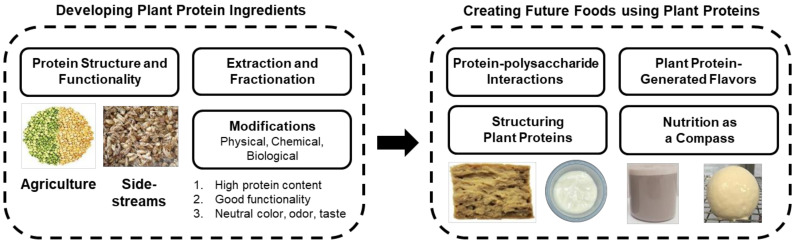
Protein calories consumed by people all over the world approximate 15–20% of their energy intake. This makes protein a major nutritional imperative. Today, we are facing an unprecedented challenge to produce and distribute adequate protein to feed over nine billion people by 2050, in an environmentally sustainable and affordable way. Plant-based proteins present a promising solution to our nutritional needs due to their long history of crop use and cultivation, lower cost of production, and easy access in many parts of the world. However, plant proteins have comparatively poor functionality, defined as poor solubility, foaming, emulsifying, and gelling properties, limiting their use in food products. Relative to animal proteins, including dairy products, plant protein technology is still in its infancy. To bridge this gap, advances in plant protein ingredient development and the knowledge to construct plant-based foods are sorely needed. This review focuses on some salient features in the science and technology of plant proteins, providing the current state of the art and highlighting new research directions. It focuses on how manipulating plant protein structures during protein extraction, fractionation, and modification can considerably enhance protein functionality. To create novel plant-based foods, important considerations such as protein–polysaccharide interactions, the inclusion of plant protein-generated flavors, and some novel techniques to structure plant proteins are discussed. Finally, the attention to nutrition as a compass to navigate the plant protein roadmap is also considered.
Overview
The claims and statistics of this paper haven’t been checked yet.
Free: it reads the open-access text and checks the first 5 claims that cite a source we can check. Create a free account to check every claim.
Integrity signals
Registry
Cites
Statistics
Figures
Verification
Claims the paper makes
The claims and statistics of this paper haven’t been checked yet.
Free: it reads the open-access text and checks the first 5 claims that cite a source we can check. Create a free account to check every claim.
Claims other papers make about this one
Each is checked against this paper’s own text: does it say what the citing paper says it does?
The source backs part of the claim, not all of it — or backs it for a different population, condition or comparison.
In the citing paper
“The review highlights that native pea protein structure dictates both its limitations and the engineering strategies needed to overcome them, progressing from isolation technologies through modification approaches to advanced food applications, with emphasis on structure-guided engineering approaches and biorefinery perspectives [2,6,8].”
From Pea Protein Isolates: From Extraction to Functionality. (2025) · cites this paper as [8]
Experimental — accuracy not yet measuredThe source backs part of the claim, not all of it — or backs it for a different population, condition or comparison.
In the citing paper
“Off-flavor attributes, notably characteristic pea-like bitterness, can detract from consumer acceptance and limit broader utilization in sensory-sensitive food products [2,8].”
From Pea Protein Isolates: From Extraction to Functionality. (2025) · cites this paper as [8]
Experimental — accuracy not yet measured
Self-check
Percentages, sums and reported differences re-computed from the paper’s own numbers.
The self-check needs the paper’s full text.
Citations
Cites
Food in the Anthropocene: the EAT–Lancet Commission on healthy diets from sustainable food systems
Willett, W., Rockström, J., Loken, B., Springmann, M., Lang, T., Vermeulen, S., Garnett, T., Tilman, D., DeClerck, F., Wood, A., et al. (2019) · The Lancet · doi:10.1016/s0140-6736(18)31788-4 · Cited by 10,880 · cited 1×
“Plant proteins are also more environmentally sustainable [3].”
BackgroundPhillips, G. O., & Williams, P. A. (2009) · Woodhead Publishing Limited eBooks · doi:10.1533/9781845695873 · Cited by 2,105
Food Polysaccharides and Their Applications
(2016) · CRC Press eBooks · doi:10.1201/9781420015164 · Cited by 1,650 · cited 1×
“Polysaccharides are sugar polymers linked by glycosidic bonds and include a vast family such as starch, cellulose, pectins, agars, carrageenans, alginates and gums [168].”
BackgroundBoye, J., Zare, F., & Pletch, A. (2010) · Food Research International · doi:10.1016/j.foodres.2009.09.003 · Cited by 1,579 · cited 2×
“Albumin and globulins are predominately present in all pulses (>50%) [17] and some pseudocereals (quinoa, and amaranth), whereas prolamins (wheat, maize, barley and rye) and glutelins (wheat) make up 85% of total protein in the cereal [18] and pseudocereal family [16,19].”
BackgroundSlow and fast dietary proteins differently modulate postprandial protein accretion
Boirie, Y., Dangin, M., Gachon, P., Vasson, M.-P., Maubois, J.-L., & Beaufrère, B. (1997) · Proceedings of the National Academy of Sciences · doi:10.1073/pnas.94.26.14930 · Cited by 1,453 · cited 2×
“Whey proteins are digested more quickly and absorbed in the body than native micellar casein because caseins coagulate with digestives enzymes resulting in slower digestion and subsequent absorption [260].”
BackgroundA review on protein–phenolic interactions and associated changes
Ozdal, T., Capanoglu, E., & Altay, F. (2013) · Food Research International · doi:10.1016/j.foodres.2013.02.009 · Cited by 1,355 · cited 1×
“form complexes with plant proteins, affecting the functional and nutritional properties of the proteins [52].”
BackgroundTang, J. E., Moore, D. R., Kujbida, G. W., Tarnopolsky, M. A., & Phillips, S. M. (2009) · Journal of Applied Physiology · doi:10.1152/japplphysiol.00076.2009 · Cited by 998
Pea protein isolates: Structure, extraction, and functionality
Lam, A. C. Y., Can Karaca, A., Tyler, R. T., & Nickerson, M. T. (2018) · Food Reviews International · doi:10.1080/87559129.2016.1242135 · Cited by 902 · cited 2×
“Even most legume protein isolates rich in globulin contain various globulin subfractions, such as legumin, vicilin and convicilin in pea [65].”
BackgroundMethodFood proteins: A review on their emulsifying properties using a structure–function approach
Lam, R. S. H., & Nickerson, M. T. (2013) · Food Chemistry · doi:10.1016/j.foodchem.2013.04.038 · Cited by 895 · cited 1×
“The need for a more sustainable food production system comprising the inclusion of more highly functional plant-based components has increased the requirement for an economically effective manufacturing technique [129].”
BackgroundPlant protein-based alternatives of reconstructed meat: Science, technology, and challenges
Sha, L., & Xiong, Y. L. (2020) · Trends in Food Science & Technology · doi:10.1016/j.tifs.2020.05.022 · Cited by 856 · cited 2×
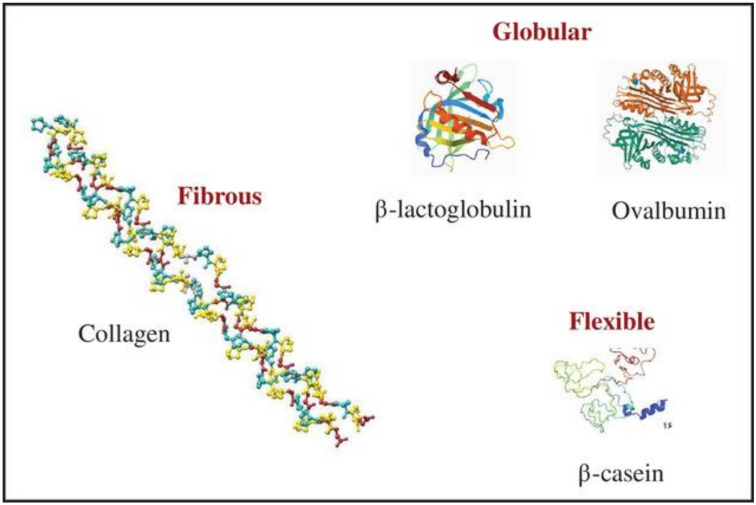
“Although most plant proteins (soy, pea, potato, mung bean, and rice proteins) are globular [40], they differ from animal globular proteins in terms of molecular characteristics and functional properties.”
Background
Research works printed but not linked: 3
- Tornberg E. Andersson K. Andersson A. Josell A. The texture of comminuted meat products Food Aust. 2000 52 519 524
- Flory P.J. Principles of Polymer Chemistry Cornell University Press Ithaca, NY, USA 1953
- Rossen J.L. Miller R.C. Food extrusion Food Technol. 1973 27 46 53
Cited by
Items 301–359 of 359
PERFIL ANTIOXIDANTE DA LUTEÍNA E ANÁLISE DE VISUALIZAÇÃO
Campos, A. J. D. S., dos Santos, C. A. L., de Lima, L. F., Almeida‐Bezerra, J. W., Ramos, J. S. O., Rocha, J. E., dos Santos, M. A. F., Filho, A. M., Felício, M. F., Costa, A. R., et al. (2024) · doi:10.22533/at.ed.71724170511
MÉTODO DE PROVAS BIOQUÍMICAS PARA BACTÉRIAS GRAM POSITIVO DO GÊNERO STAPHYLOCOCCUS E ENTEROCOCCUS
de Abreu, F. W. F., & Bastos, E. G. P. (2024) · doi:10.22533/at.ed.71724170510
Bueno-López, S. W., Caraballo-Rojas, L. R., & Torres, J. G. (2024) · doi:10.22533/at.ed.7172417058
GERMINAÇÃO DE SEMENTES DE PELTOPHORUM DUBIUM ((SPRENG.) TAUB.) SOB ESTRESSE HÍDRICO
de Almeida, L. F. R., Dutra, T. R., & Massad, M. D. (2024) · doi:10.22533/at.ed.7172417059
Producing Gel With Various Ingredients: a Review
Siagian, M. R. H., Abraham, S. U., & Yuliestyan, A. (2024) · EKUILIBIUM · doi:10.20961/equilibrium.v8i1.84242
“Vegetable proteins such as soybeans and peas are used as fat substitutes in burgers, resulting in a tender texture and savory taste with a lower saturated fat content compared to beef burgers [7].”
BackgroundStrack, K. N. (2024) · El Servicio de Difusión de la Creación Intelectual (National University of La Plata) · doi:10.35537/10915/168698
Must-Eat High Proteinous Plant Sources for Vegetarians: A Perspective
Kumari, S., Chaurasia, P. K., & Bharati, S. L. (2024) · Current Nutrition & Food Science · doi:10.2174/0115734013355687241218104431
Overview of instrumental methods used in the field of food analysis
Rozhdestvenskaya, L. N., Romanenko, S. P., Lomovskiy, I. O., & Lachugin, A. P. (2025) · Food systems · doi:10.21323/2618-9771-2024-7-4-523-534
Özdal, H. R., & Nakilcioğlu, E. (2025) · GIDA / THE JOURNAL OF FOOD · doi:10.15237/10.15237/gida.gd25026
Impact of nitrogen fertilisation on cactus pear mucilage functionality
Nkoi, V., de Wit, M., van Biljon, A., Niekerk, J. V., Rooyen, B. V., & Pretorius, W. (2025) · South African Journal of Science · doi:10.17159/sajs.2025/19012
Flores, A. C., Aidasan, N. L., Joson, S. A. C., & Montevirgen, L. S. (2025) · Journal of Healthcare and Biomedical Science · doi:10.31098/jhbs.v3i2.3443
“Understanding the link between protein structure and functional properties is critical for carrying out these enhancements successfully and efficiently (Sim et al., 2021; Tang et al., 2024).”
Karnila, R., Diharmi, A., Putra, H. S., Iriani, D., Hasan, B., Avissa, M. E., & Syahada, M. (2025) · Tropical Journal of Natural Product Research · doi:10.26538/tjnpr/v9i8.14
Kahraman, O., & Gulkirpik, E. (2025) · Elsevier eBooks · doi:10.1016/b978-0-443-31652-4.00003-9
Green Deep Eutectic Solvents in Genomics/Fundamentals of Nucleic Acids
Prajapat, A., Naina, Massey, I., Singh, P., Pandey, G. P., Ranjan, K. R., & Kumari, K. (2025) · Wiley eBooks · doi:10.1002/9781394272143.ch11 · Cited by 1
Phytochemicals: classification, biosynthesis, extraction, and analysis
Kasote, D. M. (2025) · Elsevier eBooks · doi:10.1016/b978-0-443-33710-9.00009-1 · Cited by 1
Cold atmospheric plasma treatment for modification of plant-based protein
Monica, V., & Radhakrishnan, M. (2025) · Elsevier eBooks · doi:10.1016/b978-0-443-33955-4.00015-2
Biological modification methods of plant-based proteins
Sivaraj, D., Dalbhagat, C. G., Gowda, N. A. N., Venugopal, A. P., Mishra, S., & Vivek, K. (2025) · Elsevier eBooks · doi:10.1016/b978-0-443-33955-4.00014-0 · Cited by 1
Artificial intelligence, machine learning, and blockchain approaches to plant-based protein linkages
Saha, D., Indore, N. S., Devi, T. S., & Kapri, P. (2025) · Elsevier eBooks · doi:10.1016/b978-0-443-33955-4.00020-6
Plant-based proteins for formulation of dairy alternatives: challenges and opportunities
Xu, S., & Fang, F. (2025) · Elsevier eBooks · doi:10.1016/b978-0-323-91725-4.00022-9
Plant-based proteins in pasta and noodle applications: challenges and opportunities
Harris, K. L. (2025) · Elsevier eBooks · doi:10.1016/b978-0-323-91725-4.00014-x
Baker, S. J., Belcher, C. M., Vitali, R., Little, K., Doerr, S. H., & Kettridge, N. (2026) · International Journal of Wildland Fire · doi:10.1071/wf25224
Pasichnyi, V., (Омельченко), Х. В. Ч., & Шубіна, Є. А. (2025) · Innovations and Technologies in the Service Sphere and Food Industry · doi:10.32782/2708-4949.4(18).2025.5
Funke, M., Megmondja, Z., Boom, R., & Weiß, J. (2026) · Food Research International · doi:10.1016/j.foodres.2026.118542
Sustainability of novel plant proteins in terms of their cost and other functional properties
Tavassoli, M., Madanifar, F., Zarshenas, A., & Hamidi, M. (2026) · Elsevier eBooks · doi:10.1016/b978-0-443-32976-0.00012-6
Tarahi, M., Dokouhaki, M., & Hedayati, S. (2026) · Elsevier eBooks · doi:10.1016/b978-0-443-32976-0.00009-6
Effect of stucture on digestion of proteins
Napieraj, M. (2023) · theses.fr (ABES) · doi:10.70675/9925aec3zf3cdz4dc9za2ecz475c0bbde93c · Cited by 3
A COMPREHENSIVE STUDY OF PLANT PROTEIN MODIFICATION TECHNOLOGIES EMPLOYING INTELLIGENT DATA ANALYSIS
Merenkova, S. P. (2026) · Bulletin of the South Ural State University Series Food and Biotechnology · doi:10.14529/food260103
Applications, Future Perspectives, and Challenges for Modified Plant Protein-Based Food Products
Bindu, Rahman, M., & Verma, K. (2026) · Springer eBooks · doi:10.1007/978-3-032-19821-1_11
Functional Enhancement of Plant Protein Isolates by Chemical Modification Methods
Kalita, J. J., Talukdar, P., Rizwana, S., Jha, P., & Nongmaithem, R. (2026) · Springer eBooks · doi:10.1007/978-3-032-19821-1_9
Huang, X., Zhu, J., Zang, P., Chen, J., Chen, P., Xu, N., & Liu, W. (2026) · Frontiers in Sports and Active Living · doi:10.3389/fspor.2026.1819117
“Compared with animal protein, plant protein has a lower leucine content and lacks certain essential amino acids such as methionine and lysine, with a lower digestibility than animal protein (37).”
Frimpong, R.-A. Y., Affrifah, N. S., Amissah, J. G. N., & Saalia, F. K. (2026) · International Journal of Food Science · doi:10.1155/ijfo/8396925
“Many studies have shown that protein extraction with green methods can significantly affect functional properties, particularly interfacial activity, droplet stabilization, solubility, and emulsifying capacity [25–27].”
Xiao, H., Kajdi, K., Wimmer, R., & Bang‐Berthelsen, C. H. (2026) · Microorganisms · doi:10.3390/microorganisms14061358 · Cited by 1
“This has led to rapid innovation in developing novel plant-based or hybrid foods with adapted processing technologies [1,2].”
Pasichnyi, V., Bondarenko, L., Svyatnenko, R., & Shubina, Y. (2026) · Animal Science and Food Technology · doi:10.31548/animal.2.2026.18
Design of Plant‐Based Foods for Enhanced Eating Experiences
See, X. Y., Chew, D. X., Theng, A. H. P., Ong, D. S. M., Osen, R., & Chiang, J. H. (2026) · Wiley eBooks · doi:10.1002/9781394293346.ch36
Self-citationGuimarães, D. J. S., Bezerra, B. K. D. A., de Mendonça, L. G., & Zambelli, R. A. (2026) · Cereal Chemistry · doi:10.1002/cche.70093
Kumar, Y., & Dey, S. (2026) · Springer eBooks · doi:10.1007/978-3-032-24505-2_2
Sharma, V., Hamill, R. M., Cabral, E. M., Burgess, C. M., & Barry‐Ryan, C. (2026) · Food Research International · doi:10.1016/j.foodres.2026.120007
Nudel, A., & Kerem, Z. (2026) · Comprehensive Reviews in Food Science and Food Safety · doi:10.1111/1541-4337.70571
“Alongside recommended daily intake values, these remain the primary tools available for professionals and individuals to assess whether a diet provides sufficient high-quality protein to meet their specific needs (Sim et al. 2021 ).”
From Composition to Function: Defining Functional Equivalence in Plant‐Based Meat Analogs
Venkateswaran, A. S. R., & McDonnell, C. K. (2026) · Sustainable Food Proteins · doi:10.1002/sfp2.70080
“…dry fractionation or by extraction, solubilization, precipitation, and purification of whole plant materials, processes that remove much of the native plant matrix and alter protein conformation, leading to denaturation, aggregation, and modified functionality (Sim et al. 2021; Kumar et al. 2021).”
Salama, M., Gouda, M., Sheng, L., & Cai, Z. (2026) · Elsevier eBooks · doi:10.1016/b978-0-443-44091-5.00007-8
Fialho, S. N., Ferreira, M. L. D. S., Ribeiro, S. A. V., Kravchychyn, A. C. P., & Hermsdorff, H. H. M. (2026) · The FASEB Journal · doi:10.1096/fj.202600792r · Cited by 1
Chemical and functional characteristics of Nannochloropsis oceanica protein
Le, T. P. L., Samarathunga, J., Rens, J., Strazdins, K., & Adhikari, B. (2026) · Sustainable Food Technology · doi:10.1039/d6fb00157b
Ali, S., Ali, B., Ahmad, K., Zhang, L., & Jamal, Q. M. S. (2026) · Frontiers in Nutrition · doi:10.3389/fnut.2026.1913634 · Cited by 1
Laursen, N. F., Perez, B., Nielsen, K. E., Skovsgaard, M. B., Christensen, C. H., & Corredig, M. (2026) · Critical Reviews in Food Science and Nutrition · doi:10.1080/10408398.2026.2714688 · Cited by 1
“They also often show gel networks reinforced with hydrogen bonds, during cooling, rather than with heating (Ricci et al. 2018; Sim et al. 2021; Ma and Chen 2023).”
Emerging role of ultrasound in food technology: principles, applications, and future prospects
Roy, A. K., & Banik, B. K. (2026) · Journal of Ultrasound · doi:10.1007/s40477-026-01199-9 · Cited by 1
Lingiardi, N., Bruguezi, C., Antonio, M., Maggio, R. M., Pisano, P., Spelzini, D., & Soazo, M. D. V. (2026) · Food Structure · doi:10.1016/j.foostr.2026.100562
Wang, Y., Liu, H., Dong, D., Ghorbanpour, M., & Xie, S. (2026) · Industrial Crops and Products · doi:10.1016/j.indcrop.2026.124293
Dissanayaka, C. S., Tsao, R., & Shahidi, F. (2026) · Journal of Food Science · doi:10.1111/1750-3841.71406
Structural and Process-Level Limitations of Plant Proteins in Meat Products
Hollweg, G., de Oliveira, V. R., Grullón, C. S. H., Lorenzo, J. M., & Campagnol, P. C. B. (2026) · Current Food Science and Technology Reports · doi:10.1007/s43555-026-00102-1
Progeny Differentiation in Faba Bean Using Hyperspectral Images and Machine Learning
Schlichtermann, R.-H., Warnemünde, S., Tietgen, H., Welna, G., Stahl, A., Wittkop, B., & Snowdon, R. J. (2026) · Plant Direct · doi:10.1002/pld3.70193
“With an increasing global population and a rising demand for plant-based protein, production of faba bean ( Vicia faba L.) has expanded, underscoring its growing importance (Food and Agriculture Organization 2022; Sim et al. 2021).”
Bamalli, Z. N., Muhammad, A. I., Abdulkarim, S. M., Ghazali, H. M., & Al-Habsi, N. A. (2026) · Journal of Food Process Engineering · doi:10.1111/jfpe.70846
Protocols for Plant Protein Isolation and Fractionation
Qayyum, R., Tariq, R., Ijaz, H., Munawar, K., Ullah, A., Ayub, M. A., Hussain, R., & Zubair, M. (2026) · Methods and protocols in food science · doi:10.1007/978-1-0716-5675-4_1
Identification of peptides in soy protein hydrolysates with different biological activity
Александрович, Д. И., Фоменко, В. В., Grigoryan, A. E., Машенцева, Н. Г., Kusova, I. U., & Алексеевич, Б. Н. (2026) · Food systems · doi:10.21323/2618-9771-2026-9-3-407-418
Shanmugam, V., Mensah, R. A., & Jiang, L. (2026) · Next Sustainability · doi:10.1016/j.nxsust.2026.100572
Zahir, A., Akbar, U., Mondol, M. S. A., & Hakeem, K. R. (2026) · Food Hydrocolloids · doi:10.1016/j.foodhyd.2026.113552
The Interaction Between Plant-Based Proteins and Gut Microbiota
DÜŞÜNSEL, A. D., & Uzdil, Z. (2026) · Journal of Nutritional Research & Dietetics · doi:10.56479/jnrd-1
Metadata
- Authors
- Sim, S. Y. J., SRV, A., Chiang, J. H., & Henry, C. J.
- Affiliations
- Agency for Science, Technology and Research (SG)
- Clinical Nutrition Research Centre (CNRC), Singapore Institute of Food and Biotechnology Innovation (SIFBI), Agency for Science, Technology and Research (A*STAR), Singapore 117599, Singapore
- Corresponding author
- Sim, Shaun Yong Jie
- Venue
- Foods
- Publisher
- MDPI AG
- Published
- 2021-08-23
- Volume
- 10
- Issue
- 8
- Pages
- 1967
- ISSN
- 2304-8158 (ISSN-L)
- PMC
- PMC8391319
- OpenAlex
- W3193926126
- Semantic Scholar
- 0bc64bbf0df91f9d920b8b8074c1734bc7bbbe63
- Cited by
- 352
- References
- 269
- Citations by year
- 2026: 57 · 2025: 100 · 2024: 92 · 2023: 60 · 2022: 40 · 2021: 3
- FWCI
- 4.43
- Type
- journal article
- Language
- en
- Open access
- gold
- doi.org
- Licence
- Locations
- Foods (publishedVersion, cc-by)
- PubMed Central (publishedVersion, cc-by)
- PubMed (publishedVersion)
- National University of Singapore (submittedVersion, cc-by)
- DOAJ (DOAJ: Directory of Open Access Journals) (submittedVersion, cc-by-sa)
- Funders
- Agency for Science, Technology and Research (W20W2D0006, H17/01/a0/A11)
- Topics
- Life Sciences › Agricultural and Biological Sciences › Food Science › Proteins in Food Systems
- Life Sciences › Agricultural and Biological Sciences › Food Science › Food Nutrient Composition and Product Development
- Life Sciences › Agricultural and Biological Sciences › Food Science › Protein Hydrolysis and Bioactive Peptides
- Keywords
- plant proteins, plant-based foods, protein functional properties, protein solubility, foaming and emulsifying properties, gelling properties, protein extraction, protein fractionation, protein modification, protein-polysaccharide interactions, global food security, sustainable food production
About these checks
Registry, retraction, Cites and statistics results are computed, not judged, with one exception: a printed reference that no index lists is read once by a model before it counts as a citation error. Claims are extracted by a model and kept only when their quote appears verbatim in the text; each cited source is then checked, with a model’s help, for whether it says what the claim relies on. Those verdicts can be wrong — read the claim’s quote and the cited source before relying on one.
Statistics and arithmetic are recomputed, not judged.
Confidence bands are shown only for fields calibrated on our annotated test set. None is calibrated yet, so no band is shown.
What counts as a claim ›How we measure confidence ›How we check this ›
Are you an author, or do you see a problem with this page? Request a review
Data sources
Bibliographic data: Semantic Scholar, OpenAlex, Crossref.
Contains information from the Semantic Scholar Academic Graph Datasets, made available under the ODC Attribution License (ODC-BY 1.0).
Semantic Scholar’s data is described in: Kinney, R., et al. (2023). The Semantic Scholar Open Data Platform. arXiv:2301.10140.
