

The DOI matches its Crossref record; 124 of the 124 references it cites were found in a registry or an index; 3 of the 137 sources its claims cite were checked for support.
Regulation of Ergosterol Biosynthesis in Saccharomyces cerevisiae
Open accessAbstract
Ergosterol is an essential component of fungal cell membranes that determines the fluidity, permeability and activity of membrane-associated proteins. Ergosterol biosynthesis is a complex and highly energy-consuming pathway that involves the participation of many enzymes. Deficiencies in sterol biosynthesis cause pleiotropic defects that limit cellular proliferation and adaptation to stress. Thereby, fungal ergosterol levels are tightly controlled by the bioavailability of particular metabolites (e.g., sterols, oxygen and iron) and environmental conditions. The regulation of ergosterol synthesis is achieved by overlapping mechanisms that include transcriptional expression, feedback inhibition of enzymes and changes in their subcellular localization. In the budding yeast Saccharomyces cerevisiae, the sterol regulatory element (SRE)-binding proteins Upc2 and Ecm22, the heme-binding protein Hap1 and the repressor factors Rox1 and Mot3 coordinate ergosterol biosynthesis (ERG) gene expression. Here, we summarize the sterol biosynthesis, transport and detoxification systems of S. cerevisiae, as well as its adaptive response to sterol depletion, low oxygen, hyperosmotic stress and iron deficiency. Because of the large number of ERG genes and the crosstalk between different environmental signals and pathways, many aspects of ergosterol regulation are still unknown. The study of sterol metabolism and its regulation is highly relevant due to its wide applications in antifungal treatments, as well as in food and pharmaceutical industries.
Overview
AI snapshot
Written from the paper’s full text.
TL;DR
This review summarizes ergosterol biosynthesis, transport, detoxification, and regulation in *Saccharomyces cerevisiae*, emphasizing control by sterols, oxygen, osmotic stress, and iron. It highlights Upc2/Ecm22, Hap1, Rox1, Mot3, and other factors, while noting that many regulatory mechanisms remain unresolved.
Key findings
- Ergosterol biosynthesis is highly energy-consuming, requiring 24 molecules of ATP and 16 molecules of NADPH per ergosterol, and depends on oxygen and iron at multiple enzymatic steps.
- Regulation occurs through overlapping mechanisms: feedback degradation of Hmg2 via ERAD and Erg1 via Doa10, subcellular localization of Erg enzymes including the ergosome, and transcriptional control by Upc2/Ecm22, Hap1, Rox1, and Mot3.
- Under sterol depletion, Upc2’s carboxy-terminal domain senses ergosterol; ligand dissociation promotes nuclear translocation and activation of ERG genes, sterol uptake genes (*AUS1*, *PDR11*), *DAN/TIR*, and *PAU* genes.
- The late ergosterol pathway is a major antifungal target: azoles inhibit Erg11, allylamines inhibit Erg1, morpholines inhibit Erg2/Erg24, and polyenes bind cell-surface ergosterol; *ERG6* deletion or overexpression causes especially compromised phenotypes.
Methods
- Narrative review synthesizing published literature on *S. cerevisiae* sterol biosynthesis, transport, detoxification, and regulation; no primary experiments, datasets, or systematic search criteria are described.
- Discusses adaptive responses to sterol depletion, low oxygen, hyperosmotic stress, and iron deficiency, citing genome-wide expression studies but performing no new analysis.
Limitations
- The authors state that many aspects of ergosterol regulation remain unknown because of the large number of ERG genes and crosstalk between environmental signals and pathways.
- The authors note conflicting results for Hap1 effects on ERG gene expression under anaerobic conditions, possibly due to strain or media differences, and propose hypotheses that require further study.
- Evident from the text: as a narrative review, it lacks systematic methodology, quantitative synthesis, and new experimental validation; conclusions rely on cited studies.
Model-written summary. Check it against the paper before relying on it.
Integrity signals
Registry
Cites
Statistics
Figures
Verification
Claims the paper makes
75 Not checked yet · 19 Own interpretation · 1 Supported · 1 Partly supported · accuracy not yet measured
Every source the paper cites for this claim was checked and supports it.
In the paper
“Sterol esterification is essential for efficient sterol uptake [32].”
§ Regulation of Ergosterol Biosynthesis in Saccharomyces cerevisiae > 2. Ergosterol Synthesis, Uptake and Detoxification in S. cerevisiae > 2.2. Sterol Acquisition and Transport in S. cerevisiae
What the sources say
- Supportedcites [32] Li, 2004, ATP-Binding cassette (ABC) transporters mediate nonvesicular, raft-Modulated sterol movement from the plasma membrane to the endoplasmic reticulum, J. Biol. Chem. source
In the Results section, “Sterol Uptake Requires Sterol Ester Synthase” (page unavailable), yeast lacking both steryl ester synthases took up little exogenous sterol despite carrying an allele associated with uptake. Figure 6 is captioned “Sterol uptake requires steryl ester synthase,” supporting the claim in the studied yeast system. (LLM, conf=0.92)
plaindirect- Asserted: passes — The authors put it forward as true.
- Checkable: passes — It can be checked against evidence.
- Load-bearing: unclear — It is unclear whether the paper’s conclusions depend on it.
- Based: passes — The paper gives a reason why it holds.
- Supported
The cited sources support only part of this claim — read each source’s verdict below.
In the paper
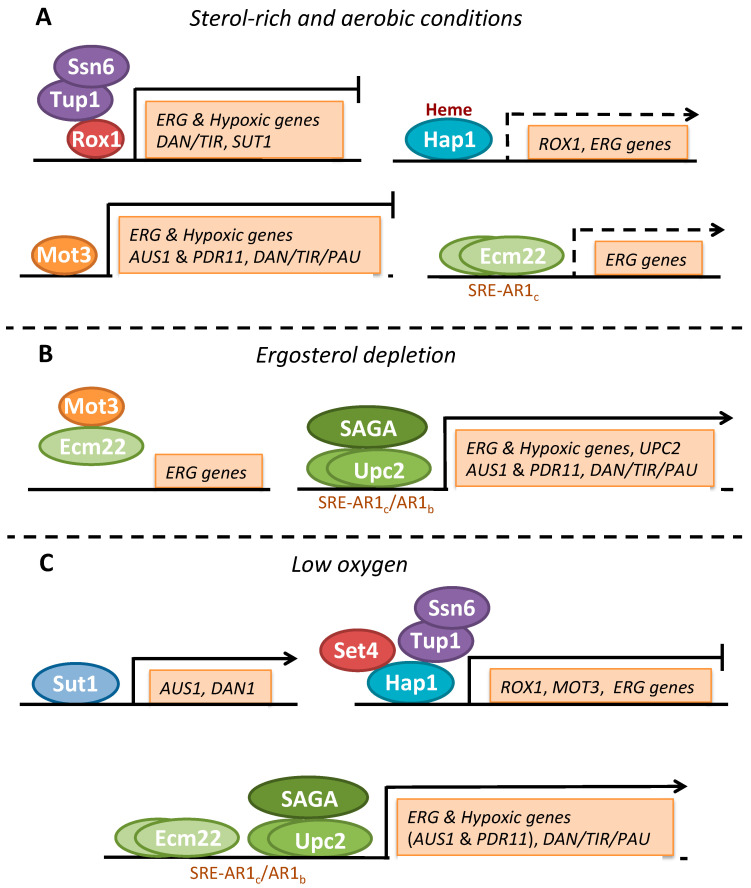
“In addition, to limit Ecm22 function [75], the transcriptional factor Mot3 also represses the expression of hypoxic, DAN/TIR/PAU and ERG genes including ERG2, ERG6 and ERG9 (Figure 3A) [86,89,90,91,92,93].”
§ Regulation of Ergosterol Biosynthesis in Saccharomyces cerevisiae > 3. Regulation of Ergosterol Biosynthesis > 3.3. Transcriptional Regulation
What the sources say
- Partly supportedcites [86] Abramova, 2001, Regulatory mechanisms controlling expression of the DAN/TIR mannoprotein genes during anaerobic remodeling of the cell wall in Saccharomyces cerevisiae, Genetics sourceExperimental — accuracy not yet measured
The discussion identifies Rox7 as Mot3 and reports that rox7 mutations cause constitutive expression of genes in both the hypoxic and DAN/TIR regulons. It also says Mot3 sites are needed for efficient aerobic repression of DAN1. Our copy does not establish Mot3 repression of PAU or ERG genes, including ERG2, ERG6, and ERG9 (searched those terms); page numbers were unavailable. (LLM, conf=0.88)
- Partly supportedcites [89] Sertil, 2003, Synergistic repression of anaerobic genes by Mot3 and Rox1 in Saccharomyces cerevisiae, Nucleic Acids Res. sourceExperimental — accuracy not yet measured
The Introduction and Discussion identify Mot3 as a repressor of hypoxic genes and DAN/TIR genes, and discuss repression within the DAN/TIR/ERG group. The passages do not identify PAU genes or establish repression of the specific ERG2, ERG6 and ERG9 genes (searched those names and PAU). (LLM, conf=0.86)
- Not checked yetcites [90] Klinkenberg, 2005, Combinatorial repression of the hypoxic genes of Saccharomyces cerevisiae by DNA binding proteins Rox1 and Mot3, Eukaryot Cell source
- Not checked yetcites [91] Abramova, 2001, Reciprocal regulation of anaerobic and aerobic cell wall mannoprotein gene expression in Saccharomyces cerevisiae, J. Bacteriol. source
- Not checked yetcites [92] Hongay, 2002, Mot3 is a transcriptional repressor of ergosterol biosynthetic genes and is required for normal vacuolar function in Saccharomyces cerevisiae, EMBO J. source
- Not checked yetcites [93] Luo, 2009, Functional analyses of PAU genes in Saccharomyces cerevisiae, Microbiology source
plaindirect- Asserted: passes — The authors put it forward as true.
- Checkable: passes — It can be checked against evidence.
- Load-bearing: unclear — It is unclear whether the paper’s conclusions depend on it.
- Based: passes — The paper gives a reason why it holds.
- Partly supported
None of the sources cited for this claim have been checked yet.
In the paper
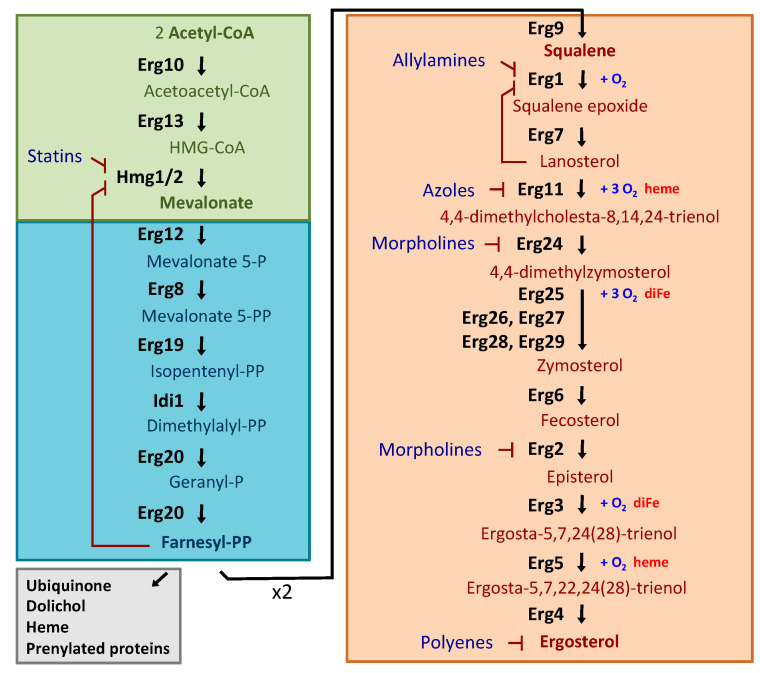
“When Erg11 is inhibited, an alternate pathway catalyzed by Erg6, Erg25-Erg26-Erg27 and Erg3 is activated leading to the formation of the fungistatic 14α methylergosta 8-24 (28) dienol [19,22].”
§ Regulation of Ergosterol Biosynthesis in Saccharomyces cerevisiae > 2. Ergosterol Synthesis, Uptake and Detoxification in S. cerevisiae > 2.1. Ergosterol Biosynthesis in S. cerevisiae
What the sources say
- Not checked yetcites [19] Bhattacharya, S., Esquivel, B.D., and White, T.C. (2018). Overexpression or Deletion of Ergosterol Biosynthesis Genes Alters Doubling Time, Response to Stress Agents, and Drug Susceptibility in Saccharomyces cerevisiae. mBio, 9. source
- Not checked yetcites [22] Kelly, 1997, Resistance to fluconazole and cross-resistance to amphotericin B in Candida albicans from AIDS patients caused by defective sterol delta5,6-desaturation, FEBS Lett. source
plaindirect- Asserted: passes — The authors put it forward as true.
- Checkable: passes — It can be checked against evidence.
- Load-bearing: unclear — It is unclear whether the paper’s conclusions depend on it.
- Based: passes — The paper gives a reason why it holds.
In the paper
“The single deletion of the majority of ergosterol biosynthetic (ERG) genes within the late pathway is lethal under standard growth conditions without the addition of ergosterol.”
§ Regulation of Ergosterol Biosynthesis in Saccharomyces cerevisiae > 2. Ergosterol Synthesis, Uptake and Detoxification in S. cerevisiae > 2.1. Ergosterol Biosynthesis in S. cerevisiae
What the sources say
- Not checked yetcites [16] Johnston, 2020, The wide-Ranging phenotypes of ergosterol biosynthesis mutants, and implications for microbial cell factories, Yeast source
plaindirect- Asserted: passes — The authors put it forward as true.
- Checkable: passes — It can be checked against evidence.
- Load-bearing: unclear — It is unclear whether the paper’s conclusions depend on it.
- Based: passes — The paper gives a reason why it holds.
In the paper
“Despite this, S. cerevisiae cells do not import significant amounts of extracellular sterols in the presence of oxygen, a phenomenon referred to as “aerobic sterol exclusion” [28].”
§ Regulation of Ergosterol Biosynthesis in Saccharomyces cerevisiae > 2. Ergosterol Synthesis, Uptake and Detoxification in S. cerevisiae > 2.2. Sterol Acquisition and Transport in S. cerevisiae
What the sources say
- Not checked yetcites [28] Lorenz, 1987, Regulation of ergosterol biosynthesis and sterol uptake in a sterol-auxotrophic yeast, J. Bacteriol. source
plain- Asserted: passes — The authors put it forward as true.
- Checkable: passes — It can be checked against evidence.
- Load-bearing: unclear — It is unclear whether the paper’s conclusions depend on it.
- Based: passes — The paper gives a reason why it holds.
A conclusion the paper draws from its own results — it cites no other source for it, so there is none to check. The quote shows it is in the paper.
In the paper
“In the budding yeast Saccharomyces cerevisiae, the sterol regulatory element (SRE)-binding proteins Upc2 and Ecm22, the heme-binding protein Hap1 and the repressor factors Rox1 and Mot3 coordinate ergosterol biosynthesis (ERG) gene expression.”
§ Regulation of Ergosterol Biosynthesis in Saccharomyces cerevisiae > Abstract
plaindirect- Asserted: passes — The authors put it forward as true.
- Checkable: passes — It can be checked against evidence.
- Load-bearing: passes — The paper’s conclusions depend on it.
- Based: unclear — It is unclear why the paper says it holds.
In the paper
“Multiple enzymes that participate in the late stage of ergosterol biosynthesis are transmembrane-containing proteins that associate into a functional complex, denoted the ergosome, to facilitate catalysis [53].”
§ Regulation of Ergosterol Biosynthesis in Saccharomyces cerevisiae > 3. Regulation of Ergosterol Biosynthesis > 3.1. Subcellular Localization of Ergosterol Biosynthesis Enzymes
What the sources say
- Not checked yetcites [53] Mo, 2005, A systematic study of yeast sterol biosynthetic protein-protein interactions using the split-Ubiquitin system, Biochim. Biophys. Acta source
plaindirect- Asserted: passes — The authors put it forward as true.
- Checkable: passes — It can be checked against evidence.
- Load-bearing: unclear — It is unclear whether the paper’s conclusions depend on it.
- Based: passes — The paper gives a reason why it holds.
A conclusion the paper draws from its own results — it cites no other source for it, so there is none to check. The quote shows it is in the paper.
In the paper
“The decreased ability to synthesize sterols under hypoxic or anaerobic conditions is compensated by the import of sterols from the medium.”
§ Regulation of Ergosterol Biosynthesis in Saccharomyces cerevisiae > 2. Ergosterol Synthesis, Uptake and Detoxification in S. cerevisiae > 2.2. Sterol Acquisition and Transport in S. cerevisiae
plaindirect- Asserted: passes — The authors put it forward as true.
- Checkable: passes — It can be checked against evidence.
- Load-bearing: unclear — It is unclear whether the paper’s conclusions depend on it.
- Based: passes — The paper gives a reason why it holds.
None of the sources cited for this claim have been checked yet.
In the paper
“Conversely, hyperosmotic stress adaptation (such as salt or sorbitol treatment) leads to the decrease in ergosterol abundance [6,7].”
§ Regulation of Ergosterol Biosynthesis in Saccharomyces cerevisiae > 1. Introduction
What the sources say
- Not checked yetcites [6] Hu, 2017, Recent Advances in Ergosterol Biosynthesis and Regulation Mechanisms in Saccharomyces cerevisiae, Indian J. Microbiol. source
- Not checked yetcites [7] Montanes, 2011, Repression of ergosterol biosynthesis is essential for stress resistance and is mediated by the Hog1 MAP kinase and the Mot3 and Rox1 transcription factors, Mol. Microbiol. source
plaindirect- Asserted: passes — The authors put it forward as true.
- Checkable: passes — It can be checked against evidence.
- Load-bearing: unclear — It is unclear whether the paper’s conclusions depend on it.
- Based: passes — The paper gives a reason why it holds.
A conclusion the paper draws from its own results — it cites no other source for it, so there is none to check. The quote shows it is in the paper.
In the paper
“These findings suggest that sterol biosynthesis and SE formation are interconnected through a regulatory mechanism.”
§ Regulation of Ergosterol Biosynthesis in Saccharomyces cerevisiae > 2. Ergosterol Synthesis, Uptake and Detoxification in S. cerevisiae > 2.3. Sterol Detoxification
hedgedcorrelationalSingle case- Asserted: passes — The authors put it forward as true.
- Checkable: passes — It can be checked against evidence.
- Load-bearing: passes — The paper’s conclusions depend on it.
- Based: passes — The paper gives a reason why it holds.
- It may state two separate claims as one. 39
- Probably not a substantial claim. 7
None of the sources cited for this claim have been checked yet.
In the paper
“Interestingly, the double mutant are1∆are2∆ does not display any altered growth under normal conditions, despite overall sterol biosynthesis drops and the level of free sterols increases [44,48].”
§ Regulation of Ergosterol Biosynthesis in Saccharomyces cerevisiae > 2. Ergosterol Synthesis, Uptake and Detoxification in S. cerevisiae > 2.3. Sterol Detoxification
What the sources say
- Not checked yetcites [44] Zweytick, 2000, Contribution of Are1p and Are2p to steryl ester synthesis in the yeast Saccharomyces cerevisiae, Eur. J. Biochem. source
- Not checked yetcites [48] Sorger, 2004, A yeast strain lacking lipid particles bears a defect in ergosterol formation, J. Biol. Chem. source
plain- Asserted: passes — The authors put it forward as true.
- Checkable: passes — It can be checked against evidence.
- Load-bearing: unclear — It is unclear whether the paper’s conclusions depend on it.
- Based: passes — The paper gives a reason why it holds.
It may state two separate claims as one.
None of the sources cited for this claim have been checked yet.
In the paper
“Ergosterol levels are also important for the hypoxic and iron deficiency responses in S. cerevisiae, conditions in which the rate of ergosterol biosynthesis is limited by defects in specific enzymes that depend on oxygen and/or iron as an essential substrate or cofactor [8,9].”
§ Regulation of Ergosterol Biosynthesis in Saccharomyces cerevisiae > 1. Introduction
What the sources say
plaindirect- Asserted: passes — The authors put it forward as true.
- Checkable: passes — It can be checked against evidence.
- Load-bearing: unclear — It is unclear whether the paper’s conclusions depend on it.
- Based: passes — The paper gives a reason why it holds.
It may state two separate claims as one.
None of the sources cited for this claim have been checked yet.
In the paper
“However, the accumulation of excess free sterol intermediates may become toxic for cells since it alters mitochondrial respiration, resulting in the generation of toxic methyl sterol intermediates, which raise mitochondrial oxidants and decrease the ability to synthesize iron–sulfur (Fe-S) clusters [13,42,43].”
§ Regulation of Ergosterol Biosynthesis in Saccharomyces cerevisiae > 2. Ergosterol Synthesis, Uptake and Detoxification in S. cerevisiae > 2.3. Sterol Detoxification
What the sources say
- Not checked yetcites [13] Ward, 2018, Altered sterol metabolism in budding yeast affects mitochondrial iron-sulfur (Fe-S) cluster synthesis, J. Biol. Chem. source
- Not checked yetcites [42] Demuyser, L., Swinnen, E., Fiori, A., Herrera-Malaver, B., Vestrepen, K., and Van Dijck, P. (2017). Mitochondrial Cochaperone Mge1 Is Involved in Regulating Susceptibility to Fluconazole in Saccharomyces cerevisiae and Candida Species. mBio, 8. source
- Not checked yetcites [43] Giusiano, 2006, Antifungal agents: Mode of action in yeast cells, Rev. Esp. Quimioter.
hedgedconditional- Asserted: passes — The authors put it forward as true.
- Checkable: passes — It can be checked against evidence.
- Load-bearing: unclear — It is unclear whether the paper’s conclusions depend on it.
- Based: passes — The paper gives a reason why it holds.
It may state two separate claims as one.
A conclusion the paper draws from its own results — it cites no other source for it, so there is none to check. The quote shows it is in the paper.
In the paper
“Thus, oxygen and iron depletion are associated with reduced activity of these enzymes and changes in sterol production.”
§ Regulation of Ergosterol Biosynthesis in Saccharomyces cerevisiae > 2. Ergosterol Synthesis, Uptake and Detoxification in S. cerevisiae > 2.1. Ergosterol Biosynthesis in S. cerevisiae
plaincorrelational- Asserted: passes — The authors put it forward as true.
- Checkable: passes — It can be checked against evidence.
- Load-bearing: unclear — It is unclear whether the paper’s conclusions depend on it.
- Based: passes — The paper gives a reason why it holds.
It may state two separate claims as one.
None of the sources cited for this claim have been checked yet.
In the paper
“In fact, it has been reported that the expression of ERG3 is down-regulated and Erg1 protein is destabilized in the are1∆are2∆ double mutant [48,49,50].”
§ Regulation of Ergosterol Biosynthesis in Saccharomyces cerevisiae > 2. Ergosterol Synthesis, Uptake and Detoxification in S. cerevisiae > 2.3. Sterol Detoxification
What the sources say
- Not checked yetcites [48] Sorger, 2004, A yeast strain lacking lipid particles bears a defect in ergosterol formation, J. Biol. Chem. source
- Not checked yetcites [49] Crowell, 1996, Positive and negative regulation of a sterol biosynthetic gene (ERG3) in the post-squalene portion of the yeast ergosterol pathway, FEBS Lett. source
- Not checked yetcites [50] Ploier, 2015, Regulatory link between steryl ester formation and hydrolysis in the yeast Saccharomyces cerevisiae, Biochim. Biophys. Acta source
plaindirect- Asserted: passes — The authors put it forward as true.
- Checkable: passes — It can be checked against evidence.
- Load-bearing: unclear — It is unclear whether the paper’s conclusions depend on it.
- Based: passes — The paper gives a reason why it holds.
It may state two separate claims as one.
In the paper
“Erg1 displays a dual localization at the ER and LPs, being enzymatically inactive in the latter [57].”
§ Regulation of Ergosterol Biosynthesis in Saccharomyces cerevisiae > 3. Regulation of Ergosterol Biosynthesis > 3.1. Subcellular Localization of Ergosterol Biosynthesis Enzymes
What the sources say
- Not checked yetcites [57] Leber, 1998, Dual localization of squalene epoxidase, Erg1p, in yeast reflects a relationship between the endoplasmic reticulum and lipid particles, Mol. Biol. Cell source
plaincorrelational- Asserted: passes — The authors put it forward as true.
- Checkable: passes — It can be checked against evidence.
- Load-bearing: unclear — It is unclear whether the paper’s conclusions depend on it.
- Based: passes — The paper gives a reason why it holds.
It may state two separate claims as one.
In the paper
“Ergosterol biosynthesis is a highly energy-consuming process that requires 24 molecules of ATP and 16 molecules of NADPH to obtain a single ergosterol compound (reviewed in [6]).”
§ Regulation of Ergosterol Biosynthesis in Saccharomyces cerevisiae > 2. Ergosterol Synthesis, Uptake and Detoxification in S. cerevisiae > 2.2. Sterol Acquisition and Transport in S. cerevisiae
What the sources say
- Not checked yetcites [6] Hu, 2017, Recent Advances in Ergosterol Biosynthesis and Regulation Mechanisms in Saccharomyces cerevisiae, Indian J. Microbiol. source
plaindirect- Asserted: passes — The authors put it forward as true.
- Checkable: passes — It can be checked against evidence.
- Load-bearing: fails — The paper’s conclusions may not depend on it.
- Based: passes — The paper gives a reason why it holds.
Probably not a substantial claim. The paper’s conclusions may not depend on it.
A conclusion the paper draws from its own results — it cites no other source for it, so there is none to check. The quote shows it is in the paper.
In the paper
“Remarkably, the ergosterol biosynthetic pathway represents the main target for the development of many antifungal agents because it is essential for fungal growth and viability, and its synthesis differs in particular steps from the major sterol-producing pathway in humans.”
§ Regulation of Ergosterol Biosynthesis in Saccharomyces cerevisiae > 1. Introduction
plaindirect- Asserted: passes — The authors put it forward as true.
- Checkable: passes — It can be checked against evidence.
- Load-bearing: fails — The paper’s conclusions may not depend on it.
- Based: passes — The paper gives a reason why it holds.
Probably not a substantial claim. The paper’s conclusions may not depend on it. It may state two separate claims as one.
None of the sources cited for this claim have been checked yet.
In the paper
“Sterols cannot be degraded, but are either stored in the form of steryl esters (SE) in LPs or secreted into the medium as sterol acetates (reviewed in [6,18]).”
§ Regulation of Ergosterol Biosynthesis in Saccharomyces cerevisiae > 2. Ergosterol Synthesis, Uptake and Detoxification in S. cerevisiae > 2.3. Sterol Detoxification
What the sources say
- Not checked yetcites [6] Hu, 2017, Recent Advances in Ergosterol Biosynthesis and Regulation Mechanisms in Saccharomyces cerevisiae, Indian J. Microbiol. source
- Not checked yetcites [18] Sokolov, 2019, Ergosterol Turnover in Yeast: An Interplay between Biosynthesis and Transport, Biochemistry (Mosc) source
plain- Asserted: passes — The authors put it forward as true.
- Checkable: passes — It can be checked against evidence.
- Load-bearing: unclear — It is unclear whether the paper’s conclusions depend on it.
- Based: passes — The paper gives a reason why it holds.
It may state two separate claims as one.
A conclusion the paper draws from its own results — it cites no other source for it, so there is none to check. The quote shows it is in the paper.
In the paper
“Thereby, fungal ergosterol levels are tightly controlled by the bioavailability of particular metabolites (e.g., sterols, oxygen and iron) and environmental conditions.”
§ Regulation of Ergosterol Biosynthesis in Saccharomyces cerevisiae > Abstract
plaindirect- Asserted: passes — The authors put it forward as true.
- Checkable: passes — It can be checked against evidence.
- Load-bearing: passes — The paper’s conclusions depend on it.
- Based: fails — The paper may give no reason why it holds.
Probably not a substantial claim. The paper may give no reason why it holds.
In the paper
“Under aerobic conditions, yeast cells do not incorporate exogenous sterols. Instead, they satisfy their sterol requirements by synthesizing their own ergosterol.”
§ Regulation of Ergosterol Biosynthesis in Saccharomyces cerevisiae > 2. Ergosterol Synthesis, Uptake and Detoxification in S. cerevisiae > 2.1. Ergosterol Biosynthesis in S. cerevisiae
What the sources say
- Not checked yetcites [28] Lorenz, 1987, Regulation of ergosterol biosynthesis and sterol uptake in a sterol-auxotrophic yeast, J. Bacteriol. source
plain- Asserted: passes — The authors put it forward as true.
- Checkable: passes — It can be checked against evidence.
- Load-bearing: unclear — It is unclear whether the paper’s conclusions depend on it.
- Based: passes — The paper gives a reason why it holds.
It may state two separate claims as one.
A conclusion the paper draws from its own results — it cites no other source for it, so there is none to check. The quote shows it is in the paper.
In the paper
“The maintenance of suitable ergosterol concentrations is achieved by feedback mechanisms at the transcriptional and post-translational levels.”
§ Regulation of Ergosterol Biosynthesis in Saccharomyces cerevisiae > 3. Regulation of Ergosterol Biosynthesis
plaindirect- Asserted: passes — The authors put it forward as true.
- Checkable: passes — It can be checked against evidence.
- Load-bearing: fails — The paper’s conclusions may not depend on it.
- Based: fails — The paper may give no reason why it holds.
Probably not a substantial claim. The paper’s conclusions may not depend on it. The paper may give no reason why it holds.
None of the sources cited for this claim have been checked yet.
In the paper
“In fact, the deletion of both UPC2 and ECM22 is synthetically lethal in the S288C yeast genetic background due to a Ty1 insertion mutation into HAP1 coding sequence that partially compromises its function, while it is viable in the W303 background with a wild-type HAP1 gene [75,83].”
§ Regulation of Ergosterol Biosynthesis in Saccharomyces cerevisiae > 3. Regulation of Ergosterol Biosynthesis > 3.3. Transcriptional Regulation
What the sources say
- Not checked yetcites [75] Davies, 2006, A role for sterol levels in oxygen sensing in Saccharomyces cerevisiae, Genetics source
- Not checked yetcites [83] Valachovic, 2006, Cumulative mutations affecting sterol biosynthesis in the yeast Saccharomyces cerevisiae result in synthetic lethality that is suppressed by alterations in sphingolipid profiles, Genetics source
plaindirect- Asserted: passes — The authors put it forward as true.
- Checkable: passes — It can be checked against evidence.
- Load-bearing: unclear — It is unclear whether the paper’s conclusions depend on it.
- Based: passes — The paper gives a reason why it holds.
It may state two separate claims as one.
In the paper
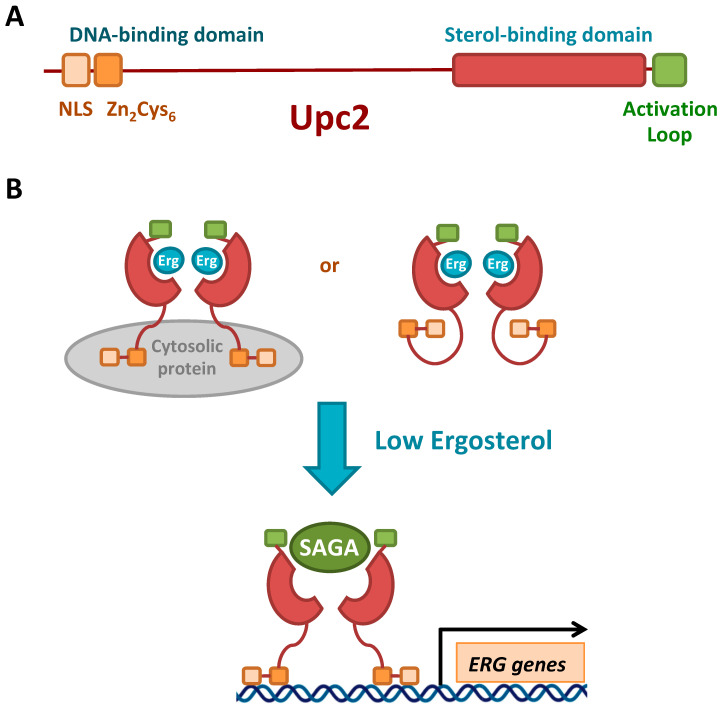
“The recent elucidation of the structure of the carboxy-terminal domain (CTD) of yeast Upc2, which displays a novel α-helical fold, has demonstrated that it serves as an ergosterol-binding and sensing domain (Figure 2A) [71].”
§ Regulation of Ergosterol Biosynthesis in Saccharomyces cerevisiae > 3. Regulation of Ergosterol Biosynthesis > 3.3. Transcriptional Regulation
What the sources say
- Not checked yetcites [71] Yang, 2015, Structural mechanism of ergosterol regulation by fungal sterol transcription factor Upc2, Nat. Commun. source
boosteddirect- Asserted: passes — The authors put it forward as true.
- Checkable: passes — It can be checked against evidence.
- Load-bearing: passes — The paper’s conclusions depend on it.
- Based: passes — The paper gives a reason why it holds.
It may state two separate claims as one.
A conclusion the paper draws from its own results — it cites no other source for it, so there is none to check. The quote shows it is in the paper.
In the paper
“During aerobic growth, heme is properly synthesized and available for binding to Hap1 protein.”
§ Regulation of Ergosterol Biosynthesis in Saccharomyces cerevisiae > 3. Regulation of Ergosterol Biosynthesis > 3.3. Transcriptional Regulation
plaindirect- Asserted: passes — The authors put it forward as true.
- Checkable: passes — It can be checked against evidence.
- Load-bearing: passes — The paper’s conclusions depend on it.
- Based: passes — The paper gives a reason why it holds.
It may state two separate claims as one.
None of the sources cited for this claim have been checked yet.
In the paper
“Upon low sterol levels, the abundance of Ecm22 protein, and consequently its binding to ERG promoters, decreases in a process that involves its direct physical interaction with the repressor Mot3 (Figure 3B) [74,75].”
§ Regulation of Ergosterol Biosynthesis in Saccharomyces cerevisiae > 3. Regulation of Ergosterol Biosynthesis > 3.3. Transcriptional Regulation
What the sources say
- Not checked yetcites [74] Davies, 2005, Dual activators of the sterol biosynthetic pathway of Saccharomyces cerevisiae: Similar activation/regulatory domains but different response mechanisms, Mol. Cell Biol. source
- Not checked yetcites [75] Davies, 2006, A role for sterol levels in oxygen sensing in Saccharomyces cerevisiae, Genetics source
plaindirect- Asserted: passes — The authors put it forward as true.
- Checkable: passes — It can be checked against evidence.
- Load-bearing: passes — The paper’s conclusions depend on it.
- Based: passes — The paper gives a reason why it holds.
It may state two separate claims as one.
None of the sources cited for this claim have been checked yet.
In the paper
“At the same time, the levels of Upc2, and their association to ERG promoters, strongly increase, which finally results in the transcriptional induction of ERG genes [68,74].”
§ Regulation of Ergosterol Biosynthesis in Saccharomyces cerevisiae > 3. Regulation of Ergosterol Biosynthesis > 3.3. Transcriptional Regulation
What the sources say
- Not checked yetcites [68] Vik, 2001, Upc2p and Ecm22p, dual regulators of sterol biosynthesis in Saccharomyces cerevisiae, Mol. Cell Biol. source
- Not checked yetcites [74] Davies, 2005, Dual activators of the sterol biosynthetic pathway of Saccharomyces cerevisiae: Similar activation/regulatory domains but different response mechanisms, Mol. Cell Biol. source
boosteddirect- Asserted: passes — The authors put it forward as true.
- Checkable: passes — It can be checked against evidence.
- Load-bearing: passes — The paper’s conclusions depend on it.
- Based: passes — The paper gives a reason why it holds.
It may state two separate claims as one.
In the paper
“Interestingly, a fusion between Erg7 and the ER-resident protein Erg28 restores ergosterol biosynthesis to erg27 mutants, suggesting that the retention of Erg7 in the ER increases its activity [61].”
§ Regulation of Ergosterol Biosynthesis in Saccharomyces cerevisiae > 3. Regulation of Ergosterol Biosynthesis > 3.1. Subcellular Localization of Ergosterol Biosynthesis Enzymes
What the sources say
- Not checked yetcites [61] Layer, 2013, Characterization of a mutation that results in independence of oxidosqualene cyclase (Erg7) activity from the downstream 3-ketoreductase (Erg27) in the yeast ergosterol biosynthetic pathway, Biochim. Biophys. Acta source
hedgeddirect- Asserted: passes — The authors put it forward as true.
- Checkable: passes — It can be checked against evidence.
- Load-bearing: unclear — It is unclear whether the paper’s conclusions depend on it.
- Based: passes — The paper gives a reason why it holds.
It may state two separate claims as one.
None of the sources cited for this claim have been checked yet.
In the paper
“Erg28 functions as a scaffold of the C-4 demethylation enzyme complex Erg25–Erg26–Erg27 tethering it to the ER, and acting as a bridge to the Erg6 enzyme required for the next biosynthetic step [58,59].”
§ Regulation of Ergosterol Biosynthesis in Saccharomyces cerevisiae > 3. Regulation of Ergosterol Biosynthesis > 3.1. Subcellular Localization of Ergosterol Biosynthesis Enzymes
What the sources say
- Not checked yetcites [58] Mukherjee, 2002, The mammalian exosome mediates the efficient degradation of mRNAs that contain AU-rich elements, EMBO J. source
- Not checked yetcites [59] Mo, 2004, The ERG28-Encoded protein, Erg28p, interacts with both the sterol C-4 demethylation enzyme complex as well as the late biosynthetic protein, the C-24 sterol methyltransferase (Erg6p), Biochim. Biophys. Acta source
plaindirect- Asserted: passes — The authors put it forward as true.
- Checkable: passes — It can be checked against evidence.
- Load-bearing: unclear — It is unclear whether the paper’s conclusions depend on it.
- Based: passes — The paper gives a reason why it holds.
It may state two separate claims as one.
In the paper
“Upon a block in mitochondrial respiration, Erg27 migrates rapidly from LPs to the ER, although this does not imply the relocation of Erg7 [4].”
§ Regulation of Ergosterol Biosynthesis in Saccharomyces cerevisiae > 3. Regulation of Ergosterol Biosynthesis > 3.1. Subcellular Localization of Ergosterol Biosynthesis Enzymes
What the sources say
- Not checked yetcites [4] Cirigliano, 2019, Ergosterol reduction impairs mitochondrial DNA maintenance in S. cerevisiae, Biochim. Biophys. Acta Mol. Cell Biol. Lipids source
plaindirect- Asserted: passes — The authors put it forward as true.
- Checkable: passes — It can be checked against evidence.
- Load-bearing: unclear — It is unclear whether the paper’s conclusions depend on it.
- Based: passes — The paper gives a reason why it holds.
It may state two separate claims as one.
In the paper
“Genetic data suggest that Hap1 is required for the basal expression of some ERG genes and for their Ecm22-dependent activation by sterol depletion [75].”
§ Regulation of Ergosterol Biosynthesis in Saccharomyces cerevisiae > 3. Regulation of Ergosterol Biosynthesis > 3.3. Transcriptional Regulation
What the sources say
- Not checked yetcites [75] Davies, 2006, A role for sterol levels in oxygen sensing in Saccharomyces cerevisiae, Genetics source
hedgedconditional- Asserted: passes — The authors put it forward as true.
- Checkable: passes — It can be checked against evidence.
- Load-bearing: unclear — It is unclear whether the paper’s conclusions depend on it.
- Based: passes — The paper gives a reason why it holds.
It may state two separate claims as one.
In the paper
“When ergosterol synthesis decreases due to iron deficiency, Erg1 exclusively localizes to the ER, where it is active, probably to enhance the iron-limited production of ergosterol [9].”
§ Regulation of Ergosterol Biosynthesis in Saccharomyces cerevisiae > 3. Regulation of Ergosterol Biosynthesis > 3.1. Subcellular Localization of Ergosterol Biosynthesis Enzymes
What the sources say
- Not checked yetcites [9] Protchenko, 2010, Metabolic response to iron deficiency in Saccharomyces cerevisiae, J. Biol. Chem. source
hedgedconditional- Asserted: passes — The authors put it forward as true.
- Checkable: passes — It can be checked against evidence.
- Load-bearing: unclear — It is unclear whether the paper’s conclusions depend on it.
- Based: passes — The paper gives a reason why it holds.
It may state two separate claims as one.
In the paper
“Interestingly, an auto-induction of UPC2 transcription, exclusively mediated by the direct binding of Upc2 to two TAAACGA anaerobic response (AR1b) elements within its own promoter, is required not only for the increase in Upc2 protein abundance, but also for the global activation of ERG genes and the resistance to antifungal drug treatments (Figure 3B) [78].”
§ Regulation of Ergosterol Biosynthesis in Saccharomyces cerevisiae > 3. Regulation of Ergosterol Biosynthesis > 3.3. Transcriptional Regulation
What the sources say
- Not checked yetcites [78] Donigan, 2013, The yeast anaerobic response element AR1b regulates aerobic antifungal drug-dependent sterol gene expression, J. Biol. Chem. source
plaindirect- Asserted: passes — The authors put it forward as true.
- Checkable: passes — It can be checked against evidence.
- Load-bearing: passes — The paper’s conclusions depend on it.
- Based: passes — The paper gives a reason why it holds.
It may state two separate claims as one.
A conclusion the paper draws from its own results — it cites no other source for it, so there is none to check. The quote shows it is in the paper.
In the paper
“Multiple gain-of-function mutations in C. albicans Upc2 CTD result in the constitutive activation of the ergosterol synthesis pathway and sterol uptake, which diminishes the strain susceptibility to azole drugs.”
§ Regulation of Ergosterol Biosynthesis in Saccharomyces cerevisiae > 3. Regulation of Ergosterol Biosynthesis > 3.3. Transcriptional Regulation
plaindirect- Asserted: passes — The authors put it forward as true.
- Checkable: passes — It can be checked against evidence.
- Load-bearing: unclear — It is unclear whether the paper’s conclusions depend on it.
- Based: passes — The paper gives a reason why it holds.
It may state two separate claims as one.
In the paper
“As indicated above, Erg27 can also localize to LPs, where it physically binds to Erg7, promoting its association with LPs and preventing its degradation [60].”
§ Regulation of Ergosterol Biosynthesis in Saccharomyces cerevisiae > 3. Regulation of Ergosterol Biosynthesis > 3.1. Subcellular Localization of Ergosterol Biosynthesis Enzymes
What the sources say
- Not checked yetcites [60] Mo, 2003, In yeast sterol biosynthesis the 3-keto reductase protein (Erg27p) is required for oxidosqualene cyclase (Erg7p) activity, Biochim. Biophys. Acta source
plaindirect- Asserted: passes — The authors put it forward as true.
- Checkable: passes — It can be checked against evidence.
- Load-bearing: unclear — It is unclear whether the paper’s conclusions depend on it.
- Based: passes — The paper gives a reason why it holds.
It may state two separate claims as one.
None of the sources cited for this claim have been checked yet.
In the paper
“Upon ergosterol depletion, the dissociation of the sterol ligand causes a conformational change that exposes Upc2 NLS, causing its translocation to the nucleus, where it activates the transcription of SRE/AR1c-containing genes including most ERG genes, sterol uptake genes (AUS1, PDR11), the DAN/TIR genes, which encode nine cell wall mannoproteins, and members of the seripauperin (PAU) gene family”
§ Regulation of Ergosterol Biosynthesis in Saccharomyces cerevisiae > 3. Regulation of Ergosterol Biosynthesis > 3.3. Transcriptional Regulation
What the sources say
- Not checked yetcites [68] Vik, 2001, Upc2p and Ecm22p, dual regulators of sterol biosynthesis in Saccharomyces cerevisiae, Mol. Cell Biol. source
- Not checked yetcites [71] Yang, 2015, Structural mechanism of ergosterol regulation by fungal sterol transcription factor Upc2, Nat. Commun. source
- Not checked yetcites [72] Marie, 2008, Cytoplasmic localization of sterol transcription factors Upc2p and Ecm22p in S. cerevisiae, Fungal Genet Biol. source
- Not checked yetcites [73] Wilcox, 2002, Transcriptional profiling identifies two members of the ATP-Binding cassette transporter superfamily required for sterol uptake in yeast, J. Biol. Chem. source
- Not checked yetcites [74] Davies, 2005, Dual activators of the sterol biosynthetic pathway of Saccharomyces cerevisiae: Similar activation/regulatory domains but different response mechanisms, Mol. Cell Biol. source
- Not checked yetcites [75] Davies, 2006, A role for sterol levels in oxygen sensing in Saccharomyces cerevisiae, Genetics source
plaindirect- Asserted: passes — The authors put it forward as true.
- Checkable: passes — It can be checked against evidence.
- Load-bearing: passes — The paper’s conclusions depend on it.
- Based: passes — The paper gives a reason why it holds.
It may state two separate claims as one.
None of the sources cited for this claim have been checked yet.
In the paper
“As expected, the number of ERG genes with altered expression increases with the severity of oxygen restriction, and genes encoding for oxygen-dependent enzymes are up-regulated (e.g., ERG1, ERG11 and ERG3) upon acute oxygen starvation conditions [94,102,103].”
§ Regulation of Ergosterol Biosynthesis in Saccharomyces cerevisiae > 3. Regulation of Ergosterol Biosynthesis > 3.3. Transcriptional Regulation
What the sources say
- Not checked yetcites [94] Kwast, 1999, Oxygen sensing in yeast: Evidence for the involvement of the respiratory chain in regulating the transcription of a subset of hypoxic genes, Proc. Natl. Acad. Sci. USA source
- Not checked yetcites [102] Lai, 2005, Dynamical remodeling of the transcriptome during short-term anaerobiosis in Saccharomyces cerevisiae: Differential response and role of Msn2 and/or Msn4 and other factors in galactose and glucose media, Mol. Cell Biol. source
- Not checked yetcites [103] Lai, 2006, Metabolic-state-dependent remodeling of the transcriptome in response to anoxia and subsequent reoxygenation in Saccharomyces cerevisiae, Eukaryot Cell source
plaindirect- Asserted: passes — The authors put it forward as true.
- Checkable: passes — It can be checked against evidence.
- Load-bearing: unclear — It is unclear whether the paper’s conclusions depend on it.
- Based: passes — The paper gives a reason why it holds.
It may state two separate claims as one.
None of the sources cited for this claim have been checked yet.
In the paper
“Additionally, the transcription factor Sut1, which is up-regulated under anaerobiosis due to loss of Rox1 repression [94], stimulates the expression of AUS1 and DAN1, but not PDR11 (Figure 3C) [105].”
§ Regulation of Ergosterol Biosynthesis in Saccharomyces cerevisiae > 3. Regulation of Ergosterol Biosynthesis > 3.3. Transcriptional Regulation
What the sources say
- Not checked yetcites [94] Kwast, 1999, Oxygen sensing in yeast: Evidence for the involvement of the respiratory chain in regulating the transcription of a subset of hypoxic genes, Proc. Natl. Acad. Sci. USA source
- Not checked yetcites [105] Alimardani, 2004, SUT1-promoted sterol uptake involves the ABC transporter Aus1 and the mannoprotein Dan1 whose synergistic action is sufficient for this process, Biochem. J. source
plaindirect- Asserted: passes — The authors put it forward as true.
- Checkable: passes — It can be checked against evidence.
- Load-bearing: unclear — It is unclear whether the paper’s conclusions depend on it.
- Based: passes — The paper gives a reason why it holds.
It may state two separate claims as one.
None of the sources cited for this claim have been checked yet.
In the paper
“In addition to Dap1, mutants in other components of ergosterol biosynthesis, such as in the essential genes ERG25 and ERG29, also lead to growth defects in low iron and respiratory conditions, respectively, due to impaired ergosterol production [114,115].”
§ Regulation of Ergosterol Biosynthesis in Saccharomyces cerevisiae > 3. Regulation of Ergosterol Biosynthesis > 3.4. Regulation by Iron Bioavailability
What the sources say
- Not checked yetcites [114] Li, 1996, Characterization of yeast methyl sterol oxidase (ERG25) and identification of a human homologue, J. Biol. Chem. source
- Not checked yetcites [115] Netto, 2013, The essential gene YMR134W from Saccharomyces cerevisiae is important for appropriate mitochondrial iron utilization and the ergosterol biosynthetic pathway, FEBS Lett. source
plaindirect- Asserted: passes — The authors put it forward as true.
- Checkable: passes — It can be checked against evidence.
- Load-bearing: unclear — It is unclear whether the paper’s conclusions depend on it.
- Based: passes — The paper gives a reason why it holds.
It may state two separate claims as one.
None of the sources cited for this claim have been checked yet.
In the paper
“As already indicated, ergosterol biosynthesis depends on iron in four steps, which are catalyzed by enzymes that contain a cofactor in the form of heme (Erg5, Erg11 and its regulator Dap1) or oxo-diiron (Erg25 and Erg3) centers (Figure 1).”
§ Regulation of Ergosterol Biosynthesis in Saccharomyces cerevisiae > 3. Regulation of Ergosterol Biosynthesis > 3.4. Regulation by Iron Bioavailability
plaindirect- Asserted: passes — The authors put it forward as true.
- Checkable: passes — It can be checked against evidence.
- Load-bearing: passes — The paper’s conclusions depend on it.
- Based: passes — The paper gives a reason why it holds.
It may state two separate claims as one.
In the paper
“Further studies have indicated that the heme-binding domain of the cytochrome b5 related protein Dap1 is required for the activity of the cytochrome P450 enzyme Erg11 as well as for growth in iron-deficient conditions [111].”
§ Regulation of Ergosterol Biosynthesis in Saccharomyces cerevisiae > 3. Regulation of Ergosterol Biosynthesis > 3.4. Regulation by Iron Bioavailability
What the sources say
- Not checked yetcites [111] Craven, 2007, Regulation of iron homeostasis mediated by the heme-binding protein Dap1 (damage resistance protein 1) via the P450 protein Erg11/Cyp51, J. Biol. Chem. source
hedgeddirect- Asserted: passes — The authors put it forward as true.
- Checkable: passes — It can be checked against evidence.
- Load-bearing: passes — The paper’s conclusions depend on it.
- Based: passes — The paper gives a reason why it holds.
It may state two separate claims as one.
None of the sources cited for this claim have been checked yet.
In the paper
“When the levels of oxygen are appropriate (normoxia), Mot3 represses AUS1 and PDR11 expression [106], whereas Upc2 allows their up-regulation upon oxygen depletion [73].”
§ Regulation of Ergosterol Biosynthesis in Saccharomyces cerevisiae > 3. Regulation of Ergosterol Biosynthesis > 3.3. Transcriptional Regulation
What the sources say
- Not checked yetcites [106] Sullivan, 2009, Tritium suicide selection identifies proteins involved in the uptake and intracellular transport of sterols in Saccharomyces cerevisiae, Eukaryot Cell source
- Not checked yetcites [73] Wilcox, 2002, Transcriptional profiling identifies two members of the ATP-Binding cassette transporter superfamily required for sterol uptake in yeast, J. Biol. Chem. source
plaindirect- Asserted: passes — The authors put it forward as true.
- Checkable: passes — It can be checked against evidence.
- Load-bearing: unclear — It is unclear whether the paper’s conclusions depend on it.
- Based: passes — The paper gives a reason why it holds.
It may state two separate claims as one.
In the paper
“Consequently, iron deficiency reduces the metabolic flux through the sterol pathway, leading to a decrease in ergosterol and zymosterol levels, and the accumulation of squalene and lanosterol [9], which are the substrates of Erg1 and Erg11, respectively.”
§ Regulation of Ergosterol Biosynthesis in Saccharomyces cerevisiae > 3. Regulation of Ergosterol Biosynthesis > 3.4. Regulation by Iron Bioavailability
What the sources say
- Not checked yetcites [9] Protchenko, 2010, Metabolic response to iron deficiency in Saccharomyces cerevisiae, J. Biol. Chem. source
plaindirect- Asserted: passes — The authors put it forward as true.
- Checkable: passes — It can be checked against evidence.
- Load-bearing: passes — The paper’s conclusions depend on it.
- Based: passes — The paper gives a reason why it holds.
It may state two separate claims as one.
In the paper
“In any case, under iron deprivation, the loss of Dap1 is rescued by ERG11 overexpression but not by increasing heme biosynthesis [111].”
§ Regulation of Ergosterol Biosynthesis in Saccharomyces cerevisiae > 3. Regulation of Ergosterol Biosynthesis > 3.4. Regulation by Iron Bioavailability
What the sources say
- Not checked yetcites [111] Craven, 2007, Regulation of iron homeostasis mediated by the heme-binding protein Dap1 (damage resistance protein 1) via the P450 protein Erg11/Cyp51, J. Biol. Chem. source
plaindirect- Asserted: passes — The authors put it forward as true.
- Checkable: passes — It can be checked against evidence.
- Load-bearing: passes — The paper’s conclusions depend on it.
- Based: passes — The paper gives a reason why it holds.
It may state two separate claims as one.
None of the sources cited for this claim have been checked yet.
In the paper
“Although both pathways are interdependent, heme depletion mainly signals the Hap1 pathway, while sterol depletion directly activates the expression of ERG and DAN/TIR/PAU genes via Upc2-Ecm22 (Figure 3C) [75,86,95].”
§ Regulation of Ergosterol Biosynthesis in Saccharomyces cerevisiae > 3. Regulation of Ergosterol Biosynthesis > 3.3. Transcriptional Regulation
What the sources say
- Not checked yetcites [75] Davies, 2006, A role for sterol levels in oxygen sensing in Saccharomyces cerevisiae, Genetics source
- Not checked yetcites [86] Abramova, 2001, Regulatory mechanisms controlling expression of the DAN/TIR mannoprotein genes during anaerobic remodeling of the cell wall in Saccharomyces cerevisiae, Genetics source
- Not checked yetcites [95] Cohen, 2001, Induction and repression of DAN1 and the family of anaerobic mannoprotein genes in Saccharomyces cerevisiae occurs through a complex array of regulatory sites, Nucleic Acids Res. source
plaindirect- Asserted: passes — The authors put it forward as true.
- Checkable: passes — It can be checked against evidence.
- Load-bearing: passes — The paper’s conclusions depend on it.
- Based: passes — The paper gives a reason why it holds.
It may state two separate claims as one.
None of the sources cited for this claim have been checked yet.
In the paper
“ERG genes involved in the first two modules of the ergosterol biosynthesis pathway seem to be down-regulated (e.g., ERG8, ERG13 and ERG19) or constitutively expressed (e.g., ERG10 and IDI1) when oxygen availability decreases, whereas most genes involved in the latter module are induced (e.g., NCP1, DAP1, ERG25, ERG26, ERG28) and only few of them are down-regulated (e.g., ERG5).”
§ Regulation of Ergosterol Biosynthesis in Saccharomyces cerevisiae > 3. Regulation of Ergosterol Biosynthesis > 3.3. Transcriptional Regulation
What the sources say
- Not checked yetcites [94] Kwast, 1999, Oxygen sensing in yeast: Evidence for the involvement of the respiratory chain in regulating the transcription of a subset of hypoxic genes, Proc. Natl. Acad. Sci. USA source
- Not checked yetcites [96] Hickman, 2011, The Hog1 mitogen-activated protein kinase mediates a hypoxic response in Saccharomyces cerevisiae, Genetics source
- Not checked yetcites [98] Hickman, 2007, Heme levels switch the function of Hap1 of Saccharomyces cerevisiae between transcriptional activator and transcriptional repressor, Mol. Cell Biol. source
- Not checked yetcites [100] Bendjilali, 2017, Time-Course Analysis of Gene Expression During the Saccharomyces cerevisiae Hypoxic Response, G3 (Bethesda) source
- Not checked yetcites [101] Becerra, 2002, The yeast transcriptome in aerobic and hypoxic conditions: Effects of hap1, rox1, rox3 and srb10 deletions, Mol. Microbiol. source
- Not checked yetcites [102] Lai, 2005, Dynamical remodeling of the transcriptome during short-term anaerobiosis in Saccharomyces cerevisiae: Differential response and role of Msn2 and/or Msn4 and other factors in galactose and glucose media, Mol. Cell Biol. source
- Not checked yetcites [103] Lai, 2006, Metabolic-state-dependent remodeling of the transcriptome in response to anoxia and subsequent reoxygenation in Saccharomyces cerevisiae, Eukaryot Cell source
hedgedcorrelational- Asserted: passes — The authors put it forward as true.
- Checkable: passes — It can be checked against evidence.
- Load-bearing: passes — The paper’s conclusions depend on it.
- Based: passes — The paper gives a reason why it holds.
It may state two separate claims as one.
None of the sources cited for this claim have been checked yet.
In the paper
“Upon iron starvation, Cth2 protein binds to multiple mRNAs containing AU-rich elements (AREs) within their 3′ untranslated region (3′UTR), and promotes their degradation and translation inhibition [116,119,120].”
§ Regulation of Ergosterol Biosynthesis in Saccharomyces cerevisiae > 3. Regulation of Ergosterol Biosynthesis > 3.4. Regulation by Iron Bioavailability
What the sources say
- Not checked yetcites [116] Puig, 2005, Coordinated remodeling of cellular metabolism during iron deficiency through targeted mRNA degradation, Cell source
- Not checked yetcites [119] Vergara, 2008, The Cth2 ARE-binding protein recruits the Dhh1 helicase to promote the decay of succinate dehydrogenase SDH4 mRNA in response to iron deficiency, J. Biol. Chem. source
- Not checked yetcites [120] Ramos-Alonso, L., Romero, A.M., Soler, M.A., Perea-Garcia, A., Alepuz, P., Puig, S., and Martinez-Pastor, M.T. (2018). Yeast Cth2 protein represses the translation of ARE-containing mRNAs in response to iron deficiency. PLoS Genet, 14. source
plaindirect- Asserted: passes — The authors put it forward as true.
- Checkable: passes — It can be checked against evidence.
- Load-bearing: passes — The paper’s conclusions depend on it.
- Based: passes — The paper gives a reason why it holds.
It may state two separate claims as one.
A conclusion the paper draws from its own results — it cites no other source for it, so there is none to check. The quote shows it is in the paper.
In the paper
“The presence of multiple AREs on the 3′UTR of this subset of ERG genes suggests that Cth2 may trigger their down-regulation when iron is scarce.”
§ Regulation of Ergosterol Biosynthesis in Saccharomyces cerevisiae > 3. Regulation of Ergosterol Biosynthesis > 3.4. Regulation by Iron Bioavailability
hedgedconditional- Asserted: passes — The authors put it forward as true.
- Checkable: passes — It can be checked against evidence.
- Load-bearing: passes — The paper’s conclusions depend on it.
- Based: passes — The paper gives a reason why it holds.
Probably not a substantial claim.
In the paper
“Defects in this step lead to the accumulation of toxic intermediates of the methyl sterol oxidase reaction that increase mitochondrial oxidation and affect the stability of the yeast frataxin homolog Ffh1, which is implicated in mitochondrial iron metabolism [13].”
§ Regulation of Ergosterol Biosynthesis in Saccharomyces cerevisiae > 3. Regulation of Ergosterol Biosynthesis > 3.4. Regulation by Iron Bioavailability
What the sources say
- Not checked yetcites [13] Ward, 2018, Altered sterol metabolism in budding yeast affects mitochondrial iron-sulfur (Fe-S) cluster synthesis, J. Biol. Chem. source
plaindirect- Asserted: passes — The authors put it forward as true.
- Checkable: passes — It can be checked against evidence.
- Load-bearing: passes — The paper’s conclusions depend on it.
- Based: passes — The paper gives a reason why it holds.
It may state two separate claims as one.
In the paper
“However, the abundance of other Erg proteins, such as Erg6 and Erg25, is kept roughly constant or even increases, which is the case of Erg3 [9].”
§ Regulation of Ergosterol Biosynthesis in Saccharomyces cerevisiae > 3. Regulation of Ergosterol Biosynthesis > 3.4. Regulation by Iron Bioavailability
What the sources say
- Not checked yetcites [9] Protchenko, 2010, Metabolic response to iron deficiency in Saccharomyces cerevisiae, J. Biol. Chem. source
plain- Asserted: passes — The authors put it forward as true.
- Checkable: passes — It can be checked against evidence.
- Load-bearing: unclear — It is unclear whether the paper’s conclusions depend on it.
- Based: passes — The paper gives a reason why it holds.
It may state two separate claims as one.
In the paper
“The yeast S. cerevisiae is used as a reliable model to study multiple aspects of lipid biology due to its well characterized genome, the relative simplicity of its lipid metabolism and homeostasis, and the conservation of genes, routes and networks in other eukaryotes (reviewed in [122]).”
§ Regulation of Ergosterol Biosynthesis in Saccharomyces cerevisiae > 4. Conclusions
What the sources say
- Not checked yetcites [122] Singh, 2017, Budding Yeast: An Ideal Backdrop for In vivo Lipid Biochemistry, Front Cell Dev. Biol. source
plaindirect- Asserted: passes — The authors put it forward as true.
- Checkable: passes — It can be checked against evidence.
- Load-bearing: passes — The paper’s conclusions depend on it.
- Based: passes — The paper gives a reason why it holds.
Probably not a substantial claim.
In the paper
“In this sense, a recent global kinetic study of gene expression during the progress of iron deficiency has shown that the pattern of expression differs among ERG genes and depends on the severity of the depletion [121].”
§ Regulation of Ergosterol Biosynthesis in Saccharomyces cerevisiae > 3. Regulation of Ergosterol Biosynthesis > 3.4. Regulation by Iron Bioavailability
What the sources say
- Not checked yetcites [121] Romero, 2019, A genome-Wide transcriptional study reveals that iron deficiency inhibits the yeast TORC1 pathway, Biochim. Biophys. Acta Gene Regul. Mech. source
plaincorrelational- Asserted: passes — The authors put it forward as true.
- Checkable: passes — It can be checked against evidence.
- Load-bearing: passes — The paper’s conclusions depend on it.
- Based: passes — The paper gives a reason why it holds.
It may state two separate claims as one.
In the paper
“Nevertheless, the currently available drugs have been related to emerging resistance by fungal pathogens, significant side effects and toxicity (reviewed in [123]).”
§ Regulation of Ergosterol Biosynthesis in Saccharomyces cerevisiae > 4. Conclusions
What the sources say
- Not checked yetcites [123] Sanglard, 2016, Emerging Threats in Antifungal-Resistant Fungal Pathogens, Front Med (Lausanne)
plaincorrelational- Asserted: passes — The authors put it forward as true.
- Checkable: passes — It can be checked against evidence.
- Load-bearing: passes — The paper’s conclusions depend on it.
- Based: passes — The paper gives a reason why it holds.
It may state two separate claims as one.
A conclusion the paper draws from its own results — it cites no other source for it, so there is none to check. The quote shows it is in the paper.
In the paper
“The balanced regulation of all the enzymes in the ergosterol biosynthesis pathway is an essential determinant of the efficiency of sterol synthesis and, therefore, of optimal growth and adaptation to environmental cues.”
§ Regulation of Ergosterol Biosynthesis in Saccharomyces cerevisiae > 4. Conclusions
plaindirect- Asserted: passes — The authors put it forward as true.
- Checkable: passes — It can be checked against evidence.
- Load-bearing: passes — The paper’s conclusions depend on it.
- Based: fails — The paper may give no reason why it holds.
Probably not a substantial claim. The paper may give no reason why it holds.
None of the sources cited for this claim have been checked yet.
In the paper
“As a consequence, erg29 mutants exhibit defects in iron-sulfur cluster assembly and mitochondrial iron accumulation [13,115].”
§ Regulation of Ergosterol Biosynthesis in Saccharomyces cerevisiae > 3. Regulation of Ergosterol Biosynthesis > 3.4. Regulation by Iron Bioavailability
What the sources say
- Not checked yetcites [13] Ward, 2018, Altered sterol metabolism in budding yeast affects mitochondrial iron-sulfur (Fe-S) cluster synthesis, J. Biol. Chem. source
- Not checked yetcites [115] Netto, 2013, The essential gene YMR134W from Saccharomyces cerevisiae is important for appropriate mitochondrial iron utilization and the ergosterol biosynthetic pathway, FEBS Lett. source
plaindirect- Asserted: passes — The authors put it forward as true.
- Checkable: passes — It can be checked against evidence.
- Load-bearing: passes — The paper’s conclusions depend on it.
- Based: passes — The paper gives a reason why it holds.
It may state two separate claims as one.
The paper relies on this without support.
Changes in ergosterol biosynthesis lead to pleiotropic defects that limit cellular proliferation and adaptation to stresses.
“However, changes in ergosterol biosynthesis lead to pleiotropic defects that limit cellular proliferation and adaptation to stresses.”
The paper relies on this without support.
The ergosterol biosynthetic pathway constitutes one of the main targets for antifungal agents in health and agriculture.
“The ergosterol biosynthetic pathway constitutes one of the main targets for antifungal agents in health and agriculture.”
The paper relies on this without support.
Treatment with terbinafine, which targets squalene epoxidase Erg1, results in accumulation of squalene, which can be used for synthesis of terpenes.
“For instance, the treatment with terbinafine, which targets the squalene epoxidase Erg1, results in the accumulation of squalene, which can be used for the synthesis of terpenes.”
Claims other papers make about this one
Each is checked against this paper’s own text: does it say what the citing paper says it does?
The cited source says what the claim attributes to it.
In the citing paper
“Notably, ERG1 and ERG11 represent two rate-limiting steps in the ergosterol biosynthesis pathway (Jorda and Puig, 2020).”
From Uncovering the connection between tunicamycin-induced respiratory deficiency and reduced fluconazole tolerance in Candida glabrata (2025) · cites this paper as Jorda and Puig, 2020
In the citing paper
“ERG8 is in the earlier part of the ergosterol biosynthetic pathway while all other enzymes participate in the conversion of farnesyl pyrophosphate to ergosterol (recently reviewed in [33]).”
From The Candida glabrata Upc2A transcription factor is a global regulator of antifungal drug resistance pathways (2021) · cites this paper as [33]
In the citing paper
“In Saccharomyces cerevisiae, iron homeostasis is known to be an important regulator of ergosterol biosynthesis [62].”
From Aprepitant, an antiemetic agent, interferes with metal ion homeostasis of Candida auris and displays potent synergistic interactions with azole drugs (2020) · cites this paper as [62]
In the citing paper
“In iron depleting conditions, yeast cells were reported to express higher mRNA levels of several ERG genes such as ERG1, ERG7, and ERG11 [62].”
From Aprepitant, an antiemetic agent, interferes with metal ion homeostasis of Candida auris and displays potent synergistic interactions with azole drugs (2020) · cites this paper as [62]
Self-check
Percentages, sums and reported differences re-computed from the paper’s own numbers.
Each contradiction between two passages listed here was confirmed by an independent check.
Rated minor: it would not touch a result — a value no result rests on, a p-value that stays on the same side of the significance level, or a conflict that is clerical, resolved elsewhere in the paper, or outside its own findings.
In the paper
§ Regulation of Ergosterol Biosynthesis in Saccharomyces cerevisiae > 3. Regulation of Ergosterol Biosynthesis > 3.2. Post-Translational Feedback Regulation
“A key checkpoint for ergosterol biosynthesis involves the synthesis of HMG-CoA, catalyzed by HMGR (reviewed in [62]).”
§ Regulation of Ergosterol Biosynthesis in Saccharomyces cerevisiae > 2. Ergosterol Synthesis, Uptake and Detoxification in S. cerevisiae > 2.1. Ergosterol Biosynthesis in S. cerevisiae
“The rate-limiting step of this stage is the reduction to mevalonate by the 3-hydroxy-3-methylglutaryl-coenzyme A (HMG-CoA) reductases (HMGR) Hmg1 and Hmg2 (Hmg1/2), which are derived from a single ancestral HMGR gene by gene duplication.”
Citations
Cites
Clinical, Cellular, and Molecular Factors That Contribute to Antifungal Drug Resistance
White, T. C., Marr, K. A., & Bowden, R. A. (1998) · Clinical Microbiology Reviews · doi:10.1128/cmr.11.2.382 · Cited by 1,353
Role of cholesterol and lipid organization in disease
Maxfield, F. R., & Tabas, I. A. (2005) · Nature · doi:10.1038/nature04399 · Cited by 1,331
Regulation of Sterol Synthesis in Eukaryotes
Espenshade, P. J., & Hughes, A. L. (2007) · Annual Review of Genetics · doi:10.1146/annurev.genet.41.110306.130315 · Cited by 593
Hampton, R. Y., Gardner, R. G., & Rine, J. (1996) · Molecular Biology of the Cell · doi:10.1091/mbc.7.12.2029 · Cited by 569
Fluconazole resistance in Candida species: a current perspective
Berkow, E., & Lockhart, S. (2017) · Infection and Drug Resistance · doi:10.2147/idr.s118892 · Cited by 542
Response to Hyperosmotic Stress
Saito, H., & Posas, F. (2012) · Genetics · doi:10.1534/genetics.112.140863 · Cited by 502
Emerging Threats in Antifungal-Resistant Fungal Pathogens
Sanglard, D. (2016) · Frontiers in Medicine · doi:10.3389/fmed.2016.00011 · Cited by 436
Sanglard, D., Ischer, F., Parkinson, T., Falconer, D., & Bille, J. (2003) · Antimicrobial Agents and Chemotherapy · doi:10.1128/aac.47.8.2404-2412.2003 · Cited by 398
Puig, S., Askeland, E., & Thiele, D. J. (2005) · Cell · doi:10.1016/j.cell.2004.11.032 · Cited by 382
Self-citationThe mammalian exosome mediates the efficient degradation of mRNAs that contain AU‐rich elements
Mukherjee, D., Gao, M., O'Connor, J. P., Raijmakers, R., Pruijn, G. J. M., Lutz, C. S., & Wilusz, J. (2002) · The EMBO Journal · doi:10.1093/emboj/21.1.165 · Cited by 365
Cited by
Sorted by citations
Items 401–480 of 480
Jayawardena, P. A. S. N. P., Sooriyawansha, A. M. S. C., Kumarathunga, P. G. J. D., Dananjaya, P. D. H., Kadigamuwa, C. C., & Dahanayake, J. N. (2024) · Asian Journal of Chemistry · doi:10.14233/ajchem.2024.31887
Rathi, M., Kamboj, S., Guarve, K., Kamboj, R., & Dass, R. (2025) · Recent Advances in Anti-Infective Drug Discovery · doi:10.2174/0127724344305611241113174748
Antifungal resistance of dermatophytes and pitfalls in treatment of superficial mycoses
Sergeev, A. Y. (2024) · Immunopathology Allergology Infectology · doi:10.14427/jipai.2024.3.47 · Cited by 1
Peng, J.-M., Zhang, D., & Fu, M.-J. (2025) · Biologia · doi:10.1007/s11756-025-01878-8
Zhang, X., Zheng, C., Ge, W., Li, X., Wang, X., Sun, Y., & Wu, X. (2025) · PeerJ · doi:10.7717/peerj.18961
Makeeva, A. S., Sidorin, A. V., Ishtuganova, V. V., Sambuk, E. V., Padkina, M. V., & Rumyantsev, A. M. (2025) · Biological Communications · doi:10.21638/spbu03.2024.402
Chen, H., de Boer, R., Lamb, D. C., Kelly, S. L., & van der Klei, I. J. (2025) · Contact · doi:10.1177/25152564251336908
Wu, Z., & Liu, Z. (2025) · Frontiers in Microbiology · doi:10.3389/fmicb.2025.1603805
de Cesare, M. A., Lopes, M. S., Vainstein, M. H., & de Andrade, S. F. (2025) · International Journal of Biological Macromolecules · doi:10.1016/j.ijbiomac.2025.146139
Csn5 Depletion Reverses Mitochondrial Defects in GCN5-Null Saccharomyces cerevisiae.
Cirigliano, A., Schifano, E., Ricelli, A., Bianchi, M. M., Pick, E., Rinaldi, T., & Montanari, A. (2025) · PubMed Central · doi:10.3390/ijms26146916
McMullan, L. O., McMaster, N., Hajjaj, M. J., Forwood, S. E., McElroy, M. F., Lane, J. E., Gruszewski, H. A., Bargmann, B. O. R., & Schmale, D. G. (2025) · Plant Cell Tissue and Organ Culture (PCTOC) · doi:10.1007/s11240-025-03173-5
Czerniecka, M., Więcko, A., & Tylicki, A. (2025) · FEMS Yeast Research · doi:10.1093/femsyr/foaf059
Yang, G., Li, S., Liu, J., Wang, H., Hong, R., Zhang, Y., & Gong, A. (2025) · Food Additives & Contaminants Part A · doi:10.1080/19440049.2025.2591397
Switchgrass Steroidal Saponins Reduce Fungal Disease but Decrease Yeast Fermentation Yield
VanWallendael, A., Li, X., Xie, D., Taylor, K., Handowski, E., Serate, J., Barten, L. M., Zhang, Y., Thelen, K. D., Last, R. L., et al. (2025) · GCB Bioenergy · doi:10.1111/gcbb.70097
Additional file 1 of Divergent patterns of selection on metabolite levels and gene expression
Kern, A., Yang, G. X., Khosla, N. M., Ang, R. M. L., Snyder, M. P., & Fraser, H. B. (2021) · Figshare · doi:10.6084/m9.figshare.16702978
Additional file 5 of Divergent patterns of selection on metabolite levels and gene expression
Kern, A., Yang, G. X., Khosla, N. M., Ang, R. M. L., Snyder, M. P., & Fraser, H. B. (2021) · Figshare · doi:10.6084/m9.figshare.16702996
Qian, W., Lu, J., Gao, C., Liu, Q., Li, Y., Zeng, Q., Zhang, J., Wang, T., & Chen, S. (2024) · Figshare · doi:10.6084/m9.figshare.25596545
Yang, P., Wu, W., Chen, J., Jiang, S., Zheng, Z., Deng, Y., Lu, J., Wang, H., Zhou, Y., Geng, Y., et al. (2023) · Figshare · doi:10.6084/m9.figshare.22621142
Additional file 4 of Divergent patterns of selection on metabolite levels and gene expression
Kern, A., Yang, G. X., Khosla, N. M., Ang, R. M. L., Snyder, M. P., & Fraser, H. B. (2021) · Figshare · doi:10.6084/m9.figshare.16702993
Yang, P., Wu, W., Chen, J., Jiang, S., Zheng, Z., Deng, Y., Lu, J., Wang, H., Zhou, Y., Geng, Y., et al. (2023) · Figshare · doi:10.6084/m9.figshare.22621139
Additional file 1 of Four ways of implementing robustness quantification in strain characterisation
Torello Pianale, L., Caputo, F., & Lisbeth Olsson, A. (2024) · Figshare · doi:10.6084/m9.figshare.26656048
Additional file 3 of Divergent patterns of selection on metabolite levels and gene expression
Kern, A., Yang, G. X., Khosla, N. M., Ang, R. M. L., Snyder, M. P., & Fraser, H. B. (2021) · Figshare · doi:10.6084/m9.figshare.16702987
Additional file 2 of Divergent patterns of selection on metabolite levels and gene expression
Kern, A., Yang, G. X., Khosla, N. M., Ang, R. M. L., Snyder, M. P., & Fraser, H. B. (2021) · Figshare · doi:10.6084/m9.figshare.16702984
Yang, P., Wu, W., Chen, J., Jiang, S., Zheng, Z., Deng, Y., Lu, J., Wang, H., Zhou, Y., Geng, Y., et al. (2023) · Figshare · doi:10.6084/m9.figshare.22621136
Qian, W., Lu, J., Gao, C., Liu, Q., Li, Y., Zeng, Q., Zhang, J., Wang, T., & Chen, S. (2024) · Figshare · doi:10.6084/m9.figshare.25596333
Xia, H., Kang, Y., Ma, Z., Hu, C., Yang, Q., Zhang, X., Yang, S., Dai, J., & Chen, X. (2023) · Figshare · doi:10.6084/m9.figshare.22614976
Antimicrobial and antifungal properties of fungal macromolecules
Sharma, S., Prasad, R., Bhawana, & Bhadrecha, P. (2025) · Elsevier eBooks · doi:10.1016/b978-0-443-30102-5.00004-1
Exploring the intersection of fungal products and human immunology
Edo, G. I., Jikah, A. N., Yousif, E., Onyibe, P. N., Opiti, R. A., Ikpekoro, V. O., Ezekiel, G. O., Thomas, B. E., Eboh, S. O., Ekokotu, H. A., et al. (2025) · Elsevier eBooks · doi:10.1016/b978-0-443-30102-5.00007-7
Gökçe, Z. (2025) · Bitlis Eren Üniversitesi Fen Bilimleri Dergisi · doi:10.17798/bitlisfen.1702182
Yu, J., Guo, J., Gong, L., Xia, D., Chang, X., Xin, X., He, J., & An, F. (2026) · Journal of Applied Microbiology · doi:10.1093/jambio/lxag009
Tang, J., Liu, Y., Lai, F., Zhou, Y., Zhang, H., Ni, B., & Lv, W. (2026) · Journal of environmental chemical engineering · doi:10.1016/j.jece.2026.121504 · Cited by 1
Abdulsalam, R. A., Olaseni, A. J., Yusuf, B. O., Ijabadeniyi, O. A., & Sabiu, S. (2026) · Scientific African · doi:10.1016/j.sciaf.2026.e03214
Ramezanpour, S., Alijanimamaghani, N., McAlister, J. A., Hooker, D. C., & Geddes‐McAlister, J. (2026) · npj Science of Plants · doi:10.1038/s44383-025-00020-6
Sunshine in a Cell: Biosynthetic Battles Against Vitamin D Deficiency
Zhang, B. (2026) · Scholarly review . · doi:10.70121/001c.154953
Bergia, T., Acket, S., Guénin, S., Gutierrez, L., & Rippa, S. (2026) · Microbiological Research · doi:10.1016/j.micres.2026.128490
Huang, S., Amenyogbe, M. K., Li, Q. L., Zhang, Y., Chen, X., Guo, T., Tang, L., Xie, H., & Jiang, Z. (2026) · BMC Microbiology · doi:10.1186/s12866-026-04979-9
Huo, Z., Zhong, C., Wang, F., Gao, J., Su, Z., Dong, R., He, Y., Feng, S., Kang, J., Zhang, Y., et al. (2026) · Microbial Cell Factories · doi:10.1186/s12934-026-02983-2
A novel ILP framework to identify compensatory pathways in genetic interaction networks with GIDEON
Garcia, J. J., Kevin, Y., Freudenreich, C. H., & Cowen, L. (2026) · Bioinformatics · doi:10.1093/bioinformatics/btag385
Discovery of tRNA-dependent ergosterol aminoacylation in fungi
Yakobov, N. (2020) · theses.fr (ABES) · doi:10.70675/54f07229z7a9bz4a0fz8263z43817d7f7c3c
Etude des besoins en stérols des souches de levures œnologiques (Saccharomyces Cerevisiae)
Piva, G. G. (2022) · theses.fr (ABES) · doi:10.70675/8a3d39d9z1c93z47b6z900fz2213d379468e
Structural and functional characterization of the lysosomal amino acid transporter PQLC2
Jamal, L. (2024) · theses.fr (ABES) · doi:10.70675/657f2ba1z9911z43bbza9c9zd6f6ab1aba13
La vitamine D et le microbiome intestinal : une relation en pleine lumière
Chaptal, M.-C., Landrier, J., & Rodriguez, J. (2026) · Médecine des Maladies Métaboliques · doi:10.1016/j.mmm.2026.04.008
Wright, W. J., Kuster, S. T., Petrova, B., Villalobos, J., Nelson, J., Coleman, R. E., & Casassa, L. F. (2026) · Australian Journal of Grape and Wine Research · doi:10.1155/ajgw/4788244
Galkina, K. V., Adamovich, A. M., & Кнорре, Д. А. (2026) · Applied Microbiology · doi:10.3390/applmicrobiol6050057
Zhao, X., Zhang, T., Qi, Y., Liu, X., Ren, X., Chen, S., Meng, Z., Lin, W., Yang, S., Wang, L., et al. (2026) · Elsevier eBooks · doi:10.1016/b978-0-443-24738-5.00078-1
Phosphatidylserine is a component of the gradient-tracking machine in mating yeast
Pai, C.-Y., Wang, X., Mahmood, H., & Stone, D. E. (2026) · The Journal of Cell Biology · doi:10.1083/jcb.202504130
He, X., Shen, C., Cheng, Q., Zhang, H., Liu, X., & Wang, W. (2026) · Plant Cell & Environment · doi:10.1111/pce.70582
He, J., Zhao, J., Ye, Z., Jiang, Y., Liu, Z., & Yi, J. (2026) · Food Microbiology · doi:10.1016/j.fm.2026.105159
Murayama, H., Yakobov, N., Mahmoudi, N., Sasha, L., Fournier, N., Zuttion, S., Matsumoto, K., Nishimura, M., Ji, J., Senger, B., et al. (2026) · Nature Communications · doi:10.1038/s41467-026-73135-8
Zhang, J., & Chen, T. (2026) · Biotechnology Advances · doi:10.1016/j.biotechadv.2026.108932
Yang, M., Liu, Y., Xu, K., Wang, P., Wang, A., Zhu, B., Su, L., Zeng, Y., & Zhang, Q. (2026) · International Journal of Antimicrobial Agents · doi:10.1016/j.ijantimicag.2026.107875
Cheng, X., Huang, Q.-Y., Li, Y., Wu, Q., Gong, W., & Xie, L. (2026) · Scientific Reports · doi:10.1038/s41598-026-56305-y
Engineering of DAP1 for enhancing the high-temperature fermentation performance of industrial yeast
Zhang, Z., Zhao, B., Qi, X., Meng, Y., Chen, J., Zeng, F., Wang, Q., & Wang, Z. P. (2026) · Systems Microbiology and Biomanufacturing · doi:10.1007/s43393-026-00515-y
Ergosterol acts as a permissive regulator of Ire1 responsiveness during ER stressPreprint
Porrini, L., Almada, J. C., Bortolotti, A., Uttaro, A. D., Rosano, G. L., & Cybulski, L. E. (2026) · bioRxiv (Cold Spring Harbor Laboratory) · doi:10.64898/2026.06.19.729409
Zhang, J., Zhang, Y., Feng, X., Wang, T., Xin, J., Yang, W., Xu, W., Sheng, C., & Liu, N. (2026) · Mycology: An International Journal on Fungal Biology · doi:10.1080/21501203.2026.2682936
Short chain fatty acids potentiate azoles by reprogramming fungal acetyl-CoA metabolismPreprint
McCrory, C., Rabinovich, S., Weerasinghe, H., Lo, T. L., Swaminathan, A., Kraupner-Taylor, C. A., Beilharz, T. H., Judith, B., & Traven, A. (2026) · bioRxiv (Cold Spring Harbor Laboratory) · doi:10.64898/2026.06.29.735392
Celis, A. I. S., Agosin, E., Pérez‐Correa, J. R., & Saa, P. A. (2026) · Bioprocess and Biosystems Engineering · doi:10.1007/s00449-026-03384-w
Recent Advances in The Microbial Synthesis of (−)-α-Bisabolol: Pathway, Enzymes and Strategies
Xiao, J., Li, Z., Zhang, J., Zhu, Y., & Mu, W. (2026) · Journal of Agricultural and Food Chemistry · doi:10.1021/acs.jafc.6c05707
Aspergillus, Aspergillosis, Antifungal Resistance and Dispersal
Wilkinson, D. (2026) · Aerobiology · doi:10.3390/aerobiology4040022
Ergosterol from Yeasts Promotes Helicobacter pylori Internalization into Candida albicans
Contreras-Ormeño, J., Neira-König, H., Pavón-Pérez, J., Olivares-Muñoz, J., Sánchez-Alonzo, K., & García, A. (2026) · International Journal of Molecular Sciences · doi:10.3390/ijms27156747
Oliveira, R. S., Gordijo, M. C., Segura, W. D., Manfio, P. H. C., de Moraes, L. B., Lima, S. F., Serrano, S. M. T., Chaves, A. F. A., & Batista, W. L. (2026) · Journal of Proteome Research · doi:10.1021/acs.jproteome.6c00370
Genomics-based evidence of the biocontrol potential of Candida tropicalis DAP4 against aflatoxin B1
Lubis, S., Andrianto, D., Maryam, R., & Astuti, R. I. (2026) · Biocatalysis and Agricultural Biotechnology · doi:10.1016/j.bcab.2026.104211
Vieira, G. F. A., Rosa, A. C. R., Costa, K. A., Braga, B. L. D. F. M., Parreira, L. A., Santos, M. F. C., & Menini, L. (2026) · Natural Product Research · doi:10.1080/14786419.2026.2720910
Exploring The Role of Botanical Extracts in Plant Disease ManagementPreprint
Veeragoni, S. R., Bodhankar, S., Bhima, J., chindam, S., & Ratnam, S. (2026) · Research Square · doi:10.21203/rs.3.rs-9592074/v1
Kumari, K., Kumar, S., Anjum, Z., Kumari, S., & Azad, G. K. (2026) · Gene Reports · doi:10.1016/j.genrep.2026.102636
Aiello, E., Arena, M. P., Pulvirenti, A., & Gullo, M. (2026) · Fermentation · doi:10.3390/fermentation12090428
Ayala, M., Jakamartana, A., Costa, R. M. D. S., Cheung, E. C.-K., Bednarek, J. M., Moreau, C. T., & Brown, J. C. S. (2026) · mSphere · doi:10.1128/msphere.00432-26
Lin, Y., Wang, K., Guan, X., Song, M., Han, Z., Liu, W., Wu, W., Zhang, Y., Miao, W., & Lin, C. (2026) · Phytopathology Research · doi:10.1186/s42483-026-00465-2
Aziz, S. A. A. A., Mahgoub, S. M., Rahim, M. M. A., Mohamed, E. A., Alfassam, H. E., Ahmed, F. M., Maodaa, S. N., Rouby, S. R., Osman, G. S. I., Alatawi, A., et al. (2026) · Nanomaterials · doi:10.3390/nano16191202
Shan, Z., Jiao, N., Ding, D., Liu, G., Zeng, X., Zhan, C., & Chen, X. (2026) · World Journal of Microbiology and Biotechnology · doi:10.1007/s11274-026-05315-z
Han, N. R., Lim, N., Yun, E. J., Song, S., Shim, S., & Kim, K. H. (2026) · Food Chemistry · doi:10.1016/j.foodchem.2026.151533
Wei, W., Chen, Q., Sang, C., Gao, S., Qian, H., Xu, S., Zeng, W., & Zhou, J. (2026) · Journal of Agricultural and Food Chemistry · doi:10.1021/acs.jafc.6c05333
Nakashima, T., Izuta, S., Kosaka, S., & Matsuo, H. (2026) · Journal of Bioscience and Bioengineering · doi:10.1016/j.jbiosc.2026.09.008
Erzen, B., Yılmaz, Ö., Coşkun, D., Evren, A. H., & Karataş, M. (2026) · Molecules · doi:10.3390/molecules31203769
Wang, H., Zhang, G., Chen, Q., Che, Z., Ma, Y., Hu, S., Qian, J., Xu, X., Chen, Y., Liu, Z., et al. (2026) · Advanced Agrochem · doi:10.1016/j.aac.2026.10.015
Lima, J. D. M., da Silva-Neto, J. M., Bastos, R. G., & Ceccato‐Antonini, S. R. (2026) · Industrial Biotechnology · doi:10.1177/15509087261500411
Biocontrol potential and mechanism of Bacillus pumilus XJ15 against tomato early blight
Han, Z., Li, H., Ma, J., Ji, W., 高敏嘉, & Liu, T. (2026) · Pesticide Biochemistry and Physiology · doi:10.1016/j.pestbp.2026.107396
Marín, J. C. G., Tabares-Villa, F. A., Zuluaga‐Vélez, A., Rojas-Estévez, P., Cala, M. P., Celis-Ramírez, A. M., & Arias, J. C. (2026) · ACS Omega · doi:10.1021/acsomega.6c09344
The multidrug transporter Pdr5 from Saccharomyces cerevisiae is an ergosterol-modulated efflux pumpPreprint
Nentwig, L., Helmbrecht, J., Kaplan, E., Khosa, S., Song, H., Westhoff, P., Robinson, C. V., Smits, S. H. J., Harris, A., Exterkate, M., et al. (2026) · bioRxiv (Cold Spring Harbor Laboratory) · doi:10.64898/2026.10.29.762749
Abdulla, A., & Mutturi, S. (2026) · Yeast · doi:10.1002/yea.70059
Metadata
- Authors
- Jordá, T., & Puig, S.
- Affiliations
- Consejo Superior de Investigaciones Científicas (ES)
- Corresponding author
- Puig, Sergi
- Venue
- Genes
- Publisher
- MDPI AG
- Published
- 2020-07-15
- Volume
- 11
- Issue
- 7
- Pages
- 795
- ISSN
- 2073-4425 (ISSN-L)
- PMC
- PMC7397035
- OpenAlex
- W3043173157
- Semantic Scholar
- 3244edca7f024dcaa05434430339a4bf41198884
- Cited by
- 489
- References
- 124
- Citations by year
- 2026: 70 · 2025: 103 · 2024: 112 · 2023: 75 · 2022: 74 · 2021: 48 · 2020: 6
- FWCI
- 4.88
- Type
- journal article
- Language
- en
- Open access
- gold
- dx.doi.org
- Licence
- Locations
- Genes (publishedVersion, cc-by)
- PubMed Central (publishedVersion, cc-by)
- PubMed (publishedVersion)
- DIGITAL.CSIC (Spanish National Research Council (CSIC)) (submittedVersion, cc-by)
- DOAJ (DOAJ: Directory of Open Access Journals) (submittedVersion, cc-by-sa)
- Funders
- Ministerio de Ciencia, Innovación y Universidades (BIO2017-87828-C2-1-P)
- Topics
- Life Sciences › Biochemistry, Genetics and Molecular Biology › Molecular Biology › Fungal and yeast genetics research
- Health Sciences › Medicine › Infectious Diseases › Antifungal resistance and susceptibility
- Life Sciences › Biochemistry, Genetics and Molecular Biology › Biochemistry › Lipid metabolism and biosynthesis
- Keywords
- ergosterol biosynthesis, Saccharomyces cerevisiae, sterol regulatory element, UPC2, HAP1, roX1, product inhibition, sterol transport, sterol depletion, low oxygen stress, hyperosmotic stress, iron deficiency, fungal cell membrane, antifungal drug targets
- MeSH terms
- DNA-Binding Proteins, Ergosterol, Promoter Regions, Genetic, Repressor Proteins, Saccharomyces cerevisiae, Sterols, Transcription Factors, Trans-Activators, Gene Expression Regulation, Fungal, Drug Resistance, Fungal, Saccharomyces cerevisiae Proteins
About these checks
Registry, retraction, Cites and statistics results are computed, not judged, with one exception: a printed reference that no index lists is read once by a model before it counts as a citation error. Claims are extracted by a model and kept only when their quote appears verbatim in the text; each cited source is then checked, with a model’s help, for whether it says what the claim relies on. Those verdicts can be wrong — read the claim’s quote and the cited source before relying on one.
A language model drew the claims from the paper on 2026-10-09, under version 3 of the claim definition (model deepseek-v4.1-flash, prompt extract-v3).
A second model labelled each claim on 2026-10-09 (model jev-1.13-20260917, definition revision gold-guideline-v0.2).
Cited sources are checked with a language model’s help (gpt-6-sol).
Statistics and arithmetic are recomputed, not judged.
Confidence bands are shown only for fields calibrated on our annotated test set. None is calibrated yet, so no band is shown.
What counts as a claim ›How we measure confidence ›How we check this ›
Are you an author, or do you see a problem with this page? Request a review
