

Parents’ Experiences of the First Year at Home with an Infant Born Extremely Preterm with and without Post-Discharge Intervention: Ambivalence, Loneliness, and Relationship Impact
Open accessThe DOI matches its Crossref record; 78 of the 81 references it cites were found in a registry or an index; 12 of the 52 sources its claims cite were checked for support.
Abstract
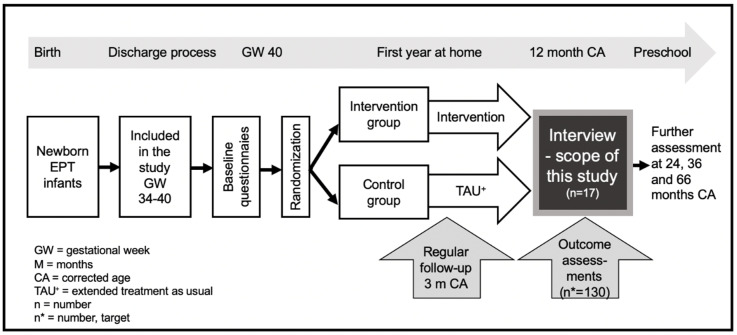
With increasing survival rates of children born extremely preterm (EPT), before gestational week 28, the post-discharge life of these families has gained significant research interest. Quantitative studies of parental experiences post-discharge have previously reported elevated levels depressive symptoms, posttraumatic stress-disorder and anxiety among the parents. The current investigation aims to qualitatively explore the situation for parents of children born EPT in Sweden during the first year at home. Semi-structured interviews were performed with 17 parents of 14 children born EPT; eight parents were from an early intervention group and nine parents from a group that received treatment as usual, with extended follow-up procedures. Three main themes were identified using a thematic analytic approach: child-related concerns, the inner state of the parent, and changed family dynamics. Parents in the intervention group also expressed themes related to the intervention, as a sense of security and knowledgeable interventionists. The results are discussed in relation to different concepts of health, parent–child interaction and attachment, and models of the recovery processes. In conclusion, parents describe the first year at home as a time of prolonged parental worries for the child as well as concerns regarding the parent’s own emotional state.
Overview
CoChat Summary
TL;DR
This qualitative study explored Swedish parents’ experiences during the first year at home with an infant born extremely preterm (EPT), both with and without a post-discharge home-visiting intervention. Parents described prolonged child-related worries, emotional ambivalence, loneliness, and changed family dynamics, while intervention-group parents valued the home visits as providing security and knowledgeable support.
Key findings
- Three main themes captured parents’ first year at home regardless of group: child-related concerns, parental inner state, and changed family dynamics; intervention parents additionally described security, a knowledgeable interventionist, and the intervention as important but not always necessary.
- The sample included 17 parents of 14 children born EPT: eight parents from the intervention group and nine from the control/TAU+ group; children were born from 22+6 to 27+6 gestational weeks (M = 25+6), and were 12 months corrected age ± two weeks at interview.
- Differences in parental reactions within the family were reported in 10 of 14 interviews; more worry, sadness, and complex feelings were reported for the mother in five cases, the father in three, and other differences in two.
- Four children were re-hospitalized after discharge, two immediately after coming home; the paper also states that 2 of the 14 children were readmitted during the first week at home, with parental stories of extreme stress and vivid negative emotions one year later.
Methods
- Qualitative descriptive study using semi-structured interviews with 17 parents of 14 children born EPT, conducted when the child reached one-year corrected age as part of the larger SPIBI study.
- Interviews were performed in the family home in 12 cases and by phone in two cases; total interview time was 287 min, mean 20 min per interview, range 6–39 min, from October 2019 to April 2020.
- Thematic analysis following Braun and Clarke was used inductively; three main themes and nine subthemes were identified for research question I, and separate intervention-related themes were identified for research question II.
Limitations
- Stated: most interviews were frequently interrupted by the one-year-old child, who was present in all interviews but two; the main author/interviewer’s neonatal clinical and research experience may have guided the analytical work, and the multi-professional team’s rich experience may also act as a limitation.
- Stated: results may with caution be generalized to parents of children born EPT in Sweden, but are not considered transferable to parents of premature-born children in Sweden generally, and transnational generalizations are not recommended; families where neither parent spoke Swedish or English were excluded.
- Evident from the text: the sample is small (17 parents, 14 children), mostly mothers (10 families only mother participated, three both parents, one only father), and the study explicitly does not evaluate RCT effects because qualitative outcomes were not predefined.
Model-written summary. Check it against the paper before relying on it.
Integrity signals
Registry
Cites
Statistics
Figures
Verification
Claims the paper makes
10 Valid · 1 Not valid · 21 Not checked · 117 Own results and interpretations
Every source the paper cites for this claim was checked and supports it.
In the paper
“However, parents of children with lower birthweights and/or gestational ages at birth reported more stress than other parents of children born preterm, indicating that higher medical risks may increase parental stress.”
§ Parents’ Experiences of the First Year at Home with an Infant Born Extremely Preterm with and without Post-Discharge Intervention: Ambivalence, Loneliness, and Relationship Impact > 1. Introduction > 1.1. Parental Mental Health Following Premature Birth
What the sources say
- Supportedcites [29] Schappin R. Wijnroks L. Uniken Venema M.M.A.T. Jongmans M.J. Rethinking stress in parents of preterm infants: A meta-analysis PLoS ONE 2013 8 e54992 10.1371/journal.pone.0054992 23405105 PMC3566126 source
The Abstract (Methods and Findings; page not provided) states that parents report more stress for infants with lower gestational ages and birth weights. The Discussion (Birth Weight and Gestational Age; page not provided) confirms the association for life stress and offers greater infant illness as a possible explanation, consistent with the citing sentence’s cautious wording. (LLM, conf=0.93)
plainstates an association- Asserted: passes — The authors put it forward as true.
- Checkable: passes — It can be checked against evidence.
- Load-bearing: unclear — It is unclear whether the paper’s conclusions depend on it.
- Based: passes — The paper gives a reason why it holds.
- Supported
The cited sources support only part of this claim — read each source’s verdict below.
In the paper
“In children born EPT these psychiatric symptoms of the parent may affect the child’s outcomes at preschool age with regard to social and behavioral development [22,23,24].”
§ Parents’ Experiences of the First Year at Home with an Infant Born Extremely Preterm with and without Post-Discharge Intervention: Ambivalence, Loneliness, and Relationship Impact > 1. Introduction > 1.1. Parental Mental Health Following Premature Birth
What the sources say
- Not checked — no full text of the sourcecites [22] Huhtala M. Korja R. Lehtonen L. Haataja L. Lapinleimu H. Munck P. Rautava P. The PIPARI Study Group Parental psychological well-being and cognitive development of very low birth weight infants at 2 years Acta Paediatr. 2011 100 1555 1560 10.1111/j.1651-2227.2011.02428.x 21787372 source
- Not checked — no full text of the sourcecites [23] Huhtala M. Korja R. Lehtonen L. Haataja L. Lapinleimu H. Rautava P. Associations between parental psychological well-being and socio-emotional development in 5-year-old preterm children Early Hum. Dev. 2014 90 119 124 10.1016/j.earlhumdev.2013.12.009 24418104 source
- Partly supportedcites [24] Kleine I. Falconer S. Roth S. Counsell S.J. Redshaw M. Kennea N. Edwards A.D. Nosarti C. Early postnatal maternal trait anxiety is associated with the behavioral outcomes of children born preterm <33 weeks J. Psychiatr. Res. 2020 131 160 168 32977236 PMC7676467 sourceExperimental — accuracy not yet measured
The Discussion (Main findings; page unavailable) associates maternal anxiety with poorer behavioural outcomes and, to a lesser extent, autism symptomatology at preschool age. The Abstract (page unavailable) specifies a cohort born before 33 weeks; the paper does not establish this finding specifically for extremely preterm children or for parental psychiatric symptoms beyond maternal anxiety. (LLM, conf=0.86)
hedgedstates a possible cause- Asserted: passes — The authors put it forward as true.
- Checkable: passes — It can be checked against evidence.
- Load-bearing: unclear — It is unclear whether the paper’s conclusions depend on it.
- Based: passes — The paper gives a reason why it holds.
Every source the paper cites for this claim was checked and supports it.
In the paper
“A systematic review of 97 papers describing recovering processes from mental health found five processes including: connectedness, hope and optimism for the future, identity, meaning of life, and empowerment [69].”
§ Parents’ Experiences of the First Year at Home with an Infant Born Extremely Preterm with and without Post-Discharge Intervention: Ambivalence, Loneliness, and Relationship Impact > 1. Introduction > 1.5. Theoretical Approach of Health and Development
What the sources say
- Supportedcites [69] Leamy M. Bird V. Boutillier C.L. Williams J. Slade M. Conceptual framework for personal recovery in mental health: Systematic review and narrative synthesis Br. J. Psychiatry 2011 199 445 452 10.1192/bjp.bp.110.083733 22130746 source
The Results report that 97 papers were included in the systematic review and identify five recovery processes: connectedness, hope and optimism about the future, identity, meaning in life, and empowerment. These match the citing sentence's count and list. (LLM, conf=0.95)
plain- Asserted: passes — The authors put it forward as true.
- Checkable: passes — It can be checked against evidence.
- Load-bearing: unclear — It is unclear whether the paper’s conclusions depend on it.
- Based: passes — The paper gives a reason why it holds.
- Supported
The sources with a verdict support this claim; the rest weren’t checked yet, have no full text we could read, or their verdicts aren’t rated yet.
In the paper
“The subthemes of the parental inner state are in line with previous reports concerning depressive feelings [18,19,20,21] and stress [27,28].”
§ Parents’ Experiences of the First Year at Home with an Infant Born Extremely Preterm with and without Post-Discharge Intervention: Ambivalence, Loneliness, and Relationship Impact > 4. Discussion
What the sources say
- Not checked — no full text of the sourcecites [18] Holditch-Davis D. Bartlett T.R. Blickman A.L. Miles M.S. Posttraumatic stress symptoms in mothers of premature infants J. Obstet. Gynecol. Neonatal Nurs. 2003 32 161 171 10.1177/0884217503252035 12685667 source
- Not checked — no full text of the sourcecites [19] Holditch-Davis D. Santos H. Levy J. White-Traut R. O’Shea T.M. Geraldo V. David R. Patterns of psychological distress in mothers of preterm infants Infant Behav. Dev. 2015 41 154 163 10.1016/j.infbeh.2015.10.004 26495909 PMC4654120 source
- Not checked — no full text of the sourcecites [20] Kong L.P. Cui Y. Qiu Y.F. Han S.P. Yu Z.B. Guo X.R. Anxiety and depression in parents of sick neonates: A hospital-based study J. Clin. Nurs. 2013 22 1163 1172 10.1111/jocn.12090 23480505 source
- Supportedcites [21] Singer L.T. Salvator A. Guo S. Collin M. Lilien L. Baley J. Maternal psychological distress and parenting stress after the birth of a very low-birth-weight infant JAMA 1999 281 799 805 10.1001/jama.281.9.799 10071000 PMC10189739 source
The Results report clinically significant depressive symptoms among mothers of high-risk very-low-birth-weight infants at two years and greater family stress among mothers of very-low-birth-weight infants at two years. These findings support the cited comparison to previous reports of depressive feelings and stress, specifically for mothers in this population. (LLM, conf=0.91)
- Not checked — no full text of the sourcecites [27] Trombini E. Surcinelli P. Piccioni A. Alessandroni R. Faldella G. Environmental factors associated with stress in mothers of preterm newborns Acta Paediatr. 2008 97 894 898 10.1111/j.1651-2227.2008.00849.x 18474070 source
- Supportedcites [28] Sloan K. Rowe J. Jones L. Stress and coping in fathers following the birth of a preterm infant J. Neonatal Nurs. 2008 14 108 115 10.1016/j.jnn.2007.12.009 source
This source is cited for the stress portion of the sentence, not the depressive-feelings portion. Its Introduction describes preterm birth as a major parental stressor, and its Discussion reports moderate emotional exhaustion among the fathers studied. The supplied copy does not give page numbers. (LLM, conf=0.91)
plainstates an association- Asserted: passes — The authors put it forward as true.
- Checkable: passes — It can be checked against evidence.
- Load-bearing: unclear — It is unclear whether the paper’s conclusions depend on it.
- Based: passes — The paper gives a reason why it holds.
A result the paper reports from its own data — it cites no other source for it, so there is none to check. The quote shows it is in the paper.
In the paper
“Three main themes were identified using a thematic analytic approach: child-related concerns, the inner state of the parent, and changed family dynamics.”
§ Parents’ Experiences of the First Year at Home with an Infant Born Extremely Preterm with and without Post-Discharge Intervention: Ambivalence, Loneliness, and Relationship Impact > Abstract
plainn = 14- Asserted: passes — The authors put it forward as true.
- Checkable: passes — It can be checked against evidence.
- Load-bearing: passes — The paper’s conclusions depend on it.
- Based: passes — The paper gives a reason why it holds.
- Rests on an assumption not shown here.
65 more claims
Create a free account to see all 149 claims and every source verdict.
- Probably not a substantial claim. 52
- It may state two separate claims as one. 38
- The quote only partly states this claim. 1
Claims other papers make about this one
Each is checked against this paper’s own text: does it say what the citing paper says it does?
The source backs part of the claim, not all of it — or backs it for a different population, condition or comparison.
In the citing paper
“some mothers reported strengthened couple relationships following a NICU admission”
From “NICU Doesn’t Stop in the NICU”: Maternal Perspectives of the Impact of a NICU Experience over Time (2026) · cites this paper as Baraldi et al., 2020
Experimental — accuracy not yet measuredThe source backs part of the claim, not all of it — or backs it for a different population, condition or comparison.
In the citing paper
“The face-to-face communication and support provided by in-person home visits was shown to reduce parental stress, anxiety, and fear, increase parental confidence, competency, feeling of being supported, sense of security, and trust in the infant’s capacity (Baraldi et al., 2020; dos Santos et al., 2014; Gund et al., 2013; Kynø et al., 2013; Ravn et al., 2012; Spencer-Smith et al., 2012).”
From Scoping review of interventions to support families with preterm infants post-NICU discharge (2022) · cites this paper as Baraldi et al., 2020
Experimental — accuracy not yet measuredThe source backs part of the claim, not all of it — or backs it for a different population, condition or comparison.
In the citing paper
“Parents who perceived that in-person home visits were helpful also had low maternal parity and low discharge readiness scores; as well their infants had low 1-min Apgar score, low birth weight, young GA, and diagnosis of respiratory distress syndrome and/or intraventricular hemorrhage.”
From Scoping review of interventions to support families with preterm infants post-NICU discharge (2022) · cites this paper as Baraldi et al., 2020
Experimental — accuracy not yet measuredThe source backs part of the claim, not all of it — or backs it for a different population, condition or comparison.
In the citing paper
“The face-to-face communication and support provided by in-person home visits was shown to reduce parental stress, anxiety, and fear, increase parental confidence, competency, feeling of being supported, sense of security, and trust in the infant’s capacity (Baraldi et al., 2020; dos Santos et al., 2014; Gund et al., 2013; Kynø et al., 2013; Ravn et al., 2012; Spencer-Smith et al., 2012).”
From Scoping review of interventions to support families with preterm infants post-NICU discharge (2022) · cites this paper as Baraldi et al., 2020
Experimental — accuracy not yet measured
10 more claims about this paper
Create a free account to see every claim other papers make about this one.
Self-check
Percentages, sums and reported differences re-computed from the paper’s own numbers.
Each contradiction between two passages listed here was confirmed by an independent check.
Rated minor: it would not touch a result — a value no result rests on, a p-value that stays on the same side of the significance level, or a conflict that is clerical, resolved elsewhere in the paper, or outside its own findings.
In the paper
§ Parents’ Experiences of the First Year at Home with an Infant Born Extremely Preterm with and without Post-Discharge Intervention: Ambivalence, Loneliness, and Relationship Impact > 2. Materials and Methods > 2.2. Participants
“Additionally, the eight parents from the intervention group received 10 home-visits by an interventionist.”
§ Parents’ Experiences of the First Year at Home with an Infant Born Extremely Preterm with and without Post-Discharge Intervention: Ambivalence, Loneliness, and Relationship Impact > 2. Materials and Methods > 2.4. The Intervention
“The SPIBI consists of one pre-discharge hospital visit and nine additional home-visits during the first 12 months at home.”
Citations
Cites
Using thematic analysis in psychology
Braun, V., & Clarke, V. (2006) · Qualitative Research in Psychology · doi:10.1191/1478088706qp063oa · Cited by 194,414
Positive psychology: An introduction.
Seligman, M. E. P., & Csikszentmihalyi, M. (2000) · American Psychologist · doi:10.1037/0003-066x.55.1.5 · Cited by 11,351 · cited 2×
“Psychology as a science has been criticized for being ill-equipped at preventing problems, as well as diseases, and a positive psychology approach focusing on resilience and salutogenic strength-based interventions can counter this [81].”
BackgroundThe Lifelong Effects of Early Childhood Adversity and Toxic Stress
Shonkoff, J. P., Garner, A. S., THE COMMITTEE ON PSYCHOSOCIAL ASPECTS OF CHILD AND FAMILY HEALTH, C. O. E. C., Siegel, B. S., Dobbins, M. I., Earls, M. F., Garner, A. S., McGuinn, L., Pascoe, J., & Wood, D. L. (2012) · Pediatrics · doi:10.1542/peds.2011-2663 · Cited by 5,164 · cited 1×
“Since toxic stress during the first years of life and prenatal stress on a child due to severe maternal stress in pregnancy may lead to persisting damage to the stress-response system of the growing brain and affect the individual physically and mentally into adulthood [51], intervening at this early stage is crucial…”
BackgroundSkill formation and the economics of investing in disadvantaged children
Heckman, J. J. (2006) · Science · doi:10.1126/science.1128898 · Cited by 3,559 · cited 1×
“Investments in early interventions have shown a much higher return than later efforts of helping disadvantaged children [52].”
BackgroundLeamy, M., Bird, V., Boutillier, C. L., Williams, J., & Slade, M. (2011) · British Journal of Psychiatry · doi:10.1192/bjp.bp.110.083733 · Cited by 3,038 · cited 2×
“A systematic review of 97 papers describing recovering processes from mental health found five processes including: connectedness, hope and optimism for the future, identity, meaning of life, and empowerment [69].”
BackgroundAssessment of client/patient satisfaction: development of a general scale
Larsen, D. L., Attkisson, C. C., Hargreaves, W. A., & Nguyen, T. D. (1979) · Evaluation and Program Planning · doi:10.1016/0149-7189(79)90094-6 · Cited by 2,887 · cited 1×
“The questions for the intervention group parents concerned the intervention and aimed to give a broader picture of parental perceptions compared to the client-satisfaction questionnaire CSQ-8 [75], which was distributed during the 12-month home-visit [71].”
ResultHuber, M., Knottnerus, J. A., Green, L., Horst, H. V. D., Jadad, A. R., Kromhout, D., Leonard, B., Lorig, K., Loureiro, M. I., Meer, J. W. M. V. D., et al. (2011) · BMJ · doi:10.1136/bmj.d4163 · Cited by 2,637
Born Too Soon: The global epidemiology of 15 million preterm births
Blencowe, H., Cousens, S., Chou, D., Oestergaard, M., Say, L., Moller, A.-B., Kinney, M., Lawn, J., & the Born Too Soon Preterm Birth Action Group (see acknowledgement for full list) (2013) · Reproductive Health · doi:10.1186/1742-4755-10-s1-s2 · Cited by 2,206 · cited 1×
“Over 15 million children worldwide are born premature each year, causing a risk of long-term negative effects for the child and the family; this risk increases the earlier the infant is born and the less qualitative care they receive [1].”
BackgroundManuscripts Accepted for Publication
(2005) · Child Development · doi:10.1111/j.1467-8624.2005.00876.x · Cited by 2,047
Masten, A. S., & Cicchetti, D. (2010) · Development and Psychopathology · doi:10.1017/s0954579410000222 · Cited by 1,800
Flow and the Foundations of Positive Psychology: The Collected Works of Mihaly Csikszentmihalyi
Csikszentmihalyi, M. (2014) · doi:10.1007/978-94-017-9088-8 · Cited by 1,653
Handbook of Research Methods in Health Social Sciences
(2019) · doi:10.1007/978-981-10-5251-4 · Cited by 1,082
A quality study of a medical birth registry
Cnattingius, S., Ericson, A., Gunnarskog, J., & Källén, B. (1990) · Scandinavian Journal of Social Medicine · doi:10.1177/140349489001800209 · Cited by 972 · cited 16×
“According to the Swedish Medical Birth Registry, extreme preterm (EPT) birth (i.e., being born before gestational week 28) affects about 400 children each year in Sweden [3].”
BackgroundInfluentialSinger, L. T. (1999) · JAMA · doi:10.1001/jama.281.9.799 · Cited by 726
Ainsworth, M. D. S., Blehar, M. C., Waters, E., & Wall, S. (2014) · PsycTESTS Dataset · doi:10.1037/t28248-000 · Cited by 641
Als, H. (1982) · Infant Mental Health Journal · doi:10.1002/1097-0355(198224)3:4<229::aid-imhj2280030405>3.0.co;2-h · Cited by 609 · cited 7×
“Parents being offered NIDCAP have reported being more satisfied with the care offered [13] and witness fewer behavioral problems in their infants at the age of three [14], while staff experiences of NIDCAP have been generally positive [15].”
BackgroundInfluentialVigod, S., Villegas, L., Dennis, C., & Ross, L. (2010) · BJOG: An International Journal of Obstetrics & Gynaecology · doi:10.1111/j.1471-0528.2009.02493.x · Cited by 594 · cited 2×
“It seems that depressive symptoms among mothers with children born preterm may continue during the first whole year at home [25].”
BackgroundSerenius, F., Källén, K., Blennow, M., Ewald, U., Fellman, V., Holmström, G., Lindberg, E., Lundqvist, P., Maršál, K., Norman, M., et al. (2013) · JAMA · doi:10.1001/jama.2013.3786 · Cited by 558 · cited 3×
“Previous research clearly shows that leaving the womb three to four months prior to the expected due date has an effect upon both the child [67] and the parent [18–21,27,28], as well as the relationship between the two [47].”
BackgroundMethodFostering family resiliency: a review of the key protective factors
Benzies, K., & Mychasiuk, R. (2009) · Child & Family Social Work · doi:10.1111/j.1365-2206.2008.00586.x · Cited by 494 · cited 2×
“Family resilience is a complex interaction between inhibiting the impact of risk factors and strengthening protective factors [82].”
BackgroundPosttraumatic Stress Symptoms in Mothers of Premature Infants
Holditch-Davis, D., Robin Bartlett, T., Blickman, A. L., & Miles, M. S. (2003) · Journal of Obstetric, Gynecologic & Neonatal Nursing · doi:10.1177/0884217503252035 · Cited by 343
Migration to western industrialised countries and perinatal health: A systematic review
Gagnon, A. J., Zimbeck, M., & Zeitlin, J. (2009) · Social Science & Medicine · doi:10.1016/j.socscimed.2009.06.027 · Cited by 329
KORJA, R., LATVA, R., & LEHTONEN, L. (2012) · Acta Obstetricia et Gynecologica Scandinavica · doi:10.1111/j.1600-0412.2011.01304.x · Cited by 326 · cited 1×
“By contrast, and importantly, a systematic review found that differences in maternal interactions with children born preterm compared to children born at term age was the most evident during the first six months of life, and 5 out of 18 reviewed studies found equal or even higher interaction quality in the preterm mot…”
ResultSerenius, F., Ewald, U., Farooqi, A., Fellman, V., Hafström, M., Hellgren, K., Maršál, K., Ohlin, A., Olhager, E., Stjernqvist, K., et al. (2016) · JAMA Pediatrics · doi:10.1001/jamapediatrics.2016.1210 · Cited by 310 · cited 2×
“Many neurodevelopmental disorders are commonly discovered later, during the child’s preschool-years [67,85].”
BackgroundSelf-citationBenoit, D., Parker, K. C. H., & Zeanah, C. H. (1997) · Journal of Child Psychology and Psychiatry · doi:10.1111/j.1469-7610.1997.tb01515.x · Cited by 300
From alienation to familiarity: experiences of mothers and fathers of preterm infants
Jackson, K., Ternestedt, B., & Schollin, J. (2003) · Journal of Advanced Nursing · doi:10.1046/j.1365-2648.2003.02686.x · Cited by 279 · cited 2×
“This raises the question of how long this identity is helpful for the parents and when, if at any time, primarily seeing oneself as a regular parent becomes beneficial? One should be aware that parental processes of children born preterm change over time [38], and what is considered an important theme one-year post-di…”
BackgroundParenting Behavior Is Associated With the Early Neurobehavioral Development of Very Preterm Children
Treyvaud, K., Anderson, V. A., Howard, K., Bear, M., Hunt, R. W., Doyle, L. W., Inder, T. E., Woodward, L., & Anderson, P. J. (2009) · Pediatrics · doi:10.1542/peds.2008-0477 · Cited by 249 · cited 1×
“Specifically, when it comes to neurodevelopmental outcomes for children born very preterm, the parent–child synchrony has been suggested as the most important factor for positive outcomes at two years of age [55].”
BackgroundNIDCAP: A Systematic Review and Meta-analyses of Randomized Controlled Trials
Ohlsson, A., & Jacobs, S. E. (2013) · Pediatrics · doi:10.1542/peds.2012-2121 · Cited by 249 · cited 1×
“The medical long-term effects are yet to be fully known, even though singular studies have reported positive results and no study has noted adverse effects [16,17].”
BackgroundRethinking stress in parents of preterm infants: a meta-analysis
Schappin, R., Wijnroks, L., Uniken Venema, M. M. A. T., & Jongmans, M. J. (2013) · PLoS ONE · doi:10.1371/journal.pone.0054992 · Cited by 230 · cited 1×
“However, a meta-analysis of more than 3000 parents of preterm (<37 gestational weeks, GW) and low-birthweight (<2500 g) infants found only slightly more stress in parents of children born preterm compared to parents of children born at term age when measured during the first year at home, as well as later [29], sugges…”
BackgroundVery Preterm Birth Influences Parental Mental Health and Family Outcomes Seven Years after Birth
Treyvaud, K., Lee, K. J., Doyle, L. W., & Anderson, P. J. (2014) · The Journal of Pediatrics · doi:10.1016/j.jpeds.2013.11.001 · Cited by 213 · cited 1×
“In order to reach health as defined by the WHO, efforts targeting the mental and social aspects of health in particular should be implemented, since preterm birth seems to affect family systems for several years [68].”
Jeanne Brooks-gunn, B., Klebanov, P. K., Liaw, F.-R., & Spiker, D. (1993) · Child Development · doi:10.1111/j.1467-8624.1993.tb02940.x · Cited by 207 · cited 2×
“Some of the most influential programs are the Infant Behavioural Assessment and Intervention Program (IBAIP), the ToP programme [56–58], the modified Mother Infant Transaction Program (MITP) [59], and the Infant Health and Development Program (IHDP) [60], all of which aim to understand infants’ behavioral cues and res…”
MethodAls, H., Butler, S., Kosta, S., & McAnulty, G. (2005) · Mental Retardation and Developmental Disabilities Research Reviews · doi:10.1002/mrdd.20053 · Cited by 196 · cited 1×
“This cue-based thinking comes from Als’ synactive theory [11], where the autonomic, motor, state organization, attention, and self-regulation of the infant [61] are observed and the parental response is adjusted accordingly.”
BackgroundPatterns of psychological distress in mothers of preterm infants
Holditch-Davis, D., Santos, H., Levy, J., White-Traut, R., O'Shea, T. M., Geraldo, V., & David, R. (2015) · Infant Behavior and Development · doi:10.1016/j.infbeh.2015.10.004 · Cited by 193 · cited 2×
“Some 20% of parents of children that were born very preterm still exhibit posttraumatic stress symptoms two years post-partum [26], while mothers of children born preterm who exhibit extreme or high amounts of distress, depression, or anxiety in the neonatal unit have an elevated risk of experiencing psychological dis…”
BackgroundBonding in neonatal intensive care units: Experiences of extremely preterm infants’ mothers
Fernández Medina, I. M., Granero-Molina, J., Fernández-Sola, C., Hernández-Padilla, J. M., Camacho Ávila, M., & López Rodríguez, M. D. M. (2018) · Women and Birth · doi:10.1016/j.wombi.2017.11.008 · Cited by 192 · cited 1×
“Feelings of emptiness and self-perceived difficulties of estrangement have also been reported but mothers often describe how they eventually managed to form a bond with their child despite these difficulties [50].”
BackgroundNewnham, C. A., Milgrom, J., & Skouteris, H. (2009) · Infant Behavior and Development · doi:10.1016/j.infbeh.2008.09.004 · Cited by 190 · cited 2×
“Some of the most influential programs are the Infant Behavioural Assessment and Intervention Program (IBAIP), the ToP programme [56–58], the modified Mother Infant Transaction Program (MITP) [59], and the Infant Health and Development Program (IHDP) [60], all of which aim to understand infants’ behavioral cues and res…”
MethodTreyvaud, K., Spittle, A., Anderson, P. J., & O'Brien, K. (2019) · Early Human Development · doi:10.1016/j.earlhumdev.2019.104838 · Cited by 160
Kleberg, A., Westrup, B., & Stjernqvist, K. (2000) · Early Human Development · doi:10.1016/s0378-3782(00)00114-6 · Cited by 142 · cited 1×
“Parents being offered NIDCAP have reported being more satisfied with the care offered [13] and witness fewer behavioral problems in their infants at the age of three [14], while staff experiences of NIDCAP have been generally positive [15].”
BackgroundSelf-citationMirlashari, J., Brown, H., Fomani, F. K., de Salaberry, J., Zadeh, T. K., & Khoshkhou, F. (2019) · Journal of Pediatric Nursing · doi:10.1016/j.pedn.2019.06.013 · Cited by 142
Jacobs, S. E., Sokol, J., & Ohlsson, A. (2002) · The Journal of Pediatrics · doi:10.1067/mpd.2002.123667 · Cited by 138 · cited 1×
“The medical long-term effects are yet to be fully known, even though singular studies have reported positive results and no study has noted adverse effects [16,17].”
BackgroundKleberg, A., Westrup, B., Stjernqvist, K., & Lagercrantz, H. (2002) · Early Human Development · doi:10.1016/s0378-3782(02)00014-2 · Cited by 138
Self-citationBrooks-Gunn, J., Klebanov, P. K., Liaw, F.-R., & Spiker, D. (1993) · Child Development · doi:10.2307/1131215 · Cited by 137
Huhtala, M., Korja, R., Lehtonen, L., Haataja, L., Lapinleimu, H., & Rautava, P. (2014) · Early Human Development · doi:10.1016/j.earlhumdev.2013.12.009 · Cited by 127
Koldewijn, K., Leemhuis, A. G., Wolf, M., Meijssen, D., Houtzager, B. A., Beelen, A., Kok, J. H., & Nollet, F. (2009) · The Journal of Pediatrics · doi:10.1016/j.jpeds.2009.09.009 · Cited by 124
Koldewijn, K., Wolf, M., Leemhuis, A. G., Meijssen, D., van Sonderen, L., van Baar, A. L., Beelen, A., Nollet, F., & Kok, J. H. (2008) · The Journal of Pediatrics · doi:10.1016/j.jpeds.2008.07.039 · Cited by 114
Early intervention programmes for infants at high risk of atypical neurodevelopmental outcome
Hutchon, B., Gibbs, D., Harniess, P., Jary, S., Crossley, S., Moffat, J., Basu, N., & Basu, A. P. (2019) · Developmental Medicine & Child Neurology · doi:10.1111/dmcn.14187 · Cited by 107 · cited 1×
“To be effective, early intervention programs for infants with a high risk of atypical neurodevelopmental outcomes should target environmental enrichment, attuned parental responses, early communication skills, adjustments of sensory information for the child, and the promotion of motor development through scaffolding…”
BackgroundSmith, V. C., SteelFisher, G. K., Salhi, C., & Shen, L. Y. (2012) · Journal of Perinatal & Neonatal Nursing · doi:10.1097/jpn.0b013e318270ffe5 · Cited by 106 · cited 20×
“Family-centered care may be summarized as a philosophy, as well as a practice of NICU care, where information is shared, parents are welcome to participate and collaborate with ward staff, and respect and dignity take precedence [9,10].”
BackgroundInfluentialParent and nurse perceptions on the quality of family-centred care in 11 European NICUs
Raiskila, S., Lehtonen, L., Tandberg, B. S., Normann, E., Ewald, U., Caballero, S., Varendi, H., Toome, L., Nordhov, S. M., Hallberg, B., et al. (2016) · Australian Critical Care · doi:10.1016/j.aucc.2016.09.003 · Cited by 100 · cited 2×
“Family-centered care may be summarized as a philosophy, as well as a practice of NICU care, where information is shared, parents are welcome to participate and collaborate with ward staff, and respect and dignity take precedence [9,10].”
BackgroundSelf-citationAls, H. (2009) · Journal of Neonatal-Perinatal Medicine · doi:10.3233/npm-2009-0061 · Cited by 95 · cited 6×
“Parents being offered NIDCAP have reported being more satisfied with the care offered [13] and witness fewer behavioral problems in their infants at the age of three [14], while staff experiences of NIDCAP have been generally positive [15].”
BackgroundInfluentialEnvironmental factors associated with stress in mothers of preterm newborns
Trombini, E., Surcinelli, P., Piccioni, A., Alessandroni, R., & Faldella, G. (2008) · Acta Paediatrica · doi:10.1111/j.1651-2227.2008.00849.x · Cited by 78 · cited 2×
“The subthemes of the parental inner state are in line with previous reports concerning depressive feelings [18–21] and stress [27,28].”
BackgroundResultHandbook of Early Childhood Special Education
Odom, S. L., Barton, E. E., Boyd, B. A., et al. (2016) · doi:10.1007/978-3-319-28492-7 · Cited by 77
Neonatal individualized care in practice: a Swedish experience
Westrup, B., Stjernqvist, K., Kleberg, A., Hellström-Westas, L. K., & Lagercrantz, H. (2002) · Seminars in Neonatology · doi:10.1053/siny.2002.0150 · Cited by 77 · cited 1×
“Parents being offered NIDCAP have reported being more satisfied with the care offered [13] and witness fewer behavioral problems in their infants at the age of three [14], while staff experiences of NIDCAP have been generally positive [15].”
BackgroundSelf-citationStress and coping in fathers following the birth of a preterm infant
Sloan, K., Rowe, J., & Jones, L. (2008) · Journal of Neonatal Nursing · doi:10.1016/j.jnn.2007.12.009 · Cited by 76 · cited 2×
“The subthemes of the parental inner state are in line with previous reports concerning depressive feelings [18–21] and stress [27,28].”
BackgroundResultKleberg, A., Hellström-Westas, L. K., & Widström, A. (2006) · Early Human Development · doi:10.1016/j.earlhumdev.2006.05.024 · Cited by 74 · cited 1×
“Parental experiences of NICU stay have been previously researched [4,5], where the amount of stress and disease is often related to the degree of infant- and family-centered developmental care (IFCDC) (e.”
BackgroundPredictors of parenting stress trajectories in premature infant–mother dyads.
Spinelli, M., Poehlmann, J., & Bolt, D. (2013) · Journal of Family Psychology · doi:10.1037/a0034652 · Cited by 71 · cited 1×
“Levels of parental stress vary significantly between families with children born preterm [30] and it has been suggested that maternal stress relates more to role restriction, while paternal stress relates more to social isolation [31].”
BackgroundFamily-centered developmentally supportive care: The Swedish example
Westrup, B. (2015) · Archives de Pédiatrie · doi:10.1016/j.arcped.2015.07.005 · Cited by 68 · cited 1×
“Even though Sweden has active and advanced NICUs and family-centered developmental care [7], feelings of emptiness and isolation are not uncommon post-discharge.”
BackgroundSelf-citationAbuidhail, J., Al-Motlaq, M., Mrayan, L., & Salameh, T. (2017) · Journal of Nursing Research · doi:10.1097/jnr.0000000000000134 · Cited by 67 · cited 1×
“The initial lack of control and proximity to the baby at the neonatal unit, from both psychological and physical perspectives, has been described as leading to feelings of disempowerment [32], grief [33], and mixed emotional experiences of sadness, guilt, anxiety, and worry [34] or even shock [35].”
BackgroundSerlachius, A., Hames, J., Juth, V., Garton, D., Rowley, S., & Petrie, K. J. (2018) · Journal of Paediatrics and Child Health · doi:10.1111/jpc.14063 · Cited by 64 · cited 1×
“The initial lack of control and proximity to the baby at the neonatal unit, from both psychological and physical perspectives, has been described as leading to feelings of disempowerment [32], grief [33], and mixed emotional experiences of sadness, guilt, anxiety, and worry [34] or even shock [35].”
BackgroundWielenga, J. M., Smit, B. J., & Unk, L. K. A. (2006) · Journal of Nursing Care Quality · doi:10.1097/00001786-200601000-00010 · Cited by 61
Life After Discharge: What Parents of Preterm Infants Say About Their Transition to Home
Boykova, M. (2016) · Newborn and Infant Nursing Reviews · doi:10.1053/j.nainr.2016.03.002 · Cited by 60 · cited 2×
“The transition from being at the hospital to being at home with a child born preterm has been described as a challenge filled with joy and accompanied by worry, fatigue, social isolation, and misunderstanding, among other issues [39].”
BackgroundAnxiety and depression in parents of sick neonates: a hospital‐based study
Kong, L., Cui, Y., Qiu, Y., Han, S., Yu, Z., & Guo, X. (2013) · Journal of Clinical Nursing · doi:10.1111/jocn.12090 · Cited by 57
Home Visiting Programs: What the Primary Care Clinician Should Know
Finello, K. M., Terteryan, A., & Riewerts, R. J. (2016) · Current Problems in Pediatric and Adolescent Health Care · doi:10.1016/j.cppeds.2015.12.011 · Cited by 55 · cited 2×
“This highlights that there may be reasons to tailor the service to each specific family [53].”
BackgroundHuhtala, M., Korja, R., Lehtonen, L., Haataja, L., Lapinleimu, H., Munck, P., Rautava, P., & the PIPARI Study Group (2011) · Acta Paediatrica · doi:10.1111/j.1651-2227.2011.02428.x · Cited by 54
A Practice-Oriented Review of Health Concepts
Haverkamp, B., Bovenkerk, B., & Verweij, M. F. (2018) · The Journal of Medicine and Philosophy A Forum for Bioethics and Philosophy of Medicine · doi:10.1093/jmp/jhy011 · Cited by 53 · cited 1×
“Several other definitions of health have been discussed, including the absence of disease, the ability to realize vital goals, and a state of total well-being [65].”
BackgroundPosttraumatic stress symptoms in mothers and fathers of very preterm infants over the first 2 years
Pace, C. C., Anderson, P. J., Lee, K. J., Spittle, A. J., & Treyvaud, K. (2020) · Journal of Developmental & Behavioral Pediatrics · doi:10.1097/dbp.0000000000000828 · Cited by 49 · cited 1×
“Some 20% of parents of children that were born very preterm still exhibit posttraumatic stress symptoms two years post-partum [26], while mothers of children born preterm who exhibit extreme or high amounts of distress, depression, or anxiety in the neonatal unit have an elevated risk of experiencing psychological dis…”
BackgroundChinese Parents' Lived Experiences of having Preterm Infants in NICU: A Qualitative Study
Yu, X., Zhang, J., & Yuan, L. (2020) · Journal of Pediatric Nursing · doi:10.1016/j.pedn.2019.11.002 · Cited by 47
Migration and preterm birth in war refugees: a Swedish cohort study
Liu, C., Urquia, M. L., Cnattingius, S., & Hjern, A. (2014) · European Journal of Epidemiology · doi:10.1007/s10654-013-9877-9 · Cited by 45 · cited 1×
“Previous research has suggested that migrating to Sweden may increase the risk of giving birth preterm during the first year [88], a result partly confirmed by international data [89], even though clear conclusions are difficult to draw since the definition of migration is not standardized.”
BackgroundSolhaug, M., Bjørk, I. T., & Sandtrø, H. P. (2010) · Journal of Pediatric Nursing · doi:10.1016/j.pedn.2009.11.004 · Cited by 44
Quality of attachment in infants less than 1500g or less than 32weeks. Related factors
López-Maestro, M., Sierra-Garcia, P., Diaz-Gonzalez, C., Torres-Valdivieso, M. J., Lora-Pablos, D., Ares-Segura, S., & Pallás-Alonso, C. R. (2017) · Early Human Development · doi:10.1016/j.earlhumdev.2016.11.003 · Cited by 43
Navne, L. E., Svendsen, M. N., & Gammeltoft, T. M. (2017) · Medical Anthropology Quarterly · doi:10.1111/maq.12412 · Cited by 40 · cited 1×
“Parents in a Danish study conducted in the NICU described hesitancy during early bonding with their child when the child had lower chances of survival [49], which is in line with previously mentioned findings that the first months are imperative when it comes to parent–child interaction in EPT-born dyads.”
ResultLundberg, B., Lindgren, C., Palme‐Kilander, C., Örtenstrand, A., Bonamy, A. E., & Sarman, I. (2016) · Acta Paediatrica · doi:10.1111/apa.13393 · Cited by 39 · cited 2×
“In Stockholm, all children born EPT are offered hospital-assisted home care visits as long as the child is tube-fed or in need of extra oxygen supply [72].”
BackgroundNeeds of Grandparents of Preschool-Aged Children with ASD in Sweden
Engstrand, R. Z., Roll‐Pettersson, L., Allodi, M. W., & Hirvikoski, T. (2019) · Journal of Autism and Developmental Disorders · doi:10.1007/s10803-019-03946-w · Cited by 34 · cited 1×
“A recent study on the intergenerational perspective of families with a child diagnosed with autism spectrum disorder in Sweden suggested that grandparents expressed a strong interest in receiving more information about the grandchild’s special needs and how to support the family in difficult times [79].”
BackgroundSelf-citationFlierman, M., Koldewijn, K., Meijssen, D., van Wassenaer-Leemhuis, A., Aarnoudse-Moens, C., van Schie, P., & Jeukens-Visser, M. (2016) · The Journal of Pediatrics · doi:10.1016/j.jpeds.2016.05.071 · Cited by 31
Schmöker, A., Flacking, R., Udo, C., Eriksson, M., Hellström‐Westas, L., & Ericson, J. (2020) · Acta Paediatrica · doi:10.1111/apa.15185 · Cited by 27 · cited 1×
“Levels of parental stress vary significantly between families with children born preterm [30] and it has been suggested that maternal stress relates more to role restriction, while paternal stress relates more to social isolation [31].”
BackgroundBaraldi, E., Allodi, M. W., Löwing, K., Smedler, A.-C., Westrup, B., & Ådén, U. (2020) · BMC Pediatrics · doi:10.1186/s12887-020-1934-4 · Cited by 25
Self-citationIreland, S., Ray, R. A., Larkins, S., & Woodward, L. (2019) · BMJ Open · doi:10.1136/bmjopen-2018-026344 · Cited by 20 · cited 3×
“About the time perspective, the emotional distress of parenting a critically ill newborn who has received care at a NICU does not seem to fade easily, and both grief and disempowerment, as well as the remembrance of family support and parental strengths, may persist for several years [33].”
BackgroundKleine, I., Falconer, S., Roth, S., Counsell, S. J., Redshaw, M., Kennea, N., Edwards, A. D., & Nosarti, C. (2020) · Journal of Psychiatric Research · doi:10.1016/j.jpsychires.2020.09.010 · Cited by 19
Widding, U., & Farooqi, A. (2016) · Feminism & Psychology · doi:10.1177/0959353516636149 · Cited by 19
Hobbs, J. E., Tschudy, M. M., Hussey‐Gardner, B., Jennings, J. M., & Boss, R. D. (2017) · Birth · doi:10.1111/birt.12301 · Cited by 18 · cited 2×
“Discussion concerning discharge planning is not new [40] and the transition from hospital to home has previously been described as a challenge and a potentially socially disruptive experience [39].”
BackgroundPersonal Growth 4 Years after Premature Childbirth: The Role of Change in Maternal Mental Health
Porat-Zyman, G., Taubman – Ben-Ari, O., Kuint, J., & Morag, I. (2019) · Journal of Happiness Studies · doi:10.1007/s10902-018-0012-1 · Cited by 11 · cited 1×
“In the long term, there is also evidence (four years after giving birth) of greater personal growth among mothers that give birth preterm compared to mothers that give birth in the expected time [42], even though initial maternal mental health seems to be a mediating factor.”
Background
Research works printed but not linked: 1
- Corbin J. Strauss A. Basics of Qualitative Research 3rd ed. Sage Publications, Inc. Newbury Park, CA, USA 2008
Cited by
Scoping review of interventions to support families with preterm infants post-NICU discharge
Griffith, T., Singh, A., Naber, M., Hummel, P., Bartholomew, C., Amin, S., White-Traut, R., & Garfield, L. (2022) · Journal of Pediatric Nursing · doi:10.1016/j.pedn.2022.08.014 · Cited by 76
Øberg, G. K., Sørvoll, M., Labori, C., Girolami, G. L., & Håkstad, R. B. (2023) · Frontiers in Psychology · doi:10.3389/fpsyg.2023.1172578 · Cited by 26
“Regardless of the timing of the intervention parents indicated that learning about the infant capacities and developmental changes, as well as understanding their direct interaction with and facilitation of their child’s active participation, was a turning point in their relationship with and perception of their child…”
BackgroundInfluentialHaemmerli, N. S., Stoffel, L., Schmitt, K., Khan, J., Humpl, T., Nelle, M., & Cignacco, E. (2022) · International Journal of Environmental Research and Public Health · doi:10.3390/ijerph19074309 · Cited by 34
“Parents who participated in a Swedish post-discharge program highlighted the importance of feeling secure and of being supported by a specialized health care professional from the hospital who guaranteed continuity of care and focused on the resources and strengths of the family [35].”
BackgroundHaslbeck, F. B., Schmidli, L., Bucher, H. U., & Bassler, D. (2021) · International Journal of Environmental Research and Public Health · doi:10.3390/ijerph18126678 · Cited by 29
“Indeed, engaging in social media sharing has been reported as a helpful coping strategy by several authors [62,63].”
BackgroundResultPerinatal care for the extremely preterm infant
Usuda, H., Carter, S. W. D., Takahashi, T., Newnham, J. P., Fee, E. L., Jobe, A. H., & Kemp, M. W. (2022) · Seminars in Fetal and Neonatal Medicine · doi:10.1016/j.siny.2022.101334 · Cited by 24
Metadata
- Authors
- Baraldi, E., Allodi, M. W., Smedler, A.-C., Westrup, B., Löwing, K., & Ådén, U.
- Affiliations
- Stockholm University (SE)
- Karolinska Institutet (SE)
- Karolinska University Hospital (SE)
- Corresponding author
- Baraldi, Erika
- Venue
- International Journal of Environmental Research and Public Health
- Publisher
- MDPI AG
- Published
- 2020-12-13
- Volume
- 17
- Issue
- 24
- Pages
- 9326
- ISSN
- 1660-4601 (ISSN-L)
- PMC
- PMC7764273
- OpenAlex
- W3112818087
- Cited by
- 52
- References
- 81
- Citations by year
- 2026: 9 · 2025: 3 · 2024: 5 · 2023: 12 · 2022: 20 · 2021: 3
- FWCI
- 8.38
- Type
- journal article
- Language
- en
- Open access
- gold
- doi.org
- Licence
- Locations
- International Journal of Environmental Research and Public Health (publishedVersion, cc-by)
- PubMed Central (publishedVersion, cc-by)
- PubMed (publishedVersion)
- RePEc: Research Papers in Economics (submittedVersion)
- DOAJ (DOAJ: Directory of Open Access Journals) (submittedVersion)
- Funders
- Stockholm County Council and Stockholm University collaboration (SU-SLL no. 20160881, SU/SLL no. 2019-0843)
- Centrum för kompetensutveckling inom vård och omsorg at Stockholm University (CKVO) (SU FV 2.1.1 - 402417)
- Clas Groschinsky’s Memorial Fund (no. SF 18 109)
- Queen Silvia Jubilee Fund for research on children and disability (13th of December 2017)
- Filénska fonden (2017/2018)
- The research fund for small children (Lilla Barnets fond) (2019)
- Swedish Medical Research Council (2017-03043)
- the regional agreement on medical training and clinical research (ALF SLL 20170243)
- the Swedish Medical Society and the Swedish Brain Foundation (FO2019-0045)
- Topics
- Health Sciences › Medicine › Pediatrics, Perinatology and Child Health › Infant Development and Preterm Care
- Social Sciences › Psychology › Clinical Psychology › Family and Disability Support Research
- Health Sciences › Medicine › Public Health, Environmental and Occupational Health › Maternal Mental Health During Pregnancy and Postpartum
- Keywords
- extremely preterm infants, parental experiences, post-discharge care, early intervention, parental loneliness, ambivalence, family dynamics, parent-child attachment, parental emotional state, recovery process
- MeSH terms
- Aftercare, Humans, Infant, Loneliness, Parents, Patient Discharge, Sweden, Infant, Extremely Premature
About these checks
Registry, retraction, Cites and statistics results are computed, not judged, with one exception: a printed reference that no index lists is read once by a model before it counts as a citation error. Claims are extracted by a model and kept only when their quote appears verbatim in the text; each cited source is then checked, with a model’s help, for whether it says what the claim relies on. Those verdicts can be wrong — read the claim’s quote and the cited source before relying on one.
The claim verdicts this report counts are experimental: their accuracy is not yet measured.
A language model drew the claims from the paper on 2026-10-12, under version 3 of the claim definition (model deepseek-v4.1-flash, prompt extract-v3).
A second model labelled each claim on 2026-10-12 (model jev-1.13-20260917, definition revision gold-guideline-v0.2).
Cited sources are checked with a language model’s help (gpt-6-sol).
Statistics and arithmetic are recomputed, not judged.
Confidence bands are shown only for fields calibrated on our annotated test set. None is calibrated yet, so no band is shown.
What counts as a claim ›How we measure confidence ›How we check this ›
Are you an author, or do you see a problem with this page? Request a review
Data sources
Bibliographic data: Semantic Scholar, OpenAlex, Crossref.
Contains information from the Semantic Scholar Academic Graph Datasets, made available under the ODC Attribution License (ODC-BY 1.0).
Semantic Scholar’s data is described in: Kinney, R., et al. (2023). The Semantic Scholar Open Data Platform. arXiv:2301.10140.
