

The Roles of Autophagy in Cancer
Open accessThe DOI matches its Crossref record; 185 of the 187 references it cites were found in a registry or an index.
Abstract
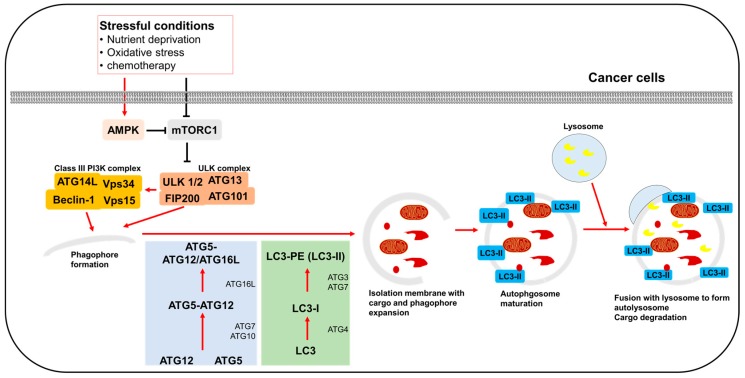
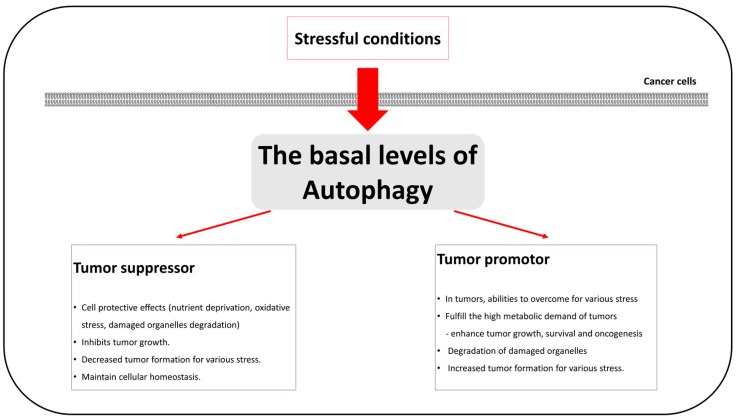
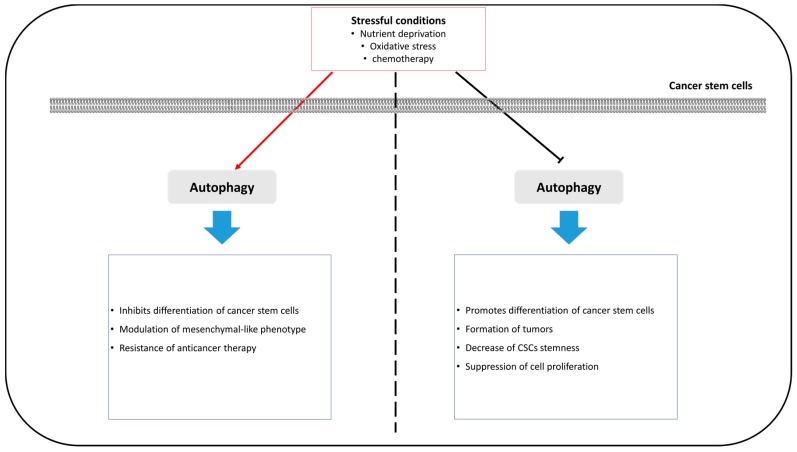
Autophagy is an intracellular degradative process that occurs under several stressful conditions, including organelle damage, the presence of abnormal proteins, and nutrient deprivation. The mechanism of autophagy initiates the formation of autophagosomes that capture degraded components and then fuse with lysosomes to recycle these components. The modulation of autophagy plays dual roles in tumor suppression and promotion in many cancers. In addition, autophagy regulates the properties of cancer stem-cells by contributing to the maintenance of stemness, the induction of recurrence, and the development of resistance to anticancer reagents. Although some autophagy modulators, such as rapamycin and chloroquine, are used to regulate autophagy in anticancer therapy, since this process also plays roles in both tumor suppression and promotion, the precise mechanism of autophagy in cancer requires further study. In this review, we will summarize the mechanism of autophagy under stressful conditions and its roles in tumor suppression and promotion in cancer and in cancer stem-cells. Furthermore, we discuss how autophagy is a promising potential therapeutic target in cancer treatment.
Overview
The claims and statistics of this paper haven’t been checked yet.
Free: it reads the open-access text and checks the first 5 claims that cite a source we can check. Create a free account to check every claim.
Integrity signals
Registry
Cites
Statistics
Figures
Verification
Claims the paper makes
The claims and statistics of this paper haven’t been checked yet.
Free: it reads the open-access text and checks the first 5 claims that cite a source we can check. Create a free account to check every claim.
Claims other papers make about this one
Each is checked against this paper’s own text: does it say what the citing paper says it does?
The cited source says what the claim attributes to it.
In the citing paper
“In cancer cells, autophagy plays dual roles in tumor promotion and suppression.48”
From Reactive Oxygen Species in Cancer: Current Findings and Future Directions (2021) · cites this paper as [48]
In the citing paper
“Although autophagy can play dual roles in both tumor promotion and suppression (Yun and Lee, 2018), in terms of chemotherapy autophagy is usually considered as a mechanism of drug-resistance against therapeutics.”
From An Arthropod Hormone, Ecdysterone, Inhibits the Growth of Breast Cancer Cells via Different Mechanisms (2020) · cites this paper as Yun and Lee, 2018
Self-check
Percentages, sums and reported differences re-computed from the paper’s own numbers.
The self-check needs the paper’s full text.
Citations
Cites
2 retracted
Mariño, G., Salvador-Montoliu, N., Fueyo, A., Knecht, E., Mizushima, N., & López-Otín, C. (2007) · Journal of Biological Chemistry · doi:10.1074/jbc.m701194200 · Cited by 407 · cited 1×
“Mice deficient in ATG4 have been observed to have increased susceptibility to the generation of fibrosarcomas when exposed to chemical carcinogens [67].”
BackgroundRetractedSui, X., Kong, N., Wang, X., Fang, Y., Hu, X., Xu, Y., Chen, W., Wang, K., Li, D., Jin, W., et al. (2014) · Scientific Reports · doi:10.1038/srep04694 · Cited by 96
RetractedRepertoires of Autophagy in the Pathogenesis of Ocular Diseases
Li, Y.-J., Jiang, Q., Cao, G.-F., Yao, J., & Yan, B. (2015) · Cellular Physiology and Biochemistry · doi:10.1159/000373980 · Cited by 16,304
Prospective identification of tumorigenic breast cancer cells
Al-Hajj, M., Wicha, M. S., Benito-Hernandez, A., Morrison, S. J., & Clarke, M. F. (2003) · Proceedings of the National Academy of Sciences · doi:10.1073/pnas.0530291100 · Cited by 10,370 · cited 1×
“In breast cancer stem-cells, a previous study has shown that CSCs contribute to the recurrence of cancer and metastasis [142].”
BackgroundThe basics of epithelial-mesenchymal transition
Kalluri, R., & Weinberg, R. A. (2009) · Journal of Clinical Investigation · doi:10.1172/jci39104 · Cited by 10,196
Epithelial-Mesenchymal Transitions in Development and Disease
Thiery, J. P., Acloque, H., Huang, R. Y. J., & Nieto, M. A. (2009) · Cell · doi:10.1016/j.cell.2009.11.007 · Cited by 9,931 · cited 1×
“These processes induce metastasis of cancer, leading to a lack of cell-cell adhesion, cell polarity to increase of cell motility, polarity, and invasiveness [111,112].”
BackgroundAMPK and mTOR regulate autophagy through direct phosphorylation of Ulk1
Kim, J., Kundu, M., Viollet, B., & Guan, K.-L. (2011) · Nature Cell Biology · doi:10.1038/ncb2152 · Cited by 7,227 · cited 1×
“mTORC1 is regulated by AMP-activated protein kinase (AMPK), and inhibition of mTORC1 and increased AMPK induces the autophagic process [26,27].”
BackgroundOncology meets immunology: the cancer-immunity cycle.
Chen, D. S., & Mellman, I. (2013) · Immunity · doi:10.1016/j.immuni.2013.07.012 · Cited by 6,929 · cited 1×
“Cancer neoantigen is released into the surrounding environment and presented to T cells, and then cancer cells are killed through T cell-mediated cytotoxicity [131].”
BackgroundLC3, a mammalian homologue of yeast Apg8p, is localized in autophagosome membranes after processing.
Kabeya, Y., Mizushima, N., Ueno, T., Yamamoto, A., Kirisako, T., Noda, T., Kominami, E., Ohsumi, Y., & Yoshimori, T. (2000) · The EMBO Journal · doi:10.1093/emboj/19.21.5720 · Cited by 6,605
Cui, C., Cui, J., Jin, F., Cui, Y., Li, R., Jiang, X., Tian, Y., Wang, K., Jiang, P., & Gao, J. (2017) · Cellular Physiology and Biochemistry · doi:10.1159/000479571 · Cited by 5,203
Cited by
Reactive Oxygen Species in Cancer: Current Findings and Future Directions
Nakamura, H., & Takada, K. (2021) · Cancer Science · doi:10.1111/cas.15068 · Cited by 1,027
Targeting the RAS/RAF/MAPK pathway for cancer therapy: from mechanism to clinical studies
Bahar, M. E., Kim, H. J., & Kim, D. R. (2023) · Signal Transduction and Targeted Therapy · doi:10.1038/s41392-023-01705-z · Cited by 888
EMT, cancer stem cells and autophagy; The three main axes of metastasis
Babaei, G., Aziz, S. G.-G., & Jaghi, N. Z. Z. (2021) · Biomedicine & Pharmacotherapy · doi:10.1016/j.biopha.2020.110909 · Cited by 506
Life, death, and autophagy in cancer: NF-κB turns up everywhere
Verzella, D., Pescatore, A., Capece, D., Vecchiotti, D., Ursini, M. V., Franzoso, G., Alesse, E., & Zazzeroni, F. (2020) · Cell Death & Disease · doi:10.1038/s41419-020-2399-y · Cited by 344
Khandia, R., Dadar, M., Munjal, A., Dhama, K., Karthik, K., Tiwari, R., Yatoo, M. I., Iqbal, H. M. N., Singh, K. P., Joshi, S. K., et al. (2019) · Cells · doi:10.3390/cells8070674 · Cited by 314
“The roles of autophagy have been explored in fields such as health, disease, infection, degeneration, and genetic or lifestyle-acquired diseases [18–21]; however, cancer [7,22], microbial infections [20,21,23], and degenerative diseases [18,24] have been the main focus of autophagy-related research.”
BackgroundTumour treating fields therapy for glioblastoma: current advances and future directions
Rominiyi, O., Vanderlinden, A., Clenton, S. J., Bridgewater, C., Al-Tamimi, Y., & Collis, S. J. (2021) · British Journal of Cancer · doi:10.1038/s41416-020-01136-5 · Cited by 315
“During the early phases of cancer initiation, the upregulation of autophagy exhibits tumour-suppressive functions, whereas autophagy can be activated to promote cancer cell survival and treatment resistance during the later stages of cancer development.(67) Previous studies have demonstrated that TTFields-treated cell…”
BackgroundOverview of the Mechanisms of Oxidative Stress: Impact in Inflammation of the Airway Diseases
Albano, G. D., Gagliardo, R. P., Montalbano, A. M., & Profita, M. (2022) · Antioxidants · doi:10.3390/antiox11112237 · Cited by 256
“Autophagy plays a major role in the first line of defense against antioxidant damage and regulates cell homoeostasis via the lysosomal pathway by eliminating and recycling proteins and organelles within the cells [45].”
BackgroundLow-Temperature Photothermal Therapy: Strategies and Applications
Yi, X., Duan, Q.-Y., & Wu, F.-G. (2021) · Research · doi:10.34133/2021/9816594 · Cited by 275
Mechanism of interaction between autophagy and apoptosis in cancer
Das, S., Shukla, N., Singh, S. S., Kushwaha, S., & Shrivastava, R. (2021) · Apoptosis · doi:10.1007/s10495-021-01687-9 · Cited by 255
“This requirement is mechanized by recycling various intracellular cytoplasmic components that supply metabolic substrates to the cancer cells, aiding in metastasis [18].”
BackgroundThe Regulation of Ferroptosis by Tumor Suppressor p53 and its Pathway
Liu, J., Zhang, C., Wang, J., Hu, W., & Feng, Z. (2020) · International Journal of Molecular Sciences · doi:10.3390/ijms21218387 · Cited by 249
Stearoyl-CoA Desaturase 1 as a Therapeutic Target for the Treatment of Cancer
Tracz-Gaszewska, Z., & Dobrzyn, P. (2019) · Cancers · doi:10.3390/cancers11070948 · Cited by 248
“On the other hand, autophagic events promote the growth and survival of cancer cells exposed to stressful conditions (for a review, see [137]).”
BackgroundTargeting Multiple Signaling Pathways in Cancer: The Rutin Therapeutic Approach
Nouri, Z., Fakhri, S., Nouri, K., Wallace, C. E., Farzaei, M. H., & Bishayee, A. (2020) · Cancers · doi:10.3390/cancers12082276 · Cited by 236
“Autophagy (programmed cell death type II) is an intracellular regulated process that plays a vital role in the maintenance of cellular homeostasis by eliminating malformed and unwanted proteins [66].”
BackgroundBECLIN1: Protein Structure, Function and Regulation
Tran, S., Fairlie, W. D., & Lee, E. F. (2021) · Cells · doi:10.3390/cells10061522 · Cited by 215
Autophagy in cancer development, immune evasion, and drug resistance
Niu, X., You, Q., Hou, K., Tian, Y., Wei, P., Zhu, Y., Gao, B., Ashrafizadeh, M., Aref, A. R., Kalbasi, A., et al. (2025) · Drug Resistance Updates · doi:10.1016/j.drup.2024.101170 · Cited by 191
Autophagy as a modulator of cell death machinery
Noguchi, M., Hirata, N., Tanaka, T., Suizu, F., Nakajima, H., & Chiorini, J. A. (2020) · Cell Death & Disease · doi:10.1038/s41419-020-2724-5 · Cited by 214
“These observations together suggest that, analogous to the role of autophagy in normal tissues, that in tumor tissues appear to be complex and context-dependent 9,100,109,118 .”
InfluentialThe ups and downs of caloric restriction and fasting: from molecular effects to clinical application
Hofer, S. J., Carmona‐Gutierrez, D., Mueller, M. I., & Madeo, F. (2022) · EMBO Molecular Medicine · doi:10.15252/emmm.202114418 · Cited by 209
Yun, C. W., Jeon, J., Go, G., Lee, J. H., & Lee, S. H. (2020) · International Journal of Molecular Sciences · doi:10.3390/ijms22010179 · Cited by 205
“Abnormal autophagy is associated with a variety of diseases, including neurodegenerative disease [5], cardio-related diseases [6], type II diabetes [7], and cancer [8].”
BackgroundSelf-citationHonokiol: A Review of Its Anticancer Potential and Mechanisms
Ong, C. P., Lee, W. L., Tang, Y. Q., & Yap, W. H. (2019) · Cancers · doi:10.3390/cancers12010048 · Cited by 196
Role of serotonin receptor signaling in cancer cells and anti-tumor immunity
Karmakar, S., & Lal, G. (2021) · Theranostics · doi:10.7150/thno.55986 · Cited by 196
“On the other hand, autophagy also performs a tumor suppressive role via maintaining cellular homeostasis by reducing cellular damage resulting from cellular stress [81].”
BackgroundSisinni, L., Pietrafesa, M., Lepore, S., Maddalena, F., Condelli, V., Esposito, F., & Landriscina, M. (2019) · International Journal of Molecular Sciences · doi:10.3390/ijms20040857 · Cited by 186
“This is a natural process through which cells recycle organelles and damaged or not necessary proteins [38].”
BackgroundAnticancer Potential of Furanocoumarins: Mechanistic and Therapeutic Aspects
Ahmed, S., Khan, H., Aschner, M., Mirzae, H., Küpeli Akkol, E., & Capasso, R. (2020) · International Journal of Molecular Sciences · doi:10.3390/ijms21165622 · Cited by 182
The effects of metformin on autophagy
Lu, G., Wu, Z., Shang, J., Xie, Z., Chen, C., & zhang, C. (2021) · Biomedicine & Pharmacotherapy · doi:10.1016/j.biopha.2021.111286 · Cited by 173
MLKL in cancer: more than a necroptosis regulator
Martens, S., Bridelance, J., Roelandt, R., Vandenabeele, P., & Takahashi, N. (2021) · Cell Death & Differentiation · doi:10.1038/s41418-021-00785-0 · Cited by 173
Metabolic reprogramming in cholangiocarcinoma
Raggi, C., Taddei, M. L., Rae, C., Braconi, C., & Marra, F. (2022) · Journal of Hepatology · doi:10.1016/j.jhep.2022.04.038 · Cited by 176
“Some tumor cells rely on autophagic processes to obtain an adequate amount of amino acids for energy and biosynthesis [15] .”
Azwar, S., Seow, H. F., Abdullah, M., Faisal Jabar, M., & Mohtarrudin, N. (2021) · Biology · doi:10.3390/biology10090854 · Cited by 173
“When under metabolic or replication stress, tumor cells may also undergo autophagy that sequesters damaged organelles or proteins into lysosomes for degradation as the protective catabolic mechanism to prevent further cellular damage and to maintain cellular homeostasis [77].”
BackgroundCurcumin in cancer therapy: Exploring molecular mechanisms and overcoming clinical challenges
Wang, W., Li, M., Wang, L., Chen, L., & Goh, B. C. (2023) · Cancer Letters · doi:10.1016/j.canlet.2023.216332 · Cited by 183
Intermittent fasting in the prevention and treatment of cancer
Clifton, K. K., Ma, C. X., Fontana, L., & Peterson, L. L. (2021) · CA: A Cancer Journal for Clinicians · doi:10.3322/caac.21694 · Cited by 159
Crosstalks between inflammasome and autophagy in cancer
Chung, C., Seo, W., Silwal, P., & Jo, E. (2020) · Journal of Hematology & Oncology · doi:10.1186/s13045-020-00936-9 · Cited by 160
The Role of Curcumin in the Modulation of Ageing
Bielak-Zmijewska, A., Grabowska, W., Ciolko, A., Bojko, A., Mosieniak, G., Bijoch, Ł., & Sikora, E. (2019) · International Journal of Molecular Sciences · doi:10.3390/ijms20051239 · Cited by 140
“Moreover, active autophagy enables cancer cells to overcome the extremely negative influence of the tumor microenvironment, such as hypoxia, inflammation and energy depletion [115].”
BackgroundSCD1, autophagy and cancer: implications for therapy
Ascenzi, F., Vitis, C. D., Maugeri‐Saccà, M., Napoli, C., Ciliberto, G., & Mancini, R. (2021) · Journal of Experimental & Clinical Cancer Research · doi:10.1186/s13046-021-02067-6 · Cited by 164
Is targeting autophagy mechanism in cancer a good approach? The possible double-edge sword effect
Lim, S. M., Hanif, E. A. M., & Chin, S. (2021) · Cell & Bioscience · doi:10.1186/s13578-021-00570-z · Cited by 143
“In response to stressful conditions including nutrient starvation and hypoxia, autophagy is enhanced to degrade intracellular components and recycle the macromolecule precursors (amino acids, fatty acids and nucleotides) to preserve cellular turnover and homeostasis [4, 5].”
BackgroundAGE-RAGE synergy influences programmed cell death signaling to promote cancer
Waghela, B. N., Vaidya, F. U., Ranjan, K., Chhipa, A. S., Tiwari, B. S., & Pathak, C. (2020) · Molecular and Cellular Biochemistry · doi:10.1007/s11010-020-03928-y · Cited by 147
“A plethora of literature suggests that autophagic signaling acts as an adaptive stress response that enables cancer cells to survive under nutrient-deprived conditions [94].”
BackgroundCondorelli, A. G., Dellambra, E., Logli, E., Zambruno, G., & Castiglia, D. (2019) · International Journal of Molecular Sciences · doi:10.3390/ijms20225707 · Cited by 141
“Defective autophagy predisposes cells to different diseases, such as malignant transformation [65], and fibrosis of the skin and other organs [66].”
BackgroundOxidative Stress and Cancer Therapy: Controlling Cancer Cells Using Reactive Oxygen Species
Ju, S., Singh, M. K., Han, S., Ranbhise, J. S., Ha, J., Choe, W., Yoon, K., Yeo, S. G., Kim, S. S., & Kang, I. (2024) · International Journal of Molecular Sciences · doi:10.3390/ijms252212387 · Cited by 148
“Autophagy has complex roles in cancer, functioning as both a tumor suppressor and a promoter [170].”
Patra, S., Mishra, S. R., Behera, B. P., Mahapatra, K. K., Panigrahi, D. P., Bhol, C. S., Praharaj, P. P., Sethi, G., Patra, S. K., & Bhutia, S. K. (2020) · Seminars in Cancer Biology · doi:10.1016/j.semcancer.2020.05.008 · Cited by 137
Peng, Y., Gan, R., Li, H., Yang, M., McClements, D. J., Gao, R., & Sun, Q. (2020) · Critical Reviews in Food Science and Nutrition · doi:10.1080/10408398.2020.1753165 · Cited by 131
“On one hand, abnormal autophagy was reported to maintain cancer cell stemness, induce recurrence, and enhance cell resistance to anticancer reagents, which promotes cancer cell survival and tumor initiation (Yun and Lee 2018).”
BackgroundTripathy, S., Dassarma, B., Roy, S., Chabalala, H. P., & Matsabisa, M. G. (2020) · International Journal of Antimicrobial Agents · doi:10.1016/j.ijantimicag.2020.106028 · Cited by 127
“It is documented that autophagy, which occurs in cells uner several conditions, promotes many cancers [9] .”
Autophagy: Supporting cellular and organismal homeostasis by self-eating
Eskelinen, E. (2019) · The International Journal of Biochemistry & Cell Biology · doi:10.1016/j.biocel.2019.03.010 · Cited by 115
“The role of autophagy in cancer is complex and highly context dependent; autophagy can both suppress and promote cancer progression (Dikic and Elazar, 2018; Yun and Lee, 2018).”
BackgroundDomínguez‐Álvarez, E., Rácz, B., Marć, M. A., Nasim, M. J., Szemerédi, N., Viktorová, J., Jacob, C., & Spengler, G. (2022) · Drug Resistance Updates · doi:10.1016/j.drup.2022.100844 · Cited by 112
The effect of paclitaxel on apoptosis, autophagy and mitotic catastrophe in AGS cells
Khing, T. M., Choi, W. S., Kim, D., Po, W. W., Thein, W., Shin, C. Y., & Sohn, U. D. (2021) · Scientific Reports · doi:10.1038/s41598-021-02503-9 · Cited by 113
Ferrari, E., Bettuzzi, S., & Naponelli, V. (2022) · International Journal of Molecular Sciences · doi:10.3390/ijms23116075 · Cited by 110
“Finally, autophagy enables tumor cells that lose contact with the extracellular matrix to evade anoikis (a cell death signal that occurs when a cell loses anchorage to the extracellular matrix) and survive, thus favoring cell motility and metastatic spread [3,68].”
BackgroundInfluentialEscaping Death: How Cancer Cells and Infected Cells Resist Cell-Mediated Cytotoxicity
Tuomela, K., Ambrose, A. R., & Davis, D. M. (2022) · Frontiers in Immunology · doi:10.3389/fimmu.2022.867098 · Cited by 111
“Autophagy is a physiological process by which damaged or surplus proteins and organelles are degraded and recycled (115).”
Backgroundp62 promotes bladder cancer cell growth by activating KEAP1/NRF2‐dependent antioxidative response
Li, T., Jiang, D., & Wu, K. (2020) · Cancer Science · doi:10.1111/cas.14321 · Cited by 103
Nuclear Factor Erythroid 2-Related Factor 2 in Regulating Cancer Metabolism
Smolková, K., Mikó, E., Kovàcs, T., Leguina‐Ruzzi, A., Sipos, A., & Bai, P. (2020) · Antioxidants and Redox Signaling · doi:10.1089/ars.2020.8024 · Cited by 107
“A considerable body of evidence points toward a link between NRF2 and autophagy, which represents a conserved strategy to overcome starvation and nutrient deprivation (162, 329) by recycling cellular macromolecules and organelles for essential metabolic substrates (222).”
BackgroundHou, X., Shi, X., Zhang, W., Li, D., Hu, L., Yang, J., Zhao, J., Wei, S., Wei, X., Ruan, X., et al. (2021) · Cell Death and Disease · doi:10.1038/s41419-021-03641-8 · Cited by 111
The Interplay Between Tumor Suppressor p53 and Hypoxia Signaling Pathways in Cancer
Zhang, C., Liu, J., Wang, J., Zhang, T., Xu, D., Hu, W., & Feng, Z. (2021) · Frontiers in Cell and Developmental Biology · doi:10.3389/fcell.2021.648808 · Cited by 95
“Studies have suggested that autophagy has dual functions in both tumor suppression and promotion (White, 2015; Yun and Lee, 2018).”
BackgroundCold Physical Plasma in Cancer Therapy: Mechanisms, Signaling, and Immunity
Faramarzi, F., Zafari, P., Alimohammadi, M., Moonesi, M., Rafiei, A., & Bekeschus, S. (2021) · Oxidative Medicine and Cellular Longevity · doi:10.1155/2021/9916796 · Cited by 104
“Also, Beclin-1 is involved in the very early stage of autophagosome formation [149, 150].”
BackgroundThe Role of PKM2 in Metabolic Reprogramming: Insights into the Regulatory Roles of Non-Coding RNAs
Puckett, D. L., Alquraishi, M. I., Chowanadisai, W., & Bettaieb, A. (2021) · International Journal of Molecular Sciences · doi:10.3390/ijms22031171 · Cited by 104
Leukotrienes in Tumor-Associated Inflammation
Tian, W., Jiang, X., Kim, D., Guan, T., Nicolls, M. R., & Rockson, S. G. (2020) · Frontiers in Pharmacology · doi:10.3389/fphar.2020.01289 · Cited by 99
The interplay between autophagy and apoptosis: its implication in lung cancer and therapeutics
Biswas, U., Roy, R., Ghosh, S., & Chakrabarti, G. (2024) · Cancer Letters · doi:10.1016/j.canlet.2024.216662 · Cited by 96
Synthetic and natural guanidine derivatives as antitumor and antimicrobial agents: A review
Gomes, A. R., Varela, C. L., Pires, A. S., da Silva, E. J. T., & Roleira, F. M. F. (2023) · Bioorganic Chemistry · doi:10.1016/j.bioorg.2023.106600 · Cited by 99
Cell death as a result of calcium signaling modulation: A cancer-centric prospective
Danese, A., Leo, S., Rimessi, A., Wieckowski, M. R., Fiorica, F., Giorgi, C., & Pinton, P. (2021) · Biochimica et Biophysica Acta (BBA) - Molecular Cell Research · doi:10.1016/j.bbamcr.2021.119061 · Cited by 97
Autophagy: A challengeable paradox in cancer treatment
Ahmadi‐Dehlaghi, F., Mohammadi, P., Valipour, E., Pournaghi, P., Kiani, S., & Mansouri, K. (2023) · Cancer Medicine · doi:10.1002/cam4.5577 · Cited by 98
Targeting of cancer cell death mechanisms by resveratrol: a review
Fu, X., Li, M., Tang, C., Huang, Z., & Najafi, M. (2021) · APOPTOSIS · doi:10.1007/s10495-021-01689-7 · Cited by 94
The role of autophagy in cancer: from molecular mechanism to therapeutic window
Jalali, P., Shahmoradi, A., Samii, A., Mazloomnejad, R., Hatamnejad, M. R., Saeed, A., Namdar, A., & Salehi, Z. (2025) · Frontiers in Immunology · doi:10.3389/fimmu.2025.1528230 · Cited by 95
“The formation of some lethal malignancies, such as lung, colon, and pancreatic, is linked to the occurrence of RAS-activating mutations, which induce autophagy, which promotes tumor development, survival, and oncogenesis (18, 133 – 136).”
InfluentialImpact of Oxysterols on Cell Death, Proliferation, and Differentiation Induction: Current Status
de Freitas, F. A., Levy, D., Zarrouk, A., Lizard, G., & Bydlowski, S. P. (2021) · Cells · doi:10.3390/cells10092301 · Cited by 88
The Role of Chaperone-Mediated Autophagy in Cell Cycle Control and Its Implications in Cancer
Andrade-Tomaz, M., de Souza, I., Rocha, C. R. R., & Gomes, L. R. (2020) · Cells · doi:10.3390/cells9092140 · Cited by 88
Dual-drug codelivery nanosystems: An emerging approach for overcoming cancer multidrug resistance
Gong, J., Shi, T., Liu, J., Pei, Z., Liu, J., Ren, X., Li, F., & Qiu, F. (2023) · Biomedicine & Pharmacotherapy · doi:10.1016/j.biopha.2023.114505 · Cited by 86
Kim, S. M., Vetrivel, P., Ha, S. E., Kim, H. H., Kim, J., & Kim, G. S. (2020) · The Journal of Nutritional Biochemistry · doi:10.1016/j.jnutbio.2020.108427 · Cited by 87
Targeting mitochondria as a potential therapeutic strategy against chemoresistance in cancer
Mukherjee, S., Bhatti, G. K., Chhabra, R., Reddy, P. H., & Bhatti, J. S. (2023) · Biomedicine & Pharmacotherapy · doi:10.1016/j.biopha.2023.114398 · Cited by 91
Autophagy modulators for the treatment of oral and esophageal squamous cell carcinomas
Khan, T., Relitti, N., Brindisi, M., Magnano, S., Zisterer, D. M., Gemma, S., Butini, S., & Campiani, G. (2019) · Medicinal Research Reviews · doi:10.1002/med.21646 · Cited by 90
“Inhibition or downregulation of autophagy in these cancers suggests that basal levels of autophagy are crucial to suppress tumor development.(54) Moreover, knockdown of beclin‐1 has been associated with an increase in spontaneous malignancy in mice, whereas the restoration of its expression has been associated with in…”
BackgroundProspects of tangeretin as a modulator of cancer targets/pathways
Raza, W., Luqman, S., & Meena, A. (2020) · Pharmacological Research · doi:10.1016/j.phrs.2020.105202 · Cited by 80
Role of hydrogen sulfide donors in cancer development and progression
Ngowi, E. E., Afzal, A., Sarfraz, M., Khattak, S., Zaman, S. U., Khan, N. H., Li, T., Jiang, Q., Zhang, X., Duan, S., et al. (2020) · International Journal of Biological Sciences · doi:10.7150/ijbs.47850 · Cited by 81
Farzaneh, Z., Vosough, M., Agarwal, T., & Farzaneh, M. (2021) · Cancer Cell International · doi:10.1186/s12935-021-01924-w · Cited by 89
“Depends on the stage of cancer, autophagy either negatively or positively regulates cancer progression [165, 166].”
BackgroundRiluzole: A neuroprotective drug with potential as a novel anti‑cancer agent (Review)
Blyufer, A., Lhamo, S., Tam, C., Tariq, I., Thavornwatanayong, T., & Mahajan, S. S. (2021) · International Journal of Oncology · doi:10.3892/ijo.2021.5275 · Cited by 87
Kim, M., Min, Y., Jeong, S., Son, J., Kim, J. Y., Lee, J. S., Kim, D.-H., Lee, J. S., Chun, E., & Lee, K. (2022) · Cell Death and Disease · doi:10.1038/s41419-022-04808-7 · Cited by 88
“The upregulation of autophagy leads to the resistance of cancer cells to various anticancer drugs [56, 57].”
BackgroundSamare‐Najaf, M., Neisy, A., Samareh, A. N., Moghadam, D., Jamali, N., Zarei, R., & Zal, F. (2023) · Autophagy · doi:10.1080/15548627.2023.2238577 · Cited by 86
“Upon the activation of MAP1LC3A, it interacts with phosphatidylethanolamine, ATG3, and ATG7 resulting in the conversion of MAP1LC3A to MAP1LC3B [30,31].”
BackgroundGenotoxic and neurotoxic potential of intracellular nanoplastics: A review
Casella, C., & Ballaz, S. (2024) · Journal of Applied Toxicology · doi:10.1002/jat.4598 · Cited by 87
“Tumor suppression and promotion in several malignancies are mediated by the manipulation of autophagy (Yun & Lee, 2018) and OS (Hayes et al., 2020), while excessive neuronal OS inhibits autophagy and ubiquitin-proteasome systems in neurodegenerative disorders (Janda Abbreviations: dpf, days…”
Challenges and Therapeutic Opportunities of Autophagy in Cancer Therapy
Silva, V. R., Neves, S. P., Santos, L. D. S., Dias, R. B., & Bezerra, D. P. (2020) · Cancers · doi:10.3390/cancers12113461 · Cited by 81
“Dysfunctional autophagy is associated with axonal degeneration in several neurodegenerative diseases [18], inflammation and inflammatory diseases [19], cardiovascular diseases [20], immune diseases [21], and cancer [22].”
BackgroundPourhanifeh, M. H., Vosough, M., Mahjoubin‐Tehran, M., Hashemipour, M., Nejati, M., Abbasi‐Kolli, M., Sahebkar, A., & Mirzaei, H. (2020) · Pharmacological Research · doi:10.1016/j.phrs.2020.105133 · Cited by 80
Periodontitis and oral cancer - current concepts of the etiopathogenesis
Irani, S., Barati, I., & Badiei, M. (2020) · Oncology Reviews · doi:10.4081/oncol.2020.465 · Cited by 81
Silva, P. D., Saad, M. A., Thomsen, H., Bano, S., Ashraf, S., & Hasan, T. G. (2020) · Journal of Porphyrins and Phthalocyanines · doi:10.1142/s1088424620300098 · Cited by 83
Research Progress of Nanomedicine-Based Mild Photothermal Therapy in Tumor
He, X., Zhang, S., Tian, Y., Cheng, W., & Jing, H. (2023) · International Journal of Nanomedicine · doi:10.2147/ijn.s405020 · Cited by 75
“Autophagy can lead to the survival of tumor cells and the inefficiency of a wide range of tumor therapeutic approaches by alleviating cellular stress, but autophagy, in turn, can limit tumorigenesis through multiple pathways.(31,88) The fact is, in recent years of researches on tumor therapy, autophagy mostly plays a…”
Targeting stemness of cancer stem cells to fight colorectal cancers
Du, L., Cheng, Q., Zheng, H., Liu, J., Liu, L., & Chen, Q. (2021) · Seminars in Cancer Biology · doi:10.1016/j.semcancer.2021.02.012 · Cited by 76
The Multiple Roles of the IAP Super-family in cancer
Kumar, S., Fairmichael, C., Longley, D. B., & Turkington, R. C. (2020) · Pharmacology & Therapeutics · doi:10.1016/j.pharmthera.2020.107610 · Cited by 76
Talebi, M., Vadoud, S. A. M., Haratian, A., Talebi, M., Farkhondeh, T., Pourbagher‐Shahri, A. M., & Samarghandian, S. (2022) · Behavioral and Brain Functions · doi:10.1186/s12993-022-00187-3 · Cited by 74
Autophagy mediates ER stress and inflammation in Helicobacter pylori -related gastric cancer
Mommersteeg, M. C., Simovic, I., Yu, B., Nieuwenburg, S. A. V., Bruno, M. J., Doukas, M., Kuipers, E. J., Spaander, M. C. W., Peppelenbosch, M. P., Castaño‐Rodríguez, N., et al. (2021) · Gut Microbes · doi:10.1080/19490976.2021.2015238 · Cited by 72
“In carcinogenesis, autophagy may be exploited as a protective mechanism against apoptosis-inducing drugs or be downregulated in an effort to dysregulate cellular replication.(31,32) In general, it is suggested that defective autophagy promotes tumorigenesis,(33) with mutations in several autophagy-related genes occurr…”
BackgroundJhou, A.-J., Chang, H.-C., Hung, C., Lin, H.-C., Lee, Y., Liu, W., Han, K.-F., Lai, Y., Lin, M.-Y., & Lee, C. (2020) · Biochemical Pharmacology · doi:10.1016/j.bcp.2020.114403 · Cited by 72
Cui, J., Shen, H., & Lim, L. H. K. (2020) · Pharmaceuticals · doi:10.3390/ph13120432 · Cited by 77
The Links between Parkinson’s Disease and Cancer
Ejma, M., Madetko‐Alster, N., Brzecka, A., Gurański, K., Alster, P., Misiuk‐Hojło, M., Somasundaram, S. G., Kirkland, C. E., & Aliev, G. (2020) · Biomedicines · doi:10.3390/biomedicines8100416 · Cited by 73
Yang, Y., Yan, X., Li, X., Ma, Y., & Goel, A. (2021) · Cancer Letters · doi:10.1016/j.canlet.2021.01.009 · Cited by 75
Mottaghi, S., & Abbaszadeh, H. (2021) · Nutrition and Cancer · doi:10.1080/01635581.2021.1931364 · Cited by 70
“In cancer cells, autophagy activation can cause cell death and suppress cell survival, which lead to the inhibition of carcinogenesis (86, 92).”
BackgroundPrecision medicine: Ray of hope in overcoming cancer multidrug resistance
Musyuni, P., Bai, J., Sheikh, A., Vasanthan, K. S., Jain, G. K., Abourehab, M. A. S., Lather, V., Aggarwal, G., Kesharwani, P., & Pandita, D. (2022) · Drug Resistance Updates · doi:10.1016/j.drup.2022.100889 · Cited by 70
Zhang, Y. (2023) · Pharmacological Reviews · doi:10.1124/pharmrev.123.000906 · Cited by 74
“Notably, autophagy may have opposing and context-dependent effects on cancer cell growth and survival (Yun and Lee, 2018).”
BackgroundPeroxisome Proliferator-Activated Receptors and the Hallmarks of Cancer
Wagner, N., & Wagner, K. (2022) · Cells · doi:10.3390/cells11152432 · Cited by 73
Interplay of CD36, autophagy, and lipid metabolism: insights into cancer progression
Yang, Y., Liu, X., Yang, D., Li, L., Li, S., Lu, S., & Li, N. (2024) · Metabolism · doi:10.1016/j.metabol.2024.155905 · Cited by 75
CDK5: Key Regulator of Apoptosis and Cell Survival
Roufayel, R., & Murshid, N. (2019) · Biomedicines · doi:10.3390/biomedicines7040088 · Cited by 63
Guo, L., Wang, Z., Du, Y., Mao, J., Zhang, J., Yu, Z., Guo, J., Zhao, J., Zhou, H., Wang, H., et al. (2020) · Cancer Cell International · doi:10.1186/s12935-020-01274-z · Cited by 67
Tanshinone IIA: New Perspective on the Anti-Tumor Mechanism of A Traditional Natural Medicine
Zhang, W., Liu, C., Li, J., Lu, Y., Li, H., Zhuang, J., Ren, X., Wang, M., & Sun, C. (2022) · The American Journal of Chinese Medicine · doi:10.1142/s0192415x22500070 · Cited by 74
Chemotherapy Resistance: Role of Mitochondrial and Autophagic Components
Bahar, E., Han, S., Kim, J., & Yoon, H. (2022) · Cancers · doi:10.3390/cancers14061462 · Cited by 71
ArulJothi, K. N., Kumaran, K., Senthil, S., Nidhu, A. B., Munaff, N., Babu, J. V., Kirubakaran, R., Singh, S. K., Gupt, G., Dua, K., et al. (2022) · Medical Oncology · doi:10.1007/s12032-022-01900-y · Cited by 72
Regulated Necrotic Cell Death in Alternative Tumor Therapeutic Strategies
Woo, Y., Lee, H.-J., Jung, Y. M., & Jung, Y. (2020) · Cells · doi:10.3390/cells9122709 · Cited by 69
“In cancer therapy, autophagy is involved in the survival and death of cancer cells, and the activation of a certain cell death type may be beneficial or detrimental to the cancer cells depending on the properties of the cancer microenvironment [15].”
BackgroundMicroenvironmental stiffness induces metabolic reprogramming in glioblastoma
Sohrabi, A., Lefebvre, A. E. Y. T., Harrison, M. J., Condro, M. C., Sanazzaro, T., Safarians, G., Solomon, I., Bastola, S., Kordbacheh, S., Toh, N., et al. (2023) · Cell Reports · doi:10.1016/j.celrep.2023.113175 · Cited by 73
“72,73 In stiff hydrogel cultures, GBM cells overexpressed genes associated with ECM remodeling and stiffening (i.e., SERPINE1 and fibronectin 1 [FN1]), indicating a possible positive feedback loop where GBM cells exposed to a stiffer matrix in turn act to further stiffen the TME.”
BackgroundLipids associated with autophagy: mechanisms and therapeutic targets
Jarocki, M., Turek, K., Saczko, J., Tarek, M., & Kulbacka, J. (2024) · Cell Death Discovery · doi:10.1038/s41420-024-02224-8 · Cited by 74
“Dysfunctional autophagy allows damaged proteins and organelles to accumulate, propagating the genome instability and promoting genome mutation and possibly carcinogenesis [14].”
BackgroundDisruption of Endoplasmic Reticulum and ROS Production in Human Ovarian Cancer by Campesterol
Bae, H., Park, S., Yang, C., Song, G., & Lim, W. (2021) · Antioxidants · doi:10.3390/antiox10030379 · Cited by 50
“In addition, autophagy-related gene are reported as tumor suppressor including BECN1 and Atg5 [40].”
BackgroundFu, D., Zhang, B., Wu, S., Zhang, M. Y., Xie, J., Ning, W., & Jiang, H. (2021) · Frontiers in Immunology · doi:10.3389/fimmu.2021.695865 · Cited by 72
“A variety of essential genes are involved in the machinery of autophagy to control the balance of catabolic processes (16).”
BackgroundAutophagy manipulation as a strategy for efficient anticancer therapies: possible consequences
Cirone, M., Montani, M. S. G., Granato, M., Garufi, A., Faggioni, A., & D’Orazi, G. (2019) · Journal of Experimental & Clinical Cancer Research · doi:10.1186/s13046-019-1275-z · Cited by 68
PERK/NRF2 and autophagy form a resistance mechanism against G9a inhibition in leukemia stem cells
Jang, J. E., Eom, J.-I., Jeung, H.-K., Chung, H., Kim, Y. R., Kim, J. S., Cheong, J., & Min, Y. H. (2020) · Journal of Experimental & Clinical Cancer Research · doi:10.1186/s13046-020-01565-3 · Cited by 71
“Autophagy is another cell survival mechanism, which regulates cancer stem cell properties by contributing to the maintenance of stemness, induction of recurrence, and development of resistance to anticancer agents [31].”
BackgroundElzahabi, H. S. A., Nafie, M. S., Osman, D. A., Elghazawy, N. H., Soliman, D. H., El‐Helby, A. A., & Arafa, R. K. (2021) · European Journal of Medicinal Chemistry · doi:10.1016/j.ejmech.2021.113609 · Cited by 63
Delphinidin and Its Glycosides’ War on Cancer: Preclinical Perspectives
Sharma, A., Choi, H., Kim, Y., & Lee, H. (2021) · International Journal of Molecular Sciences · doi:10.3390/ijms222111500 · Cited by 68
“Autophagy, a typical cellular mechanism that represents a prospective therapeutic target in cancer treatment, is controlled by the PI3K/mTOR and AMPK signaling pathways [80,81].”
Background
Metadata
- Authors
- Yun, C. W., & Lee, S. H.
- Affiliations
- Soonchunhyang University (KR)
- Corresponding author
- Lee, Sang Hun
- Venue
- International Journal of Molecular Sciences
- Publisher
- MDPI AG
- Published
- 2018-11-05
- Volume
- 19
- Issue
- 11
- Pages
- 3466
- ISSN
- 1422-0067 (ISSN-L)
- PMC
- PMC6274804
- OpenAlex
- W2899871244
- Cited by
- 965
- References
- 187
- Citations by year
- 2026: 52 · 2025: 97 · 2024: 143 · 2023: 161 · 2022: 169 · 2021: 181 · 2020: 114 · 2019: 45 · 2018: 2
- FWCI
- 12.28
- Type
- journal article
- Language
- en
- Open access
- gold
- dx.doi.org
- Licence
- Locations
- International Journal of Molecular Sciences (publishedVersion, cc-by)
- Europe PMC (PubMed Central) (publishedVersion, cc-by)
- PubMed Central (publishedVersion, cc-by)
- PubMed (publishedVersion)
- DOAJ (DOAJ: Directory of Open Access Journals) (submittedVersion)
- Funders
- National Research Foundation of Korea (NRF- 2016R1D1A3B01007727)
- Topics
- Life Sciences › Biochemistry, Genetics and Molecular Biology › Cell Biology › Autophagy in Disease and Therapy
- Life Sciences › Biochemistry, Genetics and Molecular Biology › Molecular Biology › Ubiquitin and proteasome pathways
- Life Sciences › Biochemistry, Genetics and Molecular Biology › Physiology › Calcium signaling and nucleotide metabolism
- Keywords
- autophagy, cancer, tumor suppression, tumor promotion, cancer stem cells, stemness, tumor recurrence, drug resistance, rapamycin, chloroquine, autophagy modulators, autophagosome formation, lysosome fusion, nutrient deprivation, stress response
- MeSH terms
- Animals, Autophagy, Humans, Models, Biological, Neoplasms, Neoplastic Stem Cells, Tumor Microenvironment, Carcinogenesis
About these checks
Registry, retraction, Cites and statistics results are computed, not judged, with one exception: a printed reference that no index lists is read once by a model before it counts as a citation error. Claims are extracted by a model and kept only when their quote appears verbatim in the text; each cited source is then checked, with a model’s help, for whether it says what the claim relies on. Those verdicts can be wrong — read the claim’s quote and the cited source before relying on one.
Statistics and arithmetic are recomputed, not judged.
Confidence bands are shown only for fields calibrated on our annotated test set. None is calibrated yet, so no band is shown.
What counts as a claim ›How we measure confidence ›How we check this ›
Are you an author, or do you see a problem with this page? Request a review
Data sources
Bibliographic data: Semantic Scholar, OpenAlex, Crossref.
Contains information from the Semantic Scholar Academic Graph Datasets, made available under the ODC Attribution License (ODC-BY 1.0).
Semantic Scholar’s data is described in: Kinney, R., et al. (2023). The Semantic Scholar Open Data Platform. arXiv:2301.10140.
