

The Roles of Autophagy in Cancer
Open accessThe DOI matches its Crossref record; 185 of the 187 references it cites were found in a registry or an index.
Abstract
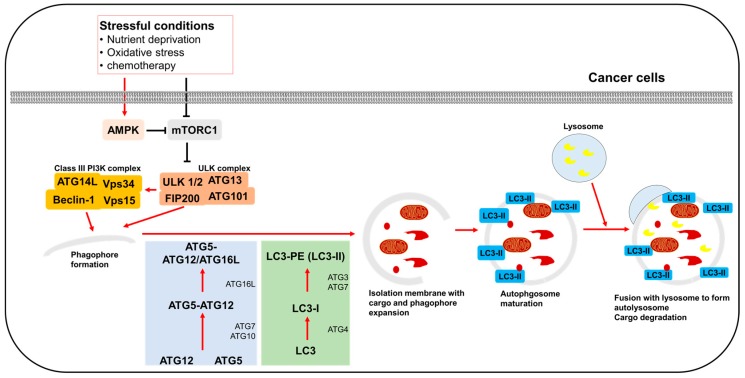
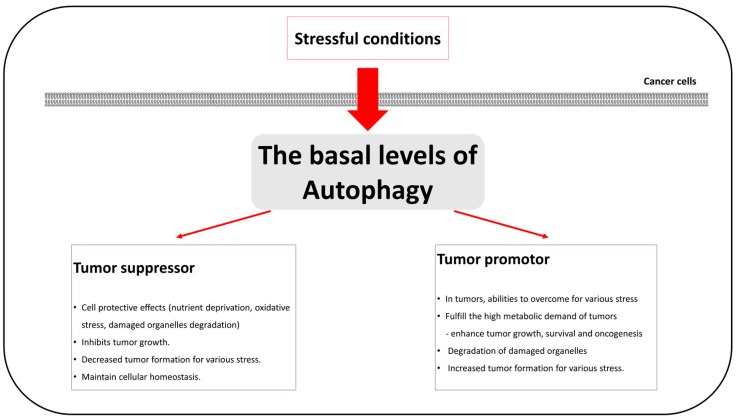
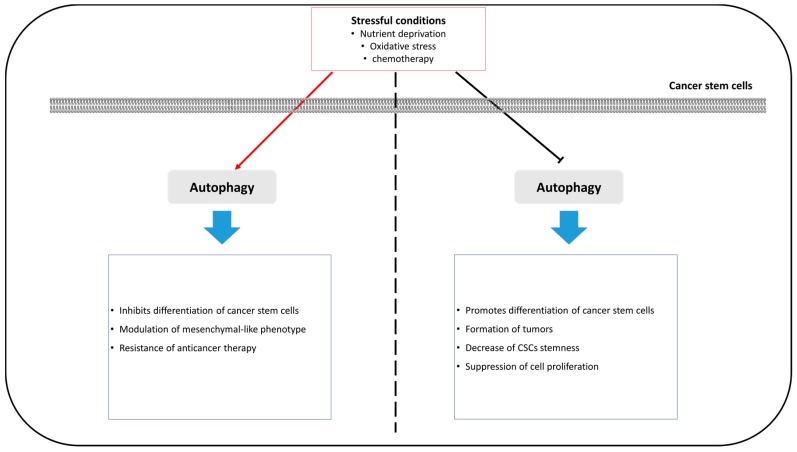
Autophagy is an intracellular degradative process that occurs under several stressful conditions, including organelle damage, the presence of abnormal proteins, and nutrient deprivation. The mechanism of autophagy initiates the formation of autophagosomes that capture degraded components and then fuse with lysosomes to recycle these components. The modulation of autophagy plays dual roles in tumor suppression and promotion in many cancers. In addition, autophagy regulates the properties of cancer stem-cells by contributing to the maintenance of stemness, the induction of recurrence, and the development of resistance to anticancer reagents. Although some autophagy modulators, such as rapamycin and chloroquine, are used to regulate autophagy in anticancer therapy, since this process also plays roles in both tumor suppression and promotion, the precise mechanism of autophagy in cancer requires further study. In this review, we will summarize the mechanism of autophagy under stressful conditions and its roles in tumor suppression and promotion in cancer and in cancer stem-cells. Furthermore, we discuss how autophagy is a promising potential therapeutic target in cancer treatment.
Overview
The claims and statistics of this paper haven’t been checked yet.
Free: it reads the open-access text and checks the first 5 claims that cite a source we can check. Create a free account to check every claim.
Integrity signals
Registry
Cites
Statistics
Figures
Verification
Claims the paper makes
The claims and statistics of this paper haven’t been checked yet.
Free: it reads the open-access text and checks the first 5 claims that cite a source we can check. Create a free account to check every claim.
Claims other papers make about this one
Each is checked against this paper’s own text: does it say what the citing paper says it does?
The cited source says what the claim attributes to it.
In the citing paper
“In cancer cells, autophagy plays dual roles in tumor promotion and suppression.48”
From Reactive Oxygen Species in Cancer: Current Findings and Future Directions (2021) · cites this paper as [48]
In the citing paper
“Although autophagy can play dual roles in both tumor promotion and suppression (Yun and Lee, 2018), in terms of chemotherapy autophagy is usually considered as a mechanism of drug-resistance against therapeutics.”
From An Arthropod Hormone, Ecdysterone, Inhibits the Growth of Breast Cancer Cells via Different Mechanisms (2020) · cites this paper as Yun and Lee, 2018
Self-check
Percentages, sums and reported differences re-computed from the paper’s own numbers.
The self-check needs the paper’s full text.
Citations
Cites
2 retracted
Mariño, G., Salvador-Montoliu, N., Fueyo, A., Knecht, E., Mizushima, N., & López-Otín, C. (2007) · Journal of Biological Chemistry · doi:10.1074/jbc.m701194200 · Cited by 407 · cited 1×
“Mice deficient in ATG4 have been observed to have increased susceptibility to the generation of fibrosarcomas when exposed to chemical carcinogens [67].”
BackgroundRetractedSui, X., Kong, N., Wang, X., Fang, Y., Hu, X., Xu, Y., Chen, W., Wang, K., Li, D., Jin, W., et al. (2014) · Scientific Reports · doi:10.1038/srep04694 · Cited by 96
RetractedRepertoires of Autophagy in the Pathogenesis of Ocular Diseases
Li, Y.-J., Jiang, Q., Cao, G.-F., Yao, J., & Yan, B. (2015) · Cellular Physiology and Biochemistry · doi:10.1159/000373980 · Cited by 16,304
Prospective identification of tumorigenic breast cancer cells
Al-Hajj, M., Wicha, M. S., Benito-Hernandez, A., Morrison, S. J., & Clarke, M. F. (2003) · Proceedings of the National Academy of Sciences · doi:10.1073/pnas.0530291100 · Cited by 10,370 · cited 1×
“In breast cancer stem-cells, a previous study has shown that CSCs contribute to the recurrence of cancer and metastasis [142].”
BackgroundThe basics of epithelial-mesenchymal transition
Kalluri, R., & Weinberg, R. A. (2009) · Journal of Clinical Investigation · doi:10.1172/jci39104 · Cited by 10,196
Epithelial-Mesenchymal Transitions in Development and Disease
Thiery, J. P., Acloque, H., Huang, R. Y. J., & Nieto, M. A. (2009) · Cell · doi:10.1016/j.cell.2009.11.007 · Cited by 9,931 · cited 1×
“These processes induce metastasis of cancer, leading to a lack of cell-cell adhesion, cell polarity to increase of cell motility, polarity, and invasiveness [111,112].”
BackgroundAMPK and mTOR regulate autophagy through direct phosphorylation of Ulk1
Kim, J., Kundu, M., Viollet, B., & Guan, K.-L. (2011) · Nature Cell Biology · doi:10.1038/ncb2152 · Cited by 7,227 · cited 1×
“mTORC1 is regulated by AMP-activated protein kinase (AMPK), and inhibition of mTORC1 and increased AMPK induces the autophagic process [26,27].”
BackgroundOncology meets immunology: the cancer-immunity cycle.
Chen, D. S., & Mellman, I. (2013) · Immunity · doi:10.1016/j.immuni.2013.07.012 · Cited by 6,929 · cited 1×
“Cancer neoantigen is released into the surrounding environment and presented to T cells, and then cancer cells are killed through T cell-mediated cytotoxicity [131].”
BackgroundLC3, a mammalian homologue of yeast Apg8p, is localized in autophagosome membranes after processing.
Kabeya, Y., Mizushima, N., Ueno, T., Yamamoto, A., Kirisako, T., Noda, T., Kominami, E., Ohsumi, Y., & Yoshimori, T. (2000) · The EMBO Journal · doi:10.1093/emboj/19.21.5720 · Cited by 6,605
Cui, C., Cui, J., Jin, F., Cui, Y., Li, R., Jiang, X., Tian, Y., Wang, K., Jiang, P., & Gao, J. (2017) · Cellular Physiology and Biochemistry · doi:10.1159/000479571 · Cited by 5,203
Cited by
Items 901–1,000 of 1,000
Involvement of mitophagy in the anti-cancer activity of melatonin on JURKAT cells
Lim, M. C. X., Ngai, Z. N., Ng, P. Y., Koh, R. Y., & Chye, S. M. (2025) · Journal of Applied Pharmaceutical Science · doi:10.7324/japs.2025.166362 · Cited by 1
“Few studies have pointed out that the inhibition of autophagy would enhance apoptosis, leading to cell death [23].”
Leonardi, L. (2023) · theses.fr (ABES) · doi:10.70675/3af71f99z635bz42b6zb564z40236ed96f3c
Autophagy: Its Role In Cellular Homeostasis And Various Diseases
Hritani, N. (2024) · International journal of high school research · doi:10.36838/v6i9.16
Decoding Metabolic Changes in Cancer Cells Resistant to Therapy
Noor, S., Ali, S., Summer, M., & Khan, K. (2025) · Interdisciplinary cancer research · doi:10.1007/16833_2025_496
Gene Expression Analysis of Autophagy Markers in Primary and Secondary Myelofibrosis
Međugorac, M., Glick, K. M., Livun, A., Lucijanić, M., Galušić, D., & Kušec, R. (2025) · Journal of Clinical Medicine · doi:10.3390/jcm14072333
“However, regarding cancer biology, autophagy may play an ambiguous role, both promoting and suppressing processes that may aid in cancer survival or death [17].”
Ghorbani, M., Shafiee, S. M., Dianatinasab, A., Behbahani, S. E., Honardar, Z., & Khoshdel, Z. (2025) · Research Square · doi:10.21203/rs.3.rs-2707034/v2
Şansaçar, M., Pepe, N. A., Akçok, E. B. G., & Khatib, M. E. (2025) · Biochemical and Biophysical Research Communications · doi:10.1016/j.bbrc.2025.152034
S6K1 overexpression enhances autophagy in breast cancer cells by inducing the translation of CLU
Shu, X., Wang, R., Liu, Y., Shi, X., Liu, Y., Chen, Y., Shi, J., Liu, M., Song, Y., & Li, D. (2025) · Chinese Medical Journal · doi:10.1097/cm9.0000000000003596
Li, Y., & Wang, F. (2025) · Cancer Biotherapy and Radiopharmaceuticals · doi:10.1089/cbr.2025.0078 · Cited by 3
Solari, J. I. G., Rosa, N. T., Pinto, G. H., Pilar, E. F. S., Saez‐Calazans, F., Quaiato, H., Vargas, J. E., & Filippi‐Chiela, E. C. (2025) · Research Square · doi:10.21203/rs.3.rs-6863058/v1
Role of autophagy‑modulating long non‑coding RNAs in tumor radioresistance (Review)
Li, H., & He, Z. (2025) · Oncology Reports · doi:10.3892/or.2025.8975 · Cited by 1
“Cancer cells frequently take advantage of the dual role of autophagy to survive in meta‑ bolically difficult conditions, escape immune system attacks, prevent cell death and induce metastasis (51,52).”
Majumder, S., & Panigrahi, G. (2025) · Plant Science Today · doi:10.14719/pst.8034
Dammarolic acid improves tyrosine kinase inhibitor activity in lung cancer cells
Hussain, Y., Singh, J., Meena, A., Sinha, R. A., & Luqman, S. (2025) · Naunyn-Schmiedeberg s Archives of Pharmacology · doi:10.1007/s00210-025-04554-5
“The predominance of cancer cells in the G0/G1 phase signifies resistance to cytotoxic treatments, which is a hallmark of chemotherapy resistance (Yun and Lee 2018).”
Wip1 enhances genotoxic stress-induced autophagy via ULK1 dephosphorylation in Medulloblastoma cells
Karlıtepe, A., Pilevneli, H., Kaygusuz, N., & Eren, M. K. (2025) · Molecular Biology Reports · doi:10.1007/s11033-025-11042-9
“Emerging evidence suggests that factors such as metabolic stress, endoplasmic reticulum stress, and chemotherapeutic agents can trigger autophagy [9].”
A humán endoszomális pányvázó komplexek egymásra gyakorolt hatásának és interakcióinak vizsgálata
Sőth, Á. (2025) · Eötvös Loránd Tudományegyetem · doi:10.15476/elte.2024.114
Repurposing Drugs Modulating Autophagy: Toward a New Era for the Treatment of Cancer
Al‐Bari, M. A. A. (2025) · Springer eBooks · doi:10.1007/978-3-032-00771-1_284
AMPK Signaling in Cancer: An Approach to Effective Treatment Strategy
Malami, I., Muhammad, A. I., Yusuf, A. P., & Katsayal, B. S. (2025) · Springer eBooks · doi:10.1007/978-3-032-00771-1_398
Evyapan, G., & Özdem, B. (2025) · Bratislavské lekárske listy/Bratislava medical journal · doi:10.1007/s44411-025-00381-5
“In addition, autophagy is involved in the development, proliferation, migration and invasion of tumour cells [8].”
Resensitization strategies toward autophagic resistance
Phatale, V., Pandey, G., Khairnar, P., Kolipaka, T., Amulya, E., Sikder, A., Wagh, S. S., Goel, H., Singla, R., Talegaonkar, S., et al. (2025) · Elsevier eBooks · doi:10.1016/b978-0-443-33343-9.00003-x · Cited by 1
Jablonska, E., Iwaniuk, A., Ratajczak–Wrona, W., Nowacka, K. H., & Garley, M. (2025) · Archivum Immunologiae et Therapiae Experimentalis · doi:10.2478/aite-2026-0005
“Autophagy is an intracellular process by which cells degrade and recycle proteins and organelles to maintain intracellular homeostasis that occurs under several stressful conditions, including organelles damage, abnormal proteins, and nutrient deprivation (Feng et al. 2014; Yun and Lee 2018).”
Propiedades anticancerígenas de la vitamina K
Gómez-Rosas, A. L., Noyola-Martínez, N., Chirinos, M., Torres‐Ramírez, N., García-Olivares, M., & Barrera, D. (2025) · TIP Revista Especializada en Ciencias Químico-Biológicas · doi:10.22201/fesz.23958723e.2025.769
“…la inhibición de mTOR o la regulación de la interacción Beclin-1/BCL-2 es una de las estrategias comúnmente implementadas para impulsar la autofagia e incrementar en la formación de autofagosomas que producen la muerte celular por autofagia y/o apoptosis en las células tumorales (Yun & Lee, 2018).”
The Reciprocal Regulation Between TNF ‐α and Autophagy for Oral Squamous Cell Carcinoma Progression
Shu, C., Chen, H.-C., Chang, C., Lee, C., Tseng, H., Hu, K., Chou, Y., Chen, C., Wang, W., & Liu, P. (2025) · Journal of Oral Pathology and Medicine · doi:10.1111/jop.70093 · Cited by 1
Huang, S., Zhang, J., Li, Y., Xu, Y., Jia, H., An, L., Wang, X., & Yang, Y. (2023) · Figshare · doi:10.6084/m9.figshare.23499432
Islam Khan, M. Z., & Law, H. K. W. (2021) · Figshare · doi:10.6084/m9.figshare.14853414
Wang, X., Xu, Y., Li, T., Chen, B., & Yang, W. (2020) · Figshare · doi:10.6084/m9.figshare.13173011
Islam Khan, M. Z., & Law, H. K. W. (2021) · Figshare · doi:10.6084/m9.figshare.14853411
Wang, X., Xu, Y., Li, T., Chen, B., & Yang, W. (2020) · Figshare · doi:10.6084/m9.figshare.13173017
Wang, X., Xu, Y., Li, T., Chen, B., & Yang, W. (2020) · Figshare · doi:10.6084/m9.figshare.13173014
Khan, T. (2020) · Use Siena air (University of Siena) · doi:10.25434/khan-tuhina_phd2020
Schnelzer, A. H., Multhoff, G., & München, T. U. (2024)
Papel de la autofagia en el cáncer. ¿Ángel o demonio?
Domínguez Fluja, J. (2022) · idUS (Universidad de Sevilla)
Abruscato, G. (2024) · Nova Science Publishers (Nova Science Publishers, Inc.)
García‐Verdejo, F. J. (2024) · Institutional Repository of the University of Granada (University of Granada)
Molekularni mehanizmi delovanja fitokemikalij v vlogi protirakavih učinkovin
Vodenik, J. (2023) · Repository of the University of Ljubljana (University of Ljubljana)
Determination of exosomal cancer stem cell biomarkers with cancer diagnostic utility
Palacios Ferrer, J. L. (2021) · Institutional Repository of the University of Granada (University of Granada)
Karlıtepe, A. (2023) · eArsiv - Adu (Adnan Menderes University)
Marques, C. (2023) · Portuguese National Funding Agency for Science, Research and Technology (RCAAP Project by FCT)
Učinek homogenata humane amnijske membrane in defactiniba na avtofagijo rakavih urotelijskih celic
Požun, N. (2023) · Repository of the University of Ljubljana (University of Ljubljana)
Expressão diferencial e potencial prognóstico de genes de autofagia no carcinoma hepatocelular
Agatti, S. W. (2023) · Lume (Universidade Federal do Rio Grande do Sul)
Pazdrowski, P., Seavey, C., Wieloch, A., Menon, V., Schneider, A., Noureddine, S. A., Golusiński, P., Bowszyc‐Dmochowska, M., Polańska, A., Dańczak‐Pazdrowska, A., et al. (2025) · Reports of Practical Oncology & Radiotherapy · doi:10.5603/rpor.108279
“…enrichment analysis demonstrated that differentially expressed miRNAs in different stages of skin cancer were significantly associated with pathways including cell cycle regulation, autophagy, endocytosis, protein processing in the endoplasmic reticulum (ER), and cellular senescence [20–23].”
The Molecular Mechanism for Reversing Chemotherapy Drug Resistance in Cervical Cancer
周, 笑. (2025) · Advances in Clinical Medicine · doi:10.12677/acm.2025.15123392
Aldrak, N. A. (2024) · Digital Access to Scholarship at Harvard (DASH) (Harvard University)
Insight into Autophagy and Drug Resistance in Gastric Cancer
Liu, C., Zhang, L. G., Zhao, X., & Lin, Z. (2025) · Journal of Gastrointestinal and Liver Diseases · doi:10.15403/jgld-6469
“In the early stages of tumorigenesis, autophagy may play a tumor suppressive role by protecting against genome instability, preventing cellular damage, weakening cell stemness, and inhibiting tissue inflammation [20-22].”
He, J., Yu, B., Song, X., Zhang, T., Qiao, Z., & Li, J. (2026) · Translational Oncology · doi:10.1016/j.tranon.2025.102658
“While autophagy can act as a tumor-suppressive mechanism in early stages by limiting inflammation and maintaining genomic stability, it also paradoxically supports tumor cell survival and angiogenesis in established cancers by providing vital nutrients and energy [7,8].”
Rivas‐García, L., Forbes-Hernández, T. Y., Cristóbal‐Cueto, P., Tébar-García, D., Salinas‐Castillo, A., Abreu, A. C., Fernández, I., Aranda, P., Llopis, J., Nebot, E., et al. (2026) · International Journal of Molecular Sciences · doi:10.3390/ijms27020907
“Relations between autophagy and cancer are controversial; thus, some authors suggest this process as a way to eliminate toxic elements and facilitate tumoral cell survival [41].”
Liu, J., Zhao, H., Zhang, X., Liu, L., & Zhang, L. (2026) · Discover Oncology · doi:10.1007/s12672-026-04439-w
Investigation of the interplay between autophagy and therapy-induced senescence in thyroid cancer
Mazzoleni, B. (2026) · Open Research Online (The Open University) · doi:10.21954/ou.ro.00108428
Molecular Mechanisms of Cell Death: Implications for Disease Pathogenesis
Koçak, S., Yeşilot, Ş., Ozketen, A. C., Belder, N., Kazan, H. H., Kardana, L., Pehlivanoğlu, Ş., Pehlivanoğlu, S., Taşır, S., Hekmatshoar, Y., et al. (2026) · Akademisyen Kitabevi eBooks · doi:10.37609/akya.3955
Torres-López, L., Olivas-Aguirre, M., Chávez-Gutiérrez, A., & Dobrovinskaya, O. R. (2026) · Cancers · doi:10.3390/cancers18050775
“The level of both the basal and induced autophagy was reported to be increased in many cancers [7,8].”
Hosseini, S. A. M., Mahmoodieh, B., Hashemi, M., Asadifard, E., Hassanzadeh, F. G., Hassanzadeh, Z., Fazel, B., Hedayati, N., Hushmandi, K., Olianasab, S. A., et al. (2026) · Discover Oncology · doi:10.1007/s12672-026-04629-6
“Autolysosomes are formed when mature autophagosomes merge with lysosomes and, through a process of autophagy, degrade dysfunctional organelles and proteins [54].”
Xu, Y., Ni, L., Xu, J., Zhang, Y., Qu, Z., Kong, X., Zhou, H., & Cai, M. (2026) · Anti-Cancer Agents in Medicinal Chemistry · doi:10.2174/0118715206429047251126061722
TYRO3はLC3の発現増加を介して膵癌の化学療法抵抗性を促進する
Hara, K. (2023) · Institutional Repositories DataBase (IRDB)
Bcl2L10 : polymorphisme, résistance oncogénique et conséquences thérapeutique dans le cancer du sein
Quang, D. M. (2021) · theses.fr (ABES) · doi:10.70675/86dd7fafzcb40z4cedz8eb7zbb41268cd809
Characterisation of SG33 Myxoma virus replication and oncolytic activity in pancreatic cancer models
Quillien, L. (2021) · theses.fr (ABES) · doi:10.70675/eadfa28azee41z4b56z88f3zc40b7ff9f900 · Cited by 2
Exploration of autophagy modulation in cancer and infectious diseases
Bestion, E. (2021) · theses.fr (ABES) · doi:10.70675/3663f1cdz2637z4b11za0afza7e39569a2fc
Lemesle, M. (2022) · theses.fr (ABES) · doi:10.70675/ebe22607z3311z44c8z9187zcc15ca5abf0f · Cited by 1
McCartin, C. (2022) · theses.fr (ABES) · doi:10.70675/c8e381a2z8745z4ba5z92c5z245033e340aa
Bodin, A., Hammed, A., Magnin, M., Bellaud, P., Slek, C., Commin, L., Musso, O. C., Corlu, A., Lagente, V., Aninat, C., et al. (2026) · Journal of Inflammation · doi:10.1186/s12950-026-00502-z
Cancer Cell Polarity and Extrusion
Rosenblatt, J., & Tchoumakova, A. (2026) · Annual Review of Cancer Biology · doi:10.1146/annurev-cancerbio-071124-123101
Zalpoor, H., Teow, J. Y., Ferdousmakan, S., Golestani, N., Nabi‐Afjadi, M., & Ramasamy, T. S. (2026) · Cell Communication and Signaling · doi:10.1186/s12964-026-02853-9
“Autophagy helps maintain pluripotency in CSCs under stressful conditions by regulating the stemness markers Oct4, Sox2 and Nanog; downregulation of these proteins followed ATG5 and ATG7 suppression [21].”
InfluentialSawai, S., Wong, P., & Ramasamy, T. S. (2026) · IUBMB Life · doi:10.1002/iub.70103
“This conversion, crucial for early autophagy, helps cancer cells meet high metabolic demands by recycling intracellular components, enhancing stress tolerance in the TME [60, 61].”
Thongchot, S., Kittirat, Y., Promraksa, B., Ferraresi, A., Vidoni, C., Loilome, W., Namwat, N., & Isidoro, C. (2026) · Biomedicine & Pharmacotherapy · doi:10.1016/j.biopha.2026.119438
Hadjigol, S., Shah, B. A., Yazdani, N., & O’brien-simpson, N. M. (2026) · Cells · doi:10.3390/cells15100855
“Recent studies suggest that some OMVs may directly interact with mitochondria, either through specific targeting mechanisms or indirectly by releasing factors that affect mitochondrial function [199].”
The Role of Sigmar1 in Autophagy Regulation and Disease Therapy
Ge, H., Lin, Y., Li, J., Zhang, R., & Xu, C. (2026) · International Journal of Molecular Sciences · doi:10.3390/ijms27104492
“This is supported by evidence that exposure to stress conditions, such as hypoxia or nutrient deprivation, induces autophagy, thereby promoting tumor cell survival [94].”
Sipos, A., Kim, K.-J., Alvarez, J. R., & Crandall, E. D. (2026) · American Journal of Physiology-Lung Cellular and Molecular Physiology · doi:10.1152/ajplung.00362.2025
Saha, S., Kumar, R., Sarangi, S., Gope, A., Pal, A., Tapader, R., Nag, N., Bhattacharya, S., & Pal, A. (2026) · Molecular Medicine · doi:10.1186/s10020-026-01514-4
“Conversely, in later stages, cancer cells exploit autophagy for surviving and adapting to the hostile environment within the host (Yun and Lee 2018; Rosenfeldt and Ryan 2011; Gewirtz 2014; Russell and Guan 2022).”
Wang, Z., Zhang, L., Liu, C., Yan, S., & Wang, M. (2026) · Journal of Ginseng Research · doi:10.1016/j.jgr.2026.101076
Schisandrin B exhibits anti‑proliferative effects by inducing ferroptosis in pancreatic cancer
Li, F., Fu, J., Lin, X. S., Liu, Y., Yang, L., Li, Y., Peng, T., & Qi, L. (2026) · Oncology Reports · doi:10.3892/or.2026.9152
Ramírez, D. P., Rodríguez, L. H., Briñez, A. M., González, C. S., Kellerer, P. T., Varela, A. L., & Hitcher, L. R. B. (2026) · Malignancy Spectrum · doi:10.15302/msp.2026.0010
Targeting autophagy using phytochemicals for cancer prevention and therapy
Bhol, C. S., Chew, G., Bhutia, S. K., & Sethi, G. (2026) · Elsevier eBooks · doi:10.1016/b978-0-443-34084-0.00010-8
Abdulhassn, M. L. (2026) · Molecular Biology Reports · doi:10.1007/s11033-026-12207-w
“While autoph - agy promotes the survival of chemotherapy-treated cells, overactivation of the autophagy pathway in the absence of functioning apoptotic pathways can result in death via autophagic cell death [13].”
Sarantis, P., Vallilas, C., Anastasiou, I. A., Trifylli, E.-M., Koustas, E., Grınıatsos, J., Karamouzis, M. V., & Papavassiliou, A. G. (2026) · Medical Oncology · doi:10.1007/s12032-026-03345-z
“Understanding the role of autophagy at different stages of tumorigenesis is important for deciding whether to develop autophagy inhibitors or inducers as pharmacological agents to target autophagy in cancer [14, 15].”
Autophagy in gastrointestinal cancers: Therapeutic and biological perspectives
Ashrafizadeh, M. (2026) · Arab Journal of Gastroenterology · doi:10.1016/j.ajg.2026.06.011
Autophagy in Melanoma: Molecular Mechanisms and Therapeutic Perspectives
Stencel, D., & Wrześniok, D. M. (2026) · International Journal of Molecular Sciences · doi:10.3390/ijms27156670
“This increased sensitivity is attributed to the selective autophagic degradation of FAP-1/PTPN13, a protein tyrosine phosphatase [98–101].”
Tiong, T.-Y., Wang, C., Yadav, V. K., Pikatan, N. W., Fong, I.-H., Kuo, K.-T., & Huang, W. (2026) · European Journal of Pharmaceutical Sciences · doi:10.1016/j.ejps.2026.107627
L'utilisation du virus oncolytique VSVΔ51 comme option thérapeutique en cancer pancréatique
Short, L. (2021) · Knowledge UdeS (Institutional Deposit of the University of Sherbrooke)
Chakravarthi, S., Karikalan, B., Gopalakrishna, P. K., Maziz, M. N. H., Jayakumar, K., Rajabalaya, R., & Chellian, J. (2026) · Journal of Pharmacology Genetics and Molecular Biology · doi:10.64062/jpgmb.vol2.issue4.1
LncRNA-driven alternative splicing landscapes associate with survival outcomes in ovarian cancer
Cao, Y., Zhao, J., He, S., Wu, Q., Wang, Y., Wu, J., Liu, J., Xie, Y., & Song, X. (2026) · Non-coding RNA Research · doi:10.1016/j.ncrna.2026.06.002
“Furthermore, the cellular process of autophagy plays a dual role in tumor promotion and inhibition, and contributes to the development and proliferation of cancer cells [47].”
Doxorubicin-loaded chitosan–silver nanocarrier elicits chemoresistance in liver cancer cells
Başbüyük, E. B., Akyüz, M., Solak, K., & Kara, A. (2026) · Medical Oncology · doi:10.1007/s12032-026-03358-8
“While autophagy can be a pro-death mechanism, in the context of chemotherapy, it frequently functions as a protective stress response, allowing cancer cells to clear damaged organelles and recycle components to survive the drug-induced stress [21, 22].”
The role of the gut-brain axis and polyphenolic compounds in glioblastoma
Agnihotram, B., Mutiu, I. N., Chiou, H., McGowen, K., & Mazewski, C. (2026) · The Journal of Nutritional Biochemistry · doi:10.1016/j.jnutbio.2026.110484
Pleshkan, V. V., Kondratyeva, L. G., Zinovyeva, M. V., Si, B., Alekseenko, I. V., Shegay, P., & Kaprin, A. D. (2026) · Frontiers in Immunology · doi:10.3389/fimmu.2026.1930908
Inhibiting PIK3C3/VPS34 enhances anti-GD2 immunotherapy in neuroblastoma
Zhang, J., Liu, X., Chen, L., Schell, T. D., Sholler, G. S., Spiegelman, V. S., Takahashi, Y., & Wang, H. (2026) · Autophagy · doi:10.1080/15548627.2026.2717948
Suri, P., Daartey, A. B., Khan, D. M. I. O., Rayana, N. P., Chilamakuri, R., Godugu, D., Azad, M. G., Reeb, K. L., & Richardson, D. R. (2026) · Pharmacological Reviews · doi:10.1016/j.pharmr.2026.100158
CANNFLAVINS A AND B EXERT ANTI-CANCER EFFECTS IN CHEMOTHERAPEUTIC RESISTANT BREAST CANCER CELL LINES
Tomko, A. M. (2022) · DalSpace (Dalhousie University) · Cited by 1
Qian, R., Goodbrand, J., Adams, S. N., Trella, E., & Uniacke, J. (2026) · Biochemistry · doi:10.1021/acs.biochem.6c00572
Modi, A., Parida, B. P., Pradhan, S., Singh, S., & Narayan, G. (2026) · Cancer Chemotherapy and Pharmacology · doi:10.1007/s00280-026-04956-z
Guil‐Luna, S., Sánchez-Montero, M. T., Díaz‐Chacón, A., & Rodríguez‐Ariza, A. (2026) · MedComm · doi:10.1002/mco2.70873
“On one hand, autophagy functions as a tumor suppressor by eliminating damaged or mutated proteins and organelles that could contribute to tumor progression [ 84 ].”
The emerging role of oxeiptosis, a novel programmed cell death in cancer
Nag, S., Sahu, B., & Kumar, U. (2026) · Next research. · doi:10.1016/j.nexres.2026.102482
Karaagac, S. I., Albayrak, S., Shadidizaji, A., Kiziler, M. E., Eroglu, E., Arslan, N. P., & Taşkın, M. (2026) · MicrobiologyOpen · doi:10.1002/mbo3.70382
“This mechanism, which relies on the cell digesting and eliminating damaged or overloaded components within itself, hence helps the cell survive and maintain homeostasis (Glick et al. 2010; Yun and Lee 2018; Jalali et al. 2025).”
Obeagu, E. I., & Edeoga, I. H. (2026) · Oncology Reviews · doi:10.3389/or.2026.1959034
“Hypoxia-induced adaptations—such as metabolic reprogramming, angiogenesis, and resistance to apoptosis—not only enable tumor survival and progression but also confer resistance to chemotherapy, radiotherapy, and hormonal treatments (59, 60).”
Current Pharmacological Approaches to Fight Against Pituitary Tumors
Satou, M., & Konishi, A. (2026) · Institutional Repositories DataBase (IRDB)
Metformin use and the risk of gastric cancer: a systematic review and meta-analysisPreprint
Wang, Y., Sun, D.-Y., Pan, Z., & Wang, Z. (2026) · Research Square · doi:10.21203/rs.3.rs-11209422/v1
Targeting autophagy in overcoming multidrug resistance in breast cancer
Sachan, N., Raghav, A., Varshney, P. K., & Chandra, P. (2026) · Elsevier eBooks · doi:10.1016/b978-0-443-49074-3.00008-x
The Oncologic Ambivalence of Longevity Interventions in Photoaged Skin
Senger, E., Kurzen, L., & Kurzen, H. (2026) · JEADV Clinical Practice · doi:10.1002/jvc2.70479
Metadata
- Authors
- Yun, C. W., & Lee, S. H.
- Affiliations
- Soonchunhyang University (KR)
- Corresponding author
- Lee, Sang Hun
- Venue
- International Journal of Molecular Sciences
- Publisher
- MDPI AG
- Published
- 2018-11-05
- Volume
- 19
- Issue
- 11
- Pages
- 3466
- ISSN
- 1422-0067 (ISSN-L)
- PMC
- PMC6274804
- OpenAlex
- W2899871244
- Cited by
- 965
- References
- 187
- Citations by year
- 2026: 52 · 2025: 97 · 2024: 143 · 2023: 161 · 2022: 169 · 2021: 181 · 2020: 114 · 2019: 45 · 2018: 2
- FWCI
- 12.28
- Type
- journal article
- Language
- en
- Open access
- gold
- dx.doi.org
- Licence
- Locations
- International Journal of Molecular Sciences (publishedVersion, cc-by)
- Europe PMC (PubMed Central) (publishedVersion, cc-by)
- PubMed Central (publishedVersion, cc-by)
- PubMed (publishedVersion)
- DOAJ (DOAJ: Directory of Open Access Journals) (submittedVersion)
- Funders
- National Research Foundation of Korea (NRF- 2016R1D1A3B01007727)
- Topics
- Life Sciences › Biochemistry, Genetics and Molecular Biology › Cell Biology › Autophagy in Disease and Therapy
- Life Sciences › Biochemistry, Genetics and Molecular Biology › Molecular Biology › Ubiquitin and proteasome pathways
- Life Sciences › Biochemistry, Genetics and Molecular Biology › Physiology › Calcium signaling and nucleotide metabolism
- Keywords
- autophagy, cancer, tumor suppression, tumor promotion, cancer stem cells, stemness, tumor recurrence, drug resistance, rapamycin, chloroquine, autophagy modulators, autophagosome formation, lysosome fusion, nutrient deprivation, stress response
- MeSH terms
- Animals, Autophagy, Humans, Models, Biological, Neoplasms, Neoplastic Stem Cells, Tumor Microenvironment, Carcinogenesis
About these checks
Registry, retraction, Cites and statistics results are computed, not judged, with one exception: a printed reference that no index lists is read once by a model before it counts as a citation error. Claims are extracted by a model and kept only when their quote appears verbatim in the text; each cited source is then checked, with a model’s help, for whether it says what the claim relies on. Those verdicts can be wrong — read the claim’s quote and the cited source before relying on one.
Statistics and arithmetic are recomputed, not judged.
Confidence bands are shown only for fields calibrated on our annotated test set. None is calibrated yet, so no band is shown.
What counts as a claim ›How we measure confidence ›How we check this ›
Are you an author, or do you see a problem with this page? Request a review
Data sources
Bibliographic data: Semantic Scholar, OpenAlex, Crossref.
Contains information from the Semantic Scholar Academic Graph Datasets, made available under the ODC Attribution License (ODC-BY 1.0).
Semantic Scholar’s data is described in: Kinney, R., et al. (2023). The Semantic Scholar Open Data Platform. arXiv:2301.10140.
