

The Roles of Autophagy in Cancer
Open accessThe DOI matches its Crossref record; 185 of the 187 references it cites were found in a registry or an index.
Abstract
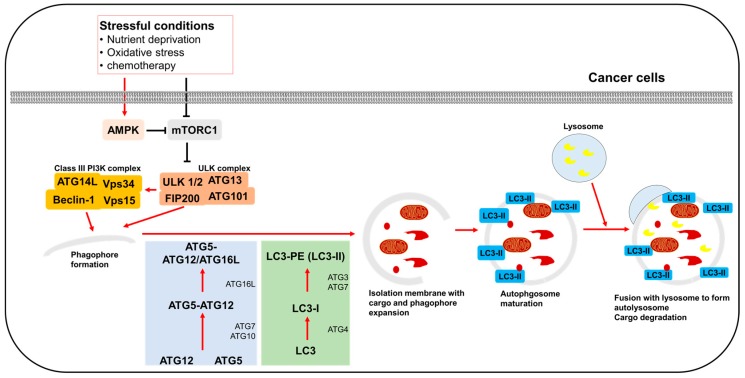
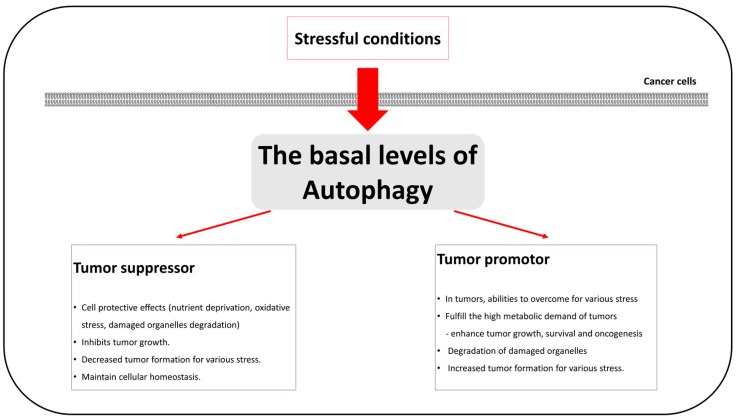
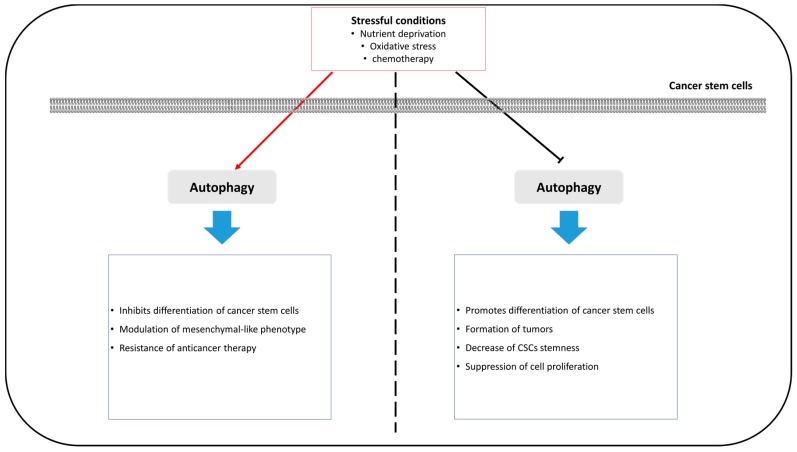
Autophagy is an intracellular degradative process that occurs under several stressful conditions, including organelle damage, the presence of abnormal proteins, and nutrient deprivation. The mechanism of autophagy initiates the formation of autophagosomes that capture degraded components and then fuse with lysosomes to recycle these components. The modulation of autophagy plays dual roles in tumor suppression and promotion in many cancers. In addition, autophagy regulates the properties of cancer stem-cells by contributing to the maintenance of stemness, the induction of recurrence, and the development of resistance to anticancer reagents. Although some autophagy modulators, such as rapamycin and chloroquine, are used to regulate autophagy in anticancer therapy, since this process also plays roles in both tumor suppression and promotion, the precise mechanism of autophagy in cancer requires further study. In this review, we will summarize the mechanism of autophagy under stressful conditions and its roles in tumor suppression and promotion in cancer and in cancer stem-cells. Furthermore, we discuss how autophagy is a promising potential therapeutic target in cancer treatment.
Overview
The claims and statistics of this paper haven’t been checked yet.
Free: it reads the open-access text and checks the first 5 claims that cite a source we can check. Create a free account to check every claim.
Integrity signals
Registry
Cites
Statistics
Figures
Verification
Claims the paper makes
The claims and statistics of this paper haven’t been checked yet.
Free: it reads the open-access text and checks the first 5 claims that cite a source we can check. Create a free account to check every claim.
Claims other papers make about this one
Each is checked against this paper’s own text: does it say what the citing paper says it does?
The cited source says what the claim attributes to it.
In the citing paper
“In cancer cells, autophagy plays dual roles in tumor promotion and suppression.48”
From Reactive Oxygen Species in Cancer: Current Findings and Future Directions (2021) · cites this paper as [48]
In the citing paper
“Although autophagy can play dual roles in both tumor promotion and suppression (Yun and Lee, 2018), in terms of chemotherapy autophagy is usually considered as a mechanism of drug-resistance against therapeutics.”
From An Arthropod Hormone, Ecdysterone, Inhibits the Growth of Breast Cancer Cells via Different Mechanisms (2020) · cites this paper as Yun and Lee, 2018
Self-check
Percentages, sums and reported differences re-computed from the paper’s own numbers.
The self-check needs the paper’s full text.
Citations
Cites
2 retracted
Mariño, G., Salvador-Montoliu, N., Fueyo, A., Knecht, E., Mizushima, N., & López-Otín, C. (2007) · Journal of Biological Chemistry · doi:10.1074/jbc.m701194200 · Cited by 407 · cited 1×
“Mice deficient in ATG4 have been observed to have increased susceptibility to the generation of fibrosarcomas when exposed to chemical carcinogens [67].”
BackgroundRetractedSui, X., Kong, N., Wang, X., Fang, Y., Hu, X., Xu, Y., Chen, W., Wang, K., Li, D., Jin, W., et al. (2014) · Scientific Reports · doi:10.1038/srep04694 · Cited by 96
RetractedRepertoires of Autophagy in the Pathogenesis of Ocular Diseases
Li, Y.-J., Jiang, Q., Cao, G.-F., Yao, J., & Yan, B. (2015) · Cellular Physiology and Biochemistry · doi:10.1159/000373980 · Cited by 16,304
Prospective identification of tumorigenic breast cancer cells
Al-Hajj, M., Wicha, M. S., Benito-Hernandez, A., Morrison, S. J., & Clarke, M. F. (2003) · Proceedings of the National Academy of Sciences · doi:10.1073/pnas.0530291100 · Cited by 10,370 · cited 1×
“In breast cancer stem-cells, a previous study has shown that CSCs contribute to the recurrence of cancer and metastasis [142].”
BackgroundThe basics of epithelial-mesenchymal transition
Kalluri, R., & Weinberg, R. A. (2009) · Journal of Clinical Investigation · doi:10.1172/jci39104 · Cited by 10,196
Epithelial-Mesenchymal Transitions in Development and Disease
Thiery, J. P., Acloque, H., Huang, R. Y. J., & Nieto, M. A. (2009) · Cell · doi:10.1016/j.cell.2009.11.007 · Cited by 9,931 · cited 1×
“These processes induce metastasis of cancer, leading to a lack of cell-cell adhesion, cell polarity to increase of cell motility, polarity, and invasiveness [111,112].”
BackgroundAMPK and mTOR regulate autophagy through direct phosphorylation of Ulk1
Kim, J., Kundu, M., Viollet, B., & Guan, K.-L. (2011) · Nature Cell Biology · doi:10.1038/ncb2152 · Cited by 7,227 · cited 1×
“mTORC1 is regulated by AMP-activated protein kinase (AMPK), and inhibition of mTORC1 and increased AMPK induces the autophagic process [26,27].”
BackgroundOncology meets immunology: the cancer-immunity cycle.
Chen, D. S., & Mellman, I. (2013) · Immunity · doi:10.1016/j.immuni.2013.07.012 · Cited by 6,929 · cited 1×
“Cancer neoantigen is released into the surrounding environment and presented to T cells, and then cancer cells are killed through T cell-mediated cytotoxicity [131].”
BackgroundLC3, a mammalian homologue of yeast Apg8p, is localized in autophagosome membranes after processing.
Kabeya, Y., Mizushima, N., Ueno, T., Yamamoto, A., Kirisako, T., Noda, T., Kominami, E., Ohsumi, Y., & Yoshimori, T. (2000) · The EMBO Journal · doi:10.1093/emboj/19.21.5720 · Cited by 6,605
Cui, C., Cui, J., Jin, F., Cui, Y., Li, R., Jiang, X., Tian, Y., Wang, K., Jiang, P., & Gao, J. (2017) · Cellular Physiology and Biochemistry · doi:10.1159/000479571 · Cited by 5,203
Cited by
Items 801–900 of 1,000
Repurposing Drugs Modulating Autophagy: Toward a New Era for the Treatment of Cancer
Al‐Bari, M. A. A. (2023) · Springer eBooks · doi:10.1007/978-3-030-80962-1_284-1 · Cited by 1
Ayambil; Jain Fast, Its Possible Health Effects
Lakhani, J. D., Shah, B. D., Shah, A., Shah, P., & Shah, C. S. (2023) · Journal of Integrated Health Sciences · doi:10.4103/jihs.jihs_6_23 · Cited by 2
Artificial Peptide‐Protein Necrosomes Promote Cell Death
Guo, R., Wang, N., Wang, W., Zhang, Z., Luo, W., Wang, Y., Du, H., Xu, Y., Li, G., & Yu, Z. (2023) · Angewandte Chemie · doi:10.1002/ange.202314578 · Cited by 1
Adelipour, M., Naghashpour, M., Roshanazadeh, M. R., Chenaneh, H., Mohammadi, A., Pourangi, P., Miri, S. R., Zahedi, A., Haghighatnezhad, M., & Golabi, S. (2024) · PubMed Central · doi:10.22099/mbrc.2023.47597.1837 · Cited by 1
“They suggested that autophagy inhibits the activation of p53 and p53-related neuro-degeneration [26].”
BackgroundThe role of autophagy in salivary gland tumorigenesis
Radi, N. A., Hallool, S. I., & abdelsamia, H. (2024) · Egyptian Dental Journal /Egyptian Dental Journal · doi:10.21608/edj.2023.231756.2692 · Cited by 1
Saadawy, S. F., Raafat, A., & Omar, W. E. (2024) · Egyptian Journal of Medical Human Genetics · doi:10.1186/s43042-023-00470-6 · Cited by 1
“Zhao et al. also studied the role of Associations of ATG7 rs1375206 polymorphism and elevated plasma ATG7 levels with late-onset sporadic Parkinson’s disease [21].”
BackgroundSaxena, R. R., & Saxena, R. (2023) · IJRDO - Journal of Biological Science · doi:10.53555/bs.v1i1.5937 · Cited by 2
“80 Autophagy can support the survival of established tumors by providing nutrients during stress conditions.”
Kundu, S., Sarkar, S., & Chowdhury, A. A. (2024) · Nutrition and Cancer · doi:10.1080/01635581.2024.2306682 · Cited by 2
“As a result, one of the most promising avenues for cancer targeted therapy is autophagy regulation (11, 12).”
BackgroundTargeted Mevalonate Pathway and Autophagy in Antitumor Immunotherapy
Xing, Z., Jiang, X., Wu, Y., & Yu, Z. (2024) · Current Cancer Drug Targets · doi:10.2174/0115680096273730231206054104 · Cited by 1
Zhuvaka, K. S., Piven, O. O., Macewicz, L. L., Ruban, T. P., Volynets, G. P., Yarmoluk, S. M., Dobrzyń, P., & Лукаш, Л. Л. (2024) · Biopolymers and Cell · doi:10.7124/bc.000aad · Cited by 1
Yu, W., Weng, Y.-H., Wang, J., Gao, Y., Li, Y., Xie, C., & Jian, Z. (2024) · Natural Product Communications · doi:10.1177/1934578x241239169 · Cited by 1
“43 Based on the above fi ndings, we selected hinokinin for experimental veri fi cation.”
Trávníček, Z., Vančo, J., Belza, J., Zoppellaro, G., Dvořák, Z., Beláková, B., Schmid, J. A., Molčanová, L., & Šmejkal, K. (2024) · Journal of Inorganic Biochemistry · doi:10.1016/j.jinorgbio.2024.112639 · Cited by 2
NDR2 kinase: A review of its physiological role and involvement in carcinogenesis
Biojout, T., Bergot, E., Bernay, B., Levallet, G., & Levallet, J. (2025) · International Journal of Biological Macromolecules · doi:10.1016/j.ijbiomac.2025.143656 · Cited by 1
Mondia, M. W. L., Batchala, P. P., & Purow, B. W. (2025) · Neuro-Oncology Advances · doi:10.1093/noajnl/vdaf096 · Cited by 1
SNX7 mediates inhibition of autophagy in prostate cancer via activation of CFLIP expression
Qin, L., Yang, F., Guo, Z., Lu, X., Wu, J., Jiang, D., & Yang, N. (2025) · Discover Oncology · doi:10.1007/s12672-025-03446-7 · Cited by 2
“Autophagy plays a variety of roles in both promoting and suppressing tumor growth [15].”
Ibrahim, R., Mohamed, H. S., Naguib, M. G., Fares, H., & Saeed, A. M. (2021) · memo - Magazine of European Medical Oncology · doi:10.1007/s12254-021-00715-3 · Cited by 1
On chip complex breast tumour microenvironment: application to research in nanomedicine
Blondé, J.-B. (2020) · doi:10.3990/1.9789036550598 · Cited by 1
Expression profiling analysis of autophagy-related genes in cervical cancerPreprint
Huang, Z., Wang, H., Liu, M., Li, X., Zhu, L., Lin, D., Wang, G., Li, F., & Li, Q. (2021) · Research Square · doi:10.21203/rs.3.rs-595676/v1 · Cited by 1
Zehtabi, M., Khamnei, A. M., Salehi, S., Akbarpour, Z., Roosta, Y., Valizadeh, S., & Raeisi, M. (2021) · Research Square · doi:10.21203/rs.3.rs-802917/v1 · Cited by 1
Karantanou, C. (2022) · Publication Server of Goethe University Frankfurt am Main (Goethe University Frankfurt) · doi:10.21248/gups.65950 · Cited by 1
Khan, M. Z. I., & Law, H. (2021) · Research Square · doi:10.21203/rs.3.rs-215699/v2 · Cited by 1
Prabha, N., Kiruthika, N., Jayapriya, G., Maheswari, T., Maruthupandy, M., & Vennila, M. (2022) · SSRN Electronic Journal · doi:10.2139/ssrn.4182785 · Cited by 2
Kim, S., Jung, B., An, Y. H., Piao, S., Kim, M., Jang, S. H., Jang, H. G., & Kim, C. (2023) · Research Square · doi:10.21203/rs.3.rs-2676735/v1 · Cited by 1
li, G. (2023) · Research Square · doi:10.21203/rs.3.rs-2812493/v1 · Cited by 1
EFFECT OF AUTOPHAGY INDUCTION VIA TRPML1 ACTIVATION ON HEPATIC STEATOSIS
Tersigni, C., Capurro, M., MacParland, S. A., Selzner-Malekkiani, N., & Jones, N. L. (2019) · Journal of the Canadian Association of Gastroenterology · doi:10.1093/jcag/gwz006.033
RADIATION THERAPY AND RECTAL CANCER; Benefits & Harms
Rombouts, A. J. M. (2020) · Radboud Repository (Radboud University)
Pre-clinical evaluation of targeting autophagy for the treatment of Oral Squamous Cell Carcinoma
Magnano, S. (2021) · Arrow@dit (Dublin Institute of Technology)
An Autophagy-related Long Non-coding RNA Prognostic Signature for Laryngeal Squamous Cell CarcinomaPreprint
Shen, Y., Huang, H., Huang, Q., & Zhou, L. (2021) · Research Square · doi:10.21203/rs.3.rs-484074/v1
Fiddle Songs and Banjo Songs: A Description Index
Howard, G. W. (1981) · TopSCHOLAR (Western Kentucky University)
Zhang, D., Zhang, Z., Duan, Y., Guang-xu, J., Wu, H., Tang, Y., Hu, X., Fang, Z., Guo, Z., Liu, H., et al. (2020) · Research Square · doi:10.21203/rs.3.rs-33113/v1
Fazeli, S. (2021) · UTUPub (University of Turku)
Wang, W., Yang, L., Lü, Z., Sun, X., Liu, J., Sheng, Z., & Zhang, B. (2021) · Research Square · doi:10.21203/rs.3.rs-764349/v1
Autophagy-Mediated Chemotherapy Resistance of Gastric Cancer
郝, 亚. (2021) · Advances in Clinical Medicine · doi:10.12677/acm.2021.1110660
(2021) · PeerJ · doi:10.7287/peerj.12303v0.2/reviews/2
“Several proteins, including AMP-activated protein kinase (AMPK), mammalian target of rapamycin (mTOR), Unc-51-like autophagy-activating kinase (ULK), autophagy-related protein (ATG) and beclin-1, are involved in the regulation of autophagy (Yun & Lee, 2018).”
de Rosa, L. R. (2021) · Digital Library of Theses and Dissertations (Universidade de São Paulo) · doi:10.11606/d.5.2021.tde-11012022-122756 · Cited by 2
Bhattacharjee, S., Paul, S., & Raybarman, C. (2022) · Handbook of Oxidative Stress in Cancer: Therapeutic Aspects · doi:10.1007/978-981-16-1247-3_152-1
Захарова, Н. Б., Понукалин, А. Н., Chekhonatskaya, M. L., Коrolev, A. Y., & Комягина, Ю. М. (2022) · Medical alphabet · doi:10.33667/2078-5631-2021-41-41-46 · Cited by 1
On the role of autophagy in the progression of differentiated thyroid cancer (literature review)
Альбертович, Г. К., Афанасьева, З. А., & Abramova, Z. I. (2022) · Siberian Journal of Oncology · doi:10.21294/1814-4861-2021-20-6-134-140 · Cited by 2
Inhibition of Autophagy by 3-MA Increases Oncolysis Effect of VSV in a Murine Model of Cancer
Zadaloo, K. M., Bamdad, T., Abdoli, A., Choobin, H., & Karimi, H. (2022) · Molecular Biology · doi:10.1134/s0026893322020169
“On the other hand, inhibition of autophagy induces tumor arrest by limiting nutrient sources, sensitizing cells to metabolic stresses, and activating apoptosis [5].”
BackgroundSoumyakrishnan, S., Gowda, C. M. M., Uma, S., Kumar, M. A., Peela, S., & SREEPRIYA, M. (2022) · Elsevier eBooks · doi:10.1016/b978-0-323-98806-3.00009-x
Khan, M. Z. I., & Law, H. (2021) · Research Square · doi:10.21203/rs.3.rs-215699/v1
Hidayat, R., Chrestella, J., & Laksmi, L. I. (2022) · International Journal of Research Publications · doi:10.47119/ijrp1001021620223331
Sayegh, R. A. (2021) · doi:10.26756/th.2022.208 · Cited by 1
Therapy-Induced Dormancy and Residual Disease
DiMarco, A. V., Garcia, N. M. G., & Alvarez, J. V. (2022) · Springer eBooks · doi:10.1007/978-3-030-93084-4_10
Role of Forkhead Box Proteins in Regulating Epithelial-Mesenchymal Transition in Breast Cancer
Soumyakrishnan, S., SREEPRIYA, M., & Sudhandiran, G. (2022) · Handbook of Oxidative Stress in Cancer: Therapeutic Aspects · doi:10.1007/978-981-16-1247-3_162-1
Co-regulators of autophagy and the cell cycle in HFD − As treated mice
Zeinvand‐Lorestani, M., Khodayar, M. J., Teimoori, A., Saki, N., Ahangarpour, A., Ranjbar, A., & Zeinvand-Lorestani, H. (2022) · Journal of Trace Elements and Minerals · doi:10.1016/j.jtemin.2022.100018
Autophagy in the Intestinal Stem Cells
Göncü, E. (2022) · Stem cell biology and regenerative medicine · doi:10.1007/978-3-031-17362-2_7
Yasmin, T., & Kabir, Y. (2022) · Springer eBooks · doi:10.1007/978-3-030-80962-1_44-1 · Cited by 2
Autophagy and metabolic regulation in cancer and its application in drug discovery
Prajapat, S. K., Srivastava, G., & Asthana, S. (2022) · Elsevier eBooks · doi:10.1016/b978-0-323-99879-6.00006-7
Grigoreva, D. D., Михайловна, Ж. Е., Lylova, E. S., Enikeev, A. D., Игоревич, К. К., Belitsky, G. A., Геннадиевна, Я. М., & Lesovaya, E. A. (2022) · Advances in molecular oncology · doi:10.17650/2313-805x-2022-9-4-61-70
Effect of jorunnamycin a on cancer stem cells of human lung cancer h460 cells
Sumkhemthong, S. (2020) · Chula Digiverse · doi:10.58837/chula.the.2020.30
Trefzer, T. B., Schneider, M. A., Jechow, K., Chua, R. L., Muley, T., Winter, H., Kriegsmann, M., Meister, M. A., Eils, R., & Conrad, C. (2023) · doi:10.1158/0008-5472.c.6514115.v1
Cancer Traits; Present and Future
Asseri, K. A., & Aldahish, A. A. (2023) · BENTHAM SCIENCE PUBLISHERS eBooks · doi:10.2174/9789815080384123010005
Ghorbani, M., Shafiee, S. M., Dianatinasab, A., Behbahani, S. E., Honardar, Z., & Khoshdel, Z. (2023) · Research Square · doi:10.21203/rs.3.rs-2707034/v1
(2023) · Research Square · doi:10.21203/rs.3.rs-2812493/v2
Autofagia – w doli i niedoli, czyli jak dobrze posprzątać i przeżyć
Cherep, Z. (2023) · Tutoring Gedanensis · doi:10.26881/tutg.2023.1.01
Mitochondrial Quality Measures in the Regulation of Tumor Progression and Metastasis
Chandran, A., Kumar, T. S., Halikar, A. M., & Kumar, T. R. S. (2023) · Springer eBooks · doi:10.1007/978-981-99-2196-6_40-1
Erzurumlu, Y., Doğan, H. K., & Çataklı, D. (2023) · Applied In Vitro Toxicology · doi:10.1089/aivt.2023.0010
“17 Mainly, autophagic flux refreshes the nutrient pool in cells by controlling the destruction of proteins with a long half-life and damaged organ-elles.”
In the Pipeline: Emerging Therapy for CML
Gill, H., Lee, E., & Mo, P. (2023) · Springer eBooks · doi:10.1007/978-981-99-3810-0_52 · Cited by 1
Türkmen, M. Ö., Demirezen, Ş., & Beksaç, M. S. (2023) · Journal of Cytology · doi:10.4103/joc.joc_130_22
“[37,38] Thus, it might be the cause of observing the high levels of autophagy protein MAP1LC3A in atypical cervicovaginal cells in our study.”
János, B. R. (2023) · Pesci Egyetemi Archivum (University of Pécs) · doi:10.15170/pte.2023.004
Autophagy Intervened by MicroRNAs Causes Gliomas
Trivedi, T. (2023) · Journal of Neuro and Oncology Research · doi:10.46889/jnor..2023.3302
KUPROPTOZ; BAKIR İLİŞKİLİ HÜCRE ÖLÜM YOLAĞI
Aksu, E. N., & SAKALLI, E. (2023) · SDÜ Tıp Fakültesi Dergisi · doi:10.17343/sdutfd.1371727
The roles of autophagy in cancer and the therapeutic implications
Wang, R. (2024) · International Conference on Biological Engineering and Medical Science (ICBioMed) · doi:10.1117/12.3021674
“The AMPK pathway also interferes with starvation-induced autophagy by inhibiting mTOR, meaning that autophagy can be utilised as an energy reserve when faced with nutrient deficiency [8].”
BackgroundInfluentialCellular Self-Digestion Unveiled: Autophagy's Impact on Cancer
Chowdhury, A. R. K., & Naser, I. B. (2024) · Community Based Medical Journal · doi:10.3329/cbmj.v13i1.71096
Molecular and Genetic Profile in Salivary Gland Tumours
Umakanthan, S., & Katwaroo, A. R. (2024) · Preventive Medicine Research & Reviews · doi:10.4103/pmrr.pmrr_51_23 · Cited by 1
Neuropathic pain in HIV and the role of the autophagy pathway
Rodriguez, M., Pokharel, M. D., Owens, F., McLaughlin, J. P., & El‐Hage, N. (2024) · Elsevier eBooks · doi:10.1016/b978-0-323-99744-7.00031-6
Étude des interactions hôte-pathogène et nouvelles pistes thérapeutiques chez Theileria annulata
Villares, M. (2021) · theses.fr (ABES) · doi:10.70675/befbcbc4z2e53z47cbzbc14z50fa915fe6be
Şansaçar, M., & Akçok, E. B. G. (2024) · Methods in molecular biology · doi:10.1007/7651_2024_526 · Cited by 1
Cancer and senescence : a multiscale eco-evolutionary approach
Bieuville, M. (2022) · theses.fr (ABES) · doi:10.70675/d39cd7c1z7e67z479dz84a8zce29e133660c
Baba, R. E. (2023) · theses.fr (ABES) · doi:10.70675/3111dff6z25f7z4515z83d5zfd5eef0dffa7
Construction of a prognostic model for autophagy in Wilm's tumor
Shi, H., Zhang, M., & Zhang, Y. (2024) · Pediatric Surgery International · doi:10.1007/s00383-024-05712-1
“Mutations in specific autophagy-related genes, such as the RAS gene, are associated with increased autophagy levels and rapid progression of cancers such as colon cancer [13].”
Unlocking the impact of translocated promoter region (TPR) on autophagy and cancer progression
Dewi, F. R. P., & Hartono, H. (2024) · Egyptian Journal of Basic and Applied Sciences · doi:10.1080/2314808x.2024.2350234
“Autophagy is also integral to physiological cellular processes such as development, cell death, and tumor suppression [11].”
Green Late‐Stage Functionalization of Tryptamines
Xu, J., Zhang, Y., Cai, Q., Chen, L., Sun, Y., Liu, Q., Gao, Y., & Chen, H. (2024) · Chemistry - A European Journal · doi:10.1002/chem.202401436
Ensaios celulares aplicados para o estudo de inibidores de cisteíno proteases e de biomateriais
Valdes, T. A. (2023) · Digital Library of Theses and Dissertations (Universidade de São Paulo) · doi:10.11606/t.82.2023.tde-04072024-113704
Enhancement of Breast Cancer Chemotherapy and Radiotherapy Responses by Modulation of Ferroptosis
Al-Zufairi, A. A. M. (2024) · Sheffield Hallam University · doi:10.7190/shu-thesis-00623 · Cited by 1
Brain Tumor Autophagy: A New Breakthrough in Cancer Research
Trivedi, T. (2023) · Cancer Research and Cellular Therapeutics · doi:10.31579/2640-1053/143
Role of Autophagy and Oxidative Stress in Cancer Metastasis
Bindal, P., Kumar, R., Khan, S., Bashir, F., Rana, N., Walia, S. J., Kaur, A., Ahuja, P., Singh, C., & Singh, A. (2024) · Cancer drug discovery and develogment/Cancer drug discovery and development · doi:10.1007/978-3-031-66421-2_8
Mitochondrial Quality Measures in the Regulation of Tumor Progression and Metastasis
Chandran, A., Kumar, T. S., Halikar, A. M., & Kumar, T. R. S. (2024) · Springer eBooks · doi:10.1007/978-981-99-6263-1_40
Anticancer properties of Roselle (Hibiscus sabdariffa L), review article
Ahmed, A. M. A., & Khalid, K. A. (2024) · Vegetos · doi:10.1007/s42535-024-01043-7 · Cited by 1
“In many malignancies, the regulation of autophagy has multiple functions in tumor development and repression (Yun and Lee 2018).”
ULK1 is required for autophagy and promotes metastatic progression in epithelial ovarian cancerPreprint
Shepherd, T. G., Webb, J., Buensuceso, A. V., Tomas, E. J., Borrelli, M. J., Viola, L., Hovey, O. F. J., Valdés, Y. R., Singha, B., & Li, S. S. ‐. (2024) · Research Square · doi:10.21203/rs.3.rs-5153449/v1
Rôle de la phosphatase Wip1 dans la nécroptose
Lagorgette, L. (2024) · theses.fr (ABES) · doi:10.70675/b5a83307z526dz44e4zb095z5284b2c79c3c
AMPK Signaling in Cancer: An Approach to Effective Treatment Strategy
Malami, I., Muhammad, A. I., Yusuf, A. P., & Katsayal, B. S. (2023) · Springer eBooks · doi:10.1007/978-3-030-80962-1_398-1
Saha, S., Kumar, R. V., Sarangi, S., Gope, A., Pal, A., Tapader, R., Nag, N., & Pal, A. (2025) · Research Square · doi:10.1101/2025.01.11.632575
Çaldıran, A. N., Gürel, G., & Aru, B. (2025) · Turkish Journal of Immunology · doi:10.4274/tji.galenos.2025.29290
Metadata
- Authors
- Yun, C. W., & Lee, S. H.
- Affiliations
- Soonchunhyang University (KR)
- Corresponding author
- Lee, Sang Hun
- Venue
- International Journal of Molecular Sciences
- Publisher
- MDPI AG
- Published
- 2018-11-05
- Volume
- 19
- Issue
- 11
- Pages
- 3466
- ISSN
- 1422-0067 (ISSN-L)
- PMC
- PMC6274804
- OpenAlex
- W2899871244
- Cited by
- 965
- References
- 187
- Citations by year
- 2026: 52 · 2025: 97 · 2024: 143 · 2023: 161 · 2022: 169 · 2021: 181 · 2020: 114 · 2019: 45 · 2018: 2
- FWCI
- 12.28
- Type
- journal article
- Language
- en
- Open access
- gold
- dx.doi.org
- Licence
- Locations
- International Journal of Molecular Sciences (publishedVersion, cc-by)
- Europe PMC (PubMed Central) (publishedVersion, cc-by)
- PubMed Central (publishedVersion, cc-by)
- PubMed (publishedVersion)
- DOAJ (DOAJ: Directory of Open Access Journals) (submittedVersion)
- Funders
- National Research Foundation of Korea (NRF- 2016R1D1A3B01007727)
- Topics
- Life Sciences › Biochemistry, Genetics and Molecular Biology › Cell Biology › Autophagy in Disease and Therapy
- Life Sciences › Biochemistry, Genetics and Molecular Biology › Molecular Biology › Ubiquitin and proteasome pathways
- Life Sciences › Biochemistry, Genetics and Molecular Biology › Physiology › Calcium signaling and nucleotide metabolism
- Keywords
- autophagy, cancer, tumor suppression, tumor promotion, cancer stem cells, stemness, tumor recurrence, drug resistance, rapamycin, chloroquine, autophagy modulators, autophagosome formation, lysosome fusion, nutrient deprivation, stress response
- MeSH terms
- Animals, Autophagy, Humans, Models, Biological, Neoplasms, Neoplastic Stem Cells, Tumor Microenvironment, Carcinogenesis
About these checks
Registry, retraction, Cites and statistics results are computed, not judged, with one exception: a printed reference that no index lists is read once by a model before it counts as a citation error. Claims are extracted by a model and kept only when their quote appears verbatim in the text; each cited source is then checked, with a model’s help, for whether it says what the claim relies on. Those verdicts can be wrong — read the claim’s quote and the cited source before relying on one.
Statistics and arithmetic are recomputed, not judged.
Confidence bands are shown only for fields calibrated on our annotated test set. None is calibrated yet, so no band is shown.
What counts as a claim ›How we measure confidence ›How we check this ›
Are you an author, or do you see a problem with this page? Request a review
Data sources
Bibliographic data: Semantic Scholar, OpenAlex, Crossref.
Contains information from the Semantic Scholar Academic Graph Datasets, made available under the ODC Attribution License (ODC-BY 1.0).
Semantic Scholar’s data is described in: Kinney, R., et al. (2023). The Semantic Scholar Open Data Platform. arXiv:2301.10140.
