

The Roles of Autophagy in Cancer
Open accessThe DOI matches its Crossref record; 185 of the 187 references it cites were found in a registry or an index.
Abstract
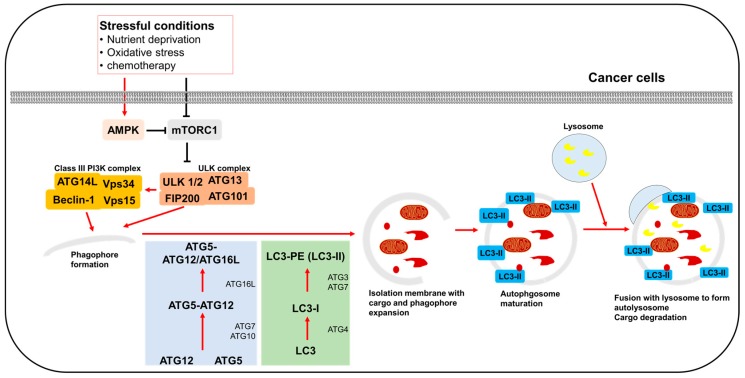
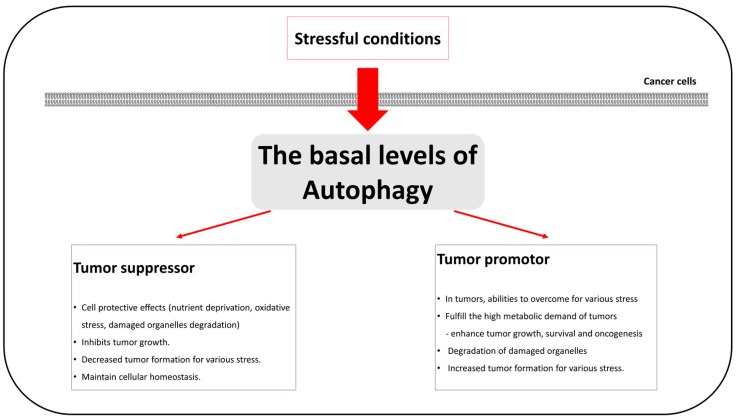
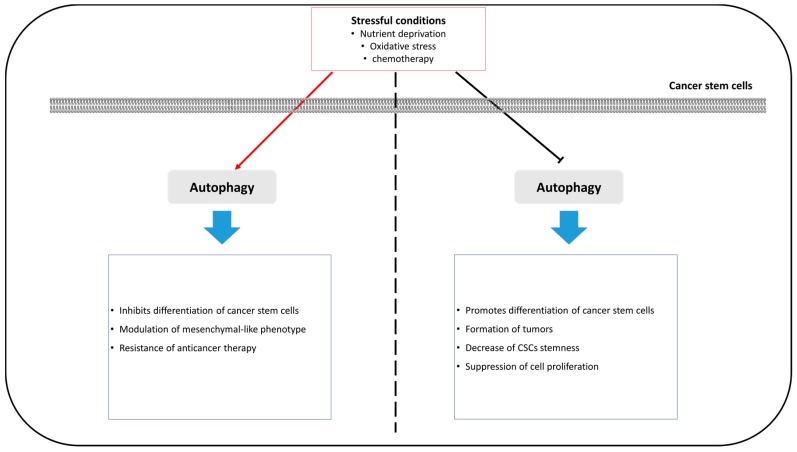
Autophagy is an intracellular degradative process that occurs under several stressful conditions, including organelle damage, the presence of abnormal proteins, and nutrient deprivation. The mechanism of autophagy initiates the formation of autophagosomes that capture degraded components and then fuse with lysosomes to recycle these components. The modulation of autophagy plays dual roles in tumor suppression and promotion in many cancers. In addition, autophagy regulates the properties of cancer stem-cells by contributing to the maintenance of stemness, the induction of recurrence, and the development of resistance to anticancer reagents. Although some autophagy modulators, such as rapamycin and chloroquine, are used to regulate autophagy in anticancer therapy, since this process also plays roles in both tumor suppression and promotion, the precise mechanism of autophagy in cancer requires further study. In this review, we will summarize the mechanism of autophagy under stressful conditions and its roles in tumor suppression and promotion in cancer and in cancer stem-cells. Furthermore, we discuss how autophagy is a promising potential therapeutic target in cancer treatment.
Overview
The claims and statistics of this paper haven’t been checked yet.
Free: it reads the open-access text and checks the first 5 claims that cite a source we can check. Create a free account to check every claim.
Integrity signals
Registry
Cites
Statistics
Figures
Verification
Claims the paper makes
The claims and statistics of this paper haven’t been checked yet.
Free: it reads the open-access text and checks the first 5 claims that cite a source we can check. Create a free account to check every claim.
Claims other papers make about this one
Each is checked against this paper’s own text: does it say what the citing paper says it does?
The cited source says what the claim attributes to it.
In the citing paper
“In cancer cells, autophagy plays dual roles in tumor promotion and suppression.48”
From Reactive Oxygen Species in Cancer: Current Findings and Future Directions (2021) · cites this paper as [48]
In the citing paper
“Although autophagy can play dual roles in both tumor promotion and suppression (Yun and Lee, 2018), in terms of chemotherapy autophagy is usually considered as a mechanism of drug-resistance against therapeutics.”
From An Arthropod Hormone, Ecdysterone, Inhibits the Growth of Breast Cancer Cells via Different Mechanisms (2020) · cites this paper as Yun and Lee, 2018
Self-check
Percentages, sums and reported differences re-computed from the paper’s own numbers.
The self-check needs the paper’s full text.
Citations
Cites
2 retracted
Mariño, G., Salvador-Montoliu, N., Fueyo, A., Knecht, E., Mizushima, N., & López-Otín, C. (2007) · Journal of Biological Chemistry · doi:10.1074/jbc.m701194200 · Cited by 407 · cited 1×
“Mice deficient in ATG4 have been observed to have increased susceptibility to the generation of fibrosarcomas when exposed to chemical carcinogens [67].”
BackgroundRetractedSui, X., Kong, N., Wang, X., Fang, Y., Hu, X., Xu, Y., Chen, W., Wang, K., Li, D., Jin, W., et al. (2014) · Scientific Reports · doi:10.1038/srep04694 · Cited by 96
RetractedRepertoires of Autophagy in the Pathogenesis of Ocular Diseases
Li, Y.-J., Jiang, Q., Cao, G.-F., Yao, J., & Yan, B. (2015) · Cellular Physiology and Biochemistry · doi:10.1159/000373980 · Cited by 16,304
Prospective identification of tumorigenic breast cancer cells
Al-Hajj, M., Wicha, M. S., Benito-Hernandez, A., Morrison, S. J., & Clarke, M. F. (2003) · Proceedings of the National Academy of Sciences · doi:10.1073/pnas.0530291100 · Cited by 10,370 · cited 1×
“In breast cancer stem-cells, a previous study has shown that CSCs contribute to the recurrence of cancer and metastasis [142].”
BackgroundThe basics of epithelial-mesenchymal transition
Kalluri, R., & Weinberg, R. A. (2009) · Journal of Clinical Investigation · doi:10.1172/jci39104 · Cited by 10,196
Epithelial-Mesenchymal Transitions in Development and Disease
Thiery, J. P., Acloque, H., Huang, R. Y. J., & Nieto, M. A. (2009) · Cell · doi:10.1016/j.cell.2009.11.007 · Cited by 9,931 · cited 1×
“These processes induce metastasis of cancer, leading to a lack of cell-cell adhesion, cell polarity to increase of cell motility, polarity, and invasiveness [111,112].”
BackgroundAMPK and mTOR regulate autophagy through direct phosphorylation of Ulk1
Kim, J., Kundu, M., Viollet, B., & Guan, K.-L. (2011) · Nature Cell Biology · doi:10.1038/ncb2152 · Cited by 7,227 · cited 1×
“mTORC1 is regulated by AMP-activated protein kinase (AMPK), and inhibition of mTORC1 and increased AMPK induces the autophagic process [26,27].”
BackgroundOncology meets immunology: the cancer-immunity cycle.
Chen, D. S., & Mellman, I. (2013) · Immunity · doi:10.1016/j.immuni.2013.07.012 · Cited by 6,929 · cited 1×
“Cancer neoantigen is released into the surrounding environment and presented to T cells, and then cancer cells are killed through T cell-mediated cytotoxicity [131].”
BackgroundLC3, a mammalian homologue of yeast Apg8p, is localized in autophagosome membranes after processing.
Kabeya, Y., Mizushima, N., Ueno, T., Yamamoto, A., Kirisako, T., Noda, T., Kominami, E., Ohsumi, Y., & Yoshimori, T. (2000) · The EMBO Journal · doi:10.1093/emboj/19.21.5720 · Cited by 6,605
Cui, C., Cui, J., Jin, F., Cui, Y., Li, R., Jiang, X., Tian, Y., Wang, K., Jiang, P., & Gao, J. (2017) · Cellular Physiology and Biochemistry · doi:10.1159/000479571 · Cited by 5,203
Cited by
Items 401–500 of 1,000
The role and implication of autophagy in cholangiocarcinoma
Khizar, H., Hu, Y., Wu, Y., & Yang, J. (2023) · Cell Death Discovery · doi:10.1038/s41420-023-01631-7 · Cited by 16
“Then once malignant changes occur, MA will in turn protect tumor cells, maintain their proliferation, metastasis and drug resistance [13, 20 – 22].”
BackgroundMethodXu, Z., Liu, R., Ke, H., Xu, F., Yang, P., Zhang, W., Zhan, Y., Zhao, Z., & Xiao, F. (2024) · Autophagy · doi:10.1080/15548627.2024.2406186 · Cited by 19
“Previous studies have demonstrated the significant role of autophagy in maintaining cancer stemness across various types of cancer stem cells, including PROM1 + LCSCs [27–30].”
Kausar, M. A., Anwar, S., Khan, Y. S., Saleh, A. A., Ahmed, M. A. A., Kaur, S., Iqbal, N. S., Siddiqui, W. A., & Najm, M. Z. (2025) · Biomolecules · doi:10.3390/biom15020215 · Cited by 20
“Additionally, it serves as a cellular housekeeping mechanism, eliminating unwanted or harmful substances such as misfolded or aggregated proteins, oncogenic materials [10], damaged organelles [11,12], and invading pathogens like viruses.”
Samarasekera, G., Go, N. E., Choutka, C., Xu, J., Takemon, Y., Chan, J. A.-W., Chan, M., Perera, S., Aparicio, S. A. J. R., Morin, G. B., et al. (2025) · PLoS Biology · doi:10.1371/journal.pbio.3003034 · Cited by 22
The Effect of a Ferrocene Containing Camphor Sulfonamide DK-164 on Breast Cancer Cell Lines
Schröder, M., Yusein-Myashkova, S., Petrova, M., Dobrikov, G. M., Kamenova-Nacheva, M., Todorova, J., Pasheva, E. A., & Ugrinova, I. (2019) · Anti-Cancer Agents in Medicinal Chemistry · doi:10.2174/1871520619666190724094334 · Cited by 16
Ranjan, N., Pandey, V., Panigrahi, M. K., Klumpp, L., Naumann, U., & Babu, P. P. (2021) · Cancers · doi:10.3390/cancers13061245 · Cited by 16
The Role of Autophagy Modulated by Exercise in Cancer Cachexia
Gunadi, J. W., Welliangan, A. S., Soetadji, R. S., Jasaputra, D. K., & Lesmana, R. (2021) · Life · doi:10.3390/life11080781 · Cited by 17
“Autophagy is a mandatory mechanism to maintain cell survival [26,27].”
BackgroundLoren, P., Saavedra, N., Saavedra, K., Torso, N. D. G., Visacri, M. B., Moriel, P., & Salazar, L. A. (2022) · Frontiers in Pharmacology · doi:10.3389/fphar.2022.831099 · Cited by 21
Kondapuram, S. K., & Coumar, M. S. (2022) · Gene · doi:10.1016/j.gene.2022.146821 · Cited by 16
Artificial Peptide‐Protein Necrosomes Promote Cell Death
Guo, R., Wang, N., Wang, W., Zhang, Z., Luo, W., Wang, Y., Du, H., Xu, Y., Li, G., & Yu, Z. (2023) · Angewandte Chemie International Edition · doi:10.1002/anie.202314578 · Cited by 15
Autophagy: a necessary evil in cancer and inflammation
Mathur, A., Ritu, R., Chandra, P., & Das, A. (2024) · 3 Biotech · doi:10.1007/s13205-023-03864-w · Cited by 18
Tumor Dormancy and Reactivation: The Role of Heat Shock Proteins
Amissah, H. A., Combs, S. E., & Shevtsov, M. A. (2024) · Cells · doi:10.3390/cells13131087 · Cited by 15
“Although autophagy, as reported here, supports a dormancy-like effect, it has a dual role, which is implicated in the promotion of cancerous transformations and tumor progression, as reported in other studies [158–162] and reviewed here [163].”
ResultGolgi apparatus targeted therapy in cancer: Are we there yet?
Lee, Z. Y., Lee, W. H., Lim, J. S., Ali, A. A. A., Loo, J. S. E., Wibowo, A., Mohammat, M. F., & Foo, J. B. (2024) · Life Sciences · doi:10.1016/j.lfs.2024.122868 · Cited by 19
Stefàno, E., Castro, F. D., Ciccarese, A., Muscella, A., Marsigliante, S., Benedetti, M., & Fanizzi, F. P. (2024) · International Journal of Molecular Sciences · doi:10.3390/ijms25168568 · Cited by 15
“Interestingly, across different tumor types, autophagy exhibits promoting or inhibitory effects to tumorigenesis by favoring resistance to anticancer treatments or inducing tumor cell cycle arrest, respectively [27,124–126].”
BackgroundCDK5RAP3 Participates in Autophagy Regulation and Is Downregulated in Renal Cancer
Li, J., Hu, X., Su, M., Shen, H., Qiu, W., & Tian, Y. (2019) · Disease Markers · doi:10.1155/2019/6171782 · Cited by 15
Cytotoxic and Antitumor Activity of Lactaptin in Combination with Autophagy Inducers and Inhibitors
Bagamanshina, A. V., Troitskaya, O. S., Nushtaeva, A. A., Yunusova, A. Y., Starykovych, M. O., Kuligina, E. V., Kit, Y. Y., Richter, M., Wohlfromm, F., Kähne, T., et al. (2019) · BioMed Research International · doi:10.1155/2019/4087160 · Cited by 15
“Its role in cancer progression and chemoresistancemakes autophagy an appropriate target for anticancer therapy [27, 28].”
BackgroundElsaid, F. G., Al‐Shehri, M., Shati, A. A., Al‐Kahtani, M. A., Alsheri, A. S., Massoud, E. E. S., El-kott, A. F., El-Mekkawy, H. I., Al‐Ramlawy, A. M., & Abdraboh, M. E. (2020) · Clinical and Experimental Pharmacology and Physiology · doi:10.1111/1440-1681.13338 · Cited by 16
A brief overview of antitumoral actions of bruceine D
Sin, Z. W., Bhardwaj, V., Pandey, A. K., & Garg, M. (2020) · Exploration of Targeted Anti-tumor Therapy · doi:10.37349/etat.2020.00013 · Cited by 15
“Importantly, these natural compounds possess anti-cancer effects [14-22].”
BackgroundFunctional Genetic Variants in ATG10 Are Associated with Acute Myeloid Leukemia
Castro, I., Sampaio‐Marques, B., Areias, A. C., de Sousa, H. M. L., Fernandes, Â., Sánchez‐Maldonado, J. M., Cunha, C., Carvalho, A., Sáinz, J., & Ludovico, P. (2021) · Cancers · doi:10.3390/cancers13061344 · Cited by 17
“Autophagy plays a key role in cancer since it can either suppress tumorigenesis by inhibiting cancer cell survival, or facilitate tumorigenesis by promoting cancer cell proliferation and tumor growth [17,18].”
BackgroundPenicillin disrupts mitochondrial function and induces autophagy in colorectal cancer cell lines
Hu, F., Wu, Y. Z., Liu, C., Zhu, Y., Ye, S., Xi, Y., Cui, W., & Bu, S. (2021) · Oncology Letters · doi:10.3892/ol.2021.12952 · Cited by 17
“autophagy has a two‐way role in the survival and death of tumor cells (26,27).”
BackgroundRole of autophagy in cholangiocarcinoma: An autophagy-based treatment strategy
Koustas, E., Trifylli, E.-M., Sarantis, P., Papavassiliou, A. G., & Karamouzis, M. V. (2021) · World Journal of Gastrointestinal Oncology · doi:10.4251/wjgo.v13.i10.1229 · Cited by 16
Herawati, I. E., Lesmana, R., Levita, J., & Subarnas, A. (2022) · Medical science monitor basic research/Medical science monitor. Basic research · doi:10.12659/msmbr.936683 · Cited by 15
“In addition, it has been reported that some cytotoxic drugs induce protective autophagy in cancer cells, resulting in inhibition of the drug’s cytotoxicity and apoptotic activity [22].”
BackgroundInfluentialKoustas, E., Trifylli, E.-M., Sarantis, P., Papadopoulos, N., Papanikolopoulos, K., Aloizos, G., Damaskos, C., Garmpis, N., Garmpi, A., & Karamouzis, M. V. (2022) · Genes · doi:10.3390/genes13101868 · Cited by 16
“By this manner, autophagy regulatory points can be impeded the overall survival of the patients could be significantly enhanced [20].”
Backgroundda Silva, M. A. C. N., Tessmann, J. W., Borges, K. R. A., Wolff, L. A. S., Botelho, F. D., Vieira, L. A., Morgado‐Díaz, J. A., França, T. C. C., Barbosa, M. D. C. L., Nascimento, M. D. D. S. B., et al. (2023) · Metabolites · doi:10.3390/metabo13070789 · Cited by 15
“In tumor cells, autophagy plays dual roles in tumor promotion and suppression [78].”
BackgroundMackieh, R., Al-Bakkar, N., Kfoury, M., Okdeh, N., Pietra, H., Roufayel, R., Legros, C., Fajloun, Z., & Sabatier, J. (2023) · Current Medicinal Chemistry · doi:10.2174/0109298673275492231121062033 · Cited by 19
Caradonna, F., Cruciata, I., & Luparello, C. (2020) · Critical Reviews in Food Science and Nutrition · doi:10.1080/10408398.2020.1850416 · Cited by 18
“…proliferation in conditions of oxygen and nutrient by providing energy and basic elements but, conversely, to play a crucial inhibitory role on tumor development, as also demonstrated by the link between depletion of autophagyrelated genes and specific carcinogenetic processes (Yun and Lee 2018).”
BackgroundAntitumor Activity of Protons and Molecular Hydrogen: Underlying Mechanisms
Rochette, L., Zeller, M., Cottin, Y., & Vergely, C. (2021) · Cancers · doi:10.3390/cancers13040893 · Cited by 16
“In cancer biology, autophagy plays a dual role in tumor promotion and suppression and contributes to cancer-cell development and proliferation [64].”
BackgroundNon-Coding RNAs and Oral Cancer: Small Molecules With Big Functions
Erfanparast, L., Taghizadieh, M., & Shekarchi, A. A. (2022) · Frontiers in Oncology · doi:10.3389/fonc.2022.914593 · Cited by 15
“However, there is accumulating evidence that autophagic cells may commit suicide by undergoing cell death and coping with excessive stress, which differs from apoptosis and programmed necrosis (14).”
BackgroundInterplay between Endoplasmic Reticulum (ER) Stress and Autophagy Induces Mutant p53H273 Degradation
Garufi, A., Federici, G., Montani, M. S. G., Crispini, A., Cirone, M., & D’Orazi, G. (2020) · Biomolecules · doi:10.3390/biom10030392 · Cited by 16
“Macroautophagy (hereafter indicated as autophagy), is a dynamic catabolic process that degrades cytoplasmic components, unfolded proteins, and damaged organelles by enwrapping them into lysosomes assisting cells to cope with stress load [18,19].”
BackgroundPeruzzu, D., Boussadia, Z., Fratini, F., Spadaro, F., Bertuccini, L., Sanchez, M., Carollo, M., Matarrese, P., Falchi, M., Iosi, F., et al. (2023) · Traffic · doi:10.1111/tra.12878 · Cited by 15
“intracellular membrane structures, such as autophagosomes, lysosomes, and autolysosomes.(36) Several studies indicate a suppressive role of Cav-1 in regulating this process.”
BackgroundPhan, N. D., Omar, A. M., Takahashi, I., Baba, H., Okumura, T., Imura, J., Okada, T., Toyooka, N., Fujii, T., & Awale, S. (2023) · Journal of Natural Products · doi:10.1021/acs.jnatprod.3c00019 · Cited by 15
TMEM9 activates Rab9-dependent alternative autophagy through interaction with Beclin1
Baek, S., Chang, J.-W., Yoo, S.-M., Choo, J., Jung, S., Nah, J., & Jung, Y. (2024) · Cellular and Molecular Life Sciences · doi:10.1007/s00018-024-05366-1 · Cited by 14
“In general, autophagy suppresses tumorigenesis by inhibiting cancer cell survival and inducing cell death, but it also promotes tumorigenesis by enhancing cancer cell proliferation and tumor growth, depending on the properties of the tumor and stages [32].”
BackgroundComplex Interplay between DNA Damage and Autophagy in Disease and Therapy
Singh, A. D., Ravendranathan, N., Frisbee, J. C., & Singh, K. K. (2024) · Biomolecules · doi:10.3390/biom14080922 · Cited by 16
“However, in established cancers, the observed detrimental role of autophagy promotes tumor survival, particularly under stressful conditions such as nutrient deprivation, hypoxia, and therapeutic stress [118].”
BackgroundAayush, A., Darji, S., Estes, K. M., Yeh, E., & Thompson, D. H. (2024) · Biomacromolecules · doi:10.1021/acs.biomac.4c00165 · Cited by 16
“55 − 57 HIF-1 α is a transcription factor that is stably expressed in hypoxic environments.”
BackgroundResearch Progress on the Anti-Liver Cancer Mechanism and Toxicity of Rhubarb Anthraquinone
Yu, L., Qin, J., Zhang, M., Gao, Y., & Zhao, Y. (2024) · Drug Design Development and Therapy · doi:10.2147/dddt.s489377 · Cited by 16
“67 In addition, emodin can also inhibit the proliferation of SMMC-7721 cells in a concentration-and time-dependent manner.”
Advances in Novel Targeted Therapies for Pancreatic Adenocarcinoma
Hoang, T. A., & Tsang, E. S. (2025) · Journal of Gastrointestinal Cancer · doi:10.1007/s12029-024-01149-w · Cited by 18
“Autophagy is a process that helps cells survive by breaking down and recycling cellular components, especially under nutrient-limited conditions [67].”
Shirani, N., Abdi, N., Chehelgerdi, M., Yaghoobi, H., & Chehelgerdi, M. (2025) · Frontiers in Cell and Developmental Biology · doi:10.3389/fcell.2025.1485422 · Cited by 15
Xia, L., Xing, Y., Ye, X., Wu, Y., Yang, Y., Yin, Z., Wang, A., Chen, J., & Zhang, M. (2025) · Cell Death and Differentiation · doi:10.1038/s41418-025-01480-0 · Cited by 20
“Autophagy has both tumor-suppressive and tumor-promoting roles in cancer, depending on the speci fi c circumstances and cellular context [39].”
Autophagy: Shedding Light on the Mechanisms and Multifaceted Roles in Cancers
You, H., Wang, L., Meng, H., Li, J., & Fang, G.-Y. (2025) · Biomolecules · doi:10.3390/biom15070915 · Cited by 16
Autophagy and Extracellular Vesicles in Colorectal Cancer: Interactions and Common Actors?
Auger, C., Christou, N., Brunel, A., Perraud, A., & Verdier, M. (2021) · Cancers · doi:10.3390/cancers13051039 · Cited by 14
Hoshiko, T., Kubota, Y., Onodera, R., Higashi, T., Yokoo, M., Motoyama, K., & Kimura, S. H. (2021) · Cancers · doi:10.3390/cancers13215413 · Cited by 14
Hu, C., Gu, F., Gong, C., Xia, Q., Gao, Y., & Gao, S. (2021) · Journal of Biomaterials Applications · doi:10.1177/08853282211060252 · Cited by 14
Manzoor, S., Saber-Ayad, M. M., Maghazachi, A. A., Hamid, Q. A., & Muhammad, J. S. (2021) · Neoplasia · doi:10.1016/j.neo.2021.12.003 · Cited by 16
Therapeutic and pharmacological potential of Tanshinones against lung cancer: A systematic review
Alam, S. S. M., Uddin, F., Khan, F. B., Kamal, M. A., & Hoque, M. (2021) · Phytomedicine Plus · doi:10.1016/j.phyplu.2021.100202 · Cited by 14
Autophagy in acute myeloid leukemia: a paradoxical role in chemoresistance
Khan, A., Singh, V. K., Thakral, D., & Gupta, R. (2022) · Clinical & Translational Oncology · doi:10.1007/s12094-022-02804-z · Cited by 17
“Tumor cells experience stressful conditions such as hypoxia and nutrient insufficiency, and hence autophagy assists these cells to overcome such stresses [36].”
BackgroundFan, C.-W., Tang, J., Jiang, J., Zhou, M., Li, M.-S., & Wang, H. (2022) · Phytomedicine · doi:10.1016/j.phymed.2022.154192 · Cited by 14
Interconnected Adaptive Responses: A Way Out for Cancer Cells to Avoid Cellular Demise
D’Orazi, G., & Cirone, M. (2022) · Cancers · doi:10.3390/cancers14112780 · Cited by 14
“Different from what occurs in established cancers, autophagy may prevent cancer onset as, through this catabolic process or the selective forms of it, toxic materials and damaged organelles such mitochondria, producing reactive oxygen species (ROS) and causing DNA damage, can be eliminated [27].”
BackgroundGiatagana, E.-M., Berdiaki, A., Gaardløs, M., Tsatsakis, A. M., Samsonov, S. A., & Nikitovic, D. (2022) · American Journal of Physiology-Cell Physiology · doi:10.1152/ajpcell.00368.2022 · Cited by 14
Targeting Proteolysis with Cyanogenic Glycoside Amygdalin Induces Apoptosis in Breast Cancer Cells
Cecarini, V., Selmi, S., Cuccioloni, M., Gong, C., Bonfili, L., Zheng, Y., Cortese, M., Angeletti, M., Kilani, S., & Eleuteri, A. M. (2022) · Molecules · doi:10.3390/molecules27217591 · Cited by 15
Almasi, S., Parks, T. E. C., Ravel‐Chapuis, A., MacKenzie, A., Côté, J., Cowan, K. N., & Jasmin, B. J. (2021) · Cellular Oncology · doi:10.1007/s13402-021-00607-y · Cited by 14
“It is well established that induction of autophagy is essential for cell survival as well as cancer progression and metastasis [46].”
BackgroundBaker, F., Polat, I. H., Abou‐El‐Ardat, K., Alshamleh, I., Thölken, M., Hymon, D., Gubaš, A., Koschade, S. E., Vischedyk, J. B., Kaulich, M., et al. (2021) · Cancers · doi:10.3390/cancers13236142 · Cited by 15
“Proliferating cancer cells are exposed to permanent nutrient deprivation and maintain high energy levels by rewiring metabolic pathways [5,6].”
BackgroundC. elegans to model autophagy-related human disorders
Wong, S. Q., Kumar, A. V., Mills, J., & Lapierre, L. R. (2020) · Progress in molecular biology and translational science · doi:10.1016/bs.pmbts.2020.01.007 · Cited by 15
Putting human Tid-1 in context: an insight into its role in the cell and in different disease states
Banerjee, S., Chaturvedi, R., Singh, A. T., & Kushwaha, H. R. (2022) · Cell Communication and Signaling · doi:10.1186/s12964-022-00912-5 · Cited by 14
Srimurugan, S., Ravi, A. K., Arumugam, V. A., & Muthukrishnan, S. (2022) · Drug Development and Industrial Pharmacy · doi:10.1080/03639045.2022.2130352 · Cited by 14
“which then transforms into LC-3 II [6].”
Inhibition of TNBC Cell Growth by Paroxetine: Induction of Apoptosis and Blockage of Autophagy Flux
Huang, Q., Wu, M., Pu, Y., Zhou, J., Zhang, Y., Li, R., Xia, Y., Zhang, Y., & Ma, Y. (2024) · Cancers · doi:10.3390/cancers16050885 · Cited by 14
Lan, J., Liu, Y., Chen, J., Liu, H., Feng, Y., Liu, J., & Chen, L. (2024) · CNS Neuroscience & Therapeutics · doi:10.1111/cns.14720 · Cited by 15
“26 In consistency, the specific impact of autophagy in combinatorial therapy with TEFT remains unclear, as it is uncertain whether autophagy enhances or reduces the killing of GBM cells.”
BackgroundTorres-Sanchez, A., Torres, G., Estrada, S., Pérez, D., Garcia, C., Milián, M., Velázquez, E., Molina, V., & Delgado, Y. (2024) · Pharmaceuticals · doi:10.3390/ph17060694 · Cited by 13
“It is important to understand that autophagy can suppress tumor development in the early stages, but, once the tumor is established, it promotes chemotherapy resistance [35].”
BackgroundHua, X., Liu, Y., Liu, X., Zhu, Q., Zhou, S., Li, Q., & Liu, S. (2024) · Biomedical Analysis · doi:10.1016/j.bioana.2024.05.002 · Cited by 14
Azzani, M. A., Nizami, Z. N., Magramane, R., Sekkal, M. N., Eid, A. H., Dhaheri, Y. A., & Iratni, R. (2024) · Phytotherapy Research · doi:10.1002/ptr.8283 · Cited by 16
“This phenomenon is of concern given that cytoprotective autophagy can serve as a tumor-supportive mechanism (Debnath et al., 2023; Yun & Lee, 2018).”
Programmed cell death in nasopharyngeal carcinoma: Mechanisms and therapeutic targets
Qian, S., Tan, G., Lei, G., Zhang, X., & Xie, Z. (2025) · Biochimica et Biophysica Acta (BBA) - Reviews on Cancer · doi:10.1016/j.bbcan.2025.189265 · Cited by 14
Peptide inhibitors: Breaking cancer code
Coburn, F., Nsereko, Y., Armstrong, A. J., & Musaimi, O. A. (2025) · European Journal of Medicinal Chemistry · doi:10.1016/j.ejmech.2025.117961 · Cited by 13
Deng, Y., Zhang, F., Ji, L. H., Huo, C.-L., Zhang, X.-W., Sun, Z., & Wang, S. (2021) · Frontiers in Medicine · doi:10.3389/fmed.2021.762570 · Cited by 13
“These alterations might lead to a poor prognosis for patients with advanced cancers (14, 36).”
BackgroundMolecular Targeting of the Most Functionally Complex Gene in Precision Oncology: p53
Brown, D. W., Beatty, P. H., & Lewis, J. D. (2022) · Cancers · doi:10.3390/cancers14215176 · Cited by 13
“In the context of p53 signaling, autophagy primarily functions as a tumor suppressor by facilitating the degradation of damaged cellular components to regulate nutrient cycling under stressful metabolic conditions [70].”
BackgroundTang, X., Guo, Y., Zhang, S., Wang, X., Teng, Y., Jin, Q., Jin, Q., Shen, W. H., & Wang, R. (2023) · Drug Design Development and Therapy · doi:10.2147/dddt.s389764 · Cited by 13
“Macroautophagy, referred to here as autophagy, is a highly conserved eukaryotic cellular recycling process that initiates the formation of autophagosomes that capture intracellular proteins and organelles and then fuse with lysosomes to recycle.(7) Autophagy maintains proper cell function and cellular homeostasis.”
BackgroundThe Function of Autophagy in the Initiation, and Development of Breast Cancer
Beilankouhi, E. A. V., Valilo, M., Dastmalchi, N., Teimourian, S., & Safaralizadeh, R. (2023) · Current Medicinal Chemistry · doi:10.2174/0929867330666230503145319 · Cited by 15
Kamath, A. J., Chandy, A. S., Joseph, A. A., Gorantla, J. N., Donadkar, A. D., Nath, L. R., Sharifi‐Rad, J., & Călina, D. C. (2023) · EXCLI journal · doi:10.17179/excli2023-6590 · Cited by 19
Li, J., Jiang, X., Zhang, Z., Chen, W., Peng, J., Liu, B., Zhu, P., & Yung, K. (2024) · Phytotherapy Research · doi:10.1002/ptr.8132 · Cited by 16
“Autophagy is a catabolic pathway that mainly relies on lysosomes to remove damaged or senescent organelles (Yun & Lee, 2018).”
BackgroundYapasert, R., Lertprasertsuk, N., Subhawa, S., Poofery, J., Sripanidkulchai, B., & Banjerdpongchai, R. (2020) · International Journal of Molecular Sciences · doi:10.3390/ijms21165669 · Cited by 15
“Thus, the determination of an autophagic response to each therapeutic drug for each cancer cell type is important for identifying signs of drug responsiveness and/or resistance [17,18].”
BackgroundFang, J., Yang, Z., Xie, J., Li, Z., Hu, C., Yang, M., & Zhou, X. (2021) · Translational Oncology · doi:10.1016/j.tranon.2021.101094 · Cited by 15
“Therefore, the levels of autophagy proteins play a significant role in regulating tumor cell growth and progression [13] .”
Zhao, H., Huang, C., Luo, Y., Yao, X., Hu, Y., Wang, M., Chen, X., Zeng, J., Hu, W., Wang, J., et al. (2021) · Frontiers in Oncology · doi:10.3389/fonc.2021.595099 · Cited by 13
“In cancer, autophagy plays a dual role and its inhibition in advanced tumor stages may be an effective therapeutic approach, but targeting of autophagy still requires an understanding of its environmental and contextual dependence (3, 4).”
BackgroundAutophagy based cellular physiological strategies target oncogenic progression
Kumar, P., Jagtap, Y. A., Patwa, S. M., Kinger, S., Dubey, A. R., Prajapati, V. K., Dhiman, R., Poluri, K. M., & Mishra, A. (2021) · Journal of Cellular Physiology · doi:10.1002/jcp.30567 · Cited by 14
“It depends on both the progression stage as well as the type of cancer (C. W. Yun & Lee, 2018).”
Background3,3’-Diindolylmethane induces apoptosis and autophagy in fission yeast
Emami, P., & Ueno, M. (2021) · PLoS ONE · doi:10.1371/journal.pone.0255758 · Cited by 13
“Autophagy also recycles the cellular components; it can be induced by stress or nutrient starvation [3, 4].”
BackgroundVriend, J. P., & Klonisch, T. C. (2022) · Cellular and Molecular Neurobiology · doi:10.1007/s10571-022-01261-0 · Cited by 15
“2017) in GBM. TRIM ubiquitin ligases warrant further investigations as to their role in autophagy and GBM (Yun and Lee 2018).”
BackgroundInfluentialChoi, E.-Y., Han, E.-J., Jeon, S.-J., Lee, S., Moon, J.-M., Jung, S., & Jung, J. (2023) · Biomedicines · doi:10.3390/biomedicines11092442 · Cited by 13
“Autophagy plays a dual role in cancer, namely progression and inhibition; the effects vary according to the cell type and stimulation [46].”
BackgroundSelf-citationMechanistic Insight into the Autophagic and Apoptotic Activity of Kaempferol on Liver Cancer Cells
Sharma, N., Gupta, M., Anand, P., Akhter, Y., Al‐Dayan, N., Majed, H., Biswas, S., Ali, S., & Sarwat, M. (2024) · OncoTargets and Therapy · doi:10.2147/ott.s460359 · Cited by 15
“Thus, in the current study, we have utilized in silico approaches to investigate the underlying molecular mechanism involved in HCC. Molecular docking is an established structure-based drug design technique that provides relevant information about the binding affinity between the ligand and proteins.”
BackgroundInfluentialThe protective role of baicalin regulation of autophagy in cancers
Zhang, Q., Guo, S., Ge, H., & Wang, H. (2025) · Cytotechnology · doi:10.1007/s10616-024-00689-0 · Cited by 13
“Furthermore, autophagy maitains cancer cells growth under stress conditions (Yun and Lee 2018; Sharif et al. 2017).”
Chiaramonte, R., Sauro, G., Giannandrea, D., Limonta, P., & Casati, L. (2025) · Antioxidants · doi:10.3390/antiox14010115 · Cited by 15
Development of prognosis model for colon cancer based on autophagy-related genes
Wang, X., Xu, Y., Li, T., Chen, B., & Yang, W. (2020) · World Journal of Surgical Oncology · doi:10.1186/s12957-020-02061-w · Cited by 12
Tulipano, G., & Giustina, A. (2021) · Reviews in Endocrine and Metabolic Disorders · doi:10.1007/s11154-021-09649-x · Cited by 12
Alam, M. M., Fermin, J. M., Spiller, P. T., Burnett, C., Rong, X., Moore‐Medlin, T., Maxwell, C. O., Khandelwal, A. R., & Nathan, C. O. (2021) · Molecular Carcinogenesis · doi:10.1002/mc.23357 · Cited by 13
“However, the increase in p‐AKT with rapalog treatment indicates the activation of mTORC2, as reported previously.(8,54,55) F IGURE 4 Inhibitors of autophagy induction (initiation of autophagy) reverse the effect of rapalogs on cell viability.”
BackgroundBeclin 1, LC3 and P62 Expression in Equine Sarcoids
Martano, M., Altamura, G., Power, K., Liguori, P., Restucci, B., Borzacchiello, G., & Maiolino, P. (2021) · Animals · doi:10.3390/ani12010020 · Cited by 12
“Beclin 1 is essential for the activation of autophagic process, as it interacts with a variety of cofactors to trigger the autophagy protein cascade; LC3 is widely used as an effective indicator of autophagic flux, as, by binding to P62, it regulates membrane elongation and autophagosome maturation [4,34].”
BackgroundInfluentialJung, Y. Y., Um, J., Chinnathambi, A., Govindasamy, C., Sethi, G., & Ahn, K. S. (2022) · Biology · doi:10.3390/biology11030366 · Cited by 14
Chakravarti, B., Rajput, S., Raza, S., Rajak, S., Tewari, A., Gupta, P., Upadhyay, A., Chattopadhyay, N., & Sinha, R. A. (2022) · Biochimica et Biophysica Acta (BBA) - Molecular Basis of Disease · doi:10.1016/j.bbadis.2022.166455 · Cited by 13
Huang, S. H., Zhang, J., Li, Y., Xu, Y., Jia, H. M., An, L., Wang, X., & Yang, Y. (2023) · Journal of Translational Medicine · doi:10.1186/s12967-023-04248-7 · Cited by 14
“Autophagy (macroautophagy or autophagy), a conservative catabolic process [8], has been found to play a significant role in cancer development [9, 10].”
BackgroundSystems Biology and Cytokines Potential Role in Lung Cancer Immunotherapy Targeting Autophagic Axis
Khilwani, R., & Singh, S. (2023) · Biomedicines · doi:10.3390/biomedicines11102706 · Cited by 12
“A number of proteins regulate the autophagy process. mTOR, a mammalian target of rapamycin, includes two complexes, mTORC1 and mTORC2 [28], each of which demonstrates a unique function and its ability to develop cancer [29,30].”
BackgroundGlycolytic enzymes in non-glycolytic web: functional analysis of the key players
Malla, A., Gupta, S., & Sur, R. (2024) · Cell Biochemistry and Biophysics · doi:10.1007/s12013-023-01213-5 · Cited by 13
“Autophagy is frequently modi fi ed to meet the demands of cancer cells ’ metabolic changes [126 – 129].”
Li, H., Cao, X., Chen, X., Yi, X., Xia, J., Chen, J., & Yang, L. (2019) · Molecular Medicine Reports · doi:10.3892/mmr.2019.10452 · Cited by 12
Transcriptomic Profiling for the Autophagy Pathway in Colorectal Cancer
Gil, J., Karpiński, P., & Sasiadek, M. M. (2020) · International Journal of Molecular Sciences · doi:10.3390/ijms21197101 · Cited by 12
“It is postulated that the modulation (induction and inhibition) of autophagy may be essential for the improvement of anticancer adjuvant therapy [24,25].”
BackgroundCabaj, J., Bąk, W., & Wróblewska-Łuczka, P. (2021) · Journal of Pre-Clinical and Clinical Research · doi:10.26444/jpccr/135691 · Cited by 12
“On the other hand, this process allows these cells to survive under conditions of hunger and stress [17, 39, 40].”
BackgroundAo, J., Zeng, F., Wang, L., Qiu, L., Cao, R., & Li, X. (2022) · European Journal of Medicinal Chemistry · doi:10.1016/j.ejmech.2022.114955 · Cited by 13
Autophagy and senescence: Insights from normal and cancer stem cells
Talukdar, S., Das, S. K., Emdad, L., & Fisher, P. B. (2021) · Advances in cancer research · doi:10.1016/bs.acr.2021.01.005 · Cited by 14
Epigenetic modulation of immune cells: Mechanisms and implications
Fiordoro, S., Rosano, C., Pechkova, E., Barocci, S., & Izzotti, A. (2024) · Advances in Biological Regulation · doi:10.1016/j.jbior.2024.101043 · Cited by 12
Hashemi, M., Khosroshahi, E. M., Chegini, M. K., Asadi, S., Hamyani, Z., Jafari, Y. A., Rezaei, F., eskadehi, R. K., Kojoori, K. K., Jamshidian, F., et al. (2024) · Mutation Research/Reviews in Mutation Research · doi:10.1016/j.mrrev.2024.108513 · Cited by 11
Mansour, A. M., Arafa, M. M., Hegazy, Y. S., Sadek, M. S., Ibrahim, H. H., Abdullah, Y. S., & Shehab, O. R. (2025) · Dalton Transactions · doi:10.1039/d4dt03219e · Cited by 11
Bairi, K. E., Jabi, R., Trapani, D., Boutallaka, H., Bencheikh, B. O. A., Bouziane, M., Amrani, M., Afqir, S., & Maleb, A. (2020) · Expert Review of Clinical Pharmacology · doi:10.1080/17512433.2020.1758063 · Cited by 12
“Autophagy up-regulates BCL-2 proteins, and therefore inhibits apoptosis which is the key mechanism of chemotherapy effectiveness [35] and also contributes in the maintenance of cell stemness and dormancy [36,37].”
BackgroundShu, B., Zhou, Y., Liang, Q., He, C., & Li, F. (2021) · Experimental and Molecular Pathology · doi:10.1016/j.yexmp.2021.104691 · Cited by 11
Luo, Y., Zhou, S., Takeda, R., Okazaki, K., Sekita, M., & Sakamoto, K. (2022) · Molecules · doi:10.3390/molecules27061817 · Cited by 14
Radioresistance in rhabdomyosarcomas: Much more than a question of dose
Camero, S., Cassandri, M., Pomella, S., Milazzo, L., Vulcano, F., Porrazzo, A., Barillari, G., Marchese, C., Codenotti, S., Tomaciello, M., et al. (2022) · Frontiers in Oncology · doi:10.3389/fonc.2022.1016894 · Cited by 13
Kaproń, B., Czarnomysy, R., Radomska, D., Bielawski, K., & Plech, T. (2023) · International Journal of Molecular Sciences · doi:10.3390/ijms24065812 · Cited by 12
“Depending on the type of cancer, its stage, genetic factors and the treatment applied, autophagy can suppress tumorigenesis or promote cancer cell survival and proliferation [23,24].”
BackgroundATG4B and pS383/392-ATG4B serve as potential biomarkers and therapeutic targets of colorectal cancer
Hu, W., Liu, T., Liu, P., Morgan, P. M., Lin, I., Tsai, W., Cheng, Y.-Y., Hsieh, A.-T., Hu, T., & Shu, C. (2023) · Cancer Cell International · doi:10.1186/s12935-023-02909-7 · Cited by 11
Metadata
- Authors
- Yun, C. W., & Lee, S. H.
- Affiliations
- Soonchunhyang University (KR)
- Corresponding author
- Lee, Sang Hun
- Venue
- International Journal of Molecular Sciences
- Publisher
- MDPI AG
- Published
- 2018-11-05
- Volume
- 19
- Issue
- 11
- Pages
- 3466
- ISSN
- 1422-0067 (ISSN-L)
- PMC
- PMC6274804
- OpenAlex
- W2899871244
- Cited by
- 965
- References
- 187
- Citations by year
- 2026: 52 · 2025: 97 · 2024: 143 · 2023: 161 · 2022: 169 · 2021: 181 · 2020: 114 · 2019: 45 · 2018: 2
- FWCI
- 12.28
- Type
- journal article
- Language
- en
- Open access
- gold
- dx.doi.org
- Licence
- Locations
- International Journal of Molecular Sciences (publishedVersion, cc-by)
- Europe PMC (PubMed Central) (publishedVersion, cc-by)
- PubMed Central (publishedVersion, cc-by)
- PubMed (publishedVersion)
- DOAJ (DOAJ: Directory of Open Access Journals) (submittedVersion)
- Funders
- National Research Foundation of Korea (NRF- 2016R1D1A3B01007727)
- Topics
- Life Sciences › Biochemistry, Genetics and Molecular Biology › Cell Biology › Autophagy in Disease and Therapy
- Life Sciences › Biochemistry, Genetics and Molecular Biology › Molecular Biology › Ubiquitin and proteasome pathways
- Life Sciences › Biochemistry, Genetics and Molecular Biology › Physiology › Calcium signaling and nucleotide metabolism
- Keywords
- autophagy, cancer, tumor suppression, tumor promotion, cancer stem cells, stemness, tumor recurrence, drug resistance, rapamycin, chloroquine, autophagy modulators, autophagosome formation, lysosome fusion, nutrient deprivation, stress response
- MeSH terms
- Animals, Autophagy, Humans, Models, Biological, Neoplasms, Neoplastic Stem Cells, Tumor Microenvironment, Carcinogenesis
About these checks
Registry, retraction, Cites and statistics results are computed, not judged, with one exception: a printed reference that no index lists is read once by a model before it counts as a citation error. Claims are extracted by a model and kept only when their quote appears verbatim in the text; each cited source is then checked, with a model’s help, for whether it says what the claim relies on. Those verdicts can be wrong — read the claim’s quote and the cited source before relying on one.
Statistics and arithmetic are recomputed, not judged.
Confidence bands are shown only for fields calibrated on our annotated test set. None is calibrated yet, so no band is shown.
What counts as a claim ›How we measure confidence ›How we check this ›
Are you an author, or do you see a problem with this page? Request a review
Data sources
Bibliographic data: Semantic Scholar, OpenAlex, Crossref.
Contains information from the Semantic Scholar Academic Graph Datasets, made available under the ODC Attribution License (ODC-BY 1.0).
Semantic Scholar’s data is described in: Kinney, R., et al. (2023). The Semantic Scholar Open Data Platform. arXiv:2301.10140.
