

The Roles of Autophagy in Cancer
Open accessThe DOI matches its Crossref record; 185 of the 187 references it cites were found in a registry or an index.
Abstract
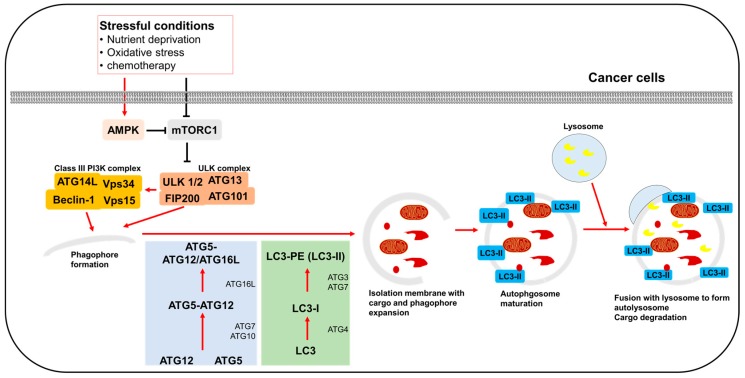
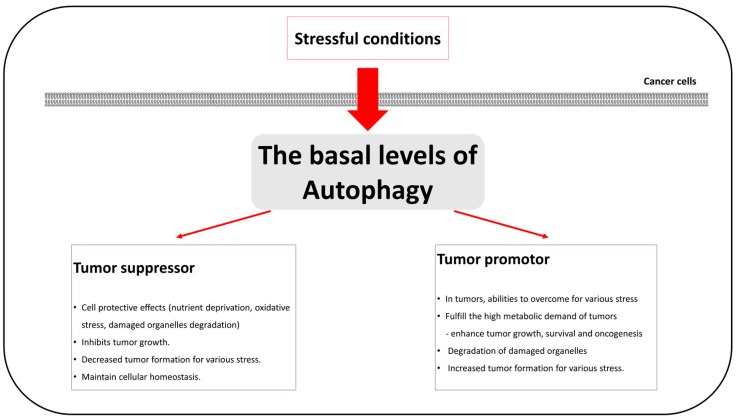
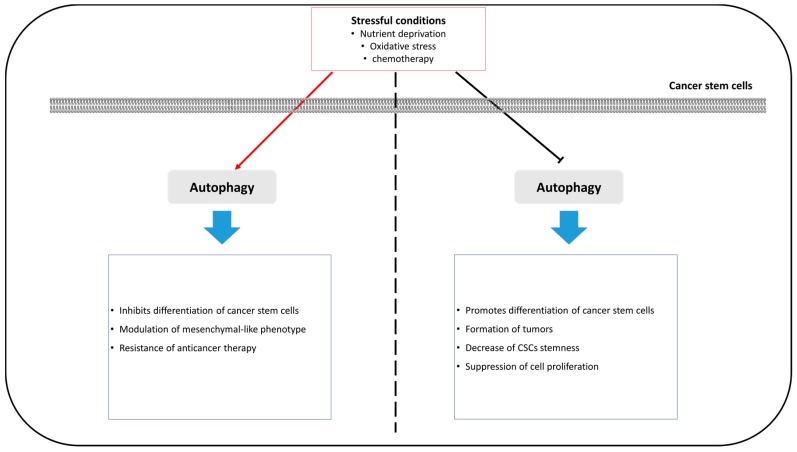
Autophagy is an intracellular degradative process that occurs under several stressful conditions, including organelle damage, the presence of abnormal proteins, and nutrient deprivation. The mechanism of autophagy initiates the formation of autophagosomes that capture degraded components and then fuse with lysosomes to recycle these components. The modulation of autophagy plays dual roles in tumor suppression and promotion in many cancers. In addition, autophagy regulates the properties of cancer stem-cells by contributing to the maintenance of stemness, the induction of recurrence, and the development of resistance to anticancer reagents. Although some autophagy modulators, such as rapamycin and chloroquine, are used to regulate autophagy in anticancer therapy, since this process also plays roles in both tumor suppression and promotion, the precise mechanism of autophagy in cancer requires further study. In this review, we will summarize the mechanism of autophagy under stressful conditions and its roles in tumor suppression and promotion in cancer and in cancer stem-cells. Furthermore, we discuss how autophagy is a promising potential therapeutic target in cancer treatment.
Overview
The claims and statistics of this paper haven’t been checked yet.
Free: it reads the open-access text and checks the first 5 claims that cite a source we can check. Create a free account to check every claim.
Integrity signals
Registry
Cites
Statistics
Figures
Verification
Claims the paper makes
The claims and statistics of this paper haven’t been checked yet.
Free: it reads the open-access text and checks the first 5 claims that cite a source we can check. Create a free account to check every claim.
Claims other papers make about this one
Each is checked against this paper’s own text: does it say what the citing paper says it does?
The cited source says what the claim attributes to it.
In the citing paper
“In cancer cells, autophagy plays dual roles in tumor promotion and suppression.48”
From Reactive Oxygen Species in Cancer: Current Findings and Future Directions (2021) · cites this paper as [48]
In the citing paper
“Although autophagy can play dual roles in both tumor promotion and suppression (Yun and Lee, 2018), in terms of chemotherapy autophagy is usually considered as a mechanism of drug-resistance against therapeutics.”
From An Arthropod Hormone, Ecdysterone, Inhibits the Growth of Breast Cancer Cells via Different Mechanisms (2020) · cites this paper as Yun and Lee, 2018
Self-check
Percentages, sums and reported differences re-computed from the paper’s own numbers.
The self-check needs the paper’s full text.
Citations
Cites
2 retracted
Mariño, G., Salvador-Montoliu, N., Fueyo, A., Knecht, E., Mizushima, N., & López-Otín, C. (2007) · Journal of Biological Chemistry · doi:10.1074/jbc.m701194200 · Cited by 407 · cited 1×
“Mice deficient in ATG4 have been observed to have increased susceptibility to the generation of fibrosarcomas when exposed to chemical carcinogens [67].”
BackgroundRetractedSui, X., Kong, N., Wang, X., Fang, Y., Hu, X., Xu, Y., Chen, W., Wang, K., Li, D., Jin, W., et al. (2014) · Scientific Reports · doi:10.1038/srep04694 · Cited by 96
RetractedRepertoires of Autophagy in the Pathogenesis of Ocular Diseases
Li, Y.-J., Jiang, Q., Cao, G.-F., Yao, J., & Yan, B. (2015) · Cellular Physiology and Biochemistry · doi:10.1159/000373980 · Cited by 16,304
Prospective identification of tumorigenic breast cancer cells
Al-Hajj, M., Wicha, M. S., Benito-Hernandez, A., Morrison, S. J., & Clarke, M. F. (2003) · Proceedings of the National Academy of Sciences · doi:10.1073/pnas.0530291100 · Cited by 10,370 · cited 1×
“In breast cancer stem-cells, a previous study has shown that CSCs contribute to the recurrence of cancer and metastasis [142].”
BackgroundThe basics of epithelial-mesenchymal transition
Kalluri, R., & Weinberg, R. A. (2009) · Journal of Clinical Investigation · doi:10.1172/jci39104 · Cited by 10,196
Epithelial-Mesenchymal Transitions in Development and Disease
Thiery, J. P., Acloque, H., Huang, R. Y. J., & Nieto, M. A. (2009) · Cell · doi:10.1016/j.cell.2009.11.007 · Cited by 9,931 · cited 1×
“These processes induce metastasis of cancer, leading to a lack of cell-cell adhesion, cell polarity to increase of cell motility, polarity, and invasiveness [111,112].”
BackgroundAMPK and mTOR regulate autophagy through direct phosphorylation of Ulk1
Kim, J., Kundu, M., Viollet, B., & Guan, K.-L. (2011) · Nature Cell Biology · doi:10.1038/ncb2152 · Cited by 7,227 · cited 1×
“mTORC1 is regulated by AMP-activated protein kinase (AMPK), and inhibition of mTORC1 and increased AMPK induces the autophagic process [26,27].”
BackgroundOncology meets immunology: the cancer-immunity cycle.
Chen, D. S., & Mellman, I. (2013) · Immunity · doi:10.1016/j.immuni.2013.07.012 · Cited by 6,929 · cited 1×
“Cancer neoantigen is released into the surrounding environment and presented to T cells, and then cancer cells are killed through T cell-mediated cytotoxicity [131].”
BackgroundLC3, a mammalian homologue of yeast Apg8p, is localized in autophagosome membranes after processing.
Kabeya, Y., Mizushima, N., Ueno, T., Yamamoto, A., Kirisako, T., Noda, T., Kominami, E., Ohsumi, Y., & Yoshimori, T. (2000) · The EMBO Journal · doi:10.1093/emboj/19.21.5720 · Cited by 6,605
Cui, C., Cui, J., Jin, F., Cui, Y., Li, R., Jiang, X., Tian, Y., Wang, K., Jiang, P., & Gao, J. (2017) · Cellular Physiology and Biochemistry · doi:10.1159/000479571 · Cited by 5,203
Cited by
Items 501–600 of 1,000
Role of non-coding RNAs in neuroblastoma
Anoushirvani, A. A., Yazdi, A. J., Amirabadi, S., Asouri, S. A., Shafabakhsh, R., Sheida, A., Khabr, M. S. H., Jafari, A., Zadeh, S. S. T., Hamblin, M. R., et al. (2023) · Cancer Gene Therapy · doi:10.1038/s41417-023-00623-0 · Cited by 11
“The regulation of autophagy plays negative or positive roles in tumor suppression or promotion in various cancers [138].”
BackgroundAnticancer Potential of Ivermectin: Mechanisms of Action and Therapeutic Implications
Lotfalizadeh, N., Gharib, A., Hajjafari, A., Borji, H., & Bayat, Z. (2022) · Journal of Lab Animal Research · doi:10.58803/jlar.v1i1.11 · Cited by 14
Widada, J., Damayanti, E., Mustofa, M., Dinoto, A., Febriansah, R., & Hertiani, T. (2023) · Microorganisms · doi:10.3390/microorganisms11081930 · Cited by 11
“For target proteins in a cancer cells, we used apoptosis proteins BCL-2 (2w3l) and BCL-XL (2yxj) [51] and autophagy-related proteins mTORC1 (6BT0) and mTORC2 (6zwm) [52].”
MethodTumor Cells Transmit Drug Resistance via Cisplatin-Induced Extracellular Vesicles
Wang, J., Liu, Q., Zhao, Y., Fu, J., & Su, J. (2023) · International Journal of Molecular Sciences · doi:10.3390/ijms241512347 · Cited by 13
“Additionally, cisplatin induces autophagy [80,81].”
Elsinochrome A induces cell apoptosis and autophagy in photodynamic therapy
Yao, Y., Pan, L., Song, W.-L., Yuan, Y., Yan, S., Yu, S., & Chen, S. (2023) · Journal of Cellular Biochemistry · doi:10.1002/jcb.30451 · Cited by 12
“Autophagy removes damaged organelles from the cell body, degrades harmful metabolites, and recycles the breakdown products to maintain normal cellular metabolism.(40,41) Autophagy can also selectively remove some organelles to reduce their energy consumption when cells are subjected to external stresses, such as starv…”
BackgroundMethodInfluentialNguyen, T. H., Nguyen, T. M., Ngoc, D. T. M., You, T., Park, M. K., & Lee, C. H. (2023) · International Journal of Molecular Sciences · doi:10.3390/ijms242216255 · Cited by 11
“The role of autophagy in modulating cancer progression is paradoxical and complex [6,95].”
BackgroundOxidation states in metallocenes: A key mechanistic component in cancer alleviation
Das, R., Chatterjee, D. R., & Shard, A. (2024) · Coordination Chemistry Reviews · doi:10.1016/j.ccr.2024.215666 · Cited by 14
Iwanejko, J., Wojaczyńska, E., Turlej, E., Maciejewska, M., & Wietrzyk, J. (2020) · Materials · doi:10.3390/ma13102393 · Cited by 11
Gil, D., Laidler, P. M., Zarzycka, M., & Dulińska-Litewka, J. (2021) · International Journal of Molecular Sciences · doi:10.3390/ijms22073682 · Cited by 11
“Autophagy can suppress the initiation and development of a tumor, but on the other hand, it is employed by the tumor for adaptation to stress or starvation, and in response to cancer therapies [1,2].”
BackgroundMarine Migrastatics: A Comprehensive 2022 Update
Vasarri, M., Barletta, E., & Degl’Innocenti, D. (2022) · Marine Drugs · doi:10.3390/md20050273 · Cited by 11
“In early metastasis, autophagy also reduces the migration and invasion of cancer cells from the sites of origin [36].”
BackgroundAutophagy and longevity: Evolutionary hints from hyper-longevous mammals
Locatelli, A. G., & Cenci, S. (2022) · Frontiers in Endocrinology · doi:10.3389/fendo.2022.1085522 · Cited by 12
“Loss of autophagy is also linked with the worsening of many age-related diseases such as neurodegeneration and cancer (62, 63).”
BackgroundKarra, A. G., Tsialtas, I., Kalousi, F. D., Georgantopoulos, A., Sereti, E., DIMAS, K. S., & Psarra, A. G. (2023) · International Journal of Molecular Sciences · doi:10.3390/ijms24043740 · Cited by 10
“Interestingly, an alteration in autophagy markers such as a decrease in p62 and increase in LC3II/LC3I ratio and BINIP3L/NIX protein levels was observed, in accordance with previous observations showing autophagy activation during tumorigenesis [42], also indicating a Warburg-effect-associated induction of mitophagy,…”
ResultNew evidence for a role of DANCR in cancers: a comprehensive review
Yuan, R., Xu, Z., Zhang, S.-K., Cao, X.-Y., Dai, A., & Song, L. (2024) · Journal of Translational Medicine · doi:10.1186/s12967-024-05246-z · Cited by 11
“Moreover, autophagy can remove harmful proteins and excessive or damaged organelles in cells, preventing cytotoxicity and causing the malignant transformation of cells [24].”
BackgroundUnveiling the Paradoxical Nature of Autophagy in Cancer Cell Fate
Shifa, J., Amin, T., Fakruddin, M., Rahman, K. A., & Islam, S. M. B. U. (2025) · Cancer Control · doi:10.1177/10732748251384365 · Cited by 12
“16,17 Autophagy dynamically facilitates cell survival under metabolic stress.”
Altunoğlu, Y. Ç., Can, T. H., Tüfekci, E. F., Altunoğlu, B. D., Baloğlu, M. C., Llorent-Martínez, E. J., & Zengin, G. (2020) · Plant Biosystems - An International Journal Dealing with all Aspects of Plant Biology · doi:10.1080/11263504.2020.1837282 · Cited by 13
“Abnormal autophagy causes cancer promotion by not being able to remove damaged components or defective proteins in oxidatively stressed cells (Yun and Lee 2018).”
Rok, J., Kowalska, J., Rzepka, Z., Stencel, D., Skorek, A., Banach, K., & Wrześniok, D. M. (2023) · Cells · doi:10.3390/cells12121564 · Cited by 10
“This protein is the molecular marker of autophagy, a physiological process that leads to the degradation of damaged proteins and organelles during stressful conditions [60].”
BackgroundValorization of Olea europaea and olive oil processing by-products/wastes
Rivas‐García, L., Navarro‐Hortal, M. D., Romero‐Márquez, J. M., Llopis, J., Forbes-Hernández, T. Y., Xiao, J., Quiles, J. L., & Sánchez‐González, C. (2023) · Advances in food and nutrition research · doi:10.1016/bs.afnr.2023.07.001 · Cited by 11
Concato, V. M., Silva, T. F., Detoni, M. B., Cruz, E. M. S., Gonçalves, M. D., Bortoleti, B. T. D. S., Tomiotto‐Pellissier, F., Carloto, A. C. M., Madureira, M. B., Rodrigues, A. C. J., et al. (2023) · Biomedicine & Pharmacotherapy · doi:10.1016/j.biopha.2023.115979 · Cited by 10
Disturbances in H+ dynamics during environmental carcinogenesis
Lagadic‐Gossmann, D., Hardonnière, K., Mograbi, B., Sergent, O., & Laurence Therese, H. U. C. (2019) · Biochimie · doi:10.1016/j.biochi.2019.06.013 · Cited by 10
Cell Survival Is Regulated via SOX9/BCL2L1 Axis in HCT-116 Colorectal Cancer Cell Line
Lizárraga-Verdugo, E. R., Ruíz‐García, E., López‐Camarillo, C., Bermúdez, M., Avendaño-Félix, M. M., Ramos‐Payán, R., Romero-Quintana, G., Ayala-Ham, A. D. R., Villegas‐Mercado, C. E., Pérez‐Plasencia, C., et al. (2020) · Journal of Oncology · doi:10.1155/2020/5701527 · Cited by 12
Therapeutic potential of autophagy activators and inhibitors in lung and breast cancer- a review
Mudaliar, P., Nalawade, A. J., Devarajan, S., & Aich, J. (2022) · Molecular Biology Reports · doi:10.1007/s11033-022-07711-8 · Cited by 12
“autophagy might work as a cell defensive, endurance, and safeguard system by decreasing DNA damage, and upgrading the endurance and opposition of the tumor cells against distresses (example-chemotherapy) [22, 23].”
BackgroundSmall but mighty: How microRNAs drive the deadly progression of cholangiocarcinoma
Jalil, A. T., Abdulhadi, M. A., Al-Ameer, L. R., Khaleel, L. A., Abdulameer, S. J., Hadi, A. M., Merza, M. S., Zabibah, R. S., & Ali, A. Y. (2023) · Pathology - Research and Practice · doi:10.1016/j.prp.2023.154565 · Cited by 10
Sun, Y., Fang, Q., Liu, W., Liu, Y., & Zhang, C. (2023) · Cell Death and Disease · doi:10.1038/s41419-023-05926-6 · Cited by 11
“It is worth exploring these mechanisms in chondrosarcoma, as they may reveal remarkable insights into novel means for regulating chondrosarcoma growth, recurrence, and metastasis [11, 12].”
Liew, Y. X., Karen‐Ng, L. P., & Vincent–Chong, V. K. (2023) · Biomedicines · doi:10.3390/biomedicines11092359 · Cited by 10
“During the formation of an autophago-some, cytosolic LC3 (LC3-I) is converted into the activated form of intra-autophagosomal LC3 (LC3-II) via a uibiquitylation-like reaction catalyzed by Atg7 and Atg3, by conjugating with phosphatidylethanolamine [77–79].”
He, J., Wei, L., Tan, S., Liang, B., Liu, J., Lu, L., Wang, T., Wang, J., Huang, Y., Chen, Z., et al. (2023) · The FASEB Journal · doi:10.1096/fj.202300173rr · Cited by 10
“21 Apart from its significance in physiological conditions, multiple studies have suggested a key role of autophagic dysfunction in numerous diseases, including cancer, 22,23 neurodegenerative diseases, 24,25 cardiomyopathy, 26,27 infection, 28,29 and age-related diseases.”
BackgroundThe paradox of autophagy in cancer: NEAT1's role in tumorigenesis and therapeutic resistance
Almujri, S. S., & Almalki, W. H. (2024) · Pathology - Research and Practice · doi:10.1016/j.prp.2024.155523 · Cited by 11
Migfilin promotes autophagic flux through direct interaction with SNAP29 and Vamp8
Cai, R., Bai, P., Quan, M., Ding, Y., Wei, W., Liu, C., Yang, A., Xiong, Z., Li, G., Li, B., et al. (2024) · The Journal of Cell Biology · doi:10.1083/jcb.202312119 · Cited by 9
“Macroautophagy (henceforth referred to as autophagy) is an intracellular dynamic and evolutionary-conserved lysosome-mediated degradation process (Tian et al., 2021; Yun and Lee, 2018).”
Cancer, deuterium, and gut microbes: A novel perspective
Seneff, S., & Kyriakopoulos, A. M. (2025) · Endocrine and Metabolic Science · doi:10.1016/j.endmts.2025.100215 · Cited by 10
Alharbi, H. O., Anwar, S., & Rahmani, A. H. (2025) · Open Life Sciences · doi:10.1515/biol-2025-1181 · Cited by 13
“Autophagy is an intracellularly regulated process necessary for preserving cellular homeostasis by eliminating misfolded and undesirable proteins [92].”
Hints From the Cellular Functions to the Practical Outlook of Circular RNAs
Yesharim, L., Mojbafan, M., & Abiri, M. (2021) · Frontiers in Genetics · doi:10.3389/fgene.2021.679446 · Cited by 9
“Inhibition of circRACGAP1 leads to cell apoptosis instead of autophagy, which sometimes causes cancer cells to survive under environmental stress (Yun and Lee, 2018; Ma et al., 2020).”
BackgroundMonoclonal Antibodies in Oncology: A Decade of Novel Options
Kardile, V., Kulkarni, A., Nadar, B., & Saldanha, T. (2023) · Cell Biochemistry and Biophysics · doi:10.1007/s12013-023-01144-1 · Cited by 10
“However, the resultant reactive oxygen species can cause autophagy which is a survival mechanism of some tumor cells [54].”
BackgroundRozilah, M. I., Yusoff, K., Chia, S. L., & Ismail, S. (2023) · Virology · doi:10.1016/j.virol.2023.109957 · Cited by 10
Huang, L., Woods, C. M., Dharmawardana, N., Michael, M., & Ooi, E. H. (2024) · Frontiers in Oncology · doi:10.3389/fonc.2024.1358854 · Cited by 9
“Autophagy is a physiological process of cellular degradation and recycling in response to stress and damage (72).”
Anticancer Potential and Molecular Targets of Pristimerin in Human Malignancies
Prabhu, K. S., Jessy, S., Kuttikrishnan, S., Mujeeb, F., Mariyam, Z., Habeeba, U., Ahmad, N., Bhat, A. A., & Shahab Uddin, M. S. (2024) · Pharmaceuticals · doi:10.3390/ph17050578 · Cited by 12
“The induction of autophagy in response to diverse cellular stressors plays a crucial role in regulating cell death, therefore offering a promising avenue for developing novel anticancer therapeutics [11,50].”
BackgroundAutophagic blockage by bismuth sulfide nanoparticles inhibits migration and invasion of HepG2 cells
Hao, B.-M., Liu, Y., Zhang, C., Li, G., Wang, W., Xu, W., Zha, Z., Wang, F., Li, C., Miao, Z., et al. (2020) · Nanotechnology · doi:10.1088/1361-6528/abadc6 · Cited by 10
The multifaceted roles of nucleophagy in cancer development and therapy
Zhao, L., Li, W., Luo, X., & Sheng, S. (2020) · Cell Biology International · doi:10.1002/cbin.11504 · Cited by 10
“Notably, activated autophagy was found in various types of advanced cancer cells, and autophagy inhibition was evidenced as a valid strategy for enhancing therapeutic efficacy and avoiding treatment resistance (Yun & Lee, 2018).”
BackgroundMısır, S., Hepokur, C., Aliyazıcıoğlu, Y., & Enguita, F. J. (2021) · Molecular Biology Reports · doi:10.1007/s11033-021-06281-5 · Cited by 11
Ezh2 promotes TRβ lysine methylation-mediated degradation in hepatocellular carcinoma
Park, S. C., & Lee, J. M. (2021) · Genes & Genomics · doi:10.1007/s13258-021-01196-8 · Cited by 10
“Autophagy pathways are either antagonistic or agonistic to oncogenesis, depending on the cancer context (Yun and Lee 2018).”
BackgroundPotential role of melatonin in prevention and treatment of lung cancer
Ngai, Z. N., Chok, K. C., Ng, K. Y., Koh, R. Y., & Chye, S. M. (2022) · Hormone Molecular Biology and Clinical Investigation · doi:10.1515/hmbci-2022-0018 · Cited by 12
Gao, Z., Chen, C., Gu, P., Chen, J., Liu, X., & Shen, J. (2022) · Cancer Biomarkers · doi:10.3233/cbm-220058 · Cited by 10
“Autophagy is closely related to the occurrence and development of cancers [8].”
The unfolded protein response (UPR) pathway: the unsung hero in breast cancer management
Patra, A., Adhikary, A., & Ghosh, S. (2022) · APOPTOSIS · doi:10.1007/s10495-022-01803-3 · Cited by 9
“This process recycles damaged proteins and organelles [62] as the pro-death signal”
BackgroundKim, S., Lee, K.-H., Choi, H.-J., Kim, E., Kang, S., Han, M., Jeon, H. J., Yun, M., Song, G., & Lee, H. J. (2023) · Cancers · doi:10.3390/cancers15041272 · Cited by 10
“Autophagy is linked to both the development and suppression of cancer [6].”
BackgroundWang, X., Chauhan, G., Tacderas, A. R. L., Muth, A., & Gupta, V. (2023) · International Journal of Molecular Sciences · doi:10.3390/ijms24065204 · Cited by 9
“Autophagy is mediated by the formation of autophagosomes that collect degraded components and then fuse with lysosomes to be recycled [76].”
BackgroundPotential Therapeutic Targets in Ovarian Cancer: Autophagy and Metabolism
Park, M., Choe, S., Shin, M., Kim, A., Mo, K., Kwon, H., & Yoon, H. (2023) · Frontiers in Bioscience-Landmark · doi:10.31083/j.fbl2803047 · Cited by 10
The RNA interactome in the Hallmarks of Cancer
Gabryelska, M., & Conn, S. J. (2023) · Wiley Interdisciplinary Reviews - RNA · doi:10.1002/wrna.1786 · Cited by 12
Tsai, C.-H., Huang, H., Lin, K.-J., Liu, J., Chen, G., Yeh, Y.-H., Lu, T., Lin, H., Lu, M., & Chu, P. (2024) · International Journal of Molecular Sciences · doi:10.3390/ijms25021345 · Cited by 11
“Autophagy is one of the important cellular catabolic processes for the elimination of misfolded proteins and damaged organelles mediated by autophagosome-lysosome fusion and degradation in lysosomes [15].”
BackgroundShang, C., Hassan, B. B., Haque, M., Song, Y., Li, J., Liu, D., Lipke, E., Chen, W., Giuriato, S., & Lai, R. L. (2021) · Cancers · doi:10.3390/cancers13020181 · Cited by 9
“Autophagy is now known to be an important homeostatic process in human cells, in which misfolded proteins, damaged organelles and intracellular pathogens are removed through the autophagosome/lysosome pathway [3,4].”
BackgroundWang, W., Sun, H., Gong, Y., Liu, X., Liu, X., Wang, M., Li, S., Li, J., Zhu, L. D., & Meng, H. (2022) · Nano Today · doi:10.1016/j.nantod.2022.101446 · Cited by 10
Uncovering potential interventions for pancreatic cancer patients via mathematical modeling
Plaugher, D. R., Aguilar, B. H., & Murrugarra, D. (2022) · Journal of Theoretical Biology · doi:10.1016/j.jtbi.2022.111197 · Cited by 10
Epigenetic control of autophagy in women’s tumors: role of non-coding RNAs
Vidoni, C., Vallino, L., Ferraresi, A., Secomandi, E., Salwa, A., Chinthakindi, M., Galetto, A., Dhanasekaran, D. N., & Isidoro, C. (2021) · Journal of Cancer Metastasis and Treatment · doi:10.20517/2394-4722.2020.95 · Cited by 11
“, radio- and chemotherapy) and provide pro-survival resistance to harsh conditions, such as hypoxia, nutrient starvation, and lack of growth factors([70,71]).”
BackgroundWongpan, A., Panvongsa, W., Krobthong, S., Nutho, B., Kanjanasirirat, P., Jearawuttanakul, K., Khumpanied, T., Phlaetita, S., Chabang, N., Munyoo, B., et al. (2024) · Scientific Reports · doi:10.1038/s41598-024-73186-1 · Cited by 9
Navigating therapeutic prospects by modulating autophagy in colorectal cancer
Rajendran, D., & Oon, C. E. (2024) · Life Sciences · doi:10.1016/j.lfs.2024.123121 · Cited by 11
Exosomes, autophagy, and cancer: A complex triad
Guerra‐Andrés, M., Fernández, Á. F., & Fontanil, T. (2025) · International Journal of Cancer · doi:10.1002/ijc.35388 · Cited by 10
“133,134 Given this complex role of autophagy in cancer and the interplay between this pathway and exosomes, it is not surprising that a growing number of studies are describing heterogeneous changes in the autophagic response and exosomal biogenesis in the context of this pathology.”
Li, J., Chen, S., Zhao, Y., Gong, H., Wang, T., Ge, X., Wang, Y., Zhu, C., Chen, L., Dai, F., et al. (2021) · Frontiers in Oncology · doi:10.3389/fonc.2021.733589 · Cited by 8
Castrogiovanni, P., Barbagallo, I. A., Imbesi, R., Musumeci, G., Sanfilippo, C., Broggi, G., Caltabiano, R., Tibullo, D., Giallongo, C., Forte, S., et al. (2022) · Pathology - Research and Practice · doi:10.1016/j.prp.2022.154038 · Cited by 8
Carmi, Y. K., Khamaisi, H., Adawi, R., Noyman, E., Gopas, J., & Mahajna, J. A. (2023) · International Journal of Molecular Sciences · doi:10.3390/ijms24097730 · Cited by 8
“They also utilize autophagy to synthetize anti-apoptotic factors and extracellular matrix (ECM) that protect and induce tumor cells growth [17].”
BackgroundZhou, R., Dai, J., Zhou, R., Wang, M., Deng, X., Zhuo, Q., Wang, Z., Li, F., Yao, D., & Xu, Y. (2024) · Oncology Letters · doi:10.3892/ol.2024.14410 · Cited by 8
“Autophagy is a conserved intracellular, degrative process that is activated in response to various stressors and regu‑ lated by evolutionarily conserved autophagy‑related genes (ATGs) (6,7).”
BackgroundAkbari, A., Nemati, M., Lighvan, Z. M., Nazari‐Khanamiri, F., Rezaie, J., & Rasmi, Y. (2024) · Journal of Biological Engineering · doi:10.1186/s13036-024-00433-4 · Cited by 9
Autophagy regulates apoptosis of colorectal cancer cells based on signaling pathways
Yan, Y., Yu, W., Guo, M., Zhu, N., Chen, X., Li, N., Zhong, C., & Wang, G. (2024) · Discover Oncology · doi:10.1007/s12672-024-01250-3 · Cited by 10
CircBIRC6 affects prostate cancer progression by regulating miR-574-5p and DNAJB1
Zhao, B., Jin-ye, Y., Ran, F., Shi, Y., Yang, L., Duan, Y., Shi, Z., Li, X., Zhang, J., Li, Z., et al. (2024) · Cancer Biology & Therapy · doi:10.1080/15384047.2024.2399363 · Cited by 11
“21 In addition to the different regulation of autophagy at various stages of cancer, the molecular mechanisms that autophagy regulates together with circRNAs also have potential.”
BackgroundHou, Y., Wang, Z., Wu, Y., Deng, T., Yang, S., Ma, S., Zhang, Y., Luo, D., Chen, Y., & Dai, X. (2025) · Natural Product Research · doi:10.1080/14786419.2024.2448839 · Cited by 9
“Moreover, autophagy prevents cancer development by regulating ROS from mitochondria damage (Yun and Lee 2018).”
Interleukin‐24: A Multidimensional Therapeutic for Treatment of Human Diseases
Raguraman, R., Munshi, A., & Ramesh, R. (2025) · Wiley Interdisciplinary Reviews Nanomedicine and Nanobiotechnology · doi:10.1002/wnan.70013 · Cited by 8
“Autophagy is an essential component of the cellular self-degradation process important for maintaining cellular metabolism and homeostasis (Yun and Lee 2018).”
Zhang, L., Zhao, Y., Guan, H., & Zhang, D. (2022) · Cancer Biomarkers · doi:10.3233/cbm-210261 · Cited by 8
Dükel, M., & Fışkın, K. (2022) · International Journal of Radiation Biology · doi:10.1080/09553002.2022.2110326 · Cited by 8
Zeng, J., Wang, J., Wu, J., Deng, R., Zhang, L., Chen, Q., Wang, J., Jin, X., Gui, S., Xu, Y., et al. (2023) · Journal of Cellular and Molecular Medicine · doi:10.1111/jcmm.17644 · Cited by 8
Roque, A. D. A., da Luz, J. Z., Santurio, M. T. K., Neto, F. F., & Ribeiro, C. A. D. O. (2023) · Environmental Science and Pollution Research · doi:10.1007/s11356-023-25603-7 · Cited by 10
“Metastasis is a multistep process that involves the invasion and colonization of tissues nearby or distant from the tumor origin via the vascular and lymphatic systems and is responsible for 90% of cancer-associated deaths (Yun and Lee 2018; Corsini et al. 2021).”
BackgroundJiang, Y., Wei, S., Koo, J.-M., Kim, H. W., Park, W., Zhang, Y., Guo, H., Ha, K., Oh, C., Kang, J., et al. (2023) · Cancers · doi:10.3390/cancers15164183 · Cited by 8
Relating aging and autophagy: a new perspective towards the welfare of human health
Chowdhury, S. G., Ray, R., & Karmakar, P. (2023) · EXCLI journal · doi:10.17179/excli2023-6300 · Cited by 11
“In addition to its role in meeting the cell's energy needs, the process of autophagy also helps to maintain the homeostasis of the organelle and prevents the development of age-associated processes (Yun and Lee, 2018).”
BackgroundBiosensors; a novel concept in real-time detection of autophagy
Nasrollahpour, H., Mirzaie, A., Sharifi, M., Rezabakhsh, A., Khalilzadeh, B., Rahbarghazi, R., Yousefi, H., & Klionsky, D. J. (2024) · Biosensors and Bioelectronics · doi:10.1016/j.bios.2024.116204 · Cited by 8
The role of LncRNA-mediated autophagy in cancer progression
Liu, Z.-Y., Tang, J., Yang, M.-Q., Yang, Z.-H., & Xia, J. (2024) · Frontiers in Cell and Developmental Biology · doi:10.3389/fcell.2024.1348894 · Cited by 14
Donia, T., Gerges, M. N., & Mohamed, T. M. (2021) · Nutrition and Cancer · doi:10.1080/01635581.2021.1960388 · Cited by 8
“Hence, targeting autophagy is an interesting antineoplastic strategy and an efficient way to sensitize malignant cells to anticancer agents (30).”
BackgroundRegulatory mechanisms and clinical applications of tumor-driven exosomal circRNAs in cancers
Meng, X., Dong, Y., Zhang, B., Zhao, Y., Zheng, Z., & Zhang, T. (2023) · International Journal of Medical Sciences · doi:10.7150/ijms.82419 · Cited by 8
“adaptation to cellular stress events like starvation, development, cell death, and tumor suppression [142].”
Ceresoli, G. L., & Gianoncelli, L. (2025) · Current Treatment Options in Oncology · doi:10.1007/s11864-025-01320-w · Cited by 9
“The stress experienced by abnormal progeny cells following TTFields application induces the activation of autophagy [47, 61–65], an intracellular degradative process that occurs under stressful conditions such as organelle damage, the presence of abnormal proteins, or nutrient deprivation [66].”
Lei, L., Zhang, J., Wei, R., Dong, B., Wang, X., & Zhou, Y. (2025) · Discover Oncology · doi:10.1007/s12672-025-02802-x · Cited by 9
ULK1 promotes metastatic progression in experimental models of epithelial ovarian cancer
Webb, J. D., Buensuceso, A. V., Tomas, E. J., Borrelli, M. J., Viola, L. H., Hovey, O. F. J., Valdés, Y. R., Singha, B., Li, S. S.-C., & Shepherd, T. G. (2026) · Oncogene · doi:10.1038/s41388-026-03702-2 · Cited by 7
“Autophagy typically operates at basal levels to ful fi ll fundamental homeostatic functions but can quickly escalate under stress [15].”
KRT4 suppresses oral squamous cell carcinoma development by reducing ATG4B-mediated autophagy
LI, X., WANG, Y., Fang, J., WANG, Z., Tao, X., Xia, J., & Cheng, B. (2021) · Biocell · doi:10.32604/biocell.2021.014844 · Cited by 7
Marelli, M. M., Macchi, C., Ruscica, M., Sartori, P., & Moretti, R. M. (2024) · Cancers · doi:10.3390/cancers16152654 · Cited by 8
“Whether autophagy is associated with cell death during cancer treatment or with cell survival and resistance to anticancer treatments is still a matter of debate [7,14].”
BackgroundIntegrated cellular response of the zebrafish (Danio rerio) heart to temperature change
Shaftoe, J. B., Geddes‐McAlister, J., & Gillis, T. E. (2024) · Journal of Experimental Biology · doi:10.1242/jeb.247522 · Cited by 7
Adornetto, A., Laganà, M. L., Satriano, A., Licastro, E., Corasaniti, M., Bagetta, G., & Russo, R. (2024) · International Journal of Molecular Sciences · doi:10.3390/ijms251910415 · Cited by 9
Dual Role of Lysosome in Cancer Development and Progression
Chen, X., Yang, Q., Chen, W., Chen, Z.-W., Guo, G.-H., Zhang, X., Sun, X.-M., Shen, T., Xiao, F., & Li, Y. (2024) · Frontiers in Bioscience-Landmark · doi:10.31083/j.fbl2911393 · Cited by 10
“However, in the late stages of metastasis, autophagy promotes metastasis by enhancing the survival and colonization of cancer cells at secondary sites [126].”
Luo, Y., Zhong, X., Sun, X., & Fan, J. (2025) · Cancer Biology & Therapy · doi:10.1080/15384047.2025.2469927 · Cited by 7
“10,11 14 Clinically, receiver operating characteristic (ROC) analysis has shown that mRNA levels of autophagy-related genes can accurately predict prognosis in EC patients.”
Costa, B. P., Nassr, M. T., Diz, F. M., Carlessi, L. P., Antunes, K. H., Nunes, F. B., Branchini, G., & de Oliveira, J. R. (2020) · Journal of Applied Toxicology · doi:10.1002/jat.4091 · Cited by 7
He, Y., Li, Y., Liang, T., Mo, S., Liao, Y., Chen, Z., Zhao, S., Ran, Q., Han, C., & Hoa, P. T. T. (2022) · Journal of Gastrointestinal Oncology · doi:10.21037/jgo-22-298 · Cited by 7
Ajideh, R., Pourmand, M. R., Faramarzi, M. A., Sepehrizadeh, Z., Pourmand, G., Hassanzadeh, S. M., Mahdavi, M., Shahverdi, A. R., & Yazdi, M. H. (2022) · Advances in Cancer Biology - Metastasis · doi:10.1016/j.adcanc.2022.100061 · Cited by 7
Yang, J.-F., Chen, T.-M., Chang, H., Tsai, Y., Tsai, W., Huang, W.-Y., Lo, C., Lin, C., Shen, P., & Chen, Y. (2022) · European Journal of Pharmacology · doi:10.1016/j.ejphar.2022.175411 · Cited by 8
Wu, J., & Wu, G. (2023) · Biomedicines · doi:10.3390/biomedicines11010205 · Cited by 7
Saini, H., Dave, R., Chatterjee, S., Mandloi, A., Sharma, H., Daiya, A., Mukherjee, S., Chowdhury, R., & Chowdhury, S. (2023) · Gene · doi:10.1016/j.gene.2023.147304 · Cited by 7
Photothermal Therapy for Cancer Treatment
Sharma, S., Batra, S., Chauhan, M. K., & Kumar, V. (2023) · Biological and medical physics, biomedical engineering · doi:10.1007/978-981-19-9786-0_22 · Cited by 9
Meta-analysis of commonly mutated genes in leptomeningeal carcinomatosis
Congur, I., Koni, E., Onat, O. E., & Keskin, Z. T. (2023) · PeerJ · doi:10.7717/peerj.15250 · Cited by 8
Zhang, Q., Teow, J. Y., Kerishnan, J. P., Halim, A. A. A., & Chen, Y. (2023) · Biomedicines · doi:10.3390/biomedicines11051458 · Cited by 8
Rochette, L., Dogon, G., Zeller, M., Cottin, Y., & Vergely, C. (2023) · Brain Sciences · doi:10.3390/brainsci13081168 · Cited by 7
“In cancer biology, autophagy plays a dual role in tumor promotion and suppression and contributes to cancer cell development and proliferation [13].”
BackgroundSantos, T. M. R., Tavares, C. A., da Cunha, E. F. F., & Ramalho, T. C. (2023) · Journal of Biomolecular Structure and Dynamics · doi:10.1080/07391102.2023.2250453 · Cited by 7
“On the other hand, in the scenario where the cancer has already settled and progressed, autophagy acts on behalf of the tumor allowing the tumor cell to survive (Yun & Lee, 2018).”
Sathiyaseelan, P., Chittaranjan, S., Kalloger, S. E., Chan, J. A.-W., Go, N. E., Jardon, M. A., Ho, C. J., Hui, T., Xu, J., Chow, C., et al. (2023) · Journal of Cell Science · doi:10.1242/jcs.260644 · Cited by 8
Sakurasosaponin inhibits lung cancer cell proliferation by inducing autophagy via AMPK activation
Seo, Y., Lim, C., Lee, J., Kim, J.-H., Kim, Y. J., Lee, P., & Jang, S. (2023) · Oncology Letters · doi:10.3892/ol.2023.14088 · Cited by 7
“In the context of cancer, autophagy plays a dual role, suppressing tumor growth by limiting the availability of nutrients and energy for rapidly dividing cancer cells or promoting tumor cell survival under stress conditions, leading to drug resistance and tumor relapse (19,20).”
BackgroundLi, Z., Ma, J., Tian, M., Xia, P., Lv, X., Hou, R., Jiang, Y., Xu, X., Jia, Z., Wang, J., et al. (2024) · Bioorganic & Medicinal Chemistry Letters · doi:10.1016/j.bmcl.2024.129613 · Cited by 7
Li, Y., Li, L., Wang, X., Huang, H., & Han, T. (2024) · ACS Omega · doi:10.1021/acsomega.3c06330 · Cited by 7
“19,20 but on the other, autophagy can provide the required energy for tumor cells and further promote tumor development.”
BackgroundAn Overview of the Unfolded Protein Response (UPR) and Autophagy Pathways in Human Viral Oncogenesis
Dutta, S., Ganguly, A., & Roy, S. G. (2024) · International review of cytology · doi:10.1016/bs.ircmb.2024.01.004 · Cited by 7
Simultaneous activation and blockade of autophagy to fight hepatocellular carcinoma
Shalhoub, H., Gonzalez, P., Santos, A. D., Guillermet‐Guibert, J., Moniaux, N., Dupont, N., & Faivre, J. (2024) · Autophagy Reports · doi:10.1080/27694127.2024.2326241 · Cited by 8
Targeting GLI1 and BAX by nanonoscapine could impede prostate adenocarcinoma progression
Nazari, M. H. D., Heidarian, R., Masoudnia, M., Dastjerdi, R. A., Talkhounche, P. G., & Taleahmad, S. (2024) · Scientific Reports · doi:10.1038/s41598-024-65968-4 · Cited by 7
“It has been shown that in the initial phases of cancer, autophagy could play a protective role though once the tumor has taken root, the cancer cells can take advantage of autophagy 39 .”
BackgroundZinnah, K. M. A., Munna, A. N., & Park, S. (2024) · Basic & Clinical Pharmacology & Toxicology · doi:10.1111/bcpt.14110 · Cited by 7
“15 Beclin 1 is a prime mammalian autophagy-regulating gene and is considered the first genetic link between autophagy and cancer.”
Metadata
- Authors
- Yun, C. W., & Lee, S. H.
- Affiliations
- Soonchunhyang University (KR)
- Corresponding author
- Lee, Sang Hun
- Venue
- International Journal of Molecular Sciences
- Publisher
- MDPI AG
- Published
- 2018-11-05
- Volume
- 19
- Issue
- 11
- Pages
- 3466
- ISSN
- 1422-0067 (ISSN-L)
- PMC
- PMC6274804
- OpenAlex
- W2899871244
- Cited by
- 965
- References
- 187
- Citations by year
- 2026: 52 · 2025: 97 · 2024: 143 · 2023: 161 · 2022: 169 · 2021: 181 · 2020: 114 · 2019: 45 · 2018: 2
- FWCI
- 12.28
- Type
- journal article
- Language
- en
- Open access
- gold
- dx.doi.org
- Licence
- Locations
- International Journal of Molecular Sciences (publishedVersion, cc-by)
- Europe PMC (PubMed Central) (publishedVersion, cc-by)
- PubMed Central (publishedVersion, cc-by)
- PubMed (publishedVersion)
- DOAJ (DOAJ: Directory of Open Access Journals) (submittedVersion)
- Funders
- National Research Foundation of Korea (NRF- 2016R1D1A3B01007727)
- Topics
- Life Sciences › Biochemistry, Genetics and Molecular Biology › Cell Biology › Autophagy in Disease and Therapy
- Life Sciences › Biochemistry, Genetics and Molecular Biology › Molecular Biology › Ubiquitin and proteasome pathways
- Life Sciences › Biochemistry, Genetics and Molecular Biology › Physiology › Calcium signaling and nucleotide metabolism
- Keywords
- autophagy, cancer, tumor suppression, tumor promotion, cancer stem cells, stemness, tumor recurrence, drug resistance, rapamycin, chloroquine, autophagy modulators, autophagosome formation, lysosome fusion, nutrient deprivation, stress response
- MeSH terms
- Animals, Autophagy, Humans, Models, Biological, Neoplasms, Neoplastic Stem Cells, Tumor Microenvironment, Carcinogenesis
About these checks
Registry, retraction, Cites and statistics results are computed, not judged, with one exception: a printed reference that no index lists is read once by a model before it counts as a citation error. Claims are extracted by a model and kept only when their quote appears verbatim in the text; each cited source is then checked, with a model’s help, for whether it says what the claim relies on. Those verdicts can be wrong — read the claim’s quote and the cited source before relying on one.
Statistics and arithmetic are recomputed, not judged.
Confidence bands are shown only for fields calibrated on our annotated test set. None is calibrated yet, so no band is shown.
What counts as a claim ›How we measure confidence ›How we check this ›
Are you an author, or do you see a problem with this page? Request a review
Data sources
Bibliographic data: Semantic Scholar, OpenAlex, Crossref.
Contains information from the Semantic Scholar Academic Graph Datasets, made available under the ODC Attribution License (ODC-BY 1.0).
Semantic Scholar’s data is described in: Kinney, R., et al. (2023). The Semantic Scholar Open Data Platform. arXiv:2301.10140.
