

The Roles of Autophagy in Cancer
Open accessThe DOI matches its Crossref record; 185 of the 187 references it cites were found in a registry or an index.
Abstract
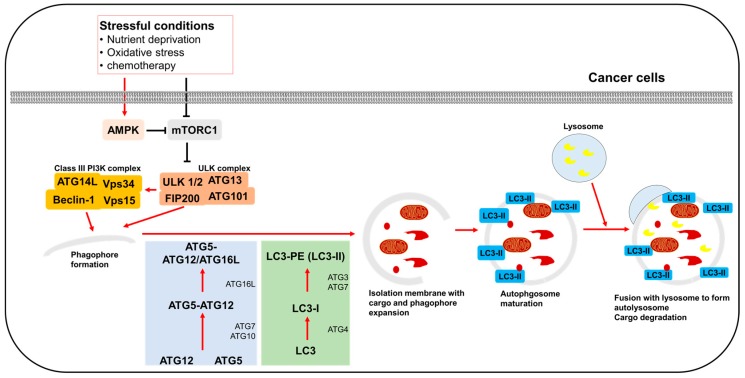
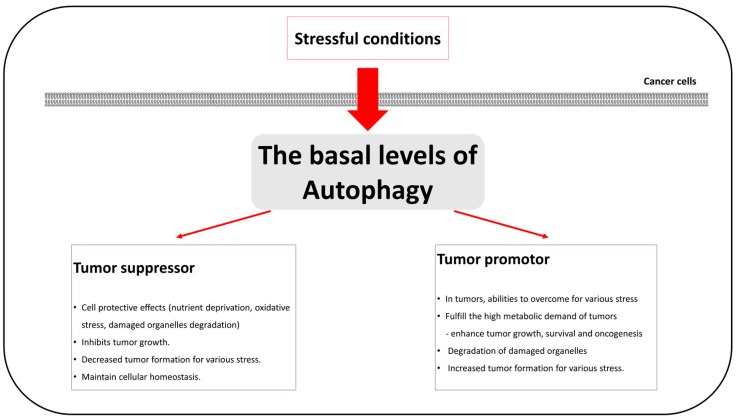
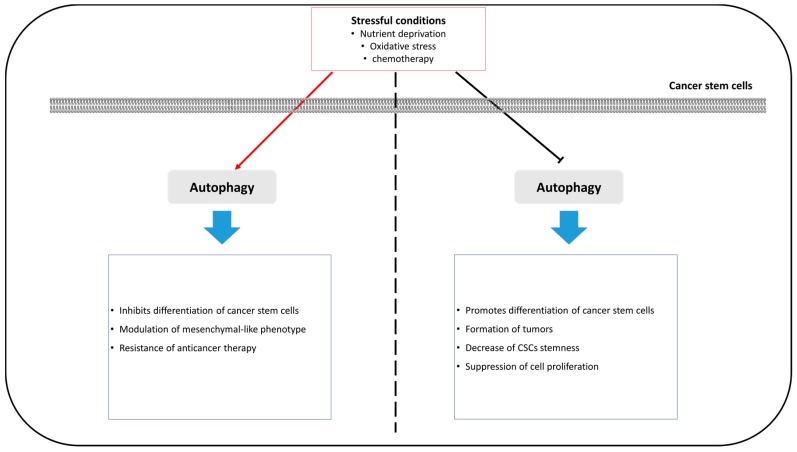
Autophagy is an intracellular degradative process that occurs under several stressful conditions, including organelle damage, the presence of abnormal proteins, and nutrient deprivation. The mechanism of autophagy initiates the formation of autophagosomes that capture degraded components and then fuse with lysosomes to recycle these components. The modulation of autophagy plays dual roles in tumor suppression and promotion in many cancers. In addition, autophagy regulates the properties of cancer stem-cells by contributing to the maintenance of stemness, the induction of recurrence, and the development of resistance to anticancer reagents. Although some autophagy modulators, such as rapamycin and chloroquine, are used to regulate autophagy in anticancer therapy, since this process also plays roles in both tumor suppression and promotion, the precise mechanism of autophagy in cancer requires further study. In this review, we will summarize the mechanism of autophagy under stressful conditions and its roles in tumor suppression and promotion in cancer and in cancer stem-cells. Furthermore, we discuss how autophagy is a promising potential therapeutic target in cancer treatment.
Overview
The claims and statistics of this paper haven’t been checked yet.
Free: it reads the open-access text and checks the first 5 claims that cite a source we can check. Create a free account to check every claim.
Integrity signals
Registry
Cites
Statistics
Figures
Verification
Claims the paper makes
The claims and statistics of this paper haven’t been checked yet.
Free: it reads the open-access text and checks the first 5 claims that cite a source we can check. Create a free account to check every claim.
Claims other papers make about this one
Each is checked against this paper’s own text: does it say what the citing paper says it does?
The cited source says what the claim attributes to it.
In the citing paper
“In cancer cells, autophagy plays dual roles in tumor promotion and suppression.48”
From Reactive Oxygen Species in Cancer: Current Findings and Future Directions (2021) · cites this paper as [48]
In the citing paper
“Although autophagy can play dual roles in both tumor promotion and suppression (Yun and Lee, 2018), in terms of chemotherapy autophagy is usually considered as a mechanism of drug-resistance against therapeutics.”
From An Arthropod Hormone, Ecdysterone, Inhibits the Growth of Breast Cancer Cells via Different Mechanisms (2020) · cites this paper as Yun and Lee, 2018
Self-check
Percentages, sums and reported differences re-computed from the paper’s own numbers.
The self-check needs the paper’s full text.
Citations
Cites
2 retracted
Mariño, G., Salvador-Montoliu, N., Fueyo, A., Knecht, E., Mizushima, N., & López-Otín, C. (2007) · Journal of Biological Chemistry · doi:10.1074/jbc.m701194200 · Cited by 407 · cited 1×
“Mice deficient in ATG4 have been observed to have increased susceptibility to the generation of fibrosarcomas when exposed to chemical carcinogens [67].”
BackgroundRetractedSui, X., Kong, N., Wang, X., Fang, Y., Hu, X., Xu, Y., Chen, W., Wang, K., Li, D., Jin, W., et al. (2014) · Scientific Reports · doi:10.1038/srep04694 · Cited by 96
RetractedRepertoires of Autophagy in the Pathogenesis of Ocular Diseases
Li, Y.-J., Jiang, Q., Cao, G.-F., Yao, J., & Yan, B. (2015) · Cellular Physiology and Biochemistry · doi:10.1159/000373980 · Cited by 16,304
Prospective identification of tumorigenic breast cancer cells
Al-Hajj, M., Wicha, M. S., Benito-Hernandez, A., Morrison, S. J., & Clarke, M. F. (2003) · Proceedings of the National Academy of Sciences · doi:10.1073/pnas.0530291100 · Cited by 10,370 · cited 1×
“In breast cancer stem-cells, a previous study has shown that CSCs contribute to the recurrence of cancer and metastasis [142].”
BackgroundThe basics of epithelial-mesenchymal transition
Kalluri, R., & Weinberg, R. A. (2009) · Journal of Clinical Investigation · doi:10.1172/jci39104 · Cited by 10,196
Epithelial-Mesenchymal Transitions in Development and Disease
Thiery, J. P., Acloque, H., Huang, R. Y. J., & Nieto, M. A. (2009) · Cell · doi:10.1016/j.cell.2009.11.007 · Cited by 9,931 · cited 1×
“These processes induce metastasis of cancer, leading to a lack of cell-cell adhesion, cell polarity to increase of cell motility, polarity, and invasiveness [111,112].”
BackgroundAMPK and mTOR regulate autophagy through direct phosphorylation of Ulk1
Kim, J., Kundu, M., Viollet, B., & Guan, K.-L. (2011) · Nature Cell Biology · doi:10.1038/ncb2152 · Cited by 7,227 · cited 1×
“mTORC1 is regulated by AMP-activated protein kinase (AMPK), and inhibition of mTORC1 and increased AMPK induces the autophagic process [26,27].”
BackgroundOncology meets immunology: the cancer-immunity cycle.
Chen, D. S., & Mellman, I. (2013) · Immunity · doi:10.1016/j.immuni.2013.07.012 · Cited by 6,929 · cited 1×
“Cancer neoantigen is released into the surrounding environment and presented to T cells, and then cancer cells are killed through T cell-mediated cytotoxicity [131].”
BackgroundLC3, a mammalian homologue of yeast Apg8p, is localized in autophagosome membranes after processing.
Kabeya, Y., Mizushima, N., Ueno, T., Yamamoto, A., Kirisako, T., Noda, T., Kominami, E., Ohsumi, Y., & Yoshimori, T. (2000) · The EMBO Journal · doi:10.1093/emboj/19.21.5720 · Cited by 6,605
Cui, C., Cui, J., Jin, F., Cui, Y., Li, R., Jiang, X., Tian, Y., Wang, K., Jiang, P., & Gao, J. (2017) · Cellular Physiology and Biochemistry · doi:10.1159/000479571 · Cited by 5,203
Cited by
Items 101–200 of 1,000
Metabolic adaptations in cancers expressing isocitrate dehydrogenase mutations
Hvinden, I. C., Cadoux-Hudson, T. A. D., Schofield, C. J., & McCullagh, J. (2021) · Cell Reports Medicine · doi:10.1016/j.xcrm.2021.100469 · Cited by 71
“LDHB promotes autophagy in a variety of cancer cell lines,(290,291) which can enable advanced solid tumors to recycle intracellular components and alleviate metabolic stress.(292)”
BackgroundPropolis: A Detailed Insight of Its Anticancer Molecular Mechanisms
Altabbal, S., Athamneh, K., Rahma, A., Wali, A. F., Eid, A. H., Iratni, R., & Dhaheri, Y. A. (2023) · Pharmaceuticals · doi:10.3390/ph16030450 · Cited by 69
“In cancer cells, autophagy can act as both a cell survival and a cell death mechanism, depending on the pathway [142,143].”
BackgroundThomas, D. R., Newton, P., Lau, N., & Newton, H. J. (2020) · Frontiers in Cellular and Infection Microbiology · doi:10.3389/fcimb.2020.599762 · Cited by 65
Cold Atmospheric Plasma and Silymarin Nanoemulsion Activate Autophagy in Human Melanoma Cells
Adhikari, M., Adhikari, B., Ghimire, B., Baboota, S., & Choi, E. H. (2020) · International Journal of Molecular Sciences · doi:10.3390/ijms21061939 · Cited by 63
“Recent studies on various types of cancers have demonstrated that in premature tumors, cancer cells can upregulate a related stress response process called autophagy [25].”
BackgroundFisetin Inhibits Autophagy in HepG2 Cells via PI3K/Akt/mTOR and AMPK Pathway
Sundarraj, K., Raghunath, A., Panneerselvam, L., & Perumal, E. (2020) · Nutrition and Cancer · doi:10.1080/01635581.2020.1836241 · Cited by 63
Crosstalk between autophagy and microbiota in cancer progression
Wang, Y., Du, J., Wu, X., Abdelrehem, A., Ren, Y., Liu, C., Zhou, X., & Wang, S. (2021) · Molecular Cancer · doi:10.1186/s12943-021-01461-0 · Cited by 64
“It can promote malignant transformation in certain tumors and suppress tumor growth in others [1, 2, 9].”
BackgroundBerberine and berberine nanoformulations in cancer therapy: Focusing on lung cancer
Hsu, C., Pallathadka, H., Gupta, J., Ma, H., Al-Shukri, H. H. K., Kareem, A. K., Zwamel, A. H., & Mustafa, Y. F. (2024) · Phytotherapy Research · doi:10.1002/ptr.8255 · Cited by 64
“Autophagy is an evolutionarily conserved cellular process that maintains cellular homeostasis by degrading and eliminating hazardous or waste substances and damaged organelles through their transportation to the lysosome (Yun & Lee, 2018).”
LC3A-mediated autophagy regulates lung cancer cell plasticity
Miao, C., Hwang, W., Chu, L.-Y., Yang, L., Ha, C.-T., Chen, P., Kuo, M.-H., Lin, S., Yang, Y., Chuang, S., et al. (2021) · Autophagy · doi:10.1080/15548627.2021.1964224 · Cited by 65
“Some reports show that autophagy serves as a tumor suppressor by promoting cancer cell death [33].”
BackgroundPortrait of a CAF: The story of cancer-associated fibroblasts in head and neck cancer
Custódio, M., Biddle, A., & Tavassoli, M. (2020) · Oral Oncology · doi:10.1016/j.oraloncology.2020.104972 · Cited by 68
Autophagy modulating agents as chemosensitizers for cisplatin therapy in cancer
Gąsiorkiewicz, B., Koczurkiewicz, P., Piska, K., & Pękala, E. (2020) · Investigational New Drugs · doi:10.1007/s10637-020-01032-y · Cited by 65
Wang, X., Yao, S., Xiao, Z., Gong, J., Zuo, L., Han, B., & Zhang, Z. (2020) · Journal of Translational Medicine · doi:10.1186/s12967-020-02321-z · Cited by 62
Autophagy in Cancer Immunotherapy
Lei, Y., Zhang, E., Bai, L., & Li, Y. (2022) · Cells · doi:10.3390/cells11192996 · Cited by 65
“In response to nutrient deprivation, autophagy is activated to rewire metabolic pathways under the regulation of AMPK and mTORC1 [22].”
BackgroundThe interplay between autophagy and cGAS-STING signaling and its implications for cancer
Schmid, M., Fischer, P., Engl, M., Widder, J., Gruber, S., & Slade, D. (2024) · Frontiers in Immunology · doi:10.3389/fimmu.2024.1356369 · Cited by 68
“Indeed, several reports have shown that depletion of certain autophagy-related genes frequently occurs in a variety of cancers to enable proper tumorigenesis (229).”
BackgroundDrug rechanneling: A novel paradigm for cancer treatment
Kaushik, I., Ramachandran, S., Prasad, S., & Srivastava, S. (2020) · Seminars in Cancer Biology · doi:10.1016/j.semcancer.2020.03.011 · Cited by 65
Autophagy Takes Center Stage as a Possible Cancer Hallmark
Alvarez-Meythaler, J. G., Garcia‐Mayea, Y., Mir, C., Kondoh, H., & LLeonart, M. E. (2020) · Frontiers in Oncology · doi:10.3389/fonc.2020.586069 · Cited by 63
“Many studies underline the crucial role of the autophagy mechanism in the maintenance of CSC homeostasis, features, and functions inside tumor and cancer progression (157).”
BackgroundDanger matrix molecules orchestrate CD14/CD44 signaling in cancer development
Roedig, H., Damiescu, R., Zeng-Brouwers, J., Kutija, I., Trebicka, J., Wygrecka, M., & Schaefer, L. (2019) · Seminars in Cancer Biology · doi:10.1016/j.semcancer.2019.07.026 · Cited by 68
Wan, B., Liu, B., Yu, G., Huang, Y., & Lv, C. (2019) · Aging · doi:10.18632/aging.102368 · Cited by 61
“Therefore, the levels of autophagy proteins can regulate tumor growth and progression [12].”
BackgroundShafabakhsh, R., Arianfar, F., Vosough, M., Mirzaei, H. R., Mahjoubin‐Tehran, M., Khanbabaei, H., Kowsari, H., Shojaie, L., Azar, M. E. F., Hamblin, M. R., et al. (2021) · Cancer Gene Therapy · doi:10.1038/s41417-020-00272-7 · Cited by 62
The Antitumour Mechanisms of Carotenoids: A Comprehensive Review
Baeza-Morales, A., Medina-García, M., Martínez-Peinado, P., Pascual-García, S., Pujalte-Satorre, C., López-Jaén, A. B., Martínez‐Espinosa, R. M., & Sempere-Ortells, J. M. (2024) · Antioxidants · doi:10.3390/antiox13091060 · Cited by 72
“However, autophagy has dual roles in cancer, acting as both a tumour suppressor and promoter, depending on context [224].”
Abu‐Khudir, R., Ismail, G. A., & Diab, T. A. (2020) · Nutrition and Cancer · doi:10.1080/01635581.2020.1764069 · Cited by 65
Contribution of miRNAs in the Pathogenesis of Breast Cancer
Ghafouri‐Fard, S., Sasi, A. K., Abak, A., Shoorei, H., Khoshkar, A., & Taheri, M. N. (2021) · Frontiers in Oncology · doi:10.3389/fonc.2021.768949 · Cited by 58
Metabolic Reprogramming in Cancer: Implications for Immunosuppressive Microenvironment
Aden, D., Sureka, N., Zaheer, S., Chaurasia, J. K., & Zaheer, S. (2024) · Immunology · doi:10.1111/imm.13871 · Cited by 69
“Autophagy, a process of cellular self-digestion, helps cancer cells survive nutrient deprivation and hypoxic conditions by recycling cellular components to generate energy and biosynthetic precursors [176, 177].”
TGF-β Signaling in Cancer: Mechanisms of Progression and Therapeutic Targets
Cecerska‐Heryć, E., Jerzyk, A., Goszka, M., Polikowska, A., Rachwalska, J., Serwin, N. M., Wojciuk, B., & Dołęgowska, B. (2025) · International Journal of Molecular Sciences · doi:10.3390/ijms26157326 · Cited by 72
“Autophagy-deficient cells show impaired viability, and gene knockdown experiments confirm that autophagy inhibition can induce tumor cell death [33].”
Avagliano, A., Fiume, G., Ruocco, M. R., Martucci, N., Vecchio, E., Insabato, L., Russo, D., Accurso, A., Masone, S., Montagnani, S., et al. (2020) · Cancers · doi:10.3390/cancers12061697 · Cited by 67
Bojko, A., Staniak, K., Czarnecka‐Herok, J., Sunderland, P., Dudkowska, M., Śliwińska, M. A., Salmiņa, K., & Sikora, E. (2020) · International Journal of Molecular Sciences · doi:10.3390/ijms21176084 · Cited by 59
“The relationship between autophagy and cell senescence seems to be complicated, especially in senescent cancer cells as, generally, cancer cells have different basal levels of autophagy, including high and insufficient autophagy [65].”
BackgroundDietary Energy Modulation and Autophagy: Exploiting Metabolic Vulnerabilities to Starve Cancer
Cozzo, A. J., Coleman, M. F., Pearce, J. B., Pfeil, A. J., Etigunta, S. K., & Hursting, S. D. (2020) · Frontiers in Cell and Developmental Biology · doi:10.3389/fcell.2020.590192 · Cited by 56
“Autophagy in Cancer Initiation Basal autophagy exerts a protective role in suppressing malignant transformation and early tumorigenesis by regulating cellular homeostasis and metabolism through the degradation of intracellular components (Yun and Lee, 2018).”
BackgroundNeuroinflammation and Autophagy in Parkinson’s Disease—Novel Perspectives
Minchev, D. S., Kazakova, M., & Sarafian, V. S. (2022) · International Journal of Molecular Sciences · doi:10.3390/ijms232314997 · Cited by 58
The Resistance Mechanisms of Checkpoint Inhibitors in Solid Tumors
Koustas, E., Sarantis, P., Papavassiliou, A. G., & Karamouzis, M. V. (2020) · Biomolecules · doi:10.3390/biom10050666 · Cited by 57
“The role of autophagy in cancer remains controversial [42].”
Backgroundβ-Glucans from Yeast—Immunomodulators from Novel Waste Resources
Thomas, S., Rezoagli, E., Abidin, I. Z., Major, I., Murray, P., & Murphy, E. J. (2022) · Applied Sciences · doi:10.3390/app12105208 · Cited by 58
Ortega, M. A., Fraile‐Μartinez, O., León-Oliva, D. D., Boaru, D. L., López-González, L., Montero, C. G., Álvarez-Mon, M. Á., Guijarro, L. G., Torres‐Carranza, D., Sáez, M. A., et al. (2024) · International Journal of Biological Sciences · doi:10.7150/ijbs.95122 · Cited by 61
“While certain autophagy modulators like rapamycin and chloroquine are employed in anticancer therapy to regulate autophagy, a comprehensive understanding of the precise mechanisms underlying autophagy's involvement in cancer is imperative and necessitates further investigation (141).”
BackgroundEpigenetic targeting of autophagy for cancer prevention and treatment by natural compounds
Vidoni, C., Ferraresi, A., Secomandi, E., Vallino, L., Dhanasekaran, D. N., & Isidoro, C. (2019) · Seminars in Cancer Biology · doi:10.1016/j.semcancer.2019.04.006 · Cited by 56
The Oncogenic Signaling Disruptor, NDRG1: Molecular and Cellular Mechanisms of Activity
Chekmarev, J., Azad, M. G., & Richardson, D. R. (2021) · Cells · doi:10.3390/cells10092382 · Cited by 56
“Interestingly, RAS-mutated cancers—such as lung, colon, and pancreatic cancers— have higher autophagy and lysosomal activity, which facilitates the recycling of cellular constituents that promote tumor growth [75].”
BackgroundAutophagy and Exosomes Relationship in Cancer: Friends or Foes?
Colletti, M., Ceglie, D., Giannatale, A. D., & Nazio, F. (2021) · Frontiers in Cell and Developmental Biology · doi:10.3389/fcell.2020.614178 · Cited by 56
“…of both autophagy and exosome release has been well-recognized after chemotherapy treatments (Bandari et al., 2018; Yun and Lee, 2018; Ab Razak et al., 2019; Kang et al., 2020) and in mediating chemoresistance (Yun and Lee, 2018; Ender et al., 2019; Nazio et al., 2019; Steinbichler et al., 2019).”
BackgroundProtein homeostasis in aging and cancer
Chen, X., Shen, T., Fang, S.-J., Sun, X.-M., Li, G., & Li, Y. (2023) · Frontiers in Cell and Developmental Biology · doi:10.3389/fcell.2023.1143532 · Cited by 63
“Second, as one of the major proteolytic system, autophagylysosomal system is tightly associated with cancer development and progression (Rosenfeldt and Ryan, 2009; Yun and Lee, 2018).”
BackgroundMagnetic Hyperthermia with Iron Oxide Nanoparticles: From Toxicity Challenges to Cancer Applications
Bâldea, I., Iacoviță, C., Gurgu, R. A., VIZITIU, A., Răzniceanu, V., & Mitrea, D. R. (2025) · Nanomaterials · doi:10.3390/nano15191519 · Cited by 59
“When stressors such as IONPs accumulate in healthy tissues, elevated ROS levels can modify the intracellular environment, causing autophagy to shift from a protective mechanism to a promoter of cancer progression [274].”
Jia, Y., Chen, Y., & Liu, J. (2020) · Frontiers in Genetics · doi:10.3389/fgene.2020.608668 · Cited by 68
“Autophagy is not only involved in the physiological processes of the body, but also closely related to the occurrence and development of neurodegenerative diseases, tumors, and other diseases (Saha et al., 2018; Yun and Lee, 2018).”
BackgroundThe Role of Neutrophil Extracellular Traps in Cancer
Shao, B., Yao, Y., Li, J., Chai, N., & Linghu, E. (2021) · Frontiers in Oncology · doi:10.3389/fonc.2021.714357 · Cited by 60
“Additionally, autophagy has also been reported to inhibit tumor initiation through the induction of autophagic cell death, and chloroquine, an autophagy inhibitor, has been used in anti-tumor therapy (131, 134).”
MethodAnticancer therapeutic effect of cerium-based nanoparticles: known and unknown molecular mechanisms
Amaldoss, M. J. N., Mehmood, R., Yang, J., Koshy, P., Kumar, N., Unnikrishnan, A., & Sorrell, C. C. (2022) · Biomaterials Science · doi:10.1039/d2bm00334a · Cited by 51
Carvacrol as a Prospective Regulator of Cancer Targets/Signalling Pathways
Singh, J., Luqman, S., & Meena, A. (2022) · Current Molecular Pharmacology · doi:10.2174/1874467215666220705142954 · Cited by 232
Koustas, E., Sarantis, P., Kyriakopoulou, G., Papavassiliou, A. G., & Karamouzis, M. V. (2019) · Cancers · doi:10.3390/cancers11040533 · Cited by 54
“The crucial role of autophagy is to regulate the energy and metabolic balance of cancer cells [17] and through the impairment of cell death [142].”
BackgroundSu, T., Zhu, J., Sun, R., Zhang, H., Huang, Q., Zhang, X., Du, R., Qiu, L., & Cao, R. (2019) · European Journal of Medicinal Chemistry · doi:10.1016/j.ejmech.2019.05.088 · Cited by 52
Redox balance and autophagy regulation in cancer progression and their therapeutic perspective
Khan, S. U., Fatima, K., Aisha, S., Hamza, B., & Malik, F. A. (2022) · Medical Oncology · doi:10.1007/s12032-022-01871-0 · Cited by 61
“Basal autophagy can play a role in either tumor suppression or tumor growth, however in oxidatively stressed cells, decreased and dysfunctional autophagy prevents the breakdown of damaged subcellular structures and proteins into fundamental units thus leading to emergence or outbreak of cancer [169, 170].”
BackgroundCytoplasmic liver kinase B1 promotes the growth of human lung adenocarcinoma by enhancing autophagy
Liu, M., Jiang, L., Fu, X., Wang, W., Ma, J., Tian, T., Nan, K., & Liang, X. (2018) · Cancer Science · doi:10.1111/cas.13746 · Cited by 47
Resistance to TOP-1 Inhibitors: Good Old Drugs Still Can Surprise Us
Kumar, S., & Sherman, M. Y. (2023) · International Journal of Molecular Sciences · doi:10.3390/ijms24087233 · Cited by 50
“Activation of autophagy by irinotecan involves the JNK- and p38-MAPK signaling pathways and generation of reactive oxygen species (ROS) [117,118].”
BackgroundDiscovery of BAY-985, a Highly Selective TBK1/IKKε Inhibitor
Lefranc, J., Schulze, V., Hillig, R. C., Briem, H., Prinz, F., Mengel, A., Heinrich, T. K., Bálint, J., Rengachari, S., Irlbacher, H., et al. (2019) · Journal of Medicinal Chemistry · doi:10.1021/acs.jmedchem.9b01460 · Cited by 49
p62: Friend or Foe? Evidences for OncoJanus and NeuroJanus Roles
Emanuele, S., Lauricella, M., D’Anneo, A., Carlisi, D., Blasio, A. D., Liberto, D. D., & Giuliano, M. (2020) · International Journal of Molecular Sciences · doi:10.3390/ijms21145029 · Cited by 53
“It is currently recognized that autophagy plays a double role in cancer development as well as in neurodegenerative diseases [47,48].”
Molecular Mechanism of Autophagy and Its Regulation by Cannabinoids in Cancer
Lee, X. C., Werner, E., & Falasca, M. (2021) · Cancers · doi:10.3390/cancers13061211 · Cited by 52
“CYP2E1 mediated the alcohol-induced liver steatosis via mechanisms including the increased synthesis of ROS, the activation of MAPK JNK pathways as well as attenuated PPARα, which aid in the modulation of fatty acid oxidation [10,11].”
BackgroundProtein clearance strategies for disease intervention
Hommen, F., Bilican, S., & Vílchez, D. (2021) · Journal of Neural Transmission · doi:10.1007/s00702-021-02431-y · Cited by 51
The dual role of microRNA (miR)-20b in cancers: Friend or foe?
İlhan, A., Golestani, S., Shafagh, S.-G., Asadi, F., Daneshdoust, D., Al-Naqeeb, B. Z. T., Nemati, M. M., Khalatbari, F., & Yaseri, A. F. (2023) · Cell Communication and Signaling · doi:10.1186/s12964-022-01019-7 · Cited by 50
Udaya Rajesh, R., & Sangeetha, D. (2024) · Phytomedicine · doi:10.1016/j.phymed.2024.155902 · Cited by 52
The role of long non-coding RNAs in mediating chemoresistance by modulating autophagy in cancer
Jin, K., Lu, Z.-B., Lv, J., & Zhang, J. (2020) · RNA Biology · doi:10.1080/15476286.2020.1737787 · Cited by 47
“ABC family transporters are transmembrane proteins that translocate different substrates across cellular membranes coupling with ATP hydrolysis [10].”
BackgroundInfluentialLysosomal Calcium Channels in Autophagy and Cancer
Wu, Y., Huang, P., & Dong, X. (2021) · Cancers · doi:10.3390/cancers13061299 · Cited by 53
Galectins and galectin-mediated autophagy regulation: new insights into targeted cancer therapy
Liu, D., Zhu, H., & Li, C. (2023) · Biomarker Research · doi:10.1186/s40364-023-00466-9 · Cited by 54
Li-Doped Bioactive Ceramics: Promising Biomaterials for Tissue Engineering and Regenerative Medicine
Farmani, A. R., Salmeh, M. A., Golkar, Z., Moeinzadeh, A., Ghiasi, F. F., Amirabad, S. Z., Shoormeij, M. H., Mahdavinezhad, F., Momeni, S., Moradbeygi, F., et al. (2022) · Journal of Functional Biomaterials · doi:10.3390/jfb13040162 · Cited by 46
Manogaran, P., Beeraka, N. M., Paulraj, R. S., Sathiyachandran, P., & Thammaiappa, M. (2023) · Current Topics in Medicinal Chemistry · doi:10.2174/1568026623666230111154537 · Cited by 48
Phytocompounds targeting epigenetic modulations: an assessment in cancer
Khan, A., Khan, A., Khan, M. A., Malik, Z., Massey, S., Parveen, R., Mustafa, S., Shamsi, A., & Husain, S. A. (2024) · Frontiers in Pharmacology · doi:10.3389/fphar.2023.1273993 · Cited by 54
Two Faces of Autophagy in the Struggle against Cancer
Kubicka, A., Matczak, K., & Marczak, A. (2021) · International Journal of Molecular Sciences · doi:10.3390/ijms22062981 · Cited by 48
“The mutation of the BECN1 and ATG7 genes observed in human ALDH+ breast cancers resulted in reduced proliferation of cancer stem cells (CSCs) and loss of their ability to self-renew [53].”
BackgroundChen, M., Yadav, V. K., Chu, Y. C., Ong, J. R., Huang, T.-Y., Lee, K.-F., Lee, K., Yeh, C., & Lee, W. (2021) · Cancers · doi:10.3390/cancers13133227 · Cited by 49
“The function of autophagy is more than homeostasis maintenance; it also plays a role in cancer [32] by acting as a factor in both tumor progression and tumor suppression [33].”
BackgroundAutophagy-related Proteins as a Prognostic Factor of Patients With Colorectal Cancer
Koustas, E., Sarantis, P., Theoharis, S., Saetta, A. A., Chatziandreou, I., Kyriakopoulou, G., Giannopoulou, I., Michelli, M., Schizas, D., Papavassiliou, A. G., et al. (2019) · American Journal of Clinical Oncology · doi:10.1097/coc.0000000000000592 · Cited by 44
Pun, F. W., Leung, G. H. D., Leung, H.-W., Rice, J., Schmauck‐Medina, T., Lautrup, S., Long, X., Liu, B. H. M., Wong, C. W., Ozerov, I. V., et al. (2023) · Aging Cell · doi:10.1111/acel.14017 · Cited by 50
“…instability, ECM stiffness, inflammation, cellular senescence, and deregulated nutrient signaling are also attributed to tumorigenesis (Aunan et al., 2017; Blagosklonny, 2022; Collado et al., 2007; Yun & Lee, 2018 ), suggesting their intersected function in aging and proliferative processes.”
BackgroundRole of autophagy in tumor response to radiation: Implications for improving radiotherapy
Roy, A., Bera, S., Saso, L., & Dwarakanath, B. S. R. (2022) · Frontiers in Oncology · doi:10.3389/fonc.2022.957373 · Cited by 50
“Recent studies have bestowed both pro and anti survival nature to the autophagic pathways and cancer cells are known to exploit this dual nature of autophagic pathways to survive in a metabolically challenged microenvironment, to escape the hostimmune responses, to evade apoptosis, and to metastasize (100, 101).”
BackgroundCancer stem cells: an insight into the development of metastatic tumors and therapy resistance
Nairuz, T., Mahmud, Z., Manik, M. R. K., & Kabir, Y. (2023) · Stem Cell Reviews and Reports · doi:10.1007/s12015-023-10529-x · Cited by 46
“Additionally, autophagy controls the characteristics of cancer stem cells (CSCs) by maintaining their stemness, causing them to recur, and causing them to become resistant to anticancer drugs [244].”
BackgroundHuang, Y., Li, S., Jia, Z., Zhao, W., Zhou, C., Zhang, R., Ali, D. W., Michalak, M., Chen, X., & Tang, J. (2020) · Frontiers in Oncology · doi:10.3389/fonc.2020.573127 · Cited by 44
Luparello, C., Ragona, D., Asaro, D. M. L., Lazzara, V., Affranchi, F., Arizza, V., & Vazzana, M. (2020) · Journal of Marine Science and Engineering · doi:10.3390/jmse8040261 · Cited by 42
“Autophagy plays a complex and controversial role in breast cancer, operating as either a tumor-suppressor system addressing neoplastic cells to death, or a cancer cell protective system which provides energy and basic elements to allow a fast-proliferative rate in conditions of oxygen and nutrient deficiency [36].”
BackgroundWang, L., Zhang, Y., Song, Z., Liu, Q., Fan, D., & Song, X. (2023) · Food & Function · doi:10.1039/d3fo02482b · Cited by 44
Huang, W., Zeng, C., Hu, S., Wang, L., & Liu, J. (2019) · Cancer Management and Research · doi:10.2147/cmar.s226828 · Cited by 46
The Challenges and Opportunities of LncRNAs in Ovarian Cancer Research and Clinical Use
Salamini-Montemurri, M., Maceiras, M. L., Barreiro-Alonso, A., Vizoso‐Vázquez, Á., Rodriguez-Belmonte, E. M., Varela, M. Q., & Cerdán, M. E. (2020) · Cancers · doi:10.3390/cancers12041020 · Cited by 45
Autophagy-mediating microRNAs in cancer chemoresistance
Jing, Y., Liang, W., Liu, J., Zhang, L., Wei, J., Yang, J., Zhang, Y., & Huang, Z. (2020) · Cell Biology and Toxicology · doi:10.1007/s10565-020-09553-1 · Cited by 43
Verteporfin disrupts multiple steps of autophagy and regulates p53 to sensitize osteosarcoma cells
Saini, H., Sharma, H., Mukherjee, S., Chowdhury, S., & Chowdhury, R. (2021) · Cancer Cell International · doi:10.1186/s12935-020-01720-y · Cited by 45
Punicalagin, a pomegranate compound, induces apoptosis and autophagy in acute leukemia
Subkorn, P., Norkaew, C., Deesrisak, K., & Tanyong, D. I. (2021) · PeerJ · doi:10.7717/peerj.12303 · Cited by 48
Naseer, F., Ahmed, M., Majid, A., Kamal, W., & Phull, A. R. (2022) · Seminars in Cancer Biology · doi:10.1016/j.semcancer.2022.06.014 · Cited by 45
Migrasomal autophagosomes relieve endoplasmic reticulum stress in glioblastoma cells
Lee, S. Y., Choi, S., Kim, Y., Ahn, H., Ko, Y., Kim, K., Chi, S. W., & Kim, H. (2024) · BMC Biology · doi:10.1186/s12915-024-01829-w · Cited by 44
Self-citationThe Autophagy-Cilia Axis: An Intricate Relationship
Morleo, M., & Franco, B. (2019) · Cells · doi:10.3390/cells8080905 · Cited by 44
“It is well established that increased levels of autophagy promote tumor survival and growth in advanced cancers to overcome stressful conditions, including hypoxia and nutrient deprivation (reviewed in [86]).”
BackgroundNanoparticle-Based Drug Delivery Systems for Photodynamic Therapy of Metastatic Melanoma: A Review
Nkune, N. W., & Abrahamse, H. (2021) · International Journal of Molecular Sciences · doi:10.3390/ijms222212549 · Cited by 43
“This form of programmed cell death serves as a tumor suppressor and promoter, hence it is not ideal in cancer therapy as cells can recover and cause tumor recurrence [29].”
BackgroundPrasher, P., Sharma, M., Singh, S. K., Gulati, M., Chellappan, D. K., Rajput, R., Gupta, G., Ydyrys, A., Kulbayeva, M., Razis, A. F. A., et al. (2023) · Frontiers in Chemistry · doi:10.3389/fchem.2023.1164477 · Cited by 41
“Removal of such debris by autophagy is an established mechanism to prevent the onset of oncogenesis (Yun and Lee, 2018).”
BackgroundVescovo, T., Pagni, B., Piacentini, M., Fimia, G. M., & Antonioli, M. (2020) · Frontiers in Cell and Developmental Biology · doi:10.3389/fcell.2020.00047 · Cited by 43
“HBV and HCV are considered the leading causes of liver cancer being responsible for 80% of hepatocellular carcinoma (HCC) (Zamor et al., 2017).”
BackgroundFerraro, M. G., Piccolo, M., Misso, G., Μaione, F., Montesarchio, D., Caraglia, M., Paduano, L., Santamaria, R., & Irace, C. (2020) · Cells · doi:10.3390/cells9061412 · Cited by 41
“Different tumor microenvironments further intricate the dual role of autophagy, making its activation a very complicated process to be managed in response to treatments [63].”
BackgroundLiu, D., Sun, Z., Ye, T., Li, J., Zeng, B., Zhao, Q., Wang, J., & Xing, H. R. (2021) · FEBS Open Bio · doi:10.1002/2211-5463.13207 · Cited by 43
De Lellis, L., Veschi, S., Tinari, N., Mokini, Z., Carradori, S., Brocco, D., Florio, R., Grassadonia, A., & Cama, A. (2021) · Cancers · doi:10.3390/cancers13163946 · Cited by 40
“activity and hypoxia associated with higher cell turnover within solid tumors, in order to maintain energy homeostasis and cell survival [137].”
BackgroundChaudhary, A., & Poonia, K. (2021) · Inorganic Chemistry Communications · doi:10.1016/j.inoche.2021.109044 · Cited by 41
Pectin a multifaceted biopolymer in the management of cancer: A review
Picot-Allain, M. C. N., & Neergheen, V. S. (2023) · Heliyon · doi:10.1016/j.heliyon.2023.e22236 · Cited by 39
The Biological and Biomechanical Role of Transglutaminase-2 in the Tumour Microenvironment
Tempest, R., Guarnerio, S., Maani, R., Cooper, J., & Peake, N. (2021) · Cancers · doi:10.3390/cancers13112788 · Cited by 42
“Cellular conditions that induce an autophagic response include oxidative stress, hypoxia, nutrient deprivation, and exposure to chemotherapeutics [78].”
BackgroundComprehensive review on signaling pathways of dietary saponins in cancer cells suppression
Zhou, Y., Farooqi, A. A., & Xu, B. (2021) · Critical Reviews in Food Science and Nutrition · doi:10.1080/10408398.2021.2000933 · Cited by 46
“In contrast, autophagy also possesses a protective effect against apoptosis to stimulate cell survival under certain conditions (Yun and Lee 2018).”
BackgroundGuan, Y., Wang, N., Deng, Z., Chen, X., & Liu, Y. (2022) · Biomaterials · doi:10.1016/j.biomaterials.2022.121434 · Cited by 42
Melatonin: An important anticancer agent in colorectal cancer
Mirza‐Aghazadeh‐Attari, M., Mohammadzadeh, A., Mostavafi, S., Mihanfar, A., Darband, S. G., Sadighparvar, S., Gholamzadeh, S., Majidinia, M., & Yousefi, B. (2019) · Journal of Cellular Physiology · doi:10.1002/jcp.29049 · Cited by 40
“It can result in apoptosis, and reduce the progression rate towards cancer, and also enable cancer cells to avoid apoptosis by better adjusting with the environmental conditions, acting as a cancer‐promoting mechanism (Yun & Lee, 2018).”
BackgroundFu, L., Li, S., Yang, X., Huang, Z., Mou, X., Syed, A., Bahkali, A. H., & Zheng, L. (2019) · Journal of Photochemistry and Photobiology B Biology · doi:10.1016/j.jphotobiol.2019.111748 · Cited by 40
Liu, P., Farooqi, A. A., Peng, S., Yu, T., Dahms, H.-U., Lee, C., Tang, J., Wang, S.-C., Shu, C., & Chang, H. (2020) · Seminars in Cancer Biology · doi:10.1016/j.semcancer.2020.10.009 · Cited by 39
Autophagy Modulation and Cancer Combination Therapy: A Smart Approach in Cancer Therapy
Jeda, A. S., Ghabeshi, S., pour, Z. G. M., Jazaeri, E. O., Araiinejad, M., Sheikholeslami, F., Abdoli, M., Edalat, M., & Abdoli, A. (2022) · Cancer Treatment and Research Communications · doi:10.1016/j.ctarc.2022.100512 · Cited by 46
The Multifaced Role of Collagen in Cancer Development and Progression
Buglio, G. L., Cicero, A. L., Campora, S., & Ghersi, G. (2024) · International Journal of Molecular Sciences · doi:10.3390/ijms252413523 · Cited by 42
Luparello, C., Ragona, D., Asaro, D. M. L., Lazzara, V., Affranchi, F., Celi, M., Arizza, V., & Vazzana, M. (2019) · Biology · doi:10.3390/biology8040076 · Cited by 37
“The role of autophagy in breast cancer is complex and controversial, since it may operate as a tumor-suppressor mechanism addressing neoplastic cells to death, but, on the other hand, it can act to protect cancer cells in conditions of oxygen and nutrient shortage and allow their rapid proliferative rate by providing…”
BackgroundMolecular pathways in viral hepatitis-associated liver carcinogenesis: An update
Elpek, G. Ö. (2021) · World Journal of Clinical Cases · doi:10.12998/wjcc.v9.i19.4890 · Cited by 39
Molecular Mechanisms of the Therapeutic Effect of Selenium Nanoparticles in Hepatocellular Carcinoma
Varlamova, E. G. (2024) · Cells · doi:10.3390/cells13131102 · Cited by 40
“The obtained data most likely indicate the activation of mitochondrially mediated apoptosis by SeNPs [36].”
BackgroundXie, C., Liu, S., Wu, B., Zhao, Y., Chen, B., Guo, J., Qiu, S., & Cao, Y. (2020) · Cell Transplantation · doi:10.1177/0963689720962460 · Cited by 37
Advances in Breast Cancer Management and Extracellular Vesicle Research, a Bibliometric Analysis
Teles, R. H. G., Yano, R. S., Villarinho, N. J., Yamagata, A. S., Jaeger, R. G., Meybohm, P., Burek, M., & Freitas, V. M. (2021) · Current Oncology · doi:10.3390/curroncol28060382 · Cited by 40
“, maintenance of stem properties on cancer stem cells) tumorigenesis [65].”
BackgroundmTOR Signaling Components in Tumor Mechanobiology
Gargalionis, A. N., Papavassiliou, K. A., Basdra, E. K., & Papavassiliou, A. G. (2022) · International Journal of Molecular Sciences · doi:10.3390/ijms23031825 · Cited by 41
“In cancer, autophagy has a dual role either as a tumor-promoting or tumor-suppressing process [63].”
BackgroundCrosstalk between cilia and autophagy: implication for human diseases
Morleo, M., Vieira, H. L. A., Pennekamp, P., Palma, A., Bento‐Lopes, L., Omran, H., Lopes, S. S., Barral, D. C., & Franco, B. (2022) · Autophagy · doi:10.1080/15548627.2022.2067383 · Cited by 36
Xu, J., Elshazly, A. M., & Gewirtz, D. A. (2022) · Biomedicines · doi:10.3390/biomedicines10071632 · Cited by 39
Bâldea, I., Florea, A., Olteanu, D. E., Clichici, S. V., David, L., Moldovan, B. E., Cenariu, M., Achim, M., Suharoschi, R., Dănescu, S., et al. (2019) · Nanomedicine · doi:10.2217/nnm-2019-0290 · Cited by 38
Chang, X., Feng, X., Du, M., Li, S., Wang, J., Wang, Y., & Liu, P. (2023) · Frontiers in Pharmacology · doi:10.3389/fphar.2023.1194861 · Cited by 36
“Autophagy delivers cytoplasmic components to lysosomes for degradation to maintain cell metabolism and cell homeostasis (Yun and Lee, 2018).”
BackgroundChauhan, N., & Patro, B. S. (2023) · Cancer Letters · doi:10.1016/j.canlet.2023.216599 · Cited by 36
Metadata
- Authors
- Yun, C. W., & Lee, S. H.
- Affiliations
- Soonchunhyang University (KR)
- Corresponding author
- Lee, Sang Hun
- Venue
- International Journal of Molecular Sciences
- Publisher
- MDPI AG
- Published
- 2018-11-05
- Volume
- 19
- Issue
- 11
- Pages
- 3466
- ISSN
- 1422-0067 (ISSN-L)
- PMC
- PMC6274804
- OpenAlex
- W2899871244
- Cited by
- 965
- References
- 187
- Citations by year
- 2026: 52 · 2025: 97 · 2024: 143 · 2023: 161 · 2022: 169 · 2021: 181 · 2020: 114 · 2019: 45 · 2018: 2
- FWCI
- 12.28
- Type
- journal article
- Language
- en
- Open access
- gold
- dx.doi.org
- Licence
- Locations
- International Journal of Molecular Sciences (publishedVersion, cc-by)
- Europe PMC (PubMed Central) (publishedVersion, cc-by)
- PubMed Central (publishedVersion, cc-by)
- PubMed (publishedVersion)
- DOAJ (DOAJ: Directory of Open Access Journals) (submittedVersion)
- Funders
- National Research Foundation of Korea (NRF- 2016R1D1A3B01007727)
- Topics
- Life Sciences › Biochemistry, Genetics and Molecular Biology › Cell Biology › Autophagy in Disease and Therapy
- Life Sciences › Biochemistry, Genetics and Molecular Biology › Molecular Biology › Ubiquitin and proteasome pathways
- Life Sciences › Biochemistry, Genetics and Molecular Biology › Physiology › Calcium signaling and nucleotide metabolism
- Keywords
- autophagy, cancer, tumor suppression, tumor promotion, cancer stem cells, stemness, tumor recurrence, drug resistance, rapamycin, chloroquine, autophagy modulators, autophagosome formation, lysosome fusion, nutrient deprivation, stress response
- MeSH terms
- Animals, Autophagy, Humans, Models, Biological, Neoplasms, Neoplastic Stem Cells, Tumor Microenvironment, Carcinogenesis
About these checks
Registry, retraction, Cites and statistics results are computed, not judged, with one exception: a printed reference that no index lists is read once by a model before it counts as a citation error. Claims are extracted by a model and kept only when their quote appears verbatim in the text; each cited source is then checked, with a model’s help, for whether it says what the claim relies on. Those verdicts can be wrong — read the claim’s quote and the cited source before relying on one.
Statistics and arithmetic are recomputed, not judged.
Confidence bands are shown only for fields calibrated on our annotated test set. None is calibrated yet, so no band is shown.
What counts as a claim ›How we measure confidence ›How we check this ›
Are you an author, or do you see a problem with this page? Request a review
Data sources
Bibliographic data: Semantic Scholar, OpenAlex, Crossref.
Contains information from the Semantic Scholar Academic Graph Datasets, made available under the ODC Attribution License (ODC-BY 1.0).
Semantic Scholar’s data is described in: Kinney, R., et al. (2023). The Semantic Scholar Open Data Platform. arXiv:2301.10140.
