

The Roles of Autophagy in Cancer
Open accessThe DOI matches its Crossref record; 185 of the 187 references it cites were found in a registry or an index.
Abstract
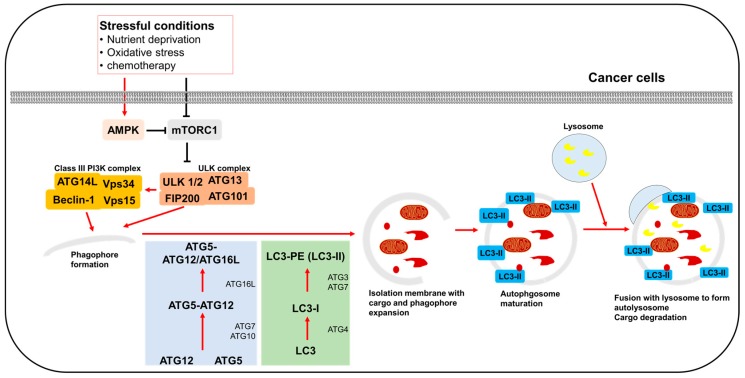
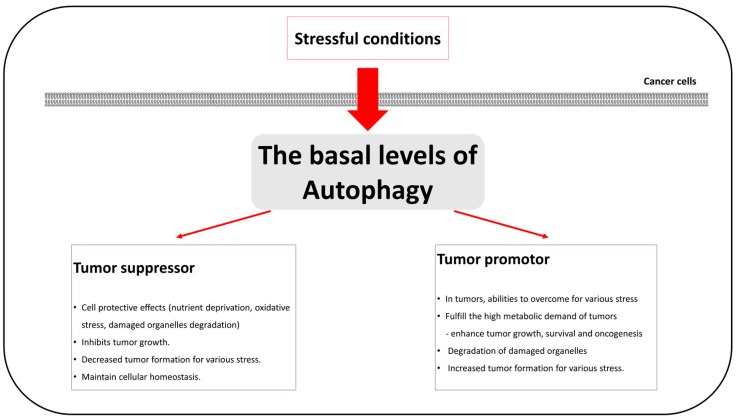
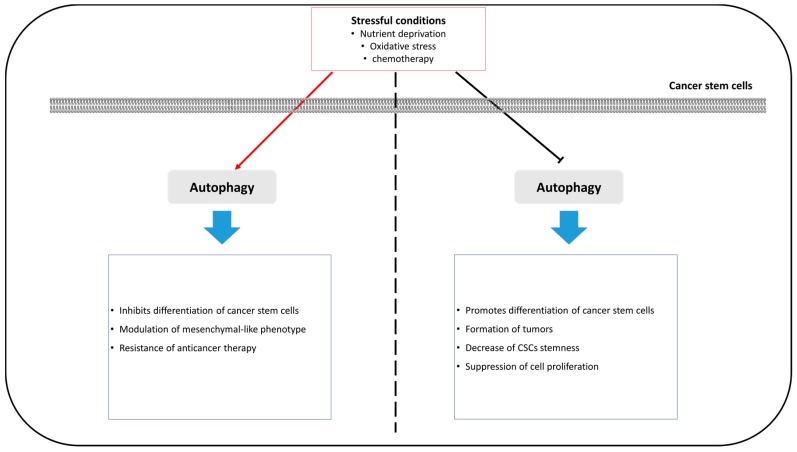
Autophagy is an intracellular degradative process that occurs under several stressful conditions, including organelle damage, the presence of abnormal proteins, and nutrient deprivation. The mechanism of autophagy initiates the formation of autophagosomes that capture degraded components and then fuse with lysosomes to recycle these components. The modulation of autophagy plays dual roles in tumor suppression and promotion in many cancers. In addition, autophagy regulates the properties of cancer stem-cells by contributing to the maintenance of stemness, the induction of recurrence, and the development of resistance to anticancer reagents. Although some autophagy modulators, such as rapamycin and chloroquine, are used to regulate autophagy in anticancer therapy, since this process also plays roles in both tumor suppression and promotion, the precise mechanism of autophagy in cancer requires further study. In this review, we will summarize the mechanism of autophagy under stressful conditions and its roles in tumor suppression and promotion in cancer and in cancer stem-cells. Furthermore, we discuss how autophagy is a promising potential therapeutic target in cancer treatment.
Overview
The claims and statistics of this paper haven’t been checked yet.
Free: it reads the open-access text and checks the first 5 claims that cite a source we can check. Create a free account to check every claim.
Integrity signals
Registry
Cites
Statistics
Figures
Verification
Claims the paper makes
The claims and statistics of this paper haven’t been checked yet.
Free: it reads the open-access text and checks the first 5 claims that cite a source we can check. Create a free account to check every claim.
Claims other papers make about this one
Each is checked against this paper’s own text: does it say what the citing paper says it does?
The cited source says what the claim attributes to it.
In the citing paper
“In cancer cells, autophagy plays dual roles in tumor promotion and suppression.48”
From Reactive Oxygen Species in Cancer: Current Findings and Future Directions (2021) · cites this paper as [48]
In the citing paper
“Although autophagy can play dual roles in both tumor promotion and suppression (Yun and Lee, 2018), in terms of chemotherapy autophagy is usually considered as a mechanism of drug-resistance against therapeutics.”
From An Arthropod Hormone, Ecdysterone, Inhibits the Growth of Breast Cancer Cells via Different Mechanisms (2020) · cites this paper as Yun and Lee, 2018
Self-check
Percentages, sums and reported differences re-computed from the paper’s own numbers.
The self-check needs the paper’s full text.
Citations
Cites
2 retracted
Mariño, G., Salvador-Montoliu, N., Fueyo, A., Knecht, E., Mizushima, N., & López-Otín, C. (2007) · Journal of Biological Chemistry · doi:10.1074/jbc.m701194200 · Cited by 407 · cited 1×
“Mice deficient in ATG4 have been observed to have increased susceptibility to the generation of fibrosarcomas when exposed to chemical carcinogens [67].”
BackgroundRetractedSui, X., Kong, N., Wang, X., Fang, Y., Hu, X., Xu, Y., Chen, W., Wang, K., Li, D., Jin, W., et al. (2014) · Scientific Reports · doi:10.1038/srep04694 · Cited by 96
RetractedRepertoires of Autophagy in the Pathogenesis of Ocular Diseases
Li, Y.-J., Jiang, Q., Cao, G.-F., Yao, J., & Yan, B. (2015) · Cellular Physiology and Biochemistry · doi:10.1159/000373980 · Cited by 16,304
Prospective identification of tumorigenic breast cancer cells
Al-Hajj, M., Wicha, M. S., Benito-Hernandez, A., Morrison, S. J., & Clarke, M. F. (2003) · Proceedings of the National Academy of Sciences · doi:10.1073/pnas.0530291100 · Cited by 10,370 · cited 1×
“In breast cancer stem-cells, a previous study has shown that CSCs contribute to the recurrence of cancer and metastasis [142].”
BackgroundThe basics of epithelial-mesenchymal transition
Kalluri, R., & Weinberg, R. A. (2009) · Journal of Clinical Investigation · doi:10.1172/jci39104 · Cited by 10,196
Epithelial-Mesenchymal Transitions in Development and Disease
Thiery, J. P., Acloque, H., Huang, R. Y. J., & Nieto, M. A. (2009) · Cell · doi:10.1016/j.cell.2009.11.007 · Cited by 9,931 · cited 1×
“These processes induce metastasis of cancer, leading to a lack of cell-cell adhesion, cell polarity to increase of cell motility, polarity, and invasiveness [111,112].”
BackgroundAMPK and mTOR regulate autophagy through direct phosphorylation of Ulk1
Kim, J., Kundu, M., Viollet, B., & Guan, K.-L. (2011) · Nature Cell Biology · doi:10.1038/ncb2152 · Cited by 7,227 · cited 1×
“mTORC1 is regulated by AMP-activated protein kinase (AMPK), and inhibition of mTORC1 and increased AMPK induces the autophagic process [26,27].”
BackgroundOncology meets immunology: the cancer-immunity cycle.
Chen, D. S., & Mellman, I. (2013) · Immunity · doi:10.1016/j.immuni.2013.07.012 · Cited by 6,929 · cited 1×
“Cancer neoantigen is released into the surrounding environment and presented to T cells, and then cancer cells are killed through T cell-mediated cytotoxicity [131].”
BackgroundLC3, a mammalian homologue of yeast Apg8p, is localized in autophagosome membranes after processing.
Kabeya, Y., Mizushima, N., Ueno, T., Yamamoto, A., Kirisako, T., Noda, T., Kominami, E., Ohsumi, Y., & Yoshimori, T. (2000) · The EMBO Journal · doi:10.1093/emboj/19.21.5720 · Cited by 6,605
Cui, C., Cui, J., Jin, F., Cui, Y., Li, R., Jiang, X., Tian, Y., Wang, K., Jiang, P., & Gao, J. (2017) · Cellular Physiology and Biochemistry · doi:10.1159/000479571 · Cited by 5,203
Cited by
Items 201–300 of 1,000
Therapeutic Potential of Autophagy Modulation in Cholangiocarcinoma
Perez‐Montoyo, H. (2020) · Cells · doi:10.3390/cells9030614 · Cited by 40
Autophagy: Guardian of Skin Barrier
Kim, H. J., Park, J., Kim, S. K., Park, H., Kim, J. E., & Lee, S. (2022) · Biomedicines · doi:10.3390/biomedicines10081817 · Cited by 42
“In advanced stages, autophagy promotes the progression of established tumors by supplying nutrients that meet the metabolic demands of the cancer cells [114].”
BackgroundSelf-citationMALAT1 as a molecular driver of tumor progression, immune evasion, and resistance to therapy
Bitaraf, A., Zafarani, A., Jahandideh, P., Hakak‐Zargar, B., Haghi, A., Asgaritarghi, G., & Babashah, S. (2025) · Molecular Cancer · doi:10.1186/s12943-025-02415-6 · Cited by 40
“The interaction of lncRNAs, including MALAT1 and RNA-binding proteins, has been studied in-depth, taking into account a range of aspects such as regulation of expression, subcellular localization, and the mediation of various functions [190].”
Magalhaes, I., Yogev, O., Mattsson, J., & Schurich, A. (2019) · Frontiers in Immunology · doi:10.3389/fimmu.2019.02309 · Cited by 36
“In tumor cells, autophagy appears to play different roles by promoting tumor suppression but also tumor initiation (112).”
BackgroundXu, C., Huang, X., Huang, Y., Liu, X., Wu, M., Wang, J., & Duan, X. (2021) · Molecular Medicine Reports · doi:10.3892/mmr.2021.12412 · Cited by 37
“it is characterized by an increase in the number of acidic vesicle organelles associated with autophagosomes, which is often dysregulated in cancer as another important form of programmed cell death (44).”
BackgroundRecent insights into the effects of metabolism on breast cancer cell dormancy
Bartlome, S., & Berry, C. C. (2022) · British Journal of Cancer · doi:10.1038/s41416-022-01869-5 · Cited by 43
“Autophagy has been found to promote cancer progression and cell growth though the provision of nutrients; however, it can also suppresses tumour growth and development through the reduction of oxidative stress and the removal and degradation of dysfunctional macromolecules [58, 60, 61].”
BackgroundPresent Status, Challenges, and Prospects of Dihydromyricetin in the Battle against Cancer
Wu, J., Xiao, Z., Li, H., Zhu, N., Gu, J., Wang, W., Liu, C., Wang, W., & Li, Q. (2022) · Cancers · doi:10.3390/cancers14143487 · Cited by 36
“It is known that autophagy can inhibit tumorigenesis by controlling the degradation of damaged components or proteins in cells [125].”
BackgroundKumar, A., Girisa, S., Alqahtani, M. S., Abbas, M. A. E., Hegde, M., Sethi, G., & Kunnumakkara, A. B. (2023) · Cells · doi:10.3390/cells12050810 · Cited by 35
Ali, M. L., Roky, A. H., Azad, S. M. A. K., Shaikat, A. H., Meem, J. N., Hoque, E., Ahasan, A. M. F., Islam, M. M., Arif, M. S. R., Mostaq, M. S., et al. (2024) · Cancer Pathogenesis and Therapy · doi:10.1016/j.cpt.2024.01.002 · Cited by 36
“16 (C) Autophagy accelerates oncogene-induced senescence, which inhibits malignant transformation.”
BackgroundMottaghi, S., & Abbaszadeh, H. (2021) · Critical Reviews in Food Science and Nutrition · doi:10.1080/10408398.2021.1913568 · Cited by 35
Wang, G., Lin, X., Han, H., Zhang, H., Li, X., Feng, M., & Jiang, C. (2022) · Bioengineered · doi:10.1080/21655979.2022.2065947 · Cited by 35
“Autophagy is an intracellular degradative process in response to numerous stressful conditions, including organelle damage, hypoxia, the development of abnormal proteins and nutrient deprivation [46].”
RetractedThe role of autophagy in colorectal cancer: Impact on pathogenesis and implications in therapy
Mahgoub, E., Taneera, J., Sulaiman, N. D., & Saber-Ayad, M. M. (2022) · Frontiers in Medicine · doi:10.3389/fmed.2022.959348 · Cited by 41
“Meanwhile, some reports claim that autophagy plays a crucial role in cancers that escape death with high success rates (117).”
BackgroundAutophagic-Related Proteins in Brain Gliomas: Role, Mechanisms, and Targeting Agents
Pizzimenti, C., Fiorentino, V., Franchina, M., Martini, M., Giuffrè, G., Lentini, M., Silvestris, N., Pietro, M. D., Fadda, G., Tuccari, G., et al. (2023) · Cancers · doi:10.3390/cancers15092622 · Cited by 36
“Autophagy is a catabolic cellular process that maintains cellular homeostasis through the degradation, elimination, and recycling of damaged substrates, such as organelles, macromolecules, and misfolded proteins [1,2].”
BackgroundAntidepressants as Autophagy Modulators for Cancer Therapy
He, L., Fu, Y., Tian, Y., Wang, X., Zhou, X., Ding, R., Qi, X., & Bao, J. (2023) · Molecules · doi:10.3390/molecules28227594 · Cited by 37
Metformin Promotes Beclin1-Dependent Autophagy to Inhibit the Progression of Gastric Cancer
Liu, S., Yue, C., Chen, H., Chen, Y., & Li, G. (2020) · OncoTargets and Therapy · doi:10.2147/ott.s242298 · Cited by 32
“Autophagy is an indispensable cellular process and plays a part in normal cells, as well as in the progression of malignant tumours.(8,11) We hypothesise that metformin inhibits GC through an activation of autophagy—a novel and as yet unexplored role for this drug.”
BackgroundThe Role of Autophagy in Anti-Cancer and Health Promoting Effects of Cordycepin
Chen, Y.-Y., Chen, C.-H., Lin, W.-C., Tung, C.-W., Chen, Y., Yang, S., Huang, B., & Chen, R.-J. (2021) · Molecules · doi:10.3390/molecules26164954 · Cited by 35
“The dysregulation of autophagy is associated with many types of diseases, including cancers, neurodegenerative diseases, kidney diseases, immune dysfunction diseases, and so on [43].”
BackgroundGrowth or death? Control of cell destiny by mTOR and autophagy pathways
Khalil, M. I. M., Ali, M. M., Holail, J., & Houssein, M. (2023) · Progress in Biophysics and Molecular Biology · doi:10.1016/j.pbiomolbio.2023.10.002 · Cited by 36
TSPAN9 suppresses the chemosensitivity of gastric cancer to 5-fluorouracil by promoting autophagy
Qi, Y., Qi, W., Liu, S., Sun, L., Ding, A., Yu, G., Li, H., Wang, Y., Qiu, W., & Lv, J. (2020) · Cancer Cell International · doi:10.1186/s12935-019-1089-2 · Cited by 32
Autophagy in glioblastoma: A mechanistic perspective
Meena, D., & Jha, S. (2024) · International Journal of Cancer · doi:10.1002/ijc.34991 · Cited by 33
Targeting lncRNAs in programmed cell death as a therapeutic strategy for non-small cell lung cancer
Luo, Y., Li, J., Yu, P., Sun, J., Hu, Y., Meng, X., & Li, X. (2022) · Cell Death Discovery · doi:10.1038/s41420-022-00982-x · Cited by 35
“On the other hand, autophagy can be activated as a protective mechanism that helps to prevent intracellular metabolic and environmental stresses, such as nutrient starvation, energy shortage, hypoxia and cancer therapy, by regulating mitochondrial quality control and supply of nutrients required for cancer cell growth…”
BackgroundThe Mechanism of Long Non-coding RNA in Cancer Radioresistance/Radiosensitivity: A Systematic Review
Wu, W., Zhang, S., & He, J. (2022) · Frontiers in Pharmacology · doi:10.3389/fphar.2022.879704 · Cited by 38
“ATG12 (autophagy-related 12) is mainly involved in the formation of autophagic vesicles, and plays a vital role in tumor maintenance and treatment resistance (Yun and Lee, 2018).”
BackgroundJung, Y. Y., Um, J., Chinnathambi, A., Govindasamy, C., Narula, A. S., Namjoshi, O. A., Blough, B. E., Sethi, G., & Ahn, K. S. (2022) · European Journal of Pharmacology · doi:10.1016/j.ejphar.2022.175113 · Cited by 33
Shuvalov, O., Fedorova, O., Tananykina, E., Gnennaya, Y., Daks, A., Petukhov, A., & Barlev, N. A. (2020) · Frontiers in Pharmacology · doi:10.3389/fphar.2020.561537 · Cited by 30
Ginsenoside Rg3: A Review of its Anticancer Mechanisms and Potential Therapeutic Applications
Wu, L., Bai, L., Dai, W., Wu, Y., Xi, P., Zhang, J., & Zheng, L. (2024) · Current Topics in Medicinal Chemistry · doi:10.2174/0115680266283661240226052054 · Cited by 31
Young, M.-J., Wang, S., Chen, Y.-C., Liu, C.-Y., Hsu, K., Tang, S.-W., Tseng, Y., Wang, Y., Lin, S., & Hung, J. (2024) · Cell Death and Differentiation · doi:10.1038/s41418-024-01277-7 · Cited by 34
Role of alternative splicing signatures in the prognosis of glioblastoma
Xie, Z., Wu, H., Dang, Y., & Chen, G. (2019) · Cancer Medicine · doi:10.1002/cam4.2666 · Cited by 31
Deng, Z., Li, X., Shi, Y., Lü, Y., Yao, W., & Wang, J. (2020) · Frontiers in Cell and Developmental Biology · doi:10.3389/fcell.2020.606817 · Cited by 30
“Moreover, autophagy is reported to play a vital role in cancer cells survival, metastasis, and drug resistance (Yun and Lee, 2018).”
BackgroundChai, J. Y., Sugumar, V., Al-Shanon, A. F., Wong, W. F., Fung, S. Y., & Looi, C. Y. (2021) · Cancers · doi:10.3390/cancers13194746 · Cited by 30
Unravelling potential biomedical applications of the edible flower Tulbaghia violacea
Rivas‐García, L., Romero‐Márquez, J. M., Navarro‐Hortal, M. D., Esteban-Muñoz, A., Giampieri, F., Cano, S. S., Battino, M. A., Quiles, J. L., Llopis, J., & Sánchez‐González, C. (2022) · Food Chemistry · doi:10.1016/j.foodchem.2022.132096 · Cited by 35
The role of autophagy in hypoxia-induced radioresistance
Hill, R. M., Fok, M., Grundy, G. J., Parsons, J. L., & Rocha, S. (2023) · Radiotherapy and Oncology · doi:10.1016/j.radonc.2023.109951 · Cited by 32
Contribution of Autophagy to Epithelial Mesenchymal Transition Induction during Cancer Progression
Strippoli, R., Niayesh‐Mehr, R., Adelipour, M., Khosravi, A., Cordani, M., Zarrabi, A., & Allameh, A. (2024) · Cancers · doi:10.3390/cancers16040807 · Cited by 33
“Autophagy also helps CSCs to resist chemotherapy and radiation therapy by promoting DNA repair and reducing oxidative stress [43].”
BackgroundZhao, M., Xu, P., Shi, W., Wang, J., Wang, T., & Li, P. (2024) · Cancer Cell International · doi:10.1186/s12935-024-03266-9 · Cited by 31
“Ideally, autophagy and apoptosis contribute to tumor suppression, as autophagy aids in eliminating cancer cells, whereas apoptosis prevents their survival [28, 29].”
BackgroundBatatinha, H., Diniz, T. A., Teixeira, A. A. D. S., Krüger, K., & Neto, J. C. R. (2019) · Journal of Cellular Physiology · doi:10.1002/jcp.28318 · Cited by 30
“Nowadays, it is suggested that in initial state autophagic flux is inhibited in the tumor and the mTOR pathway is increased (Yun & Lee, 2018).”
BackgroundBi, X., Jiang, Z., Luan, Z., & Qiu, D. (2021) · Bioengineered · doi:10.1080/21655979.2021.1955175 · Cited by 29
“Beclin 1 function as a repressor of tumor, hence it was highly increased in crocin treatment in our study, which is in agreement with several other related studies [25].”
ResultChen, Y., Zou, J., Cheng, F., & Li, W. (2021) · Frontiers in Oncology · doi:10.3389/fonc.2021.769730 · Cited by 32
Xu, C., Huang, X., Lei, X., Jin, Z., Wu, M., Liu, X., Huang, Y., Zhao, X., Xiong, Y., Sun, J., et al. (2021) · Frontiers in Cell and Developmental Biology · doi:10.3389/fcell.2021.722734 · Cited by 29
“Autophagy has the dual effects of promoting cell death and inhibiting cell death, depending on tumor cell types (Yun and Lee, 2018).”
BackgroundAutophagy system as a potential therapeutic target for neurodegenerative diseases
Cui, M., Yoshimori, T., & Nakamura, S. (2022) · Neurochemistry International · doi:10.1016/j.neuint.2022.105308 · Cited by 29
The crosstalk between sonodynamic therapy and autophagy in cancer
Zhang, Y., Zhao, Y., Zhang, Y., Liu, Q., Zhang, M., & Tu, K. (2022) · Frontiers in Pharmacology · doi:10.3389/fphar.2022.961725 · Cited by 30
“In brief, autophagy acts as a double-edged sword (can have both pro-survival e and pro-death effects) in tumor occurrence, development, and metastasis (Helgason et al., 2013; Levy et al., 2017; Yun and Lee, 2018; Amaravadi et al., 2019).”
BackgroundOral Papillomatosis: Its Relation with Human Papilloma Virus Infection and Local Immunity—An Update
ANDREI, E. C., Baniţă, I. M., Munteanu, M. C., Busuioc, C. J., Mateescu, G.-O., Mălin, R. D., & Pisoschi, C. G. (2022) · Medicina · doi:10.3390/medicina58081103 · Cited by 35
Current insights into the regulation of programmed cell death by TP53 mutation in cancer
Su, Y., Sai, Y., Zhou, L., Liu, Z., Du, P., Wu, J., & Zhang, J. (2022) · Frontiers in Oncology · doi:10.3389/fonc.2022.1023427 · Cited by 35
Mechanisms of radioresistance and the underlying signaling pathways in colorectal cancer cells
Tessmann, J. W., Rocha, M. R., & Morgado‐Díaz, J. A. (2022) · Journal of Cellular Biochemistry · doi:10.1002/jcb.30361 · Cited by 33
“Autophagy is also involved in the induction of senescence,(70,75) promotion of metastases,(72) differentiation, and self‐ renewal of CSCs.(76,77) The different roles of autophagy in the cellular response to radiotherapy possibly depend on the cell type, administered dose, and nutritional status.”
BackgroundInfluentialNatural biomolecules and derivatives as anticancer immunomodulatory agents
Bernitsa, S., Dayan, R., Stephanou, A., Tzvetanova, I. D., & Patrikios, I. S. (2023) · Frontiers in Immunology · doi:10.3389/fimmu.2022.1070367 · Cited by 35
“(LC3) is incorporated in pre-autophagosomal membranes, where it is acted upon by autophagy related proteins (ATG) to generate LC3-I, LC3-II and mature autophagosomes (99).”
BackgroundInfluentialTargeting autophagy with small molecules for cancer therapy
Kondapuram, S. K., Sarvagalla, S., & Coumar, M. S. (2019) · Journal of Cancer Metastasis and Treatment · doi:10.20517/2394-4722.2018.105 · Cited by 32
“As is evident, the allelic loss of beclin1 was found in 40%-75% in breast, ovarian, and prostate cancers([44,45]).”
InfluentialBerning, L., Scharf, L., Aplak, E., Stucki, D., von Montfort, C., Reichert, A. S., Stahl, W., & Brenneisen, P. (2019) · PLoS ONE · doi:10.1371/journal.pone.0222267 · Cited by 30
“Furthermore, it was shown that starvation of tumor cells often results in autophagy-activated cell proliferation [56].”
BackgroundA Drug‐Eluting 3D‐Printed Mesh (GlioMesh) for Management of Glioblastoma
Hosseinzadeh, R., Mirani, B., Pagan, E., Mirzaaghaei, S., Nasimian, A., Kawalec, P., Rosa, S. C. D. S., Hamdi, D., Fernández, N. P., Toyota, B. D., et al. (2019) · Advanced Therapeutics · doi:10.1002/adtp.201900113 · Cited by 31
Xu, T., Zheng, Z., Guo, Y., & Bai, L. (2020) · European Journal of Medicinal Chemistry · doi:10.1016/j.ejmech.2020.112663 · Cited by 29
Recent advances in antitumor Pt(IV) complexes: Dual targeting and chemoimmunotherapy
Spector, D. V., Zharova, A., Bykusov, V., Karetnikov, G. L., Beloglazkina, E. K., & Krasnovskaya, O. O. (2025) · Coordination Chemistry Reviews · doi:10.1016/j.ccr.2025.216808 · Cited by 29
Xu, J. (2025) · npj Precision Oncology · doi:10.1038/s41698-025-00990-x · Cited by 39
“…functioning as a tumor suppressor by eliminating damaged organelles and safeguarding against genomic instability, yet paradoxically, supporting tumor growth and survival by provisioning essential nutrients and energy, particularly in the context of oncogenic activations such as Ras mutations 118 .”
Inhibition LC3B can increase chemosensitivity of ovarian cancer cells
Tang, J., Zhu, J., Ye, Y., Liu, Y., He, Y., Zhang, L., Tang, D., Qiao, C., Feng, X., Li, J., et al. (2019) · Cancer Cell International · doi:10.1186/s12935-019-0921-z · Cited by 28
“When miR-204 level was decreased, tumor cells autophagy was increased, and autophagy could provide nutrients tumor cells to promote their proliferation and resistance [23, 24].”
BackgroundComprehensive analysis of autophagy‐related prognostic genes in breast cancer
Lai, J., Chen, B., Mok, H., Zhang, G., Ren, C., & Liao, N. (2020) · Journal of Cellular and Molecular Medicine · doi:10.1111/jcmm.15551 · Cited by 30
Dündar, G., Teranishi, M., & Hidema, J. (2020) · Photochemical & Photobiological Sciences · doi:10.1039/c9pp00479c · Cited by 30
Isoalantolactone Induces Cell Cycle Arrest, Apoptosis and Autophagy in Colorectal Cancer Cells
Li, J., Zhu, P., Chen, Y., Zhang, S., Zhang, Z., Zhang, Z., Wang, Y., Jiang, X., Lin, K., Wu, W., et al. (2022) · Frontiers in Pharmacology · doi:10.3389/fphar.2022.903599 · Cited by 33
“It plays an important role in the regulation of cancer progression and determines the response of tumor cells to chemotherapeutic agents (Yun and Lee, 2018).”
BackgroundEvaluation of antitumoral effect of Hibiscus sabdariffa extract on human breast cancer cells
Malacrida, A., Erriquez, J., Hashemi, M., Rodriguez‐Menendez, V., Cassetti, A., Cavaletti, G., & Miloso, M. (2022) · Biochemistry and Biophysics Reports · doi:10.1016/j.bbrep.2022.101353 · Cited by 31
“The modulation of autophagy plays dual roles in tumor suppression and promotion in many cancers [36].”
BackgroundSmall Molecule Inhibitors for Unc-51-like Autophagy-Activating Kinase Targeting Autophagy in Cancer
Karmacharya, U., & Jung, J. (2023) · International Journal of Molecular Sciences · doi:10.3390/ijms24020953 · Cited by 28
“ine-proline rich region between the KD and CD [6,18,20].”
BackgroundStrategies to target bioactive molecules to subcellular compartments. Focus on natural compounds
Biasutto, L., Mattarei, A., Spina, M. L., Azzolini, M., Parrasia, S., Szabó, I., & Zoratti, M. (2019) · European Journal of Medicinal Chemistry · doi:10.1016/j.ejmech.2019.07.060 · Cited by 30
Interplay of autophagy and cancer stem cells in hepatocellular carcinoma
Wong, M. M.-T., Chan, H.-Y., Aziz, N. A., Ramasamy, T. S., Bong, J. J., Ch’ng, E. S., Armon, S., Peh, S., & Teow, S. (2021) · Molecular Biology Reports · doi:10.1007/s11033-021-06334-9 · Cited by 29
“In fact, the dysregulation of autophagy had been observed in various cancers including breast, ovarian, and liver cancers [7].”
BackgroundProapoptotic and proautophagic activity of 20-hydroxyecdysone in breast cancer cells in vitro
Romaniuk-Drapała, A., Lisiak, N., Totoń, E., Matysiak, A., Nawrot, J., Nowak, G., Kaczmarek, M., Rybczyńska, M., & Rubiś, B. (2021) · Chemico-Biological Interactions · doi:10.1016/j.cbi.2021.109479 · Cited by 27
Antrodia salmonea induces apoptosis and enhances cytoprotective autophagy in colon cancer cells
Yang, H., Liu, H., Shrestha, S., Thiyagarajan, V., Huang, H., & Hseu, Y. (2021) · Aging · doi:10.18632/aging.203019 · Cited by 27
“Autophagy has double role in tumor suppression as well as promotion in many form of cancers hence acting as possible therapeutics for cancer [57].”
BackgroundInduction of Apoptosis and Autophagy by Ternary Copper Complex Towards Breast Cancer Cells
Lee, Z. Y., Leong, C. H., Lim, K. U. L., Wong, C. C. S., Pongtheerawan, P., Arikrishnan, S., Tan, K. L., Loh, J. S., Low, M. L., How, C. W., et al. (2021) · Anti-Cancer Agents in Medicinal Chemistry · doi:10.2174/1871520621666210726132543 · Cited by 28
Almost famous: Human adenoviruses (and what they have taught us about cancer)
Tessier, T. M., Dodge, M. J., MacNeil, K. M., Evans, A. M., Prusinkiewicz, M. A., & Mymryk, J. S. (2021) · Tumour Virus Research · doi:10.1016/j.tvr.2021.200225 · Cited by 31
“has been a growing body of evidence that implicates autophagy in the development of cancer [144,145].”
BackgroundNanotherapeutics in autophagy: a paradigm shift in cancer treatment
Negi, S., Chaudhuri, A., Kumar, D. N., Dehari, D., Singh, S. K., & Agrawal, A. K. (2022) · Drug Delivery and Translational Research · doi:10.1007/s13346-022-01125-6 · Cited by 28
“Autophagy was not only found to promote cell survival in solid tumors [16] but was also found to contribute to cell death [17].”
BackgroundRegulation of autophagy gene expression and its implications in cancer
Metur, S. P., Lei, Y., Zhang, Z., & Klionsky, D. J. (2023) · Journal of Cell Science · doi:10.1242/jcs.260631 · Cited by 28
Bestion, E., Raymond, É., Mezouar, S., & Halfon, P. (2023) · Cells · doi:10.3390/cells12131702 · Cited by 27
“It is indeed widely admitted that autophagy behaves as a tumorsuppressor mechanism at the very early stages of tumorigenesis [13,17], with its deficiency enabling tumor formation.”
BackgroundInfluentialFunctional characterization of lysosomal interaction of Akt with VRK2
Hirata, N., Suizu, F., Matsuda‐Lennikov, M., Tanaka, T., Edamura, T., Ishigaki, S., Donia, T., Lithanatudom, P., Obuse, C., Iwanaga, T., et al. (2018) · Oncogene · doi:10.1038/s41388-018-0330-0 · Cited by 30
“Context-dependent roles of autophagy in various characteristics of cancer pathogenesis have been suggested [13, 16, 20, 58].”
BackgroundPark, S., Joo, S. H., Lee, N., Jang, W., Seo, J. H., & Jeong, C. (2021) · Archives of Pharmacal Research · doi:10.1007/s12272-021-01359-x · Cited by 29
“Autophagy is an intracellular degradative process mediated by lysosomes in response to stressful conditions, such as organelle damage and starvation (Yun and Lee 2018).”
BackgroundMitochondrial signaling pathways and their role in cancer drug resistance
Sharma, A., Virmani, T., Kumar, G., Sharma, A., Virmani, R., Gugulothu, D. B., Singh, K., Misra, S. K., Pathak, K., Chitranshi, N., et al. (2024) · Cellular Signalling · doi:10.1016/j.cellsig.2024.111329 · Cited by 32
Liu, P., Fan, J., Wang, Z., Zai, W., Song, P., Li, Y., & Ju, D. (2020) · AMB Express · doi:10.1186/s13568-020-01044-0 · Cited by 26
Khan, M. Z. I., & Law, H. (2021) · Cancer Cell International · doi:10.1186/s12935-021-02023-6 · Cited by 28
Antiproliferative and Cytotoxic Activity of Geraniaceae Plant Extracts Against Five Tumor Cell Lines
Sergazy, S., Vetrova, A., Orhan, İ. E., Şenol, F. S., Kahraman, A., Zhang, J., & Aljofan, M. (2021) · Future Science OA · doi:10.2144/fsoa-2021-0109 · Cited by 28
Novel Effects of Statins on Cancer via Autophagy
Mengual, D., Medrano, L. E., Villamizar-Villamizar, W., Osorio-Llanes, E., Mendoza‐Torres, E., & Bolívar, S. (2022) · Pharmaceuticals · doi:10.3390/ph15060648 · Cited by 28
“In cancer, autophagy plays a dual role through tumor promotion and its suppression [14].”
BackgroundFogde, D. L., Xavier, C. P. R., Balnytė, K., Holland, L. K. K., Stahl-Meyer, K., Dinant, C., Corcelle–Termeau, E., Pereira‐Wilson, C., Maeda, K., & Jäättelä, M. (2022) · Cells · doi:10.3390/cells11244079 · Cited by 28
“The latter is of special interest in cancer treatment because cancer cells are highly reliant on intact lysosomal recycling pathways, endocytosis and autophagy, to supply the energy and building materials for their rapid growth [17].”
BackgroundRedox Regulation of Autophagy in Cancer: Mechanism, Prevention and Therapy
He, J., Dong, L., Luo, L., & Wang, K. (2022) · Life · doi:10.3390/life13010098 · Cited by 31
“This degradation and recovery mechanism of autophagy will protect cells from the accumulation of damaged proteins, prevent the attack of microorganisms, and maintain the nutritional supply [8].”
BackgroundZhou, M., Zhi, J., Zhi, J., Xiong, Z., Wu, F., Lu, Y., & Hu, Q. (2023) · International Journal of Biological Macromolecules · doi:10.1016/j.ijbiomac.2023.125373 · Cited by 201
H19: An Oncogenic Long Non-coding RNA in Colorectal Cancer
Chowdhury, P. R., Salvamani, S., Gunasekaran, B., Hoh, B., & Ulaganathan, V. (2023) · The Yale Journal of Biology and Medicine · doi:10.59249/tdbj7410 · Cited by 26
“In tumor cells, autophagy suppresses tum-origenesis by inhibiting their survival and inducing cell death, but it also facilitates tumor growth by stimulating their proliferation [108-110].”
BackgroundChowdhury, R., Bhuia, M. S., Hasan, M. S. A., Snigdha, H. M. S. H., Afrin, S., Büsselberg, D., Habtemariam, S., Gürer, E. S., Sharifi‐Rad, J., Aldahish, A. A., et al. (2024) · Food Science & Nutrition · doi:10.1002/fsn3.4318 · Cited by 31
“Next, LC3 fuels phagophore elongation, and autophagy-related 4 (ATG4) transforms pro-LC3 into the cytosolic isoform of LC3 that is active (Sekar & Thirumurugan, 2022; Yun & Lee, 2018).”
The interplay between probiotics and host autophagy: mechanisms of action and emerging insights
Sadeghloo, Z., Nabavi-Rad, A., Zali, M. R., Klionsky, D. J., & Yadegar, A. (2024) · Autophagy · doi:10.1080/15548627.2024.2403277 · Cited by 31
“Furthermore, deficiency in the expression of other autophagic core proteins, including ATG3, ATG4, ATG5, and ATG9, increases cytotoxicity, DNA damage, and tumorigenesis [202,203].”
Expression and clinical significance of p62 protein in colon cancer
Lei, C., Zhao, B. T., Liu, L., Zeng, X., Yu, Z., & Wang, X. (2020) · Medicine · doi:10.1097/md.0000000000018791 · Cited by 29
“Its suggests that abnormal autophagy activity may play a promoting role in the development and metastasis of colon cancer, as supported by previous studies in colon cancer([20,21]) and other types of cancers.([22,23]) In addition, abnormal aggregation of p62 in cells activate 2 active oxygen scavenging systems, Nuclea…”
BackgroundPatel, N. H., Xu, J., Saleh, T., Wu, Y., Lima, S., & Gewirtz, D. A. (2020) · Biochemical Pharmacology · doi:10.1016/j.bcp.2020.113896 · Cited by 27
“This premise is based on the frequently-reproduced observation in which inhibition of drug or radiationinduced autophagy can enhance sensitivity to the therapeutic challenge (30).”
BackgroundKoulouridi, A., Messaritakis, I., Gouvas, N., Tsiaoussis, J., & Souglakos, J. (2020) · Cancers · doi:10.3390/cancers13010043 · Cited by 27
“Autophagy regulates the tumor microenvironment, making metabolic changes, creating hypoxic conditions and producing inflammatory and immunosuppressive components [35].”
BackgroundAggregation-Induced Emission Luminogens for Cell Death Research
Zuo, Y., Shen, H., Sun, F., Li, P., Sun, J., Kwok, R. T. K., Lam, J. W. Y., & Tang, B. Z. (2022) · ACS Bio & Med Chem Au · doi:10.1021/acsbiomedchemau.1c00066 · Cited by 27
Hashemi, M., Khosroshahi, E. M., Tanha, M., Khoushab, S., Bizhanpour, A., Azizi, F., Mohammadzadeh, M., Matinahmadi, A., Koohpar, Z. K., Asadi, S., et al. (2024) · Heliyon · doi:10.1016/j.heliyon.2024.e37376 · Cited by 26
Pizzimenti, C., Fiorentino, V., Ruggeri, C., Franchina, M., Ercoli, A., Tuccari, G., & Ieni, A. (2024) · International Journal of Molecular Sciences · doi:10.3390/ijms252212118 · Cited by 30
Autophagy—A Hidden but Important Actor on Oral Cancer Scene
Totan, A., Marina, I. M., Miricescu, D., Ioana, S. I., Bencze, M.-A., Radu, R., Țâncu, A. M. C., Spînu, T. C., & Greabu, M. (2020) · International Journal of Molecular Sciences · doi:10.3390/ijms21239325 · Cited by 27
“The anti-inflammatory effect of autophagy has been suggested to be sustained by the removal of cell and corpses (Table 2) [74,100].”
BackgroundHDAC6 Inhibition Extinguishes Autophagy in Cancer: Recent Insights
Passaro, E., Papulino, C., Chianese, U., Toraldo, A., Congi, R., Gaudio, N. D., Nicoletti, M. M., Benedetti, R., & Altucci, L. (2021) · Cancers · doi:10.3390/cancers13246280 · Cited by 26
“It can inhibit cancer progression by blocking tumor initiation [19] and by promoting survival and the growth of tumor cells in late stages [20].”
BackgroundKao, C.-H., Su, T.-Y., Huang, W.-S., Lu, X.-Y., Jane, W., Huang, C.-Y., Huang, H.-H., & Wang, W. (2022) · Autophagy · doi:10.1080/15548627.2022.2051880 · Cited by 27
“Once tumors have formed, the role of autophagy in tumors could be cytotoxic or cytoprotective, and this is dependent on the types of cancer [30,32].”
BackgroundSundaram, S., Varier, L., Fathima, K. Z., Dharmarajan, A., & Warrier, S. R. (2023) · Life Sciences · doi:10.1016/j.lfs.2023.121384 · Cited by 27
Zheng, S., Fu, W., Huang, Q., Zhou, J., Lu, K., Gu, J., Ma, R., & Guo, G. (2023) · Clinical and Experimental Pharmacology and Physiology · doi:10.1111/1440-1681.13758 · Cited by 25
“In addition to the bidirectional regulatory effect of autophagy on the occurrence and development of tumours, it also has a dual regulatory effect on drug resistance.(26,27)”
BackgroundDual function of Rab1A in secretion and autophagy: hypervariable domain dependence
Gyurkovska, V., Murtazina, R., Zhao, S. F., Shikano, S., Okamoto, Y., & Segev, N. (2023) · Life Science Alliance · doi:10.26508/lsa.202201810 · Cited by 26
“The two processes they regulate were also shown to be important for cancer (Yun & Lee, 2018; Del Giudice et al, 2022) and neurological disorders (Nah et al, 2015; Kuo et al, 2021).”
Zhang, X., Zhang, M., Cui, H., Zhang, T., Wu, L., Xu, C., Yin, C., & Gao, J. (2023) · Journal of Controlled Release · doi:10.1016/j.jconrel.2023.12.032 · Cited by 26
Long non-coding RNAs: controversial roles in drug resistance of solid tumors mediated by autophagy
Saadh, M. J., Almoyad, M. A. A., Arellano, M. T. C., Maaliw, R. R., III, Castillo-Acobo, R. Y., Jalal, S. S., Gandla, K., Obaid, M., Abdulwahed, A. J., Ibrahem, A. A., et al. (2023) · Cancer Chemotherapy and Pharmacology · doi:10.1007/s00280-023-04582-z · Cited by 24
“ATG5/ATG12/ATG16L complexes bring microtubule-associated protein 1 light chain 3 (LC3) which is responsible for the expansion of the phagophore to form autophagosome [8].”
BackgroundRole of Autophagy and AMPK in Cancer Stem Cells: Therapeutic Opportunities and Obstacles in Cancer
Kovale, L. M., Singh, M. K., Kim, J., & Ha, J. (2024) · International Journal of Molecular Sciences · doi:10.3390/ijms25168647 · Cited by 27
“These findings suggest that the efficacy of autophagy and autophagy inhibition may vary depending on the genetic context and stage of cancer [174].”
BackgroundFeng, H., Zhong, L., Yang, X., Wan, Q., Pei, X., & Wang, J. (2020) · Cell Death Discovery · doi:10.1038/s41420-020-00294-y · Cited by 27
Shu, C., Weng, J., Chang, H., Liu, P., Chen, J., Peng, C., Huang, J., Lin, W., & Yen, C. (2021) · Environmental Toxicology · doi:10.1002/tox.23116 · Cited by 24
“Although autophagy could play a dual role in tumorigenesis and cancer progression, growing reports have shown that autophagy may enhance cancer malignancy.(21) Autophagy plays a survival factor in cancer cells in central part of tumor, which is hypoxia and nutrient deprivation condition.”
BackgroundCzarnomysy, R., Muszyńska, A., Rok, J., Rzepka, Z., & Bielawski, K. (2021) · International Journal of Molecular Sciences · doi:10.3390/ijms22115581 · Cited by 210
“This result is in agreement with recent reports that many anticancer drugs enhanced Beclin1 and LC3A/B levels in cancer cells [45].”
ResultFriend or Foe: Paradoxical Roles of Autophagy in Gliomagenesis
Batara, D. C., Choi, M., Shin, H.-U., Kim, H., & Kim, S.-H. (2021) · Cells · doi:10.3390/cells10061411 · Cited by 24
“When cells are deprived of nutrients, autophagy can degrade and recycle macromolecules to synthesize essential components and to provide energy supply [21,22].”
BackgroundInfluentialLi, H., Liu, L., Chen, H., Yan, X., Li, R., Lan, J., Xue, K., Li, X., Zhuo, C., Lin, L., et al. (2022) · Toxicology and Applied Pharmacology · doi:10.1016/j.taap.2022.116037 · Cited by 25
Adipokines as Regulators of Autophagy in Obesity-Linked Cancer
García-Miranda, A., García-Hernández, A. P., Castañeda-Saucedo, E., Navarro‐Tito, N., & Maycotte, P. (2022) · Cells · doi:10.3390/cells11203230 · Cited by 24
Lin, C., Wu, K., Chi, L., Tang, Y., Huang, H.-J., Lai, C., Tsai, C., & Tsai, C.-L. (2023) · Autophagy · doi:10.1080/15548627.2023.2239633 · Cited by 24
“* p < 0.05, *** p < 0.001. autophagy and cell migration [43,45,46].”
InfluentialRazif, M. R. F. M., Chan, S. Y., Chew, Y.-L., Hassan, M., Hisham, S. A., Rahman, S. A., Mai, C., Teo, M. Y. M., Kee, P. E., Khoo, K. S., et al. (2024) · Sci · doi:10.3390/sci6040068 · Cited by 25
“Autophagy acts as a regulator of both tumor progression and tumor suppression [46].”
Self-citationAl‐Bari, M. A. A. (2020) · Journal of Cellular and Molecular Medicine · doi:10.1111/jcmm.15879 · Cited by 27
Metadata
- Authors
- Yun, C. W., & Lee, S. H.
- Affiliations
- Soonchunhyang University (KR)
- Corresponding author
- Lee, Sang Hun
- Venue
- International Journal of Molecular Sciences
- Publisher
- MDPI AG
- Published
- 2018-11-05
- Volume
- 19
- Issue
- 11
- Pages
- 3466
- ISSN
- 1422-0067 (ISSN-L)
- PMC
- PMC6274804
- OpenAlex
- W2899871244
- Cited by
- 965
- References
- 187
- Citations by year
- 2026: 52 · 2025: 97 · 2024: 143 · 2023: 161 · 2022: 169 · 2021: 181 · 2020: 114 · 2019: 45 · 2018: 2
- FWCI
- 12.28
- Type
- journal article
- Language
- en
- Open access
- gold
- dx.doi.org
- Licence
- Locations
- International Journal of Molecular Sciences (publishedVersion, cc-by)
- Europe PMC (PubMed Central) (publishedVersion, cc-by)
- PubMed Central (publishedVersion, cc-by)
- PubMed (publishedVersion)
- DOAJ (DOAJ: Directory of Open Access Journals) (submittedVersion)
- Funders
- National Research Foundation of Korea (NRF- 2016R1D1A3B01007727)
- Topics
- Life Sciences › Biochemistry, Genetics and Molecular Biology › Cell Biology › Autophagy in Disease and Therapy
- Life Sciences › Biochemistry, Genetics and Molecular Biology › Molecular Biology › Ubiquitin and proteasome pathways
- Life Sciences › Biochemistry, Genetics and Molecular Biology › Physiology › Calcium signaling and nucleotide metabolism
- Keywords
- autophagy, cancer, tumor suppression, tumor promotion, cancer stem cells, stemness, tumor recurrence, drug resistance, rapamycin, chloroquine, autophagy modulators, autophagosome formation, lysosome fusion, nutrient deprivation, stress response
- MeSH terms
- Animals, Autophagy, Humans, Models, Biological, Neoplasms, Neoplastic Stem Cells, Tumor Microenvironment, Carcinogenesis
About these checks
Registry, retraction, Cites and statistics results are computed, not judged, with one exception: a printed reference that no index lists is read once by a model before it counts as a citation error. Claims are extracted by a model and kept only when their quote appears verbatim in the text; each cited source is then checked, with a model’s help, for whether it says what the claim relies on. Those verdicts can be wrong — read the claim’s quote and the cited source before relying on one.
Statistics and arithmetic are recomputed, not judged.
Confidence bands are shown only for fields calibrated on our annotated test set. None is calibrated yet, so no band is shown.
What counts as a claim ›How we measure confidence ›How we check this ›
Are you an author, or do you see a problem with this page? Request a review
Data sources
Bibliographic data: Semantic Scholar, OpenAlex, Crossref.
Contains information from the Semantic Scholar Academic Graph Datasets, made available under the ODC Attribution License (ODC-BY 1.0).
Semantic Scholar’s data is described in: Kinney, R., et al. (2023). The Semantic Scholar Open Data Platform. arXiv:2301.10140.
