

The Roles of Autophagy in Cancer
Open accessThe DOI matches its Crossref record; 185 of the 187 references it cites were found in a registry or an index.
Abstract
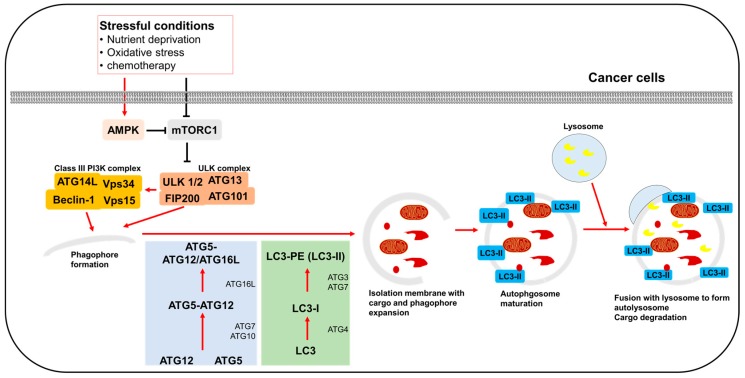
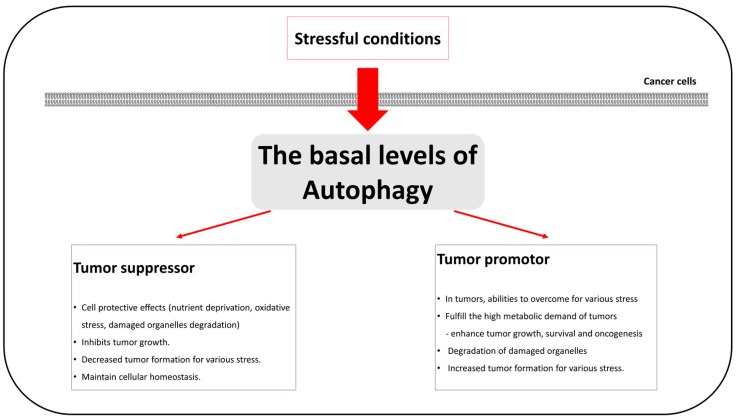
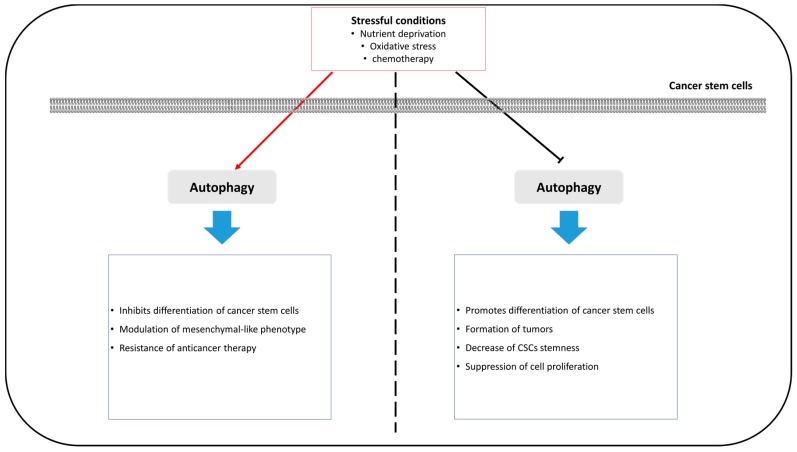
Autophagy is an intracellular degradative process that occurs under several stressful conditions, including organelle damage, the presence of abnormal proteins, and nutrient deprivation. The mechanism of autophagy initiates the formation of autophagosomes that capture degraded components and then fuse with lysosomes to recycle these components. The modulation of autophagy plays dual roles in tumor suppression and promotion in many cancers. In addition, autophagy regulates the properties of cancer stem-cells by contributing to the maintenance of stemness, the induction of recurrence, and the development of resistance to anticancer reagents. Although some autophagy modulators, such as rapamycin and chloroquine, are used to regulate autophagy in anticancer therapy, since this process also plays roles in both tumor suppression and promotion, the precise mechanism of autophagy in cancer requires further study. In this review, we will summarize the mechanism of autophagy under stressful conditions and its roles in tumor suppression and promotion in cancer and in cancer stem-cells. Furthermore, we discuss how autophagy is a promising potential therapeutic target in cancer treatment.
Overview
The claims and statistics of this paper haven’t been checked yet.
Free: it reads the open-access text and checks the first 5 claims that cite a source we can check. Create a free account to check every claim.
Integrity signals
Registry
Cites
Statistics
Figures
Verification
Claims the paper makes
The claims and statistics of this paper haven’t been checked yet.
Free: it reads the open-access text and checks the first 5 claims that cite a source we can check. Create a free account to check every claim.
Claims other papers make about this one
Each is checked against this paper’s own text: does it say what the citing paper says it does?
The cited source says what the claim attributes to it.
In the citing paper
“In cancer cells, autophagy plays dual roles in tumor promotion and suppression.48”
From Reactive Oxygen Species in Cancer: Current Findings and Future Directions (2021) · cites this paper as [48]
In the citing paper
“Although autophagy can play dual roles in both tumor promotion and suppression (Yun and Lee, 2018), in terms of chemotherapy autophagy is usually considered as a mechanism of drug-resistance against therapeutics.”
From An Arthropod Hormone, Ecdysterone, Inhibits the Growth of Breast Cancer Cells via Different Mechanisms (2020) · cites this paper as Yun and Lee, 2018
Self-check
Percentages, sums and reported differences re-computed from the paper’s own numbers.
The self-check needs the paper’s full text.
Citations
Cites
2 retracted
Mariño, G., Salvador-Montoliu, N., Fueyo, A., Knecht, E., Mizushima, N., & López-Otín, C. (2007) · Journal of Biological Chemistry · doi:10.1074/jbc.m701194200 · Cited by 407 · cited 1×
“Mice deficient in ATG4 have been observed to have increased susceptibility to the generation of fibrosarcomas when exposed to chemical carcinogens [67].”
BackgroundRetractedSui, X., Kong, N., Wang, X., Fang, Y., Hu, X., Xu, Y., Chen, W., Wang, K., Li, D., Jin, W., et al. (2014) · Scientific Reports · doi:10.1038/srep04694 · Cited by 96
RetractedRepertoires of Autophagy in the Pathogenesis of Ocular Diseases
Li, Y.-J., Jiang, Q., Cao, G.-F., Yao, J., & Yan, B. (2015) · Cellular Physiology and Biochemistry · doi:10.1159/000373980 · Cited by 16,304
Prospective identification of tumorigenic breast cancer cells
Al-Hajj, M., Wicha, M. S., Benito-Hernandez, A., Morrison, S. J., & Clarke, M. F. (2003) · Proceedings of the National Academy of Sciences · doi:10.1073/pnas.0530291100 · Cited by 10,370 · cited 1×
“In breast cancer stem-cells, a previous study has shown that CSCs contribute to the recurrence of cancer and metastasis [142].”
BackgroundThe basics of epithelial-mesenchymal transition
Kalluri, R., & Weinberg, R. A. (2009) · Journal of Clinical Investigation · doi:10.1172/jci39104 · Cited by 10,196
Epithelial-Mesenchymal Transitions in Development and Disease
Thiery, J. P., Acloque, H., Huang, R. Y. J., & Nieto, M. A. (2009) · Cell · doi:10.1016/j.cell.2009.11.007 · Cited by 9,931 · cited 1×
“These processes induce metastasis of cancer, leading to a lack of cell-cell adhesion, cell polarity to increase of cell motility, polarity, and invasiveness [111,112].”
BackgroundAMPK and mTOR regulate autophagy through direct phosphorylation of Ulk1
Kim, J., Kundu, M., Viollet, B., & Guan, K.-L. (2011) · Nature Cell Biology · doi:10.1038/ncb2152 · Cited by 7,227 · cited 1×
“mTORC1 is regulated by AMP-activated protein kinase (AMPK), and inhibition of mTORC1 and increased AMPK induces the autophagic process [26,27].”
BackgroundOncology meets immunology: the cancer-immunity cycle.
Chen, D. S., & Mellman, I. (2013) · Immunity · doi:10.1016/j.immuni.2013.07.012 · Cited by 6,929 · cited 1×
“Cancer neoantigen is released into the surrounding environment and presented to T cells, and then cancer cells are killed through T cell-mediated cytotoxicity [131].”
BackgroundLC3, a mammalian homologue of yeast Apg8p, is localized in autophagosome membranes after processing.
Kabeya, Y., Mizushima, N., Ueno, T., Yamamoto, A., Kirisako, T., Noda, T., Kominami, E., Ohsumi, Y., & Yoshimori, T. (2000) · The EMBO Journal · doi:10.1093/emboj/19.21.5720 · Cited by 6,605
Cui, C., Cui, J., Jin, F., Cui, Y., Li, R., Jiang, X., Tian, Y., Wang, K., Jiang, P., & Gao, J. (2017) · Cellular Physiology and Biochemistry · doi:10.1159/000479571 · Cited by 5,203
Cited by
Items 601–700 of 1,000
Zhang, D., Zhang, W., Sun, R., & Huang, Z. (2021) · Bioengineered · doi:10.1080/21655979.2021.1906096 · Cited by 8
“Autophagy, as an intracellular self-degradative process for capturing and recycling degraded components with the assistance of autophagosome and lysosome, plays crucial roles in maintaining metabolism and homeostasis [49].”
BackgroundEhsan, N. A., Mosbeh, A., Elkhadry, S. W., Gomaa, A. I., Elsabaawy, M., & Elazab, D. (2021) · Asian Pacific Journal of Cancer Prevention · doi:10.31557/apjcp.2021.22.4.1115 · Cited by 7
Apilan, A. G., & Mothersill, C. E. (2021) · International Journal of Molecular Sciences · doi:10.3390/ijms22168651 · Cited by 7
Min, Y., Feng, Y., Luo, H., Hu, D., Wei, X., He, D., Yin, G., & Fan, S. (2022) · Frontiers in Endocrinology · doi:10.3389/fendo.2022.824362 · Cited by 7
“Autophagy is a routine physiological process associated with aging and human disease via guiding the degradation of damaged, denatured, or senescent proteins and organelles in lysosomes (19, 20).”
BackgroundDai, L., Li, S., Li, X., & Jiang, B. (2022) · Oncology Letters · doi:10.3892/ol.2022.13430 · Cited by 7
Jo, S. B., Sung, S. J., Choi, H. S., Park, J., Hong, Y.-K., & Joe, Y. A. (2022) · Biomolecules & Therapeutics · doi:10.4062/biomolther.2022.122 · Cited by 8
“Autophagy plays a dual role in tumor suppression and promotion and regulates the stemness of cancer stem cells, tumor recurrence, and resistance to anticancer agents (Yun and Lee 2018; Shin, 2020).”
BackgroundAndrade‐Meza, A., Arias‐Romero, L. E., Armas‐López, L., Ávila‐Moreno, F., Chirino, Y. I., Delgado‐Buenrostro, N. L., García-Castillo, V., Gutiérrez-Cirlos, E. B., Juárez‐Avelar, I., León‐Cabrera, S., et al. (2023) · International Journal of Molecular Sciences · doi:10.3390/ijms24032115 · Cited by 8
“However, although autophagy can favor tumor suppression by reducing damaged cellular components, it can also promote its progression by regulating the homeostasis of cancer stem cells [77].”
BackgroundCold atmospheric plasma‐mediated tumor microenvironment remodeling for cancer treatment
KHAN, I. A., Fang, Q., Fei, C., Wang, Z., Chen, Z., Chen, G., Xu, Z., Xu, S., & Chen, Z. (2025) · BMEMat · doi:10.1002/bmm2.70041 · Cited by 10
Proteoglycans in Breast Cancer: Friends and Foes
Vigo-Díaz, N., López-Cortés, R., Velo-Heleno, I., Rodríguez-Silva, L., & Núñez, C. (2025) · Biomolecules · doi:10.3390/biom15121688 · Cited by 6
“However, biglycan can also drive macrophage differentiation toward the pro-tumoural M2 phenotype via CD44, although this same pathway may promote autophagy [163,164].”
Bradley, S. T., Lee, Y., Gürel, Z., & Kimple, R. J. (2021) · Molecular Carcinogenesis · doi:10.1002/mc.23372 · Cited by 6
“ment (Figure 4), it can also help tumor cells overcome the extreme stressors they face, such as hypoxia and nutrient deprivation.(46) To”
BackgroundRegulation of Autophagy Signaling Pathways by Ginseng Saponins: A Review
Zhuang, Z., Li, F., Lv, D., Duan, H., Chen, L., Chen, P., Zhi-qiang, S., & He, B. (2024) · Chemistry & Biodiversity · doi:10.1002/cbdv.202400934 · Cited by 8
Faris, M. E., Alkawamleh, D. H., & Madkour, M. I. (2025) · journal of nutritional oncology · doi:10.1097/jn9.0000000000000049 · Cited by 6
Autophagy in Xp11 translocation renal cell carcinoma: from bench to bedside
Sun, H., Wei, X., & Zeng, C. (2021) · Molecular and Cellular Biochemistry · doi:10.1007/s11010-021-04235-w · Cited by 6
Cantharidin downregulates PSD1 expression and inhibits autophagic flux in yeast cells
Swagatika, S., & Tomar, R. S. (2021) · FEBS Open Bio · doi:10.1002/2211-5463.13196 · Cited by 6
“Several studies indicate that autophagy acts as a positive regulator of tumor growth and survival in advanced cancers [59, 64, 65].”
BackgroundMechanism and application of nonessential amino acid deprivation associated with tumor therapy
Nong, S., Qian, Y., Zhang, T., Zhou, X., Wei, Y., Yin, X., & Ma, X. (2022) · MedComm – Future Medicine · doi:10.1002/mef2.12 · Cited by 7
Glioblastoma as a Novel Drug Repositioning Target: Updated State
Hosseinalizadeh, H., Ebrahimi, A., Tavakoli, A., & Monavari, S. H. (2023) · Anti-Cancer Agents in Medicinal Chemistry · doi:10.2174/1871520623666230202163112 · Cited by 6
Erdoğan, Ö., Demirbolat, G. M., & Çevik, Ö. D. (2023) · Biocell · doi:10.32604/biocell.2023.028129 · Cited by 6
Shinhmar, S., Schaf, J., Jones, K. L., Pardo, O. E., Beesley, P. W., & Williams, R. S. B. (2024) · International Journal of Molecular Sciences · doi:10.3390/ijms25126586 · Cited by 6
“The role of autophagy in cancer development and progression is determined by tumour stage, location and environment [14], and autophagy provides a means of reducing cancer cell propagation, metastasis and further mutagenesis [15–18].”
BackgroundCannabidiol Enhances the Anticancer Activity of Etoposide on Prostate Cancer Cells
Erzurumlu, Y., & Çataklı, D. (2024) · Cannabis and Cannabinoid Research · doi:10.1089/can.2023.0284 · Cited by 8
“73,74 Thus, many of the autophagy-targeted cancer therapies remain unsuccessful.”
Sarkar, S., & Ghosh, S. S. (2024) · Journal of Biochemical and Molecular Toxicology · doi:10.1002/jbt.70045 · Cited by 6
“Disruptions in autophagy can significantly influence cancer development and progression [35].”
Explaining deuterium-depleted water as a cancer therapy: a narrative review
Kyriakopoulos, A. M., & Seneff, S. (2025) · European Journal of Cancer Prevention · doi:10.1097/cej.0000000000000953 · Cited by 7
“When autophagy is inhibited at this stage, a provoked cancer cell death by apoptosis can be achieved (Yun and Lee, 2018).”
Autophagy at the Crossroad of Obesity-Mediated Cancer Progression
Kushwaha, A., & Agarwal, V. K. (2021) · Springer eBooks · doi:10.1007/978-981-16-1846-8_16 · Cited by 7
Chau, J., & Zhang, J. (2021) · International Journal of Molecular Sciences · doi:10.3390/ijms22157900 · Cited by 7
“nucleatum-specific activation of TLR4 and MYD88 pathways, leading to tumor cell autophagy in response to chemotherapy rather than apoptosis [43,44].”
BackgroundTea (Catechins Including (−)-Epigallocatechin-3-gallate) and Cancer
Devkota, H. P., Adhikari‐Devkota, A., Paudel, K. R., Panth, N., Chellappan, D. K., Hansbro, P. M., & Dua, K. (2021) · Food bioactive ingredients · doi:10.1007/978-3-030-74035-1_17 · Cited by 16
Chen, Y., Chen, S., Hu, C., Dong, C., Chen, C., Singhania, R. R., & Hsieh, S. (2023) · Molecules · doi:10.3390/molecules28155679 · Cited by 9
“triggered either by PI3K/Akt/mTOR or by regulating the beclin 1 and phosphoinositide 3 kinase class III (PI3K III), thereby activating microtubule-associated protein 1B light chain 3 (LC3) to form autolysosomes fused with lysosomes, which eventually leads to cellular autodegradation [10,11].”
BackgroundZhao, Y.-X., Cui, Y., Li, X., Yang, W.-H., An, S., Cui, J., Zhang, M.-Y., Lu, J., Zhang, X., Wang, X., et al. (2024) · World Journal of Gastrointestinal Oncology · doi:10.4251/wjgo.v16.i4.1465 · Cited by 7
Identifying bioactivity of pseudo-natural products using the Cell Painting assay
Gally, J., Pahl, A., & Waldmann, H. (2020) · ARKIVOC · doi:10.24820/ark.5550190.p011.348 · Cited by 7
Yang, X. L., Cao, J., Yang, F.-N., Li, X., Tao, L.-M., & Wang, F. (2021) · Taiwanese Journal of Obstetrics and Gynecology · doi:10.1016/j.tjog.2021.03.016 · Cited by 7
Badi, R. M., Khaleel, E. F., El-Bidawy, M. H., Satti, H. H., & Mostafa, D. G. (2020) · Folia Biologica · doi:10.14712/fb2020066050186 · Cited by 8
“In OC, autophagy can either be a tumour promoter or suppressor (Liu and Ryan, 2012; Yun and Lee, 2018).”
BackgroundTargeting Both Autophagy and Immunotherapy in Breast Cancer Treatment
Giannopoulos, S., Bozkus, C. C., Zografos, E., Athanasiou, A. V., Bongiovanni, A. M., Doulaveris, G., Bakoyiannis, C. N., Theodoropoulos, G. E., Zografos, G., Witkin, S. S., et al. (2022) · Metabolites · doi:10.3390/metabo12100966 · Cited by 7
“Recent concurrent studies have confirmed that autophagy defects in healthy cells are strongly correlated with susceptibility to metabolic stress, genomic damage, and carcinogenesis [18,19].”
BackgroundLiu, Y., Zhang, H., Hu, D., & Liu, S. (2023) · Archives of Dermatological Research · doi:10.1007/s00403-022-02522-0 · Cited by 6
“Autophagy very likely has multiple influences on tumor suppression and promotion, cancer-drug resistance, and metastasis as well as the therapeutic intervention effect, and simultaneously as a crucial therapeutic target in cancer treatment [4].”
BackgroundZhang, X., Li, X., Wang, C., Wang, S., Zhuang, Y., Liu, B., & Lian, X. (2023) · Frontiers in Endocrinology · doi:10.3389/fendo.2023.1174911 · Cited by 8
“Autophagy occurs under stressful situations such as the presence of abnormal proteins and nutrient deprivation, which degrades cellular proteins and organelles to provide precursors for recycling (63).”
BackgroundTargeting autophagy in dysfunctional tumor vasculature
Lin, Q., Cai, B., Ke, R., Ni, X., Wan, X., Chen, L., Huang, T., Shan, X., & Wang, B. (2025) · iScience · doi:10.1016/j.isci.2025.114084 · Cited by 6
“39,40 Given its pivotal role in tumor vasculature, autophagy is tightly regulated by various signaling pathways that respond to stress within the TME.”
Hashemi, S., Sadeghi, M., Savardashtaki, A., Mazandarani, A., & Ghorbani, A. (2026) · Advances in Redox Research · doi:10.1016/j.arres.2026.100159 · Cited by 5
Khorrami, M., Fadaie, M., Dizaji, S. R., Davoodi, A., Asghari, R., Shen, J., Rahimmanesh, I., Sethi, G., & Makvandi, P. (2026) · Journal of Nanobiotechnology · doi:10.1186/s12951-026-04286-5 · Cited by 5
“Autophagosomes merge with lysosomes to create autolysosomes, wherein hydrolytic enzymes decompose contents, delivering amino acids, lipids, and carbohydrates to facilitate cellular metabolism [72].”
Xu, J., Wang, S., Bu, S.-S., Guo, X.-Q., & Ge, H. (2022) · PubMed Central · doi:10.22038/ijbms.2021.59190.13143 · Cited by 5
Matrood, S., Melms, L., Bartsch, D. K., & Fazio, P. D. (2023) · International Journal of Molecular Sciences · doi:10.3390/ijms24043636 · Cited by 5
“Autophagy exerts a double-edged sword role in neoplastic diseases, because of its implication not only in tumor suppression but also in cancer survival [7].”
BackgroundInfluentialRETRACTED: Guidelines for the role of autophagy in drug delivery vectors uptake pathways
Dowaidar, M. (2024) · Heliyon · doi:10.1016/j.heliyon.2024.e30238 · Cited by 4
“…administrative system accomplishes housekeeping tasks like clearing up totaled or misfolded proteins, damaged organelles, and proteins, all while keeping up with sound synthetics in the body and disposing of hurtful ones [15,16], as well as substances that can cause malignant growth [17].”
BackgroundRetractedFranceschi, B. T., Bezerra, P. H. A., & Torqueti, M. R. (2024) · Breast Cancer · doi:10.1007/s12282-024-01590-6 · Cited by 5
“It also assists cells in adapting to stress conditions, promoting cell survival and enhancing resistance to currently available antitumor treatments [39].”
Bidisha, B., Sowmya, M., Shalini, S., Mythri, C., Gupta, A., Gangipangi, V., & Selvaraju, S. (2024) · Breast Cancer Research and Treatment · doi:10.1007/s10549-024-07398-4 · Cited by 5
“Autophagy serves as a quality control system in a cell and maintains cellular homeostasis by degrading damaged proteins and organelles [11, 12].”
He, Y., Li, X.-N., Li, H., Bai, X.-H., Liu, Y., Li, F.-N., Lv, B., Qi, T., Zhao, X.-M., & Li, S. (2024) · Pulmonary Pharmacology & Therapeutics · doi:10.1016/j.pupt.2024.102317 · Cited by 5
Fasting as Cancer Treatment: Myth or Breakthrough in Oncology
Fatima, G., Mehdi, A. A., Fedačko, J., Hadi, N. R., Magomedova, A. G., & Mehdi, A. (2025) · Cureus · doi:10.7759/cureus.81395 · Cited by 7
“Moreover, this selective protection of normal cells is one of the key benefits of fasting, as it could potentially reduce the side effects of cancer treatments while allowing the treatments to more effectively target cancer cells [8,9].”
Inoue, F. S. R., Concato, V. M., Bortoleti, B. T. D. S., Cruz, E. M. S., Detoni, M. B., Tomiotto‐Pellissier, F., Gonçalves, M. D., Valentim, J. M. B. D. M., Machado, R. R. B., de Santiago-Silva, K. M., et al. (2025) · Biomedicine & Pharmacotherapy · doi:10.1016/j.biopha.2025.118082 · Cited by 5
Lee, T., Oh, Y., Kim, M. K., & Chong, Y. (2022) · Planta Medica · doi:10.1055/a-1948-4290 · Cited by 5
“Induction of autophagy has thus been expected to be a preventative treatment option for aging [3], cancer [4], diabetes [5], obesity [6], infectious diseases [7], lysosomal storage disorders [8], muscular disorders [9], heart disease [10], and neurodegenerative disorders [11].”
BackgroundZhou, S., Zhang, W., Cao, W., Jin, Q., Jiang, X., Jiang, X., Yang, Y., Yao, H., Chen, G., Gao, W., et al. (2022) · Frontiers in Oncology · doi:10.3389/fonc.2022.1049773 · Cited by 5
“New research represents that inhibited autophagy contributes to cancer development and that activated autophagy is necessary for the maintenance and development of malignant tumors (9).”
BackgroundNishizawa, N., Kurasaka, C., Ogino, Y., & Sato, A. (2022) · FASEB BioAdvances · doi:10.1096/fba.2022-00099 · Cited by 5
Prunus spinosa Extract Sensitized HCT116 Spheroids to 5-Fluorouracil Toxicity, Inhibiting Autophagy
Condello, M., Vona, R., & Meschini, S. (2022) · International Journal of Molecular Sciences · doi:10.3390/ijms232416098 · Cited by 5
“When tumor cells are under active replicative and metabolic stress, they can adopt the autophagy mechanism and sequester damaged organelles and proteins in lysosomes, thereby inducing a protective catabolic mechanism to avoid therapy-induced damage and maintain cellular homeostasis [24].”
BackgroundTYRO3 promotes chemoresistance via increased LC3 expression in pancreatic cancer
Hara, K., Horikoshi, Y., Morimoto, M., Nakaso, K., Sunaguchi, T., Kurashiki, T., Nakayama, Y., Hanaki, T., Yamamoto, M., Sakamoto, T., et al. (2022) · Translational Oncology · doi:10.1016/j.tranon.2022.101608 · Cited by 8
“Recently, it has been reported that autophagy plays dual roles in tumor promotion and suppression and contributes to cancer cell development and proliferation [37].”
BackgroundThe crosstalk between autophagy and myeloid-derived suppressor cell responses in cancer
Nie, J., Wang, D., & Li, M. (2023) · Clinical & Translational Oncology · doi:10.1007/s12094-023-03160-2 · Cited by 6
“of cells because it involves the recycling of macromolecule precursors to offer a nutrition source and building blocks [32].”
BackgroundPatrucco, D., Cutrìn, J. C., Longo, D. L., Botto, E., Li, C., Aime, S., & Castelli, D. D. (2023) · Advanced Healthcare Materials · doi:10.1002/adhm.202301480 · Cited by 5
Özdemir, D., Saruhan, S., & Ağca, C. A. (2023) · Biotechnologia Acta · doi:10.15407/biotech16.05.034 · Cited by 5
The survey of antitumor effects of bromelain on neoplastic breast cells: A systematic review
Khosravi, M. R., Raeisi, E., Heidari-Soureshjani, S., & Sherwin, C. M. T. (2024) · Journal of Herbmed Pharmacology · doi:10.34172/jhp.2024.48078 · Cited by 5
“In order to maintain cellular homeostasis and degrade damaged organelles and outdated proteins, autophagy is a necessary process (46).”
BackgroundVías moleculares de regulación de la autofagia por BRCA1: Implicaciones en cáncer
Esteve, J. M., & Esteve-Esteve, M. (2019) · Revista Española de Patología · doi:10.1016/j.patol.2019.08.005 · Cited by 5
Marine Animal-Derived Compounds and Autophagy Modulation in Breast Cancer Cells
Luparello, C. (2021) · Foundations · doi:10.3390/foundations1010002 · Cited by 5
“On the other hand, autophagy may inhibit neoplastic growth, as demonstrated by the correlation between the depletion of key autophagy genes and the increased proliferation of various cancer cytotypes [6].”
BackgroundThe interplay between Ras, Autophagy and cancer
Schmukler, E., & Pinkas‐Kramarski, R. (2021) · Advances in Cancer Biology - Metastasis · doi:10.1016/j.adcanc.2021.100014 · Cited by 6
Kushkevych, I. V., Bychkov, M. A., Bychkova, S. V., Gajdács, M., Merza, R. O., & Vítězová, M. (2021) · Biomedicines · doi:10.3390/biomedicines9121805 · Cited by 5
“Disruption of autophagy processes plays an important role in tumor formation [10].”
BackgroundRole of Organic Cation Transporter 2 in Autophagy Induced by Platinum Derivatives
Eltayeb, S. A., Ciarimboli, G., Beul, K., Marco, G. S. D., & Barz, V. (2022) · International Journal of Molecular Sciences · doi:10.3390/ijms23031090 · Cited by 5
“Autophagy is highly discussed in cancer therapy as it plays a dual role as a tumor suppressor and a tumor promotor factor [55].”
BackgroundTrefzer, T. B., Schneider, M. A., Jechow, K., Chua, R. L., Muley, T., Winter, H., Kriegsmann, M., Meister, M. A., Eils, R., & Conrad, C. (2022) · Cancer Research · doi:10.1158/0008-5472.can-21-3836 · Cited by 6
“Autophagy has an ambiguous role in cancer progression with implications for mitochondrial turnover in metabolically highly active cells and is often an indicator for nutrient deficiency in poorly vascularized tissue (39, 52).”
BackgroundZhao, F., Ao, J., Zeng, F., Cao, R., & Li, X. (2022) · Biomedicine & Pharmacotherapy · doi:10.1016/j.biopha.2022.113494 · Cited by 6
Eryılmaz, I. E., Bergel, C. C., Egelí, Ü., & Çeçener, G. (2023) · Molecular & Cellular Toxicology · doi:10.1007/s13273-023-00379-6 · Cited by 5
“However, in the late stages of aggressive cancers, autophagy mainly plays a role in maintaining cancer cell viability by preventing damage to DNA and cellular proteins (Kim et al. 2020; Yun et al. 2018).”
Ahmadi, S., Saberivand, A., Jalili, C., Asadpour, R., Khordadmehr, M., & Saberivand, M. (2023) · PubMed Central · doi:10.30466/vrf.2023.1985987.3726 · Cited by 6
Jung, Y. Y., Baek, S. H., Um, J., & Ahn, K. S. (2024) · Pathology - Research and Practice · doi:10.1016/j.prp.2024.155445 · Cited by 7
Hitting the brakes on autophagy for overcoming acquired resistance in triple negative breast cancer
Bellio, C., & Villanueva, J. (2020) · Annals of Translational Medicine · doi:10.21037/atm.2020.04.17 · Cited by 6
“Different studies also revealed the link between autophagy and therapeutic resistance (8,9).”
BackgroundS100A9 enhances tumor immune suppression and cancer cell survival in small cell lung cancer
Charan, M., Mishra, S. R., Shilo, K., Zhang, X., Verma, A. K., Ghanta, P., Webb, A., & Ganju, R. K. (2025) · Cell Death and Disease · doi:10.1038/s41419-025-08102-0 · Cited by 7
“Altogether, these promising preclinical results underscore the potential of targeting S100A9 in combination with standard-of-care chemotherapy to signi fi cantly improve the clinical ef fi cacy of cisplatin-based chemotherapy and extend the overall survival of SCLC patients.”
Dong, G., Chen, S., Wang, L., & Huang, X. (2025) · Cellular Signalling · doi:10.1016/j.cellsig.2025.112271 · Cited by 5
Amino acid metabolic reprogramming: future prospects for cholangiocarcinoma therapy
Hua, S., Fei, F., Li, J., Liu, Y., Gao, Y., Wang, X., Dong, X., Liu, Q., & Yang, J. (2026) · Cell Death Discovery · doi:10.1038/s41420-025-02843-9 · Cited by 4
“Other tumor cells rely on the autophagic process to obtain amino acids for biosynthesis, and autophagy is usually accompanied by an increase in reactive oxygen species (ROS) production in the cell [26].”
Inhibiting autophagy enhances anti-cancer properties of sulforaphane
Zarzycka, M., KOTULA-BALAK, M., & Gil, D. (2026) · Scientific Reports · doi:10.1038/s41598-026-35891-x · Cited by 4
Crosstalk Between Autophagy and Paraptosis: A New Frontier in Cancer Therapy
Hanson, S., Murugan, D., Jinsha, P. V., Binoy, A., Nair, B. G., & Mishra, N. (2026) · International Journal of Molecular Sciences · doi:10.3390/ijms27052234 · Cited by 6
“Various proteins like autophagy-related genes (ATGs), beclin 1, mammalian target of rapamycin (mTOR), etc., are the key regulatory proteins known to activate autophagy [16].”
Dichotomous role of autophagy in cancer
Arif, A., Khawar, M. B., Mehmood, R., Abbasi, M. H., & Sheikh, N. (2022) · Asian Biomedicine · doi:10.2478/abm-2022-0014 · Cited by 4
“It can either promote or suppress tumorigenesis [26, 27].”
BackgroundRole of the mTOR Signalling Pathway During Extracellular Acidosis in Tumour Cells
Wolff, M., Rauschner, M., Reime, S., Riemann, A., & Thews, O. (2022) · Advances in experimental medicine and biology · doi:10.1007/978-3-031-14190-4_46 · Cited by 4
The Role of Autophagy in the Development of Pathological Conditions of the Body
Kench, U. S., Sologova, S. S., Prasolov, V. S., & Spirin, P. (2023) · Acta Naturae · doi:10.32607/actanaturae.23838 · Cited by 4
Mattathi, V. W., Kumari, S., Dahiya, P., Bhatia, R. K., Bhatt, A. K., Minhas, B., & Kaushik, N. (2024) · Cancer drug discovery and develogment/Cancer drug discovery and development · doi:10.1007/978-3-031-66421-2_14 · Cited by 5
TMP: A dual modulator of apoptosis and autophagy via SHP-1 regulation in hepatocellular carcinoma
Jung, Y. Y., Hong, Y., Nam, D., Deivasigamani, A., Narula, A. S., Chinnathambi, A., Namjoshi, O. A., Blough, B. E., Alharbi, S. A., Hui, K. M., et al. (2024) · Life Sciences · doi:10.1016/j.lfs.2024.123316 · Cited by 4
Global Literature Analysis of Tumor Organoid and Tumor-on-Chip Research
Shoji, J., Davis, R. P., Mummery, C. L., & Krauss, S. J. K. (2025) · Cancers · doi:10.3390/cancers17010108 · Cited by 5
Zhao, Y., Dhani, S., Gogvadze, V. G., & Zhivotovsky, B. (2025) · Cell Death Discovery · doi:10.1038/s41420-025-02310-5 · Cited by 6
Bhattacharya, D., Dutta, M., Mukhopadhyay, M., Bhattacharyya, M., Chowdhury, S., & Karmakar, P. (2020) · Cell Biology International · doi:10.1002/cbin.11355 · Cited by 4
“…agent for the development of different types of disorders (Martinez‐Vicente & Cuervo, 2007), autoimmunity (Choi, Ryter, & Levine, 2013), cancer (Yun & Lee, 2018), and cellular aging (Mizushima, Levine, Cuervo, & Klionsky, 2008), etc. Recent studies have revealed that autophagy may also play…”
BackgroundNovel Insights into Epigenetic Control of Autophagy in Cancer
Parveen, S., Rizvi, S. F., Hasan, A., Afaq, U., & Mir, S. S. (2022) · OBM Genetics · doi:10.21926/obm.genet.2204170 · Cited by 4
Bioactive peptides: Improving the future of diabetes therapy
Tok, K., Moulahoum, H., Kocazorbaz, E. K., & Zihnioğlu, F. (2022) · Studies in natural products chemistry · doi:10.1016/b978-0-323-91250-1.00003-3 · Cited by 4
Thanksgiving to Yeast, the HMGB Proteins History from Yeast to Cancer
Maceiras, M. L., Vizoso‐Vázquez, Á., Barreiro-Alonso, A., Cámara-Quílez, M., & Cerdán, M. E. (2023) · Microorganisms · doi:10.3390/microorganisms11040993 · Cited by 5
“However, in advanced stages of metastasis, autophagy acts in a pro-metastatic role via promotion of cancer-cell survival and colonization in secondary sites (reviewed in [80]).”
BackgroundInfluentialLi, M., Zhang, Y.-Z., Zhao, J., & Wang, D. (2023) · Frontiers in Oncology · doi:10.3389/fonc.2023.1170157 · Cited by 4
“Undoubtedly, Abnormal autophagy regulation is regarded as another causative factor for cancer (70, 71).”
BackgroundChowdhury, S. G., & Karmakar, P. (2023) · Molecular Biology Reports · doi:10.1007/s11033-023-08961-w · Cited by 5
“Some studies suggest that autophagy is a regulator of the genes that are involved in tumorigenesis, while others indicate that it is involved in the development of cancer [9].”
Corsetti, G., Romano, C., Codenotti, S., Giugno, L., Pasini, E., Fanzani, A., Scarabelli, T. M., & Dioguardi, F. S. (2024) · Cells · doi:10.3390/cells13141210 · Cited by 5
“Mechanistically, those processes are controlled by a series of proteins, and peculiar focus has been established on mTORcs and the cascades controlling both mTOR activation and inhibition of AUT [46].”
BackgroundUpregulated ATG4B predicts poor prognosis and correlates with angiogenesis in osteosarcoma
Khalil, E. I. M., Mohamed, F. E. Z. A., & Mohamed, R. (2025) · Journal of the Egyptian National Cancer Institute · doi:10.1186/s43046-025-00269-z · Cited by 4
“While autophagy can function as a tumor suppressor, it may also act as a tumor promoter by enhancing the survival of cancer cells under conditions of nutrient deprivation stress [10, 11].”
Bulak, K., Łopuszyński, W., Lutnicki, K., POMORSKA-ZNISZCZYŃSKA, A., Śmiech, A., & Jodłowska‐Jędrych, B. (2019) · Journal of Equine Veterinary Science · doi:10.1016/j.jevs.2019.05.010 · Cited by 4
Bivalent β-Carbolines Inhibit Colorectal Cancer Growth through Inducing Autophagy
Zhang, H., Cao, R., Zeng, F., Fan, W., Guo, L., Ma, Q., & Ke, S. (2021) · Chemical and Pharmaceutical Bulletin · doi:10.1248/cpb.c21-00588 · Cited by 4
Zou, L., Chang, W., Bai, J.-H., Shi, W.-H., Jin, Y., Wang, J.-F., & Wang, K.-H. (2022) · Neoplasma · doi:10.4149/neo_2022_211102n1556 · Cited by 4
Comparative Study of Autophagy in Oxaliplatin-Sensitive and Resistant SNU-C5 Colon Cancer Cells
Boo, S., Piao, M. J., Kang, K. A., Zhen, A. X., Fernando, P. D. S. M., Herath, H. M. U. L., Lee, S. J., Song, S. E., & Hyun, J. W. (2022) · Biomolecules & Therapeutics · doi:10.4062/biomolther.2022.028 · Cited by 4
“It plays a critical role in homeostasis by maintaining the quality of proteins and organelles, and also eliminates pathogens (Yun and Lee, 2018; Chen et al., 2019; Li et al., 2020).”
BackgroundSelf-citationEvaluation of targeting autophagy for the treatment of malignant rhabdoid tumours
Barroeta, P. H., Magnano, S., O’Sullivan, M. J., & Zisterer, D. M. (2022) · Cancer Treatment and Research Communications · doi:10.1016/j.ctarc.2022.100584 · Cited by 5
Al‐Bari, M. A. A. (2022) · All Life · doi:10.1080/26895293.2022.2078894 · Cited by 5
Liu, J., Chen, Y., Nie, L., Xiao, L., Huang, W., & Li, R. (2022) · Frontiers in Pharmacology · doi:10.3389/fphar.2022.955482 · Cited by 4
“Autophagy is a mechanism for cellular material degradation that occurs under stressful conditions (Yun and Lee, 2018).”
BackgroundSynonymous Codon Variant Analysis for Autophagic Genes Dysregulated in Neurodegeneration
Khandia, R., Pandey, M. K., Rzhepakovsky, I. V., Khan, A. A., & Alexiou, A. T. (2023) · Molecular Neurobiology · doi:10.1007/s12035-022-03081-1 · Cited by 4
“The participation of mutations in autophagy genes in causing diseases including neurodegenerative diseases [3, 4], infectious diseases [5, 6], cancers [7, 8], heart disease [9, 10], obesity[11, 12], aging [13], and metabolic disorders [14, 15] are advent now.”
BackgroundHarnessing the cooperation between DNA‐PK and cGAS in cancer therapies
Taffoni, C., Schüssler, M., Vila, I. K., & Laguette, N. (2023) · BioEssays · doi:10.1002/bies.202300045 · Cited by 5
“[120] While the role of autophagy in cancer remains ambiguous,[121] one may speculate that elevated cGAS expression in late-stage cancer may provide resistance to metabolic, hypoxic and therapeutic stress (Figure 4).”
BackgroundEffects of C10orf10 on growth and prognosis of glioma under hypoxia.
Chen, Y., Tang, M., Li, H., & Huang, J. X. (2023) · PubMed Central · doi:10.11817/j.issn.1672-7347.2023.220396 · Cited by 4
Association of ATG10 rs1864183, ATG16L1 rs2241880 and miR-126 with esophageal cancer
Bali, J. S., Sambyal, V., Mehrotra, S., Gupta, P., Guleria, K., Uppal, M. S., & Sudan, M. (2024) · Molecular Biology Reports · doi:10.1007/s11033-023-09012-0 · Cited by 5
Mechanism of salidroside regulating autophagy based on network pharmacology and molecular docking
Chai, Y., Chen, F., Li, H., Sun, X., Yang, P., & Xi, Y. (2024) · Anti-Cancer Drugs · doi:10.1097/cad.0000000000001601 · Cited by 4
Jasim, S. A., Almajidi, Y. Q., Al‐Rashidi, R. R., Hjazi, A. M., Ahmad, I. S., Alawadi, A. H., Alwaily, E. R., Alsaab, H. O., Haslany, A., & Hameed, M. (2024) · Cell Biochemistry and Function · doi:10.1002/cbf.3971 · Cited by 5
“2 Therefore, autophagy plays a vital role in health maintenance and the development of diseases.”
BackgroundYousefi, A.-M., Safaroghli-Azar, A., Pourbagheri‐Sigaroodi, A., Fakhroueian, Z., Momeny, M., & Bashash, D. (2020) · Biomedical Materials · doi:10.1088/1748-605x/abcae2 · Cited by 4
“Although autophagy is considered an essential cellular process for cancer development [31], its antileukemic function has been reported in several studies [32].”
Zamani-Moghaddam, N., Mousavi, F. S., Esmaeili, S., Yousefi, A., Safaroghli‐Azar, A., & Bashash, D. (2020) · Cancer Treatment and Research Communications · doi:10.1016/j.ctarc.2020.100284 · Cited by 5
Autophagy Plays a Dual Role in Drug Resistance
Khan, S. U., Fatima, K., Jan, S., Ali, A., Wani, A., Hamza, B., & Malik, F. A. (2024) · Springer eBooks · doi:10.1007/978-981-97-1666-1_8 · Cited by 4
Inhibition of NNMT enhances drug sensitivity in lung cancer cells through mediation of autophagy
Wang, J., Zhang, M., You, X., Yang, X. U., Zhang, C., Li, Y., Yang, C., & Wang, Q. (2024) · Frontiers in Pharmacology · doi:10.3389/fphar.2024.1415310 · Cited by 3
Metadata
- Authors
- Yun, C. W., & Lee, S. H.
- Affiliations
- Soonchunhyang University (KR)
- Corresponding author
- Lee, Sang Hun
- Venue
- International Journal of Molecular Sciences
- Publisher
- MDPI AG
- Published
- 2018-11-05
- Volume
- 19
- Issue
- 11
- Pages
- 3466
- ISSN
- 1422-0067 (ISSN-L)
- PMC
- PMC6274804
- OpenAlex
- W2899871244
- Cited by
- 965
- References
- 187
- Citations by year
- 2026: 52 · 2025: 97 · 2024: 143 · 2023: 161 · 2022: 169 · 2021: 181 · 2020: 114 · 2019: 45 · 2018: 2
- FWCI
- 12.28
- Type
- journal article
- Language
- en
- Open access
- gold
- dx.doi.org
- Licence
- Locations
- International Journal of Molecular Sciences (publishedVersion, cc-by)
- Europe PMC (PubMed Central) (publishedVersion, cc-by)
- PubMed Central (publishedVersion, cc-by)
- PubMed (publishedVersion)
- DOAJ (DOAJ: Directory of Open Access Journals) (submittedVersion)
- Funders
- National Research Foundation of Korea (NRF- 2016R1D1A3B01007727)
- Topics
- Life Sciences › Biochemistry, Genetics and Molecular Biology › Cell Biology › Autophagy in Disease and Therapy
- Life Sciences › Biochemistry, Genetics and Molecular Biology › Molecular Biology › Ubiquitin and proteasome pathways
- Life Sciences › Biochemistry, Genetics and Molecular Biology › Physiology › Calcium signaling and nucleotide metabolism
- Keywords
- autophagy, cancer, tumor suppression, tumor promotion, cancer stem cells, stemness, tumor recurrence, drug resistance, rapamycin, chloroquine, autophagy modulators, autophagosome formation, lysosome fusion, nutrient deprivation, stress response
- MeSH terms
- Animals, Autophagy, Humans, Models, Biological, Neoplasms, Neoplastic Stem Cells, Tumor Microenvironment, Carcinogenesis
About these checks
Registry, retraction, Cites and statistics results are computed, not judged, with one exception: a printed reference that no index lists is read once by a model before it counts as a citation error. Claims are extracted by a model and kept only when their quote appears verbatim in the text; each cited source is then checked, with a model’s help, for whether it says what the claim relies on. Those verdicts can be wrong — read the claim’s quote and the cited source before relying on one.
Statistics and arithmetic are recomputed, not judged.
Confidence bands are shown only for fields calibrated on our annotated test set. None is calibrated yet, so no band is shown.
What counts as a claim ›How we measure confidence ›How we check this ›
Are you an author, or do you see a problem with this page? Request a review
Data sources
Bibliographic data: Semantic Scholar, OpenAlex, Crossref.
Contains information from the Semantic Scholar Academic Graph Datasets, made available under the ODC Attribution License (ODC-BY 1.0).
Semantic Scholar’s data is described in: Kinney, R., et al. (2023). The Semantic Scholar Open Data Platform. arXiv:2301.10140.
