

The Roles of Autophagy in Cancer
Open accessThe DOI matches its Crossref record; 185 of the 187 references it cites were found in a registry or an index.
Abstract
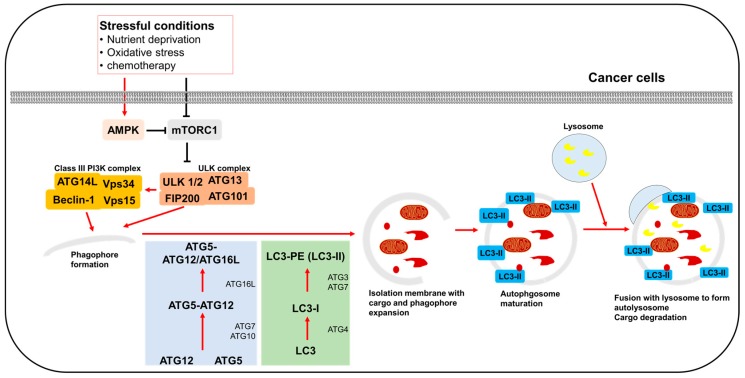
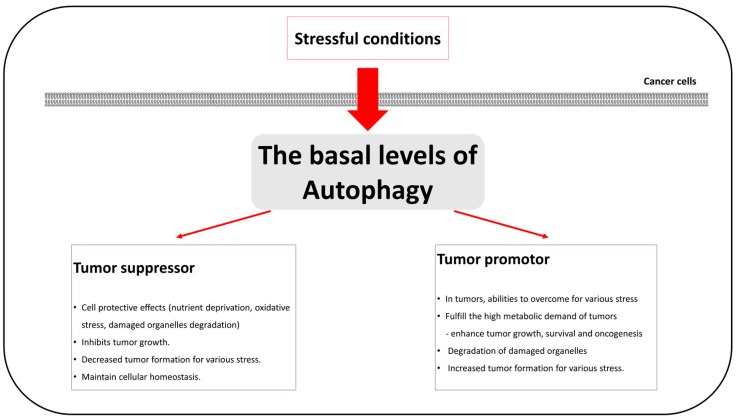
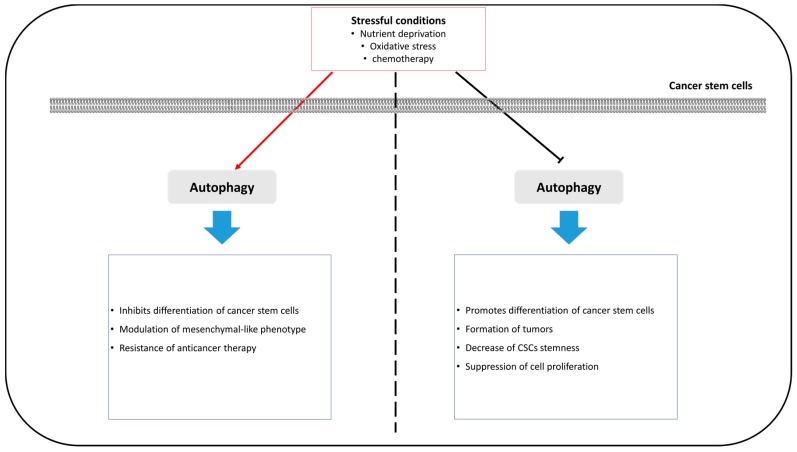
Autophagy is an intracellular degradative process that occurs under several stressful conditions, including organelle damage, the presence of abnormal proteins, and nutrient deprivation. The mechanism of autophagy initiates the formation of autophagosomes that capture degraded components and then fuse with lysosomes to recycle these components. The modulation of autophagy plays dual roles in tumor suppression and promotion in many cancers. In addition, autophagy regulates the properties of cancer stem-cells by contributing to the maintenance of stemness, the induction of recurrence, and the development of resistance to anticancer reagents. Although some autophagy modulators, such as rapamycin and chloroquine, are used to regulate autophagy in anticancer therapy, since this process also plays roles in both tumor suppression and promotion, the precise mechanism of autophagy in cancer requires further study. In this review, we will summarize the mechanism of autophagy under stressful conditions and its roles in tumor suppression and promotion in cancer and in cancer stem-cells. Furthermore, we discuss how autophagy is a promising potential therapeutic target in cancer treatment.
Overview
The claims and statistics of this paper haven’t been checked yet.
Free: it reads the open-access text and checks the first 5 claims that cite a source we can check. Create a free account to check every claim.
Integrity signals
Registry
Cites
Statistics
Figures
Verification
Claims the paper makes
The claims and statistics of this paper haven’t been checked yet.
Free: it reads the open-access text and checks the first 5 claims that cite a source we can check. Create a free account to check every claim.
Claims other papers make about this one
Each is checked against this paper’s own text: does it say what the citing paper says it does?
The cited source says what the claim attributes to it.
In the citing paper
“In cancer cells, autophagy plays dual roles in tumor promotion and suppression.48”
From Reactive Oxygen Species in Cancer: Current Findings and Future Directions (2021) · cites this paper as [48]
In the citing paper
“Although autophagy can play dual roles in both tumor promotion and suppression (Yun and Lee, 2018), in terms of chemotherapy autophagy is usually considered as a mechanism of drug-resistance against therapeutics.”
From An Arthropod Hormone, Ecdysterone, Inhibits the Growth of Breast Cancer Cells via Different Mechanisms (2020) · cites this paper as Yun and Lee, 2018
Self-check
Percentages, sums and reported differences re-computed from the paper’s own numbers.
The self-check needs the paper’s full text.
Citations
Cites
2 retracted
Mariño, G., Salvador-Montoliu, N., Fueyo, A., Knecht, E., Mizushima, N., & López-Otín, C. (2007) · Journal of Biological Chemistry · doi:10.1074/jbc.m701194200 · Cited by 407 · cited 1×
“Mice deficient in ATG4 have been observed to have increased susceptibility to the generation of fibrosarcomas when exposed to chemical carcinogens [67].”
BackgroundRetractedSui, X., Kong, N., Wang, X., Fang, Y., Hu, X., Xu, Y., Chen, W., Wang, K., Li, D., Jin, W., et al. (2014) · Scientific Reports · doi:10.1038/srep04694 · Cited by 96
RetractedRepertoires of Autophagy in the Pathogenesis of Ocular Diseases
Li, Y.-J., Jiang, Q., Cao, G.-F., Yao, J., & Yan, B. (2015) · Cellular Physiology and Biochemistry · doi:10.1159/000373980 · Cited by 16,304
Prospective identification of tumorigenic breast cancer cells
Al-Hajj, M., Wicha, M. S., Benito-Hernandez, A., Morrison, S. J., & Clarke, M. F. (2003) · Proceedings of the National Academy of Sciences · doi:10.1073/pnas.0530291100 · Cited by 10,370 · cited 1×
“In breast cancer stem-cells, a previous study has shown that CSCs contribute to the recurrence of cancer and metastasis [142].”
BackgroundThe basics of epithelial-mesenchymal transition
Kalluri, R., & Weinberg, R. A. (2009) · Journal of Clinical Investigation · doi:10.1172/jci39104 · Cited by 10,196
Epithelial-Mesenchymal Transitions in Development and Disease
Thiery, J. P., Acloque, H., Huang, R. Y. J., & Nieto, M. A. (2009) · Cell · doi:10.1016/j.cell.2009.11.007 · Cited by 9,931 · cited 1×
“These processes induce metastasis of cancer, leading to a lack of cell-cell adhesion, cell polarity to increase of cell motility, polarity, and invasiveness [111,112].”
BackgroundAMPK and mTOR regulate autophagy through direct phosphorylation of Ulk1
Kim, J., Kundu, M., Viollet, B., & Guan, K.-L. (2011) · Nature Cell Biology · doi:10.1038/ncb2152 · Cited by 7,227 · cited 1×
“mTORC1 is regulated by AMP-activated protein kinase (AMPK), and inhibition of mTORC1 and increased AMPK induces the autophagic process [26,27].”
BackgroundOncology meets immunology: the cancer-immunity cycle.
Chen, D. S., & Mellman, I. (2013) · Immunity · doi:10.1016/j.immuni.2013.07.012 · Cited by 6,929 · cited 1×
“Cancer neoantigen is released into the surrounding environment and presented to T cells, and then cancer cells are killed through T cell-mediated cytotoxicity [131].”
BackgroundLC3, a mammalian homologue of yeast Apg8p, is localized in autophagosome membranes after processing.
Kabeya, Y., Mizushima, N., Ueno, T., Yamamoto, A., Kirisako, T., Noda, T., Kominami, E., Ohsumi, Y., & Yoshimori, T. (2000) · The EMBO Journal · doi:10.1093/emboj/19.21.5720 · Cited by 6,605
Cui, C., Cui, J., Jin, F., Cui, Y., Li, R., Jiang, X., Tian, Y., Wang, K., Jiang, P., & Gao, J. (2017) · Cellular Physiology and Biochemistry · doi:10.1159/000479571 · Cited by 5,203
Cited by
Items 701–800 of 1,000
Autophagy signaling mediated by non-coding RNAs: Impact on breast cancer progression and treatment
Yan, L., Quan, Z., Sun, T., & Wang, J. (2025) · Molecular Aspects of Medicine · doi:10.1016/j.mam.2025.101365 · Cited by 3
Implication of LAMP proteins and autophagy markers in colorectal cancer aggressiveness
Ivanova, T., Dikov, D., Molander, D., Dzhambov, A. M., Sbirkov, Y., Mehterov, N. H., Belev, N., Atanasov, B. T., Kazakova, M., & Sarafian, V. S. (2025) · Frontiers in Immunology · doi:10.3389/fimmu.2025.1662830 · Cited by 3
“Conversely, in advanced stages, it serves as a survival mechanism enabling tumor cells to adapt to metabolic stress hypoxia, and nutrient deprivation within the tumor microenvironment (TME), as well as contributing to therapy resistance (8).”
Kakavand, N., Xiang, H., Laue, G., Mekdoud, T., Welz, L., Silva, M. G., Bernardes, J. P., Ito, G., van den Bossche, S., Kugler, J., et al. (2025) · Oncogene · doi:10.1038/s41388-025-03591-x · Cited by 3
Johnston, T. P. A., Webb, J. D., Borrelli, M. J., Tomas, E. J., Pucchio, A. C., Valdés, Y. R., & Shepherd, T. G. (2026) · Cancers · doi:10.3390/cancers18020307 · Cited by 4
“Autophagy has emerged as a critical survival mechanism in EOC, particularly in response to metabolic stress and therapy-induced cytotoxicity [14,19,53].”
Narayanan, K., Pakan, P. D., Kokkinis, S., Chellappan, D. K., Chang, D., Mutalik, S., Kaur, I. P., Oliver, B. G. G., Paudel, K. R., & Dua, K. (2026) · Journal of Drug Delivery Science and Technology · doi:10.1016/j.jddst.2026.108131 · Cited by 4
Li, L., Huang, J., Huang, T., Yao, J., Zhang, Y., Chen, M., Shentu, H., & Lou, H. (2023) · International Journal of Endocrinology · doi:10.1155/2023/5892731 · Cited by 4
Kumar, A., V, Singh, M. K., Singh, V., Shrivastava, A., Sahu, D. K., Bisht, D., & Singh, S. (2024) · Urologic Oncology Seminars and Original Investigations · doi:10.1016/j.urolonc.2024.07.017 · Cited by 3
Yoon, B., Basappa, B., Basappa, S., Nagaraju, O., Mahendra, M., Rangappa, K. S., Sethi, G., & Ahn, K. S. (2024) · IUBMB Life · doi:10.1002/iub.2917 · Cited by 3
“10,11 Mature autophagosomes then fuse with lysosomes to form autolysosomes, which selectively remove degradable material.”
Pizzimenti, C., Curcio, A., Fiorentino, V., Germanò, A., Martini, M., Ieni, A., & Tuccari, G. (2024) · Oncology Letters · doi:10.3892/ol.2024.14778 · Cited by 5
“Autophagic activity increases under stress, with the formation of autophagosomes regulated by several autophagy‑related proteins (ATGs) (4).”
BackgroundEfficacy of natural NF-κB inhibitors in the treatment of fibrosarcoma: an in vitro model study
Radzka, J., Gizak, A., Drąg‐Zalesińska, M., Haczkiewicz-Leśniak, K., Kulus, M., Szewczyk, A., Szlasa, W., Podhorska‐Okołów, M., & Kulbacka, J. (2024) · Frontiers in Cell and Developmental Biology · doi:10.3389/fcell.2024.1476007 · Cited by 2
Das, S. K., Khasbage, S. U., Mishra, A., & Jee, B. (2025) · Frontiers in Pharmacology · doi:10.3389/fphar.2025.1502107 · Cited by 3
Dilger, O. B., Carstens, M. F., Bothun, C. E., Payne, A. N., Berry, D. J., Sánchez‐Sotelo, J., Morrey, M. E., Thaler, R., Dudakovic, A., & Abdel, M. P. (2025) · Bone and Joint Research · doi:10.1302/2046-3758.144.bjr-2024-0312.r1 · Cited by 3
“5,6 The role of autophagy in fibrotic diseases is disputed, with the majority of literature focused on organ system fibrosis (e.g. pulmonary and renal).”
Rana, T., & Prajapati, A. (2025) · World Journal of Clinical Oncology · doi:10.5306/wjco.v16.i7.107788 · Cited by 3
Lotsberg, M. L., Chen, S., Dhakal, S., Lorens, J. B., Baguley, B. C., Chouaïb, S., & Engelsen, A. S. T. (2020) · Elsevier eBooks · doi:10.1016/b978-0-12-819609-0.00008-0 · Cited by 4
Autophagy and Ubiquitination as Two Major Players in Colorectal Cancer: A Review on Recent Patents
Saffari‐Chaleshtori, J., Asadi-Samani, M., Rasouli, M., & Shafiee, S. M. (2020) · Recent Patents on Anti-Cancer Drug Discovery · doi:10.2174/1574892815666200630103626 · Cited by 3
miRNAs and Its Regulatory Role on Autophagy in Tumor Microenvironment
Behura, A., Mishra, A., Kumar, A., Naik, L., Manna, D., & Dhiman, R. (2020) · Springer eBooks · doi:10.1007/978-981-15-6930-2_4 · Cited by 3
Regulatory insights into progression of cancer and Alzheimer’s disorder from autophagy perspective
Sriram, N., & Sah, M. K. (2021) · Molecular Biology Reports · doi:10.1007/s11033-021-06838-4 · Cited by 3
Autophagy-related Prognostic Signature in HER2 Positive Gastric Carcinomas
Ieni, A., Pizzimenti, C., Giuffrè, G., Caruso, R. A., & Tuccari, G. (2021) · Current Molecular Medicine · doi:10.2174/1566524021666211123093532 · Cited by 3
Heterocyclic Anti-cancer Compounds Derived from Natural Sources with their Mechanism of Action
Bachar, S. C., Kadir, A. K. M. S., Wahab, R., & Hasan, A. A. (2022) · BENTHAM SCIENCE PUBLISHERS eBooks · doi:10.2174/9789815040074122010004 · Cited by 5
Bánhegyi, R. J., Gazdag, A., Rácz, B., Beke, S., & Fülöp, N. (2022) · Orvosi Hetilap · doi:10.1556/650.2022.32564 · Cited by 5
The Role of Autophagy in Childhood Central Nervous System Tumors
Wang, Y., Xu, Y., & Zhu, C. (2022) · Current Treatment Options in Oncology · doi:10.1007/s11864-022-01015-6 · Cited by 3
ATG101-related signature predicts prognosis and therapeutic option in hepatocellular carcinoma
Wang, B., Fu, J., Lin, Y., Lou, Y., Lu, A., & Yang, J. (2022) · Scientific Reports · doi:10.1038/s41598-022-22505-5 · Cited by 3
Resveratrol and Immunomodulation
Salas, M. G., Menchaca-Castro, L. A., Araújo, R. G., Herrera, S. A. N., Ilyina, A. D., Arredondo-Valdés, R., Rodríguez‐Salazar, M. D. C., Chávez‐González, M. L., Segura-Ceniceros, E. P., & González, C. (2022) · Springer eBooks · doi:10.1007/978-981-19-2507-8_9 · Cited by 4
Cuschieri, A., & Baron, B. (2023) · Journal of Complementary and Alternative Medical Research · doi:10.9734/jocamr/2023/v21i1427 · Cited by 3
Selvido, D. I., Koontongkaew, S., Kokilakanit, P., Sacharoen, A., Korsuwannawong, S., & Utispan, K. (2023) · Journal of Dental Sciences · doi:10.1016/j.jds.2023.08.023 · Cited by 3
Ectopic BH3-Only Protein Bim Associates with Hsp70 to Regulate Yeast Mitophagy
Yuan, L., Wang, Y., Margulis, B. A., Song, T., Wang, Z., & Zhang, Z. (2023) · Doklady Biochemistry and Biophysics · doi:10.1134/s1607672923700485 · Cited by 3
“Mitophagy, for example, ensuring the selective removal of damaged or dysfunctional mitochondria and degradation in lysosomes/vacuoles, represents a flexible mechanism supporting the metabolic adaptation and survival of cancer cells within the harsh tumor microenvironment [7–9].”
BackgroundA naturally occurring 22-amino acid fragment of human hemoglobin A inhibits autophagy and HIV-1
Freisem, D., Rodríguez, A., Lawrenz, J., Zhou, Z., Monecke, T., Preising, N., Endres, S., Wiese, S., Ständker, L., Kuan, S. L., et al. (2024) · Cellular and Molecular Life Sciences · doi:10.1007/s00018-024-05447-1 · Cited by 4
“However, the currently available drugs, especially autophagy-inhibiting drugs such as Chloroquine, have specificity issues and are thus prone to cause severe adverse effects in patients [88–90].”
BackgroundAkabli, T., Toufik, H., & Lamchouri, F. (2024) · Medicinal Chemistry Research · doi:10.1007/s00044-024-03333-w · Cited by 3
“Although, autophagy suppresses tumorigenesis by inhibiting cancer cell survival and inducing cell death, thereby maintaining cellular homeostasis, it acts to promote tumour survival and growth in advanced cancers [70, 71].”
AP3M2: A key regulator from the nervous system modulates autophagy in colorectal cancer
Boustani, M. E., Mouawad, N., & Alezz, M. A. (2024) · Tissue and Cell · doi:10.1016/j.tice.2024.102593 · Cited by 3
Ferraresi, A., Ghezzi, I., Salwa, A., Esposito, A., Dhanasekaran, D. N., & Isidoro, C. (2024) · Cells · doi:10.3390/cells13211816 · Cited by 3
Saluja, T. S., & Hosalkar, R. M. (2025) · Head and Neck Pathology · doi:10.1007/s12105-025-01755-5 · Cited by 3
“Research suggests that autophagy inhibits tumor development during early stages and promote tumor cell survival and metastasis in later stages [4, 5].”
Roles of autophagy and long non-coding RNAs in gastric cancer
Luong, T. V., Cao, M. T. T., Nguyen, N. V. D., Dang, H. N. N., & Nguyen, T. T. (2025) · World Journal of Gastroenterology · doi:10.3748/wjg.v31.i11.101124 · Cited by 3
“On the one hand, enhancing autophagy has been proposed as a strategy to induce cancer cell death, with some anticancer drugs designed to activate autophagy for this purpose[27,28].”
Ormeloxifene induces mitochondrial fission-mediated pro-death autophagy in colon cancer cells
Sharma, R. K., Sahai, R., Singh, N. C., Maheshwari, M., Yadav, N., Sarkar, J., & Mitra, K. (2025) · Biochemical and Biophysical Research Communications · doi:10.1016/j.bbrc.2025.151698 · Cited by 4
The Role of Autophagy in the Progression and Treatment of Tumors
Al-Janabi, I. I. (2021) · Al-Rafidain Journal of Medical Sciences · doi:10.54133/ajms.v1i.37 · Cited by 2
“As cells proliferate and the tumor grows, stressful conditions are created, manifested mainly by hypoxia and nutrient deprivation, and autophagy can assist in overcoming these stresses [20].”
BackgroundInfluentialROS-Dependent Cell Death Induced by Parthenolide in Human Hepatoma Cell HepG2
Xu, W., Ge, K., Guo, Y., Zhu, W., Liu, L., & Zhou, Y. (2020) · OALib · doi:10.4236/oalib.1106025 · Cited by 3
Tohidast, M., Amini, M., Doustvandi, M. A., Hosseini, S. S., Bilan, F., Mozammel, N., Sameti, P., Mokhtarzadeh, A., & Baradaran, B. (2024) · Bioimpacts · doi:10.34172/bi.30255 · Cited by 7
“60 Our results also revealed a significantly enhanced autophagy rate in the groups that were transfected utilizing “anti-miR-21” and “miR-143”, as opposed to the control groups.”
BackgroundEneh, S., Hartikainen, J. M., Heikkinen, S., Sironen, R. K., Tengström, M., Kosma, V.-M., Ahuja, S., & Mannermaa, A. (2025) · PLoS ONE · doi:10.1371/journal.pone.0322179 · Cited by 2
“This dual role of autophagy makes its influence on cancer treatment complex, as it can both promote and suppress tumors, affecting the effectiveness of therapies in various ways [14].”
Dual inhibition of AKT and autophagy sensitizes triple negative breast cancer cells to carboplatin
Zhou, J.-Z., Wen, J.-Y., Xu, X., Zhao, N., Tang, J., Xiao, Y., Xiang, L., Jiang, Y., jiang, J.-W., Hong, H., et al. (2025) · Translational Oncology · doi:10.1016/j.tranon.2025.102434 · Cited by 4
“In diagnosed tumors, autophagy sustains the survival of cancer cells under metabolic stress conditions, such as hypoxia, nutrient deprivation, and chemotherapy[35 – 37].”
Autophagy‐Mediated Suppression of Tumor Growth by Food‐Grade Lipid Nanoparticles in Mice
Peng, C., Jiang, B., Lu, W. J., Zalewski, P., He, J., Li, X., Cao, Y., Zhao, Y., Sun, C., Nishinari, K., et al. (2025) · Advanced Science · doi:10.1002/advs.202504220 · Cited by 3
Blumenstock, K., Radwan, F. F. Y., Zaman, V., Banik, N. L., & Haque, A. (2025) · Exploration of Immunology · doi:10.37349/ei.2025.1003216 · Cited by 2
“While autophagy can support tumor cell survival and growth, it can also lead to cell death under favorable conditions [14, 18, 19].”
Possible Roles for Purinergic Receptor P2RX4 in Breast and Prostate Cancers
Ho, W. H. J., & Lam, K. (2025) · International Journal of Molecular Sciences · doi:10.3390/ijms26189043 · Cited by 2
“This process serves two purposes: one for protecting cells from toxins and the other for maintaining high cell metabolism and energy balance to support cell survival [71,72].”
The crosstalk between MiRNAs and autophagy in leukemia: mechanisms and therapeutic insights
Beyrami, A. F., Akbari, A. A. M., Maleki, L. A., Dolati, S., & Yousefi, M. (2025) · Discover Oncology · doi:10.1007/s12672-025-03686-7 · Cited by 3
“This causes significant damage to essential cellular structures and processes, overwhelming the cells’ degradation mechanisms and finally resulting in the death of the cancer cells [39, 40].”
Emerging perspectives on the selective autophagy of melanosomes: melanophagy
Park, N. Y., Kim, S. H., Jo, D. S., & Cho, D.-H. (2025) · Experimental & Molecular Medicine · doi:10.1038/s12276-025-01581-3 · Cited by 4
“Whereas autophagy can both suppress tumor initiation and support tumor progression 88 , it is unclear whether melanophagy follows a similar context-dependent pattern.”
Faryal, B. (2025) · Cancer Reports · doi:10.1002/cnr2.70389 · Cited by 6
“Because these processes are interlinked, dual targeting has emerged as a promising area to overcome therapy resistance, particularly in refractory and aggressive subtypes [123].”
Lee, Y.-S., Nickel, K. P., Bradley, S. T., Skiba, J. H., Eckers, J. C., Swick, A. D., Hu, R., Iida, M., Gürel, Z., Wheeler, D. L., et al. (2026) · Scientific Reports · doi:10.1038/s41598-026-53573-6 · Cited by 2
“Autophagy has been shown to play a role in both evasion of cell death and maintenance of homeostasis through cellular recycling programs, and in the promotion of cell death through large-scale degradation of cellular components 32,33 .”
Autophagy and salivary gland cancer: A putative target for salivary gland tumors
Koustas, E., Sarantis, P., Theodorakidou, M., Karamouzis, M. V., & Theocharis, S. E. (2020) · Tumor Biology · doi:10.1177/1010428320980568 · Cited by 3
“Tumor cells have been found to require high basal levels of autophagy for critical cellular functions like proliferation.(27) It appears that the basic levels of autophagy are associated with tumor types, stage of malignancy, growth factors, oncogenes, and tumor suppressors.”
BackgroundKhursheed, A., & Jain, V. (2021) · Biomedical Research and Therapy · doi:10.15419/bmrat.v8i11.708 · Cited by 3
Ma, B., Hu, Y., Zhu, J., Zheng, Z., & Ye, J. (2023) · Journal of Stomatology Oral and Maxillofacial Surgery · doi:10.1016/j.jormas.2023.101430 · Cited by 3
Zhang, G., Zhang, W., Dan, M., Zou, F., Qiu, C., & Sun, C. (2023) · The Chinese Journal of Physiology · doi:10.4103/cjop.cjop-d-22-00152 · Cited by 2
Pharmacotherapy developments in autophagy inhibitors for bladder cancer
Chaaya, C., Zgheib, G., & Karak, F. E. (2023) · Expert Opinion on Pharmacotherapy · doi:10.1080/14656566.2023.2254697 · Cited by 2
Erzurumlu, Y., Çataklı, D., & Doğan, H. K. (2024) · Interdisciplinary Medical Journal · doi:10.17944/interdiscip.1297112 · Cited by 2
Pentoxifylline and Norcantharidin Modify p62 Expression in 2D and 3D Cultures of B16F1 Cells
González-Quiroz, J. L., Ocampo‐Godínez, J. M., Hernández-González, V. N., Lezama, R. A., Maldonado, E. R., Vega‐López, A., & Domínguez‐López, M. L. (2024) · International Journal of Molecular Sciences · doi:10.3390/ijms25105140 · Cited by 2
“…involved in both cancer, autophagy appears to have a dual role, as it is involved in both tumor suppression and tumor development, causing in some cases resistance to anticancer treatments [12]. tumor suppression and tumor development, causing in some cases resistance to anticancer treatments [12].”
BackgroundSantos, T. S., Bahia, M. D. O., Guimarães, A. C., de Souza, C. R. T., Muto, N. A., Rogez, H. L. G., & Burbano, R. M. R. (2024) · Toxicology in Vitro · doi:10.1016/j.tiv.2024.105873 · Cited by 3
Plaugher, D. R., & Murrugarra, D. (2024) · npj Systems Biology and Applications · doi:10.1038/s41540-024-00398-6 · Cited by 2
Autophagy and Multidrug Resistance in Cancer
Agnihotri, T. G., Gomte, S. S., Peddinti, V., Rout, B., Bishlay, J., Pandey, A. K., & Jain, A. (2024) · Cancer drug discovery and develogment/Cancer drug discovery and development · doi:10.1007/978-3-031-66421-2_5 · Cited by 3
TPC2: From Blond Hair to Melanoma?
Abrahamian, C., Ouologuem, L., Tang, R., Fröhlich, T., Bartel, K., & Grimm, C. M. (2024) · Cancers · doi:10.3390/cancers16234065 · Cited by 3
Role of Apoptosis in Cancer: War of the Worlds, Therapeutic Targets and Strategies
Dhara, A., Kaur, R., Chattopadhyay, R., Das, S., Pal, S., & Sen, N. (2024) · Springer eBooks · doi:10.1007/978-981-97-7905-5_9 · Cited by 2
Ridho, F. M., Fahrudin, P., Syachputra, A. J., Aruan, I. A., Ulfah, K., & Syahri, A. (2024) · KELUWIH Jurnal Kesehatan dan Kedokteran · doi:10.24123/kesdok.v6i1.6752 · Cited by 3
Kahkesh, S., Hedayati, N., Rahimzadeh, P., Farahani, N., Khoozani, M. F., Abedi, M., Nabavi, N., Naeimi, B., Khoshnazar, S. M., Alimohammadi, M., et al. (2025) · Pathology - Research and Practice · doi:10.1016/j.prp.2025.155944 · Cited by 3
Jahanban‐Esfahlan, A., Asgharian, P., Mohammadi, S., Ghanbari, H., & Asnaashari, S. (2025) · Current Clinical Pharmacology · doi:10.2174/0127724328344902250324062309 · Cited by 2
Gavrikov, A. V., Ilyukhin, A. B., Лушникова, А. А., Григорьевна, К. О., Koroleva, N. A., Mikheev, I. V., Babaskina, M. M., Khakina, E. A., Selivanov, N. A., & Babeshkin, K. A. (2025) · Russian Journal of Coordination Chemistry · doi:10.1134/s1070328424601481 · Cited by 2
Al-Anazi, A. E., Awadalla, M., Alowaini, A., Alamri, S., AlGhamdi, D. A., Halim, A. S. A., Ali, M. A. M., & Alosaimi, B. (2025) · Frontiers in Oncology · doi:10.3389/fonc.2025.1588921 · Cited by 2
“Inhibiting autophagy increases EBV lytic gene expression and viral replication (34).”
Benigno, S. J., Oyong, G. G., Licayan, J., & Sumayao, R. (2020) · Archives of Biological Sciences · doi:10.2298/abs200703037b · Cited by 2
“In cancer biology, autophagy has been shown to play dual roles in tumor promotion and suppression [9].”
BackgroundResultMechanistic Insights into Autophagosome–Lysosome Fusion in Cancer Therapeutics
Mahapatra, K. K., Mishra, S. R., Behera, B. P., Praharaj, P. P., Panigrahi, D. P., Bhol, C. S., Patra, S., & Bhutia, S. K. (2020) · Springer eBooks · doi:10.1007/978-981-15-6930-2_13 · Cited by 2
A brief dive into the phenomenon of cisplatin resistance in non-small-cell lung cancer
Sobczak, M. (2021) · Acta Universitatis Lodziensis Folia Biologica et Oecologica · doi:10.18778/1730-2366.16.12 · Cited by 2
“It is a common condition for solid tumours to lack a proper oxygen supply due to insufficient vascularization of the tumour site; therefore, those starving cancer cells redirect their metabolism into autophagy (Yun and Lee 2018).”
BackgroundYahyapour, R., Khoei, S., Kordestani, Z., Larizadeh, M. H., Jomehzadeh, A., Amirinejad, M., & Ahmadi‐Zeidabadi, M. (2022) · Current Radiopharmaceuticals · doi:10.2174/1874471016666221207163043 · Cited by 2
Bhattacharjee, S., Paul, S., & Raybarman, C. (2022) · Handbook of Oxidative Stress in Cancer: Therapeutic Aspects · doi:10.1007/978-981-16-5422-0_152 · Cited by 2
Usman, M. A., Salman, A. A., Ibrahim, M. A., Furukawa, K., & Yamasaki, K. (2023) · Chemical Biology & Drug Design · doi:10.1111/cbdd.14225 · Cited by 3
“During starvation and conditions like heat shock and oxidative stress, the cells use autophagy to sustain homeostasis (Li et al., 2017; Yun & Lee, 2018).”
BackgroundAbuhijjleh, R., Saeedy, D. A., Ashmawy, N. S., Gouda, A. E., Elhady, S. S., & Al-Abd, A. M. (2023) · Marine Drugs · doi:10.3390/md21050271 · Cited by 2
“It is worth mentioning that the role of autophagy in cancer is very controversial as it is often referred to as either inducing cell death by suppressing tumorigenesis or facilitating tumorigenesis [41,42].”
BackgroundSignificance Of LC3B Autophagy Marker In Recurrent Prostate Adenocarcinoma
Сергеевна, В. Е., Bucharskaya, A. B., Palatova, T. V., Fomkin, R. N., Наволокин, Н. А., & Maslyakova, G. N. (2022) · Russian Open Medical Journal · doi:10.15275/rusomj.2022.0115 · Cited by 1
“The existence of protective autophagy as one of the mechanisms of disease progression and resistance to treatment has been demonstrated [4, 5].”
BackgroundDiverse Role of SNARE Protein GS28 in Vesicle Trafficking and Diseases
Liu, P., Li, M., Liu, R., & Zhao, Y. (2023) · Current Protein and Peptide Science · doi:10.2174/1389203724666230315143542 · Cited by 1
Crosstalk between autophagy and bladder transitional cell carcinoma by autophagy-related lncRNAs
Feng, J., Wang, M., Du, G.-S., Peng, K., Li, L.-Q., & Li, X.-S. (2023) · Medicine · doi:10.1097/md.0000000000034130 · Cited by 1
“[33,34] Recent evidence suggests that autophagy is related to the urothelial carcinoma grade and potentiates the effectiveness of chemotherapy.”
Trehalose as a potential therapeutic agent in different diseases
Stevanović, D., Trajković, V., & Vucicevic, L. M. (2023) · Medicinski podmladak · doi:10.5937/mp74-41378 · Cited by 1
“autophagy could suppress tumor growth and progression through the reduction of oxidative stress in cancer cells where mitochondrial damage increases production of reactive oxygen species (45).”
BackgroundInfluentialVarol, A., Boulos, J. C., Jin, C., Klauck, S. M., Zhitkovich, A., & Efferth, T. (2024) · Chemico-Biological Interactions · doi:10.1016/j.cbi.2024.111193 · Cited by 2
Akhavan, R., Harsini, S. J., Shafiee, S., Eftekhari, M., Tahmasvand, R., Taghipour, F., Kooshafar, Z., Mohammadmirzaeizarandi, H., Salimi, M., Almasirad, A., et al. (2025) · Bioorganic Chemistry · doi:10.1016/j.bioorg.2025.108267 · Cited by 2
Oleandrin Promotes Apoptosis in an Autophagy-Dependent Manner in Gastric Cancer
Huang, X., Yan, L., Zhao, X., Wang, Y., Li, H., Jiang, X., Feng, Y., Ouyang, D., Xu, C., & Wang, J. (2025) · Frontiers in Bioscience-Landmark · doi:10.31083/fbl26608 · Cited by 1
Autophagy-related myosins: Critical roles and potential therapeutic effects in malignancies
Xiong, J., Wen, X., Chen, M., Liu, F., & Zhou, J. (2025) · Biochimica et Biophysica Acta (BBA) - Reviews on Cancer · doi:10.1016/j.bbcan.2025.189375 · Cited by 1
Shamsudin, N. F., Nawi, A. R. M., Jantan, I., Salim, E., Abdullah, M. A., Chia, S. L., Saad, N., Imran, S., Leong, S. W., Nainu, F., et al. (2025) · Results in Chemistry · doi:10.1016/j.rechem.2025.102601 · Cited by 3
Huang, H.-H., Wang, W., & Peng, Y. (2025) · Human Pathology · doi:10.1016/j.humpath.2025.105929 · Cited by 1
Yasmin, T., & Kabir, Y. (2025) · Springer eBooks · doi:10.1007/978-3-032-00759-9_44 · Cited by 1
Targeting autophagy and metabolism for ewing sarcoma
Antoshina, K., Aniskin, D., Stempen, M., Schroeder, B., Timashev, P. S., Ulasov, I. V., Chaudhary, A., & Kharwar, R. K. (2025) · Molecular Biology Reports · doi:10.1007/s11033-025-11304-6 · Cited by 1
“Endoplas-mic reticulum stress, low energy, nutritional deprivation, hypoxia, abnormal protein accumulation and reactive oxygen species are the major factors that trigger it [15].”
Pramanik, P., Das, T., Pal, U., & Rehman, I. (2025) · The Nucleus · doi:10.1007/s13237-025-00629-z · Cited by 1
Afzali, F. M., Heshmati, M., Salimi, A., Kalanaky, S., Fakharzadeh, S., Hafizi, M., Akbari, M. E., Nazaran, M. H., & Hashemi, M. (2026) · Biochemistry and Biophysics Reports · doi:10.1016/j.bbrep.2025.102418 · Cited by 2
“The dualistic role of autophagy varies by cancer type: it is generally tumor-suppressive in prostate and BC [35] but can drive progression in pancreatic and colorectal cancers, highlighting opportunities for therapeutic modulation [36].”
de Moraes, F. C. A., Rego, L. H. R. M., Burbano, R. M. R., & Hirata, M. H. (2026) · Prostaglandins Leukotrienes and Essential Fatty Acids · doi:10.1016/j.plefa.2026.102732 · Cited by 1
Autophagy–Actin Crosstalk: Implications for Cellular Homeostasis and Disease
Fierti, A. O., Rozsa, R. G., Potu, A., Tajammal, A., & Li, H. (2026) · Cells · doi:10.3390/cells15080665 · Cited by 1
Hernández-Díaz, J. A., Arias-García, A. A., Gutiérrez-Becerra, A., Comas-Garcia, M., Vazquez-Lepe, M. O., Hernández‐Cristóbal, O., García‐Morales, S., Martínez-Velázquez, M., & García-Carvajal, Z. Y. (2026) · Gels · doi:10.3390/gels12050376 · Cited by 1
“In HepG2 cells treated with laminarin-functionalized SeNPs (LP-SeNPs) for 12 h, increased LC3-II levels and decreased p62 levels were reported as key indicators of autophagy, along with LC3-I to LC3-II conversion and their recruitment to autophagosomal membranes [84,85].”
Framework for evaluating in vitro vasculogenic mimicry using structural and metabolic parameters
Santander, N., Babbitt, N., Veas-Torres, J., Silva-Rojas, M., Mingo, G., Valdivia, A., Espinoza, A., de Salas, S., Canales, C., Cabrera, G., et al. (2026) · Cell Reports Methods · doi:10.1016/j.crmeth.2026.101515 · Cited by 1
“48 Interestingly, and in accordance with this concept, in a previous publication we reported that very low levels of transcriptional activity were required for VM formation in vitro .”
Dual HDAC/PI3K inhibitors as a potential and emerging cancer therapy: a review
Madhukumari, Akshatha, H. S., Nair, S. P., Arun Kumar, S., Bidye, D. P., & Pujar, G. V. (2026) · Future Medicinal Chemistry · doi:10.1080/17568919.2026.2699690 · Cited by 2
Ali, A. H., Nguyen, E., Okafor, C., & Nieminen, E. (2026) · Journal of Cancer Biomoleculars and Therapeutics · doi:10.62382/jcbt.v3i3.121 · Cited by 1
Srivastava, R. K., Singh, P., & Lonard, D. M. (2026) · Biomedicines · doi:10.3390/biomedicines14092046 · Cited by 2
“Autophagy is a highly conserved cellular process that plays an important role in both normal liver function and liver disease [44,45].”
Bowornruangrit, P., Kumkate, S., Sirigulpanit, W., & Leardkamolkarn, V. (2022) · Medical Sciences · doi:10.3390/medsci10010020 · Cited by 1
“Western blotting analysis revealed a slightly increased level of Beclin-1 (Atg6), an anti-apoptotic protein, in the epithelium of Fdb-treated cells, whereas Beclin-1 was unaltered in lymphocytes, which confirmed the strength of blood cells that were resistant to caspase-dependent programmed cell death, as has been sho…”
BackgroundCombination of anticancer drugs with microRNA as cancer therapeutics
Rout, S. R., Kenguva, G., Singh, V., Talegaonkar, S., Kesharwani, P., & Dandela, R. (2022) · Elsevier eBooks · doi:10.1016/b978-0-323-85873-1.00015-0 · Cited by 2
Catellani, C., Cirillo, F., Graziano, S., Montanini, L., Marmiroli, N., Gullì, M., & Street, M. E. (2022) · Acta bio-medica dell'Ateneo parmense/Acta biomedica · doi:10.23750/abm.v93i3.12842 · Cited by 2
Yılmaz, Ü., Yılmaz, N., Tanbek, K., Ergen, A., Aksakal, N., & Zeybek, Ü. (2022) · Bratislavské lekárske listy/Bratislava medical journal · doi:10.4149/bll_2022_102 · Cited by 1
Tumor cell metabolism and autophagy as therapeutic targets
Poojary, S. S., & Singh, M. K. (2022) · Elsevier eBooks · doi:10.1016/b978-0-323-99879-6.00003-1 · Cited by 2
Autophagy in infection-mediated cancers
Kumari, A., Upadhyay, S. K., Phutela, S., Chand, G., Joshi, P., Vaid, M., & Rai, R. C. (2022) · Elsevier eBooks · doi:10.1016/b978-0-323-99879-6.00012-2 · Cited by 1
Role of Forkhead Box Proteins in Regulating Epithelial-Mesenchymal Transition in Breast Cancer
Soumyakrishnan, S., SREEPRIYA, M., & Sudhandiran, G. (2022) · Handbook of Oxidative Stress in Cancer: Therapeutic Aspects · doi:10.1007/978-981-16-5422-0_162 · Cited by 1
Identification of vacuolar autophagic aggregates in the skeletal muscles of inbred C57BL/6NCrl mice
Biase, D. D., Pagano, T. B., Malanga, D., Russo, V., Piegari, G., d’Aquino, I., Iovane, V., Scarfò, M., Papparella, S., Wojcik, S. P., et al. (2023) · Laboratory Animals · doi:10.1177/00236772221138942 · Cited by 1
The Prospects of RNAs and Common Significant Pathways in Cancer Therapy and Regenerative Medicine
Gattupalli, M., Dey, P., Poovizhi, S., Patel, R. B., Mishra, D., & Banerjee, S. (2023) · Springer eBooks · doi:10.1007/978-981-19-6008-6_16 · Cited by 2
Zehtabi, M., Akbarpour, Z., Valizadeh, S., Roosta, Y., Khamaneh, A. M., & Raeisi, M. (2022) · PubMed Central · doi:10.22099/mbrc.2022.43844.1751 · Cited by 3
“As mentioned earlier, despite the tumor suppressor role of autophagy, it can be recruited by cancer cells to overcome stressful tumor microenvironment [24, 25].”
Metadata
- Authors
- Yun, C. W., & Lee, S. H.
- Affiliations
- Soonchunhyang University (KR)
- Corresponding author
- Lee, Sang Hun
- Venue
- International Journal of Molecular Sciences
- Publisher
- MDPI AG
- Published
- 2018-11-05
- Volume
- 19
- Issue
- 11
- Pages
- 3466
- ISSN
- 1422-0067 (ISSN-L)
- PMC
- PMC6274804
- OpenAlex
- W2899871244
- Cited by
- 965
- References
- 187
- Citations by year
- 2026: 52 · 2025: 97 · 2024: 143 · 2023: 161 · 2022: 169 · 2021: 181 · 2020: 114 · 2019: 45 · 2018: 2
- FWCI
- 12.28
- Type
- journal article
- Language
- en
- Open access
- gold
- dx.doi.org
- Licence
- Locations
- International Journal of Molecular Sciences (publishedVersion, cc-by)
- Europe PMC (PubMed Central) (publishedVersion, cc-by)
- PubMed Central (publishedVersion, cc-by)
- PubMed (publishedVersion)
- DOAJ (DOAJ: Directory of Open Access Journals) (submittedVersion)
- Funders
- National Research Foundation of Korea (NRF- 2016R1D1A3B01007727)
- Topics
- Life Sciences › Biochemistry, Genetics and Molecular Biology › Cell Biology › Autophagy in Disease and Therapy
- Life Sciences › Biochemistry, Genetics and Molecular Biology › Molecular Biology › Ubiquitin and proteasome pathways
- Life Sciences › Biochemistry, Genetics and Molecular Biology › Physiology › Calcium signaling and nucleotide metabolism
- Keywords
- autophagy, cancer, tumor suppression, tumor promotion, cancer stem cells, stemness, tumor recurrence, drug resistance, rapamycin, chloroquine, autophagy modulators, autophagosome formation, lysosome fusion, nutrient deprivation, stress response
- MeSH terms
- Animals, Autophagy, Humans, Models, Biological, Neoplasms, Neoplastic Stem Cells, Tumor Microenvironment, Carcinogenesis
About these checks
Registry, retraction, Cites and statistics results are computed, not judged, with one exception: a printed reference that no index lists is read once by a model before it counts as a citation error. Claims are extracted by a model and kept only when their quote appears verbatim in the text; each cited source is then checked, with a model’s help, for whether it says what the claim relies on. Those verdicts can be wrong — read the claim’s quote and the cited source before relying on one.
Statistics and arithmetic are recomputed, not judged.
Confidence bands are shown only for fields calibrated on our annotated test set. None is calibrated yet, so no band is shown.
What counts as a claim ›How we measure confidence ›How we check this ›
Are you an author, or do you see a problem with this page? Request a review
Data sources
Bibliographic data: Semantic Scholar, OpenAlex, Crossref.
Contains information from the Semantic Scholar Academic Graph Datasets, made available under the ODC Attribution License (ODC-BY 1.0).
Semantic Scholar’s data is described in: Kinney, R., et al. (2023). The Semantic Scholar Open Data Platform. arXiv:2301.10140.
